In the annals of literary and theological history, few texts have captivated and confounded scholars quite like the Gospel of Mark. Often hailed as the earliest and, for a long time, considered the most straightforward account of Jesus’s life and ministry, this ancient biography carries within its narrative threads a series of profound complexities. It presents not just a story of divine revelation, but a chronicle besieged by scholarly contention, textual ambiguities, and interpretive paradoxes that echo through millennia.
This is not merely a historical document; it is a canvas upon which humanity’s deepest questions about faith, authenticity, and narrative truth have been endlessly debated. The very fabric of its existence is interwoven with a silent struggle against the tides of definitive understanding, a condition that grants it both its enduring power and its enigmatic allure. As we delve into the core of this foundational New Testament work, we uncover a fascinating landscape of intellectual challenges that compel us to look beyond its surface, into the heart of its scholarly “conditions.”
Our journey through these scholarly considerations reveals a captivating narrative of academic inquiry, demonstrating how deeply ingrained questions can illuminate the intricate layers of a text we thought we knew. Like any profound subject, the Gospel of Mark refuses easy answers, instead inviting a continuous, rigorous engagement with its myriad “conditions” – from its mysterious genesis to its most controversial narrative choices. It is a story not just of Jesus, but of human striving to comprehend the divine, riddled with historical uncertainty and interpretive daring.
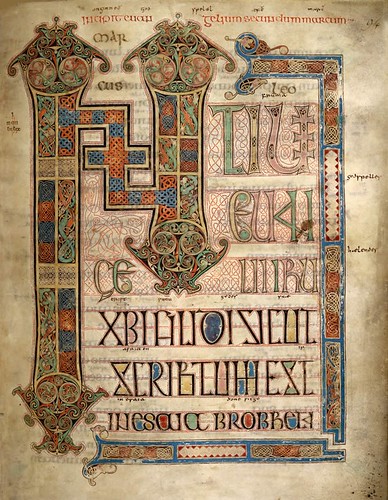
1. **The Anonymity of Authorship: The Enduring Mystery of the Gospel’s Penman**The Gospel of Mark, a cornerstone of Christian tradition, remains profoundly enigmatic regarding its authorship. While early Christian tradition, tracing back to Papias of Hierapolis, linked it to John Mark, a companion of Saint Peter, this attribution is not universally accepted by modern scholarship. The text itself is anonymous, prompting a “silent fight” against definitive attribution that continues to captivate researchers.
Most contemporary scholars suggest the gospel was written anonymously, with the name “Mark” likely attached early on to lend it authoritative weight. This strategic linking to a revered figure like Peter highlights the early Church’s efforts to legitimize its foundational narratives. Such practices underscore the complex interplay between tradition and the practical needs of nascent religious communities.
The debate persists, however. While some deny any Markan authorship, others accept John Mark as the writer, and still others propose an unnamed Mark not mentioned in the Bible or connected to Peter. This inconclusive scholarship, a true “devastating condition,” forces us to confront the inherent challenges of reconstructing ancient history, particularly for texts imbued with spiritual significance. It deepens our appreciation for the text’s enduring power, distinct from its precise origin.
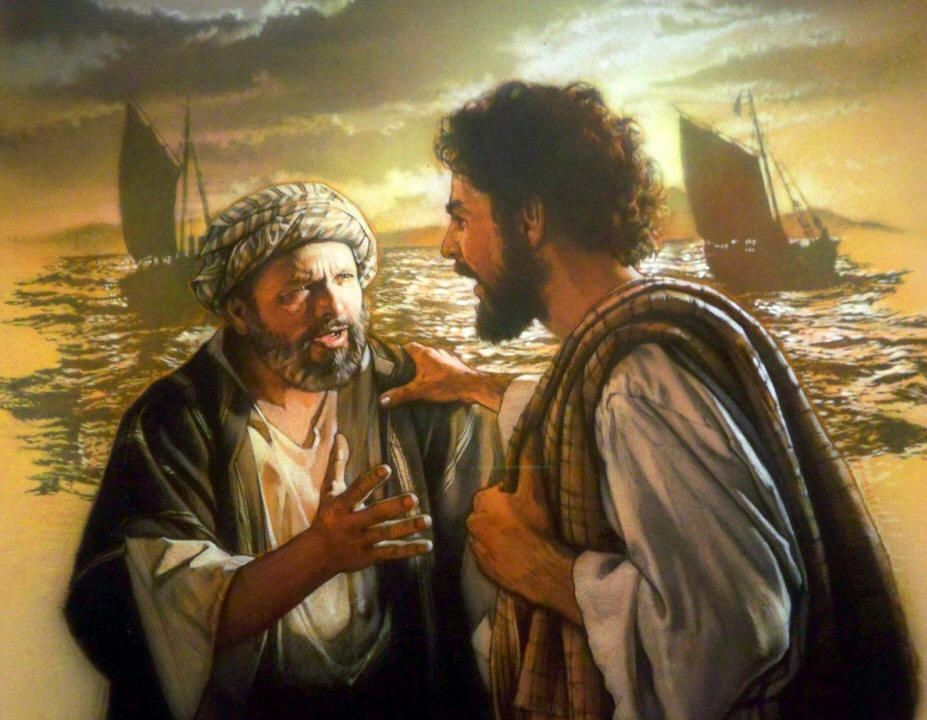
2. **The Question of Marcan Priority’s Reliability: A Paradigm Challenged**For generations, the scholarly world largely assumed Marcan priority, believing it to be the earliest and most reliable source for the historical Jesus. This comforting notion, that Mark offered the most unadorned narrative, served as a bedrock for reconstructing Jesus’s life and ministry. It was a foundational premise in synoptic gospel studies, leading to the general assumption that Mark’s provenance meant it was the most reliable of the four gospels.
However, this “conceit that Mark could be used to reconstruct the historical Jesus suffered two severe blows” in the early 20th century and continues to be challenged today. The very idea of Mark as an unequivocally superior historical source has undergone rigorous scrutiny, transforming a long-held consensus into an arena of vibrant academic debate—a “devastating condition” for those seeking simple historical truths.
While Mark was “generally seen as the most reliable of the four gospels at the end of the 20th century in its overall description of Jesus’ life and ministry,” recent scholarship boldly contests this view. Michael Patrick Barber, for instance, argues “Matthew’s overall portrait presents us with a historically plausible picture…” directly challenging Mark’s assumed historical supremacy. This recalibration prompts a re-evaluation of all synoptic texts.
This intellectual “silent fight” against ingrained assumptions seeks a more nuanced understanding of early Christian literature. The challenge to Marcan priority’s reliability underscores the dynamic nature of scholarship, where even established theories are subject to revision. It is a testament to the ongoing quest for truth, even when that truth complicates previously simpler narratives.

3. **The Invented Chronology and Literary Links: Unraveling the Author’s Craft**Beyond questions of authorship and reliability, the very structure and narrative progression of Mark have become a significant area of scholarly contention. Karl Ludwig Schmidt argued in 1919 that the connections between episodes in Mark were “a literary invention of the author,” not a strict reflection of chronological sequence. This insight profoundly reshaped how the gospel was understood.
Schmidt’s argument implied that Mark’s narrative could not be used as a simple historical timeline for Jesus’s mission. Instead, the arrangement of miracles, teachings, and confrontations was a deliberate literary construct, serving the author’s theological and rhetorical purposes. This forces readers to appreciate the evangelist as an artist, a purposeful storyteller, rather than just a chronicler.
This perspective reveals a “silent fight” inherent in the text: a tension between its apparent linearity and its underlying thematic organization. The links and transitions, though seemingly seamless, are products of conscious literary artistry, crucial for conveying Mark’s particular theological message. They emphasize certain aspects of Jesus’s identity, often prioritizing meaning over strict temporal adherence.
However, “efforts to cast Mark as a literary invention have struggled to explain details such as 15:21, which casts Simon’s sons as children of an eyewitness who could affirm their father’s testimony.” This complexity highlights the ongoing discernment between literary craft and historical grounding, a compelling “condition” of Markan scholarship. It suggests a delicate balance between authorial design and the preservation of tradition.
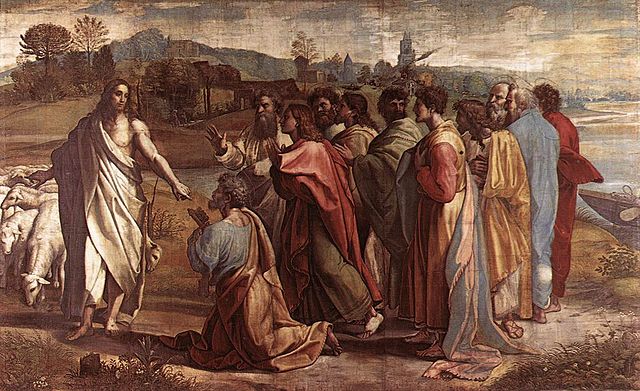
4. **The “Messianic Secret” as an Early Church Creation: A Veil of Silence Redefined**The “Messianic Secret,” a distinctive Markan motif, describes Jesus’s consistent efforts to conceal his identity as the Messiah. He frequently commanded disciples, those healed, and even demons to keep his true nature confidential. For a long time, this was interpreted as Jesus’s own cautious approach to avoid political misunderstandings, a direct reflection of the historical Jesus.
However, William Wrede, in 1901, presented a “devastating condition” to this view, arguing that the “Messianic Secret” motif within Mark “had actually been a creation of the early church instead of a reflection of the historical Jesus.” Wrede proposed that elements like Jesus’s silencing of demons, the disciples’ perceived obtuseness, and the veiled truth within parables were theological fictions.
These constructs, he suggested, reconciled the Church’s post-resurrection belief in Jesus as Messiah with the historical fact that Jesus did not openly proclaim himself as such during his earthly life. This insight transformed the motif from a characteristic of the historical Jesus into a profound Markan literary and theological strategy. It implies a “silent fight” within the text, reflecting the Church’s retrospective grappling with Jesus’s messianic claims.
The debate continues: how much of this “secret” originated with Mark, how much from tradition, and to what extent it reflects the historical Jesus’s self-understanding. Wrede’s thesis forces us to confront the sophisticated interpretive layers embedded in the gospel, inviting us to see Mark not just as a reporter, but as a theologian carefully constructing a narrative for his community.
5. **The “Fictitious” Pre-Markan Passion Narrative: Crafting the Core of the Story**Central to the Gospel of Mark is the passion narrative—the account of Jesus’s suffering, death, and resurrection. This climactic sequence forms the theological core of Mark’s story. Scholars once hypothesized a “pre-Markan passion narrative,” a distinct, earlier written account that the evangelist Mark then incorporated and adapted into his larger gospel framework, suggesting a robust, pre-existing tradition.
This hypothesis implied that the events leading to Jesus’s crucifixion and resurrection were so pivotal and early to crystalize within the Christian community that they circulated as a coherent narrative unit before the full gospel was composed. If true, it would underscore the early Church’s profound focus on these defining moments, lending particular historical weight to this section of Mark’s work.
However, scholarship has critically turned against such source criticism of the gospels. While the idea of a pre-Markan passion narrative had been “remarkably resilient,” Helen Bond ultimately characterized it as “fictitious.” This assessment challenges the notion of a neatly pre-packaged narrative, suggesting Mark played a more integral role in shaping this central account than previously thought.
This re-evaluation constitutes a “silent fight” against fragmenting the gospel into discrete sources, advocating for a more unified view of Mark’s literary composition. It dismantles a convenient scholarly construct, prompting a deeper appreciation for Mark’s own authorial agency. The narrative of Jesus’s suffering, while rooted in historical events, likely received its specific Markan form and theological emphasis from the evangelist himself.
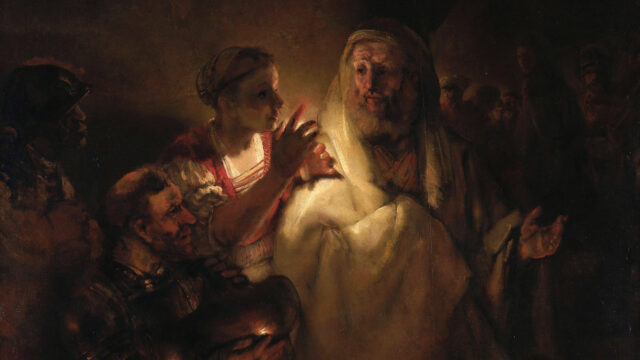
6. **The Negative Portrayal of Disciples: A Narrative of Infidelity and Failure**Among the most striking and frequently discussed aspects of the Gospel of Mark is its seemingly unflattering, even harsh, depiction of Jesus’s disciples. They are often portrayed as obtuse, fearful, and repeatedly failing to grasp the true nature of Jesus’s mission, especially his path of suffering. This “devastating condition” in the narrative has sparked immense scholarly discussion.
The disciples, particularly the inner circle of the Twelve, are shown moving through a narrative arc that progresses “from lack of perception of Jesus to rejection of the ‘way of suffering’ to flight and denial.” Even the women, who are the first to receive the proclamation of Jesus’s resurrection, are initially portrayed as failing to report the good news, concluding the earliest versions of the gospel by “saying nothing to anyone, for they were afraid.” Such portrayals raise significant questions about Mark’s authorial intent.
Scholarly interpretations of this negative portrayal are diverse. Some argue Mark deliberately used the disciples’ failures to correct “erroneous” theological views within his own community, particularly concerning the reality of a suffering Messiah. Others propose it as a critique of the Jerusalem church, seen as resistant to the gospel’s extension to Gentiles, or as a mirror reflecting the typical convert’s journey from initial enthusiasm to a deeper, often difficult, awareness of suffering’s necessity.
This “silent fight” within the narrative resonates deeply with ancient Jewish scripture, where “God’s love being met by infidelity and failure, only to be renewed by God” is a recurrent theme. Jesus, in Mark, is presented as the “suffering just one,” echoing figures from Jeremiah to Job and the “Suffering Servant” passages in Isaiah. The disciples’ shortcomings, therefore, are not mere narrative flaws but powerful theological statements.
Ultimately, the failures of the disciples and Peter’s specific denial would have served as potent symbols for early Christians. They offered a relatable human experience of fallibility, yet simultaneously conveyed a profound message of enduring faith, hope, and the possibility of reconciliation, even after profound lapses. This complex portrayal remains a critical “condition” for understanding Mark’s unique theological contribution and his vision of true discipleship.
7. **The Enigmatic Endings: Textual Variance and Theological Implications**The narrative journey through the Gospel of Mark culminates in an intriguing textual mystery: its ending. Scholars have long grappled with the precise conclusion of this foundational text, creating a silent fight against definitive closure. The earliest extant Greek manuscripts, notably codices Vaticanus and Sinaiticus, famously conclude at Mark 16:8, depicting the women fleeing in fear from the empty tomb, saying nothing to anyone. A majority of recent scholars, bolstered by the testimonies of early Church Fathers like Eusebius and Jerome, believe this abrupt, almost unsettling, ending to be the original. It leaves the reader with a sense of apprehension and an open invitation to reflect on the implications of a silent, fear-filled response to resurrection.
However, this isn’t the only ending that has circulated through history. A “shorter ending,” found in a small number of manuscripts, offers a brief, somewhat didactic conclusion. It describes the women telling “those around Peter” what the angel had commanded, followed by Jesus himself sending out a message of eternal life. Yet, its distinct stylistic differences and its particular understanding of Jesus lead scholars to almost universally consider it a spurious addition, a later attempt to provide a more conventional resolution that diverges from Mark’s unique narrative voice.
The most widely recognized, and certainly the most prevalent in manuscript tradition, is the “longer ending” (Mark 16:9–20). This extended conclusion includes accounts of the resurrected Jesus’s appearances, his commissioning of the disciples to proclaim the gospel, and his eventual ascension. While revered for centuries, critical editors of the New Testament typically enclose it in brackets, acknowledging its later provenance. It offers a triumphant and explicit affirmation of Jesus’s post-resurrection activities, providing a stark contrast to the earlier manuscripts’ abrupt finish.
This scholarly condition surrounding Mark’s ending forces a profound theological inquiry. Does the original, fear-ridden conclusion at 16:8 compel the reader to become the true evangelist, to break the silence and proclaim the good news themselves? Or does the longer ending, with its clear declarations of Jesus’s triumph and the disciples’ mission, offer a more comforting, if less challenging, theological pathway? The debate highlights the dynamic nature of early Christian textual transmission and its enduring impact on how we perceive the narrative’s ultimate message of salvation and discipleship.

8. **Jesus as “Magician”: Addressing the Charge of Demonic Power**Amidst the powerful accounts of Jesus’s miracles and healings in Mark, there lies a controversial narrative choice that posed a significant challenge to his divine authority: the perception of Jesus as a magician. Mark dedicates almost a third of his gospel, and half of the first ten chapters, to these extraordinary acts. However, the evangelist’s descriptions sometimes include details that, within the social and cultural context of the Roman Empire, could be dangerously misconstrued. Jesus’s methods, such as using spittle to heal blindness or uttering specific words and phrases that functioned like incantations, bore an unsettling resemblance to the practices of contemporary magicians.
The historical record reveals the severe implications of such a label; as Classical scholar Ramsay MacMullen observed, there was “no period in the history of the [Roman] empire in which the magician was not considered an enemy of society,” facing penalties ranging from exile to death. Mark’s detailed inclusion of Aramaic healing commands, like “Talitha koum” (Mark 5:41) and “Ephphatha” (Mark 7:34), further contributed to this perception. These precise, evocative phrases, while perhaps intended to convey authenticity or immediate divine power, could also be seen through the lens of esoteric magical formulae.
This narrative choice led directly to significant theological debates and accusations, especially from the Jewish religious leaders within the gospel’s story. They charged Jesus with performing exorcisms with the aid of an evil spirit, such as Beelzebub, or even calling up the spirit of John the Baptist. These accusations were not merely religious disagreements; they were direct attacks on Jesus’s legitimacy and claims, implying he derived his power from demonic forces rather than divine authority. For early Christians, who revered Jesus as the Son of God, such charges represented a devastating condition that needed to be decisively refuted.
Mark meticulously addresses this controversy, strategically framing Jesus’s actions as undeniable demonstrations of God’s rule, not Satan’s influence. The Beelzebub incident, where Jesus argues that Satan cannot cast out Satan, serves as a crucial theological defense. Through these episodes, Mark aims to establish Jesus as an instrument of God, distinguishing his divine power from the illicit and condemned practices of sorcery. This careful narrative construction underscores Mark’s dedication to defending Jesus’s true identity against cultural misunderstandings and hostile interpretations.
9. **The Multi-faceted Christology: Decoding “Son of God,” “Messiah,” and “Son of Man”**The heart of Mark’s theological contribution lies in its intricate Christology – the understanding of Jesus’s person and nature, conveyed largely through the titles applied to him. Among these, “Son of God” emerges as the most paramount. It resonates with divine authority, appearing on the lips of God himself at Jesus’s baptism and transfiguration, and surprisingly, as Jesus’s own self-designation. This repeated affirmation by both heavenly and earthly sources provides reliable evidence of the evangelist’s perception of Jesus, yet the precise meaning of this title to Mark and his first-century audience remains a subject of rich scholarly debate.
Unpacking “Son of God” reveals a tapestry of meanings drawn from both Jewish and Hellenistic traditions. In Hebrew Scriptures and among Jews, the term could refer to an angel, the nation of Israel as God’s chosen people, a righteous sufferer, or simply a man. Significantly, it also denoted an earthly king adopted by God at his enthronement, legitimizing his rule. Conversely, in Hellenistic culture, “Son of God” often conjured images of a “divine man” or a supernatural being, encompassing legendary heroes like Hercules or deified rulers. The scarcity of evidence for “son of God” as a direct messianic title in 1st-century Judaism further complicates its interpretation, leading some scholars to suggest Mark leans towards a Hellenistic “divine man” concept.
Beyond “Son of God,” Mark employs “christos” (Christ), the Greek translation of the Hebrew “messiah,” meaning “anointed person.” While the Old Testament applied “messiah” to prophets, priests, and kings, by Jesus’s era, it had evolved to signify an eschatological king—a powerful, sinless human deliverer at the end of time. Mark deliberately places the most important occurrences of “Christ” in the context of Jesus’s death and suffering, suggesting that for him, Jesus’s true messianic identity is profoundly understood only through his Passion. This controversial narrative choice challenges prevailing expectations of a conquering hero, redefining messiahship through suffering.
The third crucial title, “Son of Man,” roots itself in potent apocalyptic visions from Ezekiel and the Book of Enoch, and most powerfully in Daniel 7:13–14, where a heavenly figure is assigned royal dominion and glory. Mark masterfully interweaves these titles in climactic moments, such as Mark 14:62, where Jesus combines allusions to coming on clouds and being seated at God’s right hand. This synthesis points to an equivalence between “Christ,” “Son of God,” and “Son of Man,” with kingly power as their common thread. Mark’s sophisticated Christology, therefore, presents a layered and profound understanding of Jesus’s identity, grappling with diverse cultural expectations to forge a unique theological portrait centered on divine authority and redemptive suffering.

10. **Eschatological Expectations and the Delayed Return: Reinterpreting God’s Kingdom**The profound question of eschatology—the study of the end-times—forms a crucial theological debate within the Gospel of Mark and early Christianity. Jewish tradition held firm expectations of a messianic deliverer who would appear at the end of the age to inaugurate an earthly kingdom. The earliest Jewish Christian communities initially embraced Jesus within this framework, envisioning him as a human figure appointed by God to serve as his earthly regent, a role consistent with ancient prophecies of a coming king.
However, a significant shift in understanding rapidly occurred. Fueled by the belief in Jesus’s resurrection and his subsequent exaltation to heaven, he came to be seen not merely as an earthly ruler but as God’s ultimate agent—the “Son of God”—who would return in glory to usher in the Kingdom of God. This conviction led to a fervent expectation among Christians of Mark’s time, as well as in the Pauline Epistles and other New Testament writings, that Jesus’s return as Messiah would happen within their own lifetimes. This anticipation shaped their theology, ethics, and communal life, providing a powerful sense of urgency and hope.
Yet, this fervent expectation confronted a “devastating condition”: the delayed *parousia*, or Second Coming. This delay prompted intense theological re-evaluation. Scholars like Burkett suggest that when the return failed to materialize as anticipated, early Christians revised their understanding of eschatology. Conversely, Christopher Hays argues that this delay was consistent with the contingent nature of ancient Jewish prophecy, implying that the timing was not fixed but dependent on other factors, such as Israel’s repentance. Some within the early Church acknowledged the delay but continued to expect the event, while others, like the Gospel of John, redefined the promise, focusing on “eternal life” as an immediate, present reality.
This intellectual silent fight within early Christianity led to diverse interpretations. Some scholars contend that all four gospels present an eschatology primarily focused on the destruction of the Jewish Temple, the transfiguration, and the resurrection of Jesus, with his ultimate return remaining an undisclosed future promise that demands constant readiness. In stark contrast, others, notably scholars associated with the Jesus Seminar, argue that much of the apocalyptic language surrounding Jesus’s return in Mark and the other gospels represents not historical prediction but theological and cultural inventions by the gospel writers and early Christians themselves. This ongoing debate about the nature and timing of God’s kingdom underscores the profound and evolving spiritual struggle to comprehend divine plans and human history.

11. **Mark’s Distinctive Narrative Strokes: Unpacking Unique Content and Literary Choices**The Gospel of Mark stands apart not only for its theological depth but also for its distinctive narrative strokes, offering particular insights and controversial choices that are often absent or significantly altered in the other Synoptic Gospels. These unique elements reveal Mark’s specific theological agenda and his skillful storytelling, inviting readers to appreciate the singular artistic and spiritual vision of this evangelist.
Among the most striking examples is Jesus’s declaration, “The Sabbath was made for man, not man for the Sabbath” (Mark 2:27). While Matthew and Luke contain similar discussions about the Sabbath, this precise formulation, emphasizing humanity’s benefit over rigid adherence to law, is unique to Mark and carries profound theological implications for early Christian freedom from legalistic strictures. Furthermore, Mark is the sole canonical gospel to explicitly identify Jesus himself as a “carpenter” (Mark 6:3), rather than merely the “carpenter’s son” as in Matthew. This small detail underscores Jesus’s earthly origins and working-class identity, painting a more grounded, relatable portrait of the Messiah.
Mark’s narrative also reveals his keen awareness of his gentile audience, exemplified by his explanations of Jewish customs such as hand, produce, and utensil washing (Mark 7:3–4). More significantly, the declaration, “Thus he declared all foods clean” (Mark 7:19), a pivotal statement for early Christian dietary practices and the inclusion of Gentiles, is found exclusively in Mark within this context, a bold theological claim absent from its Matthean parallel. These nuances highlight Mark’s role in bridging cultural divides and articulating a nascent Christian identity.
Perhaps the most enigmatic and memorable unique detail is the ” young man” who flees when Jesus is arrested (Mark 14:51–52), a perplexing and dramatic flourish that has captivated scholars for centuries, with some linking it to the young man in white robes at the empty tomb. Another compelling textual complexity is the “cock crows twice” detail in Peter’s denial (Mark 14:72), adding a layer of precise, almost agonizing, fulfillment to Jesus’s prophecy that is simplified to a single crow in other gospels. Such distinctive narrative strokes, whether theological pronouncements or peculiar dramatic details, lend Mark an incisive, compelling quality, ensuring its enduring power to provoke thought and shape understanding of the Christ story.
12. **The Purpose of Mark: Strengthening Faith in a Suffering Messiah**The enduring legacy of the Gospel of Mark is intrinsically tied to its fundamental purpose: to strengthen the faith of those who already believed. Classified as an ancient biography, Mark was crafted not primarily as a missionary tractate for conversion, but rather as a reinforcing narrative for established Christian communities. This distinct pastoral intention underpins its unique structure, its controversial narrative choices, and its profound theological debates, all converging to deepen the understanding and resolve of its readers in a challenging world.
At the core of this purpose lies Mark’s compelling portrayal of Jesus as the “suffering just one.” This powerful theme resonates deeply with ancient Jewish scriptures, echoing the experiences of figures from Jeremiah to Job and the “Suffering Servant” passages in Isaiah. By casting Jesus’s path as one inevitably leading through suffering, betrayal, and death, Mark presents a Messiah whose identity is not defined by worldly power or triumphant conquest, but by profound self-sacrifice. This theological framework encourages believers to embrace suffering as an intrinsic part of discipleship, rather than an anomaly.
Mark’s narrative, with its unflinching depiction of the disciples’ failures and obtuseness—their “infidelity and failure” mirroring a recurrent theme in Jewish scripture—serves not to condemn but to provide a relatable human experience. These shortcomings, far from being flaws, become powerful symbols of enduring faith and the possibility of reconciliation, even after profound lapses. This nuanced psychological insight into the human condition, set against the backdrop of divine love, provides a profound context for understanding the demands and rewards of true discipleship, cultivating a faith that is resilient in the face of adversity.
Ultimately, the Gospel of Mark, in all its textual complexities and theological profundities, invites continuous engagement with the person of Jesus and the nature of God’s kingdom. Its concise, action-packed narrative, despite—or perhaps because of—its challenges to simplistic interpretations, continues to inspire and confound. By bravely grappling with the “devastating conditions” of historical uncertainty and interpretive paradox, Mark ensures that his “good news” remains a vibrant, living text, a cornerstone for generations striving to comprehend the divine through the compelling narrative of a suffering, yet ultimately triumphant, Messiah.
In the unfolding narrative of human seeking, the Gospel of Mark emerges not merely as an ancient text but as a living testament to the enduring quest for meaning. Its profound depths, its intricate layers of history, theology, and literary artistry, refuse to yield simple answers, instead extending an open invitation to a continuous, rigorous engagement. It is a work that, through its scholarly struggles and its controversial insights, continues to illuminate the complex tapestry of faith, beckoning each generation to look beyond the surface and rediscover the transformative power held within its venerable pages. The silent fight it chronicles and the devastating conditions it explores are, in fact, the very wellsprings of its enduring, enigmatic allure, forever shaping our understanding of the divine and the human spirit.