
Throughout the annals of human history, the narrative of warfare is often dominated by tales of overwhelming might, where superior numbers and resources dictate the course of battle. Yet, nestled within this broader tapestry are extraordinary moments where the script is flipped entirely – instances of improbable triumph where a smaller, seemingly outmatched force emerges victorious against a larger, more formidable foe. These are the “unlikely military victories” that capture our imagination, offering profound insights into the ingenuity, resilience, and sheer audacity of combatants throughout the ages. They are not merely footnotes in history; they are pivotal junctures that have inspired generations and shaped civilizations.
Such battles are not just fascinating anecdotes; they are complex puzzles that demand deeper scrutiny. How did these Davids consistently overcome their Goliaths? The conditions and situations enabling these against-the-odds successes are numerous and varied, ranging from strategic surprise and leadership brilliance to superior training, morale, or even the clever exploitation of terrain and psychological warfare. These victories, heroic and remarkable in their nature, often become enshrined in cultural memory, lifting morale and becoming legendary tales remembered for hundreds of years by historians and cultures alike. They challenge our conventional understanding of military power and force us to look beyond mere troop counts.
Indeed, understanding the possibilities that remained unrealized in these pivotal moments is precisely what historians and mathematicians are now exploring with fresh perspectives. A groundbreaking text, “Quantifying Counterfactual Military History,” by Brennen Fagan, Ian Horwood, Niall MacKay, Christopher Price, and Jamie Wood, highlights this interdisciplinary approach. As the authors explain, “In writing history, it must always be remembered that a historical fact is simply one of numberless possibilities until the historical actor moves or an event occurs, at which point it becomes real. To understand the one-time possibility that became evidence we must also understand the possibilities that remained unrealized.” This perspective invites us to ‘re-fight’ these battles not with actual armies, but with statistical insight and a deep appreciation for the critical junctures that define them. Let us now embark on a journey through some of the most famous and improbable military victories against the odds.

1. **Boudican Revolt: Roman Discipline Versus Celtic Fury**
The Boudican revolt stands as a stark testament to the power of Roman military discipline and strategic cunning in the face of overwhelming numerical superiority. This was an assault that, according to the Roman scholar Lucius Cassius Dio, writing a century after the fact, involved 230,000 Celtic Britons. While modern estimates place the rebel numbers more realistically between 20,000–40,000, they still greatly outnumbered the Roman army of 10,000 under the command of Gaius Suetonius Paulinus. The raw ferocity of Queen Boudica’s Iceni tribe and allied Celtic forces had already brought devastation to Roman settlements, but the final confrontation would highlight the enduring effectiveness of Roman legions.
As reinforcements failed to arrive for Paulinus, he made a calculated and audacious decision, moving his forces into a bottlenecked valley. This topographical feature was critical, as it forced the uncoordinated Celtic horde to engage on Roman terms, nullifying their numerical advantage by restricting their ability to maneuver. The Roman strategy was multi-layered: they first exhausted their ranged weaponry, raining down projectiles on the approaching Celts, before shifting to a tight, shielded formation. This dense, disciplined phalanx allowed them to absorb the initial shock of the Celtic charge.
Crucially, the Romans fought in formation with their signature stabbing gladius, a weapon designed for close-quarters, disciplined combat. In stark contrast, the Celts, accustomed to wide, swinging motions with their swords, found themselves shoehorned with very little space to effectively wield their weapons in the congested valley. Further compounding the Celts’ woes, they had made a grave tactical error: leaving their wagons blocking their route of escape. This decision effectively trapped their routed forces, preventing an orderly withdrawal and transforming a potential retreat into a catastrophic rout. The result was a devastating victory for the Romans, with approximately 80,000 Celts killed, while the Roman army suffered only around 400 losses and similar numbers injured, firmly crushing the rebellion.
2. **Battle of Dupplin Moor: A Masterclass in Defensive Positioning**
The Battle of Dupplin Moor, fought on August 11, 1332, marked the tumultuous beginning of the Second War of Scottish Independence. It pitted supporters of the young King David II of Scotland, son of Robert the Bruce, against English-backed invaders led by Edward Balliol, son of King John I of Scotland. The numerical disparity was staggering: the Scottish force, commanded by Donald, Earl of Mar and Robert Bruce, Lord of Liddesdale, was estimated to have been made up of more than 15,000 and possibly as many as 40,000 men. They attacked a largely English force of only 1,500 commanded by Balliol and Henry Beaumont, Earl of Buchan.
Balliol’s army, despite its vastly inferior numbers, executed a brilliant maneuver by crossing the River Earn at night via an unguarded ford, establishing a strong defensive position. This tactical foresight proved to be the bedrock of their impending victory. The following morning, the Scottish forces, driven by overconfidence and perhaps a lack of coordination, rushed to attack the English. This hasty advance disorganised their own formations, robbing them of any cohesive fighting order before they even engaged the enemy line.
Unable to break the steadfast line of English men-at-arms, the Scottish forces found themselves caught in a devastating trap. Fresh forces arriving from their rear pressed them forward into a valley, eliminating any room for maneuver or even for effectively using their weapons. The English longbowmen, positioned strategically, unleashed volleys into both Scottish flanks, causing immense casualties and further disarray. Many Scots died of suffocation or were trampled underfoot in the crush. Eventually, their lines broke, and the English men-at-arms mounted their horses, pursuing the fugitives until nightfall. Perth fell, the remaining Scottish forces dispersed, and Balliol was crowned King of Scots. The precise figures for the English dead are telling: they lost 35 men-at-arms, with not a single English archer killed, underscoring the near-perfect execution of their defensive strategy against overwhelming odds.
3. **Battle of Agincourt: English Longbows Against French Chivalry**
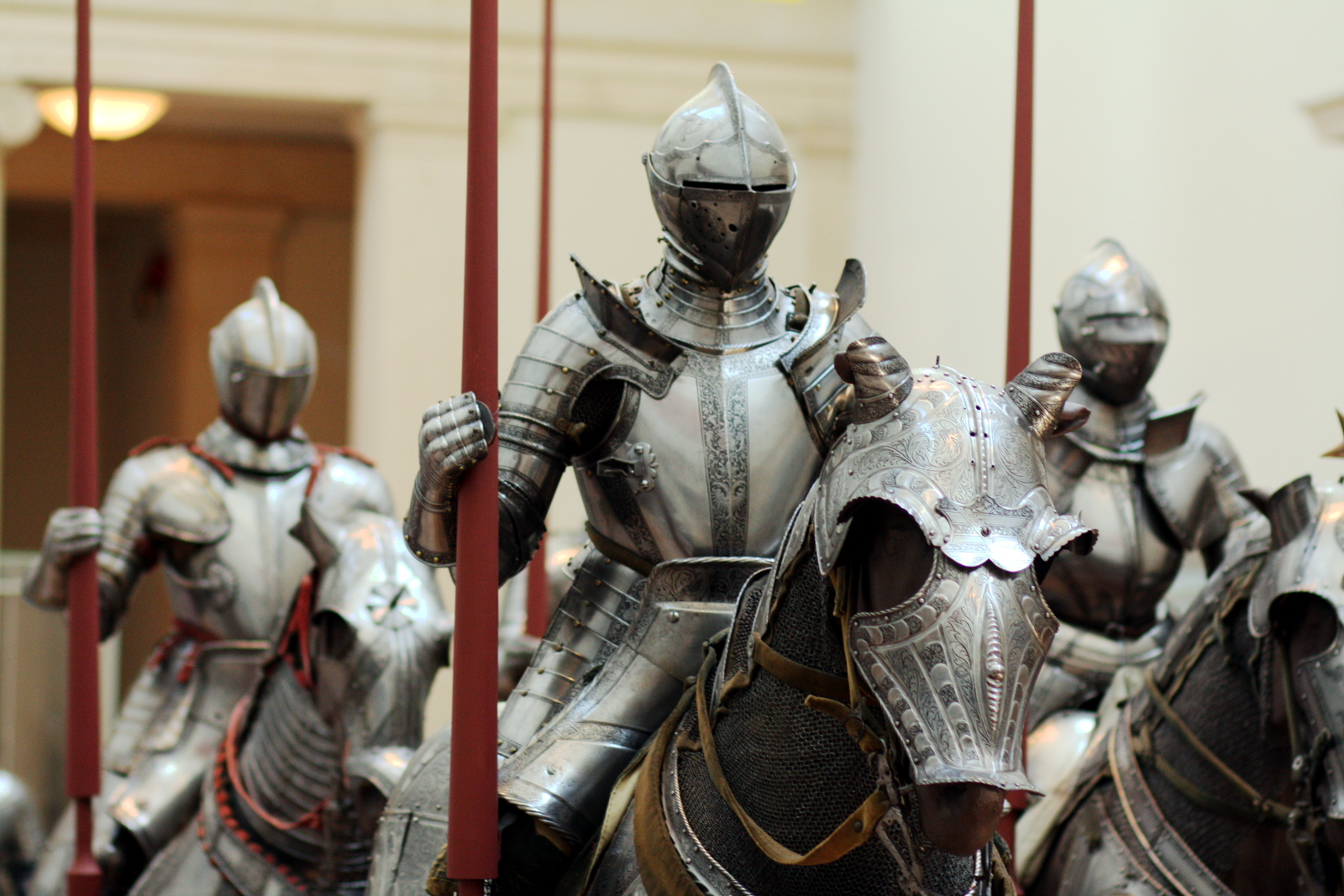
The Battle of Agincourt in 1415 remains one of the most iconic victories against all odds in military history. A depleted English army, led by the indomitable King Henry V, composed of 5,000 to 8,000 longbowmen, faced a numerically superior French army of 15,000 to 30,000 cavalry and heavy infantry. The English were outnumbered, possibly by as much as five-to-one, yet they achieved an unexpected and decisive victory through a potent combination of better tactics, favorable terrain, and the devastating missile superiority of the longbow.
Henry V, personally leading his troops into battle and participating in hand-to-hand combat, chose a defensive stance that maximized his army’s strengths and exploited the battlefield conditions. The English erected wooden fortifications and then unleashed a torrent of arrows on the advancing French army. The terrain played a crucial role: the English benefited from a position where their flanks and rear were protected by woods, and the ground in front of them was muddy from recent rain. This natural advantage not only restricted the French’s ability to use their numerical superiority but also drove their oncoming horses onto prepared wooden stake defenses, further disrupting their charge and bogging them down.
As the English archers eventually ran out of arrows, they dropped their bows and, armed with hatchets, swords, and the mallets they had used to drive their wooden stakes, launched a counterattack against the now shaken, fatigued, and wounded French men-at-arms. The French forces, already having sustained heavy losses and encumbered by their heavy plate armor while struggling in the deep mud, were ill-prepared for this aggressive English counter-blow. This decisive move broke the French lines, and the rest of their army, having witnessed the slaughter, fled the field. Henry V’s victory, against such a numerically superior force, crippled France and ushered in a new period of the war, significantly altering the dynastic succession and the future of both nations. The battle saw the death of between 6,000 and 9,000 French troops, with comparatively few English losses, cementing its place as an improbable triumph.
4. **Siege of Eger (1552): Hungarian Resolve Against Ottoman Might**
The Siege of Eger in 1552 is a stirring tale of unwavering defiance against the inexorable advance of the Ottoman Empire into Central Europe. At this time, the Ottomans had already conquered most of the Kingdom of Hungary, including its capital, Buda. Their next objective was the strategically vital castle protecting the major North-Hungarian city of Eger. The odds were, to say the least, horrifyingly stacked against the defenders. The unmaintained castle lacked robust defenses and held a mere 2,100–2,300 defenders. A significant portion of these were untrained individuals, including women and peasants who had fled from other Ottoman attacks, rather than seasoned soldiers.
Against this small, disparate force, the Ottomans launched their assault with an army of 35,000–40,000 well-equipped men, complemented by several hundred pieces of artillery. This meant the Hungarians were outnumbered by a staggering ratio, approximately 17 to 1, though some older accounts exaggerate the Ottoman numbers even further to 150,000–200,000. The sheer scale of the Ottoman war machine was designed to overwhelm and instill fear, and by all conventional military logic, Eger should have fallen swiftly.
However, the Hungarian defenders, under their resolute leadership, displayed extraordinary courage and tenacity. They withstood the relentless Ottoman siege for 39 grueling days, repelling wave after wave of assaults. Despite the overwhelming firepower and numerical advantage of the attackers, the Hungarians refused to yield. The Ottomans, battered by heavy casualties and frustrated by the stubborn resistance, eventually retreated. This improbable victory for the Hungarians, achieved with approximately only 500 deaths among their ranks, halted the Ottoman advance and became a powerful symbol of national pride and resistance against a formidable empire.
5. **Battle of Hodów (1694): The Improvised Defense of Polish Hussars**
The Battle of Hodów in June 1694 during the Polish-Ottoman war (1683–1699) presents perhaps one of the most uneven battles in history. A massive force of 40,000 to 70,000 Tatars, dispatched from the Ottoman state of the Crimean Khanate, swept into the undefended countryside of the Kingdom of Poland with the sole intention of pillaging. In response, a minuscule Polish contingent of 100 winged Polish hussars and 300 Towarzysz pancerny, totaling a mere 400 defenders, was sent to prevent widespread devastation.
The numerical disparity was immense, a staggering 1 to 100 against the Tatar horde. Facing such insurmountable odds, the Polish forces quickly fortified themselves using whatever was at hand – the remains of fences and tables abandoned by previous Ottoman assaults. This improvised defense, combined with their elite training and high morale, allowed them to establish a formidable, albeit rudimentary, stronghold. For six grueling hours, they repelled wave after wave of Tatar attacks, demonstrating incredible resilience and tactical prowess.
As the battle raged, the Polish defenders eventually ran out of ammunition for their firearms. In a display of astonishing ingenuity and determination, they resorted to using Tatar arrowheads as substitutes, turning the enemy’s own projectiles against them. The Tatars, suffering increasing casualties and losses (almost 2,000 dead), eventually sent Lipkas (Polish-speaking Tatars) to negotiate a surrender. However, the Polish defenders, sensing the tide had turned, declined. This refusal marked the end of the six-hour battle, culminating in the retreat of the Tatar forces, a truly astounding victory achieved through sheer will and resourceful defense.

6. **Battle of Lacolle Mills (1814): British Regulars Hold the Line**
The second Battle of Lacolle Mills, fought on March 30, 1814, during the War of 1812, saw a minuscule British force successfully repel a significantly larger American invasion. Initially, just 180 British 13th Regiment of Foot regulars, under the command of Richard Handcock, were entrenched in the stout stone blockhouse of Lacolle Mill. They faced an overwhelming force of 4,000 US troops, who were also armed with artillery, giving the Americans a staggering numerical advantage.
The sturdy stone blockhouse proved to be a critical defensive asset, resisting most of the American artillery bombardment. Despite being desperately outnumbered and running low on ammunition, Handcock’s initial 80 men (before reinforcements arrived) fixed bayonets and charged the US artillery positions. Though pushed back by the sheer numbers, this audacious move signaled their unyielding resolve. The Americans made several attempts to breach the British positions, but each was met with determined resistance and failed to achieve a breakthrough.
The tide began to turn with the timely arrival of reinforcements. A Grenadier company and a light company force, totaling 160 men, force-marched to assist the British, arriving shortly after the initial assaults began. Later, a small number of Canadian troops also arrived, boosting the total British/Canadian forces to approximately 500. With these new men, Handcock once again ordered a bayonet charge on the artillery position, this time overwhelming them. Facing such unexpected and fierce resistance, the 4,000 US troops fled the battlefield. The battle was a major triumph for the British troops, leading to Major General James Wilkinson, the US commander, being subsequently relieved of command and resigning from the Army after the defeat. The US forces suffered 13 killed, 51–128 wounded, and 13 missing, while the British suffered 11 killed, 46 wounded, and 4 missing.
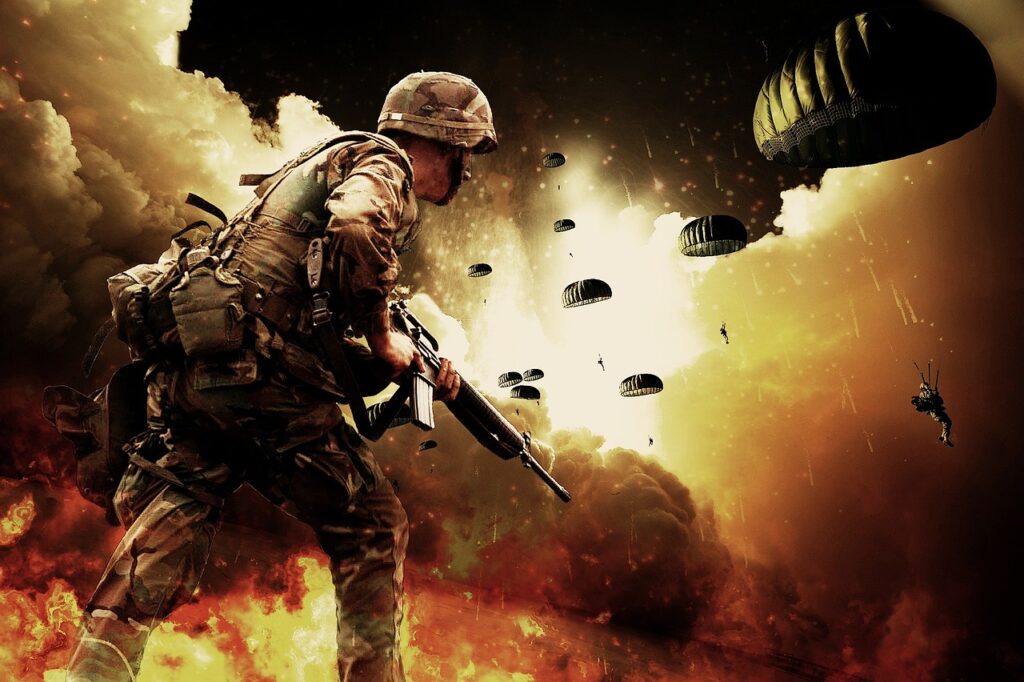
7. **Battle of Brownstown: Native American Ambush and Tactical Withdrawal**
Another significant engagement from the War of 1812, the Battle of Brownstown, highlights the effectiveness of guerrilla tactics and understanding of terrain against a numerically superior conventional force. In this instance, a small group of 25 Native Americans ambushed a much larger contingent of 200 US troops. The battle took place as the US troops approached a forest, a terrain feature that the Native Americans masterfully exploited to their advantage, concealing themselves within the dense foliage.
As the US infantry advanced, they were met with a sudden and unexpected volley of fire from the hidden Native American warriors. This surprise attack immediately sowed confusion and panic within the American ranks, causing some of the US infantry to break formation and flee. The leader of the US troops, Major Thomas Van Horne, realizing the precariousness of his position and the disarray of his men, ordered a withdrawal.
However, the ordered withdrawal quickly devolved into a complete rout, with the entire US unit breaking and fleeing in disorganization. The Native Americans achieved a military victory against daunting odds, despite being outnumbered 8 to 1. Their strategic use of the environment, combined with the element of surprise, allowed them to inflict significant casualties while suffering minimal losses. The Americans lost 17 people, while the Native Americans lost just 1, underscoring the decisive impact of well-executed ambush tactics and the psychological effect on an unprepared force.
Our journey through history’s most improbable military triumphs continues, revealing even more layers of human ingenuity, unwavering courage, and the unpredictable nature of conflict. As we delve into these next seven iconic clashes, we’ll see how exceptional leadership, innovative tactics, and sometimes sheer audacity turned the tide against what seemed like insurmountable odds, proving that numbers are not always the sole arbiter of fate. Moreover, we’ll consider how modern perspectives, especially through counterfactual analysis, invite us to ponder the ‘what ifs’ that underscore these pivotal moments, adding a richer dimension to our understanding.

8. **Battle of Blood River: A Laager’s Unbreakable Stand**
December 16, 1838, bore witness to one of history’s most striking examples of a smaller, technologically superior force utilizing a defensive innovation to devastating effect: the Battle of Blood River. This pivotal engagement saw 464 Voortrekkers, under the command of Andries Pretorius, facing off against an immense Zulu army estimated to be between 25,000 and 30,000 warriors. The stark numerical disparity set the stage for a confrontation that, on paper, should have been a rout for the European settlers.
However, the Voortrekkers were not merely relying on their firearms; they employed a brilliant defensive strategy known as the laager. This involved drawing their wagons into a tightly packed circle, creating a formidable mobile fortress. Critically, their position was chosen on the banks of the Ncome River, which protected their rear and one flank, channeling the Zulu attacks into a narrower front. This combination of fixed defensive lines, strategic positioning, and superior weaponry—muskets and cannons against spears and shields—created a killing field for the attacking Zulu regiments.
The battle raged for hours, with wave after wave of Zulu warriors attempting to breach the laager, only to be met by disciplined volleys of fire. The Zulu suffered an estimated 3,000 casualties, while the Voortrekkers recorded only three lightly wounded men. This incredible imbalance in losses highlights the almost perfect execution of the defensive plan, turning an overwhelming numerical disadvantage into a decisive, if controversial, victory. The Battle of Blood River became a foundational myth in Afrikaner history, profoundly shaping the political and cultural landscape of South Africa for generations to come.

9. **Battle of Gate Pa: Māori Ingenuity Foils British Might**
In 1864, on April 29th, the Battle of Gate Pā in New Zealand presented a fascinating study in how a numerically inferior force could successfully repulse a conventional attack through brilliant use of terrain and fortifications. A British force numbering 1,700 men, under the command of General Duncan Cameron, launched an assault on a mere 200 defending Māori warriors. The odds were heavily stacked against the Māori, yet they managed to inflict a significant setback on their colonial adversaries.
The Māori defenders had meticulously constructed a sophisticated pā (fortified village) that was specifically designed to absorb artillery fire and funnel attackers into killing zones. They employed a clever form of ‘subterfuge and successful ambush techniques,’ building elaborate trench and bunker systems that were largely invisible until the British troops were already committed. These defenses allowed the Māori to engage the British at close quarters, neutralizing the advantage of long-range firepower and creating confusion within the attacking ranks.
During the assault, the British troops suffered heavily, with 31 killed and 80 wounded, a testament to the effectiveness of the Māori defensive scheme. Though eventually the Māori force strategically withdrew from the pā, suffering only between 25 and 30 casualties themselves, their successful defense against such overwhelming numbers sent a powerful message. It demonstrated that even a smaller, indigenous force could, through intelligent tactical planning and intimate knowledge of the local environment, stand firm against the might of a well-equipped imperial army, deeply influencing subsequent engagements in the New Zealand Wars.

10. **Battle of Rorke’s Drift: A Heroic Stand Against the Zulu Tide**
Perhaps one of the most celebrated and emblematic ‘against the odds’ victories in military history, the Battle of Rorke’s Drift in 1879 epitomizes unyielding determination and courage under fire. Just over 150 British and colonial troops found themselves defending a small farmhouse and mission station against an intense, relentless assault by an estimated 3,000 to 4,000 Zulu warriors. This battle unfolded mere hours after the catastrophic British defeat at Isandlwana, putting immense psychological pressure on the tiny garrison.
The defenders, comprised of various regiments, hastily fortified their position using whatever materials were available, including mealie bags and biscuit boxes. The Zulu attacks were massive and persistent, coming in waves that pushed the defenders to their absolute limits. Despite the overwhelming numbers and the ferocity of the Zulu charges, the garrison held its ground, repelling assault after assault through disciplined rifle fire, bayonet charges, and sheer tenacity. The limited nature of the Zulu command structure, which led to ‘piecemeal’ attacks rather than a coordinated mass assault, also played a crucial role in preventing the smaller garrison from being completely overrun.
By the battle’s end, the British lost only 17 dead, compared to an estimated 351 Zulu warriors, showcasing a truly staggering disparity in casualties. For their extraordinary bravery and resilience, eleven Victoria Crosses were awarded, the largest number ever given for a single battle by the British Government. Rorke’s Drift solidified its place in military legend as a testament to the power of human will, disciplined defense, and effective leadership in the face of nearly impossible odds, inspiring countless future generations to understand that even the most formidable foe can be resisted.

11. **Capture of Belgrade by Fritz Klingenberg: Audacity and Deception**
During the tumultuous early days of World War II, a seemingly impossible feat of military cunning and audacity unfolded with the ‘capture’ of Belgrade by a small German reconnaissance patrol. In April 1941, Fritz Klingenberg, leading a mere six men, managed to infiltrate the Yugoslav capital, a city defended by thousands of Yugoslav Army troops who had retreated there to make a stand against the invading Germans. This was no conventional battle; it was a masterful display of psychological warfare.
Klingenberg’s plan was as simple as it was audacious. After navigating through enemy lines and engaging in a few firefights, he reached the city center. There, using captured trucks and parading a handful of captured Yugoslav troops, he presented himself to the Mayor. Klingenberg boldly pretended to command a much larger force, threatening devastating Luftwaffe bombing raids and artillery strikes if the city did not surrender—a bluff, as he possessed no radio or means to call for such support. Belgrade had, however, suffered heavy bombing days earlier, claiming 2,200 lives, making the threat terrifyingly credible.
Wary of further devastation and convinced by Klingenberg’s elaborate ruse, the Mayor agreed to surrender the city. Klingenberg then gathered German flags from the embassy and raised them across the city, effectively convincing the thousands of Yugoslav troops that a general surrender had occurred. Later, another small force of 15 Germans amplified the deception by driving captured vehicles repeatedly around the city to create the illusion of a larger invading army. The actual German Army, upon arriving, initially refused to believe that the well-defended city had already been captured by such a tiny force. Klingenberg’s extraordinary feat of bluff and psychological manipulation earned him the Knight’s Cross of the Iron Cross, demonstrating that sometimes, the sharpest weapon on the battlefield is the human mind.
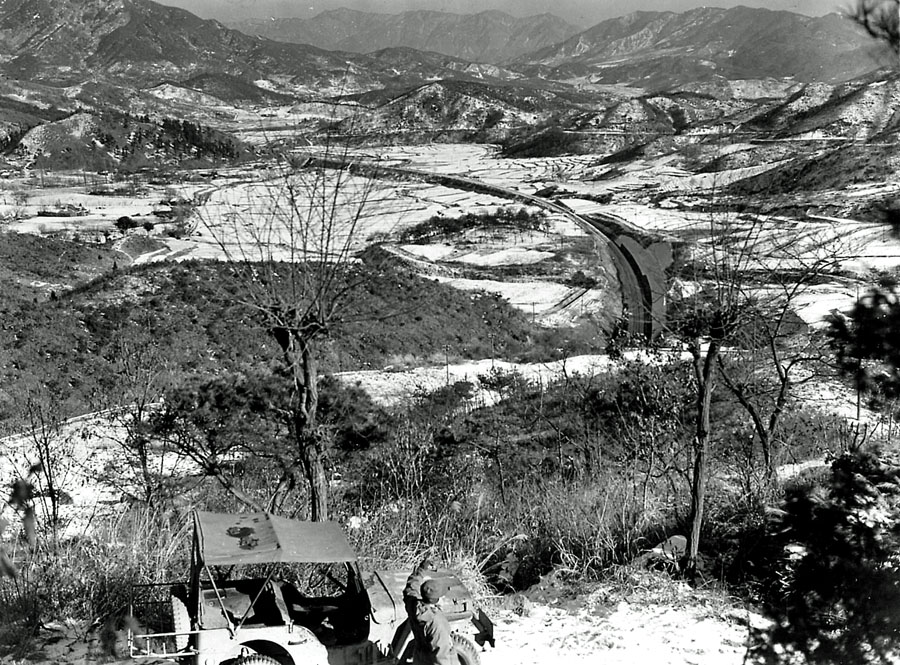
12. **Battle of Kapyong: Canadian Resilience in the Korean War**
The Battle of Kapyong, fought in April 1951 during the Korean War, stands as a stark reminder of the incredible fortitude displayed by United Nations forces against an overwhelming Chinese offensive. Positioned at a crucial strategic choke point – the Kapyong Valley, a traditional invasion route to Seoul – two battalions of the 27th British Commonwealth Brigade faced a monumental challenge. The Chinese forces, comprising the 118th and 60th Divisions, numbered around 20,000 men, outnumbering the UN battalions by a staggering five-to-one, and in the direct combat engagement area, by even greater margins.
Initially, the Australian 3rd Battalion, Royal Australian Regiment (3 RAR), valiantly resisted Chinese attacks on Hill 504. Despite their determined defense, they were eventually forced to retreat due to the threat of encirclement, leaving the Canadian 2nd Battalion, Princess Patricia’s Canadian Light Infantry (2 PPCLI), to bear the full brunt of the Chinese assault on Hill 677. The Canadians found themselves completely encircled, cut off from supporting units, and rapidly running low on ammunition and supplies.
In the face of these dire circumstances, Lt. Col. Stone, the Canadian commander, issued the unforgettable order: “No retreat, no surrender.” For continuous fighting spanning from April 23 to April 27, the Canadians, supported by the vital long-range artillery barrages from the New Zealand 16th Field Regiment and American Sherman tanks, held their ground. In a desperate move, they even called in artillery fire directly onto some of their own positions when overrun by Chinese infantry, a testament to their resolve. The Chinese eventually withdrew on April 25th, having sustained enormous casualties, estimated at around 5,000 dead, mostly from artillery fire. The 2 PPCLI’s stand, at a cost of only 12 killed and 35 wounded, proved crucial in preventing the encirclement of US forces and altering the trajectory of the Chinese Spring Offensive, a true testament to the power of a disciplined and determined defense.
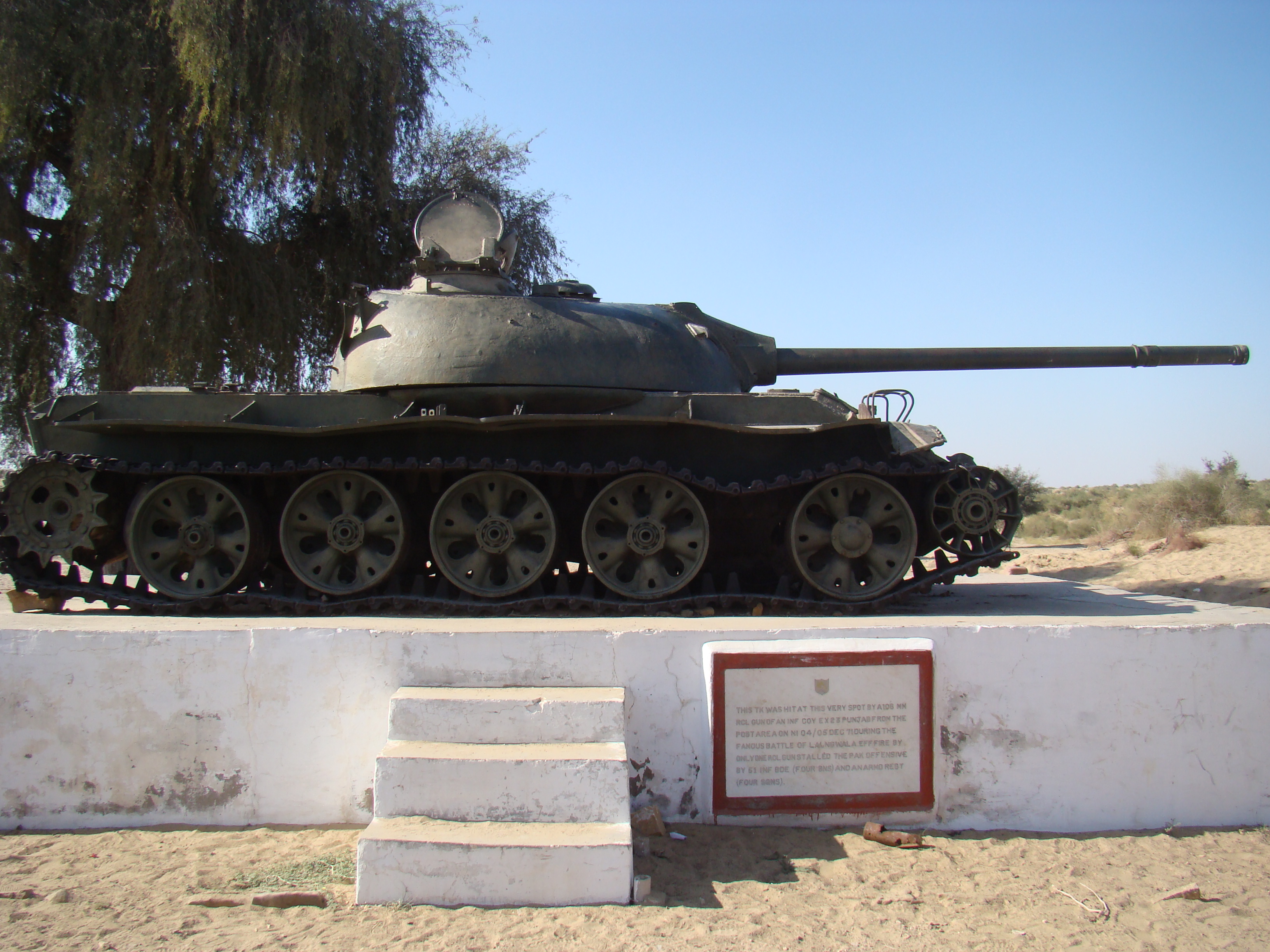
13. **Battle of Longewala: Strategic Bluff and Air Superiority**
The Indo-Pakistani War of 1971 presented another extraordinary instance of an underdog achieving a resounding victory at the Battle of Longewala. Here, a mere 120 Indian troops faced a formidable Pakistani force of 2,000 to 3,000 soldiers, backed by 40 tanks. While the numerical odds seemed insurmountably against the Indian defenders, they possessed a critical advantage: a detachment of four warplanes providing air superiority, which would prove decisive in the coming hours.
Crucially, the Indian troops employed ingenious subterfuge to enhance their defensive position. They strategically strung barbwire and meticulously placed minefield markers in areas where, in reality, no mines existed. This psychological tactic forced the advancing Pakistani units to proceed with extreme caution, diverting them from optimal routes and funneling them into inferior terrain. This brilliant deception effectively neutralized the Pakistani numerical advantage, preventing a swift, overwhelming assault.
As the Pakistani advance stalled, bogged down by the perceived minefields and challenging terrain, the Indian air force swung into action. The four warplanes, operating with devastating effectiveness in the daylight hours, systematically targeted the Pakistani tanks and troop concentrations, causing immense damage and disarray. This combination of strategic bluff, clever exploitation of the terrain, and overwhelming air support ultimately broke the Pakistani advance, forcing them to retreat before more Indian ground troops arrived. The battle resulted in a stark contrast in casualties: 200 Pakistani troops lost compared to just two Indian men and five camels, leading British media at the time to compare it to the legendary stand at Thermopylae.
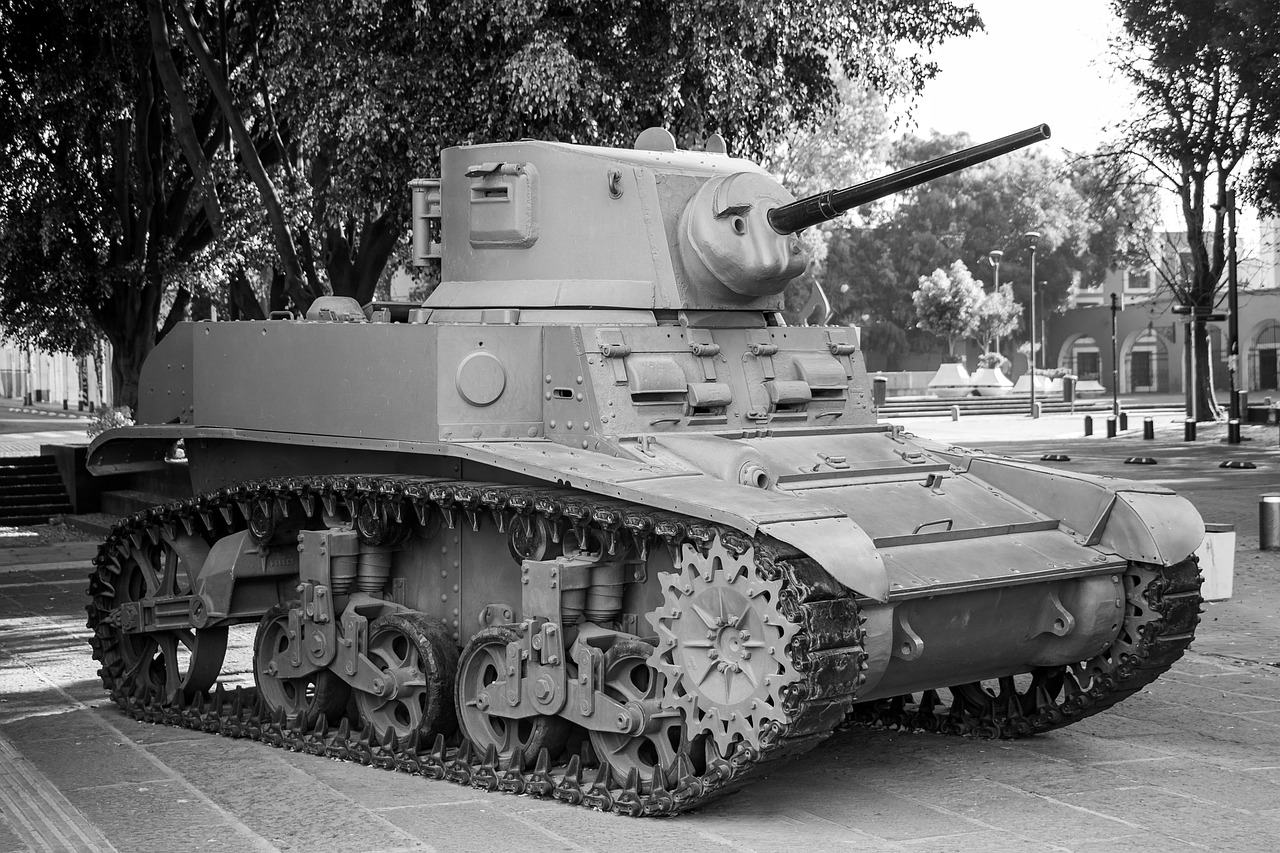
14. **Operation Eland: Precision, Deception, and Decisive Strike**
In the complex tapestry of the Rhodesian Bush War, Operation Eland in 1976 stands out as a remarkable demonstration of a small, highly trained unit achieving a decisive victory through precision, deception, and swift action. Facing a larger threat, a force of just 84 Rhodesian scouts, equipped with four armored cars, embarked on a daring mission to infiltrate and destroy a ZANU guerilla compound. This operation was a direct response to an earlier attack on a Rhodesian military base by ZANLA forces, highlighting the strategic importance of a swift and impactful counter-strike.
The key to Operation Eland’s success lay in its meticulous planning and execution of disguise and infiltration. The scouts managed to penetrate enemy territory undetected, masking their true intentions and movements. This element of surprise was paramount, allowing the small force to approach the target compound with the initiative firmly in their hands, maximizing their effectiveness against a potentially larger, yet unprepared, enemy presence.
Once inside the compound, the Rhodesian scouts executed their mission with devastating efficiency, achieving their objective of destroying the ZANU guerilla compound. What makes this operation truly extraordinary is that they accomplished this critical goal without suffering any casualties of their own. This exemplifies the power of superior training, tactical intelligence, and the psychological impact of a sudden, overwhelming strike executed by a highly disciplined force. Operation Eland remains a classic case study in how small, specialized units can achieve significant strategic outcomes against numerically superior adversaries through boldness and flawless execution.
As we reflect on these incredible stories, it becomes clear that military history is far more dynamic than a mere tally of forces. From the innovative defensive laager at Blood River to the psychological warfare at Belgrade, and the sheer tenacity at Rorke’s Drift and Kapyong, these battles underscore the profound impact of leadership, unexpected tactics, and the indomitable human spirit. Each instance, whether through a brilliant bluff or an unwavering stand, offers a compelling counter-narrative to the conventional wisdom that numbers alone dictate destiny. Indeed, by contemplating these ‘unrealized possibilities,’ we gain a richer, more nuanced appreciation for the complex interplay of factors that truly shape the course of history on the battlefield.