In the relentless pursuit of peak performance, our professional lives are constantly bombarded with a deluge of ‘productivity hacks.’ From intricate time management systems to seemingly revolutionary software, the promise is always the same: do more, faster, and with less effort. Yet, for many dedicated workers, these supposed shortcuts often feel less like helpful tools and more like frustrating distractions, leading to a sense of exhaustion rather than achievement.
It’s a common experience: you adopt a new technique championed by a thought leader, only to find it clashes with the complex realities of your day-to-day work, or worse, creates more problems than it solves. This isn’t necessarily a failing on your part. Often, these ‘hacks’ are built on superficial understandings of what productivity truly means, overlooking the nuanced economic and organizational factors that genuinely drive efficiency. They promise a quick fix without addressing the underlying systems.
In the spirit of true problem-solving and critical thinking, we’re going to dissect 15 of these widely touted, yet frequently ignored, productivity ‘hacks.’ We’ll explore why workers are right to be skeptical, drawing on a deeper understanding of productivity – not just as a buzzword, but as an efficiency measure of production of goods or services. Prepare to challenge conventional wisdom and discover why some of the most popular ‘hacks’ might be doing more harm than good.

1. **The ‘Simple Ratio’ Hack: Trusting Partial Productivity as the Whole Picture**Many common productivity ‘hacks’ encourage us to measure output against a single input. Think about metrics like ‘lines of code per hour’ for a developer or ‘documents processed per staff member’ in an office setting. These are examples of what economists call ‘partial productivities’—measures that use one class of inputs or factors, but not multiple factors. On the surface, they seem like clear, actionable indicators, offering a straightforward way to gauge efficiency.
However, the context clarifies that in practice, measurement in production often means measures of partial productivity, but they are inherently limited. While such components can be indicative of productivity development and approximate the efficiency with which inputs are used, they tell only part of the story. They can be incredibly misleading if interpreted in isolation, leading to frustrated workers who feel their efforts are not accurately represented.
The document explicitly states that these measurements are ‘defective because they do not measure everything.’ If a ‘hack’ pushes you to optimize solely for a single metric, it might encourage you to neglect other crucial inputs or outputs that contribute to overall value. For instance, focusing only on ‘units produced’ might overlook the quality of those units or the resources (like energy or materials) consumed in the process. This narrow focus can lead to short-term gains in one area at the expense of broader organizational health and genuine efficiency.
Workers are right to ignore hacks that insist on a singular, simplistic ratio. While partial productivity measures can be useful when interpreted correctly, relying on them as the sole arbiter of performance or a complete picture of efficiency is a recipe for frustration. It ignores the interconnectedness of production and risks optimizing a small part of the system while the whole suffers. It’s about understanding their partial nature, rather than treating them as total solutions.

2. **The ‘GDP Per Worker’ Hack: Believing Macro Indicators Dictate Your Daily Output**When we hear about national productivity, ‘GDP per worker’ often comes up as a key metric. In macroeconomics, this is indeed a common partial productivity measure, and it’s a revealing indicator of several economic trends. It offers a dynamic measure of economic growth, competitiveness, and living standards within an economy, helping to explain the principal economic foundations necessary for growth and social development.
However, turning ‘GDP per worker’ into a personal productivity hack for an individual or even a team is akin to trying to steer a battleship with a paddle. The output measure for this metric is typically net output, specifically the value added by the process under consideration, like the Gross Domestic Product (GDP) itself. The input measure reflects the total number of hours worked or total employment. These are vast, aggregate figures designed for national economic analysis, not for micromanaging individual tasks.
Expecting individual workers to directly improve their ‘GDP per worker’ through personal ‘hacks’ is a category error. While increasing national productivity can raise living standards, because an increase in income per capita improves people’s ability to purchase goods and services, enjoy leisure, and improve housing and education, this is a systemic effect, not an individual directive. The context notes that GDP is income available for paying capital costs, labor compensation, taxes, and profits—factors far beyond an individual’s control.
Moreover, the measure itself has known biases. GDP, for this purpose, is described as only a very rough measure, systematically biased in favor of capital-intensive production at the expense of knowledge and labor-intensive production. This means that a ‘hack’ derived from this macro-level statistic would inherently push individual efforts towards a distorted view of value creation. Workers who are told to boost their ‘GDP per worker’ through superficial means would rightly find this frustrating and irrelevant to their actual impact.

3. **The ‘Output Per Worker’ Hack: Maximizing Inputs at All Costs**Closely related to macro-level discussions is the ‘output per worker’ measure, which is often mistakenly heralded as *the* proper measure of labor productivity. It’s frequently quoted in economic discourse to emphasize a country’s ability to improve living standards over time, depending almost entirely on its ability to raise its output per worker. This might lead some ‘productivity gurus’ to suggest that simply pushing for more output from each individual, regardless of the resources consumed, is the ultimate goal.
However, the provided context delivers a sharp critique of this very notion. It states unequivocally: “This measure (output per worker) is, however, more problematic than the GDP or even invalid because this measure allows maximizing all supplied inputs, i.e., materials, services, energy, and capital at the expense of producer income.” This is a critical distinction that many ‘productivity hacks’ completely overlook, to the detriment of both workers and the organization.
Imagine a ‘hack’ that pushes you to deliver more reports, presentations, or widgets by simply using more software, more research materials, or extending your hours. While your individual ‘output’ might increase, if it’s done by excessively consuming resources without a proportional increase in actual value or ‘producer income,’ it’s not true productivity. It’s merely shifting the cost or externalizing the problem, often leading to burnout and waste.
Workers who sense that their increased ‘output’ is coming at the cost of sustainability, resource efficiency, or their own well-being are right to be wary of such ‘hacks.’ True productivity is not about thoughtlessly maximizing output from individual efforts by consuming unlimited inputs. It’s about efficient production that generates real value and income. Any ‘hack’ that ignores this fundamental economic reality is destined for the ‘ignore completely’ pile.
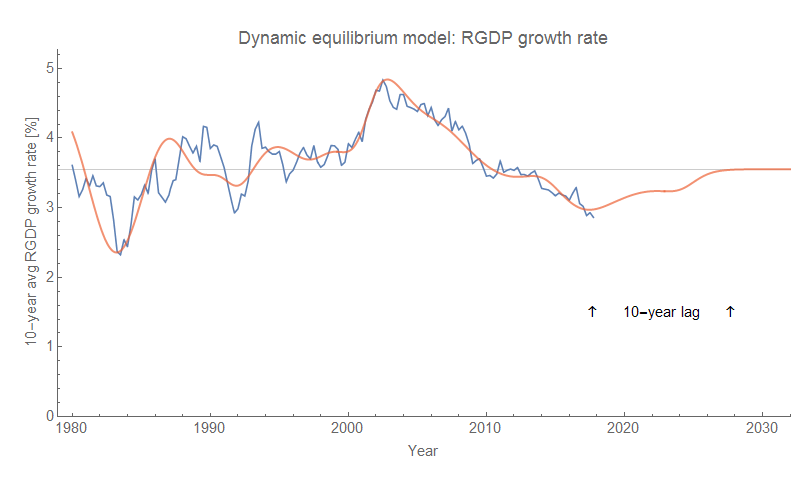
4. **The ‘TFP/MFP Magic Bullet’ Hack: Attributing All Unknown Growth to Your Brilliance**In more advanced discussions of productivity, especially at the national or industry level, you might encounter concepts like Multi-Factor Productivity (MFP) or Total Factor Productivity (TFP). These measures attempt to account for multiple inputs, typically labor and capital, to explain growth that isn’t directly attributed to an increase in these measured inputs. Some might spin this as a ‘hack’ to identify the mysterious X-factor of success – innovation, genius, or some nebulous efficiency gain.
However, the context provides a profoundly critical and nuanced perspective that should immediately make us skeptical of any ‘TFP as a simple hack’ advice. It quotes Abramovitz (1956), who famously put it: TFP is “a measure of our ignorance.” This powerful statement challenges the simplistic notion that TFP neatly captures the effects of technical and organizational innovation as a clear, attributable ‘hack.’
The ignorance TFP measures covers a broad spectrum of components. While it includes desired factors like the effects of technical and organizational innovation, it also encompasses unwanted elements such as measurement error, omitted variables, aggregation bias, and model misspecification. Therefore, using TFP as a direct, actionable ‘hack’ for individual or even team productivity is deeply flawed. It’s an aggregate residual, not a controllable input.
Robert Solow (1957) also described ‘technical change’ as “a shorthand expression for any kind of shift in the production function,” including slowdowns, speed-ups, and improvements in the education of the labor force. This broad definition further underscores that TFP is not a precise dial to turn for productivity gains but rather a complex indicator of many interacting, often unquantifiable, factors. Workers rightly tune out ‘hacks’ that promise to unlock the secrets of TFP in their daily tasks, understanding its true nature as a statistical residual, not a personal metric.

5. **The ‘Ignoring Some Inputs’ Hack: Assuming Omitted Factors Don’t Matter**Some productivity frameworks, in their quest for simplicity, might encourage you to focus only on easily quantifiable inputs while implicitly ignoring others. For instance, a ‘hack’ might suggest optimizing only labor hours and material costs, without considering the energy consumption, services purchased, or capital depreciation involved. This selective measurement, while convenient, fundamentally distorts the true picture of total productivity.
The context provides a clear warning against such an approach: “If we omit an input in productivity (or income accounting) this means that the omitted input can be used unlimitedly in production without any impact on accounting results.” This is a profound economic insight that highlights the severe flaw in any ‘hack’ that encourages selective input accounting. It implies that unmeasured inputs become ‘free’ in the calculation, leading to inefficient decisions and resource waste.
Imagine a ‘hack’ that celebrates rapid production but completely ignores the hidden costs—perhaps the increased energy drain from overworked machines, the expedited shipping for materials, or the heightened stress on supporting staff. Such a hack would effectively sanction the unlimited, unaccounted-for use of these ‘omitted’ inputs, making the reported productivity gains look artificially high while masking true inefficiencies and unsustainable practices.
For a valid measurement of total productivity, it is essential to consider all production inputs. Any ‘productivity hack’ that encourages or implicitly allows the omission of inputs is fundamentally misleading. It can lead to an unbalanced allocation of resources and ultimately undermine genuine productivity improvement. Workers who intuitively understand that every resource has a cost, whether measured or not, will rightly disregard such short-sighted advice.

6. **The ‘More Inputs, More Income’ Hack: Throwing Resources Without Strategic Growth**A common, yet often ignored, ‘productivity hack’ is the belief that simply adding more inputs—more workers, more equipment, more raw materials—will automatically lead to increased income or improved profitability per unit of input. The logic seems straightforward: more resources should produce more output, and thus more revenue. However, this simplistic view overlooks crucial economic principles that govern how resources translate into value, and it can be a source of significant frustration for businesses and their employees.
The context directly challenges this notion: “Adding more inputs will not increase the income earned per unit of input (unless there are increasing returns to scale). In fact, it is likely to mean lower average wages and lower rates of profit.” This is a critical point. Without an increase in efficiency or a shift in the production function itself (i.e., true productivity growth), merely scaling up inputs can lead to diminishing returns. It’s like trying to make a pie bigger by simply adding more flour without adjusting the recipe or oven temperature—you might just end up with a denser, less palatable result.
Many ‘productivity hacks’ encourage resource acquisition as a primary solution. Need to produce more? Hire more people, buy more software, invest in more tools. But if these additional inputs aren’t accompanied by advancements in how resources are organized, new technologies, or improved skills, the gains won’t be proportional. The result is often increased overhead, stretched resources, and a decrease in the income generated per unit of effort or capital invested.
True productivity growth, as the context explains, means more value is added in production, and this translates to more income available to be distributed. When there is productivity growth, even the existing commitment of resources generates more output and income; income generated per unit of input increases. This is distinct from simply adding inputs. Workers who experience the strain of increased inputs without corresponding improvements in efficiency or reward are justified in ignoring ‘hacks’ that advocate for this unsustainable approach.

7. **The ‘Just Install New Tech’ Hack: Expecting Perpetual Gains from Initial Adoptions**Few ‘productivity hacks’ are as universally appealing as the promise of new technology. The latest software, a cutting-edge piece of machinery, or a revolutionary communication platform often arrives with the implicit guarantee of immediate and sustained productivity boosts. The idea is simple: implement the new tech, and your efficiency problems will vanish. This leads to a ‘hack’ focused purely on technology adoption, often without considering the broader implications or the historical patterns of technological integration.
However, historical evidence, as presented in the context, offers a more nuanced and cautionary tale. While technology is undeniably a driver of productivity, the gains are not always perpetual or evenly distributed. The text points out that mass production “dramatically reduced the labor in producing parts for and assembling the automobile,” but “after its widespread adoption productivity gains in automobile production were much lower.” A similar pattern was observed with electrification, which saw the highest productivity gains in the early decades after introduction.
This pattern reappeared with the computer, information, and communications industries in the late 1990s, where much of the national productivity gains occurred primarily in these industries during their initial boom. What this suggests is that the initial, transformative impact of a new technology often yields significant, rapid gains. But once the technology becomes widespread and integrated into standard practice, the rate of productivity growth from *that specific technology* tends to slow down. The ‘low-hanging fruit’ of efficiency improvements are picked first.
Therefore, any ‘hack’ that simply advocates for ‘installing the latest tech’ without considering complementary changes—like organizational structures, management systems, work arrangements, or skills development—is bound to be frustratingly ineffective in the long run. Workers quickly realize that a new tool, without proper integration, training, and a supportive environment, is just a shiny new expense, not a sustainable source of productivity. The initial surge of excitement gives way to the realization that the ‘hack’ promised perpetual magic, but delivered diminishing returns.
Navigating the Real Drivers and Hidden Obstacles: Examining 8 more ‘hacks’ related to investment, innovation, skills, enterprise, competition, and addressing the often-ignored detrimental impacts and systemic issues that truly hinder workplace efficiency.

8. **The ‘Just Invest More’ Hack: Believing Capital Alone Guarantees Productivity**There’s an undeniable allure to the idea that simply pouring money into physical capital—be it state-of-the-art machinery, expansive office buildings, or cutting-edge equipment—will automatically lead to a surge in productivity. Many a ‘productivity hack’ implicitly, or explicitly, suggests that the solution to lagging output is to acquire more and better tools. It’s true that, as the context states, “The more capital workers have at their disposal, generally the better they are able to do their jobs, producing more and better quality output.”
However, this simplistic approach often overlooks a crucial economic reality. The context warns us that “Adding more inputs will not increase the income earned per unit of input (unless there are increasing returns to scale). In fact, it is likely to mean lower average wages and lower rates of profit.” This means that merely increasing capital expenditure without strategic foresight, improved processes, or enhanced skills can lead to diminishing returns, rather than the promised productivity boom.
Workers frequently encounter the frustration of shiny new equipment sitting underutilized or failing to integrate seamlessly into existing workflows. If new investments aren’t accompanied by appropriate training, redesigned organizational structures, or clear strategic objectives, they become expensive overheads rather than true efficiency drivers. The ‘hack’ of just investing more often translates into increased costs without proportional gains, leaving employees feeling that their efforts are still hampered by systemic inefficiencies, not a lack of tools.
True productivity growth requires capital investment to be a component of a holistic strategy. It’s about leveraging new resources intelligently, ensuring they complement other factors like labor and innovation, rather than seeing them as a standalone solution. Ignoring this nuance is why workers are right to view the ‘just invest more’ mentality with a healthy dose of skepticism.
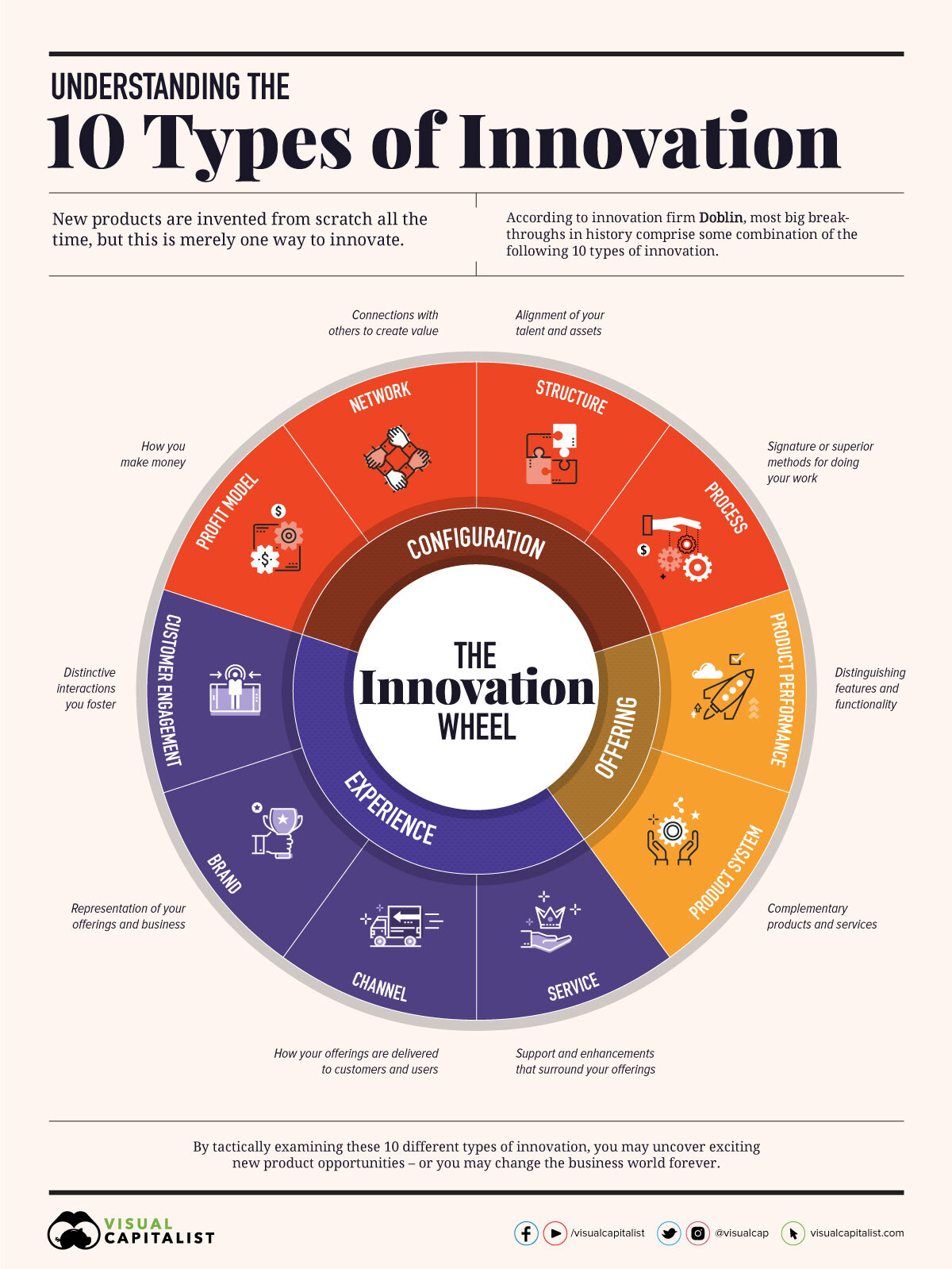
9. **The ‘Innovation Is a One-Off Event’ Hack: Neglecting Diffusion and Continuous Improvement**The buzz around innovation is intoxicating, and naturally, ‘productivity hacks’ often latch onto the idea of a groundbreaking new technology, product, or way of working as the ultimate solution. The hack suggests that once an innovation is introduced, the heavy lifting is done, and sustained productivity gains are a given. The context acknowledges this driver, stating, “Innovation is the successful exploitation of new ideas. New ideas can take the form of new technologies, new products or new corporate structures and ways of working.”
Yet, history offers a more cautionary tale than this hack implies. The article points out that while mass production “dramatically reduced the labor in producing parts for and assembling the automobile,” it was followed by a period where “after its widespread adoption productivity gains in automobile production were much lower.” A similar pattern was observed with electrification, which yielded its highest gains in the early decades after its introduction, only to slow down later.
What these examples reveal is that the initial, transformative impact of an innovation often yields significant, rapid productivity improvements. However, once the innovation becomes widespread and deeply integrated into standard operations, the rate of growth directly attributable to *that specific innovation* tends to stabilize or slow. The ‘low-hanging fruit’ of efficiency are picked first.
Therefore, a ‘hack’ that treats innovation as a single event, rather than an ongoing process of diffusion and continuous refinement, is fundamentally flawed. Workers who adopt a new system only to find it unsupported, unoptimized, or lacking subsequent updates are right to feel frustrated. Sustainable productivity comes from actively “Speeding up the diffusion of innovations,” and continuously building upon them, not from a one-time launch.
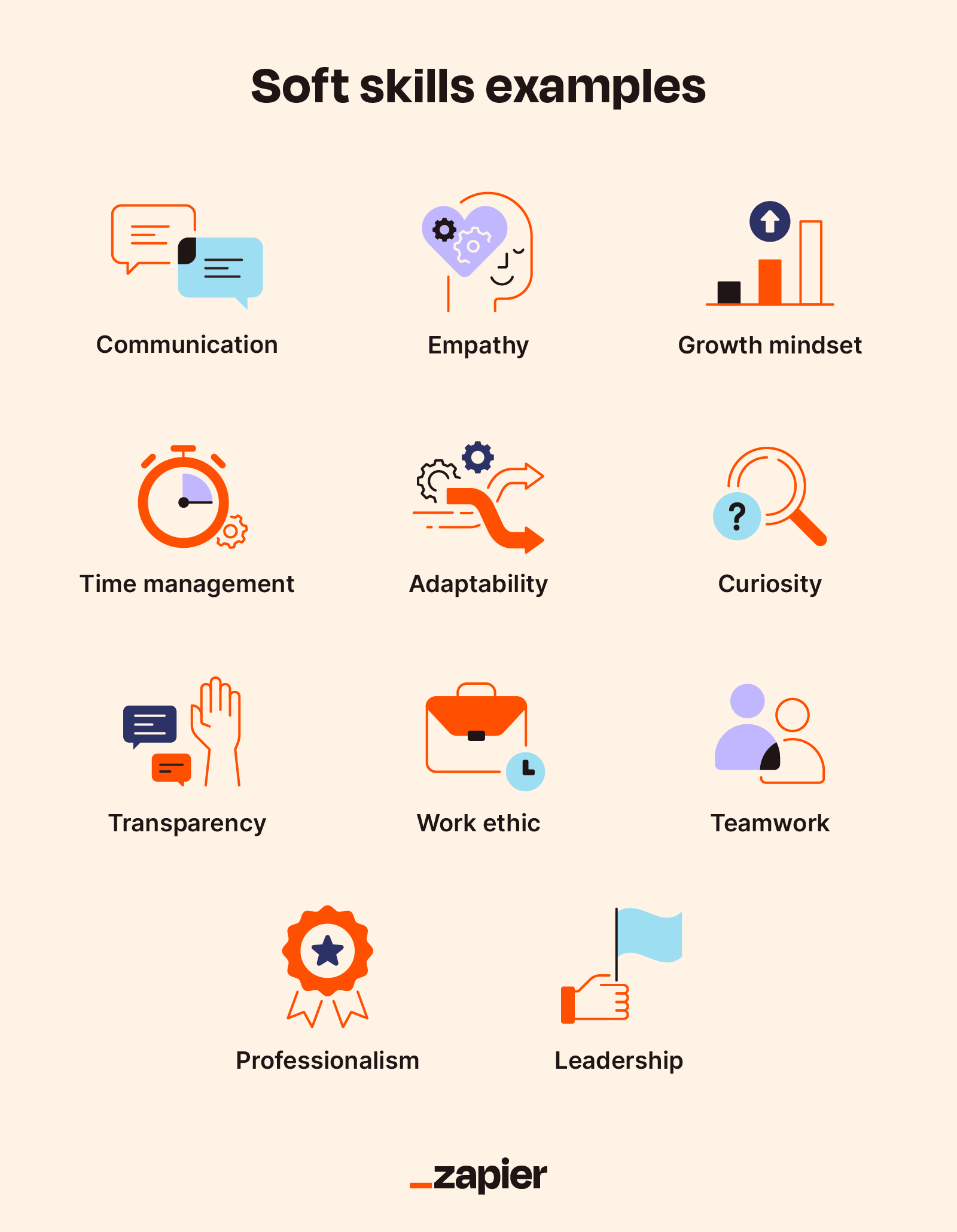
10. **The ‘Skills Are a Fixed Asset’ Hack: Underestimating the Need for Continuous Development**Many productivity ‘hacks’ inadvertently treat the skills of a workforce as a static commodity—something acquired at the point of hiring or initial training, and then simply deployed. This overlooks the dynamic nature of work itself. While it’s true that “Skills are defined as the quantity and quality of labour of different types available in an economy,” and are indeed fundamental, the context implies a deeper relationship with other drivers of productivity.
Specifically, the article states that skills “complement physical capital, and are needed to take advantage of investment in new technologies and organisational structures.” This highlights a critical interdependence. If an organization invests in new machinery or redesigns its operational structures, the existing skill set of its workforce might quickly become outdated or insufficient to fully leverage these advancements.
This hack leads to immense frustration. Employees are expected to adapt to new tools and processes, but without the necessary investment in ongoing training and skill development, they are effectively set up for failure. They find themselves struggling to use new software, operate advanced equipment, or navigate revamped organizational charts, directly hindering their ability to be productive despite their best intentions.
Ultimately, any ‘productivity hack’ that doesn’t embed continuous learning and upskilling as an integral part of its strategy will fall short. Workers understand that their ability to contribute effectively is tied to their relevant capabilities. When these capabilities are not maintained and grown in line with organizational evolution, productivity inevitably suffers, and the ‘hack’ is rightfully ignored.

11. **The ‘Just Start More Companies’ Hack: Misinterpreting Enterprise for Sustainable Productivity**
There’s a prevailing ‘hack’ that equates a burgeoning startup scene or simply creating more businesses (enterprise) with guaranteed national or even organizational productivity growth. The idea is that sheer volume of new ventures will naturally lead to greater efficiency. The context defines enterprise as “the seizing of new business opportunities by both start-ups and existing firms.”
However, the real power of enterprise, as outlined in the document, lies in its catalytic effect on competition and innovation. “New enterprises compete with existing firms by new ideas and technologies increasing competition. Entrepreneurs are able to combine factors of production and new technologies forcing existing firms to adapt or exit the market.” It’s the *challenge* and the *drive for efficiency* that new businesses introduce, rather than their mere existence, that truly boosts productivity.
Workers will quickly become disillusioned by a ‘hack’ that focuses solely on the quantity of new firms without emphasizing the quality of their innovation or the effectiveness of their competitive pressure. If the market becomes saturated with unoriginal or poorly run businesses, it can lead to wasted resources, talent dilution, and a lack of genuine progress, rather than true productivity gains.
Therefore, any ‘hack’ that promotes enterprise as a standalone solution, divorced from the critical mechanisms of competition and the successful integration of new ideas and technologies, misses the point entirely. It’s about fostering an environment where valuable innovation thrives and inefficiency is actively challenged, not just counting the number of new business registrations.

12. **The ‘Competition Solves Everything’ Hack: Ignoring Internal Obstacles to Efficiency**Competition is undeniably a powerful force, and many ‘productivity hacks’ put it on a pedestal, suggesting that intense market pressure alone is enough to optimize performance. The context certainly supports its importance: “Competition improves productivity by creating incentives to innovate and ensures that resources are allocated to the most efficient firms.” It also “forces existing firms to organise work more effectively through imitations of organisational structures and technology.”
While external competition is a vital driver, this hack fails when it assumes competition can magically override or fix deep-seated internal issues. A company might face fierce market rivals, yet its internal environment could be riddled with counterproductive behaviors that no amount of external pressure can resolve. This is where the context’s discussion on “detrimental impact” becomes particularly relevant.
The problem with this ‘hack’ is that it externalizes all responsibility. If internal systems are inefficient, communication is broken, or morale is low, simply cranking up the competitive heat won’t spontaneously generate efficiency. Instead, it often exacerbates existing problems, leading to burnout and internal friction as workers struggle to meet demands without addressing underlying structural flaws.
Workers who are told to ‘just be more competitive’ when facing issues like bullying, incivility, or toxic leadership within their own organization know this advice is hollow. They understand that without a healthy internal environment and effective management, external competition becomes a source of stress and exhaustion, not a path to sustainable productivity. True efficiency requires addressing both external pressures and internal inhibitors.

13. **The ‘Just Work Harder’ Hack: Overlooking the Detrimental Impact of Workplace Negativity**Perhaps the most insidious and widely ignored ‘productivity hack’ is the directive to simply “work harder” when output falls short. This advice often dismisses any systemic issues, placing the burden of productivity solely on individual effort. It implies that if employees are not meeting targets, they merely lack sufficient dedication or grit.
However, the context provides a stark rebuttal to this notion, detailing numerous “detrimental impact[s] of bullying, incivility, toxicity and psychopathy” on productivity. It explicitly states that “Workplace bullying results in a loss of productivity, as measured by self-rated job performance.” Moreover, targets of bullying “will spend more time protecting themselves against harassment by bullies and less time fulfilling their duties.” This clearly demonstrates how individual effort is actively undermined.
Further, “Workplace incivility has also been associated with diminished productivity in terms of quality and quantity of work.” The problem extends to the very atmosphere of a company: “A toxic workplace is a workplace that is marked by significant drama and infighting, where personal battles often harm productivity.” When employees are “distracted by this, they cannot devote time and attention to the achievement of business goals.” Even the presence of a “workplace psychopath may have a serious detrimental impact on productivity.”
For workers experiencing these challenging environments, the ‘just work harder’ hack is not just frustrating; it’s insulting. No amount of individual willpower can overcome a system that actively drains energy, creates conflict, and diverts focus from productive tasks. Addressing these foundational issues of workplace culture is a prerequisite for any genuine, sustainable improvement in efficiency, making this ‘hack’ one that workers rightly ignore completely.

14. **The ‘More Meetings Mean More Progress’ Hack: Confusing Activity with Actual Output**In the modern corporate landscape, a pervasive ‘productivity hack’ often observed is the implicit belief that more meetings, or longer meetings, equate to greater collaboration, better decision-making, and ultimately, enhanced productivity. Managers might feel that scheduling numerous discussions demonstrates active engagement and ensures everyone is on the same page.
Yet, the context offers a critical perspective on this: “In office buildings and service-centred companies, productivity is largely influenced and affected by operational byproducts—meetings.” The term “byproducts” suggests that while meetings are a part of operations, they are not always the main event, and can even be an inefficient use of time if not managed effectively.
Indeed, the document strongly implies that excessive or poorly structured meetings can be detrimental, noting that “proper planning and procedures are more likely to help than anything else.” This highlights that the *quality* and *purpose* of interactions matter far more than the *quantity*. If meetings lack clear agendas, defined outcomes, or lead to redundant discussions, they consume valuable time that could be dedicated to actual task execution.
Workers are acutely aware of the ‘meeting madness’ phenomenon, where days are filled with calls and discussions, leaving little room for deep, focused work. They understand that individual ‘productivity’ in a meeting might be zero or even negative from an organizational standpoint “if they are dedicated to redundant or value destroying activities.” For this reason, the ‘more meetings, more progress’ hack is widely disregarded as it conflates activity with genuine, impactful output.

15. **The ‘Individual Output is All That Matters’ Hack: Ignoring Systemic Organizational Design**A common yet often misguided ‘productivity hack’ centers exclusively on individual performance metrics, promoting the idea that organizational productivity is simply the sum of each employee’s isolated output. This approach places immense pressure on individuals while often overlooking the broader systemic and structural factors that enable or inhibit collective efficiency. It’s the belief that if everyone just optimizes their personal workflow, the company will naturally thrive.
However, the context provides a crucial counter-argument: “Although from an individual management perspective, employees may be doing their jobs well and with high levels of individual productivity, from an organizational perspective their productivity may in fact be zero or effectively negative if they are dedicated to redundant or value destroying activities.” This profound insight reveals that individual busyness doesn’t automatically translate to organizational value if the system itself is flawed.
The article also presents compelling alternatives, noting that “In companies where the traditional hierarchy has been removed in favor of an egalitarian, team-based setup, the employees are often happier, and individual productivity is improved (as they themselves are better placed to increase the efficiency of the workfloor).” This points to the transformative power of organizational design and empowerment, such as in “liberated companies” or through methods like Kaizen, which emphasize bottom-up, continuous improvement.
Workers instinctively understand that their most diligent individual efforts can be nullified by a poorly designed system, redundant tasks, or a lack of autonomy. They will rightly ignore ‘hacks’ that demand isolated heroics without addressing the larger context. True, sustainable productivity growth comes not just from optimizing individual actions, but from creating an organizational ecosystem where empowered teams can collectively identify and implement efficiencies that genuinely drive value.
As we conclude this deep dive into the most ignored productivity ‘hacks,’ a clear theme emerges: true productivity is far more nuanced than many simplistic slogans suggest. It’s not about quick fixes or isolated adjustments, but a complex interplay of economic principles, technological integration, continuous skill development, a healthy organizational culture, and intelligent structural design. Workers are not resistant to improvement; they are resistant to superficial advice that fails to address the real drivers and obstacles to efficiency. By understanding the deeper economic and human factors at play, we can move beyond mere ‘hacks’ towards genuine and sustainable productivity, fostering environments where effort truly translates into impactful results and collective well-being.