Alright, gearheads, petrolheads, and anyone who appreciates a good car (or, more accurately, a historically *bad* one)! Let’s be honest, for all the gleaming chrome and roaring V8s that define automotive excellence, there’s a flip side—a dark, rusty, and often hilariously incompetent side. Without the truly dreadful machines, how could we possibly appreciate the genuine engineering marvels? It’s like a culinary critic sampling the worst food to truly understand the best; sometimes, you need a taste of disaster to savor perfection.
Today, we’re not just reminiscing about cars that were merely ‘okay’ or ‘a bit rubbish.’ Oh no, we’re diving headfirst into the Mariana Trench of automotive failures, pulling out the genuine stinkers, the legendarily awful, the vehicles that managed to shape American automotive culture precisely *because* of their undeniable stink. We’re talking about cars that, despite often having a good idea at their core, were ultimately betrayed by half-hearted engineering, haphazard quality, or cynical compromises. These aren’t just bad cars; these are automotive cautionary tales, each with a story of how a promising concept veered wildly off the road into a ditch of despair.
So buckle up, because we’re about to dissect twelve of the worst roadsters and sedans in history. These are the machines that made headlines for all the wrong reasons, the ones that left owners scratching their heads, and the ones that undeniably caused their own accidents—if not literally, then certainly metaphorically, by crashing and burning in the marketplace. We’re kicking off with some truly shocking examples from the deeper end of the infamous ‘worst’ list, cars whose diabolical nature left an indelible mark on the industry. Prepare for a journey through design disasters, mechanical meltdowns, and marketing misfires that still make us cringe and chuckle in equal measure.
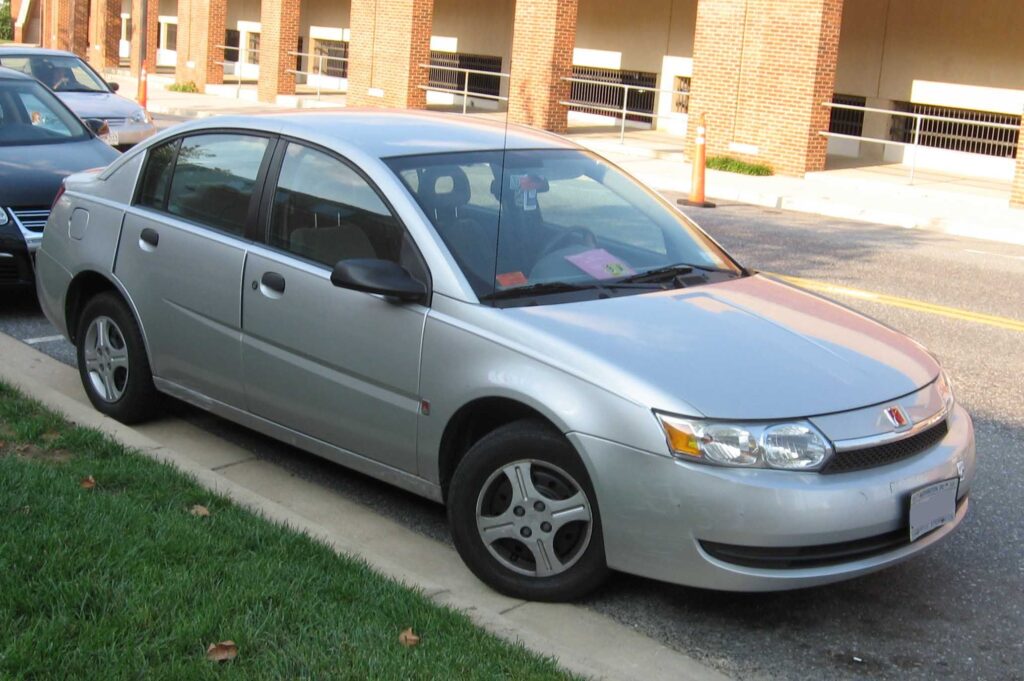
1. 2003 Saturn Ion
Let’s kick things off with a relatively modern contender, a car that, by all accounts, was just “shockingly incomplete.” The 2003 Saturn Ion arrived with a whimper, not a bang, and quickly solidified its place as a prime example of an automotive opportunity utterly squandered. Here was a chance for Saturn, a brand that once prided itself on a different approach to car-buying and ownership, to truly step up its game. Instead, the Ion felt like a placeholder, a car rushed to market without a clear vision or adequate development, resulting in a driving experience that was less ‘enthusiastic’ and more ‘endurance test.’
What made the Ion so incomplete, you ask? Well, it was a symphony of shortcomings. From the moment you settled into its rather cheap-feeling interior, you knew you weren’t in for a treat. The plastics felt brittle, the ergonomics were questionable, and the overall fit and finish left a great deal to be desired. This wasn’t just a matter of taste; it was a fundamental lack of quality control and design cohesion that permeated every aspect of the cabin, making daily commutes a chore rather than a pleasure. You could practically hear the accountants cheering as the designers wept.
But the interior was just the overture to a truly uninspiring performance. Dynamically, the Ion was bland at best, unnerving at worst. Its handling was vague, its ride quality jarring, and the engines, while functional, offered little in the way of excitement or refinement. It felt like a car designed by committee, where every bold idea was systematically sanded down to the most inoffensive, least engaging common denominator. This shocking incompleteness wasn’t just a minor flaw; it was a testament to the fact that Saturn, under GM’s tutelage, had lost its way, delivering a product that highlighted the very criticisms it was trying to overcome. It’s hard to imagine anyone getting excited about hopping into one of these, let alone feeling any sort of connection to the machine.
Car Model Information: 2007 Saturn Ion 2
Name: Saturn Ion
Caption: 2005–07 Ion (facelift)
Manufacturer: Saturn Corporation
Production: 2002–March 29, 2007
ModelYears: 2003–2007
Assembly: Spring Hill, Tennessee
Class: Compact car
BodyStyle: sedan (automobile)
Platform: GM Delta platform
Related: Chevrolet Cobalt,Chevrolet HHR,Pontiac G5,Opel Astra
Layout: Front-engine, front-wheel-drive layout
Engine: Liter,GM Ecotec engine#L61,Straight-four engine
Transmission: Getrag,Getrag F23 transmission
Wheelbase: 103.2 in
Abbr: on (Red Line)
Length: 184.5 in
Width: 67.2 in
Height: 57.4 in
Weight: convert
Predecessor: Saturn S-Series
Successor: Saturn Astra
Categories: Articles with short description, Cars discontinued in 2007, Cars introduced in 2002, Commons category link is on Wikidata, Compact cars
Summary: The Saturn Ion is a compact car sold by Saturn between the 2003 and 2007 model years. Based on the GM Delta platform, the Ion replaced the Saturn S-Series in 2002,
and was replaced by the new Saturn Astra (Opel Astra) in 2008. Production of the Ion ended on March 29, 2007. The Ion was the last Saturn passenger car built at the Spring Hill, Tennessee, plant which was originally linked to the company’s branding, with Saturn owners attending “homecoming” events at the plant.
Get more information about: Saturn Ion
Buying a high-performing used car >>>
Brand: Saturn Model: Ion
Price: Not Priced Mileage: 195,055 mi.
Read more about: Beyond Belief: 6 Minivans That Made Owners Cringe – Dissecting the Worse and Worst in Automotive History
2. 1958 Edsel Corsair
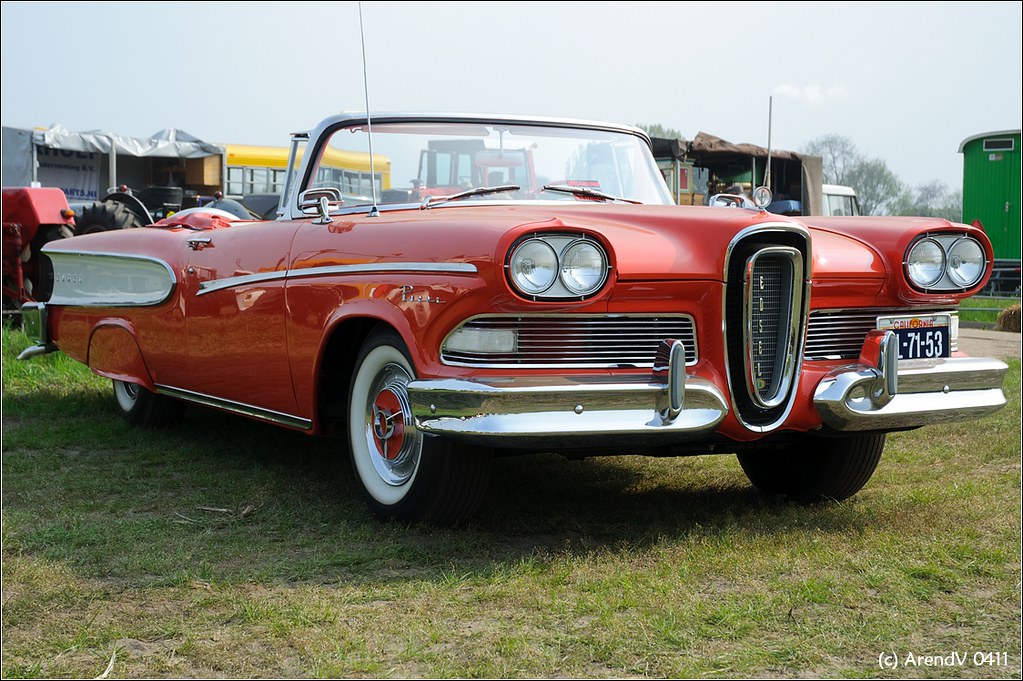
Ah, the Edsel. The very name has become synonymous with catastrophic failure, a punchline for anyone discussing market research gone horribly wrong. The 1958 Edsel Corsair stands as the poster child for Ford’s monumental miscalculation, a car born from the grand ambition of carving out a new, distinct market niche that simply wasn’t there. Ford had dreams of capturing the middle-class buyer looking for something more upscale than a Ford but not quite a Mercury. What they delivered, however, was a redecorated Mercury that, according to the annals of history, “had been beaten with an ugly stick.”
The design, particularly that infamous horse-collar grille, was instantly polarizing, veering wildly from bold to bizarre. It was meant to be distinctive, a stylistic beacon for a new brand, but instead, it became an object of ridicule. The rest of the car, while largely unremarkable mechanically (it shared many components with other Ford products), was overshadowed by this visually contentious front end. It’s a classic case of form over function, or rather, *misguided* form utterly ruining any chance of widespread acceptance.
The Edsel’s commercial performance was, predictably, a disaster. Ford had poured an astronomical sum into its development and marketing, only for it to fall flat on its face. It was the “legendary flop of all automotive flops,” a stark reminder that even the biggest corporations can spectacularly misread the public’s taste and willingness to embrace something truly different, especially when that ‘different’ is widely perceived as ‘ugly.’ The Edsel didn’t just fail; it became a cultural touchstone for how *not* to launch a product, forever etched in the collective memory as a monumental automotive blunder. Its failure reverberated through the industry, teaching valuable, albeit painful, lessons about consumer perception and design risks.
Read more about: The 6 Ugliest Fords Ever Made: A Deep Dive into Design Missteps and Automotive Blunders
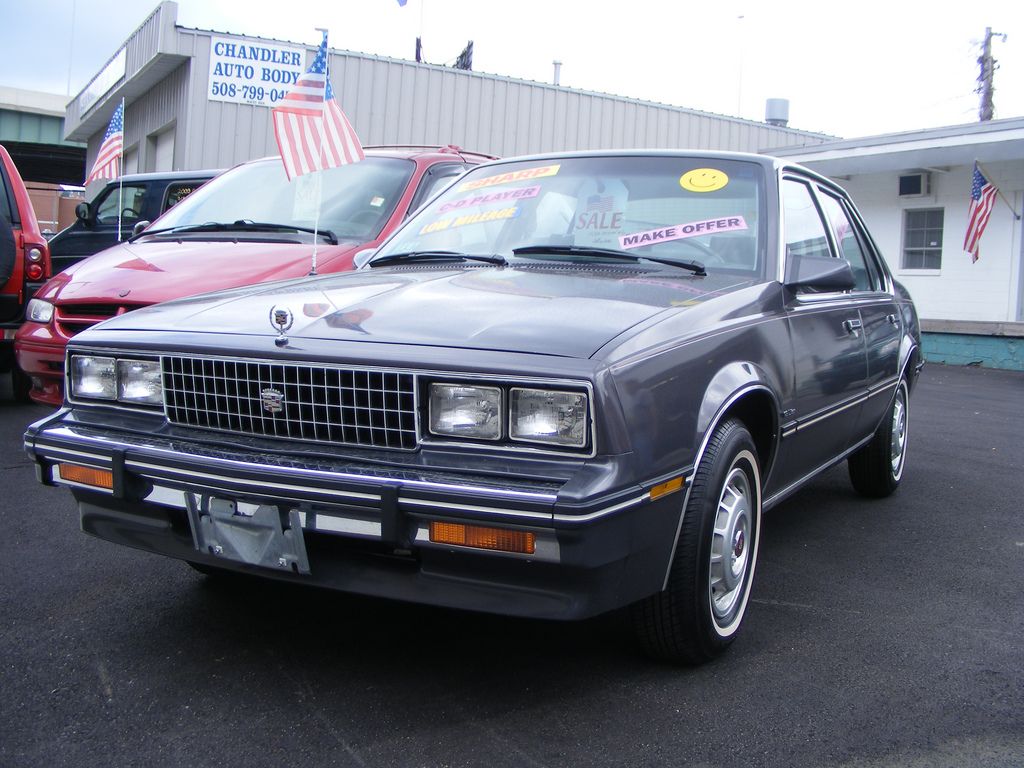
3. **1982 Cadillac Cimarron**If the Edsel was a styling disaster, the 1982 Cadillac Cimarron was a masterclass in cynical rebadging and brand dilution. This was Cadillac’s desperate attempt to compete with the growing popularity of European luxury compacts like BMW. The problem? Instead of developing a genuine contender, they took a front-drive, four-cylinder Chevrolet Cavalier, slathered on some faux-luxury trim, and slapped a Cadillac badge on it. The result was not a BMW rival, but a spectacularly insulting mockery of what a luxury car should be, and an affront to the Cadillac nameplate itself.
If the Edsel was a styling disaster, the 1982 Cadillac Cimarron was a masterclass in cynical rebadging and brand dilution. This was Cadillac’s desperate attempt to compete with the growing popularity of European luxury compacts like BMW. The problem? Instead of developing a genuine contender, they took a front-drive, four-cylinder Chevrolet Cavalier, slathered on some faux-luxury trim, and slapped a Cadillac badge on it. The result was not a BMW rival, but a spectacularly insulting mockery of what a luxury car should be, and an affront to the Cadillac nameplate itself.
The Cimarron was a prime example of everything wrong with General Motors’ badge engineering strategy in the 1980s. It shared its humble underpinnings with a budget-friendly compact, meaning it inherited all the Cavalier’s basic deficiencies in terms of performance, handling, and overall refinement. The attempts to disguise its pedestrian origins were thin and unconvincing. Better interior materials couldn’t hide the cheap switchgear, and a slightly revised grille couldn’t elevate its fundamental design beyond its econobox roots. It was a wolf in sheep’s clothing, if the wolf was actually a very confused and poorly dressed poodle.
This cynical ploy didn’t just fail to attract BMW buyers; it actively alienated loyal Cadillac customers and severely damaged the brand’s reputation for quality and luxury. The Cimarron was a clear signal that Cadillac, once the undisputed standard of American luxury, was losing its way, substituting genuine engineering and distinctive design for cheap shortcuts. It became a symbol of Cadillac’s fall from grace, a car that, through its very existence, screamed desperation and a profound misunderstanding of its target market. It’s hard to think of a car that did more damage to a luxury brand’s image in a single, ill-conceived stroke.
Read more about: Buyer’s Remorse: 15 Highly Flawed Collector Cars That Mechanics Refuse to Touch
4. 1957 Trabant
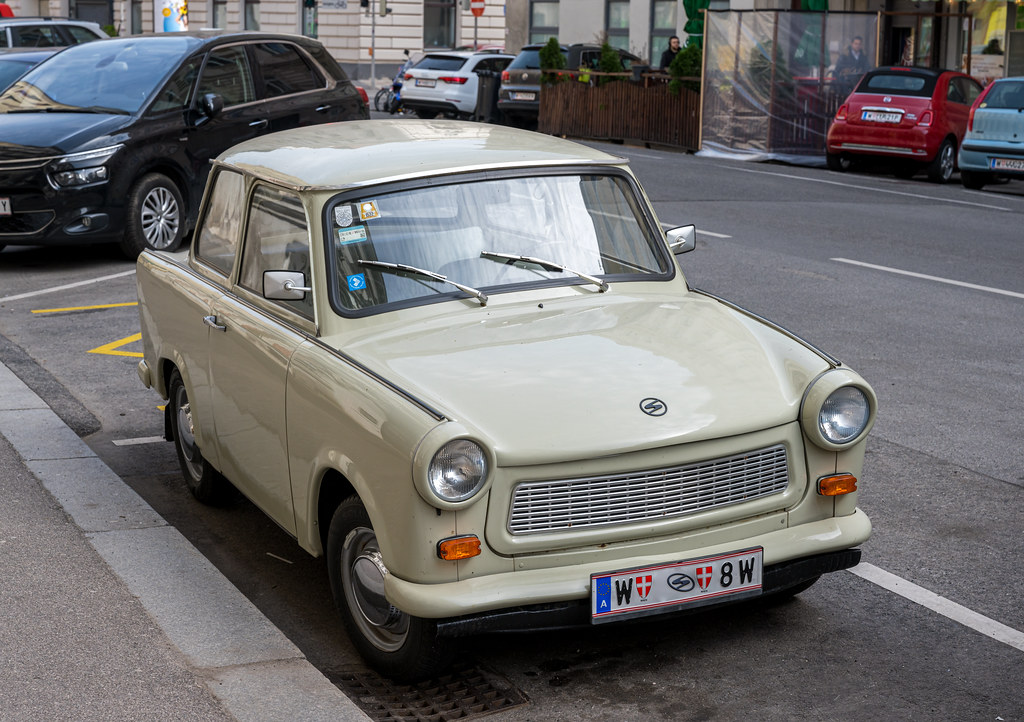
Stepping out of the realm of market misfires and into the world of sheer, unadulterated automotive survival is the 1957 Trabant. Hailing from East Germany, this was not just a car; it was a testament to improvisation and necessity under stringent economic conditions. Described quite literally as a “two-cylinder, two-stroke disaster,” it was the epitome of Eastern Bloc engineering – functional, if barely, and built with whatever materials were at hand. The context even claims it “was literally made from old clothes and glue,” which, while perhaps a slight exaggeration for dramatic effect, certainly captures the spirit of its resourcefulness.
The Trabant’s infamous body panels were crafted from Duroplast, a material made from recycled cotton waste and resin, not traditional steel. This gave the car a unique, if somewhat flimsy, construction. Its tiny two-stroke engine, akin to what you’d find in a lawnmower, produced meager horsepower, forcing drivers to master the art of coaxing momentum out of what felt like a motorized picnic basket. The smell of burning oil and gasoline, a hallmark of two-stroke engines, was a constant companion, ensuring everyone knew a Trabant was coming long before they saw its boxy silhouette.
Yet, the Trabant, despite its myriad shortcomings, served its purpose in a command economy. It was often the only car available, and owning one was a privilege that came with years-long waiting lists. Its crude design, lack of safety features, and notorious unreliability were simply facts of life. The car miraculously survived the fall of the Berlin Wall, becoming a bittersweet symbol of a bygone era. It represents a vehicle that was universally ‘worst’ by any modern metric, yet undeniably important for the millions who relied on it. It’s a car that truly defines the idea of making do with almost nothing, and somehow, still moving forward.
Read more about: From Flop to Coveted Classic: Unearthing the Most Notorious ‘Worst’ Cars of the Mid-20th Century That Now Command Respect

5. 1979 Oldsmobile Cutlass Supreme Diesel
Ah, the 1970s. A decade of bell-bottoms, disco, and, tragically, General Motors’ ill-fated foray into diesel passenger cars. While the entire Olds diesel V8 lineup was a debacle, the 1979 Oldsmobile Cutlass Supreme Diesel, specifically with its 4.3-liter engine, managed to sink to even lower depths. The context states it was “as bad as the 5.7-liter Olds diesel V8 was, the 4.3-liter version was worse,” and ominously, it “made 90 hp before shattering into shrapnel.” This wasn’t just an engine; it was a ticking time bomb waiting to disintegrate.
GM’s diesel engines of this era were a monumental engineering and public relations catastrophe. Rushed into production during the oil crisis, they were essentially converted gasoline engines, not designed from the ground up to withstand the higher compression ratios and stresses of diesel operation. The smaller 4.3-liter variant in the Cutlass Supreme was even less robust than its larger sibling, suffering from fundamental design flaws that led to premature wear, head gasket failures, and ultimately, catastrophic internal destruction. Owners were left stranded, financially burdened, and utterly disillusioned.
The 90 horsepower figure itself was pathetic for an engine tasked with hauling a car as substantial as a Cutlass Supreme. Performance was glacial, and the notorious reliability issues turned many a diesel-curious buyer into a lifelong gasoline advocate. This particular engine iteration became a symbol of GM’s hubris and a painful lesson in what happens when you prioritize speed to market over sound engineering. It severely damaged GM’s reputation, set back the perception of diesel engines in the American market for decades, and undoubtedly contributed to many moments of roadside despair for its unfortunate owners. It was truly a self-destructing masterpiece of automotive incompetence.
Car Model Information: 2022 Toyota Camry SE
Name: Oldsmobile Cutlass Supreme
Manufacturer: Oldsmobile
Production: 1965–1997
Layout: FR layout
Successor: Oldsmobile Intrigue
Class: Personal luxury car
Caption: 1970 Oldsmobile Cutlass Supreme
Categories: 1960s cars, 1970s cars, 1980s cars, 1990s cars, All Wikipedia articles written in American English
Summary: The Oldsmobile Cutlass Supreme is a mid-size car produced by Oldsmobile between 1966 and 1997. It was positioned as a premium offering at the top of the Cutlass range. It began as a trim package, developed its own roofline, and rose during the mid-1970s to become not only the most popular Oldsmobile but the highest selling model in its class.
It was produced as a rear-wheel drive two-door hardtop, sedan, and station wagon into the 1980s, and a convertible through 1972. In 1988 Oldsmobile sought to capitalize on the brand equity of the Cutlass Supreme marque by replacing it with a downsized front-wheel drive model based on the General Motors W platform.
When production ended there was no direct replacement for the Cutlass Supreme, although the Intrigue introduced for 1998 was designed in size and price to replace all the Cutlass models.
Get more information about: Oldsmobile Cutlass Supreme
Buying a high-performing used car >>>
Brand: Oldsmobile Model: Cutlass Supreme
Price: $23,995 Mileage: 61,076 mi.
Read more about: The Unsung Heroes: 12 Vintage Station Wagons That Outran and Outclassed Minivans

6. 1917 Chevrolet Series D
Let’s wind the clock back over a century for our final entry in this section, to a time when automotive engineering was still very much in its infancy. The 1917 Chevrolet Series D stands as a fascinating, if ultimately flawed, piece of Chevrolet history. This was Chevy’s first attempt at a V8 engine, a bold step towards multi-cylinder power. However, as the context so starkly puts it, this pioneering V8 “could only manage 36 hp — less than the brand’s four-cylinder.” Imagine that: spending more for a supposed upgrade only to get *less* power. Talk about a raw deal!
At a time when other manufacturers were beginning to unlock the potential of V8 power, Chevrolet’s initial offering was a considerable embarrassment. While 36 horsepower might not sound terrible for 1917, the fact that their own simpler, cheaper four-cylinder engines outperformed it was a clear sign of engineering missteps. It was a case of ambition exceeding execution, demonstrating that merely adding more cylinders doesn’t automatically equate to superior performance, especially when the design is lacking.
The Series D’s V8 was quickly “killed after 1918,” indicating just how poorly it performed and how little confidence the company had in it. The lingering impact of this early failure was so profound that “the next Chevy V8 came a full 37 years later.” That’s a nearly four-decade hiatus, a clear testament to the bitter taste this initial V8 left in the company’s mouth. It’s a remarkable historical footnote, a reminder that even automotive giants have their stumbles, and sometimes, those stumbles lead to a very long time-out before trying again.
Alright, gearheads, petrolheads, and anyone who appreciates a good car (or, more accurately, a historically *bad* one)! Let’s be honest, for all the gleaming chrome and roaring V8s that define automotive excellence, there’s a flip side—a dark, rusty, and often hilariously incompetent side. Without the truly dreadful machines, how could we possibly appreciate the genuine engineering marvels? It’s like a culinary critic sampling the worst food to truly understand the best; sometimes, you need a taste of disaster to savor perfection.
Today, we’re not just reminiscing about cars that were merely ‘okay’ or ‘a bit rubbish.’ Oh no, we’re diving headfirst into the Mariana Trench of automotive failures, pulling out the genuine stinkers, the legendarily awful, the vehicles that managed to shape American automotive culture precisely *because* of their undeniable stink. We’re talking about cars that, despite often having a good idea at their core, were ultimately betrayed by half-hearted engineering, haphazard quality, or cynical compromises. These aren’t just bad cars; these are automotive cautionary tales, each with a story of how a promising concept veered wildly off the road into a ditch of despair.
So buckle up, because we’re about to dissect twelve of the worst roadsters and sedans in history. These are the machines that made headlines for all the wrong reasons, the ones that left owners scratching their heads, and the ones that undeniably caused their own accidents—if not literally, then certainly metaphorically, by crashing and burning in the marketplace. We’re kicking off with some truly shocking examples from the deeper end of the infamous ‘worst’ list, cars whose diabolical nature left an indelible mark on the industry. Prepare for a journey through design disasters, mechanical meltdowns, and marketing misfires that still make us cringe and chuckle in equal measure.
Car Model Information: 2022 Toyota Camry SE
Name: Chevrolet Series D
Caption: 1918 Series D Touring
Manufacturer: Chevrolet
Production: 1917–1918
ModelYears: 1918
Assembly: Flint Truck Assembly,Flint, Michigan
Predecessor: Chevrolet Light Six
Successor: Chevrolet Series M Copper-Cooled
Engine: 288 cuin
Abbr: on
Wheelbase: 120 in
Weight: convert
Related: Chevrolet Series 490,Chevrolet Series FA
Categories: Articles with short description, Chevrolet engines, Chevrolet vehicles, Short description matches Wikidata, Wikipedia articles needing clarification from June 2023
Summary: The Chevrolet Series D is an American automobile produced by Chevrolet for the 1918 model year. It was the first, and for many years, the only Chevrolet car available with a V8 engine; a V8 would not appear again until 1955. Over 4,000 Series D cars were manufactured.
Get more information about: Chevrolet Series D
Buying a high-performing used car >>>
Brand: Chevrolet Model: Series D
Price: $23,995 Mileage: 61,076 mi.
Read more about: The Definitive Guide to the Best 3-Row SUVs of 2025: Expert Rankings for Family-Focused Drivers
7. 1983 Renault Alliance
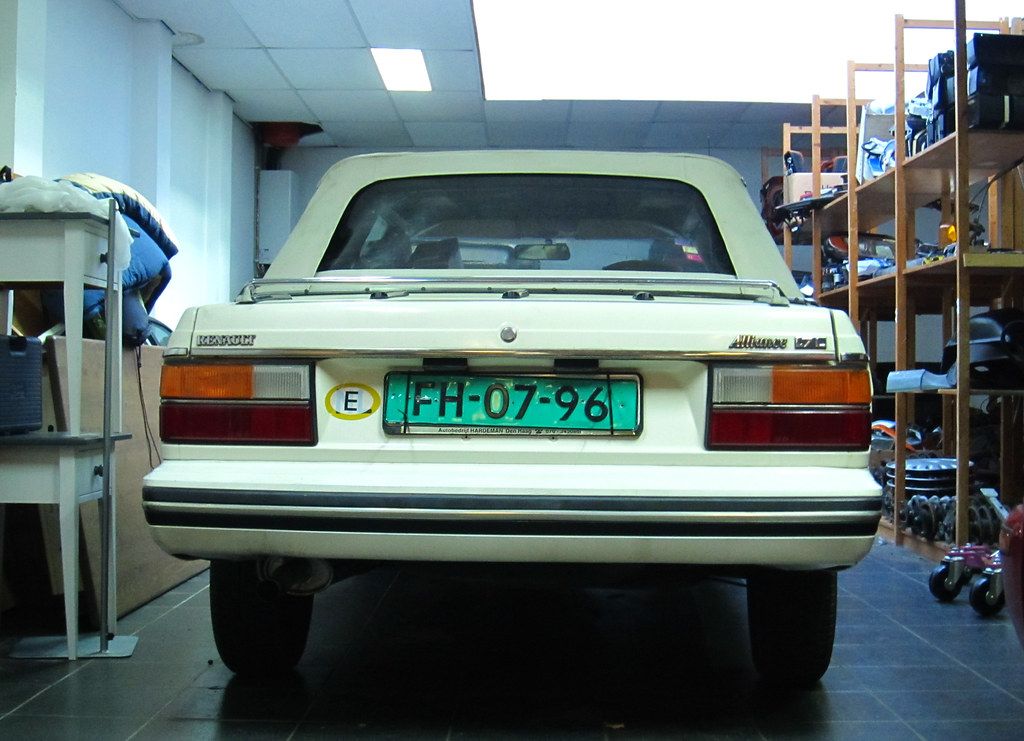
The 1983 Renault Alliance arrived on the American scene as a curious joint venture between American Motors Corporation (AMC) and the French automaker Renault. This wasn’t just a simple badge swap; it was AMC’s earnest, if ultimately misguided, attempt to inject some European sensibility into its lineup and capture a slice of the burgeoning compact car market. On paper, the idea of an “Americanized” version of the popular Renault 9 subcompact might have seemed like a clever way to appeal to both loyal AMC customers and those looking for something a bit different. Yet, the execution left a lingering question mark over its entire existence, making it a prime candidate for our hall of automotive shame.
At its core, the Alliance was a front-wheel-drive machine, powered by a truly uninspired 60-horsepower engine. Sixty horsepower in a car designed for American roads, even back in the early ’80s, felt less like a means of propulsion and more like a suggestion of movement. The attempt to ‘Americanize’ it often meant saddling it with some questionable aesthetic choices, like monochrome paint and the ubiquitous whitewall tires that screamed suburban conformity rather than continental chic. It was a package that, even then, struggled to excite, offering performance that could charitably be described as leisurely.
But perhaps the most damning indictment of the Alliance’s structural integrity and overall quality came with the 1985 convertible version. In a jaw-dropping display of flex and fundamental design oversight, this ragtop was so inherently “droopy” that its doors often couldn’t close properly. Imagine trying to seal yourself into a car only to have the doors refuse to align, creaking and groaning as the chassis twisted like a wet noodle. This wasn’t just an inconvenience; it was a glaring sign of a vehicle engineered without sufficient rigidity, a testament to cost-cutting that compromised safety and basic functionality.
The droopy doors weren’t an isolated incident; they symbolized the Alliance’s broader issues. From questionable build quality to an utterly forgettable driving experience, the car quickly faded from memory, leaving behind a legacy of disappointment. It represented a crucial misstep for both AMC and Renault, proving that simply slapping an ‘American’ veneer onto a European compact, without investing in robust engineering and quality control, was a recipe for automotive disaster. It truly became a car that, through its fundamental flaws, arguably caused its own accident in the marketplace, accelerating AMC’s eventual demise.
Read more about: The Great Deception: 12 Vintage Sports Cars That Looked Like Supercars But Drove Like Sloths

8. 1974 Reliant Robin
From the annals of British automotive eccentricity comes the 1974 Reliant Robin, a vehicle that transcends mere ‘bad car’ status to become a rolling punchline. This wasn’t just a car; it was an exercise in automotive minimalism that resulted in a notorious three-wheeler, instantly recognizable by its singular front wheel and often, its unfortunate tendency to end up on its side. Built from a plastic body, the Robin was an icon of its era, not for its prowess, but for its precariousness, forever etched into popular culture as a symbol of cheap, cheerful, and catastrophically unstable transport.
The Robin’s most endearing, or perhaps most terrifying, characteristic was its penchant for “turning turtle at the slightest provocation.” With only one wheel at the front and two at the back, its stability dynamics were, shall we say, unconventional. Cornering, even at modest speeds, became an exercise in careful weight transfer and prayer. Pushed even slightly beyond its incredibly narrow limits, the lightweight plastic body would dramatically lift a wheel, then another, before settling onto its side with a distinct, unsettling thud. It was a car that didn’t just drive; it performed impromptu gymnastics with alarming regularity.
What truly cemented the Robin’s legend, however, was its paltry power plant: a 750cc engine. In a rare twist of fate, this engine’s anemic output became its saving grace. Producing just enough horsepower to be a menace to itself, but rarely to anything else at high speed, its underpowered nature effectively prevented many a full-speed rollover. The sheer lack of acceleration meant that most drivers simply couldn’t build up enough momentum to truly launch themselves into a proper rollover unless they were being particularly foolish, or simply turning a corner. It was a car that relied on its own mechanical weakness to keep its occupants somewhat safer.
The Robin’s plastic construction and unique three-wheel configuration made it remarkably lightweight, which, combined with its small engine, offered surprisingly decent fuel economy. But these practical benefits were utterly overshadowed by its inherent instability and the constant feeling of impending doom behind the wheel. It was a vehicle that demanded a unique driving style, one of extreme caution and a near-constant awareness of its high center of gravity. The Reliant Robin certainly left an indelible mark, not as a pinnacle of engineering, but as a fascinating, if fundamentally flawed, chapter in automotive history, a car that seemed destined to get into trouble even when standing still.
Read more about: Engineering Flaws and Fateful Journeys: Unpacking the Most Dangerous Cars of All Time
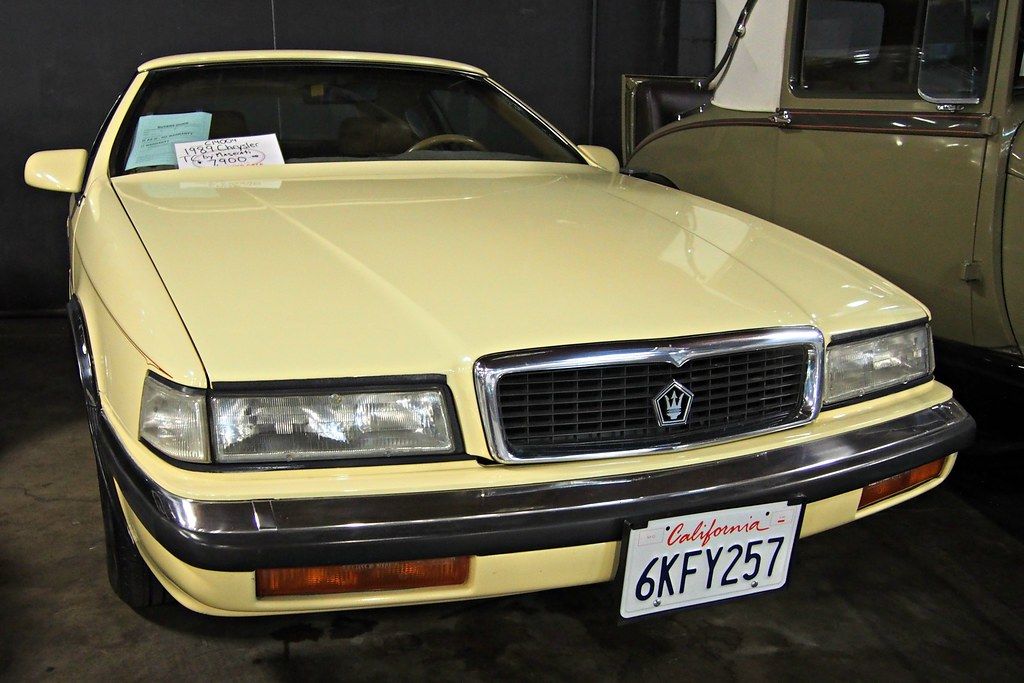
9. 1989 Chrysler TC by Maserati
Ah, the 1989 Chrysler TC by Maserati—a name that, on paper, should have evoked images of Italian flair and American muscle. Instead, it delivered an automotive identity crisis wrapped in an unimaginative body. This was Lee Iacocca’s pet project, a grand vision of blending Maserati’s prestige with Chrysler’s mass-market appeal, purportedly to create a sophisticated, high-end roadster. The reality, however, was far less glamorous, revealing a “haphazard combination” of components that left enthusiasts and critics alike scratching their heads, and often, their wallets lighter for a truly underwhelming experience.
The fundamental issue was its DNA. Beneath the badge, the TC was an open secret: a patchwork of front-wheel-drive K-car bits, thinly disguised and poorly integrated. While the K-car platform was a financial lifeline for Chrysler, it was hardly the foundation for a luxury grand tourer. The “indifferent assembly” meant that Maserati’s Italian artisans seemed to have approached the project with a distinct lack of passion, resulting in a fit and finish that was far from what one would expect from a car bearing the trident emblem. It was a vehicle that promised European craftsmanship but delivered an American economy car with a fancy (and often ill-fitting) hat.
Perhaps the cruelest cut was its aesthetics. Despite its aspirational price tag and exotic branding, the TC’s two-seat roadster body was, to the dismay of many, “indistinguishable from a LeBaron.” For a car that was supposed to compete with the likes of Mercedes-Benz SL and Cadillac Allante, looking like a slightly upmarket version of Chrysler’s mainstream convertible was a catastrophic design blunder. The entire point of a collaboration with an exotic brand is to create something truly distinctive, not something that could be mistaken for a rental car.
This ill-conceived project was a monumental failure on multiple fronts. It was, quite bluntly, “both the worst Maserati and worst Chrysler ever.” For Maserati, it was a shameful dilution of their storied performance heritage, producing a vehicle utterly devoid of the passion and engineering excellence the brand was known for. For Chrysler, it was an embarrassing attempt at luxury that alienated buyers and proved that you couldn’t simply buy prestige by sticking a foreign badge on domestic mediocrity. The TC by Maserati stands as a stark reminder of what happens when corporate ambition overrides engineering common sense, a car that was so fundamentally flawed it actively undermined the reputation of two brands.
Car Model Information: 2022 Toyota Camry SE
Name: Chrysler TC by Maserati
Manufacturer: Maserati,Chrysler (division)
Production: 1988–1990
ModelYears: 1989–1991
Class: Grand tourer
Layout: Front-engine, front-wheel-drive layout
Predecessor: Imperial (automobile)#Sixth generation (1981–1983)
Successor: Chrysler Crossfire
Platform: Chrysler Q platform
BodyStyle: convertible
Engine: Chrysler 2.2 & 2.5 engine#Turbo II,Chrysler 2.2 & 2.5 engine#TC,Mitsubishi 6G7 engine#6G72
Transmission: manual transmission,TorqueFlite,Ultradrive
Weight: 3033 lb
Abbr: on
Wheelbase: 93.3 in
Length: 175.8 in
Width: 68.5 in
Height: 51.9 in
Assembly: Torino,Sparone,Milan
Categories: 1990s cars, All articles with unsourced statements, Articles with short description, Articles with unsourced statements from August 2025, Articles with unsourced statements from March 2021
Summary: The Chrysler TC by Maserati is a two-passenger, two-door convertible jointly developed by Chrysler and Maserati. Introduced at the 1986 Los Angeles Auto Show., the TC was positioned as a grand tourer using a “Q” body on a modified second-generation Chrysler K platform. After two years of development delays, the TC became available in late-1988 and a total of 7,300 units (the minimum required under the contract) were manufactured in Milan, Italy, through 1990. All cars sold as 1991 models were manufactured in 1990.
Get more information about: Chrysler TC by Maserati
Buying a high-performing used car >>>
Brand: Chrysler Model: TC by Maserati
Price: $23,995 Mileage: 61,076 mi.
Read more about: Roadster Rendezvous: Eight Iconic Styles That Have Vanished from Production Lines Today
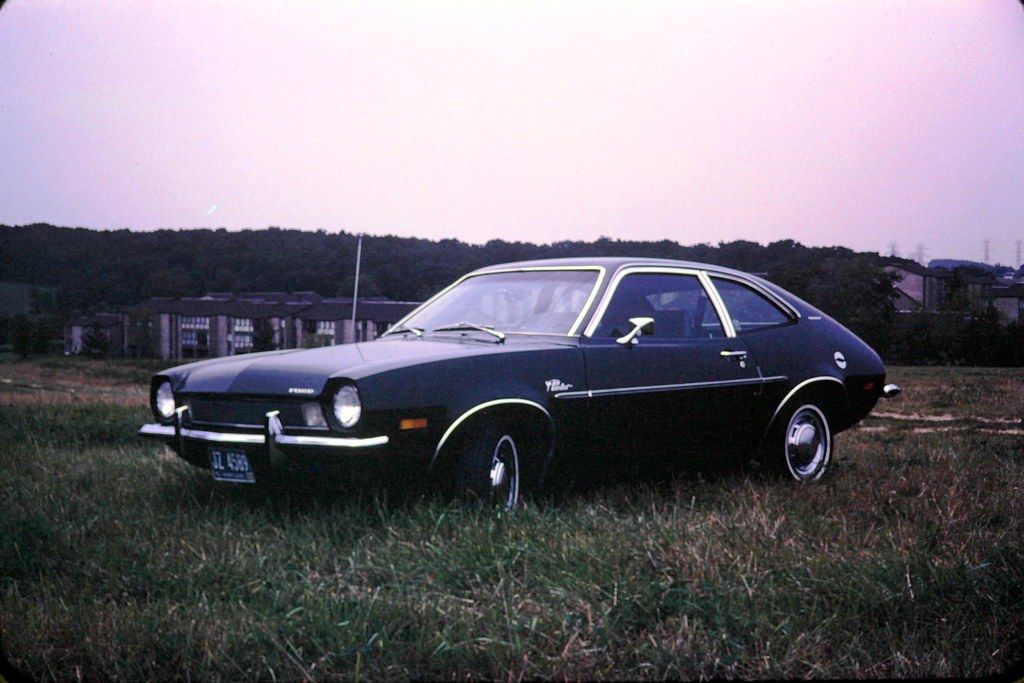
10. 1971 Ford Pinto
The 1971 Ford Pinto, a subcompact car designed to combat the rising tide of Japanese imports, emerged from an era when small, affordable transportation was paramount. Its mission was clear: deliver a car that was light on the wallet, efficient, and appealing to a new generation of drivers. Ford achieved its ambitious goal of a “$2,000 base price,” making the Pinto accessible to millions. However, this aggressive cost-cutting and hurried development came at a horrific price, embedding the Pinto into automotive infamy not for its success, but for a catastrophic design flaw that led to tragedy and a litany of legal battles.
At the heart of the Pinto’s notorious reputation was its “infamously lacked protection for its rear-mounted fuel tank.” In the fervent race to meet production deadlines and price points, safety appeared to be an afterthought. The fuel tank was positioned perilously close to the rear axle, with insufficient crumple zones or shielding. This meant that in even low-speed rear-end collisions, the tank was highly susceptible to rupture, leading to fuel leaks and, horrifically, fires that trapped occupants. It was a design oversight that transformed a simple fender bender into a potential death trap, a chilling testament to corporate priorities gone awry.
The consequences of this design flaw were devastating. As reports of rear-end collision fires mounted, so did the lawsuits. “Ford wound up paying out millions in judgments,” a staggering financial burden that barely compensated for the loss of life and severe injuries sustained. The Pinto became a chilling case study in corporate ethics, with allegations surfacing that Ford was aware of the design flaw but chose to proceed with production, calculating that the cost of lawsuits would be less than the cost of a redesign. It was a brutal awakening for the automotive industry and the public, highlighting the dark side of cost-driven engineering.
While the fuel tank controversy is undeniably the Pinto’s defining characteristic, it’s important to remember that, stripped of this fatal flaw, it was a relatively unremarkable economy car. It was never lauded for its performance or revolutionary design. However, the sheer gravity of its safety issues overshadowed all other aspects, cementing its place as one of history’s truly terrible vehicles. The Ford Pinto remains a potent symbol of how a failure in fundamental safety engineering can transform a mass-market car into an enduring symbol of corporate negligence, forcing us to ask how many ‘accidents’ are truly accidental when design flaws are known.
Read more about: Speed Trap: Unveiling 14 Iconic Classics With the Most Disappointing Horsepower Ever Built
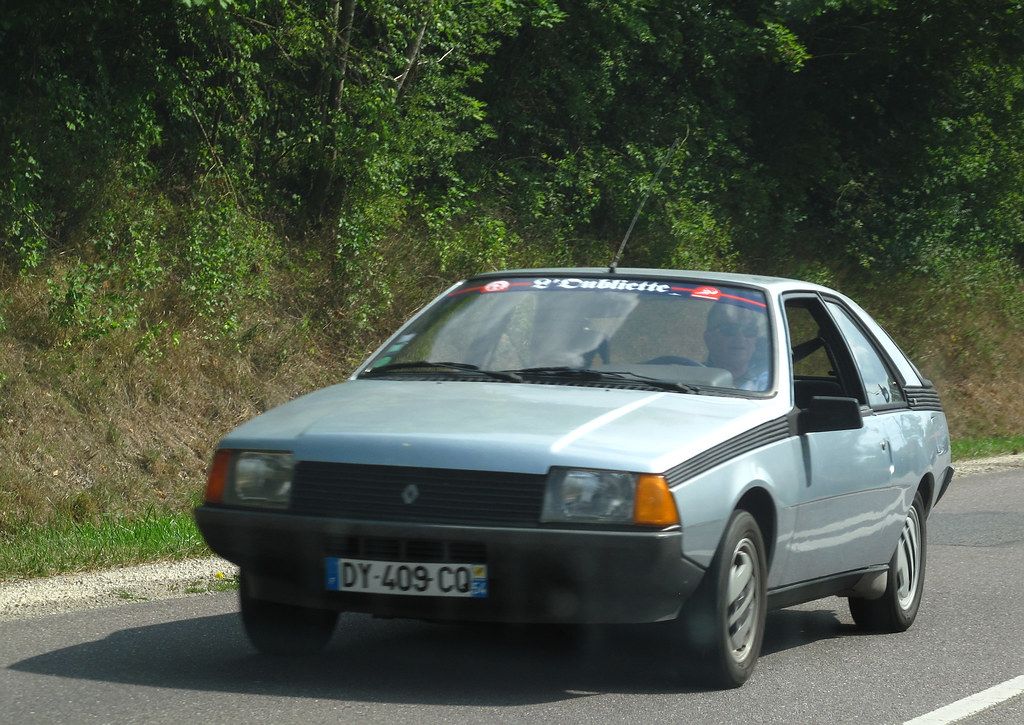
11. 1982 Renault Fuego
The 1982 Renault Fuego arrived with a dash of European styling, attempting to bring some sleek, futuristic appeal to the coupe market. As a “fragile front-drive coupe,” it aimed to blend performance with practicality. With its distinctive wrap-around rear window and ostensibly sporty demeanor, the Fuego certainly looked the part of a continentally chic GT car. However, beneath its somewhat appealing exterior lay a litany of engineering shortcomings and quality control nightmares that would soon turn its aspirational looks into a cruel joke for its owners, making it a truly self-destructive automotive experience.
The Fuego quickly distinguished itself for all the wrong reasons. Owners discovered that the car “rusted quickly into dust,” often before they’d even paid it off. This wasn’t just superficial corrosion; it was a structural degradation that threatened the integrity of the vehicle. Even more alarming were the reports of it “burst[ing] into flames amid random electrical fires.” A car spontaneously combusting is not merely a defect; it’s a fundamental failure of safety engineering that puts occupants and bystanders in immediate peril. It wasn’t just a car that aged poorly; it was a car that seemed intent on self-immolation.
But wait, there’s more! As if rapid decomposition and fiery self-destruction weren’t enough, the Fuego achieved another level of infamy through a safety recall so terrifying it almost defies belief: “It was recalled for steering wheels that came off in drivers’ hands.” Let that sink in for a moment. The primary control interface between human and machine, literally detaching during operation. How can one possibly control a vehicle when the very means of direction suddenly departs?
The 1982 Renault Fuego wasn’t just a bad car; it was a demonstrably dangerous one. Its combination of rapid deterioration, electrical instability, and fundamental component failures made it a rolling liability. It vividly demonstrated how poor engineering and shoddy construction could create a vehicle that not only failed to deliver on its promise but actively endangered its occupants. The Fuego stands as a stark warning about the perils of prioritizing style over substance and serves as a prime example of a car whose very existence, through its shocking flaws, could directly lead to accidents and endanger lives.
Read more about: 1980s Automotive Hall of Shame: The Decade’s Most Notorious Car Flops

12. 2011 Aston Martin Cygnet
In the realm of luxury automotive brands, Aston Martin conjures images of Bond, sleek lines, and roaring V12 engines—exclusivity, performance, and impeccable craftsmanship. Then, in 2011, came the Cygnet, an automotive anomaly that seemed designed to confound. This wasn’t merely a departure from tradition; it was a full-frontal assault on brand identity, a vehicle that cost a staggering “$47,000” yet was, at its heart, an econobox. The Cygnet stands as a perplexing testament to corporate compliance and perhaps, a cynical gamble on badge appeal, forever altering how we perceive the boundaries of luxury.
The truth behind the Cygnet was painfully simple: it was a “restyled Toyota (er, Scion) iQ.” Aston Martin, a brand synonymous with bespoke grandeur, had essentially taken a humble, urban microcar, slapped on some leather, a new grille, and its iconic badge, then inflated the price to an astronomical degree. The transformation, while attempting to infuse some luxury, couldn’t hide the Cygnet’s pedestrian roots. Despite the plush interior touches, the basic dimensions, the driving dynamics, and the overall feel were unmistakably those of a city car designed for affordability, not opulence or performance.
So why did Aston Martin embark on such a peculiar project? The answer lies in stringent “EU fleet emissions standards.” To continue selling its thirsty, high-performance sports cars in Europe, Aston Martin needed to lower its average fleet emissions. The Cygnet, with its tiny, fuel-efficient engine, provided a quick and dirty way to average down those numbers. It was a car born not from passion or a desire to innovate, but purely from regulatory necessity. This pragmatic, almost cynical, approach starkly contrasted with the emotional appeal and hand-built mystique that Aston Martin had cultivated for decades.
The Cygnet represented a profound act of “brand dilution,” a desperate maneuver that left many questioning Aston Martin’s commitment to its heritage. It was a vehicle that, despite its attempts at luxury veneer, failed to be “at all ‘Aston’.” It offered none of the driving exhilaration, the exquisite engineering, or the timeless elegance that defined the brand. Instead, it was a glaring symbol of a luxury marque compromising its soul for bureaucratic expediency. The Cygnet didn’t just fail to live up to expectations; it actively damaged the very essence of what an Aston Martin was supposed to be, causing an ‘accident’ in brand perception that took years to recover from.
Car Model Information: 2022 Toyota Camry SE
Name: Toyota iQ
Caption: 2010 Toyota iQ2 (UK)
Alt: Front-three-quarter view of a three-door car with a one-box body style whose passenger door spans almost the entire distance between the front and rear wheel arches; the car is fitted with alloy wheels, flush headlights, front foglamps, and door mirrors with integrated turning indicator lights.
Manufacturer: Toyota
ModelCode: AJ10
Aka: unbulleted list
Production: unbulleted list
ModelYears: 2012–2015 (US)
Assembly: Toyota, Aichi
Designer: unbulleted list
Class: City car
BodyStyle: hatchback
Layout: Front-engine, front-wheel drive layout
Engine: unbulleted list
Motor: Permanent Magnet Electric motor (Singulato iC3)
Transmission: unbulleted list
Wheelbase: 2000 mm
Abbr: on
Length: unbulleted list
Width: 1680 mm
Height: 1500 mm
Weight: unbulleted list
Type: City car
Categories: 2010s cars, All articles containing potentially dated statements, All articles with unsourced statements, Articles containing potentially dated statements from August 2014, Articles containing potentially dated statements from December 2014
Summary: The Toyota iQ is a city car manufactured by Toyota and marketed in a single generation for Japan (2008–2016); Europe (2008–2015); and North America (2012–2015), where it was marketed as the Scion iQ. A rebadged variant was marketed in Europe as the Aston Martin Cygnet (2011–2013).
Designed at the Toyota European Design and Development studio in Nice, France, the iQ is noted for its specialized engineering to maximize passenger space and minimize length. The design accommodates four occupants.
Following a concept presented at the 2007 Frankfurt Motor Show, the production iQ debuted at the March 2008 Geneva Motor Show. Japanese sales began in November 2008 and European sales in January 2009. In 2008, the iQ was named the Japanese Car of the Year.
The name iQ, an initialism of the term intelligence quotient, recalls a competitor, the Smart Fortwo. The letters “iQ” also stand for “individuality”, “innovation”, “quality”, a hint at its “cubic form” and also a “cue” for owners to embrace new types of vehicles and lifestyles.
The iQ reached the end of production in December 2015, and it was discontinued in Japan in April 2016.
Get more information about: Toyota iQ
Buying a high-performing used car >>>
Brand: Aston Martin Model: Cygnet
Price: $23,995 Mileage: 61,076 mi.
Read more about: Beyond the Bells & Whistles: Why Your Next Car Might Still Be ‘Dumb’ (And Why That’s a Problem)
And so, our journey through the automotive abyss comes to a close. We’ve dissected the design blunders, the engineering shortcuts, and the cynical compromises that cemented these machines in the pantheon of the truly terrible. From cars that rusted before their time to those that actively shed their steering wheels, each of these vehicles offers a stark, often hilarious, reminder that not every brilliant idea translates into a great car. They highlight the delicate balance between innovation and execution, ambition and reality. While we may chuckle at their foibles now, these automotive disasters undeniably shaped the industry, teaching invaluable lessons and, in their own spectacularly awful way, helping us truly appreciate the marvels that got it right. They stand as monuments to what *not* to do, ensuring that for every glistening, perfect machine, there’s a story of a glorious failure lurking in the shadows, always ready to remind us that even in the world of cars, sometimes the worst truly is the most memorable.