The golden era of American muscle cars truly delivered some of the most exhilarating and, let’s be honest, dangerously powerful production vehicles ever to hit public roads. It was a time when automotive rivalry, fierce horsepower wars, and relatively lax safety regulations converged to create mechanical beasts that often pushed the very boundaries of what was prudent for street use. These cars weren’t just about speed; they were about raw, untamed power, a pure expression of American automotive ambition.
Imagine a world where electronic stability control, traction management systems, or even adequate tire technology were still distant dreams. In such an age, these magnificent machines put unprecedented power directly into the hands of everyday drivers, sometimes with spectacular and, tragically, unforeseen consequences. Their power-to-weight ratios frequently rivaled the exotic sports cars of their day, yet they typically lacked the sophisticated handling capabilities required to harness such explosive performance safely.
It’s this raw, almost primal nature that cements their legend today. These vehicles were uncompromising four-wheeled statements of mechanical excess, embodying an insatiable American appetite for speed and power, often regardless of practicality. They were more than just fast cars; they challenged the fundamental notion of what truly belonged on public streets. Let’s take a deep dive into five of these outrageously overpowered muscle cars that were, for better or worse, deemed road-legal despite their barely contained fury.

1. **1969 Dodge Charger Daytona/Plymouth Superbird**The 1969 Dodge Charger Daytona and its 1970 Plymouth Superbird sibling stand as perhaps the most visually outrageous and undeniably overpowered muscle cars ever approved for public roads. These magnificent “aero warriors” were forged with a singular purpose: to utterly dominate NASCAR circuits. Their appearance was nothing short of cartoonishly extreme, featuring aerodynamic modifications that seemed more at home on an aircraft than an automobile, including a pointed, 18-inch nose cone, a towering 23-inch rear wing, and flush-mounted rear windows that completely transformed the Charger and Road Runner profiles into something truly otherworldly.
While their radical aesthetics certainly commanded attention, it was undoubtedly the powertrains nestled beneath their extreme bodies that made these cars genuinely dangerous on public roads. The most formidable option available was the legendary 426 Hemi V8, which was officially rated at a seemingly conservative 425 horsepower. However, it was widely acknowledged that its real-world output soared well over 500 horsepower. Mopar’s strategic move of deliberately underrating horsepower figures aimed to keep a lid on insurance costs, meaning these cars consistently delivered far more power than their advertised numbers suggested.
When equipped with that monstrous Hemi engine and a robust four-speed manual transmission, these winged warriors could absolutely rocket to 60 mph in under 5.5 seconds. That was blistering performance for the era, and they were capable of achieving top speeds approaching an astonishing 200 mph. Such numbers hint at their track prowess, but they also underscore the profound disconnect between their raw capability and their suitability for anything resembling normal street driving.
What truly rendered these cars ill-suited for daily street use wasn’t merely their raw power, but rather their highly specialized construction. The extensive aerodynamic modifications, while brilliant for the high-speed ovals of NASCAR, were an absolute nightmare for navigating city streets or winding back roads. The extended nose, for instance, made parking a near impossibility and severely compromised forward visibility. Furthermore, if the car wasn’t meticulously maintained, it could generate alarming front-end lift at high speeds, making an already tricky situation even more precarious.
Adding to the danger, the standard drum brakes were woefully inadequate for the performance potential these cars packed, and the primitive bias-ply tires of the era struggled desperately to maintain traction under the engine’s gargantuan torque output. Contemporary road tests frequently highlighted that these cars felt skittish and utterly unpredictable at speed, possessing handling characteristics that demanded exceptionally experienced hands to manage safely. Perhaps most alarming was their noted tendency for the rear end to suddenly break loose without warning whenever power was applied, often sending the car into spins that even skilled drivers found incredibly difficult to control. With only 503 Daytonas and approximately 1,935 Superbirds ever produced, these winged marvels stand as the most extreme embodiments of Detroit’s willingness to put thinly veiled race cars into the hands of the public—a phenomenon that would be absolutely unthinkable under today’s stringent safety and emissions regulations.
Car Model Information: 2022 INFINITI QX60 Luxe
Name: Dodge Charger Daytona
Caption: 1969 Dodge Charger Daytona
Manufacturer: Dodge
Production: 1969–1970,2006–2009,2013,2017–2023
Class: Muscle car
Layout: FR layout
Categories: 1960s cars, 1970s cars, 2000s cars, All articles needing additional references, All articles with unsourced statements
Summary: Dodge produced three separate models with the name Dodge Charger Daytona, all of which were modified Dodge Chargers. The name was taken from Daytona Beach, Florida, which was an early center for auto racing and still hosts the Daytona 500, NASCAR’s premier event. The original Dodge Charger Daytona was designed to beat the competition in NASCAR racing. It was the first NASCAR vehicle to reach 200 miles per hour, which was a major milestone at the time.
Get more information about: Dodge Charger Daytona
Buying a high-performing used car >>>
Brand: Dodge Model: Charger Daytona
Price: $37,677 Mileage: 24,135 mi.
Read more about: The Million-Dollar Muscle: Classic American V8s That Now Command Prices Beyond Iconic Ferraris
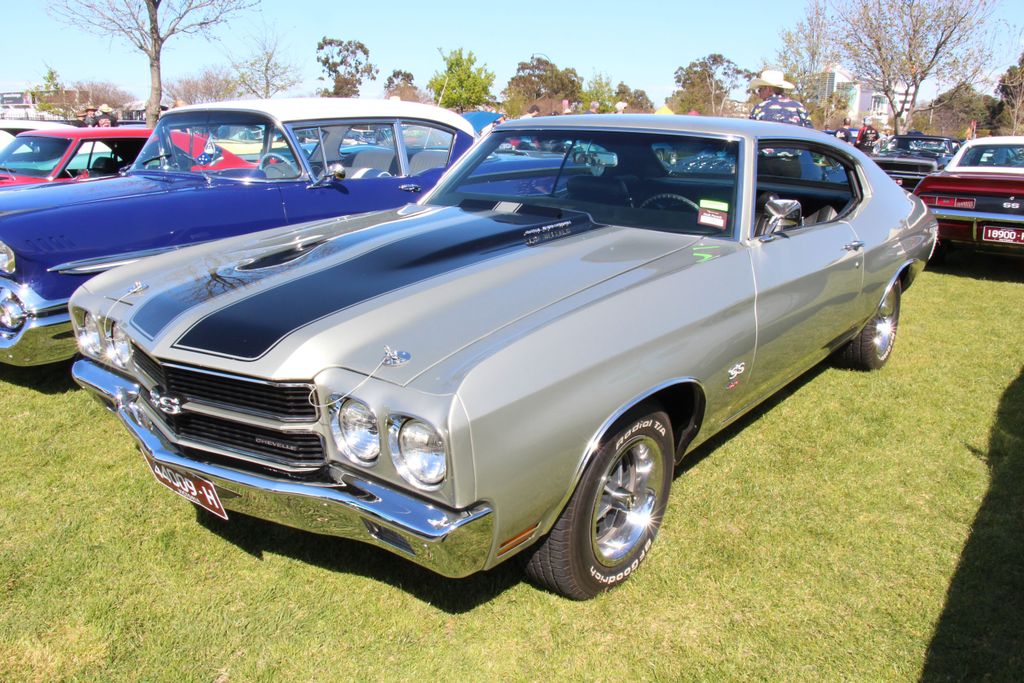
2. **1970 Chevrolet Chevelle SS 454 LS6**The 1970 Chevelle SS 454, particularly with the coveted LS6 engine option, represents what many enthusiasts consider the undisputed high-water mark of GM’s contribution to the muscle car horsepower wars. It unleashed what was arguably the ultimate street fighter of its era, a machine born from a time when manufacturers were locked in a mortal combat for supremacy in raw power. Chevrolet, in its characteristic style, deployed perhaps the most excessive weapon in its formidable arsenal.
That weapon was a colossal 454 cubic-inch big-block V8, meticulously fitted with a high-lift, solid-lifter camshaft, an impressive 11.25:1 compression ratio, and topped by a massive 780 CFM Holley four-barrel carburetor. Officially rated at a staggering 450 horsepower and an earth-moving 500 lb-ft of torque, the LS6 Chevelle’s actual output was widely believed to exceed an even more astonishing 500 horsepower. This number, like many of its contemporaries, was deliberately underreported by manufacturers to help keep insurance rates somewhat manageable for eager buyers.
This phenomenal power figure was paired with a relatively lightweight package, hovering around 3,800 pounds, and delivered through either a robust Muncie four-speed manual or a sturdy three-speed Turbo-Hydramatic transmission to a 12-bolt rear end featuring a limited-slip differential. The resulting performance was nothing short of seismic: 0-60 mph in approximately 5.4 seconds, with quarter-mile times consistently landing in the low 13-second range at speeds over 108 mph. These figures remained benchmark performances for decades, a truly remarkable feat, especially considering they were achieved with primitive bias-ply tires that offered minimal traction compared to modern rubber.
What made the LS6 Chevelle particularly dangerous on public roads was a perfect storm of factors: excessive power, rudimentary chassis technology, and perhaps most crucially, its accessibility. Unlike some exotic, high-performance vehicles that demanded special ordering or came with exorbitant price tags, the Chevelle SS was comparatively affordable and readily available at virtually any Chevrolet dealership. This meant that extraordinary performance was put within reach of almost anyone with modest means, leading to many inexperienced drivers finding themselves behind the wheel of a truly brutal machine.
The car’s suspension system, which was essentially the same basic setup utilized on much less powerful Chevelles, was entirely inadequate for managing the LS6’s brutal power output. Its front-heavy weight distribution often led to pronounced understeer during initial cornering, a characteristic that could suddenly and catastrophically transition to oversteer when the throttle was applied aggressively. Even with optional front discs, the standard drum brakes were drastically overmatched by the engine’s sheer capability, often leading to rapid brake fade after just a few hard stops. Perhaps most tellingly, period road tests frequently advised readers that the LS6 Chevelle demanded “respect and considerable driving skill” to operate safely—a diplomatic way for automotive journalism to convey that this car, in the wrong hands, could be lethal.
Car Model Information: 2024 GMC Sierra 1500 Elevation
Name: Chevrolet Chevelle
Caption: 1970 Chevrolet Chevelle SS 396 Sport Coupe
Manufacturer: Chevrolet
Production: 1963–1977
ModelYears: 1964–1977
Class: Mid-size
Platform: GM A platform (RWD)
Layout: FR layout
Successor: Chevrolet Malibu
Categories: 1970s cars, All articles needing additional references, All articles that may contain original research, All articles with specifically marked weasel-worded phrases, All articles with unsourced statements
Summary: The Chevrolet Chevelle is a mid-sized automobile that was produced by the Chevrolet division of General Motors (GM) in three generations for the 1964 to 1977 model years. Part of the GM A-body platform, the Chevelle was one of Chevrolet’s most successful nameplates. Body styles included coupes, sedans, convertibles, and station wagons. The “Super Sport” versions were produced through the 1973 model year and Lagunas from 1973 through to 1976.
After a four-year absence, the El Camino was reintroduced as part of the new Chevelle lineup in 1964.
From 1964 to 1969, GM of Canada sold a modified version of the Chevelle that included a Pontiac-style grille, and a LeMans instrument panel, marketed as the Beaumont.
The Malibu was the top-of-the-line model to 1972, and completely replaced the Chevelle nameplate starting with the redesigned, and downsized 1978 model year.
Get more information about: Chevrolet Chevelle
Buying a high-performing used car >>>
Brand: Chevrolet Model: Chevelle SS 454
Price: $42,936 Mileage: 39,751 mi.
Read more about: Beyond Myth and Legend: Unearthing 15 of the Rarest American Muscle Cars Ever Built
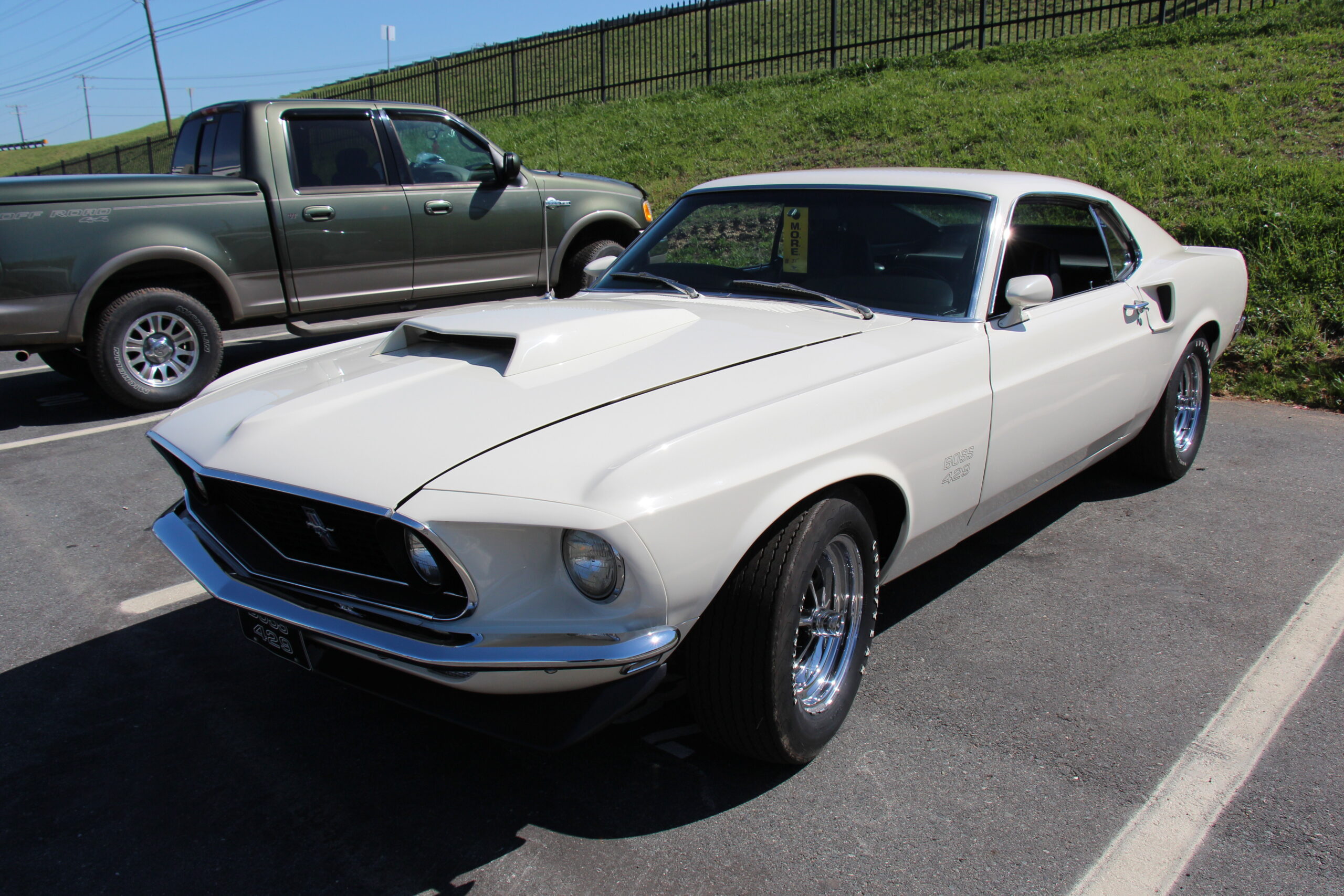
At its core, the Boss 429 engine was an undeniable monster by any standard. It was a massive 429 cubic-inch V8, boasting aluminum heads that featured enormous hemispherical combustion chambers, robust forged pistons, four-bolt main bearings for ultimate durability, and a formidable 735 CFM Holley carburetor. While officially rated at a seemingly modest 375 horsepower – a number strategically underreported to help keep insurance rates manageable – its actual output was widely acknowledged to comfortably exceed 500 horsepower and an impressive 490 lb-ft of torque in its stock form. This was a powerplant designed for sustained, high-RPM brutality, not gentle cruising.
Installing this gargantuan engine into the relatively compact Mustang engine bay was an engineering feat in itself, requiring partially built vehicles to be dispatched to specialist contractor Kar Kraft. There, the front suspension was extensively modified, the shock towers were widened significantly, the battery was relocated to the trunk to help with weight distribution, and countless other alterations were made simply to make the colossal engine fit. The outcome of these drastic modifications was a severe front-end weight bias that rendered the car’s handling dangerously unpredictable, characterized by a persistent tendency toward dramatic understeer that could, without warning, transition into sudden and frightening oversteer when power was applied aggressively.
What made the Boss 429 particularly ill-suited for routine street use wasn’t just its sheer, raw power, but also the uncompromising characteristics of its power delivery. This engine was meticulously designed for sustained, high-RPM operation on the high-speed ovals of NASCAR, a purpose that resulted in a temperamental street performer. It ran poorly and felt sluggish at low RPMs but delivered an explosive, almost violent rush of power once the engine speeds climbed higher. This distinctive “all-or-nothing” power band made the car extraordinarily difficult to drive smoothly or safely in everyday traffic conditions.
Contemporary road tests frequently pointed out that the Boss 429 was often slower in straight-line acceleration than some less powerful Mustangs, a consequence of its peaky power delivery and the massive weight concentrated over the front wheels that hampered traction. One magazine famously described it as “a very unusual Mustang… not for the man who has to have the quickest car on the street.” However, in the hands of those who possessed the skill and knowledge to modify its carburetion and timing to truly unlock its full potential, the Boss 429 transformed into an incredibly formidable and, often, a genuinely dangerous street machine. With only 859 units produced over its two-year run, the Boss 429 stands as one of the rarest and most extreme examples of Detroit’s willingness to severely compromise everyday drivability in the uncompromising pursuit of racing dominance.
Car Model Information: 2008 Ford Mustang GT Premium
Name: Ford Mustang
Caption: 2018 Ford Mustang GT 5.0
Aka: Ford T5 (Germany)
Manufacturer: Ford Motor Company
Production: March 1964 – present
ModelYears: 1965–present
Class: Unbulleted list
BodyStyle: Unbulleted list
Layout: Front-engine, rear-wheel-drive layout
Categories: 1970s cars, 1980s cars, 1990s cars, 2+2 coupés, 2000s cars
Summary: The Ford Mustang is an American automobile manufactured and marketed by Ford since 1964, as Ford’s longest nameplate in continuous production. Currently in its seventh generation, it is the fifth-best selling Ford car nameplate. The namesake of the “pony car” automobile segment, the Mustang was developed as a highly styled line of sporty coupes and convertibles derived from existing model lines, initially distinguished by its pronounced “long hood, short deck” proportions.
Originally predicted to sell 100,000 vehicles yearly, the 1965 Mustang became the most successful vehicle launch since the 1927 Model A. Introduced on April 17, 1964 (16 days after the Plymouth Barracuda), over 400,000 units were sold in its first year; the one-millionth Mustang was sold within two years of its launch. In August 2018, Ford produced the 10-millionth Mustang; matching the first 1965 Mustang, the vehicle was a 2019 Wimbledon White convertible with a V8 engine.
The success of the Mustang launch led to multiple competitors from other American manufacturers, including the Chevrolet Camaro and Pontiac Firebird (1967), AMC Javelin (1968), and Dodge Challenger (1970). It also competed with the Plymouth Barracuda, which was launched around the same time. The Mustang also had an effect on designs of coupes worldwide, leading to the marketing of the Toyota Celica and Ford Capri in the United States (the latter, by Lincoln-Mercury). The Mercury Cougar was launched in 1967 as a unique-bodied higher-trim alternative to the Mustang; during the 1970s, it included more features and was marketed as a personal luxury car.
From 1965 until 2004, the Mustang shared chassis commonality with other Ford model lines, staying rear-wheel-drive throughout its production. From 1965 to 1973, the Mustang was derived from the 1960 Ford Falcon compact. From 1974 until 1978, the Mustang (denoted Mustang II) was a longer-wheelbase version of the Ford Pinto. From 1979 until 2004, the Mustang shared its Fox platform chassis with 14 other Ford vehicles (becoming the final one to use the Fox architecture). Since 2005, Ford has produced two generations of the Mustang, each using a distinct platform unique to the model line.
Through its production, multiple nameplates have been associated with the Ford Mustang series, including GT, Mach 1, Boss 302/429, Cobra (separate from Shelby Cobra), and Bullitt, along with “5.0” fender badging (denoting 4.9 L OHV or 5.0 L DOHC V8 engines).
Get more information about: Ford Mustang
Buying a high-performing used car >>>
Brand: Ford Model: Mustang
Price: $16,785 Mileage: 81,832 mi.
Read more about: Speed Trap: Unveiling 14 Iconic Classics With the Most Disappointing Horsepower Ever Built
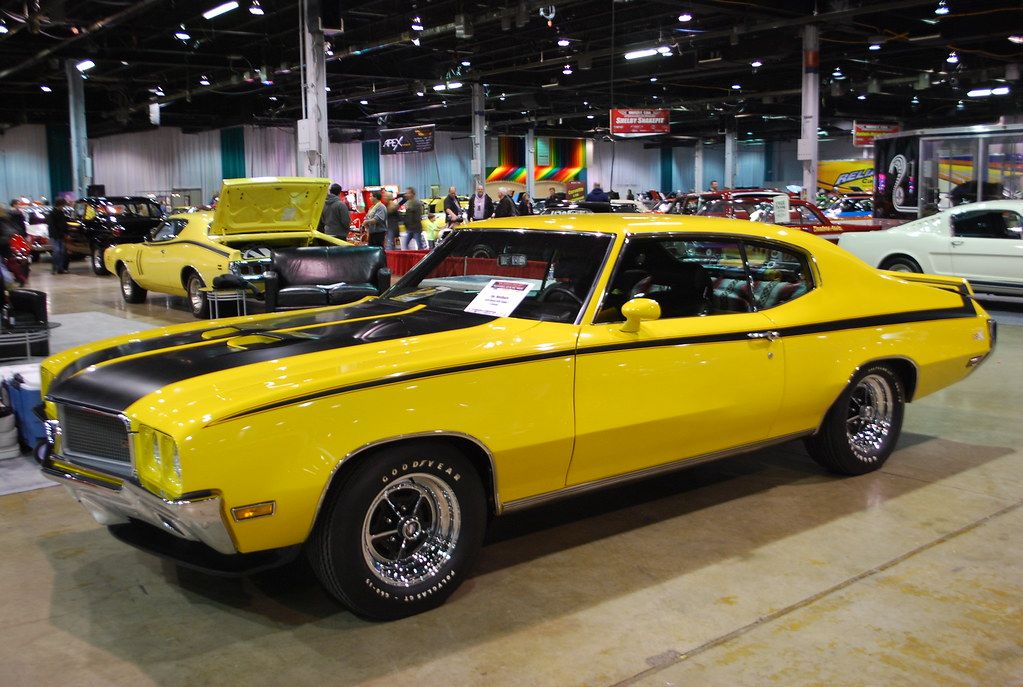
4. **1970 Buick GSX Stage 1**The 1970 Buick GSX Stage 1 absolutely shattered any lingering notion that Buick was solely in the business of building “gentleman’s cars.” Instead, it delivered one of the most savagely powerful muscle cars ever to proudly wear a production badge. What truly made the GSX particularly excessive was the deceptive manner in which it cloaked its ferocious performance potential. It was hidden beneath Buick’s traditionally more upscale, sophisticated brand image, presenting itself as a true wolf in slightly more genteel wolf’s clothing.
At the very heart of this beast lay the formidable Stage 1 version of Buick’s massive 455 cubic-inch V8. While officially rated at a seemingly conservative 360 horsepower, this engine produced an earth-moving 510 lb-ft of torque—a figure that astonishingly stood as the highest torque rating of any American production car until the advent of modern supercars, decades later. Much like many of its muscle car contemporaries, these official figures were deliberately underreported, with the actual output widely estimated to be closer to a robust 400 horsepower. This was a serious powerplant by any measure.
What made this potent combination particularly dangerous on the street was its extraordinary torque curve. The Stage 1 delivered over 500 lb-ft of torque at a mere 2,800 RPM, creating an almost instantaneous, neck-snapping acceleration from virtually any speed. Contemporary road tests enthusiastically reported 0-60 mph times of approximately 5.5 seconds and quarter-mile times consistently in the high 13-second range—truly remarkable figures for a car that weighed in at over 3,800 pounds. Muscle Car Review famously captured its essence, declaring that the GSX Stage 1 could “pull like a freight train with a dragster’s demeanor.”
The GSX package brought more to the table than just brute power; it also included a heavy-duty suspension, power front disc brakes, and performance-oriented gear ratios. However, even these upgrades, while welcome, were still fundamentally insufficient to properly manage the engine’s prodigious torque output. The suspension, despite being firmer than that found in standard Buicks, was still inherently tuned more for passenger comfort than ultimate control. This created a car that could easily break its rear wheels loose with just a moderate application of the throttle, a startling characteristic that could occur even at highway speeds.
Unlike some of its more stripped-down muscle car rivals, the GSX came standard with a host of luxury features, which inevitably made it heavier than many competitors. This additional weight, coupled with the relatively soft suspension components, created a dangerous combination: massive power in a chassis that could wallow and pitch dramatically during aggressive maneuvers. The standard tires of the era were hopelessly inadequate for the torque output, leading to persistent traction issues even in perfectly dry conditions. Perhaps most tellingly, period road tests frequently observed that the GSX demanded an incredibly delicate touch with the throttle to prevent the rear end from stepping out unpredictably during cornering. With only 678 total GSX models produced in 1970, and only a subset of those equipped with the Stage 1 option, this Buick remains one of the rarest and most excessively powerful muscle cars ever unleashed upon public roads.
Car Model Information: 2022 INFINITI QX60 Luxe
Name: Gran Sport
Logo: Buick gs emblem.png
Producttype: Performance car
Currentowner: General Motors
Producedby: General Motors
Introduced: [object Object]
Related: T-Type
Markets: U.S.
Categories: All Wikipedia articles in need of updating, All articles with unsourced statements, Articles with short description, Articles with unsourced statements from September 2020, Articles with unsourced statements from September 2025
Summary: The Gran Sport name has been used on several high-performance cars built by General Motors for its Buick brand since 1965. In the GM brands hierarchy, Buick was surpassed in luxury and comfort appointments only by Cadillac, which did not produce performance models. As a result, the Buick GS series were the most opulently equipped GM sport models of their era.
The Gran Sport performance enhancements on all Buick products during this era sought to affirm Buick’s tradition of producing powerful and comfortable products going back to the 1930s when all Buicks of the time were upgraded to the Buick Fireball Straight Eight, then installed the 278 cu in (4.6 L) Roadmaster engine in the shortest model Special and introduced the Century, known as “the banker’s hot rod” with a three speed synchromesh manual transmission. The Gran Sport sought to identify cars that were fun to drive with a luxury approach.
Get more information about: Buick Gran Sport
Buying a high-performing used car >>>
Brand: Buick Model: GSX Stage 1
Price: $37,677 Mileage: 24,135 mi.
Read more about: Unleash the Beasts: The Most Powerful Muscle Cars from the Big Three’s Glorious Legacy

5. **1969 Pontiac GTO Judge Ram Air IV**The 1969 Pontiac GTO Judge, especially when equipped with the Ram Air IV engine option, represented one of the most excessive and track-focused muscle cars ever thinly disguised as a daily driver. While the standard GTO had already firmly established its legacy as the original muscle car, the Judge Ram Air IV variant fearlessly pushed the envelope into territory that made it questionably suited for public road use, particularly when placed in the hands of inexperienced drivers. This was a car that demanded respect and a skilled pilot.
At its heart, the Ram Air IV 400 cubic-inch V8 was a thoroughbred race engine, barely detuned for legal street use. It featured aggressive round-port high-flow cylinder heads, a high-lift camshaft with a duration of 308/320 degrees, 1.65:1 ratio rocker arms, and a powerful four-barrel Quadrajet carburetor. This impressive setup was fed by an elaborate cold-air induction system channeling air through twin functional hood scoops. Officially rated at 370 horsepower, its actual output was widely acknowledged to comfortably exceed 400 horsepower and a robust 445 lb-ft of torque.
What made this uncompromising powertrain particularly ill-suited for typical street use was its high-strung nature and its distinctly uncompromising power delivery. The aggressive camshaft profile created a rough, almost lumpy idle and notably poor low-end torque, meaning the engine performed rather poorly and felt sluggish in normal, everyday driving conditions. However, once that tachometer needle swung past a crucial 3,500 RPM, the Ram Air IV truly came alive with an explosive surge of power that could effortlessly overwhelm the car’s inherent handling capabilities and the period-correct bias-ply tires.
Contemporary road tests of the era reported impressive 0-60 mph times of approximately 5.7 seconds and quarter-mile runs consistently in the low 14-second range. While these figures were impressive, they arguably undersold the car’s true potential, as most testers openly struggled to launch the vehicle effectively without experiencing excessive, performance-robbing wheelspin. Motor Trend magazine famously noted that the Ram Air IV GTO was “not for the timid or inexperienced,” a rather diplomatic way of acknowledging its notoriously hairy and demanding handling characteristics.
The Judge package itself added more than just visual flash with its bold colors and prominent rear spoiler; it also included better-than-standard suspension tuning, featuring stiffer springs and larger sway bars. However, even these significant improvements were still fundamentally inadequate for the immense power produced, especially when considering the car’s pronounced front-heavy weight distribution and its disconcerting tendency toward unpredictable handling right at the limit. Perhaps most tellingly, Pontiac’s tacit acknowledgment of the Ram Air IV’s extreme nature was evident in its production numbers: of the approximately 6,800 Judge GTOs produced in 1969, a mere 239 came equipped with the Ram Air IV engine, making it both a remarkably rare and a scarily potent piece of muscle car history that aggressively pushed the boundaries of what could reasonably be sold as a street-legal vehicle.
Car Model Information: 2022 INFINITI QX60 Luxe
Name: Pontiac GTO
Caption: 2005 Pontiac GTO
Manufacturer: Pontiac (automobile),Holden
Class: Mid-size car,Compact car,Mid-size car
Production: 1963–1974,2003–2006
Predecessor: Pontiac Tempest
Layout: Front-engine, rear-wheel-drive layout
ModelYears: 1964-1974 2004-2006
Categories: 1970s cars, 2000s cars, All articles with unsourced statements, Articles with short description, Articles with unsourced statements from October 2008
Summary: The Pontiac GTO is a front-engine, rear-drive, two-door, and four-passenger automobile manufactured and marketed by the Pontiac division of General Motors over four generations from 1963 until 1974 in the United States — with a fifth generation made by GM’s Australian subsidiary, Holden, for the 2004 through 2006 model years.
The first generation of the GTO is credited with popularizing the muscle car market segment in the 1960s. Some consider the Pontiac GTO to have started the trend with all four domestic automakers offering a variety of competing models.
For the 1964 and 1965 model years, the GTO was an optional package on the intermediate-sized Pontiac LeMans. The 1964 GTO vehicle identification number (VIN) started with 22, while the 1965 GTO VIN began with 237. The GTO was designated as a separate Pontiac model from 1966 through 1971 (VIN 242…). It became an optional package again for the 1972 and 1973 intermediate LeMans. For 1974, the GTO was an optional trim package on the compact-sized Ventura.
The GTO model was revived for the 2004 through 2006 model years as a captive import for Pontiac, a left-hand drive version of the Holden Monaro, itself a coupé variant of the Holden Commodore.
Get more information about: Pontiac GTO
Buying a high-performing used car >>>
Brand: Pontiac Model: GTO Judge
Price: $37,677 Mileage: 24,135 mi.
Read more about: From Glory to Ghost: 11 Iconic Car Brands That Crashed After a Single Fateful Decision
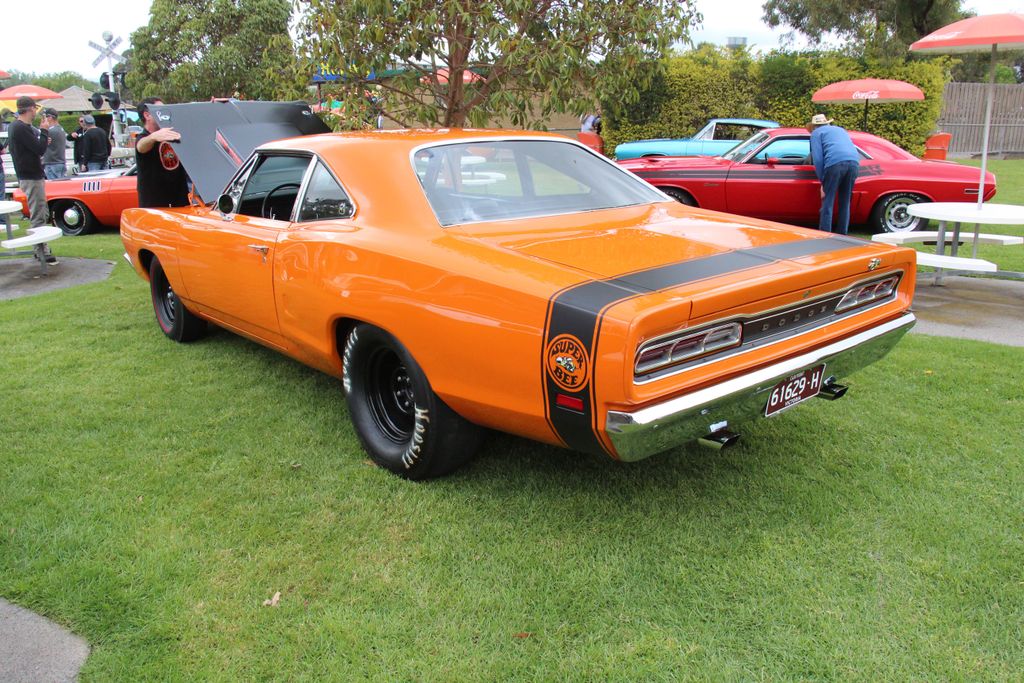
6. **1969 Dodge Coronet Super Bee A12**Prepare yourself for a deep dive into pure, unadulterated Mopar brutality, because the 1969 Dodge Coronet Super Bee A12 was less of a car and more of a drag strip special with a license plate. Often dubbed the “Six Pack” Super Bee, this machine was an unapologetically excessive statement from Dodge, built with a singular, uncompromising focus on straight-line performance that bordered on irresponsible for public roads. It was a vehicle designed to dominate the quarter-mile.
At the heart of this beastly Coronet was the legendary 440 cubic-inch V8, enhanced with the “Six Pack” induction: three Holley two-barrel carburetors on an Edelbrock aluminum intake. Officially rated at 390 horsepower and 490 lb-ft of torque, these numbers were famously conservative. Enthusiasts agreed its actual output soared closer to an astonishing 450 horsepower, delivering massive torque almost instantaneously across the rev range.
What truly made the A12 Super Bee a handful, and indeed dangerous, was Dodge’s unwavering commitment to acceleration at the expense of nearly everything else. The package included a fiberglass lift-off hood secured with metal pins, a robust 4.10:1 Dana 60 rear axle with a Sure Grip limited-slip differential, and heavy-duty suspension. Crucially, front disc brakes were conspicuously absent; the A12 came standard with drum brakes at all four corners—a safety compromise unconscionable given the car’s monumental performance.
The A12’s performance was staggering: 0-60 mph in approximately 5.3 seconds and quarter-mile times in the high 12-second range. Road tests reported the car was virtually undrivable in wet conditions due to its power and inadequate tire technology. Its heavy-duty suspension, primarily tuned for straight-line launches, made the car unpredictable in corners. This unrefined machine, with triple carburetors demanding careful adjustment and a loping idle, made smooth driving nearly impossible. This Mopar highlights Detroit’s willingness to prioritize raw, uncompromising performance.
Car Model Information: 2022 INFINITI QX60 Luxe
Name: Dodge Super Bee
Manufacturer: Chrysler Corporation
Production: 1968–1971 , 1970–1980 (Mexico only) , 2007–2009 , 2012–2013
Layout: FR layout
Class: Muscle car
Caption: 1969 Dodge Coronet Super Bee A12 “Six Pack”
Categories: 1960s cars, 1970s cars, All articles needing additional references, All articles with dead external links, All articles with unsourced statements
Summary: The Dodge Super Bee is a mid-sized muscle car marketed by Dodge, that was produced for the 1968 through 1971 model years.
In Mexico, the Super Bee was based on a compact-sized Chrysler platform and marketed from 1970 until 1980.
The Super Bee model name was resurrected for the 2007, 2008, 2009, 2012, and 2013 Dodge Charger Super Bee models.
Get more information about: Dodge Super Bee
Buying a high-performing used car >>>
Brand: Dodge Model: Coronet Super Bee A12
Price: $37,677 Mileage: 24,135 mi.
Read more about: All Show, No Go: Unmasking the Classic Muscle Cars That Dazzled with Style But Disappointed on the Dragstrip
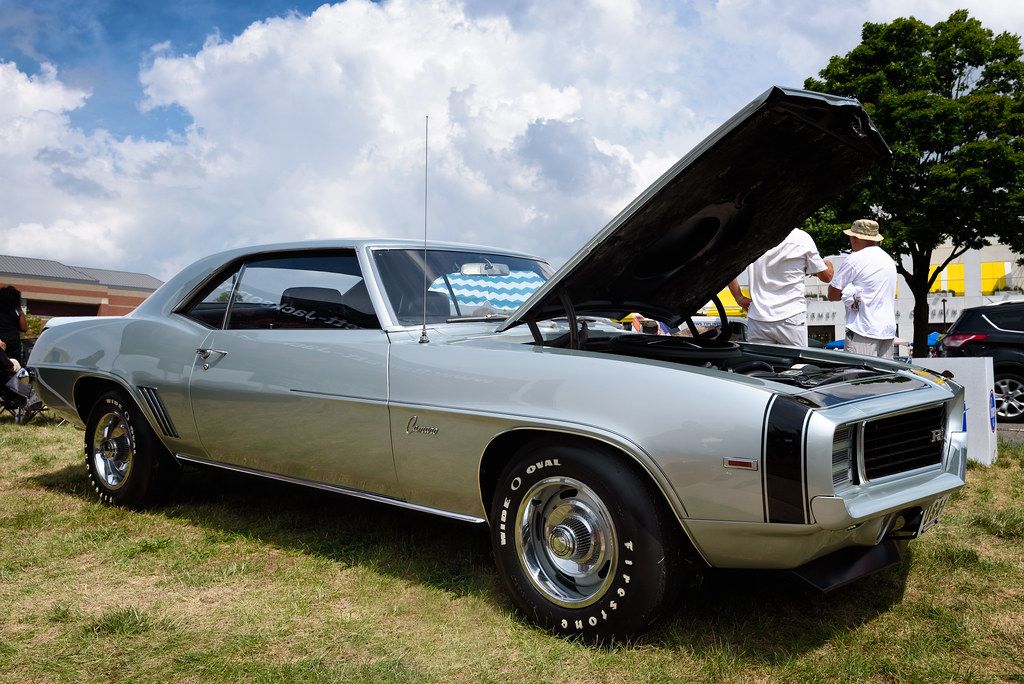
7. **1969 Chevrolet Camaro ZL1**If the Super Bee A12 was a specialized drag racer, then the 1969 Chevrolet Camaro ZL1 was arguably the most excessive factory hot rod ever thinly disguised as a production vehicle—a car so specialized and utterly overpowered that it barely qualified as street-legal. This was a pure track weapon born through Chevrolet’s secretive Central Office Production Order (COPO) system, bypassing normal production constraints to deliver raw, unadulterated speed.
The heart of this monstrous creation was the legendary, all-aluminum 427 cubic-inch ZL1 engine. This engineering marvel, essentially a detuned L88 racing engine, featured aluminum cylinder heads and blocks—unheard of in production cars of the era—along with a heavy-duty forged rotating assembly, a solid-lifter camshaft, and a towering 12.5:1 compression ratio. While officially rated at a conservative 430 horsepower, its actual output consistently exceeded an earth-shattering 500 horsepower and 500 lb-ft of torque.
What made the ZL1 Camaro particularly ill-suited for street use wasn’t just its raw power, but its uncompromising nature. That high-compression engine demanded premium fuel, ran notoriously hot in traffic, delivered abysmal fuel economy, and idled with a lopey, unstable rhythm, making routine driving an exercise in constant concentration. Its powerband was a violent, peaky explosion, offering little power down low but an almost terrifying rush of acceleration once the engine roared into its higher RPMs.
Despite its formidable racing pedigree, the ZL1 received minimal chassis upgrades over standard Camaros. The F41 heavy-duty springs and shocks were inadequate for controlling its monumental power, especially considering the primitive tire technology. Standard 14-inch wheels with narrow bias-ply tires were hopelessly overmatched, leading to constant traction issues. Road tests highlighted its “virtually undrivable in wet conditions” nature and the need for “constant attention.” Its astronomical price meant only a minuscule 69 examples were ever built, cementing its status as one of the rarest and most extreme examples of Detroit’s willingness to put thinly disguised race cars into public hands.
Car Model Information: 2024 GMC Sierra 1500 Elevation
Name: Chevrolet Camaro
Manufacturer: Chevrolet
Production: 1966–2002,2009–2023
ModelYears: 1967–2002,2010–2024
Class: Pony car
BodyStyle: coupe,convertible
Platform: GM F platform,GM Zeta platform,GM Alpha platform
Layout: Front-engine, rear-wheel-drive layout
Categories: 1970s cars, 1980s cars, 1990s cars, 2+2 coupés, 2000s cars
Summary: The Chevrolet Camaro is a mid-size American automobile manufactured by Chevrolet, classified as a pony car. It first went on sale on September 29, 1966, for the 1967 model year and was designed to compete with the Ford Mustang. The Camaro shared its platform and major components with the Firebird, produced by General Motors’ Pontiac division that was also introduced for the 1967 model year.
Four distinct generations of the Camaro were developed before production ended in 2002. The nameplate was revived on a concept car that evolved into the fifth-generation Camaro; production started on March 16, 2009.
Production of the sixth generation of the Camaro ended in December 2023, for the 2024 model year.
Get more information about: Chevrolet Camaro
Buying a high-performing used car >>>
Brand: Chevrolet Model: Camaro ZL1
Price: $42,936 Mileage: 39,751 mi.
Read more about: Unleash the Beasts: The Most Powerful Muscle Cars from the Big Three’s Glorious Legacy
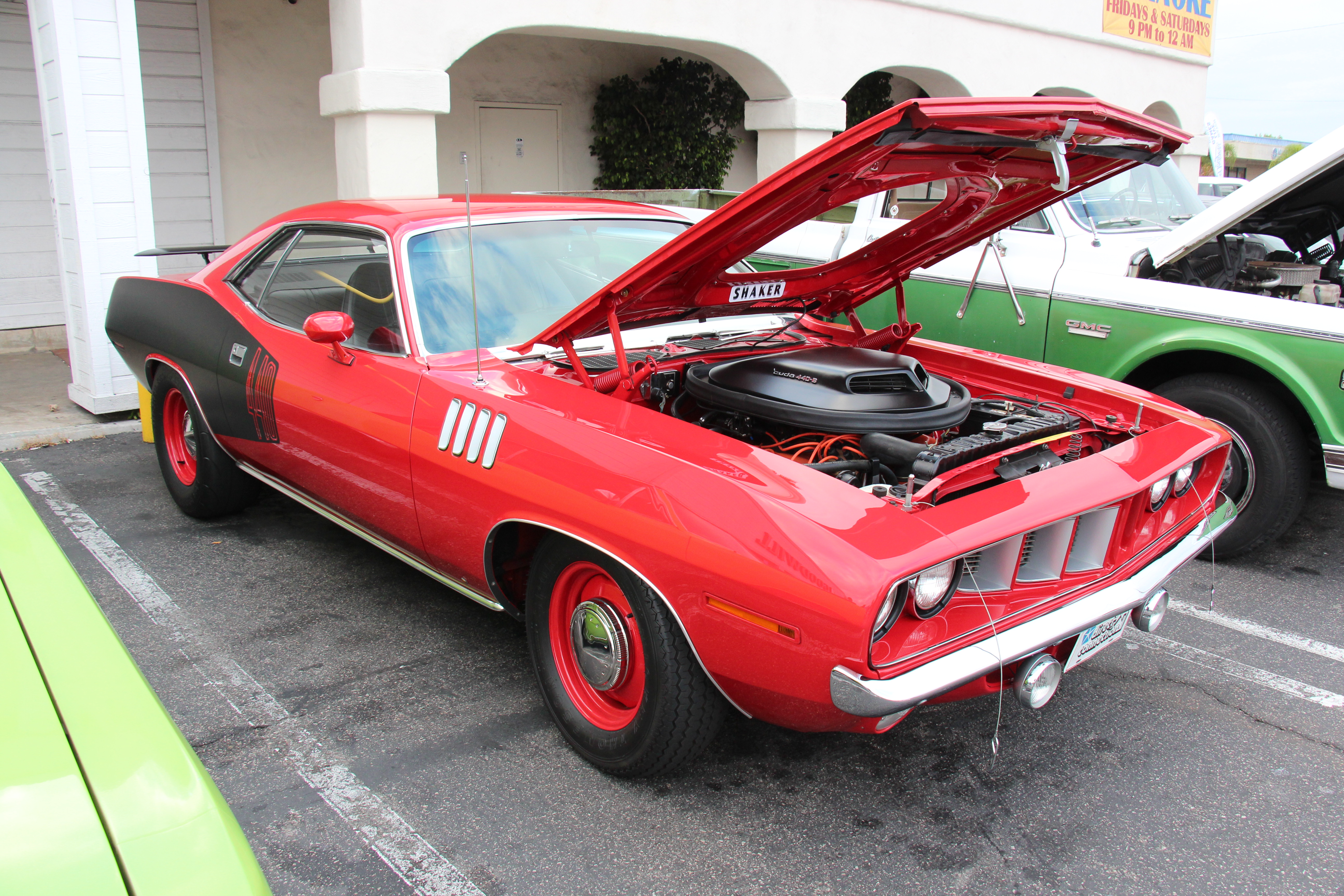
8. **1971 Plymouth Hemi ‘Cuda**As the muscle car era hurtled towards its inevitable, emissions-choked conclusion, the 1971 Plymouth Hemi ‘Cuda emerged as one of the last and most gloriously excessive examples of unrestrained power. This was a final, desperate hurrah for unbridled performance, appearing just before stringent regulations and the looming oil crisis ended the first golden age of American muscle. As one of the very last vehicles to feature Chrysler’s legendary 426 Hemi engine, the ’71 Hemi ‘Cuda was, in essence, a street-legal drag racer with minimal concessions to everyday drivability or safety.
At its core was the fearsome 426 Hemi V8, renowned for its hemispherical combustion chambers, dual four-barrel carburetors, and a brutally strong forged crankshaft. Officially rated at 425 horsepower and 490 lb-ft of torque, its actual output was widely acknowledged to comfortably exceed 500 horsepower. This gargantuan power was particularly problematic when crammed into the ‘Cuda’s relatively lightweight E-body platform, creating a dangerously imbalanced power-to-weight ratio that few drivers could hope to manage safely.
What truly rendered the ’71 Hemi ‘Cuda profoundly ill-suited for street use was its uncompromising focus on straight-line performance. The Hemi engine itself was notoriously temperamental, demanding meticulous tuning and constant maintenance. It delivered abysmal fuel economy, ran alarmingly hot in traffic, and produced so much torque that even minor throttle inputs could send the rear wheels into a violent spin, making smooth, controlled driving almost impossible.
The ‘Cuda’s handling was equally problematic. Despite aggressive styling, the chassis was woefully under-equipped for the Hemi’s brutal power. Road tests noted significant body roll, pronounced understeer, and an unnerving tendency for the rear end to break loose without warning. Insurance companies began targeting Hemi-powered cars with exorbitant premiums, recognizing the extreme risk. This contributed to its extreme rarity; only 108 hardtops and 11 convertibles were built. Period road tests famously declared it required “the skills of a test pilot” and was “almost too much car for the street.”
Car Model Information: 2024 GMC Sierra 1500 Elevation
Caption: 1970 Hardtop Coupe
Name: Plymouth Barracuda
Manufacturer: Plymouth (automobile)
Production: 1964–1974
Assembly: Fenton, Missouri,Hamtramck, Michigan,Maywood, California,Windsor, Ontario
Layout: Front-engine, rear-wheel drive layout
Class: Pony car
Categories: 1970s cars, All articles with dead external links, All articles with unsourced statements, Articles with dead external links from February 2018, Articles with dead external links from January 2022
Summary: The Plymouth Barracuda is a two-door pony car that was manufactured by Chrysler Corporation from 1964 through 1974 model years.
The first-generation Barracuda was based on the Chrysler A-body and was offered from 1964 until 1966. A two-door hardtop (no B-pillar) fastback design, it shared a great majority of parts and bodywork with the Plymouth Valiant, except for the distinctive wraparound rear glass.
The second-generation Barracuda, though still Valiant-based, was heavily redesigned. Built from 1967 through 1969, it was available as a two-door in fastback, notchback, and convertible versions.
The third generation, offered from 1970 until 1974, was based on the Chrysler E-body, exclusive to it, and the slightly larger Dodge Challenger. A completely new design, the two-door Barracuda was available in hardtop and convertible body styles.
Get more information about: Plymouth Barracuda
Buying a high-performing used car >>>
Brand: Plymouth Model: Hemi ‘Cuda
Price: $42,936 Mileage: 39,751 mi.
Read more about: The Internet Is Buzzing About A 2026 Plymouth Barracuda But Is It Actually Real?
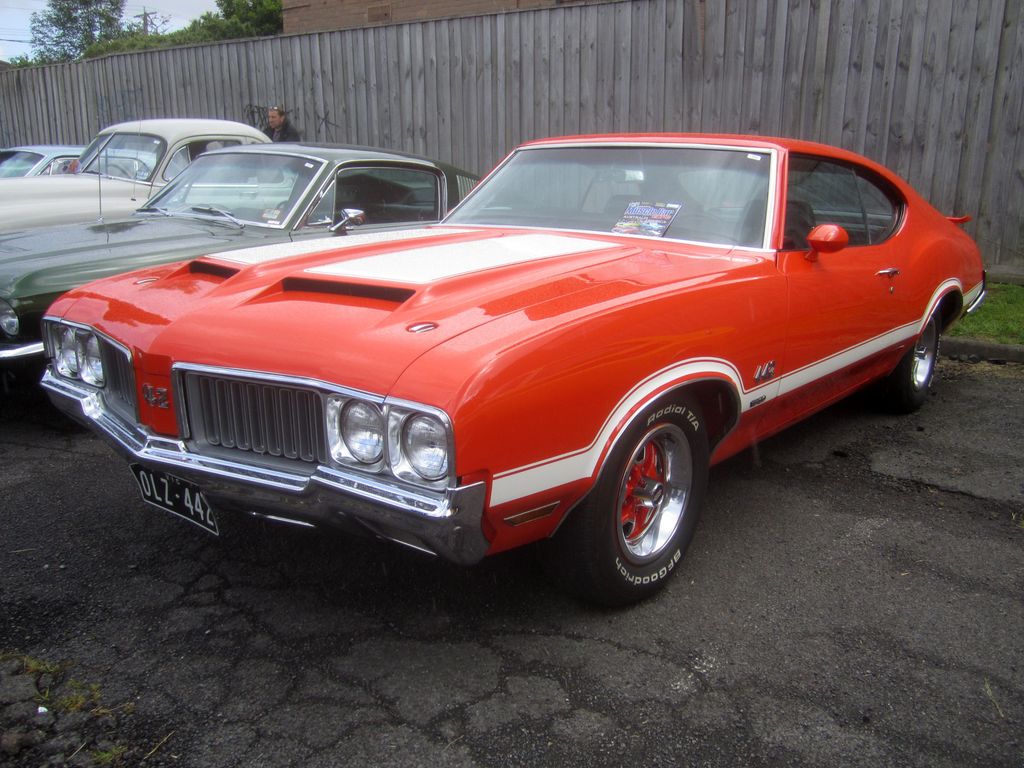
9. **1970 Oldsmobile 442 W-30**Forget everything you thought you knew about Oldsmobile’s typically conservative image, because the 1970 Oldsmobile 442 W-30 absolutely shattered those perceptions. This car defiantly delivered one of the most excessively powerful muscle cars of its era, cleverly wrapped in a deceptively mature-looking package. While Oldsmobile had traditionally catered to a slightly more sophisticated buyer, the W-30 performance package transformed the 442 into a true street predator, dangerously overpowered for public roads.
At the heart of this understated sleeper was Oldsmobile’s massive 455 cubic-inch V8, significantly enhanced with the W-30 performance package. This included a hotter camshaft, special carburetor calibration, a lightweight aluminum intake manifold, and a distinctive fiberglass hood with functional air scoops feeding a sealed, cold-air induction system. Officially rated at a stout 370 horsepower and a truly staggering 500 lb-ft of torque, this figure astonishingly stood as the highest rating of any American production car until modern supercars emerged. Its actual output widely exceeded a robust 400 horsepower.
What truly made the W-30 a particularly excessive, and indeed dangerous, machine was its almost unbelievable torque delivery. While the horsepower peak arrived at 5,200 RPM, the monster torque was available from barely off idle, with over 440 lb-ft hammering the pavement at a mere 1,200 RPM. This created a car that possessed an almost supernatural ability to break its rear wheels loose at virtually any speed, requiring only a moderate application of the throttle. This characteristic, while exhilarating, made it particularly perilous in wet conditions or in the hands of inexperienced drivers.
Despite Oldsmobile’s efforts to equip the W-30 with a heavy-duty suspension, these improvements were still fundamentally inadequate for effectively managing the engine’s tremendous torque output. Road tests frequently reported alarming body roll during aggressive cornering and an unnerving tendency for the rear end to step out unpredictably when power was applied mid-corner. Car Craft famously observed that the W-30 demanded “a delicate right foot and considerable skill” to drive quickly on anything but straight roads. Its substantial weight, coupled with primitive bias-ply tires, created a dangerous disparity between acceleration and ability to handle or brake effectively.
Car Model Information: 1969 Oldsmobile 442
Name: Oldsmobile 442
Manufacturer: Oldsmobile
ModelYears: 1964–1980,1985–1987,1990–1991
Class: Muscle car
Layout: FR layout
Caption: 1971 Oldsmobile 442
Categories: 1960s cars, 1970s cars, 1980s cars, All articles with unsourced statements, Articles with short description
Summary: The Oldsmobile 4-4-2 is a muscle car produced by Oldsmobile between the 1964 and 1987 model years. Introduced as an option package for US-sold F-85 and Cutlass models, it became a model in its own right from 1968 to 1971, spawned the Hurst/Olds in 1968, then reverted to an option through the mid-1970s. The name was revived in the 1980s on the rear-wheel drive Cutlass Supreme and early 1990s as an option package for the new front-wheel drive Cutlass Calais.
The “4-4-2” name (pronounced “Four-four-two”) derives from the original car’s four-barrel carburetor, four-speed manual transmission, and dual exhausts. It was originally written “4-4-2” (with badging showing hyphens between the numerals), and remained hyphenated throughout Oldsmobile’s use of the designation. Beginning in 1965, the 4-4-2s standard transmission was a three-speed manual along with an optional two-speed automatic and four-speed manual, but were still badged as “4-4-2″s.
Because of this change, from 1965 on, according to Oldsmobile brochures and advertisements, the 4-4-2 designation referred to the 400 cubic inch engine, four-barrel carburetor, and dual exhausts. By 1968, badging was shortened to simply “442”, but Oldsmobile brochures and internal documents continued to use the “4-4-2” model designation.
Get more information about: Oldsmobile 442
Buying a high-performing used car >>>
Brand: Oldsmobile Model: 442
Price: $43,990 Mileage: 24,000 mi.
Read more about: Unleashing Automotive Legends: 14 Iconic 1970s Cars Now Commanding Millions in the Collector’s Market

10. **1973 Pontiac Firebird Trans Am SD-455**And so, we arrive at what is arguably the grand finale of the original muscle car era: the 1973 Pontiac Firebird Trans Am SD-455. This car stands as perhaps the last truly excessive muscle machine, a final, defiant howl against the relentless tide of encroaching emissions regulations and fuel economy concerns that were already rapidly neutering American performance cars. What makes the Super Duty Trans Am particularly remarkable, almost miraculous, is that it somehow managed to escape the corporate constraints that had already begun strangling horsepower figures across the industry.
At the very heart of this final, thunderous muscle car hurrah was the legendary Super Duty 455 engine—a powerplant so incredibly overbuilt, so robust, that it seemed far better suited to NASCAR competition than public roads. Unlike standard 455 V8s, the SD-455 featured a unique, four-bolt main reinforced block, special forged pistons, a virtually indestructible forged steel crankshaft, a high-flow aluminum intake manifold, and oversized valves. While officially rated at a modest 310 horsepower (underreported due to rising insurance premiums), its actual output comfortably exceeded 370 horsepower and 390 lb-ft of torque, solidifying its status as one of the most powerful engines still available as the muscle car era was drawing to a close.
What truly rendered the SD-455 Trans Am ill-suited for street use wasn’t just its raw, untamed power, but the significantly compromised chassis it was forced to contend with. While the second-generation F-body platform offered better handling than its predecessor, it still featured a pronounced front-heavy weight distribution. This created a persistent tendency toward understeer during initial cornering, which could, without warning, violently transition into unpredictable oversteer when power was applied aggressively. The standard Radial Tuned Suspension, while advanced for its time, was still inadequate for effectively managing the SD-455’s sheer, brutal power, especially given its propensity for sudden, explosive torque delivery.
Contemporary road tests of the era vividly highlighted the car’s dual nature. Car and Driver recorded an astonishing 0-60 mph time of 5.4 seconds—a truly remarkable figure for 1973. Yet, reviewers also noted that the car required “considerable skill to drive quickly through corners.” High-speed stability was a consistent concern, compromised by aerodynamic limitations, with reports of front-end lift at speeds exceeding 100 mph. The SD-455’s existence was a minor miracle, requiring special exemptions to bypass GM’s new limits on compression ratios and emissions. This rebellious spirit was reflected in the car’s raw, uncompromising nature, demanding utmost skill.
**The Enduring Roar of Unbridled Power**
Car Model Information: 2024 GMC Sierra 1500 Elevation
Name: Pontiac Firebird
Caption: The second, third, and fourth generations of,the Pontiac Firebird Trans Am
Manufacturer: Pontiac (automobile)
Production: February 23, 1967 – August 30, 2002
ModelYears: 1967 – 2002
Class: Pony car,Muscle car
Platform: GM F platform
Related: Chevrolet Camaro
Layout: Front engine, rear-wheel-drive layout
Categories: 1970s cars, 1980s cars, 1990s cars, 2000s cars, All articles with dead external links
Summary: The Pontiac Firebird is an American automobile built and produced by Pontiac from the 1967 to 2002 model years. Designed as a pony car to compete with the Ford Mustang, it was introduced on February 23, 1967, five months after GM’s Chevrolet division’s platform-sharing Camaro. This also coincided with the release of the 1967 Mercury Cougar, Ford’s upscale, platform-sharing version of the Mustang.
The name “Firebird” was also previously used by GM for the General Motors Firebird series of concept cars in the 1950s.
Get more information about: Pontiac Firebird
Buying a high-performing used car >>>
Brand: Pontiac Model: Firebird Trans Am SD-455
Price: $42,936 Mileage: 39,751 mi.
Read more about: The Collector’s Trap: 9 ‘Rare’ Cars Whose Value Will Never Justify the Cost of Restoration—Should You Sell Now?
As we pull the handbrake on our deep dive into these ten legendary muscle machines, it’s clear that their legacy extends far beyond mere horsepower figures or quarter-mile times. These weren’t just cars; they were automotive declarations, rolling embodiments of an era when excess was celebrated, and power was paramount. They challenged the very fabric of what was considered road-legal, pushing boundaries with designs and engines that often outstripped the handling capabilities and safety technologies of their time. Each car, from the winged aero warriors to the deceptively sedate sleepers, tells a story of ambition, engineering prowess, and a thrilling, sometimes terrifying, flirtation with mechanical danger. Today, these vehicles aren’t just collector’s items; they are roaring monuments to an uncompromising spirit, a raw testament to American ingenuity and an insatiable hunger for speed that continues to captivate enthusiasts around the globe. They remind us that sometimes, being “too powerful for their time” is precisely what makes a legend endure.