We’ve all looked up at the night sky and felt that familiar sense of wonder, right? Outer space, that vast, seemingly endless expanse beyond our little blue planet, has always captured our imaginations. But how much do we *really* know about it?
Forget what you think you know, because the universe is so much stranger, cooler, and more complex than most of us can even begin to grasp. It’s not just a big, empty void; it’s a dynamic, intricate system filled with mind-boggling phenomena and hidden truths that are truly out of this world.
So, buckle up, space explorers! We’re about to take a whirlwind tour through 15 incredible realities of outer space that will make you rethink everything. Get ready to have your mind expanded, because these facts are guaranteed to blow you away!
1. **The Cosmic Vacuum: Not So Empty After All**When you picture outer space, you probably imagine a perfect, absolute vacuum, right? Like, totally empty. And while it’s true that space contains “ultra-low levels of particle densities, constituting a near-perfect vacuum,” it’s not actually a complete void. It’s just really, really, *really* sparse.
This “effectively no friction” environment is what allows stars, planets, and moons to glide freely along their majestic orbits without anything slowing them down. But don’t let the term “vacuum” fool you into thinking it’s completely devoid of matter. Far from it!
Even in the deepest stretches of intergalactic space, you’ll still find *something*. We’re talking about a few hydrogen atoms per cubic meter. While that sounds incredibly tiny compared to the 10^25 molecules per cubic meter in the air we breathe, it means space is never truly empty. It’s just operating on an entirely different scale of emptiness!
2. **The Chilly Baseline: Outer Space’s Default Temperature**Brrr! If you thought winters on Earth were cold, try existing in the baseline temperature of outer space! When you’re out there, far from any heat source like a star or planet, things get incredibly frigid.
The baseline temperature of outer space, as set by the background radiation from the Big Bang itself, is a shocking 2.7 kelvins. That translates to an astonishing −270 °C or −455 °F! That’s almost absolute zero, the theoretical coldest possible temperature.
Now, don’t confuse this background radiation temperature with the kinetic temperature of gas in space, which can actually vary wildly. For instance, the Boomerang Nebula hovers around 1 K (−272 °C), making it even colder than the baseline, while the solar corona can sizzle at over 1,200,000–2,600,000 K (2,200,000–4,700,000 °F)! Talk about extreme temperature swings!
3. **Where Space Begins: Understanding the Kármán Line**Ever wondered where Earth’s atmosphere officially ends and outer space truly begins? It’s not as clear-cut as you might think! The transition is gradual, with air pressure steadily decreasing with altitude.
However, for practical purposes, we have the Kármán line. This imaginary boundary, an altitude of 100 km (62 mi) above sea level, is “conventionally used as the start of outer space in space treaties and for aerospace records keeping.” It’s our agreed-upon handshake with the cosmos.
Named after Theodore von Kármán, this line represents the altitude where a vehicle would have to travel faster than orbital velocity to derive sufficient aerodynamic lift from the atmosphere to support itself. Essentially, above this point, aerodynamics gives way to astrodynamics, marking the shift from airspace to “free space.”
Interestingly, the exact legal limit for national airspace remains a topic of discussion, and some definitions for a practical boundary have ranged from 30 km to a staggering 1,600,000 km. But for most of our space-faring adventures, that 100 km mark is the go-to!
4. **Dark Matter and Dark Energy: The Universe’s Mysterious Majority**Prepare for a mind-bending truth: what we can actually see in the universe – all the stars, galaxies, and cosmic dust – makes up only a tiny fraction of its total mass-energy. It’s like looking at an iceberg and only seeing the tip!
“Most of the remaining mass-energy in the observable universe is made up of an unknown form, dubbed dark matter and dark energy.” These aren’t just cool names; they represent profound cosmic mysteries that scientists are still trying to unravel.
In fact, current estimates suggest that ordinary atoms, the stuff we’re all made of, account for only 4.6% of the total energy density of the universe. To put that in perspective, that’s a density of just “one proton per four cubic meters” on average across the cosmos!
What’s even more fascinating is that unlike matter and dark matter, “dark energy seems not to be concentrated in galaxies.” While it might account for a majority of the universe’s mass-energy, its influence within our own Milky Way galaxy is five orders of magnitude smaller than the gravitational pull from matter and dark matter. It’s a truly pervasive, yet elusive, force!
5. **The Big Bang’s Echo: How Our Universe Came to Be**Let’s talk about beginnings. Our universe, according to the Big Bang theory, had a rather dramatic entrance. About 13.8 billion years ago, it was “an extremely hot and dense state” that began to expand at an incredibly rapid pace.
Fast forward approximately 380,000 years, and something truly pivotal happened. The universe had cooled down enough to allow protons and electrons to combine and form the very first hydrogen atoms. This period is known as the “recombination epoch.”
Crucially, when this occurred, “matter and energy became decoupled, allowing photons to travel freely through the continually expanding space.” This light, from the universe’s infancy, is what we now detect as the cosmic microwave background radiation – the literal echo of the Big Bang!
Since then, the matter that remained after this initial expansion has been undergoing gravitational collapse, slowly but surely creating the dazzling stars, galaxies, and other astronomical objects we observe today. What’s left behind? The deep vacuum that forms what we now call outer space.
6. **Intergalactic Voids: The Universe’s True Emptiness**While we just established that space isn’t perfectly empty, there are some regions that come pretty darn close! We’re talking about the vast, sprawling gaps between galaxies – the “intergalactic space.”
This expansive region “takes up most of the volume of the universe,” making the areas where galaxies reside seem like tiny, dense islands in an ocean of near-nothingness. It’s where the universe truly stretches out and breathes.
Within this immense cosmic canvas, the plasma that exists between galaxies is believed to account for about half of all baryonic (that’s ordinary, atom-forming) matter in the universe. But don’t imagine a thick, glowing cloud! This plasma has an astonishingly low “number density of less than one hydrogen atom per cubic metre” and a kinetic temperature that can reach millions of kelvins.
So, while local concentrations of matter eventually condense into the stars and galaxies we marvel at, the bulk of the universe’s volume is dominated by these incredibly tenuous and hot intergalactic voids. It’s a reminder of just how much ’empty’ space is truly out there!
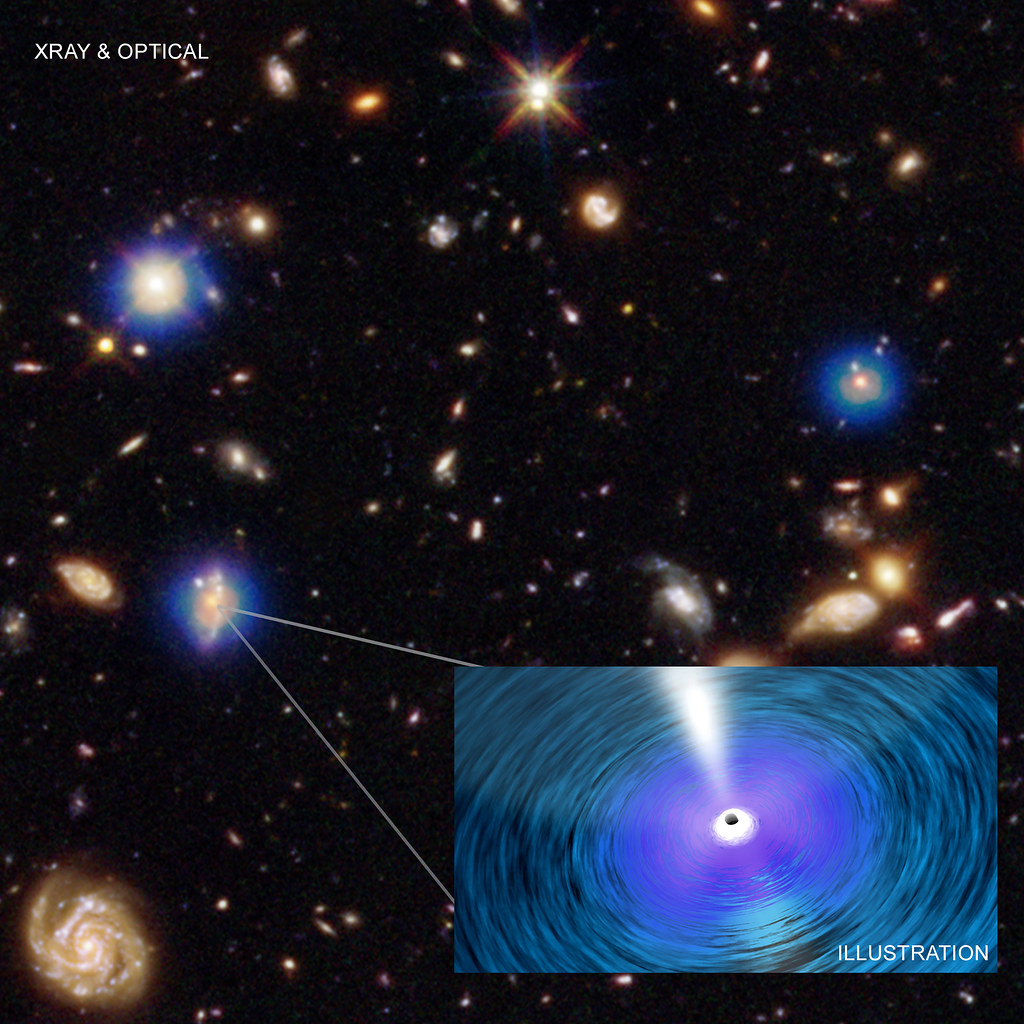
7. **The Flatness of Space: It’s Not as Curvy as You Think!**Ever wondered about the overall shape of our universe? Is it like a giant sphere, or perhaps a saddle? Well, prepare for another unexpected reality: our observable universe is, quite remarkably, “flat.”
This isn’t just a wild guess; it’s a conclusion drawn from precise measurements of the cosmic microwave background, thanks to satellites like the Wilkinson Microwave Anisotropy Probe. These observations have given us a clear picture of the universe’s fundamental geometry.
So, what does “flat” mean in cosmic terms? It means that “photons on parallel paths at one point remain parallel as they travel through space to the limit of the observable universe, except for local gravity.” Imagine two parallel lines drawn on a piece of paper; they stay parallel. That’s essentially how light rays behave on the grandest scale of our universe.
This discovery of a flat universe, when combined with the measured mass density of the universe and the undeniable evidence of its accelerating expansion, points to an even deeper truth: “space has a non-zero vacuum energy, which is called dark energy.” So, not only is space flat, but it’s also being pushed apart by a mysterious, unseen force!
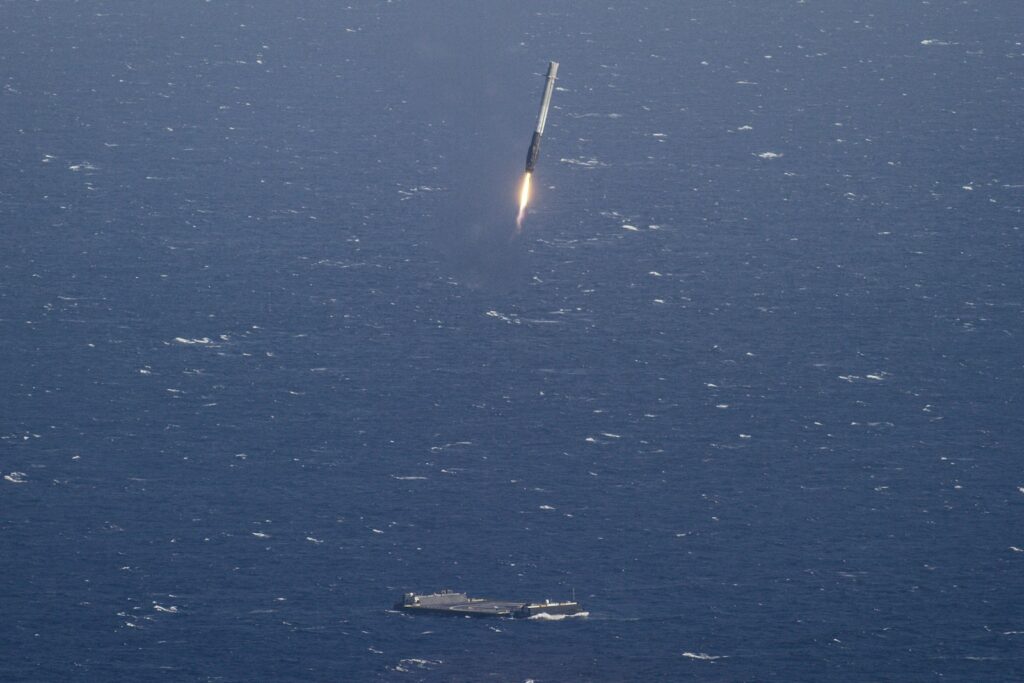
8. **Vacuum’s Deadly Embrace: Why You Can’t Just “Pop” in Space**Okay, so we’ve established space isn’t perfectly empty, but it’s still an incredibly harsh environment, especially for us squishy humans! One of the most immediate and dangerous characteristics of outer space is its profound lack of pressure, something our bodies are absolutely not designed for. Forget those Hollywood scenes where people explode; the reality is still pretty terrifying, but in a different, more chilling way.
The real danger kicks in around 19.14 km (11.89 mi) above Earth, a height known as the Armstrong line. At this altitude, the atmospheric pressure drops so low that it matches the vapor pressure of water at human body temperature. This means exposed bodily liquids like your saliva, tears, and even the fluids in your lungs would literally boil away. Sudden exposure, such as during a rapid decompression, can also cause pulmonary barotrauma—a rupture of the lungs due to the massive pressure differential. Your eardrums and sinuses could burst, and you’d experience bruising and blood seepage in soft tissues.
Beyond the immediate trauma, the lack of pressure quickly depletes oxygen from your blood into your lungs in a desperate attempt to equalize. Once that deoxygenated blood hits your brain, you’d lose consciousness within seconds and die of hypoxia within minutes. While your blood and other body fluids would indeed boil in a process called ebullism, potentially bloating your body to twice its normal size, your elastic tissues and blood vessels are typically tough enough to prevent an actual explosion. So, without proper protection, it’s a very swift and unpleasant end, not a dramatic pop!
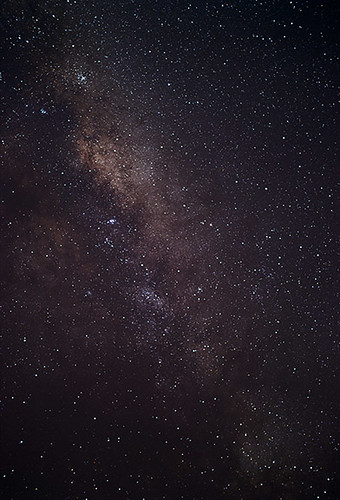
9. **Weightlessness Woes: The Body’s Battle Against Zero-G**So, let’s say you’ve survived the vacuum with a super cool pressure suit – congrats! But your body’s challenges in space are far from over. Humans evolved in Earth’s gravity, and when you take that away, things get pretty wild inside. The immediate effect? Space motion sickness, which hits over 50% of astronauts. We’re talking nausea, vomiting, vertigo, headaches, and just a general feeling of being unwell for the first 1-3 days as your body tries to figure out what’s going on.
But the long game is where it gets really interesting, and frankly, a bit scary. Extended exposure to weightlessness leads to some serious physiological changes. Your muscles, which are no longer fighting gravity all day, start to atrophy, becoming weaker and smaller. And your bones? They suffer from spaceflight osteopenia, meaning you lose bone density. It’s like your body decides it doesn’t need all that strength when there’s nothing to push against!
Beyond muscles and bones, weightlessness messes with your entire cardiovascular system. Fluids redistribute, causing that classic “puffy face” astronaut look, and the heart doesn’t have to work as hard, leading to its own slowdown. You also see a decrease in red blood cell production, balance disorders as your inner ear struggles to recalibrate, and even a weakening of your immune system. Who knew floating could be so impactful?
Luckily, astronauts aren’t just left to float into physical decline. They follow a rigorous exercise regimen to minimize these effects, helping them maintain muscle mass and bone density. Still, it’s a constant battle, and even with all the training, lesser symptoms like nasal congestion, sleep disturbances, and overall body mass loss can pop up. It really shows how profoundly adapted we are to our home planet’s gravitational pull!
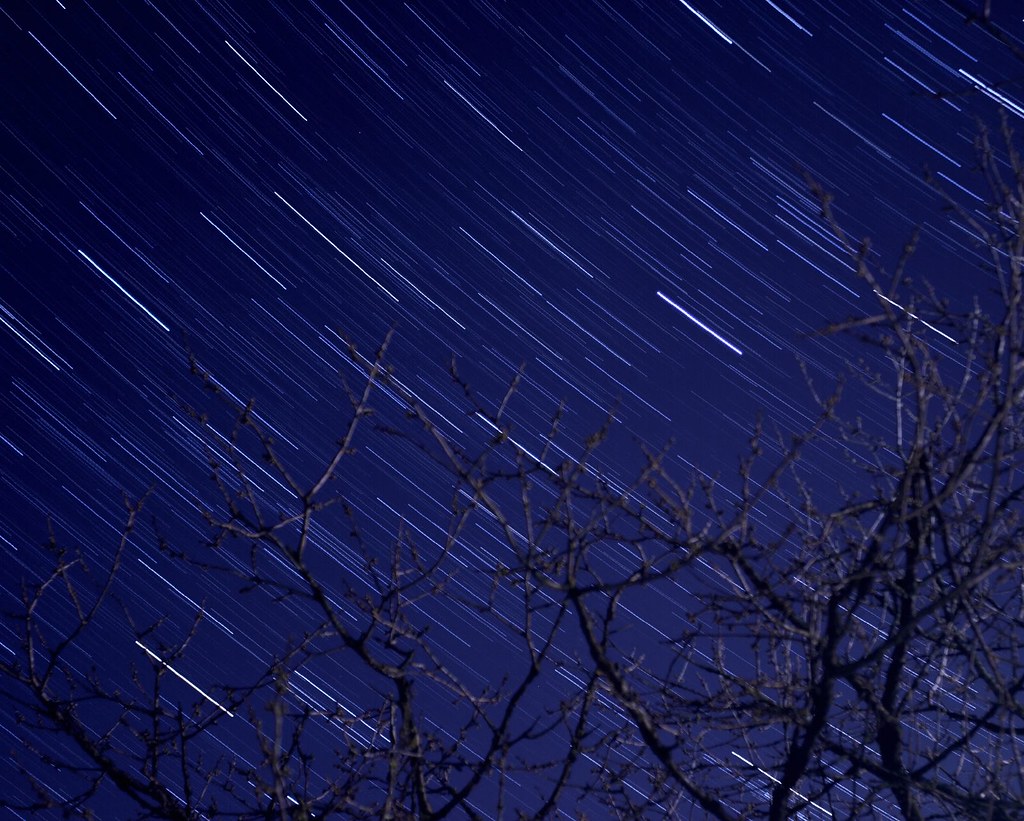
10. **Radiation: The Invisible Threat Beyond Our Atmosphere**Alright, you’ve got your suit on, you’re past the initial zero-G queasiness, but there’s still an insidious enemy lurking: radiation. Outside the protective bubble of Earth’s atmosphere and magnetic field, energetic subatomic particles, known as cosmic rays, zip through space, posing a significant health hazard. These aren’t just tiny particles; they can pack an incredible punch, with energies ranging from about 10^6 eV up to an extreme 10^20 eV!
Exposure to these high-energy, ionizing cosmic rays can lead to both immediate and long-term health problems. Acutely, astronauts might experience fatigue, nausea, and vomiting. More seriously, it can damage the immune system and alter white blood cell counts. Think about a long-duration mission, like a trip to Mars; a large fraction of the cells in an astronaut’s body could be traversed and potentially damaged by these high-energy nuclei. That’s a seriously scary thought for future space explorers!
Over longer periods, the risks escalate, including an increased likelihood of cancer, as well as damage to the eyes, nervous system, lungs, and gastrointestinal tract. And it’s not just the direct cosmic rays; the impact of these particles on a spacecraft’s shielding can produce secondary radiation, adding to the crew’s exposure. It’s a complex problem that scientists are still actively researching to find effective countermeasures.
Even in orbit around Earth, we have to contend with radiation, particularly in the notorious Van Allen radiation belts. These toroidal regions trap solar and galactic radiation, creating zones of concentrated energetic particles. While shielding can diminish the energy of these particles, often using water containers or the spacecraft walls themselves, the threat remains substantial for astronauts and delicate electronic systems alike. Space weather can also make this environment incredibly variable and unpredictable, adding another layer of challenge to space missions.

11. **The Space Beyond Earth: Near-Earth’s Busy Neighborhood**Now that we’ve talked about the challenges to human bodies, let’s zoom out a bit and explore the different ‘neighborhoods’ of space, starting with our own backyard! The region of space extending from low Earth orbits out to geostationary orbits is charmingly called “Near-Earth space.” This is where most of humanity’s space activity happens, a bustling hub for artificial satellites, scientific instruments, and even the International Space Station.
Think about it: all those communication satellites, GPS networks, and Earth-observing platforms? They’re all zipping around in Near-Earth space. This region includes several key orbital altitudes. Low Earth Orbits (LEO) typically range from 180 to 2,000 km, used for things like scientific satellites and those stunning views from the ISS. Medium Earth Orbits (MEO) extend from 2,000 to 35,780 km, perfect for navigation systems. And High Earth Orbits (HEO), above 35,780 km, are home to weather and some communication satellites, including the crucial geostationary ones that seem to hang motionless above a fixed point on Earth.
However, with all this activity comes a big problem: space debris. This region has seen high levels of “space pollution,” ranging from defunct satellites to spent rocket stages and even tiny paint flecks. This growing cloud of junk threatens nearby space activity, as collisions can create even more debris in a dangerous chain reaction. It’s a serious challenge for keeping our orbital highways safe and accessible for future generations.
Within Near-Earth space, we also find “Geospace,” a region encompassing Earth’s upper atmosphere and its magnetosphere. This is where the mighty Van Allen radiation belts reside, acting like protective shields, albeit with their own hazards. Geospace is a dynamic environment, constantly influenced by the Sun’s behavior and the solar wind, leading to spectacular phenomena like aurorae, but also geomagnetic storms that can wreak havoc on satellites and even pose risks to astronauts. It’s truly a complex and intertwined system right on our doorstep!

12. **Journey to the Moon and Beyond: Cislunar and Deep Space**Venturing further out from Earth’s immediate orbital neighborhood, we enter into ever more expansive and mysterious regions. Beyond the standard high Earth orbits, we encounter concepts like XGEO space, which the USA uses to refer to high Earth orbits in multiples of geosynchronous orbit, roughly 35,786 km out. This terminology helps define vast distances when talking about lunar missions and beyond, setting the stage for more ambitious journeys.
Speaking of lunar missions, let’s talk about Cislunar space. This fascinating region is absolutely crucial for any journey to our Moon, as it includes lunar orbits, the Moon’s own orbital space around Earth, and even the stable Earth-Moon Lagrange points. These points are like cosmic parking spots where the gravitational pulls of Earth and the Moon balance out, making them ideal locations for future space stations or outposts, and forming the actual ‘highways’ like translunar orbits that astronauts and robotic probes travel to our closest celestial neighbor.
And finally, we arrive at the concept of “Deep Space.” This term can be a bit flexible depending on who you ask! The US government, for instance, defines it as all of outer space lying further from Earth than a typical low-Earth orbit, which means even our Moon falls into the category of deep space for them. However, other definitions vary wildly, with some placing the starting point beyond the Moon’s orbit.
The International Telecommunication Union (ITU) offers a specific figure: “distances from the Earth equal to, or greater than, 2 million km (1.2 million mi).” This is about five times the Moon’s orbital distance, highlighting just how truly vast and far-reaching these distant cosmic realms can be! Defining these boundaries becomes ever more important as humanity expands its reach.
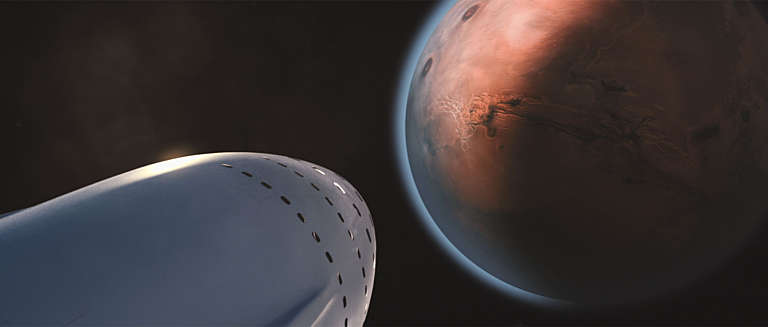
13. **Interplanetary Wonders: Cruising Through Our Solar System’s Medium**Beyond Earth’s immediate gravitational influence and out into the greater Solar System lies interplanetary space. This is the vast domain dominated by the Sun’s immense gravitational pull, outside the gravitational spheres of influence of the planets. It’s a colossal bubble, known as the heliosphere, created and continuously inflated by the solar wind – a constant stream of charged particles emanating from our star.
This solar wind isn’t just a gentle breeze; it’s a powerful flow of particles, primarily protons, moving at incredible velocities of 350–400 km/s! It pushes outwards, creating a very tenuous atmosphere for billions of kilometers into space. At its outer edge, between 110 and 160 AU from the Sun, the heliosphere meets the galactic environment at a boundary called the heliopause, deflecting low-energy galactic cosmic rays and acting as a protective shield for our Solar System.
While often described as a near-total vacuum, interplanetary space isn’t completely empty. It’s sparsely filled with cosmic rays, ionized atomic nuclei, and various subatomic particles. But wait, there’s more! You’ll also find gas, plasma, and dust floating around, collectively known as the interplanetary medium. Scientists have even discovered several dozen types of organic molecules here through microwave spectroscopy, showing that even these seemingly barren stretches hold fascinating chemical secrets.
And let’s not forget the magnetic fields! Our Sun generates a powerful magnetic field that permeates interplanetary space. Planets like Jupiter, Saturn, Mercury, and Earth also have their own magnetospheres, which are shaped by the solar wind into distinctive teardrop forms. These planetary magnetic fields are crucial, as they trap charged particles and protect the planets’ atmospheres from being gradually eroded by the relentless solar wind, a fate Mars unfortunately experiences due to its lack of a strong global magnetic field. It’s a dynamic and active environment, full of invisible forces and particles!
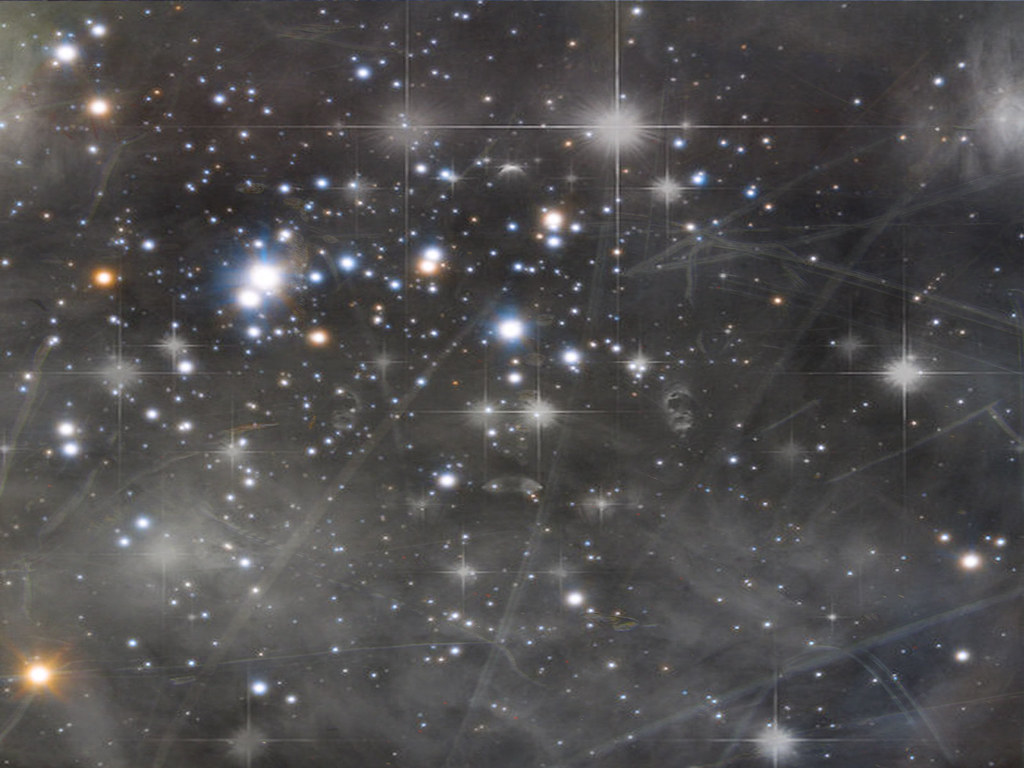
14. **The Vast Emptiness Between Stars: Understanding Interstellar Space**Moving even further out, past the heliopause and beyond the domain of our Sun, we plunge into interstellar space. This is the truly immense physical expanse that exists between individual stars and stellar systems within a galaxy, like our Milky Way. It’s essentially the space *outside* of those protective ‘bubbles’ of plasma, known as astrospheres, which are formed by the stellar winds originating from each star. For our Sun, this astrosphere is, as we just learned, the heliosphere.
Interstellar space isn’t a perfect void either; it’s filled with what we call the interstellar medium (ISM). This sparse medium consists primarily of matter and radiation, though “sparse” is an understatement! Approximately 70% of the ISM’s mass is made up of lone hydrogen atoms, with most of the remainder being helium atoms. This fundamental composition is then enriched with tiny trace amounts of heavier atoms, which are the glorious byproducts of stellar nucleosynthesis – literally, stars creating heavier elements within their fiery cores.
These heavier atoms aren’t just stuck in stars forever. They’re ejected into the interstellar medium through powerful stellar winds or when evolved stars, like red giants, begin to shed their outer envelopes, forming beautiful planetary nebulae. Even more dramatically, the cataclysmic explosions of supernovae propagate shock waves of stellar ejecta outwards, scattering these precious heavy elements, forged in stellar furnaces, throughout the interstellar medium. It’s how new generations of stars, planets, and even life itself, get their building blocks!
The density of matter in the interstellar medium can vary considerably. While the average is around 10^6 particles per cubic meter – still incredibly low by Earth standards – some regions are far denser. For example, cold molecular clouds, which are the birthplaces of new stars, can hold a staggering 10^8 to 10^12 particles per cubic meter. These clouds are also home to a surprising number of molecules, which can even coalesce into tiny dust particles. Radio astronomy is constantly tallying new molecular species, adding about four new types each year, proving that even the “emptiness” between stars is teeming with complex chemistry!
Read more about: Cosmic Dramas: Unveiling the Profound Forces That Transform a Star’s ‘Dream House’ Across Billions of Years

15. **Who Owns the Cosmos? The Complexities of Space Law**After all this talk about how incredible and challenging space is, a crucial question arises: who gets to explore, use, and potentially even claim parts of it? This brings us to the fascinating and often complex realm of space law, the framework governing human activities beyond Earth. The foundational document for this is the Outer Space Treaty, which entered into force way back on October 10, 1967.
This groundbreaking treaty asserts that outer space, including the Moon and other celestial bodies, is “free for all nation states to explore and is not subject to claims of national sovereignty.” It famously declares outer space the “province of all mankind,” meaning it’s a shared heritage accessible to everyone. This principle has been vital in ensuring that all nations, not just space-faring ones, have a theoretical right to access and use space equally. The treaty also explicitly prohibits the deployment of nuclear weapons in outer space, a key achievement for international peace.
Despite these noble intentions, the legal landscape of space is far from settled. While the UN General Assembly has passed numerous resolutions advocating for peaceful uses of outer space and preventing an arms race, there’s currently no legal prohibition against deploying conventional weapons. In fact, anti-satellite weapons have been successfully tested by several major powers, highlighting a concerning loophole. Furthermore, proposals like the 1979 Moon Treaty, which aimed to put all heavenly bodies under international community jurisdiction, haven’t been ratified by any nation actively engaged in human spaceflight.
Even the question of “where” space begins legally has its controversies. While the Kármán line at 100 km is a widely accepted working definition for the boundary between aeronautics and astronautics, some argue it’s too high, potentially inhibiting commercial space activities. The issue of national airspace limits remains debated, especially with the rise of commercial and military sub-orbital flights. And let’s not forget the “Bogotá Declaration” of 1976, where eight equatorial states controversially claimed control of the geosynchronous orbital path above their territories – claims that are not internationally accepted. The growing problem of space debris further complicates matters, posing a serious threat to all space activities and demanding international cooperation. It’s clear that as humanity pushes further into the cosmos, the legal and ethical questions will only become more profound and urgent.
**Ending paragraph of the article:**
Wow, what an incredible journey through the realities of outer space! From the subtle hum of the cosmic vacuum to the breathtaking expanse of interstellar realms, and even the intricate dance of human biology and law in a zero-G world, it’s clear that space is far more than just a dark void. It’s a dynamic, challenging, and endlessly fascinating frontier that constantly reshapes our understanding of ourselves and our place in the universe. So next time you gaze up at the stars, remember these 15 realities – they’re not just scientific facts, they’re invitations to wonder, to learn, and to dream even bigger about the cosmos that calls to us all. Keep looking up, space explorers, because the universe always has another incredible reality waiting to blow your mind!