Ever sat there, popcorn in hand, absolutely screaming at the screen (in your head, of course) as a character makes a decision so mind-bogglingly confusing, it feels like they’re actively trying to outsmart themselves? Yeah, we’ve all been there. Movies are supposed to transport us, thrill us, make us laugh, and sometimes, they do all of that by presenting us with characters who seem to operate on a completely different plane of logic. We’re talking about those epic moments where you can practically hear the collective groan of the audience as a protagonist or even an antagonist pulls a move so perplexing, it becomes instantly legendary, forever etched in the annals of ‘what were they thinking?!’ cinema.
From slapstick blunders that defy common sense to moments of pure, unadulterated head-scratching idiocy, cinematic history is jam-packed with decisions that leave us wondering, ‘Wait, seriously?’ These aren’t just minor plot holes or blink-and-you-miss-it errors; these are grand, glorious, often hilarious acts of confusion that shape the entire narrative, sometimes for better, sometimes for… well, you’ll definitely see. They challenge our understanding of conventional storytelling, yes, but more importantly, they give us endless material for our group chats, late-night debates, and rewatch parties, reminding us that even the smartest screenwriters can give their characters a moment of truly baffling judgment.
So, buckle up, movie buffs! Get ready to dive deep with us into some of the most hilariously baffling, facepalm-inducing, and downright confusing decisions ever made on the silver screen. We’ve meticulously scoured the cinematic landscape to bring you a countdown of character choices that range from surprisingly stupid to unbelievably idiotic, all delivered with that signature BuzzFeed flair. Prepare to laugh, gasp, and maybe even shed a tear (of pure, unadulterated bewilderment) as we explore these unforgettable moments that redefine cinematic confusion. Let’s kick things off with a duo who basically invented the art of baffling choices!
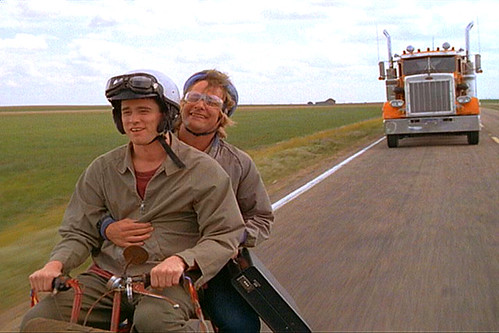
1. **Hitching a Ride with Harry & Lloyd**: Alright, let’s just get this out of the way right upfront: if you’re even contemplating a list about confusing decisions in movies, you absolutely HAVE to talk about Harry Dunne and Lloyd Christmas. These two, played by the iconic duo Jim Carrey and Jeff Daniels, are practically walking, talking embodiments of questionable judgment, making their debut in the side-splitting 1994 classic “Dumb and Dumber.” Their performances were so hysterically on point, they forever cemented their status as kings of comedic absurdity, making even their most baffling choices iconic.
Things take a truly bewildering, and ultimately fatal, turn when the trio stops for a meal. Harry and Lloyd, in a moment of what they probably believed was genius-level pranksterism, decide it would be utterly hilarious to place chili peppers on Mental’s burger. Because nothing says “friendly bonding experience” during a road trip quite like a spicy culinary surprise for your unexpected travel companion! What they demonstrably failed to account for, or perhaps simply didn’t possess the mental capacity to comprehend, was Mental’s severe pre-existing stomach ulcer. Predictably, this leads to Mental collapsing in acute pain, creating a medical emergency that is, in typical Harry and Lloyd fashion, immediately and catastrophically mishandled.
This is where the decision-making goes from hilariously misguided to tragically, inexplicably fatal, spiraling into a realm of pure cinematic confusion. Confronted with a seemingly unconscious Mental, the duo proceeds to “help” him by mistaking rat poison for his necessary medicine. Yes, you read that right. Rat poison. For medicine. You’d think the labels, the packaging, perhaps even the general vibe of “rat poison” versus “medicine” would provide some clue. But apparently, in the universe of Harry and Lloyd, all small bottles are interchangeable. They dutifully administer the poison, effectively killing their would-be assassin in one of the most absurd medical mix-ups in film history.
This entire sequence is not just a joke; it’s a masterclass in how rapidly things can escalate from a simple (if ill-advised) prank to a full-blown accidental homicide when basic common sense is completely absent. The scene leaves audiences both in stitches from the sheer audacity of it all and in utter disbelief at the magnitude of these characters’ confusion. The infamous phrase, “Never underestimate the power of stupidity,” perfectly encapsulates this bewildering series of choices, cementing “Dumb and Dumber” as a gold standard for showcasing truly confusing, yet undeniably hysterical, cinematic decisions.
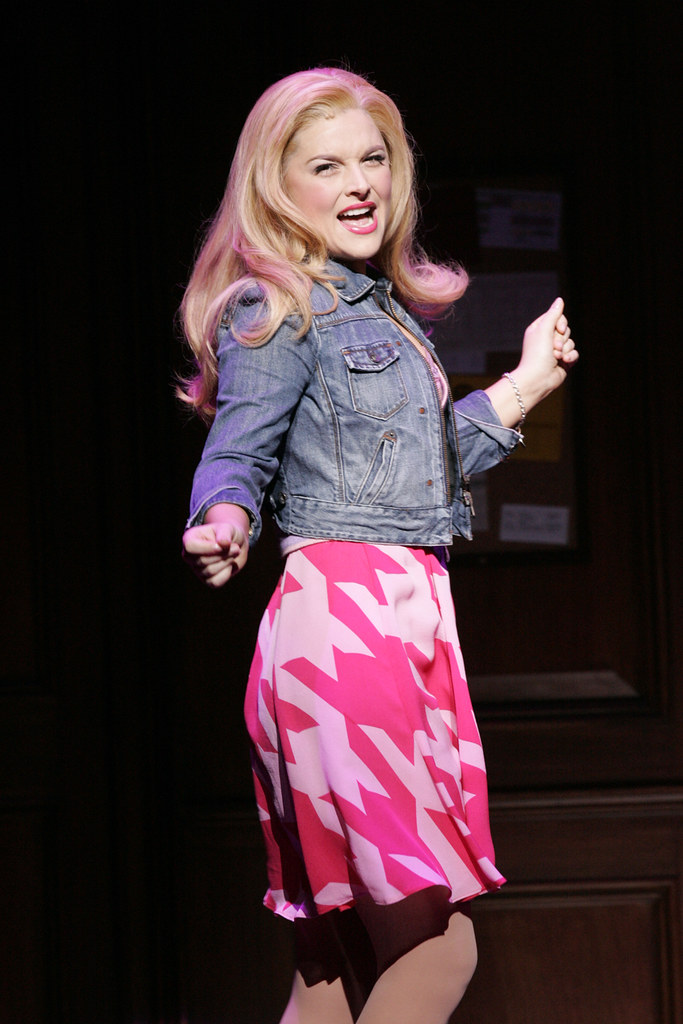
2. **Breaking Up with Elle Woods**: Okay, let’s be real. Imagine you have a girlfriend who is smart, effortlessly stylish, incredibly resourceful, fiercely loyal, and genuinely loves you with all her heart. What, in the name of all that is sensible, do you do? If you’re Warner Huntington III from the absolutely iconic “Legally Blonde” (2001), you do the unthinkable: you dump her because she’s deemed “too blonde” to ever be taken seriously as a senator’s wife. Yes, seriously, that’s his reasoning. This has to be one of the most breathtakingly short-sighted, completely baffling, and profoundly confusing decisions ever made by a character who seemingly prioritizes an antiquated notion of status over, well, every single worthwhile human quality. Warner’s initial breakup with Elle is undeniably the catalyst for her incredible, empowering transformation, but it’s utterly perplexing why he couldn’t see the sparkling gold he was so carelessly letting go of.
Elle Woods, a true queen of reinvention and resilience, takes Warner’s profoundly baffling rejection not as a crushing defeat, but as rocket fuel for her own ambition. Her subsequent journey to Harvard Law School, initially driven by a desire to win him back, is nothing short of legendary. While her preliminary goal was, confusingly enough, still tied to *his* incredibly shallow expectations, she quickly finds her own powerful footing and begins to shine with an unparalleled brilliance that Warner, quite frankly, couldn’t even begin to fathom. Warner, meanwhile, is still muddling through his own existence, seemingly oblivious to the absolute powerhouse of a woman Elle is rapidly becoming, still trapped in his own limited worldview. His continuous commitment to his utterly outdated and frankly snobbish reasoning for the breakup continues to be a monumental head-scratcher as Elle effortlessly demonstrates her incredible capabilities and undeniable intelligence.
The confusion surrounding Warner’s perpetually flawed judgment only deepens as Elle, through sheer grit and intellect, lands a coveted internship on a major legal case. And who does she find herself working alongside? None other than Warner himself, and his new fiancée, Vivian. Here’s a man who literally has not one, but *two* incredibly intelligent, capable, and undeniably impressive women orbiting his world, yet he seems utterly, consistently incapable of appreciating either of them beyond their superficial compatibility with his political aspirations. His unwavering commitment to his frankly bizarre notions of success and what constitutes an “appropriate” partner is a truly perplexing character trait, making his initial, bone-headed decision to dump Elle look worse with every single, triumphant passing scene she inhabits.
Of course, in a moment that feels like karmic justice served with a side of fabulous, Elle, utilizing her unique, unorthodox, but incredibly effective skillset (which Warner consistently underestimated), goes on to win the pivotal case. This is the spectacular, neon-pink moment where Warner’s terrible, confusing decision comes full circle, smacking him right in the face. He finally, *finally* sees what he catastrophically lost, and true to form, he comes crawling back to her, probably thinking he can just waltz back into her life as if nothing happened. It’s almost comical how oblivious he remains.
But by this point, Elle has grown light-years beyond him. She delivers a perfectly poised, utterly satisfying rejection, Vivian, seeing the light, promptly dumps him, and Warner, the architect of his own misfortune, ends up graduating from Harvard Law with absolutely no accolades or, crucially, job offers. Talk about a confusing set of priorities leading to a spectacular, and frankly, well-deserved downfall. He truly never deserved her, and his string of bewildering, short-sighted choices ultimately led him to a very lonely, very predictable, and very deserved, fate. It’s a glorious cinematic moment reminding us that sometimes the most confusing decisions are the ones made by characters who simply don’t know a good thing when they see it.
Read more about: When the Music Fell Silent: Remembering 14 Icons Lost in Tragic Plane Crashes
3. **Smashing the Wrong Car**: Now, let’s pivot to a character who embodies righteous indignation mixed with some of the most profoundly confusing decision-making you’ll ever witness: Walter Sobchak from “The Big Lebowski” (1998). If there’s one thing we know about Walter, it’s that this man has some serious, *serious* anger management problems to deal with, and throughout the Coen Brothers’ cult classic, his temper flares constantly and unpredictably. But there’s one particular moment where his rage absolutely overrides any semblance of logic or common sense, leading to a situation that is simultaneously chaotic, utterly hilarious, and a hallmark of the film’s absurdist genius.
The scenario kicks off after The Dude’s beloved (if not entirely functional) car is stolen, and with it, a briefcase supposedly full of money. When the car is eventually recovered, the cash is, predictably, nowhere to be found. The Dude and Walter, ever the enthusiastic if somewhat inept amateur sleuths, discover some homework in the backseat. Their subsequent brilliant deduction (and we genuinely use that term with a healthy dose of irony here) leads them directly to a teenager’s house, where a shiny, brand-spanking-new sports car is conveniently parked outside. In Walter’s hyper-fixated, rage-fueled mind, this expensive vehicle is irrefutable proof that the teenager definitively spent the missing money. Logical? Perhaps not in any conventional sense. Walter-logical? Absolutely, one hundred percent.
They confront the teenager, demanding answers about the missing cash with all the subtlety of a bull in a china shop. When the kid, understandably bewildered, fails to provide the exact information Walter expects (because, let’s be real, what could a random, terrified teenager possibly say to appease Walter’s spiraling fury?), Walter completely, spectacularly loses it. He grabs a conveniently placed crowbar and, in a fit of unrestrained, operatic rage, begins to lay into the gleaming sports car with brutal efficiency, all while spouting graphic, hilariously profane language that would make a sailor blush. The scene is a masterclass in comedic escalation, with Walter’s fury reaching truly epic levels, making his actions bewilderingly disproportionate to the situation, especially when you consider the truly classic twist that’s about to unfold.
And here, my friends, is the truly mind-boggling kicker, the confusing cherry on top of this already chaotic sundae: turns out, it was the *neighbor’s* car! Yes, Walter, in his glorious, crowbar-wielding, expletive-laden fury, had absolutely, unequivocally, smashed the wrong vehicle. The look on The Dude’s face at this revelation is utterly priceless, a perfect blend of horror, disbelief, and utter bewilderment, perfectly mirroring the audience’s reaction. It’s a moment that makes you throw your hands up and ask, “How?! How could he possibly be *that* confused?!”
The confusion deepens when The Dude then has to helplessly watch his *own* recovered car receive the very same destructive treatment from the furious neighbor in a fit of not-so-neighborly payback. It’s a sequence that perfectly encapsulates the film’s unique brand of absurdist humor and Walter’s consistently baffling, yet undeniably entertaining, approach to problem-solving. This decision is not just a blunder; it’s a profound statement on misdirected rage and the hilarious consequences of operating without a single shred of deductive reasoning, solidifying Walter Sobchak’s place in the pantheon of characters making truly confusing cinematic choices.
Read more about: Michael Jackson’s Thriller: The 14 Mind-Blowing Reasons Why It’s Still the King of Pop Albums
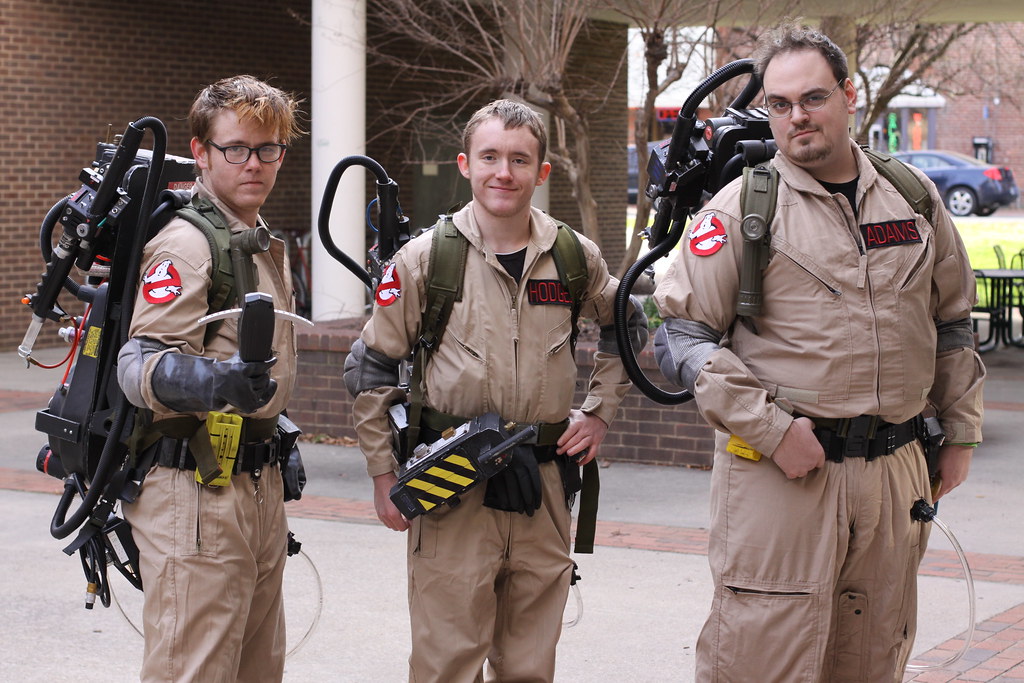
4. **Shutting Down the Ghost Containment Unit**: If the annals of sci-fi cinema have imparted any universal truth, it’s that messing with the paranormal is almost always a spectacularly, catastrophically bad idea. And yet, somehow, certain characters just can’t resist the inexplicable urge to poke the metaphorical (or, in this case, very literal) ghost bear with a stick. Case in point: Inspector Walter Peck from the timeless 1984 classic “Ghostbusters.” This man, bless his stubbornly bureaucratic heart, makes a decision so bafflingly ill-advised and profoundly ignorant that it almost single-handedly triggers a full-blown, slime-covered supernatural apocalypse in the heart of New York City. You really have to wonder what in the world was going through his mind, or perhaps, what absolutely *wasn’t* computing in that rule-abiding brain of his.
Let’s set the scene: the Ghostbusters, our beloved, eccentric team of parapsychologists, had been doing a pretty bang-up job, keeping the Big Apple remarkably safe from spectral shenanigans. They had successfully trapped a healthy, impressive number of restless spirits and malevolent entities in their highly specialized ecto-containment unit. They had the situation under control, a complex scientific solution to an otherworldly problem. But then, as it so often happens in cinema (and let’s be honest, sometimes in real life too), the government decides to arbitrarily butt in. Enter Inspector Walter Peck, a man whose misplaced confidence in his own extremely limited understanding of highly advanced particle physics and ghostiology is as boundless as the ghost problem he’s about to unleash upon an unsuspecting metropolis.
Peck, convinced without any real evidence that the Ghostbusters are nothing but charlatans operating dangerous, unregulated equipment, demands, with an air of unshakeable authority, that their sophisticated, ghost-holding unit be summarily shut down. Venkman and Egon, with all their invaluable scientific expertise, first-hand experience, and frantic urgency, warn him, almost pleadingly, against this absolutely catastrophic course of action. They meticulously explain the immense dangers, the intricate risks, the sheer, mind-numbing illogicality of releasing highly concentrated supernatural energy back into the already fragile fabric of reality. But their pleas, brimming with scientific reason and practical, terrifying experience, fall on entirely deaf ears, bouncing off Peck’s wall of bureaucratic certitude. Peck’s confusing, almost willful, obstinacy is a truly terrifying force to behold, a stubbornness that borders on cinematic villainy.
What follows this truly baffling decision is a cinematic masterclass in immediate, spectacular cause and effect. With the ecto-containment unit unceremoniously deactivated, mass hysteria erupts across the city as the freed ghosts, now unchained and absolutely furious, break from captivity and begin to terrorize everything in sight. Buildings are Slimed with copious amounts of ectoplasmic goo, cars are casually tossed around like toys, and general, widespread panic takes over the streets. It’s a beautifully chaotic sequence, all thanks to one man’s incredibly misguided conviction.
The city is plunged into chaos, teetering on the brink of supernatural devastation. It’s only thanks to the quick thinking and unwavering bravery of the Ghostbusters – the very people Peck tried so hard to shut down and discredit – that this doesn’t spiral into a total, apocalyptic disaster. “Good call, Peck!” we sarcastically (and lovingly) exclaim. Your profoundly confusing, short-sighted decision to prioritize paperwork over paranormal reality not only provided us with an unforgettable, iconic disaster but also cemented your place as one of cinema’s most frustratingly oblivious, yet hilariously memorable, antagonists. It’s a prime example of how one truly bewildering choice can unleash an entire world of comedic mayhem.

5. **Some Light Reading**: If you ever needed irrefutable proof that sometimes the most confusing decisions in movie history spring from characters who genuinely mean well but are simply… not equipped for even the most basic critical thinking, then look no further than the legendary Lieutenant Frank Drebin. Leslie Nielsen, the undisputed, unparalleled king of deadpan comedy, made audiences worldwide howl with laughter throughout his illustrious career, and his role as Drebin in “The Naked Gun: From the Files of Police Squad!” (1988) is arguably his most iconic and uproariously funny. Drebin’s endless string of foolish mistakes and baffling blunders could honestly fill an entire list all on their own, but this particular moment of “light reading” stands out as hilariously, profoundly, and unforgivably confusing.
Our intrepid, if profoundly clueless, hero, Frank, in his inimitable, bumbling style, has successfully broken into the lavish apartment of corrupt businessman Vincent Ludwig. He’s on a high-stakes mission, a serious police investigation that demands cunning and precision! Inside, through sheer accidental luck, he uncovers some truly incriminating evidence – a crucial, potentially case-breaking note that could blow the entire criminal enterprise wide open. This is *the* moment of triumph, the big reveal, the careful, meticulous examination of vital evidence. What, then, does Frank, a supposedly seasoned police lieutenant, decide to do? Does he carefully photograph it for forensics? Secure it in an hermetically sealed evidence bag? Perhaps call for backup? No, of course not, because that would be far too… straightforward, far too logical for Frank Drebin.
Instead, in a move that defies all rational explanation and makes audiences collectively facepalm, Frank decides the absolute best way to read this vital piece of paper, presumably in the dimly lit, clandestine atmosphere of a criminal’s lair, is to illuminate it with a lighter. A *lighter*. You can practically hear the collective, exasperated gasp of the audience echoing through the cinema as this unbelievably bad plan begins to unfold. And, as anyone who has ever held a piece of paper (even accidentally, for a split second) near an open flame could instinctively tell you, this decision has exactly one, absolutely predictable, and utterly catastrophic outcome: he lights the crucial note on fire. Poof! Incriminating evidence, gone in a spectacular, unnecessary puff of smoke, leaving behind only the scent of regret and singed paper.
But of course, the bewildering chain of confusion doesn’t simply stop there. This single, baffling act of “light reading” quickly escalates into utter, uncontrolled mayhem, a domino effect of destruction. The entire apartment, now a veritable tinderbox thanks to Frank’s accidental arson, rapidly catches fire, leading to the complete and spectacular destruction of all of Ludwig’s lavish possessions. It’s a chaotic, inferno born from a moment of pure, unadulterated Frank Drebin logic, a testament to the fact that even the simplest tasks can become monumental disasters in his hands. The sheer absurdity of the situation is comedic gold, but the underlying decision is just… mind-bendingly confusing.
Our hero eventually escapes the conflagration in the most hilariously improbable ways imaginable, leaving behind a trail of smoke, ash, and comedic destruction that is as side-splittingly funny as it is bewilderingly unnecessary. The brilliance of Leslie Nielsen’s performance lies in his unwavering sincerity amidst the chaos his character creates, making Drebin’s confusing choices all the more impactful. Rest in peace, Mr. Nielsen. Your enduring legacy of characters making confusing, yet endlessly entertaining, choices will keep us laughing for decades, and Lieutenant Frank Drebin’s fiery, impromptu interrogation technique remains an all-time classic example of cinematic decision-making gone spectacularly wrong.
Okay, movie buffs, if you thought the first five entries were a wild ride through the annals of baffling cinematic judgment, prepare yourselves! We’re diving even deeper into the glorious abyss of ‘what were they thinking?!’ moments that have left us collectively bewildered, amused, and endlessly quoting these absolute gems. From apocalyptic rapture fails to the most epic gas station gaffe, these next few decisions are so confusingly brilliant (or just plain dumb), they’ll have you rewinding and rewatching, all while shaking your head in pure, unadulterated delight. Let’s keep this hilarious countdown rolling!
Read more about: A Waste in Every Dollar: 11 Superhero Sagas Fans Say They’d ‘Demand a Refund For’ If They Could

6. **Mouthing Off While Being Raptured**: You know that feeling when you’re watching a movie and think, ‘Wow, that’s exactly what I’d do’? Well, prepare for the opposite! Seth Rogen and Evan Goldberg’s ‘This is the End’ is a goldmine of improv and hilariously bad decisions, especially when comedians playing themselves navigate the literal end of days. It’s a comedic masterpiece capturing celebrity absurdity amidst impending doom.
As demons invade Earth, the star-studded group tries their best to survive. They discover that noble deeds are the golden ticket to heaven – a concept adding unexpected spiritual consequence. This clarity arrives after Craig Robinson, in selfless heroism, is raptured to the great beyond. It’s a surprising, heartwarming, and utterly confusing turn that sets a bizarre precedent for apocalypse survival.
Inspired by Craig’s ascent, James Franco’s character attempts to follow suit when cannibals attack. In a desperate, last-ditch effort, Franco tries to mimic the noble sacrifice, hoping for a one-way ticket to paradise. And, to everyone’s disbelief, the plan actually begins to work! A golden beam pulls him heavenward, seemingly cracking the code to rapture survival.
But here’s where the hilarity truly peaks. With one foot already in the pearly gates, Franco just *can’t* resist. In a moment of sheer, unadulterated cockiness that defies all logic, he curses out Danny McBride. Just like that, because apparently heaven has a strict ‘no cussing’ policy, the rapture reverses, sending Franco crashing back down. It’s a bewildering, side-splitting blunder, proving some things never change, even for impending salvation.

7. **Eating at the Sketchy Restaurant**: Oh, Annie. Dear, sweet Annie from ‘Bridesmaids’ (2011). Her journey as maid-of-honor is a masterclass in how one seemingly small, confusing decision can spiral into an unforgettable disaster. If you’ve had a friend with terrible judgment in planning, you’ll recognize the pure comedic genius of Annie’s choices, particularly the ill-fated meal.
The catastrophe’s genesis? Annie’s suggestion that the entire bridal party celebrate at a notoriously shady, unhygienic Brazilian steakhouse. Seriously, Annie? In hindsight, the warning signs were probably as subtle as a foghorn. After the culinary adventure, things take an immediate, very unfortunate turn for the worse. The impending doom is palpable, a silent promise of gastrointestinal mayhem.
The real horror show begins when the group, bless their hearts, heads to a high-end bridal store. Picture pristine white gowns, delicate fabrics, then… a collective symphony of gurgles and groans. Every bridesmaid, save for Helen, is hit with an undeniable urge for the nearest restroom. The mad dash that ensues, complete with pouring bodily fluids and frantic screams, is a ballet of pure, unadulterated chaos.
But the pièce de résistance belongs to Lillian. In a desperate attempt to escape the contaminated store, she sprints across the street for a public bathroom. Alas, fate, and her digestive system, have other plans. Maya Rudolph’s hysterical performance as she succumbs to the inevitable is a legendary, cringe-worthy moment. It reminds us some confusing decisions have very, *very* messy consequences. Never trust a sketchy steakhouse, folks!

8. **Zombie Joke**: If there’s one thing we agree on, a zombie apocalypse is no laughing matter. Unless, of course, you’re in ‘Zombieland’ (2009) and Bill Murray is involved. Seriously, not many cameos hold a candle to Murray playing himself, alive and pranking in a world overrun by undead. His performance is a rib-tickling highlight, featuring a decision so confusingly ill-advised, it became iconic.
Our zombie-slaying protagonists – Tallahassee, Columbus, Wichita, and Little Rock – stumble upon Bill Murray’s seemingly abandoned mansion. To their delight, he’s alive and has an epic sense of humor. Murray, in pure mischief, dons gnarly zombie makeup to prank Tallahassee and Wichita. After initial fright, the duo is overjoyed to find a Hollywood legend still breathing amidst the chaos.
The celebration is everything you’d expect from a post-apocalyptic party with Bill Murray: wild, irreverent, and hilarious. Amidst the revelry, Tallahassee, perhaps too caught up in the moment, makes a suggestion that is, in hindsight, monumentally confusing. He proposes Murray play the same zombie prank on their fidgety, easily spooked friend, Columbus. What could go wrong with a joke involving an anxious person and actual monsters?
Well, the idea backfires with spectacular, tragic, and undeniably hilarious results. Columbus, ever on edge and with an uncomfortably fast trigger finger, mistakes the zombified Murray for a real threat. Without hesitation, he fires a shotgun directly into the comedy legend’s chest. Poof! Just like that, Bill Murray’s glorious cameo comes to a shocking, unforgettable, and deeply confusing end. It’s a brutal reminder: never prank someone with an itchy trigger finger, especially during the zombie apocalypse. Some decisions are confusingly fatal.
Read more about: Elvira’s Enduring Legacy: Inside Cassandra Peterson’s Iconic Career and Her Candid Reflections on Ariana Grande’s Apology

9. **Double Dinner**: Ah, Robin Williams. Just hearing his name brings a smile to our faces, doesn’t it? His boundless energy and comedic genius brought so much joy, and his role in ‘Mrs. Doubtfire’ (1993) remains cherished. In this heartwarming film, Williams portrays Daniel Hillard, a loving father who, after divorce, makes a profoundly confusing (yet brilliant) decision: he transforms into an elderly British nanny, Mrs. Doubtfire.
The premise is a masterpiece of comedic confusion. Daniel meticulously crafts his disguise, complete with prosthetics and a distinct voice, to become the perfect housekeeper for his own family. This allows him to spend precious time with his children, but also opens the door for a cascade of increasingly complicated situations. The entire charade is a house of cards, constantly on the verge of collapse.
The ultimate test arrives when he inadvertently schedules two separate, important dinners at the exact same time and, even more confusingly, at the *same* restaurant. One with a crucial TV executive, the other with his unsuspecting family. Cue the frantic costume changes, whispered explanations, and increasingly desperate attempts to keep both parties fooled, racing between tables in a comedic blur.
This is where decision-making goes from complicated to utterly chaotic. After one too many drinks (a truly confusing choice for maintaining two identities), Daniel, as Mrs. Doubtfire, accidentally sits down with the TV executive. The jig is up. This tumultuous string of events inevitably leads to the spectacular revelation of his subterfuge. It’s an iconic ‘Whoops!’ that underscores how even the most well-intentioned confusing decisions can unravel in unforgettable ways.
Read more about: Fran Drescher Shines Bright: A Star, a ‘Nanny’ Reunion, and Heartfelt Tributes on Her Hollywood Walk of Fame Day!

10. **Freak Gasoline Accident**: Alright, ladies and gentlemen, for the grand finale! If there’s one character who consistently operates on a level of profound, beautiful, and utterly confusing naiveté, it’s Derek Zoolander. Ben Stiller’s Derek in ‘Zoolander’ (2001) is a male model whose stunning looks are matched only by his delightfully low IQ. His personal decisions are a goldmine of baffling blunders, but for this final entry, it’s his friends who earn the spot. In this scene, they manage to make Derek look like a certified genius, an achievement in itself.
The setting for this epic display of perplexing judgment? A seemingly ordinary gas station. What begins as innocent fun (if dousing each other in highly flammable liquid is ‘fun’) quickly spirals into legendary stupidity. Yes, Derek and his friends, in a moment of collective brain failure, decide it’s fantastic to douse each other in gasoline. Because, you know, it’s hilarious and totally safe, right?! The confusion here isn’t just a character flaw; it’s a profound statement on the absence of basic common sense.
As the gasoline-soaked shenanigans reach their peak, Derek’s easily distracted mind shifts focus. He spots a discarded magazine with his face on the cover, tossed in the trash. A fleeting moment of narcissistic distraction, a brief respite from impending doom. As he turns back, perhaps ready to rejoin the frolic, his eyes land on one friend. And in a terrifying, slow-motion realization, he sees it: a cigarette, being lit. The ultimate, most confusing, and frankly, most tragic decision of all.
Before Derek, or anyone with a shred of survival instinct, can utter a warning, the inevitable happens. The entire gas station, now a ticking time bomb, erupts in one massive, spectacular explosion. It’s a fiery, chaotic, and undeniably hilarious conclusion to their ill-conceived game. This scene is a testament to how astonishingly dumb choices transcend mere stupidity and enter legendary cinematic confusion. Hope you had as many head-scratching laughs as we did!
Read more about: Automotive Icons Unraveled: The Definitive Account of 15 Star Brands and Models That Fell From Grace
And there you have it, folks! Our deep dive into the 10 most confusing decisions ever made in movies has concluded. It’s clear that while these cinematic blunders might make us groan, they also provide some of the most memorable, laugh-out-loud moments in film history. These characters, in their infinite (and often infuriating) wisdom, remind us that sometimes the best entertainment comes from watching others make truly baffling choices. So next time you’re on the couch, popcorn in hand, remember these iconic moments and embrace the glorious confusion!