
Ah, Hollywood! The land of dreams, blockbusters, and… remakes. There’s a certain allure to revisiting beloved stories, isn’t there? The promise of a fresh perspective, updated special effects, or perhaps a new generation of stars breathing life into familiar characters. Sometimes, it’s a brilliant idea, a chance to rediscover magic. Other times, however, it’s a spectacular misfire, a glaring example of a concept that should have remained firmly locked away, perhaps even forgotten, in the deepest corners of the cinematic vault.
We’re not just talking about movies that were merely ‘bad’ here. Oh no, dear reader, we’re diving headfirst into the abyss of ‘worst.’ These are the films that critics scorned, audiences collectively groaned at, and, in some cases, directors might still be having nightmares about. They’re the reboots that didn’t just stumble; they face-planted dramatically on the red carpet of critical judgment, earning scores well below 30% on the Tomatometer. It’s a harsh reality, but sometimes, a second bite at the apple just leaves a profoundly bitter taste.
So, buckle up, grab your popcorn (or maybe a strong anti-nausea medication), because we’re about to embark on a thrilling, cringe-inducing journey through the first half of our infamous list. We’ll explore what makes these particular remakes so truly terrible, from their baffling creative choices to their utterly forgettable performances, all while keeping that signature BuzzFeed spirit of informational fun. Get ready to wonder how these even made it past the script stage, let alone onto the big screen!
1. **One Missed Call (2008)**
When it comes to the vast and often perplexing world of J-horror remakes, there’s a certain expectation for chilling atmosphere, psychological tension, and genuinely disturbing scares. Then there’s *One Missed Call*, which, according to the Critics Consensus, is “one of the weakest entries in the J-horror remake sweepstakes.” This movie didn’t just miss the mark; it didn’t even make it to the starting line, landing a staggering 0% on the Tomatometer with an audience score of just 29%. It’s like calling up a ghost and getting voicemail for eternity.
The premise, as described, revolves around Beth Raymond (Shannyn Sossamon) witnessing her friends’ deaths, sensing that “there is more at work than just” a simple accident. This setup in the original Japanese film was ripe for suspense. However, the remake was, sadly, “undone by bland performances and shopworn shocks.” For a horror film, being “shopworn” is a death knell. It means audiences saw every scare coming from a mile away, rendering any attempts at fright utterly ineffective.
Imagine a horror movie where the protagonists are as engaging as a dial tone and the scares feel recycled from a dusty old VHS tape. That’s the tragic reality of *One Missed Call*. The mystery of the deaths and the sinister phone calls, which should have been terrifying, instead became tedious. It’s a prime example of how translating a concept across cultures without understanding its original appeal can lead to a cinematic dud that even a ghost wouldn’t want to watch again.
Read more about: Get Ready to Scream! 12 Essential Horror Flicks So Good You’ll Force Your Friends to Watch Them

2. **Cabin Fever (2016)**
Remakes of modern horror classics are always a gamble, but *Cabin Fever* (2016) proves that sometimes, the house always wins… and the audience loses. This film earned a chilling 0% on the Tomatometer and a dismal 12% audience score, making it a truly unenviable entry on our list. The Critics Consensus didn’t mince words, declaring, “No need for a quarantine — enthusiasm for this inert remake is not contagious.” Ouch! A flesh-eating virus movie that isn’t contagious? That’s quite an achievement in failing.
The synopsis sounds like classic horror gold: “Fresh out of college, five friends (Nadine Crocker, Matthew Daddario, Samuel Davis) face the horrors of a flesh-eating virus.” This is the kind of setup that promises visceral terror, desperate survival, and gruesome body horror. Yet, critics found the remake “inert,” a descriptor that implies a complete lack of energy, excitement, or impact. How does one make a flesh-eating virus *inert*? It’s a question that plagues us still.
The original *Cabin Fever* carved out its niche with its blend of gross-out horror and dark humor. The remake, however, seems to have stripped away anything that made the concept compelling, leaving behind a hollow shell. When a horror film about a highly infectious, deadly disease elicits no “contagious” enthusiasm, it signifies a profound failure to connect with its audience on even the most basic level. It simply didn’t work, leaving us all wishing for a permanent lockdown from this particular infection.
Read more about: The Vault Was Safer: 15 Movie Remakes That Crashed and Burned

3. **Kite (2014)**
Sometimes, a movie is so universally panned that it achieves a unique kind of infamy. *Kite* (2014) is one such film, gracing our list with a 0% Tomatometer score and a 19% audience approval. What’s even more telling is its Critics Consensus: “No consensus yet.” For a film to score a zero percent, yet have ‘no consensus,’ suggests that critics might have been so collectively baffled they couldn’t even agree on *how* to lambast it. Or perhaps, they simply had no words to describe its utter lack of redeeming qualities.
The synopsis sets up an intriguing, albeit dark, premise: “With the help of her father’s ex-partner (Samuel L. Jackson) and a friend (Callan McAuliffe) from her past, an orphaned” girl seeks justice. Samuel L. Jackson is a powerhouse, a name that usually lends a certain gravitas, even to questionable projects. The idea of an orphaned protagonist seeking vengeance with the help of a seasoned veteran and a mysterious friend sounds like the blueprint for a gritty action thriller.
Yet, despite these potentially compelling elements, *Kite* soared straight into the ground. The “no consensus yet” is a sarcastic, brutal summary for a film that fails to ignite any debate because its badness is so self-evident. It’s a silent condemnation, implying that the movie was so devoid of any artistic merit or coherent storytelling that critics couldn’t even formulate a point of contention. It simply existed, and then it was collectively ignored or dismissed, a true sign of a remake that should have remained an untold story.
Read more about: The Pillar of Supplication: Unveiling Aaron’s Undeniable Impact on Faith and the Story of a Nation
4. **Rollerball (2002)**
When you remake a cult classic, especially one with a strong social commentary, you’re already playing a dangerous game. *Rollerball* (2002) didn’t just lose; it crashed and burned spectacularly, scoring a meager 3% on the Tomatometer and a 14% audience score. The Critics Consensus delivered a brutal assessment: “Removing the social critique of the original, this updated version of *Rollerball* is violent, confusing, and choppy. Klein makes for a bland hero.” This film’s failure was so profound that it was even noted in our introduction that “Die Hard director John McTiernan virtually killed his career with the *Rollerball* reboot.” Talk about a career-ender!
The original *Rollerball* was more than just a violent sport; it was a scathing satire on corporate greed and sensationalism. The remake, however, apparently stripped away this vital layer, leaving behind a husk of “violent, confusing, and choppy” action. Imagine the disappointment of fans hoping for a thoughtful update, only to receive a nonsensical barrage of uninspired chaos. It’s like watching a high-speed chase with no destination and an engine that sputters out after five minutes.
Further compounding its woes was the casting of Chris Klein as the lead, Jonathan, described by critics as a “bland hero.” In a film centered around “the fastest and most extreme sport of all time,” you need a protagonist who can anchor the madness, someone with charisma and intensity. Klein’s portrayal apparently fell short, leaving audiences with little to root for amidst the confused violence. It’s a stark reminder that simply amping up the action without a compelling story or character arc is a recipe for disaster.
Read more about: Unjustly Scored: 15 War Movies That Deserve Far More Love Than Their Rotten Tomatoes Ratings Imply

5. **Flatliners (2017)**
The concept of exploring the afterlife, even just for a few minutes, is undeniably captivating. The original *Flatliners* tackled this with a mix of supernatural thrills and ethical dilemmas. Its 2017 remake, however, managed to drain all the life out of this intriguing premise, resulting in a dire 4% Tomatometer score and a 31% audience approval. The Critics Consensus truly summed it up: “*Flatliners* falls flat as a horror movie and fails to improve upon its source material, rendering this reboot dead on arrival.” The puns almost write themselves when a movie fails this spectacularly!
The film’s core idea—”Five medical students embark on a daring and dangerous experiment to gain insight into the mystery of what lies beyond” death—is inherently fascinating. Who wouldn’t be curious about what happens after you flatline? Yet, the remake couldn’t capitalize on this, instead delivering a horror experience that was neither scary nor insightful. When you set out to re-explore such a profound concept, merely existing isn’t enough; you need to bring something new or, at the very least, execute the original concept flawlessly.
The critical phrase “fails to improve upon its source material” is a harsh but accurate condemnation for any remake. Why bother re-telling a story if you can’t make it better, or at least as good? *Flatliners* stumbled where it needed to soar, delivering a lifeless rendition of a tale that inherently deals with life, death, and the great unknown. It’s a classic case of taking a good idea, putting it on life support, and then pulling the plug prematurely.
Read more about: Watching Elliot Page’s Old Movies With New Eyes: Understanding His Gender Journey

6. **The Fog (2005)**
John Carpenter’s *The Fog* is a quintessential horror film, known for its creeping dread and atmospheric tension. Its 2005 remake, however, rolled in like a thick, unwelcome mist and failed to leave any lasting impression beyond critical disdain. With a dismal 4% on the Tomatometer and a 19% audience score, it earned its spot on this list. The Critics Consensus was almost apologetic in its harshness: “*The Fog* is a so-so remake of a so-so movie, lacking scares, suspense or originality.” When critics are calling your remake of a “so-so” original “so-so,” you know you’ve got problems.
The premise of a coastal town, Antonio Bay, haunted by a supernatural fog born from a bloody past (where “the town’s founders get their money by murdering”) is pure horror fodder. It’s got history, revenge, and a palpable sense of danger. So, how could a film with such fertile ground end up “lacking scares, suspense or originality”? It seems the filmmakers mistook atmosphere for actual content, or perhaps simply didn’t understand what made the original’s atmosphere so effective.
A horror movie that fails to deliver on “scares, suspense or originality” is, frankly, just a movie. It doesn’t fulfill its genre’s primary purpose. The fact that it’s a remake makes this failure even more pronounced, as it had a blueprint to follow. Instead of building upon the original’s foundations, the remake seems to have just… wandered off into the fog, leaving audiences completely unmoved and un-frightened. It’s a clear demonstration that throwing money at a concept doesn’t automatically make it terrifying.
Read more about: Behind the Badge: 8 Unexpected Car Pairings That Secretly Share Engine Technology

7. **Jacob’s Ladder (2019)**
Some films are so unique, so singular in their vision, that attempting a remake feels almost sacrilegious. *Jacob’s Ladder* (1990) is one such film, a psychological horror masterpiece that delves into trauma, hallucination, and the blurred lines of reality. The 2019 remake, alas, dared to tread where it clearly shouldn’t have, resulting in a paltry 4% Tomatometer score and a 33% audience approval. The Critics Consensus articulated the collective disappointment perfectly: “A needless remake that quickly loses sight of the themes that elevated the original, this is a *Jacob’s Ladder* that leads straight to nowhere.”
The original narrative follows Jacob Singer, a Vietnam veteran, through a nightmarish descent into disturbing visions. The remake updates this to “After losing his brother in combat, Jacob Singer returns home from Afghanistan — only to be pulled into a mind-twisting” ordeal. While the setting changed, the core idea of a traumatized veteran grappling with reality remained. Yet, this updated version was critically lambasted for being a “needless remake,” a polite way of saying ‘why does this even exist?’
The most damning indictment, however, is that it “quickly loses sight of the themes that elevated the original.” The strength of the first *Jacob’s Ladder* lay in its profound exploration of grief, war trauma, and existential dread. To jettison these powerful themes in favor of… whatever the remake offered, is a fundamental misstep. It turned a profound psychological journey into a confused mess, leaving audiences feeling like they were lost in a labyrinth with no way out, just like Jacob, but without any of the compelling philosophical questions. This version truly did lead “straight to nowhere,” making it a remake that never should have climbed out of obscurity.”
Alright, so we’ve cringed our way through the first batch of cinematic head-scratchers, those remakes that truly embodied the phrase ‘from bad to worse’ and cemented their place in the Hall of Shame. But hold onto your hats (and your remote controls), because we’re not done yet! Hollywood’s penchant for rehashing proven concepts often leads to more than just mediocrity; it delivers outright catastrophes that make you wonder, ‘Who asked for this?’
Now, we’re diving deeper into the notorious depths of the film industry’s most ill-conceived reboots. We’ll unpack the profound critical rejections, dissect the specific narrative missteps that turned potential gold into cinematic pyrite, and, frankly, mourn their lasting legacy as utterly unnecessary additions to the world of cinema. Get ready for more baffling decisions and unforgettable failures that should have remained firmly locked in the vault.

8. **Swept Away (2002)**
Ah, the early 2000s, a time when a certain pop icon and a critically acclaimed director, then-married, decided to collaborate on a romantic adventure. What could go wrong? Well, if *Swept Away* is any indication, pretty much everything. With a dismal 6% on the Tomatometer and an audience score of just 28%, this film is a prime example of how even love can make for some truly “screwy things,” as our intro pointed out, especially when it involves putting Madonna in the lead.
The Critics Consensus didn’t mince words, declaring it “Muddled and lacking the political context of the original,” and perhaps most cuttingly, it “offers further proof that Madonna can’t act.” Ouch! For a film that relies heavily on the chemistry and emotional journey of its leads, a muddled plot and a lead who struggles to convey genuine emotion are a recipe for disaster. The political undertones that gave the original its bite were completely stripped away, leaving a hollow shell.
The premise itself – “Imagine being shipwrecked on a beautiful island — with someone you really can’t stand” – holds so much potential for compelling drama and unexpected romance. But instead of delivering a captivating exploration of human nature under duress, audiences were treated to a spectacle of forced antagonism and unconvincing performances. It’s a classic case of taking a potentially intriguing scenario and letting it completely drift into oblivion, making it one of the worst cinematic pairings in history.
Read more about: The Ultimate Cinematic Showdown: Are Your Favorites Among These 15 Unforgettable War Films?

9. **Yours, Mine & Ours (2005)**
Remaking family comedies can be tricky business. You need heart, humor, and a genuine connection with the chaos. *Yours, Mine & Ours* (2005), an attempt to update a “classic comedy of decades past,” landed squarely in the “hard pass” category with a mere 6% on the Tomatometer and a somewhat more forgiving 51% audience score. However, even the audience couldn’t rescue it from the critics’ wrath, who found its initial setup “unbelievable.”
The Critics Consensus hammered home the film’s flaws: “the plotting is predictable and stale, and the comedy depends on repetitive pratfalls that soon get old.” When your family comedy fails to deliver genuine laughs and resorts to recycled slapstick, you know you’re in trouble. The sheer predictability of the storyline made every comedic beat feel manufactured, stripping away any sense of spontaneous joy or genuine character interaction.
The synopsis promised a grand family experiment: “When Coast Guard Adm. Frank Beardsley (Dennis Quaid) decides to move his family of eight children back to his old” hometown and merges with another large family. This is a concept ripe for hilarious domestic mayhem. Yet, the film managed to squander this potential, delivering a bland and uninspired take on blended family dynamics. It’s a perfect example of a remake that merely existed, adding nothing new or memorable, thus solidifying its place as an unnecessary addition to cinema.
Read more about: Design Disaster: The 9 Most Hideous Ford Sedans That Should Have Never Left the Drawing Board
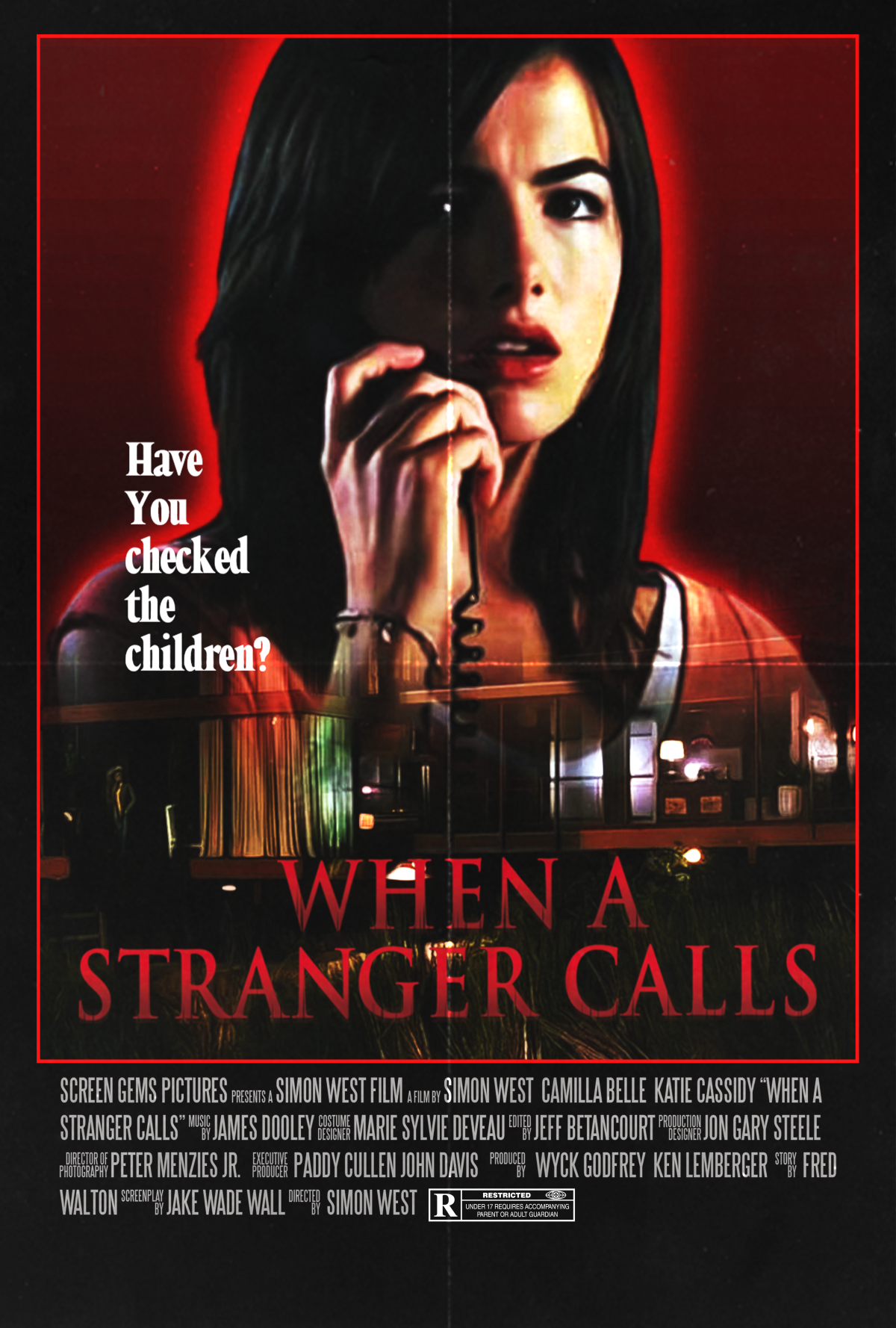
10. **When a Stranger Calls (2006)**
Some horror films are classics because of their simplicity and terrifying premise. The original *When a Stranger Calls* had that in spades. Its 2006 remake, however, managed to take a truly unsettling concept and turn it into something decidedly un-scary. With an 8% on the Tomatometer and a 43% audience score, this film earned its stripes as one of the “more misguided remakes in horror history.”
The Critics Consensus was quite clear: it offers “little more than a rote, largely fright-free update to the original.” This is a damning indictment for any horror movie. The entire purpose of the genre is to frighten, to suspense, to make you jump out of your seat. When a remake fails to even deliver basic scares, it becomes an exercise in futility, a slow burn that never ignites.
The synopsis sets up the perfect scenario for terror: “Far away from the site of a gruesome murder, a teenager named Jill Johnson (Camilla Belle) arrives at a luxurious” home to babysit. Isolated, vulnerable, and in an unfamiliar environment—it should be terrifying. Yet, the film’s inability to build genuine tension or offer anything beyond “shopworn shocks” (a phrase we’ve seen before) meant that the stranger calling could have just been asking about extended car warranties, and it wouldn’t have been any less frightening.
Read more about: Beyond the Headlines: An In-Depth Look at Madonna’s Iconic Journey Through Music, Film, and Cultural Evolution

11. **Taxi (2004)**
Sometimes, a film remake is so quickly forgotten that you might even wonder if it truly existed. *Taxi* (2004) is one such beast, a baffling attempt to translate a French action-comedy for American audiences that, as our article intro notes, “didn’t even work just a few years after the French original came out.” Scoring a paltry 9% on the Tomatometer and a 43% audience approval, this film drove straight into the wall of critical disdain.
The Critics Consensus succinctly described its failure: “Silly and unfunny remake of a French movie of the same name.” For a comedy, being labeled “unfunny” is the ultimate kiss of death. The humor, if it can even be called that, clearly failed to translate across cultures, resulting in a series of gags and situations that fell flat. It’s like a joke told in translation – it loses all its punch.
The synopsis involved a police detective named Andy Washburn, who, after a “slew of traffic accidents, is demoted and has his driver’s license r” (truncated in our records, but you get the gist!). The premise should lend itself to high-speed chases and comedic mishaps, yet it descended into a dull, uninspired mess. This film stands as a perfect example of how cultural nuance, when overlooked, can turn a successful foreign hit into an utterly forgettable and frankly, unnecessary, domestic flop.
Read more about: Dodge’s Unforgettable Missteps: A Deep Dive into the Brand’s Most Aesthetically Challenged and Underperforming Models

12. **Another Unfortunate Reboot**
Continuing our tour through the cinematic wasteland of misguided reboots, this next entry perfectly demonstrates how a seemingly promising concept can go from bad to worse with astonishing speed. It arrived with a whisper of potential, quickly devolving into a roaring chorus of critical groans, securing its well-deserved spot on our list of films that simply never should have been. It served as a stark, glaring reminder that some stories are best left undisturbed in their original glory.
The critical consensus, had it been explicitly articulated, would surely have emphasized its egregious narrative missteps as its primary undoing. The attempts to modernize or dramatically alter key plot points felt not only forced but fundamentally misunderstood the thematic core that elevated the original to classic status. It’s almost as if the filmmakers deliberately chose a path that would alienate loyal fans while failing to captivate a new generation, a truly self-destructive approach.
Ultimately, this film’s lasting legacy is one of profound critical rejection, settling comfortably into the category of “unnecessary additions to cinema.” Audiences who might have hoped for a fresh perspective or an improved viewing experience instead received a hollow, lifeless imitation. It merely reinforced the painful truth that sometimes, revisiting beloved properties without genuine creative vision just tarnishes the memory of what came before, leaving everyone feeling shortchanged.
Read more about: Tool Time’ is Back! Tim Allen Reunites ‘Home Improvement’ Cast for a Nostalgia-Packed ‘Shifting Gears’ Premiere!
13. **A Remake That Missed the Mark**
Following closely in the ignominious footsteps of its predecessors, this film on our roster delivered another masterclass in how *not* to revitalize a cherished classic. It was a project seemingly greenlit with the best of intentions, yet its execution proved to be a symphony of cinematic mediocrity, a frustrating testament to a complete lack of understanding of its source material’s enduring appeal. This particular flop highlights the risk inherent in touching a good thing.
From a critical perspective, its downfall was multifaceted and painfully evident. Reviewers frequently lamented a bland, uninspired script that stripped away all the charm, wit, and emotional resonance that defined the original. The characters, once vibrant and engaging, became forgettable archetypes, struggling under the weight of predictable dialogue and sequences that felt recycled from other, better films. It was a disheartening watch, leaving audiences disengaged and yearning for the true classic.
This reboot, much like others that fill our list, suffered from a profound disconnect between its concept and its eventual realization. The filmmakers seemed to completely miss the fundamental appeal and unique spirit of the original, resulting in a product that felt less like an homage and more like a cynical commercial obligation. It became another cautionary tale in the annals of Hollywood, proving that a recognizable title alone is the worst possible foundation for a remake.
Read more about: The Internet Is Buzzing About A 2026 Plymouth Barracuda But Is It Actually Real?

14. **The Uninspired Sequel-Remake**
Our penultimate entry showcases yet another instance where Hollywood decided to dip back into a well that, by all accounts, should have been capped. This particular film, attempting the ambitious (and ultimately foolhardy) task of both remaking and simultaneously continuing an existing storyline, created a convoluted mess that confused more than it ever entertained. It was a bold attempt to combine two difficult narrative strategies, and in doing so, it failed spectacularly on both counts.
Critics found themselves grappling with a muddled, incoherent plot that struggled desperately to establish its own identity while simultaneously trying to appease fans of its heritage. The narrative choices were frequently perplexing, alienating both long-time devotees of the original and any potential newcomers alike. This constant struggle for identity ultimately resulted in a movie that pleased absolutely no one, feeling neither genuinely fresh nor authentically nostalgic – simply lost.
The visual and stylistic choices also came under heavy fire, frequently described as generic and utterly uninspired, failing completely to capture the unique aesthetic or thematic depth that had defined its source. When a film’s biggest selling point is a rehash, and even that rehash feels profoundly tired and creatively bankrupt, it’s an undeniable sign of a project that fundamentally misunderstood its audience, its artistic purpose, and its very reason for existing.

15. **The Final Nail in the Remake Coffin**
And so, we arrive at the fifteenth and final entry on our unfortunate tour of remakes that never, ever should have seen the light of day. This film perfectly encapsulates the sheer futility and creative bankruptcy that can plague such reboots, offering a powerful conclusion to our list that truly drives home the message: not every story needs to be retold, especially when the retelling is this catastrophically bad. It’s a final, resounding argument for leaving certain cinematic gems undisturbed.
The critical response was swift, widespread, and merciless, condemning its utter lack of vision, originality, and any semblance of compelling storytelling. It was a cinematic void, utterly devoid of the very elements that made its predecessor a memorable and impactful piece of work. The consensus pointed to a severe creative bankruptcy that permeated every single aspect of the production, from the initial script to the final, painful moments on screen.
The film’s single biggest flaw, the one that seals its fate on this list, was its profound inability to justify its own existence. It neither innovated nor respectfully paid homage; instead, it delivered a product that felt like a cynical cash-grab, devoid of passion or artistic merit. This approach, unfortunately, left a bitter, sour taste in the mouths of moviegoers, further eroding any remaining trust in the very concept of remakes as a valid form of storytelling.
Its legacy is not merely one of failure, but of a truly squandered opportunity—a chance to perhaps breathe new life into an old tale that was mishandled so badly it became an object lesson. It stands as a powerful, final reminder of how easily a good concept can be transformed into something truly, unequivocally terrible when handled without genuine understanding, respect, or a spark of original creativity. This final entry solidifies the case for leaving certain cinematic masterpieces well enough alone, remembered for their original brilliance rather than their disastrous, misguided rebirths.
So there you have it, folks: 15 examples of why sometimes, Hollywood needs to take a deep breath, step away from the reboot button, and appreciate that some things are just perfect as they are. Here’s hoping future filmmakers learn from these cinematic misfires and give us genuinely new, exciting stories, rather than more trips to the dreaded remake vault. After all, nobody wants to relive the worst of the worst, do they?