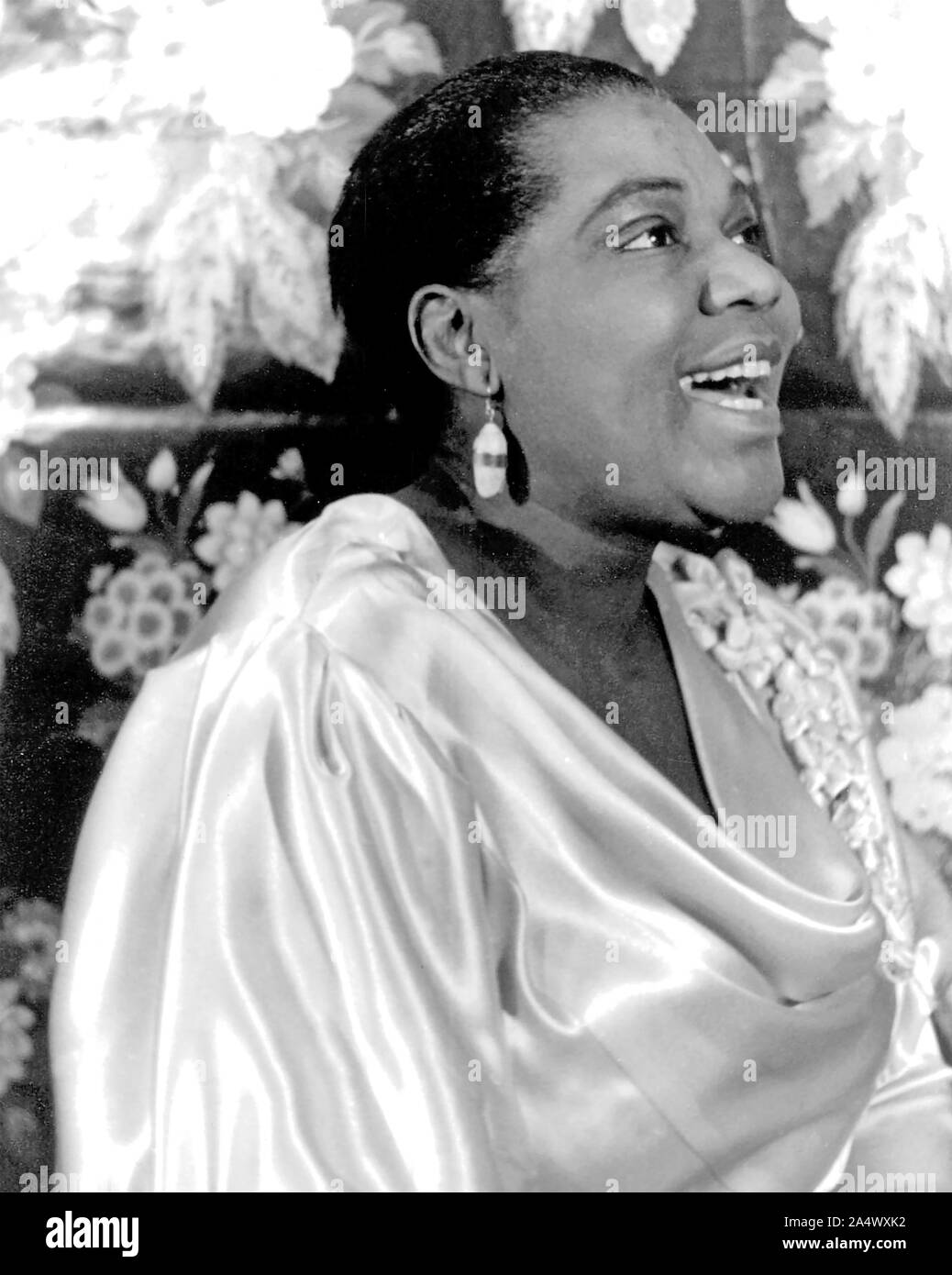
The story of Bessie Smith, the iconic “Empress of the Blues,” is one woven with threads of profound talent, indomitable spirit, and a life lived unapologetically against the backdrop of immense social and racial challenges. Her voice, rich and powerful, resonated with the joys and sorrows of a generation, cementing her place as one of the most influential figures in American music history. Yet, for many, the full scope of her extraordinary journey remained underexplored until recent cinematic efforts brought her narrative to the forefront.
In 2015, HBO delivered a compelling biographical film, aptly titled “Bessie,” which masterfully brought Smith’s vibrant life to the screen. This meticulously crafted production offered a fresh perspective on the blues legend, delving into her transformative rise from a struggling young singer to a celebrated icon. Directed by Dee Rees and starring Queen Latifah in a powerhouse performance, the film was not merely a recounting of facts but a narrative tapestry designed to illuminate the complexities and triumphs of Smith’s existence, making complex topics accessible and engaging for a contemporary audience.
Through vivid storytelling and a deep commitment to historical accuracy, “Bessie” has solidified its place as a crucial document in understanding the Empress of the Blues. It not only celebrates her musical genius but also bravely confronts the personal and societal battles she faced, providing an in-depth and authoritative look into the life of a woman who defied conventions and carved her own path. This article embarks on an illuminating journey through key aspects of Bessie Smith’s life and the HBO film that so powerfully rediscovered her for a new era.

1. **Early Life and the Seeds of a Blues Empress**Bessie Smith’s remarkable story began in Chattanooga, Tennessee, where she was born on April 15, 1894. The youngest of seven children, her early years were marked by hardship and loss. Her father, a Baptist minister and day laborer, died shortly after her birth. This tragedy was compounded in 1906 when her mother and two of her brothers also passed away, leaving Bessie and her remaining siblings to be raised by an aunt amidst the struggles of poverty.
It was during these formative years that the seeds of her legendary musical career were sown. Around 1906, Smith began performing as a street singer on Ninth Street, Chattanooga’s vibrant center of music and dance, often accompanied on guitar by her younger brother, Andrew. This early exposure to public performance, honing her contralto voice in the raw, unfiltered environment of the street, laid the foundational elements for the commanding stage presence she would later develop.
The earliest published reference to Bessie Smith’s performances dates back to May 8, 1909, when she was merely 14 years old. An article in the Indianapolis newspaper, *The Freedman*, reviewed her captivating performance at Atlanta’s 81 Theater. This acknowledgment, at such a young age, underscored the nascent power of her voice and her undeniable ability to connect with an audience, even in those nascent stages of her career.
2. **Under the Wing of Ma Rainey: Vaudeville and Mentorship**Smith’s entry into the professional entertainment circuit came in 1912 when she began performing as a dancer in the Moses Stokes minstrel show. Her brother Clarence, a comedian and dancer, was also part of this troupe. This initial foray into vaudeville provided a crucial stepping stone into the wider world of Black entertainment, exposing her to the rigors and demands of touring performances.
Soon after, Smith joined the renowned Rabbit Foot Minstrels, a troupe that included the esteemed blues vocalist Ma Rainey, often referred to as the “Mother of the Blues.” Rainey recognized Smith’s raw talent and took the younger singer under her wing, becoming a pivotal mentor. Over the next decade, Smith continued to perform at various theaters and on the vaudeville circuit, steadily refining her vocal style and stagecraft.
Ma Rainey’s mentorship was instrumental in Bessie’s development. She learned not only how to command an audience with her powerful voice but also how to navigate the intricate and often challenging landscape of the music business. Rainey’s guidance helped Smith transform from a talented street performer into a seasoned artist capable of captivating large crowds, preparing her for the national spotlight she would soon achieve.

3. **Columbia Records and the Dawn of a Legend**By the early 1920s, Bessie Smith had settled in Philadelphia, a city that would soon become the launchpad for her monumental recording career. In 1923, a representative from Columbia Records discovered her talent, leading to a pivotal contract that would forever change the trajectory of her life and the history of American music.
That same year, Smith made her first song recordings, among which was the track titled “Downhearted Blues.” This song, originally written by blues singer Alberta Hunter and pianist Lovie Austin, proved to be a sensation. It was wildly popular, selling an estimated 800,000 copies and instantly catapulting Smith into the national blues spotlight. Her powerful, soulful voice struck a chord with audiences, establishing her as a formidable new force in the music industry.
With the immense success of “Downhearted Blues,” Bessie Smith quickly became a successful recording artist, embarking on extensive tours across the country. Her rapid ascent earned her a reputation as a commanding performer whose rich vocals perfectly captured the essence of the blues, making her a household name and paving the way for her enduring legacy.
Read more about: The Purple Reign: 12 Shocking, Inspiring, and Iconic Moments from the Life of Music Legend Prince

4. **The Sound of a Generation: Iconic Songs and Collaborations**Bessie Smith’s recording career was marked by numerous iconic songs and influential collaborations that expanded the boundaries of blues and jazz. Her distinctive voice became a staple of the era, and she worked with some of the most important jazz performers of her time, creating timeless pieces that continue to resonate.
She collaborated with saxophonist Sidney Bechet and pianists Fletcher Henderson and James P. Johnson, the latter with whom she recorded one of her most famous songs, “Backwater Blues.” These partnerships showcased her versatility and her ability to seamlessly blend her blues sensibilities with the improvisational artistry of jazz.
A particularly significant collaboration was with the legendary jazz artist Louis Armstrong. Together, they recorded several tunes, including “Cold in Hand Blues,” “I Ain’t Gonna Play No Second Fiddle,” and the enduring classic “St. Louis Blues.” By the end of the 1920s, these collaborations and her vast discography, which encompassed 160 recorded songs, solidified her status as the highest-paid Black performer of her day, earning her the revered title “Empress of the Blues.”
Perhaps one of Smith’s most popular and eerily prescient songs was her 1929 hit, “Nobody Knows You When You’re Down and Out,” written by Jimmy Cox six years earlier. Released in September 1929, just two weeks before the stock market crashed, Smith’s version became a poignant anthem for the impending Great Depression. The song’s themes of financial struggle and social alienation resonated deeply, and it later served as the basis for a short film of the same name.
Read more about: 15 Iconic American Musicians Who Defined Generations and Revolutionized Sound
5. **A Glimpse into the Personal: Love, Struggle, and Family**Beyond the stage and recording studio, Bessie Smith’s personal life was as tumultuous and complex as her music was powerful. In 1923, the same year she signed with Columbia Records, she married Jack Gee, a security guard who would later become her husband and manager. Their relationship, however, was fraught with difficulties, largely due to Gee’s inability to adjust to the show business life and Smith’s biuality, which she was openly unapologetic about.
During her marriage to Gee, Smith informally adopted a six-year-old boy whom she named Jack Jr. However, as her relationship with Gee became increasingly strained, their son became a bargaining chip in their conflicts. Gee eventually kidnapped Jack Jr., accusing Smith of being a neglectful and incompetent mother. A court ruling initially granted custody to Smith’s sister, Viola, before it was later transferred to Jack Jr.’s biological father, who unfortunately neglected the boy.
Smith also engaged in romantic relationships with both men and women throughout her life. Her affair with Lucille, a fictional character in the HBO film likely a composite of several real-life female companions, was a significant part of her story. Later, she found a lasting connection with bootlegger Richard Morgan, who would become her companion of many years. The complexities of her relationships, including the emotional turmoil caused by Jack Gee’s affair with singer Gertrude Saunders, profoundly influenced her art and life, reflecting the raw emotions channeled into her blues performances.
Read more about: The Unveiling: How Unexpected Flaws, Family Betrayals, and Even Cars Exposed Hollywood’s Most Guarded Secrets

6. **The Long Road to ‘Bessie’: A Film 22 Years in the Making**The HBO film “Bessie” was not an overnight success; its journey to the screen spanned over two decades, making its eventual premiere in 2015 a testament to perseverance. The initial draft screenplay was penned by playwright Horton Foote, at a time when Columbia Pictures was slated to produce the film. However, the project stalled due to financial irregularities within the studio, leading Foote to repurchase his screenplay and acquire the film rights from biographer Chris Albertson.
In the early 1990s, the possibility of producers Richard D. Zanuck and Lili Fini Zanuck taking over the project emerged. It was Albertson who first suggested Queen Latifah for the lead role, envisioning her powerful presence as the perfect embodiment of the blues empress. Yet, despite this early vision, the project lay dormant for many years as financing proved elusive, highlighting the challenges of bringing such a significant historical figure’s story to life.
Upon Horton Foote’s passing in 2009, his daughter, actress Hallie Foote, inherited the script and film rights. She subsequently took the project to the Zanucks and HBO, finally setting in motion the production that had been “22 years in the making.” This lengthy gestation period underscores the dedication required to honor Bessie Smith’s legacy, bringing together an elite lineup of executive producers, including Queen Latifah herself, Shakim Compere, and Randi Michel, who were instrumental in bringing the film to fruition.

7. **Crafting the Vision: Dee Rees’s Direction and Research**Director Dee Rees brought a distinctive artistic vision to “Bessie,” moving beyond conventional biographical approaches to offer a deeply personal and thematically rich portrayal of Smith. Her direction, alongside her work on the screenplay with Christopher Cleveland and Bettina Gilois, was central to the film’s critical success and its ability to illuminate Smith’s story.
While an early article announcing the HBO film indicated it would be based on Chris Albertson’s 1972 biography, “Bessie,” the final film’s credits and promotion did not include the book, and its resemblance to Albertson’s work was largely peripheral. This deliberate choice allowed Rees to forge a unique narrative path, one that was informed by a broader range of scholarly and artistic sources.
In an HBO interview, Dee Rees revealed the influential books that shaped her research, emphasizing a nuanced understanding of Smith’s context. She cited Angela Davis’s “Blues Legacies and Black Feminism,” Michelle Scott’s “Blues Empress in Black Chattanooga: Bessie Smith and the Emerging Urban South,” and Jamaica Kincaid’s “Autobiography of My Mother.” These texts collectively informed Rees visually and thematically, allowing her to craft a film that explored Smith’s life with depth, authenticity, and a fresh perspective on her challenges and triumphs as a Black woman artist in early 20th-century America.

8. **Queen Latifah’s Powerhouse Portrayal: Embodying the Empress**The long-anticipated realization of the “Bessie” film was perhaps most critically defined by Queen Latifah’s transformative portrayal of Bessie Smith. Her casting, initially suggested by biographer Chris Albertson in the early 1990s, proved to be an inspired choice, bringing a depth and authenticity that anchored the entire production. Latifah, who had reportedly been circling the role for over a decade, poured her formidable talent and understanding into embodying the complex blues icon, a commitment that resonated deeply with audiences and critics alike.
Latifah’s performance was lauded for its raw power, fearlessness, and moments of profound vulnerability, showcasing a range that captivated viewers. As one critic noted, she never faltered in her portrayal of a woman “too edgy, too real, and too tough to be famous before the world came crashing down around her.” Whether confronting authority, patriarchy, or the white male establishment, Latifah’s Bessie was depicted as unapologetically herself, resonating with a truth that transcended mere dramatic creation. Her ability to convey Bessie’s longing through multiple affairs or her “downright allergic reactions to what she saw as fakeness in her profession” truly brought the Empress to life.
Indeed, her performance was so impactful that many critics suggested it could easily win her an Emmy and a Golden Globe, predictions that would later prove accurate. Beyond her acting, Queen Latifah was also instrumental behind the scenes, serving as one of the executive producers. This dual role underscored her profound dedication to honoring Bessie Smith’s legacy, ensuring that the story was told with the respect and gravity it deserved. Her involvement was crucial in bringing the “22 years in the making” project to fruition, alongside fellow executive producers Shakim Compere and Randi Michel.

9. **A Stellar Ensemble: The Supporting Cast’s Enduring Impact**While Queen Latifah’s performance as Bessie Smith commanded central attention, the HBO film “Bessie” was further enriched by a stellar supporting cast, whose powerful portrayals added significant depth and nuance to the narrative. Each actor contributed to painting a vivid picture of the challenging world Bessie navigated, bringing her personal and professional relationships to life with compelling authenticity.
Mo’Nique delivered a critically acclaimed performance as Gertrude “Ma” Rainey, the “Mother of the Blues” and Bessie’s early mentor. Her portrayal captured the vital dynamic between the two women, as Rainey took the young, struggling Bessie under her wing, helping her develop her abilities and command an audience. The film depicted the eventual schism between them as Bessie’s popularity soared, but it also underscored Rainey’s instrumental role in shaping the Empress she would become.
Michael Kenneth Williams starred as Jack Gee, Bessie’s first husband and manager, capturing the tumultuous and often fraught nature of their relationship. The narrative explored Gee’s inability to adjust to the show business life and the complexities arising from Smith’s open biuality, which ultimately led to their separation. Williams’s performance highlighted the personal struggles and conflicts that profoundly influenced Bessie’s life and art, including Gee’s affair with Gertrude Saunders and his eventual kidnapping of their adopted son, Jack Jr.
Further rounding out the cast were Khandi Alexander as Bessie’s older sister Viola Smith, who played a significant role in Bessie’s unhappy childhood and later reconciliation, and Mike Epps as Richard Morgan, the bootlegger who became Bessie’s long-term companion. Tika Sumpter portrayed Lucille, a fictional romantic interest likely a composite of several of Smith’s real-life female companions, adding another layer to Bessie’s complex personal life. Tory Kittles as Bessie’s brother Clarence, who journeyed with her from the vaudeville circuit to managing her show, and Bryan Greenberg as record producer John Hammond, who orchestrated Bessie’s comeback, also contributed powerfully to the film’s rich tapestry.
10. **”Bessie” Unveiled: A Narrative Journey from Struggle to Stardom**The synopsis of HBO’s “Bessie” meticulously charts the blues singer’s extraordinary journey, offering a compelling narrative that moves from her humble, difficult beginnings to her iconic status. The film opens in Chattanooga, Tennessee, introducing Bessie Smith as a young singer, orphaned and raised by her abusive older sister, Viola. Along with her brother Clarence, Bessie scrapes by working in local vaudeville shows, her ambitions initially thwarted by producers hesitant to feature dark-skinned Black women. This early struggle for recognition sets the stage for her relentless drive and defiance.
A pivotal moment arrives when Bessie boldly sneaks onto Ma Rainey’s train compartment, asking to join her show. Ma Rainey recognizes Bessie’s raw talent and takes her under her wing, guiding her development until Bessie’s burgeoning popularity creates a division between them. Bessie eventually leaves with Clarence to launch her own show, signaling her ascendance into the spotlight and her determination to forge her own path in the competitive world of entertainment.
The film then delves into Bessie’s complex personal life, introducing her romantic interest Lucille and her tumultuous relationship with Jack Gee, a security guard who later becomes her husband and manager. After facing a humiliating rejection from Black Swan Records, Jack successfully secures Bessie a groundbreaking record deal with Columbia Records, propelling her to immense success with hits like “Downhearted Blues.” However, this success is intertwined with significant challenges, including a stabbing attack in her hometown, overt racism from white guests at an affluent party, and a courageous confrontation with the Ku Klux Klan during a show, whom she bravely chases off.
As her life progresses, Bessie reconciles with Viola, moving her and her siblings into a mansion, though this creates further tension with Jack. The narrative explores Bessie’s decision to adopt a young boy, Jack Jr., and Lucille’s eventual departure. The complexities of her relationships, including her affair with bootlegger Richard Morgan and her fury over Jack’s bankrolling of his mistress, Gertrude Saunders, lead to a violent quarrel and Jack’s departure. Bessie spirals into depression and alcohol, compounded by Jack’s kidnapping of Jack Jr. with Viola’s help. The film poignantly portrays the Great Depression’s impact, as Bessie’s fortune evaporates, forcing her and Clarence into a small apartment. Yet, her resilience shines through as she reconciles with Ma Rainey, accepts Richard’s love, and, after hearing Lucille Bogan’s “Til the Cows Come Home,” embarks on a triumphant comeback tour initiated by young producer John Hammond, reflecting on her life and future with Richard.

11. **Critical Acclaim and Audience Resonance: A Story Well Told**The HBO film “Bessie” premiered to overwhelmingly positive reviews from critics, solidifying its status as a significant cultural and cinematic event. Review aggregators like Rotten Tomatoes awarded the film an impressive 91% based on 32 reviews, with an average rating of 6.8/10, while Metacritic gave it a score of 75 out of 100 based on 20 critic reviews. These strong ratings reflect a consensus that, despite some criticisms, the film successfully delivered an engaging and informative portrayal of Bessie Smith’s life.
Many critics specifically praised the powerful performances, particularly those of Queen Latifah, Mo’Nique, and Michael K. Williams. The website’s critics consensus on Rotten Tomatoes aptly summarized this sentiment: “Strong performances, led by Queen Latifah, overpower a middling script in the entertaining and informative Bessie.” While the acting was consistently lauded, some reviews pointed to the film’s adherence to the “Hollywood biopic” formula, and an episodic structure that occasionally felt disjointed in the first half. However, these criticisms often fell away when considering the emotional intensity and bravado brought by the lead performances.
Beyond critical reception, “Bessie” also achieved remarkable commercial success. As of 2016, it held the distinction of being the most watched HBO original movie of all time, drawing 1.34 million viewers. This widespread viewership indicated that the film resonated deeply with a broad audience, eager to learn more about the blues legend. Viewers frequently highlighted the captivating imagery, soulful music, and the film’s ability to shine a light on struggles of mental health, gender, and racial bias.
Audience members often described the movie as “absolutely fantastic,” praising its strong script, visual choices, and acting. Queen Latifah’s charisma was consistently lauded as “100%,” with many finding the film both encouraging and relatable as it depicted Bessie’s journey through heartbreak and disappointment in pursuit of her dreams. The film successfully blended moments of fun with soul-searching, drawing viewers into the emotions of the story and making complex topics accessible and engaging for a contemporary audience.
Read more about: Katy Perry’s Chart-Topping Legacy: A Comprehensive Analysis of Her Music Milestones, Commercial Success, and Cultural Impact

12. **A Shower of Awards: Recognizing Cinematic Excellence**”Bessie” didn’t just win over critics and audiences; it was also recognized with an impressive array of awards and nominations, cementing its place as a critically acclaimed production. The film garnered significant attention during awards season, accumulating numerous accolades for its storytelling, direction, performances, and technical achievements. Among its most prestigious honors, “Bessie” received four Primetime Emmy Awards, including the coveted Outstanding Television Movie, an “extremely well deserved” accolade for the executive producer team.
Queen Latifah’s portrayal of Bessie Smith was particularly celebrated, earning her individual wins and nominations across various ceremonies. She won for Best Actress in a Movie or Limited Series at the Critics’ Choice Television Awards, Outstanding Actress in a Television Movie, Mini-Series or Dramatic Special at the NAACP Image Awards, Outstanding Actress, TV Movie or Limited Series at the Black Reel Awards for Television, and Outstanding Performance by a Female Actor in a Television Movie or Miniseries at the Screen Actors Guild Awards. Her Golden Globe nomination for Best Actress in a Miniseries or a Motion Picture Made for Television further underscored the widespread praise for her transformative performance.
Director Dee Rees also received significant recognition for her distinctive artistic vision and narrative storytelling. She won the Directors Guild of America Award for Outstanding Directorial Achievement in Movies for Television and Miniseries, and the Black Reel Award for Outstanding Director, TV Movie or Limited Series. She also earned nominations for Best Direction of a Motion Picture or Miniseries at the Online Film & Television Association Awards and Outstanding Directing for a Limited Series, Movie or a Dramatic Special at the Primetime Emmy Awards, highlighting her masterful execution of the film’s complex themes.
The film’s technical and ensemble aspects were equally acknowledged, with accolades such as the Primetime Creative Arts Emmy Awards for Outstanding Cinematography for a Limited Series or Movie (Jeffrey Jur), Outstanding Music Composition for a Limited Series, Movie or Special (Original Dramatic Score) (Rachel Portman), and Outstanding Sound Mixing for a Limited Series or a Movie. Other wins included Best Movie at the Critics’ Choice Television Awards, Best Motion Picture at the Online Film & Television Association Awards, Best Theatrically Unreleased Movie by or About Women at the Women Film Critics Circle Awards, and Outstanding Television Movie or Limited Series at the Black Reel Awards for Television, alongside numerous nominations for supporting actors Mo’Nique and Michael Kenneth Williams, and for writing, editing, production design, and sound editing. These awards collectively celebrated the meticulous research and compelling artistry that brought Bessie Smith’s story to vibrant life.

13. **Bessie Smith’s Enduring Legacy: A Voice That Transcends Time**Long after her tragic death in 1937, Bessie Smith’s music has continued to resonate, captivating new generations of fans and cementing her place as an enduring figure in American culture. Her powerful, soulful voice and raw authenticity laid foundational elements for countless artists who followed, ensuring her influence permeates popular music to this day. Collections of her songs have consistently sold well, a testament to the timeless appeal of her art and the universal emotions she expressed.
Indeed, Bessie Smith stands as a primary influence for a remarkable lineage of female vocalists across genres. Her impact is palpable in the work of legends such as Billie Holiday, whose expressive delivery echoed Smith’s emotional depth; Aretha Franklin, the Queen of Soul, who drew from Smith’s powerful vocal command; and Janis Joplin, the rock and blues icon, who notably helped purchase a headstone for Smith’s previously unmarked grave in 1971, which reads, “The greatest blues singer in the world will never stop singing.” These artists, among many others, carried forward the torch lit by the Empress of the Blues.
Her musical contributions have also been formally recognized with prestigious posthumous honors. Three of Bessie Smith’s most iconic songs have been inducted into the Grammy Hall of Fame: “Empty Bed Blues” in 1983, “St. Louis Blues” in 1993, and the very track that launched her into national stardom, “Downhearted Blues,” in 2006. These inductions acknowledge the historical significance and lasting qualitative value of her recordings, preserving her musical genius for posterity.
Beyond her musical accolades, Bessie Smith has also been immortalized in broader cultural institutions, recognizing her profound impact on American history and social progress. She was inducted into the National Women’s Hall of Fame in 1984, celebrating her achievements as a pioneering woman who defied conventions. This was followed by her induction into the Rock and Roll Hall of Fame in 1989, a testament to her foundational role in shaping the evolution of popular music and her enduring spirit as an artist who continually pushed boundaries.

14. **Confronting Adversity: Racism, Sexism, and Unapologetic Authenticity**Bessie Smith’s life and artistry were indelibly shaped by the profound adversities she faced, including pervasive racism, societal ism, and personal struggles. Yet, it was her unapologetic authenticity and refusal to compromise that allowed her to navigate these challenges, transforming her experiences into raw, resonant blues. The HBO film “Bessie” bravely confronts these elements, presenting a woman who lived on her own terms, embodying resilience in the face of immense pressure.
Smith was openly biual and unreserved about her romantic relationships with both men and women throughout her life. This aspect, portrayed in the film through characters like Lucille, highlighted her defiance of early 20th-century societal norms. Her marriage to Jack Gee was strained not only by his inability to adjust to show business but also by his struggles with her bisexuality, reflecting the challenging landscape for individuals who lived outside conventional expectations during that era.
Her lyrics often incorporated the hardships of being Black and working-class in America, singing about poverty, racism, and ism, alongside themes of love and female sexuality. This commitment to reflecting the reality of her experience made her music deeply relatable and powerful, providing a voice for many who felt marginalized. While some, like the newly formed Black Swan Records, labeled her style as “rough,” it was precisely this ability to channel her personality and life experience into her voice that made her stand out and connect with mass audiences.
Moreover, Bessie Smith consistently confronted the white male establishment and outright racism. The film depicts her encountering a violent Ku Klux Klan sect attempting to shut down a performance, which she courageously meets “violence with violence,” chasing them off. This moment, alongside instances of racism from white guests at affluent parties, underscores her unwavering spirit and refusal to be silenced or intimidated. Her life story is a testament to the power of artistic integrity and personal courage in the face of systemic injustice.

15. **The Empress of the Blues, Forever: A Timeless American Icon**The title “Empress of the Blues” was not merely a moniker for Bessie Smith; it was a testament to her unparalleled vocal prowess, her commanding stage presence, and her profound influence on American music and culture. Even decades after her passing, her legacy remains vibrant, her songs continuing to tell stories of joy, sorrow, resilience, and unapologetic selfhood that transcend time and resonate deeply with contemporary audiences.
Bessie Smith’s journey from the streets of Chattanooga to becoming the highest-paid Black performer of her era is a compelling narrative of sheer will and talent. Her ability to infuse her music with the raw emotions of her personal trials and societal challenges made her a truly transformative artist. She didn’t just sing the blues; she lived them, making her performances an authentic reflection of the Black experience in early 20th-century America.
The HBO film “Bessie” played a crucial role in rediscovering and re-introducing this extraordinary woman to a new generation. Through Queen Latifah’s powerful portrayal and Dee Rees’s insightful direction, the film illuminated the complexities of Smith’s life, her musical genius, and her enduring spirit. It brought to light her defiance of conventions, her open uality, and her courageous confrontations with racism and sexism, cementing her status as an icon who shaped not only music but also cultural identity.
Ultimately, Bessie Smith’s contribution goes beyond her discography of 160 recorded songs or her numerous awards. She remains a symbol of resilience, artistic integrity, and the power of an authentic voice. Her spirit, captured so vividly in the HBO biopic, continues to inspire, reminding us that the greatest blues singer in the world truly will never stop singing, echoing through the annals of music history and forever impacting the cultural tapestry of the United States.
In the grand tapestry of American history, few figures shine as brightly or resonate as profoundly as Bessie Smith. Her journey, meticulously chronicled and powerfully reimagined, stands as a testament to the enduring human spirit and the transformative power of art. From her humble beginnings to her reign as the Empress of the Blues and beyond, Bessie’s story is an unwavering anthem of courage, talent, and an indomitable will that continues to captivate and inspire. The film “Bessie” ensures that her voice, both literal and metaphorical, will continue to echo, reminding us of the richness she brought to our world and the indelible mark she left on the soul of music.