
Hollywood history is rife with tales of underdog triumphs and unexpected downfalls, but few narratives are as compelling as those of films that, despite their undeniable artistic merit and eventual legendary status, utterly bombed at the box office upon their initial release. The idea of an “incredible” film, one that is both implausibly great and astonishingly impactful, struggling to find an audience is almost beyond belief. Yet, time and again, some of the most revered movies in cinematic canon have faced this very fate, proving that immediate financial success is not always the true measure of a masterpiece.
What makes a film an “incredible” box office bomb? It’s a confluence of factors: perhaps it was simply “ahead of its time,” misunderstood by critics or audiences of its era, or plagued by external forces beyond its creative team’s control. Sometimes, audacious storytelling or unconventional narratives simply don’t translate into ticket sales. But the beauty of cinema is its enduring power, allowing these films to find their rightful place in the cultural consciousness years, or even decades, after their initial disappointing debuts.
We are about to embark on a fascinating journey through a selection of these “incredible” films – movies that once floundered financially but have since ascended to the highest echelons of critical acclaim and fan adoration. These stories serve as powerful reminders that true cinematic value often ripens with age, transforming what was once seen as a commercial failure into an artistic triumph. Let’s delve into the first half of these remarkable stories, exploring the initial struggles and eventual vindication of six pivotal films that defied their humble beginnings to become legends.

1. **Citizen Kane (1941)**
It’s almost “incredible” to think that a film so universally acclaimed, often cited as the “single best movie ever made,” could have been a financial disappointment upon its release. Orson Welles’ groundbreaking 1941 masterpiece, “Citizen Kane,” was an immediate critical darling, showered with praise for Welles’ inventive direction, his sharp screenplay co-written with Herman J. Mankiewicz, and the exceptional performances from its ensemble cast. However, this artistic triumph did not translate into box office glory during its theatrical run, primarily due to an unprecedented campaign of sabotage.
The film’s struggles stemmed almost entirely from the wrath of newspaper mogul William Randolph Hearst. Hearst, who was the very clear inspiration for Welles’ character Charles Foster Kane, was reportedly incensed by the film’s negative portrayal of him. He leveraged his considerable influence to thwart its success, forbidding his vast network of papers from mentioning or advertising the movie. This media blackout was a severe blow to its visibility and reach, effectively silencing the buzz that would normally propel a critically acclaimed picture.
Further compounding the damage, Hearst allegedly bribed several theater chains, pressuring them not to screen “Citizen Kane.” Such extensive interference meant that many potential viewers simply never had the opportunity to see the film in theaters. As a direct consequence of these calculated attacks, the movie ultimately lost around $160,000, a significant sum for its time. It was a stark reminder of the power dynamics at play in early Hollywood, where industry titans could wield their influence to great effect, even against a burgeoning artistic genius.
Despite Hearst’s best efforts, however, his attempts to suppress the film proved futile in the long run. The brilliance of “Citizen Kane” was simply too profound to be permanently buried. Over the decades, its reputation grew exponentially, championed by film scholars, directors, and cinephiles alike. It has since secured its unassailable position in film history, routinely topping “greatest films” lists and serving as a foundational text for film studies, a testament to its enduring artistic power over commercial woes.
Read more about: Mind-Bending Moments: 14 Movie Plot Twists That Will Leave You Saying ‘Just Happened?’

2. **It’s a Wonderful Life (1946)**
Frank Capra’s “It’s a Wonderful Life” has become synonymous with the Christmas season, a perennial favorite that warms hearts and embodies the spirit of hope and community. Given its cherished status today, it seems “incredible” that this beloved classic was initially a financial disappointment and garnered mixed reviews from critics upon its 1946 release. Far from the holiday staple we know, it struggled significantly at the box office, grossing only $3.3 million on a $3 million budget, a figure far short of breaking even once distribution and marketing costs were factored in.
This commercial underperformance was a major blow, particularly to director Frank Capra, whose career seemed to decline in its wake. The film’s inability to capture a wide audience at the time could be attributed to several factors, including its release during a post-war period when audiences might have sought lighter fare, or perhaps its darker initial tone that eventually gives way to warmth. Regardless of the reasons, it certainly did not appear destined for the iconic status it now holds.
The turning point for “It’s a Wonderful Life” arrived decades later, almost by accident. In the ’70s, a crucial legal oversight occurred: the movie’s copyright lapsed. This meant that television stations could broadcast the film repeatedly during the Christmas season without having to pay licensing fees. Suddenly, what was once a forgotten film became an annual tradition, freely accessible to millions of households across America.
This widespread television exposure proved to be its salvation. New generations of viewers, discovering the story of George Bailey (James Stewart) for the first time, began to appreciate its profound themes and emotional depth. What was once dismissed or overlooked was now critically reevaluated, its powerful message of valuing one’s life and impact on others resonating deeply. Today, “It’s a Wonderful Life” is not just a holiday classic; it is frequently ranked as an “all-time American cinematic classic,” a remarkable journey from obscurity to beloved icon.
Read more about: Unforgettable Visionaries: A Deep Dive into 12 Iconic Directors Who Revolutionized Cinema

3. **The Thing (1982)**
John Carpenter’s “The Thing” is now widely regarded as a pinnacle of science fiction horror, a masterclass in tension, paranoia, and practical effects that holds up remarkably well decades later. Its status as an undeniable classic makes its original reception almost “incredible” to contemplate. Released in 1982, this visceral creature feature was not only a critical and box office bomb but also deeply misunderstood by audiences and critics who were simply not ready for its bleak vision.
The film’s initial theatrical run saw it bring in only $19.6 million on a $15 million budget, barely covering its production costs and certainly not turning a profit after marketing. Critics at the time were largely unimpressed, finding its relentless horror and disturbing practical effects to be too much. It was indeed a challenging film, eschewing easy answers and opting for a deeply unsettling atmosphere where trust was a liability and survival seemed impossible.
In retrospect, “The Thing” was undeniably a victim of timing. The early 1980s landscape of alien movies was largely dominated by “Spielberg-esque feel good stories,” narratives that offered wonder, hope, and often heartwarming resolutions, such as the wildly successful “E.T. the Extra-Terrestrial,” which was released just two weeks before Carpenter’s film. “The Thing,” with its grim, nihilistic tone and body horror, stood in stark contrast to these popular trends, offering a terrifying and uncompromising vision that audiences weren’t expecting or, perhaps, ready to embrace.
However, as the years passed, appreciation for Carpenter’s bold and uncompromising vision steadily grew. Film buffs and horror enthusiasts began to champion its innovative special effects, its expertly crafted suspense, and its enduring themes of isolation and existential dread. History has profoundly vindicated “The Thing,” with many now viewing it not just as a cult classic, but as “Carpenter’s best film,” a testament to its singular artistic achievement and its enduring influence on the genre, a true example of a film that was simply too far ahead of its curve.
Read more about: Still Rocking the Fifties: Catching Up with the Major ‘Happy Days’ Stars Who Are Still With Us
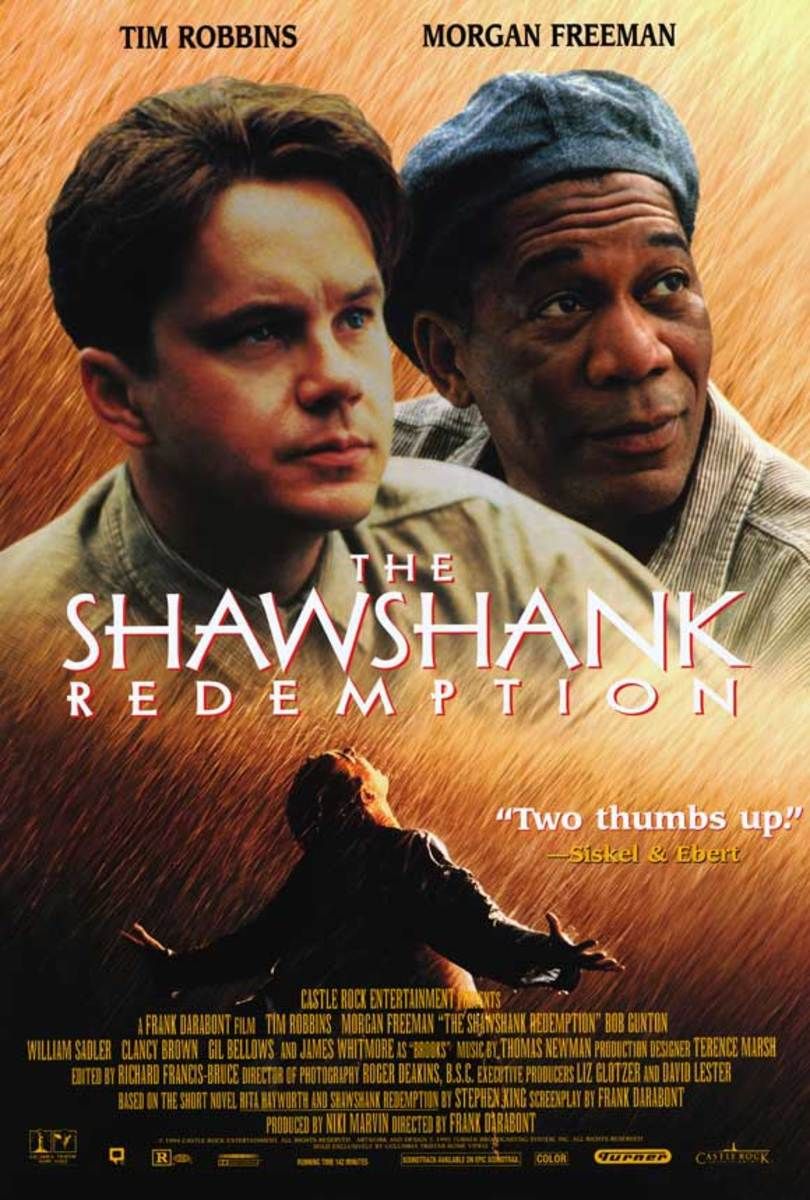
4. **The Shawshank Redemption (1994)**“
“The Shawshank Redemption” presents what is perhaps the “ultimate movie paradox” in cinematic history. Frank Darabont’s adaptation of a Stephen King novella is not merely well-regarded; it is “widely regarded as one of the greatest films ever made,” frequently occupying the top spot on various “best of” lists across the globe. Yet, by almost “every success metric for films,” its initial performance was a resounding failure, making its subsequent legendary status almost “incredible.”
Released in 1994, the film faced an incredibly competitive year at the Academy Awards, vying against heavyweights like “Pulp Fiction” and the eventual Best Picture winner, “Forrest Gump.” Despite seven nominations, “The Shawshank Redemption” did not win a single Oscar, a surprising outcome for a film now held in such high esteem. This lack of awards recognition at the time foreshadowed its struggle in other areas, most notably its box office performance.
Financially, the film’s haul was equally “unspectacular.” With a production budget of $25 million, it managed to gross just over $28 million in its domestic theatrical run. This figure was “not nearly enough to turn a profit” once marketing and distribution costs were factored in. While it fared “a little better internationally,” bringing its total worldwide gross to an “adequate $73.3 million,” these numbers still “hardly reflect its prestigious place in American film history.”
The film’s slow burn to iconic status is often attributed to its longevity on home video and cable television. Like “It’s a Wonderful Life,” its repeated airings allowed audiences to discover and fall in love with its powerful narrative of hope, perseverance, and friendship. The word-of-mouth spread, building an organic, fervent fanbase that eventually elevated it to its current, revered position, demonstrating that a film’s true impact can often be found outside the initial, immediate metrics of success.

5. **The Big Lebowski (1998)**
The Coen Brothers have crafted a diverse and celebrated filmography, but few of their works have achieved the cult status of “The Big Lebowski.” Today, it is “now regarded as one of the Coen Brothers’ most iconic films,” an endlessly quotable comedy that has spawned “countless Halloween costumes, cocktail orders, and even a literal religion.” However, it’s almost “incredible” to recall that upon its release in 1998, it did not seem like an “instant classic” and was met with a lukewarm reception.
Many critics at the time “misunderstood the film’s humor,” struggling to grasp its unique blend of slacker philosophy, neo-noir mystery, and absurd comedy. Even the Coen Brothers themselves were reportedly “disappointed with how it turned out,” perhaps feeling their vision hadn’t quite connected with mainstream audiences or critics in the way they had hoped. This initial critical disconnect certainly didn’t help its box office performance.
The film’s original domestic run only managed to bring in $18 million at the box office, a figure that was “barely more than the $15 million it cost to make.” This meant that, like many films on this list, it struggled to break even, let alone turn a significant profit for the studio. In an industry where immediate financial returns often dictate a film’s legacy, “The Big Lebowski” appeared to be just another modest performer from critically acclaimed, but not always commercially explosive, auteurs.
Yet, over the years, the Dude abided, and “The Big Lebowski” underwent a remarkable transformation. Its idiosyncratic characters, unforgettable dialogue, and laid-back charm resonated with a growing fanbase, particularly through home video rentals and late-night television viewings. The film became a touchstone for a certain sensibility, proving that some comedic genius takes time to be fully appreciated, cementing its place as an “endlessly quotable” and deeply cherished cult phenomenon.
Read more about: Joy in Every Viewing: 7 ’90s Comedies Viewers Say They’d “Recommend to Everyone” If They Could – No Seriously, You *Need* to See These!

6. **Office Space (1999)**
Mike Judge’s “Office Space” has become an enduring cultural phenomenon, a satirical benchmark for anyone who has ever toiled in a cubicle. The film’s influence is so profound that it even “turned Swingline red staplers into one of the best-selling office supply products in America,” a testament to its deep penetration into the zeitgeist. Considering this immense impact, it’s genuinely “incredible” that “Office Space” was, in fact, “a box office flop when it first came out in 1999.”
Upon its initial release, the film only managed to gross $12.2 million on a $10 million budget, a figure that, similar to others on this list, fell short of commercial success after factoring in marketing and distribution costs. Critics were generally positive, recognizing its sharp humor and relatable themes, but mainstream audiences didn’t flock to theaters in droves. It seemed that the biting workplace satire, though incisive, was perhaps too niche or too close to home for a wide theatrical appeal at the time.
The true ascent of “Office Space” into cultural ubiquity began years later, primarily through consistent “airings on Comedy Central, plus a few iconic memes.” The repetitive exposure on cable television allowed its brilliant, observational humor to seep into the public consciousness. Viewers discovered its perfectly rendered exasperations, its hilarious characterizations, and its timeless critique of corporate drudgery, turning lines like “I have people skills!” and “Yeah, I’m gonna need you to come in on Saturday” into instant classics.
This post-theatrical life cemented “Office Space” as a beloved comedy. It became a touchstone for discussions about workplace malaise and the absurdities of corporate culture. Its journey from box office underperformer to cultural touchstone demonstrates how a film’s longevity and impact can be forged not in its opening weekend numbers, but through the slow, steady build of a dedicated following, ultimately proving its “incredible” satirical power.
Read more about: Joy in Every Viewing: 7 ’90s Comedies Viewers Say They’d “Recommend to Everyone” If They Could – No Seriously, You *Need* to See These!

7. **The Iron Giant (1999)**
Brad Bird’s 1999 animated feature, “The Iron Giant,” is a film that today frequently lands on lists of the best animated movies ever made. Its poignant storytelling, masterful animation, and timeless themes of friendship and prejudice have resonated deeply with audiences for decades. However, its current esteemed position belies a truly challenging origin story, as the film was an infamous box office flop for Warner Bros. upon its initial release.
The studio had invested heavily, spending $70 million to bring this ambitious animated project to life, hoping it would compete with the rising powerhouses of Pixar and the then-newcomer DreamWorks Animation. Yet, despite its significant budget and critical praise, “The Iron Giant” barely managed to cross the $20 million mark at the U.S. box office. This commercial underperformance was a major blow, especially given the high hopes Warner Bros. had for its potential as a franchise starter.
One could argue that the film’s marketing was a significant misstep. Warner Bros. struggled to position “The Iron Giant” effectively against its more established competitors, which were often seen as lighter, more family-friendly fare. Its slightly darker tone and nuanced themes, while appreciated by critics, may have been perceived as less immediately accessible to the broader family audience that animated films typically target during their theatrical runs. The film was also released in a competitive period, potentially getting lost amidst other releases.
Despite these initial commercial woes, critics were overwhelmingly in favor of “The Iron Giant,” praising its artistic integrity and emotional depth. It was clear that the movie was a quality production, but it simply hadn’t found its audience during its theatrical window. Over time, however, through home video and television airings, new generations discovered its wonder, solidifying its status as a widely regarded classic and a testament to storytelling that transcends immediate box office numbers.
Read more about: BuzzFeed Presents: Classics Never Die! 15 Iconic Movies You’ll Want to Rewatch Again (And Again!)
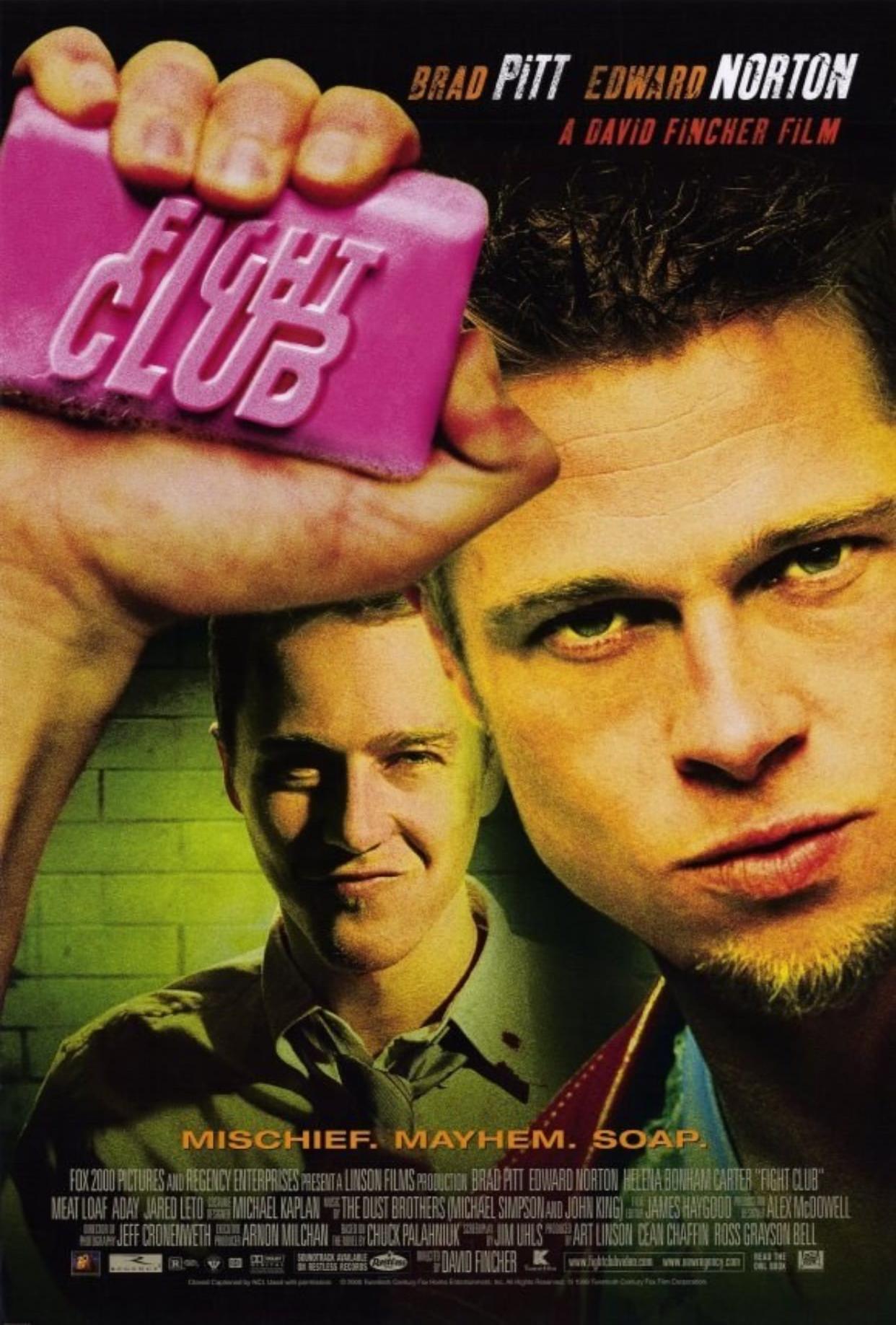
8. **Fight Club (1999)**
David Fincher’s “Fight Club,” released in the same year as “The Iron Giant,” is another prime example of a film that has achieved iconic status in the careers of both its director and star Brad Pitt, yet initially faced a notorious box office bombing. The film’s edgy psychological thriller narrative and subversive themes were certainly challenging for mainstream audiences of 1999, but its commercial struggles were significantly exacerbated by marketing missteps.
Fincher himself notoriously clashed with 20th Century Fox over how to market his audacious vision. His preference was for an in-your-face, provocative advertising campaign designed to build viral word of mouth, directly engaging with the film’s confrontational spirit. Fox, however, opted for a safer, more conventional approach, attempting to sell “Fight Club” simply as “a big studio film with movie stars” and leaning heavily into the fighting aspect by marketing it at wrestling events. This disconnect proved detrimental.
The studio’s cautious strategy failed to capture the film’s unique essence, resulting in a muted opening weekend of only $11 million. “Fight Club” ultimately tapped out at a disappointing $37 million at the U.S. box office, far short of its substantial $65 million production budget. This made it a significant financial loss for Fox, demonstrating how crucial effective, aligned marketing is for a film, especially one with an unconventional narrative.
Despite its initial commercial failure, “Fight Club” quickly gained a fervent cult following through home video and DVD sales. Its provocative ideas, intricate plot, and unforgettable performances resonated powerfully with a growing audience, leading to its re-evaluation as a seminal work of the late 20th century. Today, it stands as a cultural touchstone, routinely cited and debated, proving that sometimes, artistic vision, even when misunderstood initially, will ultimately find its deserved appreciation.
Read more about: More Than Just Popcorn Spills: 14 Blockbusters Viewers *Actually* Walked Out Of, From Gruesome Gore to Pure Boredom

9. **Josie and the Pussycats (2001)**
The 2001 film adaptation, “Josie and the Pussycats,” stands as a fascinating case study of a movie truly “ahead of its time.” Initially dismissed by critics as a “brainless adaptation of the classic cartoon,” this seemingly fluffy take on a rock ‘n’ roll rise-to-fame story, starring Archie Comics characters, struggled significantly upon its release. The poor critical reception contributed directly to its floundering theatrical performance.
With a budget of roughly $22 million, the film only managed to pull in $14.9 million at the box office. This commercial underperformance painted a picture of a film that failed to connect with its intended audience, or perhaps any audience at all. Its initial dismissal as superficial missed the deeper satirical layers woven throughout its narrative, which were too subtle for many contemporary viewers and critics to grasp immediately.
However, the years have been remarkably kind to “Josie and the Pussycats.” Subsequent critical assessments have reevaluated the movie, recognizing it as a surprisingly sharp and prescient satire of the music industry and rampant consumerism. What many critics initially “dinged” the film for – its abundant product placement – has since been understood as a key, deliberate part of its “stealthy parody,” a brilliant meta-commentary on the very commercial forces it depicted. This ambitious vision was simply misunderstood.
The film’s unapologetically feminine worldview, combined with its bumping soundtrack and incisive satirical bite, has garnered a dedicated cult following. Its journey from box office flop to revered cult classic highlights how some films need time for their truly “incredible” depths to be appreciated. Many now argue that “Josie and the Pussycats” “meowed so ‘Barbie’ could strut in her high heels,” a testament to its enduring influence and insightful commentary on pop culture and societal trends.
Read more about: Revisiting Box Office Bombs: How These Cinematic Gems Defied Initial Failure to Become Undeniable Masterpieces

10. **Mulholland Drive (2001)**
David Lynch’s enigmatic masterpiece, “Mulholland Drive,” has cemented its status as one of the most acclaimed films of the 21st century, famously named the best film of the era by BBC Culture. Yet, despite its towering artistic reputation, this complex neo-noir mystery failed to break even during its initial theatrical run in the U.S. This disparity between critical adulation and commercial struggle is almost “incredible” for a film of such profound impact.
The movie, which cost $15 million to make, managed to gross only $7 million in the U.S. This significant financial shortfall underscores the challenge of bringing an auteur’s singular, unconventional vision to a wide audience. It also, however, reflects a commendable commitment from the studio to support Lynch’s artistic ambition, even if it meant taking a substantial financial risk on a project that was inherently niche and artistically uncompromising.
“Mulholland Drive” presented a narrative that was deliberately dreamlike, fractured, and open to multiple interpretations, eschewing traditional linear storytelling. This ambitious narrative structure, while celebrated by cinephiles and critics, was likely a barrier for general audiences accustomed to more straightforward plots. It demanded active engagement and a willingness to embrace ambiguity, qualities that don’t always translate into mainstream ticket sales.
Nevertheless, subsequent years have been exceptionally kinder to “Mulholland Drive.” Its intricate puzzles, mesmerizing performances, and haunting atmosphere have only grown in appreciation, solidifying its place on numerous lists of the best films ever made. Lynch’s vision, initially a commercial gamble, has evolved into an enduring cinematic achievement, proving that true artistry often finds its audience, even if it takes time.
Read more about: Revisiting the Shadows: 10 Underrated Women of Classic Cinema We Should All Know

11. **Children of Men (2006)**
Alfonso Cuarón’s dystopian drama, “Children of Men,” is another powerful cinematic work widely considered one of the best films of the 21st century. It earned widespread critical acclaim upon its release, securing three Oscar nominations for Best Adapted Screenplay, Best Cinematography, and Best Film Editing. However, despite these impressive critical bonafides, the film experienced a profoundly disappointing commercial performance, particularly in its domestic market.
Universal Pictures had invested a substantial $76 million to produce this ambitious vision of a world grappling with human infertility. Yet, “Children of Men” only managed to earn $70 million worldwide, with a mere $35 million coming from the U.S. box office. This made it a significant financial bust for the studio, illustrating the inherent risks involved in backing a challenging, thought-provoking science fiction film with a serious, often bleak, narrative.
The film’s genre challenges were notable. While offering breathtaking long takes and an immersive, realistic portrayal of a bleak future, its uncompromisingly grim tone and complex themes of hope amidst despair may have deterred some mainstream viewers seeking escapist entertainment. Its ambitious vision prioritized thematic depth and stylistic innovation over broad commercial appeal, a decision that ultimately paid off artistically but not financially in its initial run.
Despite its commercial struggles, the film’s reputation has only grown, solidifying its status as a masterpiece. Its enduring power lies in its masterful cinematography, its urgent narrative, and its deep philosophical questions, which resonate more powerfully than ever. “Children of Men” stands as a testament to the idea that some films achieve their “incredible” status not by immediate box office returns, but by their lasting artistic merit and profound impact on cinematic discourse.
Read more about: Popcorn Ready? 6 Horror Movies So Bad They’re Absolutely Hilarious!

12. **Blade Runner 2049 (2017)**
Denis Villeneuve’s 2017 sequel, “Blade Runner 2049,” mirrored the unfortunate commercial fate of Ridley Scott’s 1982 original, both bombing at the U.S. box office despite being hailed as cinematic achievements. This continuation of a beloved, albeit initially misunderstood, sci-fi universe, arrived with immense anticipation, yet ultimately struggled to translate critical adoration into widespread ticket sales.
Warner Bros. had backed the film with a hefty production budget in the $150 million range, a testament to the scale and ambition of Villeneuve’s vision. However, “Blade Runner 2049” failed to even crack the $100 million mark domestically. While it fared better internationally, achieving $259 million worldwide, this was still not enough to offset its massive budget and additional marketing costs, leading to an estimated $80 million loss for producer Alcon Entertainment.
The film’s commercial struggles can be attributed to its demanding genre and ambitious artistic choices. Its long runtime, contemplative pace, and complex philosophical themes, while lauded by critics as “mind-blowing sci-fi storytelling,” likely proved too niche for general audiences in a blockbuster-saturated market. It was a film that prioritized atmosphere and existential inquiry over fast-paced action, appealing more to cinephiles than casual moviegoers.
Nevertheless, “Blade Runner 2049” has been widely hailed as one of the most visionary studio films of the decade. Its stunning cinematography, which earned Roger Deakins a well-deserved Oscar, and its profound exploration of identity and humanity, have secured its place as an “incredible” modern classic. It serves as a powerful reminder that some films, particularly those with bold artistic ambitions, may sacrifice immediate financial gain for an enduring legacy of critical and cultural reverence.
Read more about: The Enduring Enigma: What Factors Could Pave Harrison Ford’s Return to the Star Wars Galaxy?
These twelve films, from classic Hollywood to contemporary masterpieces, collectively paint an “incredible” picture of how true cinematic value often transcends the immediate metrics of box office success. They remind us that while the initial theatrical run might be a fleeting moment of commercial pressure, the real test of a film’s greatness lies in its enduring power to captivate, challenge, and inspire across generations. Their journeys from financial disappointments to cherished classics underscore a powerful truth: great art, no matter how misunderstood at first, will always find its audience and its rightful place in history. These are the films that proved the box office is not the final word, only the opening scene.