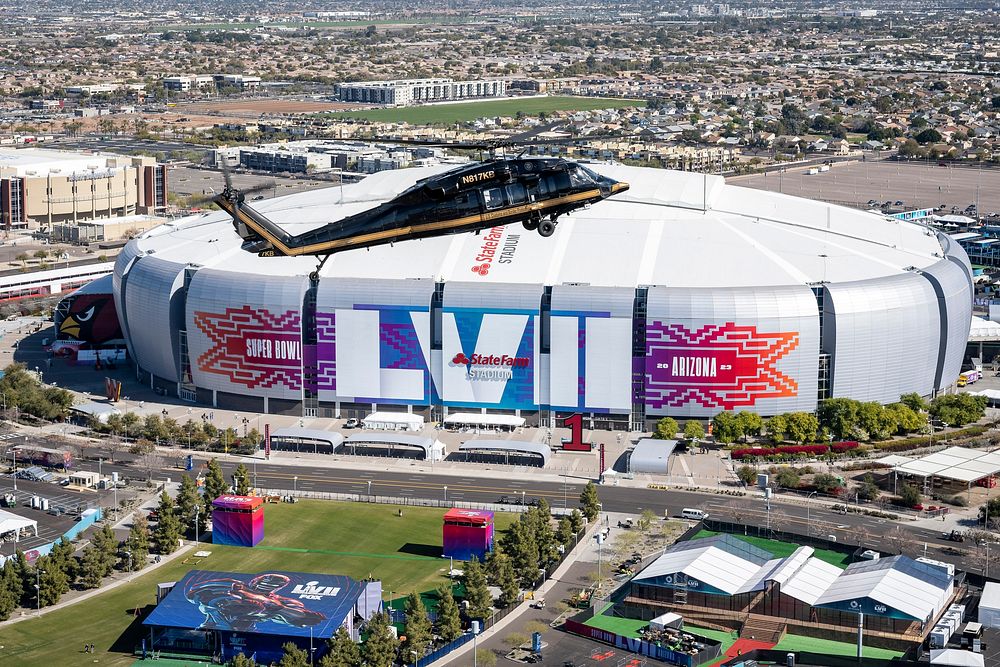
The Super Bowl, America’s most-watched sporting event, transcends mere athletics, serving annually as a colossal cultural touchstone where music, politics, and national identity often converge. Each year, the selection of the halftime show performer ignites discussions, yet the lead-up to the 2026 event has introduced a complex and unprecedented layer of political discourse, centering on immigration enforcement and the figure of the White House Press Secretary, Karoline Leavitt. This unfolding narrative offers a compelling case study in the intersection of entertainment, executive branch messaging, and highly charged policy debates.
At the heart of this discussion lies the Grammy-winning Puerto Rican superstar Bad Bunny, whose announcement as the halftime show headliner sparked immediate contention, particularly among conservative commentators. Compounding this artistic selection, a prominent Trump adviser issued a stern warning about the potential presence of U.S. Immigration and Customs Enforcement (ICE) agents at the game. These statements quickly propelled the issue into the national spotlight, demanding an official response from the administration and further highlighting the deeply polarized nature of contemporary public discourse, even around traditionally unifying events like the Super Bowl.
White House Press Secretary Karoline Leavitt, herself a notable figure as the youngest person to hold her position, found herself tasked with navigating this highly sensitive information. Her clarifications, delivered with the authoritative and precise language characteristic of her office, sought to address the immediate concerns while also reinforcing the administration’s broader policy stance on immigration. This article delves into the various facets of this Super Bowl controversy, examining the pronouncements, the official responses, and the underlying political currents that have turned a sports and entertainment spectacle into a platform for significant national dialogue.
1. **Bad Bunny’s Super Bowl Halftime Announcement**The selection of Benito Antonio Martínez Ocasio, globally known as Bad Bunny, to headline the 2026 Super Bowl halftime show immediately made waves across the entertainment and political landscapes. Announced by the NFL, Apple Music, and Roc Nation, the Puerto Rican superstar is set to lead the festivities from Levi’s Stadium in Santa Clara, California, on February 8. This choice underscores his immense global popularity and cultural impact, solidifying his status as one of the world’s most streamed artists, with albums like “Un Verano Sin Ti” achieving massive success.
Bad Bunny’s career has been characterized by a series of historic achievements, including a recent Puerto Rico residency that drew over half a million fans, demonstrating his unparalleled connection with his audience. His nomination as a leading figure at the Latin Grammys further attests to his artistic prowess and influence. For the National Football League, securing an artist of his caliber for such a prominent stage represents a move to embrace diverse global appeal, tapping into his vast listenership and ensuring a spectacle that resonates far beyond traditional American demographics.
However, the announcement was not met with universal acclaim, particularly from certain conservative quarters. While artist selections for the Super Bowl halftime show often spark debate, Bad Bunny’s booking quickly transcended typical musical preferences, transforming into a “divisive political pick” for some Trump supporters. This immediate politicization foreshadowed the broader controversies that would soon emerge, setting the stage for discussions far removed from musical merit or athletic competition, and firmly placing the event within the broader context of ongoing national debates.
The significance of the halftime show, watched by tens of millions worldwide, means that every aspect, from the songs performed to the artist’s public persona, is subject to intense scrutiny. Bad Bunny’s ascent to this pinnacle of entertainment is a testament to his unique artistry and genre-bending appeal, but it also places him squarely in the crosshairs of cultural and political commentary, a position he has not shied away from in his career. His selection, therefore, became not just a celebration of music but a starting point for a wider, more contentious dialogue.
Read more about: The Super Bowl Halftime Show Standoff: Unpacking the Bad Bunny Controversy and the Political Firestorm It Ignited
2. **Corey Lewandowski’s Unprecedented Warning on ICE Presence**Days after the Super Bowl halftime show announcement, a stark and provocative warning emerged from Corey Lewandowski, a longtime adviser to Donald Trump and currently an adviser to the Department of Homeland Security. Speaking on “The Benny Show,” Lewandowski was directly asked by podcast host Benny Johnson whether “ICE will have enforcement at the Super Bowl for the Bad Bunny halftime show.” His response was unequivocal and immediately drew national attention, signaling a significant shift in rhetoric regarding immigration enforcement at major public events.
Lewandowski’s declaration left little room for ambiguity. He stated, “There is nowhere you can provide safe haven to people who are in this country illegally. Not the Super Bowl and nowhere else. We will find you. We will apprehend you. We will put you in a detention facility and we will deport you.” This powerful assertion, delivered by an individual closely aligned with the Trump administration and holding a formal advisory role within Homeland Security, was designed to convey a stern message regarding the reach and determination of federal immigration authorities under the current administration.
The implication of Lewandowski’s remarks was clear: no event, no matter its scale or cultural significance, would be considered exempt from immigration enforcement. He explicitly differentiated this approach from previous administrations, noting, “So know that is a very real situation under this administration, which is contrary to how it used to be.” This statement underscored the administration’s perceived commitment to an expansive and aggressive enforcement strategy, aimed at projecting an image of uncompromising resolve across all sectors of society.
This highly publicized warning, disseminated through a conservative media platform, served multiple purposes. It was a direct message to individuals in the country illegally, a reassertion of the administration’s “law and order” stance, and a provocative challenge to the organizers of the Super Bowl. The seriousness with which Lewandowski delivered his message, framed within his advisory capacity, elevated the casual podcast interview into a moment of significant political pronouncement, demanding an official response from the White House and further intensifying the public debate surrounding the 2026 Super Bowl.
3. **Lewandowski’s Critique of Bad Bunny’s Selection**Beyond the warning about ICE enforcement, Corey Lewandowski also levied sharp criticism against the National Football League for its choice of Bad Bunny as the halftime show performer. His comments revealed a deeper vein of disapproval, rooted in perceived political alignments and national sentiment rather than artistic merit. He expressed strong disapproval, stating, “It’s so shameful they’ve decided to pick somebody who seems to hate America so much to represent them at the halftime show.” This highly charged accusation immediately injected a potent political dimension into the discussion of the musical performance.
Lewandowski elaborated on his criticism, telling host Benny Johnson that the NFL should “be trying to be inclusive, not exclusive.” He suggested that there were “plenty of great bands and entertainment people who could be playing at that show that would be bringing people together and not separating them.” These remarks positioned Bad Bunny as a divisive figure, implying that his selection was inherently polarizing and worked against a unified national spirit, rather than fostering it. This perspective framed the artist’s presence as a deliberate, and in Lewandowski’s view, regrettable, political statement by the NFL.
The critique reflects a broader sentiment among some conservative commentators who view certain artists as embodying anti-American or politically oppositional values. By publicly questioning Bad Bunny’s patriotism and the NFL’s decision-making, Lewandowski sought to align the entertainment choice with a narrative of cultural division. His comments suggested that the NFL, as a major American institution, had a responsibility to select performers who would universally appeal to and unite the nation, a role he believed Bad Bunny could not fulfill given his public persona and perceived political leanings.
This direct attack on the artist and the NFL’s decision further solidified the controversy surrounding the Super Bowl halftime show. It moved the conversation beyond mere policy announcements about ICE and into the realm of cultural warfare, where artistic expression becomes a battleground for competing political ideologies. Lewandowski’s remarks ensured that the discussion around Bad Bunny’s performance would be inextricably linked to questions of national identity, patriotism, and the contentious issues of immigration, long before the first note is played.
4. **Bad Bunny’s History of ICE Concerns**Corey Lewandowski’s warnings about ICE presence at the Super Bowl gained additional context when contrasted with Bad Bunny’s own previously expressed apprehensions regarding U.S. immigration enforcement. In an interview with I-D magazine months prior to the Super Bowl announcement, Bad Bunny revealed that concerns about “f—ing ICE” were a significant factor in his decision not to tour in the continental United States for the year. This statement highlights a profound and personal understanding of the anxieties surrounding immigration policy among certain communities.
The artist explained that his choice to undertake a historic residency in Puerto Rico, rather than a U.S. tour, was deeply influenced by these concerns. He explicitly stated, “There were many reasons why I didn’t show up in the U.S., and none of them were out of hate — I’ve performed there many times.” This clarifies that his decision was not an act of defiance or animosity towards the U.S. audience, but a practical consideration born from the realities of immigration enforcement. His desire to connect with Latinos in the U.S. remained, but the risks associated with tour logistics under a heightened enforcement climate presented formidable challenges.
Bad Bunny’s interview articulated a real and present worry that ICE agents “could be outside (my concert),” underscoring the chilling effect that aggressive immigration policies can have on public gatherings and cultural events. He noted, “And it’s something that we were talking about and very concerned about,” indicating that these were not abstract fears but concrete considerations in his tour planning. This perspective offers a direct counterpoint to the dismissive or politicized interpretations of immigration issues, instead revealing the tangible impact on individuals and their professional lives.
His preference for a Puerto Rico residency was also framed by the island’s unique political status as an “unincorporated territory of the U.S.” This allowed fans from the U.S. to attend his shows without the same immigration concerns that might deter attendees from other countries or those who fear enforcement on the mainland. The context of his previous statements therefore lends a poignant resonance to Lewandowski’s subsequent Super Bowl warning, illustrating that the very fears Bad Bunny expressed are precisely what some administration figures are keen to exploit or, at the very least, acknowledge as operational policy.
Read more about: The Super Bowl Halftime Show Standoff: Unpacking the Bad Bunny Controversy and the Political Firestorm It Ignited
5. **Karoline Leavitt’s Clarification: No “Tangible Plan” for ICE**In the wake of Corey Lewandowski’s provocative comments, the White House was pressed to provide an official stance on the prospect of ICE agents being present at the 2026 Super Bowl. It fell to White House Press Secretary Karoline Leavitt to address the swirling speculation, and she delivered a measured, yet firm, clarification during a Friday press briefing. Leavitt stated directly that there was “no tangible plan” for U.S. Immigration and Customs Enforcement agents to be at the Super Bowl in February. This served as the administration’s primary response to the specific claim made by the Trump adviser.
Leavitt’s statement was crucial for several reasons. It aimed to temper the alarm potentially caused by Lewandowski’s remarks, which, while reflecting the administration’s broader enforcement philosophy, had not been presented as an official, actionable directive regarding the Super Bowl itself. Her choice of the phrase “tangible plan” suggests that while the possibility of enforcement is always present, there were no specific operational designs for a targeted ICE presence at Levi’s Stadium at that time. This distinction is vital for maintaining a sense of administrative order and addressing public queries directly.
The press secretary’s intervention provided a necessary degree of separation between the pronouncements of an adviser and the official position of the White House. By clarifying that she was “as far as I’m aware” there was no such plan, Leavitt underscored the structured nature of White House communications, where official policy is conveyed through designated channels. This approach helps to manage expectations and prevent premature speculation from becoming perceived fact, especially concerning highly sensitive issues like immigration enforcement at a nationally televised event.
Leavitt’s response, therefore, played a critical role in controlling the narrative. It acknowledged the public discussion ignited by Lewandowski but sought to re-center the administration’s formal message, emphasizing a more considered and less immediately reactive stance on the specifics of Super Bowl enforcement. This careful articulation of policy is a hallmark of the press secretary’s role, particularly when managing politically sensitive comments from figures closely associated with the president.
6. **Reaffirming the Administration’s Stance on Illegal Immigrants**While Karoline Leavitt sought to clarify that there was no “tangible plan” for ICE agents to be at the Super Bowl, she simultaneously used the opportunity to reinforce the administration’s broader and unwavering commitment to immigration enforcement. In the same briefing, Leavitt articulated the fundamental policy direction, stating, “However, of course this administration is always going to arrest and deport illegal immigrants when we find them if they are criminals. We’re going to do the right thing by our country.” This statement served as a powerful reiteration of the underlying principles guiding the administration’s approach to undocumented individuals.
This dual messaging is characteristic of the White House’s communication strategy: addressing immediate concerns while firmly reiterating core policy. Leavitt’s emphasis on “criminals” within the context of deportation highlights a key aspect of the administration’s public narrative, often focusing on the removal of individuals deemed threats to public safety. This framing is designed to garner public support for enforcement actions by linking them to security and national interest, positioning such actions as “the right thing by our country.”
The statement also underscores the pervasive nature of the administration’s enforcement philosophy, suggesting that while a specific Super Bowl operation might not be planned, the general principle of apprehending and deporting individuals in the country illegally remains a constant. This broader policy directive ensures that the public understands the overarching intent, regardless of the specifics of any single event. It conveys a message of continuous vigilance and unyielding adherence to stated immigration objectives.
By coupling the “no tangible plan” clarification with a strong reaffirmation of enforcement, Leavitt effectively managed the immediate public relations challenge while consistently upholding the administration’s strategic priorities. This approach allowed her to respond to media inquiries transparently about the Super Bowl while simultaneously reinforcing a core message that resonates with the administration’s base and articulates its broader vision for immigration policy. It showcases the delicate balance required of a press secretary in articulating nuanced policy positions amidst public scrutiny.
Read more about: Beyond the Headlines: A Comprehensive Look at Key Policy Impacts Shaping America’s Economic and Social Landscape
7. **Leavitt’s Strategic Silence on Trump’s Personal Views**A notable aspect of Karoline Leavitt’s press briefing regarding the Super Bowl controversy was her deliberate refusal to divulge President Donald Trump’s personal thoughts on Bad Bunny’s selection as the halftime performer. When directly asked for the White House’s opinion on the artist’s booking, Leavitt chose a strategic deferral. She acknowledged the keen interest from the press, stating, “I know there are many in this room who are very anxious to hear the president’s response to Bad Bunny being the halftime show performer.”
However, she quickly pivoted away from offering any direct insight into the President’s personal feelings. Leavitt’s exact words were, “I won’t get ahead of him. I won’t reveal what he feels about this. Next time you all ask him a question, you’re welcome to do that.” This response is a classic example of a press secretary managing presidential messaging, ensuring that the president retains control over his own narrative and timing for such an announcement.
Her decision to keep Trump’s sentiments private, for the moment, serves to maintain presidential mystique and allows for a more controlled release of his views at a later date. It also prevents the press secretary from becoming an intermediary for potentially controversial personal opinions that might distract from or complicate official policy statements, particularly on sensitive cultural issues. This strategic silence ensures that the focus remains on the administration’s articulated stances on immigration and event security.
Furthermore, Leavitt also stated that she had her “own feelings” about the Puerto Rican Grammy Award-winning artist performing at next year’s Super Bowl, but quickly added, “That’s not what I’m up here to talk about.” This personal acknowledgment, immediately followed by a clear professional boundary, reinforced her role as a formal spokesperson. It underscored that her duty was to convey official White House positions, not her private opinions or those of the President, demonstrating a disciplined approach to her communications responsibilities.
8. **Bad Bunny’s Political Activism and Endorsements**The controversy surrounding Bad Bunny’s Super Bowl halftime performance gains further depth when considering the artist’s established history of political engagement and outspoken views. Benito Antonio Martínez Ocasio, known professionally as Bad Bunny, has consistently used his platform to advocate for various causes, often aligning himself with perspectives critical of certain U.S. administrations. This record of activism underscores the reasons why his selection might be perceived as a “divisive political pick” by some, moving beyond mere artistic preference.
His political stances are not new, nor are they subtle. Bad Bunny has, for instance, been a vocal critic of former President Donald Trump. In a public statement, he explicitly noted, “I will never forget what Donald Trump did and what he did not do when Puerto Rico needed a caring and a competent leader.” Such direct commentary illustrates a profound engagement with political issues, particularly those affecting his home territory of Puerto Rico, which possesses a unique relationship with the U.S. federal government.
Further demonstrating his political leanings, Bad Bunny publicly endorsed Kamala Harris during her 2024 presidential campaign. This endorsement unequivocally positions him within a specific political spectrum, contrasting sharply with the conservative commentators who voiced disapproval of his Super Bowl appearance. His willingness to openly back political candidates and critique administrations highlights an artist who does not shy away from using his global influence to impact public discourse.
This history of political expression is critical to understanding the broader politicization of his Super Bowl selection. For many, Bad Bunny is not merely a musical performer but a cultural icon whose art is intertwined with his social and political messaging. His presence on such a prominent stage thus becomes more than just an entertainment event; it transforms into a potentially potent platform for ideas and viewpoints that resonate with his vast and diverse fan base, further fueling the ongoing dialogue.
9. **Karoline Leavitt’s Background and Ascendancy to Press Secretary**The figure at the center of the White House’s response to the Super Bowl controversy, Karoline Leavitt, is a notable political spokesperson whose rapid ascent to power is a story in itself. Born on August 24, 1997, in Atkinson, New Hampshire, Leavitt made history in 2025 by becoming the 36th White House press secretary under the second Trump administration, making her the youngest individual ever to hold this influential position at just 27 years old.
Leavitt’s educational and early professional path laid a clear foundation for her career in conservative politics. She studied politics and communication at Saint Anselm College, graduating in 2019, where she was actively involved in student media, writing for the school newspaper and founding a broadcasting club. Describing herself as the “token conservative” on campus, her writings often reflected a critical stance toward what she termed the “liberal media,” which she characterized as “unjust, unfair, and sometimes just plain old false.” Her Roman Catholic upbringing also played a formative role, instilling values she often references.
Her career trajectory after college began directly within the Trump administration. She initially interned and later worked full-time in the White House Office of Presidential Correspondence, writing letters on behalf of the president. By June 2020, she had risen to become an assistant White House press secretary, working directly under Kayleigh McEnany. Following Trump’s 2020 election loss, Leavitt transitioned to a role as communications director for New York congresswoman Elise Stefanik, a prominent Republican figure.
In 2021, Leavitt embarked on her own political campaign, running for the United States House of Representatives in New Hampshire’s first congressional district. Campaigning as a staunchly pro-Trump, “Generation Z conservative,” she advocated for policies such as lower taxes, reduced regulations, school choice, increased voting requirements, and stronger border security. Despite winning the Republican primary, she was ultimately defeated by the incumbent Democrat, Chris Pappas, in the general election.
Her dedication to the Trump movement continued after her congressional bid. Leavitt served as a spokeswoman for MAGA Inc., Trump’s super PAC, and subsequently became the national press secretary for his 2024 presidential campaign. Her consistent loyalty, effective communication skills, and unwavering support for Trump ultimately led to her historic appointment as White House press secretary in November 2024, cementing her status as a formidable voice within the Republican Party.
10. **Leavitt’s Communication Style and Allegations of Misinformation**Karoline Leavitt’s tenure as White House Press Secretary has been characterized by a distinctive communication style, which President Trump himself lauded as “smart, tough, and has proven to be a highly effective communicator.” This assertive approach is central to her role as the chief spokesperson, navigating complex issues and defending the administration’s positions. However, this style has also attracted significant scrutiny and accusations, particularly concerning the veracity of her statements.
Since taking office in January, Leavitt has faced multiple allegations of disseminating misinformation to align with the administration’s agenda. Critics contend that she has, on various occasions, provided fabricated spin or outright false information to the American public. Examples cited include accusations of hiding President Trump’s health diagnosis and falsely asserting that Trump invented the phrase “peace through strength.” Such incidents have led to considerable backlash from online commentators, who express concerns that crucial information is being withheld or distorted from public view.
Further instances highlight these concerns. In one notable example, Leavitt falsely claimed in July that Trump’s “Big, Beautiful Bill” Act would entirely eliminate taxes on tips, overtime, and social security. This statement was met with immediate debunking, as the GOP-led legislation in question did not contain such provisions. The discrepancy between official statements and factual legislative details underscores the challenges posed by such communication tactics in an environment requiring precise and accurate information.
The critical reception to Leavitt’s communication has been stark. Rhonda Elaine Foxx, for instance, issued a strong warning, describing Leavitt as “a dangerous puppet” who “purely regurgitates fabricated spin and blatant lies,” going so far as to suggest that White House press briefings had devolved into mere “plays” or an “off-Broadway show.” These sharp criticisms reflect a perception among some that her role prioritizes defending the administration’s narrative, even when it diverges from verifiable facts.
A particularly high-profile incident involved Leavitt falsely stating that $50 million in taxpayer dollars was intended for condoms in the Gaza Strip during a January 2025 press conference. This claim was later corrected in February when an Al Arabiya reporter, presenting evidence in the Oval Office to Elon Musk and President Trump, revealed that the funds were actually designated for an HIV prevention program in Gaza Province, Mozambique. Musk himself later acknowledged, “Some things I say will be incorrect,” effectively walking back the administration’s initial assertion and further highlighting the challenges associated with the accuracy of public statements emanating from the White House briefing room.
11. **The Politicization of Super Bowl Halftime Shows**The controversy surrounding Bad Bunny’s Super Bowl halftime performance serves as a potent illustration of the increasing politicization of major cultural events. Traditionally, the Super Bowl halftime show is an entertainment spectacle designed to unite a diverse audience through music, yet in recent years, artist selections and performances have frequently become canvases for broader political and social discourse. This shift signifies a transformation of these platforms into arenas where cultural expression and political ideologies intersect, often leading to division rather than cohesion.
In the instance of Bad Bunny, his booking was almost immediately characterized by some Trump supporters as a “divisive political pick,” even before details of his performance were known. This immediate framing underscores a tendency to interpret artistic choices through a political lens, assuming that an artist’s public persona or perceived leanings inevitably infuse their performance with specific messages. Such an interpretation moves beyond mere musical appreciation, transforming the event into a reflection of national identity and contentious policy debates.
Corey Lewandowski’s criticism of Bad Bunny, suggesting the NFL chose “somebody who seems to hate America so much” and should instead “be trying to be inclusive, not exclusive,” further highlights this politicization. By questioning the artist’s patriotism and the NFL’s judgment, Lewandowski effectively elevated the conversation from entertainment critique to cultural warfare. His remarks implied that the NFL, as a major American institution, bears a responsibility to select performers who promote national unity as defined by a particular political viewpoint, rather than those whose public image might be seen as divisive.
This phenomenon extends beyond individual artist choices. The Super Bowl, with its immense viewership, offers an unparalleled platform for visibility, making every aspect—from commercials to musical acts—a potential vehicle for implicit or explicit messaging. As such, the selection process itself, and the subsequent public reaction, often becomes inextricably linked to prevailing cultural and political conflicts. The 2026 Super Bowl, therefore, stands as a stark example of how deeply politics has permeated even traditionally apolitical spaces, turning a sporting event into a significant stage for ongoing national dialogues and ideological clashes.
12. **White House Media Relations Under Leavitt**Karoline Leavitt’s tenure as White House Press Secretary has notably marked a departure from established precedents in media relations, particularly concerning the interaction with traditional news organizations. Her approach signals a deliberate shift in how the administration manages access and messaging, prioritizing what she refers to as “new voices” and exercising more direct control over the presidential press pool.
One significant change occurred in February, when Leavitt announced that the White House would take responsibility for selecting who participated in the presidential press pool. This move directly challenged a long-standing tradition where news organizations collectively determined pool membership. Leavitt justified this by stating that “new voices are going to be welcomed” alongside traditional media, indicating an intent to broaden the range of media outlets given access, potentially favoring those perceived as more sympathetic to the administration’s message.
This reorientation of media access and control was further underscored by reports in March from Axios, which indicated that the White House was actively seeking to change the seating chart for reporters in the briefing room. Speculation even suggested the possibility of appointing Leavitt herself as president of the White House Correspondents’ Association, an organization traditionally independent in representing the interests of journalists covering the presidency. Such actions point to a concerted effort to reshape the dynamics of White House media engagement.
Leavitt’s approach has not been without legal challenge. She was named as a defendant in a significant lawsuit, Associated Press v. Budowich (2025). This litigation arose after Trump’s staff reportedly moved to block the Associated Press from certain press events over the contentious “Gulf of Mexico–America naming dispute.” According to the lawsuit, Leavitt informed Zeke Miller, the chief White House correspondent for the Associated Press, that the organization would be barred from specific areas of the White House unless it complied with the administration’s preferred nomenclature, referring to the body of water as the “Gulf of America.” This incident starkly illustrates the administration’s willingness to exert control over journalistic access and even editorial practices, setting a new and potentially troubling precedent for media relations.
Read more about: Elon Musk’s Uncharacteristic Apology on X: A Detailed Examination of His Public Retractions and Past Moments of Contrition
13. **The Broader Context of Immigration Enforcement and Public Safety**Beyond the specific Super Bowl controversy, the White House’s messaging, particularly through Press Secretary Karoline Leavitt, consistently reinforces a broader, unwavering commitment to robust immigration enforcement. This strategic communication aims to solidify the administration’s “law and order” stance, reassuring its base while projecting an image of uncompromising resolve regarding undocumented individuals. The statements, though sometimes nuanced, consistently convey a pervasive enforcement philosophy.
Leavitt’s clarification regarding ICE at the Super Bowl, while denying a “tangible plan,” was immediately coupled with a forceful reaffirmation of core policy: “However, of course this administration is always going to arrest and deport illegal immigrants when we find them if they are criminals. We’re going to do the right thing by our country.” This dual messaging is a characteristic communication strategy, addressing immediate public concerns while simultaneously reiterating fundamental policy priorities. The emphasis on “criminals” within the context of deportation is a key element of the administration’s public narrative, designed to garner support by linking enforcement actions to public safety and national interest.
Corey Lewandowski, a close adviser to Trump and the Department of Homeland Security, echoed this sentiment with even greater directness. His assertion, “There is nowhere you can provide safe haven to people who are in this country illegally. Not the Super Bowl and nowhere else. We will find you. We will apprehend you. We will put you in a detention facility and we will deport you,” encapsulates the administration’s expansive view of immigration enforcement. This directive, he noted, stems “from the president” himself, suggesting a top-down mandate for continuous vigilance across all sectors of society.
This broader policy directive ensures that the public understands the overarching intent, regardless of the specifics of any single event. It conveys a message of continuous vigilance and unyielding adherence to stated immigration objectives. The administration’s position is clear: if individuals are in the country illegally, irrespective of their location, the government intends to pursue enforcement. As Lewandowski starkly put it, “If there are illegal aliens, I don’t care if it’s a concert for Johnny Smith or Bad Bunny or anybody else, we’re going to do enforcement everywhere. We are going to make Americans safe.” This perspective positions immigration enforcement as a constant and widespread imperative, driven by a national security mandate.
Read more about: The Super Bowl Halftime Show Standoff: Unpacking the Bad Bunny Controversy and the Political Firestorm It Ignited

14. **Implications for Future Political Discourse and Entertainment Events**The intersection of the Super Bowl, Bad Bunny’s selection, and the White House’s response illuminates a significant evolution in contemporary political and cultural landscapes. This episode transcends a singular event, setting a precedent for how major entertainment spectacles are increasingly viewed and utilized as platforms for political discourse, often becoming battlegrounds for competing ideologies rather than unifying experiences.
The enduring takeaway from this controversy is the irreversible blurring of lines between entertainment, celebrity, and governance. Artists, once largely insulated from direct political scrutiny in their performance roles, now find their creative expressions and public personas inextricably linked to national debates. Similarly, political administrations are learning that their messaging, even on policy, must contend with the viral nature of cultural events, necessitating swift and strategic responses to maintain control of the narrative.
Furthermore, the case of Karoline Leavitt highlights the growing importance of the White House Press Secretary as a central figure in managing these complex interactions. Her role has expanded beyond merely conveying official statements to actively shaping media access, addressing allegations of misinformation, and strategically navigating politically charged cultural moments. This shift underscores a more assertive and often confrontational approach to media relations, where the administration seeks to dictate not just the message, but also the terms of its dissemination.
Looking ahead, it is evident that events like the Super Bowl halftime show will continue to serve as magnified reflections of societal tensions and political divisions. Both artists and event organizers will face heightened scrutiny, with their choices analyzed through a dual lens of artistic merit and political implication. For administrations, the challenge lies in effectively communicating policy and managing public perception in an era where every major public platform can ignite a national debate, often far removed from its original intent. The Super Bowl controversy featuring Bad Bunny and the White House response is not an isolated incident but a harbinger of a future where culture and politics remain deeply, and often contentiously, intertwined.
Read more about: The Enduring Appeal: Unpacking the Top Reasons Why Hollywood Is Rebooting Iconic ’90s Thrillers
This incident underscores the critical importance of informed public discourse, where discerning fact from spin becomes paramount. As these worlds continue to merge, the ability of both the public and the press to critically evaluate information and understand underlying political motivations will be more crucial than ever in navigating the complex narratives that emerge from the intersection of celebrity, sport, and policy.