
The 1970s. Ah, the Seventies! Often painted with broad strokes of disco balls, bell bottoms, and economic malaise, it was a decade truly unlike any other. Historians, in retrospect, have increasingly labeled it a “pivot of change” in world history, a period where the global stage was constantly shifting, often with unpredictable and dramatic results. It was a time when the postwar economic boom gave way to upheaval, where grand political experiments crashed, and long-standing empires simply… vanished.
Now, when we talk about “comedies,” our minds usually drift to laugh tracks and witty banter. But what if we told you that the 1970s produced its own unique brand of “comedies”—not the kind that tickled your funny bone, but rather the kind that unfolded on the world stage with such spectacular failures, unforeseen turns, or abrupt disappearances that they were almost farcical in their drama? We’re diving deep into an era characterized by frequent coups, domestic conflicts, civil wars, and profound political upheavals, identifying 14 moments that truly “bombed and disappeared without a trace” in the most impactful ways imaginable.
From presidential downfalls to the collapse of ancient monarchies and the brutal realities of ideological experiments gone wrong, these aren’t tales for lighthearted laughter. Instead, they are pivotal narratives, each a testament to the decade’s tumultuous nature, showcasing how quickly power dynamics could shift, how swiftly grand plans could unravel, and how definitively certain eras could conclude. Join us as we explore the hidden stories and dramatic exits that define the ’70s, proving that sometimes, the most unforgettable performances are the ones that end in a spectacular flop or a mysterious vanishing act.
1. **Watergate Scandal: The Presidential Production That Bombed**
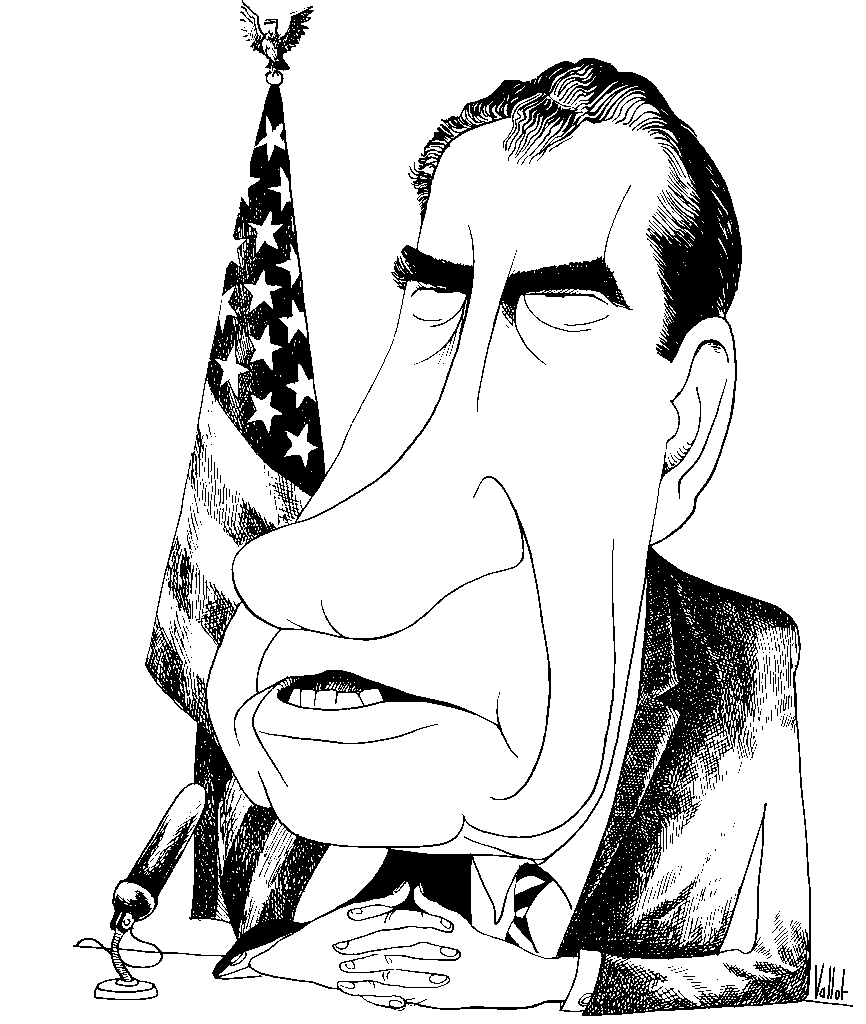
When we reflect on the 1970s in the United States, few events loom as large or cast as long a shadow as the Watergate scandal. This political drama unfolded, gripping the nation, and ultimately leading to an unprecedented climax: the resignation of a sitting president. On August 9, 1974, President Richard Nixon, facing charges for impeachment, became the first U.S. President to step down from office. It was a truly astounding moment, a presidential “production” that, despite its initial promises, spectacularly “bombed” on the national stage, leaving an indelible mark on American political history and public trust.
The scandal, which began with a seemingly minor break-in at the Democratic National Committee headquarters in the Watergate Hotel, slowly but inexorably exposed a web of political espionage, obstruction of justice, and abuse of power within the highest levels of government. The subsequent investigations, relentless media coverage, and the revelations of secret recordings chipped away at the administration’s credibility, demonstrating a stark contrast between official statements and the unfolding truth. This prolonged political crisis showcased the power of investigative journalism and the resilience of democratic institutions, even when faced with significant internal challenges.
Nixon’s departure was not just a personal downfall; it was a profound blow to the nation’s psyche. It cemented an era of increased public cynicism towards government and fostered a climate where transparency and accountability became paramount, at least in public discourse. The reverberations of Watergate were felt far beyond the White House, affecting political campaigning, media relations, and the very perception of leadership for decades to come, proving that even the most powerful individuals are not immune to a dramatic and unexpected curtain call when their misdeeds “air” for all to see.
2. **The Fall of Saigon: An Epic Military Retreat’s Curtain Call**
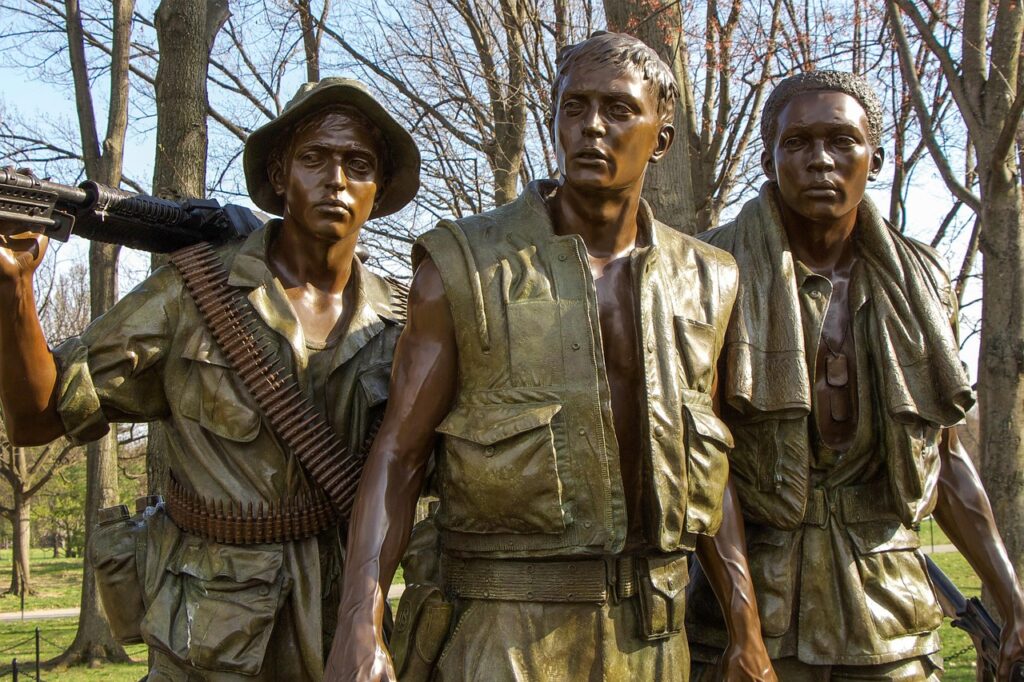
The 1970s saw the bitter end of a long and deeply divisive conflict: the Vietnam War. While the United States had been involved for many years, the early part of this decade was dominated by the agonizing process of withdrawal. Political pressure, coupled with leaked information regarding the nation’s involvement, eventually led to America’s withdrawal from the war in 1973. However, the true “bombing” of the initial objectives and the dramatic “disappearance” of the South Vietnamese government came in 1975.
On April 30, 1975, the Fall of Saigon marked the unconditional surrender of South Vietnam, effectively bringing the war to its final conclusion. This event was accompanied by urgent evacuations of South Vietnamese allies and remaining American personnel, a frantic scramble that underscored the chaotic end of a decades-long intervention. The following year, Vietnam was officially declared reunited under communist rule, signifying a complete transformation of the geopolitical landscape in Southeast Asia and a definitive end to the foreign military presence that had defined the region for so long.
For many in the Western world, particularly the United States, the Fall of Saigon represented a profound failure of foreign policy and a deep national trauma. It was a stark lesson in the limits of military power and the complexities of international conflict. The war’s end left a legacy of introspection, questioning interventionist policies, and reshaping America’s role on the global stage for years to come. It was, in many ways, an epic military “production” that, after a protracted and painful run, concluded with an unexpected and definitive “curtain call,” leaving behind a changed world.

3. **The 1973 Oil Crisis: When Global Economics Hit a Wall**
While political and military dramas unfolded, the 1970s also delivered a stunning economic “comedy” that sent shockwaves across the globe: the 1973 oil crisis. Caused by oil embargoes enacted by the Organization of Arab Petroleum Exporting Countries (OPEC), this event triggered a financial crisis throughout the developed world. It was a sudden and profound disruption that immediately “bombed” the prevailing economic stability and demonstrated the interconnectedness of global economies in a way few had anticipated.
The crisis led to a surge in oil prices, creating an economic recession and, for the first time, introducing the perplexing phenomenon of “stagflation” – a toxic combination of economic stagnation and rising inflation. This defied conventional economic theories of the time, particularly Keynesian economics, which had largely guided policy since World War II. The established economic paradigms began to “disappear without a trace” as governments grappled with a new and challenging reality, necessitating a fundamental rethinking of economic management and resource dependency.
In the wake of the 1973 oil crisis, a significant shift in political and economic thought began. It marked the start of a trend towards neoliberal economic theory, with the first neoliberal government even coming to power with the 1973 Chilean coup d’état. This pivotal event not only reshaped energy policies and spurred diversification efforts but also fundamentally altered the philosophical underpinnings of global capitalism, proving that even the most seemingly stable economic systems could be dramatically “bombed” by geopolitical factors and resource scarcity.
Read more about: 12 Defining ’70s Moments That Shaped Our World (And What Vanished Along The Way!)

4. **The Overthrow of Haile Selassie: An Ancient Monarchy’s Final Act**
History is replete with tales of empires rising and falling, but few “disappeared without a trace” with such abruptness and historical significance as the monarchy of Emperor Haile Selassie in Ethiopia. In 1974, a military coup led to the overthrowing of Haile Selassie by a communist junta. This event wasn’t merely a change in leadership; it marked the end of one of the longest-lasting monarchies in world history, a lineage tracing back to biblical times, which in itself is a dramatic “flop” on the grand stage of dynastic continuity.
Haile Selassie, revered by many as a divine figure and symbolic leader of global black liberation movements, had ruled Ethiopia for decades. His removal was a seismic shift, not just for Ethiopia but for the entire African continent. The coup, initiated by General Aman Andom and Mengistu Haile Mariam, dismantled an ancient system and paved the way for a drastically different political and social order. It was a swift and decisive end to an era, a moment where thousands of years of tradition and imperial power simply ceased to exist overnight.
The “disappearance” of this monarchy highlighted the turbulent nature of Africa in the 1970s, a decade plagued by endemic military coups and civil wars following widespread decolonization. Selassie’s downfall symbolized the vulnerability of even the most deeply entrenched power structures in the face of widespread discontent and military intervention. His overthrow underscored the dramatic and often brutal political transformations occurring across the globe, where ancient legacies could be swept away, leaving only the memory of what once was.

5. **The Jonestown Massacre: A Utopian Dream’s Catastrophic End**
Among the most chilling and bizarre “comedies” of human ambition gone horribly wrong, the Jonestown Massacre stands as a stark reminder of utopian ideals turning into a catastrophic nightmare. In November 1978, the Rev. Jim Jones led several hundred people from his People’s Temple in California to create and maintain a Utopian Marxist commune in the jungle of Guyana. What promised to be a haven of communal living quickly “bombed,” devolving into a horrifying tale of abuse and manipulation that concluded with a mass tragedy.
Allegations of corruption, mental, ual, and physical abuse by Jones on his followers, and denying them the right to leave Jonestown, began to surface, drawing the attention of outsiders. A Congressional committee, accompanied by journalists, visited Guyana to investigate. This visit tragically escalated when, as visitors and several defectors attempted to depart, they were attacked and shot by Jones’ guards at the airport. Congressman Leo Ryan was among those who were killed, a terrifying precursor to the greater horror that was about to unfold.
The demented Jones, consumed by paranoia and megalomania, then ordered everyone in the commune to kill themselves. The people drank or were forced to drink cyanide-laced fruit punch (Flavor Aid). Over 900 dead were found, approximately one-third of whom were children, including Jones himself, who had died from a self-inflicted gunshot. Jonestown, a place meant to be a paradise, “disappeared” in a single day of unparalleled self-destruction, leaving behind a grim legacy and an enduring question about the fragility of faith and the perils of unchecked power.

6. **The Cambodian Genocide: A Radical Regime’s Reign of Terror and Fall**
In the mid-1970s, Cambodia became the stage for one of history’s most horrific “comedies” of ideological extremism, a brutal experiment that “bombed” on an unimaginable scale, only to be swiftly “displaced” by an invading force. On April 17, 1975, the communist leader Pol Pot and his forces, the Khmer Rouge, captured Phnom Penh, the capital, following the end of the Cambodian Civil War. What followed was an attempt to establish a radical, Marxist agrarian society, a vision that quickly spiraled into mass atrocities.
The Khmer Rouge forced city dwellers out to clear jungles and establish rural communes, initiating a campaign of terror against anyone deemed an intellectual, a threat, or simply an undesirable. Buddhist priests and monks, individuals who spoke foreign languages, anyone with an education, or even those who wore glasses were tortured or killed. It was a horrifying purge designed to erase the past and forge a new, brutal future. As many as 3 million people may have died under this regime, a staggering toll that underscores the catastrophic failure of their extremist ideology.
This nightmare finally “disappeared” at the start of 1979 when Vietnam invaded the country, overthrowing the Khmer Rouge and installing a satellite government. This intervention, however, provoked a brief but furious border war with China in February of that year, illustrating the complex geopolitical repercussions of the conflict. The Cambodian genocide remains a chilling example of a regime that “bombed” its own population through radical social engineering, only to be forcibly removed from power, leaving behind a nation scarred by unimaginable suffering.

7. **The Iranian Revolution: A Pro-Western Monarchy’s Dramatic Exit**
The 1970s concluded with a profound political earthquake that sent tremors across the Middle East and beyond: the Iranian Revolution of 1979. This was a true historical “comedy” in the sense of a dramatic reversal, where an autocratic pro-Western monarchy under Shah Mohammad Reza Pahlavi dramatically “bombed” and “disappeared,” replaced by a revolutionary theocratic Islamist government led by Ayatollah Ruhollah Khomeini. It was a swift and complete overthrow that fundamentally altered Iran’s trajectory and global relations.
For decades, the Shah’s regime had been a key ally of Western powers, symbolizing modernization and secularism in the region. However, deep-seated popular discontent over his authoritarian rule, economic inequalities, and perceived subservience to Western interests simmered beneath the surface. The revolution represented the culmination of these grievances, manifesting as widespread protests, strikes, and ultimately, the collapse of the imperial system. The Pahlavi dynasty, which had held power for generations, simply vanished from the political scene.
The establishment of an Islamic republic under Khomeini marked a radical ideological shift, ushering in an era of anti-Western sentiment and Islamic fundamentalism. This transformation immediately created distrust between the revolutionaries and Western powers, most famously leading to the Iran hostage crisis on November 4, 1979, where 66 diplomats, mainly from the United States, were held captive for 444 days. The Iranian Revolution was a spectacular and unexpected “curtain fall” for a long-standing regime, demonstrating the volatile power of popular will and religious fervor to reshape national identity and international relations.
8. **The Bangladesh Genocide and Liberation War: A Brutal Birth for a New Nation**
The tumultuous year of 1971 witnessed a horrific “comedy” unfold in South Asia, one steeped in unimaginable tragedy and ultimately leading to the bloody birth of a new nation. The Pakistan Armed Forces, in a brutal attempt to curb independence movements in East Pakistan, embarked on the 1971 Bangladesh genocide, a campaign of systematic violence against its own people. This was a state-sponsored “production” of terror that “bombed” on the grand stage of human rights, leaving an indelible stain on history.
Estimates suggest that between 300,000 and an staggering 3,000,000 people were killed during this horrific period. The scale of the atrocities quickly became apparent, drawing international attention and condemnation. This internal conflict quickly escalated into a full-blown war, as the plight of East Pakistan prompted a decisive intervention from India, transforming a domestic crisis into a regional conflict that would reshape the map of South Asia.
The Bangladesh Liberation War concluded with the defeat of the Pakistan Armed Forces, paving the way for the emergence of Bangladesh as an independent nation. This dramatic shift not only liberated a people from brutal oppression but also showcased how quickly the established order could “disappear without a trace” under the weight of popular will and external intervention. The birth of Bangladesh was a testament to resilience, forged in the fires of conflict and etched into the annals of the 1970s as a profound political transformation.
Read more about: 12 Defining ’70s Moments That Shaped Our World (And What Vanished Along The Way!)

9. **Idi Amin’s Uganda: The Tyrant’s Theatrical Reign and Abrupt Exit**
The 1970s in Africa saw more than its share of strongmen and dramatic downfalls, but few dictatorships played out with such brutal fanfare and abrupt conclusion as that of Idi Amin in Uganda. Rising to power in a military coup in 1971, Amin quickly established himself as a ruthless ruler, notorious for persecuting opposition to his rule and pursuing a racist agenda, most notably removing Asians (particularly Indians) from Uganda. His regime was a terrifying “production” marked by unchecked power and human rights abuses that ultimately “bombed” spectacularly.
Amin’s megalomania extended beyond Uganda’s borders, leading him to initiate the Ugandan–Tanzanian War in 1978. This conflict, fought in alliance with Libya, was based on an expansionist agenda to annex territory from Tanzania. It proved to be a fatal miscalculation, a military “comedy” of errors that severely overstretched his capabilities and exposed the vulnerabilities of his regime.
The war resulted in Uganda’s defeat and, critically, Amin’s overthrow in 1979. This marked a dramatic “curtain call” for one of the decade’s most infamous despots, ending a brutal eight-year reign. His “disappearance” from power was a stark reminder of the volatile nature of African politics in the post-decolonization era, where leaders could rise swiftly and fall even faster, often leaving behind a legacy of devastation.
10. **Spain’s Democratic Awakening: Franco’s Legacy Crumbles, Liberty Emerges**
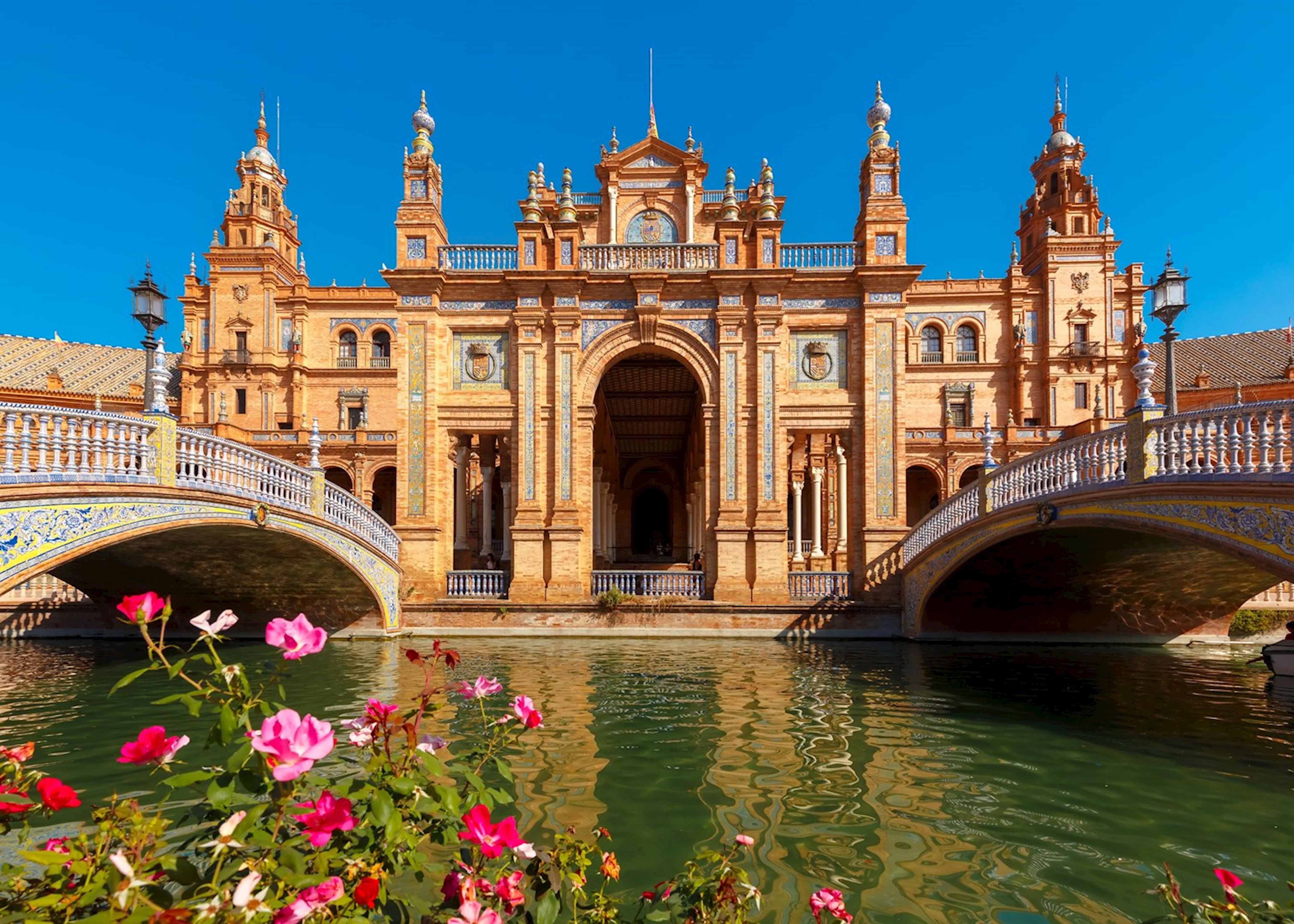
While many nations grappled with new forms of authoritarianism, the 1970s also witnessed the dramatic and relatively peaceful “disappearance” of one of Europe’s longest-standing dictatorships. After 39 years in power, Francisco Franco died, setting the stage for a profound political transition in Spain. His passing wasn’t just the end of a life; it was the ultimate “curtain call” for an entire era, ushering in an unexpected “comedy” of democratic renewal.
Upon Franco’s death, Juan Carlos I was crowned King of Spain, and he swiftly called for the reintroduction of democracy, defying expectations that he would maintain the authoritarian system. This pivotal decision ignited a rapid shift, proving that even deeply entrenched political structures could “disappear without a trace” when met with a determined will for change. The dictatorship in Spain officially ended, opening the doors to a future that had long been suppressed.
The path to democracy was swift and deliberate. The first general elections were held in 1977, seeing Adolfo Suárez become Prime Minister after his Centrist Democratic Union won. Crucially, both the Socialist and Communist parties, long outlawed, were legalized. The journey culminated with the signing of the current Spanish Constitution in 1978, a foundational document solidifying Spain’s commitment to democratic principles and cementing this remarkable “disappearance” of authoritarian rule.

11. **The Soviet Afghan Fiasco: Where Détente Died and a New Cold War Simmered**
For much of the 1970s, the world’s superpowers, the United States and the Soviet Union, had pursued a policy of détente, aiming to lessen Cold War tensions and resolve global problems through negotiation. This period, often seen as a “golden age” of stability for the USSR despite underlying economic issues, represented a hopeful, albeit uneasy, “production” of peaceful coexistence. However, this fragile peace was destined for a spectacular “bombing” at the close of the decade.
Despite the efforts at nuclear nonproliferation and a general cooling of bellicose rhetoric, the geopolitical rivalry between the US and the Soviet Union continued, albeit in more indirect ways. Both nations constantly jockeyed for control of smaller countries, subtly funding and training insurgent groups or supporting friendly governments. This undercurrent of competition meant that détente, while publicly embraced, was always precariously balanced on the edge of renewed conflict.
Then, on December 27, 1979, the policy of détente abruptly “disappeared without a trace” when the Soviet Union invaded Afghanistan, officially starting the Soviet–Afghan War. This dramatic military intervention marked a significant escalation of Cold War tensions, ending the era of eased relations and setting the stage for a decade of renewed superpower confrontation and proxy conflicts across the globe. It was a stark reminder that even the most carefully constructed diplomatic “productions” could be shattered by strategic imperatives.

12. **Portugal’s Peaceful Revolution and Empire’s Aftershocks: The Carnation Bloom and Colonial Fall**
In 1974, a unique “comedy” of change unfolded in Portugal, where a military coup, unusually, became a popular movement for liberation. Known as the Carnation Revolution, this event was organized by the Armed Forces Movement (MFA), composed of military officers opposed to the long-standing Portuguese fascist regime. What began as a military initiative was swiftly coupled with an unanticipated and popular campaign of civil support, turning it into a largely bloodless “production” that dramatically “bombed” the old order.
This revolutionary moment had profound and immediate international repercussions, particularly for Portugal’s remaining colonial empire. It would ultimately lead to the decolonization of all its colonies, ending centuries of imperial rule with remarkable swiftness. In 1975, Angola and Mozambique notably gained their independence, marking the definitive “disappearance” of the Portuguese Empire from the global stage.
However, this swift end to colonialism, while a victory for self-determination, also left significant power vacuums. These vacuums, unfortunately, led to devastating civil wars in the newly independent Lusophone African nations, proving that even a peaceful revolution can have turbulent, unforeseen aftershocks. The decade also saw Spain withdraw its claim over Spanish Sahara in 1976, marking the formal end of the Spanish Empire, further highlighting the rapid, definitive “curtain call” for European colonial powers.

13. **From Surprise Attack to Historic Handshake: The Yom Kippur War and Camp David’s Uneasy Peace**
The Middle East, a region frequently at the epicenter of international drama, delivered its own intense “comedy” of conflict and surprising reconciliation in the 1970s. In October 1973, the Yom Kippur War was launched by Egypt and Syria against Israel, a coordinated surprise attack aimed at recovering territories lost in the 1967 conflict. This aggressive “production” caught the Israelis off guard, leading to heavy initial losses before they rallied and mounted a powerful counter-offensive.
The Israelis eventually managed to repel both the Egyptian and Syrian assaults, crossing the Suez Canal into Egypt proper and pushing back the Syrian attack in the Golan Heights. This tense standoff, a military drama filled with unexpected turns, eventually gave way to a diplomatic “act” of incredible significance. In 1978, a truly momentous shift occurred when Egypt signed a peace treaty with Israel at Camp David in the United States, ending outstanding disputes between the two countries.
This historic agreement, known as the Camp David Accords, fundamentally altered the situation in the late 1970s Middle East. It was a dramatic diplomatic “performance” where long-standing enmities began to “disappear,” at least between these two nations. The leaders of Israel and Egypt, Menachem Begin and Anwar Sadat, even shared the 1978 Nobel Peace Prize for their efforts. Yet, this profound political transition came with its own tragic “curtain call” for Sadat, whose actions would unfortunately lead to his assassination in 1981, highlighting the complex and often dangerous path of peace in a volatile region.

14. **China’s Post-Mao Metamorphosis: A Cultural Revolution’s End and a Market’s Genesis**
The 1970s marked a period of seismic shifts for the People’s Republic of China, transforming its international relations and domestic policy in a profound “comedy” of transition. The decade began with China’s recognition by the United Nations and a historic visit by U.S. President Richard Nixon in 1972, restoring relations between the two countries after decades of isolation. This diplomatic “opening act” signalled that China’s previous isolationist “production” was dramatically “bombing,” and a new era was on the horizon.
1976 proved to be a pivotal year, as both Mao Zedong and Zhou Enlai died. These deaths effectively brought an end to the tumultuous Cultural Revolution, a period of immense social and political upheaval that had defined China for a decade. With the passing of its revolutionary titans, the old ideological “production” that had gripped the nation began to “disappear without a trace,” clearing the path for a radically different future.
After a brief interim, Deng Xiaoping emerged as China’s paramount leader. He began to shift the country towards market economics and away from ideologically driven policies, initiating profound reforms that would lay the groundwork for China’s economic rise. This transformation was a dramatic re-scripting of the nation’s narrative, a “comedic” reversal where an entirely new “production” focused on economic liberalization and global engagement took center stage, culminating in Deng Xiaoping’s visit to the US in 1979.
As we close the curtain on our exploration of the 1970s, it’s clear that this decade was far more than just disco and malaise. It was a period of relentless, sometimes brutal, change where political landscapes were redrawn, empires crumbled, and utopian visions crashed and burned. From presidential downfalls to the birth of nations and the shocking implosions of ideologies, these “comedies” of the 70s remind us that history is often stranger, more dramatic, and certainly more impactful than any fictional tale. The events of this tumultuous decade didn’t just happen; they aired, bombed, and disappeared, leaving an indelible mark on the world we inhabit today, echoes of their dramatic finales still reverberating.