Hey there, movie buffs! Ever find yourself scrolling through streaming services, feeling like you’ve seen everything, and then BAM!—a title pops up that you *know* was huge back in the day, but you haven’t thought about it in, well, forever? You’re not alone. Pop culture is a fickle beast, and what’s “everywhere” one minute can easily vanish into the mists of memory the next. We’re not talking about those small indie films or critical flops here; no, we’re digging into the blockbusters, the movies that had everyone talking, broke box office records, and even spawned sequels, only to somehow fade away.
It’s a wild ride through cinematic history when you realize just how many films were once at the absolute peak of popularity, dominating conversations, radios, and even fashion, but now barely get a mention. We’re talking about movies that were so ingrained in the zeitgeist that you’d think they’d be etched into the cultural canon forever, alongside your *Back to the Futures* or your *Godfathers*. But for reasons that are sometimes clear, and sometimes a complete mystery, they haven’t quite reached that “all-time classic” status.
So, buckle up, because we’re about to embark on a fun, nostalgia-fueled journey to rediscover some of these once-mighty cinematic giants. Get ready to jog your memory, question your own film knowledge, and maybe even find your next forgotten favorite to rewatch. How many of these do *you* still remember? Let’s dive in!

1. **Robin Hood: Prince of Thieves (1991)**When we talk about movies that were huge cultural phenomena only to be forgotten, 1991’s *Robin Hood: Prince of Thieves*, starring Kevin Costner, is a prime example. This wasn’t just a successful film; it was a bona fide blockbuster. In fact, the movie was the second highest-grossing film of its year, trailing only *Terminator 2: Judgment Day* and impressively outperforming *Home Alone*. Imagine that kind of box office power! It really goes to show just how deeply it resonated with audiences back then.
Beyond its box office triumph, the movie had another massive component that made it truly inescapable: its theme song. Bryan Adams’ ballad from the film was absolutely “all over the radio,” becoming a chart-topping hit that everyone knew. It’s one of those songs that instantly transports you back to the early ’90s. The song’s ubiquity only amplified the film’s presence in popular culture, making it feel like *Robin Hood: Prince of Thieves* was everywhere you looked and listened.
Despite this immense success and cultural saturation, the film’s legacy seems to have dimmed considerably. The context suggests that “today, I think it would be hard to find anyone under 40 who knows about that film.” That’s a pretty stark assessment for a movie that was once such a dominant force. It makes you wonder why a movie with such star power, massive box office numbers, and an iconic soundtrack could slip so quietly into obscurity.
Read more about: The Highest-Paid Cameos in Recent TV History: Unpacking Hollywood’s Priciest Surprise Appearances

2. **Love Story (1970)**”Love Story” with Ryan O’Neal and Ali McGraw was an absolute sensation upon its release in 1970. It quickly became “a big hit,” captivating audiences with its poignant tale of young, tragic love. The film’s emotional impact was so profound that it left an indelible mark on moviegoers of the era, solidifying its place as a cultural touchstone for romantic dramas. Its success was undeniable, making its stars household names and defining a certain cinematic romance for years to come.
The enduring legacy of “Love Story” can be best encapsulated by its most famous line: “Love means never having to say you’re sorry.” This quote transcended the film itself, becoming a widely recognized phrase in popular culture. The context even states, “We can divide those who remember Love Story from those who don’t with one quote: ‘Love means never having to say you’re sorry’ (If you know you know).” This perfectly illustrates how deeply ingrained the film was, even if only through its most iconic dialogue. For a certain generation, hearing that line immediately conjures images of the film.
However, for all its initial popularity and quotable moments, the movie has largely faded from the collective memory of younger audiences. The context points out, “I’m guessing most young people today never heard of it.” It’s a striking observation, given how central it once was to cinematic discussions and how beloved it was by millions. While its impact on the romantic drama genre is undeniable, the film itself, beyond that famous line, seems to have slipped into the shadows for new generations of film watchers. It truly highlights how even emotionally powerful and widely seen films can eventually become overlooked by time.
Read more about: Lethal Legacy: 15 Iconic Vehicles and Flaws That Shaped Automotive Safety

3. **Ordinary People (1980)**Robert Redford’s directorial debut, *Ordinary People*, released in 1980, was not just a successful film; it was an “extraordinary film” that clinched the coveted Best Picture Oscar. This powerful drama about family tragedy resonated deeply with critics and audiences alike, earning a respectable “$90 million at the box office on just a $6 million budget.” Such a strong performance for a dramatic film, especially one tackling such heavy themes, underscores its significant impact and popularity at the time. It was a film that truly connected with people on an emotional level.
Despite its Best Picture win and critical acclaim, *Ordinary People* often finds itself in a peculiar position in cinematic history. The context notes that “it’s often remembered more for taking that honor over Raging Bull and for Mary Tyler Moore losing the Oscar to Sissy Spacek.” This is a fascinating twist of fate, where its triumph is almost overshadowed by the perceived “loss” of another acclaimed film. Rather than being celebrated solely for its own merits, it frequently becomes a reference point in discussions about controversial Oscar decisions, which perhaps diminishes its standalone legacy for some.
The film’s challenging subject matter may also contribute to its diminished presence in contemporary discussions. As the context explains, “It is an incredible film, but it’s hard to watch for some people, so it sorta got lost.” Dealing with profound grief and family trauma, *Ordinary People* isn’t an easy watch, which might deter casual viewers or those looking for lighter fare. While its artistic merit and emotional depth remain, its intensity might be a reason it doesn’t get revisited as often as other Best Picture winners, leading to its gradual fade from the forefront of popular film discourse.
Read more about: Kris Kristofferson: The Unforgettable Journey of an Outlaw Legend, From Rhodes Scholar to Hollywood Star

4. **Police Academy (1984)**The *Police Academy* franchise was an absolute comedic powerhouse in the 1980s, with the original 1984 film being “one of the most successful comedies of the 80s.” This movie wasn’t just a hit; it “spawned a whole bunch of sequels,” clearly indicating its immense popularity and the audience’s appetite for its brand of humor. It introduced a zany cast of characters who became instantly recognizable, creating a distinct comedic universe that dominated the decade’s laughter landscape.
Speaking of distinct characters, the film’s star, Steve Guttenberg, was undeniably “one of the biggest movie stars of the 1980s.” The context playfully asks, “(ring any bells?),” highlighting how even actors at the peak of their fame can become less recognized over time. His presence was synonymous with many successful films of that era, and *Police Academy* was a significant pillar of his career. It’s a curious phenomenon when an actor once so ubiquitous can slip from common recognition, mirroring the fate of many of his most popular movies.
Another unforgettable aspect of the film was Michael “The Man of 10,000 Sound Effects” Winslow. His unique talent was a standout comedic element, and as the context questions, “what 80s kid could ever forget Michael ‘The Man of 10,000 Sound Effects’ Winslow?” He was a highlight, bringing a distinctive, memorable energy to the ensemble. Despite the film’s huge success, the franchise’s extensive reach, and its memorable stars, the *Police Academy* movies, like many listicle comedies, seem to have been largely “forgotten” in modern pop culture discussions. It’s a shame, as they offered a specific brand of chaotic fun that delighted millions.
Read more about: 12 Sci-Fi Movies Critics Wish They Could ‘Unwatch Instantly’ – And Why They Haven’t Aged Well

5. **Crocodile Dundee (1986)**In 1986, *Crocodile Dundee* was an undeniable phenomenon, becoming “a huge hit at the time.” This charming fish-out-of-water comedy captured the hearts of audiences worldwide, making a star out of Paul Hogan and solidifying Australia’s image (for better or worse) in the global consciousness. The film’s blend of adventure, romance, and comedic culture clashes proved to be a winning formula, leading to massive box office success and establishing it as one of the defining movies of the decade.
The film’s cultural impact was so pervasive that its catchphrases and iconic scenes became part of everyday conversation and even pop culture parody. The context offers a perfect example: “When we watched the season 6 episode of The Simpsons, ‘Bart vs Australia’, back in 1995—we all laughed at the Crocodile Dundee parody ‘knifey spoony’ scene.” This illustrates how deeply embedded the movie was in the collective consciousness, to the point where an entire *Simpsons* episode could riff on its most famous moments and expect a wide audience to get the joke.
Yet, for all its former glory, *Crocodile Dundee* rarely enters modern discussions. The context poignantly asks, “Today, would anyone know what you’re talking about if you said ‘that’s not a knife, this is a knife’?” This rhetorical question highlights the film’s unfortunate drift into obscurity. Once a cornerstone of pop culture references and a film that was “everywhere,” it now struggles to maintain a presence in contemporary memory. It’s a classic example of a massive hit that, despite leaving a significant cultural footprint, is now seldom “playing or anyone mentioning it.”
Read more about: Who Was Fired First? The Original Casting Choices for 10 Beloved Movie Roles

6. **Walking Tall (1973)**While some might recall the 2004 remake starring Dwayne “The Rock” Johnson, the original *Walking Tall* from 1973, featuring Joe Don Baker, is the true unsung hero we’re focusing on. This film was far more than a modest success; it “did a respectable $40 million on a $500,000 budget,” showcasing an incredible return on investment. Such financial triumph, especially for a movie with a relatively low budget, speaks volumes about its unexpected popularity and the way it connected with audiences, who were clearly drawn to its powerful, true-story-inspired narrative.
Beyond its impressive box office numbers, the 1973 original “became a cult hit” and has maintained a strong critical standing, holding “a 75% rating on Rotten Tomatoes.” This combination of popular success and critical appreciation highlights its quality and enduring appeal among those who discovered it. The film’s gritty portrayal of a real-life sheriff fighting corruption offered a compelling narrative that resonated with viewers, establishing its place as a significant, albeit often forgotten, piece of 70s cinema.
The context makes a clear recommendation, underscoring the original’s superiority: “If you ever think of watching the 2004 film…stop and go check out the OG version instead.” This strong advice serves as a testament to the original film’s quality and its status as a foundational piece of its genre. Despite its cult following and critical acclaim, the 1973 *Walking Tall* often gets overshadowed by its remake or simply falls out of mainstream discussion, making it a perfect candidate for rediscovery among those looking for powerful, impactful cinema from yesteryear.
Read more about: More Than Just Popcorn Spills: 14 Blockbusters Viewers *Actually* Walked Out Of, From Gruesome Gore to Pure Boredom

7. **A Knight’s Tale (2001)**Released in 2001, *A Knight’s Tale* was a delightful surprise for many moviegoers, becoming “huge when it came out.” This swashbuckling adventure, set to classic rock anthems, offered a fresh and engaging take on the medieval genre, captivating audiences with its charismatic performances and unique soundtrack. It quickly garnered a dedicated following, with some fans even confessing, “I lost count of how many times I saw it.” That kind of fervent rewatchability is a clear indicator of a film that struck a chord and truly resonated with its initial audience.
The film’s appeal wasn’t fleeting either; for those who have revisited it, *A Knight’s Tale* has proven its staying power. The context mentions, “I watched it a few months ago, it’s held up fairly well.” This speaks to the movie’s quality and its ability to entertain across different eras, suggesting that its core narrative and engaging style haven’t diminished over time. Its clever anachronisms and heartwarming story contribute to its lasting charm, making it a film that retains its entertainment value for those who remember it.
However, despite its initial success and enduring quality, *A Knight’s Tale* has curiously fallen silent in contemporary pop culture conversations. The sentiment, “Now I never even hear it being talked about,” perfectly encapsulates its current status. It “hasn’t been totally forgotten,” but its absence from everyday movie discussions is palpable, especially for a film that was once so widely seen and loved. It’s a wonderful example of a movie that, while still great, has somehow slipped through the cracks of collective memory, making it a prime candidate for a nostalgic rewatch or a brand new discovery.
Hey there, movie buffs! If you thought we were done digging through the dusty archives of cinematic history, think again! We’ve only just scratched the surface of those once-ubiquitous films that have mysteriously vanished from our everyday chats and streaming suggestions. Get ready to jog your memory even more as we uncover seven additional movies that, despite their undeniable success, critical acclaim, or cult status, just don’t get the love or recognition they once commanded. Prepare for some serious “aha!” moments and maybe even a few “wait, I totally forgot about that one!” gasps.
Read more about: Who Was Fired First? The Original Casting Choices for 10 Beloved Movie Roles

8. **The Sting (1973)**When you’re talking about classic caper movies, there’s a good chance *The Sting* from 1973 isn’t the first one to pop into your head anymore, and that’s a real head-scratcher. This cinematic masterpiece, starring the legendary duo of Paul Newman and Robert Redford, was an absolute powerhouse in the 70s. It wasn’t just a hit; it clinched seven Academy Awards, including the coveted Best Picture! Imagine a film dominating the Oscars to that extent today, and then not being a permanent fixture in our streaming queues or casual movie chats.
The film’s intricate plot, stylish period setting, and the incredible chemistry between Newman and Redford made it an instant classic that charmed audiences globally. It defined cool for a generation, delivering twists and turns that kept everyone on the edge of their seats, and it became the benchmark for a successful “con” movie. “If you’re looking for caper movies there is maybe no better choice than The Sting,” the context proclaims, and honestly, it’s hard to argue with that when you look at its pedigree.
So, with all that going for it – two of Hollywood’s biggest stars, an Oscar for Best Picture, and a genre-defining story – why does *The Sting* seem to have vanished from our collective consciousness? The context points out a rather baffling reality: “These days, we’re not even sure if it’s available on any of the major streaming platforms.” How does a film of this caliber become so elusive?
It’s truly wild to think about a movie that was once so ubiquitous, a true event film, now rarely getting the shout-outs it deserves. Perhaps the sheer volume of new content makes it harder for older, even legendary, films to stay in the constant rotation of discussion. But for anyone looking for a smart, exhilarating, and genuinely fun watch, *The Sting* is an absolute must-rediscover.
Read more about: More Than Just Popcorn Spills: 14 Blockbusters Viewers *Actually* Walked Out Of, From Gruesome Gore to Pure Boredom

9. **The Last Emperor (1987)**Okay, quick quiz for you: Name the movie that won the Academy Award for Best Picture in 1987. If *The Last Emperor* wasn’t the first title to leap to mind, you’re definitely not alone! Bernardo Bertolucci’s epic historical drama was a sweeping triumph, not only taking home the top Oscar but making a significant impact on critics and audiences alike. It showcased a visually stunning story on an unprecedented scale, earning critical adoration and securing its place in awards history.
This film wasn’t just a critical darling; it was a grand cinematic achievement, depicting the extraordinary life of Puyi, the last emperor of China. It garnered a whopping nine Academy Awards, essentially sweeping every category it was nominated in! From its breathtaking cinematography to its powerful score, *The Last Emperor* transported viewers to a fascinating, tumultuous period of history, making it a monumental film event when it premiered.
Yet, despite this incredible critical success and Oscar glory, the film barely gets a mention these days. The context suggests, “I don’t think it’s because it’s a bad movie or anything, but maybe because its protagonist is not widely known in the West, and that whole period of pre-war and WWII history has faded from living memory.” It’s a compelling theory – sometimes, even monumental historical epics need a universally recognizable hook to stay relevant for new generations.
The grandeur and historical depth of *The Last Emperor* are undeniable, making it a truly “great movie” that some dedicated fans “try to watch once a year.” It’s a powerful reminder that even films that conquer the Academy Awards can struggle to maintain a lasting foothold in everyday pop culture conversations, especially when their subject matter feels distant. If you’re into historical epics and stunning visuals, this one is an absolute forgotten gem waiting for your rediscovery.
Read more about: Hollywood’s Timeless Talents: 12 Iconic Actors Still Rocking the Big Screen (and Beyond!)

10. **Three Men And A Baby (1987)**Alright, movie lovers, let’s talk about a film that was an undeniable juggernaut in its time: *Three Men and a Baby* from 1987. This heartwarming comedy, starring 80s TV titans Ted Danson and Tom Selleck, alongside the previously mentioned Steve Guttenberg, wasn’t just popular—it was THE most popular movie of the entire year! Think about that for a second: the highest-grossing film of 1987. That’s a serious amount of cultural footprint right there.
The premise was pure gold: three bachelor roommates suddenly find their lives turned upside down by the unexpected arrival of a baby girl. It delivered laughs, tender moments, and a feel-good story that resonated with audiences across the board. The film captured that specific 80s family-friendly charm perfectly, making it a must-see for millions. And here’s a fun fact that might blow your mind: this massive hit was directed by none other than Leonard Nimoy! Pretty cool, right?
For a movie that dominated the box office in its year of release, it’s pretty wild how infrequently *Three Men and a Baby* comes up in conversations today. It seems to have been relegated to the forgotten archives of 80s nostalgia, despite its colossal success. You’d think a film that literally outperformed every other movie in its release year would be a perennial favorite, but alas, that’s just not the case.
Perhaps the sheer simplicity of its premise, or the eventual rise of more edgy comedies, allowed it to fade into the background. But for those of us who grew up with it, the image of those three bachelors fumbling through fatherhood still brings a smile. It’s a fantastic example of a movie that achieved peak popularity, yet somehow hasn’t quite retained its spotlight in the decades that followed, begging for a rewatch to appreciate its wholesome charm.
Read more about: Hollywood’s Timeless Talents: 12 Iconic Actors Still Rocking the Big Screen (and Beyond!)
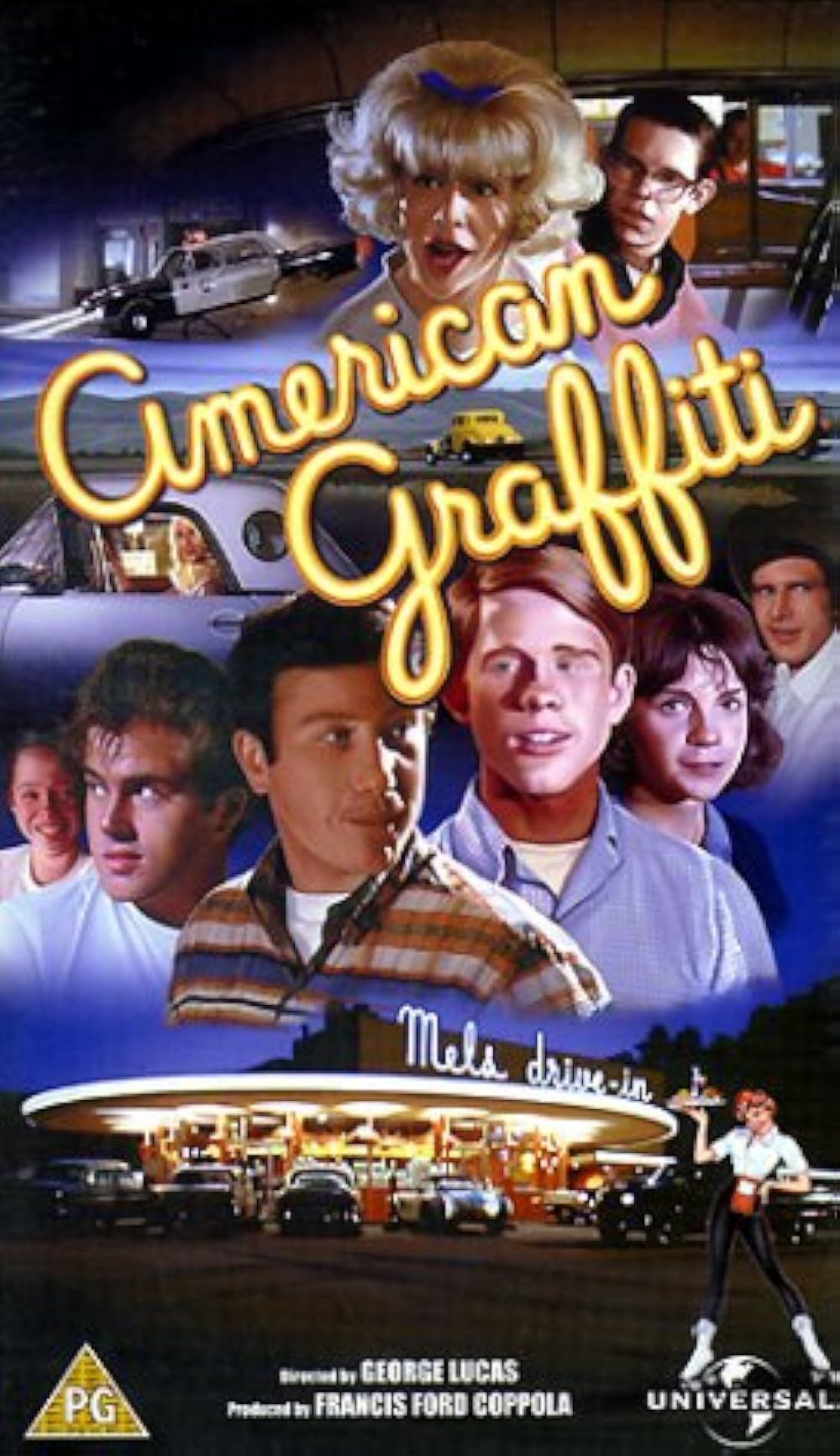
11. **American Graffiti (1973)**Before *Star Wars* took over the galaxy, George Lucas was already making waves with his incredible talent, and one of his early triumphs was the 1973 classic, *American Graffiti*. This film wasn’t just a hit; it was a cultural phenomenon that resonated deeply with audiences, capturing the essence of youth, cars, and rock ‘n’ roll in the early 60s. For many, it was the definitive coming-of-age story of its era.
The movie beautifully portrayed a night in the lives of a group of teenagers on the cusp of adulthood, brimming with nostalgia and the bittersweet feeling of impending change. It earned an impressive five Academy Award nominations, including Best Picture and Best Director, showcasing Lucas’s narrative and directorial prowess well before his sci-fi epic. It truly cemented his status as a filmmaker to watch, demonstrating his versatility and knack for storytelling.
Yet, outside of serious film buffs and those who specifically seek out Lucas’s pre-*Star Wars* work, *American Graffiti* often gets lost in the shuffle. The context shrewdly observes, “There are those who know that George Lucas wrote and directed a film before Star Wars—and those that don’t.” It’s a shame, because this film was a massive success, proving that Lucas was capable of more than just groundbreaking special effects.
It’s a powerful reminder that even the pre-masterpiece works of iconic directors can sometimes fall by the wayside when compared to their later, more monumental achievements. *American Graffiti* offers a charming, authentic slice of Americana that deserves far more recognition than it currently receives. So, next time you’re feeling nostalgic for cruising in classic cars and rockabilly tunes, definitely give this foundational piece of cinema a spin.
Read more about: Hollywood’s Blind Spots: How Studios Rejected ‘Pulp Fiction’ and 10 Other Iconic Films That Reshaped Cinema
12. **The Bodyguard (1992)**Let’s be real: when you hear “The Bodyguard,” your mind probably instantly jumps to Whitney Houston’s iconic rendition of “I Will Always Love You.” And rightly so! That song, from the film’s soundtrack, is quite literally “the best-selling movie soundtrack of all time.” It was a global sensation, an anthem that defined a moment in music history. The power of that soundtrack alone made *The Bodyguard* a massive cultural presence in 1992.
But here’s the million-dollar question: how much do you actually *remember* about the movie itself? Beyond the unforgettable music video scenes featuring Whitney and Kevin Costner, the actual plot and details of the film tend to be a bit hazy for many. The movie captivated audiences with its blend of romance, drama, and thriller elements, centering on a pop superstar and her stoic protector. Its star power was undeniable, drawing huge crowds to theaters.
Despite being a box office hit and spawning one of the most successful soundtracks ever, *The Bodyguard* as a cinematic narrative seems to have quietly retreated from the forefront of our collective memory. The context asks, “But how many can say they really remember the movie (besides the scenes included in the song’s music video)?” It’s a valid point that highlights how some films can be culturally dominant through one specific element, while the rest of their content fades.
It’s a fascinating phenomenon when a film’s musical legacy completely overshadows its narrative one. *The Bodyguard* is a prime example of a movie that was “everywhere” due to its incredible soundtrack, but the film itself struggles to maintain the same level of recognition. So, if you’ve only ever heard the songs, maybe it’s time to rewatch the movie and see if you can remember what all the fuss was truly about!
Read more about: Beyond the Dutton Ranch: Uncovering Where You’ve Seen Your Favorite Yellowstone Stars Before

13. **Mr. Mom (1983)**Talk about a blast from the past! Written by the legendary John Hughes and starring the incomparable Michael Keaton, *Mr. Mom* was a fantastic comedy from 1983 that truly hit its stride. This film wasn’t just a funny flick; it was a bona fide box office success, raking in “$64 million on a $5 million budget” and becoming the “ninth highest-grossing film of 1983.” Those are some serious numbers for a comedy that many people today might draw a blank on!
The premise was, and still is, hilariously relatable: a guy loses his job as an automotive engineer and suddenly becomes a stay-at-home dad when his wife heads back to work. Michael Keaton’s comedic timing and everyman charm were absolutely perfect for the role, creating a character that audiences loved to root for and laugh with. It tapped into the changing family dynamics of the era, but with a lighthearted, observational humor that only John Hughes could deliver.
Despite its impressive box office performance and the star power of Keaton and Hughes’s writing, *Mr. Mom* often gets overlooked in discussions of classic 80s comedies. While films like *Ferris Bueller’s Day Off* or *Planes, Trains & Automobiles* (also Hughes, naturally) remain cultural touchstones, *Mr. Mom* seems to have slipped quietly into the background. It’s a shame, because it perfectly captures a specific comedic sensibility of the era.
This film is a prime example of how even a hugely successful and well-received comedy can somehow lose its footing in the popular imagination over time. It offers a wonderful blend of humor and heart, making it an ideal candidate for a nostalgic rewatch. If you’re searching for a genuinely funny, feel-good movie from the 80s that you might have totally forgotten about, *Mr. Mom* is definitely one to add to your list!
Read more about: The Double Life: 15 Celebrities Who Hid Their Intense Military Service From the Public—Why the Secrecy?

14. **The Game (1997)**When you think of director David Fincher, titles like *Se7en* and *Fight Club* immediately come to mind, right? Those are his undisputed classics, talked about constantly. But here’s a curveball for you: what about the movie he made *between* those two iconic thrillers? We’re talking about *The Game*, released in 1997, a mind-bending mystery-thriller that, while having a dedicated cult following, remains oddly forgotten by many.
This film, starring Michael Douglas and Sean Penn, was a critical and commercial success in its own right, pulling in “over $100 million at the box office.” It featured a twist ending that had audiences buzzing, and even earned a solid “3.5 stars out of 4” from the legendary Roger Ebert. It was a stylish, suspenseful ride that solidified Fincher’s reputation as a master of psychological thrillers, even if it often gets overshadowed by its more famous siblings.
For a movie directed by such a celebrated filmmaker, boasting big-name stars and a gripping plot, it’s curious how *The Game* doesn’t get the same continuous chatter as *Se7en* or *Fight Club*. It “definitely has a cult following,” but even “many Fincher fans rightly call it one of the director’s most underrated films.” Perhaps its intricate plot or the sheer dominance of its neighbors in Fincher’s filmography have kept it from reaching wider, constant recognition.
*The Game* is a brilliant reminder that sometimes, even excellent films from acclaimed directors can become “forgotten” or at least significantly overlooked, simply by being nestled between two monumental works. If you’re a fan of psychological thrillers, intricate plots, and Fincher’s signature dark aesthetic, and you haven’t seen *The Game* recently (or ever!), you’re in for a treat. It’s truly a forgotten gem that deserves a spot in your next movie marathon.
Read more about: Laughing All The Way To The Screen: 12 Fan-Favorite Movies So Bad They’re Absolutely Brilliant
And there you have it, folks! Another deep dive into the fascinating, and sometimes frustrating, world of movies that were once at the top of their game but have mysteriously slipped into the shadows. From Oscar-winning epics to highest-grossing comedies and mind-bending thrillers, it’s clear that box office success or critical acclaim is no guarantee of eternal pop culture immortality. Tastes change, new blockbusters emerge, and the sheer volume of cinematic history means some true gold can get buried. But isn’t that the fun part? Rediscovering these gems feels like unearthing a secret treasure, a chance to rekindle a forgotten love or forge a brand-new appreciation. So go ahead, dust off one of these overlooked masterpieces tonight, and remind yourself why they were so beloved in the first place! Happy watching!