Ozzy Osbourne. The name alone conjures images of heavy metal thunder, enigmatic stage presence, and a life lived larger than legend. From his iconic reign as the “Prince of Darkness” with Black Sabbath to his multi-platinum solo career and an unexpected foray into reality television, John Michael Osbourne’s journey has been nothing short of extraordinary. He carved an indelible path through music history, influencing generations of artists and captivating millions of fans with his raw talent and unfiltered personality.
Yet, beyond the screaming crowds and the controversial headlines, there was always a human story—a tale of resilience, passion, and, ultimately, a profound battle with the realities of aging and health. As we reflect on his life and the twilight years of a true rock titan, we gain a unique perspective on the man behind the myth. His final chapters, marked by both unwavering dedication to his craft and the harsh realities of physical challenges, reveal a spirit that refused to be dimmed, even as his body began to falter.
This article delves into the incredible narrative of Ozzy Osbourne, charting his rise from a working-class Birmingham boy to a global icon. We will explore the pivotal moments that shaped his enduring legacy, from the early days of Black Sabbath to the personal and professional hurdles he overcame, leading us to an intimate understanding of the events that characterized his remarkable final years. It’s a journey filled with unforgettable music, personal struggles, and the unbreakable spirit of a true rock and roll survivor.
1. **Early Life and the Genesis of a Rebel**
Before he became the iconic “Ozzy,” John Michael Osbourne was born in Marston Green, Warwickshire, on December 3, 1948, growing up in the gritty Aston area of Birmingham. His early life was humble. His mother, Lilian, worked at a factory, while his father, John Thomas “Jack” Osbourne, was a toolmaker. The family lived modestly, a stark contrast to the global stages he would one day command.
Young John dealt with dyslexia at school and experienced profound trauma, including ual abuse from school bullies at age 11. He later admitted to multiple suicide attempts as a teenager. These early struggles illustrate a sensitive, troubled youth searching for his place in the world, foreshadowing the complexities of his later persona.
A pivotal moment arrived for 14-year-old John when he heard the Beatles’ first hit single. He instantly became a fan, crediting their 1963 song “She Loves You” with igniting his ambition to become a musician. In the 2011 documentary “God Bless Ozzy Osbourne,” he declared that the Beatles made him realize he “was going to be a rock star the rest of [his] life.” This early inspiration set him on an extraordinary path.
Leaving school at 15, Osbourne took on various jobs—construction labourer, plumber, toolmaker, car factory horn-tuner, and slaughterhouse worker. At 17, he was convicted of robbing a clothes shop and spent six weeks in Winson Green Prison. These formative years, marked by hardship and a burgeoning desire for something more, laid the groundwork for the rebel and musical innovator he was destined to become.
Read more about: 12 Movies That Are So Bad They’re Absolutely Hilarious – You *Have* To See Them With Friends!

2. **Black Sabbath: Forging the “Prince of Darkness” Persona**
The late 1960s were a crucible for a new sound, and in this era, Ozzy Osbourne’s destiny unfolded. In late 1967, after a brief stint in Geezer Butler’s first band, Rare Breed, Osbourne and Butler reunited. They joined forces with guitarist Tony Iommi and drummer Bill Ward, forming Polka Tulk Blues, then Earth, before settling on Black Sabbath in August 1969. The name, inspired by a film, perfectly encapsulated their emerging, darker aesthetic.
The band quickly discovered a potent formula: people enjoyed being frightened. This realization steered them towards a heavy blues style infused with gloomy sounds and lyrics, a sonic landscape that would become the blueprint for heavy metal. The creation of their first truly dark song, “Black Sabbath,” was famously inspired by a supernatural encounter of Butler’s.
Black Sabbath achieved swift and enduring success, built on Tony Iommi’s pioneering guitar riffs, Geezer Butler’s evocative lyrics, Bill Ward’s dark tempo drumbeats, and, centrally, Ozzy Osbourne’s eerie, distinctive vocals. Their debut album, “Black Sabbath,” and the follow-up, “Paranoid” (both 1970), were not only commercially successful but gained considerable radio airplay. It was during this period that Osbourne first met his future wife, Sharon Arden, then a receptionist for her father, Don Arden, whom the band considered as their new manager.
The band continued their prolific output. “Master of Reality” (1971) quickly reached the top ten in both the US and UK. Subsequent albums like “Black Sabbath Vol. 4” (1972) and the critically acclaimed “Sabbath Bloody Sabbath” (1973) further solidified their status, with the latter earning them favorable reviews and being called a “masterpiece.” By the mid-1970s, Black Sabbath was a monumental force, consistently delivering platinum-selling albums with Osbourne at its helm.
3. **The Parting of Ways: Dismissal and the Spark of a Solo Career**
Even amidst Black Sabbath’s soaring success, internal tensions and personal struggles were simmering, eventually leading to a dramatic turning point in Ozzy Osbourne’s career. Between late 1977 and early 1978, Osbourne briefly stepped away, pursuing a solo project titled “Blizzard of Ozz.” Although he soon rejoined the band, this initial departure foreshadowed deeper cracks.
The recording of their album “Never Say Die!” proved grueling. Tony Iommi admitted they were “getting really drugged out,” struggling to focus. The subsequent tour in May 1978, with Van Halen as an opening act, highlighted the stark contrast between the “tired and uninspired” Sabbath and the “youthful” energy of their support. This period culminated in Ozzy’s last appearance with Black Sabbath for seven years.
By 1979, the studio environment was rife with conflict. Osbourne recalled being asked to re-record vocals repeatedly, feeling tracks were endlessly manipulated by Iommi. This escalating friction, coupled with his substance abuse, led to a fateful decision. On April 27, 1979, at Iommi’s insistence, and with the backing of Butler and Ward, Ozzy Osbourne was officially ejected from Black Sabbath.
The reasons cited were unreliability and excessive substance abuse, though Osbourne maintained his usage was no different from other members. This dismissal, while devastating, proved to be the catalyst for the next, equally iconic chapter of his career. It marked the end of an era for Black Sabbath’s original lineup but ignited the spark for the solo career that would cement Ozzy’s status as a global icon. His departure from Black Sabbath was merely the prologue to an even grander, more personal musical odyssey.

4. **Blizzard of Ozz: A Triumphant Solo Debut and Randy Rhoads’s Brilliance**
Following his traumatic departure from Black Sabbath, Ozzy Osbourne found himself at a crossroads. He confessed, “I’d got £96,000 for my share of the name, so I’d just locked myself away and spent three months doing coke and booze. My thinking was, ‘This is my last party, because after this I’m going back to Birmingham and the dole.'” It was his wife and manager, Sharon Arden, dispatched by her father Don Arden, who became instrumental in pulling him from the brink.
Don Arden initially hoped Ozzy would return to Sabbath or even form a new band called “Son of Sabbath,” ideas Ozzy vehemently rejected. Sharon also tried to pair him with guitarist Gary Moore, who recalled helping Ozzy audition musicians but refusing to join. This period of uncertainty soon gave way to the formation of a truly remarkable lineup that would define his solo sound.
In late 1979, the “Blizzard of Ozz” band officially took shape, featuring bassist-lyricist Bob Daisley, drummer Lee Kerslake, keyboardist Don Airey (as a session musician), and, crucially, the extraordinary talent of guitarist Randy Rhoads. The chemistry was instantaneous and electric. The record company ultimately credited their debut album, simply titled “Blizzard of Ozz,” to Osbourne himself, officially launching his solo career in spectacular fashion.
Released in 1980, “Blizzard of Ozz” was a monumental success, propelled by the songwriting prowess shared between Osbourne, Daisley, and Rhoads. It quickly became one of the few albums of the 1980s to achieve multi-platinum status without a top-40 single, eventually reaching quadruple platinum by August 1997. Former Black Sabbath drummer Bill Ward openly “envied Ozzy’s career,” a testament to the album’s resounding impact and Ozzy’s revitalized artistic direction. This album not only solidified his solo stardom but introduced the world to the groundbreaking guitar artistry of Randy Rhoads, a cornerstone of heavy metal.
5. **A Crushing Loss: The Tragic Death of Randy Rhoads**F
Following the triumph of “Blizzard of Ozz,” Ozzy Osbourne and his band quickly followed up with their second album, “Diary of a Madman,” in 1981. This record featured more songs co-written with Lee Kerslake and continued to showcase the immense talents of Randy Rhoads, who “was ranked the 85th-greatest guitarist of all time by Rolling Stone magazine in 2003” for his work on both albums. “Diary of a Madman,” with its singles “Over the Mountain” and “Flying High Again,” held a special place in Ozzy’s heart, as he described it as his personal favorite.
The band’s lineup soon saw changes, with Tommy Aldridge and Rudy Sarzo replacing Kerslake and Daisley. Aldridge, who had been Ozzy’s original choice for drummer, finally joined. The band was on the road for its “Diary of a Madman” tour in March 1982, just a week away from a landmark performance at Madison Square Garden, when unimaginable tragedy struck.
On March 19, 1982, in Florida, the band’s tour bus driver, Andrew Aycock, piloted a light aircraft carrying Randy Rhoads and Rachel Youngblood, the band’s costume and make-up designer. While performing dangerous low passes over the tour bus, the plane’s left wing clipped the bus, causing it to graze a tree and crash into a nearby mansion’s garage. Rhoads, Aycock, and Youngblood were all killed instantly. The crash was officially ruled the result of “poor judgement by the pilot.”
Experiencing the horrific death of his close friend and brilliant bandmate firsthand plunged Ozzy into a deep depression. The tour was immediately cancelled for two weeks, leaving Osbourne, Sharon, and Aldridge to grapple with the devastating loss. Randy Rhoads’s death was a profound blow, not just to Ozzy personally, but to the entire world of rock music, silencing a prodigious talent far too soon. It marked a dark, indelible moment in Ozzy’s solo career, a wound that would never fully heal.

6. **Defying Expectations: Controversies and Unwavering Success in the 80s**
Despite the crushing loss of Randy Rhoads, Ozzy Osbourne, guided by Sharon, demonstrated remarkable resilience, ensuring his solo career continued to defy expectations and thrive throughout the 1980s. The immediate aftermath was chaotic, with a frantic search for a replacement guitarist. Gary Moore declined, and after brief stints by Bernie Tormé and Brad Gillis, the “Diary of a Madman” tour concluded, leading to the 1982 live album “Speak of the Devil,” composed entirely of Black Sabbath covers.
Ozzy’s ability to attract exceptional guitarists remained a hallmark. In 1983, Jake E. Lee joined for “Bark at the Moon.” Co-written with Bob Daisley, this album quickly became a fan favorite, its title track gaining significant popularity. It achieved gold certification within weeks, eventually selling three million copies in the US, showcasing Ozzy’s continued knack for reinvention and commercial appeal.
The mid-80s saw “The Ultimate Sin” in 1986, featuring bassist Phil Soussan and drummer Randy Castillo. This album became Osbourne’s highest-charting studio album at the time, earning Platinum status almost immediately and later Double Platinum. Despite continued struggles with chemical dependency—a battle he openly acknowledged in the 1988 documentary “The Decline of Western Civilization Part II: The Metal Years,” stating “sobriety ing sucks”—his musical output remained strong.
In 1987, the fifth anniversary of Rhoads’s death was commemorated with “Tribute.” The year 1988 brought another pivotal guitarist, Zakk Wylde, who would become “the most enduring replacement for Rhoads to date.” Together with Castillo and Sinclair, they recorded “No Rest for the Wicked,” and the subsequent tour even saw Ozzy reunited with erstwhile Black Sabbath bandmate Geezer Butler on bass. The decade closed with Ozzy performing at the Moscow Music Peace Festival and achieving a Billboard Hot 100 Top 10 hit with “Close My Eyes Forever,” a duet with Lita Ford, solidifying his diverse and enduring impact.
Having weathered the storms of the 1980s, Ozzy Osbourne was far from finished. The 1990s dawned with an era of renewed focus and, surprisingly, a declaration of retirement that would prove to be anything but. His album *No More Tears* in 1991, featuring the widely popular “Mama, I’m Coming Home,” solidified his commercial success and demonstrated his continued artistic growth, even incorporating outside songwriting talents like Lemmy Kilmister of Motorhead. It was a clear sign that the Prince of Darkness was still a formidable force.
This period saw Ozzy reaching new heights of recognition, culminating in a 1994 Grammy for Best Metal Performance for the track “I Don’t Want to Change the World” from his *Live & Loud* album. This live compilation, released in 1993, was intended to be his final album, marking a supposed farewell to the road. Yet, the irony wasn’t lost on anyone, especially not Ozzy himself. The album went quadruple platinum, a testament to his enduring popularity and the fervor of his loyal fanbase.
It was in 1992 that Ozzy Osbourne declared his “retirement tour,” aptly named “No More Tours”—a clever, albeit premature, pun on the title of his most recent studio album. He cited fatigue with the demanding schedule of constant touring, a sentiment understandable for anyone who had spent decades on the road. For fans, it was a moment of bittersweet reflection, imagining a world without Ozzy’s electrifying stage presence.
However, as history would show, this retirement was remarkably short-lived. The spirit of the performer simply wouldn’t be contained. Years later, he would announce the “No More Tours II” tour, clarifying that he wasn’t retiring completely but rather stepping away from grueling, months-long world tours to spend more time at home. Unfortunately, this second attempt at a less demanding touring schedule was cut short by a severe spinal injury in early 2019 and then the global COVID-19 pandemic, forcing the permanent cancellation of dates after New Year’s Eve 2018 and marking what he described as his “involuntary retirement from touring.”
8. **Ozzfest: Sharon’s Vision, a Metal Legacy**
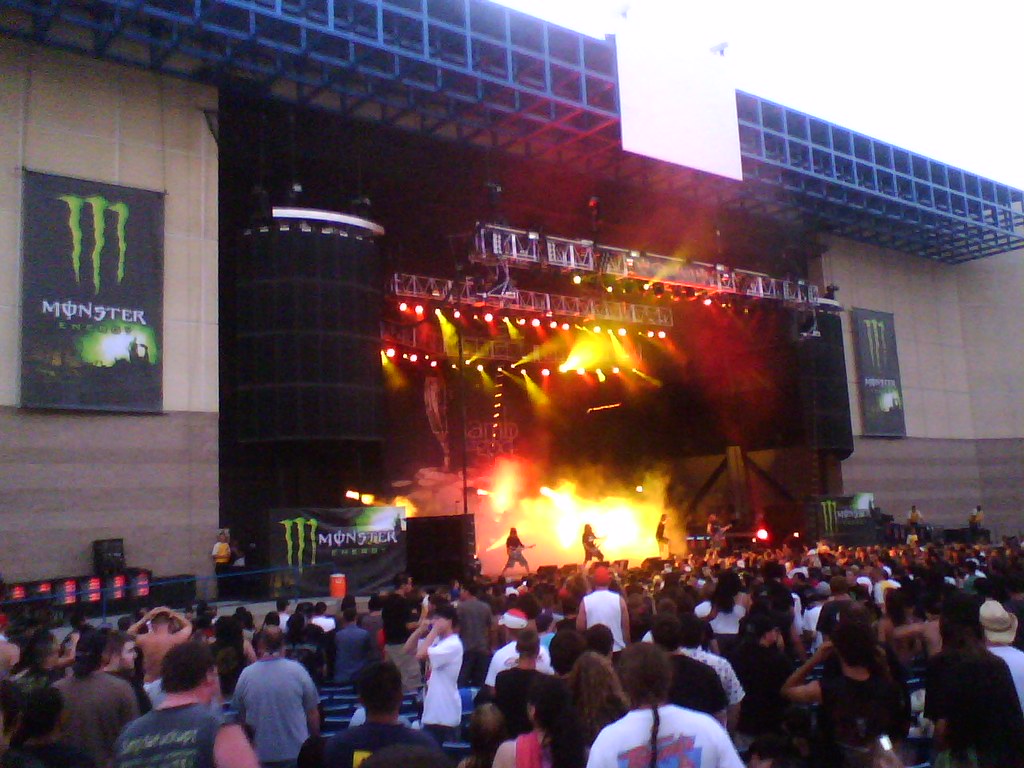
The mid-1990s brought forth another monumental chapter in Ozzy’s career, one that transcended his individual artistry and reshaped the landscape of heavy metal festivals: Ozzfest. It was a brilliant brainchild of his wife and manager, Sharon Osbourne, a woman whose keen business acumen and unwavering dedication to Ozzy were always evident. From its inception in 1996, Ozzfest quickly became an annual pilgrimage for metalheads, a vibrant platform that showcased both established and emerging talent until its last regular run in 2010.
Ozzfest wasn’t just a festival; it was a cultural phenomenon, a true celebration of all things heavy. It provided a much-needed space for the genre, growing into a dominant force in the touring circuit. It was also the stage for some truly unforgettable moments, including the formal reunion of the original Black Sabbath lineup – Ozzy, Tony Iommi, and Geezer Butler – in 1997. This reunion, which sparked the creation of the *Reunion* album and subsequent tours, brought the iconic band back together for a new generation of fans, all under the banner of Ozzfest.
The festival also highlighted Ozzy’s indomitable spirit. Even after facing a life-threatening quad bike accident in 2003, which we’ll delve into shortly, he made a remarkable recovery and returned to headline Ozzfest in 2004, once again with the reunited Black Sabbath. This act of resilience showcased not only his physical and mental fortitude but also the enduring power and appeal of Ozzfest as a cornerstone of the metal community. It became a powerful testament to the enduring impact of the Osbourne family on the music world.

9. **From Prince of Darkness to Reality TV Star: The Osbournes Era**
Just as fans thought they knew the many facets of Ozzy Osbourne, the early 2000s ushered in perhaps his most unexpected transformation: from the enigmatic “Prince of Darkness” to a beloved reality television star. In 2002, MTV launched *The Osbournes*, a groundbreaking show that brought cameras directly into the chaotic and deeply human home life of Ozzy, Sharon, and their children, Kelly and Jack. It was an unfiltered, often hilarious, and surprisingly intimate look behind the rock and roll curtain.
The show became an overnight sensation, captivating millions with its raw honesty, expletive-laden banter, and the sheer unpredictability of the Osbourne household. It humanized Ozzy in a way no biography or documentary ever could, revealing a loving, if somewhat bewildered, father and husband beneath the wild stage persona. Viewers connected with the family’s struggles, triumphs, and everyday eccentricities, making Ozzy relatable to an entirely new, mainstream audience who might not have known him from Black Sabbath or his solo work. *The Osbournes* aired until 2005, leaving an indelible mark on reality television and Ozzy’s public image.
But the family’s foray into television didn’t end there. Their engaging dynamic continued to be a draw, leading to other popular series. Ozzy later co-starred with his son Jack in *Ozzy & Jack’s World Detour* (2016–2018), where the duo explored various historical and cultural sites, blending education with their signature humor. They also appeared together in *The Osbournes Want to Believe* (2020–2021), a paranormal investigation show that further endeared them to viewers, proving that their unique charm and genuine connection translated across diverse genres.

10. **Battling the Odds: Major Health Crises and Unbreakable Spirit**
Life, even for a rock legend, can present unforeseen challenges, and Ozzy Osbourne has faced more than his share of significant health battles. One of the most harrowing occurred on December 8, 2003, when he was involved in a severe quad bike accident on his estate in Buckinghamshire, England. The incident was serious enough to necessitate emergency surgery, as he had sustained a broken collar bone, eight ribs, and a neck vertebra. It was a stark reminder of his mortality and the fragility of even the most robust performers.
The accident’s severity was underscored by a terrifying detail later shared by Sharon Osbourne: Ozzy had actually stopped breathing following the crash. It was his quick-thinking personal bodyguard, Sam Ruston, who performed resuscitation, bringing the rock icon back from the brink. The surgery itself was critical, aimed at lifting the collarbone, which was believed to be resting on a major artery and potentially cutting off blood flow to one of his arms. The world held its breath, anxiously awaiting news of his recovery.
Remarkably, while still in the hospital recovering from his extensive injuries, Ozzy achieved a unique milestone: his first-ever UK number one single. This wasn’t a hard-rock anthem but a heartfelt duet with his daughter, Kelly, on the Black Sabbath ballad “Changes.” The song resonated deeply with the public, not just for its emotional content but also for the poignant context of Ozzy’s health struggle. In securing this chart-topping hit, he broke a record, marking the longest period—33 years—between an artist’s first UK chart appearance with Black Sabbath’s “Paranoid” and their inaugural number one.
True to his resilient nature, Ozzy made a remarkable recovery from the quad bike accident. His determination to return to the stage was unwavering, and he proved it by headlining the 2004 Ozzfest with the reunited Black Sabbath. This comeback was a powerful testament to his unyielding spirit, demonstrating that even after facing such life-threatening injuries, his passion for music and performing remained undimmed, inspiring awe and admiration from fans worldwide.

11. **A Resurgent Creative Force: Later Albums and Collaborations**
Despite the “No More Tours” declaration and significant health challenges, Ozzy Osbourne’s creative output remained a vibrant and evolving force. His album *Ozzmosis*, released in 1995, marked his return to touring, playfully dubbed “The Retirement Sucks Tour.” The album climbed to number 4 on the US Billboard 200 and quickly achieved double platinum status. This period saw a dynamic lineup with the likes of Zakk Wylde, Geezer Butler, and Deen Castronovo, and later, the introduction of guitarists Joe Holmes, and the formidable rhythm section of Mike Bordin and Robert Trujillo.
Ozzy continued to deliver new material into the new millennium. *Down to Earth*, his first album of fresh studio material in six years, arrived in 2001, featuring the single “Dreamer,” which impressively peaked at number 10 on Billboard’s Mainstream Rock Tracks. His iconic status was further cemented in 2002 when he was invited to perform the Black Sabbath anthem “Paranoid” at the Golden Jubilee of Queen Elizabeth II, a truly regal acknowledgment of his enduring influence.
In 2007, Ozzy released *Black Rain*, an album that signaled a more introspective and serious tone than some of his earlier work. He openly spoke to Billboard magazine about its creation, stating, “I thought I’d never write again without any stimulation… But you know what? Instead of picking up the bottle I just got honest and said, ‘I don’t want life to go [to pieces].'” This candid reflection highlighted his ongoing battle with sobriety and his commitment to his craft, proving his ability to create powerful music from a place of genuine vulnerability.
The years that followed brought further musical endeavors and exciting collaborations. After seeking a new guitar player and finding Gus G., Ozzy released *Scream* in 2010. A decade later, he joined forces with Post Malone, featuring on the song “Take What You Want,” which surged to number 8 on the Billboard Hot 100, marking his first US Top 10 single in 30 years. This collaboration demonstrated his remarkable ability to connect with contemporary artists and audiences. This resurgence continued with his acclaimed solo albums *Ordinary Man* (2020) and *Patient Number 9* (2022), both of which featured the production talents of Andrew Watt and saw the welcome return of Zakk Wylde, affirming his status as a living legend still capable of producing potent new music.

12. **The Final Chapters: Farewell Tours, Legacy, and a Last Performance**
As the years advanced, Ozzy Osbourne’s touring activities began to shift, leading to what were truly the final chapters of his live performance career. In January 2016, Black Sabbath embarked on “The End” tour, a bittersweet farewell that brought their monumental journey to a close. The emotional final shows took place in their home city of Birmingham on February 2 and 4, 2017, a fitting conclusion for a band that had redefined heavy music.
Following this, Ozzy announced his own “No More Tours II” in 2018, reiterating his desire to stop extensive world tours but not entirely retire from performing. However, fate intervened with his severe spinal accident in early 2019 and the subsequent global pandemic, leading to the permanent cancellation of all remaining dates and, as he put it, his “involuntary retirement from touring.” It was a poignant end to a storied career on the road, leaving fans with cherished memories of his electrifying stage presence.
Ozzy Osbourne’s legacy, however, extends far beyond touring. He has been honored with induction into the Rock and Roll Hall of Fame twice—first with Black Sabbath in 2006, and later as a solo artist in 2024. He holds stars on both the Hollywood Walk of Fame and the Birmingham Walk of Stars. Accolades such as the MTV Europe Music Awards’ Global Icon Award and the Ivor Novello Award for Lifetime Achievement underscore his profound and lasting impact on music and culture.
The culmination of his incredible life in music arrived on July 5, 2025, with his final performance at the “Back to the Beginning” concert at Villa Park in Birmingham. Alongside the original Black Sabbath lineup, Ozzy, unable to stand due to Parkinson’s disease, performed seated on a black throne. This powerful and symbolic final show, watched by over 40,000 spectators and millions online, raised proceeds for The Cure Parkinson’s Trust, Birmingham Children’s Hospital, and Acorn Children’s Hospice, a testament to his giving spirit and a moving capstone to his extraordinary journey.
From a working-class boy in Aston, Birmingham, to the undisputed “Prince of Darkness,” Ozzy Osbourne’s life has been a relentless, often tumultuous, but always compelling saga. He battled personal demons, survived devastating losses, and defied expectations at every turn, leaving an indelible mark on music history. His final years, marked by both physical challenges and an unwavering commitment to his art and fans, revealed a true survivor whose spirit, even when seated on a throne, roared as loud as ever. He wasn’t just a rock star; he was a cultural phenomenon, a resilient icon whose story, full of human triumphs and struggles, continues to resonate deeply within the hearts of millions.