The 1940s, a decade indelibly marked by the transformative force of World War II and its subsequent economic recovery, stands as a pivotal chapter in automotive history. This period witnessed manufacturers grappling with the immense task of transitioning from wartime machinery production back to civilian passenger vehicles, a shift that inevitably led to both groundbreaking innovations and significant missteps. While some models from this era ascended to iconic status, becoming enduring symbols of American prosperity and ingenuity, a substantial number found themselves relegated to the annals of obscurity.
Many of these lesser-known automobiles, despite their initial promise or unique features, were ultimately overshadowed by more successful rivals, hampered by uninspiring designs, underwhelming performance, or simply poor timing in a rapidly evolving market. The automotive landscape of the post-war years was a crucible of competition, where only the most compelling and well-executed vehicles could truly capture the public’s imagination and secure a place in collective memory. Our journey through these forgotten machines offers invaluable insights into the decade’s challenges and the sometimes-harsh realities of automotive development.
These “duds of the decade” serve as potent reminders that not every car, even those from reputable manufacturers, is destined for automotive immortality. They represent the collective narrative of design choices that didn’t resonate, engineering solutions that fell short, and marketing strategies that failed to connect with consumers eager for the next generation of transportation. In this comprehensive analysis, we delve into the specific attributes that consigned these vehicles to forgettable status, providing a critical evaluation that underscores their historical significance, not for what they achieved, but for what they failed to become.
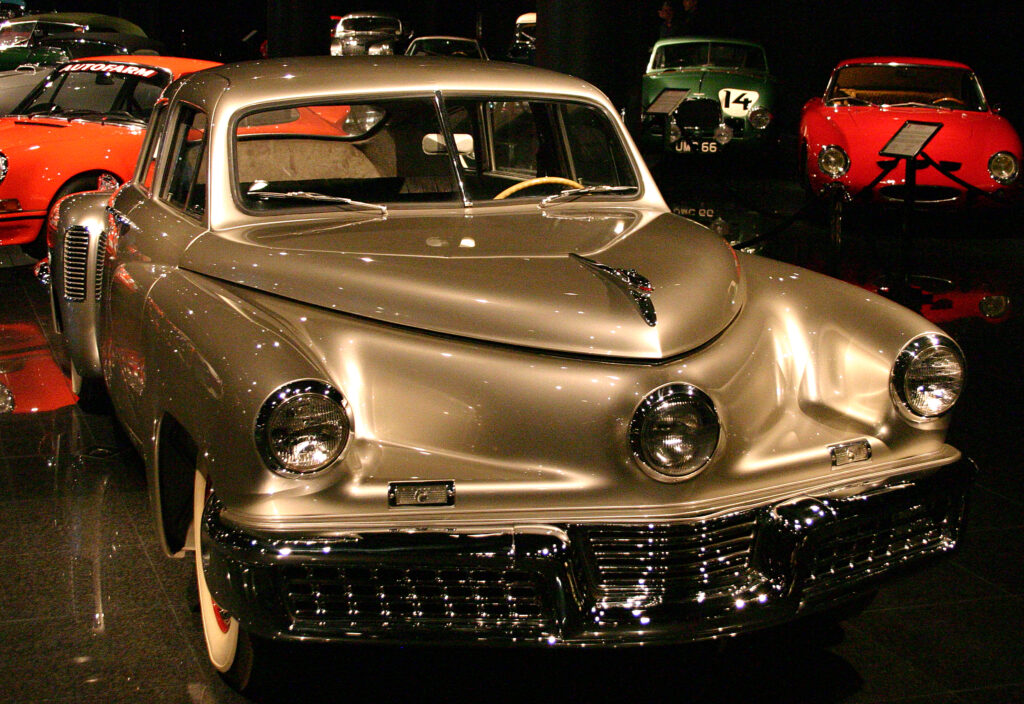
1. **Tucker 48 (1947-1948)**The Tucker 48, often referred to as the “Tucker Torpedo,” entered the post-war automotive scene with a flourish of innovation and an ambitious vision that captivated the public. Designed by Preston Tucker, this vehicle truly pushed the boundaries of conventional automotive engineering with its radical features. It boasted a rear-mounted engine, a design choice uncommon for American cars of the era, and perhaps most notably, a distinctive third directional headlight, centrally located, designed to illuminate the road around corners.
Despite these pioneering advancements and the considerable hype surrounding its launch, the Tucker 48’s production run was tragically short-lived, lasting only from 1947 to 1948. The company found itself relentlessly “fraught with financial issues and legal controversies,” which ultimately proved to be its undoing. These significant hurdles prevented the enterprise from realizing its full potential, transforming what could have been a revolutionary automotive statement into a cautionary tale of entrepreneurial ambition clashing with economic and regulatory pressures.
The financial instability, compounded by “allegations of stock fraud, and negative press,” created an insurmountable barrier to sustained production. As a direct consequence, the Tucker Corporation was able to manufacture “no more than 51 units” before its eventual collapse. This limited production number not only makes the Tucker 48 an extreme rarity today but also symbolizes a grand vision that was tragically curtailed, its innovative spirit stifled by external pressures and a hostile business environment, preventing it from ever truly breaking into the mainstream market.
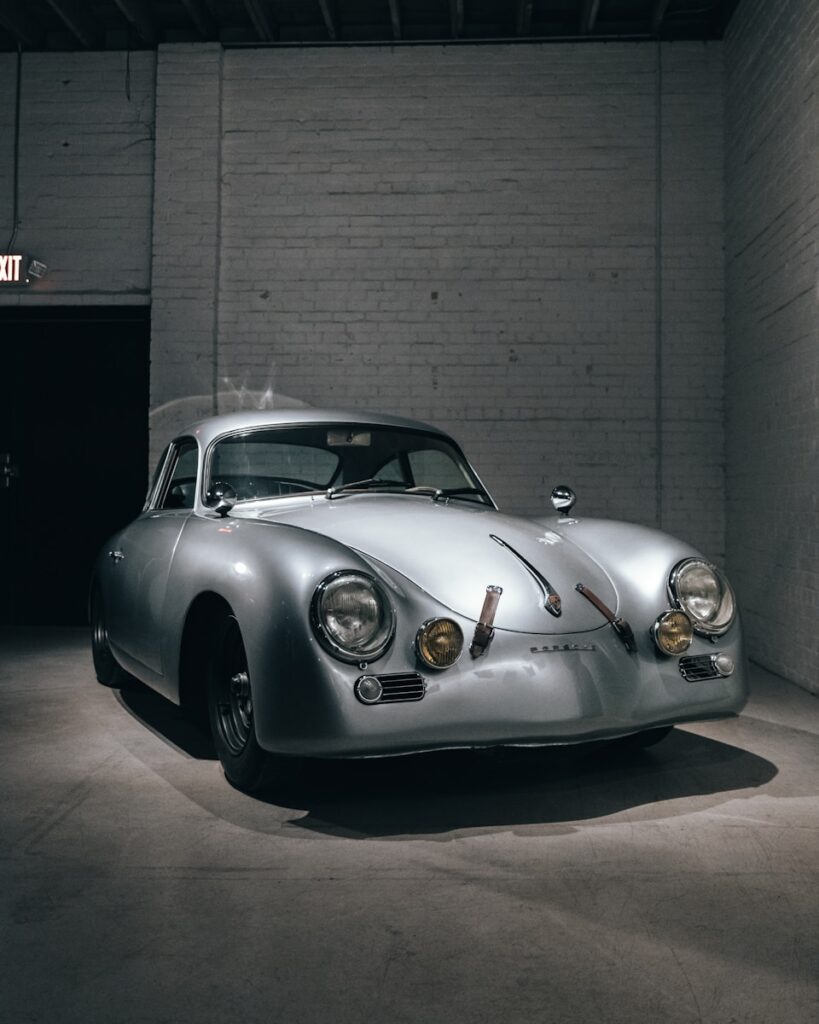
2. **Davis Divan (1947-1949)**Emerging from the innovative, albeit eccentric, spirit of post-war American automotive design, the Davis Divan presented a truly unique proposition with its distinctive three-wheeled configuration. Produced by the Davis Motorcar Company between 1947 and 1949, this vehicle sought to offer a fresh perspective on personal transportation, departing significantly from the conventional four-wheeled designs that dominated the market. Its radical approach, however, brought with it a host of challenges that ultimately sealed its fate.
The inherent instability and awkwardness stemming from its “three-wheel design” proved to be a critical flaw, making the Divan a difficult sell to a public accustomed to the stability and familiarity of traditional automobiles. Beyond these fundamental design issues, the company itself was plagued by “financial problems” and “legal issues,” which severely hampered its ability to bring the Divan to a wider audience. These compounding factors created an environment where sustained production became untenable, despite the car’s novelty.
As a result of these multifaceted problems, the Davis Divan’s production figures remained astonishingly low, with “only 13” units ever seeing the light of day. This extremely limited run ensures its place as one of the most obscure, if not outright forgettable, vehicles of the late 1940s. Its story serves as a stark reminder that while innovation is often lauded, practical execution, market acceptance, and sound business practices are equally crucial for a vehicle to transcend novelty and achieve commercial viability.

3. **Renault 4CV (1947-1961)**The Renault 4CV, launched in 1947, represented France’s post-war effort to mobilize its populace with an economical and accessible vehicle. While it achieved considerable sales success within its home country, particularly in the immediate post-war years, it faced significant challenges that marked it as largely forgettable on the global automotive stage. Its very nature as a compact, utilitarian car designed for austerity created a specific set of characteristics that limited its appeal beyond its intended market.
One of the primary criticisms leveled against the 4CV revolved around its “modest performance and lack of comfort.” In an era where other markets, particularly the burgeoning American one, were gravitating towards larger, more powerful, and increasingly comfortable vehicles, the 4CV’s priorities of economy and simplicity were simply out of sync. Furthermore, “reliability issues” frequently surfaced, undermining consumer confidence and cementing its image as a somewhat temperamental machine.
Despite these shortcomings, the Renault 4CV did manage to “sell well in France” for an extended period, largely “due to its low cost and the lack of competition in the early post-war years.” This domestic success, however, did not translate into widespread international recognition or an enduring legacy as a significant automotive innovation outside of its specific economic context. Its design and engineering, while adequate for immediate post-war needs, lacked the distinctive flair or revolutionary spirit that might have elevated it beyond a mere stopgap solution in the global automotive narrative.

4. **Willys-Overland Jeepster (1948-1950)**Willys-Overland had cemented its legendary status through the indelible impact of its military and utility Jeeps during World War II, vehicles that symbolized ruggedness and go-anywhere capability. Following the war, the company sought to leverage this powerful brand equity by introducing a civilian-oriented model, the Jeepster, launched in 1948. This new direction aimed to tap into a market for leisure-oriented vehicles, yet the Jeepster’s execution proved to be a critical misstep that failed to capitalize on the brand’s core strengths.
The fundamental flaw that plagued the Jeepster was its “lack of four-wheel drive,” an omission that was widely “seen as a significant oversight” given the established “brand’s reputation” for off-road prowess. Consumers associated the Willys name with unparalleled utility and all-terrain performance, and a two-wheel-drive leisure vehicle felt like a contradiction. This disconnect between brand expectation and product reality directly contributed to its “disappointing sales” and ultimately its short production run, ending in 1950.
Another contributing factor to its forgettable status was its somewhat muddled identity; it “aimed to combine utility with a more stylish, open-top look,” but struggled to find a niche. The design, “although distinctive, didn’t resonate strongly” with buyers who either wanted the true ruggedness of a Jeep or the refined aesthetics of a conventional passenger car. The Jeepster, therefore, stands as an example of a brand attempting to expand without fully understanding its existing market perception, resulting in a product that failed to satisfy either segment effectively.
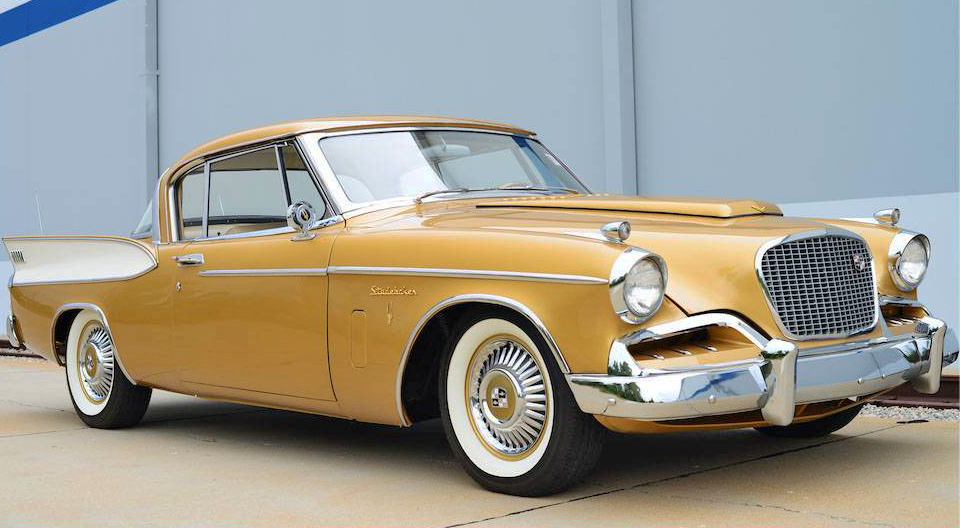
5. **Studebaker Land Cruiser (1933-1954)**The Studebaker Land Cruiser, a model with a remarkably long production span from 1933 to 1954, was positioned as a larger, more upscale offering within the Studebaker lineup. Despite its aspiration to provide a premium experience, the Land Cruiser frequently struggled to carve out a distinct and memorable identity, particularly in the competitive post-war environment. Its extended presence in the market did not necessarily translate into enduring fame or significant impact, often fading into the background of Studebaker’s more iconic vehicles.
A key factor contributing to its limited appeal was its “awkward styling.” While Studebaker was known for pushing design boundaries, the Land Cruiser’s aesthetics, especially when compared to other models in its own range, did not consistently resonate with consumers. This unconventional appearance, combined with a “higher price tag compared to other Studebaker models,” created a value proposition that many buyers found unconvincing. The combination of polarizing design and elevated cost directly led to “relatively poor sales.”
Furthermore, as “Studebaker’s flagship model,” the Land Cruiser “epitomized the company’s commitment to cutting-edge design and exceptional craftsmanship.” However, its design, “while solid, didn’t quite achieve the level of sophistication necessary to compete with luxury counterparts.” It struggled to stand against “other more iconic and prestigious models” from rival manufacturers. In the broader tapestry of automotive history, the Studebaker Land Cruiser is “often finds itself overshadowed by more memorable rivals,” highlighting its struggle to establish a lasting legacy despite its ambitious positioning.
Car Model Information: 2020 RAM 1500 Laramie
Caption: 1953 Studebaker Land Cruiser
Name: Studebaker Land Cruiser
Manufacturer: Studebaker
Production: 1933–1954
Assembly: Studebaker Corporation#Studebaker Factories,South Bend, Indiana,United States,Studebaker Corporation#Studebaker Factories,Vernon, California,United States
Categories: All articles needing additional references, All articles that may contain original research, All articles with specifically marked weasel-worded phrases, Articles needing additional references from September 2011, Articles that may contain original research from January 2021
Summary: The Studebaker Land Cruiser is an automobile that was produced by the Studebaker Corporation of South Bend, Indiana (United States) from 1934–1954. The Land Cruiser debuted at the World’s Fair alongside the Silver Arrow, a product of Studebaker’s former premium make Pierce-Arrow. It was also manufactured in Vernon, California.
Get more information about: Studebaker Land Cruiser
Buying a high-performing used car >>>
Brand: Studebaker Model: Land Cruiser
Price: $36,995 Mileage: 64,342 mi.

6. **Packard Clipper (Various Short Runs in the 40s and 50s)**Packard, a name synonymous with luxury and prestige in the pre-war era, attempted to adapt to the changing automotive landscape of the 1940s with the introduction of the Clipper. While initially intended to offer a more modern and streamlined design, the Clipper’s journey was fraught with challenges that ultimately diminished its impact and contributed to its status as a less memorable Packard. Its various short production runs across the 1940s and 1950s underscore a brand struggling to redefine itself in a new market paradigm.
A significant hurdle for the Packard Clipper was the “criticism for its build quality and design.” Some consumers felt that the car “was less luxurious and stylish than previous Packard models,” signaling a departure from the brand’s established high standards. This perception of diminished luxury and less distinctive styling directly contributed to “disappointing sales,” as the Clipper struggled to live up to the lofty expectations associated with the Packard name, failing to captivate its traditional clientele.
Adding to its woes, the “Packard’s initial release faced bad timing as the U.S. entered World War II,” significantly disrupting production and market introduction. Even after the war, the Clipper’s “design, while modern, struggled to resonate with the evolving tastes of consumers.” It lacked the “flair that could set it apart from competitors,” ultimately leading to it being “overshadowed by flashier alternatives.” The Packard Clipper’s story is a poignant example of a luxury marque attempting to pivot in a post-war world, only to find its once-unrivaled identity diluted and its products struggling to find their footing.
Car Model Information: 1957 Packard Clipper
Name: Packard Clipper,Clipper (1956 only)
Caption: 1955 Packard Clipper Custom 4-door Sedan
Assembly: United States,Australia
Production: 1941–19421946–1947,1953–1955,1956 ,1957
Predecessor: Packard 200
Related: Packard Executive,Packard Panther
Categories: 1950s cars, All articles needing additional references, All articles that are excessively detailed, All articles that may contain original research, All articles with style issues
Summary: The Packard Clipper is an automobile series built by the Packard Motor Car Company (and by the later Studebaker-Packard Corporation) for model years 1941–1942, 1946–1947, and 1953–1957. It was named for a type of sailing ship, called a clipper.
The Clipper was introduced in April 1941, as a mid-model year entry. It was available only as a four-door sedan. The extreme top-rung high hat models had had their day, with engineering improvements, less expensive, more rationally sized fare predominating. Since the action was in the increasingly sophisticated, upper-medium price field, the debut Clipper line was aimed at Buick Roadmaster, Cadillac’s cutthroat-priced Model 62, Chrysler Saratoga/New Yorker, and Lincoln (through 1940 known as Zephyr). The Clipper name was re-introduced in 1953, for the automaker’s lowest-priced lineup, leading some to think it was a cheap car initially, instead of a full-range offering. By 1955, the Clipper models were seen as diluting Packard’s marketing as a luxury automobile marque.
The Clipper was classified as a stand-alone marque for the 1956 model year when it was produced by the Studebaker-Packard Corporation. Following the closure of Packard’s Detroit, Michigan factory in 1956, the Clipper marque was discontinued, although the Clipper name was applied to 1957 Packards that were built at Studebaker’s South Bend, Indiana, factory.
Get more information about: Packard Clipper
Buying a high-performing used car >>>
Brand: Packard Model: Clipper
Price: $37,000 Mileage: 8,714 mi.
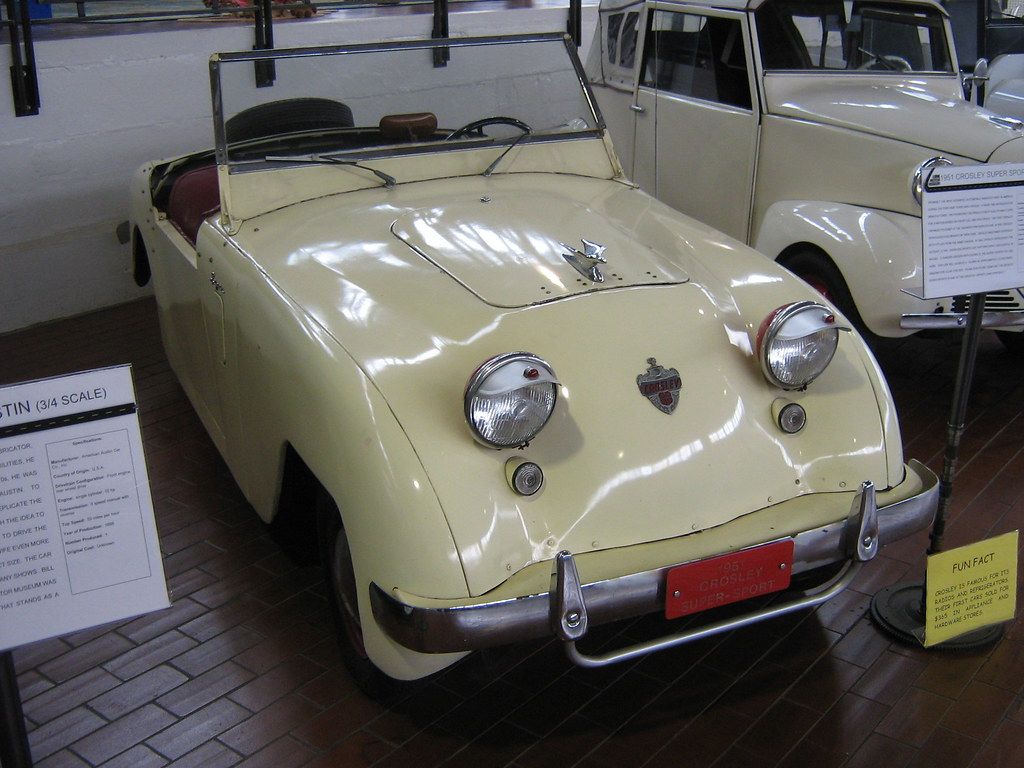
7. **Crosley CC Four (1946-1948)**The Crosley CC Four, and its broader CC Series, represents a distinctive, albeit largely forgotten, chapter in post-war American automotive history. Emerging in 1946, it was an earnest “attempt to market a compact and economical car in post-war America,” aiming to capitalize on a potential niche for smaller, more fuel-efficient vehicles. However, the American consumer’s preferences quickly diverged from this vision, leading to a brief and ultimately unsuccessful tenure for the Crosley CC Four.
One of the primary hindrances for the Crosley CC Four was its “petite size, even by the standards of the time.” The “compact design, while charming,” was perceived as a significant drawback, as it “left little room for comfort, and its snug interior didn’t appeal to the average car buyer.” Furthermore, despite its “innovative overhead cam engine and lightweight design,” the car was plagued by “reliability issues and poor performance,” which severely undermined its practicality and appeal. These shortcomings made it a less-than-ideal choice for daily use.
Crucially, the “public’s lack of interest in small cars during a time when larger, more powerful vehicles were in demand led to disappointing sales.” The context further notes that Crosley cars were “more akin to a toy than a roadworthy machine,” and “Americans favored brawnier models, relegating the CC to obscurity.” Its “odd shape and flimsy build ensured it rarely sparks collectors’ interest.” This fundamental mismatch between the product offering and evolving consumer tastes solidified the Crosley CC Four’s place as one of the most forgettable cars of its era, a microcar in a land increasingly enamored with the mighty.
Our exploration of the 1940s automotive landscape continues, now turning its gaze to an additional seven vehicles that, despite their unique place in history, largely failed to capture the public’s enduring imagination. This deeper dive reveals how a confluence of engineering missteps, unfortunate market timing, and shifting consumer preferences ultimately relegated these machines to the periphery, underscoring the relentless competition and rapid evolution that defined the post-war era. Each model offers a distinct narrative of aspiration meeting reality, highlighting why some cars are simply destined to be forgotten.
Car Model Information: 2023 Dodge Charger GT
Name: Crosley Motors Incorporated
Logo: 1949 Crosley Station Wagon – Automobile Driving Museum – El Segundo, CA – DSC01984.jpg
FormerName: Crosley Corporation
Industry: Automotive
Foundation: [object Object]
Founder: Powel Crosley Jr.
Defunct: [object Object]
Fate: Marion, Indiana
HqLocationCity: Cincinnati, Ohio
HqLocationCountry: United States
KeyPeople: Lewis M. Crosley
Products: car
Categories: All articles needing additional references, All articles with dead external links, All articles with unsourced statements, Articles needing additional references from February 2018, Articles with dead external links from December 2023
Summary: Crosley Motors Incorporated was a small, independent American manufacturer of economy cars or subcompact cars, bordering on microcars. At first called the Crosley Corporation and later Crosley Motors Incorporated, the Cincinnati, Ohio, firm was active from 1939 to 1952, interrupted by World War II production. Their station wagons were the most popular model, but also offered were sedans, pickups, convertibles, a sports car, and even a tiny jeep-like vehicle. For export, the cars were badged Crosmobile.
Crosley introduced several “firsts” in American automotive history, including the first affordable, mass-market car with an overhead camshaft engine in 1946; the first use of the term ‘Sport(s-) Utility’ in 1947, for a 1948 model year convertible wagon; and the first American cars to be fitted with 4-wheel caliper type disc brakes, as well as America’s first post-war sports car, the Hotshot, in the 1949 model year.
All of Crosley’s models were lightweight (1,100 to 1,400 pounds (500 to 640 kilograms)) body-on-frame cars with rigid axles front and rear, and engines with less than 1 litre (61 cubic inches) displacement. With exception of the late introduced Hotshot and Farm-O-Road models, the vast majority of all Crosleys were built on an 80-inch (2,000-millimeter) wheelbase, and with leaf-springs.
Get more information about: Crosley
Buying a high-performing used car >>>
Brand: Crosley Model: CC Four
Price: $26,990 Mileage: 19,257 mi.
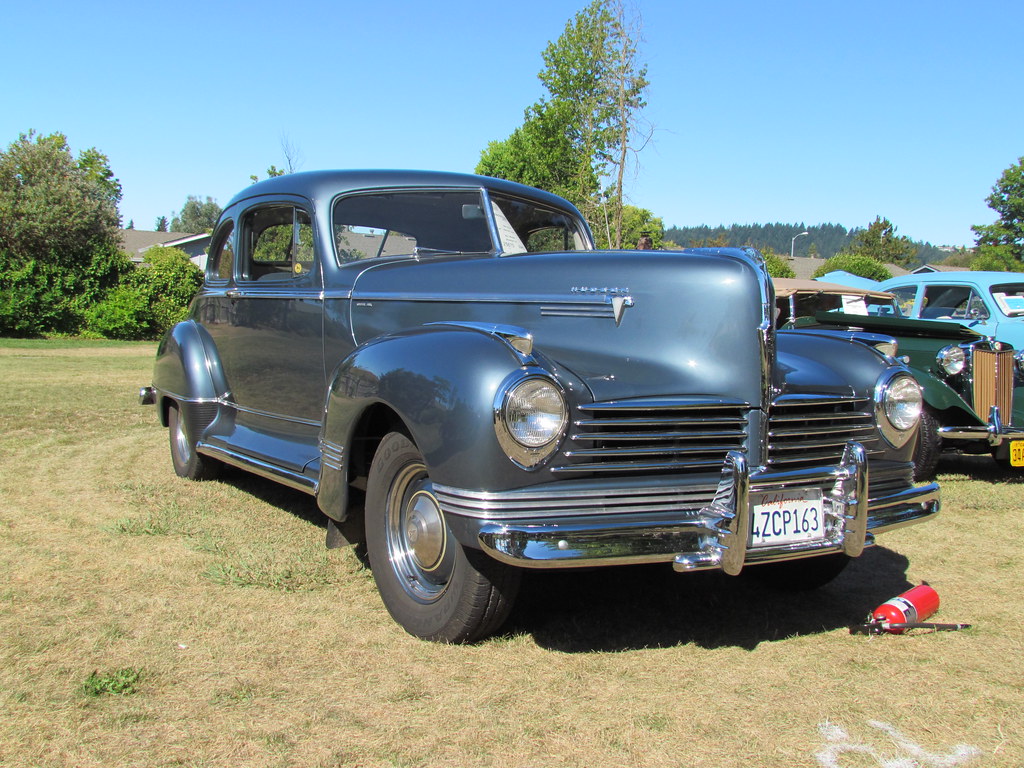
8. **Hudson Commodore (1941-1952)**Initially, the Hudson Commodore carved out a notable niche in the early 1940s, primarily due to its innovative “step-down” design and a remarkably smooth ride. This distinctive architecture, where passengers stepped down into the car rather than up, lowered the center of gravity, contributing to improved handling and a sleek profile. Such advancements demonstrated Hudson’s commitment to engineering prowess and passenger comfort, setting it apart from many contemporaries.
However, the automotive world was undergoing a dramatic transformation in the post-war years, with consumer tastes evolving rapidly. By the late 1940s, the Commodore’s once-heralded styling began to appear dated, struggling to compete with the more modern, forward-thinking designs emerging from other manufacturers. This stylistic stagnation proved to be a critical disadvantage in a market eager for fresh aesthetics and technological advancements.
Ultimately, the Hudson Commodore’s sales dwindled as consumers consistently favored newer models that offered updated aesthetics and cutting-edge technology. Despite being part of the reputable Hudson brand, the Commodore struggled to assert itself in a market demanding distinctive design. Its stately but increasingly conventional appearance failed to stand out prominently, and compounded by post-World War II economic challenges, it faded into the background amidst more memorable cars of its time, unable to become a standout player.

9. **Frazer Manhattan (1947-1951)**Unveiled shortly after World War II, the Frazer Manhattan represented a bold, new design initiative from an American manufacturer, emerging as one of the first truly fresh automotive designs of the post-war period. Positioned as a luxury model, the Manhattan aimed for elegance and sophistication, becoming a symbol of postwar optimism. Its sleek, aerodynamic design, characterized by a low-slung profile and a distinctive grille with horizontal bars, set it apart from its contemporaries.
The interior of the Manhattan was equally impressive, designed to exude opulence with plush seating, rich wood trim, and an abundance of chrome accents. These features highlighted a commitment to a premium experience, showcasing a thoughtful approach to both exterior aesthetics and interior refinement. This initial appeal garnered significant popularity, marking the Manhattan as a promising contender in the luxury segment.
Despite its striking presentation and early success, the Frazer Manhattan quickly became forgettable. Its conservative styling, when juxtaposed with the rapid evolution of automotive design throughout the late 1940s and early 1950s, swiftly lost its edge. Furthermore, a high price point exacerbated its struggles, as it found it challenging to compete effectively with established luxury brands that boasted a more entrenched reputation and loyal customer base, ultimately limiting its long-term impact and visibility.

10. **Nash Ambassador (1946-1948)**The Nash Ambassador, a vehicle that spanned the 1940s and beyond, was notable for its forward-thinking engineering, particularly its early adoption of unit body construction. This revolutionary concept integrated the body and frame into a single, cohesive structure, offering enhanced stability and rigidity. This design choice was a significant precedent for future automotive engineering and underscored Nash’s innovative spirit, along with advanced heating and ventilation systems.
As a flagship for the Nash brand, the Ambassador boasted these advanced features and innovative design, aiming to differentiate itself in a crowded marketplace. However, despite these technological advancements, including the highly aerodynamic “Airflyte” design, the Ambassador’s somewhat unconventional styling did not consistently resonate with mainstream consumer tastes. Its unique aesthetics, while distinctive, sometimes proved to be a polarizing element for buyers.
The Nash Ambassador ultimately struggled to achieve widespread popularity, often overshadowed by more popular models from larger, more established brands. Its sales remained mediocre, relegating it to an overlooked status in automotive history. Faced with fierce competition and consumer preferences that leaned towards more conventional designs, the Ambassador, despite its foundational innovations, found it challenging to carve out a dominant and memorable market presence.
Car Model Information: 1951 Nash Ambassador
Name: Nash Ambassador
Caption: 1957 Nash Ambassador
Production: 1927–1957
Manufacturer: Nash Motors
Successor: AMC Ambassador
Assembly: United States,Australia
Categories: 1930s cars, 1940s cars, 1950s cars, AMC vehicles, Articles with short description
Summary: The Nash Ambassador is a large luxury automobile produced by Nash Motors from 1927 until 1957. It was a top trim level for the first five years, then from 1932 on a standalone model. Ambassadors were lavishly equipped and beautifully constructed, earning them the nickname “the Kenosha Duesenberg”.
Between 1929 and 1934, Nash produced a line of seven-passenger saloons and limousines; the Ambassador series was the automaker’s “flagship” car. This distinction remained following the Nash-Hudson merger in 1954 that formed the American Motors Corporation (AMC).
The ongoing use of the Ambassador model name by Nash, and then its successor AMC through the 1974 model year, made it “one of the longest-lived automobile nameplates in automotive history” as of the late 1970s.
Get more information about: Nash Ambassador
Buying a high-performing used car >>>
Brand: Nash Model: Ambassador
Price: $17,500 Mileage: 24,838 mi.
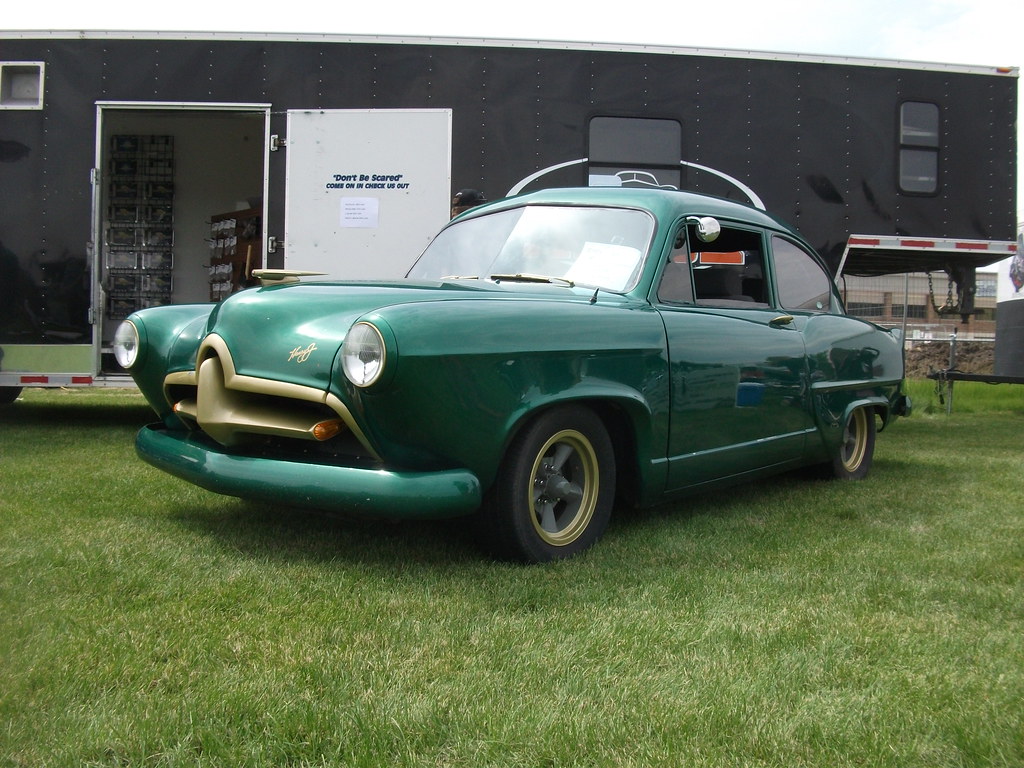
11. **Kaiser Special (1947-1950)**The Kaiser Special emerged onto the post-war American automotive scene in 1947, distinguished by its unique styling and its status as one of the first new car brands to launch after the conflict. The vehicle aimed to carve out a niche in a rapidly regenerating market, attempting to capture attention with features such as a spacious interior and, notably, innovative rear-hinged suicide doors. These elements were designed to offer both practicality and a touch of luxury, setting it apart from more traditional offerings.
However, despite these ambitious design choices, the Kaiser Special struggled significantly with quality issues and high production costs. These internal challenges were compounded by fierce competition from more established automotive heavyweights, creating an uphill battle for the fledgling brand. The combination of manufacturing difficulties and intense market pressure ultimately led to its decline and subsequent obscurity, hindering its ability to gain widespread acceptance.
The conservative design, while attempting a touch of luxury, ultimately lacked the flair necessary to truly turn heads and capture consumer excitement. Despite its attempts at offering a unique driving experience and its initial market entry as a symbol of post-war ambition, the Kaiser Special failed to accelerate past the competition. As a result, it is widely considered one of the less memorable chapters in automotive history, exemplifying the difficulties faced by new entrants in a highly competitive era.
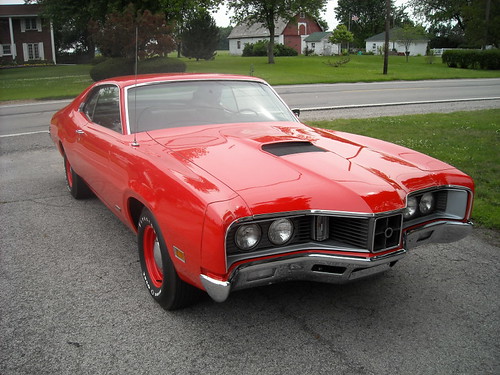
12. **Lincoln Continental (1940-1948)**Initially introduced as a personal luxury vehicle, the Lincoln Continental, from its inception in 1940 through its production run until 1948, was celebrated for its distinguished design and elegant proportions. It quickly garnered acclaim and was well-received by a discerning clientele, symbolizing a blend of sophisticated American luxury and European-inspired aesthetics. This early success positioned it as a pinnacle of automotive style and comfort.
However, the post-war period brought with it a dramatic shift in consumer expectations and automotive innovation. While the Continental’s design remained classic, it struggled to maintain its premier status as post-war America increasingly gravitated towards newer, more technologically innovative models. The market’s appetite for fresh designs and advancements meant that even a distinguished classic could be overshadowed.
Ultimately, this shift in preferences relegated the Lincoln Continental to a more niche market, preventing it from achieving the widespread recognition or dominant sales figures that some of its contemporaries would enjoy. Despite its foundational influence on luxury car design, its inability to continuously evolve with the rapidly changing post-war landscape meant that, in the broader context of the decade’s automotive narrative, it became less central to the evolving mainstream, finding its dedicated admirers but not broad public remembrance.
Car Model Information: 2018 Lincoln Continental Black Label
Name: Lincoln Continental
Caption: 2019 Lincoln Continental
Manufacturer: Lincoln Motor Company
Production: 1939–1942,1946–1948,1956–2002,2016–2020
ModelYears: 1940–1942,1946–1948,1958–1980,1982–2002,2017–2020
Class: Full-size car,luxury car
Layout: Longitudinal engine,Front-engine, rear-wheel-drive layout
Categories: 1930s cars, 1940s cars, 1950s cars, 1960s cars, 1970s cars
Summary: The Lincoln Continental is a series of mid-sized and full-sized luxury cars produced between 1939 and 2020 by Lincoln, a division of the American automaker Ford. The model line was introduced following the construction of a personal vehicle for Edsel Ford, who commissioned a coachbuilt 1939 Lincoln-Zephyr convertible, developed as a vacation vehicle to attract potential Lincoln buyers. In what would give the model line its name, the exterior was designed with European “continental” styling elements, including a rear-mounted spare tire.
In production for over 55 years across nine different decades, Lincoln has produced ten generations of the Continental. Within the Lincoln model line, the Continental has served several roles ranging from its flagship to its base-trim sedan. From 1961 to 1976, Lincoln sold the Continental as its exclusive model line. The model line has also gone on hiatus three times. From 1949 to 1955, the nameplate was briefly retired. In 1981, the Continental was renamed the Lincoln Town Car to accommodate the 1982 seventh-generation Continental. After 2002, the Continental was retired, largely replaced by the Lincoln MKS in 2009; in 2017, the tenth-generation Continental replaced the MKS.
As part of its entry into full-scale production, the first-generation Continental was the progenitor of an entirely new automotive segment, the personal luxury car. Following World War II, the segment evolved into coupes and convertibles larger than sports cars and grand touring cars with an emphasis on features, styling, and comfort over performance and handling. From 1956 to 1957, the Continental nameplate was the namesake of the short-lived Continental Division, marketing the 1956–1957 Continental Mark II as the worldwide flagship of Ford Motor Company; as a second successor, Ford introduced the Continental Mark series in 1969, produced over six generations to 1998.
Along with the creation of the personal luxury car segment, the Lincoln Continental marked the zenith of several designs in American automotive history. The Continental is the final American vehicle line with a factory-produced V12 engine (1948), the final four-door convertible (1967), and the final model line to undergo downsizing (for the 1980 model year).
American production of the Continental and MKZ, its only two sedans, ended in 2020 thereby making Lincoln a crossover/SUV-only brand in the US.
Get more information about: Lincoln Continental
Buying a high-performing used car >>>
Brand: Lincoln Model: Continental
Price: $33,888 Mileage: 45,001 mi.
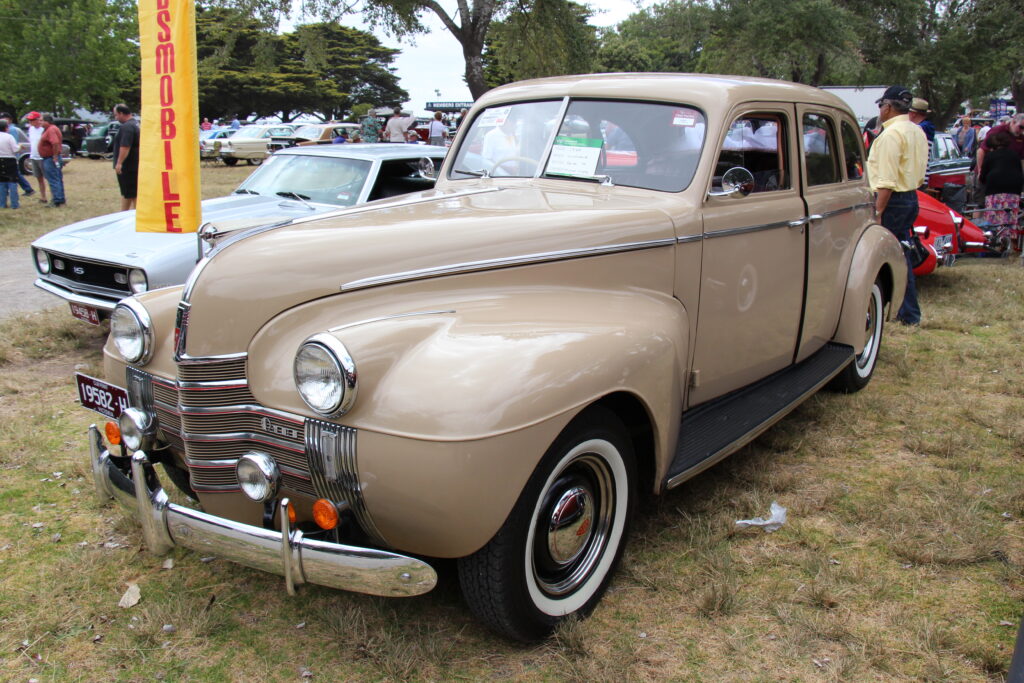
13. **Oldsmobile Series 60 (1946-1948)**Resuming production shortly after World War II, the Oldsmobile Series 60 was presented as a solid, dependable car, offering reliable transportation in a time of recovery. However, the automaker chose not to significantly update the model despite a four-year halt in production due to the war. This decision proved to be a significant misstep in a market that was rapidly clamoring for innovation and modern design.
Consequently, the Series 60 lacked distinctive features or innovations that could make it stand out in a fiercely crowded market. Its conventional design and average performance, while perfectly adequate for basic transportation, did little to excite or inspire consumers looking for something new. In an era of burgeoning creativity and technological leaps, the Series 60 offered little beyond the familiar.
Despite providing a comfortable ride and solid performance, the Oldsmobile Series 60 struggled to capture the spotlight, eventually becoming one of the more forgettable models of the decade. The post-war economic landscape added further hurdles, impacting its sales. In the rich tapestry of automotive history, the 60 Series, while reliable in its core function, ultimately fades into the background, overshadowed by vehicles that dared to push boundaries.
Car Model Information: 2023 Dodge Charger GT
Name: Oldsmobile Series 60
Manufacturer: Oldsmobile
Platform: GM A platform (RWD)
Layout: FR layout
Class: Full-size car
Production: 1938–1948
Predecessor: Oldsmobile F-Series
Successor: Oldsmobile Omega
Caption: 1941 Oldsmobile Special 66 Club Coupe
Categories: 1930s cars, 1940s cars, Articles with short description, Cars introduced in 1939, Commons category link from Wikidata
Summary: The Series 60 “Special” is a full-size car made by Oldsmobile from the 1939 through the 1948 model years. It was their entry-level model using the GM “A” body platform, giving Oldsmobile an entry-level product with more standard features that would be optional on Chevrolet and Pontiac vehicles using the same platform. Initially, the engine size used was the company’s flat head 6 cylinder, while senior models would use the flat head 8 cylinder. For marketing purposes, the Oldsmobile Series 60, or the Oldsmobile 66, took advantage of the national highway U.S. Route 66 established in 1926. It was with this generation that all GM vehicles experienced increased width dimensions to accommodate three passengers on the front bench seat and an additional three passengers on rear bench seat installed vehicles. This was accomplished with the deletion of running board thereby adding additional room inside the passenger compartment and upgrading the floor mounted gearshift to a steering column installed transmission gear selector for the Hydramatic automatic transmission.
Get more information about: Oldsmobile Series 60
Buying a high-performing used car >>>
Brand: Oldsmobile Model: Series 60
Price: $26,990 Mileage: 19,257 mi.

14. **Plymouth P15 (1946-1948)**The Plymouth P15, produced in the immediate post-war years from 1946 to 1948, was positioned as a dependable and affordable car, aiming to cater to an economy-minded public eager for reliable personal transportation. As a product of the well-established Plymouth brand, it certainly offered practicality and a degree of trustworthiness that appealed to many consumers rebuilding their lives after the war.
However, the P15 did little to excite the burgeoning market. Its design was widely perceived as outdated, especially when contrasted with the more innovative and stylish models that competitors were rapidly releasing. In an era marked by a strong desire for newness and aspirational designs, the P15’s conservative aesthetics failed to make a compelling case for itself, despite its fundamental soundness.
Economic challenges in the aftermath of World War II further impacted the P15’s sales figures, as it faced stiff competition not only from rival automakers but also from other, more appealing models within the Plymouth lineup. While reliable and practical, the P15 struggled to create a distinct impact or lasting impression, eventually being replaced by newer models in the early 1950s, solidifying its status as a largely overlooked player in the automotive history of its time.
As we conclude our journey through the “duds of the decade,” it becomes abundantly clear that even in times of great change and innovation, not every vehicle is destined for automotive immortality. These cars, while often forgotten, offer a compelling counter-narrative to the celebrated icons. They serve as poignant reminders that the road to automotive greatness is paved with ambition, ingenuity, and sometimes, the harsh realities of market forces and evolving tastes. From pioneering but flawed visions to perfectly competent yet uninspired designs, each of these vehicles contributes a unique thread to the rich, complex tapestry of the 1940s—a decade where the future of motoring was forged, one success and one forgotten model at a time.