Mick Fleetwood, a name synonymous with drumming excellence and the enduring legacy of Fleetwood Mac, has etched his place firmly in the annals of music history. As one-half of the legendary duo that founded the band, and a consistent force through its myriad transformations, his impact resonates globally, with Fleetwood Mac boasting over 100 million albums sold worldwide. While his rhythmic prowess is undeniable and his journey filled with incredible musical milestones, there’s another fascinating facet to Fleetwood’s life that often escapes the mainstream spotlight: his profound and exquisitely curated car collection.
Unlike many rock and roll titans who might lean towards ostentatious displays of wealth with a garage full of hypercars, Fleetwood’s automotive tastes are distinctly grounded, yet deeply sophisticated. His British upbringing shines through, manifesting a clear preference for classic English motorcars, each with a story as rich and layered as the blues-infused rock his band perfected. This isn’t just a casual hobby; Fleetwood himself has candidly described his passion for cars as an “addiction I can be thankful for,” a compelling counterpoint to his past struggles. For any car enthusiast, especially those with a penchant for vintage beauty and engineering, his collection is a veritable treasure trove, offering a glimpse into a discerning eye that appreciates history, design, and performance in equal measure.
What truly sets Fleetwood’s collection apart is not just the rarity of some of his vehicles, but the deeply personal narratives woven into their acquisitions and ownership. Each car seems to mirror a chapter of his life, from his nascent days as a struggling musician to the stratospheric success of Fleetwood Mac. Join us as we meticulously explore the first half of this extraordinary collection, delving into the specific models that have captured his heart, examining their unique technical aspects, and uncovering the captivating tales that make each vehicle an indispensable part of Mick Fleetwood’s enduring automotive saga.
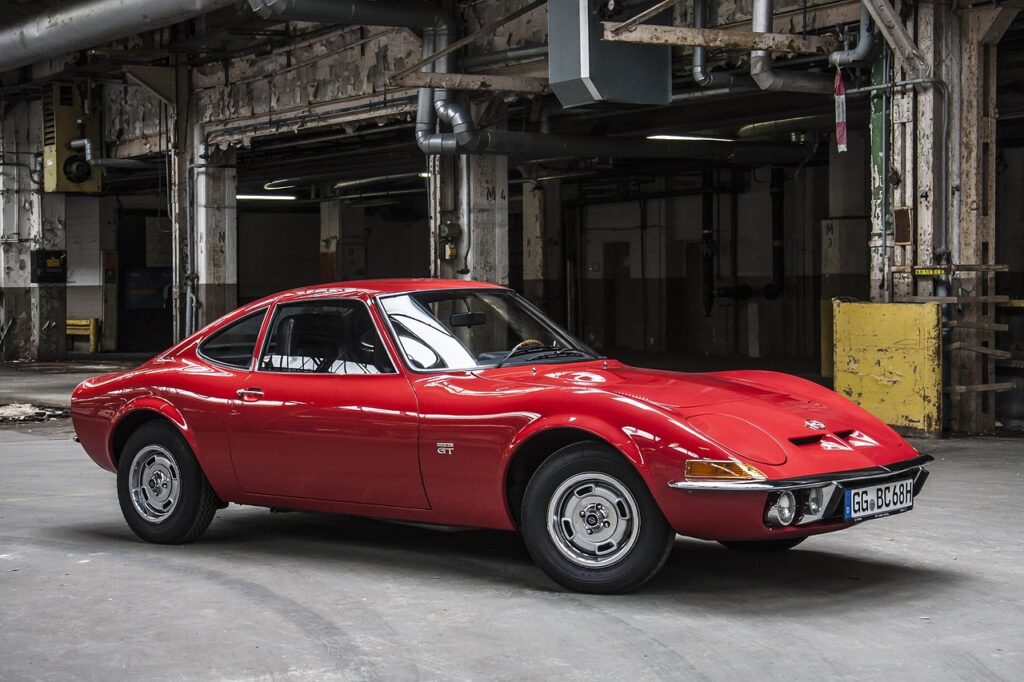
1. **1933 Austin Seven: ‘Lettuce Leaf’**The undisputed crown jewel and arguably the most cherished vehicle in Mick Fleetwood’s entire collection is his 1933 Austin Seven, affectionately christened “Lettuce Leaf.” This diminutive yet historically significant automobile holds a place of profound personal importance, far outweighing its monetary value or raw performance figures. It’s a car that embodies the very essence of perseverance and aspiration, marking a pivotal moment in Fleetwood’s early life, long before global fame and platinum records became his reality. The story of its acquisition is nothing short of legendary, offering a rare glimpse into the determination of a young artist on the cusp of his destiny.
Fleetwood’s connection to the Austin Seven began on a London street, where, as a struggling 20-something musician barely making ends meet, he first laid eyes on the charming vehicle. Completely captivated by its character, he took an unconventional step, leaving a note on the windscreen for the owner, expressing his love for the car and a heartfelt plea: “I’m in love with your car. If it ever needs a good home please call me.” Two years later, precisely as Fleetwood Mac was beginning its ascent, he received that call and, mustering just enough funds, purchased the car. The name “Lettuce Leaf” came naturally, a playful nod to its distinctive green exterior, and from that moment, the Austin Seven became an unwavering companion through Fleetwood’s most memorable endeavors and experiences.
Technically, the 1933 Austin Seven stands as a testament to British automotive ingenuity of its era. Often referred to as the British equivalent of a Model T Ford, it was designed by Sir Herbert Austin in 1922 as an affordable, compact solution for the masses. Fleetwood’s specific model features a modest 747cc engine with eight valves, coupled with a four-speed manual transmission. While its output of 24 brake horsepower might seem humble by modern standards, its efficiency was remarkable, achieving an impressive 35 to 40 miles per gallon. This small vehicle, which looks more suited for scenic beachside drives than bustling city streets, has indeed found its serene home near Fleetwood’s residence in Maui, where he frequently enjoys driving it.
The Austin Seven’s enduring appeal lies not only in its charming aesthetics and historical significance but also in its practical aspects as a collector’s item. For enthusiasts looking to acquire a vintage and extraordinary piece of automotive history, the Austin Seven is a particularly attractive option due to the readily available supply of replacement parts. This ease of maintenance helps preserve its legacy and ensures its continued presence on the roads. In fact, a blue 1933 Austin Seven was sold by Trade Classics, a U.K. auction house, in 2019 for approximately £7,995 (around $9,600), underscoring its steady value as a desirable classic. This car, truly Fleetwood’s “big, big love,” has been meticulously restored after being temporarily entrusted to Eric Clapton and later reclaimed, solidifying its place as a cherished, lifelong possession.

2. **1953 London Taxi (Nuffield Oxford)**Before the global renown and the stadium-filling tours, Mick Fleetwood’s early days as a musician were characterized by hustle, determination, and an unconventional mode of transport: his 1953 London Taxi. This isn’t merely another entry in his diverse collection; it was, quite literally, his first car, a pragmatic purchase that inadvertently played a significant role in shaping his nascent career. Far from the glamorous image of rock stardom, this vehicle represents the gritty, foundational period when ingenuity and resourcefulness were just as vital as musical talent.
Fleetwood acquired this old-fashioned three-door London taxi from a cabbie in Notting Hill Gate for a princely sum of about £12. While seemingly a modest vehicle, it proved to be a remarkably shrewd investment for the aspiring drummer. At a time when well-maintained equipment was a considerable asset, the Nuffield Oxford taxi offered unparalleled utility. Its robust construction and ample interior space meant it could effortlessly accommodate his drum kit, a crucial advantage that set him apart from many of his peers.
As Fleetwood himself recounted, having “the drums and the taxi” was a game-changer. In those formative years of the British blues scene, possessing reliable transport for one’s instruments was almost as important as one’s musical prowess. The taxi transformed him from a “not-particularly-in-demand drummer” into a complete package, making him a highly attractive prospect for gigs. This practical combination became a key factor in securing opportunities, allowing him to learn his craft across countless venues. It underscores a fundamental truth about creative careers: sometimes, the most mundane tools can facilitate the grandest artistic journeys.
While specific technical details of Fleetwood’s individual taxi model are not extensively documented in the provided context, the 1953 London Taxi, such as the Nuffield Oxford, was designed for durability and utility. These vehicles were robust workhorses, built to withstand the rigors of urban life and provide reliable service day in and day out. Their distinctive design, with its high roofline and spacious passenger compartment, was ideal for its intended purpose, but in Fleetwood’s case, it served a more unique function—as a mobile gear hauler for a budding rock star, a testament to how even the most utilitarian vehicles can become part of a legendary personal narrative.

3. **1950 Jaguar XK-120 Roadster**Shifting gears from the utilitarian charm of a London taxi, Mick Fleetwood’s collection also proudly features a true automotive masterpiece: the 1950 Jaguar XK-120 Roadster. This vehicle is more than just a car; it’s a profound statement of classic British elegance and pioneering performance, recognized globally for its breathtaking design and engineering innovation. For gentlemen of a certain vintage, as the saying goes, the XK-120 was the sports car that ignited a lifelong passion for fast, beautiful machines, and Fleetwood’s acquisition story adds another layer of intrigue to its iconic status.
When Jaguar unveiled the XK-120 at the 1948 British Motor Show at London’s Earl’s Court, it unequivocally stole the show. Its sensuous, rounded lines and inherently elegant styling immediately set a new benchmark for sports car aesthetics. Initially, Jaguar had conceived of building only 200 of these vehicles, primarily as a promotional showcase for their revolutionary new XK engine, which was destined for the forthcoming Mk VII saloon. However, the overwhelming public reception and critical acclaim ensured that the XK-120 would become a full-fledged production model, cementing its place as a design icon and a performance legend.
Fleetwood’s specific 1950 Jaguar XK-120 had a far humbler beginning in his ownership. He openly admits to purchasing it for a mere £60 (approximately $70 at the time), a stark contrast to its original new price tag of £1,200 (around $1,450). This bargain acquisition, however, came with a caveat: the car was, by his own admission, “a wreck,” prone to “leaked as much oil as it used petrol.” In a testament to his dedication and perhaps the financial constraints of his younger years, he also confessed that he couldn’t afford a hard-top roof for winter, enduring countless drives in the British rain with no top at all, a truly authentic, raw experience of classic motoring.
Underneath its beautiful coachwork, the XK-120 was a marvel of engineering. It housed the groundbreaking XK engine, a 3.4-liter six-cylinder unit equipped with twin overhead camshafts and twin SU carburetors. This potent powerplant delivered an impressive 160 brake horsepower, enabling the car to accelerate from 0 to 60 miles per hour in less than 10 seconds—a truly blistering pace for its era. Furthermore, the XK-120 could achieve top speeds exceeding 120 miles per hour, making it one of the fastest production cars in the world at the time. Today, original 1950s models of the Jaguar XK-120 are highly coveted, often fetching prices around $120,000 at auction, making Fleetwood’s early bargain purchase an even more remarkable anecdote.
Car Model Information: 1954 Jaguar XK 120
Name: Jaguar XK
Manufacturer: Jaguar Cars
Production: 1949–1992
Successor: Jaguar AJ6 engine
Categories: All Wikipedia articles written in British English, All articles with unsourced statements, Articles with short description, Articles with unsourced statements from June 2018, Articles with unsourced statements from October 2019
Summary: The Jaguar XK is an inline 6-cylinder dual overhead camshaft (DOHC) engine produced by Jaguar Cars between 1949 and 1992. Introduced as a 3.4-litre, it earned fame on both the road and track, being produced in five hemispherical head displacements between 2.4 and 4.2-litres for Jaguar passenger cars, with other sizes being made by Jaguar and privateers for racing. A de-rated version was also used in certain military vehicles built by Alvis and Daimler.
Get more information about: Jaguar XK engine
Buying a high-performing used car >>>
Brand: Jaguar Model: XK-120
Price: $32,500 Mileage: 0 mi.
Read more about: Rock Legend Mick Fleetwood’s Incredible Timeless Car Collection

4. **1951 Bristol 401**In Mick Fleetwood’s discerning collection of British automotive heritage, the 1951 Bristol 401 stands out as a testament to post-War luxury and sophisticated engineering. Unveiled in 1948, the 401 was not merely a car; it was a statement, heralded by *Autocar* magazine as “undoubtedly one of the great cars of our time.” This accolade was well-deserved, as the Bristol 401 offered an unparalleled blend of flowing aesthetics, advanced aerodynamics, and meticulously crafted luxury that set it apart from its contemporaries in an era still grappling with austerity.
The design of the Bristol 401 was particularly striking, featuring sleek aerodynamics and Carrozzeria Touring Superleggera styling, which gave it an almost ethereal presence on the road. Its smooth, continuous lines created a truly luxurious car, unlike anything else available at the time. This wasn’t a vehicle built for mass production; it was a hand-built masterpiece, reflecting a commitment to quality and exclusivity that was rare in the immediate post-war period. Every detail, from its elegant curves to its refined interior, spoke volumes about its pedigree and the discerning tastes of its clientele.
Such exclusivity naturally came with a substantial price tag. Despite the prevailing economic austerity in Britain after the Second World War, a brand-new 1951 Bristol 401 commanded a price of £3,200. To put this into perspective, this sum was approximately ten times the average UK salary at the time, underscoring its status as a vehicle accessible only to the truly affluent. This high cost, coupled with the meticulous, hand-built production process, meant that the 401 remained an exceptionally rare sight, with only 611 units ever manufactured, further solidifying its legendary status as a connoisseur’s automobile.
While the context does not provide specific details about Mick Fleetwood’s personal experience or acquisition of the 401, its presence in his collection speaks volumes about his appreciation for automotive history and unique design. The Bristol 401’s sophisticated engineering, combined with its distinctive styling and rarity, aligns perfectly with Fleetwood’s demonstrated preference for classic British motorcars that possess both character and a compelling story. It represents a pinnacle of post-war British luxury motoring, a quiet powerhouse of elegance and exclusivity within his remarkable garage.
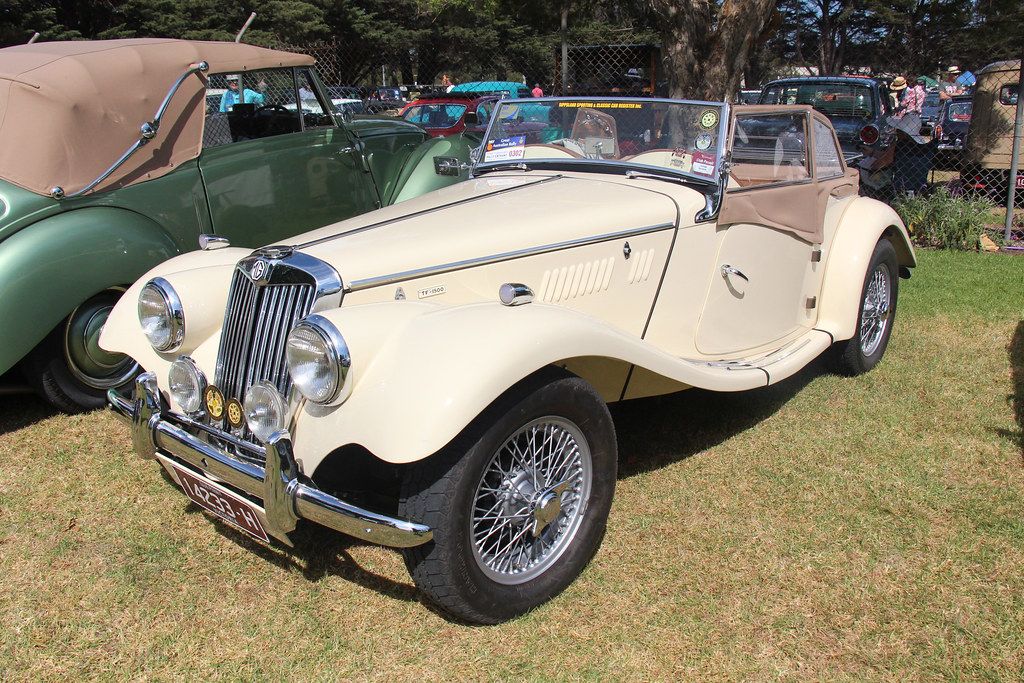
5. **1955 MG TF**Among the pantheon of iconic old-school British sports cars in Mick Fleetwood’s collection resides the charming 1955 MG TF. This vehicle carries a unique significance as a “last-gasp effort” to evolve MG’s beloved T-series models before the advent of the radically new MGA. It encapsulates a transitional period in automotive design, blending traditional British roadster aesthetics with subtle modernizations. The MG TF, with its distinctive pre-War “square rig” styling, is more than just a car; it’s a beautiful historical artifact, emblematic of a particular era in British motoring and highly sought after by collectors today.
The MG TF holds a special place in the hearts of many, particularly those who experienced the post-World War II era. Returning veterans, both American and British, harbored a deep desire for powerful roadsters, and British cars, with their distinctive charm and sporting appeal, often became the object of their affection. The TF, a classic convertible roadster, captivated with its squared features and an elongated front end, presenting an image of refined sportiness that resonated deeply with a generation eager for excitement and freedom after years of conflict.
Production of the MG TF was notably brief, running only for a few years, from 1953 to 1955, resulting in a limited run of just 9,602 units ever built. Fleetwood’s specific model belongs to the exclusive 1955 lineup, which saw a significant enhancement in power output thanks to a larger engine compared to the earlier 1250cc installation. Only about 3,400 of these more potent 1955 TFs were produced, making his particular variant even rarer and more desirable. This scarcity, combined with its historical context, elevates the MG TF to a serious collector’s item in the vintage car market.
Powering the 1955 MG TF was a 1466cc inline-four engine, which, while not designed for blistering speed, provided a spirited driving experience. This powerplant produced 63 brake horsepower and allowed the car to reach a top speed of 88 miles per hour. While its acceleration from 0 to 60 miles per hour took over 16 seconds—a figure that pales in comparison to contemporary sports cars like the Jaguar XK-120—the TF’s appeal lay in its character, its quintessential British charm, and the sheer joy of open-top motoring. Its enduring beauty and the relatively small number produced have ensured its status as a highly prized classic, cementing its place in collections like Mick Fleetwood’s.
Having delved into the British automotive roots and cherished classics that defined Mick Fleetwood’s early motoring life, our journey through his extraordinary collection now shifts gears. We’ll explore the more unexpected and powerful machines that have graced his garage, reflecting not just his evolving tastes but also pivotal moments in his celebrated career. From a utilitarian French marvel that supported a brief career detour to an iconic American symbol of excess marking a new beginning, and then to a brute of a British GT before culminating in a quintessential Italian supercar, these vehicles paint a richer, more diverse portrait of Fleetwood’s discerning eye and adventurous spirit.
Car Model Information: 1954 MG TF N/A
Name: MG F / MG TF
Caption: 2000 MG F
Production: 1995–2011
Manufacturer: Rover Group
Class: Roadster (automobile)
BodyStyle: convertible (car)
Layout: Rear mid-engine, rear-wheel-drive layout
Predecessor: MG MGB
Successor: MG Cyberster
Sp: uk
Categories: 2000s cars, 2010s cars, All articles needing additional references, All articles with dead external links, All articles with unsourced statements
Summary: The MG F and MG TF are mid-engined, rear wheel drive roadster cars that were sold under the MG marque by three manufacturers between 1995 and 2011.
The MG F was the first new model designed as an MG since the MGB that was produced from 1962 to 1980, the marque spent the 1980s being used to denote performance models from then-parent Austin Rover Group, and was briefly seen on the MG RV8, a limited edition relaunch of the MG MGB which was sold between 1993 and 1995.
The MG F was initially designed by Rover Group during the period it was owned by British Aerospace and was brought to market after the business had been sold to the German car manufacturer BMW. BMW owned Rover Group and manufactured the model from 1995 to 2000. BMW broke up Rover Group in 2000, divesting the Rover and MG passenger car businesses to a management buy-out who formed the independent MG Rover business. MG Rover manufactured the MG F from 2000 onwards, heavily updating it to become the MG TF in 2002.
MG Rover entered administration in 2005, resulting in the production of the MG TF model ceasing. Some of the assets of the MG Rover business were sold to Nanjing Automobile and the MG TF resumed production under the Nanjing-owned MG Motor in 2007. The model, by then heavily outdated, was not a sales success and production ceased for a second and final time in 2011.
Get more information about: MG F / MG TF
Buying a high-performing used car >>>
Brand: MG Model: TF
Price: $29,500 Mileage: 81,345 mi.
Read more about: Cruise Nights to Forgotten Rides: Boomer Classics Millennials *Need* to Experience

6. **1962 Citroen 2CV (aka Deux Chevaux)**In a fascinating deviation from his consistent preference for British classics, Mick Fleetwood’s collection once included a 1962 Citroen 2CV, affectionately known as the “Deux Chevaux.” This unconventional choice, far from the powerful roadsters and luxurious saloons, speaks volumes about a particular period in Fleetwood’s life. It was a time when he briefly became disillusioned with music and decided to explore an alternative path, channeling his considerable height into a career as a painter and decorator, necessitating a more practical and utilitarian “company car.”
The Citroen 2CV, a French icon, was lauded by a British motoring magazine as “the most intelligent application of minimalism ever to succeed as a car.” Its design philosophy was rooted in ingenuity and efficiency rather than overt luxury or speed. With its legendary “two horsepower” engine—a playful nod to its French designation—the 2CV boasted clever technology hidden beneath its distinctively utilitarian looks. It was a vehicle designed for simplicity, ruggedness, and accessibility, perfectly suited for traversing challenging rural landscapes with remarkable comfort.
While it couldn’t accommodate a drum kit, a stark contrast to his earlier London Taxi, the 2CV served its purpose admirably during Fleetwood’s brief hiatus from the music scene. Its lighthearted nature and practical design offered a stark contrast to the burgeoning rock and roll lifestyle. Interestingly, this humble vehicle also holds a quirky connection to the world of espionage, having famously featured in a James Bond film, *For Your Eyes Only*, adding an unexpected layer of cinematic mystique to Fleetwood’s otherwise down-to-earth choice.
Despite its clever engineering and charming character, Fleetwood’s tenure with the Citroen 2CV proved to be as transient as his alternative career as a painter and decorator. It was a brief chapter, a temporary divergence before the magnetic pull of music inevitably drew him back to the stage and the rhythm section. Yet, its inclusion in his past fleet underscores a willingness to embrace the unconventional and a practical sensibility that, at times, transcended the glamour typically associated with rock stardom, offering a unique insight into the musician’s multifaceted life.

7. **1964 Cadillac Eldorado convertible**The mid-1970s marked a significant turning point for Fleetwood Mac, and consequently, for Mick Fleetwood himself. With the band facing internal disarray, a strategic decision was made for Fleetwood and fellow band member John McVie to relocate their families to Los Angeles, seeking a fresh start and a renewed source of inspiration. This westward migration wasn’t just a geographical move; it was a cultural immersion, and what better way to embrace the American dream than with a quintessential symbol of its automotive exuberance: the 1964 Cadillac Eldorado convertible.
Upon their arrival in the bustling metropolis of Los Angeles in 1974, both Fleetwood and McVie famously indulged in a symbolic gesture of embracing their new environment. They each purchased massive convertible Cadillacs for a mere $1,000. McVie’s was a classic white, while Fleetwood’s was a flamboyant gold, a color choice he amusingly described as “Elvis Presley-style.” This acquisition was more than just buying a car; it was a deliberate embrace of a new, optimistic chapter, shedding the baggage of past struggles and cruising into the Californian sunshine.
Fleetwood vividly recounted the invigorating experience of driving this magnificent machine through the iconic landscapes of his new home. He wrote in his bestselling book *Play On: Now, Then And Fleetwood Mac*, “I remember driving that huge yacht of a car through the winding roads of the Hollywood Hills and cruising along Sunset Boulevard with the top down feeling immediately invigorated.” This “huge yacht of a car” wasn’t just transport; it was a feeling, a statement of freedom and a testament to the renewed energy that would soon propel Fleetwood Mac to unprecedented global stardom with albums like *Rumours*.
The 1964 Cadillac Eldorado convertible itself was a paragon of American automotive luxury and style. While specific technical details of Fleetwood’s exact model are not provided, these Cadillacs were renowned for their expansive dimensions, powerful V8 engines, and opulent interiors, embodying the very essence of 1960s American excess and glamour. For Fleetwood, this golden leviathan became an integral part of his personal narrative, a rolling monument to a pivotal moment of reinvention and a “new start for all of us,” as he eloquently put it, symbolizing the embrace of a bolder, more uninhibited era in his life and career.
Car Model Information: 1976 Cadillac Eldorado Convertible
Caption: 1963 Cadillac Eldorado Convertible
Name: Cadillac Eldorado
Manufacturer: Cadillac
Production: 1952–2002
Layout: Front-engine, rear-wheel-drive layout
Aka: Cadillac Fleetwood Eldorado
Class: Personal luxury car
Successor: Cadillac CTS
Categories: 1960s cars, 1970s cars, 1980s cars, 1990s cars, 2000s cars
Summary: The Cadillac Eldorado is a luxury car manufactured and marketed by the Cadillac Motor Car Division of General Motors from 1952 until 2002, over twelve generations.
The Eldorado was at or near the top of the Cadillac product line. The original 1953 Eldorado convertible and the Eldorado Brougham models of 1957–1960 had distinct bodyshells and were the most expensive models offered by Cadillac during those years. The Eldorado was never less than second in price after the Cadillac Series 75 limousine until 1966. Beginning in 1967, the Eldorado retained its premium position in the Cadillac price structure, but was manufactured in high volumes on a unique, two-door personal luxury car platform.
The Eldorado carried the Fleetwood designation from 1965 through 1972, and was seen as a modern revival of the pre-war Cadillac V-12 and Cadillac V-16 roadsters and convertibles.
Get more information about: Cadillac Eldorado
Buying a high-performing used car >>>
Brand: Cadillac Model: Eldorado
Price: $28,499 Mileage: 31,898 mi.
Read more about: 12 Iconic Boomer-Era Cars Millennials Are Totally Ignoring (And Why!)
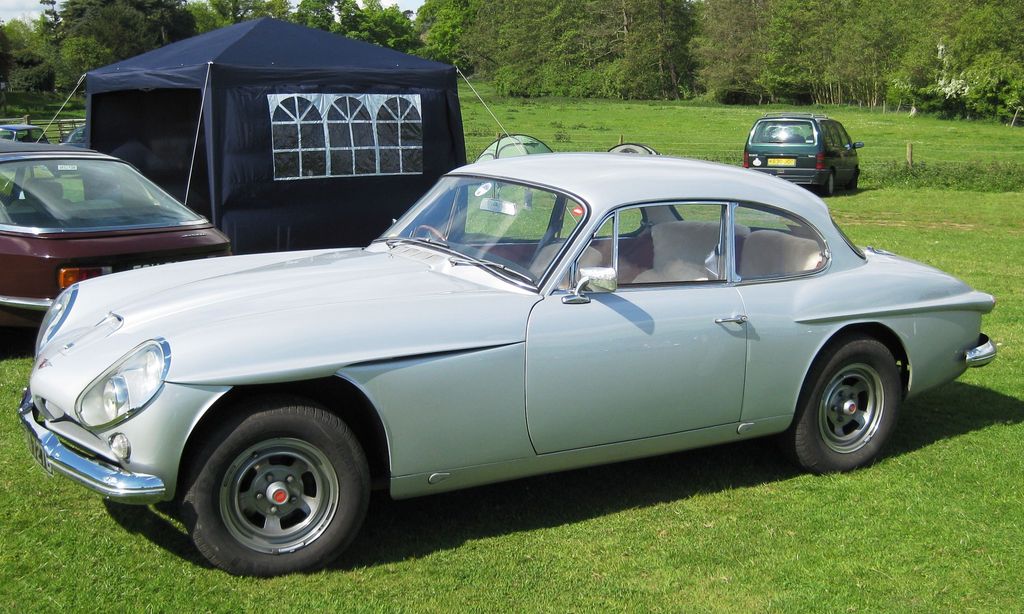
8. **1964 Jensen C-V8 Mk II**Returning to his enduring appreciation for formidable British engineering, Mick Fleetwood also numbered a 1964 Jensen C-V8 Mk II among his coveted machines. This car stands as an “absolute beast of a car,” a potent British GT that, despite being “a little-known automotive creation in the U.S.,” holds a revered position “among the heavyweights” in classic British motoring circles. For a drumming legend like Fleetwood, owning a Jensen C-V8 carried an additional cachet, as it was a favored choice among other iconic British beat-keepers such as John Bonham and Ginger Baker, forging an intriguing connection among percussion royalty.
Fleetwood’s specific model, the Mark II, was an even more beastly iteration than its predecessor. Under the bonnet resided a formidable 6.3-liter V8 engine, delivering an impressive 330 brake horsepower – a significant upgrade from the Mk I’s “piddly 5.9-liter” unit. This immense power was channeled through an automatic 3-speed gearbox to a robust rear-wheel drive setup, ensuring that the C-V8 Mk II was not just fast, but delivered a visceral and exhilarating driving experience that few contemporaries could match.
What truly set the Jensen C-V8 apart, contributing significantly to its blistering performance, was its revolutionary construction. Jensen opted for a unique fiberglass body instead of a more conventional, and often heavier, steel shell. This innovative use of lightweight material dramatically minimized the vehicle’s overall weight. Coupled with the monstrous engine beneath the hood, this fiberglass chassis allowed a Jensen C-V8 owner to “rocket to top speed in seconds,” making it one of the fastest four-seater GTs in the world during its brief but impactful production run.
However, like many of the exceptionally rare vehicles that have captivated Fleetwood’s discerning eye, the Jensen C-V8 Mk II was produced for a very limited time. The Mark II variant was only built over two years, from 1963 to 1964, contributing to its scarcity and enhancing its desirability among collectors who appreciate both its brute force and its innovative engineering. Its presence in Fleetwood’s garage highlights his admiration for cars that combine audacious power with distinctive, pioneering British design, solidifying his reputation as a connoisseur of high-performance classics.
Read more about: Rock Legend Mick Fleetwood’s Incredible Timeless Car Collection
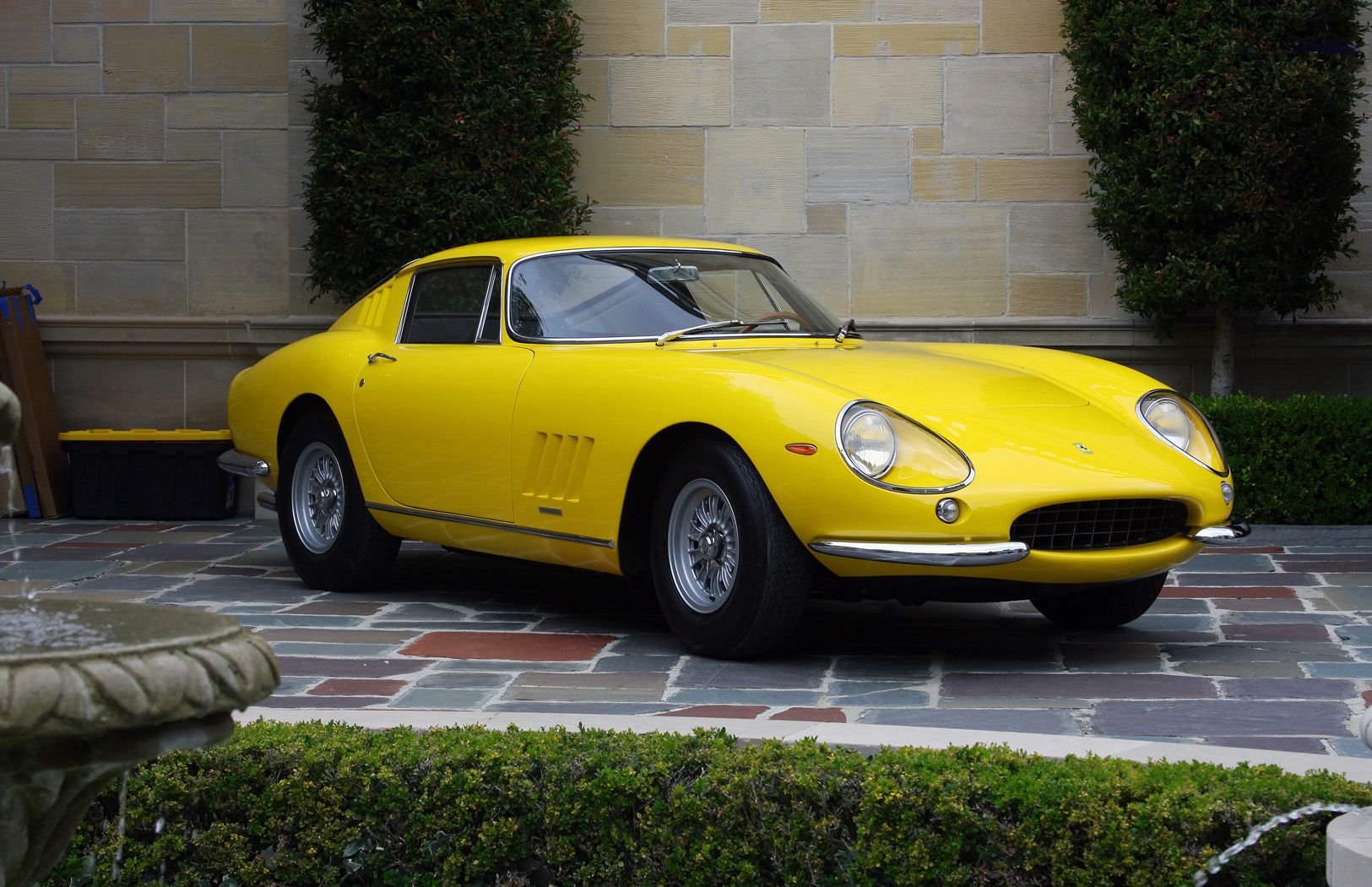
9. **1966 Ferrari 275 GTB**No comprehensive collection of a discerning enthusiast would be complete without an iconic Italian supercar, and Mick Fleetwood’s automotive journey culminated, at one point, in the stunning 1966 Ferrari 275 GTB. This particular model is unequivocally “one of the most stylish vintage Ferraris on the road,” embodying a timeless elegance and raw power that has captivated the imagination of automotive aficionados and high-profile personalities alike. Indeed, some of the world’s most successful media and business figures have owned or sought out vintage GTBs, with Nicholas Cage famously acquiring one in 2007, placing Fleetwood in truly esteemed company.
The Ferrari 275 GTB holds a special, almost mythical status due to its extreme rarity. These magnificent machines were only built for a very brief window, between 1966 and 1968, making them exceedingly scarce and highly sought after in today’s classic car market. Fleetwood himself purchased his GTB in 1977, a period of immense success for Fleetwood Mac, allowing him to indulge in such a pinnacle of automotive artistry. His profound admiration for the vehicle was clear, as he “surely idolized the vehicle,” noting in an interview, “I just thought the look of the car was extraordinary.”
Beneath its breathtaking Pininfarina-designed coachwork, the 1966 Ferrari 275 GTB was an engineering marvel. It utilized a potent V12 engine with a total displacement of 3,285.72cc, which delivered a robust power output of 200 horsepower. This formidable powerplant was paired with a precise 5-speed manual transmission, offering an engaging and immersive driving experience that was characteristic of Ferrari’s racing pedigree. The combination of its powerful engine and advanced chassis design propelled this vehicle to truly exhilarating performance figures.
Indeed, the 275 GTB was among the fastest cars of its era, capable of reaching an astonishing top speed of 166 miles per hour. This velocity, combined with its exquisite handling and unparalleled aesthetic appeal, cemented its reputation as a grand touring icon. While Fleetwood regrettably sold his GTB five years after acquiring it, using the proceeds to convert much of his worldly assets into a 1,000-acre farm in Australia, its brief but significant presence in his collection underscores his deep appreciation for automotive masterpieces that transcend mere transportation, representing the zenith of performance, style, and engineering excellence.
Car Model Information: 2022 Nissan Rogue SL
Name: Ferrari 275,GTB, GTS, GTB/4, NART Spider
Caption: 1966 Ferrari 275 GTB Series II
Manufacturer: Ferrari
Class: Grand tourer
BodyStyle: unbulleted list
Production: unbulleted list
Wheelbase: 2400 mm
Abbr: on (alloy-bodied 275 GTB/C)
Weight: unbulleted list
Predecessor: Ferrari 250
Successor: unbulleted list
Layout: Front-engine, rear-wheel-drive layout
Engine: unbulleted list
Transmission: transaxle
Designer: unbulleted list
Categories: All Wikipedia articles written in British English, All articles with dead external links, All articles with unsourced statements, Articles with dead external links from April 2024, Articles with permanently dead external links
Summary: The Ferrari 275 is a series of front-engined V12-powered grand touring automobiles with two-seater coupé and spider bodies produced by Ferrari between 1964 and 1968. The first 275 series cars were powered by a 3.3 L (3286 cc) overhead camshaft Colombo 60° V12 engine producing 260–320 hp (190–240 kW). An updated 275 GTB/4 was introduced in 1966, with a revised four overhead camshaft engine producing 300 hp (220 kW). The 275 series were the first road-going Ferraris equipped with a transaxle and independent rear suspension.
Pininfarina designed the 275 coupé and spider bodies, while Scaglietti designed the 275 GTS/4 NART Spyder, of which only 10 were made.
Motor Trend Classic named the 275 GTB coupé/GTS spider as number three in their list of the ten “Greatest Ferraris of all time”, and the 275 GTB/4 was named number seven on Sports Car International’s 2004 list of Top Sports Cars of the 1960s. In a September 1967 road test, Road & Track described the NART Spyder as “the most satisfying sports car in the world.”
Get more information about: Ferrari 275
Buying a high-performing used car >>>
Brand: Ferrari Model: 275 GTB
Price: $23,990 Mileage: 29,478 mi.
Read more about: Beyond the Badge: Exploring the Enduring Legacy and Impact of Legendary Car Names
From the humble, personally significant Austin Seven that sparked his lifelong “addiction” to the powerful British GTs and the breathtaking Italian supercar that graced his garage, Mick Fleetwood’s car collection is a vivid narrative of a life lived passionately, both on and off the stage. Each vehicle, whether a symbol of perseverance, a pragmatic tool for a budding career, a statement of reinvention, or a testament to pure automotive artistry, reflects a facet of his unique journey. His discerning taste, favoring character, history, and engineering prowess over mere ostentation, solidifies his status not just as a music legend, but as a true connoisseur of the automotive world, making his collection an utterly captivating exploration for any enthusiast.