Sci-fi horror. Just the sound of it sends a delightful shiver down your spine, doesn’t it? It’s a genre that perfectly blends our deepest fears with our most boundless imaginations, taking us to places where the unknown isn’t just spooky, it’s scientifically plausible. Forget your garden-variety ghosts and ghouls; here, the terror stems from things that *could* actually happen.
What makes sci-fi horror so uniquely unsettling is its ability to tap into our anxieties about the future, technology, and what lies beyond our current understanding. It’s the kind of fear that lingers long after the credits roll because a part of you thinks, “Yeah, that *could* totally be real.” These films push boundaries and pull no punches, ensuring a truly immersive dread.
So, if you’re ready to dive into some truly spine-chilling cinema that will make you question everything you thought you knew, you’ve come to the right place. We’ve compiled a list of 12 incredible sci-fi horror movies. Let’s kick things off with the first six entries that prove the universe is a far more terrifying place than we often dare to imagine.
1. **Possessor**Let’s kick things off with a film that twists the very concept of identity and autonomy into a nightmare, straight from the mind of Brandon Cronenberg. “Possessor” takes the chilling idea of an assassin carrying out hits by hijacking other people’s bodies, creating a profoundly unsettling experience. It’s not just about the gore (though there’s plenty, thanks to fantastic practical effects!), but the deep psychological dread it instills, blurring where you end and another begins.
Andrea Riseborough stars as Tasya Vos, the assassin who struggles to maintain her own grip on reality after repeatedly entering others’ minds. This constant assumption of new identities erodes her sense of self, making the timeless question of “Who am I?” terrifyingly manifest. She’s often seen practicing phrases in the mirror, a desperate act of self-reaffirmation highlighting her fractured psyche.
Brandon Cronenberg masterfully builds an anxious, claustrophobic atmosphere, with every scene charged with tension. Like his acclaimed father David, Brandon maximizes the film’s disgusting practical effects. The visceral imagery, responsible for moments that “will have you crawling out of your own skin,” enhances the thematic core, showing the raw consequences of a mind fighting for control. It’s a bold and brilliant sci-fi horror that examines the terrifying possibilities when our bodies are no longer truly our own.
Read more about: From ‘Bread-Kneader’ to Cultural Icon: The Jaw-Dropping Evolution of the Word ‘Lady’ You Won’t Believe!
2. **Event Horizon**If “Alien” taught us that “In space, no one can hear you scream,” then “Event Horizon” amplifies that terror, plunging us into a vision of hell that merges science fiction with pure, unadulterated fantasy. This isn’t about mere aliens; it’s about encountering a malevolent force operating beyond human comprehension, making it one of the most viscerally unsettling sci-fi horrors out there.
A rescue crew investigates the titular spaceship, Event Horizon, after it reappears seven years after vanishing, finding its entire crew dead. As Captain S.J. Miller and his team delve deeper, they experience horrific hallucinations. The sequence where Miller envisions hell and witnesses the former crew’s gruesome self-massacre is iconic for its intensity, cementing “Event Horizon” as a scariest sci-fi movie showcasing religious horror through a scientific lens.
The film’s genius lies in redefining hell not as a theological realm, but as another dimension accessed through scientific means. This embraces cosmic horror, depicting humanity as utterly insignificant, mere “ants in the grand scheme of things.” The crew are powerless against a force they can neither understand nor escape. “Event Horizon” masterfully uses deep space to amplify isolation and dread, delivering truly spine-chilling experience.
Read more about: Aimee Osbourne Breaks Her Silence: Unveiling Her Private Path and Profound Devotion to Ozzy
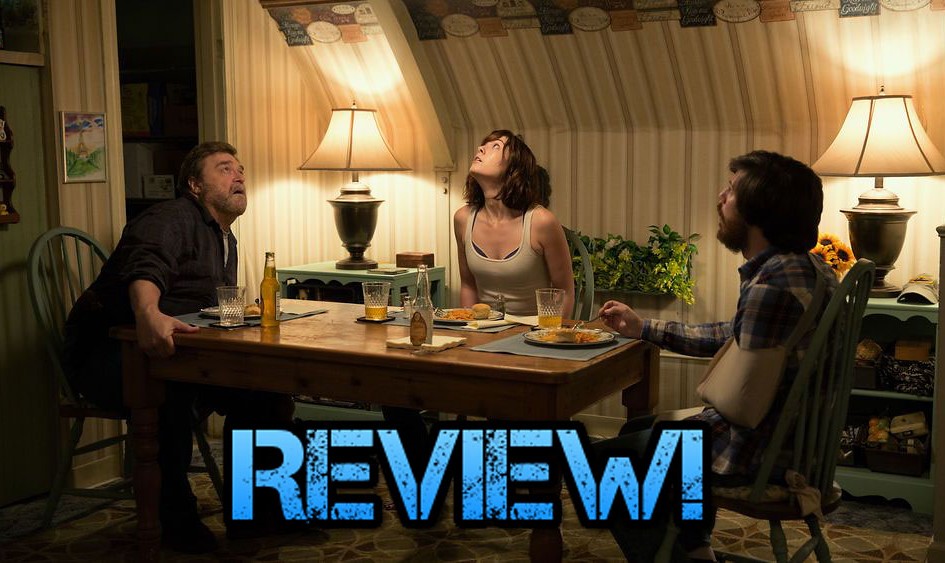
3. **10 Cloverfield Lane**While the original “Cloverfield” was a kaiju flick, “10 Cloverfield Lane” delivers a different, more insidious terror. It focuses on a single, claustrophobic bunker, proving the scariest monsters sometimes lurk in the minds of those you’re trapped with. This film is a masterclass in psychological tension, pulling back from city-wide destruction to focus on intimate dread.
Michelle, brilliantly played by Mary Elizabeth Winstead, awakens in an underground bunker after a crash, held captive by John Goodman’s chilling Howard. He insists a horrific event outside makes the surface uninhabitable, demanding they remain indoors. This slow-burn unraveling of trust and reality keeps the audience, like Michelle, constantly questioning Howard’s motives and the truth, preying on our fear of the unknown.
The film is sci-fi in its loosest sense, with aliens only explicit in the final act, serving as an epilogue rather than the central plot. The real monster is the terrifying potential for human beings to exploit fear and uncertainty to control others. Howard embodies a predator who uses an unexplainable event to subjugate the weaker. “10 Cloverfield Lane” reminds us humanity’s darkest impulses can be the most frightening.
Read more about: Your Ultimate Guide to the 8 Most Epic Superhero Movies Crashing Into Theaters in 2025!
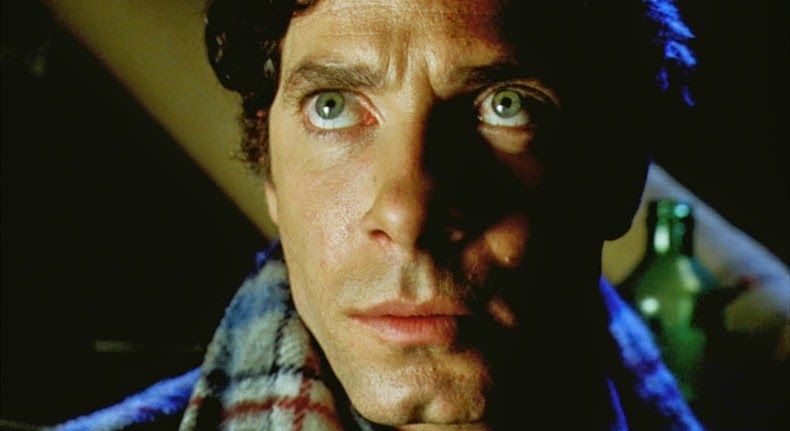
4. **Scanners**David Cronenberg, the undisputed master of body horror, gives us “Scanners,” known for one of cinema’s most iconic and disgustingly memorable bodily mutilations (that head-exploding scene!). Beyond the visceral shock, “Scanners” offers profound, unsettling commentary on the loss of bodily autonomy and corporate overreach, themes that remain incredibly relevant today.
The film introduces a world where “scanners” possess terrifying psychic abilities like telepathy and technopathy. A shady company, ConSec, exploits these powerful beings for nefarious purposes, raising questions about control, power, and weaponizing human potential. The horror isn’t external; it’s ingrained, with scanners, often created through “pharmaceutical malfeasance,” becoming living weapons who can “read anyone’s minds.”
The infamous head-exploding scene highlights the raw, destructive power inherent in these abilities and the ultimate violation of the body when it’s no longer under one’s own control. “Scanners” masterfully examines what happens when your body is no longer yours to own, or when a governmental or corporate force ensnares you in its machinations. It’s smart, gruesome, and undeniably spine-chilling.
Read more about: Navigating Target’s Strategic Reset: 14 Critical Shifts Impacting Shoppers and Investors by 2025
5. **Tetsuo: The Iron Man**Prepare for a truly visceral, non-traditional narrative experience with “Tetsuo: The Iron Man,” a film whose imagery alone is potent enough to sear itself into your mind. Hailed as one of the greatest Japanese horror films, it plunges us into a nightmarish vision where the human body grotesquely fuses with machines, transforming flesh into a horrifying, industrial abomination.
The film forgoes a conventional plot, immersing us in the terrifying, chaotic transformation of a man whose body mutates, sprouting mechanical parts and fueling violent fantasies. It’s a relentless, visually overwhelming journey into body horror, blurring the line between organic and synthetic. More concerned with visceral reaction than straightforward storytelling, it’s a unique beast in sci-fi horror.
One compelling interpretation centers on machines overtaking nature, a theme incredibly prescient in a dystopian Tokyo. Any semblance of pure humanity is consumed by industrialization, a horrifying vision of progress gone wrong where technology utterly subsumes and distorts our being. As people sacrifice parts of what make them human, “Tetsuo” serves as a grotesque reminder that we “aren’t meant to be machines.”
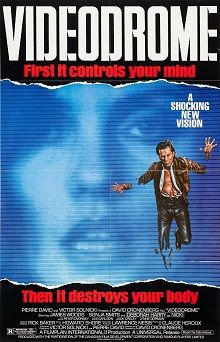
6. **Videodrome**”Long live the new flesh.” This iconic tagline perfectly encapsulates the disturbing genius of “Videodrome,” another masterpiece from David Cronenberg that manages to be both horny and disgusting, often within the same frame. It’s a chilling, prescient examination of mass media’s pervasive power, blurring reality and hallucination in a way that feels eerily relevant today.
Max Renn, a UHF station CEO, hunts for the next sensational show, finding it in “Videodrome”—a series of apparent snuff films captivating viewers. As he uncovers its source, Max descends into hallucinations, losing his grip on reality. “Videodrome” foretold mass media’s dangers and the alarming ease with which people lose the ability to distinguish reality from fiction, a theme even more pertinent with social media and generative AI.
The film’s exploration of media’s manipulative power is unsettling. As Max struggles to tell if his body is fusing with a gun, society grapples with similar challenges, discerning authentic broadcasts from AI or influencer pitches. “Social media is the new flesh” as we adopt online personas. “Videodrome”‘s warnings about media’s insidious influence and the erosion of reality have become terrifyingly prophetic.
The transition from the initial six mind-benders takes us even deeper into the void, where science doesn’t just enable terror, it becomes the fabric of our worst nightmares. Get ready to face existential threats, unsettling social commentary, and creature features truly out of this world. These films push the boundaries of what’s possible and purely dreadful, cementing their place as absolute must-watches for anyone who loves a good cinematic scare that also makes you *think*.
Read more about: 15 Iconic Rock Goddesses: A Deep Dive into the Most Stunning Female Voices of All Time
7. **They Live**Ever feel like you’re being subtly manipulated by forces you can’t quite grasp? John Carpenter’s “They Live” takes that everyday paranoia and blasts it into the stratosphere with a story that feels even more relevant today than it did when it first hit screens. This isn’t just a movie; it’s a scathing piece of social commentary wrapped in a gloriously anarchic sci-fi horror package.
The plot sees a drifter, played by wrestling superstar Roddy Piper, who stumbles upon a chilling conspiracy. When he puts on a special pair of sunglasses, he discovers that aliens have infiltrated every power structure on Earth. These extraterrestrials have turned humanity into mindless consumers, stripping the planet of its resources, with billboards flashing subliminal messages like “Obey” and “Buy” only visible through the unique eyewear.
Carpenter’s inspiration for “They Live” came from his dissatisfaction with President Ronald Reagan’s policies and his growing disgust with how media seemed designed solely to sell products. Fast forward to today, and his observations feel terrifyingly prescient. You can barely scroll through social media without an ad for something you just talked about popping up – no special glasses needed, just the algorithm.
The film brilliantly uses an alien invasion to critique our unnatural lives, controlled by corporate overlords. It’s a clever, unapologetically anarchistic movie that minces no words in its condemnation of consumer culture. “They Live” serves as a grotesque mirror, reflecting societal shortcomings and the frightening ease with which we’re led astray. It reminds us: sometimes, the scariest monsters aren’t hiding in shadows, but in plain sight.
Read more about: Aimee Osbourne Breaks Her Silence: Unveiling Her Private Path and Profound Devotion to Ozzy
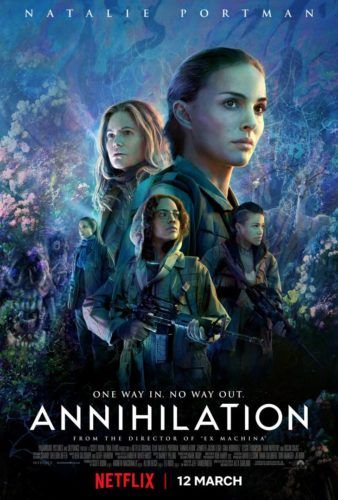
8. **Annihilation**Prepare for a visual and existential trip with Alex Garland’s “Annihilation,” a film that might have slipped under the radar at the box office, but is an absolute powerhouse of science-fiction horror. It’s the kind of movie that lingers, pulling you into its unsettling beauty and leaving you with more questions than answers – and that’s precisely why it’s so brilliant.
The story follows a group of scientists, led by Natalie Portman’s character, as they venture into a mysterious, otherworldly anomaly known as the Shimmer. This vibrant, shimmering field is slowly expanding, mutating plants and animals within its borders in truly bizarre and terrifying ways. From flora growing in impossible formations to creatures that are both familiar and utterly alien, the Shimmer redefines nature itself.
One of the film’s most disturbing sequences involves the remains of the group hiding from a mutated bear that emits guttural screams, terrifyingly mimicking the voice of their dead friend. This moment alone is enough to sear itself into your memory, highlighting the film’s masterful blend of grotesque creature design and profound psychological terror.
What makes “Annihilation” truly shine is its departure from typical alien invasion narratives. The Shimmer isn’t about little gray men; it’s an unfathomable, evolving phenomenon that defies human comprehension. Definitive answers remain elusive, inviting the audience to grapple with the unknown. It’s a profound exploration of cosmic horror, depicting alien life as something beautiful, dreadful, and utterly beyond our understanding, proving the most terrifying things are often those we can’t fully grasp.
Read more about: From Silent Extinction to Nuclear Laughter: The 15 Essential End-of-the-World Disaster Films Every Fan Must See
9. **Nope**Jordan Peele, a modern master of horror, delivered a truly unique extraterrestrial experience with “Nope,” a film that solidifies his reputation for blending thought-provoking themes with genuine scares. It’s an alien encounter like no other, challenging our perceptions of spectacle and the dangers of trying to tame the untamable.
The movie centers on siblings OJ (Daniel Kaluuya) and Em (Keke Palmer), who run a horse ranch and are struggling to make ends meet. Their lives take a bizarre turn when they realize an extraterrestrial entity, which they nickname Jean Jacket, is lurking in the clouds above their isolated valley. Instead of fleeing, they become obsessed with capturing definitive video evidence of the creature, hoping to achieve fame and financial stability.
Running parallel to their story is that of Jupe (Steven Yeun), a former child actor who survived a traumatic chimpanzee attack. He now exploits that trauma, luring people to his park for a glimpse of what he believes is a controllable alien. Jupe’s storyline, particularly the flashback, is arguably the most disturbing sequence, underscoring the dangers of exploiting and monetizing tragedy.
Peele warns against the hubris of thinking we can control or exploit forces beyond our understanding. It’s a visually stunning, tense, and thought-provoking ride, cementing its place as an unforgettable sci-fi horror spectacle, reminding us some things are better left unmolested.
Read more about: Full Of Masculinity: 15 Must-See Movies That Will Seriously Level Up Your Guy Code
10. **The Fly (1986)**Remakes often get a bad rap, but David Cronenberg’s 1986 “The Fly” is a towering exception, proving a classic can be profoundly enhanced. This film isn’t just about a guy turning into a fly; it’s a sickeningly brilliant dive into the horror of bodily decay and the terrifying consequences of scientific ambition gone awry, earning its spot as a seminal ’80s horror classic.
The original 1958 film was a solid B-movie, but Cronenberg, the maestro of body horror, pushed boundaries of disgust and pathos. Starring Jeff Goldblum as scientist Seth Brundle and Geena Davis as journalist Veronica Quaife, the film charts Brundle’s horrifying transformation after a teleportation experiment goes wrong, fusing his DNA with a common housefly.
What unfolds is a masterclass in Academy Award-winning practical effects, depicting Brundle’s gradual, grotesque mutation into “Brundlefly.” His body slowly degenerates – shedding skin, losing teeth, developing insectoid features – as his mind deteriorates. It’s a visceral, emotional journey showcasing Goldblum’s incredible performance as he grapples with the loss of humanity.
“The Fly” isn’t just external horror; it’s an internal struggle, exploring the terrifying loss of control over one’s own body. Produced by Mel Brooks, this film perfectly marries intense gore with profound tragedy, leaving audiences reeling and earning its place as one of the most disgusting and emotionally resonant sci-fi horrors ever.
Read more about: Full Of Masculinity: 15 Must-See Movies That Will Seriously Level Up Your Guy Code
11. **Alien**If there’s one film that defines “sci-fi horror masterpiece,” it’s Ridley Scott’s “Alien.” This isn’t just a movie; it’s a cultural phenomenon, a masterclass in suspense, design, and pure, unadulterated terror that has influenced countless films across genres. Seriously, what more can be said about this absolute titan of cinema?
The story is deceptively simple: the crew of the commercial spaceship Nostromo intercepts a mysterious distress signal from a barren planetoid. Following company protocol, they investigate, leading to one of the most infamous encounters in film history. A monstrous extraterrestrial parasite, the Xenomorph, boards their ship, systematically hunting them down in the desolate vacuum of space.
From H.R. Giger’s iconic, biomechanical creature design to the claustrophobic dread of the Nostromo’s corridors, every element of “Alien” is crafted for maximum impact. And then there’s the Chestburster sequence – a scene so shocking and unexpected that it revolutionized horror cinema and remains a benchmark for practical effects and pure visceral horror.
At its heart, Sigourney Weaver’s Ellen Ripley transcends the typical “final girl” trope, becoming one of cinema’s most enduring heroes. “Alien” isn’t just about jump scares; it’s a slow-burn of atmospheric tension, cosmic isolation, and primal fear. It proved that “In space, no one can hear you scream,” but you’ll definitely be doing plenty of screaming and squirming. It’s a golden standard, an unparalleled achievement in sci-fi horror that continues to captivate and terrify audiences decades later.
Read more about: 14 Wild Deleted Scenes That Would’ve Made Your Favorite MCU Movies R-Rated

12. **The Thing**When people say, “They don’t make ’em like they used to,” they’re often talking about John Carpenter’s “The Thing.” This isn’t just a film; it’s an experience in pure paranoia and grotesque practical effects, truly unparalleled. Forget CGI; the 1980s practical monster effects showcase in this movie is something you have to witness to believe.
Set in desolate Antarctica, the film follows American researchers who encounter a shape-shifting extraterrestrial organism. It can perfectly assimilate and imitate any living creature, leading to an escalating nightmare of distrust and horrific body transformations, as no one can tell who is human and who is “The Thing.”
The genius of “The Thing” lies not just in its groundbreaking special effects, still stomach-churning today, but in its relentless psychological dread. Bearded Kurt Russell leads an ensemble cast through a waking nightmare where suspicion is as deadly as the alien. The iconic blood-testing scene, where each man’s blood is tested, perfectly encapsulates the film’s nail-biting tension and the horrifying realization that the enemy could be anyone.
Carpenter masterfully builds a suffocating atmosphere of dread and claustrophobia, amplifying the hopelessness. This film is a chilling exploration of assimilation, identity, and the terror of an enemy both invisible and omnipresent. “The Thing” is a relentless assault on senses and mind, a perfect storm of suspense, creature feature greatness, and existential terror that defines sci-fi horror, proving the greatest monsters sometimes wear familiar faces.
Read more about: Aimee Osbourne Breaks Her Silence: Unveiling Her Private Path and Profound Devotion to Ozzy
And there you have it, a chilling journey through 12 unforgettable sci-fi horror films that prove science and terror are a match made in a truly horrifying heaven. From psychological mind-benders that twist your perception of reality to grotesque creature features that make your skin crawl, these movies aren’t just about cheap scares. They tap into our deepest anxieties about technology, the unknown, and even ourselves, leaving you with lingering dread and plenty to ponder long after the credits roll. So, grab your popcorn (maybe a blanket to hide under), dim the lights, and prepare to have your spine thoroughly chilled – because in sci-fi horror, the future is always terrifying.