You know that feeling, right? That simmering rage when some petty bureaucrat, usually cloaked in the innocuous title of a Homeowners Association board member, decides to unilaterally rewrite the rulebook on your personal passions. They see your prized possessions, your carefully curated collection, and all they see is a problem. But what if the problem wasn’t your cars, but their definition of a car? What if the very fabric of automotive history held the keys to their undoing, not through defiance, but through glorious, meticulous, *malicious compliance*?
It’s a tale as old as time, or at least as old as organized residential communities. You’ve got a passion – in this case, a love for motorised passenger road vehicles – and they’ve got a rulebook thicker than a 1980s phone directory. They want to regulate, restrict, and generally ruin your day. But here’s the kicker: bureaucracy thrives on specificity, and if you can poke enough holes in their specific wording with inconvenient, yet undeniably true, facts, suddenly, their ironclad rules start looking a lot like Swiss cheese. The key, my friends, is knowing your history, and knowing it well enough to make them wish they’d never even *heard* the word ‘vehicle.’
So, prepare yourselves, because we’re about to delve into the fascinating, frustrating, and ultimately hilarious world of automotive trivia that could turn any self-proclaimed HOA tyrant’s pronouncements into a legally unsound pile of scrap metal. We’re talking about taking the very definition of a car, twisting it like a pretzel, and serving it back to them with a smirk. This isn’t about breaking the rules; it’s about making them regret they ever wrote them in the first place, using nothing but the glorious, convoluted evolution of the automobile itself.

1. **The Elusive Definition of a “Car”**Let’s kick things off with the absolute basics, shall we? What *is* a car, anyway? You’d think it’s a simple question, right? Four wheels, an engine, moves you from A to B. But oh, how naive! The context states, “Most definitions of cars state that they run primarily on roads, seat 1-8 people, have four wheels, and mainly transport people rather than cargo.” Now, read that again, but this time, read it with the gleam of malicious compliance in your eye. Because right there, in that seemingly straightforward sentence, are four glorious opportunities to make an HOA lawyer sweat.
First, “primarily on roads.” What if your magnificent collection includes vehicles that are, shall we say, more at home on a track, a private estate, or perhaps just a very fancy display stand in your garage? Is a pristine vintage racer, only ever trailered to shows, truly “primarily” running on roads? Or what about a purpose-built off-roader that spends 99% of its life climbing rocks and 1% on paved surfaces just to get to the trails? Suddenly, your definition of ‘car’ and the HOA’s might diverge quicker than a supercar on a drag strip.
Then there’s the seating capacity: “seat 1-8 people.” This is a goldmine. A sleek, two-seater sports car? Absolutely a car. But what about that oddball three-wheeled contraption you found? Or a vehicle that technically *could* seat nine if you strapped someone to the roof, but is only *designed* for seven? The beauty of vague numerical limits is the endless debate they spark. Imagine the HOA attempting to prove definitively that your antique fire engine *couldn’t* seat nine, especially if you argue that ‘people’ includes a very small, well-behaved dog.
And let’s not forget the “four wheels” clause. This is where things get really fun. The very definition of a car can be bent by its wheel count. If it has three wheels, is it a “car”? What about six? The context mentions that cars most often have “4 Wheels” but can have “3–6.” This is your opening. Suddenly, that vintage three-wheeled delivery vehicle, or that obscure six-wheeled military concept vehicle you managed to acquire, isn’t a “car” at all, but some glorious, undefined beast that their bylaws never considered. The sheer audacity of it all is its own reward.
Read more about: 8 Times Ford Went Wild: Uncovering the Blue Oval’s Rarest & Most Experimental Rides
2. **The Ancient Ancestors: Steam-Powered Oddities**Before Carl Benz even dreamed of a gasoline engine, the automotive world was a wild, steamy mess of experimental contraptions. And these, my friends, are your secret weapons. The context proudly declares, “The French inventor Nicolas-Joseph Cugnot built the first steam-powered road vehicle in 1769,” followed by the Swiss inventor François Isaac de Rivaz in 1808 with the first internal combustion engine. These aren’t just historical footnotes; they’re potential HOA-rule-bending machines.
Consider Cugnot’s 1771 *fardier à vapeur*. It was a self-propelled mechanical vehicle, a steam-powered tricycle. Now, does your HOA’s rulebook specify “internal combustion engine”? Does it specify “petrol”? If not, then your collection of magnificent, clanking, steam-driven behemoths might just be perfectly compliant. It’s not a *modern* car, darling, it’s a *steam carriage*. It’s a historical artifact, a piece of industrial art, and frankly, a conversation starter that produces more steam than exhaust, which is probably *less* polluting than some of their gas guzzlers.
Then there’s Richard Trevithick’s “Puffing Devil” road locomotive from 1801. The context notes it “was unable to maintain sufficient steam pressure for long periods and was of little practical use.” Aha! So, if your HOA has rules about *functional* vehicles, you could argue that your faithfully restored Puffing Devil, while a marvel, is of “little practical use” and thus doesn’t fall under their everyday vehicle restrictions. It’s more of a very large, mobile sculpture. And can they really tell you a sculpture can’t be parked on your own property? I think not.
The beauty of these early steam vehicles is their inherent oddity. They’re not cars in the conventional sense, and that ambiguity is your friend. They might have three wheels, or be so ponderous they barely qualify as ‘road vehicles’ by modern standards. The fact that the “development of external combustion (steam) engines is detailed as part of the history of the car but often treated separately from the development of cars in their modern understanding” is a golden nugget. You’re not collecting cars, you’re collecting *steam-powered road vehicles*, a subtly different category entirely.

3. **Early Electric Dreams: Silent Challengers**When we think of electric cars today, we picture sleek Teslas and silent Nissan Leafs. But guess what? EVs are old-school, baby! And their ancient lineage provides another fantastic opportunity for a collector to give the HOA a collective headache. The context reminds us that “Electric cars, which were invented early in the history of the car, became commercially available in the 2000s and widespread in the 2020s.” But the *invention* was much, much earlier.
Enter Gustave Trouvé, the French inventor who, in November 1881, “demonstrated a three-wheeled car powered by electricity.” See that? “Three-wheeled car.” We just talked about the “four wheels” dilemma. Trouvé’s vehicle, a pioneer of electric propulsion, immediately challenges multiple contemporary definitions of a ‘car.’ If your HOA’s rules are based on a purely four-wheeled, gasoline-powered paradigm, then a meticulously restored Trouvé replica—or even an original, if you’re truly dedicated—becomes a perfectly compliant, non-car vehicle.
Then there’s the “Flocken Elektrowagen,” which the context identifies as “the first four-wheeled electric car.” While this one does hit the four-wheel quota, it’s still electric, from an era when the internal combustion engine was still finding its feet. If your HOA has restrictive covenants about engine noise or exhaust emissions – a common complaint – then a silent, historically accurate Flocken Elektrowagen is the ultimate malicious compliance. It produces no exhaust, minimal noise, and technically fulfills the ‘car’ criteria without violating the *spirit* of their anti-nuisance rules. They want quiet? You give them *silent history*.
Imagine the board meeting: “Mr. Johnson, your electric antique is still a vehicle!” And you, with a perfectly straight face, reply, “Indeed, it’s an *electric vehicle*. Invented back when people thought cars were witchcraft. It’s not generating pollution, nor is it making a racket. It’s merely charging. Is there a rule against historically significant, zero-emission vehicles that predate most of your bylaws? I didn’t think so.” The silence would be deafening, almost as silent as your magnificent, fully-compliant electric collection.

4. **The Benz Patent-Motorwagen: Birth of the Modern (and Compliant?) Car**This is where modern automotive history truly begins, and ironically, it offers another layer of interpretive fun for our hypothetical collector. The context explicitly states, “The modern car—a practical, marketable automobile for everyday use—was invented in 1886, when the German inventor Carl Benz patented his Benz Patent-Motorwagen.” This isn’t just *a* car; it’s *the* car, the origin story, and therefore, it carries a certain weight that even the most stubborn HOA must respect.
Carl Benz’s original Motorwagen, built in 1885, was patented on January 29, 1886. It was, of course, a three-wheeler. Again, the ‘four wheels’ problem for the HOA. If their bylaws specify ‘four-wheeled passenger vehicles,’ then your historically accurate, fully operational Benz Patent-Motorwagen is literally *not* a car by their own definition. It’s a “Motorwagen.” A subtle distinction, perhaps, but legally significant when trying to outmaneuver pedantic rule-mongers. You’re not parking a car; you’re preserving automotive heritage.
Furthermore, the Benz Patent-Motorwagen wasn’t exactly designed for the bustling suburban streetscapes of today. It was a pioneering effort, a vehicle that redefined personal mobility. If an HOA attempts to apply modern vehicle standards, such as minimum ground clearance, turning radius, or even horn decibel levels, to such an antique, they’re stepping into a legal minefield. You could argue it’s a grandfathered vehicle, or a display piece, or simply a testament to human ingenuity that exists outside the narrow confines of their rulebook. The burden of proof would be squarely on *them* to define how a vehicle invented in 1886 fits into bylaws written in 2006.
And let’s not forget Bertha Benz, Carl’s wife and business partner, who in August 1888, “undertook the first road trip by car, to prove the road-worthiness of her husband’s invention.” This isn’t just a car; it’s a symbol of pioneering spirit and marital partnership. To restrict its presence would be to restrict history itself! Imagine trying to ban the Mona Lisa because it doesn’t meet contemporary painting dimensions. The Benz Patent-Motorwagen isn’t just a vehicle; it’s a monument to the very concept of personal transport, and that carries more weight than any HOA bylaw.
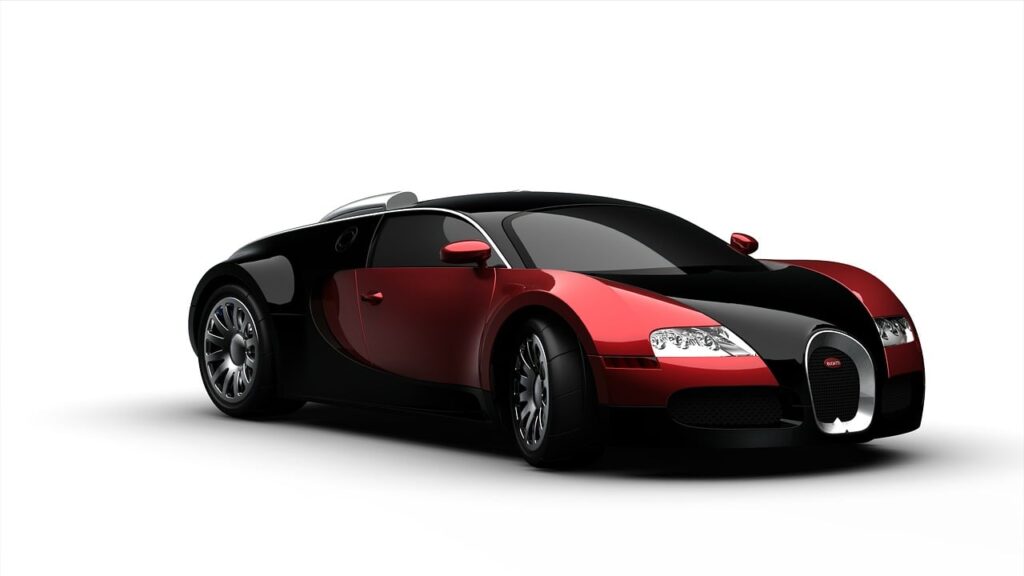
5. **Fueling the Fury: A Rainbow of Power Sources**HOAs love rules about emissions, about what kind of “noxious fumes” are allowed, or what constitutes a “conventional” vehicle. But the automotive world, my friends, is a veritable buffet of power sources, far beyond just petrol and diesel. The context lays it all out: “Fuel source Petrol, Diesel, Natural gas, Hydrogen, Biodiesel, Battery, Fuel cell, Solar cell, Hybrids of the above.” This list isn’t just a scientific overview; it’s a blueprint for regulatory evasion.
If the HOA’s rule states, for instance, “No petrol-powered vehicles over 20 years old,” then suddenly your entire collection of pristine hydrogen-powered concept cars or biodiesel-fueled classics are perfectly exempt. They’re not powered by *petrol*. Simple as that. Or perhaps they’ve banned “fossil fuel cars” in a misguided attempt at eco-friendliness. Well, guess what? Your fleet of solar-cell-powered vehicles, while perhaps only capable of moving at a snail’s pace, are 100% compliant. They are quite literally soaking up the sun’s rays to power their movement, putting Mother Nature firmly on your side.
Consider the nuance of “Hybrids of the above.” This opens up a whole new dimension of argument. Is a mild hybrid truly a “fossil fuel car”? Or is it a special, hybridized category that falls into a gray area their lawyers never considered? The more specific their rule, the easier it is to find a power source that doesn’t quite fit their narrow definition. You could parade out a vehicle running on natural gas or a fuel cell – these are legitimate, if less common, power sources that most HOA committees simply won’t have anticipated when drafting their bylaws.
The context also highlights that “The transition from fossil fuel-powered cars to electric cars features prominently in most climate change mitigation scenarios.” This isn’t just a trend; it’s a moral high ground. If you’re collecting early electric cars, or even experimenting with cutting-edge hydrogen fuel cell vehicles, you’re not just a collector; you’re an environmental pioneer, ahead of your time, and certainly ahead of any restrictive, outdated HOA policy. Try telling a board member they’re stifling environmental progress by banning your hydrogen-fueled marvel. Good luck with that argument.

6. **Weighty Matters: When a Car Is More Than Just a Car**Ah, the classic HOA parking rule: “No oversized vehicles.” But what, pray tell, constitutes “oversized”? Is it length, height, or that often-overlooked metric, *weight*? The context gives us a fantastic range to play with: “Cars… typically weigh between 1 and 3 tonnes (1.1 and 3.3 short tons; 0.98 and 2.95 long tons).” This is not a small window, folks. This is a cavernous loophole waiting to be exploited.
The Wuling Hongguang Mini EV, a “typical city car,” weighs “about 700 kilograms (1,500 lb).” That’s well under one tonne. If your HOA’s “oversized vehicle” rule uses a weight threshold, say, anything over 1.5 tonnes, then a dozen Hongguang Mini EVs in your driveway are perfectly compliant. They might look small, but they meet the definition of a car, and they’re definitely not “heavy” by the context’s standards. You’re not violating the rule; you’re just very efficiently using your space with numerous, *lightweight* vehicles. It’s an optical illusion of compliance.
Conversely, the context mentions “Heavier cars include SUVs and extended-length SUVs like the Suburban,” with a Chevrolet Suburban weighing “3,300 kilograms (7,200 lb) (gross weight).” Now, if their rule is about preventing parking spots from being hogged by massive vehicles, and they *didn’t* specify a weight limit, or they set it too high, you could argue that your lovingly restored, perfectly legitimate Suburban, while large, is still within the bounds of a “car” and is below any *unspecified* upper weight limit they failed to define. They tried to ban big; you brought heavy. Different metrics entirely.
And here’s another nugget: the context notes that “during the late 20th and early 21st century, cars increased in weight due to batteries, modern steel safety cages, anti-lock brakes, airbags, and ‘more-powerful—if more efficient—engines’.” This implies that older, lighter vehicles are inherently different. If your collection focuses on pre-safety-cage classics, you could argue that these lighter, more ‘pure’ automobiles should be exempt from modern weight-based restrictions, as they simply don’t possess the bulk of their contemporary brethren. It’s not a heavy car; it’s a car from a lighter era. Checkmate.

7. **Seating Shenanigans: The Art of Occupancy Counting**Finally, let’s talk about bums in seats, or rather, the potential for bums in seats. HOAs often get finicky about the *type* of vehicle, sometimes trying to ban ‘trucks’ or ‘vans’ in favor of ‘passenger cars.’ But what if the distinction isn’t so clear-cut? The context states, “Most cars are designed to carry multiple occupants, often with four or five seats. Cars with five seats typically seat two passengers in the front and three in the rear. Full-size cars and large sport utility vehicles can often carry six, seven, or more occupants depending on the arrangement of the seats. On the other hand, sports cars are most often designed with only two seats.”
Here’s the brilliance: if the HOA has a rule that says “No commercial vehicles” but allows “passenger cars,” then your collection of multi-seater full-size cars or SUVs (capable of carrying six or seven occupants) fits perfectly under the ‘passenger car’ umbrella. You’re not hauling cargo; you’re ready to transport an entire baseball team, or at least a very large family. The fact that “Utility vehicles like pickup trucks, combine seating with extra cargo or utility functionality” explicitly differentiates them. As long as your vehicle’s primary intent, as defined by its manufacturer and title, is passenger transport, you’re golden.
Now, for a more daring move: if their rule *limits* the number of vehicles, but *doesn’t* specify a *type*, you could argue that a two-seater sports car, while magnificent, is far less ‘efficient’ in terms of passenger capacity than a seven-seater SUV. Therefore, to maximize the ‘passenger transport’ utility of your limited vehicle slots, you’ve chosen several multi-occupant vehicles. It’s not about what *you* need; it’s about optimizing societal benefit within their restrictive framework. You’re practically a public service, offering potential rides to six other people at any given moment!
The context further notes that “The differing needs for passenger capacity and their luggage or cargo space has resulted in the availability of a large variety of body styles to meet individual consumer requirements that include, among others, the sedan/saloon, hatchback, station wagon/estate, coupe, and minivan.” This rich diversity of body styles means that any attempt by an HOA to narrowly define “acceptable vehicle types” is doomed to fail. Is a “station wagon” a car? Yes, it’s listed right there. Is a “minivan”? Also listed. The more options the automotive world provides, the more ammunition you have to demonstrate that your diverse collection, no matter how eclectic, fits *somewhere* within the broad, glorious spectrum of what constitutes a ‘passenger vehicle.’

8. **The Manual Mastery: Relics of Controls Past**Alright, let’s talk about the user experience, or rather, the *lack* thereof, in some of the glorious contraptions you might have hidden away. HOAs, bless their little cotton socks, love to talk about “modern vehicle standards” or “operational safety.” But what if your vehicle barely operates by *modern* standards, in the most charming, malicioulsy compliant way possible? We’re diving into the delightful world of antiquated controls, where every drive is an adventure, and every shift is a battle against perceived modernity.
The context points out that modern car controls are standardized, unlike the past. For instance, in the Ford Model T, the left-side hand lever sets the parking brakes and transmission in neutral, the right lever controls the throttle, and the left steering column lever is for ignition timing. Pedals manage forward gears, reverse, and braking. Try explaining *that* to a board member who thinks their Camry is cutting-edge! Your classic isn’t just a car; it’s a historical puzzle requiring a unique skillset.
Imagine the audacity of an HOA demanding your Model T adheres to contemporary braking or parking rules. You could argue, with a twinkle, that “early cars’ pedals were physically linked,” contrasting with the “electronic controls” of the 2020s. This isn’t just a design difference; it’s a fundamental engineering divergence. Your car isn’t “unsafe”; it’s historically accurate, requiring a driver who understands its unique, period-correct operation, not a universal interface.
Furthermore, the context notes that “original controls are no longer required,” citing choke valves, clutches, ignition timing, and crank starters. If your collection features these anachronisms, you have a solid argument. These aren’t just redundant parts; they define your vehicle, setting it apart from “progressively more complex” modern machines. It’s not just a car; it’s a living museum, and museums typically don’t follow grocery-getter parking rules.

9. **Mass Production Marvels: The Ford Model T and Its Army of Lookalikes**Now, let’s talk about quantity. HOAs often have rules about the *number* of vehicles you can have, or perhaps their aesthetic uniformity. But what if the very history of automotive mass production gives you a glorious excuse for having, shall we say, a *few* similar-looking vehicles? We’re not talking about a fleet of identical bland-mobiles; we’re talking about a curated collection that showcases the dawn of automotive democracy, making their “too many cars” rule look downright discriminatory against historical significance.
“The Ford Model T, produced from 1908 to 1927, is widely credited with being the first mass-affordable automobile, and it remains one of the best-selling cars of all time.” This isn’t just a car; it’s a societal phenomenon. If you have several Model Ts, perhaps in different body styles (because yes, even the Model T had variations!), you’re not just a collector; you’re a patron of industrial history. You’re demonstrating the very essence of how cars became accessible to the masses, a concept the HOA probably champions in their promotional materials, right?
The context highlights that Ransom Olds began large-scale production in 1901, and Henry Ford greatly expanded the assembly line in 1913. This revolution transformed vehicles from artisan creations into reproducible icons. Your collection of early mass-produced cars, be they Model Ts or Oldsmobile Curved Dashes, isn’t hoarding; it showcases the sheer *impact* of this technological leap, with each representing industrial growth.
Picture the argument: “Board Member Betty, these aren’t ‘extra cars’; they’re a testament to transportation’s democratization! This Model T only took ‘1 hour 33 minutes’ to build, increasing productivity ‘eightfold.’ I’m reflecting the era when cars became so affordable that ‘an assembly line worker could buy a Model T with four months’ pay.’ Restricting them would deny the spirit of accessibility that built this nation… or at least, this subdivision!’ It’s practically un-American!
And let’s not forget the international flavor. The context reminds us of “Germany’s first mass-manufactured car, the Opel 4PS Laubfrosch (Tree Frog), came off the line at Rüsselsheim in 1924, soon making Opel the top car builder in Germany.” Or Morris in Britain, which had “41 per cent of total British car production” in 1925. A collection celebrating mass production isn’t just American-centric; it’s global. Each similar-looking but historically distinct vehicle from this era becomes a monument, not just a car. Good luck arguing against a monument, HOA!
Car Model Information: 2020 RAM 1500 Laramie
Caption: 1925 Ford Model T Touring Car
Manufacturer: Ford Motor Company
Production: October 1908 – May 1927
Assembly: collapsible list
Designer: Childe Harold Wills
Class: Economy car
BodyStyle: collapsible list
Layout: FMR layout
Engine: straight-4
Transmission: planetary gear
Wheelbase: 100.0 in
Abbr: on (1912 roadster)
Length: 134 in
Width: 1676 mm
Height: 1860 mm
Weight: convert
Predecessor: Ford Model N
Successor: Ford Model A (1927–1931)
Categories: 1900s cars, 1908 establishments in the United States, 1910s cars, 1920s cars, All articles needing additional references
Summary: The Ford Model T is an automobile that was produced by the Ford Motor Company from October 1, 1908, to May 26, 1927. It is generally regarded as the first mass-affordable automobile, which made car travel available to middle-class Americans. The relatively low price was partly the result of Ford’s efficient fabrication, including assembly line production instead of individual handcrafting. The savings from mass production allowed the price to decline from $780 in 1910 (equivalent to $26,322 in 2024) to $290 in 1924 ($5,321 in 2024 dollars). It was mainly designed by three engineers, Joseph A. Galamb (the main engineer), Eugene Farkas, and Childe Harold Wills. The Model T was colloquially known as the “Tin Lizzie”.
The Ford Model T was named the most influential car of the 20th century in the 1999 Car of the Century competition, ahead of the BMC Mini, Citroën DS, and Volkswagen Beetle. Ford’s Model T was successful not only because it provided inexpensive transportation on a massive scale, but also because the car signified innovation for the rising middle class and became a powerful symbol of the United States’ age of modernization. With over 15 million sold, it was the most sold car in history before being surpassed by the Volkswagen Beetle in 1972.
Get more information about: Ford Model T
Buying a high-performing used car >>>
Brand: Ford Model: Model T
Price: $36,995 Mileage: 64,342 mi.
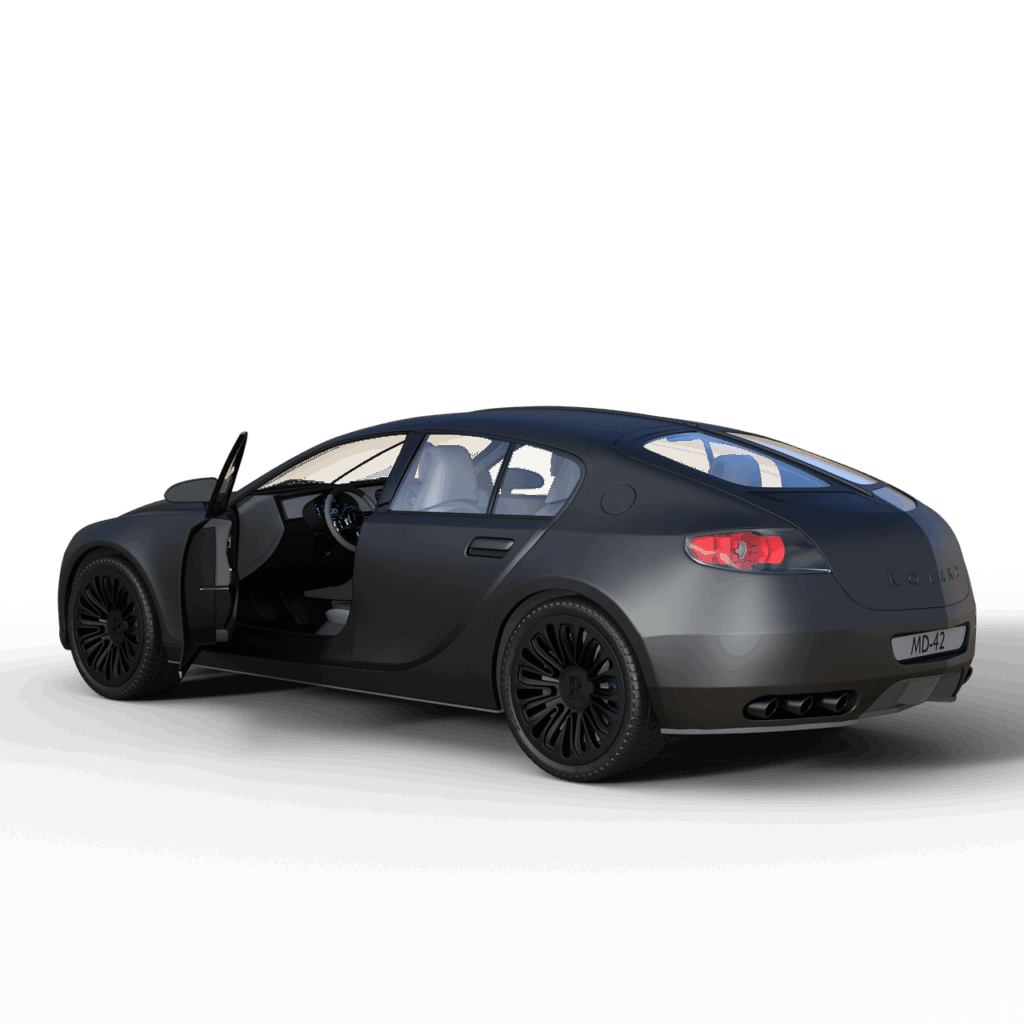
10. **Safety (or Lack Thereof) in Vintage Vehicles**Now for a truly cheeky one, and perhaps the most fun to deploy against safety-obsessed HOAs: the inherent *lack* of modern safety features in your antique vehicles. While safety is paramount in modern motoring, for a malicious compliancer, the absence of airbags and anti-lock brakes in a classic car is not a bug; it’s a feature—a feature that often allows it to bypass rules designed for contemporary, crash-test-rated behemoths.
The context states cars increased in weight post-20th century due to batteries, steel safety cages, anti-lock brakes, and airbags. This is your golden ticket. If your HOA has weight or size rules, proudly declare your sleek, pre-safety-cage classic is inherently *lighter* than its modern, safety-laden counterparts like the Suburban. No unnecessary bulk here!
You could casually mention that while “standard tests for safety in new cars” exist, your 1950s convertible predates them by decades. It wasn’t *designed* with “rear-reversing cameras” or “automated braking.” It’s a historical piece, a different breed. Applying modern safety regulations to it would be absurd, like demanding a knight’s armor include a crumple zone, a true bureaucratic myopia.
Furthermore, the very definition of a “road-worthy” vehicle is typically tied to the standards of its era. You could argue that your vintage beauty, while lacking modern safety enhancements, is perfectly road-worthy *for its time*. It operates exactly as it was designed to in an era when “Traffic collisions [were] the largest cause of injury-related deaths worldwide,” yes, but also when cars were less dense with passive safety features. It’s not about ignoring safety; it’s about acknowledging historical context.
Read more about: You Won’t Believe These 10 ‘Killer’ Cars Were Ever Legal to Drive!
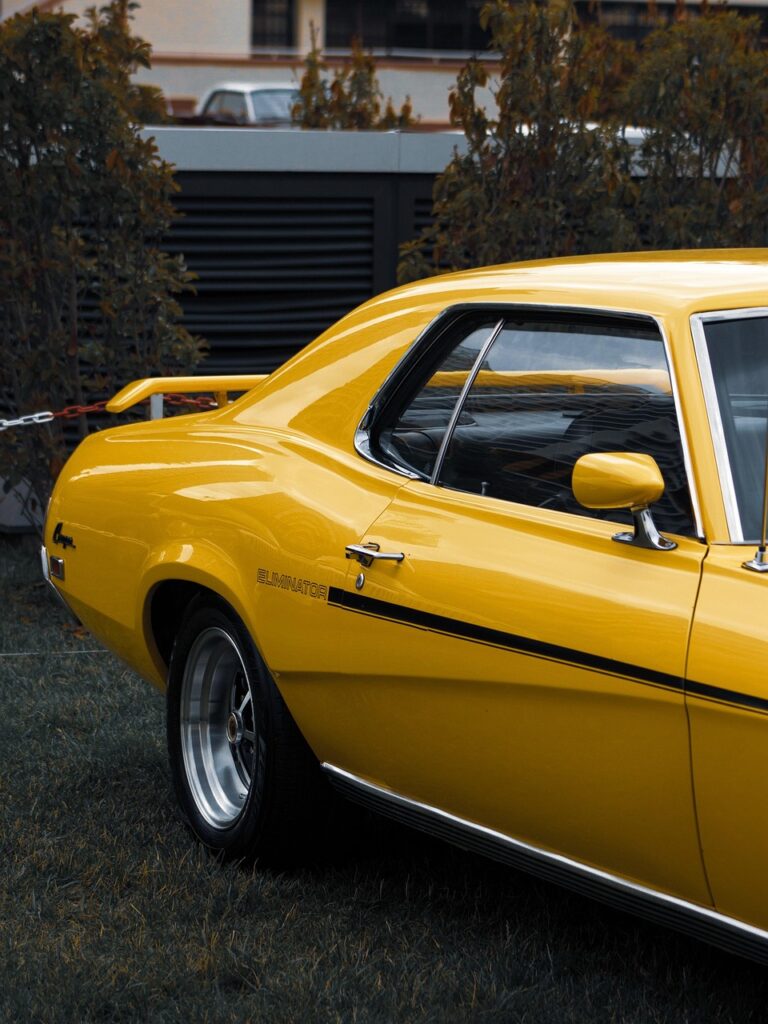
11. **The Pre-War Japanese Tiny Treasures: Three Wheels and a Loophole**Let’s journey to the land of the rising sun, specifically to a time before mass production truly took hold, and discover some delightfully non-standard vehicles that can throw a wrench into any HOA’s rigid classifications. We’re talking about the pre-war Japanese automotive scene, a veritable goldmine of oddball, three-wheeled wonders that exist in a beautiful limbo, neither fully car nor fully anything else, which is exactly where we want them.
The context is clear: “Wheels 3–6, most often 4.” This phrase is a quirky vehicle’s best friend. Combine it with the gem that “In Japan, car production was very limited before World War II,” consisting of “small, three-wheeled for commercial uses, like Daihatsu.” See? “Small, three-wheeled for commercial uses.” If your HOA targets “passenger cars” or “recreational vehicles,” your three-wheeled Daihatsu is neither! It’s a “commercial use” historical piece, defying the “most often 4” wheels rule.
Even if they label it a “truck” (which they might also ban!), the context explicitly distinguishes: “Utility vehicles like pickup trucks, combine seating with extra cargo or utility functionality.” Your three-wheeler might have cargo space, but its unique “3 wheels” classification and historical “commercial use” context set it apart. It’s not a pickup truck; it’s a piece of pre-war Japanese ingenuity defying conventional Western definitions.
This also extends to the fact that many early Japanese manufacturers, like “Isuzu building the Wolseley A-9 in 1922” or “Mitsubishi… built the Mitsubishi Model A based on a Fiat vehicle,” often partnered with European companies. This adds another layer of historical nuance. Your “small, three-wheeled” vehicle might even have European DNA, making it an international anomaly. It’s a testament to global automotive evolution, and certainly not a run-of-the-mill “car” that falls neatly into their narrow, four-wheeled bylaws.

12. **Beyond Transport: The Car as a “Private Space”**HOAs often try to dictate where your vehicles can be parked, or for how long, assuming their sole purpose is commuting. But what if your car isn’t *just* about getting from point A to point B? What if it’s a sanctuary, a mobile office, a rolling lounge, or—let’s be honest—a perfect spot for a little privacy? By redefining the car’s function beyond mere transportation, you can elevate your collection from “parked vehicles” to “essential private amenities,” making those parking rules a lot harder to enforce.
Here’s the loophole: the context reveals that in the 1920s, cars offered ‘a private space to snuggle up.’ Not just transport, but a sanctuary! This historical precedent for cars as more than conveyances is incredibly powerful. Your vintage roadster isn’t *just* parked; it’s providing “societal well-being derived from leisure and travel opportunities,” even if those “opportunities” are just your driveway.
Consider the interior features: “interior lighting,” “entertainment system,” electric (or manual) windows, and “auxiliary power outlets” for phones or fridges. More costly luxury cars might even boast “massage seats” and “collision avoidance systems.” These aren’t just driving aids; they’re comfort and utility features transforming the vehicle into a versatile, mobile “private space”.
You could argue that your car, equipped with its own power outlets and comfortable seating, is an extension of your home, a mobile den, or a private retreat. It provides “on-demand transportation, mobility, independence, and convenience,” yes, but also a crucial “private space.” If the HOA tries to limit where your vehicles are, you can counter that you’re merely accessing your personal amenities, akin to a detached shed or a very fancy, highly mobile gazebo.

13. **The Rise of the Robotaxi: When Cars Drive Themselves (and You Can’t Ban a Driverless Parking Job)**
Alright, buckle up, because we’re heading into the future to outsmart the past. HOAs are usually stuck in the dark ages, drafting rules that barely account for electric cars, let alone fully autonomous vehicles. But what if your “car” isn’t really being “driven” by *you*? What if it’s a robotaxi, or a prototype, silently parking itself in perfectly compliant, albeit unnerving, ways? This is where cutting-edge tech meets malicious compliance, and it’s glorious.
The context unequivocally states: “Fully autonomous vehicles, also known as driverless cars, already exist as robotaxis but have a long way to go before they are in general use.” Let that sink in. They *exist*. They are *robotaxis*. If you, as a forward-thinking collector, happen to acquire a pre-commercial robotaxi, or even a highly advanced prototype, the HOA’s rulebook about “driver conduct” or “vehicle operation” suddenly becomes hilariously irrelevant. Who are they going to fine for poor parking? The software?
Imagine the scene: ‘Mr. Collector, your autonomous vehicle is parked too close!’ You, calmly, with remote in hand, press a button. The vehicle, guided by ‘sensors such as lidar,’ subtly adjusts. ‘My apologies, Board Member Carol. My autonomous ‘robotaxi’ was merely calibrating its parking parameters, constantly improving its ‘software’ to avoid curbs.’ Good luck arguing with a perfectly self-correcting machine.
Furthermore, the context notes “Intensive development of conventional battery electric vehicles is continuing into the 2020s.” If your autonomous marvel is also electric, you hit two birds with one stone: zero emissions *and* no human driver. It’s a double whammy of compliance, rendering most of their petty rules obsolete. They want to ban loud, polluting vehicles? You give them a silent, self-parking, technologically advanced ghost that anticipates their every move.
And let’s not forget the idea of “wireless charging.” If your driverless vehicle simply parks over a charging pad, is it even truly “parked” in the traditional sense, or is it engaged in an act of sophisticated, passive energy acquisition? It’s a vehicle that operates by a different set of rules, rules that your HOA, with its antiquated bylaws, simply couldn’t have foreseen. You’re not just collecting cars; you’re collecting the future, and the future has no time for petty parking regulations.

14. **Car Sharing: My Collection, Your Loophole**Finally, let’s tie it all together with a stroke of genius that positions your extensive car collection not as an individual indulgence, but as a public good. HOAs often restrict individual ownership, but what if your “personal collection” is actually a nascent “car sharing” program, providing a valuable “community service” to your neighbors? By reframing your passion as a benefit to the collective, you can turn their scarcity mindset on its head.
The context is your ally: “Car-share arrangements and carpooling are increasingly popular.” Specifically, “car sharing offer residents to ‘share’ a vehicle” in “congested neighbourhoods.” If your area is congested, your generous offer to make your diverse collection *available* for “sharing” (on your terms, naturally) isn’t just a loophole; it’s practically a civic duty!
Imagine telling the HOA: ‘Concerned about my ‘cars’? On the contrary! My collection isn’t *mine* in the traditional sense. I’m leveraging ‘telematics technology’ for a novel ‘car share’ scheme here. I’m providing ‘on-demand transportation, mobility, independence, and convenience’ for *everyone*, contributing to our neighborhood’s ‘societal well-being’!’ It’s benevolent malicious compliance at its finest.
You’re not defying their rules; you’re proactively addressing “road congestion” (a cost to society listed in the context!) by offering a diverse fleet. If they complain about multiple vehicles, you can counter that each one serves a different “individual consumer requirement,” fulfilling the “large variety of body styles” mentioned earlier (sedan, hatchback, minivan, coupe—all available for the community!). You’re a one-person automotive solution.
So there you have it, folks. A glorious, convoluted, and utterly compelling argument for why your automotive passion project should remain inviolable, even in the face of the most officious HOA. It’s not about breaking the rules; it’s about understanding them so thoroughly, and understanding automotive history so intimately, that you can turn their own meticulously crafted jargon against them. Remember, bureaucracy thrives on specificity, and history, my friends, is anything but specific when you’re looking for the right loopholes. So go forth, collect, and let your engines of malicious compliance roar (or silently glide, depending on your fuel source). The open road (and your driveway) awaits!