
Alright, so you’re probably here because you’re fascinated by the kind of stories that mess with your head, right? The ones that burrow deep into your psyche, leaving you thinking long after the credits roll. We’re talking about those chilling “psychological” moments that make us question reality, motivation, and the very fabric of the human mind. It’s not just about jump scares; it’s about the deep, unsettling truths hidden within our own thoughts.
But what *exactly* makes something ‘psychological’? It’s a question far older than any film genre, reaching back to humanity’s first attempts to understand ourselves and the strange, often terrifying, inner world we inhabit. To truly appreciate the subtle artistry of a story that plays with our minds, we’ve got to journey back to where it all began: the fundamental concepts and groundbreaking discoveries that built the very foundation of what we call ‘psychology.’
So, forget the popcorn for a moment and let’s embark on an epic quest. We’re diving into 14 pivotal moments and ideas from the history of psychology itself, tracing how we came to understand the mind, its complexities, and why these historical insights still resonate powerfully today, shaping our understanding of everything from personal struggles to societal anxieties. Get ready to have your mind blown by the sheer depth of human curiosity!
1. **Defining the “Psychological”: More Than Just Mental Distress**Before we get into anything else, let’s get clear on what we mean when we use that big, brainy word: “psychological.” Merriam-Webster defines it in a couple of key ways that are super helpful. First up, it’s described as “of or relating to psychology” or “of, relating to, or occurring in the mind : mental.” This gives us a broad playground for understanding anything that touches our thoughts, feelings, and internal experiences, whether it’s everyday musings or profound internal struggles.
But there’s more! The definition also points to something “directed toward, influencing, or acting on the mind especially in relation to an individual’s willpower or behavioral motivation.” Think about that for a second. This isn’t just about observing the mind; it’s about the subtle (and sometimes not-so-subtle) ways that external forces, or even our own internal processes, can shape our decisions, desires, and actions. It’s a powerful idea, encompassing everything from personal growth strategies to complex societal dynamics.
Consider the chilling concept of ‘gaslighting,’ which the definition explains as “to psychologically manipulate a person to the point where they question their own sanity.” This example perfectly encapsulates the darker side of psychological influence, where perception and reality are twisted. It highlights that the “psychological” isn’t always about health and well-being; it can also be about vulnerability, control, and the profound impact minds can have on one another, hinting at the very essence of what makes a story truly unsettling.
Read more about: Totally Rad! Here Are 13 ’80s Actresses Everyone Couldn’t Stop Talking About

2. **Ancient Civilizations: The Dawn of Understanding the Mind**Long before therapists’ couches or brain scans, ancient civilizations were already deeply engrossed in trying to figure out the mysteries of the human mind. It wasn’t always called ‘psychology,’ but the philosophical inquiry into thoughts, emotions, and behavior was a universal pursuit. From the sun-baked sands of Egypt to the bustling intellectual centers of Greece, and across the vast empires of China, India, and Persia, thinkers wrestled with questions that still puzzle us today.
Take, for instance, Ancient Egypt. Their remarkable Ebers Papyrus, an ancient medical text, didn’t shy away from mental health. It actually mentioned what we would now recognize as “depression and thought disorders.” This shows an early recognition that mental states could be problematic and required attention, highlighting a nascent awareness of psychological well-being embedded within their broader medical and spiritual understanding.
Meanwhile, in Ancient Greece, some of the most famous philosophers took on the challenge of explaining the inner world. Figures like Thales, Plato, and Aristotle weren’t just discussing politics or ethics; their deep philosophical works often “addressed the workings of the mind.” They laid crucial groundwork, setting the stage for centuries of debate and inquiry into the nature of consciousness and the human experience.
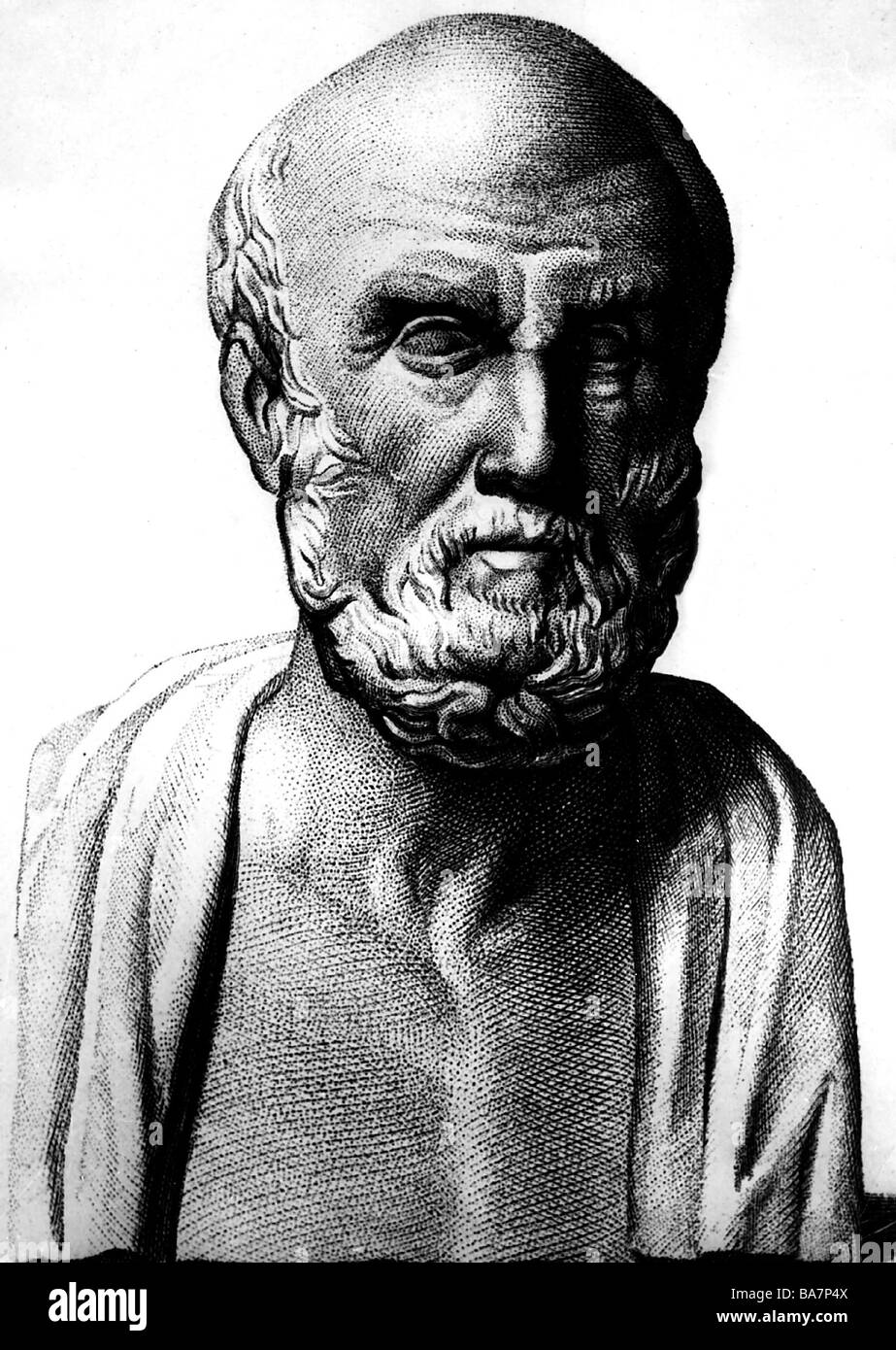
3. **Hippocrates’ Revolutionary Idea: Physical Roots of Mental Disorders**In the grand scheme of understanding the mind, Hippocrates, the legendary Greek physician, dropped a bombshell of an idea that completely upended traditional thinking. Before him, mental distress was often attributed to supernatural forces, angry gods, or demonic possession. It was a terrifying, unpredictable landscape where explanations were steeped in myth and superstition.
However, Hippocrates dared to theorize something radically different. “As early as the 4th century BC, the Greek physician Hippocrates theorized that mental disorders had physical rather than supernatural causes.” This was a monumental shift in perspective, pulling the understanding of the mind’s ailments out of the realm of the mystical and into the nascent field of medicine. He proposed that imbalances within the body, rather than divine wrath, were responsible for psychological suffering.
This brilliant insight planted a crucial seed: the idea that the mind and body are intrinsically linked, and that mental conditions might have observable, natural origins. It paved the way for future scientific inquiry, encouraging observation, diagnosis, and a search for biological explanations, forever changing how humanity would approach the perplexing nature of mental health. Without this daring hypothesis, our journey into scientific psychology might have taken a much longer, more convoluted path.
4. **The Brain vs. The Heart: Early Debates on the Seat of Consciousness**Once the idea that mental processes were natural phenomena started gaining traction, the next big question emerged: where exactly do these incredible processes happen? It seems obvious to us now, but for ancient thinkers, the answer wasn’t so clear-cut. This led to one of philosophy’s earliest and most fundamental debates, with two heavyweights offering competing theories on the true seat of the mind.
On one side, we had Plato. “In 387 BCE, Plato suggested that the brain is where mental processes take place.” He saw the brain as the logical command center, the home of reason and intellect. This intuition was remarkably prescient, especially considering the limited anatomical knowledge of his time. He was, in essence, pointing to the very organ we now understand to be the bedrock of all our thoughts and feelings.
But then there was Aristotle, Plato’s student, who presented a different view. “In 335 BCE Aristotle suggested that it was the heart.” For Aristotle, the heart was not just a pump; it was the emotional core, the source of life and warmth, and thus, logically, the center of consciousness. While modern science has definitively sided with Plato on the brain’s role, this ancient debate was vital. It forced contemplation, observation, and argument, pushing thinkers to justify their beliefs and seek evidence, however rudimentary, for the mysterious workings of the inner self.

5. **Eastern Insights: Chinese Philosophy’s Holistic View of Mind and Body**Venturing eastward, we find equally profound, though distinctly different, approaches to understanding the mind. In China, the foundations of psychological thought weren’t born in medical treatises alone but “emerged from the philosophical works of ancient thinkers like Laozi and Confucius, as well as the teachings of Buddhism.” This rich tapestry of philosophical and spiritual traditions provided a holistic lens through which to examine the human experience, emphasizing interconnectedness rather than isolation.
This body of knowledge was built on “insights from introspection, observation, and techniques for focused thinking and behavior.” It was a practical, experiential philosophy that saw the mind as an integral part of a larger universe, acknowledging both “physical and mental realms, along with the interplay between the two.” The famous “Yellow Emperor’s Classic of Internal Medicine,” for instance, was groundbreaking. It identified “the brain as the nexus of wisdom and sensation,” and even included “theories of personality based on yin–yang balance.” It also innovatively analyzed “mental disorder in terms of physiological and social disequilibria,” showing a sophisticated understanding of multiple contributing factors.
Chinese philosophy also placed a strong emphasis on self-cultivation, highlighting the importance of “purifying the mind in order to increase virtue and power.” This focus on personal transformation and societal harmony provided a unique framework for understanding psychological well-being. Later, during the Qing dynasty, Western-educated scholars like Wang Qingren further advanced this understanding, linking “mental disorder with brain diseases” and even exploring “the causes of dreams and insomnia,” anticipating modern neurological research.

6. **Indian Philosophy and Yoga: Exploring States of Awareness and the Soul**Journeying further into the East, we discover that Indian philosophy, profoundly shaped by Hinduism, embarked on its own unique exploration of consciousness and the inner self. These ancient traditions were deeply concerned with the very nature of existence and our perception of it, leading to intricate systems for understanding different “distinctions in types of awareness.” It was a quest for ultimate truth, with the mind as the primary vehicle.
A central and enduring idea, foundational to the Upanishads and other Vedic texts that formed Hinduism, was the crucial “distinction between a person’s transient mundane self and their eternal, unchanging soul.” This philosophical bedrock prompted a profound introspection into what truly constitutes identity, and how our daily thoughts and experiences relate to a deeper, more permanent essence. It suggested that much of what we perceive as “self” is fleeting, while a deeper truth lies beneath.
While various Hindu doctrines and Buddhism would later challenge or refine this hierarchy of selves, they all shared a common thread: “emphasized the importance of reaching higher awareness.” This wasn’t just abstract thought; it led to practical disciplines. Yoga, for example, encompasses “a range of techniques used in pursuit of this goal,” offering pathways to manipulate states of consciousness and achieve profound psychological and spiritual insights. This active engagement with the mind, rather than just passive observation, offered transformative possibilities.

7. **Enlightenment Era’s Intellectual Spark: Psychology as a Discipline Emerges**As the world moved into the Enlightenment era in Europe, intellectual curiosity exploded, and the human mind once again became a captivating subject for rigorous study. This period, characterized by reason and scientific inquiry, saw psychology begin its slow, deliberate transformation from a branch of philosophy into a distinct field, even if still largely theoretical. Thinkers started laying the conceptual groundwork for what would eventually become the science of the mind.
In Germany, the brilliant Gottfried Wilhelm Leibniz (1646–1716) applied his groundbreaking principles of calculus to the mind itself. He argued that “mental activity took place on an indivisible continuum,” suggesting that there were no sharp breaks in our thoughts and experiences. Even more fascinating, he proposed that “the difference between conscious and unconscious awareness is only a matter of degree,” a prescient idea that would echo in psychology centuries later. It was Christian Wolff who took a crucial step, boldly stating that psychology was “its own science,” publishing foundational works like *Psychologia Empirica* in 1732.
Despite this burgeoning interest, the path to experimental psychology wasn’t smooth. Immanuel Kant, a titan of philosophy, while advancing anthropology with psychology as a subdivision, explicitly “rejected the idea of an experimental psychology,” believing inner observation couldn’t be quantified or controlled. Nevertheless, the intellectual momentum was undeniable. Ferdinand Ueberwasser designated himself a “Professor of Empirical Psychology” and gave lectures on scientific psychology, though his efforts were unfortunately overshadowed by the Napoleonic Wars. Later, in 1825, the Prussian state, having consulted philosophers, remarkably “established psychology as a mandatory discipline in its rapidly expanding and highly influential educational system.” However, it’s crucial to note that this mandated discipline “did not yet embrace experimentation,” setting the stage for the revolutionary changes that were soon to come.
Alright, buckle up! We’ve journeyed through the philosophical roots and ancient insights that first dared to peek inside the human mind. Now, get ready to fast-forward into the exciting, sometimes chaotic, world where psychology truly comes alive as a science! We’re talking about labs, experiments, global conflicts, and the groundbreaking individuals who weren’t afraid to challenge the status quo and push the boundaries of understanding. It’s a wild ride, and you’re about to see how our modern understanding of the mind was forged in the fires of discovery and societal upheaval.

8. **The Birth of Experimental Psychology: From Philosophy to Science**So, we’ve arrived at a truly pivotal moment: the official birth of experimental psychology! Before this, understanding the mind was largely the realm of philosophers. But visionary thinkers began to argue that the human mind wasn’t just for abstract contemplation; it was ripe for scientific investigation, even if the methods were still a bit rough around the edges. John Stuart Mill, for instance, believed in a “mental chemistry” where basic thoughts could combine into more complex ideas, hinting at a structured, observable process.
Then came Gustav Fechner, who truly threw down the gauntlet. Working in Leipzig in the 1830s, he started conducting psychophysics research. What’s psychophysics, you ask? It’s basically the study of how physical stimuli are perceived psychologically. Fechner articulated a groundbreaking principle: that our perception of a stimulus changes logarithmically with its intensity, a rule now famously known as the Weber–Fechner law. His 1860 work, *Elements of Psychophysics*, directly challenged Immanuel Kant’s earlier, skeptical view that quantitative research on the mind couldn’t be done. Fechner showed that mental processes could not only be given numerical values but also measured experimentally! Talk about a mic drop moment for science.
Fechner’s work paved the way for another giant, Wilhelm Wundt, who had trained with Hermann von Helmholtz on sensory perception. Wundt brought experimental psychology to the world by establishing the very first psychological laboratory at Leipzig University. He was all about breaking down mental processes into their most basic components, much like chemists were doing with material elements. Soon after, Paul Flechsig and Emil Kraepelin set up another influential, psychology-related lab in Leipzig, focusing on experimental psychiatry.
The ripples of this scientific revolution spread quickly. Across the pond, James McKeen Cattell, who would go on to co-found *Psychological Review*, became the first professor of psychology in the United States. It was clear: psychology was no longer just philosophy’s quirky cousin; it was staking its claim as a bonafide science.

9. **Pioneering Minds: Early Schools of Thought and International Expansion**As the experimental era dawned, new titans emerged, each contributing their unique twist to understanding the mind. Hermann Ebbinghaus, a researcher at the University of Berlin, dove deep into the experimental study of memory. He wasn’t just talking about remembering things; he developed quantitative models for how we learn and, yes, how we forget! His work laid crucial foundations for cognitive psychology.
Then came a fresh perspective with the birth of Gestalt psychology, co-founded by Wolfgang Kohler, Max Wertheimer, and Kurt Koffka, with later influence from Fritz Perls. These thinkers completely flipped the script. Instead of dissecting thoughts into tiny pieces, they argued that individuals experience things as unified wholes. The core idea? The whole of experience is more than the sum of its parts, because just adding up components misses the meaningful relationships that make an experience what it is.
Wundt’s influence, as you can imagine, went global. His students spread out like intellectual missionaries, setting up labs in Germany, Denmark, Austria, England, and the United States. G. Stanley Hall, an American who studied with Wundt, founded an internationally influential psychology lab at Johns Hopkins University. Hall even trained Yujiro Motora, who then brought experimental psychology, with a focus on psychophysics, to the Imperial University of Tokyo. Another Wundt assistant, Hugo Münsterberg, taught psychology at Harvard, influencing students like Narendra Nath Sen Gupta, who later founded a psychology department and lab at the University of Calcutta in 1905. Wundt’s students like Walter Dill Scott, Lightner Witmer, and James McKeen Cattell also worked on developing mental ability tests, with Cattell going on to found the Psychological Corporation and Witmer focusing on child testing.
Meanwhile, another Wundt protégé, Edward Titchener, spearheaded “structuralist” psychology at Cornell University, aiming to analyze and classify different aspects of the mind, mainly through introspection. But not everyone was on board with just breaking things down. William James, John Dewey, and Harvey Carr championed functionalism, an expansive approach emphasizing the usefulness of behavior to an individual, inspired by Darwin. James’s 1890 masterpiece, *The Principles of Psychology*, expanded on structuralism and famously described the “stream of consciousness,” sparking huge interest among American students. Dewey, in particular, connected psychology to societal concerns, notably advocating for progressive education. A different, more physiology-focused experimentalism also blossomed in South America under Horacio G. Piñero, and in Russia, with Ivan Sechenov pushing for a deterministic view of human behavior and Ivan Pavlov famously discovering “classical conditioning” in dogs.

10. **Psychology’s Growing Pains: Consolidation and Early Societal Engagement**With all this innovation, psychology needed some grown-up structures to solidify its place. One of the earliest psychology societies, La Société de Psychologie Physiologique, emerged in France from 1885 to 1893. The first International Congress of Psychology, organized by the International Union of Psychological Science, met in Paris in August 1889, right amidst the World’s Fair. Imagine the buzz! William James was one of only three Americans among 400 attendees. The American Psychological Association (APA) was founded soon after in 1892, a huge step for the discipline in the U.S.
These international congresses continued, growing in scope and participation, with the Sixth Congress in Geneva (1909) featuring presentations in Russian, Chinese, Japanese, and even Esperanto! After a break for World War I, the Seventh Congress in Oxford saw a surge in Anglo-American participation, and by 1929, the Congress at Yale University hosted hundreds of APA members. In the East, Tokyo Imperial University led the charge in adopting new psychology, which then diffused into China.
American psychology really gained traction during World War I. A committee led by Robert Yerkes administered mental tests like “Army Alpha” and “Army Beta” to nearly 1.8 million soldiers, demonstrating psychology’s practical value on a massive scale. This success attracted significant funding. The Rockefeller family, through the Social Science Research Council, began pouring money into behavioral research. Rockefeller charities also funded the National Committee on Mental Hygiene, promoting the concept of mental illness and lobbying for psychological insights in child rearing. They even helped establish research on uality in the U.S. through the Bureau of Social Hygiene and funding Alfred Kinsey. However, this period also saw a darker influence: the eugenics movement, backed by organizations like the Carnegie-funded Eugenics Record Office and the Draper-funded Pioneer Fund, which integrated eugenics into psychology classes in the 1910s and 1920s. Contrastingly, in the UK, psychology faced antagonism from scientific and medical establishments, with only six psychology chairs in universities until 1939.

11. **Entanglement with Global Conflicts: Psychology in WWII and the Cold War**The 20th century, sadly, was defined by global conflicts, and psychology found itself intertwined with the highest stakes of war and politics. During World War II and the subsequent Cold War, U.S. military and intelligence agencies became major funders of psychological research. The Office of Strategic Services (OSS), a precursor to the CIA, actively engaged psychologists. University of Michigan psychologist Dorwin Cartwright reported that researchers began large-scale propaganda studies from 1939–1941, noting that by the war’s end, a social psychologist was largely responsible for shaping the U.S. government’s weekly propaganda policy. Psychologists also played crucial roles in managing the domestic economy. The Army rolled out its General Classification Test to assess millions of soldiers’ abilities and conducted extensive research on troop morale and mental health.
In the 1950s, the Rockefeller and Ford Foundations even collaborated with the CIA to fund research specifically focused on psychological warfare. This close relationship sometimes sparked controversy, as seen in 1965 with Project Camelot, an Army initiative dubbed the “Manhattan Project” of social science, which enlisted psychologists and anthropologists to analyze foreign countries’ plans for strategic purposes.
But the story of psychology’s entanglement with conflict isn’t just an American one. In Germany, after World War I, the discipline gained institutional power through the military, which tragically expanded during Nazi Germany. Under Matthias Göring, Hermann Göring’s cousin, the Berlin Psychoanalytic Institute was chillingly renamed the Göring Institute. Freudian psychoanalysts, many of whom were Jewish, were expelled and persecuted under Nazi anti-Jewish policies, forcing all psychologists to distance themselves from Freud and Adler. The Göring Institute, well-funded throughout the war, aimed to create a “New German Psychotherapy” that would align Germans with the Reich’s goals, providing “Seelenführung,” or soul guidance, to integrate individuals into the new vision of a German community.
This period saw horrifying abuses of psychological principles. Harald Schultz-Hencke blended psychology with Nazi theories of biology and racial origins, criticizing psychoanalysis as a study of the weak. Johannes Heinrich Schultz, known for autogenic training, openly advocated for the sterilization and euthanasia of those deemed genetically undesirable, even devising techniques to facilitate these atrocities. After the war, while some psychologists were discredited due to Nazi affiliations, new institutions emerged. Alexander Mitscherlich, with Rockefeller Foundation funding, founded the first clinical psychosomatic medicine division at Heidelberg University, and by 1970, psychology was integrated into medical students’ required studies.

12. **Psychology Under Totalitarian Regimes: The Soviet and Chinese Experience**Meanwhile, across the globe, totalitarian regimes also sought to harness the power of psychology, albeit for very different, ideologically driven ends. Following the Russian Revolution, the Bolsheviks actively promoted psychology as a tool to engineer the “New Man” of socialism. This meant university psychology departments trained vast numbers of students, who then found positions in schools, workplaces, cultural institutions, and the military. The state heavily emphasized pedology, the study of child development, with Lev Vygotsky becoming a prominent figure. Interestingly, the Bolsheviks also championed free love and initially embraced psychoanalysis as an antidote to ual repression.
However, this progressive stance shifted dramatically. Pedology and intelligence testing fell out of favor in 1936, though psychology itself maintained its privileged position as an instrument of the Soviet Union. The Stalinist purges, a dark chapter in Soviet history, instilled a pervasive climate of fear within the profession, just as it did throughout society. Following World War II, a chilling denunciation targeted Jewish psychologists, past and present, including luminaries like Lev Vygotsky, A.R. Luria, and Aron Zalkind, while figures like Ivan Pavlov (posthumously) and even Stalin himself were lauded as heroes of Soviet psychology.
A degree of liberalization, known as the Khrushchev Thaw, brought some relief to Soviet academics. Topics like cybernetics, linguistics, and genetics, previously taboo, became acceptable once more. A new field, engineering psychology, emerged, focusing on the mental aspects of complex jobs like those of pilots and cosmonauts. Interdisciplinary studies flourished, and scholars like Georgy Shchedrovitsky developed systems theory approaches to human behavior.
In China, 20th-century psychology initially mirrored U.S. trends, with translations of American authors like William James, the establishment of university departments and journals, and groups like the Chinese Association of Psychological Testing (1930) and the Chinese Psychological Society (1937). Chinese psychologists, influenced by John Dewey’s lectures, were drawn to the idea that education would drive modernization, with figures like Kuo Zing-yang popularizing behaviorism. However, after the Chinese Communist Party took control, the Stalinist Soviet Union became the dominant influence. Marxism–Leninism became the leading social doctrine, and Pavlovian conditioning the approved method for behavior change. Chinese psychologists elaborated on Lenin’s “reflective” consciousness, envisioning an “active consciousness” capable of transcending material conditions through hard work and ideological struggle. They developed the concept of “recognition,” the interface between individual perceptions and the socially accepted worldview, where failure to align with party doctrine was deemed “incorrect recognition.” Psychology education was centralized under the Chinese Academy of Sciences, with a primary concern being the re-education of American-educated psychologists in Soviet doctrines, and child psychology remained a central goal for national education.

13. **Trailblazing Women in Psychology: Early 20th Century Breakthroughs**Amidst all these profound shifts, the early 20th century also marked a turning point for women in psychology, who began to make truly groundbreaking findings despite facing significant challenges. Anna Freud, the brilliant daughter of Sigmund Freud, expanded on her father’s work, developing unique approaches to child psychoanalysis using defense mechanisms like denial, repression, and suppression. She believed that child analysis could be an effective therapy once a child reached the latency period, emphasizing the importance of focusing on a child’s environment, supporting their development, and actively preventing neurosis.
Anna Freud championed the idea that each child should be recognized as an individual, with sessions tailored to their specific needs. She encouraged children to express themselves freely through drawing and movement, fostering a strong therapeutic alliance that allowed psychologists to observe normal behavior. Her extensive research further explored the impact of family separation, the challenges faced by socio-economically disadvantaged children, and all stages of child development from infancy through adolescence, solidifying her legacy as a pioneer in the field.
Another incredibly impactful figure was Leta Stetter Hollingworth. She boldly challenged the damaging belief in “functional periodicity,” which claimed women were mentally and physically impaired during menstruation – a notion that sadly limited their employment opportunities. Hollingworth also took on Edward L. Thorndike’s theory that women possessed lesser psychological and physical traits than men. She set out to prove that perceived differences were not due to male genetic superiority, but rather cultural influences. Her research included studying women’s impairment during menstruation, where she recorded the performance of both women and men on cognitive, perceptual, and motor tasks over three months. Crucially, she found no evidence of decreased performance due to a woman’s menstrual cycle.
Hollingworth further challenged the idea that intelligence was inherited and that women were intellectually inferior, arguing that women’s limited access to positions of power stemmed from societal norms and assigned roles, not inherent abilities. To reinforce her point, she conducted an experiment with infants, free from the environmental influence of social norms, finding no differences between them apart from size. Her pioneering research definitively debunked harmful myths, proving there were no inherent physiological or psychological differences between men and women that would impair women during menstruation. In addition to these remarkable contributions by Hollingworth and Anna Freud, Mary Whiton Calkins invented the paired associates technique for studying memory and developed self-psychology. Karen Horney gave us the concepts of “womb envy” and neurotic needs, and psychoanalyst Melanie Klein profoundly impacted developmental psychology with her research on play therapy. These women made their incredible discoveries while navigating struggles of ism, discrimination, and often receiving little recognition for their groundbreaking work.
14. **Continuing the Legacy: Women’s Impact in the Mid-to-Late 20th and 21st Centuries**The latter half of the 20th century saw women in psychology continue to deliver research with large-scale impacts, further shaping the discipline. Mary Ainsworth, building on John Bowlby’s work, dedicated years to fieldwork understanding mother-infant relationships. This led her to develop the famous Strange Situation Procedure, a laboratory method designed to study attachment styles by observing how children react to separations and reunions with their mothers under varying circumstances. Her field studies culminated in her groundbreaking attachment theory and the classification of attachment styles, a landmark achievement for developmental psychology. Due to her profound contributions, Ainsworth became one of the most cited psychologists of all time.
Mamie Phipps Clark was another transformative figure. As one of the first African-Americans to earn a doctoral degree in psychology from Columbia University (alongside her husband, Kenneth Clark), her master’s thesis argued that racial discrimination negatively affected black children’s self-esteem. Collaborating with her husband, she conducted the famous doll tests in the 1940s, asking young children to choose between identical dolls, differing only in race. The overwhelming preference for white dolls, and the attribution of positive traits to them, repeatedly demonstrated the damaging effects of racial discrimination and segregation on black children’s self-image and development. This pivotal research was instrumental in the landmark 1954 Brown v. Board of Education decision, which led to the end of legal segregation across the nation. Clark continued to be an influential psychologist, dedicating her work to minority youth.
As psychology evolved, women in the field vocally advocated for their voices and perspectives. Second-wave feminism deeply influenced psychology, with outspoken figures like Naomi Weisstein leading the charge. A distinguished researcher in psychology and neuroscience, Weisstein is renowned for her paper, “Kirche, Kuche, Kinder as Scientific Law: Psychology Constructs the Female.” This powerful critique slammed the field for its male-centric bias and over-reliance on biology to explain gender differences, often neglecting crucial social factors. Her work fundamentally reshaped the landscape for future research in social psychology, particularly in the area of gender construction. Other women also passionately advocated for greater representation and fairness, leading to the creation of the Association for Women in Psychology in 1969, with E. Kitsch Child, Phyllis Chesler, and Dorothy Riddle among its founding members, critically examining how the field treated women.
The latter half of the 20th century further diversified the field as women of color achieved significant milestones. Martha Bernal became the first Latina woman to earn a Ph.D. in psychology in 1962. In 1969, Marigold Linton, the first Native American woman to receive a Ph.D. in psychology, founded the National Indian Education Association and was a founding member of the Society for Advancement of Chicanos and Native Americans in Science. Carolyn Attneave established The Network of Indian Psychologists in 1971, and Harriet McAdoo was appointed to the White House Conference on Families in 1979.
Entering the 21st century, women have achieved even greater prominence in psychology, contributing across a vast array of subfields. Many now hold leadership roles, direct influential research laboratories, and mentor the next generation of psychologists. While gender disparities, particularly concerning equal pay and representation in senior academic positions, still persist, the number of women pursuing education and training in psychological science has reached unprecedented levels. In the United States, an impressive 78% of undergraduate students and 71% of graduate students in psychology are women. This ongoing journey from philosophical inquiry to scientific rigor, and from exclusive spaces to inclusive voices, truly showcases psychology’s dynamic and ever-evolving nature, proving that understanding the mind is a never-ending, fascinating adventure for us all!