Ever had that moment? You’ve finally settled in for a cozy movie night – lounge pants on, snacks at the ready, maybe even a fancy drink – only to discover that the film you picked is… well, it’s a total snooze-fest. It happens to the best of us, and honestly, sometimes it feels like some movies are specifically designed to test the limits of our patience. It’s like a cinematic endurance test, where the prize for making it to the end is simply the knowledge that you survived. We’ve all been there, glancing at the clock more than the screen, wondering if the plot will ever actually kick off, or if this is just how it is now.
What’s truly fascinating (and a little frustrating) is that it’s not always low-budget indies or obscure foreign films that fall into this trap. Sometimes, it’s the big-name blockbusters, the critically acclaimed darlings, or even Oscar-winning epics that leave us utterly bewildered by their ability to stretch time with slow pacing, convoluted plots, or just a bit too much artistic indulgence. These are the films that might have garnered prestigious awards or boasted all-star casts, but for many viewers, they were just an invitation to take a nap.
So, if you’re ready to commiserate and maybe even nod along in agreement, we’re taking a deep dive into some of the movies that have achieved legendary status for being, shall we say, less than riveting. We’ve rounded up a list of films that, despite their merits or hype, have left many audiences struggling to stay awake. Grab your coffee, or maybe just a pillow, because we’re about to explore the first half of these cinematic experiences that were the ultimate snoozefests. Let’s get into it!
1. **The English Patient (1996)**Ah, *The English Patient*. This film is often the poster child for movies that sweep the Academy Awards but then leave a significant chunk of the audience wondering what all the fuss was about. The premise sounds incredibly rich and compelling on paper: it follows Almásy (Ralph Fiennes), a badly burned patient in a medical facility during WWII, who struggles to recall his past as he shares it with the nurse caring for him (Juliette Binoche). You’ve got romance, tragedy, intrigue – it really promises a lot, doesn’t it?
People thought they *should* watch it because the story is rich with romance, tragedy, and intrigue as Almásy gradually remembers who he was and how he came to be injured. Plus, the setting is varied, with characters traveling from Italy to various North African locations, which sounds like a visual treat. It’s the kind of epic narrative that feels important and award-worthy, drawing you in with the expectation of a sweeping, emotional journey.
However, this is where it starts to drag for many. The film heavily and expertly employs non-linear storytelling, which, in theory, achieves the goal of putting viewers in Almásy’s position as he pieces together his memories. But here’s the kicker: the constant shifting between plot-points, as well as the relative lack of action in the present, runs the risk of disorienting and boring casual viewers. What’s meant to be a clever narrative device can feel like a frustrating puzzle when you’re just trying to enjoy a movie.
While critics lauded its artistry and emotional depth, many everyday viewers found themselves struggling to connect with its slow-burn pace and fragmented story. It’s a film that demands your full, unwavering attention to its intricate tapestry, and if you’re not in the mood for that kind of commitment, it can quickly become an exercise in patience rather than entertainment. So, while it swept the Oscars, it also managed to lull many audiences into a peaceful, if involuntary, slumber.
Read more about: Angelina Jolie: A Journey of Art, Advocacy, and Evolution in the Public Eye

2. **The Tree of Life (2011)**Terrence Malick’s *The Tree of Life* is one of those movies that you either absolutely adore for its profound artistry or you find yourself checking your watch every five minutes. The premise itself hints at something grand: over several decades, the O’Brien family is forced to contend with loss, desire, and forgiveness. It follows the personal journeys of parents Mr. and Mrs. O’Brien (Brad Pitt and Jessica Chastain) and their children in the mid-1900s, as well as the struggles of their son, Jack O’Brien (Sean Penn), in 2010.
Why did people think they *should* watch it? Because *The Tree of Life* is a very ambitious film that uniquely approaches both familial relationships and the nature of human existence. Director and writer Terrence Malick deftly blends the drama of a family losing their son and finding their sense of self with deep philosophical dialogue and cosmic imagery. It’s marketed as a spiritual, visually stunning exploration of life’s big questions, featuring an A-list cast that adds to its allure.
But here’s where the “boring” critiques often emerge. The narrative itself, at its core, isn’t groundbreaking; grief and acceptance are themes that numerous films have covered. And as for presentation, while the visuals are undeniably stunning, the imagery often comes across as either too ambiguous or too obvious, depending on the viewer. This artistic indulgence can make it incredibly difficult for many to grasp what’s happening or why they should care, leading to a feeling of disconnect.
The result is a film that is heavy on theme, yet often fails to engage many viewers on an emotional or narrative level. It’s a cinematic experience that prioritizes philosophical contemplation and abstract beauty over conventional storytelling, which, for a significant portion of the audience, translates into a rather lengthy and perplexing watch. You might leave feeling like you’ve seen something “important,” but also thoroughly unentertained.
Read more about: From Silent Extinction to Nuclear Laughter: The 15 Essential End-of-the-World Disaster Films Every Fan Must See
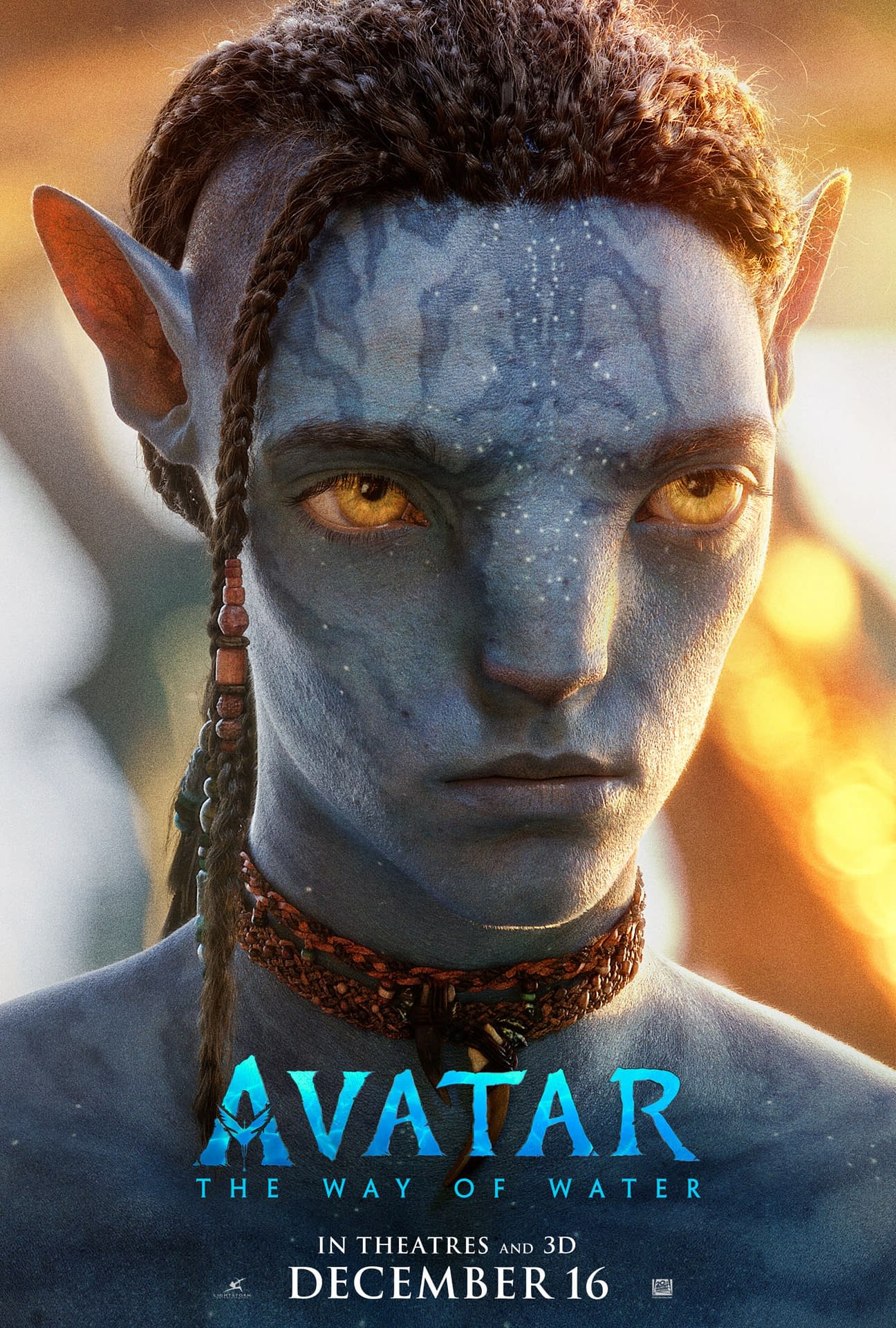
3. **Avatar: The Way of Water (2022)**When James Cameron decided to give us a sequel to the mega-blockbuster *Avatar* after what felt like an eternity, anticipation was through the roof. *Avatar: The Way of Water* promised to transport us back to the breathtaking world of Pandora, following human-turned-Na’vi Jake Sully (Sam Worthington) and the new family he has started with Neytiri (Zoe Saldaña) as they resist another attempt by humans to colonize their vibrant planet. We were all ready for another groundbreaking adventure, right?
And let’s be real, the reasons people flocked to see it were clear: it was a long-anticipated sequel to a movie that redefined cinematic visuals, and it was billed as a visual spectacle with groundbreaking special effects. Just like its predecessor, *Avatar: The Way of Water* received massive praise on this front. The underwater sequences, the intricate ecosystems, the sheer detail – it was all designed to drop your jaw and immerse you completely.
However, for many, the film’s length quickly became its biggest weakness, clocking in at over three hours. While a long runtime isn’t unique to films by James Cameron (we’re looking at you, *Titanic*), it is still liable to test the patience of audiences. There’s only so long viewers will be awed by the beauty of the visuals before they start squirming in their seats and wondering when the story will wrap up.
The dazzling effects are undeniably incredible, but after a certain point, the novelty wears off, and you’re left with a story that, while grand in scale, can feel stretched thin over such an extensive runtime. Even the most stunning visual landscapes can’t fully distract from a pace that feels more like a leisurely swim than a thrilling race against time. So, while it’s a feast for the eyes, it might just leave your brain a little underfed, and your patience completely exhausted.
Read more about: Dissecting Pandora: An In-Depth Look at Avatar’s Original Plot, Pioneering Production, and Enduring Industry Footprint

4. **Boyhood (2014)**Richard Linklater’s *Boyhood* arrived with an almost unheard-of filmmaking approach that instantly made it a must-see for cinephiles and curious moviegoers alike. The film follows the life of Mason Evans Jr. (Ellar Coltrane) over the course of 12 years as he and the people around him struggle with life’s challenges. Sounds like a classic coming-of-age story, right? But it’s how it was made that truly set it apart.
*Boyhood’s* biggest draw, its absolute unique selling point, is that it was filmed in real time. Instead of casting different actors to portray Mason at different ages, director Richard Linklater opted for the novel approach of having a single actor portray Mason and extending the filming process over 12 years to capture the true passage of time. This was an unprecedented cinematic experiment, promising an authentic, unfiltered look at growth and change.
However, despite this monumental filmmaking achievement, the narrative itself often felt familiar. The film’s coming-of-age narrative has been done in many other conventionally-shot films. Linklater himself has said it is also just as much about the struggles of Mason’s divorced parents (Patricia Arquette, Ethan Hawke) as it is about Mason. Though compelling, the parenting storyline also feels familiar, so the only truly novel thing about *Boyhood* is the gimmick of how it was created.
For many viewers, once the initial awe of the production method wore off, they were left with a story that, while realistic and heartfelt, didn’t offer enough narrative propulsion to sustain its nearly three-hour runtime. The film aims for a slice-of-life feel, but that can sometimes translate into a lack of dramatic tension, making the passage of cinematic time feel a lot longer than 12 years for those hoping for more plot. It’s a brilliant concept, but the execution sometimes felt like watching a home movie that forgot to add the exciting bits.
Read more about: The Perpetual Motion Machine: Why Hollywood Can’t Quit Its ‘It Boy’ Obsession and the Seven Faces Dominating Your Screens
5. **Robin Hood (2010)**Ah, another take on the classic legend of Robin Hood. You’d think with Ridley Scott directing and Russell Crowe in the lead, this 2010 film would be an automatic win, right? The premise sees Robin Hood transitioning from serving as an archer in King Richard’s army to becoming a symbol of justice fighting for the rights of common people in medieval England. It sounds like the perfect recipe for a historical epic full of action, drama, and a heroic underdog story.
Why people thought they *should* watch it is pretty obvious: Director Ridley Scott had already worked with Crowe on the historical epic *Gladiator*, a film universally praised for its action and drama, so this collaboration seemed to promise a similarly compelling mix. The film also brought plenty of other popular actors, such as Cate Blanchett and William Hurt, onboard for supporting roles, adding even more star power and expectation to the mix.
Yet, despite all that pedigree, *Robin Hood* sadly dragged. Overall, the film fails to deliver on a sense of adventure that fans had come to expect based on Scott’s previous work. Instead of the thrilling, swashbuckling hero we often associate with Robin Hood, we got a rather grim and plodding origin story that felt more like a history lesson than a high-stakes adventure. The energy just wasn’t there, and that’s a real bummer when you’re dealing with such an iconic figure.
In spite of decent performances and choreography, *Robin Hood* has largely been dismissed by critics and audiences alike for not squeezing quite enough excitement out of a beloved, often-retold tale. It’s one of those movies that had all the right ingredients but somehow still ended up bland. Sometimes, even the greatest talents can’t quite ignite a spark when the narrative feels a bit too burdened by its own seriousness.
Read more about: Do You Recall? 14 Luxury Models That Have Vanished from the Market Today

6. **2001: A Space Odyssey (1968)**Stanley Kubrick’s *2001: A Space Odyssey* is undeniably a monumental achievement in cinematic history, a true classic that pushed the boundaries of science fiction. The film follows astronauts as they try to find the origin of a strange monolithic structure found on the moon. Meanwhile, they must contend with their on-board supercomputer, HAL 9000, as it makes controversial choices to place the mission above all else. It’s a film that demands respect and critical study.
Why people think they *should* watch it is clear: The suspense and mystery presented in the film are well-executed for the most part, creating a truly unique atmosphere. Existential themes such as the human condition, evolution, and artificial intelligence are core elements that have an enduring appeal in sci-fi, thanks in part to this film. It’s a visionary piece that continues to influence filmmakers and provoke thought decades after its release.
However, here’s where the “boring” tag comes in for many casual viewers: The story relies heavily on visuals with minimal dialogue, with long stretches of time held on certain shots. This is characteristic of director Stanley Kubrick’s work, and in other projects of his, it works well for building unease and tension. But in *2001: A Space Odyssey*, the result is far more mixed, with some scenes managing to instill a sense of fear and introspection, while others feel far too long.
While some viewers may absolutely love the ambiguous nature of largely visual storytelling (including the undeniably strange ending that sparked endless debates), others may find it inaccessible and frankly, dull. It’s a film that often feels more like an art installation than a conventional narrative, requiring a specific mindset and patience that not every moviegoer possesses. So, while it’s a masterpiece, it’s definitely not for everyone, and it has put many a viewer to sleep trying to decipher its cosmic riddles.
Read more about: Sci-Fi Adventure Pick: 14 Visually Awesome Future World Movies to Transport Your Mind!

7. **The A-Team (2010)**Remember *The A-Team*? Not the classic TV show, but the 2010 movie installment that tried to bring the beloved crew to the big screen. We’re talking about a group of ex-US Army Special Forces soldiers, wrongly convicted of a crime, who escape and work as mercenaries, doing good deeds while trying to clear their names. It’s a concept ripe for explosive action, witty banter, and pure adrenaline-fueled fun. What could go wrong?
Well, for many audiences, this 2010 installment of *The A-Team* felt more like we were watching *The B-Team*, as audiences reportedly found it pretty boring. Despite starring Bradley Cooper, Liam Neeson, and other talented actors, the film only received a 49% score on Rotten Tomatoes due to its lackluster vibes. That’s almost a perfect split down the middle, showing a real disconnect between what was promised and what was delivered.
What was supposed to be a high-octane, rollicking adventure often felt surprisingly inert. The signature charm and over-the-top antics of the original series didn’t quite translate into a cinematic experience that resonated with the masses. It had the explosions and the one-liners, but somehow, the spirit felt a bit… deflated. It just couldn’t capture the magic that made the original so endearing, leaving many feeling underwhelmed.
Read more about: James Darren: Remembering the Enduring Legacy of a ‘Gidget’ Teen Idol, Singer, and Versatile Hollywood Veteran
Sometimes, a beloved franchise just doesn’t hit the mark when it gets a big-screen reboot, and *The A-Team* movie is a prime example of a film that failed to deliver the expected punch. It had all the pieces, but the execution just didn’t coalesce into the exciting, memorable ride audiences were hoping for. Instead of being “phenomenal,” it just kind of… existed, and for many, that was a truly boring experience.