
The annals of history are rich with figures whose lives transcend the ordinary, leaving an indelible mark on humanity. Among them stands Sri Guru Amardas, the third of the Ten Gurus of Sikhism, whose journey from a devoted pilgrim to a spiritual sovereign is nothing short of remarkable. His life, spanning over nine decades from 1479 to 1574, was a testament to unwavering dedication, profound humility, and a relentless pursuit of truth. His visionary leadership not only consolidated the nascent Sikh faith but also introduced groundbreaking social reforms that championed equality and compassion, laying a robust foundation for the future of the Sikh community.
Before his ascension to Guruship, Amardas lived a life deeply rooted in the Vaishnavism tradition of Hinduism, undertaking numerous annual pilgrimages to sacred sites like Haridwar. Yet, a transformative encounter sparked a profound shift, leading him on a quest for a spiritual guide. This pivotal moment set him on a path of selfless service and intense devotion, culminating in his eventual nomination as Guru Angad Dev’s successor. His story is one of profound transformation, demonstrating that spiritual growth knows no age, and true leadership emerges from genuine humility and tireless effort.
As we delve into the life of Guru Amardas, we discover not just a spiritual leader, but a social revolutionary who dared to challenge entrenched customs and build institutions rooted in egalitarian principles. His contributions extended far beyond spiritual guidance, encompassing the establishment of vital community structures, the codification of practices, and the elevation of women’s status. Each step of his journey reveals a guru deeply committed to fostering a just and harmonious society, ensuring his teachings resonated deeply with the common person and continue to inspire generations.

1. **Early Life and Spiritual Awakening**Born to mother Bakht Kaur and father Tej Bhan Bhalla on May 5, 1479, in Basarke village, now in India’s Amritsar district, Amar Das was the eldest of four sons from the Bhalla gotra of the Khatri tribe. For much of his early life, he worked as both an agriculturalist and a trader, while also diligently following the Vaishnavism tradition of Hinduism. He was known to undertake as many as twenty annual pilgrimages into the Himalayas, particularly to Haridwar on the river Ganges, a deep reflection of his devout nature and spiritual seeking.
A pivotal moment arrived around 1539 during one such Hindu pilgrimage, where he encountered a Hindu monk, or sadhu. The monk’s simple yet profound question—asking why Amardas did not have a guru—sparked a deep introspection. This encounter profoundly moved Amardas, leading him to conclude that he needed a spiritual teacher, feeling that his twenty-one years of pilgrimage had yielded little in terms of true spiritual comfort. He returned home with an earnest desire to find a Guru, recognizing the ‘Beguru Nigura’ (Guru-Less person) label as a source of constant humiliation.
Soon after, Amardas’s spiritual quest took a decisive turn. Early one dawn, he heard a sweet and inspiring hymn sung by his nephew’s wife, Bibi Amro, who was also the daughter of Guru Angad Dev, the second Sikh Guru. The hymn deeply resonated with his inner turmoil, beautifully articulating his restless state of mind and the profound need for a Guru to achieve peace. This melody and its message provided immense comfort, soothing his anxious mind. Upon learning that the hymn was a composition of Guru Nanak and that Bibi Amro’s father, Guru Angad, was the living Guru, Amardas immediately requested her to take him to Khadur to meet Guru Angad. His life, at the age of sixty, was about to be transformed as he adopted Guru Angad, who was much younger, as his spiritual guide.
Read more about: Unlocking Oprah Winfrey’s Daily Blueprint: From a $25 Journal to Her Most Cherished Habits for a Balanced Life

2. **Twelve Years of Devoted Service**Having found his Guru in Angad Dev, Amardas embarked on a remarkable period of selfless devotion and humility, an apprenticeship that would span twelve years. This phase of his life is celebrated in Sikh tradition for his relentless service, known in Punjabi religious parlance as Guru Sewa. Despite his advanced age, Amardas committed himself wholeheartedly, becoming an ideal Sikh through his unwavering dedication and spiritual earnestness.
During these years, Amardas would wake up in the early hours of the morning, fetching water for his Guru’s bath, cleaning the Guru’s house, and assisting with cooking for the volunteers and the communal kitchen, or Langar. He also dedicated significant time to meditation and prayers, both in the mornings and evenings. His service was characterized by a spirit of complete humility and a profound dedication to his Guru, setting an example for all who followed.
A particularly vivid illustration of his devotion occurred on a stormy, wintry night in January 1552. While carrying a pail of water for Guru Angad’s bath, Amardas stumbled on a weaver’s hole in the ground, injuring himself. Despite the pain, he mustered his strength to ensure the pail of water reached the Guru safely, albeit late. This incident, alongside the disrespectful words from the weaver’s wife towards both Guru Angad and Amardas, deeply moved Guru Angad. Realizing the intense and unmatched devotion of Amardas, Guru Angad decided to confer the succession upon him, affirming that Amardas had proved himself worthy of the Guruship. It was in 1552 that Guru Angad blessed and nominated Amardas as the Third Guru of the Sikhs, declaring him to be “the home of the homeless, the shelter for the shelterless, and the protector of the weak and the down-trodden.”
Read more about: Beyond the ‘Tender Eyes’: The Profound Journey of Leah, Jacob’s Overlooked Wife

3. **Ascension to Guruship and Early Challenges**Following eleven years of most devoted service to Guru Angad and the Sikh congregations, Amar Das was officially nominated as the third Guru on March 29, 1552, at the age of 73. This marked a new chapter for the Sikh Panth, with a leader whose humility and dedication had already won the hearts of many. To avoid potential conflict with Guru Angad’s sons, who were displeased by their supersession, Guru Amardas strategically moved the center of Sikh authority to Goindwal. This new location, situated near Khadur on the bank of the river Beas, about 8 kilometers from Kapurthala and 45 kilometers from Amritsar, became a vital hub for the growing community.
However, the transition was not without its difficulties. Datu, one of Guru Angad’s sons, openly declared himself as Guru and sought to undermine Guru Amardas’s authority. He confronted Guru Amardas in a congregation at Goindwal, disrespectfully kicking him off his seat and telling him to leave. Datu taunted, “Only yesterday thou wert a water-carrier in our house, and today thou sittest as a Guru.” In a display of profound humility, Guru Amardas responded by kissing Datu’s foot, saying, “My bones are hard. They may have injured your foot.”
Quietly, that very night, Guru Amardas left Goindwal for Basarkay, his native village, seeking to avoid further confrontation. Datu, attempting to establish himself as Guru in Goindwal, found no following, as the Sikhs, upon realizing Guru Amardas’s absence, searched for him in the countryside. Eventually, Baba Budha traced Guru Amardas to his hiding place in Basarkay. On the persistent requests of his devoted followers, Guru Amardas agreed to return to Goindwal and resume his leadership, reaffirming his role as the spiritual guide for the Sikhs. Datu, in despair, returned to Khadur, his attempt to usurp the Guruship having failed.

4. **Institutionalizing Langar: A Symbol of Equality**One of Guru Amardas’s most significant and enduring contributions was the institutionalization and popularization of Langar, the communal free kitchen. This initiative was revolutionary for its time, serving as a powerful symbol of equality and a practical manifestation of Sikh values. Langar was designed to break down the rigid caste barriers prevalent in Indian society, where interdining between different castes, including Hindus, Moslems, and Shudras, was traditionally forbidden. In the Langar, everyone, regardless of their social status, religion, or background, sat together in a single row on the carpeted ground to share a meal, thereby rejecting taboos about ritual cooking in specific purified spots.
The Guru Amardas Langar was a continuous operation, open almost day and night, ensuring that no one went hungry. According to accounts, a wide variety of dishes – sweet, saltish, sour, bitter, pungent, and astringent – were served. The generosity of devotees ensured a plentiful supply of rations, meaning there was never a shortage of foodstuffs. The court musicians, Balwand and Satta, even composed an ode, specifically mentioning the abundance in the Guru’s Langar: “Ever in your Kitchen, butter and flour are served (in plenty)” (p.986). The food was meticulously prepared and distributed to everyone, rich and poor alike, reinforcing the principle of universal brotherhood. Any leftovers were not wasted but given to birds, animals, and even fish in the nearby river Beas, demonstrating a holistic respect for all life.
The influence of Langar under Guru Amardas was so profound that even powerful figures of the time adhered to its principles. The Mughal Emperor Akbar, known for his interest in religious tolerance, came to meet Guru Amardas and readily followed the tradition of sitting on the floor and taking food with ordinary men in the Free Kitchen before their first meeting. Similarly, the Raja of Haripur (Kangra hills) also partook in the Langar. During his meeting with the Guru, Akbar was so impressed that he offered land for the maintenance of the Kitchen. However, Guru Amardas politely declined, emphasizing that Langar was a Sikh institution, sustained solely by the voluntary offerings and selfless services of its disciples, reinforcing its community-driven nature.

5. **Reforming Society: Challenging Sati and Purdah**Guru Amardas was not merely a spiritual guide but also a fervent social reformer, courageously challenging deeply entrenched customs that subjugated women in his society. He was a strong and vocal opponent of Sati, the archaic practice of widowed wives immolating themselves on their deceased husband’s funeral pyre. He articulated a profound and compassionate rejection of this practice, offering a redefinition of what it truly meant to be a ‘Sati.’
In his powerful verses from the Guru Granth Sahib, he states: “Women are not Satis, who burn themselves with their husband’s corpse. Rather they are Satis who die by the mere shock of separation from their husband. And, they, too, ought to be considered as Satis, who abide in modesty and contentment, Who wait upon their Lord and rising in the morn ever remember him.” (p. 787). He further questioned the very premise of the act, adding: “Women are burnt in the fire with their husbands. They undergo sufficient pain by their death. And if they appreciated not their husbands, Nanak, why should they be burnt at all?” These words were a revolutionary call for empathy and a critique of a practice rooted in a profound misunderstanding of devotion and love.
Beyond Sati, Guru Amardas also vehemently opposed the Purdah system, a traditional custom where women obscured their faces and bodies and secluding themselves from the company of men. He believed in the inherent equality and dignity of women, refusing to endorse practices that diminished their visibility or freedom. An impactful anecdote recounts his reprimand of the visiting Raja of Haripur and his wives when they observed Purdah around him. When one of the queens refused to unveil herself, the Guru powerfully responded: “if thou art not pleased with the Guru’s face why halt thou come hither.” This bold stance underscored his commitment to gender equality and challenged societal norms that restricted women’s roles and interactions, advocating for a society where women could participate freely and without concealment, further promoting inter-caste marriages and the remarriage of widows, and promulgating monogamy as the ideal romantic relationship type, all radical steps against the social orthodoxy of his time.
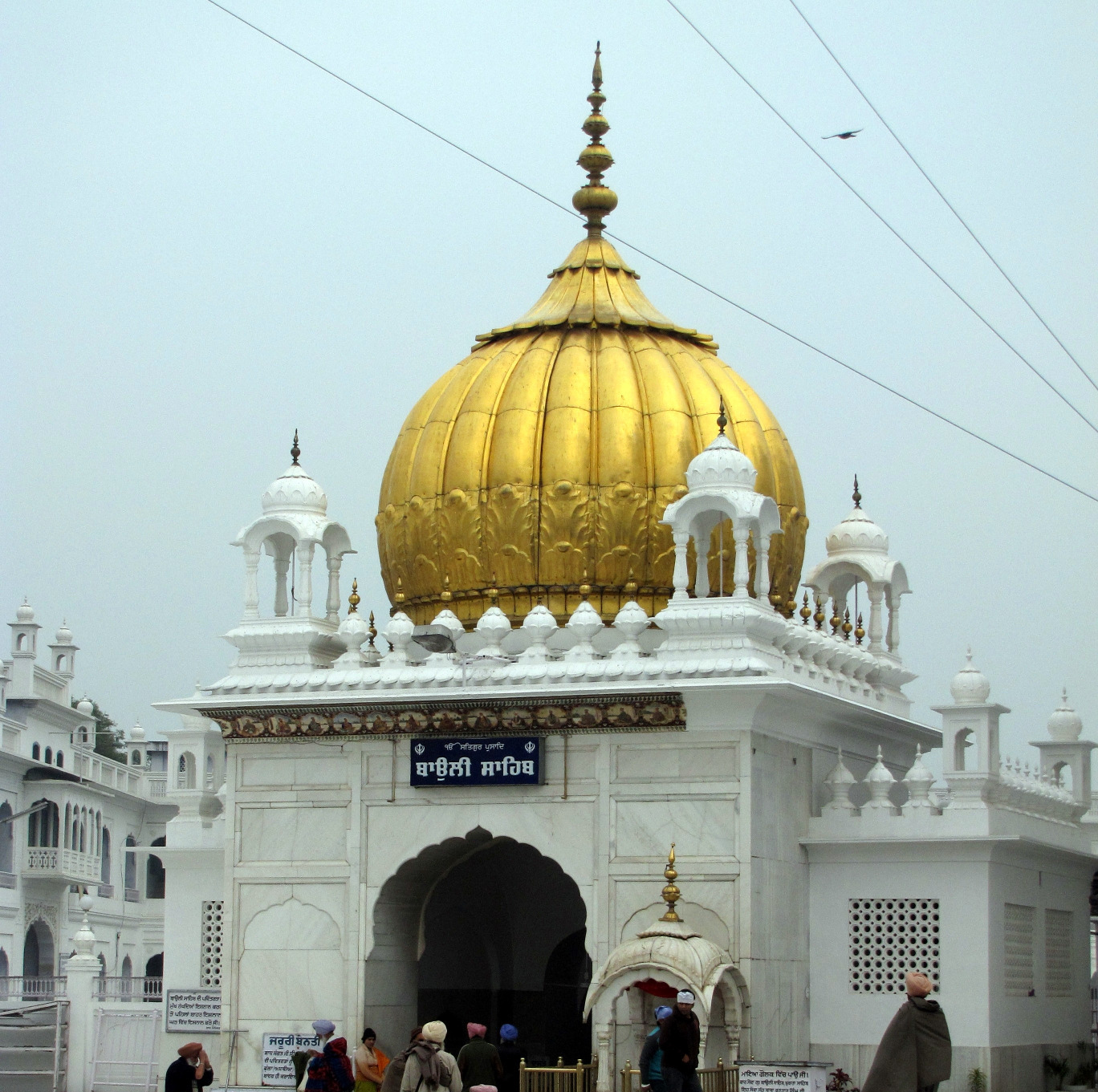
6. **Establishing Goindwal and the Baoli Sahib**In a strategic move to establish a clear center of Sikh authority and nurture the growing community, Guru Amardas founded the town of Goindwal. This location was not chosen arbitrarily; situated on the bank of the Beas River, it was intersected by the three major cultural regions of Punjab – Majha, Malwa, and Doaba. This foresight in establishing a headquarters at such a central point played a crucial role in facilitating the rapid spread of Sikhism throughout these key regions, making it accessible to a wider populace and allowing the faith to gain ground swiftly.
To further solidify Goindwal’s importance and create a focal point for devotees, Guru Amardas undertook the monumental task of constructing an 84-level stepwell, famously known as Baoli Sahib. This architectural marvel was more than just a well; it was a deeply symbolic and functional creation, modeled along the lines of the Indian tradition of dharmsala, providing a resting place and a communal gathering area. The Baoli Sahib quickly became the first truly Sikh pilgrimage site, attracting new prospective members to the faith and serving as a tangible symbol of the Guru’s vision.
The construction of the Baoli Sahib offered a physical space for Sikhs to gather, meditate, and reinforce their communal bonds. It was a place where spiritual solace and practical utility merged, becoming a vibrant hub for the Sikh Panth. By establishing Goindwal and the Baoli Sahib, Guru Amardas provided a distinct identity and a foundational infrastructure for the burgeoning Sikh faith, a place of convergence where the teachings of the Gurus could be disseminated and lived collectively, thereby strengthening the community and ensuring its cohesive growth.
7. **Consolidating the Sikh Church: The Manji and Piri Systems**As the Sikh faith rapidly expanded under Guru Amardas’s guidance, the need for a robust organizational structure became paramount. To manage the growing number of adherents and ensure the consistent dissemination of the Guru’s teachings, he innovatively established the Manji system. This involved dividing the Sikh community into administrative zones, each led by appointed chiefs known as Sangatias, a groundbreaking move that included both men and women, reflecting the Guru’s egalitarian vision.
These Manjis served as crucial centers for attracting new followers and circulating the Guru’s word to distant communities, providing essential cohesion and unity to the burgeoning Sikh Panth. Historically, scholars have generally agreed on a total of twenty-two such centers, drawing parallels to the twenty-two provinces of the Mughal empire, effectively positioning Guru Amardas as a spiritual king whose jurisdiction was meticulously organized. This structure provided a clear framework for Sikh outreach and community building.
Complementing the Manji system, Guru Amardas also inaugurated the Piri system, an equally revolutionary initiative specifically designed to spread Sikhism among women, particularly those from Muslim backgrounds. This system involved appointing women as preaching officials and missionaries for Sikh assemblies, underscoring the Guru’s belief in gender equality and their vital role in religious propagation. Intellectual women such as his daughters, Bhani and Bibi Dani, and Bibi Pal, were instrumental in leading these Piris.
Both the Manji and Piri systems were instrumental in addressing the spiritual needs of new converts, many of whom carried beliefs and practices from their original faiths. The appointed preachers were tasked with instructing them on proper Sikh orthodoxy and orthopraxy, guiding them to fully embrace the Sikh faith. By empowering women as leaders and missionaries, Guru Amardas laid a strong foundation for the inclusive and expansive growth of the Sikh Church.

8. **Advocating Ethical Living: Guru Amardas’s Spiritual Teachings**Guru Amardas’s teachings were not confined to institutional reforms; he deeply emphasized a way of life that harmoniously blended spiritual pursuits with ethical daily conduct. He encouraged his followers to embrace an inner discipline, advocating for practices that fostered inner control and a profound connection with the divine. This holistic approach to spirituality defined the essence of a true Sikh during his Guruship.
His instructions for devotees were practical and transformative: waking before dawn for ablutions, engaging in silent meditation, and cultivating virtuous habits. He taught that a good devotee should be truthful, maintain control over their mind, eat only when truly hungry, seek the company of pious individuals, worship the Lord with devotion, earn an honest living, serve holy men, refrain from coveting another’s wealth, and never slander others. This comprehensive guide to ethical living was designed to integrate spirituality into every aspect of daily existence.
Significantly, Guru Amardas openly critiqued and discouraged external austerities and renunciation, which were prevalent practices among the Yogis of his time. He viewed these as unsuited to the contemporary era, arguing that they offered neither true peace of mind nor the banishment of ego. He eloquently questioned the efficacy of such practices, stating, “What if a man lives , discarding clothes? What if a Yogi wears matted hair? Of what avail is the holding of the breath in the Tenth Gate, if the mind is not purified?”
Instead of elaborate rituals or physical deprivations, the Guru emphasized the purification and control of the mind through meditation and devotion to the Holy Name. He believed that genuine spiritual growth emanated from within, advocating for a path that was accessible to householders and integrated into family life, rather than demanding withdrawal from the world. This focus on inner transformation through devotion, rather than outward displays, became a cornerstone of Sikh spiritual practice.

9. **Diplomatic Engagements: Guru Amardas and Emperor Akbar**Guru Amardas’s influence extended beyond the Sikh community, reaching even the corridors of political power, most notably in his significant interactions with the Mughal Emperor Akbar. Renowned for his interest in religious tolerance and interfaith dialogue, Emperor Akbar sought to meet the revered Guru, setting the stage for a remarkable encounter that showcased the Guru’s profound principles.
In a powerful testament to the Sikh principle of equality—”Pehle Pangat, Phir Sangat” (first sit in the row to eat, then meet the congregation)—Guru Amardas decreed that even the mighty Emperor Akbar must first sit on the floor and partake in the Langar alongside ordinary people before their formal meeting. Akbar, demonstrating an openness to understanding different faiths, readily accepted this condition, partaking in the communal meal, an act that deeply underscored the egalitarian spirit of the Sikh tradition.
This meeting yielded tangible benefits for the wider populace. According to Sikh hagiographies, Guru Amardas successfully persuaded Emperor Akbar to repeal the discriminatory tax on Hindu pilgrims undertaking journeys to Haridwar. This intervention highlighted the Guru’s compassionate leadership and his dedication to justice for all, irrespective of their faith, extending his social reform efforts beyond the Sikh community itself.
The Emperor, deeply impressed by the Guru’s wisdom and the principles of the Sikh faith, even offered land for the continued maintenance of the Langar. However, Guru Amardas politely declined, firmly stating that the Langar was a Sikh institution sustained solely by the voluntary offerings and selfless service of its disciples, reinforcing its community-driven nature. Bhai Mani Singh also records that Akbar sought the Guru’s blessing for annexing Chittorgarh, which was granted, and subsequently, Akbar offered 84 villages to Guru Ramdas, a gift made after Guru Amardas himself refused any personal gain.

10. **Shaping Sikh Identity: Distinctive Rituals and Festivals**Understanding the importance of shared practices in forging a distinct community identity, Guru Amardas played a crucial role in shaping Sikh rituals and institutionalizing key festivals. One of his most enduring contributions was the composition of the sacred hymn ‘Anand,’ which became an integral part of the Sikh marriage ceremony, known as ‘Anand Karaj,’ or the ‘blissful event.’ This hymnal wedding laid the foundation for a uniquely Sikh way of celebrating marital union.
The ‘Anand’ hymn itself is a profound spiritual composition, reflecting Guru Amardas’s upbringing and background with its linguistic mix of Punjabi and Hindi. It celebrates the liberation from suffering and anxiety, depicting the soul’s blissful union with the divine achieved through the Guru’s grace, inner devotion, and the repetition of the Creator’s Name. The Guru beautifully articulated the essence of marriage, stating, “They are not husband and wife who sit together. Rather are they wife and husband who have one spirit in two bodies.” Today, parts of the ‘Anand’ hymn are recited nightly in Gurdwaras and are central to various Sikh life ceremonies, including baby naming and funerals, affirming its deep significance.
Beyond marriage, Guru Amardas actively encouraged and solidified the observance of major festivals as biannual Sikh gatherings. He required his disciples to convene for communal prayers and celebrations during the ancient Indian post-harvest festivals of Vaisakhi in spring and Diwali in autumn. These mandated gatherings were instrumental in reinforcing communal bonds and fostering a collective sense of Sikh identity, ensuring regular interaction between the Guru and his followers.
Furthermore, the Guru encouraged the building of temples and places where Sikhs could gather, thereby providing physical spaces for these communal events and for daily worship. These distinctive rituals and festivals, firmly established under Guru Amardas, played a pivotal role in distinguishing the Sikh faith from prevalent Hindu and Muslim traditions, creating a cohesive and self-aware community grounded in shared spiritual experiences and cultural practices.

11. **The Genesis of Scripture: Contributions to the Adi Granth**Guru Amardas’s monumental contribution to Sikhism extends profoundly into its sacred scripture, as he is credited with pioneering the systematic collection of hymns. This visionary undertaking laid the foundational groundwork for what would eventually become the Adi Granth, the revered holy book of the Sikhs. His foresight in preserving the spiritual wisdom of the Gurus ensured the integrity and continuity of their teachings for generations to come.
This initial compilation is famously known as the “Goindwal Pothi” or “Mohan Pothi,” representing the earliest methodical effort to gather and organize the hymns of the Gurus. It served as the direct precursor to the first edition of Sikh scripture, meticulously assembled under the fifth Sikh Master, Guru Arjan Dev, and ultimately culminating in the Guru Granth Sahib under the tenth Sikh Master. The Goindwal Pothi demonstrated a keen awareness of the need to codify and safeguard the nascent faith’s spiritual bedrock.
Quantitatively, Guru Amardas’s personal creative output is immense and highly significant within the Sikh canon. He composed nearly 900 hymns, which collectively constitute the third largest portion of the Guru Granth Sahib, making up approximately 15% of the entire scripture. This substantial contribution underscores his profound poetic prowess and his deep spiritual insight, enriching the textual heritage of Sikhism with his unique voice and theological interpretations.
His hymns, imbued with themes of devotion, ethical conduct, and the importance of the Guru’s guidance, are not merely spiritual poetry but serve as living expressions of Sikh philosophy. The preservation and organization of these compositions ensured that the foundational teachings remained accessible and consistent, solidifying the doctrinal basis of the Sikh faith and providing an invaluable spiritual compass for its adherents.

12. **The Legacy Continues: Selection and Anointing of Guru Ramdas**As Guru Amardas approached the end of his earthly journey, his profound concern for the continuity and future of the Sikh Panth led him to meticulously select a successor. Recognizing the immense responsibility of Guruship, he devised a rigorous test to identify the most devoted and worthy individual to carry forward Guru Nanak’s divine mission, ensuring a seamless transfer of spiritual authority.
The selection process involved his two sons-in-law, Rama and Bhai Jetha, as well as his own sons, Mohan and Mohri. The Guru instructed them to construct a platform according to his precise specifications. This seemingly simple task became a profound test of humility, dedication, and unwavering obedience. He repeatedly inspected and rejected their constructions, asking them to demolish and rebuild, pushing their patience to its limits.
While Rama, his elder son-in-law, eventually refused to rebuild after three rejections, Bhai Jetha, who was married to his younger daughter Bhani, demonstrated unparalleled devotion. Despite his platforms being rejected multiple times—seven times, in fact—Bhai Jetha continued his efforts with unwavering patience and humility. This profound display of dedication, putting the Guru’s command above personal pride or exhaustion, ultimately proved his worthiness.
Having witnessed Bhai Jetha’s exemplary steadfastness, Guru Amardas declared him as his successor. In a solemn ceremony, he called the congregation and personally anointed Bhai Jetha, seating him on the throne of Guruship as Guru Ramdas, the Fourth Guru of the Sikhs. The court musicians, Balwand and Satta, immortalized this moment in a coronation ode, acknowledging the spiritual continuity: “You are Nanak. You are Angad. You are Guru Amardas, so do we regard you; deeming you as the Transcendental Lord, your followers and the congregation bow before you.” Guru Amardas passed away shortly thereafter on September 1, 1573, at Goindwal, having successfully transferred the spiritual mantle and secured the future leadership of the Sikh faith.
In the tapestry of spiritual history, Guru Amardas shines as a beacon of humility, tireless service, and revolutionary vision. His life’s work not only consolidated the nascent Sikh faith but also imbued it with a distinct identity, profound social consciousness, and a robust institutional framework. From challenging oppressive social customs and championing equality through the Langar, to organizing the burgeoning community with the Manji and Piri systems, and laying the groundwork for Sikh scripture, his contributions were transformative. He bridged the spiritual with the practical, fostering an inclusive community guided by ethical living and unwavering devotion. His meticulous selection of Guru Ramdas ensured the seamless continuation of the spiritual lineage, cementing a legacy that continues to inspire millions globally, a testament to a true spiritual sovereign whose impact echoes through eternity.