Welcome, petrolheads and film fanatics, to a deep dive into M. Night Shyamalan’s utterly wild, utterly unforgettable, and utterly divisive cinematic offering: ‘Old.’ Forget everything you thought you knew about a relaxing beach vacation because Shyamalan, in his signature, boldly opinionated style, plunges us into a relentless and mean little chiller that asks profound questions about time, life, and the terrifying inevitability of decay. It’s a movie that grips you by the scruff of the neck and doesn’t let go, much like a powerful engine pushes a car to its limits.
Shyamalan is a filmmaker who thrives on pushing boundaries, celebrated for his unexpected tones and a unique ability to weave original films that leave an indelible mark on the theatrical experience. ‘Old’ is no exception. It’s a concept so audacious, so viscerally unsettling, that it demands your attention from the moment the premise is revealed. Imagine a serene, secluded beach that, unbeknownst to its visitors, accelerates human life, condensing decades into mere hours. The sheer audacity of such a concept, brought to life with Shyamalan’s meticulous vision, is precisely why this film warrants a thorough examination.
So, buckle up! We’re about to take an exhilarating journey behind the scenes and into the heart of ‘Old,’ exploring its genesis, the meticulous craft that brought its chilling story to the screen, and the exceptional talent that dared to inhabit this rapidly aging nightmare. This isn’t just a film; it’s an experience, a meditation on the fleeting nature of existence, and a testament to Shyamalan’s unwavering commitment to unique, original storytelling.

1. Film’s Genesis & Inspiration
The genesis of ‘Old’ is, in itself, a rather charming tale, beginning with a thoughtful Father’s Day gift in 2017. M. Night Shyamalan received the French graphic novel “Sandcastle” by Pierre Oscar Lévy and Frederik Peeters from his three daughters. This wasn’t just a casual read; it was a revelation, a narrative spark that immediately ignited the filmmaker’s imagination, leading him down a path of adapting this chilling story for the big screen.
The graphic novel’s premise, centered on a group of people rapidly aging on a mysterious beach, resonated deeply with Shyamalan. It provided a raw, visceral concept that lent itself perfectly to his distinct brand of psychological thrillers. The inherent horror of watching one’s life fast-forward, stripping away youth, health, and loved ones in a matter of hours, offered a fertile ground for exploring existential dread and the human relationship with time.
Shyamalan’s decision to adapt ‘Sandcastle’ into a film underscores his constant quest for unique narratives. He saw in it not just a compelling plot device, but a powerful allegory that could be translated into a cinematic experience both terrifying and thought-provoking. It was a perfect fit for a director who consistently seeks to deliver stories with unexpected tones and original concepts, demonstrating his knack for finding gold in unconventional places.
Read more about: Tina Turner’s Enduring Lineage: Navigating Life, Loss, and the Children Who Shaped Her Story
2. M. Night Shyamalan’s Vision & Approach
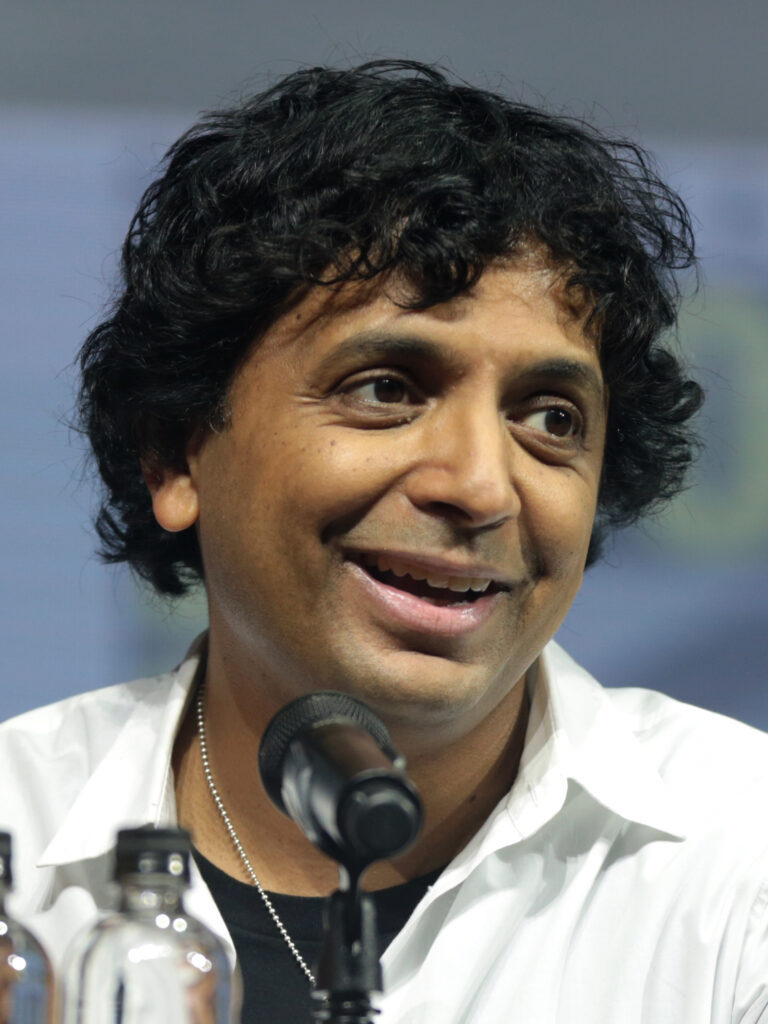
M. Night Shyamalan’s creative vision for ‘Old’ was firmly rooted in his long-standing partnership with Universal Pictures, a collaboration that he passionately described as a “mandate to release original films.” He explicitly articulated his belief that “original films are crucial to the longevity of the theatrical experience,” a sentiment that perfectly encapsulates the daring spirit behind a project like ‘Old.’
Shyamalan’s distinct directorial voice is undeniably etched into every frame of ‘Old.’ Universal Pictures President Peter Cramer lauded Shyamalan’s projects for containing “highly original stories,” and ‘Old’ stands as a powerful testament to this. The film showcases the director’s unique ability to craft narratives that are both deeply personal and universally unsettling, consistently delivering “new stories with unexpected tones.”
This unwavering drive to push cinematic boundaries and explore uncharted narrative territory is what truly sets Shyamalan apart. With ‘Old,’ he wasn’t just telling a story; he was creating an experience that challenges audience perceptions of time and mortality. It’s this bold, opinionated stance on filmmaking – favoring the truly original over the predictably commercial – that makes ‘Old’ such a distinctive and, dare we say, essential entry in his impressive filmography.
Read more about: Ghost Stories: 14 Timeless Horror Movies Every Fan Needs to Experience
3. The Ensemble Cast & Their Roles
To bring the chilling, rapidly aging narrative of ‘Old’ to life, M. Night Shyamalan assembled a formidable ensemble cast, each tasked with portraying the profound physical and psychological toll of accelerated time. Gael García Bernal and Vicky Krieps star as Guy and Prisca Cappa, the married couple grappling with separation and, as it’s revealed, Prisca’s slow-growing ovarian tumor, which becomes terrifyingly rapid on the beach. Rufus Sewell embodies Charles, a schizophrenic cardiac surgeon, whose aggressive personality escalates with his condition.
The cast extends to include Abbey Lee as Chrystal, Charles’s trophy wife suffering from hypocalcemia, whose bones gruesomely contort. Alex Wolff and Thomasin McKenzie take on the challenging roles of Trent and Maddox Cappa as teenagers, requiring a seamless transition as they age rapidly from childhood. Nikki Amuka-Bird and Ken Leung portray Patricia and Jarin Carmichael, an epileptic psychologist and her nurse husband, facing their own accelerated health crises. Eliza Scanlen plays Kara, Charles and Chrystal’s daughter, whose swift pregnancy and childbirth on the beach are among the film’s most disturbing sequences. Aaron Pierre is Brendan, the rapper known as “Mid-Sized Sedan,” whose hemophilia also accelerates with dire consequences. Additional cast members include Kathleen Chalfant as Agnes, Charles’s mother, who is among the first casualties of the beach’s effects.
The demanding nature of these roles required actors to embody not just different stages of life, but the emotional and physical disintegration that accompanies rapid aging. The casting process itself involved multiple actors for each child character, from age 6 to 16 and then into adulthood, showcasing the sheer complexity and precision required to pull off such a visually and emotionally challenging narrative. It’s a true testament to the talent assembled that they manage to convey such profound transformations.
Read more about: 12 Legendary Laugh-Out-Loud Comedies from the Last 50 Years You NEED to Rewatch (Some Are Even Ranked!)
4. The Core Plot & Premise: Rapid Aging
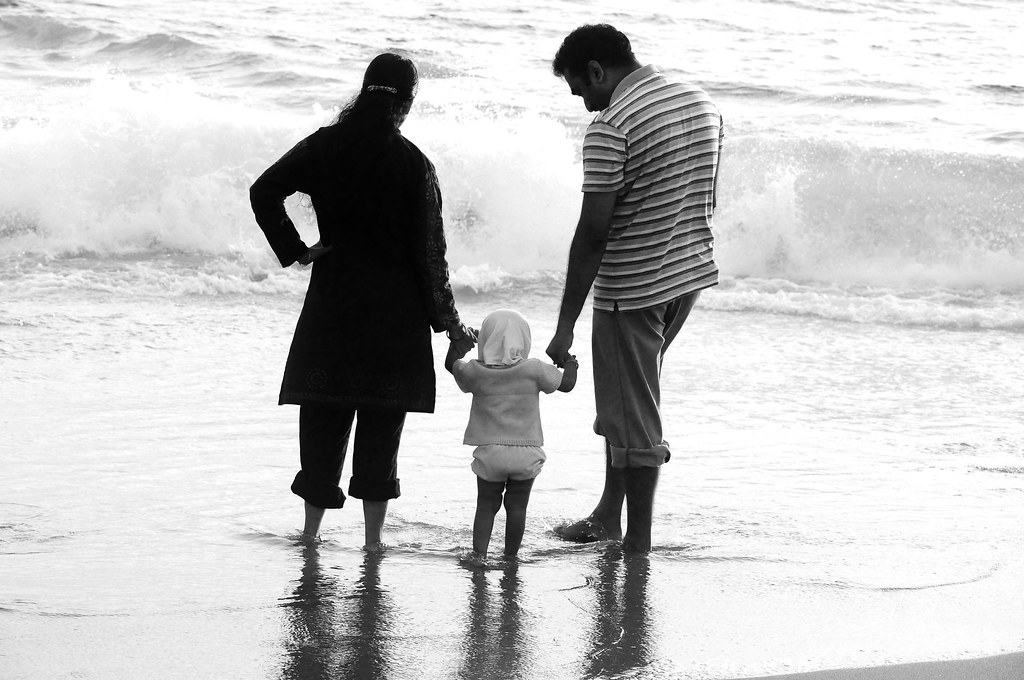
The unsettling journey of ‘Old’ begins with Guy and Prisca Cappa, taking their young children, Maddox and Trent, on what they hope will be a final, restorative family vacation before their separation. Enticed by the resort manager, they are led to a secluded, idyllic beach. This seemingly perfect paradise, however, quickly reveals its sinister secret as three additional parties – rapper Brendan, surgeon Charles’s family, and the Carmichaels – join them, setting the stage for the unfolding nightmare.
The first ominous sign is Trent’s discovery of Brendan’s companion’s corpse. But the true horror dawns when the children rapidly transform into teenagers and Charles’s elderly mother, Agnes, suddenly succumbs to an accelerated death. The horrifying conclusion is inescapable: the beach is aging them, compressing “one year of aging every 30 minutes.” What follows is a frantic, desperate struggle for survival as each character’s underlying medical condition—Prisca’s ovarian tumor, Brendan’s hemophilia, Patricia’s epilepsy, Chrystal’s hypocalcemia, Charles’s schizophrenia, and Guy’s blurring eyesight, Prisca’s hearing loss—accelerates at a terrifying rate.
Attempts to leave the beach prove futile, resulting in blackouts and waking up back where they started, creating an inescapable, claustrophobic trap. The tension ratchets up with each passing half-hour, leading to increasingly desperate and violent acts, from Charles’s rage-fueled attack on Brendan to Kara’s rapidly progressing pregnancy and the tragic, swift death of her baby. It’s a relentless and horrifying display of mortality, forcing the characters—and the audience—to confront the brutal realities of aging and death in an extreme, compressed timescale.
Read more about: Beyond the Beach: Unraveling 10 Hidden Layers of M. Night Shyamalan’s ‘Old’ – A Deep Dive into Its Production, Themes, and Polarizing Impact

5. Filming Location & Cinematography
Choosing the right location for ‘Old’ was paramount to establishing its unique blend of idyllic beauty and oppressive dread. M. Night Shyamalan opted for the stunning yet isolated landscapes of the Dominican Republic, a decision that allowed the film to capitalize on natural beauty while simultaneously constructing a palpable sense of entrapment. This contrast between paradise and prison is expertly exploited throughout the narrative.
The heart of the film’s setting is the breathtaking Playa El Valle beach, strategically positioned “between two mountains on the north coast of Santa Bárbara de Samaná.” This natural geography played a crucial role in creating the film’s suffocating atmosphere, enhancing the feeling of a inescapable trap. Additional filming took place at Pinewood Dominican Republic Studios in Juan Dolio and various other locations around Samaná, ensuring every shot contributed to the immersive, unsettling environment.
Cinematographer Michael Gioulakis, using 35mm film, captured the essence of this duality, rendering the vibrant natural surroundings with a lushness that belies the horror unfolding within it. His work ensured that even as characters rapidly deteriorated, the visual landscape remained undeniably beautiful, yet increasingly menacing. As Pete Hammond observed in his Deadline Hollywood review, the “stunning location should give audiences a nice respite from the heat,” even as the on-screen events send shivers down their spines.
Read more about: Into Space: 15 Wonderful Sci-Fi Movies That Defy Their Awful Reviews

6. Production Challenges (COVID-19 Pandemic)
The production of ‘Old’ was a feat of logistical brilliance, taking place under the unprecedented shadow of the COVID-19 pandemic. Principal photography commenced on September 26, 2020, a time when global filmmaking faced immense uncertainty. This meant that the entire cast and crew had to navigate complex safety protocols and an environment fraught with health concerns, adding an extraordinary layer of challenge to an already ambitious project.
M. Night Shyamalan’s commitment to safety and the well-being of his team was exemplary. He proudly stated that ‘Old’ was “the first film to be shot during the pandemic in the Dominican Republic,” and remarkably, throughout the entire shoot, “no one tested positive for the virus.” This impressive achievement was a direct result of Shyamalan’s proactive measures, including personally paying for the production crew’s extensive “ten-week stay at a hotel,” ensuring a controlled and safe environment for everyone involved.
Filming a complex, character-driven thriller, with its intricate staging and rapidly changing actor requirements, would have been challenging enough in normal times. To execute it flawlessly amidst a global health crisis speaks volumes about Shyamalan’s leadership and the dedication of his entire production team. It’s a powerful testament to their collective resolve, proving that even in the face of immense adversity, cinematic art can not only endure but thrive.

7. Shyamalan’s Distinctive Filming Techniques & Inspirations
M. Night Shyamalan’s masterful storytelling extends beyond the script into his meticulous directorial techniques, evident in his approach to ‘Old.’ Several cast members recalled his precise use of storyboards to frame “every shot” in the film, a testament to his highly controlled and deliberate vision. His daughter, Ishana Shyamalan, described her father’s method as a “very prescribed and programmatic” approach, leaving little to chance, ensuring every visual element served the narrative’s chilling progression.
The cinematic inspirations behind ‘Old’ are as diverse as they are impactful, drawing from a rich tapestry of film history. Shyamalan cited influence from the “Australian New Wave,” specifically films like “Walkabout” (1971) and “Picnic at Hanging Rock” (1975), known for their unsettling atmospheres and enigmatic narratives. He also pointed to timeless classics such as Luis Buñuel’s “The Exterminating Angel” (1962), “Kuroneko” (1968), Steven Spielberg’s iconic “Jaws” (1975), and even the episodic brilliance of “The Twilight Zone,” all contributing to the film’s unique blend of mystery, terror, and existential dread.
Crucially, to forge the profound “claustrophobic feeling” that permeates the film, Shyamalan skillfully employed techniques found in Akira Kurosawa’s masterpieces, “Rashomon” (1950) and “Ran” (1985). By utilizing these methods, he was able to intensify the sense of confinement and mounting desperation, despite the expansive beach setting. This innovative approach allowed the single location of Playa El Valle to transform from a beautiful escape into a terrifying, inescapable prison, highlighting Shyamalan’s deep understanding of visual storytelling to amplify emotional impact.
Alex Wolff, who played Trent Cappa, offered insights into Shyamalan’s directorial precision, noting that the director “had such precision in terms of what age he wanted you to be and where he wanted you to be at that age.” Wolff explained that Shyamalan would “just guide you where you needed to be emotionally, and then it would happen naturally,” underscoring the director’s ability to extract nuanced performances that accurately reflected the characters’ accelerated aging process, making the improbable feel terrifyingly real.
Now that we’ve journeyed through the intricate genesis and masterful craft behind ‘Old,’ it’s time to shift gears and plunge deeper into the profound thematic currents that propel this chilling narrative. Beyond the sheer terror of rapid aging, Shyamalan, in his typically thoughtful and opinionated manner, weaves a tapestry of existential questions that resonate long after the credits roll. It’s a relentless exploration of what it means to live, to love, and to face the terrifying inevitability of our own ticking clocks.
Read more about: Beyond the Beach: Unraveling 10 Hidden Layers of M. Night Shyamalan’s ‘Old’ – A Deep Dive into Its Production, Themes, and Polarizing Impact
8. Profound Thematic Explorations
‘Old’ isn’t just a horror film; it’s a stark, almost brutal, meditation on our relationship with time itself. When Beth Webb from NME inquired about the film’s themes, Shyamalan revealed his core intent: “It’s definitely about our relationship to time and, in my opinion, our dysfunctional relationship to time that we all have.” He posits that it’s only when we are forced to confront time directly, whether by a global pandemic or the horrifying circumstances on the beach, that we truly examine this fundamental connection.
The film showcases a fascinating divergence in human response, with some characters utterly unable to cope with the accelerated decay, while others, remarkably, find a strange peace amidst the chaos. Shyamalan openly questions, “Why did they find peace, and how did they find peace in the midst of all of this chaos?” It becomes a personal conversation the director is having with time, inviting the audience to join in this intense introspection on mortality and existence.
At the Tribeca Film Festival, Shyamalan connected the film’s focus on aging to deeply personal experiences, specifically mentioning his father, who battles dementia, and the poignant observation of his own children growing up. Alex Wolff, who portrayed Trent, drew a compelling parallel to the recent global experience, stating, “Coming out of COVID, it feels like time just stopped. And that’s what the movie’s literally about.” This perspective underscores the film’s allegorical weight, positioning it as a powerful reflection on contemporary anxieties surrounding time and change.
Other cast members echoed these sentiments, enriching the film’s thematic depth. Nikki Amuka-Bird highlighted the theme of not taking nature for granted, while Gael García Bernal pondered how time is perceived differently by individuals. Vicky Krieps, in a truly poignant observation, encapsulated the film as being about “love and family and all these things that are much stronger than any fears — the fear of aging and the fear of death.” It’s a testament to the film’s multi-layered narrative that it can provoke such varied, yet interconnected, interpretations.
Read more about: James Grashow: A Retrospective on the Artist Who Mastered Impermanence and Enduring Form in Cardboard and Wood
9. Unique Family Contributions to Production
Beyond the stellar ensemble cast and Shyamalan’s singular vision, ‘Old’ also shines a spotlight on a rather unique aspect of its production: the significant contributions of M. Night Shyamalan’s own daughters. This familial involvement truly adds another layer of personal touch to a film that is already so deeply ingrained with the director’s introspective themes. It’s a family business, and they’re crafting cinematic gold together!
One of his daughters, Ishana Shyamalan, stepped into a crucial role as the film’s second unit director, specifically tasked with capturing the breathtaking surrounding nature. This allowed the film to perfectly blend the idyllic beauty of its setting with the unfolding horror, ensuring that the visual narrative remained consistent with the main unit’s work under Michael Gioulakis. It’s an impressive feat, especially given the film’s relentless pace and challenging location.
Not to be outdone, his other daughter, Saleka Shyamalan, contributed an original song titled “Remain” to the film’s score. Inspired by the profound themes of marriage vows and drawing influence from U2’s iconic “With or Without You,” the song served to “highlight the relationship between Guy and Prisca and the love that exists between them.” This musical addition provided a potent emotional anchor, enriching the narrative of love and loss amidst the accelerated aging.
Read more about: The Transformative Journey of Guru Amardas: 12 Pillars of His Enduring Legacy in Sikhism

10. Strategic Marketing Campaign
Rolling out a film like ‘Old,’ with its utterly unique and unsettling premise, required a marketing campaign as shrewd as Shyamalan’s plot twists. Universal Pictures orchestrated a calculated strategy, ensuring that the film cut through the noise and captured the public’s imagination, even comparing it to a classic ‘Brady Bunch’ episode, which is quite the unexpected hook!
The campaign kicked off in style during Super Bowl LV on February 7, 2021, with a 30-second television spot. Anthony D’Alessandro from Deadline Hollywood noted that the teaser evoked a “two-part episode of The Brady Bunch, where an ancient tiki brings the group bad luck,” immediately sparking curiosity. Josh Weiss of Syfy Wire rightly observed that the teaser “definitely bears Shyamalan’s signature slow-boil tension,” promising a chilling experience.
Later, on May 27, 2021, the release of a theatrical poster and an official trailer amplified the excitement. Antonio Ferme of Variety proclaimed it brought “thrills and chills,” while Weiss humorously described it as “a reverse Benjamin Button situation that the characters need to reverse before they shrivel up and die.” These early glimpses cleverly teased the film’s central conceit without giving away its deepest secrets.
The marketing team also got creative, introducing a Snapchat aging filter that proved to be a viral hit, garnering an astounding 23 million views worldwide on its first day. Celebrities like Shaquille O’Neal and Charles Barkley jumped on board, further expanding its reach. While overall promotional content views “fell short of the norm” in some areas, this innovative filter undoubtedly generated significant buzz, leveraging social media to directly engage a massive audience with the film’s core concept.
Read more about: Beyond the Spotlight: Unpacking Ashton Kutcher’s Evolving Journey from Sitcom Star to Tech Titan and Philanthropist

11. Release Strategy and Initial Performance
The road to the silver screen for ‘Old’ was, like its plot, not without its unexpected turns. Initially slated for a February 26, 2021 release, the film faced delays due to the tumultuous landscape of the COVID-19 pandemic, with Universal Pictures pushing back other films like ‘Nobody.’ Eventually, a new date was locked in, setting the stage for its dramatic debut.
Universal Pictures proudly announced that ‘Old’ would hit theaters on July 23, 2021. Preceding its wide release, a premiere event was held at the prestigious Jazz at Lincoln Center in New York City on July 19, 2021. This star-studded occasion, attended by the film’s cast and crew, generated early buzz and allowed the creative minds behind the film to share their experiences directly with eager audiences.
Leading up to its theatrical opening, industry analytics from Variety and Deadline Hollywood had projected ‘Old’ to pull in a respectable $12–15 million in its opening weekend. Released alongside other contenders like ‘Snake Eyes’ and ‘Joe Bell’ in 3,355 theaters, the film earned $6.9 million on its first day, including $1.5 million from Thursday night previews. This initial performance set the stage for a compelling box office battle.
Ultimately, ‘Old’ defied some expectations, debuting to an impressive $16.85 million. This strong showing cemented its place as the sixth film of Shyamalan’s career to top the box office, showcasing his enduring appeal. However, it’s worth noting that this figure also represented the lowest opening weekend of his career, a curious twist in a landscape still grappling with the pandemic’s impact on movie-going habits.
Read more about: The Unvarnished Truth: 12 Sports Cars That Left Enthusiasts Regretting Their Purchase After Just a Year of Ownership

12. Box Office Journey & Performance Analysis
While ‘Old’ started strong, its theatrical journey, much like the characters’ time on the beach, saw an inevitable acceleration towards its conclusion. Globally, the film ultimately grossed $90.2 million against a modest budget of $18 million, proving to be a solid financial success for Universal Pictures and Shyamalan’s production companies. This demonstrates the enduring power of a compelling, original story, especially when delivered with Shyamalan’s distinctive touch.
In the United States and Canada, the film accumulated $48.3 million. After its opening weekend, ‘Old’ experienced a 60% decline in its second weekend, pulling in $6.86 million. This trend continued into its third weekend with $4.1 million, before dropping out of the top five in its fourth weekend with $2.4 million. By its fifth and sixth weekends, the film was still in the bottom of the box office top ten, making $1.15 million and $840,810 respectively, indicating a gradual fade from the spotlight, but a sustained presence.
Internationally, the film opened to $6.5 million across 23 markets, with Russia ($2.1 million), the United Kingdom ($1.1 million), Mexico ($800,000), Italy ($600,000), and France ($500,000) leading the charge. Despite a 35% drop in its second international weekend, it continued to bring in a respectable $7.5 million, bolstered by a $1.2 million opening in Spain. Even in its sixth weekend, playing in 57 markets, it managed $1.64 million, proving its global appeal, even amidst challenging market conditions like a limited Korean opening.
Michael Cieply from Deadline Hollywood offered a fascinating analysis on the “weak” openings of films like ‘Old’ and ‘Snake Eyes,’ pondering a wider cultural phenomenon: “Maybe, as a group, we are suffering from ‘screen fatigue’ — not in the narrow sense of migraines, eye strain, and Computer Vision Syndrome, but in a much bigger way, as a culture.” He suggested a collective exhaustion with screens, from Zoom calls to event television, positing that we might simply be “tired of looking at ourselves on media screens, large and small.” It’s a compelling thought that speaks to the shifting landscape of entertainment consumption.
Read more about: Ghost Stories: 14 Timeless Horror Movies Every Fan Needs to Experience

13. Polarized Critical Reception: Screenplay & Dialogue
When ‘Old’ landed, it certainly didn’t tiptoe. The critical reception was, to put it mildly, polarized, creating a lively debate amongst film aficionados and professional reviewers alike. While some hailed its audacious premise, many critics sharpened their pens for the screenplay and, particularly, the dialogue. It seems Shyamalan’s unique narrative voice isn’t for everyone, and this film definitely ignited a fiery discussion.
Wendy Ide of The Observer found the film’s exposition to be “ponderous and mannered,” questioning the audience’s ability to accept the central premise if they couldn’t believe the characters. WXIX-TV’s Terrence “TT” Todd echoed this, finding the premise interesting but the plot confusing, even suggesting it might have been better as a television series. These critiques highlight a perceived struggle in translating the graphic novel’s concept into seamless cinematic dialogue.
Alissa Wilkinson from Vox was quite blunt, stating that “Shyamalan has not grown any more skilled at writing dialogue over the years,” yet she acknowledged the film’s occasional brilliance by comparing it to Luis Buñuel’s ‘The Exterminating Angel.’ Barry Hertz of The Globe and Mail went further, pointing to “stilted dialogue that runs in circles, dumb-dumb plot holes, [and] a bizarre determination to have his performers act as unnaturally as possible.” It’s clear that for many, the dialogue presented a significant hurdle to full immersion.
However, not all critics were so harsh on the film’s narrative choices. Some found an unexpected charm in its more unsettling aspects, describing it as having “gallows humor.” Germain Lussier of Gizmodo saw it as a film “made with sadistic glee and surprising emotion,” while Nick Allen of The Playlist lauded it as a “pitch-black comedy and self-aware horror.” Scott Mendelson of Forbes even described it as a “relentless and mean little chiller,” suggesting that its intensity was a strength, not a weakness, though he felt an R rating would have benefited it.

14. Critical Reception: Cinematography, Premise & Themes
Despite the often-harsh critique of its dialogue, ‘Old’ found a much warmer reception when it came to its visual storytelling and the sheer audacity of its premise. Many critics, even those who were generally unfavorable, couldn’t deny the film’s aesthetic power and the captivating nature of its core idea. It truly demonstrated Shyamalan’s ability to create a visually striking and intellectually stimulating experience.
Jocelyn Novec from the Associated Press, while criticizing the film overall, conceded that it possessed “an enticing premise and pretty scenery.” Pete Hammond, in his Deadline Hollywood review, noted that while he didn’t expect the film “to age very well,” the “stunning location should give audiences a nice respite from the heat,” highlighting the visual appeal. Richard Roeper went so far as to describe the main location as “absolutely breathtaking,” a testament to the Dominican Republic’s natural beauty captured on screen.
The New Yorker’s Richard Brody praised Shyamalan’s directorial skill, writing that “with spare methods and sharp images, the director turns a simple premise into potent fantasy.” This encapsulates the admiration for how Shyamalan managed to make such an outlandish concept feel both real and terrifying, largely through powerful visual execution. The choice of 35mm film by cinematographer Michael Gioulakis undoubtedly contributed to this rich, immersive quality.
However, the film’s thematic depth and, particularly, its infamous twist ending, remained a battleground for critical opinion. Peter Travers of ABC News expressed shock at “how clumsily [Shyamalan] handles potent themes about sudden death and the collapse of time that should resonate powerfully in the COVID-19 era.” He also found the argument for family values “rote.” This suggests that while the themes were present, their execution didn’t always land effectively for some.
15. The Infamous Twist Ending & Accolades
Ah, the M. Night Shyamalan twist ending! It’s practically a genre unto itself, and with ‘Old,’ it once again proved to be a highly divisive element that sparked endless conversation. While the graphic novel ‘Sandcastle’ on which the film is based wisely left the ‘why’ of the beach unexplained, Shyamalan opted for a different path, unraveling a startling revelation that left audiences and critics in two distinct camps.
Alissa Wilkinson of Vox, having read the source material, explicitly stated that the graphic novel’s ending, which provided no explanation for the beach’s effects, was “more satisfying.” This sentiment highlights a common critique: that some mysteries are best left unsolved, allowing the horror to reside in the inexplicable. Shyamalan’s decision to provide a concrete, albeit bizarre, reason for the rapid aging, dramatically shifted the narrative’s impact.
Glenn Kenny of The New York Times, while praising Shyamalan’s fluid filmmaking and the seamless actor transitions for aging characters, noted that “while Shyamalan is often cited for his tricky endings, it’s arguable that he doesn’t quite stick the landing with this one.” This captures the nuanced disappointment many felt; the twist, while present, didn’t deliver the punch or thematic resonance of some of his earlier, more celebrated reveals.
Despite the polarized reviews, ‘Old’ didn’t go unnoticed in the awards circuit, accumulating a few notable nominations. The film was nominated for ‘Campiest Flick’ at the Dorian Awards, a fitting nod to its over-the-top, B-movie sensibilities. Cinematographer Michael Gioulakis received a nomination for ‘Best Cinematography’ at the Florida Film Critics Circle, a well-deserved recognition for his stunning work capturing the film’s unique setting. Trevor Gureckis’ score was nominated for ‘Best Original Score — Horror Film’ at the Hollywood Music in Media Awards, and Gael García Bernal earned a ‘Best Actor – Feature Film’ nomination at the Imagen Awards. Finally, ‘Old’ itself was nominated for ‘Drama Movie of the Year’ at the People’s Choice Awards and ‘Best Thriller Film’ at the Saturn Awards, proving that despite its mixed reception, it undeniably left its mark and resonated with a significant audience.
Read more about: Our Top 10 ‘What Were They Thinking?!’ Moments: The Most Confusing Decisions in Movie History
And so, our journey through the sun-drenched, terror-laden sands of ‘Old’ comes to a close. From its audacious graphic novel origins to M. Night Shyamalan’s unyielding commitment to original storytelling, from the courageous performances of its ensemble cast to the staggering challenges of its pandemic production, and finally, to its deeply philosophical themes and highly debated twists – ‘Old’ is a film that demands discussion. It’s a relentless, thought-provoking ride, a masterclass in tension, and a potent reminder that even on the most beautiful beach, time, in its cruelest form, waits for no one. Whether you found it an unsettling masterpiece or a glorious mess, one thing is certain: ‘Old’ is an experience that sticks with you, a testament to the enduring power of a filmmaker who dares to be truly, unequivocally original.