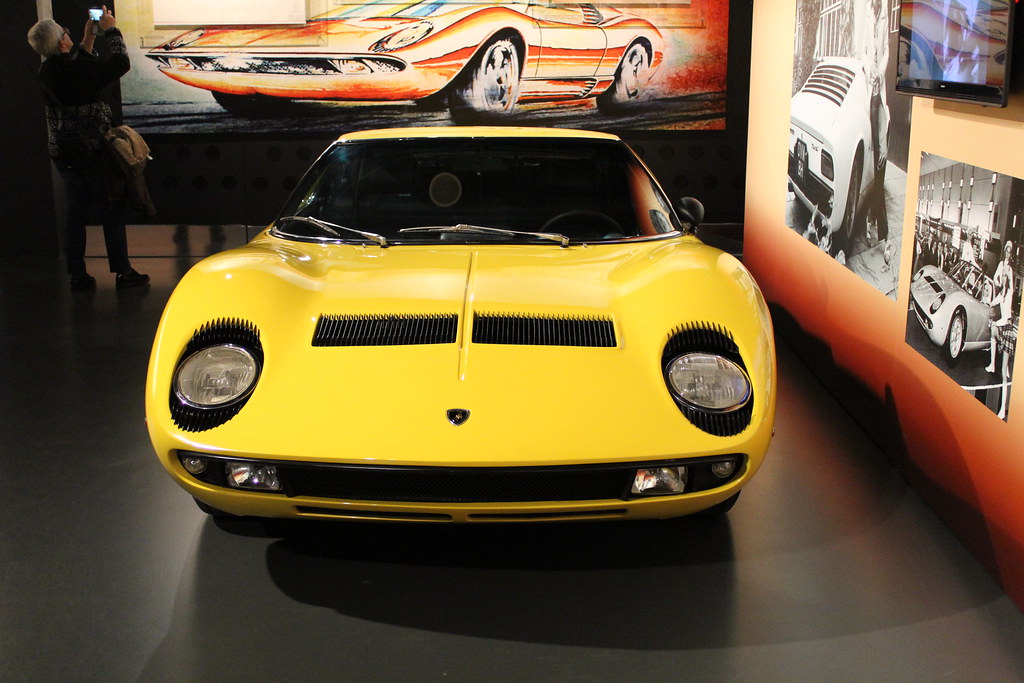
The 1970s, a decade often viewed through a lens of challenges, was undeniably a period of monumental transformation for the American automotive industry. Faced with unprecedented pressures—from two severe energy crises and a growing environmental consciousness demanding stricter pollution controls, to the relentless influx of high-quality imports from Japan and the evolving desires of the “Me Generation”—Detroit found itself in a scramble. This era forced a dramatic rethinking of how cars were designed, engineered, and marketed, pushing manufacturers to meet new safety and emissions regulations while adapting to rapidly changing consumer tastes. While some might argue few truly great cars emerged, the decade produced significant vehicles that either bravely pointed toward the future or staunchly held onto the last, strained links with the past. These automobiles, in their own unique ways, shaped history and laid the groundwork for the industry’s evolution.
Indeed, the 1970s presented a complex tapestry of innovation, adaptation, and a fierce battle for market relevance. American automakers, once dominant, had to contend with a new global landscape that favored efficiency and compact design over the traditional hallmarks of size and power. This shift led to some unconventional, yet impactful, creations that defied expectations and carved out their own niche in automotive lore. These cars weren’t just machines; they were historical markers, reflecting the industry’s struggles, its moments of brilliance, and its enduring quest to connect with the driving public.
As part of MotorTrend’s 75th anniversary, we’re looking back at some of history’s most significant cars. While a complete list would undoubtedly fill a book, we’ve carefully selected some notable cars from the 1970s that encapsulate the spirit of this pivotal decade. These vehicles represent a fascinating blend of necessity-driven innovation, bold design choices, and the burgeoning appeal of performance that would captivate enthusiasts for generations to come. Join us as we explore the first half of these automotive legends, examining their impact and enduring legacy.
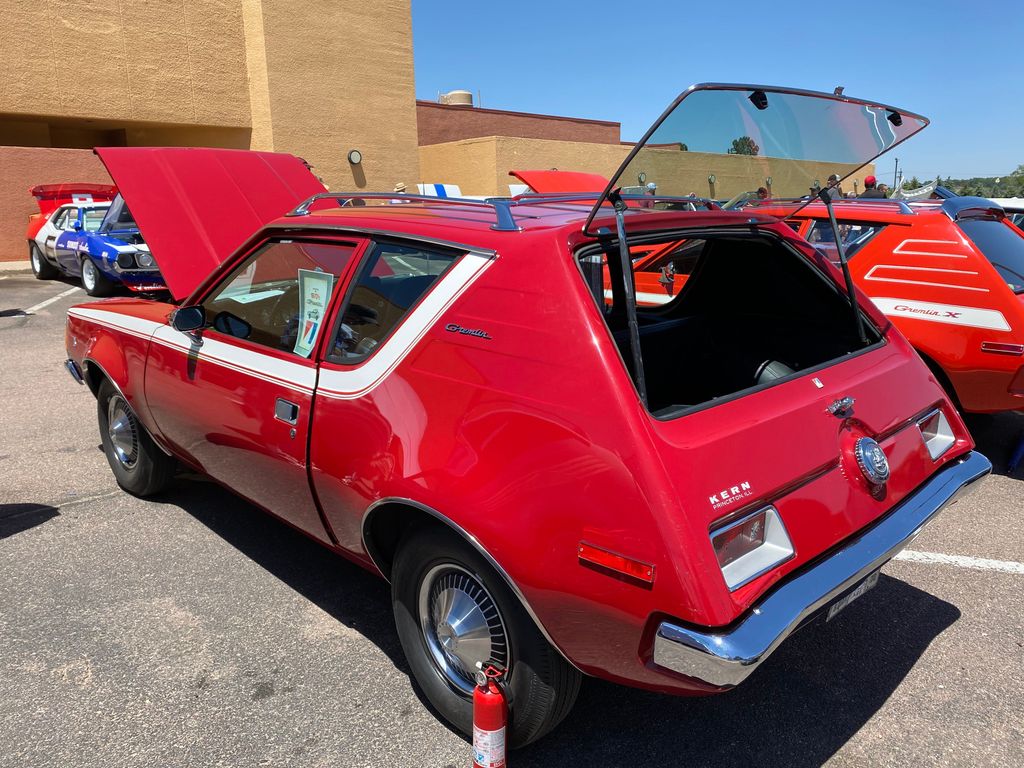
1. **1970 AMC Gremlin**When discussing the defining cars of the 1970s, it might seem surprising to kick off with the AMC Gremlin, but its inclusion is absolutely warranted. While industry giants like GM and Ford poured considerable time and money into developing new compacts to rival the increasing threat from imports, American Motors Corp., perpetually strapped for cash, adopted a more resourceful strategy. They dug deep into their existing parts bin to conjure up the Gremlin, a car that achieved its truly unique and instantly recognizable shape through the rather weight-saving expedient of simply lopping off its entire back end. This unconventional design choice, born out of necessity, gave the Gremlin a distinct identity that stood apart from its more conventional competitors.
Despite its unusual appearance, the Gremlin proved to be a surprise hit with consumers. Its success could be attributed to a compelling combination of attributes that resonated with buyers during a tumultuous period. The car was celebrated for its inherent simplicity and impressive reliability, qualities that were becoming increasingly important to a market segment weary of complex, often problematic new technologies. Unlike some of its contemporaries, the Gremlin offered a driving experience that felt instantly familiar, blending small-car maneuverability and better-than-average gas mileage with a traditional big-car feel. This unique combination allowed it to circumvent the new-tech teething problems that notoriously plagued competitors like the Chevrolet Vega and the Ford Pinto, providing a more dependable ownership experience.
Its market fortunes truly exploded when the OPEC oil taps were abruptly shut, sending fuel prices soaring. In stark contrast to the Ford Pinto, which infamously had the car itself explode in some unfortunate incidents, Gremlin sales experienced an explosion of demand as consumers sought more fuel-efficient transportation options. This surge propelled the Gremlin to become the second-bestselling car in AMC’s history, solidifying its place as a legend of 1970s design and a testament to clever, cost-effective engineering.
The Gremlin’s unexpected success delivered a powerful message: domestic carmakers could indeed compete on their own terms with the burgeoning challenge from German and Japanese imports. For a while, at least, it demonstrated that ingenuity and practicality could carve out a significant market share, even when pitted against the deep pockets and extensive R&D of larger rivals. It stands as a pivotal example of how an underdog, by playing to its strengths and thinking outside the box, could achieve remarkable relevance in a rapidly changing automotive landscape.
Read more about: The 14 Most Embarrassing Market Misses: When Styling Blunders and Feature Failures Drove Cars Off a Cliff
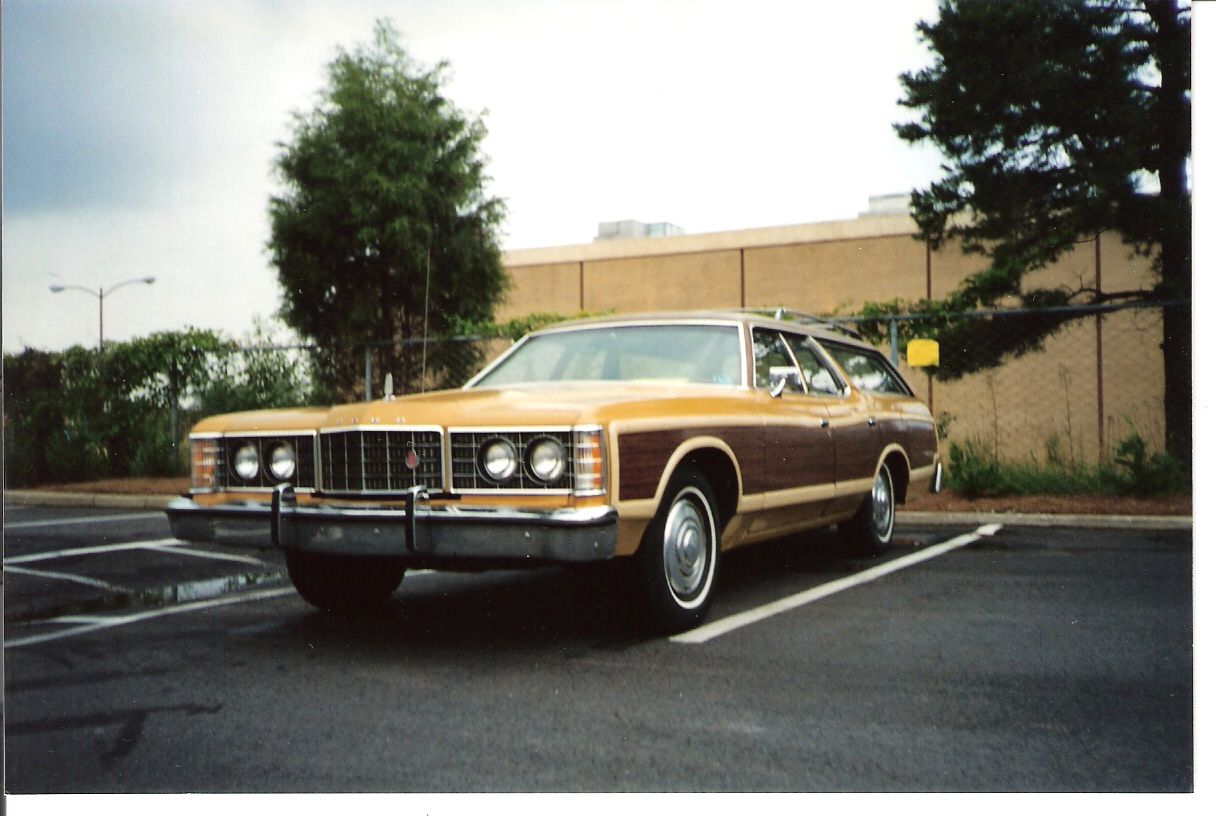
2. **1973 Ford Country Squire**For several decades leading up to the 1970s, the large station wagon stood as the quintessential American family car, serving as the versatile workhorse for countless households. The 1973 Ford LTD Country Squire represents the absolute pinnacle of this cherished type, embodying all the characteristics that made these utilitarian giants so beloved. This iteration, built between 1973 and 1978, emerged as the ultimate expression of the full-size wagon before the landscape of family transportation irrevocably shifted with the eventual rise of the minivan and the SUV, signaling the end of an era for these land yachts.
The Country Squire was engineered to be the ultimate do-everything vehicle, capable of tackling a remarkably diverse range of tasks with effortless grace. Powering this behemoth was a formidable big V-8 engine nestled up front, providing ample muscle for any demanding situation. Out back, its innovative two-way “magic tailgate” offered unparalleled practicality, swinging open both sideways and downwards to facilitate easy loading and access. Its cavernous cargo bay was so immense that it could comfortably accommodate a standard 4×8 sheet of plywood, a testament to its unmatched utility for homeowners and DIY enthusiasts alike. Furthermore, this capacious wagon could seat an astounding 10 passengers and boasted an impressive towing capacity of up to 7,000 pounds, solidifying its reputation as a true multi-purpose vehicle.
A distinctive feature that indelibly linked the Country Squire to a bygone era of automotive elegance was its trademark full-length “wood grain vinyl appliqué.” While some might have perceived it as a touch cheesy, this faux wood paneling served as a nostalgic homage to the beautiful, genuine wood-bodied station wagons of the classic era. It provided a visual connection to a romanticized past, offering a sense of heritage and tradition in an otherwise modern and practical package, further cementing its appeal as a quintessential American automobile.
The 1973 oil embargo delivered a significant blow to the Country Squire’s fortunes, slashing its sales by more than half as consumers scrambled for more fuel-efficient options. However, as oil prices gradually eased, American buyers cautiously, but steadily, migrated back to these large wagons, demonstrating an enduring fondness for their unparalleled space and versatility. It took Chrysler’s seminal 1984 minivan, a groundbreaking vehicle that fundamentally redefined family transport, to finally bring an end to America’s deep-seated love affair with these utilitarian goliaths. The Country Squire remains a powerful symbol of an era when bigger was often seen as better, and functionality reigned supreme.
Car Model Information: 2020 Toyota Tacoma TRD Sport
Caption: 1988–1989 Ford LTD Country Squire
Name: Ford Country Squire
Manufacturer: Ford Motor Company
Class: Full-size,station wagon
BodyStyle: station wagon
ModelYears: 1950–1991
Predecessor: 1941 Ford#1948
Related: Mercury Colony Park,Ford Country Sedan,Ford Ranch Wagon
Categories: 1960s cars, 1970s cars, 1980s cars, 1990s cars, All articles with dead external links
Summary: The Ford Country Squire is a series of full-size station wagons that were assembled by American automaker Ford. Positioned as the top-level station wagon of the Ford division, the Country Squire was distinguished by woodgrain bodyside trim. From 1950 through the 1991 model years, eight generations of the Country Squire were produced. Following the discontinuation of Edsel Bermuda, Mercury marketed the Mercury Colony Park as a divisional counterpart of the Country Squire, sharing bodywork and trim while the Mercury was not available with a six cylinder engine and was more expensive due to the optional equipment on the Ford that was standard on the Mercury.
As part of the full-size Ford model range, the Country Squire was the top trim package station wagon counterpart of several model lines. For its first two generations, the Country Squire was based upon the Ford Custom Deluxe and the Ford Crestline that replaced it, along with the more modestly equipped Ford Country Sedan which was identical in dimensions except for the woodgrain appearance and minimal standard equipment. For its next three generations, the Country Squire was a distinct model range; initially sharing its trim with the Ford Fairlane, the Country Squire later adopted trim of the Ford Galaxie. For its final two generations, the Country Squire became a counterpart of Ford LTD and the Ford LTD Crown Victoria after its downsizing for the last generation, while sharing multiple passenger accommodation duties with the Ford Aerostar.
The Country Squire was discontinued as part of the development of the 1992 Ford Crown Victoria and passenger carrying duties were given to the Ford Windstar. The decline in full-size station wagon sales meant the Crown Victoria was exclusively a four-door sedan. The 41-year production run of the Country Squire is the third-longest of a Ford car nameplate in North America, surpassed only by the Ford Thunderbird and Ford Mustang which is to date still in production.
The term squire is a British term that refers to a village leader or a lord of the manor, which is also called a “squire”, and the term was applied to members of the landed gentry.
Get more information about: Ford Country Squire
Buying a high-performing used car >>>
Brand: Ford Model: Country Squire
Price: $37,795 Mileage: 39,984 mi.
Read more about: Hit the Road! Relive Your Best Childhood Memories with 14 Legendary Family Wagons That Defined an Era

3. **1975 Honda Civic CVCC**In the mid-1970s, domestic automakers frequently voiced their frustrations, arguing that burgeoning new emissions standards would inevitably necessitate the widespread use of expensive catalytic converters, thereby driving up car prices and consequently limiting consumer choice. This seemed like a valid argument, echoing concerns about regulatory burdens, until Honda brilliantly introduced its Compound Vortex Controlled Combustion (CVCC) engine. This innovative engine design achieved a remarkable feat: it met the stringent new emissions standards without the need for a catalytic converter, a technological breakthrough that sent shockwaves through the automotive world.
While the CVCC system wasn’t entirely without its minor quirks – MotorTrend, for instance, noted a tendency for the engine to flood when warm-started – its fundamental success was a profound embarrassment to the rest of the auto industry. Here was a foreign automaker, with comparatively fewer resources than the American giants, demonstrating that there was another, more elegant solution to the emissions challenge. This technological leap not only showcased Honda’s engineering prowess but also exposed the perceived lack of innovation or perhaps the resistance to change within the established domestic manufacturers, sparking a significant reevaluation across the industry.
The timing of the Honda Civic’s introduction, particularly with its CVCC engine, proved to be exceptionally fortuitous. With its sales significantly boosted by the severe OPEC oil embargo, which highlighted the urgent need for fuel-efficient vehicles, the Honda Civic introduced a much broader swath of American buyers to the company’s now-legendary quality and durability. This exposure was pivotal, helping the phrase “Made in Japan” transition from a term often associated with derision or cheap goods to one of genuine admiration and respect for superior engineering and manufacturing standards. The Civic became a tangible symbol of Japanese automotive excellence.
Like the iconic Volkswagen Beetle before it, the Honda Civic fundamentally challenged America’s preconceived notions of what a car could, or should, be. It deliberately eschewed extravagance and ostentation in favor of a more utilitarian and inherently practical transportation solution, prioritizing efficiency, reliability, and thoughtful design. The Civic’s success played a crucial role in significantly increasing the acceptance of imports in the American market, marking a definitive beginning of the decades-long success and dominance that Japanese automakers would come to enjoy. It reshaped consumer expectations and altered the competitive landscape irrevocably.
Car Model Information: 2022 Honda Civic Sport Touring
Caption: 2024 Honda Civic liftback
Manufacturer: Honda
Aka: ubl
Production: 1972–present
Class: Subcompact car
BodyStyle: fastback,Sedan (automobile)
Layout: Front-engine, front-wheel-drive layout,Front-engine, four-wheel-drive layout
Predecessor: Honda N600,Honda Z600
Categories: 1980s cars, 1990s cars, 2000s cars, 2010s cars, 2020s cars
Summary: The Honda Civic (Japanese: ホンダ・シビック, Hepburn: Honda Shibikku) is a series of automobiles manufactured by Honda since 1972. As of 2023, the Civic is positioned between the Honda Fit/City and Honda Accord in Honda’s global passenger car line-up. It is one of the best-selling automobiles in history, with over 27 million units sold through 2021.
The first-generation Civic was introduced in July 1972 as a two-door fastback sedan, followed by a three-door hatchback that September. With a 1,169 cc transverse engine and front-wheel drive, the car provided good interior space despite its small overall dimensions. Initially gaining a reputation for being fuel-efficient, reliable and environmentally friendly, later iterations have become known for performance and sportiness, especially the Civic Si, SiR, and Type R versions. It is currently in its eleventh generation, which has been produced since 2021.
The Civic has often been rebadged for international markets, and it served as the basis for the Honda CR-X, the Honda CR-X del Sol, the Concerto, the first generation Prelude, the Civic Shuttle (which later became the Orthia) and the CR-V (which in turn was used as the basis for the Honda FR-V).
Get more information about: Honda Civic
Buying a high-performing used car >>>
Brand: Honda Model: Civic
Price: $25,698 Mileage: 32,251 mi.
Read more about: Beyond the Mainstream: 14 Unforgettable ’70s Classic Cars That Shaped Automotive History for Enthusiasts
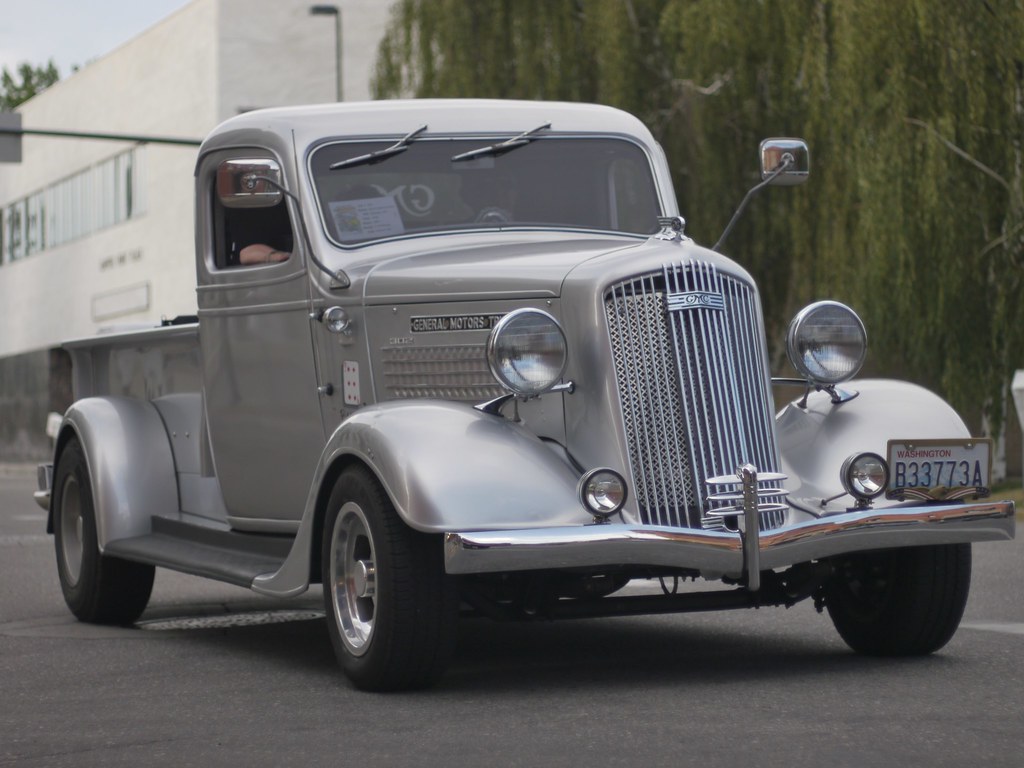
4. **1977 General Motors Full-Size Cars**General Motors, for decades, had been known for its almost singular ability to sway market forces, rather than be swayed by them, confidently dictating trends and consumer preferences. However, the 1973 OPEC oil embargo, coupled with the looming specter of stringent new federal fuel economy standards, collectively created external pressures of a magnitude Detroit had never previously experienced. These unprecedented challenges forced GM to confront a new reality, prompting a momentous and risky decision: to dramatically downsize its entire line of cars. This bold strategy began with its highly profitable full-size models, but crucially, it wasn’t limited to just the low-cost versions. Instead, GM embarked on an ambitious, simultaneous overhaul of every single car, from the utilitarian Chevrolet to the luxurious Cadillac.
This undertaking was nothing short of monumental. Compared to their gargantuan predecessors, the newly downsized cars shed an average of a remarkable 10 inches in length and an impressive 800 pounds in weight. Despite these significant reductions in exterior dimensions and mass, GM’s engineers achieved an astonishing feat: the new models actually offered more interior space, improving passenger comfort and practicality. Furthermore, their styling was clean, modern, and forward-thinking, presenting a fresh aesthetic that resonated with contemporary tastes and shed the excesses of earlier designs. This combination of efficiency, enhanced interior volume, and updated aesthetics was a triumph of engineering and design.
GM’s monumental risk paid off handsomely, yielding enormous sales figures that demonstrated widespread consumer acceptance and enthusiasm for the new, trimmer vehicles. The sheer success was underscored by the prestigious MotorTrend Car of the Year award bestowed upon the ’77 Chevy Caprice, a clear indication of its industry-leading impact and appeal. As rival manufacturers like Ford and Chrysler scrambled to execute their own downsizing plans, GM was already a step ahead, introducing trimmer versions of its intermediate models, maintaining its leadership position in an intensely competitive environment.
When a second major oil crisis hit in 1979, GM’s foresight proved invaluable. While other manufacturers struggled, GM sales held remarkably steady, validating the wisdom of their bold strategic pivot. The smaller big cars not only navigated the tumultuous 1970s but remained viable and popular choices well into the challenging economic climate of the 1980s. This strategic decision by General Motors stands as a textbook example of successful adaptation in the face of immense external pressure, fundamentally reshaping the American automotive landscape and proving that even the largest entities can, and must, evolve.
Car Model Information: 2020 RAM 1500 Laramie
Align: right
Direction: vertical
Width: 220
Caption1: Kia K8
Caption2: Ford_Galaxie#1965–1968
Categories: All articles needing additional references, All articles with vague or ambiguous time, Articles needing additional references from February 2019, Articles with short description, Car classifications
Summary: Full-size car—also known as large car—is a vehicle size class which originated in the United States and is used for cars larger than mid-size cars. It is the largest size class for cars. In the United Kingdom, this class is referred to as the executive car, while in Europe, it is known as E-segment or F-segment.
Get more information about: Full-size car
Buying a high-performing used car >>>
Brand: General Motors Model: Full-Size Cars
Price: $36,995 Mileage: 64,342 mi.
Read more about: Neil Young’s Garage: 8 Legendary Rides That Define His Eclectic Taste and Eco-Warrior Spirit
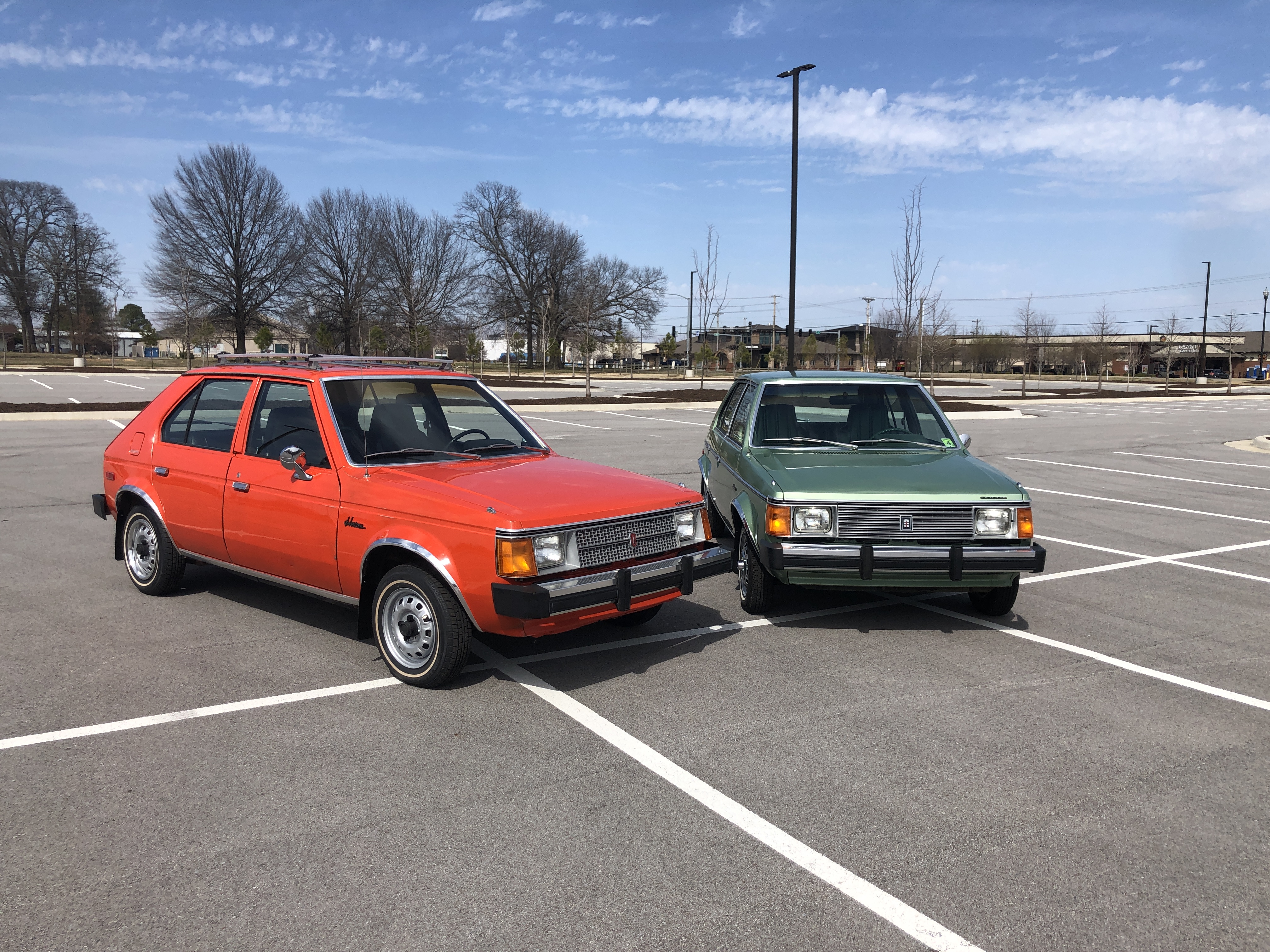
5. **1978 Dodge Omni/Plymouth Horizon**By the late 1970s, Chrysler Corporation found itself in dire straits, metaphorically “underwater and drowning fast,” with its showrooms increasingly littered with oversized, fuel-inefficient relics from the early 1970s that were painfully out of step with contemporary market demands. The company desperately needed a lifeline, and that salvation arrived in the form of the L-body platform, which spawned the groundbreaking Dodge Omni and Plymouth Horizon. These cars were not just new models; they represented a seismic shift in American automotive design, pioneering the concept of America’s first front-wheel-drive, transverse-engine subcompact car. This configuration, common in imports, was revolutionary for a domestic manufacturer.
Despite their undeniable European roots, and bearing a striking similarity in concept and execution to the incredibly popular Volkswagen Rabbit, the Omni and Horizon managed to cultivate a distinct identity that felt uniquely American. Early models even utilized reliable VW-sourced engines, acknowledging their foreign inspiration while adapting the package for the American consumer. This blend of European engineering and American sensibility allowed them to appeal to a broad audience, offering a compact, efficient, and practical solution that still felt familiar and accessible to domestic buyers, a crucial factor in their initial acceptance and success.
The L-body twins were quickly recognized for their innovative design and relevance, earning significant accolades from the automotive press. MotorTrend, a respected voice in the industry, named the Omni and Horizon its Car of the Year for 1978, a testament to their impact and perceived excellence. Further underscoring their global appeal and advanced design, the closely related Chrysler Horizon, the European counterpart, went on to win the prestigious European Car of the Year award in 1979. These awards signaled a much-needed turning point for Chrysler, highlighting its capacity for innovation when its very survival depended on it.
The Omni and Horizon demonstrated Chrysler’s crucial willingness to pivot dramatically in order to save itself, acting almost as a vital dress rehearsal for the legendary K-cars that would later completely turn the company around in the challenging 1980s. Chrysler would strategically rebrand the enduring twins as the Omni America and Horizon America, offering a generous feature set at remarkably low prices. This shrewd marketing move extended their relevance and sales right through the next decade, proving that thoughtful design, adaptability, and strategic positioning could overcome even the most formidable corporate challenges, transforming a near-collapse into a significant resurgence.
Car Model Information: 1986 Dodge Omni GLH-S
Name: Dodge Omni & Plymouth Horizon
Engine: Simca Poissy engine,Volkswagen EA827 engine#1.7,Chrysler 2.2 & 2.5 engine#2.2,Chrysler 2.2 & 2.5 engine#Turbo I
Height: 53.4 in
Abbr: on
Width: 66.2 in
Length: 163.2 in
Wheelbase: 99.2 in
Assembly: Belvidere Assembly Plant,Kenosha Engine,Jefferson North Assembly#Jefferson Avenue Assembly
Related: Chrysler Horizon,Dodge Charger (L-body),Dodge Omni 024,Dodge Rampage,Plymouth Horizon TC3,Plymouth Scamp,Plymouth Turismo,Shelby GLHS
Successor: Dodge Shadow,Plymouth Sundance
Transmission: Volkswagen,manual transmission
BodyStyle: hatchback
Aka: Plymouth Horizon , Plymouth Expo (Canada)
Platform: Chrysler L platform
Layout: Front-engine, front-wheel-drive layout
Class: Subcompact
ModelYears: 1978–1990
Production: December 5, 1977 – February 2, 1990
Manufacturer: Chrysler Corporation,American Motors Corporation
Caption: 1979 Horizon (left) & 1978 Omni (right)
Weight: cvt
Categories: 1980s cars, 1990s cars, All articles with unsourced statements, Articles with short description, Articles with unsourced statements from February 2024
Summary: The Dodge Omni is a subcompact car that was manufactured by Chrysler Corporation from the 1978 to 1990 model years. Marketed alongside the Plymouth Horizon, the Omni was the first front-wheel drive Chrysler vehicle; the pair were the first front-wheel-drive economy cars assembled in the United States.
The Omni and Horizon were developed from the Chrysler Horizon designed by Chrysler Europe, undergoing extensive modifications to meet U.S. standards. The design was heavily inspired by the Volkswagen Rabbit five-door hatchback (with early versions using Volkswagen-produced engines). Known as the Chrysler L platform, the chassis architecture used by the Omni/Horizon was also adopted by 3-door coupes and 2-door coupe-utility pickups.
Through its twelve-year production, approximately 2.5 million units of the combined model lines were sold, with the Plymouth Horizon outselling the Dodge Omni (the final Plymouth model to outsell its Dodge counterpart). For 1987, the Dodge Shadow and Plymouth Sundance hatchback sedans were introduced as a successor model line, eventually replacing the Omni/Horizon.
Chrysler produced the model line at its Belvidere Assembly Plant (Belvidere, Illinois) from 1977-1987, with production shifting to the AMC Kenosha Plant (Kenosha, Wisconsin), and ultimately the Jefferson Avenue Assembly (Detroit, Michigan); the Omni/Horizon were the final model lines produced at the latter two facilities.
Get more information about: Dodge Omni
Buying a high-performing used car >>>
Brand: Dodge Model: Omni
Price: $24,999 Mileage: 88,065 mi.
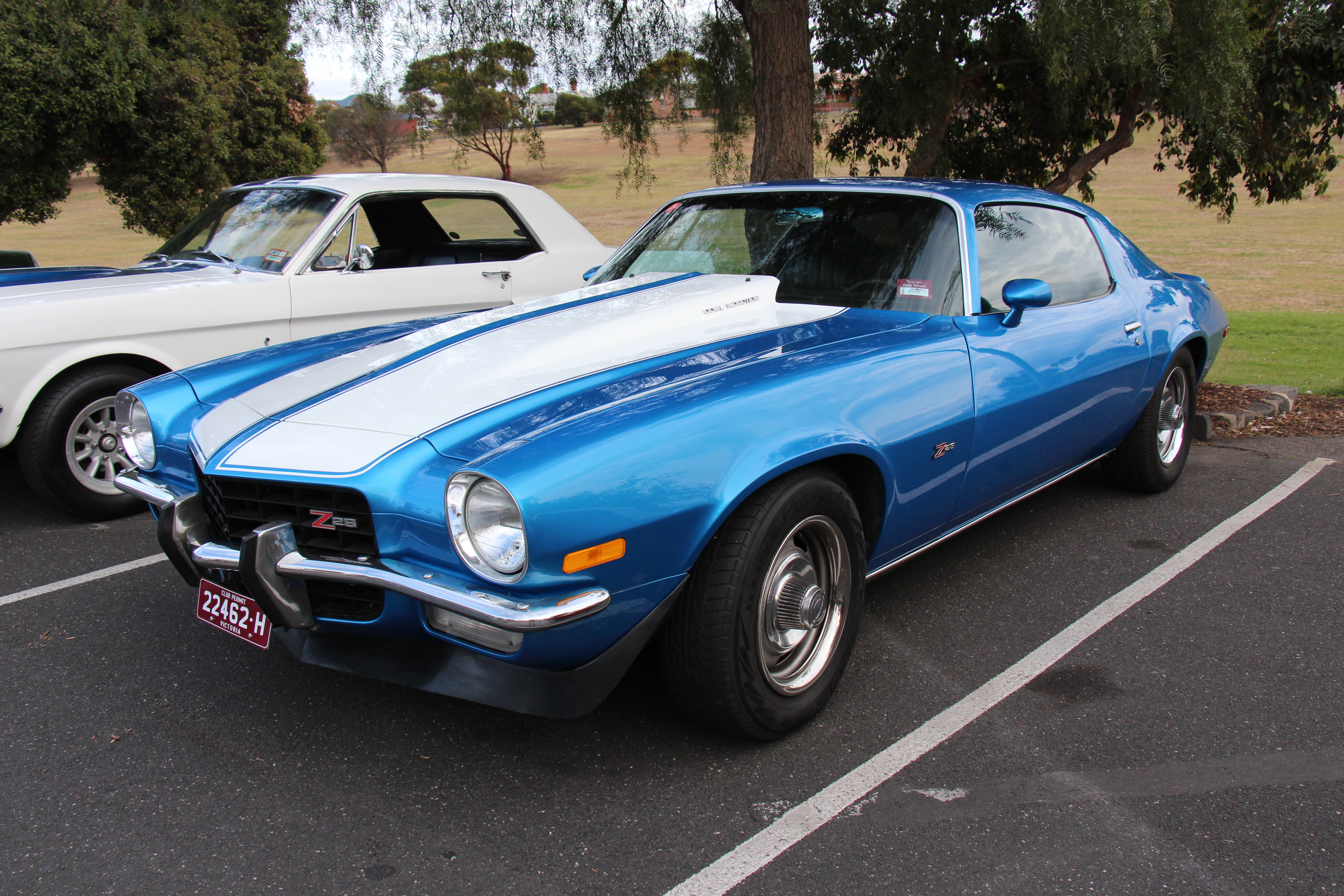
6. **Chevrolet Camaro Z28 (1970–1973)**The Chevrolet Camaro Z28 from the early 1970s stands as an undisputed muscle car icon, a legendary machine that continues to exert a powerful pull on collectors and enthusiasts today. This particular iteration of the Z28 solidified its reputation through a potent combination of aggressive styling, truly powerful performance, and a production run that, while not extremely limited, made it sufficiently scarce to fuel long-term desirability. Owners who meticulously maintained their Z28s in good, original condition are now witnessing these vehicles command substantial, often breathtaking, prices in the highly competitive classic car market, a testament to its enduring allure and investment potential.
Beneath the Z28’s sculpted hood lay its beating heart: a high-performance small-block V8 engine. This meticulously engineered powerplant was the key to its exhilarating driving experience, delivering a compelling blend of strong, immediate acceleration and thrilling driving dynamics that set it apart from many of its contemporaries. This engine was not merely about brute force; it was designed to offer a more sophisticated and engaging performance, making the Z28 a joy to drive whether on the street or the track. The fact that many examples have survived with their original components intact significantly enhances their value, as collectors deeply appreciate mechanical authenticity.
Beyond its mechanical prowess, the Z28’s exterior styling played a crucial role in its lasting appeal and iconic status. Its bold lines, distinctive racing stripes, and an aggressive front fascia coalesced to create a look that was instantly recognizable and undeniably impactful. These design elements, far from being fleeting trends, have stood the test of time, ensuring the Camaro Z28 consistently draws significant attention and admiration at prestigious car shows and high-stakes auctions. This potent combination of striking visual appeal and formidable performance helps to convincingly explain why the Z28 commands such high prices in the collector market today.
Interior quality also contributes significantly to the Z28’s collectibility. Well-preserved dashboards, seats, and trim pieces maintain the vehicle’s vital authenticity, a quality that collectors prize above almost all others. Cars that have managed to retain factory-original components within their cabins often see a notable and sometimes dramatic increase in their market value. An original interior condition serves as a powerful signal of careful, dedicated ownership over the decades, a characteristic that is highly sought after by discerning collectors who understand the value of an unmolested piece of automotive history.
Market demand for the Camaro Z28 is further fueled by its inherent rarity and immense historical significance. Early 1970s models, particularly those from the 1970-1973 production run, are generally less common than later examples, creating a natural scarcity that drives up their desirability. Limited production runs for specific configurations or performance packages add to this exclusivity. Vehicles that have been painstakingly restored to their original factory specifications frequently outperform expectations at auctions, underscoring the Z28’s enduring legacy as a quintessential 70s muscle car that masterfully blends performance, style, and a compelling investment trajectory.
Car Model Information: 2020 Toyota Tacoma TRD Sport
Name: Chevrolet Camaro
Manufacturer: Chevrolet
Production: 1966–2002,2009–2023
ModelYears: 1967–2002,2010–2024
Class: Pony car
BodyStyle: coupe,convertible
Platform: GM F platform,GM Zeta platform,GM Alpha platform
Layout: Front-engine, rear-wheel-drive layout
Categories: 1970s cars, 1980s cars, 1990s cars, 2+2 coupés, 2000s cars
Summary: The Chevrolet Camaro is a mid-size American automobile manufactured by Chevrolet, classified as a pony car. It first went on sale on September 29, 1966, for the 1967 model year and was designed to compete with the Ford Mustang. The Camaro shared its platform and major components with the Firebird, produced by General Motors’ Pontiac division that was also introduced for the 1967 model year.
Four distinct generations of the Camaro were developed before production ended in 2002. The nameplate was revived on a concept car that evolved into the fifth-generation Camaro; production started on March 16, 2009.
Production of the sixth generation of the Camaro ended in December 2023, for the 2024 model year.
Get more information about: Chevrolet Camaro
Buying a high-performing used car >>>
Brand: Chevrolet Model: Camaro Z28
Price: $37,795 Mileage: 39,984 mi.

7. **Pontiac Firebird Trans Am (1970–1975)**The Pontiac Firebird Trans Am represents another quintessential classic from the 1970s, a vehicle that has firmly established itself as a valuable and highly sought-after collector’s car. Introduced as the high-performance zenith of the Firebird line, the Trans Am swiftly garnered a formidable reputation. This reputation was built upon its aggressive and unmistakable styling, a choice of powerful engines that delivered exhilarating performance, and a chassis tuned for handling capabilities that could genuinely compete with, and often outperform, other formidable muscle cars of the period. Its commanding presence and impressive capabilities made it an instant legend among performance enthusiasts.
Under the hood, the Trans Am offered an enticing choice of V8 engines, each meticulously engineered to deliver impressive horsepower and abundant torque, ensuring a thrilling and visceral driving experience. Early models, especially those equipped with larger displacement engines such that delivered maximum output, are particularly prized by collectors. Well-maintained examples that still retain their original powertrains command strong prices in the secondary market, precisely because discerning collectors place a very high value on mechanical authenticity. The unmolested originality of these powerful engines is a key factor in their sustained high value and desirability.
The car’s distinctive exterior design, a bold statement in itself, played a crucial role in cementing its status as a 70s icon. Features such as prominent hood scoops, often striking racing stripes, and unique badging that proudly proclaimed its Trans Am lineage contributed to its aggressive aesthetic. The Trans Am’s muscular stance and meticulously crafted styling details continue to captivate audiences and attract significant attention at both prestigious auctions and popular car shows, powerfully reinforcing its undeniable collectible value. This visual impact is a significant component of its enduring appeal, drawing in enthusiasts who appreciate its fearless design.
Interior features also play a notable role in the Trans Am’s enduring desirability among collectors. Original upholstery, dashboards, and instrumentation that have survived the decades in good condition are highly prized. Cars that have managed to maintain their factory-original interiors often command increased market value, as these elements serve as direct evidence of careful ownership and painstaking historical accuracy. The preservation of these original cabin components contributes significantly to a vehicle’s overall authenticity and its appeal to purist collectors who value historical integrity above all else.
Rarity remains a pivotal factor in the Trans Am’s enduring collectibility. Limited production numbers, particularly for special editions or specific high-performance engine configurations, significantly enhance market demand, creating a sense of exclusivity. Vehicles that have been exceptionally well-preserved or meticulously restored to their original factory specifications frequently achieve premium prices at auction, far exceeding initial expectations. The Pontiac Firebird Trans Am therefore perfectly exemplifies how a potent blend of performance, distinctive design, and inherent scarcity can combine to create a classic car that not only holds its value but consistently appreciates over time, securing its legacy as a 1970s muscle car legend and a perennial favorite for collectors and enthusiasts alike.
Car Model Information: 2020 Toyota Tacoma TRD Sport
Name: Pontiac Firebird
Caption: The second, third, and fourth generations of,the Pontiac Firebird Trans Am
Manufacturer: Pontiac (automobile)
Production: February 23, 1967 – August 30, 2002
ModelYears: 1967 – 2002
Class: Pony car,Muscle car
Platform: GM F platform
Related: Chevrolet Camaro
Layout: Front engine, rear-wheel-drive layout
Categories: 1970s cars, 1980s cars, 1990s cars, 2000s cars, All articles with dead external links
Summary: The Pontiac Firebird is an American automobile built and produced by Pontiac from the 1967 to 2002 model years. Designed as a pony car to compete with the Ford Mustang, it was introduced on February 23, 1967, five months after GM’s Chevrolet division’s platform-sharing Camaro. This also coincided with the release of the 1967 Mercury Cougar, Ford’s upscale, platform-sharing version of the Mustang.
The name “Firebird” was also previously used by GM for the General Motors Firebird series of concept cars in the 1950s.
Get more information about: Pontiac Firebird
Buying a high-performing used car >>>
Brand: Pontiac Model: Firebird Trans Am
Price: $37,795 Mileage: 39,984 mi.
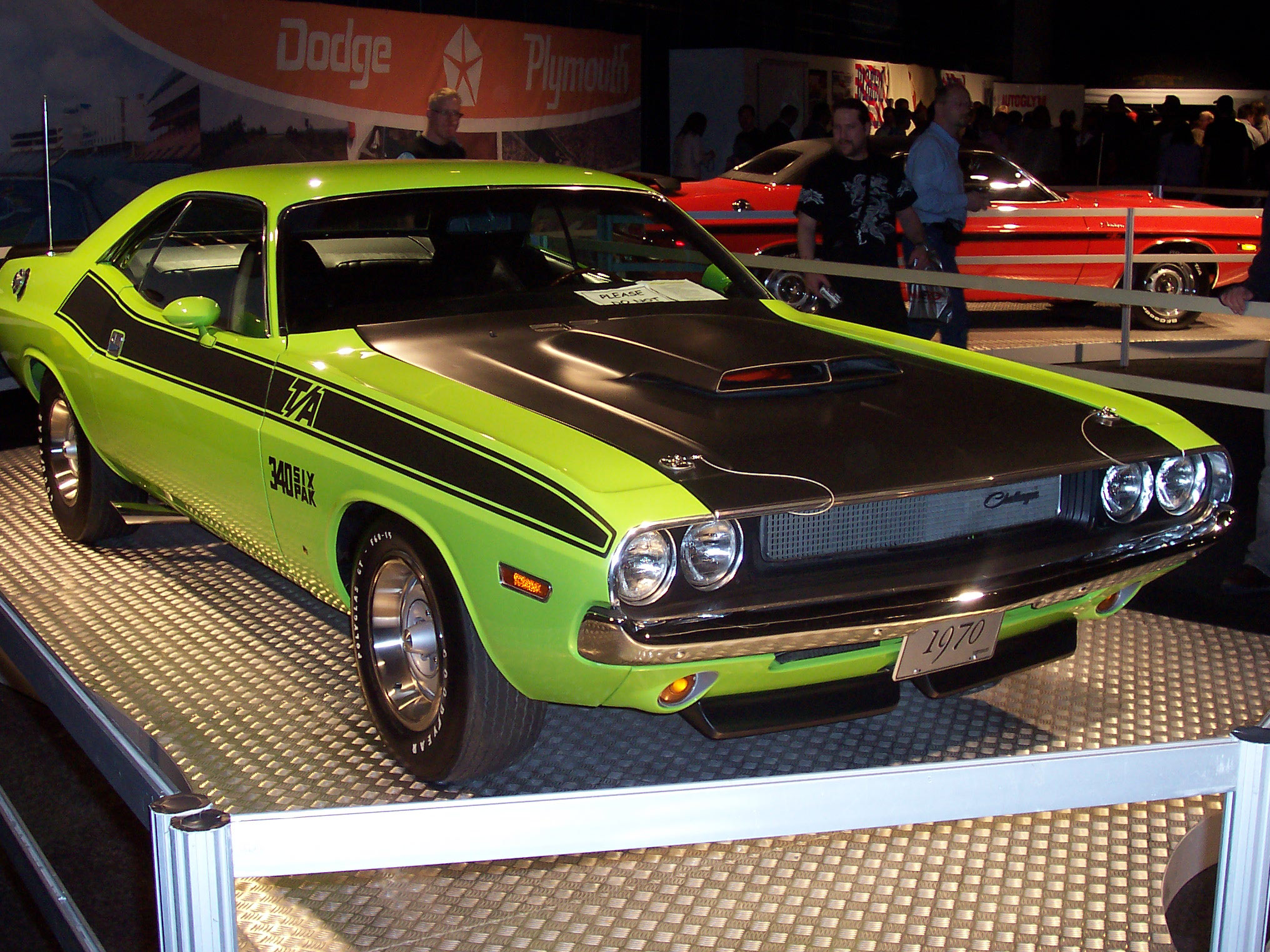
8. **Dodge Challenger (1970–1974)**The Dodge Challenger from the early 1970s is a muscle car that has become highly desirable among collectors. Known for its bold design and powerful engine options, the Challenger captures the essence of 70s American performance vehicles. Well-preserved or properly restored models now command impressive prices at auctions and private sales.
Under the hood, the Challenger offered a range of V8 engines, including the legendary 426 HEMI and 383 small-block. These engines delivered strong acceleration and thrilling driving experiences. Original engine condition is a significant factor in a car’s value, and many collectors specifically seek examples with original powertrains intact.
The exterior design stands out with wide-body proportions, prominent grilles, and optional stripes or decals. These styling elements are not only iconic but also contribute to the vehicle’s appeal in the collector market. Cars that retain original paint schemes and body panels often see higher market demand.
Interior quality also affects collectibility. Well-maintained seats, dashboards, and trim reflect careful ownership and add to the car’s value. Early 70s Challengers that retain factory interiors are particularly sought after, as originality is a key criterion for collectors.
Rarity enhances the Dodge Challenger’s desirability. Limited production numbers for high-performance variants, especially those equipped with rare options or specific engine combinations, create scarcity that drives up prices. Collectors actively pursue these rare examples. The Dodge Challenger demonstrates how performance, design, and rarity can combine to create a classic car that appreciates over time. Its place among early 70s muscle cars remains secure, and enthusiasts continue to prize it for both its driving experience and investment potential.
Car Model Information: 2020 Dodge Challenger R/T
Name: Dodge Challenger
Production: 1969–1974,1977–1983,2008–2023
ModelYears: 1970–1974,1978–1983,2008–2023
Caption: 2015 Dodge Challenger SRT Hellcat
Manufacturer: Dodge
Categories: 1970s cars, 1980s cars, 2000s cars, 2010s cars, 2020s cars
Summary: The Dodge Challenger is the name of three generations of automobiles produced by the American automobile manufacturer Dodge. However, the first use of the Challenger name by Dodge dates back to 1959 for marketing a “value version” of the full-sized Coronet Silver Challenger.
From model years 1970 to 1974, the first-generation Dodge Challenger pony car was built using the Chrysler E platform in hardtop and convertible body styles sharing significant components with the Plymouth Barracuda.
The second generation, from model years 1978 to 1983, was a rebadged Mitsubishi Galant Lambda / Sapporo, a coupe version of an economical compact car.
The third and most recent generation is a full-size muscle car that was introduced in early 2008 initially as a rival to the evolved fifth generation Ford Mustang and the fifth generation Chevrolet Camaro.
In November 2021, Stellantis announced that the 2023 model year would be the final model year for both the LD Dodge Charger and LA Dodge Challenger, as the company will focus its plans on electric vehicles rather than fossil fuel-powered vehicles, due to tougher emissions standards required by the Environmental Protection Agency for the 2023 model year. Challenger production ended on December 22, 2023, and the Brampton, Ontario, assembly plant will be re-tooled to assemble an electrified successor.
Get more information about: Dodge Challenger
Buying a high-performing used car >>>
Brand: Dodge Model: Challenger
Price: $24,335 Mileage: 70,496 mi.
Read more about: Beyond the Big Three: 15 Forgotten Car Brands from the ’60s and ’70s That Deserve Another Look

9. **Chevrolet Chevelle SS (1970–1973)**The Chevrolet Chevelle SS is one of the most iconic muscle cars of the 1970s, earning a reputation for high performance and collectibility. Its combination of powerful engines, aggressive styling, and limited production numbers has made it highly sought after among collectors and enthusiasts alike.
The Chevelle SS offered a variety of V8 engines, including the famous 454 big-block. These engines delivered impressive horsepower and torque, making the Chevelle a formidable performer on the street or track. Cars with original engines in good condition are particularly valuable to collectors.
Exterior styling contributed to its lasting appeal. Bold lines, dual headlights, and optional SS badges and stripes created a distinctive look. Vehicles that retain original body panels and paint schemes often see higher market values due to their authenticity.
Interior quality is also important. Well-preserved seats, dashboards, and trim pieces maintain originality, which collectors highly prize. Factory-original interiors add significantly to a vehicle’s value and reflect careful ownership over decades.
Rarity and special editions enhance the Chevelle SS’s collectibility. Models with high-performance engines, limited production numbers, or unique options are more valuable. Auctions and private sales often see these cars reaching substantial prices due to strong demand. The Chevrolet Chevelle SS demonstrates how a combination of performance, design, and rarity can create a classic vehicle that continues to appreciate. Its status as a 70s muscle car icon ensures it remains a favorite for collectors and enthusiasts seeking both driving enjoyment and long-term value.
Car Model Information: 2020 Toyota Tacoma TRD Sport
Name: Chevrolet Chevelle
Caption: 1970 Chevrolet Chevelle SS 396 Sport Coupe
Manufacturer: Chevrolet
Production: 1963–1977
ModelYears: 1964–1977
Class: Mid-size
Platform: GM A platform (RWD)
Layout: FR layout
Successor: Chevrolet Malibu
Categories: 1970s cars, All articles needing additional references, All articles that may contain original research, All articles with specifically marked weasel-worded phrases, All articles with unsourced statements
Summary: The Chevrolet Chevelle is a mid-sized automobile that was produced by the Chevrolet division of General Motors (GM) in three generations for the 1964 to 1977 model years. Part of the GM A-body platform, the Chevelle was one of Chevrolet’s most successful nameplates. Body styles included coupes, sedans, convertibles, and station wagons. The “Super Sport” versions were produced through the 1973 model year and Lagunas from 1973 through to 1976.
After a four-year absence, the El Camino was reintroduced as part of the new Chevelle lineup in 1964.
From 1964 to 1969, GM of Canada sold a modified version of the Chevelle that included a Pontiac-style grille, and a LeMans instrument panel, marketed as the Beaumont.
The Malibu was the top-of-the-line model to 1972, and completely replaced the Chevelle nameplate starting with the redesigned, and downsized 1978 model year.
Get more information about: Chevrolet Chevelle
Buying a high-performing used car >>>
Brand: Chevrolet Model: Chevelle SS
Price: $37,795 Mileage: 39,984 mi.
Read more about: Beyond the Legends: 14 Forgotten Muscle Cars Ready for a Second Look and a Resurgence

10. **Plymouth Barracuda (1970–1974)**The Plymouth Barracuda is a classic 1970s muscle car that has grown increasingly desirable among collectors. Known for its aggressive styling and performance-oriented design, the Barracuda has become a symbol of American muscle. Well-preserved examples now command high prices, particularly rare trims and engine configurations.
Under the hood, the Barracuda offered a range of engines from small-block V8s to the high-performance 426 HEMI. These engines provided strong acceleration and thrilling performance. Original engine condition significantly impacts value, with intact and functioning high-performance engines being highly sought after by collectors.
Exterior styling contributes to its lasting appeal. Fastback rooflines, bold grille designs, and optional stripes or decals make the Barracuda instantly recognizable. Cars that retain their original paint and body panels often achieve premium market prices due to their authenticity.
Interior details also matter. Well-maintained seats, dashboards, and trim preserve the car’s originality. Factory interiors are highly valued in the collector market, as they reflect careful maintenance and the car’s history. Many collectors specifically look for Barracudas that have avoided extensive modifications.
Rarity plays a key role in collectibility. Certain high-performance trims, limited production options, or factory-installed performance packages create scarcity that drives demand. Models with these features tend to sell for top dollar at auctions and private sales. The Plymouth Barracuda exemplifies how performance, design, and rarity can make a 1970s car highly collectible. Its combination of aggressive styling, powerful engines, and limited availability ensures it remains a favorite among enthusiasts and investors alike.
Car Model Information: 1971 Plymouth Barracuda
Caption: 1970 Hardtop Coupe
Name: Plymouth Barracuda
Manufacturer: Plymouth (automobile)
Production: 1964–1974
Assembly: Fenton, Missouri,Hamtramck, Michigan,Maywood, California,Windsor, Ontario
Layout: Front-engine, rear-wheel drive layout
Class: Pony car
Categories: 1970s cars, All articles with dead external links, All articles with unsourced statements, Articles with dead external links from February 2018, Articles with dead external links from January 2022
Summary: The Plymouth Barracuda is a two-door pony car that was manufactured by Chrysler Corporation from 1964 through 1974 model years.
The first-generation Barracuda was based on the Chrysler A-body and was offered from 1964 until 1966. A two-door hardtop (no B-pillar) fastback design, it shared a great majority of parts and bodywork with the Plymouth Valiant, except for the distinctive wraparound rear glass.
The second-generation Barracuda, though still Valiant-based, was heavily redesigned. Built from 1967 through 1969, it was available as a two-door in fastback, notchback, and convertible versions.
The third generation, offered from 1970 until 1974, was based on the Chrysler E-body, exclusive to it, and the slightly larger Dodge Challenger. A completely new design, the two-door Barracuda was available in hardtop and convertible body styles.
Get more information about: Plymouth Barracuda
Buying a high-performing used car >>>
Brand: Plymouth Model: Barracuda
Price: $44,999 Mileage: 12,468 mi.
Read more about: Beyond the Big Three: 15 Forgotten Car Brands from the ’60s and ’70s That Deserve Another Look

11. **Dodge Charger (1970–1974)**The Dodge Charger from the early 1970s is a classic muscle car with a reputation for performance and style. Its combination of powerful engine options, sleek design, and rarity has made it highly valuable in the collector market. Well-preserved Chargers from this period continue to command impressive prices.
Under the hood, the Charger offered a variety of V8 engines, including the legendary 426 HEMI and 440 Magnum. These engines provided impressive horsepower and torque, creating a thrilling driving experience. Cars that retain their original powertrains are especially prized, as mechanical authenticity is highly valued by collectors.
The exterior design is iconic. Fastback rooflines, recessed headlights, and bold body lines create a commanding presence. Original paint schemes and body panels further enhance the car’s collectibility, as authenticity plays a key role in determining value.
Interior quality also contributes to long-term desirability. Factory-original seats, dashboards, and trim pieces are highly valued, as they reflect careful ownership and historical accuracy. Collectors often prioritize Chargers with intact interiors over modified examples.
Rarity enhances the Dodge Charger’s appeal. Limited production numbers, special editions, or unique engine and trim combinations create scarcity that drives demand. High-performance models, in particular, often sell for top dollar in auctions. The Dodge Charger demonstrates how performance, design, and scarcity can create a classic car that appreciates over time. Its status as a 1970s muscle car icon ensures that collectors and enthusiasts continue to prize it for both its driving experience and investment potential.
Car Model Information: 2022 Dodge Charger R/T
Name: Dodge Charger
Caption: 1969 Dodge Charger
Manufacturer: Dodge
Production: 1966–1978,1981–1987,2005–present
ModelYears: 1966–1978,1982–1987,2006–present
Categories: 1960s cars, 1970s cars, 1980s cars, 2000s cars, 2010s cars
Summary: The Dodge Charger is a model of automobile marketed by Dodge in various forms over eight generations since 1966.
The first Charger was a show car in 1964. A 1965 Charger II concept car resembled the 1966 production version.
In the United States, the Charger nameplate has been used on mid-size cars, personal luxury coupes, subcompact hatchbacks, and full-size sedans.
Get more information about: Dodge Charger
Buying a high-performing used car >>>
Brand: DODGE Model: Charger
Price: $30,277 Mileage: 74,620 mi.

12. **Ford Mustang Mach 1 (1971–1973)**The Ford Mustang Mach 1 from the early 1970s is one of the most celebrated muscle cars of the decade. Its combination of performance, styling, and limited production has made it highly collectible. Enthusiasts and investors alike seek well-preserved examples, which now command significant prices in the classic car market.
Under the hood, the Mach 1 offered a variety of V8 engines, ranging from the 302 small-block to the 428 Cobra Jet. These powertrains delivered impressive acceleration and thrilling performance. Original engine condition is a major factor in the vehicle’s value, with factory-installed high-performance engines particularly sought after.
Exterior design played a key role in the Mach 1’s appeal. Bold stripes, shaker hoods, and distinctive front-end styling create an aggressive yet stylish look. Cars that retain their original body panels and paint schemes often see higher market demand due to their authenticity.
Interior details also matter. Well-maintained seats, dashboards, and trim pieces preserve originality, which collectors prize. Factory-installed features such as gauges, steering wheels, and optional equipment increase the car’s value when retained.
Rarity contributes to collectibility. Certain engine and trim combinations, as well as limited production runs, enhance the Mach 1’s desirability. Collectors pay top dollar for models that maintain original specifications and have avoided extensive modifications. The Ford Mustang Mach 1 demonstrates how a blend of performance, style, and rarity can create a classic car that appreciates over time. Its enduring legacy as a 70s muscle car continues to attract collectors and enthusiasts who value both driving excitement and long-term investment potential.
Car Model Information: 2020 RAM 1500 Laramie
Name: Ford Mustang Mach 1
Manufacturer: Ford Motor Company
Assembly: Dearborn, Michigan
Production: 1969–1978,2003–2004,2021–2023
Class: Muscle car
BodyStyle: coupe
Layout: FR layout
Categories: 1970s cars, 2000s cars, 2020s cars, All Wikipedia articles written in American English, All articles needing additional references
Summary: The Ford Mustang Mach 1 is a combination performance and appearance package offered as an option for the Ford Mustang.
It first appeared in August 1968 for the 1969 model year, and ran through 1978. After a long hiatus it briefly returned in 2003-2004, and most recently between 2021 and 2023.
The first generation of the package, available with various engines, debuted at its hottest, then was progressively eroded in performance as emissions controls, unleaded gas, fleet mileage quotas, and higher gasoline prices undercut the “horsepower wars” that had originally spurred the option. Similarly, early packages included other performance upgrades, such as suspension, that were deleted in subsequent model runs, leaving only a wide array of external and interior upgrades.
As part of a Ford heritage program, the Mach 1 package returned in 2003 as a high-performance version of the New Edge platform. Visual elements paying homage to the 1969 model were integrated into the design. This generation of the Mach 1 was discontinued after the 2004 model year, with the introduction of the fifth generation Mustang.
The Mach 1 returned again in 2021 in the sixth generation Mustang, offering marginally more power than the high-performance 5.0 L Coyote V-8 in the base GT V8, but borrowing front and rear subframes from the Shelby GT350 and various parts from it and the Shelby GT 500 models. It was produced until the debut of the seventh generation Mustang following the 2023 model year.
Get more information about: Ford Mustang Mach 1
Buying a high-performing used car >>>
Brand: Ford Model: Mustang Mach 1
Price: $36,995 Mileage: 64,342 mi.

13. **Buick GSX (1970–1972)**The Buick GSX is a rare muscle car from the early 1970s that has become highly desirable among collectors. Known for its unique styling, powerful performance, and limited production numbers, the GSX stands out in the classic car market. Well-preserved examples now fetch impressive prices at auctions and private sales.
Under the hood, the GSX featured Buick’s 455 big-block V8 engine, producing remarkable horsepower and torque. This powertrain offered thrilling performance, and vehicles with original engines are highly valued. Many collectors seek GSX models that retain factory-installed powertrains and components.
Exterior styling enhanced the car’s appeal. Bold stripes, shaker hoods, and GSX badging made the vehicle instantly recognizable. Original paint and body panels further increase value, as authenticity is a key factor for collectors.
The interior is practical and durable. Seats, dashboards, and trim materials that remain in good condition contribute to the car’s desirability. Factory-original interiors are highly prized, reflecting careful ownership over the decades.
Rarity is a major driver of the GSX’s collectibility. Limited production numbers, particularly for specific color and trim combinations, create scarcity that drives demand. High-performance models often command premium prices due to their desirability among enthusiasts. The Buick GSX exemplifies how performance, design, and scarcity combine to create a classic car that appreciates over time. Its status as a 1970s muscle car legend ensures it remains a favorite for collectors and investors seeking both driving enjoyment and long-term value.
Read more about: Beyond the Legends: 14 Forgotten Muscle Cars Ready for a Second Look and a Resurgence

14. **De Tomaso Pantera (1971–1974)**The De Tomaso Pantera is an exotic sports car from the 1970s that has become a highly prized collector’s vehicle. Its combination of Italian design, American V8 performance, and rarity makes it one of the most valuable cars from the decade. Enthusiasts and investors actively seek well-preserved examples, which now command significant sums in the classic car market.
Under the hood, the Pantera featured a mid-mounted Ford 351 Cleveland V8 engine. This powertrain delivered exceptional acceleration and a thrilling driving experience. Vehicles that retain the original engine and drivetrain components are particularly desirable, as mechanical authenticity plays a crucial role in determining value.
The exterior design is unmistakable. Italian styling gave the Pantera sharp, angular lines, pop-up headlights, and a sleek profile that stands out even today. Original body panels, paint, and design elements significantly increase market value, as collectors prioritize originality.
Interior quality is another factor in collectibility. Well-maintained seats, dashboards, and trim materials contribute to the car’s appeal. Factory interiors are highly prized, as they reflect careful ownership and enhance the vehicle’s authenticity. Many collectors specifically seek Panteras with minimal modifications to the cabin.
Rarity is central to the Pantera’s desirability. Limited production numbers, especially early models from the early 70s, create scarcity that drives demand. Vehicles with original features, special color options, or low production variants often fetch premium prices at auctions and private sales. The De Tomaso Pantera demonstrates how performance, design, and rarity can combine to create a classic car that appreciates over time, ensuring it remains a sought-after model for collectors and enthusiasts. Its enduring appeal is further cemented by a unique driving experience, blending American muscle with Italian craftsmanship, a testament to the collaboration between American engineering and Italian artistry that makes it a true standout in the world of collectible automobiles.
Car Model Information: 2020 RAM 1500 Laramie
Name: De Tomaso Pantera
Caption: De Tomaso Pantera GT5-S
Manufacturer: De Tomaso
Assembly: Modena
Production: 1971–1992 (7,260 produced)
Designer: Tom Tjaarda,Marcello Gandini
Class: Sports car
BodyStyle: coupé
Layout: Rear mid-engine, rear-wheel-drive layout
Engine: ubl
Abbr: on – later spec
Order: Ford small block engine#351W
Transmission: Manual transmission,List of ZF transmissions
Wheelbase: 2500 mm
Length: 158 in
Disp: flip – later spec
Width: 67 in
Height: 1100 mm
Weight: 1474 kg
Predecessor: De Tomaso Mangusta
Successor: De Tomaso Guarà
Categories: 1980s cars, 1990s cars, All Wikipedia articles needing clarification, Articles with hAudio microformats, Articles with short description
Summary: The De Tomaso Pantera is a mid-engine sports car produced by Italian automobile manufacturer De Tomaso from 1971 to 1992. Italian for “Panther”, the Pantera was the automaker’s most popular model, with over 7,000 manufactured over its twenty-year production run. More than three quarters of the production were sold by American Lincoln-Mercury dealers from 1972 to 1975; after this agreement ended De Tomaso kept manufacturing the car in ever smaller numbers into the early 1990s.
Get more information about: De Tomaso Pantera
Buying a high-performing used car >>>
Brand: De Tomaso Model: Pantera
Price: $36,995 Mileage: 64,342 mi.
The 1970s, a decade often characterized by upheaval, was also a crucible for automotive innovation and unforgettable style. From the roaring muscle cars that dominated drag strips to the sleek, exotic machines that blended international design with raw American power, these vehicles have transcended their original purpose to become cherished pieces of history. They remind us that even amidst challenges, creativity and a passion for performance can forge enduring legends. Today, as collectors and enthusiasts continue to seek out these remarkable machines, their stories and inherent character ensure they remain far more than mere modes of transport; they are vibrant testaments to an era of audacious engineering and design, forever captivating the hearts of those who appreciate the best of the automotive world.