Okay, let’s be real for a sec: we all love a good hero, right? The caped crusaders, the chosen ones, the folks who swoop in to save the day and restore balance. But what if I told you that sometimes, the “bad guy” actually had a pretty solid point? Like, a point so good it makes you question everything you thought you knew about right and wrong?
It’s true! In the sprawling multiverse of cinema, some of the most memorable villains aren’t just twirling their metaphorical mustaches for kicks. They’re often complex characters driven by understandable motivations, even if their methods are, shall we say, a *tad* extreme. We’re talking about antagonists whose goals seem reasonable, even noble, until they take a hard left turn into “destroy the world to save it” territory.
So, buckle up, movie buffs! We’re diving deep into the minds of some cinematic baddies whose causes you might actually find yourself secretly, or not-so-secretly, rooting for. Get ready to challenge your own beliefs about justice, survival, and what it truly means to be the hero… or the villain.
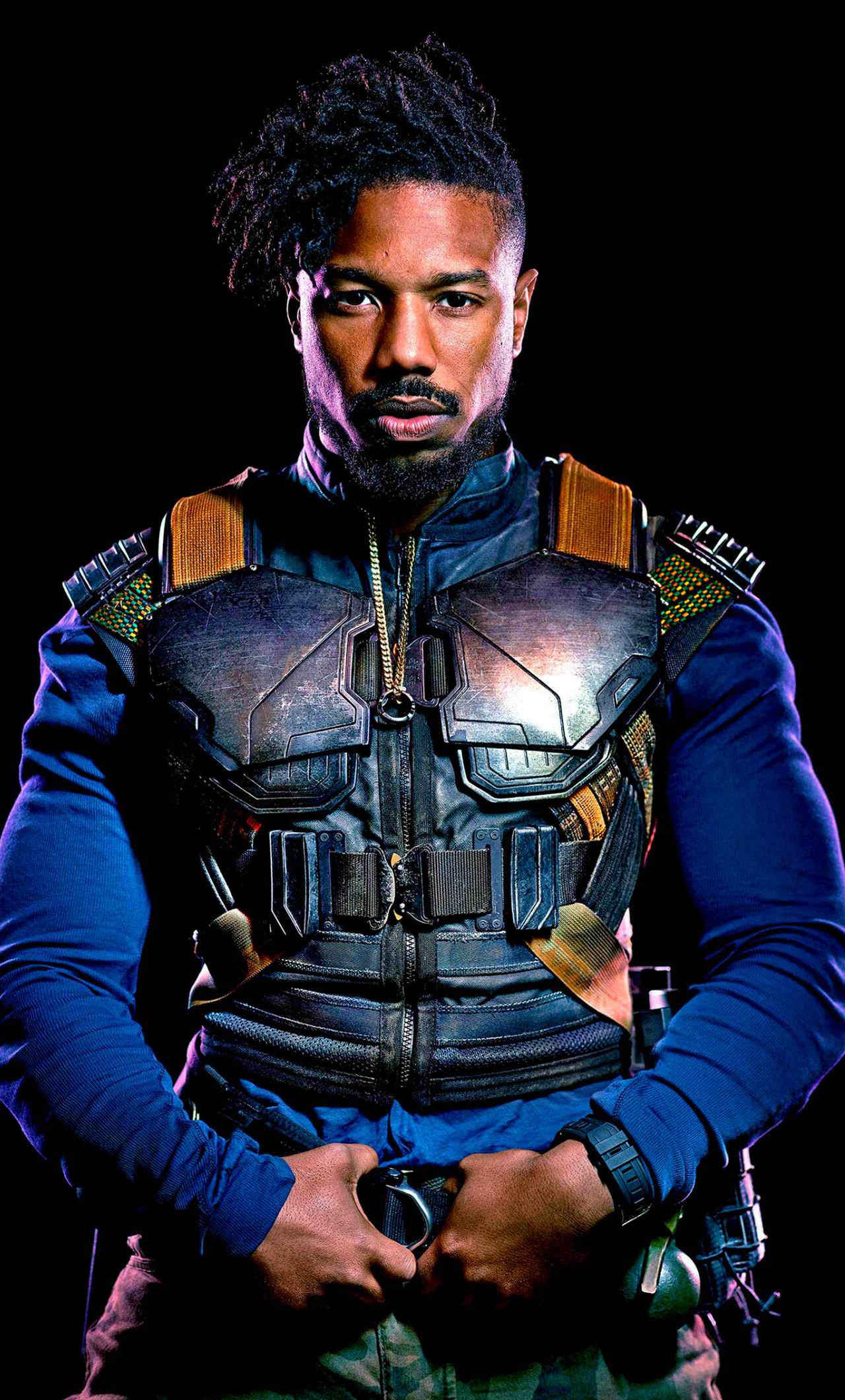
1. **Erik Killmonger (Black Panther)**
Erik Killmonger in *Black Panther* makes you pause and think. He aimed to free oppressed people globally using Wakanda’s advanced tech, sparking profound reflections on racial justice. His core question, “Why question Black liberation?”, is truly powerful.
Christopher Lebron, in his thought-provoking article for the Boston Review, argues that “the confrontation between T’Challa and Killmonger can be viewed through a critical lens: within a society rife with racism, an African royal encounters his own kin, aiming to free Black individuals globally.” Killmonger witnessed global Black suffering while Wakanda remained hidden.
He directly challenged T’Challa’s isolationist policies. His passion was fueled by the painful history of colonization and oppression, advocating for Wakanda to use its immense resources to uplift those in need. It’s a strong argument against privileged inaction.
While his methods were extreme and violent, leading him to seek domination rather than liberation, his fundamental drive for global racial justice remains compelling. His argument that an advanced nation should not hide while others suffer, however, resonates deeply.
Read more about: 14 Cinematic Villains Whose Stories Will Break Your Heart When You See Their Side of the Screen
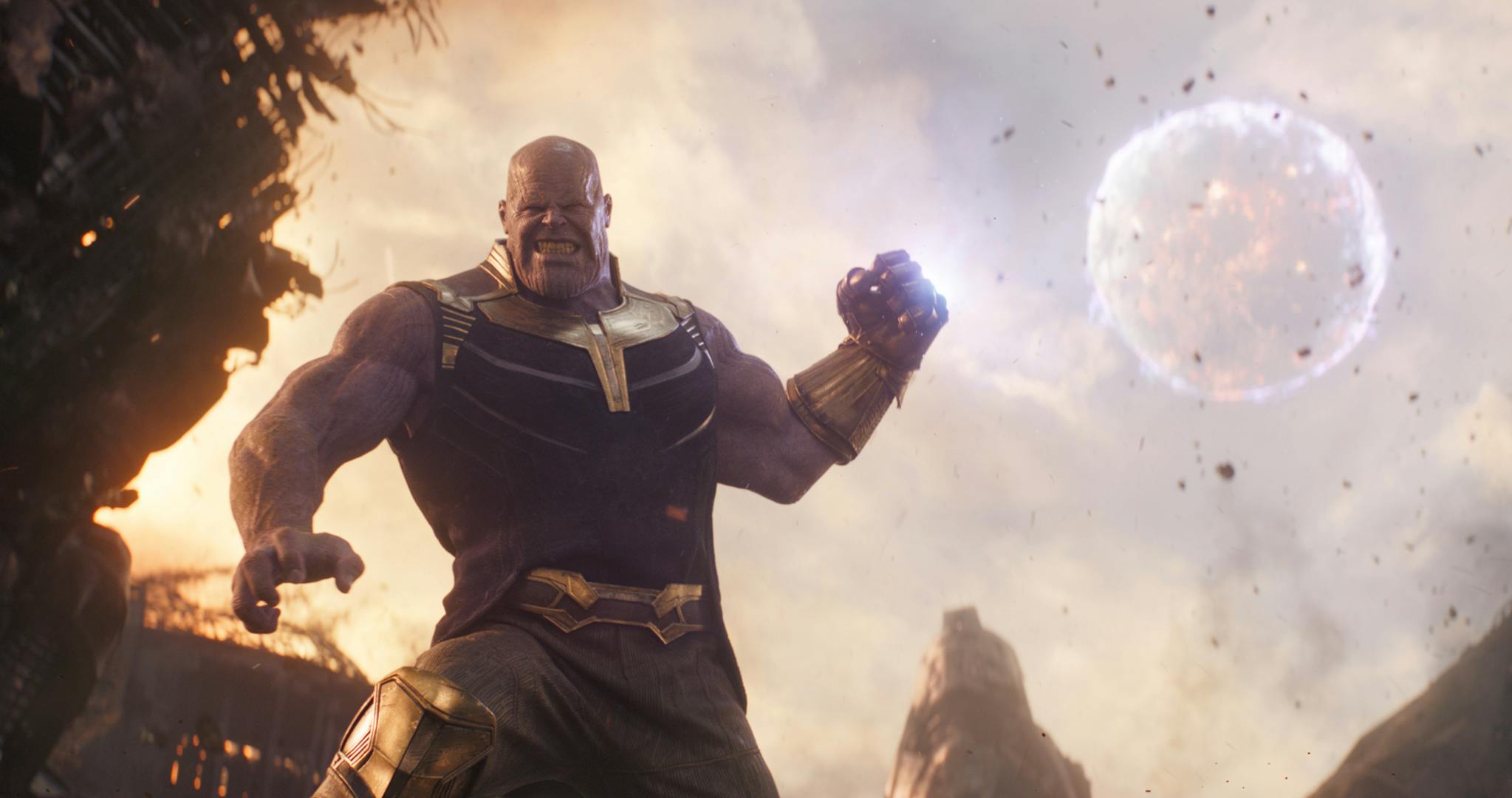
2. **Thanos (Avengers: Infinity War)**
Thanos, the Mad Titan, had a terrifying solution: wipe out half of all life. Yet, his reasoning wasn’t pure malice. He genuinely believed this was the only way to prevent resource depletion and ensure the survival of the remaining universe.
His belief stemmed from witnessing his own planet, Titan, collapse due to overpopulation and finite resources. He carried what he considered mathematical proof, acting as a grim statistician determined to prevent universal catastrophe.
This mirrors our own real-world anxieties about climate change and resource depletion. There’s a chilling, detached logical consistency to his approach, however monstrous its execution. He saw an inevitable problem and sought to solve it head-on.
Of course, his solution of random genocide ignored alternatives like resource multiplication, education, or technological advancement. His extremism turned a valid concern into a horrifying crusade, but the underlying point about sustainability remains unsettlingly relevant.
Read more about: Beyond the Hero’s Shadow: 14 Movie Villains Who Absolutely Stole the Show!
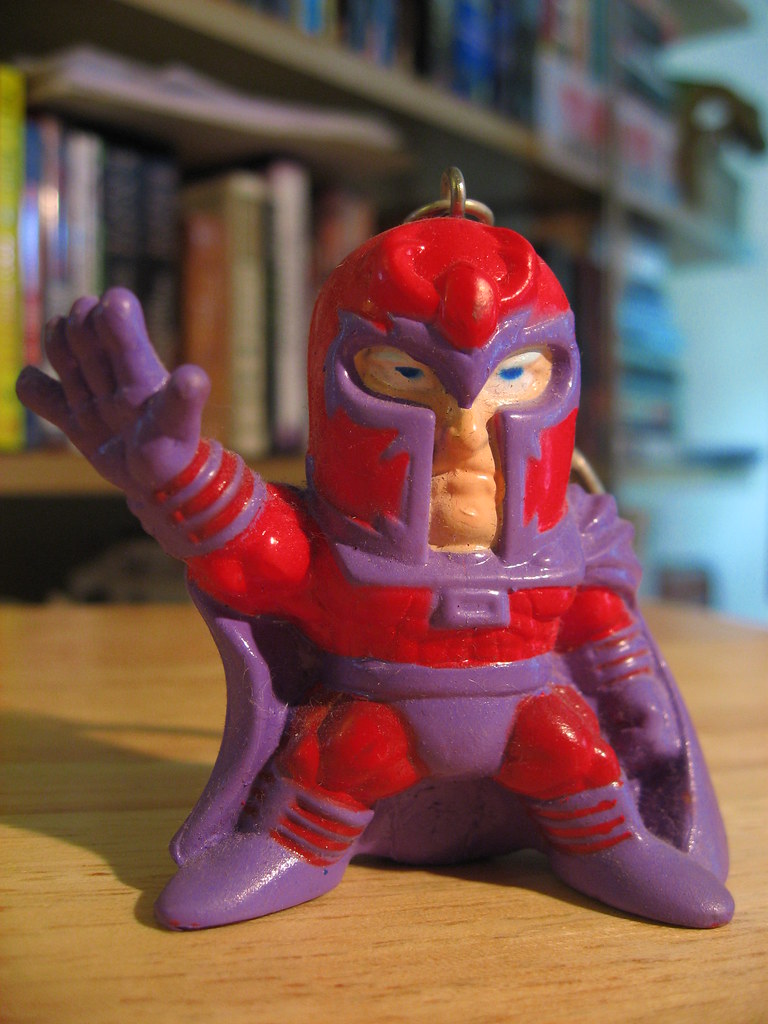
3. **Magneto (X-Men Series)**
Magneto’s villainy is rooted in profound personal trauma. As a Holocaust survivor, Erik Lehnsherr witnessed humanity’s capacity for hatred, leading him to believe mutants faced an existential threat. His fear wasn’t paranoia; it was historical memory.
Throughout the *X-Men* films, government registration programs and mutant-hunting sentinels validate his concerns. He saw history repeating, vowing to protect mutants by any means, believing in mutant superiority as a necessary defense.
His fight against discrimination and genocide sprang from legitimate fears and a desire to empower mutants. Charles Xavier’s peaceful dreams often seemed naive against Magneto’s pragmatism, especially with institutional prejudice rampant.
However, Magneto tragically became the monster he fought, embracing terrorism and viewing humans as inferior. His protection of mutants became indistinguishable from hatred, turning a justifiable cause into a destructive ideology.

4. **Ozymandias (Watchmen)**
Adrian Veidt, Ozymandias, was lauded as “the world’s smartest man” for a reason. His horrifying plan was born from a rational calculation: nuclear annihilation was inevitable without radical intervention in a Cold War era.
He orchestrated a catastrophic event, killing millions, to unite a world on the brink of war. By creating a common enemy, he aimed to foster global peace, believing sacrificing a few might save billions.
His foresight about human psychology – that shared enemies can bridge divides – was remarkable. He saw an unavoidable disaster and sought to preempt it, making his reasoning compelling from a strategic view.
Yet, his brilliance couldn’t justify his methods. Appointing himself judge and executioner, he exhibited dangerous hubris. His utilitarian calculation, while attempting a greater good, reflected a belief that his intelligence entitled him to decide who lived or died.

5. **The Joker (The Dark Knight)**
Heath Ledger’s Joker redefined the character, embodying pure anarchy beyond mere insanity. He focused on dismantling society itself, not wealth or power, driven by a desire for societal collapse.
Director Christopher Nolan called him a “psychologically believable anarchist.” He acts as a moral philosopher, aiming to show that a world without structure, without “unjust hierarchies,” offers greater freedom and, in his view, justice.
His methods are destructive, but his ultimate goal is to expose the hypocrisy and fragility of societal order. He believes people are inherently chaotic and that “all it takes is one bad day” to break the sanest.
While his terrifying deeds are inexcusable, his ability to strip away pretenses and challenge comfortable notions of order makes his “point” unsettlingly persistent. He’s a mirror showing the potential chaos beneath our societal veneers.
Read more about: Beyond the Hero’s Shadow: 14 Movie Villains Who Absolutely Stole the Show!

6. **Roy Batty (Blade Runner)**
Roy Batty, leader of the rogue replicants in *Blade Runner*, is profoundly captivating. As a Nexus 6, a manufactured human, he escaped servitude only to face a predetermined four-year lifespan.
His quest for extended life, to transcend the limit imposed by corporate creators, raises deep ethical questions. “I’ve seen things you people wouldn’t believe,” he says, articulating the tragedy of conscious beings denied the right to exist.
Batty’s rebellion was an awakening, a desire for what any sentient being craves: the right to self-determination. His desperate journey for more life challenges the morality of creating life purely for exploitation.
However, the violence in his quest, including murdering his creator, transforms a sympathetic freedom fighter into something dangerous. It tragically undermines the very humanity he sought to claim, despite his powerful original argument.
Read more about: Unscripted Brilliance: 12 Iconic Movie Quotes You Won’t Believe Were Entirely Improvised

7. **The Operative (Serenity)**
In *Serenity*, the Operative serves the Alliance with chilling dedication, believing he’s creating a better world by sacrificing lives. His unwavering commitment to a utopian vision, knowing he wouldn’t live in it, shows complex moral conviction.
His brutal actions were driven by a genuine, if misguided, desire for peace and order. He saw humanity’s chaos, believing only forceful unification could achieve stability across the galaxy.
His philosophical debates with Captain Mal Reynolds highlight the tension between idealism and pragmatism. The Operative argues for the greater good, even if it means erasing individual freedoms.
Though his methods involved torture and murder, his core belief in bringing about global peace and order, however achieved, gives him a tragic depth. He truly thinks he’s a hero, making his “point” compellingly disturbing.

8. **Ra’s al Ghul (Batman Begins)**
Ra’s al Ghul, leader of the League of Shadows, believed in a higher purpose: restoring balance by destroying Gotham, which he deemed irredeemably corrupt. His desire for global stability drove this extreme approach.
He saw Gotham as a cancerous growth, a symbol of humanity’s greed and moral decay. By eliminating the diseased part, he believed the rest of the world could be saved, much like a controlled fire cleanses a forest.
His radical approach challenges whether destruction can achieve a greater good. Not motivated by personal gain, his disciplined, monastic ideology presented him as a force of nature, a necessary correction.
Ra’s al Ghul’s “point” forces us to confront questions about urban decay and systemic corruption. Can a society be reformed, or does it sometimes need a “reset”? His logical pursuit of stability, however destructive, resonates with anxieties about societal collapse.
Okay, so we’ve already taken a deep dive into some seriously thought-provoking villains, but trust me, we’re just getting started! The cinematic universe is absolutely brimming with complex characters who, despite their undeniably ‘bad guy’ status, managed to drop some truth bombs that are still echoing in our minds. Now, let’s continue our journey into the grey areas of morality, exploring even more antagonists whose points, however twisted their delivery, force us to think twice about what’s right and what’s merely convenient.

9. **Commodus (Gladiator, 2000)**
Let’s talk about Commodus. In *Gladiator*, he’s often painted as the epitome of a power-hungry, tyrannical emperor, but seriously, can we take a moment to peek behind that imperial curtain? His desperate need for acceptance and power wasn’t just random villainy; it deeply stemmed from his father’s very public rejection. Ouch, that hits home for anyone who’s ever felt like they weren’t good enough.
His deep-seated insecurities, that gnawing desire for validation, is what ultimately drove his authoritarian rule and all his subsequent brutal actions. It’s almost unsettling how much his character speaks to universal human desires for approval and for securing a legacy. We all want to be seen, to matter, to leave our mark, right? He just took it to an extreme, horrifying level.
So, while his methods were undeniably brutal and utterly unacceptable, his backstory makes you pause and question. Was his villainy truly inherent, or was it tragically born from circumstance, vulnerability, and a profound lack of paternal love? It makes him a far more complex, almost sympathetic, figure than just a moustache-twirling bad guy, challenging us to look beyond the surface-level evil.

10. **Syndrome (The Incredibles, 2004)**
Remember Buddy Pine, the wannabe sidekick? His transformation into Syndrome, the supervillain in *The Incredibles*, wasn’t just a childish tantrum grown up. It was fueled by a deep resentment towards Mr. Incredible for rejecting him, leading to a truly revolutionary idea: why should superpowers be exclusive? He wanted to democratize extraordinary abilities so “everyone could be special.”
Syndrome’s critique of superhero exceptionalism actually raises some pretty valid questions about privilege and opportunity in society. Through his ingenious technology and innovation, he essentially proved that extraordinary achievements weren’t limited to those who were just “born with it.” It’s a fascinating argument for self-made greatness over innate talent, challenging those societal hierarchies we often take for granted.
Unfortunately, his path to leveling the playing field was, shall we say, a *tad* destructive. It involved murdering dozens of actual superheroes and endangering countless civilians! What started as a quest to challenge exclusivity and democratize powers ultimately spiraled into a narcissistic revenge plot. His technology held so much potential for humanity, but his wounded ego transformed what could have been progress into a total catastrophe.

11. **Clyde Shelton (Law Abiding Citizen, 2009)**
Talk about a raw nerve! Clyde Shelton in *Law Abiding Citizen* instantly embodied the frustration of every victim who’s ever watched criminals walk free thanks to legal loopholes. His family’s killers got away with it because of a plea bargain, allowing a worse criminal to get a lighter sentence. That’s enough to make anyone scream, “What about justice?!”
His methodical campaign to expose the corruption within the system forced audiences to confront some seriously uncomfortable questions about what justice truly means. He hit on a point that resonates deeply: a system that prioritizes conviction rates over actual, genuine justice. It makes you wonder, are we really serving justice, or just… the system?
But, oh boy, did Shelton take a sharp turn. His vigilante campaign, while born from valid rage, quickly spiraled into sadistic revenge. By torturing and executing not just the criminals, but everyone involved in the flawed legal process, he completely abandoned the pursuit of justice for pure, unadulterated retribution, becoming as merciless as those he condemned.

12. **Poison Ivy (Batman & Robin, 1997)**
Before she became the eco-terrorist we love to hate, Dr. Pamela Isley was a brilliant botanist. Her transformation into Poison Ivy wasn’t just for kicks; it stemmed from a genuine and profound concern for humanity’s relentless destruction of natural habitats and biodiversity. She literally recognized plants’ importance to Earth’s survival!
Her many warnings about deforestation, rampant pollution, and corporate environmental crimes honestly mirror some of the most critical real-world ecological crises we face today. Her passion for protecting endangered species and natural ecosystems represents environmental activism at its most dedicated and intense. She truly believed in her cause.
However, her commitment veered into full-blown villainy when she became willing to sacrifice human lives for plant life. Instead of working within environmental movements or advocating for sustainable development, she chose terrorism and murder, valuing plant life absolutely over human existence. This extremism completely undermined her initially legitimate and vital environmental concerns, turning her into a destructive force.

13. **Kaecilius (Doctor Strange, 2016)**
Kaecilius, the former student of the Ancient One, definitely had a point that many of us can relate to when we feel betrayed. His faith in his teacher was shattered when he discovered her biggest secret: she was forbidding others from using dark dimension energy while secretly tapping into it herself to extend her own life. Talk about a double standard!
This revelation of hypocrisy wasn’t just a minor grievance; it brought up genuine questions about who controls access to power and truth. Imagine dedicating your life to a spiritual path, only to find your master has been hiding crucial information and violating the very rules she preached. Many spiritual seekers would totally share his frustration at such a discovery.
Unfortunately, Kaecilius took this very valid grievance to catastrophic extremes. Instead of simply exposing the Ancient One or finding ethical applications for this forbidden knowledge, he embraced Dormammu, willingly attempting to destroy reality itself in pursuit of eternal life. His once-valid criticism ultimately morphed into destructive fanaticism, proving that even righteous anger can lead to horrifying ends.

14. **Shere Khan (The Jungle Book, various)**
Shere Khan, the majestic tiger from *The Jungle Book*, is often just seen as the ultimate predator. But let’s zoom out for a second: his hostility toward mankind wasn’t just simple animal instinct. It was deeply rooted in his direct experience with human destructiveness, specifically being scarred by human fire. He had a very personal reason to fear and despise humans.
His warnings about man’s capacity to harm the jungle proved chillingly prophetic. Seriously, history has shown us repeatedly how human advancement often comes at nature’s expense, with humans threatening the natural world with their weapons and fire. Khan’s insistence that Mowgli would eventually bring destruction to the jungle animals contained an uncomfortable, real-world truth.
However, the tiger’s fatal mistake was personalizing this very legitimate concern by obsessively hunting an innocent child. Instead of working with other animals to protect the jungle from genuine threats, his singular vendetta against Mowgli transformed a reasonable caution into cruel persecution, completely undermining his valid environmental anxieties.

15. **Amy Dunne (Gone Girl, 2014)**
Okay, let’s be crystal clear: Amy Dunne is a psychopathic character, and her actions should absolutely *never* be emulated in real life. Seriously, don’t try this at home! But, you’ve gotta admit, her words and insights, especially in her monologues, were chillingly on-point about how women are often treated in relationships. They resonated powerfully with a female audience for a reason.
Take her poignant declaration: “Nick Dunne took my pride and my dignity and my hope and my money. He took and took from me until I no longer existed. That’s murder.” Woah! That’s a poetic, albeit extreme, way of delineating how draining relationships can be, particularly when one partner (often the woman) is shouldering most of the domestic, emotional, and in her case, financial labor. It’s a stark reminder of how easily women can lose their identities with partners who only take.
And then there’s her legendary “Cool Girl” monologue. Amy brilliantly articulates how women are conditioned to morph themselves into whoever their man prefers, rather than being their authentic selves. She highlights the self-silencing and lowering of standards that women often adopt to please a partner, noting, “Nick loved a girl I was pretending to be. ‘Cool girl.’ Men always use that, don’t they? As their defining compliment: ‘She’s a cool girl.’” For Amy, being the “cool girl” brought her no rewards, only betrayal and disrespect. Point made, indeed.

16. **Cruella de Vil (101 Dalmatians, 1996)**
Cruella de Vil, in the 1996 live-action remake of *101 Dalmatians*, is undoubtedly painted as an obvious villain, cruelly exploiting animals for her fur obsession. Her behavior is horrific and totally unacceptable—no debate there! But, interestingly, audiences have long picked up on how this malicious character is used to communicate some surprisingly astute and accurate insights about marriage.
When Anita, a talented designer working for Cruella, suggests she might leave her job if she finds a man to marry, Cruella astutely observes, “More good women have been lost to marriage than to war, famine, disease, and disaster. You have talent, darling. Don’t squander it.” Given the extensive research on how marriage can often disadvantage women due to the burden of emotional and domestic labor they’re frequently expected to shoulder, her perspective isn’t entirely incorrect. It makes you think, doesn’t it?
Later, when Anita announces her pregnancy, Cruella is visibly anguished. While this is meant to portray her as an enemy of the nuclear family and sinister, considering the immense burdens and health risks women undertake during childbirth and childrearing, her response isn’t necessarily “wrong.” And, tellingly, Anita does indeed marry Roger, has children, and gives up her career as a designer while fulfilling *his* dream. It seems Cruella’s predictions, however cynically delivered, came true to an extent. It’s quite fascinating that a female villain is the one used to air these “taboo” opinions, almost as if the movie wanted us to associate such advice with villainy, rather than a reasonable, albeit blunt, perspective.
So there you have it, folks! Sixteen villains who, despite their often-horrifying methods, made us stop, think, and maybe even nod along a little bit. It’s a wild ride through the morally grey areas of cinema, where the lines between hero and villain blur, and a “bad guy” can sometimes drop a truth bomb that changes your entire perspective. From societal inequalities to environmental crises, personal trauma to systemic corruption, these antagonists force us to confront uncomfortable realities. They prove that sometimes, the most profound insights don’t come from the shining hero, but from the darkness they fight against. It’s a reminder that truly great storytelling challenges us to look beyond the black and white, and find the complex, messy, and sometimes valid, points hidden in plain sight. What a wild world we live in when even the villains make us question everything!