When surveying the automotive landscape of the 1970s, it’s easy to conclude that it wasn’t exactly a high point for design. This decade, characterized by bold cultural shifts, also brought forth a collection of vehicles that, in hindsight, frequently defied conventional aesthetic wisdom. From bulky sedans to awkward attempts at compact efficiency, the era produced a parade of cars that still provoke a strong reaction from enthusiasts and casual observers alike.
As we journey through automotive history, we encounter not just masterpieces but also significant missteps. The 1970s, in particular, presented numerous vehicular potholes, with manufacturers navigating new regulations, evolving consumer demands, and economic pressures. These challenges often led to design and engineering compromises that resulted in cars memorable for all the wrong reasons.
In this MotorTrend retrospective, we delve into a collection of these polarizing machines. While some might have achieved a cult following, many are remembered for their awkward shapes, clunky proportions, or styling decisions that made little sense even then. Join us as we cast a detailed and analytical eye on the first seven contenders for the title of the 1970s’ most notoriously obnoxious cars.
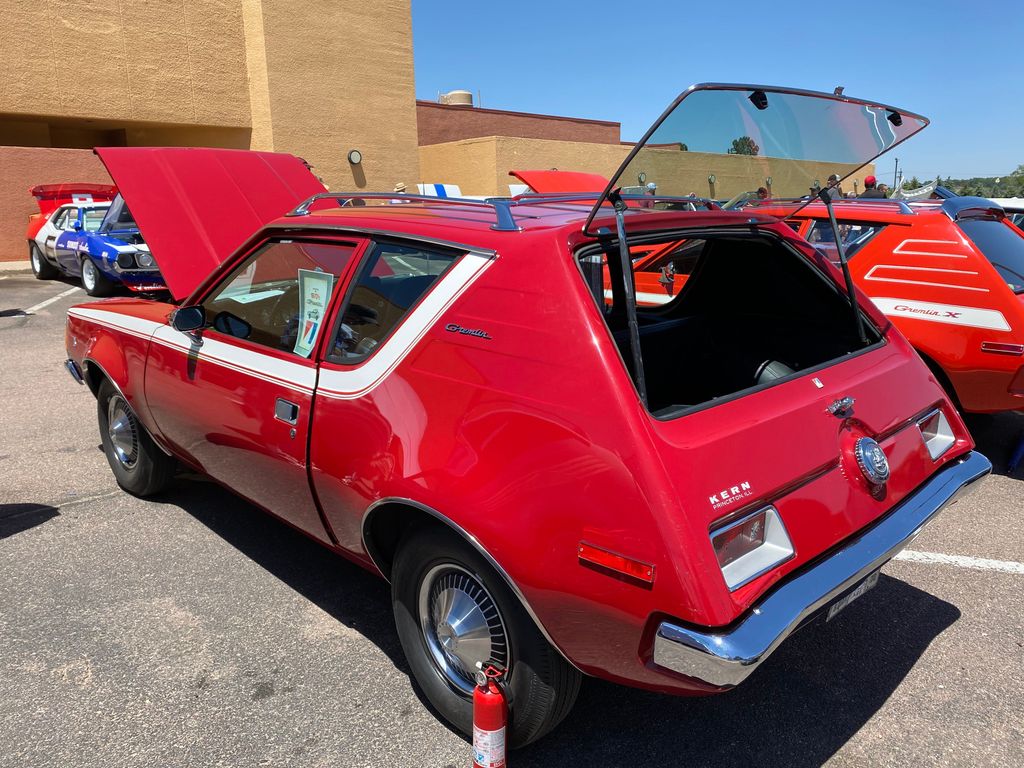
1. **1970 AMC Gremlin**The 1970 AMC Gremlin was American Motors’ daring answer to the influx of foreign imports. Positioned aggressively with a price tag around two-thirds that of most small cars, its affordability was a significant draw. However, its most defining characteristic, its unique and often-criticized styling, immediately stood out. The Gremlin famously “looked like two-thirds of a car,” a visual truncation that became its enduring, albeit unflattering, signature.
Despite its divisive appearance, the Gremlin represented a stroke of corporate genius for AMC. Its development was remarkably cheap, leveraging a shortened AMC Hornet platform, making it “right for the times” as demand for compact, efficient vehicles grew. This strategic positioning led to “a runaway sales success,” by AMC’s standards, underscoring that practical considerations could, for a time, overshadow aesthetic concerns.
Yet, the question of its beauty persisted. Design chief Dick Teague even admitted considering an “even uglier” shortened Hornet, suggesting the Gremlin was a compromise. Throughout its 1970-1978 production, its “peculiar styling and lack of cargo space” remained points of contention. While successful, its appearance was consistently deemed “quirky rather than appealing,” solidifying its place as an automotive oddity.
Read more about: The 14 Most Embarrassing Market Misses: When Styling Blunders and Feature Failures Drove Cars Off a Cliff
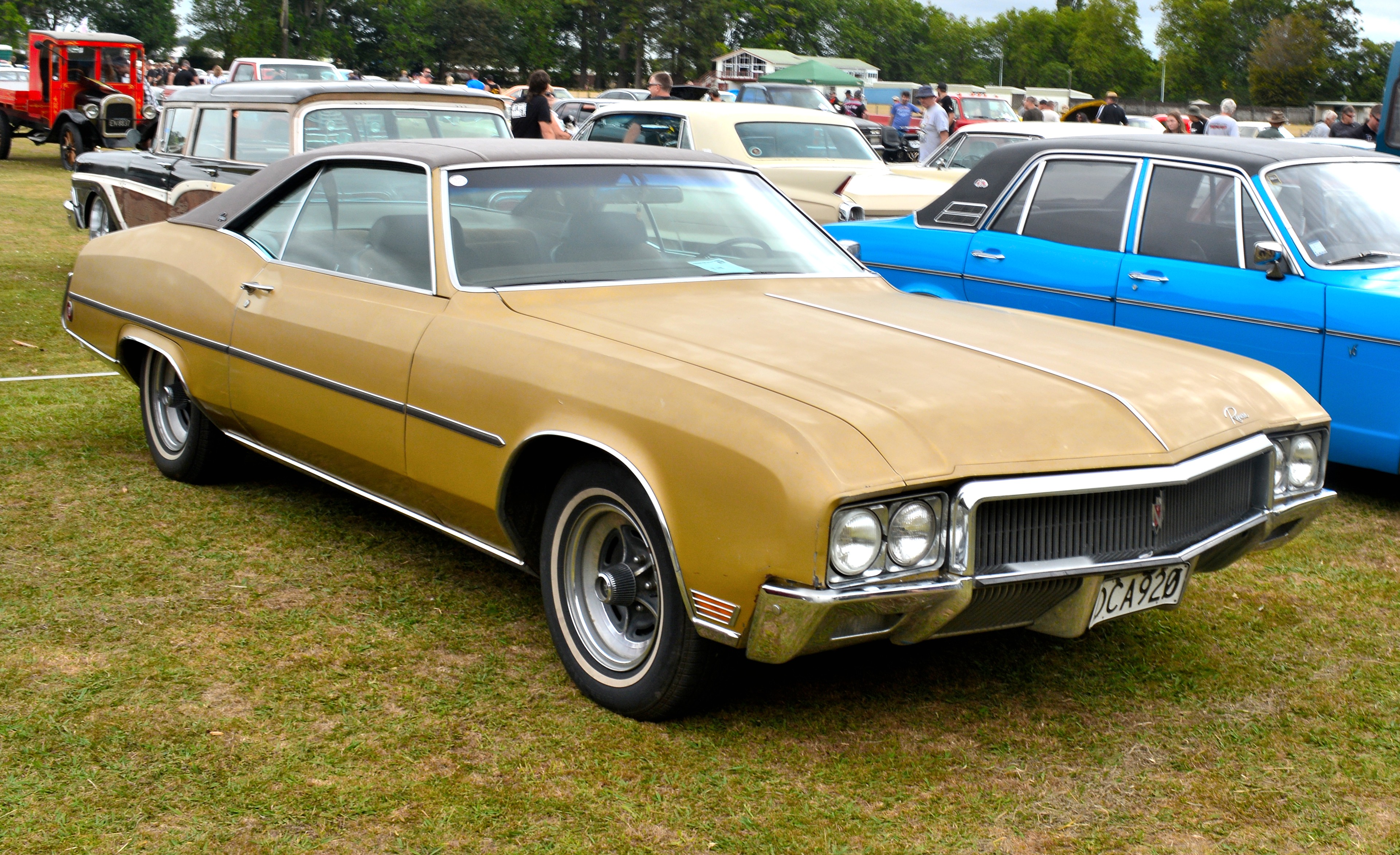
2. **1970 Buick Riviera**The second-generation Buick Riviera (1966-1969) was lauded as a “breathtakingly beautiful car,” known for its “racy lines and inboard hidden headlights.” It embodied sophisticated elegance. However, 1970 brought a radical and, for many, deeply unfortunate transformation, as the Riviera morphed into a shape that would leave an indelible, negative mark on automotive design history.
It truly “takes a moment to appreciate just how ugly this car is,” a visual trauma. The design flaws are painfully apparent: the “grille seems to be sliding down off the front of the car,” creating a disjointed facial expression. Simultaneously, the “skirted rear fenders seem to be growing over the wheels like runaway mold,” giving the vehicle an overgrown, unhealthy appearance.
The overall effect was a body that appeared “bloated like a drowning victim,” a stark departure from its sleek predecessors. This dramatic aesthetic shift had severe market repercussions. Riviera sales, which were “steadily rising through the late ’60s,” plummeted “like a girder in free-fall when this bastardized blob hit the showroom floor,” an unequivocal rejection by consumers.
Mercifully, this iteration was short-lived, replaced by the “controversial but beautiful boat-tail Riviera in 1971.” The 1970 model remains a potent reminder that even a celebrated nameplate can stumble spectacularly, cementing its status as a major design misstep.
Car Model Information: 1971 Buick Riviera
Caption: 1963 Buick Riviera
Name: Buick Riviera
Predecessor: Buick Super
Manufacturer: Buick
ModelYears: 1963–1993,1995–1999
Class: Personal luxury car
Categories: 1960s cars, 1970s cars, 1980s cars, 1990s cars, All articles with specifically marked weasel-worded phrases
Summary: The Buick Riviera is a personal luxury car that was marketed by Buick from 1963 to 1999, with the exception of the 1994 model year.
As General Motors’ first entry into the personal luxury car market segment, the Riviera was highly praised by automotive journalists upon its high-profile debut. It was a ground-up design on a new GM E platform debuting for the 1963 model year and was also Buick’s first unique Riviera model.
Unlike its subsequent GM E platform stablemates, the Oldsmobile Toronado and Cadillac Eldorado, the Riviera was initially a front engine/rear-wheel drive platform, switching to front-wheel drive starting with the 1979 model year.
While the early models stayed close to their original form, eight subsequent generations varied substantially in size and styling. A total of 1,127,261 Rivieras were produced.
The Riviera name was resurrected for two concept cars that were displayed at auto shows in 2007 and in 2013.
Get more information about: Buick Riviera
Buying a high-performing used car >>>
Brand: Buick Model: Riviera
Price: $22,499 Mileage: 91,150 mi.
Read more about: 12 Iconic Boomer-Era Cars Millennials Are Totally Ignoring (And Why!)

3. **1970 Ford Thunderbird**Prior to 1970, Ford Thunderbird models, while perhaps not stunning, were “certainly non-offensive,” maintaining a dignified presence as personal luxury cars. This era of relatively accepted design, however, concluded abruptly in 1970 when Ford introduced a styling change that dramatically, and negatively, redefined the iconic T-Bird’s visual identity.
The most prominent and controversial feature of the 1970 Thunderbird was the addition of “a giant beak on the front.” This exaggerated, protruding nose instantly alienated many, prompting a collective ‘Seriously, Ford, WTF??’ The design choice seemed to fundamentally misunderstand the essence of the Thunderbird name, which evoked “Thunder, not bird,” in its power and elegance.
This bold and ultimately ill-received styling transformed the Thunderbird from a sophisticated coupe into a vehicle with an almost caricatured front end. The exaggerated beak became the undeniable focal point of criticism, overshadowing other design elements and dominating the car’s visual identity. It marked a contentious departure, cementing its place as a visually polarizing entry in the Thunderbird lineage.
Car Model Information: 1966 Ford Thunderbird Base
Name: Ford Thunderbird
Caption: 1957 Thunderbird
Manufacturer: Ford Motor Company
Production: unbulleted list
ModelYears: unbulleted list
Class: unbulleted list
Layout: Front-engine, rear-wheel drive layout
Categories: 1960s cars, 1970s cars, 1980s cars, 1990s cars, 2000s cars
Summary: The Ford Thunderbird is a personal luxury car manufactured and marketed by Ford Motor Company for model years 1955 to 2005, with a hiatus from 1998 to 2001.
Ultimately gaining a broadly used colloquial nickname, the T-Bird, the model was introduced as a two-seat convertible, subsequently offered variously in a host of body styles including as a four-seat hardtop coupe, four-seat convertible, five-seat convertible and hardtop, four-door pillared hardtop sedan, six-passenger hardtop coupe, and five-passenger pillared coupe, before returning in its final generation, again as a two-seat convertible.
At its inception, Ford targeted the two-seat Thunderbird as an upscale model. The 1958 model year design introduced a rear seat and arguably marked the expansion of a market segment that came to be known as personal luxury cars, positioned to emphasize comfort and convenience over handling and high-speed performance.
Get more information about: Ford Thunderbird
Buying a high-performing used car >>>
Brand: Ford Model: Thunderbird
Price: $44,999 Mileage: 71,017 mi.
Read more about: Decade of Revolution: The 15 Most Significant Cars of the 1960s, a MotorTrend Retrospective
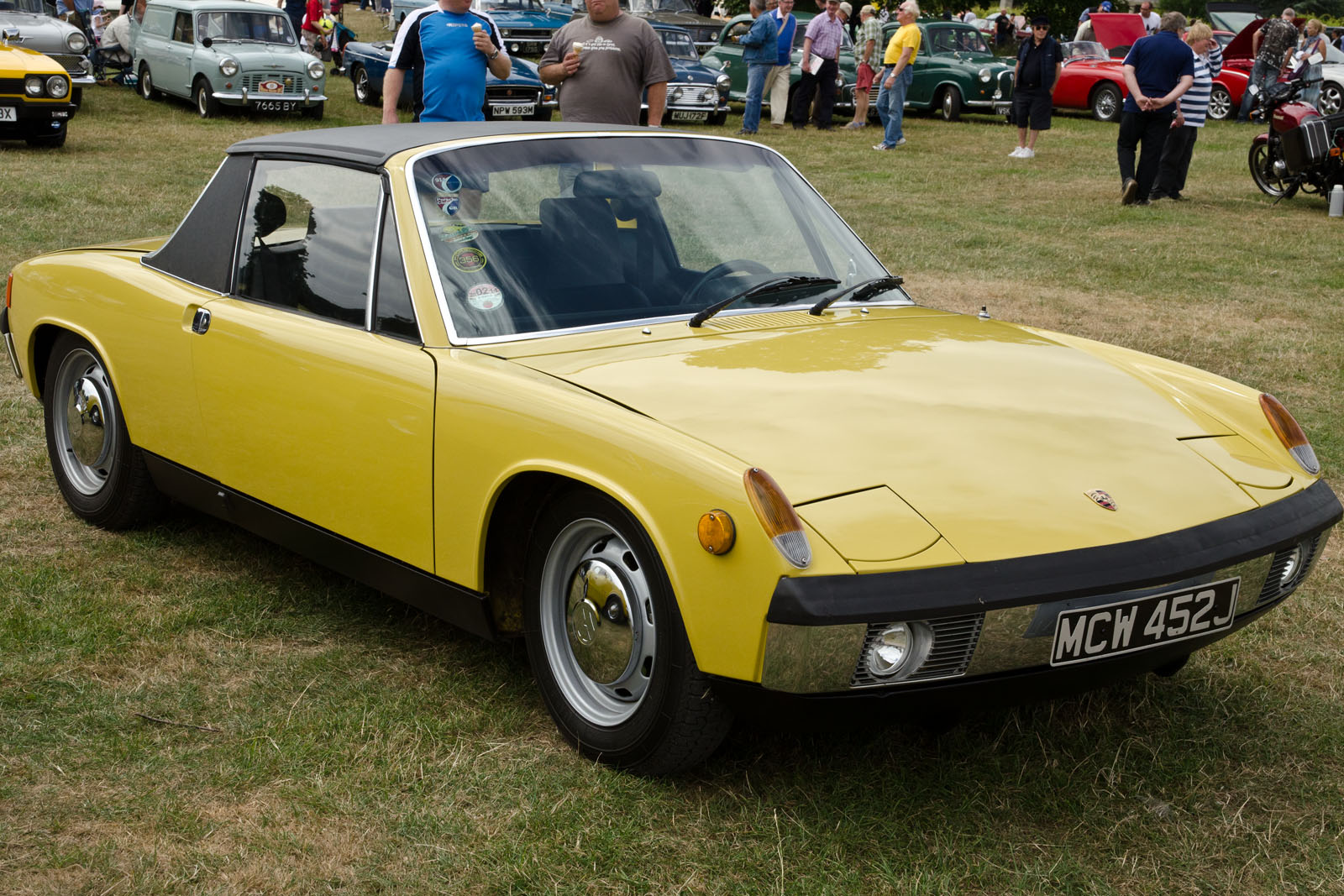
4. **1970 Porsche 914**The 1970 Porsche 914, a mid-engine sports car, faced the inherent challenge of achieving aesthetic proportion in its layout. However, the 914’s “strangeness” extended beyond structural necessity, with its overall design aesthetic veering into what many considered “dorky-looking,” a rare descriptor for a Porsche.
Key contributors to its unconventional appearance included its “awkwardly swept-back greenhouse,” creating an unusual roofline, and “super-square squared-off bodywork,” which eschewed traditional sports car curves. The “relatively unadorned lines” emphasized a utilitarian rather than aspirational look, contrasting sharply with Porsche’s usual sleek image.
Intriguingly, the 914’s design seemed to embrace its flaws, almost “accepted its dorkiness.” While endearing to some, it prompted the observation that “a Porsche should be styled like a car you dream about, not the reality you wake up to,” highlighting a disconnect. Its polarizing design often overshadowed its merits as a capable and fun-to-drive machine.
The 914 eventually garnered a cult following for its performance and affordability within the Porsche lineup. However, its exterior design remains a significant point of contention, firmly establishing it as a memorable, if not universally beloved, entry in Porsche’s storied history.
Car Model Information: 1970 Porsche 914 914/6
Name: Porsche 914
Caption: 1970 Porsche 914
Manufacturer: Porsche,Karmann
Aka: VW-Porsche 914
Production: 1969–1976,118,978 produced,914/4: 115,646,914/6: 3,332,914/8: 2
Assembly: Stuttgart,Osnabrück
Predecessor: Porsche 912,Volkswagen Karmann Ghia#Type 34 Karmann Ghia
Successor: Porsche 924
Class: Sports car
BodyStyle: Targa top
Layout: Rear mid-engine, rear-wheel-drive layout
Engine: Volkswagen air-cooled engine#Type 4: 1.7–2.0 litres,Volkswagen air-cooled engine#Type 4: 1.7–2.0 litres,Volkswagen air-cooled engine#Type 4: 1.7–2.0 litres,Porsche flat-six engine
Wheelbase: cvt
Length: cvt
Width: cvt
Height: cvt
Weight: cvt
Related: Porsche 914-6 GT,Porsche Tapiro
Designer: Ferdinand Alexander Porsche
Categories: 1970s cars, 24 Hours of Le Mans race cars, All articles needing additional references, All articles with incomplete citations, All articles with unsourced statements
Summary: The Porsche 914 or VW-Porsche 914 is a mid-engined sports car designed, manufactured and marketed collaboratively by Volkswagen and Porsche from 1969 until 1976. It was available only as a targa-topped two-seat roadster powered by either a flat-4 or flat-six engine.
Get more information about: Porsche 914
Buying a high-performing used car >>>
Brand: Porsche Model: 914
Price: Not Priced Mileage: 52,111 mi.
Read more about: Gearheads, Assemble! Can You REALLY Identify These Classic Rides Just From Their Wildest Secrets?

5. **1970 Saab Sonett III**The 1970 Saab Sonett III was a deliberate attempt to appeal to American buyers. Yet, this transatlantic ambition seems to have been misguided, particularly concerning its front-end styling. It was almost as if Saab was told, jokingly, that “Americans like cars with huge front overhangs,” leading to a design that became a literal interpretation of this unfortunate advice.
The Sonett III’s most glaring flaw was its “ridiculously elongated schnozzle,” a disproportionately long front end that immediately created an unbalanced visual composition. This was further exacerbated by “the big 5-mph bumper jammed onto the front end,” a safety regulation addition that amplified the car’s front-heavy, ungainly proportions, diminishing its overall appeal.
Adding to the visual disharmony, the “elongated front contrasted sharply with its awkwardly curtailed tail.” This jarring juxtaposition resulted in a vehicle that lacked a fluid, cohesive silhouette, appearing instead as a collection of mismatched parts. It was a clear design misstep that underscored a struggle for a unified aesthetic.
These design choices presented a significant hurdle for Saab in the American market. The context notes, “No wonder Americans didn’t take Saabs seriously until the 900 came along,” implying the Sonett III reinforced a perception of Saab as quirky rather than mainstream. It solidified its status as an interesting but ultimately flawed design experiment.
Car Model Information: 2023 Honda Civic EX
Caption: Sonett V4
Name: Saab Sonett
Manufacturer: Saab Automobile
BodyStyle: Roadster (automobile),coupé
Assembly: Trollhättan,Arlöv
Production: 1955–1957 (Series I),1966–1974 (Series II and III)
Related: Saab 93,Saab 96
Categories: 1960s cars, 1970s cars, All articles with unsourced statements, Articles containing Swedish-language text, Articles with short description
Summary: The Saab Sonett is an automobile manufactured by Swedish automaker Saab between 1955 and 1957 and again between 1966 and 1974. The Sonett share its engines and other mechanical components with the Saab 93, 95 and 96 of the same era. It was mainly intended for the lucrative American export market and was only offered intermittently in the Swedish domestic market for the 1968 and 1972 model years.
The first prototype, now known as the Sonett I, is a two-seat, open-top, lightweight roadster racer. Ten years later, the name was revived for the commercially distributed Sonett models II, V4, and III.
Get more information about: Saab Sonett
Buying a high-performing used car >>>
Brand: Saab Model: Sonett III
Price: $25,049 Mileage: 17,189 mi.
Read more about: Beyond the Big Three: 15 Forgotten Car Brands from the ’60s and ’70s That Deserve Another Look

6. **1972 Subaru GL Coupe**In the early 1970s, Subaru made steady inroads into the U.S. market by offering “smart, efficient, and practical small cars.” These vehicles were “sensible, if not exactly stylish,” providing value and reliability. However, in an effort to enhance its aesthetic appeal, Subaru ventured into a design territory with the 1972 GL Coupe that ultimately yielded distinctly unfortunate results, famously eliciting a simple, decisive ‘Eew.’
The most visually jarring aspect of the Subaru GL Coupe was its severely truncated rear end. A humorous, though likely apocryphal, anecdote suggests the car was “just a little too long to fit into the shipping crate,” resulting in a crude solution: “to cut eight inches off the tail, stick on a bumper and taillights, and send it on its way.” This narrative perfectly captures the abrupt, unfinished look of the car’s posterior.
This awkward, almost stubby, tail section clashed dramatically with the rest of the vehicle’s proportions, creating a sense of imbalance and visual disharmony. Instead of a sleek, integrated design, the GL Coupe presented a disjointed profile that lacked fluidity and sophistication. It was a clear indication that Subaru’s attempt at ‘stylish’ design had conspicuously missed the mark, resulting in a shape more perplexing than pleasing.
The 1972 Subaru GL Coupe exemplifies the design challenges faced by manufacturers expanding into new markets. While Subaru’s strengths in practicality were undeniable, this particular styling exercise demonstrated that aesthetic experimentation could sometimes lead to outcomes garnering more criticism than admiration, highlighting a period of mixed design fortunes for the brand.
Car Model Information: 2019 Subaru Forester Limited
Name: Subaru Leone
Manufacturer: Subaru
Production: 1971–1994
Assembly: Subaru#Manufacturing facilities,Ōta, Gunma,Japan,Waitara, New Zealand,New Zealand
Class: compact car
Predecessor: Subaru 1000
Successor: Subaru Impreza
Categories: 1980s cars, 1990s cars, All-wheel-drive vehicles, All articles with unsourced statements, Articles with short description
Summary: The Subaru Leone is a compact car produced by the Japanese car manufacturer Subaru from 1971 to 1994. The word leone is Italian for lion.
It was released as a replacement for the Subaru 1000 and was the predecessor of the Subaru Impreza. All Leones were powered by the Subaru EA boxer engine. Most cars were equipped with optional four-wheel drive. At the time of its introduction, the Leone was Subaru’s top model until 1989, when the larger Legacy was introduced.
Although released in Japan and some export markets as the Leone, for many years, this was the only vehicle sold internationally by Subaru where Subaru’s smaller kei cars were not commonly sold. As a result, in major markets such as Australia, Europe and North America, it was instead identified with a trim level designation, some of which included: DL, GL, GLF, GLF5, GL-10, and RX. The car is thus often referred to simply as the Subaru GL or the Subaru L series.
Get more information about: Subaru Leone
Buying a high-performing used car >>>
Brand: Subaru Model: GL Coupe
Price: $22,932 Mileage: 58,985 mi.
Read more about: Decade of Revolution: The 15 Most Significant Cars of the 1960s, a MotorTrend Retrospective

7. **1973 Leyland P76**The 1973 Leyland P76 served as undeniable proof that British Leyland’s automotive misfortunes were not confined to the UK, spreading “despair to the farthest corners of the Commonwealth.” This large car, produced by Leyland Australia, reflected the conglomerate’s questionable design philosophy, almost as if its mandate was “to eliminate any lingering desire to re-form the Empire,” a pointed critique of its utterly unappealing aesthetic.
Embracing the “wedge shape” of the era, the P76 applied this trend with visually challenging results. A frequently cited, somewhat bizarre, design feature was its truly cavernous trunk, capable of accommodating “a 44-gallon drum, preferably one full of something incendiary.” While functional, this fact inadvertently highlighted the car’s exaggerated and ungainly rear proportions, which dominated its profile and significantly contributed to its awkward appearance.
Beyond its polarizing looks, the P76 was crippled by British Leyland’s notorious quality control. It was “built with all the care and quality for which Leyland was known—in other words, none.” This abysmal manufacturing standard meant buyers faced not only an unattractive vehicle but also profound mechanical unreliability. The combination of poor design and inherent operational flaws proved catastrophic for its market performance.
The market’s rejection was swift and decisive, leading to an extremely short production run. After just two years and a paltry 18,000 sales, “the P76 was history.” Its swift demise underscores how a lack of attention to both design integrity and build quality can quickly relegate a vehicle to automotive obscurity, serving as a cautionary tale for manufacturers globally.