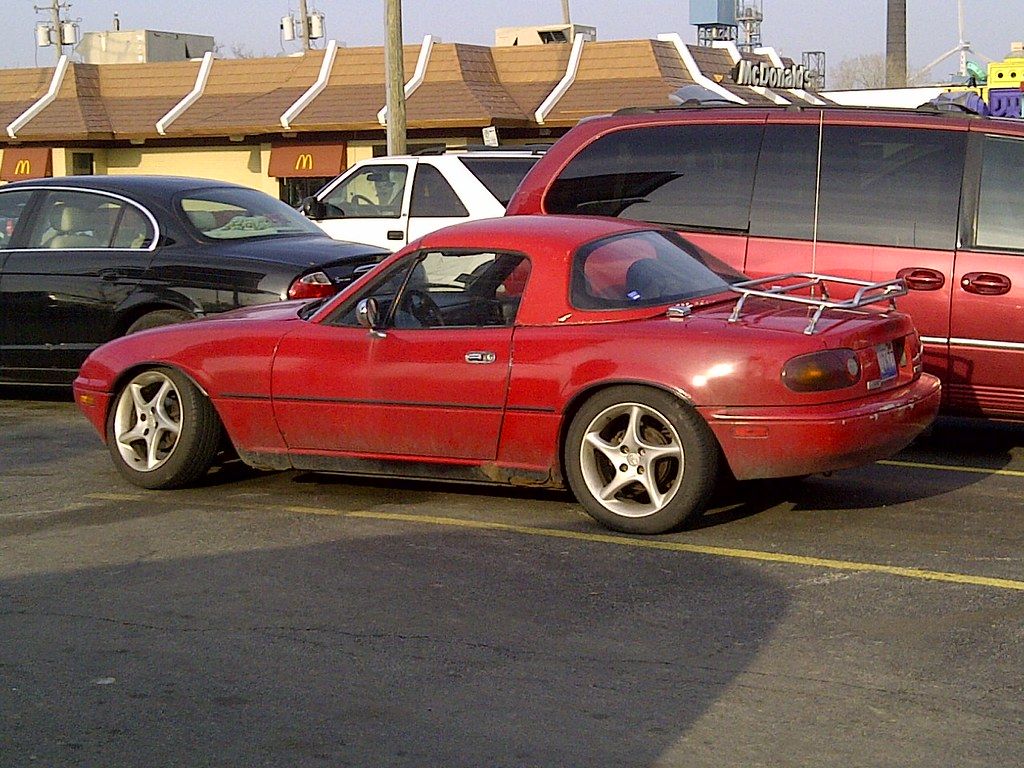
The automotive world is a wild place, full of sleek designs, roaring engines, and innovations that genuinely change our lives. But, let’s be real, it’s also a place where some seriously head-scratching, belly-laugh-inducing mistakes have been made. We’re talking about cars that, bless their metallic hearts, just didn’t quite hit the mark. They might have tried, oh how they tried, but ultimately, they ended up in the annals of automotive history as… well, pretty useless.
Think about it: for every iconic supercar or dependable family hauler, there’s a vehicle out there that makes you wonder, ‘What were they *thinking*?!’ From ambitious designs that fell flat to practical vehicles that forgot the ‘practical’ part, the journey through automotive blunders is as entertaining as it is educational. We’re not here to be mean (okay, maybe a little), but to celebrate the glorious, often hilarious, missteps that remind us even the biggest car companies can have an ‘oopsie’ moment.
So, buckle up, buttercups, because we’re taking a joyride through some of the most spectacularly unsuccessful vehicles ever produced. Get ready for a laugh, a groan, and maybe even a moment of genuine awe at how some of these even made it past the drawing board. This is our definitive, utterly unofficial ranking of cars that were, let’s just say, more ‘art project’ than ‘daily driver.’

1. **Peel P50 (1962)**Ah, the Peel P50! This little legend made it into the 2010 Guinness World Record as the tiniest production car ever. Imagine driving something that’s practically a toy car for adults! It zoomed along at an average speed of 23 mph, which is perfect if you’re never in a hurry and traffic laws are more of a suggestion.
Let’s be honest, the Peel P50 was more novelty than practical transport. It was the kind of car you’d buy on a dare or to win a very specific, very niche trivia contest. While undeniably adorable in its miniature glory, its real-world utility was, shall we say, significantly limited. This wasn’t your go-to for grocery runs unless your grocery list consisted of a single potato.
And safety? Well, it was about as safe as driving a go-kart on the highway, which is to say—not very. Picture yourself nestled inside this pint-sized marvel, surrounded by vehicles that could swallow you whole without even noticing. It truly makes you appreciate modern safety features, doesn’t it? A charming relic, yes, but certainly not a sensible one.

2. **Nissan Murano CrossCabriolet (2011)**Roll up, roll up, for the world’s first and only all-wheel-drive convertible crossover! Sounds like a brilliant idea on paper, right? Like combining a blender with a skateboard. Turns out, this was an utterly pointless combination of vehicle types, a concept car that somehow made it to production and left everyone scratching their heads. It was a Frankenstein’s monster of automotive design, attempting to be everything to everyone and succeeding at being nothing to anyone.
Unsurprisingly, this genre-bending experiment wasn’t a smashing success. According to Bloomberg, in 2013, Nissan reduced the price of the CrossCabriolet by 6% to $41,995. But alas, even a discount couldn’t save it. A year later, they decided to discontinue the model altogether, quietly ushering it off the stage of automotive history.
To make matters worse, little was done to ensure the newly minted convertible was structurally sound. MotorTrend staff derided its styling for over a decade, but the real kicker was the shocking lack of rigidity. As Aaron Gold eloquently put it, “You could feel the cowl shake just by getting into the car.” Plus, any utility the variant might have had was tossed out, as the rear doors and effectively all the cargo space of the vehicle were left on the cutting room floor. A convertible crossover that couldn’t even convert its usefulness – what a concept!
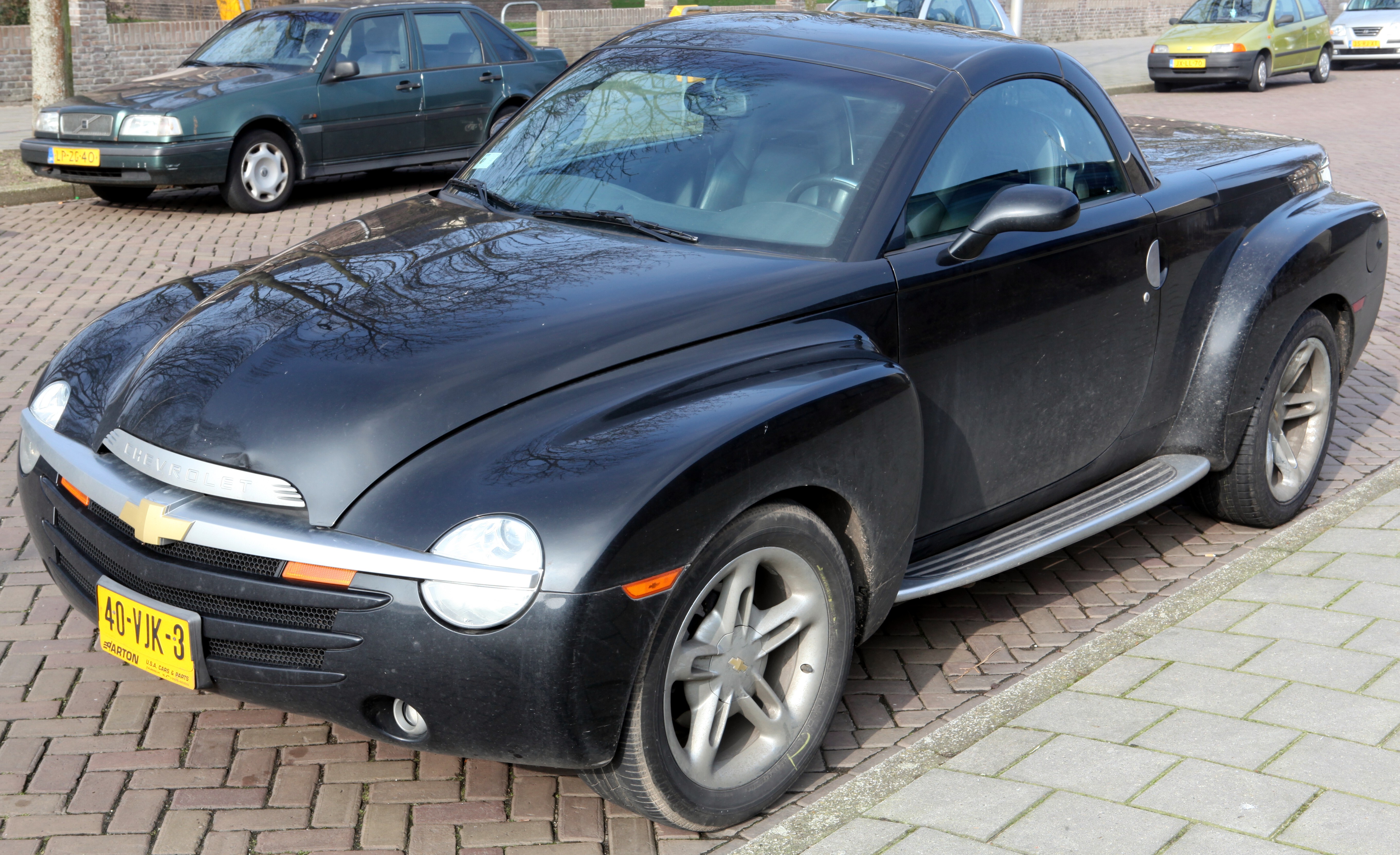
3. **Chevrolet SSR (2003)**Oh, the Chevrolet SSR! This quirky convertible pickup truck was intended as a tribute to hot rods, a retro-futuristic dream. It certainly had a unique look, blending nostalgic curves with modern lines. It was the kind of vehicle that made you do a double-take, mostly to figure out what exactly you were looking at.
Unfortunately, this budget-friendly version of a hot rod tribute didn’t quite hit the mark in the sales department. General Motors had to discontinue it and even shut down the factory that made it. Between 2003 and 2006, only 24,112 units were sold, with GM never exceeding 9,000 units in a single year. Tepid sales figures often spell doom in the fast-paced automotive industry, and the SSR was no exception.
But here’s the kicker: dumb doesn’t always mean bad. While it couldn’t actually tow or haul like Americans expect a pickup to, the SSR still had a certain undeniable coolness. Erik Johnson from MotorTrend noted, “Dumb doesn’t mean bad… Is the SSR still awesome? Yes.” Decades after it ended production, the SSR now enjoys a cult following, proving that even a vehicle that was ‘watered down from the concept’ and lacked the dynamics to match its looks can still capture hearts. It might have been dumb, but it was *cool* dumb.
Car Model Information: 2004 Chevrolet SSR LS
Name: Chevrolet SSR
Manufacturer: Chevrolet
Production: 2003–2006
ModelYears: 2003–2006
Assembly: Lansing, Michigan
Class: Pickup truck
BodyStyle: ubl
Platform: GMT360
Related: ubl
Layout: Front-engine, rear-wheel drive layout
Engine: ubl
Transmission: ubl
Wheelbase: 116.0 in
Abbr: on
Length: ubl
Width: 78.6 in
Height: ubl
Designer: ubl
Categories: All articles needing additional references, All articles with unsourced statements, Articles needing additional references from July 2008, Articles with short description, Articles with unsourced statements from August 2023
Summary: The Chevrolet SSR (Super Sport Roadster) is a retro-styled and retractable hardtop convertible pickup truck manufactured by Chevrolet between 2003 and 2006.
During the 2003 and 2004 model years, the SSR used General Motors’ 5.3 L 300 hp (224 kW; 304 PS) Vortec 5300 V8. Performance was 7.7 seconds for 0–60 mph (0–97 km/h) with a 15.9 second 1⁄4 mile (402.3 m) time at 86.4 mph (139.0 km/h).
For the 2005 model year, the SSR used the 390 hp (291 kW; 395 PS) LS2 V8 engine also used in the C6 Corvette, Trailblazer SS, and Pontiac GTO, now offering a manual transmission option, the six-speed Tremec, for the first time. Performance improved dramatically with the LS2; the 6-speed manual version had an advertised 0–60 mph (97 km/h) acceleration time of 5.29 seconds. In addition, GM badges were added to the vehicle.
For 2006, output of the LS2 increased to 395 hp (295 kW; 400 PS).
Get more information about: Chevrolet SSR
Buying a high-performing used car >>>
Brand: Chevrolet Model: SSR
Price: $20,899 Mileage: 54,685 mi.
Read more about: Beyond Glare: Unpacking the Most Controversial Car Design Features and Their Unforeseen Impacts on the Road and Culture

4. **AMC Pacer (1975)**Behold, the AMC Pacer, affectionately dubbed the “flying fishbowl.” This car was an exercise in contradictions wrapped in an unconventional design. Its claim to fame was its wide body and generous glass, making for an airy, almost futuristic interior feel. However, this unique design was perhaps a little too unique for its own good, especially when stacked against its performance.
Here’s where it gets truly perplexing: the AMC Pacer guzzled gas like a thirsty SUV. In an era where fuel efficiency was becoming a growing concern, a compact car consuming fuel at such a rate was a significant drawback. It was an eco-unfriendly choice even before “eco-friendly” was a buzzword, practically sipping gas through a firehose.
Despite its thirsty habits, the Pacer offered no real space or utility to justify its consumption. Its distinctive and daring design utterly failed to translate into sales, making it not just a market failure but also an environmental one. The ‘flying fishbowl’ ended up sinking, proving that sometimes, being too far ahead (or just too different) can be a recipe for disaster. It remains a fascinating footnote, a testament to bold choices that just didn’t stick.
Read more about: The Automotive Graveyard: 14 Infamous Cars That Made Drivers Wish They’d Walked Instead

5. **Pontiac Aztek (2001)**If there was ever a vehicle that became a pop culture punchline, it was the Pontiac Aztek. This crossover boldly went where no crossover had gone before, crossing so many design lines that it became instantly recognizable, if not instantly beloved. Its aesthetics were so polarizing, so ‘out there,’ that it practically screamed, ‘Love me or hate me, but you definitely can’t ignore me!’ And ignore it, people largely did.
Despite its many features and attempts at practical innovation – like an optional tent that could attach to the rear – the Aztek’s odd aesthetics and poor market reception quickly sealed its fate. It wasn’t just a car; it became a poster child for automotive miscalculations. It was proof that sometimes, even with good intentions and innovative ideas, if the packaging is wrong, consumers will run for the hills (or, in this case, a different dealership).
It’s a design that sparked countless debates and inspired a generation of automotive critics to sharpen their pencils. The Aztek’s chunky, angular, and somewhat disjointed appearance made it a frequent resident on ‘ugliest cars’ lists. While it might have been ahead of its time in its crossover concept, its execution ensured it would be remembered more for its looks than its (admittedly decent) utility. A true icon of what not to do when trying to capture a broad market.
Car Model Information: 2003 Pontiac Aztek Base Fwd 4dr SUV
Name: Pontiac Aztek
Manufacturer: General Motors
Production: July 2000 – December 2004
Assembly: Ramos Arizpe
Designer: Tom Peters (chief designer: 1997)
Class: Mid-size crossover SUV
BodyStyle: SUV
Platform: GM U platform
Related: Buick Rendezvous
Layout: Front-engine, front-wheel-drive layout
Engine: General Motors 60° V6 engine#LA1,V6
Transmission: GM 4T65-E transmission,Automatic transmission
Wheelbase: 108.3 in (2,751 mm)
Length: 182.1 in (4,625 mm)
Width: 73.7 in (1,872 mm)
Height: 66.7 in (1,694 mm)
Weight: 3,779–4,043 lb (1,714–1,834 kg)
Predecessor: Pontiac Sunrunner
Successor: Pontiac Torrent
ModelYears: 2001–2005
Categories: All-wheel-drive vehicles, All articles needing additional references, All articles with unsourced statements, Articles needing additional references from October 2013, Articles with short description
Summary: The Pontiac Aztek is a mid-size crossover SUV marketed by General Motors introduced in 2000 for the model years 2001 through 2005. As a four-door crossover with front-wheel drive and optional all-wheel drive, the Aztek featured a four-speed automatic transmission with a V6 engine. Marketed by Pontiac as a “sport recreational vehicle,” the Aztek used a shortened platform shared with GM’s minivans (e.g., the Pontiac Montana) featuring 94 cubic feet of cargo room with its rear seats removed. The design employed conventional rear outswing doors rather than sliding doors, and a split rear tailgate, the lower section formed with seat indentations and cupholders. Other features included a front center console that doubled as a removable cooler, optional rear stereo controls in the cargo area, optional sliding cargo floor with grocery compartments, and optional camping package with an attachable tent and air mattress.
Get more information about: Pontiac Aztek
Buying a high-performing used car >>>
Brand: Pontiac Model: Aztek
Price: $1,499 Mileage: 157,677 mi.
Read more about: The Automotive Graveyard: 14 Infamous Cars That Made Drivers Wish They’d Walked Instead

6. **Volkswagen Phaeton (2002)**Imagine pouring your heart, soul, and considerable engineering prowess into creating a luxury limousine that can stand shoulder-to-shoulder with the best of them. Now, imagine putting a Volkswagen badge on it. That, dear friends, was the saga of the Volkswagen Phaeton. Top Gear famously states that “nobody wanted to buy a luxury limo with a Volkswagen badge.” It’s a classic case of brand perception trumping product quality.
The Phaeton was, by all accounts, an engineering marvel. It boasted incredible build quality, advanced features, and a ride that could rival much more prestigious marques. Volkswagen aimed to prove it could build a true luxury car, not just a car for the masses. But the market had a very clear idea of what a ‘Volkswagen’ was, and ‘high-end luxury sedan’ wasn’t it.
Sales tanked. Despite its undeniable merits as a vehicle, the Phaeton quietly bid farewell, becoming what many consider “the best-engineered flop in history.” It’s a bittersweet story of ambition meeting a harsh market reality, proving that sometimes, even the most meticulously crafted car can fail if it doesn’t align with what people expect from its brand. A noble failure, but a failure nonetheless.
Car Model Information: 2004 Volkswagen Phaeton W12
Name: Volkswagen Phaeton
Manufacturer: Volkswagen
Production: December 2001 – March 2016
ModelYears: 2003–2016,2004–2006 (North America)
Assembly: Dresden
Class: Full-size car,luxury car
BodyStyle: Sedan (automobile)
Platform: Volkswagen Group D platform#D1s
Related: Audi A8,Bentley Continental GT,Bentley Continental Flying Spur (2005),Porsche Panamera,Audi S8
Layout: Front-engine, front-wheel-drive layout
Engine: List of Volkswagen Group petrol engines#3.2 VR6 24v (EA390),VR6 engine
Transmission: ZF 6HP transmission#6HP 26A,Automatic transmission
Wheelbase: 2881 mm
Abbr: on
Length: 2002–2009:,SWB: {{convert,5055,mm,1,abbr=on
Width: 1903 mm
Height: 1450 mm
Weight: convert
Successor: Volkswagen Phideon
Categories: 2010s cars, All-wheel-drive vehicles, All articles containing potentially dated statements, All articles with dead external links, All articles with unsourced statements
Summary: The Volkswagen Phaeton ( FAY-tən) (Typ 3D) is a full-size sedan/saloon manufactured by the German automobile manufacturer Volkswagen, described by Volkswagen as their “premium class” vehicle. Introduced at the 2002 Geneva Motor Show, the Phaeton was marketed worldwide. Sales in North America ended in 2006 and global sales ended in 2016.
The name Phaeton derives from Phaëton, the son of Phoebus (or Helios) in Greek mythology, by way of the phaeton auto body style and the type of horse-drawn carriage that preceded it.
Production ended in March 2016 and an all-electric second generation was slated to be produced. Starting in April 2017, the Transparent Factory Dresden began assembling the e-Golf instead.
Get more information about: Volkswagen Phaeton
Buying a high-performing used car >>>
Brand: Volkswagen Model: Phaeton
Price: $18,950 Mileage: 59,026 mi.

7. **Hummer H2 (2002)**If there were an award for the most miniature eco-friendly vehicle, the Hummer H2 would be a top contender – for its complete and utter *lack* of eco-friendliness, that is! This behemoth burst onto the scene in the early 2000s, looking like it had driven straight off a military base and onto suburbia’s streets. It was a statement car, alright, but the statement it made became increasingly unpopular.
Its massive size was its defining characteristic, making it a nightmare to park and navigate through tighter city streets. But size wasn’t its only issue. The H2 was notoriously thirsty, boasting a poor fuel economy that would make any environmentalist (or wallet-conscious driver) wince. It was a symbol of excess, a gas-guzzling monster in a world slowly waking up to the need for more responsible consumption.
Unsurprisingly, its intimidating presence and terrible fuel economy eventually turned off many buyers. The novelty wore off, and the practical downsides became glaringly apparent, leading to its eventual discontinuation. The Hummer H2 stands as a monument to a particular era of automotive indulgence, a time when bigger was thought to be unequivocally better, regardless of the consequences. It’s a prime example of a vehicle that missed the mark on practicality and sustainability, making it famously useless for the average driver.
Car Model Information: 2003 Hummer H2 Base
Name: Hummer H2
Manufacturer: AM General
Production: 2002–2009
ModelYears: 2003–2009
Assembly: Mishawaka, Indiana,Kaliningrad,designer = Clay Dean (2000)
Class: Full-size SUV
BodyStyle: Sports utility vehicle,pickup truck
Platform: GMT800
Related: Chevrolet Silverado,Chevrolet Avalanche,Chevrolet Tahoe,Chevrolet Suburban,Cadillac Escalade
Layout: Front-engine, four-wheel-drive layout,four-wheel drive
Engine: General Motors LS-based small-block engine#LQ4
Transmission: 4L60E,4-speed 4L65E automatic (2005–2007),automatic transmission
Wheelbase: 122.8 in
Abbr: on – 6.2 L
Length: 203.5 in
Width: 81.3 in
Height: 2002–03: {{convert,77.8,in,mm,0,abbr=on
Weight: {{convert,6400,lb,kg,0,abbr=on
Categories: 2000s cars, AM General vehicles, All-wheel-drive vehicles, All articles needing additional references, Articles needing additional references from January 2024
Summary: The Hummer H2 is a full-size off-road SUV that was marketed by Hummer and built in the AM General facility under contract from General Motors from 2002 until 2009. It is based on a modified GMT820 GM three-quarter-ton pickup truck in the front and a half-ton 1500 frame in the rear. A four-door pickup truck version with a midgate that opens the vehicle’s interior to the external cargo bed was introduced for the 2005 model year as the H2 SUT (sport utility truck).
Get more information about: Hummer H2
Buying a high-performing used car >>>
Brand: Hummer Model: H2
Price: $12,490 Mileage: 152,679 mi.
Read more about: Aero Disasters and Proportional Misses: Unmasking 14 of the Ugliest Styling Blunders in SUV History

8. **Mercedes-Benz R-Class (2006)**Oh, the Mercedes-Benz R-Class! This vehicle seemed to suffer from a serious identity crisis, caught in the awkward space between a luxurious minivan and a somewhat lumbering SUV. It was like trying to be both a sleek gazelle and a sturdy ox at the same time – impressive ambition, but ultimately a confusing package for consumers. Seriously, what were we supposed to call it? The ‘Miniv-UV’? The ‘Luxo-Wagon-But-Also-Kinda-SUV’? It just didn’t roll off the tongue, or onto driveways, with much enthusiasm.
This grand experiment in automotive fusion just couldn’t quite find its happy place, or its niche, in the bustling market. Priced like a high-end luxury vehicle but lacking a clear purpose, it left buyers scratching their heads rather than opening their wallets. It was a classic case of ‘too many cooks in the kitchen’ or perhaps ‘too many vehicle types in one body style.’
Its high price tag and utterly confused identity were a recipe for disaster, leading to its rather swift and unceremonious exit from the automotive stage. The R-Class serves as a comical reminder that sometimes, it’s better to pick a lane and stick to it, especially when you’re asking people to shell out big bucks for it. Sorry, R-Class, you were just too complicated for us!
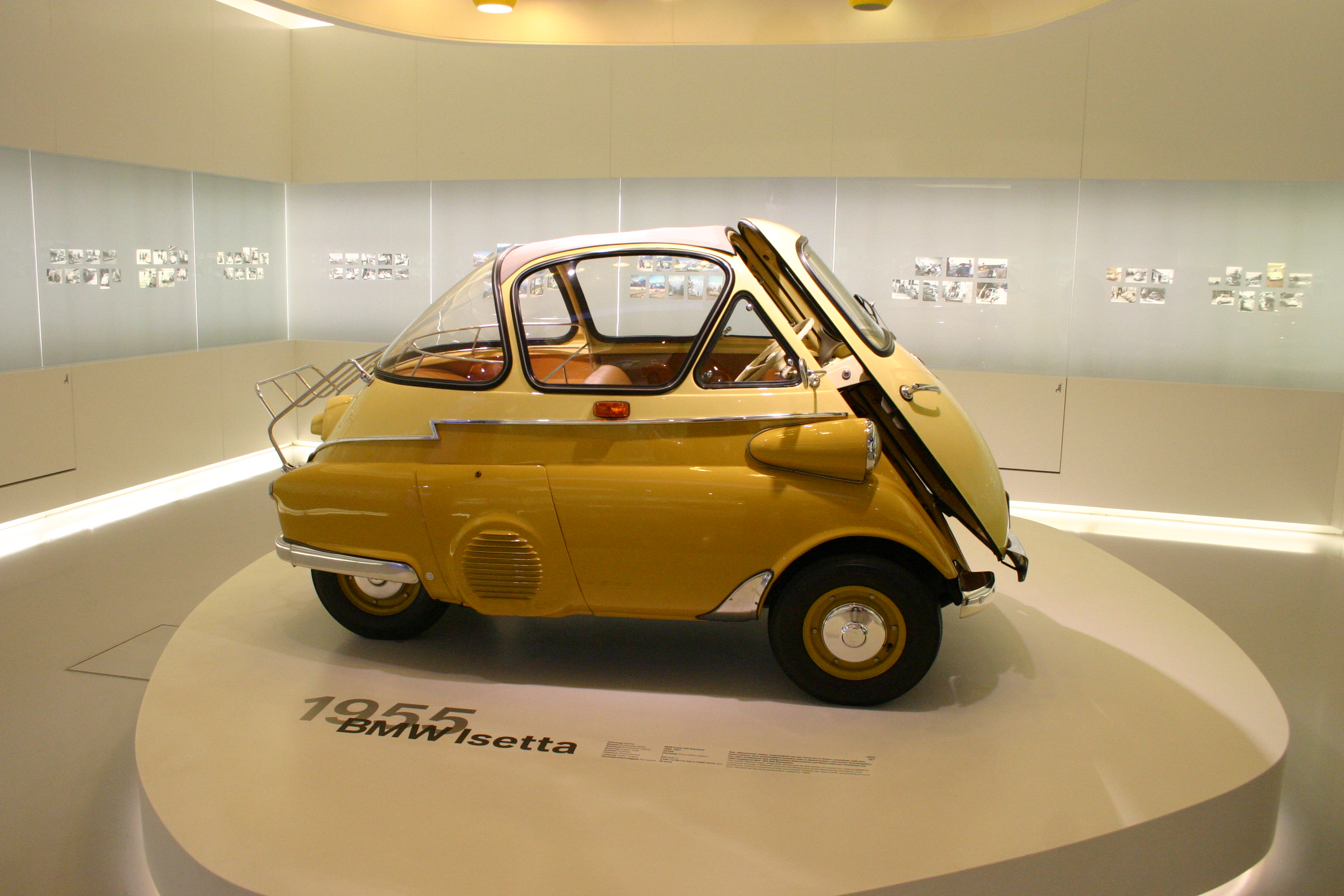
9. **BMW Isetta (1955)**Behold, the BMW Isetta, the microcar that proves sometimes, smaller isn’t always better, especially when it comes to personal safety! Produced under license from 1955 to 1962, these bizarre-looking little bubbles were the automotive equivalent of wearing a cardboard box for armor in a jousting match. They were cute, sure, in a ‘my kid drew this car’ kind of way, but practicality and safety? Not so much.
Imagine scooting around in something described as an “incredibly impractical and unsafe death trap.” That’s not exactly the ringing endorsement you want for your daily commuter, is it? It makes you wonder if “impractical” was just a polite way of saying “you’ll probably trip over it when parking” and “unsafe” meant “good luck with that single front door when you’re in a fender bender.”
While it might have been a quaint solution for post-war transportation, the Isetta’s charm quickly faded when faced with anything more challenging than a gentle breeze or a slightly larger pebble. It’s a testament to how far we’ve come in car design and safety, thankfully leaving these adorable-but-deadly contraptions in the history books, right where they belong.
Car Model Information: 1957 BMW Isetta 300 with Rollback Sunroof
Name: Isetta
Production: Iso Isetta (1953–56),BMW Isetta (1955–62),VELAM Isetta (1955–58),Romi-Isetta (1956–61)
Manufacturer: Iso Autoveicoli,BMW,VELAM,Romi
Layout: MR layout
BodyStyle: Cabriolet,Van,Pick-up
Categories: All articles with dead external links, Articles with dead external links from February 2018, Articles with permanently dead external links, Articles with short description, BMW vehicle series
Summary: The Isetta is an Italian-designed microcar initially manufactured in 1953 by the Italian firm Iso SpA, and subsequently built under license in a number of different countries, including Argentina, Spain, Belgium, France, Brazil, Germany, and the United Kingdom. The name Isetta is the Italian diminutive form of Iso, meaning “little Iso”. Because of its egg shape and bubble-like windows, it became known as a bubble car, a name also given to other similar vehicles.
In 1955, the BMW Isetta became the world’s first mass-production car to achieve a fuel consumption of 3 L/100 km (94 mpg‑imp; 78 mpg‑US). It was the top-selling single-cylinder car in the world, with 161,728 units sold.
Get more information about: Isetta
Buying a high-performing used car >>>
Brand: BMW Model: Isetta
Price: $36,997 Mileage: 4,901 mi.

10. **Cadillac Cimarron (1982)**Oh, Cadillac Cimarron, the car that taught us all a valuable lesson in brand identity – or rather, what happens when you completely ignore it! Picture this: a luxury brand like Cadillac, known for its opulent cruisers and stately presence, decides to rebadge a humble Chevrolet Cavalier. It’s like putting a diamond-encrusted collar on a chihuahua and calling it a Siberian husky. It just doesn’t work, no matter how hard you try to convince yourself.
General Motors essentially tried to pull a fast one, offering what was essentially an economy car with a Cadillac badge and, of course, a luxury price tag. Talk about ambition! But here’s the kicker: consumers, bless their intelligent hearts, saw right through this thin veneer of luxury. They weren’t fooled by a few extra leather bits and a shiny emblem.
The result? Poor sales, a tarnished brand reputation, and a whole lot of head-shaking from automotive enthusiasts. The Cimarron stands as a shining (or rather, dull) example of how you can’t just slap a fancy name on something and expect it to magically become what it isn’t. It’s a reminder that authenticity, even in the car world, is key, and trying to trick your loyal customers usually backfires spectacularly.
Read more about: The Automotive Graveyard: 14 Infamous Cars That Made Drivers Wish They’d Walked Instead

11. **Amphicar (1961)**Ready for a car that literally puts your life in the hands of a bilge pump? Meet the Amphicar, the vehicle that promised you the best of both worlds – land and sea – but delivered a whole lot of anxiety! This aquatic automobile was a true marvel of engineering, or perhaps, a true marvel of optimism. It floated! Mostly. Sometimes.
According to *Time Magazine*, the entire concept of the Amphicar’s flotation hinged precariously on whether its bilge pump could handle any leakage. Let that sink in for a moment (pun absolutely intended): your main safety feature against becoming a permanent underwater exhibit was a single, tiny pump. If that pump decided to take a coffee break, your “car” would swiftly transform into “the world’s most aerodynamic anchor.” Yikes!
This impracticality extended to both its roles. As a car, it was quirky. As a boat, it required constant vigilance against the very real threat of sinking. It highlighted the fundamental truth that cars and boats have very different needs, and trying to combine them without robust solutions for both just leads to a very wet, very expensive, and very useless experience. Hats off for trying, Amphicar, but maybe stick to one element next time!
Read more about: 19 Hilariously Useless Cars Ever Made
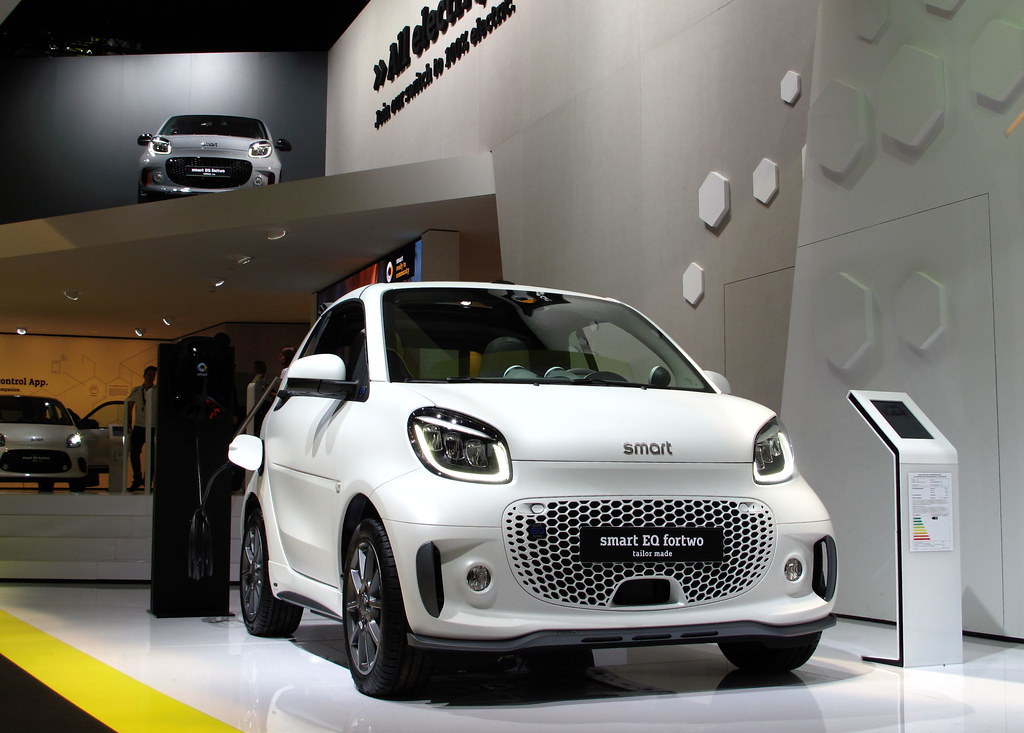
12. **Smart Fortwo (1998-2024)**Ah, the Smart Fortwo! The little car that could… mostly park anywhere. This compact marvel was designed with the urban jungle in mind, promising unparalleled ease of parking in even the tightest spots. And it delivered on that! You could practically parallel park it in a phone booth. But beyond the city limits? That’s where its ‘smart’ design started to look a little less, well, brilliant.
While undeniably cute and incredibly convenient for dodging congestion and squeezing into minuscule parking spaces, the Fortwo struggled big time with practicality once you ventured outside the concrete canyons. Its limited appeal meant it never truly caught on with a wider audience who needed a car for more than just a quick trip to the corner store. It was the automotive equivalent of a tiny, adorable espresso machine – great for a quick shot, but not so much for a full family dinner.
And let’s not even get started on its transmission, which was often described as ‘enthusiastic but confused.’ It had a habit of making every gear change feel like a dramatic pause, leaving drivers wondering if it had forgotten what it was doing. Coupled with disappointing fuel efficiency (for such a small car, it really should have done better!) and rivals offering superior interior quality and reliability, the Smart Fortwo ultimately proved that sometimes, being *too* specialized means you miss out on the bigger picture. It’s a tiny titan of uselessness beyond the city limits!
Car Model Information: 2017 smart ForTwo pure
Name: Smart Fortwo
Manufacturer: Daimler-Benz
Aka: Smart City-Coupé (1998–2002),Smart car (colloquially)
Production: 1998–2007 (MkI),2006–2014 (MkII),2014–2024 (MkIII)
Assembly: Hambach, Moselle
Class: City car,Microcar
BodyStyle: hatchback
Layout: Rear-engine, rear-wheel-drive layout,Rear-engine, rear-wheel-drive layout
Related: Smart Roadster,Smart Forfour
Successor: Smart 2
Categories: 2000s cars, 2010s cars, 2020s cars, All Wikipedia articles written in American English, All articles needing additional references
Summary: The Smart Fortwo (stylized as “smart fortwo”) is a two-seater city car manufactured and marketed by the Smart division of the Mercedes-Benz Group for model years 1998–2024, across three generations — each using a rear-engine, rear-wheel-drive layout and a one-box design.
The first generation was internally designated as the W450, launched at the 1998 Paris Motor Show. The second generation W451-build series was launched at the 2006 Bologna Motor Show. The third generation Fortwo (2014–2024) was internally designated as the C453 build series, and debuted globally on July 16, 2014, at the Tempodrom in Berlin along with a closely related four-door version, the Smart Forfour, co-developed and sharing the same platform and engines with the third-generation Renault Twingo.
Marketed in 46 countries worldwide, Fortwo production had surpassed 1.7 million units by early 2015.
The brand name Smart supposedly derives from its early history as a cooperative venture between Swatch and Mercedes: Swatch Mercedes ART. The Fortwo nameplate derives from its two-person seating capacity. Until 2002, the Fortwo had been marketed as the smart City-Coupé.
Get more information about: Smart Fortwo
Buying a high-performing used car >>>
Brand: Smart Model: Fortwo
Price: $9,950 Mileage: 71,791 mi.

13. **Lincoln Blackwood (2002)**The Lincoln Blackwood was a truck that really didn’t understand what it meant to be a truck. It tried so, so hard to be a luxurious, high-end pickup, but it fundamentally forgot the ‘pickup’ part of the equation. Imagine ordering a fancy steak dinner, and it arrives on a designer plate, but without the actual steak. That’s pretty much what happened here.
Despite its luxury aspirations and plush interior, the Blackwood committed the cardinal sin of pickup trucks: it lacked a functional truck bed. Instead of an open, utility-focused space, it had a carpeted, power-operated trunk that was about as useful for hauling lumber as a silk evening gown. This made it utterly impractical for any buyer who actually needed a truck to, you know, *truck*.
Lincoln’s attempt to add a ‘unique touch’ by producing only 10,000 units per year was tragically unnecessary, as the Blackwood was a sales disaster right out of the gate. It was swiftly discontinued after just one model year, earning it the dubious distinction of being the division’s shortest-ever production run. The Blackwood proves that sometimes, trying to be too fancy can mean losing sight of your core purpose entirely, creating a truly useless (albeit shiny) vehicle.
Car Model Information: 2002 Lincoln Blackwood Base
Name: Lincoln Blackwood
Manufacturer: Lincoln Motor Company
Production: September 25th 2000 – August 8th, 2002
ModelYears: 2002 (United States),2002–2003 (Mexico)
Assembly: Claycomo, Missouri
Successor: Lincoln Mark LT
Class: luxury car,pickup truck
BodyStyle: pickup truck
Layout: Front-engine, rear-wheel drive layout
Related: Ford F-Series (tenth generation),Lincoln Navigator
Engine: Ford Modular engine#5.4 L
Transmission: Automatic transmission
Wheelbase: 138.5 in
Abbr: on
Length: 220.2 in
Width: 78.0 in
Height: 73.6 in
Designer: Patrick Schiavone
Caption: 2002 Lincoln Blackwood
Categories: All articles with unsourced statements, Articles with short description, Articles with unsourced statements from November 2024, Cars discontinued in 2002, Cars introduced in 2001
Summary: The Lincoln Blackwood is a luxury pickup truck that was marketed by the Lincoln division of Ford Motor Company for the 2002 model year. The first pickup truck marketed by Lincoln, the Blackwood was derived from the Ford F-150 SuperCrew and the Lincoln Navigator. Drawing its name from its simulated black woodgrain cargo box, the Blackwood was offered solely with a black-painted exterior.
Although the concept vehicle had a positive public reception, the production Blackwood fell far under sales projections in the United States and Mexico. After the 2002 model year, the Blackwood was discontinued in the United States, with a short run of 2003 models produced for Mexico. In total, only 3,383 units were produced, making it both the rarest and shortest-produced Lincoln model line.
For 2006, Lincoln entered the pickup truck segment for a second time with the Lincoln Mark LT — again based on the Ford F-150 —which, even though it also sold poorly, was more popular than the Blackwood.
The first Lincoln vehicle manufactured exclusively outside of the state of Michigan since 1958, the Blackwood was assembled by Ford at its Kansas City Assembly facility in Claycomo, Missouri, alongside the F-150 from September 2000 to August 2002.
Get more information about: Lincoln Blackwood
Buying a high-performing used car >>>
Brand: Lincoln Model: Blackwood
Price: $10,995 Mileage: 123,109 mi.
Read more about: The 14 Most Embarrassing Automotive Design Flops That Taught the Industry Hard Lessons
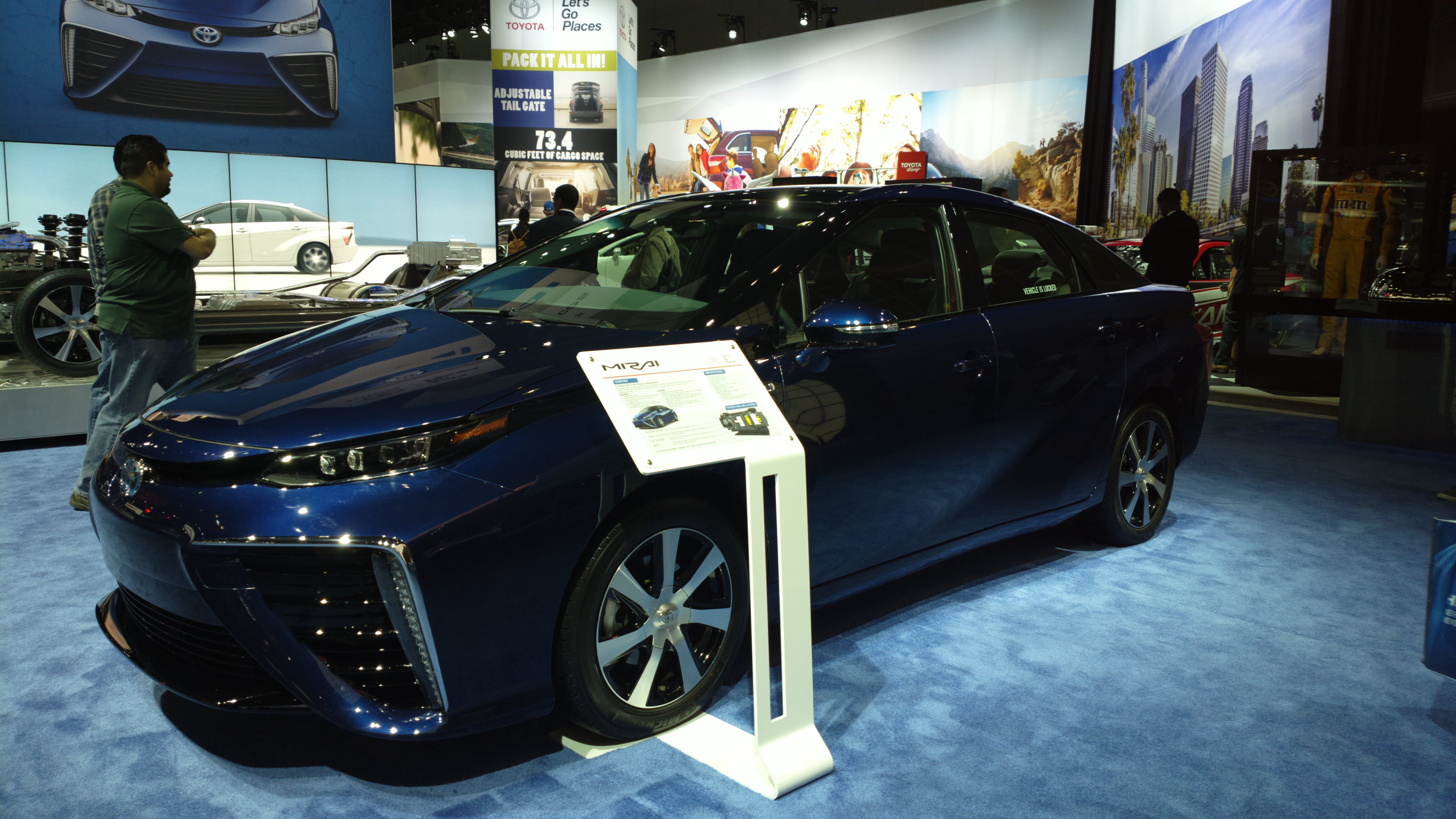
14. **Toyota Mirai (2014)**Ah, the Toyota Mirai, a car named ‘future’ in Japanese, which turned out to be less ‘future’ and more ‘future-adjacent, but only if you live right next to a specific gas station.’ This hydrogen fuel cell vehicle was a bold leap into what many hoped would be the next big thing in automotive power. But, like many ambitious leaps, it landed a bit… short.
While the technology itself was fascinating, the Mirai’s Achilles’ heel was its extremely limited refueling infrastructure and its rather hefty price tag. It was like owning the most advanced smartphone in the world, but it only worked within a five-mile radius of a single, obscure charging station. As one of Toyota’s Board members, Hiroki Nakajima, pointed out, the scarcity of H2 fueling stations was a massive hurdle.
It’s a bittersweet tale, especially considering the car itself evolved from an “ugly duckling to beautiful sedan” in its two generations. Toyota genuinely supported it, despite being initially skeptical of battery electric vehicles. But as Aaron Gold wisely quipped, “Mirai is awesome if you don’t have anywhere to go.” All the cool factor and styling couldn’t save hydrogen from falling under the pressure of more practical and less expensive methods of locomotion. The Mirai was a glimpse of a future that simply wasn’t ready to arrive, making it famously useless for the average driver who actually wants to, you know, *drive*.
Car Model Information: 2024 Toyota Mirai Base
Name: Toyota Mirai
Manufacturer: Toyota
Production: December 2014 – present
Assembly: Toyota, Aichi
Class: Mid-size,luxury car
BodyStyle: Sedan (automobile)
Layout: unbulleted list
Categories: 2020s cars, All articles containing potentially dated statements, All articles with dead external links, All articles with unsourced statements, Articles containing Japanese-language text
Summary: The Toyota Mirai (Japanese: トヨタ・MIRAI, Hepburn: Toyota Mirai) (from mirai (未来), Japanese for ‘future’) is a mid-size hydrogen fuel cell vehicle (FCV) manufactured by Toyota, and is the first FCV to be mass-produced and sold commercially. The Mirai was unveiled at the November 2014 Los Angeles Auto Show. As of November 2022, global sales totaled 21,475 units; the top-selling markets were the U.S. with 11,368 units, Japan with 7,435 and the rest of the world with 2,622.
Under the U.S. Environmental Protection Agency (EPA) cycle, the 2016 model year Mirai has a total range of 502 km (312 mi) on a full tank. The MPG-equivalent combined city/highway fuel economy rating was 66 mpg‑US (3.6 L/100 km; 79 mpg‑imp), making the Mirai the most fuel-efficient hydrogen fuel cell vehicle rated at the time by the EPA, and the one with the longest range. In August 2021, the second-generation Mirai set a world record of traveling 1,360 km (845 mi) with a full tank of 5.65 kg (12.5 lb) of hydrogen.
Sales in Japan began on 15 December 2014 at ¥6.7 million (~US$57,400) at Toyota Store and Toyopet Store locations. The Japanese government plans to support the commercialization of fuel-cell vehicles with a subsidy of ¥2 million (~US$19,600). Retail sales in the U.S. began in August 2015 at a price of US$57,500 before any government incentives. Deliveries to retail customers began in California in October 2015. Toyota scheduled to release the Mirai in the Northeastern United States in the first half of 2016. As of June 2016, the Mirai was available for retail sales in the UK, Denmark, Germany, Belgium, and Norway. Pricing in Germany started at €60,000 (~US$75,140) plus VAT (€78,540).
Get more information about: Toyota Mirai
Buying a high-performing used car >>>
Brand: Toyota Model: Mirai
Price: $17,488 Mileage: 11,934 mi.
So there you have it, folks! Our hilarious, slightly exasperated journey through some of the automotive world’s most head-scratching, side-splitting, and utterly pointless creations. From cars that couldn’t decide what they were, to those that forgot their basic function, and even those that were just too much of a risk (or an anchor!), these vehicles remind us that even the biggest car companies can have a spectacularly ‘oops!’ moment. They might have been useless, but they certainly gave us a laugh, and for that, we salute these wonderfully wacky wheels. If you’ve ever had the dubious pleasure of encountering one of these automotive oddities, share your story – we’re all ears for more tales of delightful vehicular blunders!