
The world of commercial real estate has always been a fascinating tapestry of ambition, strategy, and monumental fortunes. In an era where downtowns grapple with empty office buildings and evolving work-from-home policies, one might assume a universal downturn. Yet, as the latest Forbes 400 list reveals, America’s richest property barons have not only weathered the storm but have, in many cases, seen their wealth grow, collectively amassing $139 billion—a notable increase from the previous year.
This resilience underscores a fundamental truth about real estate: it is a sector perpetually in flux, yet one that consistently offers pathways to immense wealth for those with foresight, strategic acumen, and an unwavering commitment to scale. While some have faced significant headwinds, particularly those heavily invested in debt-laden office properties in hard-hit urban centers, others have thrived by focusing on red-hot segments like residential and industrial real estate, or by diversifying their portfolios across innovative ventures. The narratives of these billionaires offer a compelling look into the strategies, challenges, and enduring appeal of property ownership.
We embark on a journey through the intricate empires and personal sagas of some of America’s most powerful real estate magnates. From the quiet, expansive control of the nation’s wealthiest landlord to the astute financial plays of market timers, and the multi-generational legacies built brick by brick, these profiles illuminate the diverse blueprints for success in an ever-changing market. Each story is a testament to the vision, tenacity, and often contrarian thinking required to not just survive, but to profoundly prosper, in the high-stakes world of real estate.

1. **Donald Bren: The Enduring Empire Builder**Donald Bren stands as an undisputed titan in the American real estate landscape, consistently holding the title of the wealthiest real estate billionaire in the U.S. His estimated net worth of $18 billion, a notable increase from $17.4 billion in 2022, is primarily attributed to his ownership of Irvine Company, a sprawling real estate empire that defines vast swathes of California’s most desirable regions. Bren’s genius lies in his long-term vision and comprehensive control over his holdings, which encompass more than 129 million square feet of office buildings, apartments, and shopping malls across California.
Beyond his significant California footprint, Bren’s strategic investments extend to iconic properties further afield. His Irvine Company holds a substantial 97.5% stake in the MetLife Building in Manhattan, a landmark in one of the world’s most competitive markets, demonstrating a global perspective on prime assets. Additionally, he owns three prominent office towers in Chicago and two luxurious golf courses, reflecting a diversified approach that balances commercial, residential, retail, and leisure properties within his portfolio.
The Irvine Company’s recent activities further illustrate its dynamic management and strategic adaptability. In 2022, the company made headlines by selling two hotels in Orange County for nearly $300 million, a move indicative of opportunistic market timing. Concurrently, it is investing $30 million in renovating its 300 North LaSalle office tower on the Chicago riverfront, a clear commitment to maintaining the competitiveness and appeal of its assets even in challenging office markets. These actions underscore Bren’s calculated approach to portfolio optimization and value creation, ensuring his empire remains robust and responsive to economic shifts.
His decades-long dominance is not just about accumulating wealth; it’s about the deliberate cultivation and enhancement of integrated communities. The Irvine Company is renowned for its master-planned developments that combine living, working, and retail spaces, fostering environments that attract and retain both residents and businesses. This integrated strategy, coupled with a deep understanding of market cycles, has allowed Bren to consistently outperform peers and cement his position at the apex of the real estate industry.
2. **Stephen Ross: Navigating High Stakes in Urban Development**Stephen Ross, a name synonymous with monumental urban transformation, boasts a net worth of $10.1 billion. His journey began not in traditional real estate development, but as a tax attorney, a background that no doubt honed his analytical skills and strategic thinking. In 1972, Ross founded Related Companies, initially focusing on the often-challenging, yet fundamentally crucial, sector of affordable housing. This foundation laid the groundwork for an enterprise that would eventually redefine skylines.
Related Companies is now most famously recognized for its ambitious Hudson Yards development in New York, a colossal undertaking that transformed a sprawling rail yard into a vibrant mixed-use neighborhood featuring residential towers, office spaces, retail, and cultural venues. This project alone symbolizes Ross’s capacity for audacious vision and complex execution. Today, Related owns and manages an astounding $60 billion in assets, with its reach extending across the U.S. and through a joint venture in London, reflecting a truly global footprint in high-value real estate.
Despite his immense success, Ross has not been immune to the shifts in the market, particularly in the office sector. He was identified as the biggest real estate loser over the past year, with his fortune shrinking by an estimated $1.5 billion. This decline highlights the vulnerabilities even the most diversified portfolios face in the current economic climate, particularly with significant investments in areas like New York, which have seen a slowdown in commercial property values. However, Ross’s strategic agility is evident in his firm’s expansion into south Florida, where Related is now the largest owner of commercial real estate in West Palm Beach, having acquired a development site for $195 million in August.
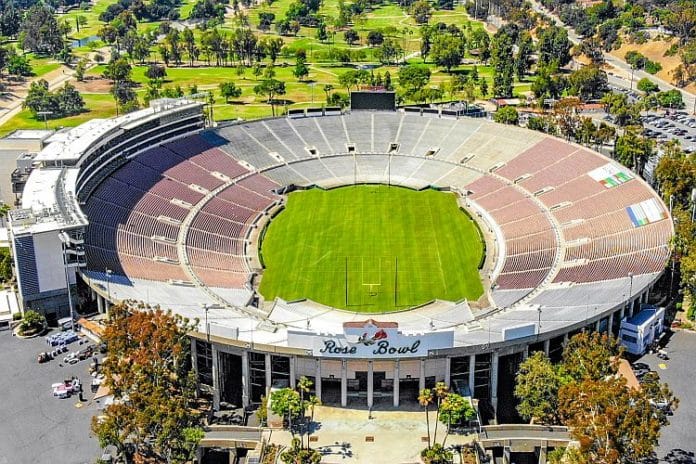
Beyond his professional real estate endeavors, Ross also holds a significant stake in the sports world as the owner of the Miami Dolphins, demonstrating a personal interest that complements his business empire. His recent personal relocation, selling his penthouse above Columbus Circle for $40 million to move into the entire 92nd floor of 35 Hudson Yards, serves as a symbolic move, reinforcing his commitment to the very developments he champions and showcasing a lifestyle commensurate with his status as one of America’s leading real estate moguls.

3. **Leonard Stern: Beyond Philanthropy, A Real Estate Powerhouse**Leonard Stern, with a net worth of $8.1 billion, is widely recognized as the namesake of New York University’s prestigious business school, a tribute to his generous $30 million gift in 1988. However, his philanthropic endeavors, while significant, only tell a fraction of his story. Stern’s immense wealth is firmly rooted in Hartz Mountain, a prolific firm he helms, which commands an impressive portfolio of over 260 properties. These holdings are strategically diversified, encompassing a significant number of industrial properties, alongside offices, hotels, and apartment complexes.
Hartz Mountain’s geographical spread is extensive, with properties located across Florida, Georgia, Maryland, New Jersey, New York, and the Carolinas. This broad reach allows the firm to capitalize on regional economic strengths and insulate itself against localized market downturns. The firm’s heavy investment in industrial real estate has proven particularly prescient. The pandemic-driven boom in e-commerce fueled an insatiable demand for warehouses and logistics facilities, directly benefiting Hartz Mountain’s extensive industrial footprint. This strategic positioning has been a key driver in the recent growth of Stern’s fortune.
Furthermore, the firm’s substantial residential holdings, primarily apartments, have also contributed significantly to its robust performance. With rents rising in many markets, and apartments remaining a highly sought-after commodity, Hartz Mountain’s residential assets have provided a stable and growing income stream. This combination of strong demand for industrial spaces and resilient apartment markets directly translated into an estimated $500 million increase in Stern’s net worth over the past year, underscoring the shrewdness of his long-term investment strategy.
Stern’s ability to identify and invest in sectors poised for growth, coupled with a vast and diversified portfolio, solidifies his position as a quiet yet formidable force in the real estate world. His influence extends beyond just financial statements, demonstrating how a strategically built real estate empire can provide the foundation for significant societal contributions while continuing to generate substantial personal wealth.

4. **Igor Olenicoff: The Immigrant’s Real Estate Odyssey**Igor Olenicoff’s journey to a $7.7 billion net worth is a testament to perseverance and strategic investment, rooted in a remarkable personal history. Born in Iran, he was a Russian immigrant who, at the tender age of 15, fled the Soviet Union with his family. This formative experience undoubtedly instilled in him a resilient spirit and a drive to build from the ground up. His Olen Properties now owns a vast portfolio that includes more than 8 million square feet of office space and over 17,000 residential units, predominantly apartments.
Olen Properties’ holdings span multiple key states, including Arizona, California, Florida, Georgia, Nevada, North Carolina, South Carolina, and Tennessee. This wide geographical diversification allows Olenicoff to mitigate risks associated with any single market and to capitalize on varying economic conditions across different regions. His focus on residential properties, particularly apartments, has been a significant driver of his recent success. The consistent demand for rental housing has provided a stable foundation for growth, even as other segments of the real estate market face uncertainties.
Demonstrating an ongoing commitment to expanding his residential footprint, Olenicoff made significant acquisitions this year. He strategically spent $165 million to purchase two apartment complexes, one in Duluth, Georgia, and another in Raleigh, North Carolina. These investments align with the broader market trend of strong demand for apartments, particularly in growing metropolitan areas in the Southeast, further solidifying Olen Properties’ position in lucrative residential markets.
Olenicoff’s success story is a powerful narrative of an immigrant who, through diligent effort and astute real estate investments, built an immense fortune. His strategic focus on diversified residential and office holdings across a broad geographic area has enabled him to navigate market fluctuations effectively, steadily expanding his empire and cementing his status as a formidable force in the American property landscape.

5. **Jeff Greene: From Housing Crisis Prophet to Property Mogul**Jeff Greene, with a net worth of $7.5 billion, stands out among his billionaire peers for the unconventional, yet incredibly prescient, path he took to amass his initial fortune. Greene achieved widespread recognition for making a staggering $800 million during the housing crisis of 2007 and 2008 by buying credit default swaps on subprime mortgage-backed bonds. This shrewd, contrarian bet on the impending collapse of the housing market proved to be an exceptionally lucrative financial maneuver, establishing his reputation as a visionary investor.
Following this colossal windfall, Greene meticulously transformed his profits into a formidable real estate portfolio. His current holdings consist of a diverse array of apartments, condo buildings, hotels, and office properties, primarily concentrated in the high-value markets of California, Florida, and New York. This strategic reinvestment of his derivatives earnings into tangible assets allowed him to transition from a financial speculator to a significant property owner, diversifying his wealth and establishing a lasting presence in physical real estate.
In the past year, Greene’s real estate ventures have continued to prosper, adding an estimated $300 million to his net worth. This growth has been fueled by steady condo sales and consistent rent increases for his apartment buildings located in key urban centers like Los Angeles, Manhattan, and South Florida. These markets, characterized by high demand and limited supply, have provided a robust environment for his residential and hospitality assets to appreciate and generate strong returns.
Despite his successes, Greene remains a candid and cautious observer of the real estate market. He has openly expressed concerns about the potential threats posed by older office buildings saddled with debt, viewing them as a risk not just to the real estate business but to the broader economy. “It’s going to take a long time to clean this mess up,” he told Forbes in May, a stark reminder that even the most astute investors acknowledge the underlying fragilities in certain market segments. His journey from market prophet to property mogul, coupled with his ongoing vigilance, exemplifies a deeply analytical approach to wealth creation and preservation.

6. **Edward Roski, Jr.: Inheriting and Expanding a Commercial Giant**Edward Roski, Jr. carries forward a significant legacy in the real estate world, inheriting Majestic Realty Co. from his father, Edward Roski, Sr., who established the Los Angeles-based development firm in 1948. Under Roski Jr.’s leadership, the company has not only preserved its foundational strengths but has expanded into one of the largest owners of master-planned business parks in the country. With a net worth of $7.4 billion, Roski Jr. oversees an empire that spans more than 90 million square feet of industrial, office, sports, entertainment, and hospitality properties.
The firm’s focus on industrial properties and master-planned business parks has been particularly advantageous in recent years, supercharged by the e-commerce boom. Majestic Realty Co. caters to an impressive roster of corporate tenants, including global giants such as Amazon, UPS, and Walmart, highlighting its critical role in the logistics and supply chain infrastructure that underpins modern commerce. This sector’s robust demand has significantly contributed to the growth of Roski Jr.’s net worth, which has increased by $1 billion since the previous year.
Beyond traditional commercial real estate, Roski Jr. has a notable presence in the sports and entertainment industry. He is a minority owner of two major professional sports franchises: the NHL’s Los Angeles Kings and the NBA’s Lakers. His involvement extends beyond ownership, as he played a pivotal role in the development of the Crypto.com arena (formerly Staples Center) in the 1990s, a testament to his vision for integrating sports venues into broader urban developments. This blend of traditional commercial holdings and high-profile sports investments reflects a dynamic and diversified approach to asset management.
Roski Jr.’s story is one of successful stewardship and strategic expansion of a family-founded enterprise. His ability to adapt the company’s focus to capitalize on emerging market trends, particularly in industrial real estate, while maintaining a strong foothold in other key sectors, has cemented Majestic Realty Co.’s position as a dominant force. His continued investment in and leadership of such a vast and varied portfolio underscores a deep understanding of market dynamics and a commitment to long-term value creation.

7. **Annette Lerner & Family: Preserving a D.C. Real Estate Dynasty**In February 2023, the real estate world marked the passing of Ted Lerner, a towering figure whose fortune was built on a remarkable entrepreneurial journey. His extensive real estate empire, primarily composed of apartments in the Washington, D.C. area, has now passed to his wife, Annette Lerner, and their three children: Mark, Debra, and Marla. This inheritance places Annette Lerner & family on the Forbes 400 list with a net worth of $6.5 billion, representing a significant new entry among America’s wealthiest real estate barons.
The story of Lerner Enterprises began humbly in 1952. Annette Lerner famously lent her husband, then 26, $250 to start a real estate company focused on selling homes for developers. From these modest beginnings, the couple cultivated Lerner Enterprises into one of the largest property owners in the Washington, D.C. metropolitan area. Their portfolio is exceptionally diverse, spanning office, residential, retail, hospitality, and even sports and entertainment sectors, showcasing a holistic approach to regional development.
The firm’s strategic concentration in the Washington, D.C. area has allowed it to become deeply embedded in the region’s economic fabric. The consistent demand for residential and commercial properties in the nation’s capital and its surrounding affluent suburbs has provided a stable and appreciating asset base for the Lerner family. Their long-standing presence and deep understanding of the local market have been crucial to their success, enabling them to navigate various economic cycles and maintain robust growth.
Beyond their extensive property holdings, Annette and her children are also majority owners of the MLB’s Washington Nationals, further integrating their business interests with the cultural and community life of D.C. Additionally, they hold minority investments in Monumental Sports, the parent company for other prominent D.C. sports franchises including the NBA’s Washington Wizards, the NHL’s Washington Capitals, and the WNBA’s Washington Mystics. This blend of traditional real estate with high-profile sports ownership not only diversifies their assets but also amplifies their influence and community engagement within the region.

8. **Neil Bluhm: The Gaming and Urban Renewal Maverick**Neil Bluhm, a towering figure in Chicago’s real estate and gambling spheres, commands a net worth of $6.3 billion. His empire, based in the Windy City, extends far beyond his local roots, encompassing assets from bustling casinos to cutting-edge office developments. Bluhm’s strategic vision consistently positions him at the forefront of diverse, high-growth sectors, blending traditional real estate with dynamic entertainment.
His foray into the gaming industry has been particularly successful, with his Rivers casinos establishing strong footholds across the Northeast and Midwest. A testament to this success came in January when Rivers’ newest casino in Portsmouth, Virginia, quickly outpaced its competitors to become the state’s most popular gambling destination. This achievement underscores Bluhm’s acumen in identifying lucrative opportunities and executing ventures that resonate strongly.
Bluhm’s real estate prowess is equally impressive, particularly his engagement with transformative urban projects. In Los Angeles, he’s behind the Century City Center, a brand new 700,000-square-foot office tower slated to become the new home for the talent and sports agency CAA by 2026. This exemplifies his commitment to crafting premier commercial spaces that attract top-tier tenants, shaping future urban skylines.
Furthermore, Bluhm is reportedly exploring an even more ambitious venture in New York. He is teaming up with publicly traded real estate investment trust Vornado to bid for one of the coveted casino licenses, aiming for the strategic vicinity around Penn Station. This highlights his continuous pursuit of expansion and readiness to engage in high-stakes competition.

9. **John A. Sobrato & family: Silicon Valley’s Legacy and Philanthropic Vision**The Sobrato family, with a collective net worth of $5.9 billion, represents a multi-generational legacy in Northern California real estate, deeply intertwined with Silicon Valley’s growth. John A. Sobrato’s journey began humbly, selling homes in Palo Alto as a student before venturing into industrial property development with his mother. This foundation led to the establishment of the Sobrato Organization in 1979, a cornerstone of the region’s property landscape.
Today, the Sobrato Organization boasts an impressive portfolio of over 7 million square feet of commercial and residential properties, reflecting decades of strategic development and investment. Thoughtful leadership transitions have ensured the enduring vitality of their extensive real estate holdings, with John A. Sobrato passing the business to his son, John Michael, and then to Matthew Sonsini.
Beyond their significant commercial footprint, the Sobrato family makes profound contributions to addressing critical social needs. In May, their Sobrato Foundation invested $26 million to acquire a 68-unit apartment building in Santa Clara. This acquisition is earmarked for a pilot project aimed at alleviating the persistent lack of affordable housing in Silicon Valley, a region grappling with high living costs.
This philanthropic endeavor demonstrates a powerful commitment to community welfare, leveraging their real estate expertise and financial resources. The Sobrato family’s story is thus not only one of immense wealth creation but also of responsible stewardship and a proactive approach to building a more equitable future.
10. **Robert Faith: The Global Apartment and Student Housing Architect**Robert Faith, founder and majority owner of Charleston, South Carolina-based Greystar, commands a net worth of $5.8 billion. His empire is built upon unparalleled expertise in property and investment management, particularly within the multifamily sector. Greystar stands as the undisputed largest manager of apartments and multifamily developer in the U.S., a testament to Faith’s vision and the firm’s expansive global reach across five continents.
The scale of Greystar’s operations is truly staggering, managing and operating over $240 billion worth of real estate. This extensive international presence underscores Faith’s strategic approach to identifying and capitalizing on residential market opportunities worldwide. Complementing its property management activities, Greystar’s robust investment management platform oversees more than $75 billion of assets, solidifying its position as a dominant force.
A significant recent expansion highlights Faith’s foresight into specialized residential markets. In December, Greystar, in partnership with Singaporean sovereign wealth fund GIC, successfully acquired Student Roost, the third-largest student housing provider in the U.K. This strategic move demonstrates an astute understanding of evolving demographic trends and consistent demand for purpose-built student living solutions, further diversifying Greystar’s already formidable portfolio.
Faith’s leadership has established Greystar as a global leader in comprehensive real estate services. From initial development to ongoing property and investment management, his firm provides integrated solutions that cater to a broad spectrum of residential needs, consistently creating value across its vast international footprint.
11. **Ty Warner: The Beanie Babies Mogul’s Real Estate Transformation**Ty Warner, widely known as the eccentric billionaire behind the 1990s Beanie Babies craze, has meticulously parlayed his plush toy fortune into a formidable real estate empire, now estimated at $5.7 billion. While the collectible toys brought him initial fame and wealth, his astute investments in luxury hotels and world-class golf courses constitute the bulk of his current net worth, reflecting a savvy pivot from fads to tangible high-value assets.
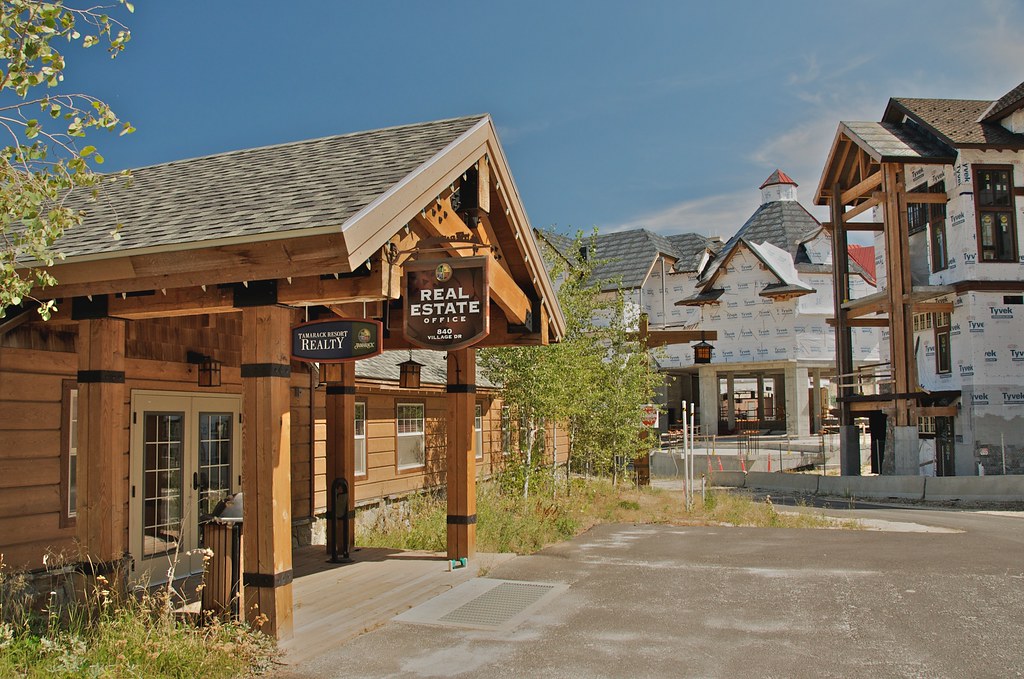
Warner’s real estate portfolio is characterized by its exclusivity and high-end appeal. His holdings include some of the most prestigious luxury hotels and golf properties globally, such as his Sandpiper club in Santa Barbara. These assets cater to an affluent clientele, ensuring resilience and appreciation even in fluctuating economic climates. This focus on leisure and hospitality real estate demonstrates a distinct strategy.
This strategic diversification into prime real estate has proven exceptionally lucrative for Warner. His fortune has been boosted by rising values for luxury hotels and golf courses, showcasing his ability to identify and invest in sectors poised for significant appreciation. The discerning acquisition and meticulous management of these high-value properties have cemented his status as a serious and successful real estate magnate.
Warner’s trajectory is a compelling narrative of transforming a wildly successful, albeit fleeting, consumer trend into enduring generational wealth. His unique path from toy inventor to luxury property baron illustrates that immense fortune can be found and sustained by those with the foresight to reinvest and adapt.

12. **Sam Zell: The Legendary “Grave Dancer” Who Redefined Real Estate**Sam Zell, an investor whose name became synonymous with contrarian thinking and a penchant for distressed assets, was a truly legendary figure in commercial real estate. Nicknamed “The Grave Dancer” for his uncanny ability to profit from buying properties when others fled, Zell made billions across a spectrum of real estate, from high-rise offices to mobile home parks. His passing at 81 marked the end of an era for an industry he profoundly shaped.
Zell’s brilliance lay in his philosophy: “When everyone is going left, look right.” This mantra guided his strategy of acquiring struggling properties, injecting capital, and repositioning them for success, often just ahead of market recoveries. A prime example of his legendary timing was the monumental $39 billion sale of Equity Office Properties Trust to Blackstone in 2007, just before a major market crash, cementing his reputation for prescience.
He was also a pioneer in popularizing the real estate investment trust (REIT) model in the 1990s, making real estate more accessible. Zell’s firms, including Equity Residential, which owns almost 80,000 apartment units, exemplified his approach to value creation. His impact transcended mere deal-making; he was a driving force behind the institutionalization of commercial real estate itself.
While many celebrated his successes, Zell also experienced highly public challenges, notably the $8.3 billion leveraged buyout of media giant Tribune Co., which led to a bankruptcy filing. Yet, even this setback could not diminish his overall legacy. A generous philanthropist and an outspoken personality, Sam Zell’s life was a testament to bold vision, unwavering determination, and a profound understanding of market cycles.
13. **Greg Flynn: Reinventing the Office Space for the Modern Workforce**Greg Flynn, a San Francisco real estate magnate already known for his vast chain restaurant holdings, is now making significant waves in the office market by acquiring Market Center, two prominent commercial skyscrapers at 555-575 Market Street. This strategic move, valued at approximately $177 million for the remaining loan, signals Flynn’s ambitious vision for transforming traditional office environments into dynamic, amenity-rich hubs.
Flynn Properties, in partnership with New York-based investor DRA, acquired the property through a deed in lieu of foreclosure, one of the highest sale prices for an office property in San Francisco since 2022. This acquisition comes at a time when older office buildings are struggling, highlighting Flynn’s contrarian approach and belief in the potential for revitalized workspaces.
His plans for Market Center are revolutionary for the San Francisco office scene. Flynn aims to create “the most fun office opportunity” in the city, promising a level of hospitality never before seen. The unused ground-floor meeting space at 555 Market Street will become “The Break Room,” a multiuse activity center featuring a massive video screen, basketball court, rock climbing wall, and an outdoor sports bar. Another floor, once occupied by Uber, is slated for pickleball courts and additional meeting spaces.
Flynn’s philosophy is simple yet powerful: “The goal is obvious: to help companies get their people back to work, because it’s fun.” This innovative strategy aligns with broader legislative efforts to cut red tape for amenity conversions, positioning Greg Flynn as a frontrunner in reinventing the modern office and attracting a new generation of tenants.

14. **René Benko: The Dramatic Collapse of a European Real Estate Empire**The story of Austrian developer René Benko, once a celebrated titan of European real estate, is a stark reminder of the perils of building an empire on cheap debt and ambitious promises. With a personal fortune once estimated at $6 billion, controlling iconic properties like a co-ownership in New York’s Chrysler Building and luxury department stores such as Selfridges, his Signa Holding empire spectacularly collapsed in less than two years, leaving him bankrupt and facing fraud charges, with his net worth officially at zero.
Benko’s early career saw him rise quickly from flipping apartments to developing flashy malls. By the 2010s, he cultivated an image as Europe’s rising real estate star, charming investors and bankers with glossy forecasts. Signa’s complex web of holding companies and foundations, while opaque, allowed Benko to maintain tight control as he leveraged ultra-low borrowing costs to scale rapidly, securing stakes in marquee assets across Europe and globally.
However, a confluence of adverse factors conspired to unravel his empire. The COVID-19 pandemic severely impacted his retail and tourism-dependent assets. This was compounded by soaring interest rates that made servicing Signa’s massive debt load punishing, and geopolitical shocks that increased construction costs. By late 2023, Signa Holding filed for insolvency, its liabilities reaching billions of euros, marking a dramatic downturn.
The aftermath has been profound. Signa began shedding assets, including its stake in the Chrysler Building, often at steep discounts. Benko himself declared personal insolvency, though Austrian prosecutors cast doubt on his claims, accusing him of hiding valuables. With ongoing fraud charges and creditors scrambling to trace billions believed to be shuffled into family foundations, luxury villas, and offshore accounts, Benko’s fall from grace highlights the extreme risks inherent in high-leverage real estate speculation.
These narratives from America’s, and indeed Europe’s, most influential real estate figures offer a compelling glimpse into the diverse strategies that drive wealth creation in this dynamic sector. From inherited legacies and strategic urban developments to the calculated risks of “grave dancing,” the innovative reimagining of office spaces, and the dramatic unraveling of over-leveraged empires, each story underscores the multifaceted nature of real estate success and its inherent challenges. It’s a world where foresight, adaptability, and unconventional approaches define the titans who continue to shape our skylines and economies.