The American automotive industry, a powerful emblem of personal liberty, expression, and freedom, holds a unique place in the nation’s economic tapestry. Its rise at the dawn of the 20th century paralleled other groundbreaking advancements like manned flight and motion pictures, fostering a widespread belief that the United States was embarking on a progressive new era where virtually anything was within reach. This fervent optimism led to the rapid proliferation of hundreds of automotive companies across the country, each fueled by ambitious individuals from all walks of life, eager to leave their mark on this transformative sector.
Yet, for every enduring success story, there lies a history dotted with unrealized ambitions and vanished enterprises. Many of these fledgling companies ultimately foundered under the weight of myriad challenges, including mismanagement, overexpansion, and a critical misjudgment of public taste. Others struggled to navigate the complex landscape of supply chain costs or faced insurmountable competition, particularly in the early days when electric vehicles and steam-powered cars, despite their initial promise, simply could not match the power or affordability of their burgeoning gas-powered counterparts.
Further compounding these difficulties were significant economic upheavals, with the downturn of the early 1920s and the devastating Great Depression causing widespread economic distress and dislocation that spelled doom for many carmakers. Iconic names like Du Pont, Durant, Duesenberg, Pierce-Arrow, and Peerless, once symbols of luxury and engineering prowess, ultimately faded into memory. However, their legacies are far from forgotten, as many of these defunct companies were pioneers, developing innovations such as disc brakes and automatic windshield wipers that are now indispensable standard features in modern automobiles. This article embarks on a journey through automotive history’s graveyard, spotlighting some of these impactful, yet ultimately lost, American car companies, beginning with a look at their bold visions and the reasons they could not sustain their ride into the future.

1. **Aerocar International**Moulton Taylor, an innovator with a keen eye on the evolving landscape of transportation, founded Aerocar International in the late 1940s. His vision was to merge the burgeoning interest in civil aviation with the practicality of road travel, specifically targeting the vast cohort of pilots who had honed their skills flying combat planes during World War II. Taylor’s ambition was deeply inspired by Robert Fulton Jr.’s earlier Airphibian, seeking to refine the concept of a vehicle that could seamlessly transition between air and ground.
The resulting aircraft, certified by the Civil Aeronautics Administration, was a hybrid car/airplane designed to offer unparalleled versatility. This remarkable machine could comfortably accommodate two people, powered by a robust four-cylinder engine. It boasted an impressive top speed of 110 miles per hour in the air, while still being capable of cruising at 67 miles per hour on the ground, making it a truly dual-purpose vehicle.
One of the most striking features of the Aerocar was its ingenious convertibility. The transformation from a road-worthy car to a flight-ready plane, or vice versa, could be accomplished in a mere 10 minutes. This ease of conversion was a testament to Taylor’s engineering prowess and his commitment to practicality, aiming to provide personal freedom in both the skies and on the asphalt. While the Aerocar concept captivated imaginations, its story as part of the auto history’s graveyard reflects the immense challenges inherent in bringing such a revolutionary, multifaceted vehicle to sustained commercial success.
2. **American Motors Corp.**American Motors Corp. (AMC) carved out a significant, albeit ultimately finite, chapter in American automotive history, operating from 1954 until 1987. Its inception was itself a landmark event, born from the largest corporate merger of its time in 1954, uniting the venerable Hudson Motor Car and Nash-Kelvinator corporations. This ambitious consolidation aimed to create a formidable competitor against the automotive giants of Detroit, combining the strengths and legacies of its constituent parts.
Over its lifespan, AMC demonstrated a remarkable adaptability and strategic vision, notably expanding its portfolio with significant acquisitions. In 1970, the company purchased Kaiser-Jeep, thereby bringing the iconic Jeep brand under the AMC umbrella, a move that would prove to be one of its most valuable assets. Beyond this, AMC also introduced and marketed several popular models under its own nameplate, including the distinctive Pacer and the dependable Concord, each leaving their own mark on the American road.
AMC also garnered critical acclaim for its innovative models, such as the Rambler, which was prestigiously named Motor Trend Car of the Year in 1963. This recognition underscored the company’s ability to produce vehicles that resonated with the public and industry experts alike. In a bid to compete in the burgeoning sports car segment, AMC introduced the Javelin in 1968, a bold design that aimed to capture the spirit of performance and excitement. Despite these efforts and successes, the company’s eventual fate was sealed through a series of corporate maneuverings. French automaker Renault had acquired a substantial 46.1 percent stake in AMC stock, and in 1987, Chrysler Corporation ultimately agreed to acquire Renault’s AMC shares, along with the remaining stock, bringing AMC’s independent existence to an end.
Read more about: The 11 Best Small Cars for City Driving That Have a Turning Radius Under 30 Feet

3. **Apperson Brothers Automobile Co.**The Apperson Brothers Automobile Co. emerged from the entrepreneurial spirit of Kokomo, Indiana, founded in 1902 by the talented siblings Elmer and Edgar Apperson. Their entry into the nascent automotive industry marked a significant contribution, with the company quickly establishing a reputation for building substantial and powerful vehicles. The early models produced by Apperson were predominantly touring cars, which at the time represented the epitome of luxury and long-distance travel, designed to navigate the varied American road network.
These initial Apperson vehicles were characterized by their robust engineering, featuring four cylinders and boasting a formidable output of up to 50 horsepower. Such specifications placed them firmly in the upper echelon of automotive performance for the era. However, this level of engineering and luxury came with a commensurate price tag, as the early Apperson models were notably expensive, retailing for anywhere from $3,500 to $5,500. This pricing strategy positioned Apperson vehicles as exclusive possessions, catering to a clientele with significant discretionary income and a taste for high-end motoring.
Among the most celebrated and well-known vehicles to emerge from the Apperson workshops was the illustrious 1907 Jack Rabbit. This particular model stood out for its impressive power and speed, equipped with a 96-horsepower engine that underscored the company’s commitment to performance. Advertisements from the period boldly claimed the Jack Rabbit could achieve speeds of 75 miles per hour, an extraordinary feat for the time, cementing its status as a true speed demon of early automotive history. While the specific reasons for the Apperson Brothers Automobile Co.’s eventual discontinuation are not detailed here, its innovative spirit and high-performance vehicles secured its place in the annals of forgotten automotive pioneers.

4. **Auburn Automobile Co.**The Auburn Automobile Co., established in Auburn, Indiana, was officially incorporated in 1903, marking the entry of brothers Frank and Morris Eckhart into the rapidly evolving automobile industry. Their initial foray into car manufacturing was a humble yet significant one: a single-cylinder, water-cooled vehicle that retailed for approximately $1,450. This early model laid the groundwork for a company that would soon become synonymous with excellence in automotive design and engineering.
Auburn vehicles quickly gained a reputation for their blend of technical innovation and distinctive, stylish design. This commitment to both form and function allowed the company to carve out a niche in a competitive market, attracting buyers who valued both performance and aesthetics. However, the Eckhart brothers eventually decided to depart from the automobile business, selling their interest in the company to a group of investors from Chicago in 1918, a transition that heralded a new era for Auburn.
The company experienced its most triumphant period in 1931, a year when Auburn achieved an impressive production figure of nearly 33,000 automobiles, reflecting strong market demand and successful models. Yet, this peak of success was tragically short-lived, as the relentless grip of the Great Depression took hold, leading to a dramatic decline in sales. Compounded by internal conflicts and intense market pressures, the company found itself in an untenable position, ultimately being pushed into bankruptcy in 1937, marking the end of a once-prominent name in American motoring.
Read more about: 14 Brand Rebrands and Logo Disasters That Had Everyone Talking (and Cringing!)

5. **Chalmers Motor Co.**The Chalmers Motor Co., a distinguished automaker based in Detroit, began its operations in 1908, specializing in the production of high-end vehicles. The company maintained its presence in the luxury segment of the automotive market until 1923, when it underwent a significant merger with Chrysler, marking a pivotal moment in its history. The company bore the name of its influential founder, Hugh Chalmers, who was not originally from the automotive world but was a prominent figure as the chief executive officer of National Cash Register Co. (NCR).
Hugh Chalmers made a decisive career change around the turn of the 20th century, opting to leave his established position at NCR to pursue new opportunities within the burgeoning automobile industry. His move reflected the widespread excitement and perceived potential of this new sector, attracting talented individuals from diverse professional backgrounds. Chalmers brought with him not only his business acumen but also a natural talent for sales and marketing, qualities that would prove invaluable in establishing his automotive venture.
Beyond his business prowess, Chalmers harbored a deep passion for baseball, a love he ingeniously leveraged to connect his company with America’s favorite pastime. He conceived and executed a groundbreaking marketing campaign that would become a direct predecessor to the modern concept of baseball’s most valuable player (MVP) award. Through this innovative initiative, Chalmers Motor Co. famously awarded a car to the leading hitter in each baseball league, creating a powerful and memorable link between his automobiles and the national sport, cementing his company’s name in the public consciousness, even if its ultimate fate was merger rather than standalone longevity.

6. **Checker Motors Corp.**Checker Motors Corp., headquartered in Kalamazoo, Michigan, holds an indelible place in American popular culture, primarily celebrated for its distinctive cabs that became an iconic fixture, especially in the bustling streets of New York City. The company’s journey began in 1922, founded by Morris Markin, a resourceful Russian immigrant whose vision profoundly shaped urban transportation.
The Checker vehicles were designed with practicality and passenger comfort in mind, distinguishing themselves with several unique features. They were renowned for their remarkably wide rear doors, which facilitated easy entry and exit, and their exceptionally spacious rear seats, providing ample room for passengers—a luxury in crowded city environments. Visually, these iconic vehicles were produced in a palette of classic colors, including black, maroon, and the instantly recognizable yellow that would become synonymous with New York taxis. Markin further expanded his enterprise in 1929 by acquiring the Yellow Cab Co., solidifying Checker’s dominance in the taxi industry.
The quintessential symbol of the brand was the Checker Marathon taxi cab, which rolled off the assembly lines adorned with its signature checkered stripes from 1956 until 1982. For decades, it was the ubiquitous workhorse of metropolitan fleets, an enduring symbol of urban life. However, the tides of industry and regulation began to turn. Increasing fuel-efficiency requirements, a growing concern in the automotive world, significantly hurt the company, as its robust, but less efficient, vehicles struggled to adapt. The last day for these iconic vehicles operating as cabs in New York City was July 27, 1999, marking the end of an era for a truly singular American automobile.

7. **DeLorean Motor Co.**The DeLorean Motor Co. was the audacious brainchild of the maverick automobile mogul John DeLorean, a figure as charismatic as he was controversial. His lasting legacy in popular culture is inextricably linked to the DMC-12, the distinctive gull-winged car that achieved cinematic immortality as the time-traveling vehicle in the 1985 runaway hit film “Back to the Future,” starring Michael J. Fox. This association cemented the car’s image in the global consciousness, long after its brief production run.
DeLorean’s ambitious vision led him to establish a manufacturing plant in Belfast, Northern Ireland, specifically for the production of the DMC-12. The car itself was undeniably sleek and futuristic in its stainless steel aesthetic, a striking departure from its contemporaries. However, beneath its distinctive exterior, the DMC-12 faced significant criticism, primarily for being notably underpowered for a sports car and for failing to live up to its advertised fuel efficiency claims. These performance issues, coupled with its high price, hampered its commercial appeal.
The company soon encountered severe financial difficulties, struggling to maintain operations and ultimately producing only about 9,000 vehicles during its short lifespan. Efforts to secure new financing repeatedly failed to materialize, leaving DeLorean Motor Co. in an increasingly precarious position. Faced with insurmountable debt and production challenges, the company was forced to declare bankruptcy in 1982, bringing an abrupt end to DeLorean’s dream and leaving behind a car that would achieve far greater fame on screen than it ever did on the open road.” , “_words_section1”: “1967
The American automotive narrative is not merely a tale of survival, but a rich tapestry woven with countless threads of ambition, innovation, and formidable challenges. While Section 1 highlighted some of the pioneering companies that ultimately succumbed to the industry’s ruthless pressures, our journey through automotive history’s graveyard continues. We delve deeper into the stories of seven more once-prominent manufacturers, each leaving an indelible mark with their unique design philosophies, engineering feats, and the complex interplay of market dynamics and economic forces that shaped their eventual fates. These are the forgotten legends whose contributions continue to echo in the modern automotive landscape, even if their names no longer grace showroom floors.
Car Model Information: 1981 Delorean DMC-12
Name: DMC DeLorean
Alt: 1983 DeLorean
Caption: 1983 DeLorean
Manufacturer: DeLorean Motor Company
Production: January 21, 1981 – December 1982
ModelYears: 1981–1983
Assembly: Dunmurry
Designer: Giorgetto Giugiaro
Class: Sports car
BodyStyle: coupé
Layout: Rear-engine, rear-wheel-drive layout
Doors: Gull-wing doors
Engine: 2.85 L
Abbr: on
Powerout: 130 hp
Transmission: 5-speed manual ,3-speed automatic
Wheelbase: 2413 mm
Length: 4267 mm
Width: 1988 mm
Height: 1140 mm
Weight: 1233 kg
Sp: us
Categories: 1980s cars, All Wikipedia articles written in American English, Articles with short description, Automobiles with backbone chassis, Automobiles with gull-wing doors
Summary: The DMC DeLorean is a rear-engine, two-seat sports car manufactured and marketed by John DeLorean’s DeLorean Motor Company (DMC) for the American market from 1981 until 1983—ultimately the only car brought to market by the fledgling company. The DeLorean is sometimes referred to by its internal DMC pre-production designation, DMC-12, although this was not used in sales or marketing materials for the production model.
Designed by Giorgetto Giugiaro, the DeLorean is noted for its gull-wing doors and brushed stainless-steel outer body panels, as well as its lack of power and performance. Though its production was short-lived, the DeLorean became widely known after it was featured as the time machine in the Back to the Future films.
With the first production car completed on January 21, 1981, the design incorporated numerous minor revisions to the hood, wheels and interior before production ended in late December 1982, shortly after DMC filed for bankruptcy and after total production reached an estimated 9,000 units.
Despite the car having a reputation for poor build quality and an unsatisfactory driving experience, the DeLorean continues to have a strong following, driven in part by the popularity of Back to the Future. 6,500 DeLoreans were estimated to still be on the road as of 2015.
Get more information about: DMC DeLorean
Buying a high-performing used car >>>
Brand: DeLorean Model: DMC-12
Price: $37,500 Mileage: 0 mi.
Read more about: Engineering Flaws and Fateful Journeys: Unpacking the Most Dangerous Cars of All Time

8. **Dort Motor Car Co.**The story of the Dort Motor Car Co. is intertwined with the very origins of Flint, Michigan’s automotive prowess. Established initially as the Flint Road Cart Co. in 1884, it was the brainchild of two significant figures in American industrial history: William Crapo Durant, who would later co-found General Motors, and Josiah Dallas Dort. Their early venture focused on horse-drawn transportation, a ubiquitous mode of travel at the time, before the internal combustion engine revolutionized personal mobility.
The company made its pivotal shift into automobile manufacturing, operating under the Dort Motor Car Co. name from 1915 to 1924. During this relatively brief but impactful period, Dort quickly diversified its offerings to cater to a burgeoning market. By 1917, the company proudly presented a diverse lineup that included two sedans, an open tourer, and a roadster, each designed to meet various consumer preferences and needs. These vehicles were competitively priced, with models starting at $695, making them an accessible option for many aspiring car owners.
Despite a promising start and a solid product lineup, Dort Motor Car Co. found itself navigating an increasingly challenging industrial landscape. The automotive sector was rapidly consolidating, and the escalating costs associated with developing new vehicles and maintaining extensive distribution networks became an insurmountable hurdle. In the face of fierce competition from larger, more established manufacturers who benefited from economies of scale, Dort was unable to sustain its ride into the future, ultimately ceasing automobile production in 1924.

9. **Duesenberg Motors Co.**Synonymous with unparalleled luxury, exquisite craftsmanship, and formidable performance, Duesenberg Motors Co. remains a beacon of early 20th-century automotive excellence. Founded in 1913 by the engineering prodigies August and Frederick Duesenberg in St. Paul, Minnesota, the company quickly established a reputation for building some of the most meticulously crafted racing cars and high-end automobiles of its era. Their passion for speed and precision naturally led them to relocate the company to Indianapolis, Indiana, a city that was fast becoming the heart of American motor racing, home to the legendary Indianapolis Motor Speedway.
Duesenberg’s road-going vehicles were more than just cars; they were rolling works of art, commanding prices that reflected their exclusivity and advanced engineering. A Duesenberg luxury car retailed for a princely $8,500, a sum that in its day could purchase a small mansion. Owning one was not merely a matter of transportation; it was a profound statement of prestige and discerning taste. This allure captivated the elite, drawing in a constellation of luminaries and celebrities of the period, with Hollywood icon Gary Cooper counted among the fortunate few who recognized and desired the distinctiveness of a Duesenberg.
Yet, even a marque as revered as Duesenberg could not withstand the crushing weight of global economic hardship. The onset of the Great Depression delivered a devastating blow to the luxury segment of the automobile market, as discretionary spending evaporated almost overnight. With its affluent customer base severely impacted, demand for such opulent vehicles plummeted. Despite its engineering brilliance and cultural cachet, Duesenberg Motors Co. was forced to close its doors, going out of business in 1937, a poignant end for a true automotive legend.
Read more about: Jay Leno’s Garage: Beyond the Hangar Doors – A Deep Dive into Automotive History and Unrivaled Passion

10. **Du Pont Motors Inc.**The name Du Pont is globally recognized for its chemical empire, but for a brief yet brilliant period in the early 20th century, the illustrious Du Pont family also ventured into the world of luxury automobiles. The family’s foray into car manufacturing was initially spurred by the exigencies of World War I, when the company was founded to produce essential engines for the Allied war effort, leveraging their industrial prowess for national service.
Following the armistice, Du Pont Motors transitioned its formidable capabilities to crafting high-end automobiles, establishing its production base in Wilmington, Delaware. These vehicles were produced in limited numbers, emphasizing exclusivity and bespoke quality over mass-market appeal. The pinnacle of their automotive engineering arrived with the majestic eight-cylinder Model G, which made its grand debut in 1929. This powerful machine was not only a marvel of design but also a testament to its performance capabilities.
The Model G’s racing pedigree was demonstrated when four of these vehicles fearlessly competed in the grueling Grand Prix d’Endurance at Le Mans, showcasing their robustness and speed on the international stage. This racing success deeply resonated with the public, and Du Pont subsequently offered civilian versions of the Model G for sale, allowing a select few to experience a piece of this motorsport glory. However, the economic storm clouds of the Great Depression soon gathered, and by 1931, the company was forced to halt production due to the catastrophic impact on luxury sales, ultimately closing its doors in 1932, a short-lived but memorable chapter in automotive history.
Read more about: Car Shame? 15 Vehicles That Make People Judge You Immediately—What’s the Worst Offender?

11. **Durant Motors Inc.**William Crapo Durant, a titan of the early automotive industry, was a man of relentless ambition and vision, even after facing the significant setback of being fired as CEO of General Motors. Unbowed, Durant wasted no time in forging a new path, founding Durant Motors Inc. in 1921. His new enterprise was designed to be comprehensive, producing a full line of vehicles intended to cater to various segments of the market, a testament to his enduring belief in the future of the automobile.
Durant’s strategic acumen was evident in his calculated moves to expand his company’s reach. In 1922, he seized a crucial opportunity by acquiring the prestigious luxury-car maker Locomobile in a liquidation sale. This acquisition was a clear declaration of his intent to directly challenge established high-end brands like Cadillac and Lincoln, pushing Durant Motors into the competitive luxury sector. Beyond product acquisition, he was a pioneer in operational strategy, meticulously building extensive dealer networks, implementing innovative marketing incentives for his employees, and managing a sprawling, decentralized network of assembly lines across the nation.
However, Durant’s grand vision, while ambitious, ultimately proved to be his undoing. The company fell victim to overexpansion, a common pitfall for rapidly growing enterprises, which led to an accumulation of crippling debt. The financial precariousness was then fatally exacerbated by the onset of the Great Depression, an economic catastrophe that shattered consumer demand and credit markets. Unable to sustain its expansive operations in such a hostile environment, Durant Motors Inc. succumbed to these pressures, marking another tragic end for a significant player in American auto history.
Read more about: Unraveling America’s Automotive Ancestry: A Deep Dive into the Oldest Car Brands That Shaped a Nation’s Roads

12. **Duryea Motor Wagon Co.**The Duryea Motor Wagon Co. holds an almost mythical status in American automotive lore, spearheaded by the visionary brothers Charles and Frank Duryea. These pioneering siblings are credited with two momentous “firsts”: they were the first Americans to successfully produce a commercial automobile powered by gasoline, and they were also the first to officially incorporate an American business specifically for the purpose of constructing cars for public sale. Their foundational journey began on September 20, 1893, when they rigorously tested their groundbreaking vehicle on the quaint streets of Springfield, Massachusetts, an event that marked a true turning point.
Building on this early success, Charles Duryea founded the Duryea Motor Wagon Co. three years later, embarking on the commercialization of their innovative creations. The company went on to sell 13 units of a distinctive limousine-style automobile, a design that captivated the public and whose production surprisingly extended into the 1920s, demonstrating remarkable longevity for such an early model. The Duryeas were true innovators, not merely in manufacturing but also in setting precedents for the automotive world.
Their influence extended beyond production, as the brothers were instrumental in several other “firsts.” They famously participated in the nation’s inaugural car race, signaling the dawn of competitive motoring. Furthermore, they offered the first commercial automobile for sale in 1896, ushering in a new era of personal transportation. Poignantly, later that same year, a Duryea vehicle was involved in what is widely regarded as the nation’s first recorded traffic accident, striking a bicyclist in New York City – a stark, if unfortunate, reminder of the new challenges and responsibilities that came with this revolutionary technology.
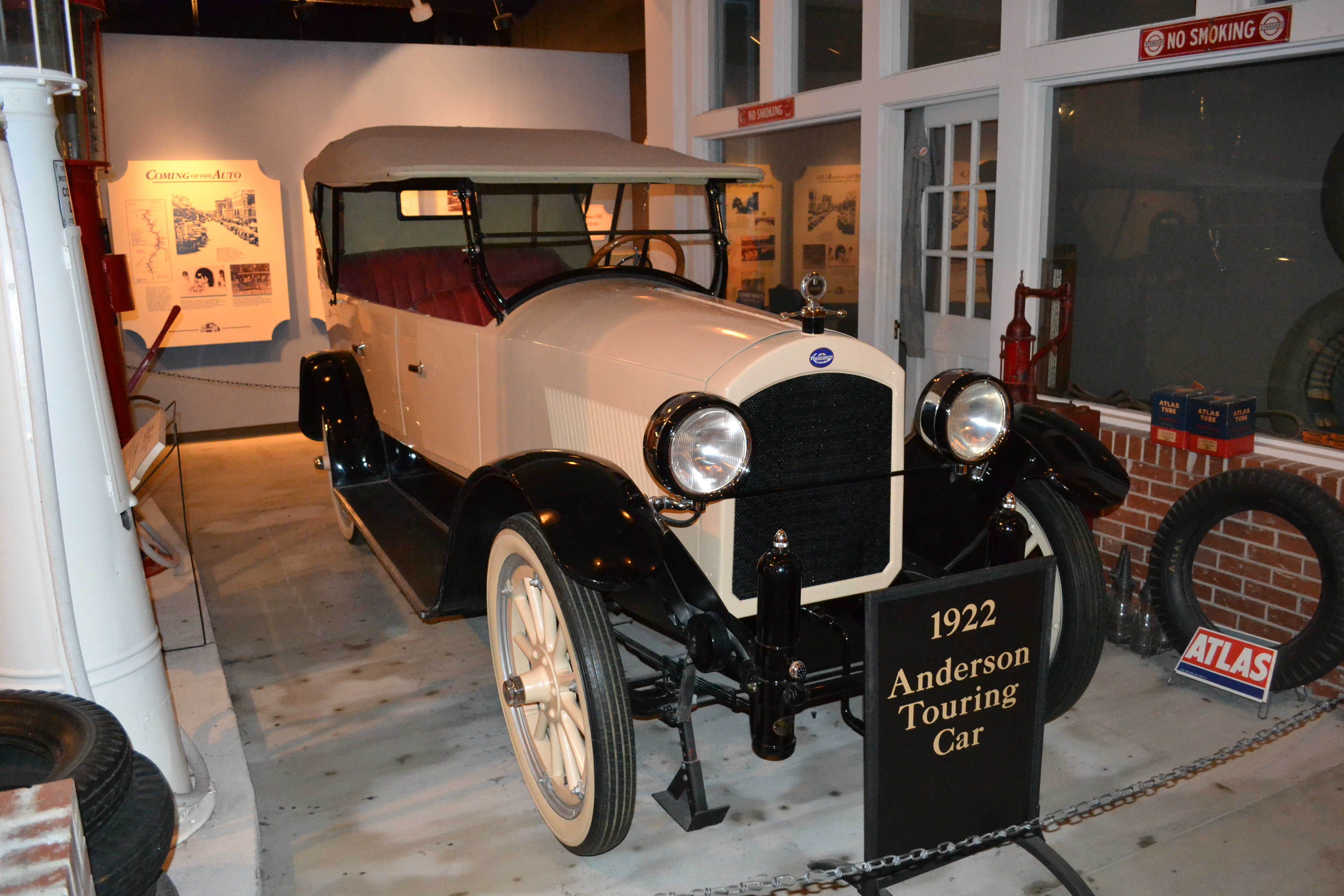
13. **Anderson Motor Car Co.**The transformation of the American economy from agrarian to industrial is perfectly encapsulated in the story of the Anderson Motor Car Co. Its founder, John Gary Anderson, initially operated a successful buggy factory in Rock Hill, South Carolina. However, with keen foresight, Anderson recognized the inevitable decline of horse-drawn transportation as the 20th century progressed. By 1915, he made the bold strategic decision to convert his established enterprise into an automotive business, fully embracing the future of mobility.
Anderson’s commitment to this new venture was comprehensive. He personally traveled to Detroit, then rapidly solidifying its reputation as the nation’s automotive hub, to meticulously study the organizational structures and production methodologies of its burgeoning automobile factories. Armed with this knowledge, the visionary Anderson returned to Rock Hill with an ambitious goal: to transform his hometown into nothing less than the “Detroit of the South.” His efforts included establishing dealerships across the Southern states, and strategically expanding his reach to major Northern cities such as Cleveland, Detroit, Boston, and New York City. His global ambition saw the Anderson brand even venturing into international markets like England, China, and Australia.
Despite his expansive vision and tireless efforts, Anderson’s dream ultimately foundered. His vehicles, while well-intentioned, were priced too high for the average customer in a market that was increasingly shifting towards affordability. An attempt to introduce a lower-cost, aluminum-bodied model to stimulate sales proved unsuccessful, unable to gain sufficient traction. Faced with these persistent market challenges and unable to achieve sustainable volume, Anderson Motor Car Co. ceased manufacturing automobiles in 1924, a testament to the brutal realities of competition in a rapidly evolving industry.
Read more about: Roles of a Lifetime: 15 Actors and Their Career-Defining Films

14. **Elkhart Carriage and Motor Car Co., Elcar Motor Co.**The story of Elkhart Carriage and Motor Car Co., later known as Elcar Motor Co., unfolds in Elkhart, Indiana, spanning a period from 1915 to 1934. This company carved out a distinctive niche for itself by producing the Elcar automobile, which earned a reputation as one of America’s best-made assembled automobiles during the dynamic early decades of the 20th century. Its commitment to quality in a segment often characterized by varying standards set it apart.
Crucially, the company’s strategic involvement in the burgeoning taxicab sector proved to be a lifeline, especially during the darkest days of the Great Depression. While the wider assembled-car industry buckled under the unprecedented economic downturn, the consistent demand for reliable, robust taxis for urban transportation provided a vital source of revenue and, perhaps more importantly, kept many people employed. This diversification into commercial fleet services offered a degree of resilience that many purely consumer-focused manufacturers lacked.
However, even the pragmatic strategy of catering to the taxi industry could not ultimately shield Elcar from the relentless and pervasive grip of America’s worst economic crisis. The sheer scale of the Great Depression, with its profound impact on consumer confidence, credit availability, and overall economic activity, eventually overwhelmed the company. Despite its quality products and adaptive business model, Elcar Motor Co. was regrettably unable to survive these monumental challenges, closing its operations in 1934, another casualty in the harsh reality of automotive history’s graveyard.
As we conclude our journey through the auto industry’s graveyard, it becomes strikingly clear that the path of automotive innovation is paved with both triumphs and tribulations. Each of these companies, whether a pioneer in flight-car hybrids, a purveyor of ultimate luxury, a resilient producer of urban workhorses, or a visionary attempting to decentralize manufacturing, contributed threads to the rich tapestry of American mobility. Their stories serve as enduring reminders of the fierce competition, rapid technological shifts, and the unforgiving economic forces that have shaped, and continue to shape, one of the nation’s most iconic industries. The ambitions, innovations, and ultimately, the demises of these once-prominent marques offer invaluable lessons for today’s automotive innovators, underscoring the relentless drive for evolution that defines this fascinating sector.