The landscape of modern warfare is undergoing a profound transformation, driven by an accelerating push towards autonomous systems. A significant stride in this evolution is the planned development of self-driving military vehicles, designed to undertake high-risk operations with unprecedented precision and efficiency. Leading this charge, BAE Systems, a prominent defense, security, and aerospace entity, has declared its intent to create such a vehicle, signaling a new era for defense technology and promising enhanced capabilities for military forces globally.
While the concept of autonomous military vehicles has been explored by various nations, BAE Systems’ recent initiative represents a targeted and focused effort. This endeavor is not merely about general autonomy; it is specifically aimed at designing platforms capable of executing inherently dangerous missions without human intervention. By integrating advanced artificial intelligence, sophisticated sensors, and cutting-edge robotics, these self-driving vehicles are poised to redefine the execution of perilous tasks on the battlefield, moving from theoretical possibility to tangible operational reality.
This groundbreaking project underscores the transformative potential of autonomous technology, particularly in shaping the future trajectory of modern warfare. It speaks to a broader trend within the defense industry to adapt to more complex, multi-domain threats by leveraging technological advancements. As these developments unfold, they promise not only to alter the mechanics of military engagement but also to necessitate a rethinking of strategic planning and operational deployment paradigms.
1. The Transformative Potential of Autonomous Military Vehicles
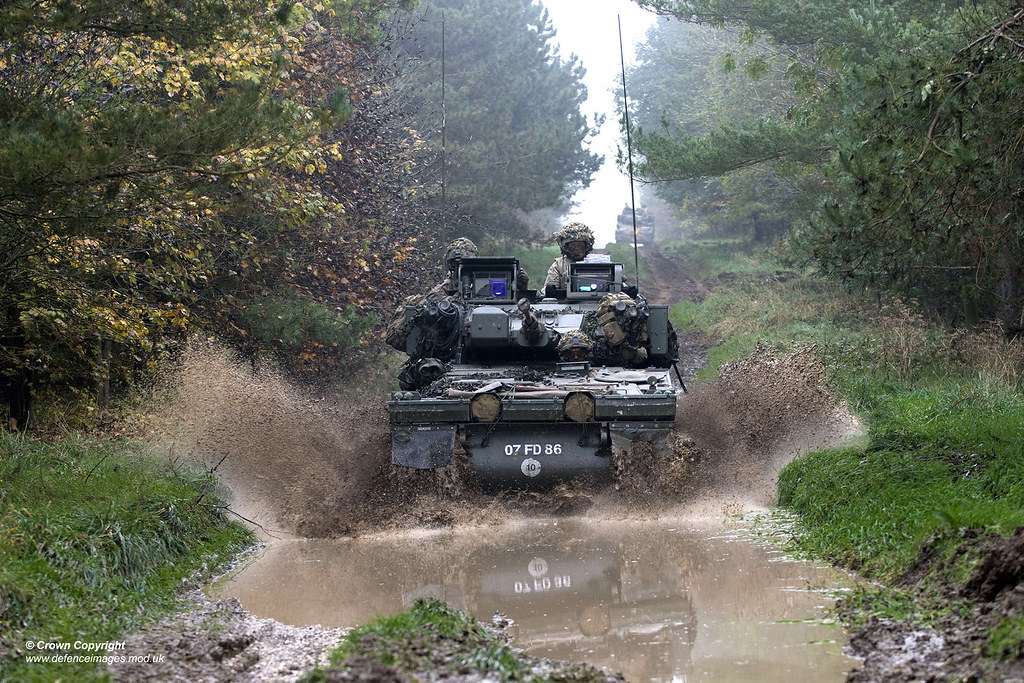
The emergence of self-driving military vehicles marks a pivotal moment in defense innovation, signaling a fundamental shift in how armed forces approach their operational challenges. This new type of autonomous vehicle is poised to revolutionize military operations by enhancing capabilities and significantly mitigating risks in complex environments. The core promise lies in its ability to conduct high-risk operations where human presence is either too dangerous or impractical, thereby expanding the scope and safety of military interventions.
This development is not an isolated incident but rather a clear reflection of a broader, urgent trend within the defense industry. There is a growing imperative to adapt battlefield vehicles for increasingly complex, multi-domain threats, ranging from advanced drones to sophisticated electronic warfare systems and autonomous adversaries. The integration of self-driving capabilities into military platforms is thus a strategic response to these evolving challenges, aiming to maintain a tactical advantage.
The collaborative efforts, such as those between BAE Systems and Forterra, or Textron Systems and Kodiak Robotics, exemplify this transformative drive. These partnerships are fast-tracking the development cycles, compressing what traditionally took years into a pace more akin to commercial technology adoption. This acceleration is crucial for enabling the Army to maintain its dominance on any battlefield, providing tangible options that empower modern military forces.
Ultimately, the transformative potential extends beyond specific missions, impacting the entire ecosystem of defense operations. It heralds a future where military innovation is characterized by rapid integration, modularity, and an unwavering focus on operational effectiveness and personnel safety, setting a new benchmark for what is achievable in defense technology.
Military equipment: Unmanned aerial vehicle
Categories: All Wikipedia articles written in American English, All articles containing potentially dated statements, All articles with dead external links, All articles with incomplete citations, All articles with unsourced statements
Summary: An unmanned aerial vehicle (UAV) or unmanned aircraft system (UAS), commonly known as a drone, is an aircraft with no human pilot, crew, or passengers on board, but rather is controlled remotely or is autonomous. UAVs were originally developed through the twentieth century for military missions too “dull, dirty or dangerous” for humans, and by the twenty-first, they had become essential assets to most militaries. As control technologies improved and costs fell, their use expanded to many non-military applications. These include aerial photography, area coverage, precision agriculture, forest fire monitoring, river monitoring, environmental monitoring, weather observation, policing and surveillance, infrastructure inspections, smuggling, product deliveries, entertainment and drone racing.
Get more information about: Unmanned aerial vehicle
Read more about: Beyond the Headlines: Unpacking Ford’s Enduring Legacy of Innovation, Resilience, and Global Impact

2. Minimizing Human Risk in High-Hazard Zones
One of the most compelling advantages underpinning the development of self-driving military vehicles is their inherent capacity to significantly minimize human risk in hazardous environments. The fundamental design premise allows these autonomous platforms to venture into hostile territories, gather vital intelligence, or even engage in direct combat operations without requiring human personnel to be physically present. This capability profoundly enhances the safety protocols for military staff, moving them out of immediate harm’s way during the most perilous missions.
The removal of onboard personnel liberates military planners to devise more agile and flexible mission strategies. Commanders can deploy these vehicles into situations that would otherwise be deemed too dangerous for crewed operations, expanding the tactical options available for reconnaissance, surveillance, and engagement. This strategic shift not only protects lives but also potentially reduces the moral and psychological burden on soldiers who might otherwise be forced into life-threatening scenarios.
An exemplar of this principle is Textron Systems’ RIPSAW M3 vehicle, equipped with the Kodiak Driver. This rugged and reliable uncrewed robotic ground vehicle is explicitly “designed to keep service members out of harm’s way while meeting the mission of today’s military.” Similarly, adding autonomy to vehicles like the Armored Multi-Purpose Vehicle (AMPV) could broaden its utility in high-risk missions such as resupply and casualty evacuation, further safeguarding crews.
The overarching objective is clear: to create tools that allow for the execution of complex and high-risk missions while simultaneously providing a critical mechanism for “keeping personnel out of harm’s way.” This dual benefit of enhanced mission capability and improved safety for human operators represents a cornerstone of the ongoing investment and innovation in autonomous military technology.
Military equipment: Hazard
Categories: All articles with unsourced statements, Articles with Encyclopædia Britannica links, Articles with excerpts, Articles with short description, Articles with unsourced statements from June 2017
Summary: A hazard is a potential source of harm. Substances, events, or circumstances can constitute hazards when their nature would potentially allow them to cause damage to health, life, property, or any other interest of value. The probability of that harm being realized in a specific incident, combined with the magnitude of potential harm, make up its risk. This term is often used synonymously in colloquial speech.
Hazards can be classified in several ways which are not mutually exclusive. They can be classified by causing actor (for example, natural or anthropogenic), by physical nature (e.g. biological or chemical) or by type of damage (e.g., health hazard or environmental hazard). Examples of natural disasters with highly harmful impacts on a society are floods, droughts, earthquakes, tropical cyclones, lightning strikes, volcanic activity and wildfires. Technological and anthropogenic hazards include, for example, structural collapses, transport accidents, accidental or intentional explosions, and release of toxic materials.
The term climate hazard is used in the context of climate change. These are hazards that stem from climate-related events and can be associated with global warming, such as wildfires, floods, droughts, sea level rise. Climate hazards can combine with other hazards and result in compound event losses (see also loss and damage). For example, the climate hazard of heat can combine with the hazard of poor air quality. Or the climate hazard flooding can combine with poor water quality.
In physics terms, common theme across many forms of hazards is the presence of energy that can cause damage, as it can happen with chemical energy, mechanical energy or thermal energy. This damage can affect different valuable interests, and the severity of the associated risk varies.
Get more information about: Hazard

3. Unparalleled Precision and Operational Efficiency
Beyond the critical advantage of human risk reduction, self-driving military vehicles are distinguished by their unparalleled precision and efficiency in executing complex tasks. These advanced platforms are outfitted with state-of-the-art navigation systems and sophisticated real-time data processing capabilities, enabling them to operate with a degree of accuracy and speed previously unattainable by human-crewed systems in certain contexts. This technological edge is crucial for navigating challenging terrains and responding effectively to dynamic battlefield situations.
The ability of these vehicles to swiftly identify potential threats and react with remarkable speed and accuracy allows military forces to achieve objectives more successfully. This precision extends to minimizing collateral damage, a paramount concern in modern engagements, while simultaneously maximizing overall operational effectiveness. The integration of advanced sensors and artificial intelligence ensures that autonomous vehicles can perceive their environment comprehensively and make rapid, calculated decisions, outperforming human reaction times in high-stress scenarios.
For instance, the Kodiak Driver-equipped RIPSAW M3 vehicle is explicitly capable of executing a wide array of high-risk military missions, including reconnaissance, surveillance, and tactical maneuvers. Its operational range spans “across a wide range of terrain types, from highways to dirt roads to fully cross-country,” demonstrating a versatile and robust capability that underscores its operational efficiency and precision in diverse environments. Such adaptability is vital for the unpredictability of military operations.
Furthermore, the autonomy system’s ability to combine human-driven planning with safety controls, as seen in Kodiak’s Assisted Autonomy technology, ensures safe operations while enabling human intervention for mission-critical tasks. This hybrid approach leverages the best of both worlds, securing the precision of autonomous systems with the strategic insight and flexibility of human oversight, ultimately enhancing the reliability and effectiveness of uncrewed operations.
Military equipment: M982 Excalibur
Name: M982 Excalibur
Origin: Sweden, United States
Type: Cannon-launched guided projectile
IsRanged: true
IsExplosive: true
IsArtillery: true
IsMissile: true
UsedBy: #Operators
Manufacturer: BAE Systems Bofors,Raytheon Missiles & Defense
UnitCost: undefined
Weight: cvt
Length: cvt
Diameter: 155 mm
Abbr: on range)
Caliber: 155 mm
MaxRange: Increment Ia-1:,cvt,Increment Ia-2/Ib:,cvt,cvt,Extended Range Cannon Artillery
Filling: Polymer-bonded explosive
FillingWeight: 5.4 kg
Guidance: GPS,inertial navigation
Accuracy: 20 m
Categories: 155 mm artillery shells, All Wikipedia articles needing clarification, All articles with unsourced statements, Articles with short description, Articles with unsourced statements from July 2024
Summary: The M982 Excalibur (previously XM982) is a 155 mm extended-range guided artillery shell developed in a collaborative effort between the U.S. Army Research Laboratory (ARL) and the United States Army Armament Research, Development and Engineering Center (ARDEC). The Excalibur was developed and/or manufactured by prime contractor Raytheon Missiles & Defense, BAE Systems AB (BAE Systems Bofors) and other subs and primes in multiple capacities such as Camber Corporation and Huntington Ingalls Industries. It is a GPS and inertial-guided munition capable of being used in close support situations within 75–150 meters (250–490 ft) of friendly troops or in situations where targets might be prohibitively close to civilians to attack with conventional unguided artillery fire. In 2015, the United States planned to procure 7,474 rounds with a FY 2015 total program cost of US$1.9341 billion at an average cost of US$258,777 per unit. By 2016, unit costs were reduced to US$68,000 per round. Versions that add laser-guidance capability and are designed to be fired from naval guns began testing in 2015. By October 2018, over 1,400 rounds had been fired in combat.
Get more information about: M982 Excalibur
Read more about: Will This 30-Year-Old Military Backhoe Start? Decoding the Extreme Engineering That Makes These Beasts Indestructible!

4. Strategic Streamlining of Logistics and Support
The transformative potential of self-driving military vehicles extends significantly beyond direct combat operations, offering substantial benefits in streamlining logistics and support functions. Autonomous supply convoys, for example, can be deployed to transport critical equipment, essential provisions, and vital medical supplies over extensive distances. This capability liberates valuable manpower that would otherwise be dedicated to convoy operations, allowing personnel to be reallocated to other critical tasks that require human judgment or specialized skills.
The efficiency gained from autonomous logistics can have a profound impact on the sustainability and responsiveness of military operations. By automating the movement of supplies, military forces can ensure a more consistent and timely flow of resources to front-line units, even in contested or dangerous areas. This reduces the logistical burden and enhances the overall resilience of supply chains, which are often targets in modern conflicts.
Moreover, these autonomous vehicles are not limited to transport; they can also be strategically deployed for a variety of reconnaissance, surveillance, and scouting missions. By conducting these operations, they provide commanders with invaluable situational awareness and real-time data, which are critical for informed decision-making. This constant flow of intelligence, gathered without risking human scouts, significantly enhances strategic planning and tactical execution.
In essence, the logistical and support advantages of self-driving military vehicles contribute to a more optimized and resource-efficient military posture. They underscore how autonomous technology can serve as a force multiplier, not just in direct engagement but across the entire spectrum of military operations, ensuring that resources are where they are needed, when they are needed, with minimal risk to personnel.
Military equipment: Defense Logistics Agency
AgencyName: Defense Logistics Agency
Seal: Seal of the Defense Logistics Agency.svg
SealWidth: 160px
SealCaption: The Defense Logistics Agency’s emblem
Formed: [object Object]
Headquarters: Fort Belvoir,Virginia
Employees: 26,000
Chief1Name: Mark Simerly
Chief1Position: Director
Chief2Name: Brad Bunn
Chief2Position: Vice Director
ParentDepartment: Assistant Secretary of Defense for Sustainment
Website: http://www.dla.mil|dla.mil
Categories: 1961 establishments in Washington, D.C., All articles needing additional references, All articles that may contain original research, Articles needing additional references from October 2022, Articles that may contain original research from June 2023
Summary: The Defense Logistics Agency (DLA) is a combat support agency in the United States Department of Defense. The agency is staffed by more than 26,000 civilian and military personnel throughout the world. Located in 48 states and 28 countries, DLA provides supplies to the military services and supports their acquisition of weapons, fuel, repair parts, and other materials. The agency also disposes of excess or unusable equipment through various programs.
Through other U.S. federal agencies, DLA also provides relief supplies to victims of natural disasters and humanitarian aid to refugees and internally displaced persons.
Get more information about: Defense Logistics Agency
Read more about: Will This 30-Year-Old Military Backhoe Start? Decoding the Extreme Engineering That Makes These Beasts Indestructible!
5. The BAE Systems and Forterra Alliance for Autonomous AMPV
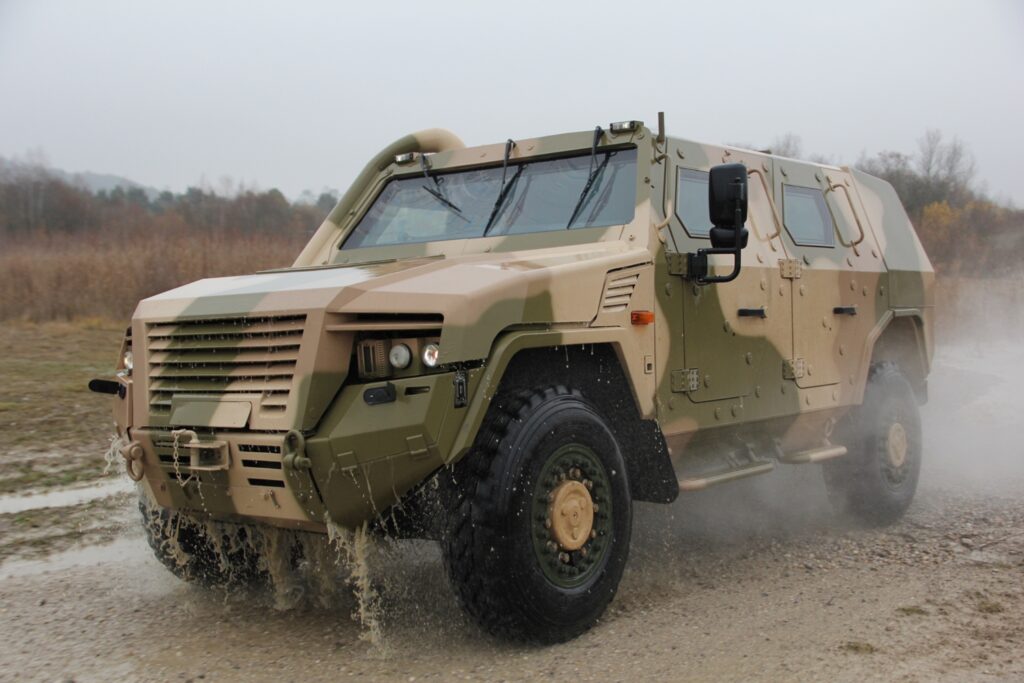
A significant illustration of the defense industry’s accelerating commitment to autonomous technology is the strategic partnership between BAE Systems and Forterra. This collaboration is specifically aimed at expediting the development of a self-driving variant of the U.S. Army’s Armored Multi-Purpose Vehicle (AMPV). This initiative stands as the inaugural external partnership under BAE’s recently unveiled “capability kit” modernization strategy, highlighting a focused effort to integrate advanced autonomy into existing combat platforms.
The ambitious timeline for this project is particularly noteworthy: a prototype of an autonomous AMPV is slated for delivery by 2026, followed by a comprehensive demonstration. This compressed development cycle, moving at a pace closer to that of commercial technology, signifies a departure from traditionally protracted defense procurement processes. Such urgency reflects the defense industry’s heightened awareness of the necessity to quickly adapt battlefield vehicles for increasingly complex and multi-domain threats.
Bill Sheehy, BAE’s ground maneuver product line director, articulated the pragmatic nature of this partnership, stating, “This partnership isn’t about buzzwords — it’s about rolling up our sleeves and presenting tangible options that empower the Army to maintain its dominance on any battlefield.” This statement underscores a clear, results-oriented approach focused on delivering practical, operational advantages to military forces.
The AMPV itself is a tracked vehicle designed to supersede the decades-old M113 family of vehicles, serving as a critical component of the Army’s Armored Brigade Combat Teams alongside BAE-manufactured Bradley Infantry Fighting Vehicles and Paladin self-propelled howitzers. The integration of autonomy into such a foundational platform promises to expand its utility in high-risk missions like resupply and casualty evacuation, thereby further safeguarding crews and enhancing operational flexibility.
Military equipment: Avenger Weapon System
Manufacturer: Boeing
Service: Marine Corps, Army
Engine: Detroit Diesel V-8
Speed: 55 mph
Range: 275 miles
Armament: 8x FIM-92 Stinger missiles
Categories: Army Equipment, Army Weapons, Marine Corps Equipment, Marine Corps Weapons, Weapons
Get more information about: Avenger Weapon System
6. Forterra’s AutoDrive System and the “Capability Kit” Approach
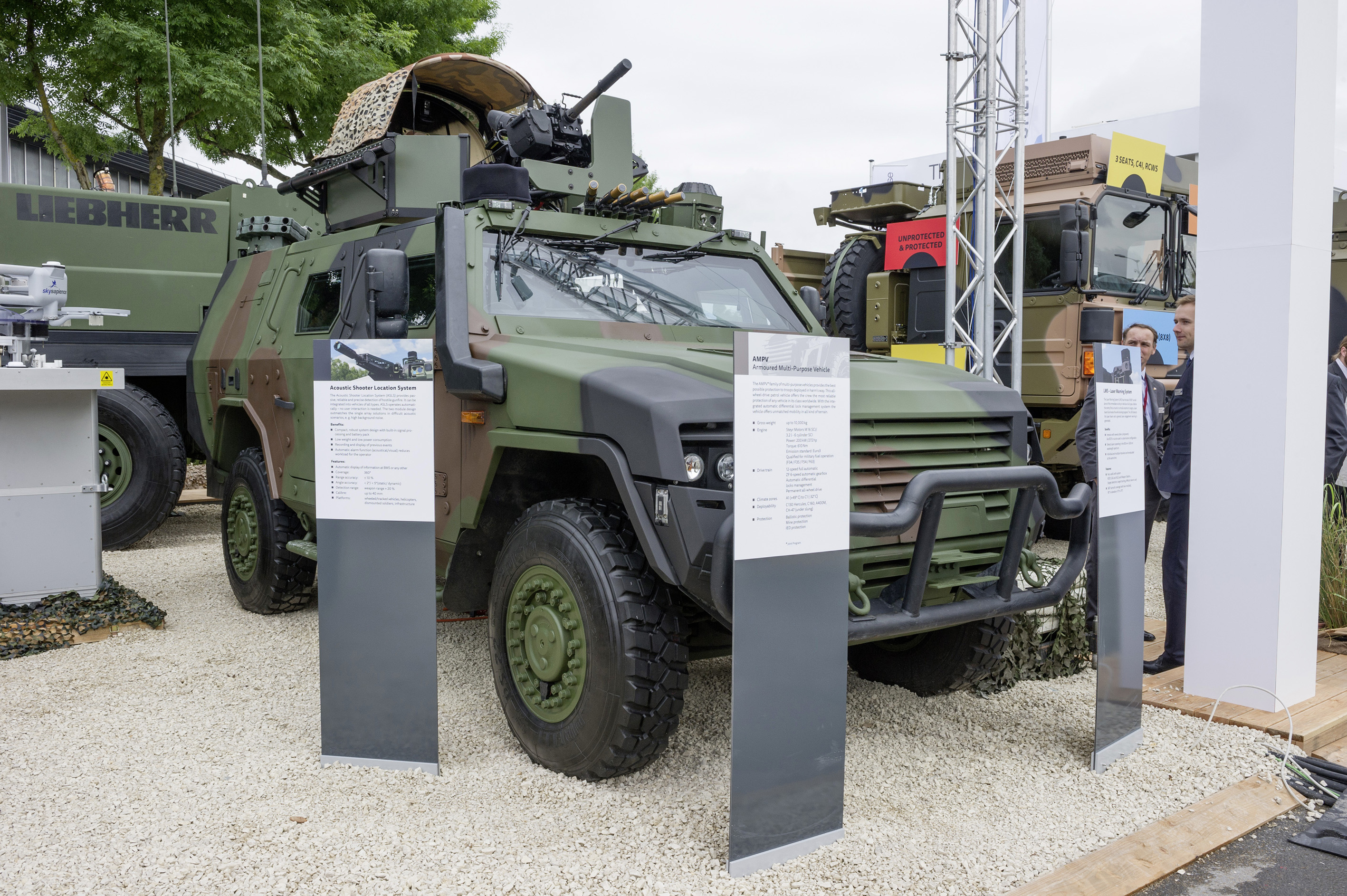
Central to the BAE Systems-Forterra collaboration is Forterra’s sophisticated AutoDrive system, a modular, full-stack autonomous driving platform. This system is not merely theoretical; it has already been successfully fielded on multiple vehicle types, demonstrating its proven capability and reliability. Its application to the AMPV represents a crucial step in extending advanced autonomy to a key military ground vehicle, leveraging commercial-grade technology for defense applications.
A key architectural advantage of the AutoDrive software is its open architecture design, which is specifically engineered for interoperability across various platforms. This feature is paramount for the Army, as it enables the seamless integration of diverse payloads and missions far beyond the initial scope of the AMPV. Such flexibility ensures that the autonomous system can evolve and adapt to future operational requirements and technological advancements, preventing obsolescence.
Patrick Acox, Forterra’s vice president of defense growth, emphasized this strategic value, noting, “AutoDrive is a pathway to stronger networks and smarter operations, providing the necessary infrastructure to support the AMPV capability kit.” This highlights how the system is not just about driving but about building a robust foundation for networked, intelligent military operations. The partnership, by combining BAE’s combat vehicle production experience with Forterra’s software and autonomy stack, aims to give the Army “the edge they deserve.”
This initiative aligns perfectly with the Pentagon’s broader directive for defense contractors to accelerate delivery times and design modular systems. The Army’s vision for “capability kits” — described as bolt-on technology packages that can be rapidly developed and integrated — aims to keep vehicles perpetually relevant against emerging threats. The collaboration on the autonomous AMPV, powered by AutoDrive, directly embodies this forward-looking strategy, showcasing how rapid, modular enhancements can significantly upgrade existing platforms for future challenges.
Military equipment: Avenger Weapon System
Manufacturer: Boeing
Service: Marine Corps, Army
Engine: Detroit Diesel V-8
Speed: 55 mph
Range: 275 miles
Armament: 8x FIM-92 Stinger missiles
Categories: Army Equipment, Army Weapons, Marine Corps Equipment, Marine Corps Weapons, Weapons
Get more information about: Avenger Weapon System
7. The Textron Systems and Kodiak Robotics Collaboration on RIPSAW M3
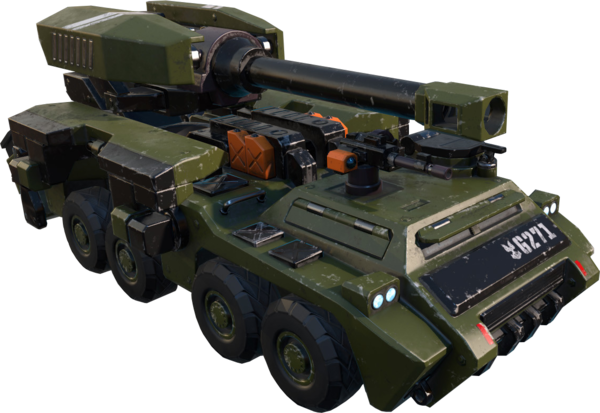
Shifting our analytical lens to another pivotal development, the defense industry continues its rapid integration of autonomous capabilities through strategic partnerships. Textron Systems Corporation, a seasoned developer of uncrewed ground vehicles, has recently forged a notable collaboration with Kodiak Robotics, a leader in self-driving technology. Their joint endeavor has seen the successful integration of the Kodiak Driver, Kodiak’s advanced self-driving system, into Textron Systems’ formidable RIPSAW M3 vehicle, marking a significant stride in uncrewed military ground operations.
This partnership underscores a shared vision to accelerate the introduction of automation into military ground vehicles, with an explicit objective to safeguard military personnel. The RIPSAW M3, when equipped with the Kodiak Driver, is conceptualized as a rugged and reliable uncrewed robotic ground platform designed fundamentally to “keep service members out of harm’s way while meeting the mission of today’s military.” This proactive approach reflects a critical adaptation to the evolving demands of modern warfare, where minimizing human exposure to peril is paramount.
The unique versatility and reliability of Kodiak’s autonomous system are profoundly demonstrated through its integration into the RIPSAW M3. This particular application stands out as the first autonomous tracked vehicle on which Kodiak has collaborated, and notably, the first Kodiak Driver-equipped vehicle expressly designed without onboard accommodation for human presence. Such a design choice signals a definitive move towards fully autonomous mission execution, enabling unprecedented levels of operational freedom in high-risk scenarios.
Textron Systems and Kodiak Robotics are not merely engaged in a singular project; their collaboration is forward-looking, with intentions to “jointly explore future opportunities with both the U.S. Department of Defense and the militaries of allied nations.” This global perspective highlights the potential for widespread adoption of this transformative technology, ensuring that advanced automation becomes a cornerstone of defense strategies across international partners seeking to enhance their capabilities.
Military equipment: M2/M3 Bradley Fighting Vehicle
Manufacturer: BAE Systems
Service: US Army
Engine: Cummins VTA-903T diesel
Armament: 25 mm M242 chain gun; TOW anti-tank missile; 7.62 mm M240C machine gun
Crew: 3 crew, 6-man infantry squad
Range: 300 miles
Speed: 41 mph
The Bradley Fighting Vehicle family currently consists of two vehicles: the M2 Infantry Fighting Vehicle and the M3 Cavalry Fighting Vehicle. Just as with its predecessor, the M113 family, the Bradley will eventually be the platform for a wide range of support vehicles.
Categories: Military Vehicles, Army Vehicles, Fighting Vehicles, Army Equipment
Get more information about: M2/M3 Bradley Fighting Vehicle
8. The Kodiak Driver: A Versatile Autonomous System
At the core of the Textron Systems-Kodiak collaboration lies the Kodiak Driver, an autonomous system engineered for exceptional capability and flexibility across diverse operational domains. Kodiak’s founder and CEO, Don Burnette, asserts that it is “the world’s most capable and flexible autonomous system,” distinguishing itself by its ability to navigate “everywhere, from on-highway to off-road,” a versatility that provides substantial value to defense, trucking, and industrial sectors alike.
This robust capability is underpinned by an advanced perception system that enables the Kodiak Driver to meticulously identify its surroundings, accurately recognize drivable surfaces, and subsequently navigate the vehicle with a sophistication akin to human-like decision-making. This sophisticated understanding of the environment allows for seamless operation across a wide spectrum of terrain types, encompassing everything from structured highways to challenging dirt roads and entirely cross-country environments. Such adaptability is crucial for the unpredictable nature of military engagements.
The real-world efficacy of the Kodiak Driver is not confined to theoretical models; its underlying technology stack has been rigorously tested and proven in commercial applications. This identical system has successfully delivered freight without a human driver in the demanding Permian Basin of West Texas, accumulating over 3.5 million miles and executing more than 6,000 loads for prominent names within the trucking industry. This extensive commercial validation underscores the system’s reliability and readiness for deployment in critical military contexts, demonstrating a clear dual-use advantage.
Military equipment: Avenger Weapon System
Manufacturer: Boeing
Service: Marine Corps, Army
Engine: Detroit Diesel V-8
Speed: 55 mph
Range: 275 miles
Armament: 8x FIM-92 Stinger missiles
Categories: Army Equipment, Army Weapons, Marine Corps Equipment, Marine Corps Weapons, Weapons
Get more information about: Avenger Weapon System
9. DefensePods: Modular Hardware for Robust Autonomy
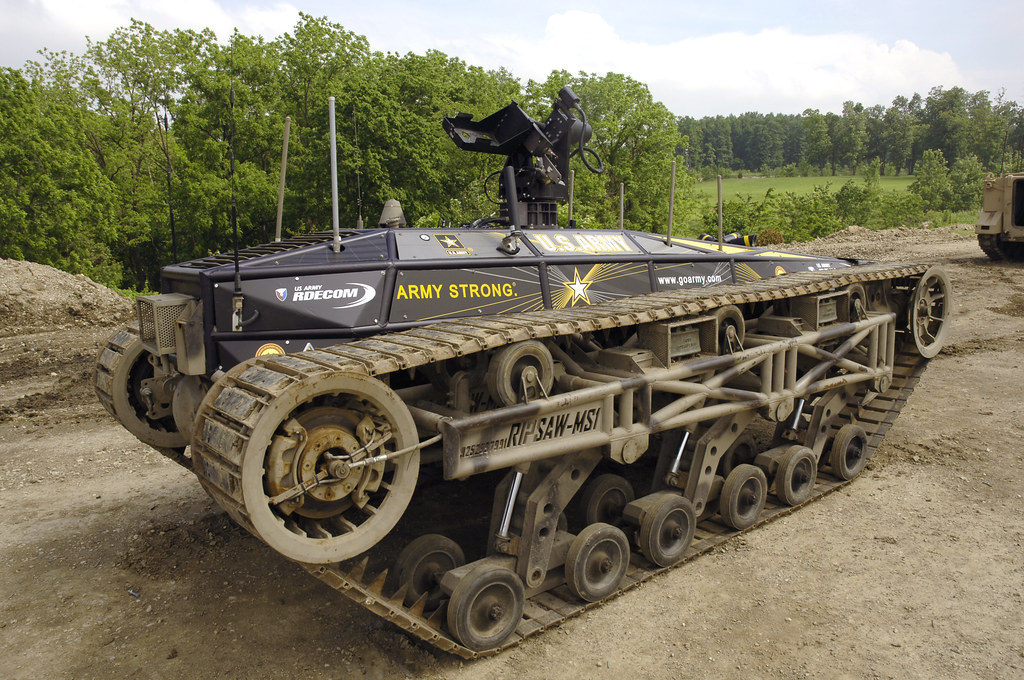
Integral to the robust implementation of Kodiak’s autonomous technology within military platforms like the RIPSAW M3 are its innovative DefensePods. These represent an adapted, military-grade version of Kodiak’s modular, swappable SensorPods, meticulously designed to meet the rigorous demands of battlefield environments. Their strategic integration into each corner of the RIPSAW M3 vehicle is deliberate, aiming to secure comprehensive 360-degree visibility while simultaneously maintaining a critical low profile, thereby enhancing stealth and survivability.
The design philosophy behind DefensePods prioritizes both performance and logistical efficiency. Each pod is a pre-calibrated, pre-built hardware enclosure, housing all the necessary sensors for autonomous driving. This modularity not only simplifies initial deployment but also ensures exceptional maintainability in the field. Should a pod be damaged or require an upgrade, it can be “easily swappable in the field in 10 minutes or less, using standard tools and with minimal training.” This rapid replacement capability is vital for sustaining operational readiness in dynamic and often austere military conditions.
Such an emphasis on modularity and ease of maintenance is a direct response to the inherent challenges of military operations, where specialized technical support may be limited, and speed of repair is paramount. This design guarantees that the Kodiak Driver-equipped RIPSAW M3 can remain operational and effective, even when confronted with the most challenging environmental or tactical scenarios, thereby reducing downtime and increasing mission success rates. The ability to quickly replace components ensures the system’s resilience and longevity in the theater of operations.
Military equipment: Dassault Rafale
Name: Rafale
Caption: French Air Force
Categories: 1980s French fighter aircraft, 4.5-generation jet fighters, Aircraft first flown in 1986, All articles containing potentially dated statements, All articles with unsourced statements
Summary: The Dassault Rafale (French pronunciation: [ʁafal], literally meaning “gust of wind”, or “burst of fire” in a more military sense) is a French twin-engine, canard delta wing, multirole fighter aircraft designed and built by Dassault Aviation. Equipped with a wide range of weapons, the Rafale is intended to perform air supremacy, interdiction, aerial reconnaissance, ground support, in-depth strike, anti-ship strike and nuclear deterrence missions. It is referred to as an “omnirole” aircraft by Dassault.
In the late 1970s, the French Air Force and French Navy sought to replace and consolidate their existing fleets of aircraft. In order to reduce development costs and boost prospective sales, France entered into an arrangement with the UK, Germany, Italy and Spain to produce an agile multi-purpose “Future European Fighter Aircraft” (which would become the Eurofighter Typhoon). Subsequent disagreements over workshare and differing requirements led France to pursue its own development programme. Dassault built a technology demonstrator that first flew in July 1986 as part of an eight-year flight-test programme, paving the way for approval of the project.
The Rafale is distinct from other European fighters of its era in that it is almost entirely built by one country, France, involving most of France’s major defence contractors, such as Dassault, Thales and Safran. Many of the aircraft’s avionics and features, such as direct voice input, the RBE2 AA active electronically scanned array (AESA) radar and the optronique secteur frontal infra-red search and track (IRST) sensor, were domestically developed and produced for the Rafale programme. Originally scheduled to enter service in 1996, the Rafale suffered significant delays due to post-Cold War budget cuts and changes in priorities. There are three main variants: Rafale C single-seat land-based version, Rafale B twin-seat land-based version, and Rafale M single-seat carrier-based version.
Introduced in 2001, the Rafale is being produced for both the French Air Force and for carrier-based operations in the French Navy. It has been marketed for export to several countries, and was selected for purchase by the Egyptian Air Force, the Indian Air Force, the Indian Navy, the Qatar Air Force, the Hellenic Air Force, the Croatian Air Force, the Indonesian Air Force, the United Arab Emirates Air Force and the Serbian Air Force. The Rafale is considered one of the most advanced and capable warplanes in the world, and among the most successful internationally. It has been used in combat over Afghanistan, Libya, Mali, Iraq, Syria, and by India near its border with Pakistan.
Get more information about: Dassault Rafale

10. Assisted Autonomy: Blending AI with Human Oversight
Recognizing the dynamic and often unpredictable nature of military ground missions, Kodiak has incorporated its unique Assisted Autonomy technology into its systems, including the RIPSAW M3. This innovative approach transcends pure autonomy by skillfully combining advanced self-driving capabilities with “human-in-the-loop path planning,” creating a hybrid system that leverages the strengths of both artificial intelligence and human strategic insight. It represents a nuanced understanding that while AI excels in specific tasks, human judgment remains indispensable for novel or highly complex situations.
Assisted Autonomy ingeniously melds the best attributes of remote autonomy assistance and remote driving. This allows soldiers to “seamlessly control a vehicle remotely when necessary,” effectively mitigating the inherent risk that autonomous vehicles might become disabled or encounter insurmountable challenges in unfamiliar or rapidly evolving environments. This human intervention capability serves as a critical safety net and an enhancement to operational flexibility, ensuring that missions can proceed even when full autonomous function faces unforeseen obstacles.
When operating under the Assisted Autonomy paradigm, the system masterfully integrates human-driven planning with the robust safety controls embedded within the Kodiak Driver. This synergistic combination ensures that operations remain safe and compliant with overarching mission objectives, while concurrently enabling human operators to exercise critical intervention for tasks that demand strategic oversight, ethical judgment, or an intuitive understanding of complex tactical nuances. It exemplifies a forward-thinking design philosophy that acknowledges the symbiotic relationship between advanced technology and human expertise in high-stakes military contexts.
Military equipment: Artificial intelligence arms race
Abovestyle: background-color:#C3D6EF;font-size:110%
Above: Artificial intelligence arms race
Subheader: Artificial Intelligence Cold War,Second Cold War
Subheaderstyle: background-color:#DCDCDC
Photo1a: 231105-1 TSMC Fab 21 construction.jpg
Photo1b: Sea Hunter gets underway on the Willamette River following a christening ceremony in Portland, Ore. (25702146834).jpg
Photo1c: Legged Squad Support System robot prototype.jpg
Position: center
Size: 325
Color: #0C0809
ColorBorder: #F8F9FA
Headerstyle: background-color:#C3D6EF;font-size:110%
Data1: Age in years, months, weeks and days
Subbox: true
Labelstyle: padding-right:1em;text-align:left
Datastyle: text-align:left
Label1: Date
Label2: Location
Data2: United States,China
Label3: Status
Data3: Artificial Intelligence Cold War,Artificial intelligence in industry,The United States leads in AI innovation through major tech companies.,Made in China 2025,Rising global competition for AI supremacy,Data security,Existential risk from artificial intelligence
Header4: Main competitors
Data5: India,Russia,Saudi Arabia
Header7: Key figures
Data8: Infobox/Columns,Donald Trump,flagicon,Barack Obama,flagicon,Sundar Pichai,flagicon,Sam Altman,flagicon,Andy Jassy,flagicon,Lisa Su,flagicon,Alexandr Wang
Header9: Major AI initiatives
Data10: flagicon,TSMC,Foxconn,Wistron,Pegatron
Header12: Investments
Data13: Infobox/Columns
Header14: Ethics of artificial intelligence
Data15: flagicon,Data Protection Act 2018,flagicon,General Data Protection Regulation
Data16: Regulation of artificial intelligence
Categories: 2010s in China, 2010s in Russia, 2010s in military history, 2010s in the United States, 2010s introductions
Summary: A military artificial intelligence arms race is an economic and military competition between two or more states to develop and deploy advanced AI technologies and lethal autonomous weapons systems (LAWS). The goal is to gain a strategic or tactical advantage over rivals, similar to previous arms races involving nuclear or conventional military technologies. Since the mid-2010s, many analysts have noted the emergence of such an arms race between superpowers for better AI technology and military AI, driven by increasing geopolitical and military tensions.
An AI arms race is sometimes placed in the context of an AI Cold War between the United States and China. Several influential figures and publications have emphasized that whoever develops artificial general intelligence (AGI) first could dominate global affairs in the 21st century. Russian President Vladimir Putin famously stated that the leader in AI will “rule the world.” Experts and analysts—from researchers like Leopold Aschenbrenner to institutions like Lawfare and Foreign Policy—warn that the AGI race between major powers like the U.S. and China could reshape geopolitical power. This includes AI for surveillance, autonomous weapons, decision-making systems, cyber operations, and more.
Get more information about: Artificial intelligence arms race
11. The Strategic Imperative: Accelerating Automation for Modern Warfare
The collaborations between defense giants and autonomy specialists, such as those involving BAE Systems-Forterra and Textron Systems-Kodiak, are more than mere technological advancements; they represent a profound strategic imperative within the defense industry. The accelerating pace of development, often described as operating “at the speed of relevance,” is a direct response to the increasing complexity and multi-domain nature of contemporary threats. This urgency is driven by a recognition that maintaining a tactical advantage necessitates rapid innovation and integration of advanced capabilities.
These partnerships are designed to present “tangible options that empower the Army to maintain its dominance on any battlefield,” as articulated by Bill Sheehy of BAE Systems. The emphasis is squarely on delivering practical, deployable solutions that can address challenges ranging from advanced drones to sophisticated electronic warfare systems and autonomous adversaries. The rapid prototyping and compressed development cycles, mirroring commercial technology adoption, are crucial for staying ahead of potential adversaries and ensuring military forces are equipped with cutting-edge tools.
Beyond domestic applications, the exploration of opportunities with allied nations underscores a global strategic vision. The intent to expand the deployment of these technologies internationally signifies a collective effort to enhance military capabilities across alliances, fostering interoperability and a shared technological advantage. This global perspective is critical for addressing shared security challenges and shaping the future trajectory of uncrewed warfare on an international scale.
This strategic acceleration of automation is not merely about incremental improvements but about redefining the very nature of military ground operations. It promises to unlock new tactical possibilities, enhance force protection, and streamline logistical processes, thereby offering a comprehensive advantage in an increasingly contested global security landscape. The commitment to rapid development and modularity ensures that these systems can evolve with emerging threats, maintaining their efficacy for years to come.
Military equipment: Cyberwarfare
Categories: All articles with dead external links, Articles with dead external links from April 2021, Articles with short description, CS1 German-language sources (de), Commons category link from Wikidata
Summary: Cyberwarfare is the use of cyber attacks against an enemy state, causing comparable harm to actual warfare and/or disrupting vital computer systems. Some intended outcomes could be espionage, sabotage, propaganda, manipulation or economic warfare.
There is significant debate among experts regarding the definition of cyberwarfare, and even if such a thing exists. One view is that the term is a misnomer since no cyber attacks to date could be described as a war. An alternative view is that it is a suitable label for cyber attacks which cause physical damage to people and objects in the real world.
Many countries, including the United States, United Kingdom, Russia, China, Israel, Iran, and North Korea, have active cyber capabilities for offensive and defensive operations. As states explore the use of cyber operations and combine capabilities, the likelihood of physical confrontation and violence playing out as a result of, or part of, a cyber operation is increased. However, meeting the scale and protracted nature of war is unlikely, thus ambiguity remains.
The first instance of kinetic military action used in response to a cyber-attack resulting in the loss of human life was observed on 5 May 2019, when the Israel Defense Forces targeted and destroyed a building associated with an ongoing cyber-attack.
Get more information about: Cyberwarfare

12. Ethical and Legal Considerations of Uncrewed Warfare
While the technological advancements in self-driving military vehicles present immense strategic advantages, their rapid development necessitates a rigorous examination of the profound ethical and legal implications they entail. The prospect of machines independently conducting high-risk operations, potentially involving the use of lethal force, raises fundamental questions that extend far beyond technical feasibility. These concerns are not peripheral; they are central to the responsible deployment and public acceptance of autonomous military technology.
Foremost among these considerations are the questions surrounding the exercise of lethal force and the extent of autonomous decision-making. The absence of “onboard personnel” and the system’s ability to “identify potential threats and react with remarkable speed and accuracy” compel a thorough deliberation on accountability frameworks. Who bears responsibility when an autonomous system makes a decision that results in unintended consequences or civilian casualties? International humanitarian law and the principles of distinction, proportionality, and necessity must be meticulously applied and adapted to this new paradigm of warfare.
Moreover, the implications for civilian populations demand careful attention. While proponents highlight the potential for minimizing collateral damage through unparalleled precision, the very nature of autonomous systems — operating without human emotion or biases — could paradoxically lead to different types of unforeseen ethical dilemmas. Establishing clear “ethical guidelines and regulatory frameworks to govern the deployment of autonomous military technology responsibly” is not merely a recommendation but an urgent imperative for BAE Systems, Textron Systems, Kodiak Robotics, Forterra, and other stakeholders within the defense industry.
Addressing these complex ethical and legal dimensions is paramount to ensuring that the development and deployment of self-driving military vehicles proceed in a manner that upholds human values and international norms. It requires ongoing dialogue among policymakers, ethicists, legal experts, and technology developers to craft robust governance structures. Only through such comprehensive and proactive engagement can the transformative potential of autonomous warfare be harnessed responsibly, safeguarding both military personnel and broader human dignity in future conflicts.
Military equipment: Unmanned aerial vehicle
Categories: All Wikipedia articles written in American English, All articles containing potentially dated statements, All articles with dead external links, All articles with incomplete citations, All articles with unsourced statements
Summary: An unmanned aerial vehicle (UAV) or unmanned aircraft system (UAS), commonly known as a drone, is an aircraft with no human pilot, crew, or passengers on board, but rather is controlled remotely or is autonomous. UAVs were originally developed through the twentieth century for military missions too “dull, dirty or dangerous” for humans, and by the twenty-first, they had become essential assets to most militaries. As control technologies improved and costs fell, their use expanded to many non-military applications. These include aerial photography, area coverage, precision agriculture, forest fire monitoring, river monitoring, environmental monitoring, weather observation, policing and surveillance, infrastructure inspections, smuggling, product deliveries, entertainment and drone racing.
Get more information about: Unmanned aerial vehicle
As the dawn of truly self-driving military vehicles ushers in a new era of defense capabilities, the journey ahead demands not just technological prowess but also profound foresight and unwavering ethical commitment. The fusion of artificial intelligence and advanced robotics promises to redefine the landscape of military operations, offering unprecedented advantages in minimizing human risk, enhancing precision, and optimizing logistics. Yet, this transformative power carries with it a solemn responsibility to navigate the complex ethical and legal terrain with utmost care. The partnerships driving this innovation are laying the groundwork for a future where strategic dominance is achieved not only through advanced machinery but also through a steadfast adherence to principled deployment, ensuring these intelligent systems serve humanity responsibly amidst the complexities of conflict. The dialogue must continue, evolving as swiftly as the technology itself, to ensure that the future of uncrewed warfare remains anchored in humanity’s highest ethical standards.