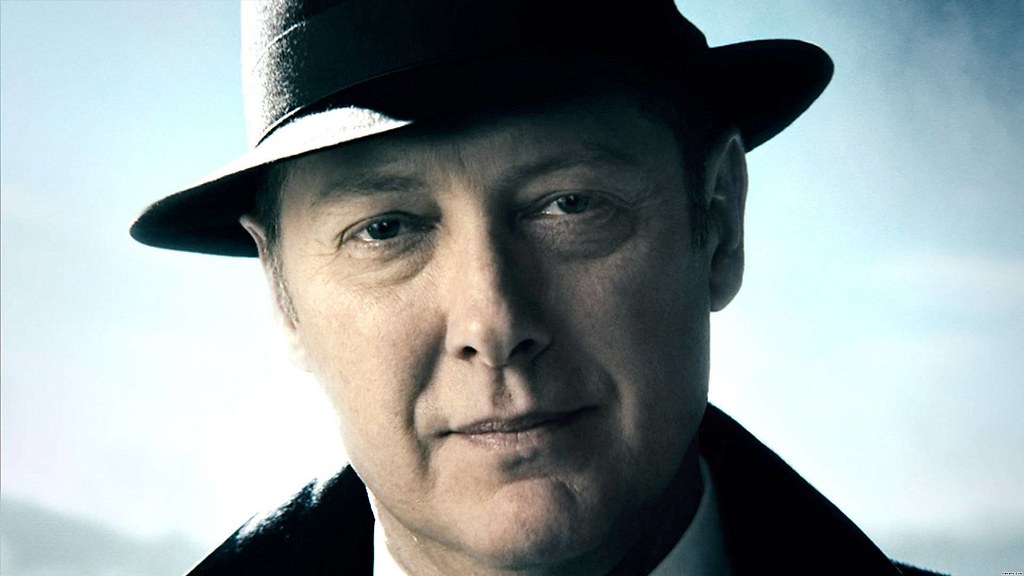
The Blacklist. What a ride, right? Ten seasons, hundreds of Blacklisters, and more James Spader monologues than you could shake a stick at. From its electrifying pilot on September 23, 2013, right up to its grand finale on July 13, 2023, this NBC crime thriller truly carved out a unique space in our television landscape. John Eisendrath, the showrunner and executive producer, rightly summed it up: “It’s been incredibly fun to create the strange, devious, and delightful Blacklisters to challenge Raymond Reddington and our FBI Task Force each week.” And we, the dedicated fanbase, were absolutely along for that wonderful ride, devouring every twist, turn, and enigmatic glance from Spader’s Raymond Reddington.
But even the most finely tuned machines have their quirks, their unexpected pit stops, or even a sudden change of drivers. While we celebrated the core team and the sheer genius of James Spader, whose performance, as Lisa Katz of NBCUniversal put it, “remains nothing short of spectacular,” there were always characters, and the talented actors portraying them, who revved up our engines only to unexpectedly veer off course. These weren’t always loud, dramatic exits; sometimes, they were more like a quiet fade in the rearview mirror, leaving us wondering about the road not taken.
Today, we’re putting on our detective hats – or perhaps our mechanic’s goggles – and taking a deep dive into the show’s storied history, past the 200 episodes and the ever-present threat of a new Blacklister. We’re talking about those promising figures, the ones who had a shot at long-term glory on the Task Force or in Red’s orbit, but for various reasons, found their journeys curtailed. These are the “rising stars,” if you will, who were, in many ways, “silently frozen out” or whose roles simply didn’t go the distance we might have hoped. Let’s fire up the engine and explore five such cases that left a distinct mark on “The Blacklist” universe.

1. **Parminder Nagra as Meera Malik: The First Casualty of the Task Force**When “The Blacklist” first exploded onto our screens, we met Parminder Nagra as the sharp Meera Malik, a CIA field agent. Joining on July 25, 2013, her character was pivotal in assisting rookie profiler Elizabeth Keen navigate the bewildering world of working alongside Raymond Reddington. Meera was no mere background player; she was a professional, bringing a layer of operational competence and intriguing backstory to the team, essential in establishing the high-stakes, cross-agency nature of the FBI’s extraordinary deal with Reddington. Her presence was undoubtedly a strong start for a promising talent.
However, Meera Malik’s time on the Task Force proved surprisingly brief, a stark reminder that even promising figures can find their journeys unexpectedly cut short. Despite her integral role in the inaugural season, providing a steady presence and valuable skillset, Nagra’s character was “written out of the series after the first season.” This abrupt departure, following a season that had garnered an impressive 12.6 million viewers for its pilot and a full 22-episode order, felt like a premature end to a character who could have continued to evolve the team’s dynamics. It certainly left many fans wondering about the underlying reasons for such an early conclusion.
The sudden nature of Meera Malik’s exit, without a drawn-out farewell or explicit narrative closure, certainly paints a picture of a character being “silently frozen out” from the ongoing saga. Her departure cleared the deck for new characters, removing a significant piece of the original ensemble puzzle. The impact of her absence resonated for seasons, a silent question mark hanging over the Task Force’s initial formation. It wasn’t until the show’s tenth and final season that her legacy was revisited, with Anya Banerjee joining as Siya Malik, Meera’s daughter, underscoring just how much potential Meera Malik had, and how impactful her early removal truly was.

2. **Ryan Eggold as Tom Keen: The Spin-Off’s Unintended Consequence**Ryan Eggold’s portrayal of Tom Keen was arguably one of “The Blacklist’s” most brilliant early misdirections. Introduced as Elizabeth’s seemingly mild-mannered husband, Tom was swiftly unmasked as a covert operative, working for Reddington, and later revealing even more complex layers. His relationship with Liz, fraught with deception and genuine affection, became a cornerstone of the show’s personal drama. Eggold, joining on March 11, 2013, crafted a character both charming and dangerous, making him an undeniable fan favorite whose journey was inextricably linked to Elizabeth’s own quest for truth. He was, without a doubt, a rising star within the series’ evolving narrative.
Tom Keen’s arc took a fascinating, albeit ill-fated, detour with “The Blacklist: Redemption,” a spin-off entirely focused on his character. Eggold departed the main series mid-season 4 to lead this new venture, which aired from February to April 2017. This move showcased NBC’s confidence in him. However, “Redemption” didn’t capture the audience in the same way. Following its cancellation, Eggold returned to the original “Blacklist” later in season 4, a brief reunion offering a flicker of hope for Tom’s continued presence.
Yet, the relief of his return was short-lived. Despite his proven popularity and crucial role, Tom Keen was “ultimately written off the next season” – Season 5. This was a dramatic, definitive exit, his character killed, a tragic blow to Liz and the audience. While dramatic exits are typical, the context of his spin-off’s failure and subsequent “writing off” of such a central figure on the main show could be seen as being “frozen out” from a sustained role. The narrative pivoted, Elizabeth was forever changed, and a major star was gone, leaving a significant void.

3. **Megan Boone as Elizabeth Keen: The Protagonist Denied Her Own Answers**Elizabeth Keen, portrayed with compelling intensity by Megan Boone, was designed from the outset to be the heart and soul of “The Blacklist.” As the FBI special agent and profiler around whom Raymond Reddington’s inexplicable interest revolved, her presence was a core condition of Red’s deal with the FBI. For the first eight seasons, Liz’s journey to uncover her family’s past, Reddington’s true identity, and their profound connection formed the driving narrative. Boone’s compelling portrayal, praised for her “something specific” quality, made her the perfect counterpoint to James Spader’s enigmatic criminal, serving as the audience’s surrogate in Red’s dangerous world.
The mysteries surrounding Liz’s life, and Red’s relentless efforts to protect her while simultaneously hiding crucial truths, intensified with each season. She tirelessly sought answers, pushing Reddington constantly. However, a seismic shift occurred as the series entered its eighth season. In June 2021, it was publicly “revealed that Boone would be leaving the series after season 8,” a departure “initially written to be focused on her departure so as to close the storyline of Elizabeth.” This was a planned farewell, aimed at bringing her character’s long quest to a conclusion.
Yet, the narrative of a protagonist being “frozen out” truly comes into play with her ultimate outcome. Despite the intention to “close the storyline,” the context explicitly states that “The explanation of Reddington’s identity and his interference in Elizabeth’s life are never given.” Liz was tragically murdered by a hitman at the end of season 8, never receiving the full, explicit answers she had sought. The show then continued for two more seasons without her, with “the secret Red kept from Liz [becoming] irrelevant,” fundamentally altering the show’s direction. For the character who spearheaded the entire premise, to be removed from the show and from the ultimate revelation of the central mystery, is a poignant example of a star character’s narrative conclusion leaving significant threads unresolved for *her*.

4. **Amir Arison as Aram Mojtabai: The Tech Whiz Who Took a Break**From his initial appearances, Amir Arison’s Aram Mojtabai was an undeniable breath of fresh air for the Task Force. Starting as a quirky, somewhat awkward tech guru, Aram rapidly evolved into the team’s indispensable cyber expert. His quick wit, unparalleled technical prowess, and deeply empathetic nature made him not just a fan favorite, but arguably the moral compass of the often-dark world of “The Blacklist.” He was the guy who could hack anything and still feel everything, providing much-needed levity and heart amidst the high-stakes drama and espionage constantly unfolding around Raymond Reddington.
Aram’s journey was truly one of the show’s most compelling character arcs. We watched him grow from a nervous analyst into a confident field agent, even taking on significant personal risks and demonstrating surprising bravery. His profound romance with Samar Navabi became one of the series’ most beloved subplots, adding a layer of emotional vulnerability and human connection that resonated deeply with viewers, making their eventual separation all the more heartbreaking. Promoted to a recurring role in season 1 and then to a series regular by season 2, his rising importance and the show’s investment in his character were clear, cementing his status as a key team member.
His technical wizardry wasn’t just a plot device; it was often the essential key that unlocked many of the Task Force’s most challenging cases, proving his strategic value beyond mere emotional support. Aram, with his unique blend of genius and endearing humanity, truly felt like the soul of the FBI team. He learned to navigate the morally ambiguous waters of working with Reddington, always striving to do the right thing, even when the lines were blurred. This unwavering integrity, coupled with his growing skill set, made him seemingly utterly irreplaceable, a character you just assumed would be there until the very final curtain call.
However, even the most essential cogs in the machine can, at times, step away, forcing the entire operation to recalibrate its approach. After the conclusion of season 9, Amir Arison “departed the series,” a move that marked a significant, almost seismic, shift for the remaining Task Force members and the show’s overall dynamic. While the context stated that “return appearances were left possible,” and indeed, he did make a guest appearance in season 10, his absence from the regular ensemble felt like a quiet but impactful “fade out,” leaving a palpable void. It raised questions about who would step into his specialized shoes and how the team would manage without their resident genius, especially one so attuned to their collective pulse.
His departure was a poignant reminder that even characters who feel like permanent fixtures can move on, leaving fans to ponder what might have been for his ongoing story. Aram had so much more story to tell, so many more tech solutions to offer, and his emotional journey, particularly after Samar, was far from over in the hearts of many viewers. To see such a central figure, one who had grown so much, step away from the forefront, certainly fits the mold of a rising star whose presence, at least for a crucial period, diminished. It underscored the transient nature of even the most beloved television ensembles, proving that even vital players can be silently frozen out, albeit with an open door.
5. **Fisher Stevens as Marvin Gerard: Red’s Consigliere Who Turned Adversary**Every criminal empire, no matter how vast, intricate, or meticulously managed, needs its legal mastermind. For Raymond Reddington, that indispensable figure was unequivocally Fisher Stevens as Marvin Gerard. Introduced in the third season, Gerard was far more than just Red’s attorney; he was his shadow counsel, the brilliant legal mind pulling strings behind the scenes, ensuring the seamless (and often illicit) operation of Reddington’s sprawling enterprise. His sharp intellect, encyclopedic legal acumen, and seemingly unwavering loyalty – at least for a significant period – made him an indispensable asset, adding considerable intellectual depth to Red’s already intricate world.
Marvin Gerard’s pride in his achievements and his profound commitment to Red’s empire were legendary throughout his tenure. He effortlessly managed most of the complex legal and quasi-legal dealings, navigating loopholes and exploiting the system with a cunning that almost rivaled Reddington’s own. For years, he was the bedrock of Red’s operations, a man Red trusted implicitly, standing up staunchly for the benefit and continued clandestine function of his intricate criminal network. His unique blend of high-brow legal brilliance and street-smart cunning made him a captivating figure, truly embodying the “informer with an edge” persona so many Blacklist supporting characters possessed, becoming, in essence, the personification of Red’s illicit backbone.
His role was not merely functional; it was deeply narrative. Gerard served as a vital sounding board for Red, a confidante who understood the stakes and the moral compromises inherent in their world. He was the architect of many of Reddington’s more elaborate schemes, ensuring legal cover where possible, and plausible deniability where not. This deep involvement made his character’s journey particularly significant, building a foundation of trust that seemed almost unshakeable. He was one of the few who consistently had Red’s ear, making his perspective and legal guidance paramount to the ongoing survival of Reddington’s complex criminal ecosystem.
However, as we’ve learned repeatedly in the treacherous world of “The Blacklist,” loyalty can be a profoundly fickle beast, and even the most trusted allies can eventually crack under pressure or perceived betrayal. Gerard’s narrative took a truly stunning and heartbreaking turn when he was “left the series after the ninth season’s finale,” but not before becoming a primary antagonist. This wasn’t a quiet or ambiguous departure; it was a fiery, devastating betrayal where Red’s most trusted legal advisor morphed into his most dangerous enemy, hell-bent on vengeance. His “fade out” from the show was dramatic and definitively conclusive, turning from a vital cog in Red’s machine into a formidable force actively trying to dismantle it from within.
The transformation of Marvin Gerard from steadfast consigliere to vengeful antagonist, culminating in his definitive departure, left an indelible mark on the series’ mythology. It shattered the illusion of Red’s unbreakable inner circle and underscored the constant peril and moral ambiguity of his lifestyle. To have a character so deeply ingrained in Red’s operations, so central to his survival, eventually turn against him and then be written out, represents a significant “freezing out” not just from the narrative, but from the very moral and operational fabric of Red’s world. His exit truly signaled a new, more dangerous chapter for Reddington, demonstrating that even those who once stood closest could fall farthest, leaving a legacy of shattered trust and undeniable impact.

6. **Clark Middleton as Glen “Jellybean” Carter: The Quirky Tracker Who Left Us Too Soon**In a show frequently overflowing with hardened criminals, shadowy operatives, intense dramatic confrontations, and moral quandaries, Clark Middleton’s portrayal of Glen “Jellybean” Carter was a pure, unadulterated ray of sunshine. Glen, introduced in season 2, quickly became Reddington’s eccentric, yet remarkably effective, go-to tracker—a man with an uncanny, almost supernatural, ability to find anyone, anywhere, often employing methods as unique as his personality. His undeniable quirks, his often-irritating but ultimately endearing demeanor, and his deep, albeit frequently exasperated, friendship with Red made him a truly beloved character, consistently providing much-needed comic relief in the grimmest of circumstances.
Glen was never just a transactional tool for Red; he was a distinct personality, a force of nature. He frequently let Red down with his odd demands or peculiar methods, yet, remarkably, he never truly lost his credibility or Red’s unwavering, if sometimes begrudging, respect and even affection. His scenes were always a highlight, a moment for viewers to exhale, chuckle, and temporarily escape the tension, appreciating the unique dynamic between these two vastly different men. He delved into the broader culture of finding people and understanding the intricate underbelly of society, doing so with a witty, irreverent style that resonated deeply with the audience, making his brief appearances impactful.
His unique approach, often involving convoluted schemes and unexpected demands (like needing assistance with his mother’s taxes or attending a specific concert), and his unforgettable catchphrases became a cherished and anticipated part of “The Blacklist” universe. Glen was more than a mere sidekick; he was a distinct character whose presence added a layer of humanity and humor that few others could replicate. He served as a grounding force, reminding us that even in a world of high-stakes espionage and betrayal, there was still room for genuine, if unconventional, connection and a good laugh. His absence from the screen was always keenly felt until his next return.
Tragically, the often-harsh realities of the real world intruded upon this beloved fictional camaraderie in a devastating way. Clark Middleton, the talented and genuinely charismatic actor who brought Glen Carter so vividly to life, “died of West Nile virus in 2020,” before season eight was filmed. This unforeseen and heartbreaking event meant that a truly unique “rising star” and fan favorite was, in the most literal and unfortunate sense, “silently frozen out” from the series due to circumstances entirely beyond anyone’s control. It was a stark reminder of the fragile nature of life and the profound, tangible impact real-world losses can have on our favorite stories and the characters we’ve come to cherish.
The series, in a deeply touching and respectful tribute, honored Middleton by having Glen Carter’s character also die of the same virus in an episode during season eight. This poignant, carefully crafted farewell, which even included an appearance by Huey Lewis as himself, underscored just how much Glen, and by extension Clark Middleton, meant to the cast, crew, and dedicated fanbase. To lose such a vibrant, singular, and irreplaceable presence was a deep blow, marking a genuine, albeit tragic, “fade out” for a character who had brought so much joy, quirky charm, and unexpected warmth to “The Blacklist” for seven memorable seasons. His spirit, however, undeniably lingered, a sweet and sad echo.

7. **Fiona Dourif as Jennifer Reddington: The Daughter Who Sought Answers and Vanished**The layers of Raymond Reddington’s enigmatic personal life were always a complex labyrinth, and one of the most compelling threads involved his hidden family. Fiona Dourif, a remarkably talented actress, entered “The Blacklist” in season 5 as Lillian Roth, who was eventually, and dramatically, revealed to be Jennifer Reddington – Red’s estranged elder daughter. Her very existence shattered preconceived notions about Red and his carefully constructed past, immediately establishing her as a pivotal figure. She was not just a convenient plot device; she was a woman with a complicated history, a profound desire for truth, and a unique, often strained, connection to the enigmatic criminal mastermind who claimed to be her father.
Jennifer quickly became an integral, if initially reluctant, partner in Elizabeth Keen’s relentless quest to uncover Reddington’s true identity and their shared, convoluted past. For two crucial seasons (seasons 5-6), Dourif’s character actively partnered with Liz, meticulously piecing together fragments of Red’s life, delving into mysteries that had haunted the series since its inception. She was a key player in revealing crucial information, offering a fresh perspective and much-needed assistance to Liz in her arduous and often dangerous pursuit of answers. Her role was instrumental in propelling some of the show’s biggest reveals, making her a truly significant “rising star” in the unfolding narrative of “The Blacklist.”
Her storyline offered a fascinating parallel to Liz’s own journey, providing another perspective on what it meant to be entangled with Raymond Reddington. Jennifer represented a different path, a life lived outside of Red’s immediate influence, yet still profoundly shaped by his shadow. This added a rich layer of complexity to the show’s core mysteries, as her experiences and knowledge offered vital clues that Liz, operating from within the Task Force, could not access. Her partnership with Liz felt organic and essential, deepening the stakes and broadening the emotional landscape of the central mystery, truly making her feel like a character whose story was just beginning.
However, despite her pivotal contributions to unlocking Red’s deep, dark secrets and her direct familial link to the show’s protagonist, Jennifer Reddington’s presence in the main narrative proved to be surprisingly transient. After her intense and impactful storyline across seasons 5 and 6, where she was central to uncovering massive revelations, she only returned for a brief “guest appearance” in season 8, and then simply “vanished” from the core action entirely. Her storyline, which had been so critical to understanding Red’s identity and Liz’s origins, seemed to simply… diffuse without a clear, definitive resolution specific to her character’s fate or ongoing role. It was an odd conclusion for a character who held such profound familial connections to the central enigma of the show, making her departure feel like a significant narrative thread that was quietly, perhaps even unintentionally, “frozen out.”
It truly felt like Jennifer had more story to tell, more insights to offer, especially as Liz continued her relentless, often frustrating, pursuit of answers right up until her own tragic end. To have Red’s other daughter, a character so crucial to the initial uncovering of his true identity and one who shared such a deep past with him, simply fade away without a definitive resolution or an ongoing, impactful role in the overarching mythology, is a profound example of a character’s once-impactful storyline reaching an unexpected, and somewhat understated, conclusion. Her absence in the later seasons left a quiet but noticeable gap, a testament to a “rising star” whose light was extinguished too soon from the central action, leaving her personal quest for understanding lingering as an unresolved echo.
**The Long Road Ahead, and the Ghosts in the Rearview Mirror**
“The Blacklist,” much like a finely tuned, high-performance engine, constantly needed adjustments, new parts, and sometimes, even a change of drivers to keep running for ten incredible seasons. We’ve journeyed through its intricate mythology, celebrating its enduring characters, and mourning those who, for a myriad of reasons—be it narrative choice, spin-off ambitions, tragic real-world events, or simply a quieter fade—found their journeys curtailed. These five from the first section, and the four pivotal figures we’ve just navigated, represent more than just cast changes; they are the narrative detours, the emotional potholes, and the unexpected pit stops that shaped the show’s very identity, influencing every twist and turn.
Each “silently frozen out” character, whether by deliberate design or unforeseen circumstance, contributed an undeniable layer to the Blacklist’s complex tapestry, leaving an indelible mark on our collective viewing experience. Their stories, though concluded, remind us that even in the most tightly woven narratives, some threads are destined to unravel, leaving us with lingering questions and a profound appreciation for the often-bumpy, thrilling ride they took us on. The Blacklist was always about the unexpected, the curveball around the corner, and these departures were no exception, solidifying the show’s legacy as a thrilling, often heartbreaking, masterclass in character evolution, the fragility of connection, and narrative unpredictability. It was a show that kept us on the edge of our seats, not just with its Blacklisters, but with the fates of its very own stars.