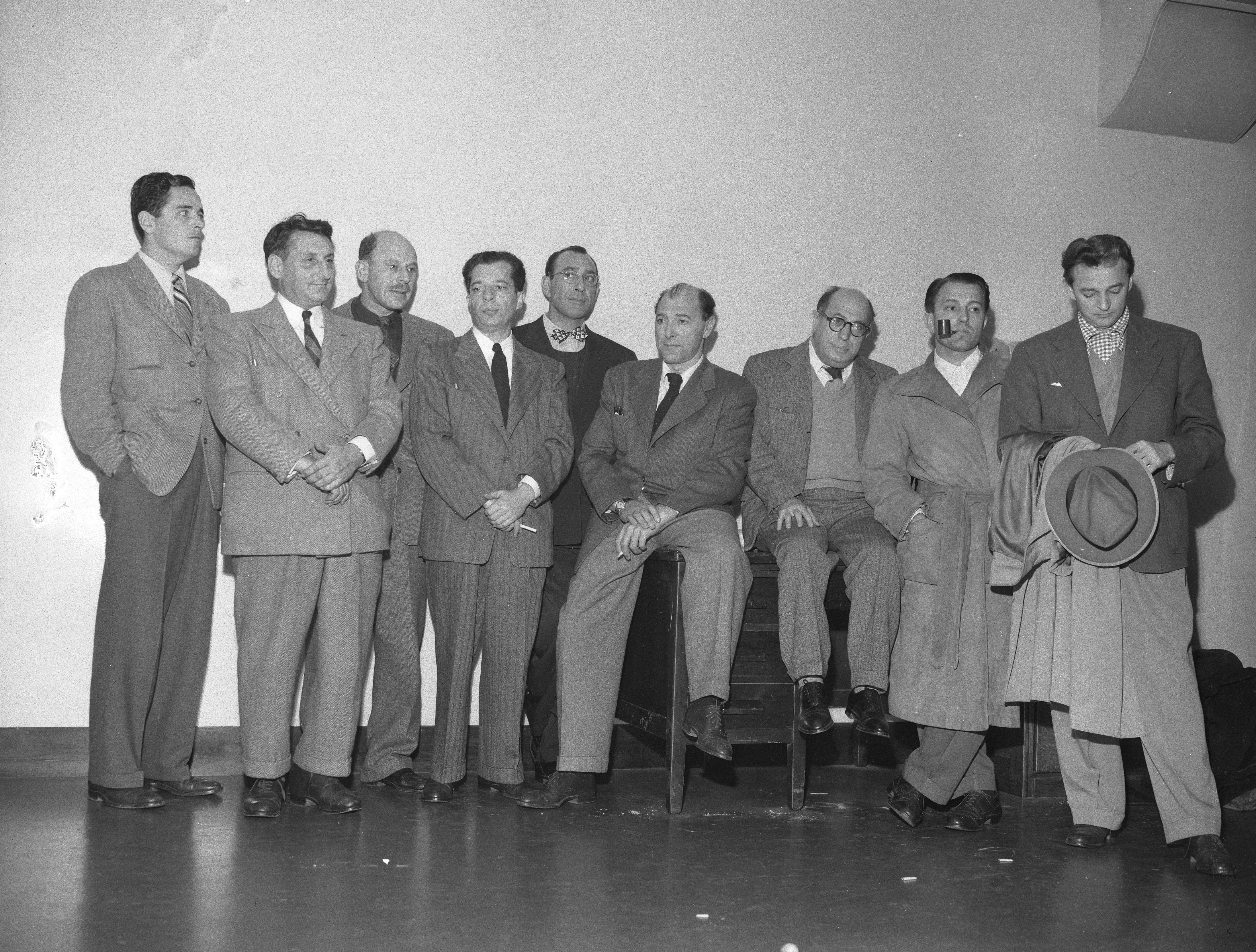
Ever wonder what happens when creativity clashes with political paranoia? Well, buckle up, because we’re about to take a deep dive into one of Hollywood’s darkest chapters: the infamous mid-20th century blacklist. This wasn’t just a bump in the road; it was a total professional shutdown for scores of talented individuals, including some of the most innovative directors of their time.
Imagine being at the top of your game, pouring your heart and soul into storytelling, only to have your career ripped away because of alleged political beliefs. That’s exactly what happened to actors, screenwriters, musicians, and yes, brilliant directors, who found themselves barred from employment. They were suspected of being Communists, or having sympathies with the Communist Party USA (CPUSA), or simply refusing to play ball with Congressional or FBI investigations.
While the official count might point to a specific number of directors, the ripple effect touched countless careers and forever altered the landscape of American cinema. From the dramatic showdowns with the House Un-American Activities Committee (HUAC) to the quiet despair of shattered dreams, the stories of these blacklisted directors are a powerful reminder of how easily fear can stifle artistic expression. Let’s pull back the curtain on some of these pivotal moments and the incredible individuals who lived through them.
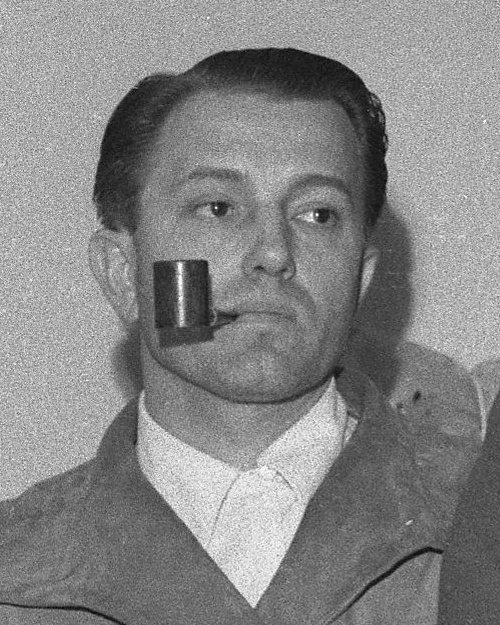
1. **Edward Dmytryk: From Hollywood Ten to Friendly Witness**Edward Dmytryk’s journey through the Hollywood blacklist is a tale of dramatic twists and turns, showcasing the immense pressure faced by directors caught in the political crosshairs. As one of the original “Hollywood Ten” – a group of ten left-wing screenwriters and directors cited for contempt of Congress in 1947 – Dmytryk was initially a symbol of defiance. He, alongside the others, refused to answer questions before HUAC, asserting their First Amendment rights and challenging the committee’s legitimacy.
This courageous stance, however, came at a steep personal and professional cost. The contempt citation led to criminal charges, a highly publicized trial, and ultimately, a conviction that carried a maximum of one year in jail and a hefty fine. For Dmytryk, this meant imprisonment, a stark reality that forced him to confront an agonizing choice between his principles and his career.
In September 1950, while still serving his sentence, Dmytryk made a pivotal decision: he announced that he had once been a Communist and was prepared to give evidence against others. This act, often viewed as a painful compromise born of immense duress, led to his early release from jail. His subsequent 1951 HUAC appearance, where he named names and described his past Party membership, became a watershed moment for his career. While controversial, his cooperation allowed him to recover his directorial career, a path few of his blacklisted peers would share.
Dmytryk’s experience highlights the brutal dilemma faced by those on the blacklist. To cooperate meant breaking ranks and potentially implicating friends and colleagues; to refuse meant professional oblivion, and often, personal ruin. His story is a poignant example of how political purges can force individuals into choices with profound and lasting consequences, both for themselves and for the broader industry.
His films like “Crossfire” (which he had directed before his blacklisting) were acclaimed, but the political turmoil overshadowed his talent for years. Dmytryk’s eventual return to filmmaking, though successful, remains a complex legacy within the history of the blacklist, illustrating the high price of both defiance and cooperation during a period of intense ideological conflict. It serves as a stark reminder of the human cost when artistic freedom collides with political witch hunts.
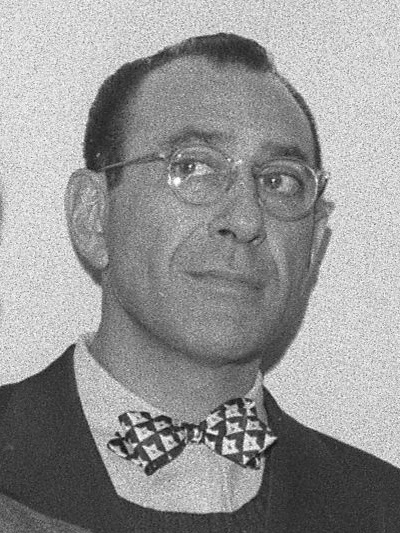
2. **Herbert Biberman: Directing Defiance from the Blacklist**In stark contrast to Edward Dmytryk’s eventual cooperation, Herbert Biberman, another director from the Hollywood Ten, chose a path of steadfast defiance. From the outset, Biberman stood firm in his refusal to cooperate with HUAC, viewing the committee as illegitimate and its actions as an affront to American values. Like his fellow Ten, he was convicted of contempt of Congress, facing imprisonment and the crushing reality of an industry that had suddenly shut its doors.
Biberman’s commitment to his beliefs meant enduring years of professional exile. Unlike Dmytryk, he did not recant or name names, which placed him firmly on the industry-wide blacklist. This commitment, however, did not extinguish his creative spirit. Instead, it pushed him and other blacklisted artists to find unconventional ways to continue their work, proving that art, even under duress, will find a way.
His most notable act of artistic resistance came with the direction of “Salt of the Earth” (1954). This film was a remarkable undertaking, produced outside the established studio system in New Mexico, specifically to allow blacklisted professionals to work. Biberman collaborated with a team of other blacklisted talents, including producer Paul Jarrico and writer Michael Wilson, to bring this powerful story to the screen.
“Salt of the Earth” chronicled a strike by Mexican-American mine workers, bravely incorporating an ahead-of-its-time subplot about the growing feminist consciousness of the workers’ wives. Upon its completion, it was immediately denounced as “Communist propaganda.” The film faced an intense boycott: distributors refused to handle it, newspapers and radio stations rejected its advertisements, and even the projectionists’ union refused to run it. In 1954, it was shown in only about a dozen U.S. theaters, a testament to the blacklist’s pervasive power.
Biberman’s unwavering stance and his dedication to telling stories that resonated with social justice, even in the face of immense opposition, cemented his legacy as a director who prioritized artistic integrity over personal comfort. His story is a powerful illustration of the resilience of filmmakers during one of Hollywood’s most repressive periods, demonstrating that even when officially banned, some directors found ways to speak truth through their art.
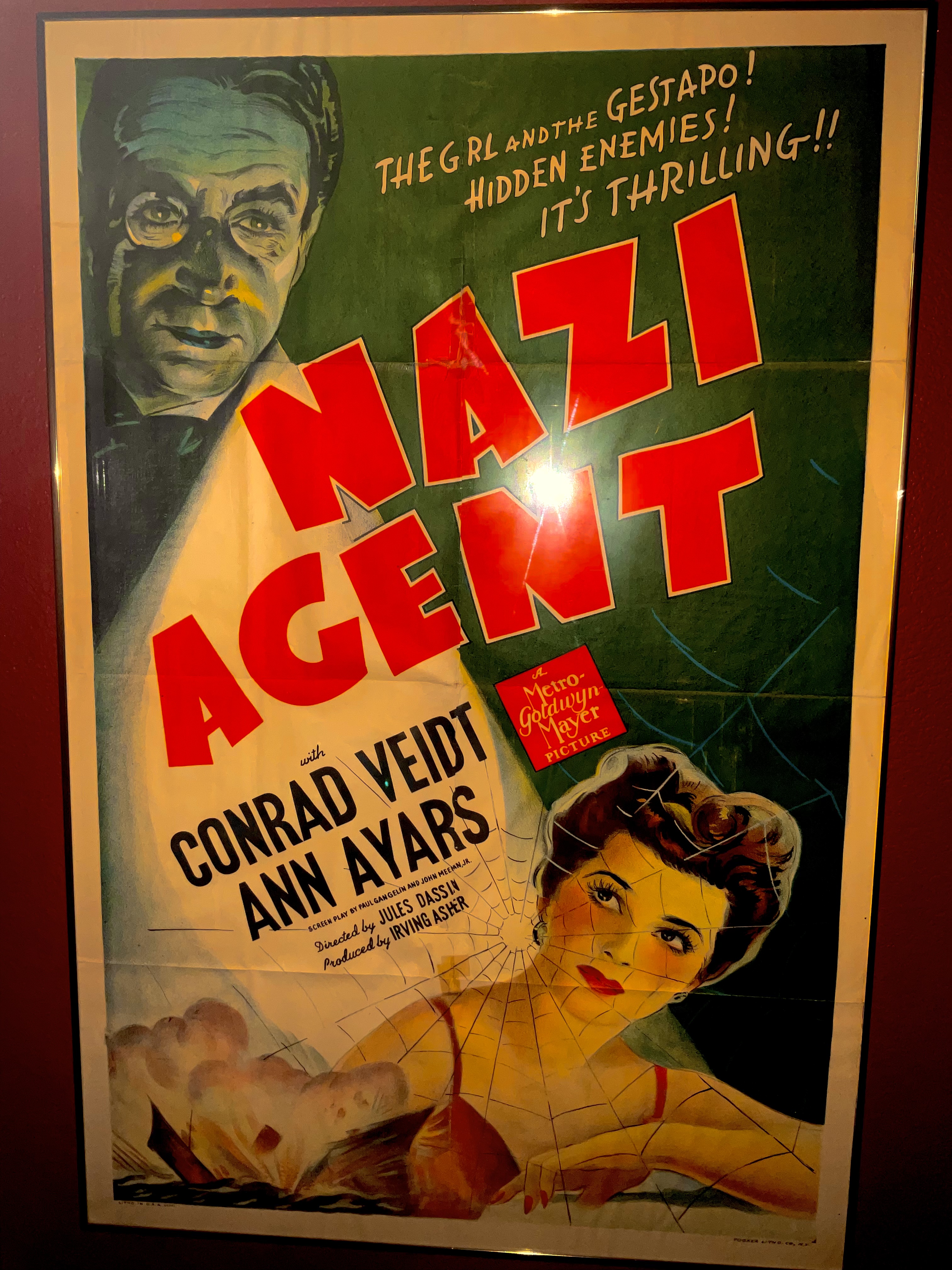
3. **Jules Dassin: The Director Forced into Exile**Jules Dassin’s narrative is another harrowing chapter in the blacklist saga, painting a vivid picture of a director whose career was not just paused, but forcibly transplanted across continents. Dassin, a talented director known for films like “The Naked City,” found himself caught in the web of suspicion not by defying HUAC directly, but by being named by others who sought to save their own careers. He had briefly been a Communist, but dropped out of the Party in 1939, long before the blacklist’s most stringent enforcement.
His blacklisting was triggered in spring 1951, when Edward Dmytryk, and fellow filmmaker Frank Tuttle, named him during HUAC hearings. This act of naming, a chilling feature of the Red Scare, meant immediate professional doom for Dassin in Hollywood. Suddenly, a director with a promising career in the American film industry found all doors slammed shut, not because of a direct accusation he could refute in court, but because of an alleged association from years past.
Facing professional annihilation in the U.S., Dassin made the difficult decision to leave. He sought refuge and work in Europe, effectively becoming one of the most prominent Hollywood exiles. This move was not just a change of scenery; it was a necessary act of survival to continue practicing his craft, taking his immense talent to foreign shores where the political climate was less hostile to artists.
His career, reborn in France and later in Greece, flourished anew with critically acclaimed works. For instance, his French-made film “Rififi” opened in New York in June 1956 and enjoyed a successful 20-week run, demonstrating that his talent transcended national borders and political bans. Dassin’s ability to successfully defy the blacklist from abroad was a rare victory, but it underscored the immense personal cost of forced displacement.
Jules Dassin’s story serves as a poignant example of the blacklist’s far-reaching impact, extending beyond domestic unemployment to forcing creative minds into exile. It reveals how the political purges of the era not only silenced American voices but also enriched international cinema with talent that the U.S. had, unfortunately, cast aside.
4. **The Inception of the Blacklist: The Waldorf Statement’s Impact on Directors**While individual stories of blacklisted directors like Dmytryk, Biberman, and Dassin are compelling, it’s crucial to understand the systemic force that initiated their professional downfall: the Waldorf Statement. This wasn’t merely an informal agreement; it was the formal declaration that cemented the Hollywood blacklist and directly dictated the fate of countless filmmakers, including directors.
The context for this momentous declaration was the defiance of the Hollywood Ten, who had refused to answer HUAC’s questions. Political pressure on the film industry mounted, pushing studio executives to take a definitive public stance against “subversives.” This pressure culminated in a meeting of nearly 50 film industry executives at New York City’s Waldorf-Astoria hotel on November 25, 1947.
Following this high-stakes meeting, Eric Johnston, president of the Motion Picture Association of America (MPAA), issued a press release that would send shockwaves through Hollywood. Known as the Waldorf Statement, it unequivocally declared that the ten uncooperative witnesses – the Hollywood Ten – would be fired or suspended without pay. More chillingly, it stated they would not be re-employed until they were cleared of contempt charges and had sworn that they were not Communists.
This statement wasn’t just a threat; it was an immediate industry-wide policy change. The first Hollywood blacklist was officially in effect, marking the dawn of an era where careers could be terminated overnight based on perceived political affiliations rather than artistic merit. For directors, this meant that their ability to secure projects, cast actors, and bring their cinematic visions to life was now subject to a political litmus test.
The Waldorf Statement institutionalized the blacklist, making it a powerful, pervasive, and often invisible force that dictated who could work in Hollywood. It transformed the industry, instilling a chilling effect that made studios wary of anyone even remotely associated with left-wing politics, fundamentally altering the creative freedom and professional opportunities for directors across the board.
5. **HUAC’s Unrelenting Gaze: The Pressures of a Renewed Witch Hunt**Just when Hollywood thought it might catch a break, the House Un-American Activities Committee (HUAC) came roaring back for a second round in 1951, proving that the political purges were far from over. This time, the atmosphere was even more charged, and the committee seemed intent on casting an even wider net. The stakes were incredibly high for those called to testify, forcing individuals into agonizing decisions that would haunt them for the rest of their lives. Imagine being put on the spot, with your career, reputation, and even your family’s future hanging in the balance – it was a real-life drama, but with far more painful consequences than any movie script.
The legal game plan for those refusing to testify had also shifted. Instead of boldly invoking the First Amendment, which the courts had largely rejected as a defense against contempt charges, many witnesses began to “take the Fifth,” relying on the Fifth Amendment’s protection against self-incrimination. While this might have saved them from a contempt charge and jail time for refusing to name names, it came with its own severe penalty: automatic placement on the industry blacklist. Larry Parks, a well-known actor, captured this dilemma perfectly, pleading, “Don’t present me with the choice of either being in contempt of this committee… or forcing me to really crawl through the mud to be an informer.” Despite his poignant appeal and reluctant cooperation, Parks still found himself blacklisted, highlighting the no-win scenario many faced.
Other prominent figures, like director Elia Kazan and screenwriter Budd Schulberg, chose a different path, giving what was described as “damaging testimony.” They freely discussed the political leanings of their friends and professional associates, which allowed them to continue working, but effectively slammed the door shut on dozens of other careers. This stark demonstration of how the blacklist pitted colleagues against each other tore apart the very fabric of the Hollywood community. The choice was brutal: either participate in the destruction of others’ lives or face your own professional demise.
And if you think being named was bad enough, consider the bewildering cases of those caught in the crossfire purely by accident or mistaken identity. David Caute, in his book *The Great Fear*, recounts how actor Everett Sloane suffered because his name was similar to a scriptwriter, or how actress Madeline Lee’s blacklisting led to ruin for three other actresses—one because she shared the name, one for merely resembling her, and another for specializing in similar “radio baby noises.” This absurd extent of the witch hunt truly illustrates how arbitrary and devastating the blacklist became, ensnaring even the most innocent.

6. **The Graylist’s Ghostly Grip: When “Not Officially Banned” Still Meant No Work**Beyond the stark, official pronouncements of the blacklist, there was a more insidious, shadowy realm known as the “graylist.” While the official blacklist targeted those who directly defied HUAC or were openly identified as Communists, the graylist was for those who were denied work based on real or imagined political or personal affiliations, often without any formal accusation. The consequences, though, were practically identical: professional purgatory. It was like being on a “no-fly” list, but for your entire career, with no clear way off.
This graylist wasn’t a formal document; it was a chilling effect that permeated the entire entertainment industry. Studio executives, fearing public backlash or pressure from powerful non-governmental organizations, simply became “wary of anyone even remotely associated with left-wing politics.” Composer Elmer Bernstein, for example, was called before HUAC because he had written music reviews for a Communist newspaper. After refusing to “name names,” he found himself composing for B-movies like *Cat Women of the Moon*. It was a harsh demotion from the mainstream, proving that even minor perceived transgressions could have major career implications.
Non-governmental organizations played a massive, often terrifying, role in enforcing and expanding the blacklist. The American Legion, a conservative war veterans’ group, issued its own list of 128 alleged “Communist Conspiracy” members, putting immense pressure on studios. Playwright Lillian Hellman, whose name appeared on this list, found herself frozen out of Hollywood for 16 long years. Then there were the “private intelligence” firms, like American Business Consultants Inc., who published weekly newsletters such as *Counterattack* and the infamous *Red Channels*, which identified “151 entertainment industry professionals as ‘Red Fascists and their sympathizers’.” Jean Muir was one of the first performers to lose her job because of a *Red Channels* listing, as a sponsor pulled her from a TV show.
The absurdity of the graylist was sometimes comical, if not utterly tragic. William O’Neill recounts how screenwriter Louis Pollock, “a man without any known political views or associations,” had his career abruptly ended because the American Legion confused him with a California clothier who had refused to cooperate with HUAC. Orson Bean recalled being briefly blacklisted just for dating a Party member, despite his own conservative politics. Adding to the pervasive fear, powerful newspaper columnists like Walter Winchell and Hedda Hopper regularly “suggested names that should be added to the blacklist.” This public shaming and constant threat meant that even if you weren’t officially named by HUAC, you could still be effectively blacklisted by public opinion and relentless media pressure.

7. **Reels of Resistance: How Blacklisted Creatives Spoke Through Cinema’s Shadows**Even under the crushing weight of the blacklist, the human spirit, especially the creative spirit, found ways to resist and express itself. Filmmakers, writers, and actors, barred from openly working, often resorted to using metaphors and hidden meanings in their art to critique the very system that sought to silence them. It was a subtle, yet powerful, form of rebellion, proving that even when voices are suppressed, art finds a way to whisper truth. This era saw some incredible cinematic allegories, turning the big screen into a canvas for veiled protest.
One of the most iconic examples is Carl Foreman’s western masterpiece, *High Noon* (1952). Foreman himself had refused to testify before HUAC and was blacklisted, so it’s hardly a coincidence that the film features a town marshal (ironically played by “friendly witness” Gary Cooper) who is completely deserted by the “good citizens of Hadleyville” (a thinly veiled stand-in for Hollywood) when a gang of outlaws (read: HUAC) returns to terrorize the town. The film’s tense, real-time narrative perfectly mirrored the isolating moral dilemmas faced by those pressured to name names, and the shame of those who stood by and did nothing. It was a cinematic cry for courage amidst widespread cowardice.
On the flip side, we have *On the Waterfront* (1954), a film widely interpreted as director Elia Kazan and screenwriter Budd Schulberg’s justification for their decision to “name names.” Starring Lee J. Cobb, an actor who had also cooperated with HUAC, the movie’s central theme revolves around a dockworker who testifies against corrupt union bosses. While critically acclaimed and showered with Academy Awards, including Best Film, Direction, and Screenplay, the film has faced enduring criticism for its “embarrassing special pleading on behalf of informers.” It illustrates how the blacklist not only silenced, but also forced artists to craft narratives that, for some, rationalized their painful choices.
Beyond direct storytelling, the blacklist also suppressed the production of certain types of films, shaping the cinematic landscape in subtle but significant ways. Kenneth Billingsley notes that blacklisted writer Dalton Trumbo “bragged” in the *Daily Worker* about actively “quashing films with anti-Soviet content,” such as adaptations of anti-totalitarian books like Arthur Koestler’s *Darkness at Noon*. This reveals a lesser-discussed aspect of the blacklist’s impact: not just banning certain people, but also actively shaping the narratives that *Couldn’t* be told, effectively censoring stories that challenged specific political ideologies. The films we didn’t see are as much a part of the blacklist’s legacy as the ones that managed to sneak through.
8. **The First Cracks and the Dawn of a New Era: Breaking the Blacklist’s Grip**The grip of the Hollywood blacklist seemed unbreakable, a permanent shadow over the industry. But like all oppressive regimes, it eventually began to show cracks, thanks to the courage of a few brave individuals and a gradual shift in the cultural landscape. It wasn’t a sudden collapse, but a series of incremental victories, each one chipping away at the foundation of fear and suspicion that had held Hollywood captive for over a decade. Get ready for some triumphant moments that changed everything!
Even while the blacklist was at its height, some directors found ways to circumvent it. Jules Dassin, who had been exiled to Europe, became an unlikely trailblazer. Despite being named by Edward Dmytryk and Frank Tuttle in 1951, Dassin still managed to direct the Broadway play *Two’s Company* in December 1952. More significantly, his French-made film *Rififi* opened in New York in June 1956 and enjoyed a successful 20-week run. Dassin proved that artistic talent, when given a chance, could transcend borders and ultimately defy political bans, offering a glimmer of hope to those trapped in Hollywood’s dark age.
One of the most pivotal figures in formally challenging the blacklist was John Henry Faulk, a witty radio host. Targeted by AWARE, Inc.—one of those private firms that sniffed out “disloyalty”—Faulk was unjustly branded and subsequently fired by CBS Radio. But here’s the kicker: almost alone among blacklisting’s many victims, Faulk decided to fight back. He sued AWARE in 1957, embarking on a legal battle that, though lengthy, became a powerful symbol of growing resistance to the established order. His courageous stand, ultimately victorious, helped expose the nefarious tactics of the blacklisters and paved the way for others to challenge the system.
The biggest, most earth-shattering crack in the Hollywood blacklist arrived in 1960. On January 20, director Otto Preminger made a public declaration that sent shockwaves through the industry: Dalton Trumbo, one of the most prominent members of the Hollywood Ten, would be credited as the screenwriter for his upcoming epic, *Exodus*. Six and a half months later, actor Kirk Douglas publicly acknowledged that Trumbo had also penned the screenplay for *Spartacus*, sealing the deal. These two high-profile, major studio films giving open credit to a blacklisted writer were a monumental victory, marking the beginning of the end for the infamous Hollywood blacklist. It was a powerful moment that said, loud and clear: “Enough is enough.”
The official end of the blacklist is often marked by Trumbo’s breakthroughs in 1960, signaling a hard-won victory for artistic freedom. However, it’s important to remember that the path to full rehabilitation was still long and arduous for many. While the most stringent enforcement weakened, numerous blacklisted film artists continued to face difficulties finding work for years afterward. The scars of this era ran deep, a constant reminder of how easily fear and political paranoia can stifle creativity and tear lives apart. Yet, the courage of those who resisted, whether overtly or subtly, eventually triumphed, leaving us with invaluable lessons about safeguarding artistic integrity and challenging injustice, no matter the odds. It’s a story that continues to resonate, reminding us that even in the darkest times, the power of art and perseverance can light the way forward.