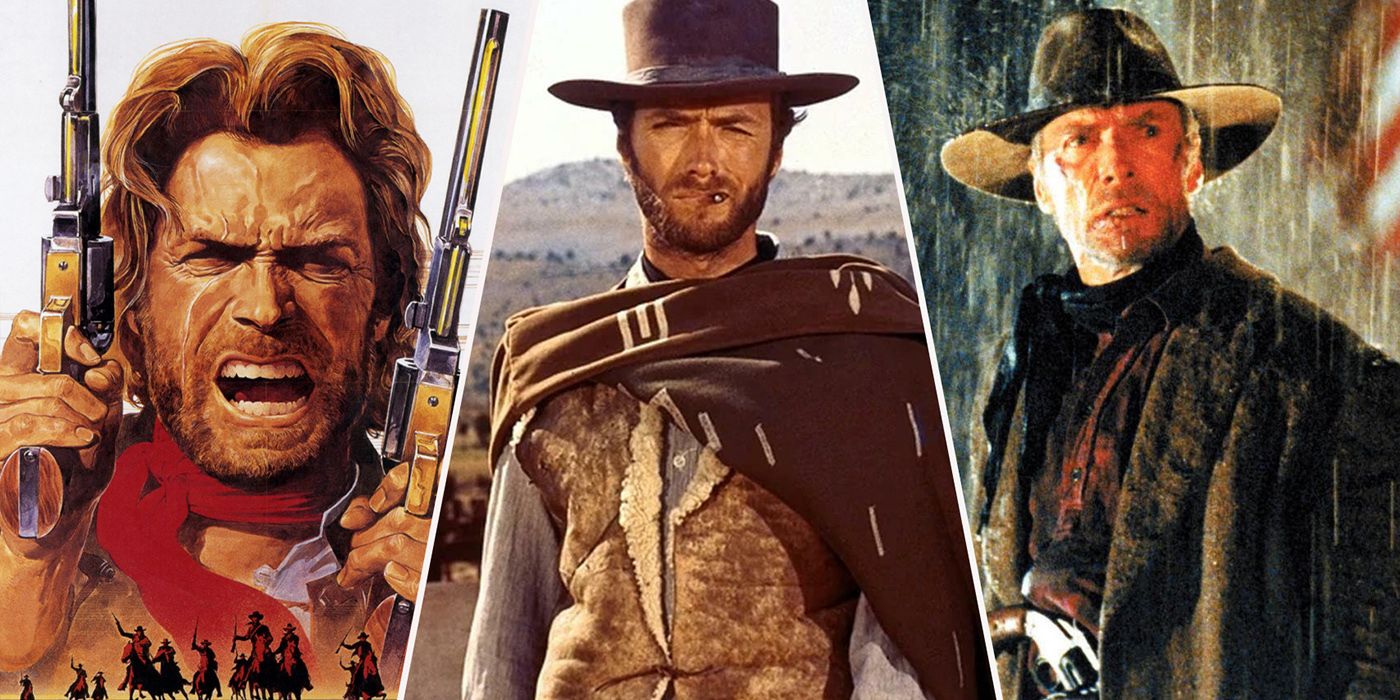
Clint Eastwood’s Westerns have a way of digging under your skin, don’t they? They often present a world where justice isn’t always found in a courtroom, and heroes are rarely pristine. ‘Joe Kidd’ is no exception, dropping us right into a simmering conflict over land rights, where an old-school individualist finds himself caught between powerful, opposing forces. It’s a classic setup, but the film, much like its titular character, carves its own unique path.
This isn’t just about good guys versus bad guys; it’s about the shades of grey, the brutal realities of frontier law, and what happens when deeply ingrained beliefs clash head-on with cold, hard power. From the very first scene, we’re introduced to a protagonist who marches to the beat of his own drum, a man who would rather face jail time than conform to what he sees as arbitrary rules. It’s a narrative that explores how personal principles can be tested and transformed when faced with systemic injustice and ruthless ambition. So, saddle up, because we’re about to take a deep dive into the initial, explosive events that define ‘Joe Kidd,’ highlighting the pivotal moments and characters that set this Western apart.
We’ll peel back the layers of this fascinating story, exploring the motivations, the confrontations, and the unexpected alliances that shape Joe Kidd’s journey. Prepare to unpack the raw intensity and complex morality of a film that continues to resonate with fans of the genre, proving that sometimes, the only way to find your true north is to get lost in the wilderness of a moral quandary. Let’s get into the details of how our reluctant hero gets entangled in a conflict that’s far bigger than he ever anticipated, and how his initial defiance sets the stage for a dramatic quest for justice.

1. Joe Kidd’s Unconventional Introduction: Defiance in the Face of Law
The story of Joe Kidd kicks off not with a blaze of glory, but with a casual act of defiance that perfectly encapsulates his character. We find him, the apparent source of the film’s title, embroiled in a minor legal squabble, accused of poaching, disorderly conduct, and resisting arrest. The charges themselves are almost mundane, yet Joe Kidd’s reaction to them is anything but. He faces the judge, seemingly unfazed by the predicament, revealing a man comfortable with challenging authority.
When questioned about the deer he allegedly poached, Joe Kidd offers a response that is both humorous and profoundly telling: “I ate him.” This simple, direct answer cuts through the formality of the courtroom, exposing his practical, no-nonsense approach to life. He further elaborates on the poaching charge, stating, “The deer didn’t know where he was, and I wasn’t sure, either,” a line that highlights his disregard for artificial boundaries and his connection to the natural world over man-made laws. It’s clear that Joe Kidd operates on his own moral code, one that doesn’t necessarily align with the legal system of the town.
His nonchalance continues as he’s confronted with the disorderly charge, which stems from his alleged threat to “urinate over the courthouse.” This audacious act, whether carried out or merely threatened, speaks volumes about his rebellious spirit and his willingness to express contempt for the establishment. Given the choice between a $10 fine and 10 days in jail, Joe Kidd, without hesitation, opts for the latter, declaring, “I’ll take the 10 days.” This choice underscores his stubborn independence and his refusal to be easily swayed or bought. It’s a powerful opening statement for a character who will consistently challenge the expectations placed upon him, setting the tone for his journey through a landscape riddled with conflicting versions of justice.

2. The Courthouse Uprising: Luis Chama’s Fight for Land Rights
No sooner is Joe Kidd’s initial legal skirmish concluded than the courthouse itself becomes the stage for a far more significant conflict. Luis Chama, a charismatic and determined leader, storms the court with his men, not to defy the law for personal gain, but to demand justice for his people. This dramatic intervention immediately shifts the narrative’s focus from individual rebellion to a collective struggle against systemic oppression, revealing the deeper tensions simmering beneath the surface of the seemingly peaceful Western town.
Chama’s impassioned speech to the court outlines the profound injustice faced by his community. He speaks of a time when the Anglos “asked permission” to build on their land, a time when the “old people, our grandfathers, say ‘It is all right. There is enough land. Let the Anglo have a home.'” This historical context paints a picture of betrayal, as the Anglos gradually encroached further, bringing in railroads and courthouses, only to then “say strange things” about land ownership. It’s a powerful narrative of broken trust and violated agreements, setting the stage for his revolutionary actions.
The heart of Chama’s grievance lies in the disappearance of vital records. He recounts his people’s efforts to claim their land, only to be met with the devastating news from the record office in Santa Fe: “‘We don’t have records like that anymore. There was a fire. All the records got burned up.'” This convenient destruction of evidence highlights the corruption and deliberate manipulation of the legal system, effectively dispossessing the Mexican population of their ancestral lands. Chama’s desperate act of taking the judge hostage, along with Bob Mitchell (whom he deems an “expert on rights”), is a direct response to this perceived legal dead end, a radical attempt to force a resolution where legal channels have failed. It’s a bold declaration that if the law won’t serve them, they will seek justice by other means, irrevocably intertwining their fight with Joe Kidd’s unwitting fate.
3. Harlan’s Arrival and Proposition: A New Brand of Ruthlessness
Into this volatile environment steps Frank Harlan, a powerful and calculating landowner whose arrival signals a significant shift in the town’s dynamics. Harlan doesn’t just visit; he commandeers, taking over the entire second floor of the Grand Hotel with an air of absolute authority. His dismissive attitude towards existing guests – offering the hotelier “$10 a head and I’ll throw them out the window” – immediately establishes him as a man accustomed to getting his way, no matter the cost to others. He represents a new, corporate ruthlessness, a stark contrast to the more traditional, if flawed, local justice system.
Harlan quickly makes his intentions clear: he wants Luis Chama found. He demonstrates a surprising depth of knowledge about Joe Kidd, despite Joe’s current incarceration. Harlan’s intel includes Judge Vince Brennan of the 4th Territorial Court speaking “very highly” of Joe, and a man from the Indian bureau, Wattles, confirming Joe’s intimate knowledge of the “mountains and game trails better than anybody.” Even more chillingly, Harlan knows of Joe’s past as a “hunter of men, anybody with a price on his head,” and acknowledges that Joe was “good at it.” This comprehensive dossier immediately positions Joe Kidd as a valuable, if unwilling, asset in Harlan’s pursuit of Chama.
Harlan’s initial proposition to Joe Kidd is framed as a “huntin’ trip” – an offer to pay him “whatever your rate is” for guiding them to “mule deer, some elk, maybe one of them mountain cats.” But this thinly veiled excuse quickly falls apart under Joe’s keen observation. Harlan reveals his true objective: to eliminate Luis Chama, who is perceived as a threat to his vast land holdings, described as “935 sections, nearly 600,000 acres.” He offers Joe Kidd $500 to “track that man,” making it clear that he doesn’t care “who pulls the trigger.” This mercenary offer, coupled with Harlan’s disdain for legal arguments – “I’m not gonna waste time arguing it in court” – underscores his belief that money and force are the only true arbiters of power, a philosophy that will inevitably clash with Joe Kidd’s evolving sense of justice.

4. Joe Kidd’s Reluctant Agreement: A Personal Turn
Initially, Joe Kidd flatly refuses Harlan’s proposition. His response, “I don’t hire out to guide. Either hunting for animals or men,” succinctly reiterates his earlier stance of independent action and his unwillingness to be a tool for someone else’s agenda. This refusal, coming from a man who had just chosen jail over a fine, further solidifies his image as a stubborn individualist who cannot be easily bought or coerced. However, circumstances soon conspire to force Joe Kidd’s hand, drawing him reluctantly into Harlan’s brutal quest.
The turning point comes when Joe returns home to a scene of chaos and personal loss. His property has been vandalized, his horses stolen, and his man, Emilio, taken captive. Vita, his companion, relays the devastating news, stating, “They take him. They take the horses, too.” More alarmingly, she adds, “The one say you kill a friend, so he do this. Say he’s gonna kill you, too.” This revelation links the attack directly to Luis Chama’s men and implies a vendetta, turning the abstract land dispute into a deeply personal conflict for Joe Kidd. The context strongly suggests that Chama’s men were retaliating for Naco’s death, though Naco’s confrontation with Joe Kidd occurred *before* Chama’s courthouse raid, adding a layer of tragic irony.
With a new, personal stake in the hunt, Joe Kidd’s perspective shifts. He confronts Harlan with a newfound determination, asking, “You want Luis Chama?” Harlan, sensing the change, asks if Joe has been “thinkin’ about the money,” to which Joe responds by doubling the price: “The price will be $1,000.” This isn’t about greed; it’s about Joe Kidd reasserting control and ensuring that his involvement is on his own terms, driven by his own grievance. His agreement transforms the hunt from a mercenary mission into a personal vendetta, albeit one that aligns, for now, with Harlan’s larger agenda. This reluctant alliance sets Joe Kidd on a path he initially resisted, one that will test his moral boundaries and force him to choose sides in a conflict far more complex than a simple bounty hunt.
5. The Perilous Journey and Harlan’s Ruthlessness: A Descent into Brutality
As the hunt for Luis Chama commences, the true nature of Frank Harlan’s operation quickly becomes apparent. The journey into the mountains is not a mere tracking expedition; it’s a brutal, no-holds-barred pursuit where human life is treated as expendable. Joe Kidd finds himself embedded with Harlan’s ruthless associates, particularly Mingo and Lamarr Sims, whose eagerness for violence underscores the grim reality of their mission. This descent into brutality immediately complicates Joe Kidd’s position, forcing him to witness and implicitly participate in acts that challenge his own code.
Early in the trek, Joe Kidd demonstrates his superior tracking skills, detecting “company now for about a mile” on “both sides of us,” even when Harlan’s men “don’t see a goddamn thing.” This sharp perception sets him apart from Harlan’s heavily armed but less discerning crew. The subsequent encounter with Chama’s scouts escalates quickly. Despite Joe Kidd’s attempts at a calm interaction, asking about elk and pretending to be on a hunting trip, Harlan’s impatience boils over. When the scout denies knowing Chama, Harlan’s men resort to immediate, horrific violence. Mingo, aiming for the scout’s shoulder, ends up shooting him “through the arm” as the scout “must have jumped.” The casualness with which they inflict harm is chilling.
The scene further highlights Harlan’s philosophy of might over right. When Mingo asks if they should “cut your ears off,” Harlan’s men threaten to “cut somethin’ else off, too” to extract information. Joe Kidd’s protest – “I came to hunt Chama, not kill people in cold blood” – is met with Harlan’s unyielding response: “I don’t have time for court hearings. If these people want to fight me, I’ll blow ’em straight to hell.” This declaration confirms Harlan’s absolute disregard for legal process or human life when it stands in the way of his objectives. He views the local population not as people with legitimate grievances, but as obstacles to be removed, further cementing his role as a tyrannical force and deepening Joe Kidd’s internal conflict regarding his alliance.

6. Encountering Helen Sanchez: A Glimmer of Moral Conflict
Amidst the escalating violence and ruthless pursuit, Joe Kidd and Harlan’s men stumble upon Helen Sanchez, a young woman who provides a crucial counterpoint to the prevailing narrative of vengeance and property. Her isolated home becomes a temporary stop for the group, but more importantly, it offers a space for a quiet, yet profound, moral interrogation of their mission. Helen’s presence introduces a human element often overlooked by Harlan’s cold calculations, forcing Joe Kidd to confront the deeper implications of his actions.
Helen readily admits knowing Luis Chama, stating, “I know him,” and confirms seeing him “about a week ago” “on his way to Arroyo Blanco.” Her directness stands in stark contrast to the fear and evasion shown by the male villagers. When asked why she has so many guns, she explains, “They belong to my father and brother,” a detail that subtly implies the need for self-defense and the precariousness of life in this disputed territory. Her calm demeanor, even when surrounded by heavily armed men, suggests a quiet strength and conviction, making her a compelling figure in the unfolding drama.
A particularly insightful exchange occurs between Helen and Joe Kidd when she observes his association with Harlan’s men. She challenges him, stating, “But you are with them.” Joe Kidd, caught in his alliance of convenience, admits to a “poor judgment” he has “to live with for a while.” This moment reveals his internal struggle and hints at an evolving moral compass. Helen pushes further, speaking of Chama and his cause: “Some people would give their lives for what they believe. Do you understand that?” Joe’s hesitant “I guess so, if they want something bad enough” is met with Helen’s poignant correction: “No. Even if there’s no chance, but to do it for others… like a soldier gives his life.” This dialogue plants a seed of doubt in Joe Kidd’s mind, forcing him to consider Chama not just as a target, but as a leader fighting for a cause, and to question whether his personal vendetta truly justifies aligning with Harlan’s oppressive methods. It’s a pivotal encounter that begins to reframe Joe Kidd’s understanding of justice and purpose.

7. The Arrival at Arroyo Blanco: Harlan’s Ultimate Tyranny
The journey continued to intensify, and as the group approached Arroyo Blanco, the atmosphere grew thick with the weight of Harlan’s escalating ambition. The earlier, seemingly innocuous mention of Bandera Station, which Joe Kidd noted was merely “stock pens,” received a cryptic “Wanna bet?” from Harlan, hinting at a larger, more calculated strategy at play. It was becoming painfully clear that this was no mere hunt; it was an organized, well-resourced campaign to assert dominance, far beyond what Joe Kidd had initially envisioned.
Upon reaching the village of Arroyo Blanco, Harlan’s intentions were laid bare with a chilling efficiency. His men, heavily armed and numerous, descended upon the quiet community, their presence alone a stark declaration of force. Joe Kidd could only observe as the order went out: “Call everybody out in the street!” It was an intimidating display, designed to instill fear and demonstrate absolute control over the unarmed villagers, a far cry from any pretense of justice or due process.
Harlan’s casual remark, “All those guns to kill one man,” held a dark irony as the entire populace was now being corralled like cattle. The sheer scale of the operation, dedicated to crushing a perceived threat to his land holdings, was overwhelming. For Joe Kidd, who had valued personal freedom and his own sense of right and wrong, witnessing this systematic intimidation must have been a profound moment of reckoning, further solidifying the moral quandary he found himself in, echoing Helen Sanchez’s earlier challenging words.

8. The Unwavering Ultimatum: Harlan’s Brutal Demand
The full extent of Harlan’s ruthlessness became chillingly apparent as he delivered his uncompromising ultimatum to the gathered villagers. Standing before them, he declared with cold precision, “Now, then, I don’t want to take up much of your time. I just want to say… that we’re gonna shoot five of you if Luis Chama… don’t come down off his mountain by sunup tomorrow morning!” The words hung heavy in the air, a direct, terrifying threat against innocent lives.
But Harlan wasn’t finished. He continued to lay out his horrific terms, amplifying the terror: “If he don’t show by noon, we shoot five more. Still doesn’t show up by supper time, we put five more against that wall.” This was an unconscionable tactic, using the lives of an entire community as leverage in his personal vendetta against Chama. It was a stark demonstration of tyranny, where the powerful sought to impose their will through pure, unadulterated fear.
To ensure his message resonated, Harlan dispatched a young boy on horseback to relay the threat directly to Chama, emphasizing, “ask Luis Chama if he heard what I said, in case he didn’t understand me.” As the villagers were herded into the church by the Padre, with Harlan ordering him to “Repeat the whole sermon, in case any of them American citizens… don’t understand English,” the grim reality of their captivity sank in. This scene fully exposed Harlan not just as an antagonist, but as a tyrannical force operating outside the bounds of any recognizable law or morality, pushing Joe Kidd closer to a breaking point.

9. A Moral Crossroads: Joe Kidd’s Breaking Point
For Joe Kidd, standing witness to Harlan’s brutal ultimatum in Arroyo Blanco, the situation reached an undeniable moral crossroads. His initial agreement to track Chama, born from a personal vendetta after his property was ransacked, now paled in comparison to the collective horror unfolding before him. He had explicitly told Harlan earlier, “I came to hunt Chama, not kill people in cold blood,” a sentiment now savagely contradicted by Harlan’s actions.
The casual threat of executing innocent villagers, five at a time, was a line Joe Kidd could not cross. His rugged individualism and personal code of justice, though unconventional, had always drawn clear distinctions between fair fight and cold-blooded murder. Harlan’s methods had devolved into outright terrorism, and Joe Kidd, despite his mercenary agreement, could not passively condone such cruelty. The words of Helen Sanchez, questioning his alliance with Harlan and speaking of those who “would give their lives for what they believe” even if “there’s no chance, but to do it for others… like a soldier gives his life,” resonated deeply, challenging his self-serving rationale.
The sight of the frightened villagers, including women and children, forced into the sanctity of the church under armed guard, was the ultimate catalyst. It shattered any remaining illusions Joe might have harbored about Harlan’s mission. The conflict was no longer about Joe’s stolen horses or Chama’s fight for land deeds; it had become a stark battle between ruthless power and fundamental human dignity. This was Joe Kidd’s breaking point, transforming him from a reluctant tracker into an unexpected protector, ready to directly confront Harlan’s escalating brutality, whatever the personal cost.

10. The Looming Threat and the Seed of Rebellion.
With Harlan’s chilling ultimatum echoing through the streets of Arroyo Blanco, a palpable tension settled over the trapped villagers and their captors. The clock was ticking, and the lives of innocent people hung precariously in the balance, dependent on Luis Chama’s impossible choice. The sun would rise, and with it, Harlan’s promise of execution would loom large, creating an atmosphere of desperate anticipation. Joe Kidd, ever the keen observer, undoubtedly watched the faces of the villagers, their fear and quiet despair mirroring the injustice of their predicament.
Amidst this escalating crisis, Joe Kidd’s mind, a blend of practicality and defiant independence, began to shift from observation to action. His earlier internal protest, “I came to hunt Chama, not kill people in cold blood,” could no longer remain unspoken or unacted upon. Harlan’s disregard for life had painted him as a greater threat than Chama, necessitating a radical intervention that only Joe, with his intimate knowledge of the region and his disdain for conventional authority, could conceive.
This shift in Joe Kidd’s allegiance wasn’t merely a change of heart; it was a fundamental reassertion of his core principles against overwhelming odds. The cryptic exchange about Bandera Station being more than “stock pens” now took on profound significance, hinting at an unconventional solution that would leverage elements of surprise and brute force against Harlan’s entrenched position. The stage was now set for Joe Kidd to not just challenge Harlan’s methods, but to completely upend his brutal scheme, demonstrating his newfound commitment to justice for the oppressed villagers.
Read more about: 10 Pivotal Star Wars Deleted Scenes That Would’ve Transformed the Saga’s Narrative and Deepened Every Trilogy

11. Setting the Stage for the Unconventional: Joe Kidd’s Gambit
Joe Kidd’s history of defiance, from his initial choice of “10 days” in jail over a mere $10 fine, consistently showcased a man who refused to be constrained by expected norms. Now, faced with Harlan’s horrifying plan to execute innocent villagers, that inherent rebelliousness would be unleashed in an unprecedented way. He understood that a direct, head-on assault against Harlan’s numerically superior and well-armed force would be suicidal, necessitating a truly imaginative and disruptive approach.
The stakes were incredibly high; the lives of the Arroyo Blanco community depended on Joe Kidd’s ingenuity and courage. His deep familiarity with the mountains, game trails, and the very fabric of this frontier world—knowledge that Harlan had initially sought to exploit—would now become his greatest weapon against the ruthless landowner. The solution he needed would not be found in a traditional gunfight or a legal challenge, but in a bold, unexpected maneuver that would turn Harlan’s own advantages against him.
This pivotal moment marks Joe Kidd’s full transformation. He is no longer merely tracking a man for a bounty, nor is he simply caught between two opposing forces. He has made his choice: to actively dismantle Harlan’s reign of terror. The decision to act, and the method he would employ, would be as audacious as his earlier threat to “urinate over the courthouse,” but with far more significant and heroic implications. The film had skillfully built up his character to this point, setting him on a path towards an iconic act of frontier justice.
12. The Inevitable Clash: Justice on the Frontier
The narrative of ‘Joe Kidd’ had meticulously woven a tapestry of escalating conflict, from individual defiance to a community’s struggle against overwhelming power. With Harlan’s ultimatum delivered and the villagers confined, the film had reached its undeniable climax. The stage was impeccably set for the ultimate confrontation between Frank Harlan’s corporate ruthlessness and Joe Kidd’s evolving, deeply personal sense of justice. The echoes of Chama’s fight for land rights and Helen’s plea for selfless action had transformed Joe’s journey into a quest for something far greater than a bounty.
This impending showdown would not just be a battle of wills, but a clash of philosophies. Harlan, the embodiment of unchecked power and disdain for legal process, would face Joe Kidd, the independent spirit who, despite his flaws, would ultimately champion the oppressed. The tension was almost unbearable, poised on the knife-edge of desperation and courage, promising a resolution that would redefine heroism in this unforgiving Western landscape. The film had carefully escalated to this point, ensuring that when the final shots were fired, they would carry the full weight of the preceding moral and physical struggles.
‘Joe Kidd’ ultimately delivers a powerful message about the true meaning of justice on the frontier—a justice that sometimes bypasses official channels and relies instead on the unwavering resolve of individuals like Joe Kidd. His transformation from a reluctant participant to a decisive force for good encapsulates the enduring appeal of the Western genre, where even the most unconventional heroes rise to defend what is right. It’s a testament to Clint Eastwood’s iconic portrayal of a man who, when pushed to his absolute limit, chooses to stand for humanity against tyranny, leaving an indelible mark on cinematic history and solidifying ‘Joe Kidd’ as a classic tale of redemption and grit.