There are TV finales, and then there’s *The Sopranos* finale. Very few closing scenes have been able to reside rent-free in the shared pop culture psyche quite like this one has. Long afterward, viewers are stuck in a frozen frame of that Holsten’s diner with “Don’t Stop Believin’” still echoing in their heads, all of them wondering if Tony Soprano managed to get through that plate of onion rings or if his time simply ran out. This wasn’t merely the conclusion to an innovative series; it was, as many have described it, a pop culture bomb, an abrupt, unexpected cut to black that ignited a firestorm of debate.
David Chase didn’t so much conclude an innovative series as he released a pop culture bomb. The *Sopranos* ending, that abrupt, unexpected cut to black, has spawned essays, Reddit threads, passionate barroom arguments, and more than a few awkward Thanksgiving dinner fights. It’s the kind of television ending that divides families not necessarily along the lines of what happened on the television screen, but along the lines of what *didn’t*. That, truly, is the brilliance of it: Chase delivered an ending that’s deceptively ordinary yet impossibly layered. On the surface, it’s just Tony, Carmela, and A.J. sharing a low-key family dinner, but underneath, it’s a slow-burn masterclass in tension, built from the tiniest details: fleeting glances, the ding of a door chime, and strangers slipping in with unnerving, measured pauses.
If you’ve ever found yourself playing armchair detective over a plate of onion rings, rewinding the scene to study the timing of Meadow’s awkward parallel parking or scanning for any suspicious diner patrons, you’re in the right booth. So, let’s slide into that Holsten’s vinyl seat together, top off our coffee, and unpack exactly what we see, what might have happened after that infamous black screen, and why the ending of *The Sopranos* still hits like a brick through a windshield. We’ll delve into the secret history of this monumental finale, dissecting the pivotal, sometimes ‘forgotten,’ details that coalesce into its enduring enigma.
1. **The Abrupt Cut to Black: The Ultimate Ambiguity**For many viewers across the continent, the final moments of *The Sopranos* finale weren’t just the end of a show; they were a collective gasp, followed by confusion, and then, for some, outrage. David Chase’s decision to conclude his magnum opus with a sudden, lingering cut to black convinced millions of HBO subscribers that their TV sets had committed electronic hara-kiri, or else their signal had cut out at the worst possible moment. It was a jarring, unprecedented move that defied all traditional conventions of television storytelling, leaving an indelible mark on the landscape of serialized drama.
This isn’t merely a stylistic choice; it’s the very core of the finale’s genius. As the narrative explains, Chase delivered an ending that’s “deceptively ordinary yet impossibly layered.” The abruptness itself became the central point of discussion, spawning countless theories and debates. It’s the kind of television ending that doesn’t just divide families on what happened, but rather on “what *didn’t*” happen, forcing viewers to confront their own expectations of narrative closure. This raw, immediate reaction solidified its place in pop culture, demonstrating the power of absence over explicit resolution.
At the heart of the “Tony Dies” theory lies the interpretation that this interruption of pattern is the entire point. When pulling away the anticipated cut, the show cuts completely into Tony’s perspective and then ends it immediately. The final sound we (but not he) hear is the door bell. The picture never comes back because, if he’s dead, then there’s no picture to come back to. This isn’t just an interpretation; it’s a formalistic argument about the show’s grammar, suggesting that the blackout isn’t a glitch, but the definitive cessation of Tony’s consciousness, viewed from his own disappearing eyes. It’s a clean, cold solution that aligns with the brutal realities of the mob life the series so meticulously portrayed.
However, the ambiguity is also designed to challenge viewers. As the popular “Tony Lives” theory suggests, many fans don’t perceive that blackout as a hit, but rather as business as usual for Tony: a life of living on the edge where any bell may be the final bell and any stranger may be trouble. In this read, the non-ending *is* the ending—his penalty is vigilance without reprieve. The black screen turns into a mirror; if your mind puts a gunshot in it, the show silently inquires why you did need one, making the audience complicit in crafting their own desired narrative justice.

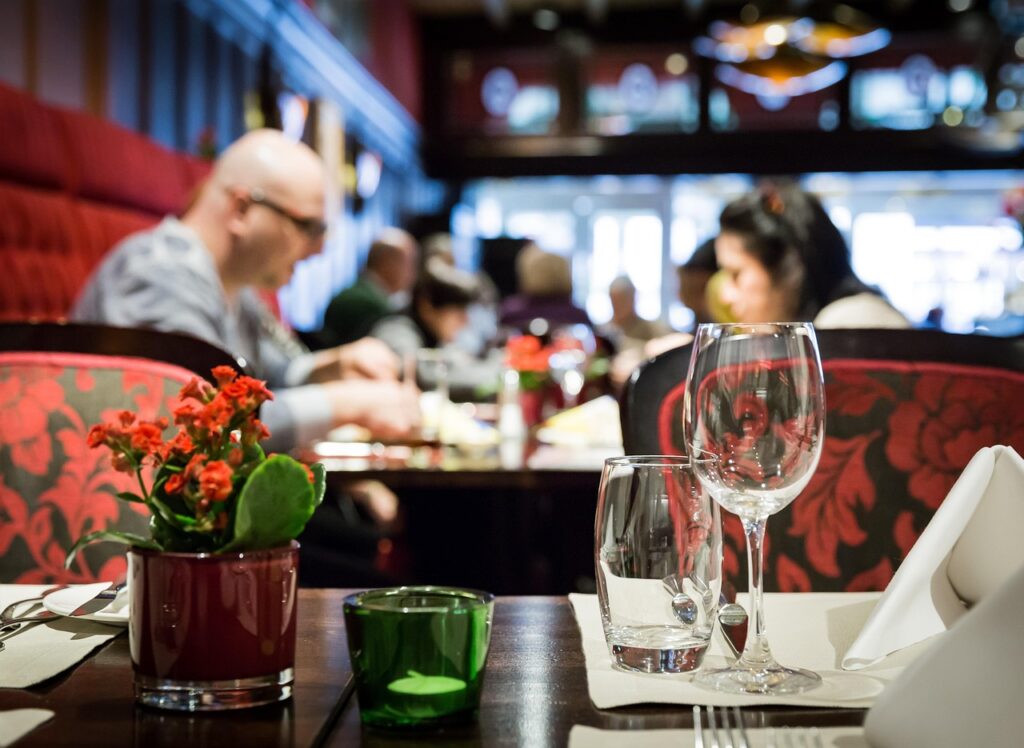
2. **Holsten’s Diner: A Microcosm of Tony’s World**Holsten’s, the unassuming diner in Bloomfield, New Jersey, where the Soprano family gathers for their fateful final meal, is far more than just a setting; it’s a carefully constructed microcosm of Tony Soprano’s entire existence. On the surface, it presents itself as an ordinary, almost mundane location—a comforting, low-key spot for a family dinner. Yet, underneath this veneer of normalcy, it pulsates with an almost unbearable tension, embodying the precarious balance of Tony’s life between domesticity and ever-present danger. Every detail within this seemingly innocuous space contributes to the escalating sense of dread.
The diner condenses Tony’s complex world into a single, rhythmic experience. His life has always been a unique blend of casual background noise and lurking danger, and the finale distills this into one haunting rhythm: family, food, and fear sharing a single table. It’s a brilliant conceptual move by David Chase, making the mundane surroundings become pregnant with menace. The clatter of cutlery, the hushed conversations of other patrons, the simple act of eating onion rings—all these ordinary elements are amplified by the underlying threat, transforming a casual meal into a high-stakes waiting game.
Despite the palpable tension, the scene is also infused with the characteristic dark humor that defined *The Sopranos*. Meadow, the aspiring lawyer, struggles comically with her parallel parking. Tony treats his onion rings with an almost religious reverence, like “holy wafers.” A.J. philosophizes about life’s uncertainties. These moments of levity are crucial; they underscore the show’s masterful tonal balance, showcasing how life rolls on even as menace hides, perhaps, in a bathroom stall. This juxtaposition of the mundane with the murderous is *The Sopranos* in miniature, perfectly encapsulating the series’ ability to find humor and pathos amidst existential dread.
Ultimately, Holsten’s transcends its role as a mere backdrop to become a symbolic stage for Tony’s final moments. It’s an American tragedy playing out in a take-out bag, as the article eloquently puts it: “Holsten’s as chapel, onion rings as communion, Journey as the hymn, and that door chime as the ritual bell.” This framing elevates the ordinary diner to a sacred, almost ritualistic space, where Tony Soprano, the modern-day mob boss, engages in his last supper, a poignant and terrifying reflection of the life he has led and the consequences he faces. The mundane becomes profound, and the ordinary, terrifying.
3. **“Don’t Stop Believin’”: The Anthem of Denial or Foreboding?**The choice of Journey’s iconic anthem, “Don’t Stop Believin’,” playing prominently on the Holsten’s jukebox, is far from accidental; it’s a meticulously placed detail that contributes significantly to the finale’s multilayered ambiguity. Tony selects this song from the console, and its upbeat, hopeful message immediately adds a complex layer of irony or genuine sentiment to the unfolding drama. Its presence is not just background noise; it’s an active participant in the narrative, guiding or misguiding our interpretation of Tony’s ultimate fate.
For those who subscribe to the “Tony Lives” theory, the song serves as a potent wink at continuation. “Don’t Stop Believin’,” in this reading, encourages the audience to believe that Tony’s life, despite its endless perils, will indeed go on. It implies that the absence of a definitive, violent conclusion means Tony endures, condemned to a life of perpetual vigilance and paranoia, where he’d be “forever cursed to see a bullet or a set of handcuffs on the periphery of every moment.” The song becomes a soundtrack to his enduring, if tormented, existence, suggesting that the journey, however perilous, does not cease.
However, a deeper, more cynical reading positions the song as a cruel irony, a soundtrack to Tony’s profound state of denial or, perhaps, a foreboding dirge. The lyrics, “Streetlight people, living just to find emotion, hiding somewhere in the night,” could be seen as a commentary on the fleeting nature of happiness and the constant search for meaning in a dark world, mirroring Tony’s own struggles with therapy and his attempts to find purpose outside of his criminal enterprise. The song’s inherent optimism clashes sharply with the building tension, creating a dissonant emotional landscape that underscores the show’s nuanced exploration of morality.
Furthermore, the song’s placement at this pivotal moment forces us to confront the show’s recurring philosophical questions. Could it be a subtle nod to Tony’s final thoughts, perhaps reflecting on the “little moments… that were good”? Or, in a bleaker vein, does it lend credence to Livia Soprano’s infamous nihilistic pronouncement that it’s “all a big nothing”? The ongoing presence of the music—”Journey continues on”—even as the screen cuts to black, emphasizes that the uncertainty and the cycle of life, or death, persist beyond our view, leaving the audience to ponder the meaning of belief in a world where answers are rarely neat or comforting.

4. **The Door Chime and Tony’s Gaze: A Metronome of Paranoia**One of the most insidious and effective techniques employed in *The Sopranos* finale to build unbearable tension is the deliberate establishment of a visual and auditory rhythm centered around the diner’s door chime and Tony’s subsequent gaze. From the moment Tony sits in his booth, a pattern is meticulously constructed: “swing of the door, ring of the bell, cut to Tony clocking who walked in.” This repetitive sequence isn’t just background detail; it’s a masterclass in “traditional screen syntax,” training the viewer to anticipate the next beat and priming them for an inevitable, potentially violent, resolution.
Each iteration of this rhythm serves to heighten the audience’s pulse. “Every bell chime bumps your pulse. Every glance at the door primes you for something bad.” Tony’s world has always been a precarious balance between the mundane and the menacing, and the finale expertly condenses this into a constant, anxiety-inducing loop. We, as viewers, are drawn into Tony’s perspective, constantly scanning, constantly waiting, conditioned to expect that with every ring of the bell, a new potential threat—or a familiar face—will appear, directly into Tony’s line of sight, and thus into ours.
The profound impact of this setup lies in its sudden, brutal interruption. The established rhythm conditions us to expect a specific resolution: when Meadow at last runs into Holsten’s and the bell rings again, your mind expects the familiar “back-to-Tony’s-face resolution.” But instead, “the image goes away. No reaction shot, no resolution, only blackout and silence.” This devastating break in pattern is precisely “the point.” It shatters our learned expectation, mirroring the suddenness and finality that many interpret as Tony’s own demise, where his point of view abruptly ceases to exist.
The finale’s form, therefore, becomes its meaning. The cutting technique “mimics Tony’s gaze, flicking between family comfort and possible threat.” By ending the show precisely at the moment the pattern is broken—the bell rings, Tony looks up, and then nothing—David Chase effectively traps the audience in Tony’s permanent dread. Whether interpreted as literal death or as the unending prolongation of his paranoid existence, the “blackout reads less like a stunt than the show’s grammar boiled down,” a chilling, final statement on the inescapable nature of his life and the ever-present threat of its abrupt end.

5. **The Man in the Members Only Jacket: A Silent, Deadly Signal**Among the various patrons populating Holsten’s diner in the final scene, one figure stands out with an ominous significance: the man in the Members Only jacket. This character, described as a “rather twitchy guy,” is far from a mere extra. His appearance and actions are meticulously crafted to serve as a flashing neon sign, signaling potential danger and acting as a crucial element in the enduring debate over Tony Soprano’s fate. His presence immediately draws attention, transforming an ordinary diner into a stage set for a potential assassination.
The choice of attire for this character is particularly telling. The “Members’ Only jacket” is of the kind favored by the late Eugene Pontecorvo, a character from earlier in the series. This subtle detail links the man to the world of the mob and its dark undercurrents, implying a connection that extends beyond a casual diner visit. His initial movements and demeanor—perching “himself at the bar” and stealing “a shifty glance back and sideways in Tony’s direction, obviously taking a keen interest in the don’s seating arrangements”—are designed to heighten suspicion, making him an immediate person of interest for any attentive viewer.
Chase’s directorial choices further underscore the man’s importance. The camera follows him with a distinct tracking shot as he gets up from the bar and walks past Tony’s table towards the bathroom—“the only such shot in the scene.” This singular cinematic choice is David Chase’s deliberate way of saying: “Watch this guy. I wouldn’t be imbuing him with this much significance if he was just going for a piss.” The tracking shot forces the audience to acknowledge his presence and movements, making him an undeniable focal point of the scene’s escalating tension, a silent but potent harbinger of what might be to come.
Moreover, the man’s destination—the bathroom—carries significant cinematic weight, particularly for fans familiar with gangster narratives. As the context pointedly reminds us, “*The Godfather* has taught us how dangerous it can be when a connected man visits the bathroom in a diner.” This cultural reference immediately conjures images of Michael Corleone retrieving a gun from the bathroom to execute Sollozzo and McCluskey, thereby imbuing the Members Only man’s trip to the restroom with a clear, deadly implication. His reappearance, combined with Meadow’s delayed arrival and subsequent entrance, would create a clear, unobstructed line of sight to Tony, setting the stage perfectly for the abrupt, ambiguous conclusion. Tony’s fate hangs heavily on this character’s unstated purpose and his movements within this charged environment.
6. **Bobby Bacala’s Prescient Prophecy: The Unheard End**Long before Tony Soprano sat down in Holsten’s for his final meal, a chilling, almost casual conversation between him and Bobby Bacala in Season 6 offered a prophetic glimpse into the brutal realities of mob life and the nature of death within it. Bobby, a character often portrayed as less hardened than his counterparts, posed a question to Tony that would resonate with terrifying clarity in the finale: ‘You probably don’t even hear it when it happens, right?” This seemingly innocuous query about the suddenness of death in the mafia context is not just a throwaway line; it’s a meticulously placed piece of foreshadowing, a quiet signal from David Chase about the ultimate fate awaiting many in Tony’s world.
This exchange underscores a fundamental aspect of the criminal underworld that *The Sopranos* meticulously explored: death is often swift, unannounced, and without ceremony. It rarely comes with a dramatic flourish or a grand warning. Bobby’s question highlights the idea that in a life steeped in violence, one’s end can arrive in an instant, unperceived by the victim themselves. This conversation, often overlooked in the flurry of more overt plot points, becomes a crucial interpretive lens for the finale. It suggests that the blackout isn’t a mere stylistic choice or a technical glitch, but a literal representation of Tony’s final, unperceived moment of existence.
When the screen cuts to black precisely as the diner door chimes and Tony looks up—his perspective abruptly ceasing—the echo of Bobby’s words becomes deafening. If Tony doesn’t hear it when it happens, then neither does the audience. The lack of a gunshot, the absence of chaos, the abrupt silence, all align perfectly with Bobby’s chilling observation. It frames the ending not just as an ambiguous riddle, but as a stark, uncompromising depiction of a mob boss’s demise, where the final sensation is not pain or fear, but simply… nothing. It’s a clean, cold solution that mirrors the brutal realities of the life he led.
The quote also serves as a subtle subversion of audience expectations. We, like Tony, are conditioned by cinematic tropes to anticipate a dramatic, visible climax. Chase, through Bobby’s prophecy, prepares us for the opposite: an anti-climax, an internal vanishing act. The scene doesn’t show Tony dying; it *becomes* Tony dying, allowing the audience to experience the cessation of his world exactly as he would, or wouldn’t. This makes the finale a profoundly personal and unsettling experience, drawing the viewer deeper into Tony’s consciousness, even as it extinguishes.
7. **The Betrayal of Carlo and the Inescapable Indictment**While the final scene in Holsten’s is a masterclass in immediate tension, the broader narrative leading up to it, particularly the unraveling of Tony’s crew, provides essential context for his vulnerable state. The ending of *The Sopranos* isn’t merely about a potential hit; it’s about the cumulative effect of a life of crime, a truth underscored by the looming threat of an indictment. As the series concludes, Tony’s war with Phil Leotardo may have been ‘won,’ but at what devastating cost? His victory against a rival family only revealed the internal rot that threatened to consume him from within, a process accelerated by the actions of an underling named Carlo.
The context reveals that amidst Tony’s crew, ‘only Paulie remained,’ and the realization that his empire was crumbling became stark when ‘Carlo, one of his underlings, went missing.’ This isn’t just a casual detail; it’s a profound blow to Tony’s stability. Carlo’s disappearance is directly tied to his son’s drug bust, making him a prime candidate to ‘testify against Tony to the police,’ leading directly to an ‘indictment.’ This off-screen development explains the intense anxiety that pervades Tony’s final hours. He’s not just worried about rival families; he’s facing the existential threat of federal prosecution, a fate many mob bosses ultimately suffer.
The possibility of Carlo flipping transforms the nature of Tony’s perceived threats. Beyond the immediate danger of a bullet, there is the slower, more agonizing demise of a life in prison. This impending legal catastrophe casts a long shadow over Tony’s ‘last dinner with his family,’ as he ‘warns his family about their new reality and how things would be once he is gone.’ This conversation is not solely about physical threats but about the systemic collapse of his world, driven by betrayal and the relentless pressure of law enforcement. The diner scene, therefore, is not just about a possible assassination, but also about the culmination of a long, losing battle against the law and the inherent instability of his chosen path.
David Chase’s intent was not to highlight ‘one thing that led to Tony’s downfall,’ but rather ‘the cumulative effect of all the decisions he had made since the beginning, culminating in the finale.’ Carlo’s likely betrayal encapsulates this perfectly. It’s a consequence of Tony’s lifestyle, his leadership, and the fragile loyalties within his organization. The threat of indictment means that even if he avoids a bullet, his life as he knows it is over. The ‘Members Only’ man might be the messenger of a quick, violent end, but Carlo’s defection represents the slow, inevitable grinding down of Tony’s freedom and identity, leaving him trapped between two equally bleak possibilities.
8. **David Chase’s Confession: The Vision of Tony’s Final Ride**For years, David Chase, the enigmatic creator of *The Sopranos*, maintained a studied ambiguity regarding the finale, fueling endless debates and theories. However, a pivotal interview with The Hollywood Reporter in 2021 provided what many considered the definitive ‘confession,’ largely confirming Tony Soprano’s demise. Chase stated, ‘Because the scene I had in my mind was not that scene. Nor did I think of cutting to black. I had a scene in which Tony comes back from a meeting in New York in his car. At the beginning of every show, he came from New York into New Jersey, and the last scene could be him coming from New Jersey back into New York for a meeting at which he was going to be killed.” This revelation, while retrospective, offers invaluable insight into the creator’s original intent and the ultimate fate he envisioned for his protagonist.
Chase’s initial concept—Tony returning to New York for a fatal meeting—highlights his conviction that Tony’s journey would conclude with violence. The transition from this original idea to the diner scene was purely a shift in setting and presentation, not in outcome. He further elaborated, explaining that he saw ‘a little restaurant… It was kind of like a shack that served breakfast. And for some reason I thought, ‘Tony should get it in a place like that.’” This creative spark underscores that the setting was secondary to the core idea: Tony’s life ending abruptly, violently, and in a mundane, unexpected location. The diner, therefore, became the stage for a fate already conceived.
The creator’s annoyance with audience expectations further illuminates his choices. Chase confessed, ‘They wanted to know that Tony was killed. They wanted to see him go face-down in linguini, you know? And I just thought, ‘God, you watched this guy for seven years and I know he’s a criminal. But don’t tell me you don’t love him in some way, don’t tell me you’re not on his side in some way. And now you want to see him killed? You want justice done? You’re a criminal after watching this for seven years.’ That bothered me.” This sentiment reveals a profound meta-commentary on the audience’s complicity and desire for a clear-cut, often brutal, resolution. Chase’s choice of an ambiguous ending was, in part, a challenge to this desire for explicit justice, forcing viewers to confront their own relationship with Tony as a character.
Ultimately, Chase’s ‘confession’ doesn’t necessarily detract from the ambiguity but re-frames it. While his intent was for Tony to die, the method of presentation ensures the viewer’s active engagement. The black screen forces us to ‘see your own face in the void,’ inviting us to project our own expectations and moral judgments onto the unresolved moment. It reinforces the idea that the ‘finale’s form is the point,’ and that by ‘trusting silence’ and ‘using editing as a weapon,’ Chase crafted an ending that, even with his later remarks, continues to resonate not just for what happened, but for how it made us feel and think.

9. **The ‘Tony Lives’ Theory: A Persistent Counter-Narrative**Despite David Chase’s retrospective comments suggesting Tony Soprano’s death, the ‘Tony Lives’ theory remains a powerful and enduring counter-narrative, reflecting a deep-seated desire among many fans for a different kind of resolution. This interpretation posits that the abrupt cut to black is not an end, but rather a chilling illustration of Tony’s ‘life of living on the edge where any bell may be the final bell and any stranger may be trouble.’ In this read, the ‘non-ending *is* the ending,’ a perpetual ‘penalty… vigilance without reprieve,’ making the final moments a powerful metaphor for an existence consumed by paranoia rather than a definitive termination.
The clues supporting this theory are compelling. Proponents argue that ‘Don’t Stop Believin’” winks at continuation, suggesting Tony’s arduous journey endures. *The Sopranos* consistently resisted neat moral accounting, often showing ‘good folks bleed, bad ones skate,’ and never delivering easy ‘justice.’ To many, a simple assassination would be too conventional for a show that continually defied television norms. Instead, the lack of resolution forces the audience into Tony’s shoes, experiencing the continuous low-grade paranoia that defines his survival. As the article suggests, ‘Survival, in short, isn’t tranquillity; it’s the prolongation of an existence experienced in continuous low-grade paranoia.’
Chase himself ‘fueled both camps,’ often ‘dropping comments that hint at a “death scene” while insisting the ambiguity is intentional.’ This deliberate obfuscation encouraged viewers to participate in the narrative’s construction. The ‘black screen turns into a mirror; if your mind puts a gunshot in it, the show silently inquires why you did need one,’ making the audience ‘complicit in crafting their own desired narrative justice.’ This artistic choice challenges the viewer’s need for closure, compelling them to grapple with the uncertainty that pervades Tony’s world. The brilliance, therefore, lies not in a definitive answer, but in the enduring question.
Even with Chase’s later clarifications, the ‘Tony Lives’ theory holds sway because it aligns with other thematic elements of the show. Carmela’s earlier anxieties about Tony’s ‘giant piano hanging by a rope just over the top of your head every minute of every day’ resonate deeply with this interpretation. It suggests that a life of constant threat and uncertainty is perhaps a more fitting, and more torturous, punishment for Tony than a quick death. The debate itself, the ongoing division among fans, becomes part of the show’s legacy, demonstrating how a true artistic masterpiece can generate multiple valid readings, each rooted in the show’s rich psychological and philosophical landscape.
10. **The Legacy of Ambiguity: How The Sopranos Finale Changed Television**The ending of *The Sopranos* transcended mere plot resolution; it became a seminal moment in television history, fundamentally altering audience expectations and influencing subsequent dramas. David Chase’s audacious decision to ‘smash to black’ left an ‘indelible mark on the landscape of serialized drama,’ proving that television could challenge, provoke, and leave its audience in a state of profound contemplation, rather than offering neatly tied-off conclusions. It was, as the article profoundly puts it, more than the end of a show; ‘it’s the show propelling you into Tony’s booth, where terror and elation sit beside one another.’
The finale’s lasting impact stems from its deliberate artistic choices. It ‘trusted silence,’ ‘used editing as a weapon,’ and ‘made the audience complicit’ in scanning for threats and craving certainty, only to ‘deny them in a way that fit the show’s worldview.’ This wasn’t merely a stunt; it was a sophisticated formalistic argument, boiling down ‘the show’s grammar.’ By refusing to ‘balance the books’ or provide traditional narrative justice, *The Sopranos* finale elevated television from entertainment to a challenging art form, forcing viewers to confront moral complexities and existential questions without easy answers. It ‘didn’t jump the shark; it drained the tank.’
This ‘choose-your-poison ending where both options taste like Jersey’ has ensured its perpetual discussion. Whether Tony dies or lives, ‘the machine keeps running, and Tony remains caught inside it.’ The enduring debate—spawning ‘essays, Reddit threads, passionate barroom arguments, and more than a few awkward Thanksgiving dinner fights’—is a testament to its power. It’s a finale that resonates because it refused to patronize its audience, instead inviting them into an active, almost philosophical, engagement with the narrative’s conclusion.
Ultimately, *The Sopranos* finale ‘changed TV’ by liberating storytelling from conventional demands for closure. It demonstrated that ambiguity could be more powerful than explicit resolution, more memorable than a definitive ‘face-down in linguini.’ By leaving Tony ‘mid-chew on dinner, mid-thought on nothing and everything, mid-lyric as Journey continues on,’ Chase ensured that the series would live on indefinitely in the collective consciousness, a constant provocation, a masterpiece of unresolved tension that continues to define excellence in dramatic storytelling. ‘Everybody’s right. David Chase left you free to believe it any way you want it.’
The genius of *The Sopranos* finale lies not just in its audacious ambiguity, but in its ability to permanently embed Tony Soprano’s final moments into the very fabric of pop culture. It challenges us, decades later, to revisit those fleeting glances, that haunting door chime, and the abrupt silence, asking not just ‘what happened?’ but ‘what does it mean to us?’ In doing so, David Chase didn’t just end a television series; he forged a legendary conclusion that ensures the dialogue, the analysis, and the enduring fascination with Tony’s fate will continue, long after the credits have rolled and the screen has faded to black.