In the grand cosmic theater, where the stage is infinite and the cast numbers in the trillions, there’s no performance quite as captivating, or as profoundly impactful, as the life and death of a star. These luminous behemoths, often reduced to mere twinkles against the velvet black of night, are the universe’s most essential laborers, architects, and storytellers. They don’t just exist; they are the crucibles of creation, the engines of galaxies, and the ultimate source of everything we know. The sheer scale and complexity of their existence make any earthly endeavor, no matter how grand, feel like a fleeting whisper against an eternal roar.
Long before scientific instruments could peel back their fiery layers, stars captivated humanity, serving as beacons, clocks, and narrative anchors. They sparked myths, guided voyages, and dictated the rhythm of agricultural life. Today, while we understand their physics with unprecedented detail, the inherent wonder hasn’t diminished. Instead, it has grown, revealing a universe far more intricate and dynamic than our ancestors could have ever imagined, a universe where the life of a single star unfolds over billions of years, shaping worlds and seeding new generations.
Join us as we embark on a journey through the fundamental nature of these cosmic powerhouses, tracing their earliest observations and understanding, and delving into the initial stages of their profound existence. We’ll explore how these distant suns aren’t just points of light, but dynamic entities that craft the very fabric of reality, from the elements that make up our bodies to the galactic structures that define the observable universe.
1. The Fundamental Nature of a Star: Definition and Immense Scale
At its most elemental, a star is a breathtaking entity: “a luminous spheroid of plasma held together by self-gravity.” It’s a simple definition for something so utterly profound. Think of it as a gigantic, self-sustaining nuclear furnace, tirelessly fusing elements at its core and radiating immense energy into the void. Our own Sun, a modest G-type main-sequence star, is the nearest example, a familiar yet extraordinary neighbor in the vastness.
Beyond our immediate cosmic backyard, countless other stars dot the night sky. Their immense distances from Earth make them appear as mere “fixed points of light,” but each is a colossal sun in its own right, often dwarfing our familiar star. Throughout history, the most prominent of these distant suns have been meticulously organized into familiar constellations and asterisms, with many of the brightest even earning proper names, etched into the lexicon of human culture.
Astronomers, ever diligent, have gone further, meticulously assembling star catalogues that not only identify known stars but also provide standardized stellar designations, allowing us to map and categorize the heavens with incredible precision. The numbers are frankly staggering: “The observable universe contains an estimated 10^22 to 10^24 stars.” This isn’t just a big number; it’s a mind-bending quantity, far surpassing, for instance, the total number of grains of sand on all of Earth’s beaches.
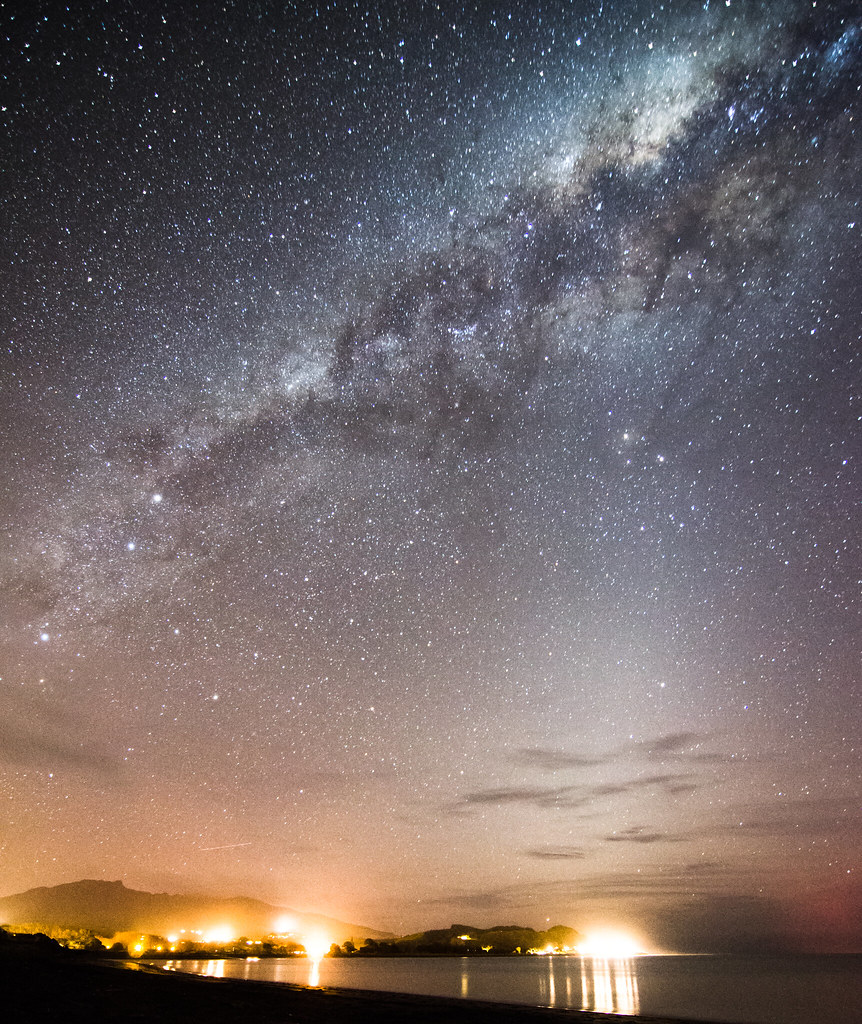
Yet, despite this incomprehensible abundance, our eyes are only capable of perceiving about 4,000 of these celestial titans. Every single one of those visible stars, without exception, resides within our own galactic home, the Milky Way. This fact alone underscores the unfathomable distances involved and the sheer, overwhelming majesty of a cosmos overflowing with these fiery, self-gravitating spheres of plasma.
Read more about: The Unseen Stages: How History Shaped the Actor, From Forbidden Roles to Modern Breakthroughs
2. The Stellar Life Cycle: From Gaseous Nebula to Cosmic Remnant
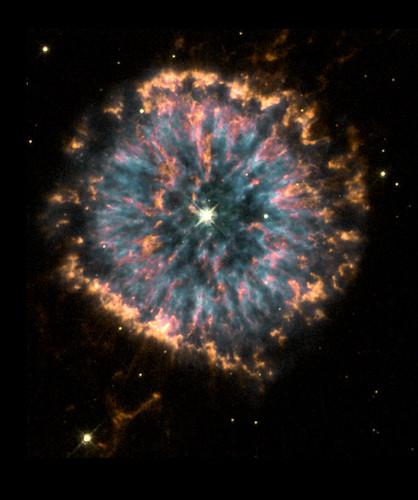
The birth of a star is a slow-motion cosmic drama, a process initiated by the “gravitational collapse of a gaseous nebula of material largely comprising hydrogen, helium, and traces of heavier elements.” Imagine vast, diffuse clouds in space – the cosmic maternity wards – where the building blocks of stars patiently await their calling. It’s a testament to gravity’s power that such tenuous material can eventually coalesce into something so dense and energetic.
Once this gravitational collapse truly begins, a protostar forms, gradually gathering more and more mass. The star’s eventual destiny, its “evolution and eventual fate,” is overwhelmingly determined by its total mass. This initial mass dictates everything from how long it will live to the spectacular way it will eventually meet its end, a celestial butterfly effect playing out on an astronomical timescale.
For the vast majority of its active existence, a star performs its core function with relentless efficiency: it “shines for most of its active life due to the thermonuclear fusion of hydrogen into helium in its core.” This isn’t just a gentle glow; it’s a fierce, continuous atomic transformation that releases unimaginable quantities of energy. This energy then embarks on a complex journey, traversing the star’s interior before finally radiating into the cold, silent expanse of outer space, illuminating galaxies and enabling life.
However, even the most enduring stars eventually exhaust their primary fuel. When “fusion ceases,” the star’s magnificent reign comes to an end, and its core undergoes a final, dramatic transformation. What remains is a dense, compact “stellar remnant: a white dwarf, a neutron star, or—if it is sufficiently massive—a black hole.” Each of these endpoints is a cosmic marvel in itself, a testament to the extreme physics at play when a star’s long, radiant life concludes.

3. Cosmic Alchemy: How Stars Forge the Elements (Stellar Nucleosynthesis)
Beyond their brilliant glow and gravitational might, stars serve an even more fundamental, alchemical purpose in the universe: they are the primary factories for almost all elements heavier than lithium. This process, known as “Stellar nucleosynthesis,” occurs within the fiery hearts of stars themselves or within their explosive remnants. Without these cosmic furnaces, the periodic table as we know it would be a rather sparse document, lacking many of the ingredients essential for planets, life, and literally everything around us.
Consider for a moment the profound implication: the carbon in our bodies, the oxygen we breathe, the iron in our blood – all of it, or at least its constituent atoms – was once forged in the core of a star, billions of years ago. Stars are not just light-givers; they are the true creators, transmuting simpler elements into the complex tapestry of matter that makes up the universe. This makes us, quite literally, “star stuff,” a poetic truth with a solid scientific foundation.
The process of stellar nucleosynthesis isn’t a one-way street; it’s part of an ongoing cosmic recycling program. When stars reach the end of their lives, through “stellar mass loss or supernova explosions,” they don’t simply vanish. Instead, they “return chemically enriched material to the interstellar medium.” This ejected material, now laden with newly forged heavier elements, becomes the raw ingredient for the next generation.
These recycled elements are then, quite literally, “recycled into new stars.” This interstellar medium, enriched by the sacrifices of previous stellar generations, provides the fertile ground for new nebulae to collapse and form fresh stars and planetary systems. It’s a beautifully elegant, self-sustaining cycle of creation and recreation, where the demise of one celestial giant paves the way for the birth of new cosmic wonders.
4. Decoding Starlight: How Astronomers Measure Stellar Properties
For millennia, stars were distant, enigmatic lights, their true nature hidden behind their immense separation. Modern astronomy, however, has developed an astonishing toolkit to peel back these cosmic veils, allowing us to determine a star’s intrinsic characteristics not through direct contact, but through the subtle messages embedded in its light. This celestial detective work is primarily carried out by “observations of a star’s apparent brightness, spectrum, and changes in its position in the sky over time.”
Each of these observational avenues provides a critical piece of the puzzle. A star’s brightness, when coupled with its distance, reveals its true luminosity. Its spectrum, the rainbow of light it emits broken down by wavelength, is a veritable cosmic fingerprint. This spectrum contains dark absorption lines, caused by the star’s atmosphere absorbing specific frequencies, which, when analyzed, betray its chemical composition, temperature, and even its motion.
By meticulously gathering and interpreting this data, astronomers can “determine stellar properties—including mass, age, metallicity (chemical composition), variability, distance, and motion through space.” Think of it as an elaborate game of cosmic forensics, where every flicker, every color shift, every minute positional change offers a clue to the star’s hidden life. This allows us to build comprehensive profiles of distant suns, understanding their personalities from light-years away.
The precision with which these properties can be measured is nothing short of remarkable. From calculating the exact moment a star began its life to predicting its eventual spectacular demise, the ability to decode starlight has transformed our understanding of the universe. It’s a testament to human ingenuity that we can infer so much about these remote, fiery bodies from the faint electromagnetic waves they send across unimaginable distances, bridging the gap between Earth and the farthest reaches of the cosmos.
Read more about: Unlocking the Cosmos: 14 Incredible Star Facts That Are Out of This World!
5. Celestial Dance Partners: Stars in Orbital and Multi-Star Systems
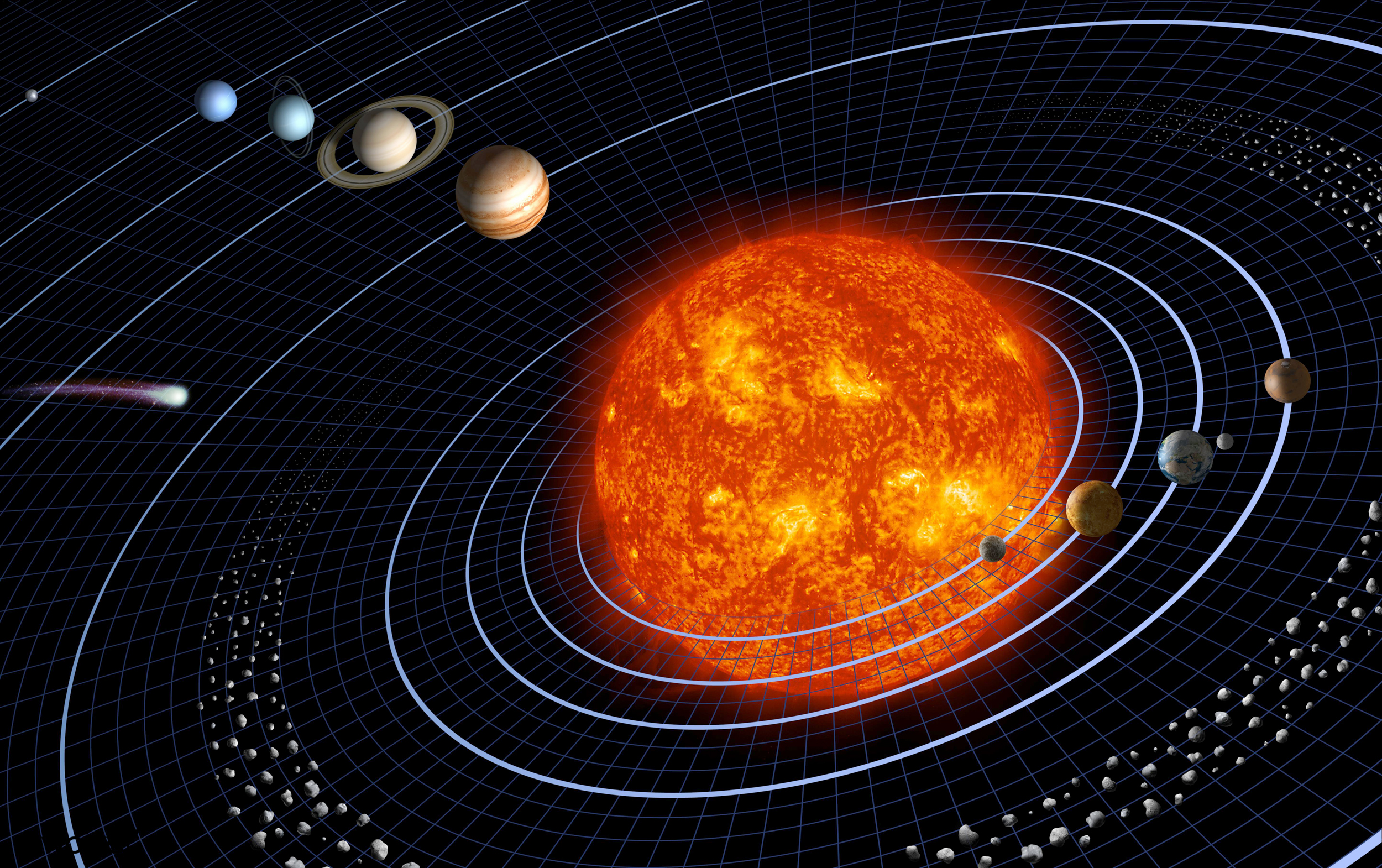
While we often picture stars as solitary wanderers, many are, in fact, engaged in intricate celestial ballets. “Stars can form orbital systems with other astronomical objects, as in planetary systems and star systems with two or more stars.” Our own Sun, with its retinue of planets, is a prime example of a star at the heart of an orbital system, defining the gravitational landscape for an entire cosmic neighborhood.
But the gravitational ties often extend beyond mere planets. A significant number of stars are not alone but are gravitationally bound to one or more stellar companions, forming binary, trinary, or even higher-order multi-star systems. When “two such stars orbit closely, their gravitational interaction can significantly impact their evolution.” This cosmic embrace can lead to dramatic mass transfers, altered lifecycles, and phenomena vastly different from those experienced by single stars.
These multi-star systems are themselves components within even grander structures. Beyond just orbiting each other, groups of stars can form “part of a much larger gravitationally bound structure, such as a star cluster or a galaxy.” From open clusters, loose families of dozens or hundreds of stars, to globular clusters, densely packed spheres containing hundreds of thousands, stars are fundamentally social entities, bound by the invisible hand of gravity.
Indeed, the prevalence of these multi-star systems challenges our conventional notions of a single star in isolation. It suggests that companionship, rather than solitude, might be the more common state for a star in the universe. Understanding these complex orbital dynamics is crucial for unraveling the full tapestry of stellar evolution and galactic structure, revealing a universe where few celestial bodies truly dance alone.

6. A Glimpse into the Past: Stars in Human History and Mythology
Long before the advent of telescopes and spectrographs, stars profoundly shaped human civilization. “Historically, stars have been important to civilizations throughout the world.” They weren’t just objects of scientific curiosity; they were woven into the very fabric of human existence, influencing culture, religion, and practical survival. The night sky was a canvas for stories, a guide for journeys, and a calendar for life on Earth.
Their roles were manifold: “They have been part of religious practices, divination rituals, mythology, used for celestial navigation and orientation, to mark the passage of seasons, and to define calendars.” Imagine societies without reliable timekeeping or maps; the consistent, predictable patterns of stars offered a lifeline, connecting humanity to the rhythms of the cosmos. The stars were, quite literally, humanity’s first universal clock and compass.
Early astronomers, with keen eyes and remarkable patience, distinguished between what they called “fixed stars,” whose positions seemed immutable on the celestial sphere, and “wandering stars” (planets), which moved noticeably over days or weeks. This distinction was a crucial step in understanding the dynamics of the solar system, even if the underlying physics remained a mystery for centuries.
The practical applications were immense. “The motion of the Sun against the background stars (and the horizon) was used to create calendars, which could be used to regulate agricultural practices.” Indeed, our modern world still echoes these ancient observations: “The Gregorian calendar, currently used nearly everywhere in the world, is a solar calendar based on the angle of the Earth’s rotational axis relative to its local star, the Sun.” It’s a direct lineage from ancient star-gazers to our digital calendars.
7. Charting the Heavens: Early Star Catalogues and Discoveries
The human desire to map and categorize the night sky dates back thousands of years, a testament to our innate curiosity and the practical utility of celestial knowledge. The earliest efforts to systematically record the positions of stars laid the groundwork for all future astronomical endeavors. It’s truly fascinating to consider the meticulous work undertaken by ancient cultures without the benefit of any optical aid.
Perhaps the most astonishing early record is “The oldest accurately dated star chart,” which “was the result of ancient Egyptian astronomy in 1534 BC.” This isn’t just a drawing; it’s a precise historical document, demonstrating a sophisticated understanding of celestial patterns millennia ago. The Egyptians used these charts for religious purposes, but also to align their monumental architecture and track the passage of time, showcasing a blend of practicality and spiritual reverence.
Following the Egyptians, “The earliest known star catalogues were compiled by the ancient Babylonian astronomers of Mesopotamia in the late 2nd millennium BC, during the Kassite Period (c. 1531 BC – c. 1155 BC).” These catalogues were not just lists; they were mathematical tools, used for astrological predictions, calendrical purposes, and to understand the movements of planets against the stellar backdrop. They represented a monumental intellectual achievement for their time.
Greek astronomy further refined these traditions. “The first star catalogue in Greek astronomy was created by Aristillus in approximately 300 BC, with the help of Timocharis.” This systematic approach was famously expanded upon by “Hipparchus (2nd century BC),” whose catalogue “included 1,020 stars, and was used to assemble Ptolemy’s star catalogue.” Hipparchus is also celebrated for “the discovery of the first recorded nova (new star),” a stark challenge to the prevailing belief in immutable heavens. It’s a powerful legacy, as “Many of the constellations and star names in use today derive from Greek astronomy,” demonstrating the enduring influence of these pioneering sky-watchers. Indeed, their observational tenacity and conceptual breakthroughs remain foundational to our modern cosmic narrative.
8. The Revolution of Understanding: From Immutable Spheres to Solar Analogs
For millennia, the cosmos was perceived through a lens of permanence, with many ancient astronomers convinced that stars were “permanently affixed to a heavenly sphere” and thus “immutable.” This static view, however, was destined to be challenged, not least by observers like Chinese astronomers who, as early as 185 AD, were the first to “observe and write about a supernova,” an event now known as SN 185. This radical observation, followed by records of SN 1006 and SN 1054, offered early cracks in the dogma of unchangeable heavens.
European astronomers, notably Tycho Brahe, later affirmed this dynamic celestial reality by identifying “new stars” (novae) in the night sky, further dismantling the ancient belief in immutable heavens. The paradigm shifted dramatically with figures like Giordano Bruno, who, in 1584, bravely suggested that stars were not just distant twinkles but “like the Sun,” potentially orbited by other planets, even “Earth-like” ones. This revolutionary idea, pre-empted by ancient Greek philosophers like Democritus and Epicurus, and medieval Islamic cosmologists such as Fakhr al-Din al-Razi, steadily gained consensus among astronomers in the following century, transforming our conception of cosmic neighbors.
This evolving understanding was reinforced by practical observations. Isaac Newton, prompted by theologian Richard Bentley, pondered the distribution of stars, suggesting they were “equally distributed in every direction” to explain the lack of gravitational pull on our Solar System. Further revelations came with Geminiano Montanari’s 1667 recording of luminosity variations in Algol, and Edmond Halley’s pioneering measurements of “proper motion” in nearby “fixed” stars, proving their positions had shifted since ancient times. These discoveries underscored a universe in constant, albeit slow, motion.
As the 18th century drew to a close, William Herschel embarked on the ambitious task of mapping the “distribution of stars in the sky,” counting them in 600 directions and deducing an increase towards the Milky Way’s core. His son, John Herschel, extended this work to the southern hemisphere. Crucially, William Herschel also unveiled that some stars were not just line-of-sight alignments but “physical companions that form binary star systems,” forever changing our perception of stellar solitude.
The 19th and 20th centuries brought even more profound leaps. The birth of “stellar spectroscopy,” pioneered by Joseph von Fraunhofer and Angelo Secchi, allowed astronomers to decode the chemical composition and temperature of stars by analyzing their spectra. Secchi’s 1865 classification scheme, later refined by Annie J. Cannon, laid the foundation for modern stellar taxonomy. Friedrich Bessel’s 1838 parallax measurement of 61 Cygni provided the first direct stellar distance, revealing their “vast separation.” With the advent of photography, photoelectric photometry, and interferometry (Albert A. Michelson’s 1921 stellar diameter measurement), our ability to scrutinize stars from afar became incredibly precise. The theoretical work of the early 20th century, culminating in the Hertzsprung-Russell diagram and Cecilia Payne-Gaposchkin’s 1925 thesis identifying hydrogen and helium as primary stellar constituents, truly propelled the astrophysical study of stars into its modern, sophisticated era.

9. The Genesis of Stars: Gravitational Collapse and Protostellar Birth
Before the majestic brilliance of a star can grace the cosmos, there’s a delicate, protracted process of cosmic birth, one that commences with the “gravitational collapse of a gaseous nebula.” These cosmic maternity wards, often less dense than a vacuum chamber here on Earth, are vast “molecular clouds,” primarily composed of hydrogen, with significant helium and a smattering of heavier elements. The Orion Nebula stands as a prime, vibrant example of such a stellar nursery, a testament to the universe’s ceaseless procreation.
Stars rarely form in isolation; instead, they emerge in bustling “groups of dozens to hundreds of thousands of stars.” The initial spark for this monumental process is often “gravitational instability within a molecular cloud,” a disturbance frequently triggered by external forces. These can range from the intense radiation of pre-existing massive stars, the expansion of interstellar bubbles, to the dramatic collisions of molecular clouds or even entire galaxies. When a region within these clouds achieves a “sufficient density of matter to satisfy the criteria for Jeans instability,” it inexorably begins its self-directed descent, collapsing under its own immense gravitational pull.
As this colossal cloud continues its gravitational collapse, denser pockets of dust and gas begin to emerge, forming distinct entities known as “Bok globules.” Within these globules, the increasing density leads to a remarkable conversion: gravitational energy transforms into heat, causing the temperature to steadily rise. This gradual warming and compaction eventually culminates in the formation of a “protostar” at the core, signifying the point at which the cloud has largely achieved the stable condition of hydrostatic equilibrium, a crucial milestone in its journey to becoming a full-fledged star.
These “pre-main-sequence stars,” whether they are the less massive T Tauri stars or the more substantial Herbig Ae/Be stars, are often enveloped by “protoplanetary disks,” the very cradles of future worlds. Their initial luminosity is primarily powered by the “conversion of gravitational energy” as they continue to contract. This period of gravitational contraction is not instantaneous; it can span “about 10 million years for a star like the Sun,” stretching to “up to 100 million years for a red dwarf,” highlighting the varied pace of stellar infancy. Notably, these nascent stars often emit powerful “jets of gas along their axis of rotation,” which not only help reduce the angular momentum of the collapsing star but also sculpt small patches of nebulosity known as Herbig–Haro objects. These energetic outflows, combined with radiation from nearby massive stars, play a vital role in clearing away the remaining surrounding cloud material, paving the way for the star’s radiant debut. Smaller T Tauri stars follow the Hayashi track, while their more massive counterparts progress along the Henyey track, each path a unique journey to stellar maturity.
It’s also fascinating to consider that “most stars are observed to be members of binary star systems,” and these properties are intrinsic to their formation conditions. The nascent gas cloud must shed its angular momentum to collapse into a star, and the very fragmentation of a cloud into multiple stars serves as an efficient mechanism to “distributes some of that angular momentum.” This hints at a universe where stellar companionship is often etched into a star’s very genesis.
Read more about: Cosmic Confessions: Unearthing the Astonishing Secrets Buried Within the Stars – A Deep Dive into Celestial Mysteries
10. The Main Sequence Era: A Star’s Long, Hydrogen-Burning Prime
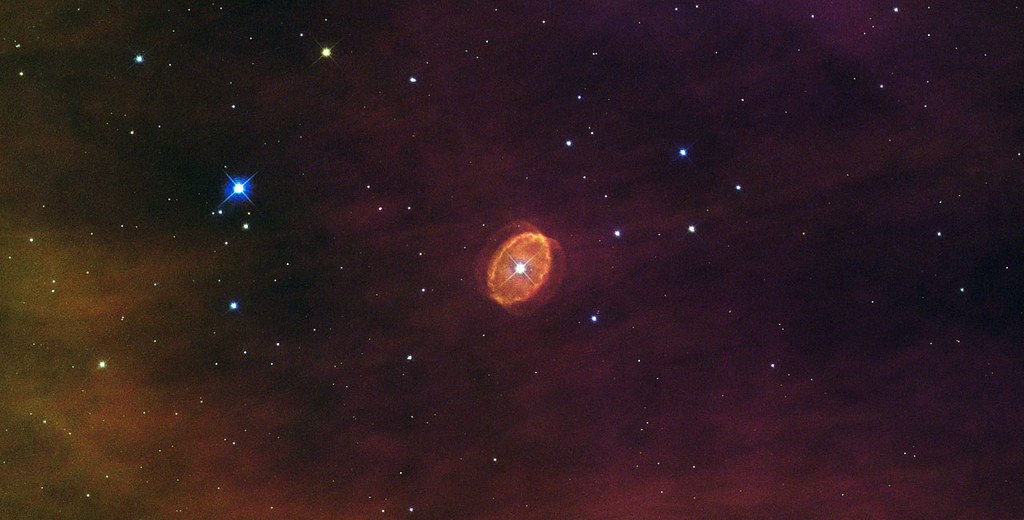
The moment a protostar ignites its internal furnace, reaching sufficient temperature and pressure to sustain “thermonuclear fusion of hydrogen into helium in its core,” it enters the most stable and longest phase of its existence: the main sequence. These stars, often referred to as “dwarf stars,” spend approximately “90% of their lifetimes” in this crucial stage, steadfastly burning hydrogen and radiating immense energy into space. Our Sun, a quintessential main-sequence star, is currently about halfway through its own 10-billion-year prime.
As a star progresses along the main sequence, starting from its “zero-age main sequence,” subtle yet profound changes occur. The proportion of helium in its core gradually increases, leading to a slow but steady uptick in the rate of nuclear fusion. Consequently, the star’s “temperature and luminosity” will also slowly increase. A prime example is our own Sun, which has “increased in luminosity by about 40%” since it settled onto the main sequence some 4.6 billion years ago, a gentle yet persistent brightening over cosmic timescales.
Throughout this main sequence phase, every star continuously emits a “stellar wind” of particles, a steady “outflow of gas into space.” For the vast majority of stars, this mass loss is quite negligible. Our Sun, for instance, sheds a mere “10^-14 M☉ every year,” equating to roughly “0.01% of its total mass over its entire lifespan.” However, for truly colossal stars, this stellar wind becomes a far more significant factor; “very massive stars can lose 10^-7 to 10^-5 M☉ each year,” a considerable fraction that “significantly affecting their evolution.” Indeed, stars that initially boast “more than 50 M☉ can lose over half their total mass while on the main sequence,” fundamentally altering their destinies.
The duration a star spends on the main sequence is predominantly governed by two critical factors: its “amount of fuel” and the “rate at which it fuses it.” Massive stars, with their extravagant energy output, “consume their fuel very rapidly and are short-lived.” Conversely, “low mass stars consume their fuel very slowly,” making them extraordinarily long-lived. Red dwarfs, those stars “less massive than 0.25 M☉,” are remarkably efficient, able to “fuse nearly all of their mass,” contrasting with stars like our Sun (around 1 M☉), which can only fuse about “10% of their mass.” This combination of slow fuel consumption and a substantial usable fuel supply allows the most extreme red dwarfs to endure for “about 12 trillion years,” a lifespan far exceeding the current age of the universe. As they slowly accumulate helium, red dwarfs become hotter and more luminous before eventually contracting into a white dwarf as their hydrogen runs out.
Beyond mass, the “metallicity”—the concentration of elements heavier than helium—also plays a “significant role in the evolution of stars.” These “metals,” as astronomers label them, influence “the time the star takes to burn its fuel” and are crucial in the “formation of its magnetic fields,” which in turn dictate the “strength of its stellar wind.” Older, “population II stars” exhibit “substantially less metallicity” compared to younger, “population I stars.” This difference stems from the composition of the molecular clouds from which they formed, as these clouds become progressively enriched with heavier elements over cosmic eons, a legacy from the preceding generations of dying stars.
11. The Red Giant Phase: When Stars Expand and Transform
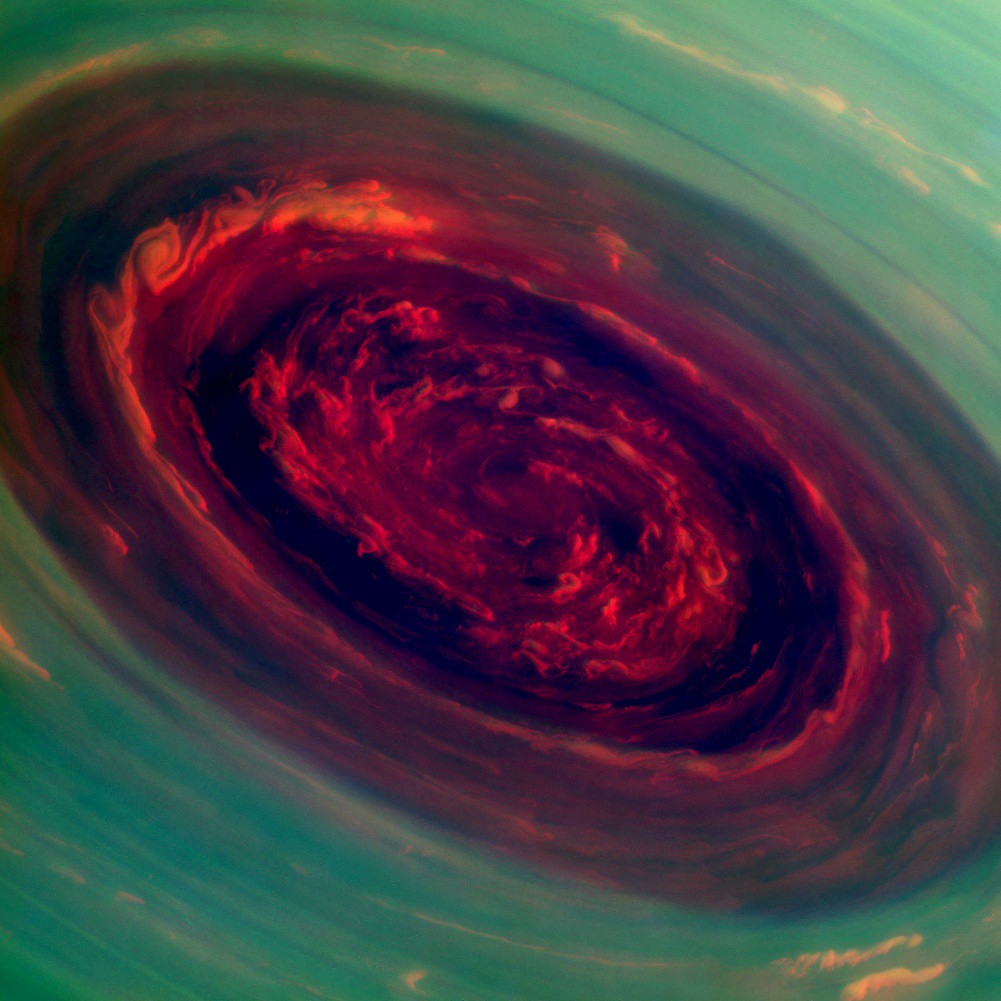
As stars with at least “0.4 M☉” begin to exhaust their core’s hydrogen fuel supply, a dramatic transformation unfolds. Instead of ceasing fusion, they pivot to “fuse hydrogen in a shell surrounding the helium core.” This shift triggers a monumental expansion: the star’s “outer layers expand and cool greatly,” marking its transition into the luminous, sprawling form of a red giant. Our own Sun, in approximately five billion years, is destined for this fate, projected to swell to a maximum radius of “roughly 1 astronomical unit (150 million kilometres),” a staggering 250 times its current size, and in the process, it will shed “30% of its current mass.”
Within this expanding shell, as the hydrogen-burning process continues, the helium core inexorably “increases in mass and temperature.” For red giants up to “2.25 M☉,” this helium core eventually becomes degenerate before helium fusion can begin. When the temperature finally reaches a critical threshold, core helium fusion ignites explosively in what is aptly termed a “helium flash.” This rapid ignition causes the star to “rapidly shrink in radius,” while its “surface temperature increases,” propelling it to a new location on the Hertzsprung-Russell diagram known as the horizontal branch.
However, for more massive stars, the evolutionary path takes a slightly different turn. Helium core fusion commences *before* the core becomes degenerate, allowing these stars to spend an “extended period in the red clump,” slowly burning helium. Only after this phase, and after their outer convective envelope collapses, do they too migrate to the horizontal branch. Following the exhaustion of core helium, the star embarks on another phase of shell burning, this time fusing helium along a shell surrounding a hot carbon core. This marks the star’s journey along the “asymptotic giant branch (AGB),” a phase that parallels the earlier red-giant expansion but with an even “higher luminosity.”
During this AGB phase, particularly massive AGB stars may experience a brief burst of carbon fusion before their core becomes degenerate. The AGB stage is also characterized by “thermal pulses,” caused by instabilities within the star’s core. These pulses manifest as variations in luminosity and, crucially, as violent ejections of matter from the star’s atmosphere, leading to the spectacular formation of a “planetary nebula.” During this dramatic mass loss process, a star can shed “as much as 50 to 70% of its mass.” The ejected material, rich with fusion products “dredged up from the core” due to convection, becomes heavily “enriched with elements like carbon and oxygen.” This chemically enhanced material then disperses, enriching the “general interstellar medium,” a vital step in the cosmic recycling program, ensuring that “future generations of stars are made of the ‘star stuff’ from past stars,” including the very building blocks of planets and life itself.
Read more about: You Won’t Believe What Stars Are Really Made Of: 13 Cosmic Secrets Revealed!
12. The Fiery Demise of Massive Stars: Supergiants and Supernovae
For stars exceeding “9 solar masses,” their post-main sequence evolution diverges dramatically, leading to truly cataclysmic finales. During their helium-burning phase, these colossal stars first balloon into “blue supergiants,” then often further expand to become “red supergiants.” Yet, the most exceptionally massive stars, those “exceeding 40 solar masses”—such as Alnilam, the radiant blue supergiant in Orion’s Belt—may bypass the red supergiant stage entirely due to intense mass loss. Instead, they can evolve into “Wolf–Rayet stars,” characterized by spectra dominated by emission lines of elements heavier than hydrogen, brought to the surface by powerful convection and relentless mass shedding, or through the stripping away of their outer layers.
Once helium is exhausted in the core of these massive stars, the core contracts further, driving temperatures and pressures to unimaginable extremes, sufficient to ignite the fusion of progressively heavier elements. The stellar core becomes a veritable cosmic onion, with “successive stages being fueled by neon,” then “oxygen,” and finally “silicon.” This process results in an “onion-layer shells” structure, where “each shell fuses a different element,” with hydrogen burning in the outermost layer, helium in the next, and so on, creating a hierarchical series of thermonuclear reactions within the star’s heart.
However, this alchemical forging of elements reaches an insurmountable barrier: iron. When a massive star begins producing iron in its core, it faces an inescapable fate. Iron nuclei are “more tightly bound than any heavier nuclei,” meaning that any attempt at fusion beyond iron does not “produce a net release of energy.” Instead, such reactions would *consume* energy, creating a catastrophic energy deficit. Before this ultimate collapse, some massive stars, notably “luminous blue variables,” become incredibly unstable, violently “shedding their mass into space in events known as supernova impostors,” dramatically increasing their brightness. The legendary Eta Carinae, for instance, famously underwent such a “supernova impostor event,” the ‘Great Eruption,’ in the 19th century.
This unstable equilibrium collapses when the iron core grows to an unsustainable mass, typically “more than 1.4 M☉.” Unable to support its own immense weight, the core undergoes a sudden, cataclysmic implosion. Electrons are forcibly driven into protons, forming neutrons, neutrinos, and gamma rays in a burst of electron capture and inverse beta decay. This rapid, violent compression creates an outward-propagating “shockwave” that tears through the star’s outer layers, culminating in one of the universe’s most spectacular phenomena: a “supernova” explosion. These events are so incredibly luminous that they can “briefly outshine the star’s entire home galaxy,” and within the Milky Way, they have historically been observed by -eye witnesses as “new stars” appearing seemingly from nowhere.
The supernova explosion violently “blows away the star’s outer layers,” leaving behind magnificent, expanding nebulae like the Crab Nebula, a celestial monument to a star’s dramatic demise. Crucially, these “blown-off outer layers” are heavily laden with the heavy elements forged within the star’s core, which are then “recycled during the formation of new stars.” This cosmic enrichment is not merely an interesting footnote; these “heavy elements allow the formation of rocky planets,” including our own. Thus, the outflow from supernovae and the powerful stellar winds of massive stars are not just destructive forces, but fundamental architects, playing an “important part in shaping the interstellar medium” and seeding the universe with the very ingredients for new worlds and, ultimately, for life.
Read more about: The Mind-Blowing Science of Stars: Uncovering the Cosmic Truths Behind the Twinkle
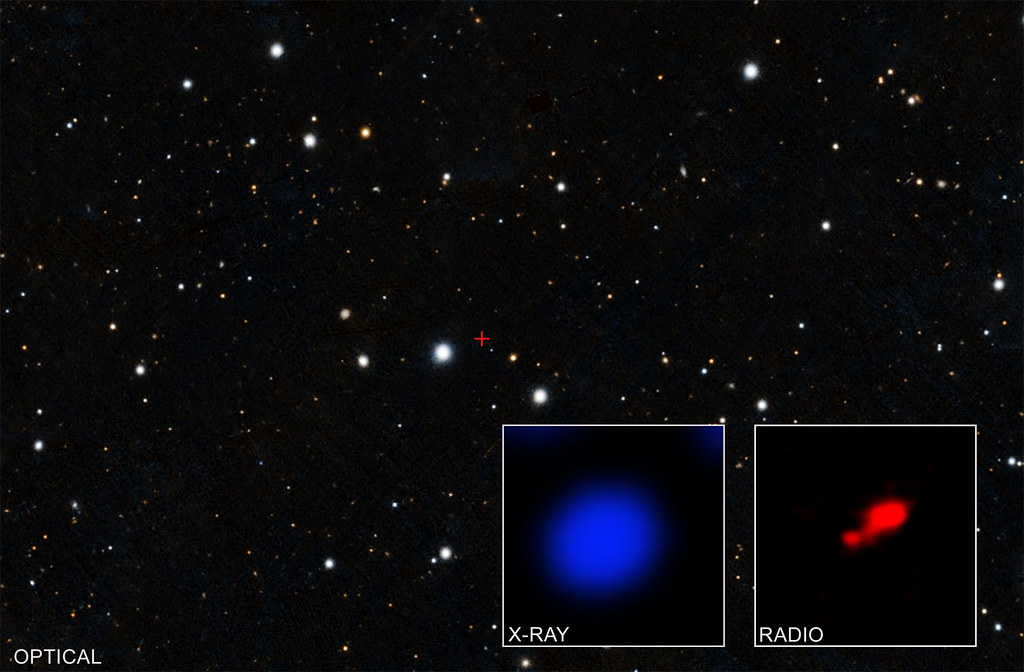
13. The Ultimate Stellar Remnants: White Dwarfs, Neutron Stars, and Black Holes
When a star reaches the very end of its long, luminous life, its final form is dictated by the mass it retains after shedding its outer layers. For stars that, post-expansion and mass loss, leave behind a core with a mass “less than roughly 1.4 M☉,” the journey culminates in the formation of a “white dwarf.” This stellar remnant shrinks to a comparatively tiny object, roughly “the size of Earth,” characterized by “electron-degenerate matter” that is no longer a plasma. White dwarfs lack the necessary mass for further gravitational compression, and over an incredibly long cosmic timescale, they will eventually fade into theoretical “black dwarfs,” cold and dark.
The more dramatic fate awaits the cores of massive stars that undergo supernova explosions. Here, the remnant is compressed into an extraordinarily dense object known as a “neutron star.” These bizarre entities are comprised of “neutron-degenerate matter,” where atomic nuclei have been crushed to the point where electrons and protons merge into neutrons. Neutron stars are often observed as “pulsars” or “X-ray bursters,” emitting regular bursts of radiation as they rapidly spin. Researchers even theorize that an even more exotic state of matter, “QCD matter,” might exist within their extreme cores.
And then there are the universe’s ultimate gravitational prisons: “black holes.” In the case of the most massive stars, those whose core remnants exceed “4 M☉” after a supernova, gravity triumphs over all other forces. The compression is so profound that even light cannot escape its pull, creating a region of spacetime curvature so extreme it is effectively cut off from the rest of the universe. These are the enigmatic, powerful endpoints of the largest stellar lives, silent monuments to the most profound cosmic collapses.

14. The Intricate Ballet of Binary Stars: Evolution and Impact
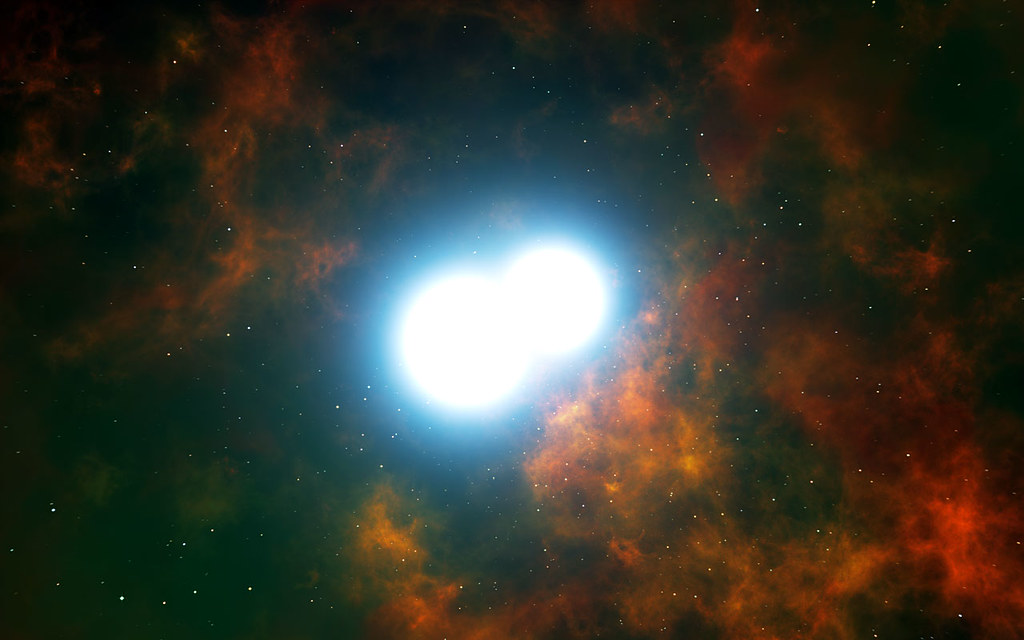
While the life cycles of single stars are complex enough, a vast proportion of celestial bodies engage in intricate gravitational dances, making “binary stars’ evolution significantly differ from that of single stars of the same mass.” This stellar companionship fundamentally alters their trajectories, leading to phenomena far removed from solitary stellar lives. In fact, research indicates that “around half of Sun-like stars, and an even higher proportion of more massive stars, form in multiple systems,” suggesting that cosmic relationships are more common than isolation.
One of the most dramatic consequences of binary interaction occurs when a star expands into a red giant. If its companion is close enough, the expanding star may “overflow its Roche lobe,” the gravitational boundary beyond which material is no longer bound to the star. This leads to spectacular mass transfer, fueling “contact binaries, common-envelope binaries, cataclysmic variables, blue stragglers,” and even “type Ia supernovae,” events crucial for understanding cosmic distances. This mass transfer can even result in what’s known as the “Algol paradox,” where the “most-evolved star in a system is the least massive,” a counterintuitive twist on stellar aging.
The pervasive nature of these multi-star systems means their evolution is “intensely researched.” Their interactions can profoundly “influence such phenomena as novae and supernovae,” impacting the very mechanics of these explosive events. Furthermore, they play a role in “the formation of certain types of star” and are critical in “the enrichment of space with nucleosynthesis products,” as their unique evolutionary paths can distribute heavy elements differently than single stars.
Indeed, the precise “influence of binary star evolution on the formation of evolved massive stars such as luminous blue variables, Wolf–Rayet stars, and the progenitors of certain classes of core collapse supernova is still disputed.” Some astronomers argue that “single massive stars may be unable to expel their outer layers fast enough” to produce the observed numbers and types of these evolved stars, or the specific supernova progenitors we witness. Consequently, “mass transfer through gravitational stripping in binary systems is seen by some astronomers as the solution to that problem,” highlighting the crucial role of stellar companionship in shaping the most extreme stellar phenomena.
The prevalence of binary systems also sheds light on star formation itself. “Most stars are observed to be members of binary star systems, and the properties of those binaries are the result of the conditions in which they formed.” While it was once thought that many stars formed singly, a 2017 study of the Perseus molecular cloud presented a compelling model: “all stars initially formed as binaries,” with some later splitting to leave single stars behind. Even if two-thirds of stars in the Milky Way are currently single red dwarfs, the highest proportion of single star systems, this foundational binary origin speaks volumes about the early, dynamic environments where stars are forged, suggesting a universe where companionship, even if temporary, is often the cosmic default.
**The Ever-Unfolding Cosmic Drama**
Read more about: The Mind-Blowing Science of Stars: Uncovering the Cosmic Truths Behind the Twinkle
From their humble beginnings in swirling nebulae to their spectacular, universe-altering demises, stars are the universe’s most profound protagonists. They are the engines of creation, continuously forging the elements that make up everything around us, including ourselves. Their lives, whether lived in solitary splendor or in the intricate ballet of multi-star systems, are a testament to the dynamic, interconnected nature of the cosmos. As we continue to decode the messages etched in their light, we not only unravel the mysteries of these distant suns but also gain a deeper appreciation for our own place in this grand, ever-unfolding cosmic drama.”