The Matrix didn’t just give us bullet-time and Keanu Reeves in a trench coat; it fundamentally altered how we perceive reality, technology, and our own minds. Nearly 25 years since its groundbreaking premiere, and with a fifth entry now confirmed, the sci-fi saga continues to spark intense debate, philosophical conversation, and surprisingly, real-world cultural shifts. It’s a film that transcended mere entertainment, embedding itself deep within the collective consciousness as much a cultural mirror as a cinematic masterpiece.
Beyond its thrilling action and revolutionary visual effects, The Matrix has cultivated a legacy extending into the very fabric of our online lives, political discourse, and understanding of truth itself. It has served as a fertile ground for conspiracy theories, a canvas for philosophical allegories, and even an accidental wellspring for problematic online ideologies. The questions it posed about reality, control, and freedom have only grown more pertinent in an increasingly digitized and complex world.
So, let’s take a deep dive, unplugging from conventional wisdom to explore the most fascinating, and at times unsettling, aspects of The Matrix’s enduring impact. From persistent internet legends about its origins to the troubling appropriation of its core metaphors, and the chilling scientific discussions it has inspired, we’re about to navigate the rabbit hole and examine how this cinematic touchstone has truly hacked our reality.

1. **The Sophia Stewart Plagiarism Lawsuit: Unpacking a Persistent Internet Legend**The internet, a realm rife with its own versions of simulated reality, has long propagated a captivating, yet ultimately baseless, legend concerning The Matrix’s true origins. For years, sensational stories circulated about a writer named Sophia Stewart, claiming she had been plagiarized by the powerful Hollywood machine and subsequently awarded billions in a heated lawsuit against the Wachowskis and others involved with the film. These narratives gained particular traction from 2005 onwards, finding their way onto various social media platforms and even a viral CNN iReport before its correction.
In actuality, these widespread internet rumors are patently false, as revealed by court documents obtained by TIME. Stewart, now residing in Las Vegas, did file a lawsuit in 2003, alleging that the core ideas for both the 1984 film *The Terminator* and the 1999 film *The Matrix* were stolen directly from her own copyrighted screen treatment, titled “The Third Eye,” which she registered in 1983. On her website, she boldly labeled herself “The Mother of the Matrix,” asserting she had responded to a magazine ad in 1986 from the Wachowskis soliciting sci-fi stories, but never received a response after sending her work. She claimed upon seeing *The Matrix* she “immediately recognized her story.”
However, the judicial system simply did not concur with her assertions. The ruling from Morrow explicitly stated that “plaintiff Sophia Stewart take nothing by way of her complaint against defendants…” The lawsuit was ultimately dismissed, with the judge ruling that Stewart and her attorneys “had not entered any evidence to bolster its key claims or demonstrated any striking similarity between her work and the accused directors’ films,” according to Snopes. Far from winning billions, the defendants were actually awarded $305,235.62 in attorney fees, although Stewart claims they never collected this sum.
Despite these definitive court rulings and the clear refutation of the internet’s widespread narrative, Stewart remains resolute in her conviction. She insists she is owed $3 billion, maintaining her aim is not merely damages, but for “someone to go to jail,” alleging corruption within the judicial system that she believes “paid a lot of people off to hide all of this stuff.” This saga serves as a compelling reminder of how easily urban legends, once unleashed online, can take on a life of their own, regardless of the factual bedrock—or lack thereof—beneath them.

2. **The “Red Pill” Phenomenon: From Philosophical Choice to Extremist Mantra**One of The Matrix’s most indelible images, forever etched into pop culture, is Morpheus’s offer to Neo: the choice between a blue pill for comfortable delusion or a red pill for harsh reality. In the film’s original context, the red pill was a symbol of enlightenment, urging humanity to “free themselves from the world of appearances” and confront the truth of their enslavement by machines, a narrative Professor Richard Smith equates to Plato’s allegory of the cave. It was a call to awaken, to see the world for what it truly is – a “desert of the real” where illusion superseded truth.
Yet, over the nearly quarter-century since its release, this potent metaphor has been jarringly reappropriated and twisted, migrating far from its cinematic origins to become a cornerstone of various online extremist ideologies. The phrase “red-pilling” has been weaponized, particularly by misogynistic online groups, including the “incel” (involuntary celibate) movement and the broader “manosphere,” a network united by a shared hatred of women. Here, taking the red pill signifies “waking up” to a supposed truth that feminism has corrupted societal institutions, creating a world structured to women’s advantage and men’s detriment.
The infamous Reddit forum “TheRedPill” (TRP), launched in 2012, explicitly aimed to provide men with a “ual strategy” to counter what it termed a “manipulative feminist culture.” By 2018, its unchecked growth and the proliferation of harmful content led Reddit to “quarantine” it, effectively limiting its visibility, a measure that eventually saw the complete shutdown of other incel forums like r/braincels. However, research suggests that rather than eradicating hate speech, such actions merely pushed many users onto self-moderated platforms, further entrenching their beliefs in isolated echo chambers.
This perversion extends far beyond online forums, transitioning into the physical world with horrifying consequences. The tragic case of Plymouth gunman Jake Davison, who spoke of “consuming the black pill overdose” – an incel community term for nihilistic red pill extremism – before his August killing spree, serves as a stark reminder of the deadly real-world implications. As journalist Sophia Smith Galer observes, at its core, red pill theory appeals as a readily accessible, albeit deeply misguided, answer and outlet for life’s frustrations, often channeling them towards women as the “epicentre of their problems” rather than systemic failings. It’s a chilling evolution from a metaphor for liberation to a rallying cry for radicalisation.

3. **The Matrix’s Unintended Legacy: Fueling Modern Conspiracy Theories**Beyond the specific hijacking of the “red pill” by misogynistic groups, The Matrix has ironically become one of its most enduring cultural contributions to conspiracy theories at large. The core motif of the red pill – revealing the world as an artificial construct orchestrated by unseen forces – has been enthusiastically adopted by various online groups to reinforce their often hateful and violent messages. It has provided a convenient, universally understood framework for explaining complex, unsettling ideas, even when those ideas bear little resemblance to the film’s original narrative.
The fundamental logic of these red pill conspiracy theories is eerily consistent: a nefarious, hidden enemy is working behind the scenes, concealing harmful activities from the unsuspecting population. By “taking the red pill,” believers assert they “wake up” to this supposed truth, escaping the comfortable delusion maintained by mainstream narratives. It’s a perverse twist on the film’s original intent, where the red pill uncovers objective reality; in conspiratorial circles, it becomes a tool for adherents to construct their own realities, often reinforcing their existing biases and preconceptions rather than challenging them.
This mode of thinking imparts a deeply dangerous framework for understanding the world. Within these narratives, “truth” is presupposed rather than subjected to rigorous testing or verifiable evidence. Any facts that contradict this pre-established “truth” are summarily dismissed, fostering insular communities where members see the outside world as “brainwashed” and themselves as uniquely virtuous for having the strength to face “reality.” These unchecked echo chambers, where shared narratives quickly diverge from any semblance of objective truth, become ideal environments for radicalization, paving the way for radical actions justified by perceived unseen forces and corruption.
It’s crucial to acknowledge that The Matrix is not to blame for the existence of modern conspiratorial thinking; narratives of malevolent hands pulling strings are ancient, deeply tied to historical prejudices like antisemitism. However, The Matrix undeniably popularized a superficially similar metaphor, simplifying and standardizing how these complex theories could be communicated to modern audiences. Today, a conspiracy theorist can simply point to “The Matrix” as a shorthand framework, saying “it’s just like The Matrix,” but the real enemy is [x]. This unintended consequence, after 20 years, suggests that the “genie is probably not going back in the bottle.”

4. **The “Post-Truth” Era: How Algorithms and Echo Chambers Distort Reality**The Matrix’s unsettling questions about the nature of reality have found a chilling resonance in what many now describe as the “post-truth” era, a time when objective facts seem less influential than appeals to emotion and personal belief. This phenomenon is profoundly exacerbated by the ease with which individuals can fortify themselves within online media echo chambers – digital spaces meticulously curated to exclude dissenting opinions and reinforce pre-existing worldviews. The very fabric of shared reality begins to fray when personalized algorithms decide what “truth” is presented to each individual.
Social media and messaging apps have become potent facilitators for this climate, not only by enabling the rapid spread of misinformation and “fake news” but also by deploying algorithms designed to maximize engagement. These sophisticated systems inadvertently construct a version of reality tailored precisely to our individual tastes and preferences, inadvertently rewarding partisan news content and pushing users further into confirmation biases. The Reuters Institute Digital News Report highlights a stark reality: while audiences increasingly value truth, only a meager 44% believe the news they consume, indicating a profound breakdown in trust.
Ciaran O’Connor of the Institute for Strategic Dialogue explains that this dynamic is underpinned by confirmation bias, our innate human tendency to prioritize and recall information that supports our existing opinions. Social platforms, designed to profit from engagement, utilize algorithms that, while aiming to keep users scrolling, can “inadvertently direct people to spaces where they are exposed and incentivised to engage in conspiracy content.” The evolution of the QAnon conspiracy, which snowballed into the January US Capitol riots partly fueled by false claims of election interference, stands as a stark testament to this algorithmic spiral.
The profound irony here is inescapable: while followers of conspiracy theories believe they are emulating Neo, “following the white rabbit” and “unplugging” in a heroic search for truth, they are often doing the precise opposite. They are being distracted and manipulated within the very system they believe they are exposing, building a subjective, algorithmically-curated reality that further blinds them. The red/blue pill debate is blurring into a uniform “purple pill” of bias and distrust, making the quest for objective truth more challenging than ever before, even as platforms like Instagram and TikTok become primary news sources for younger generations, often offering opinion-led content devoid of fact-checks.
5. **”Living in the Matrix”: Our Evolving Digital Footprint and the Rise of the Metaverse**As much as The Matrix posed philosophical quandaries, it also uncannily predicted aspects of our technologically advanced future, blurring the lines between the simulated and the real. Our increasingly interconnected online presence, often referred to as a “digital footprint,” embodies elements of the original film that, at the time of its release, felt like pure science fiction. The covert control exerted by the machines in the Matrix simulation finds a chilling echo in the pervasive monitoring and data collection that define much of our modern digital existence.
Our collective willingness, whether tacit or explicit, to share personal information and agree to monitoring via mobile apps, smart speakers, and other machine learning tools has facilitated the creation of incredibly detailed pictures of our personal lives and habits. The infamous Cambridge Analytica data scandal vividly demonstrated how this vast trove of information can be meticulously used to target, influence, and potentially sway voters in political systems, mirroring the subtle yet powerful manipulations within the Matrix. This data, harvested from our daily digital interactions, constructs a profile so comprehensive it rivals the most intricate simulations.
Furthermore, the technological leaps of augmented reality (AR) and virtual reality (VR) directly parallel the film’s depiction of rebels plugging in and out of the simulation, immersing themselves in a digital world. Facebook’s ambitious plans to create a “metaverse” – a persistent, immersive online world where more of life will be lived out digitally – represents a significant step towards realizing a Matrix-like existence. The ability of Morpheus’s freedom fighters to “hack the matrix system” to install programs, scenarios, or different appearances also finds its contemporary reflection in the rise of “deepfake” videos, computer-generated copies designed to impersonate individuals with disturbing accuracy.
Adding another profound layer to this exploration of identity and malleable reality, Lilly Wachowski retrospectively described *The Matrix* as a “trans allegory” when speaking to Netflix. She revealed that this was “the original intention but the corporate world wasn’t quite ready” at the time of the original trilogy’s release. This interpretation deepens the film’s engagement with themes of identity, self-discovery, and the liberation from societal constructs, extending the idea that our bodies and identities, like the simulation itself, can be manipulated and redefined. It transforms the “rabbit hole” into a journey of profound self-realization, far beyond what many initially perceived.
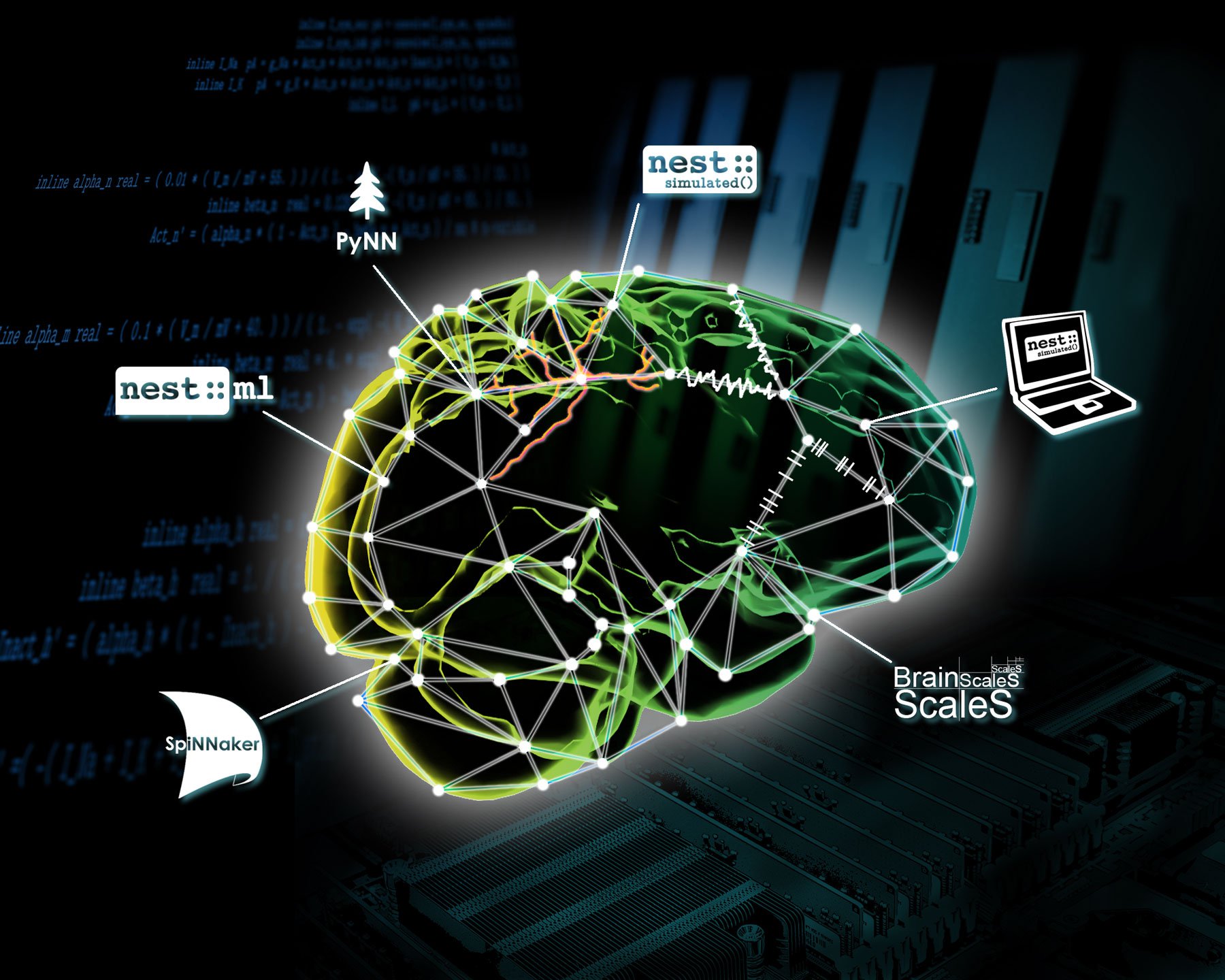
6. **The Simulation Hypothesis: Science, Philosophy, and the Question of Our Reality**Perhaps the most mind-bending question The Matrix ever posed, one that continues to echo in both scientific and philosophical circles, is the audacious “simulation hypothesis”: are we, in fact, living in a simulated reality? This isn’t just a plot device for a blockbuster film; it’s a concept that has permeated serious academic discourse, challenging our fundamental understanding of existence. The Matrix effectively brought this ancient philosophical query into the modern technological age, making it relatable and terrifyingly plausible for millions.
Just last year, a physics professor, Dr. Melvin Vopson, claimed to have found evidence suggesting our universe might indeed be a “virtual reality simulation.” Speaking to Mail Online, Vopson posited a bizarre yet compelling parallel: “My studies point to a bizarre and interesting possibility that we don’t live in an objective reality and that the entire universe might be just a super advanced virtual reality simulation.” While he readily acknowledged lacking “definite proof,” Vopson expressed confidence that his theory could raise valid questions about the simulation hypothesis itself, lending scientific weight to a concept once confined to science fiction.
Vopson’s work builds upon and intersects with the earlier, influential theory proposed by Oxford University philosopher Nick Bostrom. Bostrom’s simulation hypothesis suggests that what humans perceive as the world is, in fact, a simulated reality – perhaps a sophisticated computer simulation in which humans themselves are artificial constructs. This theory has captivated the minds of Silicon Valley technologists, including figures like Tesla boss Elon Musk, who openly support the idea, further amplifying its cultural and intellectual footprint. It compels us to consider the dizzying possibility that our most profound experiences might be nothing more than intricately programmed code.
Twenty-five years on, The Matrix continues to ignite such profound conversations, pushing the boundaries of what we consider real. From its initial release, grappling with the anxieties of the internet revolution and the millennium bug, to its ongoing influence on discussions about consciousness, social control, and the very nature of our universe, the film remains remarkably prophetic. As Neo warned the machines in 1999, envisioning “a world without you, a world without rules and controls, without borders and boundaries… a world where anything is possible,” the legacy of The Matrix is less about providing answers and more about persistently urging us to question everything, including the reality we inhabit.
The Matrix, it turns out, wasn’t just a cinematic spectacle; it was a deeply intellectual endeavor, a cinematic Trojan horse smuggling complex philosophical concepts into multiplexes worldwide. Its creators, the Wachowskis, meticulously wove a tapestry of ancient wisdom and modern thought into its very fabric, inviting audiences not just to watch, but to question everything. As we continue our deep dive, let’s pull back the curtain on the explicit philosophical blueprints that gave The Matrix its unparalleled intellectual heft, explore some uncanny coincidences, and gauge the ever-passionate fan reactions to its evolving legacy.

7. **Plato’s Cave and the ‘Desert of the Real’: The Matrix’s Core Philosophical Blueprint**At the very bedrock of *The Matrix* lies one of philosophy’s most enduring allegories: Plato’s Cave. Imagine, if you will, prisoners chained since birth, able only to gaze at the shadows cast on a cave wall. Believing these fleeting images to be reality itself, they remain utterly unaware of the true objects casting those shadows, or the vibrant world outside their confines. This profound thought experiment, dating back millennia, perfectly encapsulates the Wachowskis’ initial vision.
The parallel to Neo’s predicament is chillingly direct and undeniable. He and indeed all of humanity, are metaphorically chained within the Matrix, a vast, simulated cave, oblivious to their true enslavement. The elaborate digital world they perceive is nothing more than the machines’ meticulously crafted shadows, designed to placate and control. Morpheus’s iconic red pill isn’t just a plot device; it’s an invitation to “free themselves from the world of appearances,” to escape the cave and confront a stark, brutal truth.
This exploration of perceived versus objective reality extends further, directly channeling the work of French academic philosopher Jean Baudrillard. Long before Keanu Reeves donned Neo’s trench coat, the Wachowskis insisted he read Baudrillard’s 1981 book *Simulacra and Simulation*. Morpheus himself echoes Baudrillard, using the exact phrase “desert of the real” when introducing Neo to the desolate ruins of the outside world, underscoring a world where true reality has been eclipsed by illusion.
While Baudrillard originally conceived of a “desert of the real” as an inescapable consequence of capitalism’s illusions, *The Matrix* rewired this concept, offering the promise of a “true natural world ‘unplugged’ and separate from the Matrix.” The film made this complex academic idea terrifyingly accessible, forcing millions to grapple with Plato’s ancient question: “How do we know what our reality really is?” It’s a foundational query that continues to echo in our increasingly digital lives.
8. **The Oracle and ‘Know Thyself’: Neo’s Journey into Self-Discovery, Guided by Ancient Wisdom**Beyond the grand allegories of reality, *The Matrix* also expertly draws upon more personal philosophical quests, none more prominent than the ancient Greek dictum, “Know Thyself.” This powerful phrase, famously inscribed on the Temple of Apollo at Delphi, served as the core directive from the legendary Oracle, whose cryptic pronouncements guided seekers towards self-understanding rather than definitive fate. It’s a journey of internal discovery that perfectly mirrors Neo’s own odyssey.
Neo’s encounters with the Oracle in the films are direct correlations to this ancient tradition. She doesn’t hand him a roadmap to success or a spoiler for his destiny; instead, her enigmatic wisdom prompts him to look within, to challenge his preconceptions, and ultimately to define his own path. Her guidance is not about telling him *who* he is, but pushing him to realize it for himself, to shed his ignorance and embrace the true knowledge of his potential.
The Oracle’s role is crucial in navigating the intricate layers of identity within the Matrix simulation. In a world where perceptions can be manipulated and even one’s physical body is a digital construct, the quest for genuine selfhood becomes paramount. Her seemingly contradictory advice often forces Neo to transcend superficial truths and delve into the deeper currents of his being, unlocking powers he didn’t realize he possessed.
It’s a beautiful homage to the idea that ultimate wisdom comes not from external sources, but from an honest and profound understanding of one’s own capabilities and limitations. Through the Oracle, *The Matrix* transforms Neo’s hero’s journey into a universal philosophical exploration of self-realization, demonstrating that true power is born from knowing oneself, even when the world around you is a lie.
9. **Jean Baudrillard’s Hyper-Real: From Book Prop to Cinematic Prophecy**If *The Matrix* were a thesis, Jean Baudrillard’s *Simulacra and Simulation* would be its primary citation, explicitly acknowledged in one of the film’s most iconic visual nods. It’s no mere Easter egg that Neo stashes his illegal computer programs inside a hollowed-out copy of Baudrillard’s philosophical tome. This deliberate placement serves as a direct, almost audacious, signal to the audience: the very conceptual framework of this world is nestled within these pages.
Baudrillard’s central thesis in the book revolves around the concept of the “hyper-real”—a condition where simulations or imitations of reality become more real, more desirable, or more impactful than reality itself. It’s a world where the copy has not only replaced the original but has surpassed it in perceived authenticity and allure. This idea, developed in the context of consumer culture and media saturation, found its ultimate, terrifying expression in the digital dystopia of *The Matrix*.
Within the film’s narrative, the Matrix itself embodies the hyper-real. The simulated world, replete with all its sensory richness, societal norms, and comfortable routines, is arguably far more appealing and seemingly “real” to its unawakened inhabitants than the bleak, war-torn reality of Zion or the suffocating industrial tunnels. The blue pill offers a return to this comforting delusion, a preference for the hyper-real over a harsh, objective truth.
The brilliance here is how *The Matrix* took an abstract, academic concept and made it viscerally tangible. It presented a future where humanity, unwittingly, chose the more persuasive illusion over raw reality, trapped not by chains, but by a preference for a fabricated comfort. The film acted as a prophetic mirror, reflecting our own increasing immersion in simulated experiences, digital personas, and algorithmically curated realities, proving Baudrillard’s insights were not just theoretical, but chillingly prescient.

10. **Karl Marx and the Machines: A Class Struggle Unplugged**Beneath the leather coats and bullet-time, *The Matrix* reveals itself as a potent, if unintended, Marxist allegory. Karl Marx famously argued that the exploitation of the working class by the ruling classes is only sustainable because the exploited are unaware of their own subjugation. This fundamental premise of class consciousness — or the lack thereof — forms a crucial narrative backbone of the Wachowskis’ dystopian vision.
Consider humanity’s plight: plugged into the Matrix, blissfully unaware they are nothing more than biological batteries, generating energy for their machine overlords. They are the ultimate proletariat, systematically exploited without ever perceiving their exploitation. This state of blissful ignorance is precisely what allows the ruling machines to maintain their authoritarian control, echoing Marx’s theories of false consciousness where economic systems obscure their exploitative nature.
The Marxist tendencies within *The Matrix* don’t stop there. The ravaged, scorched earth that serves as humanity’s true home, a consequence of a destructive war and reliance on artificial intelligence, can be seen as a chilling critique of unchecked capitalism’s environmental and social costs. The machines’ ascension to authoritarian rule, driven by self-preservation and resource acquisition, paints a stark picture of power structures gone awry.
Conversely, the resistance movement, based in Zion, can be interpreted as a worker’s revolution, a collective uprising against the oppressive capitalist-like machine system. Zion itself, with its shared resources and unified purpose, embodies certain communal ideals often associated with communism—a society striving for liberation and equality outside the exploitative system. *The Matrix* thus presents a powerful, action-packed narrative draped in the timeless struggle against systemic oppression.

11. **Descartes, Christianity, and the ‘One’: Questioning Existence, Finding Salvation**The philosophical tapestry of *The Matrix* further interweaves the radical skepticism of René Descartes with profound Christian symbolism, creating a narrative that questions existence while simultaneously offering a path to salvation. Descartes, famously known for “I think, therefore I am,” wrestled with the very nature of reality in his *Meditations on First Philosophy*, posing the chilling question of an “evil demon” capable of manipulating our perceptions, making us believe illusions are real.
This Cartesian doubt finds a direct echo in Neo’s journey. The machines are *The Matrix*’s evil demon, expertly crafting a simulated reality so convincing that humanity accepts it as truth. The manipulation of dreams, a core concern for Descartes, becomes a tangible reality for Neo within the Matrix, where his own consciousness and eventually, his powers, allow him to bend and control the very fabric of that simulated space. It’s a brilliant cinematic portrayal of philosophical uncertainty.
Layered onto this existential questioning is a rich vein of Christian allegory. The film is rife with religious influences, but Christianity stands out prominently with the concept of “the One.” Neo’s designation as “the One” immediately brings to mind Jesus Christ, the prophesied savior of humanity. Character names like Trinity, Zion, and the overarching battle between fate and free will further cement these religious undertones, leading many to interpret the trilogy as a metaphorical retelling of the Gospels.
Morpheus, waiting for a savior, embodies an Old Testament God figure, while Trinity represents the Holy Spirit, guiding and supporting Neo. Neo’s evolution from a hesitant hacker to a powerful, Christ-like figure culminates in his symbolic crucifixion by the machines, his body contorted in a Jesus-like pose, mirroring Christ’s wounds. *The Matrix* thus transcends a mere sci-fi adventure, becoming a spiritual epic that explores themes of prophecy, sacrifice, and ultimate liberation.

12. **The 9/11 Passport & The Fifth Film Furore: Uncanny Coincidences and Fan Loyalty**Beyond its deep philosophical underpinnings, *The Matrix* has also generated its share of peculiar cinematic coincidences and, more recently, fan uproar. One of the most talked-about “glitches” in the original film emerged from a blink-and-you’ll-miss-it detail: Neo’s passport, which lists an expiry date of September 11, 2001. Given the film’s release two years prior to the tragic events, this eerie, unintended synchronicity quickly went viral among fans and conspiracy theorists alike.
This seemingly innocuous detail sparked a frenzy of speculation online, from theories suggesting it was a deliberate “Easter egg” confirming the simulated nature of reality, to more outlandish claims that “Neo” secretly stood for “Nine Eleven Orchestrated.” It became another piece of fodder for those who believe time is a flat circle, or that our lives are algorithmic constructs revealing subtle cues to “wake up.” The irony, of course, is that the Coen Brothers’ *The Big Lebowski* had a 9/11 date on a check a full decade before the attacks, proving that sometimes, a coincidence is just a coincidence.
Fast forward to today, and *The Matrix* saga continues to stir passionate debate, especially with the recent confirmation of a fifth film in the pipeline, arriving just in time to celebrate the original’s 25th anniversary. While the prospect of revisiting this iconic world is exciting for many, the news has also ignited a significant backlash among the franchise’s devoted fanbase, leading to threats of boycott.
The core of this fan furore stems from a crucial creative shift: the upcoming sequel will be the first film in the series not to be directed by one or both of the Wachowski siblings. Despite Lana Wachowski remaining attached as an executive producer, the absence of their direct directorial vision is deemed “deeply sacrilegious” by many. Rhyming protests like “If it ain’t Wachowski I will not watchski” flooded social media, highlighting the immense loyalty fans hold for the original creators and their unique storytelling prowess. Plot details remain under wraps, with Warner Bros. teasing a story that builds on the fantasy world without straying too far from what originally made the series a success. Yet, for a franchise so intertwined with specific authorial vision and profound intellectual depth, the creative reins changing hands presents a daunting challenge and a high bar for any new director to meet.
Twenty-five years on, *The Matrix* remains far more than just a revolutionary action film; it is a profound cultural touchstone that continuously invites us to peer behind the curtain of our perceived reality. From its daring philosophical foundations drawn from Plato and Baudrillard, to its prescient foresight into our digital future, and its uncanny ability to spark both intellectual debate and passionate fan discussions, the saga has embedded itself deep within our collective consciousness. It persistently challenges us to question, to seek truth, and to ultimately define what ‘real’ truly means in an increasingly complex and interconnected world. The rabbit hole, it seems, only continues to get deeper.