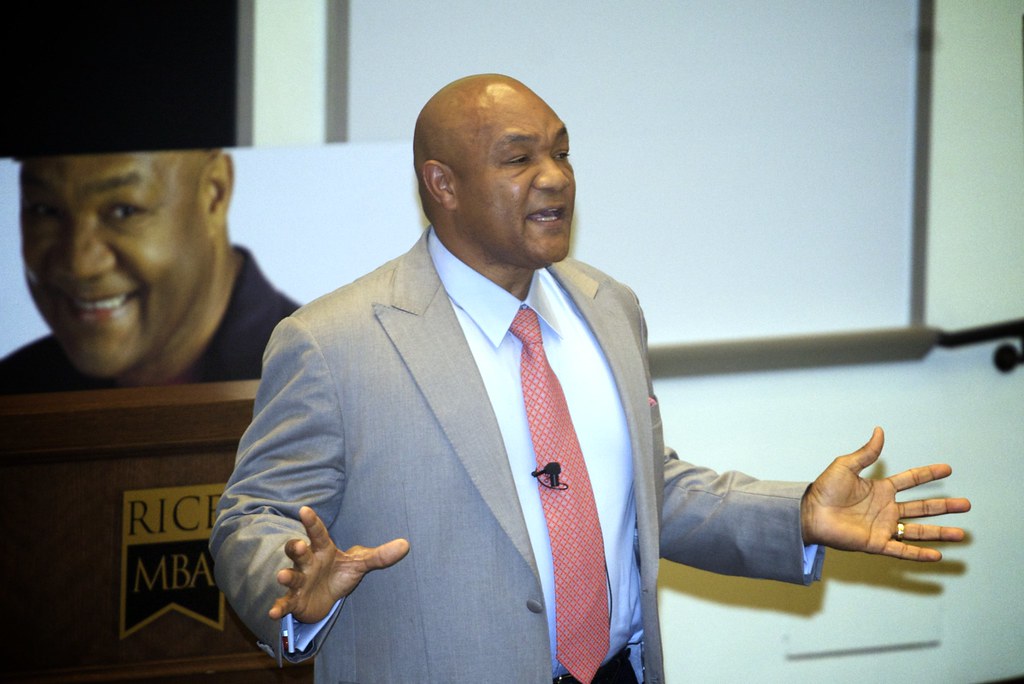
George Edward Foreman. The very name conjures images of raw, unbridled power, a man who once bulldozed his way through the heavyweight division, claiming an Olympic gold medal and two world titles. Nicknamed “Big George,” his professional boxing career, spanning from 1967 to 1997, etched his legend into the annals of sports history with an astounding 68 knockouts among his 76 wins.
Yet, for all his monumental achievements within the squared circle, Foreman’s legacy is perhaps even more profoundly defined by a singular, guiding principle that took root after his initial retirement from boxing in 1977. This wasn’t merely a shift in career; it was a wholesale transformation of identity, purpose, and spirit, setting him on a path far removed from the brutal spectacle of championship fights.
This article delves deep into the foundational elements of this remarkable metamorphosis, tracing the pivotal moments and decisions that shaped George Foreman’s life beyond his initial professional boxing career. It explores the spiritual awakening, the dedication to ministry, and the philanthropic endeavors that coalesced into the powerful “rule” he swore by, ultimately influencing even his astonishing return to the ring.
1. The Fateful Night in Puerto Rico: A Life-Altering Experience
The year was 1977, and George Foreman, still reeling from his iconic loss to Muhammad Ali in “The Rumble in the Jungle,” was attempting to reclaim his dominance. After securing a win against Pedro Agosto in Florida, he flew to Puerto Rico for his next bout against the skilled Jimmy Young. Uncharacteristically, Foreman arrived just a day before the fight, denying himself crucial time to acclimatize, a decision that would have unforeseen and profound consequences.
During the fight itself, Foreman fought cautiously in the early rounds, allowing Young to establish his rhythm. Despite hurting Young badly in round seven, he couldn’t land the decisive blow. As the fight wore on, Foreman visibly tired, eventually suffering a knockdown in the twelfth round and ultimately losing by a unanimous decision, a bitter defeat that hinted at underlying physical distress.
What transpired in his dressing room after the loss was not just the physical toll of a grueling fight, but a spiritual earthquake that would reshape the rest of his life. Foreman became gravely ill, suffering from exhaustion and heat stroke. It was during this critical moment that he experienced what he referred to as a near-death experience, a harrowing encounter that ripped him from the physical realm and thrust him into a spiritual reckoning.
He spoke of being in a “hellish, frightening place of nothingness and despair,” and felt an overwhelming sense of impending death. In this profound moment of crisis, though not yet a religious man, Foreman began to desperately plead with God for help. He recounted sensing God’s voice, asking him to change his life and his ways, to which he defiantly declared, “I don’t care if this is death – I still believe there is a God!”
2. The Divine Calling: From Boxer to Born-Again Minister
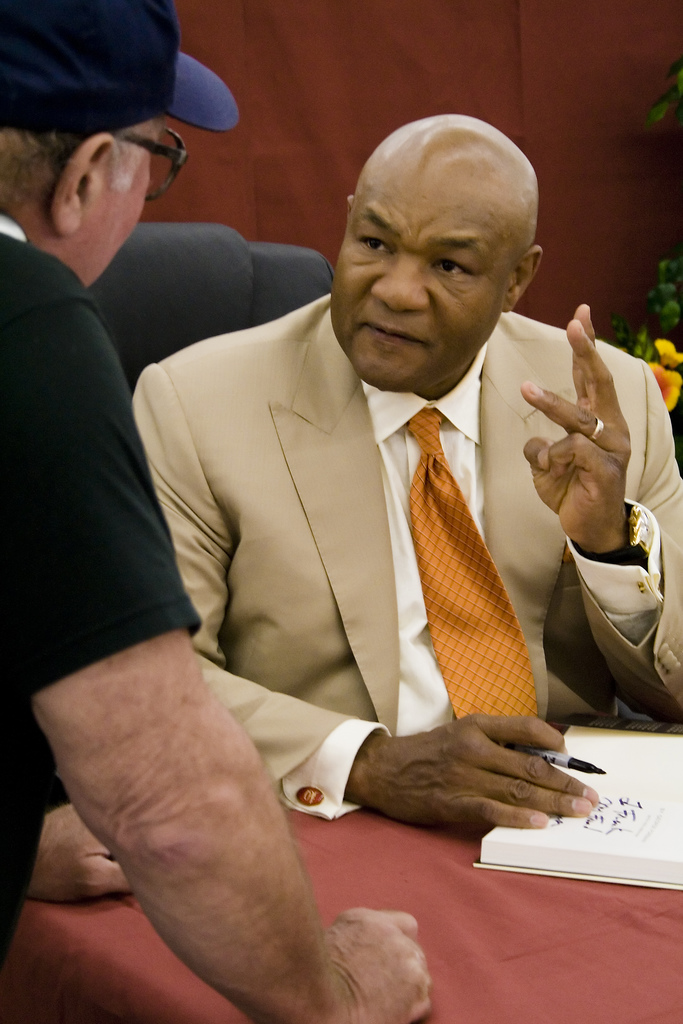
Following this intensely personal and life-altering experience, George Foreman underwent a profound spiritual conversion, becoming a born-again Christian. The New York Times vividly captured the essence of his transformation, reporting his account of a “giant hand” plucking him back into consciousness.
He felt an overwhelming sensation, as if he were “physically filled with the presence of a dying Christ.” In a moment of intense spiritual identification, he believed his forehead bled, “punctured by a crown of thorns,” and his wrists, he was convinced, “had been pierced by nails of the cross.” This visceral connection to the suffering of Christ was a watershed moment.
Foreman’s recollection of that moment underscores the depth of his conviction: “I knew that Jesus Christ was coming alive in me,” he stated. The immediate, overwhelming joy led him to exclaim, “I ran into the shower and turned on the water and — hallelujah! — I was born again. I kissed everybody in the dressing room and told them I loved them. That happened in March 1977, and I never have been the same again.”
This dramatic shift marked the genesis of the singular rule that would govern his life. He wasn’t merely embracing a new belief; he was dedicating his entire being to God. HBO boxing commentator Larry Merchant keenly observed this change, noting, “There was a transformation from a young, hard character who felt a heavyweight champion should carry himself with menace to a very affectionate personality.”
3. Building a Foundation of Faith: The Church of the Lord Jesus Christ
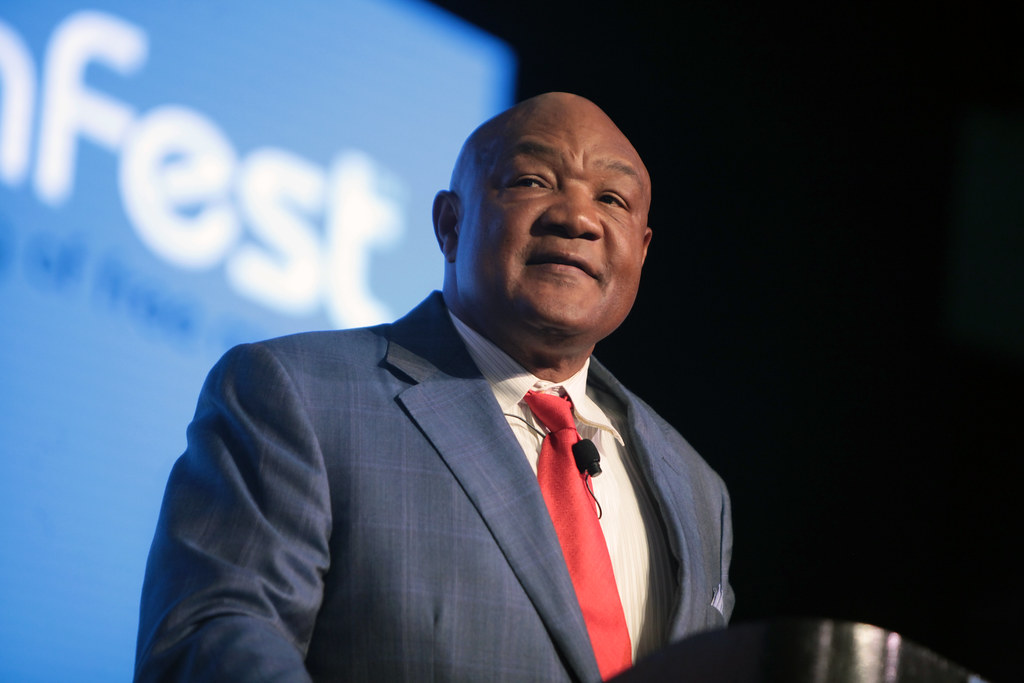
The immediate aftermath of his born-again experience saw Foreman dedicating the next decade of his life entirely to God. This wasn’t a passive commitment; it was an active and public one. He began his ministry in the most direct way possible, “initially preaching on street corners,” sharing his newfound faith and personal testimony with anyone who would listen.
His journey soon led him to a more structured path within the spiritual community. He was welcomed by members of The Church of the Lord Jesus Christ, a Holiness Pentecostal church located on Lone Oak Road in Houston. This community provided him with a spiritual home and a platform for his ministry.
By 1980, Foreman’s commitment and leadership within the church were recognized, and he officially became its pastor. In this role, he demonstrated a deep dedication to biblical study and teaching. He often declared, “I’m always studying the Bible” and candidly admitted, “The more you learn, the more you realize how much you don’t know,” reflecting a genuine humility and thirst for spiritual understanding.
As pastor, Foreman actively led three church services each week, always striving “to reveal something about the Bible that they [his congregation] didn’t know.” His leadership extended beyond sermons, fostering a vibrant community dedicated to faith and mutual support, all guided by the profound spiritual rule he had adopted.
Read more about: Beyond the Headlines: Unpacking the Middle East’s Vibrant Mosaic of Faiths and Traditions

4. A Sanctuary for Youth: Establishing the Community Center
Foreman’s commitment to his faith wasn’t confined to the pulpit; it extended into tangible community action, becoming a direct manifestation of his guiding principle. Under his leadership at The Church of the Lord Jesus Christ, a significant initiative was launched: the opening of the George Foreman Youth and Community Center.
This center was not merely a building; it was a sanctuary, created with a clear mission “to minister to children and adolescents in the area.” Foreman, who himself had a troubled youth – dropping out of school at 15 and spending time as a mugger before finding a new path through Job Corps – understood firsthand the critical importance of providing guidance and positive opportunities for young people.
The establishment and ongoing operation of this youth center became a cornerstone of his post-boxing life. It represented a practical, selfless application of his spiritual transformation, channeling his energy and resources into something that directly benefited his community and, crucially, aligned with what he sensed God had asked him to do: change his life and ways for others.
This benevolent endeavor, however, came with a substantial financial commitment. The context reveals that the youth center “had required much of the money he had earned in the initial phase of his career.” This financial strain would eventually become a critical, underlying motivation for his surprising return to the sport that he had seemingly left behind, tying his past and future together through this central cause.
5. A Decade of Devotion: Prioritizing the Spiritual Over the Sporting
Following his born-again experience in March 1977, George Foreman’s life took a dramatic turn away from the boxing ring. While he “did not formally retire from boxing,” he effectively stopped fighting, choosing to step away from the sport that had brought him fame and fortune. For the next ten years, his focus shifted entirely.
This decade was one of profound devotion, a period where Foreman committed himself wholeheartedly to his family and his rapidly growing congregation. He poured his energy into understanding and propagating his faith, embodying the spiritual rule that had become the bedrock of his existence. His transformation was so complete that the fierce, intimidating boxer of old seemed to have vanished.
His ministry extended beyond the local church. Foreman became a frequent and compelling speaker, sharing his powerful testimony on various Christian television broadcasts. Audiences could find him on programs such as The 700 Club and the Trinity Broadcasting Network, where he openly discussed his near-death experience and the spiritual renewal that had reshaped his purpose.
This period truly cemented his identity as a minister and a man of God, far more than as a former heavyweight champion. He lived out his conviction that “It doesn’t matter what you achieve, what you accomplish in this life…The most important thing is to keep your eye on the true prize, and that’s serving God.” This steadfast commitment defined his retirement, setting the stage for his improbable return.

6. The Unexpected Return: Boxing with a Higher Purpose
After a decade away from the demanding world of professional boxing, the news in 1987 sent shockwaves through the sports community: George Foreman, at the age of 38, was announcing a comeback. This decision seemed unfathomable to many; a former champion, well into his late thirties and visibly out of shape, attempting to re-enter a sport dominated by younger, sharper athletes. The prevailing sentiment was that it was a grave mistake.
Indeed, for his first comeback fight in Sacramento, California, where he faced journeyman Steve Zouski, Foreman weighed in at a hefty 267 lb (121 kg) and “looked badly out of shape.” He managed a knockout victory in four rounds, but the images of a slower, heavier Foreman only fueled the skepticism. Yet, Foreman had a deeper, more profound reason for strapping on the gloves once more.
He emphatically countered the doubters, asserting that he had returned to the ring not for personal glory alone, but “to prove that age was not a barrier to people achieving their goals.” More specifically, he sought to demonstrate, as he later articulated, that “age 40 is not a ‘death sentence’.” This statement transcended boxing, carrying a message of perseverance and possibility for anyone facing the perceived limitations of age.
Throughout 1987, he won four more bouts, and continued this resurgence in 1988 with nine victories, including a seventh-round knockout of former Light Heavyweight and Cruiserweight Champion Dwight Muhammad Qawi. Slowly but surely, Foreman began to shed the excess weight, and remarkably, he started “improving his fitness,” demonstrating an incredible resolve driven by his underlying purpose.

7. The Financial Catalyst: Sustaining the Youth Center’s Dream
The most compelling and deeply personal reason for George Foreman’s astonishing comeback, as revealed in his autobiography, was directly linked to the “1 Rule” that now governed his life. His “primary motive was to raise money to fund the youth center he had created,” the George Foreman Youth and Community Center in Houston.
This center, a tangible embodiment of his born-again ministry and commitment to community service, was not a self-sustaining entity. It “had required much of the money he had earned in the initial phase of his career.” The financial demands of maintaining such a vital resource for children and adolescents had become a significant burden, threatening its ability to continue its important work.
Foreman’s return to the violent world of professional boxing, a stark contrast to his peaceful decade of ministry, was thus a supreme act of sacrifice and dedication to his higher calling. It wasn’t about recapturing lost glory for ego’s sake; it was about ensuring the survival and growth of a spiritual and community endeavor that had consumed his post-retirement heart.
This motivation transformed his comeback into something far more significant than a mere athletic feat. It was a mission, a testament to his unwavering commitment to his faith and his community. Every punch thrown, every grueling training session endured, every risk taken in the ring was, in essence, a direct investment in the future of the youth center, solidifying the profound impact of his guiding principle.
8. A Magnetic Transformation: The Revamped Public Persona
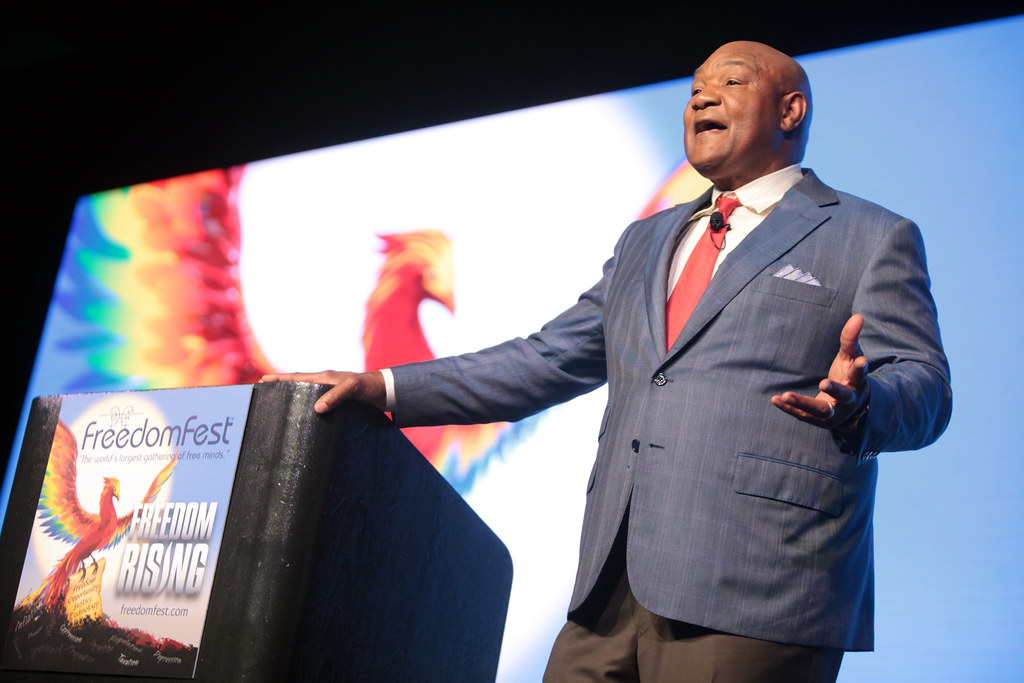
Returning to the ring at 38, George Foreman faced a skeptical public, but what they soon witnessed was more than just an aging fighter lacing up gloves; it was the emergence of an entirely new public persona. The once aloof and intimidating ‘Big George,’ known for his menacing glare and quiet intensity, began to shed those layers, revealing a warmth and humor that captivated audiences far beyond the boxing world. This wasn’t merely a tactical shift; it was a genuine reflection of the spiritual transformation that had redefined his life and purpose.
His appearances on shows like *The Tonight Show* became legendary, as Foreman effortlessly engaged in self-deprecation, poking fun at his own weight and age. This unexpected charm was a stark contrast to the fearsome fighter who had once bulldozed opponents. The public embraced this ‘new’ Foreman—a cheerful, friendly figure who seemed profoundly comfortable in his own skin, exuding an infectious optimism that transcended the brutality of his chosen sport. This approachable image was instrumental in laying the groundwork for his future endeavors.
Remarkably, this transformation even extended to his relationship with his most iconic rival. He befriended Muhammad Ali, a poignant full-circle moment given their legendary clash in ‘The Rumble in the Jungle.’ Just as Ali had transcended boxing to become a global icon, Foreman, too, was becoming a celebrity outside of the squared circle, using his platform to share his unique story and message. This magnetic personality, forged in faith and humility, would prove to be one of his most powerful assets in the years to come.
9. The Grill That Built a Legacy: Funding the Dream
While his boxing comeback provided the initial capital, it was an unlikely entrepreneurial venture that solidified the financial foundation for George Foreman’s philanthropic vision: the George Foreman Grill. By 1989, as he continued his improbable return, Foreman leveraged his newfound, wholesome public image to endorse a range of products. Among these, the ‘Lean Mean Fat-Reducing Grilling Machine’ stood head and shoulders above the rest, becoming a cultural phenomenon.
This phenomenal success wasn’t just about selling kitchen appliances; it was a direct manifestation of his ‘1 Rule’ in action. The context reveals that the youth center he had created, the George Foreman Youth and Community Center, had ‘required much of the money he had earned in the initial phase of his career.’ The grill became the ultimate funding vehicle, generating an astonishing revenue stream that ensured the sustained operation and growth of his vital community project.
With over 100 million units sold worldwide by 2011, the George Foreman Grill became an unprecedented commercial triumph. This success culminated in 1999 when Foreman sold the commercial rights to the grill for a staggering $138 million. This incredible financial windfall allowed him to secure the future of his youth center, turning a personal spiritual calling into an enduring legacy of community support, demonstrating that even in the cutthroat world of business, his ultimate purpose remained firmly rooted in giving back.

10. The Unlikeliest Ascent: World Title Challenges and the Road to Gold
Foreman’s comeback wasn’t merely a series of exhibition bouts; it was a calculated, albeit improbable, march back toward the pinnacle of heavyweight boxing. After a decade away, the path back to a world title shot was arduous, requiring him to prove, fight by grueling fight, that his age and time away had not diminished his power or his heart. The initial skepticism surrounding his return slowly gave way to grudging respect as he piled up victories.
His new, relaxed fighting style, which he attributed to his spiritual transformation, allowed him to conserve energy and compete for longer rounds, addressing the late-round fatigue that had plagued his younger self. While he ‘had not lost much mobility,’ he learned to fight smarter, still capable of landing ‘heavy single blows’ even if he couldn’t unleash rapid combinations. This measured aggression and newfound durability would be crucial against elite competition.
He faced a series of formidable opponents who tested his resolve. In 1990, he knocked out former title challenger Gerry Cooney, a powerful puncher in his own right, in the second round. A year later, at 42, he challenged undisputed heavyweight champion Evander Holyfield. Despite losing on points, Foreman stunned the boxing world by lasting the full 12 rounds, absorbing Holyfield’s best shots and even staggering the champion in a ‘historic round of boxing.’ This performance cemented his legitimacy as a top contender, proving he was more than just a novelty act.
His journey continued with tough wins, including a majority decision over journeyman Alex Stewart in 1992 and an eighth-round technical knockout of Pierre Coetzer in 1993. Even a loss to young prospect Tommy Morrison for the vacant WBO title in 1993, where Morrison shrewdly outboxed him from long range, couldn’t deter Foreman. Each fight, win or lose, was a testament to his perseverance and a step closer to his ultimate, seemingly impossible, goal.

11. History Rewritten: The Second Reign as Heavyweight Champion
The improbable journey culminated on November 5, 1994, in Las Vegas, as George Foreman, at the ripe age of 45, stepped into the ring to challenge unified IBF and WBA heavyweight champion Michael Moorer, a man 19 years his junior. Foreman, unranked after his loss to Morrison, was considered a substantial underdog, a nostalgic curiosity against a formidable, younger champion. The stakes were astronomical, yet his primary motivation remained unchanged: to raise money for his beloved youth center.
For nine grueling rounds, the fight unfolded as expected. Moorer, slick and agile, easily outboxed Foreman, hitting and moving away, building a commanding lead on all three scorecards. Foreman, seemingly unable to ‘pull the trigger’ on his punches, chugged forward, absorbing punishment, his dream appearing to slip away with each passing minute. The arena pulsed with anticipation, but few believed Foreman had a miracle left in him.
Then, in the tenth round, with the fight seemingly out of reach, Foreman unleashed a single, short right hand. It caught Moorer flush on the tip of his chin, opening a gash on his bottom lip, and sending the champion collapsing to the canvas. In a moment of pure, cinematic drama, Moorer lay flat as the referee counted him out. The arena erupted as Foreman, the oldest heavyweight champion in history, knelt in prayer in his corner, his ‘1 Rule’ vindicated in the most spectacular fashion.
This historic knockout wasn’t just a victory; it was a seismic event that shattered three long-standing boxing records. Foreman became the oldest fighter ever to win a world championship, the oldest winner of a major title fight, and broke the record for the longest interval between world title reigns, spanning more than 20 years. It was a triumph that transcended sport, becoming an enduring symbol of perseverance, faith, and the power of a purpose-driven life.

12. The King’s Dilemma: Post-Title Reign and the Final Chapter in the Ring
Reclaiming the world heavyweight title at 45 brought George Foreman unprecedented fame, but also new challenges. The demands of mandatory defenses quickly surfaced, testing his commitment to the belts he had so miraculously won. The WBA, for instance, insisted he face their number-one challenger, Tony Tucker. For reasons that remain somewhat unclear, Foreman refused, choosing instead to allow the WBA to strip him of that belt, prioritizing other aspects of his life and career over the politics of the sanctioning bodies.
His highly anticipated superfight with Mike Tyson, then the youngest heavyweight champion on record, never materialized, a disappointment for fans who dreamed of a clash between two generational forces. Instead, in April 1995, Foreman defended his remaining IBF title against Axel Schulz of Germany. The fight itself was a contentious affair, with Schulz jabbing strongly and Foreman finishing with a swollen eye. The decision, a controversial majority win for Foreman, led to the IBF ordering an immediate rematch in Germany. Foreman, again, refused the terms, resulting in him being stripped of his IBF title, though he continued to be recognized as the Lineal Heavyweight Champion.
Despite the controversy, Foreman continued to fight, securing an easy 12-round decision over Crawford Grimsley in Tokyo in 1996. The following year, he faced contender Lou Savarese, winning a close split decision in a grueling, competitive encounter that showcased his enduring toughness. His final professional bout in 1997, an “eliminator bout” against Shannon Briggs for the right to face WBC champion Lennox Lewis, ended in another highly controversial decision, with Briggs awarded a majority decision despite many at ringside seeing Foreman as the clear winner. At 48 years old, after consistently rocking Briggs with power punches, George Foreman had fought for the last time, ending his remarkable career with grace and philosophical acceptance.
13. Beyond the Ropes: An Enduring Commitment to Ministry and Legacy
Even after his final bow from the boxing ring at 48, George Foreman’s ‘1 Rule’ – his unwavering commitment to serving God and helping others – remained the driving force of his life. His boxing career, particularly his improbable comeback, was ultimately a means to an end, a vehicle to fund and sustain the spiritual and philanthropic endeavors that truly defined him. His dedication to The Church of the Lord Jesus Christ and the George Foreman Youth and Community Center continued unabated, a testament to his profound transformation.
His expertise and charisma found a new platform as a respected boxing analyst for HBO, a role he embraced for 12 years until 2004. Even years after his final fight, the spirit of the competitor flickered, as in February 2004, at the age of 55, he announced he was training for ‘one more comeback’ to demonstrate that age was no ‘death sentence.’ However, this planned bout, reportedly influenced by his wife, never materialized, allowing him to focus on other opportunities and his spiritual calling.
Foreman’s public presence continued to evolve, touching diverse audiences. He even surprised many by competing in season eight of *The Masked Singer* as ‘Venus Fly Trap,’ showcasing his lighthearted spirit. Further cementing his legacy and mission, he served as an executive producer on *Big George Foreman*, a 2023 Christian film based on his incredible sporting and spiritual life. This project allowed him to share his story of redemption, faith, and purpose with a global audience, highlighting the very rule that shaped his extraordinary journey.
Ultimately, George Foreman’s life is a masterclass in living by a singular, profound principle. From Olympic gold medalist to two-time heavyweight champion, from street preacher to successful entrepreneur, every facet of his diverse career has been underpinned by his unwavering commitment to God and community. His ‘1 Rule’ transformed a fearsome fighter into a beloved icon, whose enduring legacy continues to inspire millions, proving that true victory lies not just in the triumphs of the ring, but in the unwavering pursuit of a higher purpose.