There’s an undeniable thrill that comes with the rumble of an engine, the sleek lines of a new model, or the sheer power under the hood of a classic. Cars are more than just transportation; they’re symbols of freedom, innovation, and often, personal success. But beneath the polished chrome and cutting-edge tech lies a darker, often uncomfortable truth: not every vehicle, despite its promises, lives up to its ultimate duty to keep us safe.
We’re not just talking about minor glitches or a less-than-stellar cup holder here. We’re diving deep into the history books to unearth the stories behind the most egregious and frankly, *costly*, safety failures that have scarred the automotive landscape. These aren’t merely manufacturing hiccups; these are monumental screw-ups that have fundamentally altered the industry, tarnished brand reputations beyond repair, and, most tragically, exacted a devastating toll in human lives.
From seemingly innocent design flaws that turned everyday commutes into fiery nightmares, to corporate decisions that shamelessly prioritized the bottom line over human well-being, these tales reveal the uncomfortable truth about what happens when the relentless pursuit of profit overshadows the imperative of safety. Buckle up, because we’re about to dissect 14 pivotal moments—starting with seven of the most infamous—that no car enthusiast or driver should ever forget.
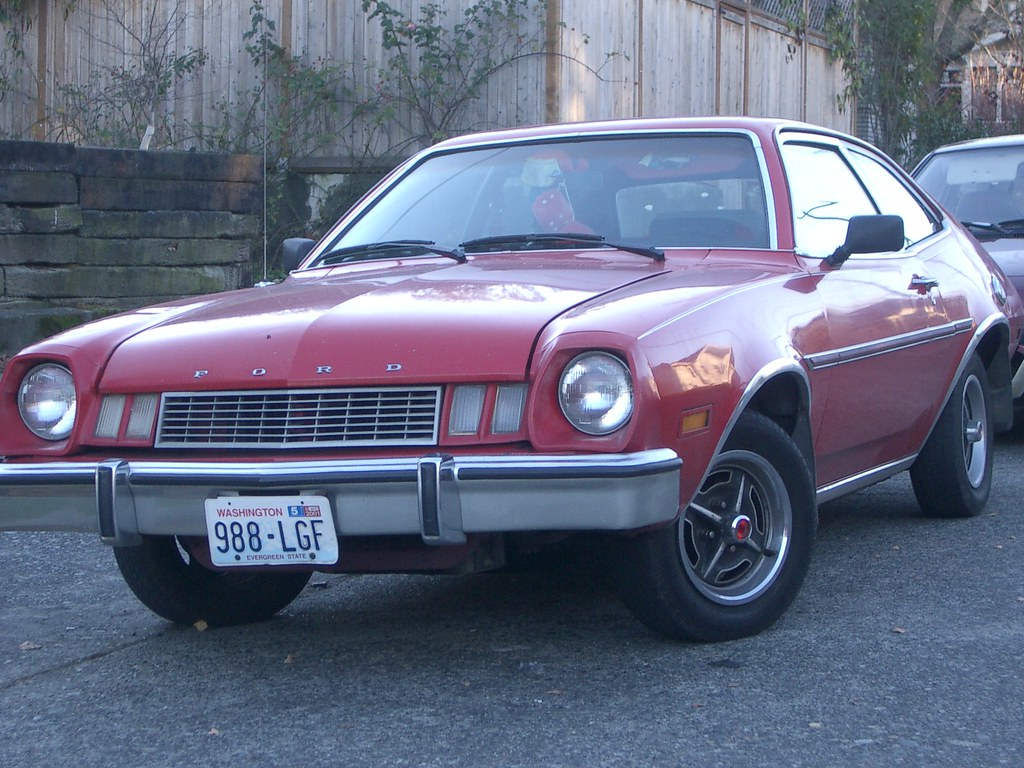
1. The Ford Pinto: The Infamous Fuel Tank Inferno
Ah, the Ford Pinto. Even decades later, its name evokes a shudder among those familiar with automotive history, a chilling synonym for corporate negligence and catastrophic design. Launched in 1971, this compact car was initially a bestseller, a symbol of economical motoring. But underneath its unassuming exterior lay a design flaw so egregious, so utterly indefensible, that it etched itself into the annals of safety failures with a fiery indelible mark.
The Pinto’s fatal flaw was its fuel tank design, placed perilously close to the rear axle. In the event of a rear-end collision, the fuel filler neck could separate, causing the tank to rupture and, you guessed it, ignite. Imagine cruising down the highway, only for a minor fender bender to transform your vehicle into an inferno. It’s a terrifying thought, and for hundreds of individuals and families, it was a brutal reality.
What makes the Pinto scandal truly stomach-churning, however, wasn’t just the design flaw itself, but Ford’s shocking prior knowledge. Internal memos, which later surfaced to public outrage, revealed that Ford engineers were aware of the defect *before* production began. The company then made a cold, calculated decision: they deemed it cheaper to pay out potential lawsuits for deaths and injuries than to implement a fix that would cost an estimated $137 million.
This callous cost-benefit analysis—pitting human lives against a balance sheet—sparked public outrage and led to significant legal consequences. Ford eventually recalled 1.5 million vehicles, but not before hundreds of deaths and injuries had occurred. The Pinto’s legacy serves as a permanent, grim reminder of the importance of prioritizing safety and the devastating repercussions when profit is deemed more valuable than human life.
Car Model Information: 1980 Ford Pinto WAGON
Name: Ford Pinto
Caption: Ford Pinto
Manufacturer: Ford Motor Company
Aka: Mercury Bobcat
Production: September 1970 – July 1980
ModelYears: 1971–1980 (Pinto),1974–1980 (Bobcat)
Assembly: Edison, New Jersey,Milpitas, California
Designer: Robert Eidschun (1968)
Class: Subcompact car
BodyStyle: Sedan (automobile),sedan delivery,station wagon,hatchback
Related: #Mercury Bobcat (1974–1980),Ford Mustang (second generation)
Layout: Front-engine, rear-wheel-drive layout
Chassis: Unibody
Engine: unbulleted list
Abbr: on
Disp: Ford Cologne engine
Transmission: unbulleted list
Wheelbase: 94.0 in
Length: 163 in
Width: 69.4 in
Height: 50 in
Weight: convert
Predecessor: Ford Cortina#Mark II (1966–1970)
Successor: Ford Escort (North America)
Categories: 1980s cars, Articles with short description, Cars discontinued in 1980, Cars introduced in 1970, Commons category link from Wikidata
Summary: The Ford Pinto is a subcompact car that was manufactured and marketed by Ford Motor Company in North America from 1970 until 1980. The Pinto was the first subcompact vehicle produced by Ford in North America.
The Pinto was marketed in three body styles throughout its production: a two-door fastback sedan with a trunk, a three-door hatchback, and a two-door station wagon. Mercury offered rebadged versions of the Pinto as the Mercury Bobcat from 1975 until 1980 (1974–1980 in Canada). Over three million Pintos were produced over its ten-year production run, outproducing the combined totals of its domestic rivals, the Chevrolet Vega and the AMC Gremlin. The Pinto and Mercury Bobcat were produced at Edison Assembly in Edison, New Jersey, St. Thomas Assembly in Southwold, Ontario, and San Jose Assembly in Milpitas, California.
Since the 1970s, the safety reputation of the Pinto has generated controversy. Its fuel-tank design attracted both media and government scrutiny after several deadly fires occurred when the tanks ruptured in rear-end collisions. A subsequent analysis of the overall safety of the Pinto suggested it was comparable to other 1970s subcompact cars. The safety issues surrounding the Pinto and the subsequent response by Ford have been cited widely as business ethics and tort reform case studies.
Get more information about: Ford Pinto
Buying a high-performing used car >>>
Brand: Ford Model: Pinto
Price: $5,951 Mileage: 107,000 mi.
Read more about: Engineering Flaws and Fateful Journeys: Unpacking the Most Dangerous Cars of All Time
2. The Chevrolet Corvair: Unsafe at Any Speed
The Chevrolet Corvair, produced from 1960 to 1969, was a car that dared to be different. With its innovative rear-mounted, air-cooled engine, it was initially praised for its unique design and spirited performance. It represented a bold step by General Motors, a departure from conventional American automotive engineering. However, its unconventional nature also harbored inherent dangers that would ultimately seal its fate.
Then came Ralph Nader. His seminal 1965 book, “Unsafe at Any Speed,” became a rallying cry for consumer safety, and the Corvair was its poster child. Nader relentlessly highlighted the car’s significant safety issues, particularly its notorious tendency to oversteer and, terrifyingly, rollover during sharp maneuvers or emergency evasive action. This wasn’t just a handling quirk; it was a fundamental instability that put drivers and passengers at severe risk.
The rear-engine design, while novel, made the car inherently more prone to loss of control, especially for an unsuspecting public accustomed to front-engine layouts. Compounding these issues were problems with its suspension and braking systems. The front suspension, in particular, had a tendency to wear out quickly, leading to unpredictable handling and increasing the risk of accidents. Even as GM made improvements to later models, the damage to the Corvair’s reputation was irreversible.
The controversy surrounding the Corvair, amplified by Nader’s powerful advocacy, led to declining sales and its eventual discontinuation. It stands as a pivotal moment in automotive history, forcing a much-needed conversation about vehicle safety and establishing a precedent for holding manufacturers accountable for their designs. It was a costly failure, not just in terms of sales, but in the trust lost between a massive automaker and the driving public.
Car Model Information: 1964 Chevrolet Corvair Monza
Caption: 1964 Chevrolet Corvair Monza
Name: Chevrolet Corvair
Manufacturer: Chevrolet
Production: July 1959
Platform: GM Z platform
Chassis: Unibody
ModelYears: 1960–1969
Assembly: United States,Kansas City, Missouri,Oakland, California,Van Nuys,St. Louis,Flint, Michigan,Belgium,Canada,Mexico,South Africa,Switzerland,Venezuela
Class: Compact car
Successor: Chevrolet Vega
Layout: Rear-engine, rear-wheel-drive layout
Categories: All Wikipedia articles written in American English, All articles lacking in-text citations, All articles needing additional references, All articles with dead external links, All articles with specifically marked weasel-worded phrases
Summary: The Chevrolet Corvair is a rear-engined, air-cooled compact car manufactured and marketed by Chevrolet over two generations from the 1960 through 1969 model years. The Corvair was a response to the increasing popularity of small, fuel-efficient automobiles, particularly the imported Volkswagen Beetle and American-built compacts like the Rambler American and Studebaker Lark.
The first generation (1960–1964) was offered in four-door sedan, two-door coupe, convertible, and four-door station wagon configurations. A two- and four-door hardtop, as well as a convertible, were available as second-generation variants (1965–1969). The Corvair platform was also offered as a subseries known as the Corvair 95 (1961–1965), which consisted of a passenger van, commercial van, and pickup truck variant. Total production was approximately 1.8 million vehicles from 1960 until 1969.
The name “Corvair” was first applied in 1954 to a Corvette-based concept with a hardtop fastback-styled roof, part of the Motorama traveling exhibition. When applied to the production models, the “air” part referenced the engine’s cooling system.
A prominent aspect of the Corvair’s legacy derives from controversy surrounding the handling of early models equipped with rear swing axles, articulated aggressively by Ralph Nader’s Unsafe at Any Speed but tempered by a 1972 Texas A&M University safety commission report for the National Highway Traffic Safety Administration (NHTSA) which found that the 1960–1963 Corvair possessed no greater potential for loss of control in extreme situations than contemporary compacts.
To better counter popular inexpensive subcompact competitors, notably the Beetle and Japanese imports such as the Datsun 510, GM replaced the Corvair with the more conventional Chevrolet Vega in 1970.
Get more information about: Chevrolet Corvair
Buying a high-performing used car >>>
Brand: Chevrolet Model: Corvair
Price: $29,988 Mileage: 74,787 mi.
Read more about: Beyond the Showroom Shine: 14 Automotive Design Fails That Rocked the Industry
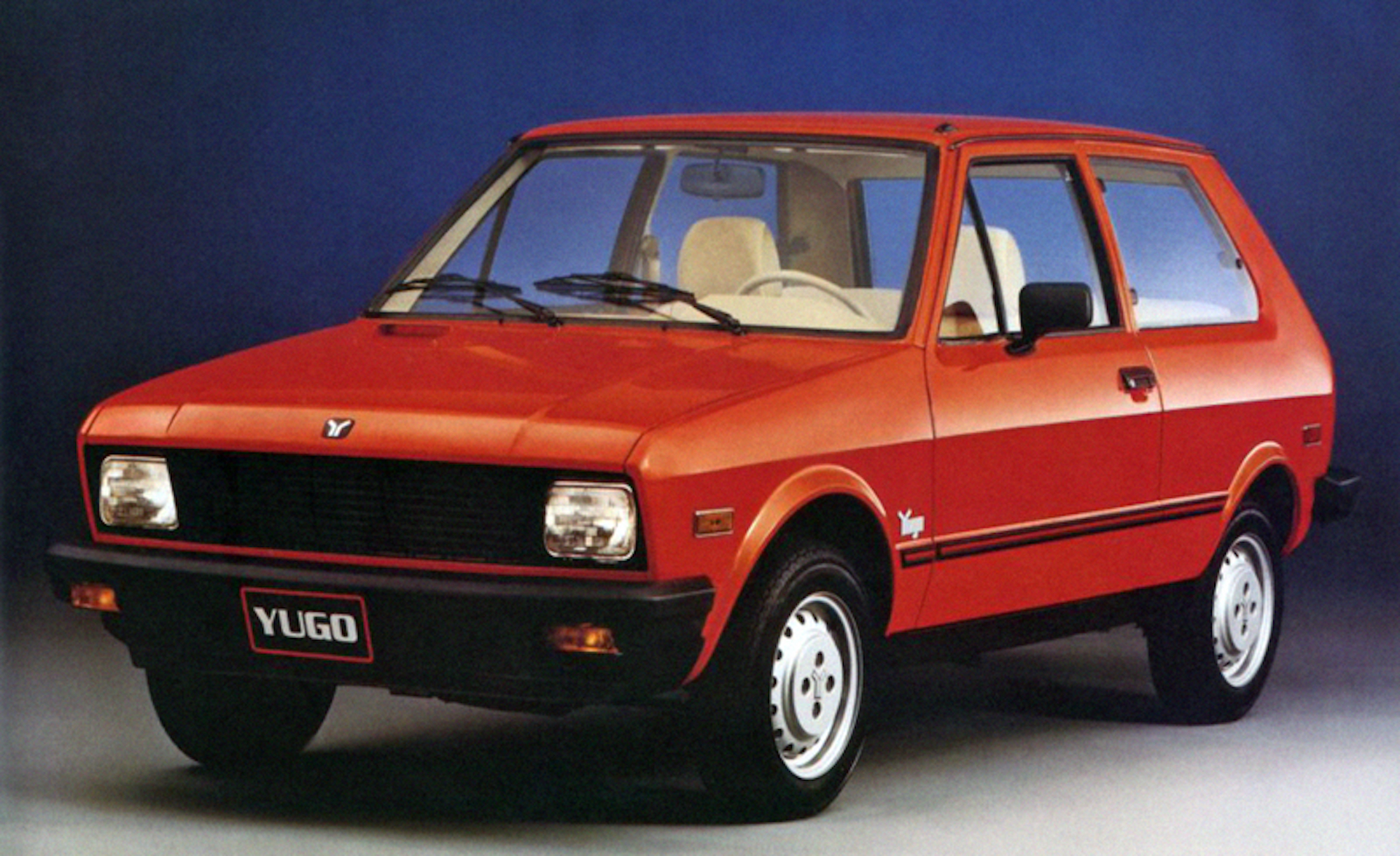
3. The Yugo GV: A Catastrophic Comedy of Errors
When the Yugo GV arrived on American shores from Yugoslavia in the mid-1980s, it promised one thing above all else: affordability. At a paltry $3,990, it was marketed as the ultimate no-frills commuter, a car so cheap it almost seemed too good to be true. As countless owners would soon discover, it was indeed too good to be true, morphing rapidly into a symbol of automotive ineptitude and a truly catastrophic safety fail.
From the moment it rolled off the boat, the Yugo was plagued with a litany of issues. Its build quality was notoriously poor, a slapdash assembly of low-quality materials that seemed destined for failure. This wasn’t just about things rattling loose; it meant frequent mechanical issues that left drivers stranded, frustrated, and often, in danger. Its appeal was purely financial, and that appeal quickly evaporated under the harsh light of reality.
But beyond mere unreliability, the Yugo harbored deeply dangerous flaws. It was infamous for frequent fire incidents and spontaneous explosions, often stemming from pervasive overheating issues that engineers simply couldn’t get right. Imagine purchasing a car whose primary feature seems to be an unannounced pyrotechnic display! Compounding these fiery perils were severe problems with its brakes, steering, and suspension systems, leading to a truly alarming number of accidents and crashes, sometimes with tragic and fatal consequences.
The widespread consumer dissatisfaction, fueled by the Yugo’s spectacular unreliability and inherent dangers, eventually forced a massive recall in the late 1980s. But the damage, both to the car’s reputation and to the nascent Yugoslavian automotive industry’s credibility, was irreparable. The Yugo GV remains a cautionary tale, a stark reminder that some corners simply cannot be cut, especially when it comes to the basic safety and reliability of a vehicle.
4. The Pontiac Aztek: Overheating and an Aesthetic Disaster
In the year 2000, Pontiac unleashed the Aztek upon an unsuspecting world, and the collective gasp was almost audible. It wasn’t just a car; it was a statement – a bizarre, polarizing statement that instantly earned it the dubious distinction of one of the biggest design disasters in automotive history. Its boxy, awkward shape, which looked like an unholy crash between an SUV and a minivan, and its ‘explosion of plastic’ front grille, lacked any semblance of aesthetic cohesiveness, turning off buyers in droves. However, the Aztek’s problems ran far deeper than just its looks; it also had serious safety issues lurking beneath the surface.
While its aesthetic shortcomings are legendary, the Aztek also developed a notorious reputation for frequent overheating. This wasn’t just an inconvenience that caused drivers to pull over and wait; it was a serious safety hazard that could, and often did, lead to engine fires. Imagine the frustration of dealing with a car that looks like it was designed by committee, only to then worry that it might spontaneously combust on your morning commute. The irony was not lost on owners who had bought into GM’s vision of a ‘versatile activity vehicle’ with innovative features like a built-in tent and cooler.
This overheating problem was so persistent and potentially dangerous that it necessitated a recall for many Aztek models, an attempt to address a fundamental flaw that added to its already growing list of issues. Despite the recall, the damage to the car’s reputation, already battered by its polarizing appearance, was irreversible. The initial 3.4-liter V6 engine offered decent power, but it could not possibly overcome the vehicle’s unattractive appearance and its mechanical woes. Owners not only wrestled with its peculiar styling but also with a litany of mechanical problems that often left them stranded on the side of the road.
The Pontiac Aztek serves as a powerful double-whammy cautionary tale: a testament to how disastrous design choices can cripple a product, but also how underlying safety and reliability issues can utterly destroy any chance of redemption. It’s no wonder the Aztek is consistently listed as one of the biggest car fails of all time; it was a truly costly mistake on multiple fronts, proving that even a cult following (thanks to a certain TV show) can’t erase its original sins.
Car Model Information: 2003 Pontiac Aztek Base Fwd 4dr SUV
Name: Pontiac Aztek
Manufacturer: General Motors
Production: July 2000 – December 2004
Assembly: Ramos Arizpe
Designer: Tom Peters (chief designer: 1997)
Class: Mid-size crossover SUV
BodyStyle: SUV
Platform: GM U platform
Related: Buick Rendezvous
Layout: Front-engine, front-wheel-drive layout
Engine: General Motors 60° V6 engine#LA1,V6
Transmission: GM 4T65-E transmission,Automatic transmission
Wheelbase: 108.3 in (2,751 mm)
Length: 182.1 in (4,625 mm)
Width: 73.7 in (1,872 mm)
Height: 66.7 in (1,694 mm)
Weight: 3,779–4,043 lb (1,714–1,834 kg)
Predecessor: Pontiac Sunrunner
Successor: Pontiac Torrent
ModelYears: 2001–2005
Categories: All-wheel-drive vehicles, All articles needing additional references, All articles with unsourced statements, Articles needing additional references from October 2013, Articles with short description
Summary: The Pontiac Aztek is a mid-size crossover SUV marketed by General Motors introduced in 2000 for the model years 2001 through 2005. As a four-door crossover with front-wheel drive and optional all-wheel drive, the Aztek featured a four-speed automatic transmission with a V6 engine. Marketed by Pontiac as a “sport recreational vehicle,” the Aztek used a shortened platform shared with GM’s minivans (e.g., the Pontiac Montana) featuring 94 cubic feet of cargo room with its rear seats removed. The design employed conventional rear outswing doors rather than sliding doors, and a split rear tailgate, the lower section formed with seat indentations and cupholders. Other features included a front center console that doubled as a removable cooler, optional rear stereo controls in the cargo area, optional sliding cargo floor with grocery compartments, and optional camping package with an attachable tent and air mattress.
Get more information about: Pontiac Aztek
Buying a high-performing used car >>>
Brand: Pontiac Model: Aztek
Price: $1,499 Mileage: 157,677 mi.

5. The Renault Dauphine/Le Car: A Flimsy Foundation
The story of Renault in the American market during the mid-to-late 20th century is, in many ways, a narrative of ambitious plans often undermined by pervasive quality and safety issues. The Renault Dauphine, introduced to the US in 1956, was initially popular due to its affordability and compact size, perfectly positioned for urban dwellers. However, this initial charm quickly faded as the car developed a reputation for being severely underpowered, prone to rust, and rife with mechanical failures that proved dangerous.
Its diminutive 845 cc engine produced a mere 32 horsepower, making it one of the slowest cars of its era, hardly a recipe for safe highway merging. Fast forward to the 1970s and the arrival of the Renault Le Car, another small French import. This vehicle continued the tradition of its predecessors, becoming infamous for its chronic unreliability and constant, costly need for repairs. These weren’t just minor inconveniences; they often pointed to serious design flaws with significant safety implications.
Numerous recalls plagued both models, highlighting critical technical issues that went far beyond mere annoyances. One particularly notable recall involved a faulty fuel system in the Le Car, a defect that could cause severe damage or, even more horrifyingly, lead to a fire or explosion. The cars also suffered from a tendency to overheat, especially in warmer climates, frequently resulting in sudden engine failure and leaving drivers stranded in precarious situations.
Furthermore, both the Dauphine and Le Car had alarmingly poor crash safety ratings. Their lightweight construction and notable lack of adequate safety features made them particularly vulnerable in accidents. Even a minor collision could result in severe damage to the car and its occupants, underscoring a fundamental disregard for occupant protection. The legacy of these Renault models is a stark reminder that while economy and compactness can be appealing, they must never come at the expense of robust engineering and essential safety standards.
6. The Chevrolet Vega: Rust, Reliability, and Recalls
The Chevrolet Vega, hitting dealerships in 1970, started with such high hopes. It was designed to be GM’s answer to the influx of economical foreign compacts, initially earning praise for its sharp design and promising performance. But like so many ambitious projects marred by corporate shortcuts, the Vega quickly devolved into a cautionary tale of how cost-cutting measures can fatally compromise a vehicle’s quality and, by extension, its safety. It was a disaster waiting to happen, and it didn’t wait long.
The car soon became infamous, not for its design prowess, but for its rampant rust problems, which seemed to afflict vehicles almost straight off the production line. More critically, its innovative but ultimately flawed aluminum engine proved disastrously unreliable. This isn’t just a minor mechanical gripe; a perpetually unreliable engine can strand drivers in dangerous situations, or worse, fail spectacularly at high speeds.
The engine frequently suffered from severe overheating issues, leading to an onslaught of significant warranty claims that became a massive financial headache for GM. Overheating isn’t just an inconvenience; it can cause total engine failure, leading to loss of power steering or brakes, and in extreme cases, engine fires. The sheer volume of these issues clearly indicated a deeply rooted problem in the vehicle’s engineering and manufacturing process, directly stemming from GM’s aggressive cost-reduction strategies.
GM’s pursuit of a cheap compact car led to compromises in materials and design that directly impacted the Vega’s longevity and safety. Its reputation plummeted with dizzying speed, transforming what was intended to be a competitive offering into an automotive punchline. The Vega serves as a powerful testament to the perils of prioritizing production economy over robust engineering and rigorous quality control, cementing its place as one of the costliest safety fails due to its systemic reliability and structural integrity issues.
Car Model Information: 1976 Chevrolet Vega
Name: Chevrolet Vega
Caption: 1971 Chevrolet Vega
Aka: Vega 2300
Manufacturer: Chevrolet
Production: 1970–1977
ModelYears: 1971–1977
Assembly: Lordstown, Ohio
Predecessor: Chevrolet Corvair
Successor: Chevrolet Monza
Class: Subcompact car
BodyStyle: notchback,hatchback,station wagon,Panel van
Layout: FR layout
Platform: GM H platform (RWD)
Engine: {{cvt,2.3,L,cuin,0,Chevrolet 2300 engine
Transmission: manual transmission,4-speed manual,overdrive (mechanics),Torque-Drive 2-speed Powerglide requiring manual shifting,Powerglide,Turbo-Hydramatic
Wheelbase: cvt
Length: cvt
Width: cvt
Height: cvt
Weight: cvt
Related: Pontiac Astre,Chevrolet Monza,Pontiac Sunbird#First generation (1976–1980),Buick Skyhawk#First generation (1975–1980),Oldsmobile Starfire#Second generation (1975–1980)
Designer: Bill Mitchell (designer)
Categories: 1970s cars, All articles needing additional references, All articles with unsourced statements, Articles needing additional references from July 2023, Articles with short description
Summary: The Chevrolet Vega is a subcompact automobile manufactured and marketed by GM’s Chevrolet division from 1970 until 1977. Available in two-door hatchback, notchback, wagon, and sedan delivery body styles, all models were powered by an inline four-cylinder engine designed specifically for the Vega, with a lightweight aluminum alloy cylinder block. The Vega first went on sale in Chevrolet dealerships on September 10, 1970. Variants included the Cosworth Vega, a short-lived limited-production performance version introduced spring 1975.
The Vega received the 1971 Motor Trend Car of the Year. Subsequently, the car became widely known for a range of problems related to its engineering, reliability, safety, propensity to rust, and engine durability. Despite numerous recalls and design upgrades, Vega’s problems tarnished its reputation and that of General Motors. Production ended with the 1977 model year.
The car was named for Vega, the brightest star in the constellation Lyra.
Get more information about: Chevrolet Vega
Buying a high-performing used car >>>
Brand: Chevrolet Model: Vega
Price: $30,000 Mileage: 82,344 mi.
Read more about: America’s Automotive Hall of Shame: Unforgettable Engineering Blunders and the Cars We Love to Lament
7. The DeLorean DMC-12: A Futuristic Dream Turned Nightmare
The DeLorean DMC-12. Just saying the name conjures images of gull-wing doors, gleaming stainless steel, and cinematic time travel. Manufactured between 1981 and 1983, it was envisioned as a revolutionary, futuristic sports car, a radical departure from the norm. Yet, despite its iconic status and timeless appeal, the DMC-12 was, by almost every objective measure, a spectacular commercial and safety failure, a dream car that became a costly nightmare for its unfortunate owners.
Its production run was notoriously short, with only about 9,000 units made before the company went bankrupt, a downfall exacerbated by founder John DeLorean’s legal troubles. But beyond the financial woes and corporate drama, the car itself was riddled with an astonishing array of safety and reliability deficiencies that utterly contradicted its high-tech veneer. It wasn’t just underwhelming; it was genuinely dangerous and frustrating to own, a true testament to poor build quality married to grand ambition.
Take the notorious incident where a DMC-12 *exploded* during a promotional event – a PR disaster of epic proportions that immediately raised serious concerns about its inherent safety. Furthermore, numerous reports highlighted the car’s consistently lackluster performance and truly questionable handling, leading to a significant number of crashes that often resulted in extensive damage to the vehicle and its occupants. The very aspects intended to make it a sports car actually made it a hazard.
Beyond these dramatic failures, the DMC-12 was infamous for its frequent breakdowns, leaving owners grappling with costly and frustrating repair issues. Its electrical system was a constant source of malfunctions, and even the celebrated gull-wing doors often failed, trapping occupants or simply refusing to open. Overheating was another prevalent issue, particularly in warmer climates, leading to engine failures and further tarnishing an already fragile reputation. Even its performance in crucial crash tests was dismal, failing to meet fundamental safety standards and highlighting a profound lack of consideration for driver protection. The DeLorean DMC-12, a visually stunning but structurally deficient marvel, is a sobering lesson in the automotive world: iconic looks can’t compensate for inherent safety flaws and a fundamental lack of reliability.
Beyond the singular design blunders and immediate product-level dangers, automotive history is also littered with systemic industry scandals. These weren’t just about a bad component or a questionable aesthetic; they were about deep-seated corporate negligence, calculated delays in recalls, and broad component defects that revealed profound ethical and regulatory challenges. This next set of entries peels back the curtain on the industry’s darker side, where the pursuit of profit often overshadowed the solemn duty to protect the public.
These stories aren’t just historical footnotes; they are chilling reminders of the battles fought for consumer safety, the critical role of watchdog agencies, and the enduring power of investigative journalism. They remind us that behind every shiny new model, there’s a responsibility to prioritize lives over ledger lines, a lesson the industry has, regrettably, had to learn over and over again.
Car Model Information: 1982 Delorean DMC-12
Name: DMC DeLorean
Alt: 1983 DeLorean
Caption: 1983 DeLorean
Manufacturer: DeLorean Motor Company
Production: January 21, 1981 – December 1982
ModelYears: 1981–1983
Assembly: Dunmurry
Designer: Giorgetto Giugiaro
Class: Sports car
BodyStyle: coupé
Layout: Rear-engine, rear-wheel-drive layout
Doors: Gull-wing doors
Engine: 2.85 L
Abbr: on
Powerout: 130 hp
Transmission: 5-speed manual ,3-speed automatic
Wheelbase: 2413 mm
Length: 4267 mm
Width: 1988 mm
Height: 1140 mm
Weight: 1233 kg
Sp: us
Categories: 1980s cars, All Wikipedia articles written in American English, Articles with short description, Automobiles with backbone chassis, Automobiles with gull-wing doors
Summary: The DMC DeLorean is a rear-engine, two-seat sports car manufactured and marketed by John DeLorean’s DeLorean Motor Company (DMC) for the American market from 1981 until 1983—ultimately the only car brought to market by the fledgling company. The DeLorean is sometimes referred to by its internal DMC pre-production designation, DMC-12, although this was not used in sales or marketing materials for the production model.
Designed by Giorgetto Giugiaro, the DeLorean is noted for its gull-wing doors and brushed stainless-steel outer body panels, as well as its lack of power and performance. Though its production was short-lived, the DeLorean became widely known after it was featured as the time machine in the Back to the Future films.
With the first production car completed on January 21, 1981, the design incorporated numerous minor revisions to the hood, wheels and interior before production ended in late December 1982, shortly after DMC filed for bankruptcy and after total production reached an estimated 9,000 units.
Despite the car having a reputation for poor build quality and an unsatisfactory driving experience, the DeLorean continues to have a strong following, driven in part by the popularity of Back to the Future. 6,500 DeLoreans were estimated to still be on the road as of 2015.
Get more information about: DMC DeLorean
Buying a high-performing used car >>>
Brand: DeLorean Model: DMC-12
Price: $129,950 Mileage: 3,145 mi.

8. GM Ignition Switch Scandal (2014): When Corporate Complacency Kills
Picture this: you’re driving down the highway, music playing, minding your own business, and suddenly—silence. Your car stalls, the power steering goes, the brakes get heavy, and then, the terrifying realization: your airbags are now just expensive decorations. This wasn’t a freak accident for many General Motors drivers; it was the horrifying reality brought on by a deeply flawed ignition switch, a scandal that shook the automaker to its core in 2014.
The defect was insidious: the ignition switch could unexpectedly move from the ‘run’ position to ‘accessory’ or ‘off,’ especially if the key fob was heavy or the car hit a bump. This seemingly minor mechanical glitch had devastating consequences, cutting power to the engine and, crucially, disabling safety features like power steering, power brakes, and, most tragically, the airbags. GM knew about this flaw for *years*—over a decade, in fact—but inexcusably delayed issuing a recall.
Internal documents and investigations later revealed a shocking tale of corporate complacency and a failure to prioritize consumer safety, even as incident reports and fatalities mounted. The human toll was staggering, with the defect linked to at least 120 deaths and 275 injuries. The sheer volume of delayed responses and cover-ups painted a grim picture of an automaker putting its bottom line squarely ahead of human lives.
GM CEO Mary Barra faced intense scrutiny, and the company was ultimately forced to pay a $900 million fine and establish a victims’ compensation fund. The scandal wasn’t just a black eye for GM; it highlighted the dangers of deeply entrenched corporate cultures that resist accountability and proved that even the largest automotive players are not immune to the devastating consequences of negligence. It was a brutal, costly lesson in the true price of avoiding a recall.

9. Takata Airbags Recall: A Shrapnel-Producing Catastrophe
If there’s one name that’s become synonymous with automotive safety nightmares in recent years, it’s Takata. The sheer scale and deadly nature of the Takata airbag recall make it one of the largest and most prolonged automotive safety issues in history. We’re talking about a defect that turned a life-saving device into a potential death trap, affecting tens of millions of vehicles across numerous automakers worldwide.
The core issue was simple yet terrifying: the inflators in Takata airbags were found to be defective. When deployed, especially in hot and humid conditions, these inflators could rupture with explosive force, sending metal shrapnel directly into the vehicle cabin. Imagine a controlled explosion designed to save your life suddenly spraying you with deadly metal fragments. That’s precisely what happened to unsuspecting drivers and passengers.
This catastrophic flaw has been directly linked to at least 35 deaths and hundreds of injuries globally, with the numbers tragically continuing to tick upwards. Despite recalls being issued for over 100 million airbag inflators in cars from more than 20 automakers, the fight to get all affected vehicles repaired is ongoing, highlighting the logistical and financial enormity of such a widespread component failure.
The scandal plunged Takata into bankruptcy, leading to billions in fines and settlements, and leaving a lasting scar on the automotive industry’s reputation for safety. It’s a chilling reminder of how a single, seemingly innocuous component defect can unravel into a global crisis, underscoring the critical need for rigorous component testing and unwavering transparency from suppliers and manufacturers alike. The Takata saga is a continuing testament to the cost of cutting corners on safety.

10. Ford Transmission Defect (1980): The ‘Failure to Park’ Fiasco
Just a few years after the inferno of the Pinto scandal, Ford found itself once again in the crosshairs of a major safety crisis. This time, the culprit was a transmission defect, a seemingly simple flaw that caused vehicles to slip out of ‘park’ and roll unexpectedly. What made this a particularly egregious failure wasn’t just the defect itself, but Ford’s infuriatingly quiet, half-hearted response to a problem they had known about for years.
Between 1966 and 1980, over 20 million Ford vehicles were equipped with this dangerous transmission, a staggering number that underscores the systemic nature of the problem. Ford had been aware of the flaw since 1972, receiving thousands of complaints and reports of accidents. Yet, instead of initiating a costly recall—which would have been the responsible action—the company chose to settle lawsuits quietly, attempting to keep the lid on a ticking time bomb.
By the time the National Highway Traffic Safety Administration (NHTSA) launched its own investigation, this ‘failure to park’ defect was linked to over 700 accidents, 250 injuries, and at least 23 deaths. Ford’s response? Instead of a recall, they sent out 23 million warning stickers to owners, advising them to engage the parking brake and ensure the gear lever was fully engaged. Yes, stickers. As if a sticker could prevent a car from rolling away!
This utterly insufficient measure allowed Ford to avoid the immediate financial burden of a full recall, but it did not, and could not, prevent further fatalities. The death toll tragically continued to rise over time, cementing this as one of the deadliest auto scandals in history. It stands as a stark, infuriating example of corporate evasion and the dangerous consequences of prioritizing financial savings over genuine public safety.
11. Audi 5000 Unintended Acceleration Controversy (1986): A Media Firestorm
The mid-1980s saw Audi, a brand striving for luxury market penetration in the U.S., plunge into a public relations inferno that nearly extinguished its presence in America. The cause? Allegations of ‘unintended acceleration’ in its flagship Audi 5000 model. While the truth behind the technical defect would later be heavily scrutinized, the *scandal* itself was a potent, costly lesson in media sensationalism and public perception.
The controversy exploded into the mainstream after a sensational report on CBS’s “60 Minutes,” which featured horrifying footage of an Audi 5000 seemingly accelerating on its own. The imagery was damning, planting a seed of fear in the minds of American consumers. The public reaction was swift and brutal: sales plummeted, and the brand’s reputation took a battering from which it would take years to recover.
However, subsequent investigations, including those by NHTSA, revealed a critical, infuriating truth: the footage aired by “60 Minutes” had been manipulated. The evidence pointed overwhelmingly to driver error—specifically, drivers mistakenly pressing the accelerator instead of the brake—rather than a mechanical defect in the car. Audi’s unique pedal placement and an unfamiliarity with the vehicle’s design were likely factors.
Despite the exoneration, the damage was irreversible. Sales plummeted from 75,000 vehicles in 1985 to a mere 12,000 by 1991, nearly destroying Audi’s U.S. market presence. The Audi 5000 saga remains a complex, cautionary tale: not just about potential (or perceived) safety flaws, but about the profound impact of unethical journalism and how rapidly public perception can be shaped and shattered, even when the facts eventually tell a different story.
Car Model Information: 2018 Audi Q7 3.0T Prestige
Name: Audi 100 / Audi 200 / Audi 5000
Aka: Audi 5000 (North America)
Manufacturer: Auto Union
Production: 1968–1994
Class: Luxury vehicle#Mid-size luxury.2Fexecutive cars
Layout: front-wheel drive
Platform: Volkswagen Group C platform
Successor: Audi A6
Categories: 1970s cars, 1980s cars, 1990s cars, 2000s cars, All-wheel-drive vehicles
Summary: The Audi 100 and Audi 200 (and sometimes called Audi 5000 in North America) are primarily mid-size/executive cars manufactured and marketed by the Audi division of the Volkswagen Group. The car was made from 1968 to 1997 across four generations (C1–C4), with a two-door model available in the first and second generation (C1-C2), and a five-door model available in the last three generations (C2–C4).They also made an 100 Avant in the 1970s.
In 1982, the third generation Audi 100 achieved a remarkably low (for its time) drag coefficient of 0.30, featuring flush greenhouse sides with unique sliding window mountings.
The C2 and C3 models of the Audi 100 were marketed in North America as the Audi 5000 from 1978 to 1988, and in South Africa as the Audi 500.
In 1993, the models were mildly restyled, and renamed the Audi A6 series in conjunction with a general new Audi naming scheme, until they were replaced by a new generation of A6, internally code-named C5, in 1997. The Audi 100’s traditional competitors include the Mercedes Benz E-Class and BMW 5-Series.
Get more information about: Audi 100
Buying a high-performing used car >>>
Brand: Audi Model: 5000
Price: $23,950 Mileage: 98,826 mi.

12. Ford Explorers and Firestone Tires (2000): A Deadly Partnership
The late 1990s and early 2000s witnessed a truly horrifying safety crisis involving two automotive giants: Ford and Firestone. This wasn’t just a defect; it was a deadly combination, a systemic failure that saw countless Ford Explorer SUVs equipped with Firestone tires involved in a rash of rollover accidents, often following catastrophic tire blowouts. It was a public relations nightmare that ripped apart a century-long partnership and put untold lives at risk.
At the heart of the crisis was the Firestone ATX and Wilderness AT tires, which were prone to tread separation, particularly when underinflated (a common issue in SUVs). When these tires failed on the Ford Explorer, a vehicle with a higher center of gravity, the consequences were often disastrous rollover accidents. The synergy of a flawed tire and a vehicle susceptible to rollovers created a lethal cocktail on American roads.
Initially, both companies engaged in an unseemly blame game, with Ford pointing fingers at Firestone’s tires and Firestone alleging issues with the Explorer’s design. This corporate finger-pointing only exacerbated public distrust and delayed comprehensive action. It took significant media pressure and government investigations to unravel the complex web of responsibility. The NHTSA investigation eventually linked over 100 deaths and hundreds of injuries to the defect.
Ultimately, the companies were forced to recall millions of tires, and Ford initiated additional recalls for millions more Explorers to address perceived design weaknesses. The scandal not only ended the historic partnership between Ford and Firestone but also led to increased scrutiny of SUV safety and significant changes in tire safety regulations, underscoring the critical need for independent testing and robust oversight of all vehicle components.
Car Model Information: 2022 Ford Explorer Platinum
Name: Ford Explorer
Caption: Sixth-generation Ford Explorer
Manufacturer: Ford Motor Company
Production: 1990–present
ModelYears: 1991–present
Class: unbulleted list
Chassis: unbulleted list
Predecessor: Ford Bronco II
Successor: Ford Territory (Australia)
Categories: 2000s cars, 2010s cars, 2020s cars, All-wheel-drive vehicles, All Wikipedia articles in need of updating
Summary: The Ford Explorer is a range of SUVs manufactured by the Ford Motor Company since the 1991 model year. The first five-door SUV produced by Ford, the Explorer, was introduced as a replacement for the three-door Bronco II. As with the Ford Ranger, the model line derives its name from a trim package previously offered on Ford F-Series pickup trucks. As of 2020, the Explorer became the best-selling SUV in the American market.
Currently in its sixth generation, the Explorer has featured a five-door wagon body style since its 1991 introduction. During the first two generations, the model line included a three-door wagon (directly replacing the Bronco II). The Ford Explorer Sport Trac is a crew-cab mid-size pickup derived from the second-generation Explorer. The fifth and sixth generations of the Explorer have been produced as the Ford Police Interceptor Utility (replacing both the Ford Crown Victoria Police Interceptor and the Ford Police Interceptor Sedan).
The Explorer is slotted between the Ford Edge and Ford Expedition within North America’s current Ford SUV range. The model line has undergone rebadging several times, with Mazda, Mercury, and Lincoln each selling derivative variants. Currently, Lincoln markets a luxury version of the Explorer as the Lincoln Aviator.
For the North American market, the first four generations of the Explorer were produced by Ford at its Louisville Assembly Plant (Louisville, Kentucky) and its now-closed St. Louis Assembly Plant (Hazelwood, Missouri). Ford currently assembles the Explorer alongside the Lincoln Aviator and the Police Interceptor Utility at its Chicago Assembly Plant (Chicago, Illinois).
Get more information about: Ford Explorer
Buying a high-performing used car >>>
Brand: Ford Model: Explorer
Price: $33,399 Mileage: 35,792 mi.
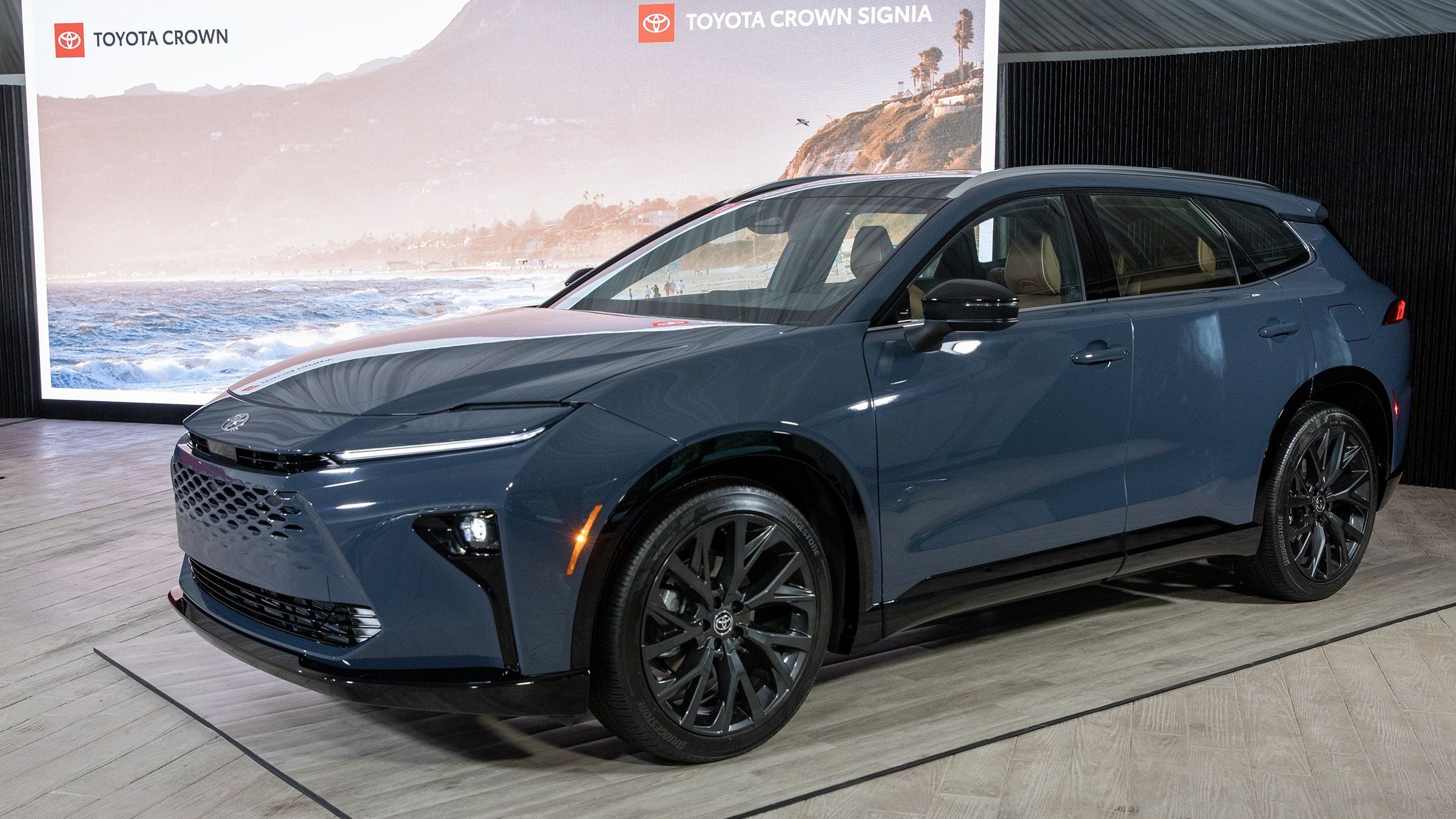
13. Toyota Unintended Acceleration Scandal (2009): The Pedal of Peril
Just when you thought unintended acceleration controversies were a relic of the past, Toyota, a brand synonymous with reliability and quality, found itself at the epicenter of a massive scandal in 2009. This wasn’t a manipulated news report; this was a very real, very dangerous issue that led to fatal crashes and severely tarnished the reputation of the world’s largest automaker.
The crisis gained widespread attention after a chilling 911 call from a California Highway Patrol officer whose Lexus (Toyota’s luxury brand) accelerated uncontrollably, resulting in a fatal crash. This tragic incident, and others like it, sparked a nationwide panic, leading to investigations into potential defects in Toyota vehicles, particularly regarding the gas pedal. Initially, Toyota tried to downplay the issue, denying any fundamental flaw.
However, under intense government scrutiny and public pressure, Toyota eventually admitted that a faulty gas pedal assembly was indeed responsible for some of the unintended acceleration incidents. Beyond the physical pedal, issues were also found with floor mats trapping accelerators, further complicating the picture and highlighting multiple points of failure within the vehicle’s control systems.
The fallout was immense: Toyota issued a recall for 9.3 million vehicles globally, one of the largest recalls in automotive history at the time. The U.S. government fined Toyota a staggering $1.2 billion for misleading the public and concealing known safety defects. The scandal forced Toyota to fundamentally re-evaluate its safety protocols and transparency, serving as a powerful reminder that even the most trusted brands are not immune to profound and costly safety failures.
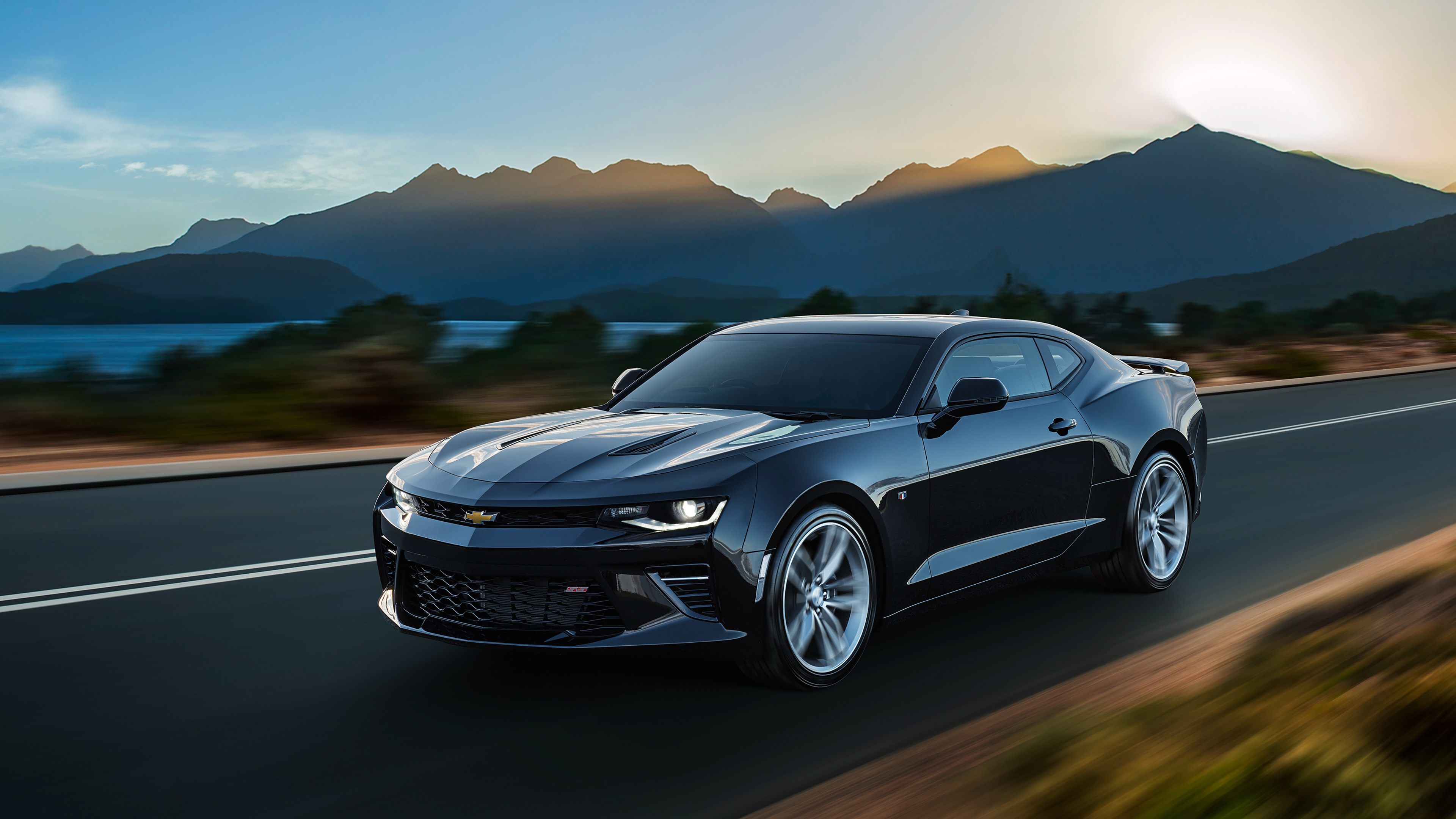
14. Chevrolet Engine Mount Recall (1971): The Hidden Danger Beneath the Hood
In the early 1970s, as nascent safety regulations began to gain traction, one of the first widespread scandals under the watch of the U.S. Department of Transportation and NHTSA brought General Motors into an uncomfortable spotlight. This was the Chevrolet Engine Mount Recall, a prime example of corporate negligence surrounding a seemingly innocuous part that could lead to deeply dangerous consequences.
The issue was with engine mounts in 1965-1969 Chevrolet vehicles. These mounts, designed to hold the engine in place, were prone to failure. When an engine mount failed, the engine could shift, causing the accelerator linkage to jam open. The terrifying result? Unintended acceleration and transmission malfunctions, sudden, uncontrollable surges of power that could transform a routine drive into a heart-stopping, life-threatening situation.
The most damning aspect of this scandal was GM’s response—or lack thereof. The automaker had received numerous reports about these defective engine mounts for years, acknowledging the problem internally, but choosing to delay action. It took significant media attention and pressure from government agencies to finally force GM’s hand, leading to a massive recall of 6.5 million vehicles in 1971.
This scandal highlighted the severe dangers of inadequate safety standards and exposed a pattern of corporate negligence in addressing known defects. It wasn’t about a flashy design flaw, but a fundamental mechanical component whose failure could cascade into total loss of control. The Chevrolet Engine Mount Recall serves as a foundational case in the history of automotive safety, cementing the precedent that manufacturers would, eventually, be held accountable for broad component defects and their often-tragic consequences.
As we peel back the layers of automotive history, it becomes abundantly clear that the road to safer vehicles has been paved with costly lessons and, tragically, human lives. From design flaws that turned everyday commutes into fiery nightmares to systemic corporate negligence that delayed crucial recalls, each of these 14 cases underscores a recurring theme: the relentless pursuit of profit too often overshadows the imperative of safety. While regulatory bodies and media scrutiny have played pivotal roles in forcing accountability, these tales remain a stark, essential reminder for manufacturers and consumers alike. The rumble of an engine should evoke excitement, not dread, and ensuring that future innovations always place human well-being above all else is the only true path forward for the automotive industry.