
The year 1983 stands as a pivotal moment in human history, a temporal crossroads where the seeds of our modern digital world were sown, cultural landscapes were irrevocably altered, and some truly remarkable stories unfolded – not least among them, the automotive anomaly that became known as the 1983 Chevrolet Corvette.
It was a year characterized by a fascinating dichotomy: a period marked by the lingering anxieties of the Cold War and escalating nuclear tensions, yet simultaneously a fertile ground for unprecedented technological leaps and a vibrant explosion of popular culture. From the very fabric of global communication being re-engineered to the emergence of devices that would define personal technology, 1983 was a whirlwind of innovation, tragedy, and triumph, setting the stage for decades to come.
While the world navigated these complex currents, one particular tale from the automotive realm stands out—a narrative of design ambition, production delays, and an almost complete disappearance. The story of the 1983 Corvette is a testament to the meticulous, sometimes unforgiving, processes of vehicle development, culminating in a legend forged not by widespread release, but by its near-total absence. Join us as we journey back to uncover some of the most compelling narratives and groundbreaking innovations that defined this unforgettable year, beginning with the very foundations of our interconnected world and the unique saga of a legendary American sports car.

1. **The Internet’s Official Birth: ARPANET’s Pivotal Transition**The digital age, as we know it today, took a definitive and foundational step on January 1, 1983, with what is often celebrated as the official beginning of the Internet. This momentous date marked the Advanced Research Projects Agency Network (ARPANET)’s critical transition to the Transmission Control Protocol and Internet Protocol (TCP/IP). This wasn’t merely a software update; it was a fundamental re-architecture of how data would be packaged and routed, providing a standardized communication framework that would underpin global connectivity.
Prior to this transition, ARPANET had been a crucial but more limited network, primarily connecting academic and research institutions. The adoption of TCP/IP provided a robust, flexible, and scalable foundation, allowing diverse networks to interconnect seamlessly. It created a ‘network of networks’ and laid the groundwork for the expansive, resilient, and fault-tolerant system we rely on today, ensuring that information could traverse disparate systems without proprietary barriers.
This technical shift was a quiet revolution, a behind-the-scenes engineering marvel that had profound implications. It meant that different types of computers and operating systems could communicate effectively, moving beyond specialized hardware and software constraints. The move to TCP/IP standardized communication across networks, paving the way for the internet to grow from an academic curiosity into the pervasive global utility that would fundamentally transform commerce, communication, and culture in the decades that followed.

2. **The Dawn of Mobile Telephony: Motorola’s DynaTAC 8000X**While 1983 saw the internet taking its first formal steps, it also heralded another groundbreaking communication revolution: the introduction of the first commercially available mobile cellular telephone. Motorola unveiled the DynaTAC 8000X, a device that, while seemingly primitive by today’s standards, represented a monumental leap in personal connectivity, freeing communication from fixed lines.
This pioneering device was a significant engineering feat, bringing the concept of wireless, portable communication from science fiction into reality. Although its cost, size, and limited battery life would make it a niche luxury at first, the DynaTAC 8000X demonstrated the incredible potential of cellular technology. It initiated a paradigm shift, proving that conversations could truly happen anywhere, untethered from physical infrastructure.
The public availability of the mobile phone was not just a technological milestone; it was a cultural one. It sparked the imagination about a future where personal, instant communication was the norm, laying the essential groundwork for the ubiquitous smartphones that dominate our lives today. The first mobile cellular telephone call made in 1983 wasn’t just a signal transmission; it was the echo of a future yet to fully unfold, showcasing the relentless march of human ingenuity in connecting people across distances.

3. **Compact Discs Hit the American Market: Revolutionizing Music Consumption**In an era already rich with technological advancement, 1983 also delivered a seismic shift in how music was consumed, as Sony and Philips launched their Compact Disc (CD) players in America. Although already available in Japan and Europe, the American debut marked the beginning of a new era for audio enthusiasts, promising superior sound quality and durability compared to vinyl records and cassette tapes.
The initial cost of over $1000 for a CD player positioned it as a premium product, yet it proved to be extremely popular, quickly captivating a market hungry for innovation. This enthusiasm was driven by the CD’s distinct advantages: crystal-clear digital audio without the pops, scratches, and tape hiss inherent to analog formats, along with the convenience of a smaller, more robust disc. The tactile experience of owning a CD and its accompanying detailed liner notes also appealed strongly to music lovers.
The arrival of the CD player was more than just the introduction of new hardware; it revolutionized the music industry’s entire ecosystem, from production and distribution to consumer listening habits. It marked a definitive pivot towards digital audio and fundamentally altered expectations for sound fidelity. The compact disc quickly became the dominant format for recorded music, profoundly impacting the soundscape of the 1980s and beyond, proving that consumers were ready to invest in the next generation of audio technology.

4. **Sally Ride: The First American Woman in Space**One of the most inspiring and significant events of 1983 was the journey of Sally Ride, who made history by becoming the first American woman to travel to space. Aboard the Space Shuttle Challenger for mission STS-7, Ride’s participation was not just a personal achievement but a monumental step forward for women in science and exploration, capturing the imaginations of millions.
Her flight broke barriers and shattered traditional perceptions of who could reach for the stars. The image of Sally Ride in her flight suit, defying gravity and looking back at Earth, became an icon of progress and empowerment. Her presence in space demonstrated that the final frontier was open to all, regardless of gender, and served as a powerful inspiration for countless young girls to pursue careers in science, technology, engineering, and mathematics.
Ride’s mission was part of NASA’s continuing efforts to expand human presence in space, and her role extended beyond simply being a passenger. As a mission specialist, she operated the shuttle’s robotic arm, demonstrating technical prowess and contributing directly to the mission’s success, which included the retrieval of a satellite from orbit—a first for a space shuttle mission. Her groundbreaking journey solidified her place as a pioneer and a beacon of human potential.
Read more about: 12 Cinematic Deaths That Left Audiences Absolutely Shattered: From Heroic Sacrifices to Utterly Heartbreaking Tragedies

5. **Michael Jackson’s ‘Thriller’ Album Dominates Charts**The cultural landscape of 1983 was undeniably shaped by the unparalleled phenomenon of Michael Jackson’s album, “Thriller.” Released in 1982, its impact surged throughout 1983, becoming a global sensation that transcended musical genres and set unprecedented records. On February 26, 1983, the album ascended to the coveted number 1 spot on the US 200 Billboard album charts, beginning a historic run.
“Thriller” remained at the pinnacle of the charts for an astonishing 37 weeks, a world record that underscored its immense popularity and critical acclaim. This extraordinary sustained success saw the album selling an incredible one million copies per week worldwide at its peak. It wasn’t just a collection of songs; it was a cultural touchstone that pushed the boundaries of music, video, and pop artistry.
The album’s influence was vast, solidifying Michael Jackson’s status as the ‘King of Pop’ and forever altering the landscape of popular music. Its innovative music videos, particularly the cinematic epic for the title track, redefined the visual component of music and made MTV an essential platform for artists. “Thriller” is rightly regarded as one of the most influential pop albums in history, and its chart dominance in 1983 was merely the beginning of its legendary status and enduring legacy.

6. **The 1983 Corvette: The Legend of the Unreleased Model**Among the many stories of 1983, one particular automotive narrative stands alone: the phantom 1983 Chevrolet Corvette. It is a tale of ambition, unforeseen challenges, and a singular survivor that has become legendary in its own right. Despite the Corvette’s celebrated history and continuous production since 1953, the 1983 model year is conspicuously absent from dealership showrooms, with nearly every planned unit meeting an unusual fate.
The fourth-generation Corvette, known as the C4, was initially slated for a 1982 release, representing a complete redesign after nearly two decades of C1, C2, and C3 models built on essentially the same frame. Chief Engineer Dave McLellan’s team aimed for a substantially more refined vehicle, competitive with its European rivals. The new C4 was designed to be 8.5 inches shorter, two inches wider, and about 150 pounds lighter than its predecessor, featuring a body/frame-integral structure and chassis with transverse leaf springs front and rear.
However, the extensive development process for this all-new car led to production delays, pushing its launch back to fall 1982 for the 1983 model year, coinciding with the Corvette’s 30th birthday. Further refinements and quality control concerns, including an issue with emissions equipment, caused another delay, ultimately shifting the launch to the 1984 model year. To bridge the gap and boost sales of the outgoing C3, Chevrolet even created a ‘Collector Edition’ ’82 Corvette.
In total, 43 actual 1983-designated Corvette “pilot cars” were manufactured. These vehicles were not for public sale but were built for internal Chevrolet use, dedicated to engineering, testing, and various development purposes. It was standard procedure for these pilot cars to be destroyed once their utility had passed, ensuring that only production models reached the market. Tragically, 42 of these 43 unique 1983 Corvettes met precisely that fate, crushed out of existence.
Yet, one singular 1983 Corvette, designated RBV098, miraculously slipped through the cracks. The story of its survival is often attributed to Chevrolet plant worker Ralph Montileone. Legend has it that as he was demolishing the last of the Corvettes at the Bowling Green, Kentucky, location, rain suddenly began to fall. Montileone went inside, leaving the final Corvette to be crushed the following day. However, when he returned, the rented crusher had already been returned, sparing RBV098’s life.
Designated as RBV098, this model was then parked outside, existing out of sight and out of mind for some time, a solitary relic of a model year that never was. Its luck would continue when a new Bowling Green plant manager discovered the decrepit car in 1984. Recognizing its unique historical value, he elected to make it an attraction. He brought it in, had it cleaned up, and adorned it with a patriotic red, white, and blue paint job, placing it on display as the last of the Corvette model year that never was. Eventually, the vehicle was returned to its original solid white paint scheme and brought in to commemorate the 1994 opening of the National Corvette Museum. Its place at the museum was later made permanent, where it remains three decades later for enthusiasts to admire. Though the 1983 Chevrolet Corvette never made it to market, RBV098 endures as a legendary vehicle, its fascinating tale of singular survival captivating the automotive world and symbolizing an extraordinary chapter in American car history.
Car Model Information: 2025 Chevrolet Corvette Stingray w/3LT
Name: Chevrolet Corvette
Caption: 2021 Chevrolet Corvette C8
Manufacturer: Chevrolet
Production: 1953–present
ModelYears: bulleted list
Assembly: bulleted list
Class: Sports car
BodyStyle: coupé
Layout: Front-engine, rear-wheel-drive layout,Rear mid-engine, rear-wheel-drive layout
Categories: 1950s cars, 1960s cars, 1970s cars, 1980s cars, 1990s cars
Summary: The Chevrolet Corvette is a line of American two-door, two-seater sports cars manufactured and marketed by General Motors under the Chevrolet marque since 1953. Throughout eight generations, indicated sequentially as C1 to C8, the Corvette is noted for its performance, distinctive styling, lightweight fiberglass or composite bodywork, and competitive pricing. The Corvette has had domestic mass-produced two-seater competitors fielded by American Motors, Ford, and Chrysler; it is the only one continuously produced by a United States auto manufacturer. It serves as Chevrolet’s halo car.
In 1953, GM executives accepted a suggestion by Myron Scott, then the assistant director of the Public Relations department, to name the company’s new sports car after the corvette, a small, maneuverable warship. Initially, a relatively modest, lightweight 6‑cylinder convertible, subsequent introductions of V8 engines, competitive chassis innovations, and rear mid-engined layout have gradually moved the Corvette upmarket into the supercar class. In 1963, the second generation was introduced in coupe and convertible styles. The first three Corvette generations (1953–1982) employed body-on-frame construction, and since the C4 generation, introduced in 1983 as an early 1984 model, Corvettes have used GM’s unibody Y‑body platform. All Corvettes used front mid-engine configuration for seven generations, through 2019, and transitioned to a rear mid-engined layout with the C8 generation.
Initially manufactured in Flint, Michigan, and St. Louis, Missouri, the Corvette has been produced in Bowling Green, Kentucky, since 1981, which is also the location of the National Corvette Museum. The Corvette has become widely known as “America’s Sports Car.” Automotive News wrote that after being featured in the early 1960s television show Route 66, “the Corvette became synonymous with freedom and adventure,” ultimately becoming both “the most successful concept car in history and the most popular sports car in history.”
Get more information about: Chevrolet Corvette
Buying a high-performing used car >>>
Brand: Chevrolet Model: Corvette
Price: $92,990 Mileage: 3,779 mi.
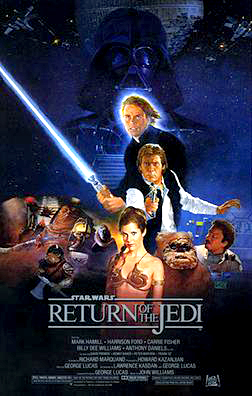
7. **Return of the Jedi Becomes a Box Office Phenomenon**In the realm of pop culture, 1983 delivered a cinematic event that captivated audiences worldwide: the release of “Return of the Jedi.” As the third installment of the original Star Wars trilogy, its premiere was highly anticipated and quickly became a massive hit, solidifying the franchise’s legendary status and becoming the highest-grossing film of the year.
The film provided a thrilling conclusion to the saga that began with “Star Wars: A New Hope” and continued with “The Empire Strikes Back.” Fans flocked to theaters to witness the climactic confrontation between Luke Skywalker and Darth Vader, the ultimate fate of the Galactic Empire, and the resolution of beloved characters’ journeys. It was a cultural event that transcended mere entertainment, weaving itself into the collective consciousness of a generation.
“Return of the Jedi” not only achieved immense box office success but also reinforced the profound impact of the Star Wars universe on popular culture. Its groundbreaking special effects, memorable characters, and epic storytelling set new benchmarks for cinematic achievement. The film’s legacy endures, continuing to be celebrated for its contribution to science fiction and its role in shaping the modern blockbuster landscape.
Steering our journey deeper into the annals of 1983, we find a year brimming with events that carved indelible marks across global politics, scientific endeavor, and the fabric of technological advancement. Beyond the initial wave of innovations, the year saw critical geopolitical moments unfold, groundbreaking scientific discoveries reshape human understanding, and further technological leaps that collectively steered humanity towards an unforeseen future. These were moments that tested resolve, celebrated ingenuity, and fundamentally altered the landscape of our shared world. Let’s delve into these pivotal narratives that continued to define this remarkable year.
Read more about: Beyond the Buzz: Deconstructing the Decade’s Most Overrated Films and the Illusions of Acclaim

8. **Korean Air Lines Flight 007 Shot Down: A Cold War Tragedy**September 1, 1983, etched a somber and chilling chapter into the Cold War narrative with the tragic downing of Korean Air Lines Flight 007. This civilian airliner, carrying 269 souls, including a U.S. Congressman, was shot down by a Soviet Su-15 interceptor after it strayed into Soviet prohibited airspace. The incident sent shockwaves across the globe, instantly escalating already tense relations between the United States and the Soviet Union to a critical new peak, prompting widespread international condemnation.
The circumstances surrounding the event were murky and highly controversial. The Soviet Union claimed the aircraft was on a spy mission, asserting it ignored warnings and was flying without navigation lights, a claim vehemently denied by the U.S. and South Korea. However, the flight recorders eventually revealed the crew was unaware of their significant deviation from the planned flight path, underscoring a tragic navigational error that placed a commercial airliner directly into a geopolitical minefield. The loss of life was immense, fueling outrage and deepening the ideological divide.
The geopolitical fallout was immediate and severe. The incident prompted a furious exchange of accusations, with President Reagan condemning the act as a “crime against humanity.” It directly contributed to an increase in Cold War tensions and a more aggressive stance from the U.S. administration. Yet, amidst the tragedy, there was a pivotal long-term consequence: the U.S. government announced that its Global Positioning System (GPS), then reserved for military use, would be made available for civilian navigation to prevent similar future disasters, forever changing how the world would navigate.
The enduring legacy of KAL 007 serves as a stark reminder of the perils of the Cold War and the devastating potential of miscommunication and heightened alert. It was a moment of profound human loss, but also a catalyst for fundamental changes in international air safety and global navigation, demonstrating how even the darkest moments can spark a drive for progress.

9. **Microsoft Word Debuts: A New Era for Document Processing**Beyond the hardware revolutions, 1983 also introduced a software innovation that would fundamentally reshape how we create and interact with text: the debut of Microsoft Word. In October of that year, Microsoft released the first version of Word, initially for Xenix and MS-DOS systems. While seemingly primitive by today’s graphical standards, this marked a crucial step in making personal computers truly productive for everyday tasks beyond simple coding or data entry.
Prior to Word’s arrival, word processing was often a more cumbersome, command-line driven affair, accessible primarily to those comfortable with technical interfaces. Word aimed to simplify this, offering a more intuitive approach to formatting and editing documents. It represented an early vision of a user-friendly interface for text manipulation, laying down foundational concepts that would evolve into the ubiquitous word processors of the modern age.
Though Windows would not introduce its graphical interface until later, this initial version of Word was a significant leap in software development. It demonstrated Microsoft’s burgeoning ambition beyond operating systems, paving the way for a suite of applications that would become synonymous with personal computing. Its introduction was a quiet but profound technological advance, setting the stage for the standardization of digital document creation and radically improving office productivity worldwide.

10. **The Video Game Crash of 1983: Reshaping a Nascent Industry**While personal computing and mobile communications were taking off, another burgeoning digital industry faced a dramatic downturn in 1983: the North American video game market experienced a catastrophic crash. After a period of explosive growth, fueled by arcade sensations and early home consoles, the market suddenly contracted sharply, leading to widespread bankruptcies and a profound loss of consumer confidence that nearly decimated the industry.
The crash was a complex phenomenon, driven by several interlocking factors. The market became oversaturated with a glut of low-quality games, many from third-party developers, leading to a perception of poor value among consumers. Coupled with the rapid proliferation of home computers, which offered greater versatility and perceived long-term utility, dedicated game consoles began to lose their appeal. Atari, once the industry titan, found itself at the epicenter of this perfect storm, symbolizing the industry’s rapid decline.
The consequences were severe, with many major players exiting the market and retail channels refusing to stock video game products. It forced a fundamental re-evaluation of business practices, quality control, and platform differentiation within the industry. This period of intense self-correction, however, proved to be an unlikely crucible, forging the path for a more robust and strategically managed industry.
In the long run, the 1983 crash was a pivotal cleansing event. It created a vacuum that allowed Japanese companies, notably Nintendo with its Famicom (released in Japan in 1983), to later re-enter the North American market with a renewed focus on quality, strong licensing agreements, and innovative hardware. The lessons learned from this tumultuous year laid the groundwork for the structured, quality-driven, and highly successful video game industry we know today, emphasizing that even setbacks can be powerful catalysts for evolution.

11. **HIV Identified: A Breakthrough in the AIDS Crisis**Amidst the technological and cultural shifts of 1983, a monumental scientific breakthrough occurred in the medical world, offering the first real glimmer of understanding in what had become a terrifying global health crisis. In May, two independently researched scientific papers were published, providing compelling evidence that AIDS was caused by a retrovirus, later named HIV. This identification marked a critical turning point in the fight against a disease that had, until then, been shrouded in mystery and fear.
Before this discovery, AIDS was a baffling and rapidly fatal syndrome, its cause unknown, leading to panic and misinformation. The identification of HIV as the causative agent transformed the medical approach overnight. It provided researchers with a target, enabling the development of diagnostic tests, paving the way for antiviral treatments, and initiating rigorous research into the virus’s mechanisms and potential vaccines. It was a beacon of hope in a profoundly dark time.
The context for this scientific triumph was grim; the AIDS epidemic was rapidly escalating, primarily affecting gay men, drug users, and hemophiliacs, and a clear understanding of its transmission was desperately needed. The U.S. Congress, recognizing the urgency, also passed its first bill allocating funds for AIDS research and treatment in 1983, a crucial political and financial commitment to combating the burgeoning crisis. This dual push from science and policy underscored a growing global recognition of the disease’s devastating impact.
The identification of HIV in 1983 was not merely a scientific footnote; it was the essential first step towards managing and ultimately transforming the prognosis for millions affected by AIDS. It launched decades of intense research and public health initiatives that, while not eradicating the disease, have successfully transformed it from a death sentence into a manageable chronic condition, a testament to relentless human ingenuity in the face of adversity.

12. **Reagan Proposes the Strategic Defense Initiative: “Star Wars” Heats Up the Cold War**In a move that dramatically reshaped the Cold War landscape, President Ronald Reagan, in 1983, proposed the Strategic Defense Initiative (SDI), swiftly dubbed “Star Wars” by the media. This ambitious and controversial program envisioned a space-based missile defense system designed to protect the United States from an attack by intercontinental ballistic missiles. It was a bold declaration, signaling a radical shift in America’s nuclear strategy and injecting a new, high-stakes dimension into the arms race.
Reagan’s proposal was rooted in the desire to move beyond the doctrine of Mutually Assured Destruction (MAD), offering a defensive alternative to deter nuclear conflict. The technology required for SDI was immensely complex and largely theoretical at the time, involving lasers, particle beams, and satellite-based interceptors. Critics immediately questioned its feasibility, enormous cost, and potential to destabilize the already fragile balance of power, fearing it would provoke a new and more dangerous arms race in space.
The Soviet Union reacted with fierce condemnation, viewing SDI as a dangerous escalation and a direct threat to its strategic parity. Moscow saw it as an attempt by the U.S. to gain a decisive advantage and undermine its retaliatory capabilities, intensifying diplomatic tensions and arms control negotiations. The initiative placed immense pressure on the already strained Soviet economy, forcing it to consider competing with an advanced technological program it could ill afford.
While SDI was never fully deployed as initially conceived, its strategic and technological impact was profound. It spurred significant research into missile defense technologies and contributed to the scientific and military advancements of the era. Ultimately, SDI is widely considered to have been a significant factor in hastening the end of the Cold War, compelling the Soviets to confront an insurmountable technological and economic challenge.
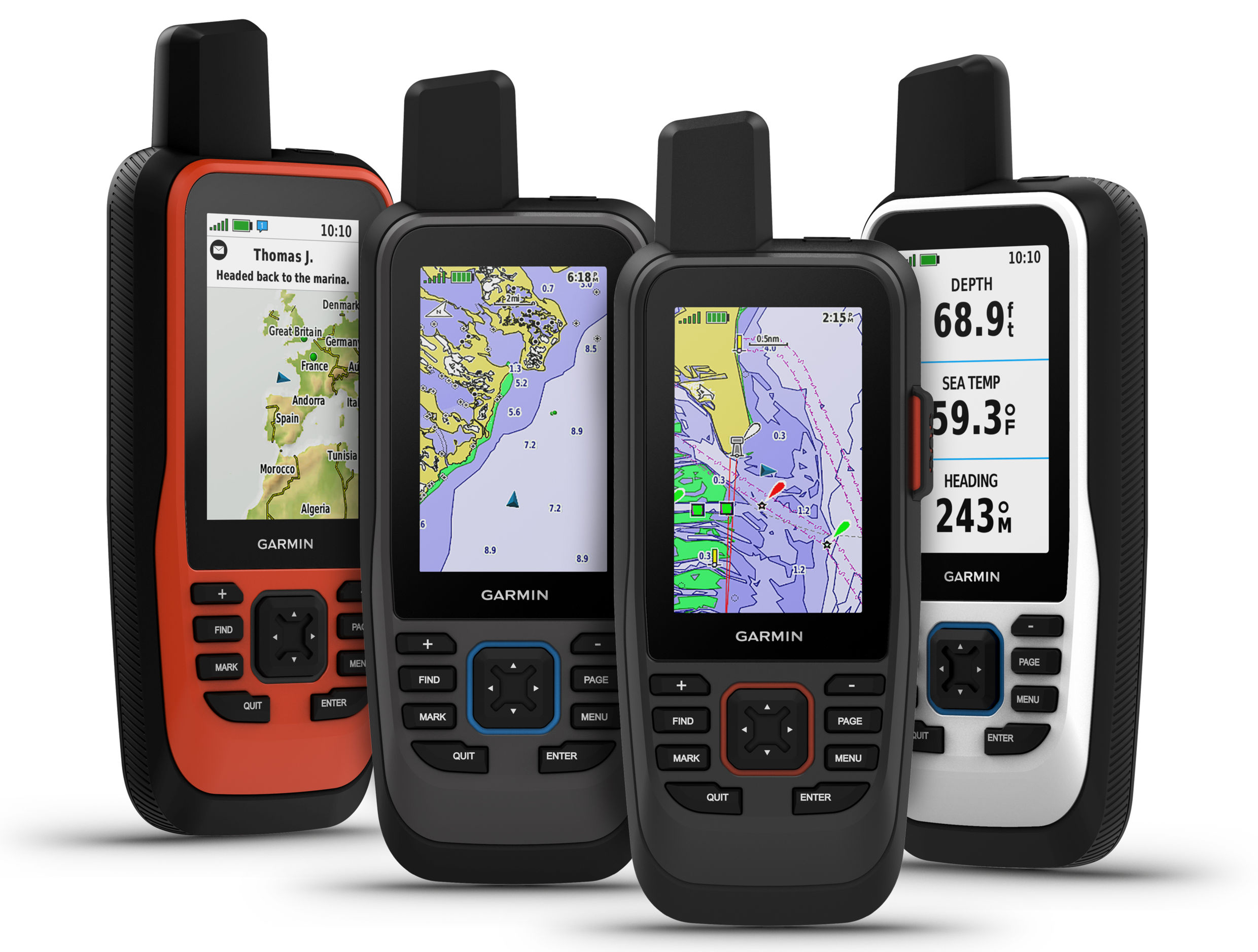
13. **GPS Announced for Public Use: Navigating a New World**A critical, albeit initially less heralded, technological announcement in 1983 would quietly revolutionize global navigation: President Ronald Reagan’s decree on September 16 that the Global Positioning System (GPS), previously a military-exclusive technology, would be made available for civilian use. This decision, a direct consequence of the tragic downing of Korean Air Lines Flight 007, was a profound pivot towards ubiquitous, precise location data for all, transforming how humanity would interact with its physical world.
The KAL 007 incident starkly underscored the need for a universally accessible and reliable navigation system for civilian aircraft. By opening up GPS, the U.S. government aimed to prevent future such navigational errors, prioritizing safety over strategic exclusivity. Although the full implementation and widespread civilian adoption would take decades, the 1983 announcement was the foundational promise of a world where one’s exact location could be determined with unprecedented accuracy, irrespective of borders or infrastructure.
Initially, civilian GPS signals were intentionally degraded (“Selective Availability”) to maintain a military advantage, a policy that would later be revoked. Nevertheless, the announcement sparked the imagination of scientists, engineers, and entrepreneurs who immediately recognized its transformative potential across countless sectors. From aviation and shipping to surveying and mapping, the groundwork was laid for a revolution in positional awareness.
Today, GPS is an indispensable utility, deeply embedded in our daily lives, powering everything from smartphone navigation and ride-sharing apps to precision agriculture and disaster response. The 1983 decision to share this cutting-edge technology was an act of global consequence, born from tragedy, that quietly but decisively shaped the twenty-first century, redefining our relationship with space and location in ways few could have foreseen.

14. **Martin Luther King Jr. Day Established: A Federal Tribute to a Civil Rights Icon**Closing out this remarkable year of change, 1983 also witnessed a profound political and social milestone that resonated deeply within American society: President Ronald Reagan signed a bill on October 19, establishing a federal holiday in honor of Martin Luther King Jr. This momentous act came after a prolonged struggle for national recognition and stood as a powerful testament to King’s enduring legacy and the ongoing pursuit of civil rights and equality.
The push for a national holiday to commemorate Dr. King began almost immediately after his assassination in 1968, but it faced significant political opposition for years. The signing of the bill into law in 1983 was the culmination of decades of advocacy, marches, and sustained public pressure. It represented a collective national acknowledgment of King’s immense contributions to peace, justice, and the American ideal, solidifying his place as a revered figure in the nation’s history.
While the holiday would not be observed until 1986, and its adoption by all states took even longer, its establishment in 1983 sent an unmistakable message about America’s commitment to civil rights. It provided an annual occasion for reflection on the struggles and triumphs of the Civil Rights Movement, encouraging public service, and fostering a deeper understanding of the principles for which King lived and died. It became a unifying force, prompting discussions about equality and justice in communities across the country.
The creation of Martin Luther King Jr. Day was more than just adding another date to the federal calendar; it was a profound symbolic gesture. It affirmed the nation’s dedication to the ideals of racial harmony and social justice that King so eloquently championed. As a lasting legacy of 1983, it continues to inspire future generations to uphold his vision of a more equitable and inclusive society, making the year truly unforgettable on multiple fronts.
As we reflect on the myriad events of 1983, from the tragic downing of KAL 007 to the dawn of Microsoft Word and the establishment of Martin Luther King Jr. Day, it becomes strikingly clear that this was not merely a year of isolated incidents but a dynamic crucible where the past gave way to an uncertain yet hopeful future. The narratives woven throughout these months, whether in automotive engineering, geopolitical tension, or scientific revelation, collectively painted a vibrant portrait of human endeavor, resilience, and the relentless march of progress. It was a year that shaped our understanding of technology, refined our diplomatic approaches, and reinforced our societal values, cementing its place as a truly transformative period in modern history. The echo of its breakthroughs, challenges, and enduring legacies continues to resonate, reminding us that every moment carries the potential for profound change.