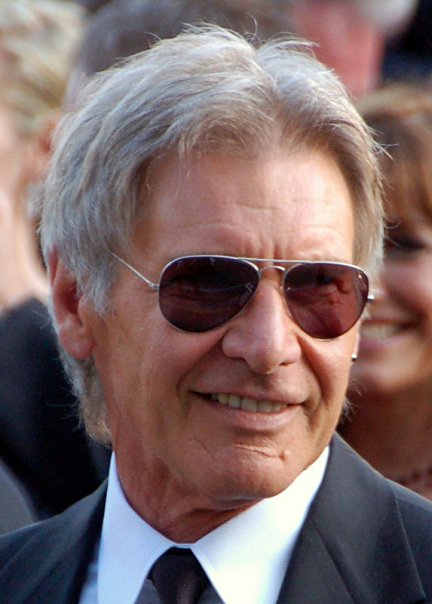
Oh, George Harrison! While the world knew him as the quiet Beatle, the masterful guitarist, and the spiritual seeker, there was another side to the ‘Dark Horse’ that burned with an equally intense passion: a profound, almost reverential love for the automobile. Long before the sold-out stadiums and the chart-topping anthems, a 12-year-old George was captivated by the roar of engines and the blur of speed at the 1955 British Grand Prix at Aintree, an experience that ignited a lifelong fascination. It was a fascination that would see him become friends with racing legends like Jackie Stewart, frequent the pit lanes of Formula 1 circuits worldwide, and, naturally, amass a truly breathtaking collection of cars.
Indeed, to call George Harrison a ‘car enthusiast’ feels like a monumental understatement. His garage wasn’t just a collection of vehicles; it was a curated journey through automotive history, a testament to his discerning eye for engineering excellence, aesthetic beauty, and, occasionally, sheer outrageous fun. From the humble, yet personally significant, Ford Anglia that marked his driving debut, to bespoke British icons and his initial dalliances with German luxury, Harrison’s early automotive choices reveal a man whose tastes were as eclectic and interesting as his musical compositions.
So, buckle up, petrolheads! We’re about to take a whirlwind tour through the formative years of George Harrison’s automotive affection, shining a spotlight on six remarkable machines that not only graced his driveway but also tell a deeper story about the man himself. Prepare to be immersed in a world where speed, style, and a healthy dose of rock ‘n’ roll history collide, presenting an awe-inspiring lineup worthy of the legend who owned them.
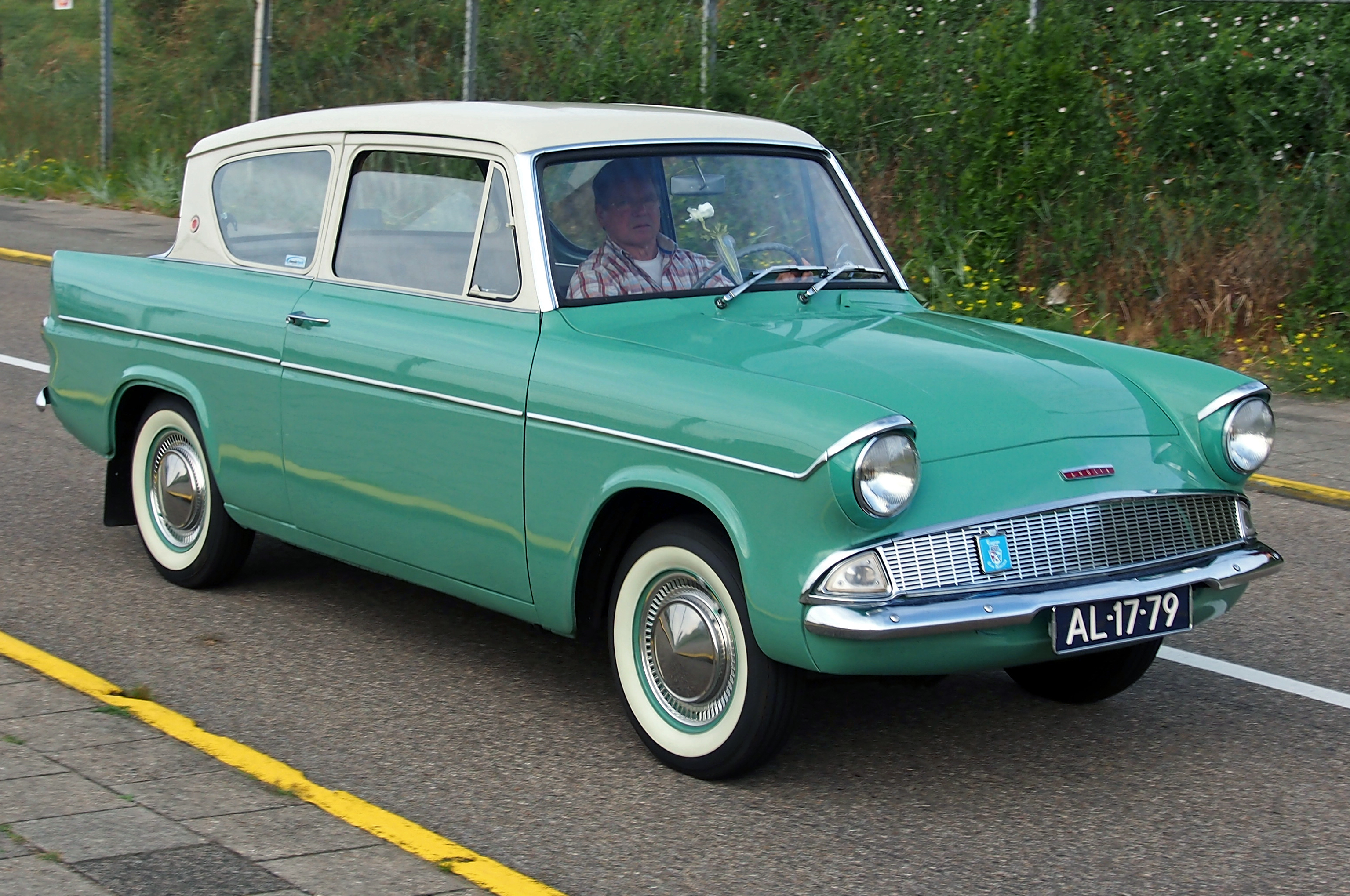
1. **Ford Anglia 105E**Every grand journey begins with a single step, and for George Harrison, that step was behind the wheel of a rather unassuming, but utterly charming, 1955 Ford Anglia 105E. This modest British-market Ford holds the distinction of being George’s very first car, acquired in 1962, the same year he finally got his driver’s license. Brian Epstein, ever the astute manager, brokered a deal with Hawthorne Motors, a Ford dealership, for a ‘special discount’ in exchange for some advertising photos with George and his new blue, two-door Anglia Deluxe.
The Anglia, introduced at the Earl’s Court Motor Show in 1959, was notable for being the first of its kind to utilize a four-speed transmission and a brand new over-square 997cc OHV engine. It was a simple sedan, a far cry from the exotic beasts Harrison would later command, yet its significance as his entry into the motoring world is immense. This was the car that initiated his driving adventures, leading to an amusing, almost catastrophic, highway race with Ringo Starr on the way home from picking it up in Warrington, an incident George himself claimed to have forgotten until Ringo recounted it years later during the Beatles Anthology recordings. It seems George, ever the speed demon even then, was so focused on racing Ringo that he kept going after Ringo’s unfortunate collision with a dog-induced braking incident ahead.
Despite its modest 40 horsepower, the Anglia clearly sparked Harrison’s inherent need for speed. Within a couple of months of ownership, he had already collected two warning tickets for speeding, a clear indicator that his passion for fast driving was blossoming. While not a flashy statement piece, the Anglia’s staying power in pop culture is undeniable, thanks in no small part to its prominent feature as the enchanted flying car of the Weasley family in the second “Harry Potter” film, adding another layer of quirky charm to Harrison’s automotive beginnings. Today, only 280 Ford Anglias reportedly remain on British roadways, underscoring its classic status.
Car Model Information: 2021 Genesis GV80 2.5T
Name: Ford Anglia
Caption: 1960 Ford Anglia 105E DeLuxe
Manufacturer: Ford of Britain
Production: 1939–1967
Assembly: Ford Dagenham assembly plant,England
Class: Small family car
Layout: FR layout
Predecessor: Ford 7Y
Successor: Ford Escort (Europe)
Categories: 1960s cars, All Wikipedia articles written in British English, All articles with unsourced statements, Articles with short description, Articles with unsourced statements from June 2008
Summary: The Ford Anglia is a small family car that was designed and manufactured by Ford UK. It is related to the Ford Prefect and the later Ford Popular. The Anglia name was applied to various models between 1939 and 1967. In total, 1,594,486 Anglias were produced. It was replaced by the Ford Escort.
Unique variants of the Anglia were produced by Ford Australia and by the Italian subsidiary of Ford.
Get more information about: Ford Anglia
Buying a high-performing used car >>>
Brand: Ford Model: Anglia 105E
Price: $34,319 Mileage: 36,145 mi.
Read more about: The 37 Ugliest Cars Ever Made: Automotive Design Fails

2. **Jaguar Mk2**As The Beatles’ star began its meteoric rise in 1963, George Harrison’s automotive aspirations quickly outgrew the humble 997cc engine of his Ford Anglia. The world was now his oyster, and with new-found success, he could finally indulge in something with a bit more bite. His next acquisition marked a significant leap into the realm of proper performance and luxury: a brand new Jaguar Mk2.
While details about this specific car are scarce, its symbolic importance is not. The Jaguar Mk2 was a sophisticated, powerful saloon, a quintessential British executive express, and a definite upgrade from the Anglia. It signaled Harrison’s growing wealth and his developing taste for cars that combined speed with undeniable style. This was the era when The Beatles were truly taking the UK and Europe by storm, and George, like his bandmates, was beginning to enjoy the fruits of their unprecedented success.
Owning a brand new Jaguar Mk2 in 1963 wasn’t just about transportation; it was a statement. It spoke of achievement, of a journey from working-class Liverpool to the upper echelons of pop culture. Though it may not have garnered the same fanatical attention as some of his later, more flamboyant vehicles, the Mk2 represents a pivotal moment in Harrison’s automotive evolution, solidifying his preference for British engineering and laying the groundwork for even more spectacular additions to his collection.
Read more about: Fake It Till You Make It: 14 Epic Kit Cars That Deliver Supercar Thrills on a Budget

3. **1964 Jaguar E-Type**Then came the E-Type, a car that needs no introduction, often cited as one of the most beautiful automobiles ever made. For his 21st birthday, on February 25th, 1964, George Harrison received a truly unforgettable gift: a brand new 1964 Jaguar E-Type, famously presented by The Beatles’ manager, Brian Epstein. Registered just three days after his birthday, this car was not just a present; it was an icon, a potent symbol of speed, elegance, and youthful exuberance that perfectly matched the spirit of the swinging sixties.
Known as the XKE in the U.S., the E-Type debuted in Geneva in March 1961, immediately capturing the world’s imagination with its stunning lines and impressive performance-to-price ratio. At a then-affordable £2,250 (around $2,700), it made sports car ownership accessible in a way few others could. Harrison’s Series 1 E-Type, produced between March 1961 and December 1968, was powered by a potent 3.8L engine, churning out 265 brake horsepower, capable of reaching a thrilling top speed of 150 miles per hour. It was a true driver’s car, demanding respect and delivering exhilarating thrills.
Harrison’s E-Type was not just a powerful machine; it was also a reflection of his personality. It came customized with an ‘ultra-cool dash-mounted record player,’ a feature that, while only practical when the car was stationary, speaks volumes about his rock and roll lifestyle. His affection for the car was legendary, so much so that he once penned a humorous, seven-step instruction guide to a fan, Susan Houghton, on how to meticulously wash his beloved Jaguar. The letter concluded with the cheeky suggestion to then ‘spread contents of the buckets evenly, so as to leave a nice film of muck over’ Paul McCartney’s Ford Classic, showcasing the playful rivalry and deep bond among the band members. It truly was an automotive masterpiece and a cherished possession.
Car Model Information: 1971 Jaguar E-Type Restomod
Sp: uk
Name: Jaguar E-Type
Caption: 1961 E-Type Series 1 3.8-Litre, the first production model of this open two-seater
Aka: Jaguar XK-E (North America),Jaguar V-12
Manufacturer: Jaguar Cars
Production: 1961–1974
Class: Sports car
Predecessor: Jaguar XK150
Related: Jaguar D-Type,Jaguar XJ13
Successor: Jaguar XJS
Layout: FMR layout
Assembly: Coventry,England
Designer: Malcolm Sayer
Categories: 1970s cars, 2+2 coupés, All Wikipedia articles written in British English, All articles with dead external links, All articles with specifically marked weasel-worded phrases
Summary: The Jaguar E-Type, or the Jaguar XK-E for the North American market, is a British front mid-engined sports car that was manufactured by Jaguar Cars Ltd from 1961 to 1974. Its sleek appearance, advanced technologies, high performance, and competitive pricing established it as an icon. The E-Type’s claimed 150 miles per hour (240 km/h) top speed, sub-7-second 0 to 60 mph (97 km/h) acceleration, largely unitary body construction, front and rear independent suspension with disc brakes, mounted inboard at the rear, and rack-and-pinion steering spurred industry-wide changes.
The E-Type was based on Jaguar’s D-Type racing car, which had won the 24 Hours of Le Mans for three consecutive years beginning in 1955.
The E-Type employed what was, for the early 1960s, a novel design principle, with a front subframe carrying the engine, front suspension and front bodywork bolted directly to the body tub. No ladder frame chassis, as was common at the time, was needed and as such the first cars weighed only 1,315 kg (2,899 lb).
It is rumored that, on its debut on 15 March 1961, Enzo Ferrari called it “the most beautiful car ever made”, but this statement is not fully confirmed. In 2004, Sports Car International magazine placed the E-Type at number one on their list of Top Sports Cars of the 1960s. In March 2008, the Jaguar E-Type ranked first in The Daily Telegraph’s online list of the world’s “100 most beautiful cars” of all time.
Get more information about: Jaguar E-Type
Buying a high-performing used car >>>
Brand: Jaguar Model: E-Type
Price: $64,900 Mileage: 2,455 mi.
Read more about: Driving Off Into The Sunset: Why These 9 Iconic Cars Won’t Make It To 2025 – A Deep Dive for Enthusiasts
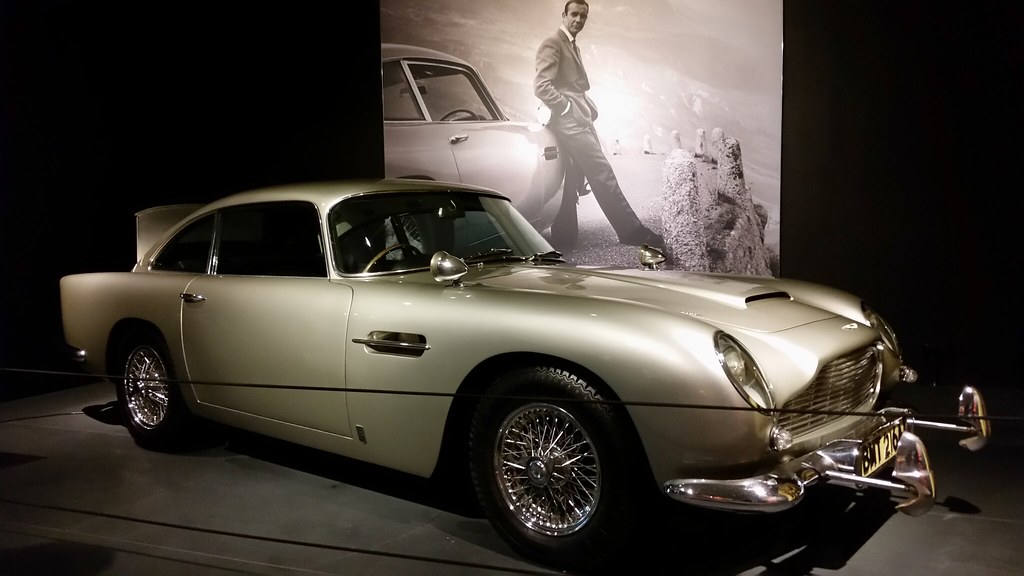
4. **1964 Aston Martin DB5**If the E-Type was a symbol of sophisticated speed, the 1964 Aston Martin DB5 was an icon of cinematic cool, thrust into global fame by James Bond in “Goldfinger.” George Harrison, clearly a man of excellent taste and perhaps a fan of 007 (he once wore a 007 T-shirt in a photoshoot!), couldn’t resist. In early 1965, he acquired his very own DB5, making it his first truly ‘extravagant’ car and cementing his status among the elite motoring enthusiasts of the era. His bandmate Paul McCartney also purchased a DB6 that same year, further illustrating the Aston Martin’s appeal among British rock royalty.
Harrison’s specific DB5, chassis nr DB5/1896/R, was originally ordered in Platinum Silver with a black Connolly leather interior, equipped with desirable optional extras like chrome wire wheels, Britax safety belts, and a detachable passenger headrest. Delivered personally to his Kinfauns estate in January 1965 through Brydor Cars (a company co-owned by Brian Epstein and Terry Doran, supplying sports cars to the Swinging London set), the car was a marvel of engineering. It boasted a 4-litre, dual camshaft, in-line 6 engine fed by a trio of SU carbs, producing 282 horsepower, enabling the lightweight coupe to reach 240 Km/h (149 mph). Its 0-60 acceleration time of 8.6 seconds was impressive for its time, embodying the perfect blend of luxury and performance.
Interestingly, Harrison soon had his Platinum Silver DB5 repainted white, matching his cherished Mercedes-Benz 600 Pullman, another car we’ll explore later. This decision highlights his personal aesthetic preferences and his affection for certain colors across his fleet. The best photos of George and his white Aston Martin DB5 come from a famous photoshoot by Henry Grossman on March 23, 1965, at Kinfauns, where George, clearly proud, posed with his sleek new machine. This beautiful vehicle was eventually sold at auction in 2011 to an anonymous Beatles collector for a staggering £350,000 (about $421,000), a testament to its enduring allure and its legendary owner.
Car Model Information: 2021 Genesis GV80 2.5T
Name: Aston Martin DB5
Manufacturer: Aston Martin
Production: 1963–1965 (1,059 units),2020 (25 units)
Assembly: Newport Pagnell,England
Designer: Carrozzeria Touring Superleggera
Class: Grand tourer
BodyStyle: coupé
Layout: Front-engine, rear-wheel-drive layout
Engine: DOHC,Straight-6,3995 cc
Order: flip
Abbr: on
Powerout: convert
Transmission: ZF Friedrichshafen
Length: 4570 mm
Width: 1680 mm
Wheelbase: 98.0 in
Predecessor: Aston Martin DB4
Successor: Aston Martin DB6
Doors: 2
Weight: 3311 lb
Sp: uk
Categories: All Wikipedia articles written in British English, Articles with short description, Aston Martin vehicles, CS1: unfit URL, Cars discontinued in 1965
Summary: The Aston Martin DB5 is a British grand tourer (GT) produced by Aston Martin and designed by Italian coachbuilder Carrozzeria Touring Superleggera. Originally produced from 1963 to 1965, the DB5 was an evolution of the final series of DB4. The “DB” designation is from the initials of David Brown who built up the company from 1947 onwards.
The DB5 is best-known for its role in the James Bond films. It was first driven by the fictional spy in the film Goldfinger (1964). In 2013, the car featured on a “British Auto Legends” postage stamp issued by the Royal Mail.
Get more information about: Aston Martin DB5
Buying a high-performing used car >>>
Brand: Aston Martin Model: DB5
Price: $34,319 Mileage: 36,145 mi.
Read more about: The Hidden Hoard: Hollywood’s Most Valuable Props and the Prop Masters Who Knew Their True Worth
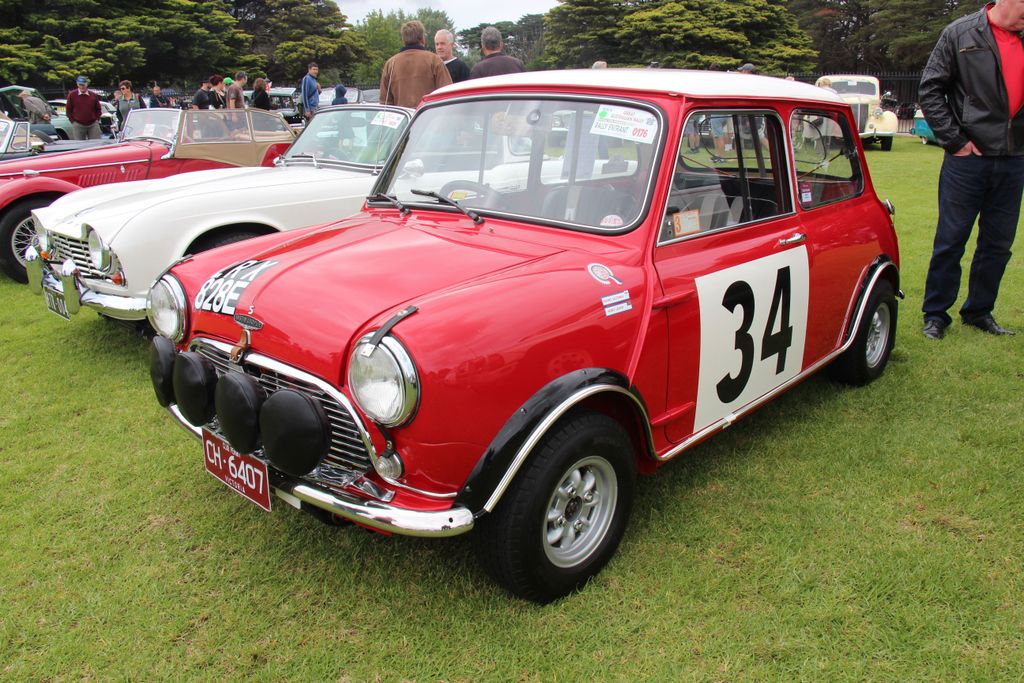
5. **Austin Mini Cooper S**Not every car in George Harrison’s collection was about raw power or opulent luxury. Sometimes, it was about iconic British charm, unique customization, and a touch of psychedelia. In 1965, as a publicity stunt for the British Motor Company, each Beatle received an Austin-Cooper. George’s Mini Cooper S, however, was far from standard; it became a truly unique specimen, a canvas for his artistic and spiritual explorations, and eventually, a star in its own right.
Initially, his Mini was customized and painted metallic black by the renowned coachbuilder Harold Radford, featuring a full-length sunroof, horizontally-mounted Volkswagen tail lights, and hood-mounted rally fog lamps. But it was in early 1967 that the car underwent its most famous transformation. Harrison, inspired by the book “Tantra Art: Its Philosophy and Physics,” had the vehicle repainted with vibrant, psychedelic Tantra art motifs. This colorful creation perfectly encapsulated the spirit of the era and Harrison’s own journey into Eastern mysticism.
This iconic, psychedelic Mini played a starring role in The Beatles’ 1967 film, “Magical Mystery Tour,” forever immortalizing its unique look in cinematic history. It was also reportedly the vehicle involved in George and John Lennon’s first unwitting experience with LSD, administered in their tea by a friend before a drive home. Harrison later gave this beloved car to Eric Clapton, a decision he came to regret, leading Clapton to graciously return it years later. The Mini reportedly still belongs to the Harrison family, making notable appearances such as the 1998 Goodwood Festival of Speed, where celebrities like Ringo Starr and Stella McCartney took it for a spin, continuing its storied legacy.
Car Model Information: 2021 Genesis GV80 2.5T
Sp: uk
Caption: 1959 Morris Mini-Minor (first one built)
Name: Mini
Aka: Austin 850,Rover Mini,Austin Cooper,Austin Mini,Austin Partner,Austin Seven,Innocenti Mini,Leyland Mini,Morris 850,Morris Mascot,Morris Mini Minor,Riley Elf,Wolseley 1000 (South Africa),Wolseley Hornet
Layout: Front-engine, front-wheel-drive layout
Manufacturer: British Motor Corporation,British Leyland,Rover Group
Production: 1959–2000 (5.38 million)
Class: City car
BodyStyle: sedan (car),convertible,Station wagon,sedan delivery,coupe utility
Engine: BMC A-series engine,Straight-four engine
Designer: Alec Issigonis,John Sheppard (car designer)
Transmission: 4-speed manual,AP automatic transmission,5-speed manual (optional extra on some later models)
Length: cvt,cvt,cvt
Width: cvt
Height: cvt
Weight: cvt
Wheelbase: cvt,cvt
Related: Mini Moke,Austin Metro,Innocenti Mini,Mini Wildgoose,Mini Marcos
Successor: Austin Metro,Mini Hatch
Assembly: Panmure, New Zealand
Categories: 1960s cars, 1970s cars, 1980s cars, 1990s cars, 2000s cars
Summary: The Mini is a very small two-door, four-seat car, produced for four decades over a single generation, with many names and variants, by the British Motor Corporation (BMC) and its successors British Leyland and the Rover Group, and finally (briefly) under BMW ownership. Minis were built as fastbacks, estates, convertibles, and various other body styles. Minus a brief 1990s hiatus, from 1959 into 2000, an estimated 5.38 million of all variations combined were built, and the Mini’s engines also powered another 2 million Mini Metros, though the Mini eventually outlasted its successor.
Initially, the Mini was marketed under the Austin and Morris names, as the Austin Seven and Morris Mini-Minor; the Austin Seven was renamed Austin Mini in 1962 and Mini became a marque in its own right in 1969. Retrospectively, the car is known as the “Classic Mini” to distinguish it from the modern MINI family of vehicles produced since 2001 by German carmaker BMW, who took ownership of the Mini name following the sale of Rover Group in 2000.
This distinctive two-door car was designed for BMC by Sir Alec Issigonis. Its space-saving transverse engine and front-wheel drive layout – allowing 80% of the area of the car’s floorpan to be used for passengers and luggage – influenced a generation of car makers. The front-wheel-drive, transverse-engine layout were used in many other “supermini” style car designs such as Honda N360 (1967), Nissan Cherry (1970), and Fiat 127 (1971). The layout was also adapted for larger subcompact designs. In 1999, the Mini was voted the second-most influential car of the 20th century, behind the Ford Model T, and ahead of the Citroën DS and Volkswagen Beetle. It is also considered an icon of 1960s British popular culture.
The Mini Mark I had three major UK updates: the Mark II, the Clubman, and the Mark III. Within these was a series of variations, including an estate car, a pick-up, a van, and the Mini Moke, a jeep-like buggy. The performance versions, the Mini Cooper and Cooper “S”, were successful as both race and rally cars, winning the Monte Carlo Rally in 1964, 1965, and 1967. The Mini was manufactured in England at the Longbridge plant in Birmingham located next to BMC’s headquarters and at the former Morris Motors plant at Cowley, as well as in Australia (Victoria Park/Zetland BMC Australia factory) and later also in Spain (Authi), Belgium, Italy (Innocenti, as the Innocenti Mini), Chile, Malta, Portugal, South Africa, Uruguay, Venezuela, and Yugoslavia (IMV). In 1980, British Leyland launched the Mini’s follow-up, the Austin Metro, however the Mini outlasted it and continued to be produced at Longbridge until October 2000.
Get more information about: Mini
Buying a high-performing used car >>>
Brand: Austin Model: Mini Cooper S
Price: $34,319 Mileage: 36,145 mi.
Read more about: Attention, Movie Buffs! If You Loved ‘Saving Private Ryan,’ You NEED To See These 15 Jaw-Dropping Military Films!
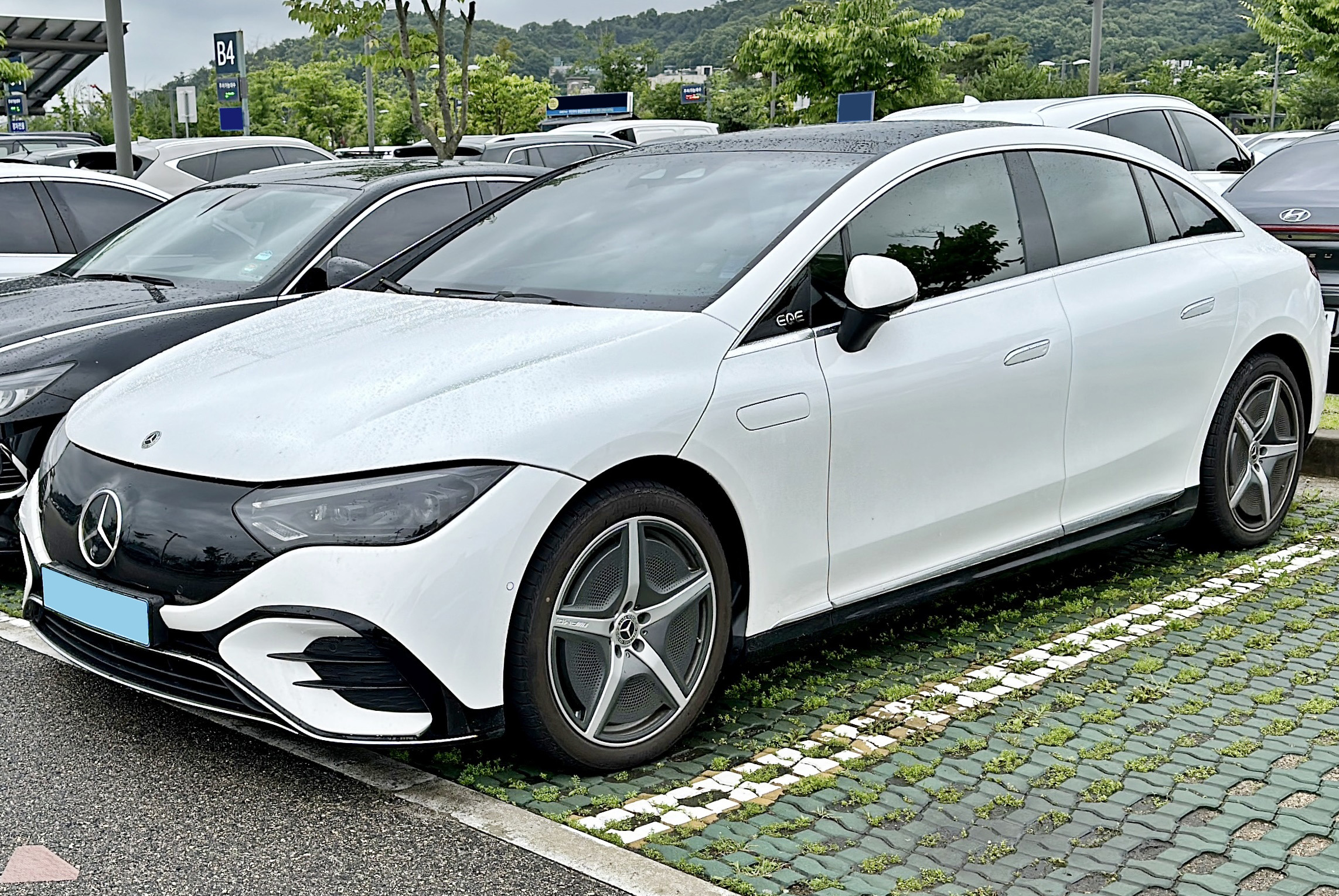
6. **Mercedes-Benz 600**While George Harrison certainly cherished his British marques, his automotive tastes were broad, leading him to explore the pinnacle of German engineering and luxury. In 1967, a significant year for the Beatles and for Harrison personally, he decided on something distinctly different: a Mercedes-Benz ‘600’. He chose the short-wheelbase model, which Mercedes referred to as a ‘personal luxury sedan,’ a car designed for ultimate comfort, prestige, and quiet authority.
This majestic white Mercedes-Benz 600 holds a special place in Beatles lore. It is famously the car George used to drive to the Apple headquarters on January 30th, 1969, the day of the legendary rooftop concert. Imagine the scene: Harrison arriving in this understated yet supremely elegant machine, a stark contrast to the revolutionary music he and his bandmates were about to create. It epitomized his growing appreciation for robust build quality, refined performance, and unparalleled comfort, setting him on a path to become ‘hooked’ on Mercedes-Benz vehicles.
The 600, often referred to as the ‘Grand Mercedes,’ was a technological marvel of its time, featuring advanced hydraulic systems for everything from windows to seats, and powered by a potent 6.3-liter V8 engine. While Harrison would later own a more overtly powerful 6.3-litre 300 SEL that was involved in a serious accident, this white 600 represented his initial dive into the world of truly top-tier German luxury. It underscored his desire for vehicles that offered not just speed, but also an extraordinary level of sophistication and presence, marking a clear expansion of his already impressive automotive palate. Its quiet dignity and powerful engineering made it a perfect fit for the ‘quiet Beatle’ who moved with such profound impact through the world, both musically and personally.
The quiet Beatle, it turns out, had a profound appreciation for more than just British icons. As his success soared and his personal interests deepened, George Harrison’s garage began to reflect an even more expansive and adventurous taste, pushing beyond the familiar to embrace high-performance engineering from across Europe. He wasn’t merely collecting cars; he was curating a journey through automotive excellence, each new acquisition marking an evolution in his discerning palate for speed, luxury, and sheer driving pleasure. This next chapter in his automotive story is a testament to his escalating passion for powerful machines and unparalleled craftsmanship.
Read more about: Safety Shock: 9 European Car Features That Unveil US Regulatory Discrepancies
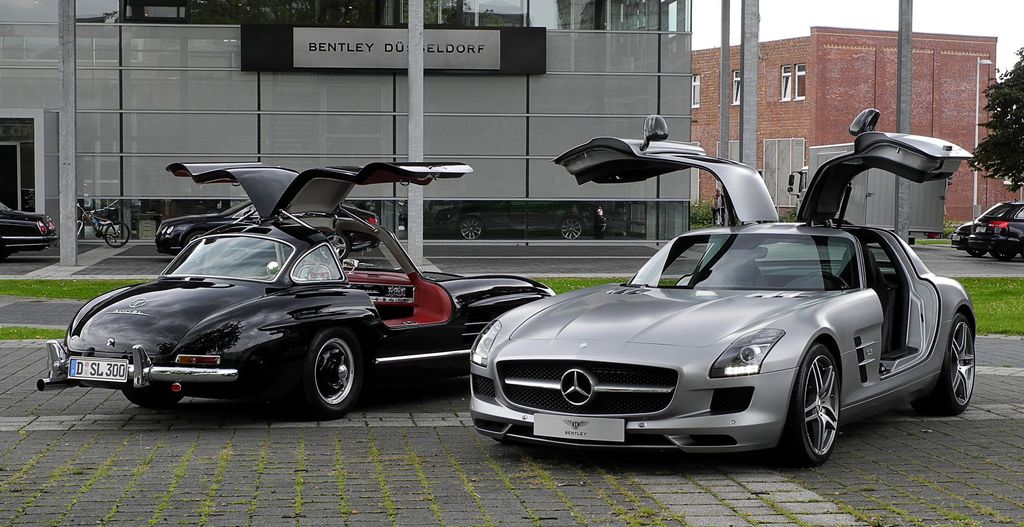
7. **Mercedes 300 SEL**Having dipped his toes into German luxury with the Mercedes-Benz 600, George Harrison swiftly escalated his appreciation for Teutonic engineering, notably in 1970 with the acquisition of a potent Mercedes 6.3 litre 300 SEL. This wasn’t merely a comfortable cruiser; it was a wolf in sheep’s clothing, designed to cover ground rapidly and in supreme comfort. It demonstrated a clear step-up in Harrison’s desire for vehicles that combined understated elegance with serious, autobahn-conquering power, signaling a shift towards what would become a deep and enduring affection for Mercedes-Benz.
However, this powerful machine became intrinsically linked to one of the more harrowing incidents in Harrison’s early driving career. In February 1972, while en route to a party hosted by Ricky Nelson, George, behind the wheel of this white 300 SEL, was involved in a serious accident. He reportedly crashed into a lamppost at speed, a stark reminder that even the most accomplished drivers can encounter unforeseen challenges on the open road.
Miraculously, George himself escaped the collision with only minor scratches, a testament perhaps to the Mercedes’ robust construction. His first wife, Pattie, however, was not so fortunate, suffering concussion and broken ribs that necessitated a two-week hospital stay. The incident underscored the raw power of the 300 SEL and, perhaps, the energetic driving style that led to Harrison’s license being taken away twice for reckless driving, providing a dramatic anecdote within his rich motoring history.
Car Model Information: 2021 Genesis GV80 2.5T
Name: Mercedes-Benz 300 SEL 6.3
Manufacturer: Mercedes-Benz
Production: 1968–1972,6,526 built
Assembly: Stuttgart
Platform: Mercedes-Benz W109
Class: Full-size car,Luxury vehicle#High-end luxury/full-size luxury cars
Layout: FR layout
Engine: 6332 cc
Abbr: on
Lk: on
Transmission: automatic transmission
Wheelbase: 2850 mm
Length: 5000 mm
Width: 1810 mm
Height: 1420 mm
Weight: 1780 kg
Successor: Mercedes-Benz 450 SEL 6.9
Categories: All articles needing additional references, All articles with unsourced statements, Articles containing German-language text, Articles needing additional references from January 2022, Articles with short description
Summary: The Mercedes-Benz 300 SEL 6.3 is a full-sized luxury performance car built by Mercedes-Benz from 1968 to 1972. It featured the company’s powerful 6.3-litre M100 V8 from the flagship 600 (W100) limousine installed in the normally six-cylinder powered (but still premium) Mercedes-Benz 300 SEL (W109). The result was a nearly 2-ton sports sedan with muscle car performance. At the time of its release it was one of the world’s fastest four-door cars.
A total of 6,526 300 SEL 6.3s were produced, and though quite costly to maintain are very collectible today.
Get more information about: Mercedes-Benz 300 SEL 6.3
Buying a high-performing used car >>>
Brand: Mercedes-Benz Model: 300 SEL
Price: $34,319 Mileage: 36,145 mi.
Read more about: Beyond the Charger: 11 Game-Changing EVs That Deliver 300+ Miles of Range in 2025
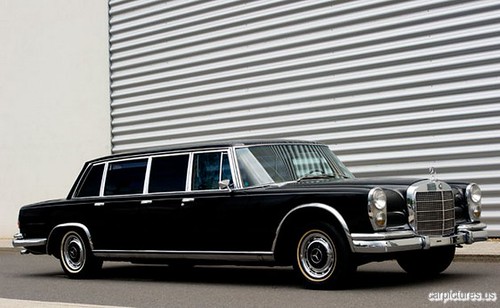
8. **Mercedes-Benz 600 Pullman Limousine**Beyond the personal luxury sedan, Harrison’s fascination with Mercedes-Benz extended to the truly grand, as evidenced by his acquisition of a colossal Mercedes-Benz 600 Pullman Limousine. This particular ‘beast of a car,’ stretching over six metres in length, arrived in George’s hands with a fascinating provenance: it was originally owned by none other than John Lennon. Lennon, preparing for his move to the USA, sold off some of his possessions, and Harrison, ever the collector, snapped up this magnificent machine in 1971.
This Pullman wasn’t just a car; it was a rolling palace, an embodiment of opulence and privacy designed for the elite. Its interior boasted a dedicated drinks cabinet, perfect for entertaining or unwinding after a long session in the studio, and a Phillips Mignon EP record player in the back, ensuring the tunes never stopped, even on the move. Crucially, it also featured an all-important privacy screen, allowing its distinguished occupants a sanctuary from the outside world, a feature undoubtedly appealing to a Beatle navigating global fame.
After a few years in Harrison’s ownership, the Pullman embarked on another chapter of its storied life. In 1975, Harrison sold the limousine to the American group ‘The Supremes,’ a fitting new owner given the car’s inherent glamour and star appeal. It was promptly shipped to America, where it served the Motown legends during their tours for several years, continuing its journey as a vehicle synonymous with musical royalty and high-end luxury.
Today, this very same 600 Pullman Limousine remains a cherished piece of automotive history, now belonging to a dedicated collector. It has undergone a meticulous restoration in Germany, ensuring its magnificent presence and technological marvels endure, standing as a testament to an era of unparalleled automotive grandeur and the remarkable individuals who owned it.
Car Model Information: 2023 Honda Accord EX
Name: Mercedes-Benz 600 (W100)
Manufacturer: Daimler-Benz
Assembly: Stuttgart
Class: Ultra-luxury car,Limousine
Production: 1963–1981,2,677 built,SWB: 2,190,LWB: 428,Landaulet: 59
BodyStyle: Limousine,4-door Pullman Limousine,6-door Pullman Limousine,Landaulet (car)
Engine: Mercedes-Benz M100 engine
Layout: FR layout
Aka: Grand Mercedes,Grosser Mercedes
Predecessor: Mercedes-Benz W150,Mercedes-Benz W189
Successor: Mercedes-Benz S-Class
Wheelbase: 3200 mm
Abbr: on
Length: 5580 mm
Width: 1950 mm
Height: 1500 mm
Weight: convert
Designer: Bruno Sacco,Friedrich Geiger,Paul Bracq
Categories: 1960s cars, 1970s cars, 1980s cars, All articles containing potentially dated statements, All articles needing additional references
Summary: The Mercedes-Benz 600 (factory code “W100”) is a single-generation line of full-size ultra-luxury limousines and Pullman limousines, made by Daimler-Benz from 1963 through 1981. Nicknamed Grosser (Grand/Large) Mercedes, succeeded the Type 300d “Adenauer” as the company’s flagship model. It was positioned well above the subsequent 300-series in price, amenities, and status. When launched in 1963, it was the most expensive car in the world. Its few lesser adversaries included British and American marques such as Rolls-Royce, Cadillac and Lincoln’s top model lines. The Mercedes 600 still remains to be a very expensive car to own and maintain.
The Mercedes-Benz 600 models are well known for their ownership among celebrities, political leaders and royalty throughout the late 20th century. Widely regarded by many automotive experts and enthusiasts as the greatest luxury vehicle ever made, the 600 was notable for its advanced hydraulic systems. Ownership of a Mercedes-Benz 600 remains costly due to the vehicle’s complexity and the high expense of parts and maintenance. Well-preserved examples and historically significant models can command prices of up to $3.5 million reflecting their rarity and prestige.
Generally, the short-wheelbase (SWB) models were designed to be owner-driven, whereas the long-wheelbase (LWB) and limousine models, often incorporating a central divider with power window, were intended for chauffeur operation.
“Living legend: the Mercedes-Benz 600 is nothing but grand. With its groundbreaking engineering, this iconic vehicle has been defining automotive luxury since its first appearance in 1963.” – Mercedes Benz
Get more information about: Mercedes-Benz 600
Buying a high-performing used car >>>
Brand: Mercedes-Benz Model: 600 Pullman Limousine
Price: $22,799 Mileage: 37,546 mi.
Read more about: Rock ‘N’ Roll on Wheels: 14 Iconic Musicians and the Classic Rides That Define Them

9. **Porsche 928 S Coupe**Towards the late 1970s, George Harrison entered what could only be described as his ‘Porsche phase,’ a clear signal that his automotive tastes were evolving further towards raw precision and performance. While he reportedly owned a couple of 911 Turbos and a 924 Carrera GT, it was the black 928 S Coupe, acquired in 1980, that stands out as a definitive emblem of this period. The 928, with its avant-garde design and grand touring capabilities, offered a different kind of performance compared to the traditional 911, showcasing Harrison’s willingness to embrace innovation.
This powerful German coupe, with its front-mounted V8 engine, was a sophisticated beast, a stark contrast to the more classic British sports cars he’d previously championed. It was designed for effortless high-speed cruising, combining luxury with serious intent. Harrison kept the 928 S Coupe for three years before selling it, perhaps indicating his constant quest for the next thrilling driving experience or simply an appreciation for different facets of automotive engineering.
What makes this particular Porsche even more intriguing is its surprising rediscovery decades later. In 2003, a Leeds-based car enthusiast named Raj Sedha purchased the black 928 S Coupe, initially intending to strip it down for spare parts. It was only thanks to his wife, who meticulously checked the log book, that the car’s incredible celebrity heritage was unearthed, revealing its previous ownership by the ‘quiet Beatle.’ This serendipitous discovery saved the car from an ignominious fate, ensuring its place in the annals of rock and roll automotive history.
Car Model Information: 2024 Genesis GV80 3.5T
Caption: 1991 Porsche 928 S4
Name: Porsche 928
Manufacturer: Porsche AG
Production: May 1977–1995,61,056 produced
Assembly: Zuffenhausen
Class: Grand tourer
BodyStyle: 2+2 (car body style),Hatchback#Europe
Layout: Front-engine, rear-wheel-drive layout
Engine: Porsche V8 engine,4.7 L M28/19–M28/22 V8,5.0 L M28/41–M28/47 V8,5.4 L M28/49–M28/50 V8,Note: Dashes indicate continued serial numbers. The engines had significant changes so they were given different engine codes while having the same displacement before larger displacement engines were subsequently introduced.
Transmission: Manual transmission,Automatic transmission,4-speed automatic
Length: {{convert,4520,mm,in,1,abbr=on
Abbr: on
Width: 1987–1992: {{convert,1837,mm,in,1,abbr=on
Height: Pre-1989: {{convert,1275,mm,in,1,abbr=on
Weight: convert
Wheelbase: {{convert,2500,mm,in,1,abbr=on
Designer: Wolfgang Möbius,Anatole Lapine
Categories: 1980s cars, 1990s cars, 2+2 coupés, All articles needing additional references, All articles that are excessively detailed
Summary: The Porsche 928 is a front-engine, water-cooled grand touring 2+2 hatchback coupe manufactured and marketed by Porsche AG of Germany from 1977 to 1995, across a single generation with an intermediate facelift.
Initially conceived to address changes in the automotive market, it represented Porsche’s first fully in-house design for a production vehicle and was intended to potentially replace the Porsche 911 as the company’s flagship model. The 928 aimed to blend the performance and handling characteristics of a sports car with the comfort, spaciousness, and ride quality of a luxury car. Porsche executives believed that the 928 would have broader appeal compared to the compact, somewhat outdated, and slow-selling air-cooled 911.
Notably, the 928 was Porsche’s first production model powered by a V8 engine, and its first with a front-located engine. It achieved high top speeds, and earned recognition upon its 1978 release by winning the European Car of the Year award. Autocar described it as a “super car” in 1980.
Get more information about: Porsche 928
Buying a high-performing used car >>>
Brand: Porsche Model: 928 S Coupe
Price: $50,488 Mileage: 13,050 mi.
Read more about: Unleash the Roar: 12 Iconic Convertibles That Defined Eras and Demand Attention on Every Road!

10. **Mercedes 500 SEL AMG**If any single vehicle could be crowned George Harrison’s true ‘daily driver,’ it would undoubtedly be his stunning, all-black 1984 AMG 500 SEL. This car wasn’t merely purchased; it was meticulously crafted to Harrison’s precise specifications, becoming a deeply personal expression of his automotive desires. He reportedly invested a whopping £85,000 in customising it, transforming an already impressive luxury saloon into a truly unique, high-performance machine. This bespoke treatment included lowering the suspension for a more aggressive stance and upgrading the body kit, ensuring it looked every bit as potent as it performed.
This particular Mercedes held a special place in Harrison’s heart, evident in the sheer length of his ownership and the miles he put on it. He cherished the 500 SEL AMG for 15 years, clocking up an impressive 30,000 miles across Britain’s long and winding roads. This sustained use speaks volumes about his affection for the car, indicating it was far more than just a fleeting fancy; it was a trusted companion that delivered the driving experience he desired day in, day out.
His decision to hold onto the 500 SEL AMG for such an extended period, especially given his penchant for frequently buying and selling vehicles, truly highlights its exceptional appeal to him. It exemplified the perfect blend of German engineering, AMG’s performance prowess, and his own distinct aesthetic vision. Even after his passing, the car’s legacy continued, eventually being auctioned in 2018 for a significant £43,000, a testament to its enduring value and the iconic status conferred by its legendary owner.
Car Model Information: 2024 Genesis GV80 3.5T
Name: Mercedes-Benz W126/C126
Related: Monteverdi Tiara
Layout: FR layout
Assembly: Sindelfingen
Manufacturer: Daimler-Benz
Production: December 1979 – October 1991 (sedan),September 1981 – October 1991 (coupé),1981–1994 (sedan, South Africa),1981–1991 (coupé, South Africa)
Predecessor: Mercedes-Benz W116
Successor: Mercedes-Benz W140,Mercedes-Benz C140
Class: Full-size,Luxury vehicle#High-end luxury.2Ffull-size luxury cars
BodyStyle: Sedan (car)
Transmission: 4G-TRONIC,Automatic transmission
Engine: ubl
Designer: Bruno Sacco
Wheelbase: 2935 mm
Abbr: on
Length: convert
Width: 1820 mm
Height: 1441 mm
Categories: 1980s cars, 1990s cars, All articles lacking reliable references, All articles needing additional references, All articles with unsourced statements
Summary: The Mercedes-Benz W126 is a series of passenger cars made by Daimler-Benz AG. It was marketed as the second generation of the Mercedes-Benz S-Class, and manufactured in sedan/saloon (1979–1991) as well as coupé (1981–1990) models, succeeding the company’s W116 range. Mercedes-Benz introduced the 2-door C126 coupé model, marketed as the SEC, in September 1981. This generation was the first S-Class to have separate chassis codes for standard and long wheelbases (W126 and V126) and for coupé (C126).
Over its 12-year production (1979–1991), 818,063 sedans/saloons and 74,060 coupés were manufactured, totaling 892,123 and making the W126 by far the most successful generation of S-Class to date, and the longest in production.
Get more information about: Mercedes-Benz W126
Buying a high-performing used car >>>
Brand: Mercedes Model: 500 SEL
Price: $50,488 Mileage: 13,050 mi.
Read more about: Beyond the Charger: 11 Game-Changing EVs That Deliver 300+ Miles of Range in 2025
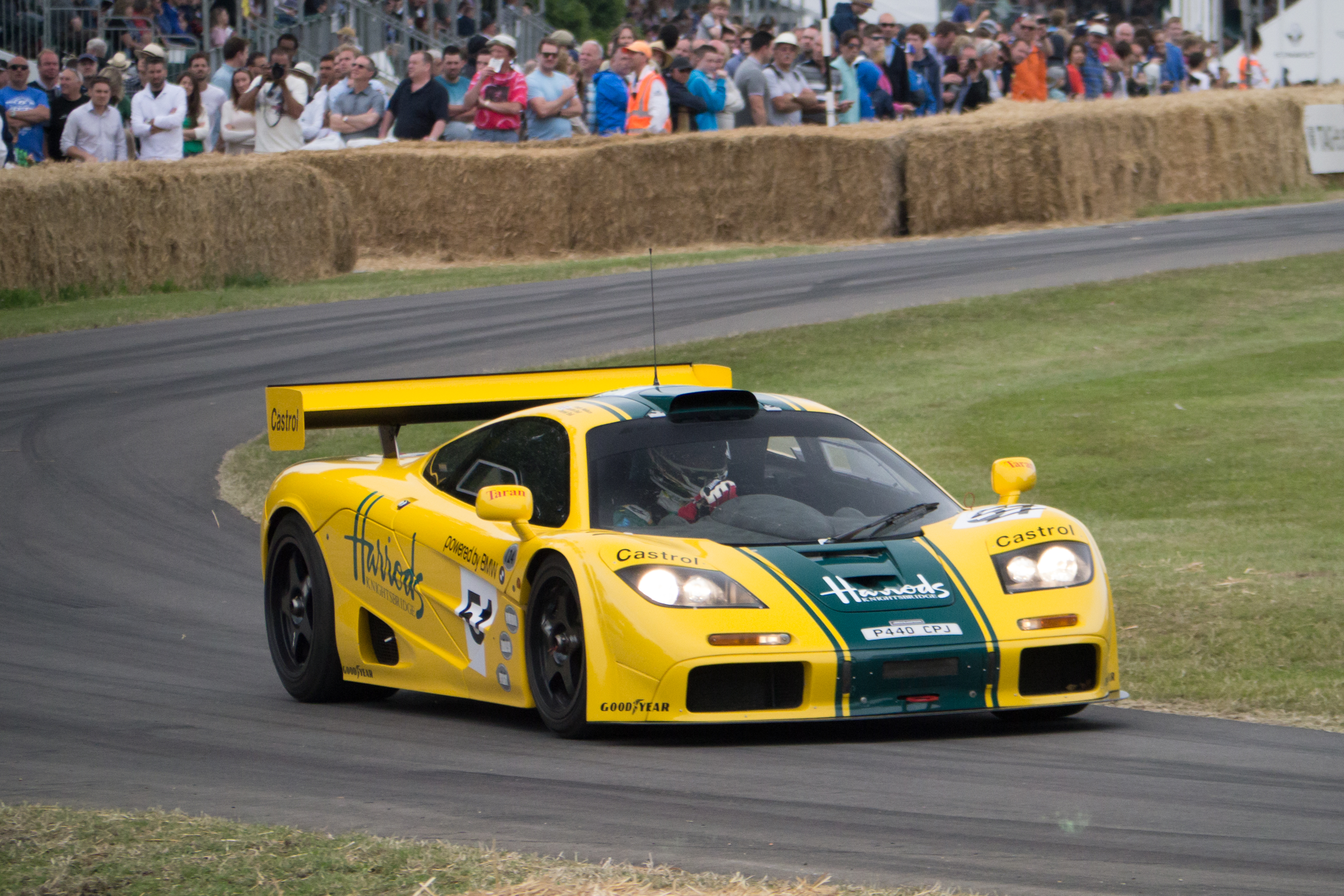
11. **McLaren F1**For a man who befriended Formula 1 legends and literally spent a year following the F1 World Championship, it was almost an inevitability that George Harrison would eventually own the pinnacle of road-going performance: the McLaren F1. This hypercar wasn’t just a vehicle; it was a bespoke work of art, and Harrison’s connection to its creator, Gordon Murray, the chief designer for Brabham and McLaren, made this acquisition even more significant. Murray reported that Harrison was so eagerly anticipating his F1 that he would “phone up and good-naturedly pester the makers on a regular basis.”
Unveiled in 1994, the McLaren F1 was an engineering marvel, mirroring a true Formula 1 vehicle as closely as a production road car could. Its chassis, crafted from carbon fiber, offered unparalleled lightness, while its naturally aspirated 6.1L V12 engine unleashed a breathtaking 620 brake horsepower. This formidable combination allowed the F1 to achieve phenomenal speeds and acceleration, truly zipping along the roadway. Its distinctive one-plus-two seating layout, with the driver centrally positioned, and lifting doors, further cemented its iconic silhouette and performance-oriented design.
Harrison’s F1, chassis #025, was truly one-of-a-kind. It was custom-built to his taste, finished in a unique ‘Dark Purple Pearl’ exterior with black satin wheels – an unusual and striking combination for its time. But its individuality didn’t end there. Harrison, a devoted follower of Hinduism, requested that the bare carbon fiber chassis be adorned with symbols of his faith, alongside hand-written quotes and song lyrics, all applied in shimmering silver ink by Gordon Murray himself. This made his McLaren F1 a deeply personal and spiritual machine.
Only 106 of these remarkable cars were ever built, making each one incredibly rare and coveted. Harrison loved his McLaren F1 so profoundly that his family made the decision to keep it after his death, resisting even Eric Clapton’s repeated attempts to buy it. It remains in the Harrison estate to this day, an enduring symbol of unparalleled engineering, bespoke luxury, and a rock legend’s unique spiritual and automotive passions.
Read more about: Sovereigns of the Seas: Unveiling the Aquatic Empires of Beyoncé & Jay-Z and the A-List Yachting Elite
George Harrison, the quiet Beatle, truly was a petrolhead of the highest order. His automotive journey, from humble Anglias to the unparalleled McLaren F1, was far more than a simple accumulation of wealth; it was a deeply personal odyssey, a reflection of a man constantly seeking excellence, beauty, and exhilaration. He saw cars not just as machines, but as canvases for engineering brilliance and personal expression, connecting with them on a level that transcended mere ownership. His garage, indeed, was a curated exhibition of impeccable taste, revealing a passion as profound and inspiring as his timeless music, cementing his legacy not just as a musical icon, but as a genuine automotive connoisseur.