Joan Rivers was more than just a comedian; she was a seismic force, a trailblazing wit whose unapologetic style carved a permanent niche in the annals of pop culture. Her humor, a potent cocktail of self-deprecation, social commentary, and celebrity takedowns, transcended mere jokes to become a masterclass in engaging and provoking an audience. Decades after her passing, her quips still land with the devastating accuracy of a well-aimed dart, a testament to her profound understanding of what truly makes people laugh.
From her groundbreaking appearances on ‘The Tonight Show’ to her iconic reign on ‘Fashion Police,’ Rivers operated on a comedic frequency that few dared to touch. She possessed an innate ability to articulate the thoughts bubbling beneath society’s polite veneer, delivering them with a razor-sharp tongue and a wink. This wasn’t accidental; it was the product of a deeply intuitive yet meticulously honed comedic sensibility, an unwritten code that governed her every punchline.
We delve into the unscripted rules that defined Joan Rivers’ unparalleled success, exploring the core tenets of her comedic philosophy. These aren’t prescriptive commandments but rather the organic principles that emerged from her vast body of work—a sprawling collection of over 70,000 jokes, all carefully cataloged on index cards. By examining her methods, we gain not just a deeper appreciation for her genius, but also an insightful look at the very mechanics of laughter itself.
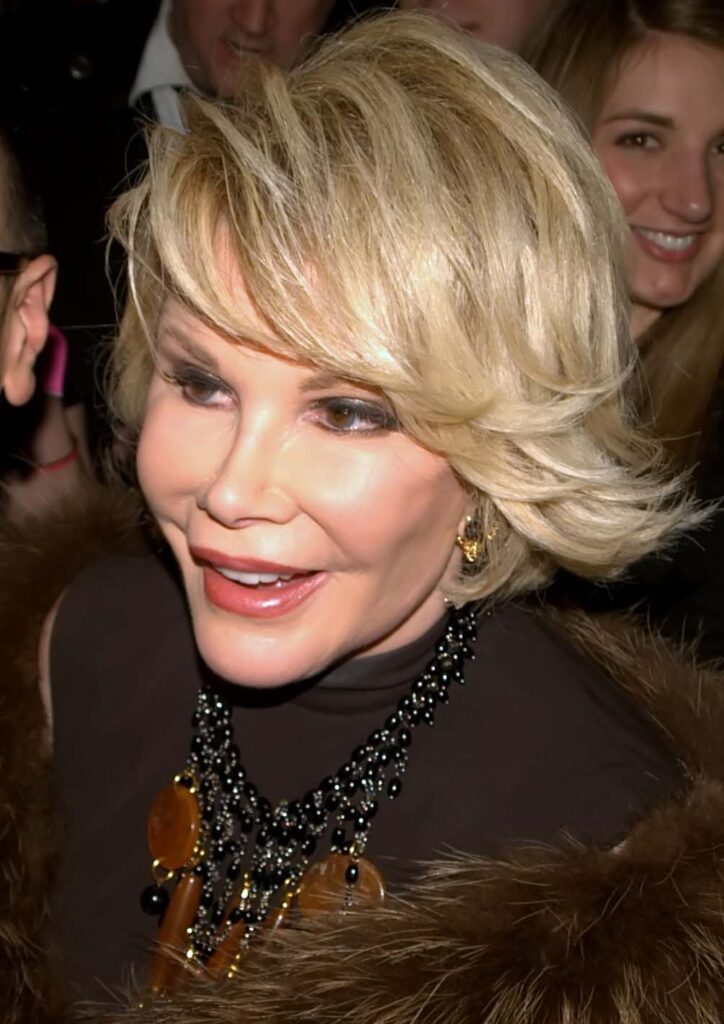
1. The Art of Fearless Self-Deprecation
One of the most immediate and impactful elements of Joan Rivers’ comedic arsenal was her unwavering commitment to self-deprecation. She didn’t just poke fun at herself; she tore herself down with a gleeful abandon that disarmed audiences and forged an instant, gritty connection. This wasn’t born of insecurity, but a calculated comedic strategy that made her relatable and, paradoxically, incredibly powerful.
Rivers would often target her own appearance, age, and even her life, leaving no stone unturned in her quest for a laugh. Consider her iconic line, “I was so ugly, Ripley’s sent my picture back: ‘We don’t believe it!’” This wasn’t merely a joke; it was a defiant embrace of perceived flaws, inviting the audience to laugh with her, not at her. She also famously quipped, “I’m so flat, I marked my chest: ‘You are here.’”, turning physical attributes into comedic gold with unapologetic bluntness.
Her willingness to expose vulnerabilities, particularly regarding her intimate life, created a bond of shared humanity. “My life’s so bad, my G-spot’s a historical landmark,” she declared, a line that resonated with countless individuals struggling with the universal complexities of intimacy. This raw honesty, delivered with impeccable timing, allowed her to comment on broader societal norms while keeping the focus intimately personal, a brilliant sleight of hand that was a hallmark of her genius. The humor wasn’t just in the joke, but in the audacity to utter it.
This fearless self-effacement extended to her plastic surgery, a topic she frequently revisited with characteristic wit. “I’ve had so much plastic surgery, I’ll be donated to Tupperware,” she joked, or “My face’s so plastic, it’s a Tupperware heirloom waiting to happen.” By openly discussing her cosmetic enhancements, she pre-empted criticism and turned potential judgment into another avenue for humor, illustrating a profound understanding of her public persona and how to control its narrative through laughter.
Her self-deprecating humor served as a powerful opener, creating an immediate sense of familiarity and trust. It signaled to the audience that no topic was off-limits, and that she was willing to go there first. This set the stage for the more biting observations and celebrity roasts that would follow, making her criticisms of others feel less like an attack and more like an extension of her own brutally honest worldview.
Read more about: 7 Iconic Actresses Who Forged Their Own Paths, Choosing Career Over the Aisle
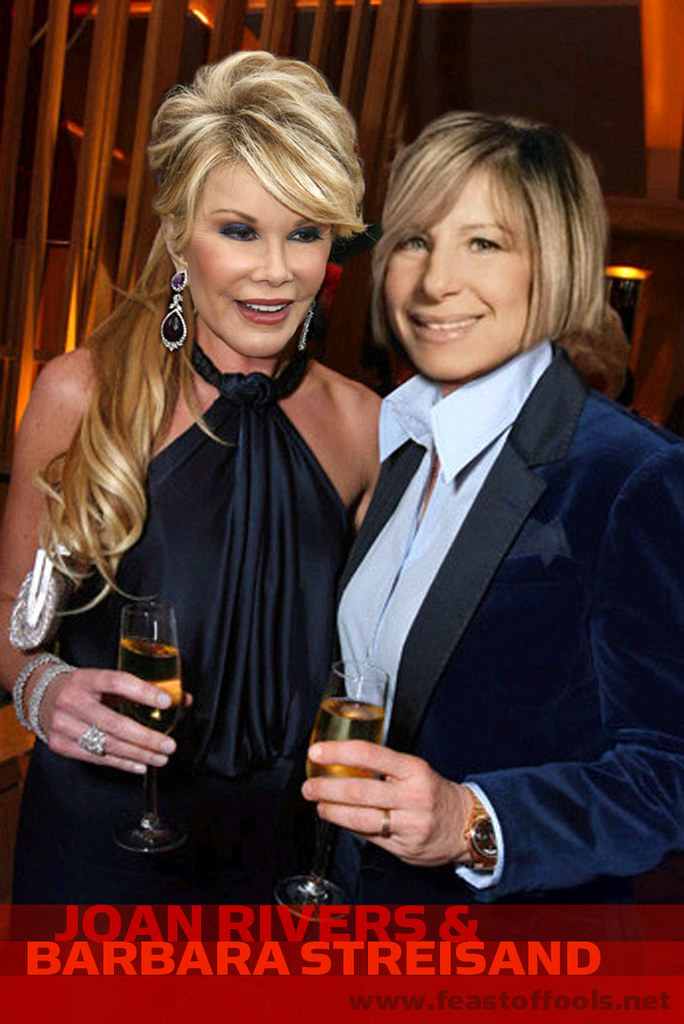
2. Mastering the Surgical Celebrity Roast
If Joan Rivers was a master of self-deprecation, she was an undisputed titan of the celebrity roast. Her ability to skewer Hollywood’s elite with a blend of incisive observation and savage wit became her signature, elevating gossip to an art form. This wasn’t mere catty commentary; it was a surgical dissection of public figures, delivered with a precision that left audiences gasping and laughing in equal measure.
No celebrity was safe from Rivers’ sharp tongue, but Elizabeth Taylor was arguably her most frequent and favored target, particularly concerning her weight. Rivers’ jokes about Taylor were legendary, demonstrating a relentless focus and an unyielding commitment to the bit. “Elizabeth Taylor is so fat, she puts mayo on her aspirin,” Rivers famously quipped, a line that shocked with its vivid imagery and bold disregard for celebrity sanctity. Another gem: “Liz’s scale said, ‘Come back when you’re alone,’” which perfectly encapsulated her ability to condense a complex observation into a single, devastating punchline.
Her roasts weren’t simply about being mean; they were about speaking the unspoken, tapping into the collective consciousness of what people were already thinking, but were too polite or fearful to vocalize. When she noted, “Taylor’s got more chins than a Chinese phonebook,” she wasn’t just making a fat joke; she was tapping into a shared cultural observation, amplified and made hilarious by her audacious delivery. This allowed the audience to experience the forbidden thrill of transgression through her words.
Beyond Taylor, Rivers’ targets extended to a broad spectrum of public figures, from political personalities to fashion icons. Her ability to connect a celebrity’s public image with a scandalous or absurd punchline showcased her deep engagement with pop culture and her keen eye for human folly. She understood that celebrity culture, for all its glamour, also provides ample material for humor, and she was an expert at excavating it.
Her role on ‘Fashion Police’ further solidified her status as the queen of the celebrity takedown. There, her biting critiques of red-carpet attire became a weekly spectacle, demonstrating that her comedic approach to public figures wasn’t just confined to stand-up; it was a pervasive element of her media persona. She made an art out of turning perceived flaws into comedic highlights, proving that sometimes, the sharpest wit is found at the expense of those in the highest echelons.
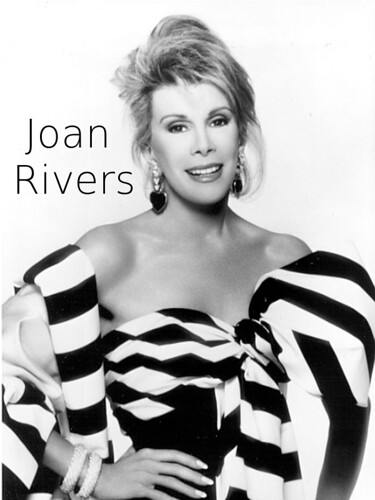
3. The Precision of the One-Liner
Joan Rivers’ comedic identity was inextricably linked to her mastery of the one-liner. She understood that in the fast-paced world of comedy, a quick, sharp punchline could deliver maximum impact with minimal fuss. Her one-liners were not just jokes; they were miniature comedic missiles, launched with impeccable timing and designed for instant gratification.
Her ability to distill complex scenarios or observations into a single, potent sentence was a testament to her precise command of language and comedic structure. Consider lines like, “No appeal; our kid came from husband tossing,” or “Housework? Six months later, start over again.” These jokes are concise, relatable, and hit their mark with an almost clinical efficiency, leaving no room for ambiguity or filler. The genius lies in their brevity and universal appeal.
The context explicitly highlights her command of this format, categorizing sections as “Joan Rivers Jokes One-Liners” and “Short Joan Rivers Jokes.” This underscores that the rapid-fire delivery and succinctness were not merely a stylistic choice, but a fundamental pillar of her comedic architecture. Each one-liner was a carefully crafted piece of wit, designed to elicit an immediate and visceral reaction from the audience.
Many of her one-liners carried a self-deprecating edge, amplifying their impact. “My G-spot’s a landmark; no man’s found it,” is a perfect example: short, personal, and universally understood in its frustration. Similarly, “Plastic surgery? My body’s Tupperware’s next donation,” combines self-deprecation with a visual absurdity that is instantly memorable and riotously funny, showing how she could pack layers of meaning into a few words.
Rivers understood that the rhythm of laughter often depends on a quick turnaround. Her one-liners kept the audience engaged, constantly anticipating the next verbal jab. This continuous volley of jokes created a high-energy performance, ensuring that even if one line didn’t land perfectly, another was right on its heels, guaranteeing a steady stream of mirth. Her performances were not just acts; they were meticulously timed comedic onslaughts.
Read more about: Dusting Off Fortune: 15 VHS Tapes in Your Collection That Could Be Worth Up to $25,000!
4. Adept Wordplay and the Power of the Pun
Beyond the raw self-deprecation and brutal roasts, Joan Rivers possessed a sophisticated command of language, wielding wordplay and puns with an intelligent, mischievous flair. This linguistic agility allowed her to infuse her humor with additional layers of cleverness, appealing to audiences who appreciated wit as much as audaciousness. Her puns were never gratuitous; they were sharp, cheeky, and integral to her signature edge.
Her jokes often turned on a clever twist of phrase, demonstrating her keen ear for language and its potential for comedic subversion. “My face’s so plastic, it’s a Tupperware heirloom waiting to happen,” is not just a self-deprecating jab at plastic surgery, but a brilliant pun combining the artificiality of her face with the idea of a family heirloom made from plastic. This kind of nuanced wordplay elevated her humor beyond simple insult.
Another memorable example of her inventive wordplay is, “My bra at a beach clubbed two baby seals.” Here, the pun hinges on the double meaning of “clubbed” – both as a verb signifying hitting and as an adjective relating to a group or organization. The absurd image created, combined with the unexpected twist, delivers a potent comedic punch. This showcased her ability to use language creatively to surprise and delight.
Rivers’ puns were often quick, embedded within larger joke structures, but always distinct in their cleverness. The context explicitly notes “Joan Rivers’ comedy blended clever puns and biting humor” and dedicated sections to “Joan Rivers Puns,” indicating their significance in her overall style. These weren’t throwaway gags; they were carefully constructed elements designed to add an intellectual spark to her performances, making the audience think even as they laughed.
Her use of wordplay also contributed to the timeless quality of her humor. While some jokes might have been topical, the underlying cleverness of her linguistic gymnastics ensured they retained an appeal that transcended immediate cultural references. She understood that a well-crafted pun or a smart turn of phrase could keep an audience engaged, proving that high-brow wit and low-brow observational humor could coexist beautifully within her repertoire.
Read more about: The Enduring Spirit: Exploring the World of Comedic Stars Amidst Hollywood’s Tragic Echoes
5. The Relentless Pursuit of the Punchline
While talent and innate wit were undoubtedly cornerstones of Joan Rivers’ success, her remarkable dedication to the craft of comedy was perhaps her most fundamental, albeit ‘unscripted,’ rule. This wasn’t merely about writing jokes; it was a relentless, almost obsessive pursuit of the perfect punchline, a discipline that underpinned her entire career and allowed her to consistently deliver fresh, impactful material.
The context provides a striking detail that encapsulates this dedication: “Her vast collection of over 70,000 jokes, meticulously filed on index cards, showcases her dedication to the craft.” This isn’t just a fun fact; it’s a profound insight into her work ethic. Seventy thousand jokes, each likely with multiple drafts, revisions, and refinements, speaks volumes about the sheer volume of effort she poured into her art. It’s a physical manifestation of her commitment to constant improvement.
This meticulous organization meant that Rivers had an immense library of material at her fingertips, ready to be deployed or adapted for any occasion. It allowed her to react spontaneously, pulling from her vast mental and physical archives to tailor jokes to specific audiences or current events. Her ability to consistently deliver, whether on stage or on television, was not accidental; it was the direct result of this unparalleled preparation and systematic approach to her creative process.
Her dedication suggests an understanding that comedy, while seemingly effortless in its final delivery, requires immense groundwork. The laughter she generated was the culmination of countless hours of writing, refining, and cataloging. This rigorous approach is what allowed her to be so prolific, moving seamlessly from self-deprecating quips to celebrity roasts, always with a fresh angle or a new target, because she had done the homework.
This ‘unscripted rule’ of relentless dedication to the craft serves as a vital lesson for any aspiring comedian or artist. It highlights that genius is often intertwined with grit, and that even the most fearless and spontaneous performers rely on a bedrock of hard work and methodical practice. Rivers didn’t just make people laugh; she engineered laughter through sheer, unyielding effort, leaving behind a legacy built on both audacious wit and meticulous dedication.
Read more about: From Barracks to Blockbusters: 15 Iconic Actors Who Answered the Call of Duty Before Hollywood Stardom
6. Sharp Observational Humor and Social Commentary
Beyond the personal jabs and celebrity takedowns, Joan Rivers possessed an acute sense of observational humor, translating everyday absurdities and societal nuances into comedic gold. She famously declared, “I succeeded by saying what everyone else is thinking but too polite to say,” a mantra that perfectly encapsulates her role as a cultural commentator. Her insights, often delivered with a knowing wink, peeled back the polite veneer of society to expose the underlying truths and shared human experiences that resonated deeply with her audience.
Rivers had an uncanny knack for identifying universal frustrations and gently—or not so gently—mocking them. Consider her relatable quip about domestic drudgery: “I hate housework; beds made, dishes done, six months later, start again.” This isn’t just a joke about chores; it’s a poignant observation on the cyclical, often Sisyphean nature of daily life that countless individuals could instantly connect with. Similarly, her darkly witty take on marriage and aging, “My grandmother buried three husbands; two were just napping,” offered a humorous yet insightful commentary on long-term relationships and mortality, disguised within a perfectly timed punchline.
Her routines often functioned as a form of collective therapy, allowing audiences to laugh through their own unhappiness and anxieties. She understood that by articulating common struggles, from the elusive search for intimacy (“My G-spot’s a landmark; no man’s found it”) to the existential dread of modern life, she created a powerful bond. The humor wasn’t merely about the joke itself, but the shared recognition of a truth, however uncomfortable, that Rivers dared to vocalize.
Rivers also wove broader social commentary into her personal narratives. When she joked, “I was an unwanted baby; bath toys were a toaster and a radio,” she tapped into a darker, more universal fear of neglect, turning it on its head with surreal, shocking imagery. This ability to transmute personal pain and societal anxieties into laughter cemented her status as a keen observer, delivering a kind of catharsis that transcended mere entertainment and offered a genuine reflection of the human condition.
Read more about: Remembering the Icons: We Bid Farewell to 13 American Figures Who Left an Indelible Mark in 2024
7. Unapologetic Embrace of Controversial Topics
If there was a line, Joan Rivers invariably stepped over it, then looked back to see if anyone was laughing. Her comedic persona was defined by an “unapologetic style” that fearlessly plunged into the most sensitive and controversial topics, daring her audience to follow. This wasn’t merely about shock for its own sake; it was a deliberate strategy to challenge norms, expose hypocrisy, and provoke thought, often with a mischievous glint in her eye.
The context explicitly highlights “Joan Rivers’ most offensive jokes pushed boundaries, targeting celebrities and sensitive topics with unapologetic humor that sparked laughs and controversy alike.” She spared no one, from political figures to tragic icons. Her incendiary comments about Heidi Klum’s dress (“Last hot German was in the ovens”) or Princess Diana’s death (“Fly to Paris, don’t take the tunnel”) were designed to elicit gasps as much as laughter, forcing audiences to confront the discomfort inherent in her humor.
Rivers understood that true comedy often thrives in discomfort. Her willingness to tackle subjects like Michael Jackson’s private life (“Michael Jackson dated 28-year-olds; he found 20 kids”) or the Holocaust (“Anne Frank jokes? Keeps her memory alive, humorously”) cemented her reputation as a provocateur. These weren’t jokes designed for widespread approval, but for a specific, almost transgressive thrill, demonstrating her belief that no topic should be off-limits for comedic exploration, especially when aiming for societal introspection.
Her own experiences also became fodder for her boundary-pushing humor, most notably her husband’s suicide. Her ability to joke about such a profound personal tragedy (“My husband killed himself; I took the bag off my head”) was astounding, transforming unimaginable pain into a darkly humorous, albeit shocking, shared experience. This level of raw, unfiltered honesty, regardless of how controversial, was a hallmark of her genius, proving that even the darkest corners of life could be illuminated, however briefly, by a well-aimed punchline.
Read more about: Rewriting History? Examining the Classic Comedies So ‘Offensive’ They Could Never Get Made Today
8. Fostering Relatability Through Shared Absurdities
Despite her often-incendiary humor, a core pillar of Joan Rivers’ enduring appeal was her unique ability to foster genuine relatability, often by magnifying shared human absurdities. She possessed a remarkable talent for articulating the universal frustrations, vanities, and minor indignities of everyday life, making her seem not just a celebrity, but a kindred spirit who understood the collective comedy of existence.
Rivers expertly tapped into the common experiences that bind us, from battling personal flaws to navigating societal expectations. Her quip, “I don’t exercise. If God wanted me to bend over, He would have put diamonds on the floor,” perfectly encapsulates the universal struggle with physical exertion, transforming a mundane resistance into a hilarious, almost philosophical declaration. This isn’t just a joke; it’s an invitation for everyone who’s ever avoided the gym to laugh in shared understanding.
Her humor frequently centered on self-perception and the often-unflattering reality versus aspiration. When she joked, “My idea of a balanced diet is a cookie in each hand,” she was giving voice to countless individuals grappling with diet culture, offering a moment of joyful, albeit defiant, recognition. Similarly, her blunt assessment, “I told my mirror I was beautiful today. It replied, ‘Nice try!’” resonated with anyone who has faced their own imperfections with a dose of humor, creating a bond of shared vulnerability and amusement.
Even her more extreme jokes about aging, like “I’m so old, I remember when the Dead Sea was only sick,” connected with a universal dread, making light of the inevitable passage of time. These aren’t just one-liners; they are succinct commentaries on shared human experiences—the struggle to maintain youth, the desire for acceptance, and the absurdities of daily life—delivered with a wink that says, “I get it, you get it, let’s laugh together.” Her ability to make the deeply personal feel universally familiar was a testament to her profound understanding of human nature.
Read more about: The Laughter Boom: Why Stand-Up Comedy Specials Are Thriving More Than Ever in the Digital Age

9. Strategic Use of Surprise and Shock Value
Joan Rivers didn’t just tell jokes; she orchestrated comedic explosions, often relying on the strategic deployment of surprise and outright shock. Her performances were a masterclass in misdirection, building an expectation only to shatter it with a punchline so unexpected or audacious that it forced an immediate, visceral reaction from the audience. This wasn’t accidental; it was a calculated component of her “unscripted rules,” designed to keep everyone on the edge of their seats.
Many of her most memorable jokes hinged on this element of surprise, delivering a jolt that transitioned rapidly from disbelief to roaring laughter. Her infamous line, “My bra at a beach clubbed two baby seals,” is a prime example. The initial image of a bra at a nude beach is amusing, but the sudden, absurd violence of “clubbed two baby seals” is completely unexpected, creating a powerful and unforgettable comedic impact. It’s the unexpected twist that makes the joke land so hard.
Rivers understood that true comedic brilliance often lies in the juxtaposition of the mundane with the outrageous. Her ability to juxtapose the seemingly innocent with a brutal, dark reality was unparalleled. Another instance of this strategic shock appears in her anecdotes about Michael Jackson: “Michael Jackson’s dog waits for the surgeon’s spare parts.” This joke delivers a macabre, unsettling image, yet it’s delivered with such a deadpan audacity that it bypasses offense to hit a darkly humorous nerve, demonstrating her comfort in exploring the uncomfortable.
This element of surprise was not confined to her more controversial material; it was interwoven throughout her entire repertoire. Whether it was a sudden, self-deprecating dig or a sharp, unexpected observation about pop culture, Rivers always maintained an air of unpredictability. This strategic use of shock and surprise ensured that her comedy never grew stale; audiences came not just for the laughs, but for the thrill of never knowing what outrageous, brilliant, or taboo thought she might articulate next, guaranteeing a performance that was always vibrant and deeply engaging.
Read more about: Love Classic Cars? Here’s What Your Favorite Ride (and Collection) Says About You!
10. Crafting Humor That Remains Timeless and Universally Resonant
Ultimately, Joan Rivers’ most profound, unscripted rule was her innate ability to craft humor that defies the constraints of time, maintaining its potency and appeal decades after its initial delivery. Her legacy isn’t merely a collection of jokes; it’s a testament to a comedic architecture built on universal truths, delivered with an unparalleled blend of fearlessness and wit, ensuring her voice continues to echo through the ages and resonate with new generations.
The context explicitly states that “Joan Rivers’ jokes continue to resonate with audiences decades after her passing” and highlights how her “Puns remain relevant because they tackle universal themes with a bold, unfiltered perspective.” Her comedic brilliance lay in her capacity to articulate the anxieties, vanities, and absurdities inherent in the human experience, regardless of the era. Whether she was joking about aging, relationships, or societal expectations, the core observations remained perpetually pertinent.
Rivers’ analytical approach to comedy, detailed through her meticulous joke-filing system, allowed her to distill complex human behaviors and social phenomena into digestible, hilarious capsules. This structured yet audacious method ensured that even when her material was topical, it was underpinned by a fundamental understanding of human nature that transcended ephemeral trends. She wasn’t just commenting on the news; she was commenting on the unchanging human reactions to it.
Her enduring impact is also a result of her relentless authenticity. Rivers presented an unfiltered, often raw, version of herself, inviting audiences to laugh at her flaws as much as with her observations. This transparency, combined with her razor-sharp delivery, created a timeless connection, making her humor feel both deeply personal and universally accessible. She spoke truths that others shied away from, granting her comedy a perennial relevance that continues to inspire and entertain.
As we revisit her vast comedic canon, it becomes clear why she is celebrated as a “comedy icon” whose humor “stands the test of time.” Joan Rivers proved that laughter, when forged with such incisive wit, unwavering courage, and an understanding of the human condition, is indeed a powerful, connecting force that ensures a legacy of pure comedic genius, proving that great humor truly is timeless.
Read more about: When Vision Meets Reality: The Star Who Moved a Continent and Other Cinematic Location Legends
Joan Rivers didn’t just perform comedy; she dissected life with a surgeon’s precision and a poet’s heart, leaving behind a legacy that continues to shimmer with irreverent brilliance. Her unscripted rules, born from a life lived fearlessly and a mind perpetually searching for the next punchline, offer far more than just laughs—they provide a blueprint for a comedic philosophy that transcends fleeting trends and taps into the very essence of what makes us human. From the audacious self-critique to the shocking societal commentary, Rivers demonstrated that the most profound humor often lies in the willingness to say the unsayable, to embrace the absurd, and to connect through the shared vulnerabilities of existence. Her laughter still rings out, a defiant, joyful echo reminding us that in the hands of a true master, comedy is not just entertainment, but a powerful, timeless force for truth and connection.