
“Imitative work created humorously from original work”—this concise definition encapsulates the very essence of parody, a creative force that has shaped entertainment for centuries. More than mere mimicry, a parody is designed to “imitate, comment on, and/or mock its subject by means of satirical or ironic imitation,” often targeting an original work’s theme, content, or style. It’s a fascinating cultural practice, as literary scholar Professor Simon Dentith defines it, providing a “relatively polemical allusive imitation of another cultural production or practice.”
Yet, to simply label these works as mere imitations would be to vastly undersell their profound impact and enduring legacy. In the vibrant world of cinema, certain parody films haven’t just lampooned their subjects; they’ve transcended them, offering insights, humor, and cultural relevance that, in many instances, have eclipsed the very genres or specific works they initially set out to mock. These cinematic masterpieces demonstrate that parody isn’t “always at the expense of the parodied text,” as literary theorist Linda Hutcheon observed, but can instead be a powerful vehicle for artistic expression and innovation.
This article embarks on an analytical journey through 11 such groundbreaking parody films, each a testament to the genre’s ability to not only entertain but also to critically engage and ultimately elevate the cinematic landscape. We’ll delve into the history, humor, and critical reception of these iconic productions, examining how they managed to stake their claim as essential viewing, proving themselves to be “better” than the genres they playfully — or sharply — skewered, and earning their place as enduring classics within the hearts of fans and critics alike.

1. Mud and Sand
One of the earliest and most telling examples of a parody film elevating its source material arrived in 1922 with *Mud and Sand*. This cinematic send-up was a direct comedic response to Rudolph Valentino’s then-popular dramatic film, *Blood and Sand*. In an era where cinema was rapidly evolving, such direct imitations, designed for humorous effect, quickly carved out a niche that would only grow in popularity and sophistication.
The film served as a significant showcase for Stan Laurel, who was rapidly specializing in parodies during the mid-1920s. Laurel not only acted in *Mud and Sand* but also played a pivotal role in writing many of the parodies he starred in. This hands-on approach to crafting comedic spoofs allowed for a deep understanding of the original work, enabling him to expertly exaggerate its conventions for maximum humorous impact.
The comedic timing and characterizations in *Mud and Sand* highlighted how effectively humor could be derived from familiar dramatic tropes. By taking the intense, romanticized narrative of *Blood and Sand* and turning it on its head, Laurel demonstrated that audiences were not only ready for direct comedic commentary on popular films but often preferred the fresh perspective a well-executed parody could offer over a straightforward, serious narrative.
Ultimately, *Mud and Sand* proved to be more than just a fleeting laugh; it was a foundational piece in the emerging genre of film parody. Its success indicated that the playful subversion of established narratives could, in its own right, become a more memorable and perhaps even more insightful cultural artifact than the original. It laid essential groundwork for future parodists to challenge and invigorate cinematic storytelling.
Read more about: Buyer Beware: 14 Critical Warning Signs of Hidden Flood Damage in Used Cars
2. The Great Dictator
Moving from genre spoofs to incisive political commentary, Charlie Chaplin delivered a landmark satirical comedy in 1940 with *The Great Dictator*. This film courageously took aim at Adolf Hitler and the terrifying rise of Nazism at a time when much of the world was still coming to grips with the unfolding geopolitical horrors. It followed swiftly on the heels of the first-ever Hollywood parody of the Nazis, ensuring its place in cinematic history.
Chaplin’s decision to create a direct satirical assault on Hitler was a bold artistic and political statement. The film, a powerful example of using humor for social and political commentary, demonstrated how parody could serve as a potent weapon against tyranny. It leveraged Chaplin’s immense global popularity to challenge a dangerous ideology, transforming serious subject matter into a vehicle for poignant and biting satire.
Unlike straightforward dramas that might have struggled to capture the absurdity and inherent evil of the regime, *The Great Dictator* employed exaggeration and humor to underscore the grotesque nature of fascism. Chaplin’s dual role, portraying both a tyrannical dictator and a persecuted Jewish barber, allowed for a nuanced exploration of power, oppression, and humanity, all delivered with his characteristic genius for comedic performance.
*The Great Dictator* transcended mere imitation to become a profound piece of cinema that continues to resonate today. Its ability to “make fun of the real world” through specific parody elements gave it an enduring critical edge and cultural impact that few non-parodic films addressing the same topic achieved with such widespread recognition. It exemplifies how parody can provide a “fine amusement, capable of amusing and instructing the most sensible and polished minds,” as described by the Encyclopédie of Denis Diderot.
Read more about: Unveiling History’s Lens: A Deep Dive into the 10 Most Historically Accurate World War II Movies
3. You Nazty Spy!
Even before Chaplin’s magnum opus, the comedic trio known as the Three Stooges paved the way for anti-Nazi satire with their short subject, *You Nazty Spy!* Released in 1940, it holds the distinction of being the “first-ever Hollywood parody of the Nazis,” a significant historical marker in the application of cinematic humor to directly confront contemporary political figures and movements.
The importance of *You Nazty Spy!* cannot be overstated. In a climate where many were hesitant to directly criticize foreign regimes, the Three Stooges bravely used their slapstick style to lampoon the very real threat of Nazism. This short subject demonstrated that even within the confines of popular entertainment, parody could serve as an immediate and accessible form of public commentary, bringing complex political issues to a broad audience.
The film showcased the unique power of the “skit” or “send-up” format to imitate and satirize, though not necessarily “transform the source material” in a deep narrative sense, it effectively targeted “a satirical regime.” The Stooges’ signature antics, applied to exaggerated depictions of dictatorial figures, made the threatening ideology seem ridiculous and ultimately vulnerable, a crucial psychological counter-narrative for audiences of the time.
While a short subject, *You Nazty Spy!* proved that simple, direct parody could have a massive cultural impact. It highlighted how comedy could be employed not just for escapism, but as a potent form of ridicule and critical engagement with real-world events. Its status as the *first* makes it a foundational work, arguably more historically significant than many straightforward propaganda films or dramas of the era.
4. The Producers (1967)
Fast-forwarding a couple of decades, the brilliant comedic mind of Mel Brooks began his legendary career with another seminal Hitler parody, *The Producers*, released in 1967. This film, far from a mere spoof, meticulously crafted a comedic narrative around the audacious premise of staging a guaranteed Broadway flop titled “Springtime for Hitler,” transforming the grim subject of Nazism into a vehicle for outrageous and unforgettable humor.
*The Producers* was an undeniable critical darling from its debut, winning both an Academy Award and a Writers Guild of America Award for Best Original Screenplay. This prestigious recognition underscored the fact that parody, when executed with intelligence and originality, was not merely a lesser form of entertainment but could be a highly sophisticated and lauded artistic achievement in its own right, capable of profound social commentary.
The film’s ingenious plot and sharp dialogue demonstrated how humor could be used to expose the absurdities of greed and ambition, as well as to challenge sensitive historical topics with a unique blend of irreverence and wit. Brooks’ take on the subject was provocative, yet it resonated with audiences and critics alike, launching him into the pantheon of “the most famous film parodists” and redefining the scope of cinematic comedy.
*The Producers* proved that a parody could not only lampoon its subject effectively but also achieve significant critical and commercial success, solidifying its place as a classic. Its witty subversion of theatrical norms and historical trauma showcased parody’s potential to be not just entertaining but also artistically superior and more impactful than many of the serious dramas or comedies of its time. It is a testament to the idea that “light verse with modest aspirations” can dominate the work, as mentioned when discussing satire.
Read more about: Hollywood’s Timeless Talents: 12 Iconic Actors Still Rocking the Big Screen (and Beyond!)
5. Blazing Saddles
Following the success of *The Producers*, Mel Brooks continued to cement his legacy as a master parodist with the release of *Blazing Saddles* in 1974. This film was a no-holds-barred parody of western films, tackling the conventions, clichés, and often unexamined cultural assumptions of the genre with a ferocity and wit that was revolutionary for its time. It showcased Brooks’ unparalleled ability to dissect and reconstruct an entire cinematic tradition.
*Blazing Saddles* operates on the principle that “when a formula grows tired… it retains value only as a parody.” It systematically exaggerated every trope imaginable from classic Westerns, from the stoic hero and the villainous railroad baron to the racial prejudices and stereotypical portrayals. By blowing these elements up to absurd proportions, the film didn’t just make fun of them; it forced audiences to re-examine the very foundations of the genre itself.
The film’s humor was often controversial and boundary-pushing, employing an anachronistic style and breaking the fourth wall long before such techniques became commonplace. Its willingness to engage with sensitive topics, including racism, through the lens of outlandish comedy, gave it a critical edge. This approach provided both entertainment and a sharp critique, making it a powerful example of how parody can offer “a relatively polemical allusive imitation.”
*Blazing Saddles* is widely considered one of the greatest comedies ever made, and arguably a more insightful commentary on the Western genre than many serious Westerns themselves. It proved that a parody could not only entertain wildly but also serve as a profound deconstruction of established cinematic formulas. Its reputation has indeed “outlasted the reputation of what is being parodied,” solidifying its place as a superior example of filmmaking that dared to challenge and redefine an entire genre.
The Evolution of Exaggeration: Six More Iconic Parody Films That Mastered Satire and Elevated Genre Storytelling
Building upon the groundbreaking efforts of early parodists like Stan Laurel and the revolutionary wit of Mel Brooks, the landscape of cinematic parody continued to evolve, giving rise to new comedic geniuses and sophisticated genre deconstructions. This section celebrates another six iconic films that took the art of satirical imitation to new heights, often employing complex comedic techniques and a profound understanding of the genres they sought to playfully (or sharply) skewer. These are the films that didn’t just mock; they mastered, leaving an indelible mark that, in many instances, has outshone the serious counterparts they initially set out to lampoon.
Read more about: Hollywood’s Timeless Talents: 12 Iconic Actors Still Rocking the Big Screen (and Beyond!)

6. Young Frankenstein (1974)
Following his triumphant *Blazing Saddles*, Mel Brooks once again proved his unparalleled comedic range by releasing *Young Frankenstein* in the same pivotal year of 1974. This film represented a loving, yet incisive, parody of the classic horror genre, specifically taking aim at the Universal monster movies of the 1930s, particularly the iconic Frankenstein series. Brooks meticulously crafted a black-and-white cinematic experience that felt authentic to its source material while simultaneously subverting its every trope.
What truly sets *Young Frankenstein* apart is its deep affection for the films it parodies. Unlike some parodies that merely ridicule, Brooks’ work here demonstrates a profound understanding and appreciation for the aesthetics, dramatic conventions, and even the scientific jargon of the original Universal horror films. This allows the comedy to emerge not from simple mockery, but from a clever exaggeration of already established, beloved elements, elevating it beyond a simple send-up into a true comedic masterpiece.
The film’s ingenious screenplay, co-written with Gene Wilder, skillfully balanced sophisticated wordplay with physical comedy, ensuring that it appealed to both casual viewers and ardent fans of classic horror. It was a testament to Brooks’ ability to dissect and reconstruct an entire cinematic tradition, creating a film that was both hilarious and remarkably well-made, earning its place as one of the greatest comedies of all time and a more enduring piece of entertainment than many of the serious horror films it lovingly satirized.
Read more about: Beyond the Uniform: How Military Service Forged 12 Iconic Figures Who Changed America Forever
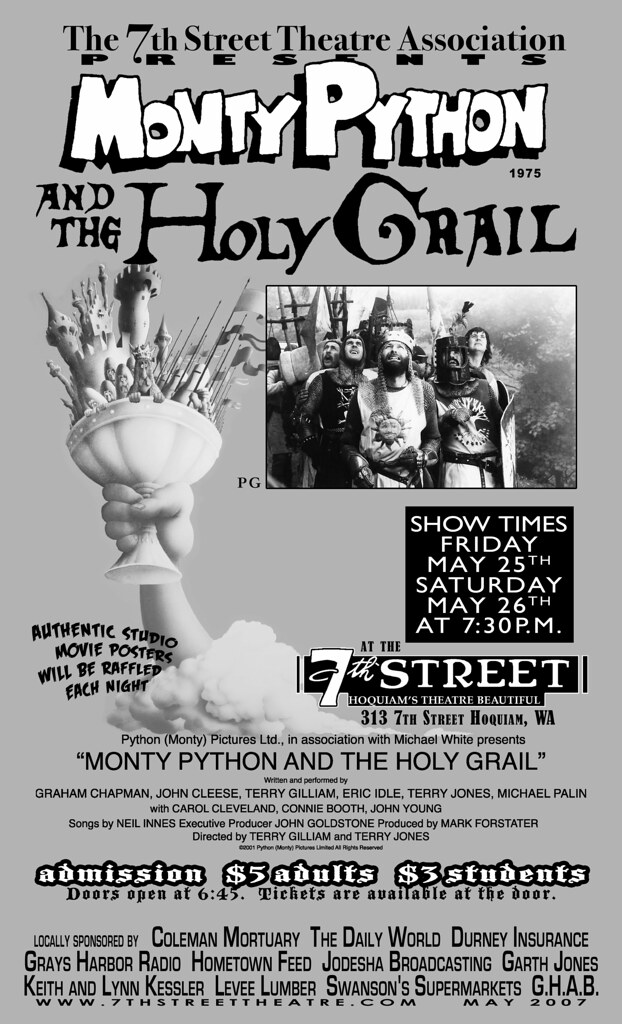
7. Monty Python and the Holy Grail (1974)
Also emerging from the creatively fertile year of 1974, the legendary British comedy group Monty Python delivered their unique take on the King Arthur legend with *Monty Python and the Holy Grail*. This film was not merely a spoof of historical epics; it was a groundbreaking comedic exploration that redefined the boundaries of narrative and humor, applying Python’s distinctive surreal and intellectual wit to medieval mythology.
The film’s genius lies in its relentless deconstruction of the heroic quest narrative, a common trope in both literature and cinema. Rather than presenting a straightforward, epic tale, Monty Python imbued the story with anachronisms, absurd logic, and a charmingly low-budget aesthetic that ironically served to highlight the often-unquestioned grandeur of traditional heroic stories. This approach enabled the film to offer a sharp, yet often silly, commentary on the very nature of storytelling and heroism.
*Monty Python and the Holy Grail* became a cult classic, celebrated for its quotable dialogue and unforgettable characters. Its influence extended far beyond comedy, shaping how audiences perceived and engaged with historical and fantasy genres. By playfully lampooning the earnestness of Arthurian legends, the film managed to create a work that, for many, is more memorable and culturally resonant than many of the serious adaptations of the same source material, proving the enduring power of intelligent, genre-aware parody.
Read more about: A Cinematic Titan Remembered: Fans Pay Final Tribute to Sean Connery’s Unforgettable Film Legacy
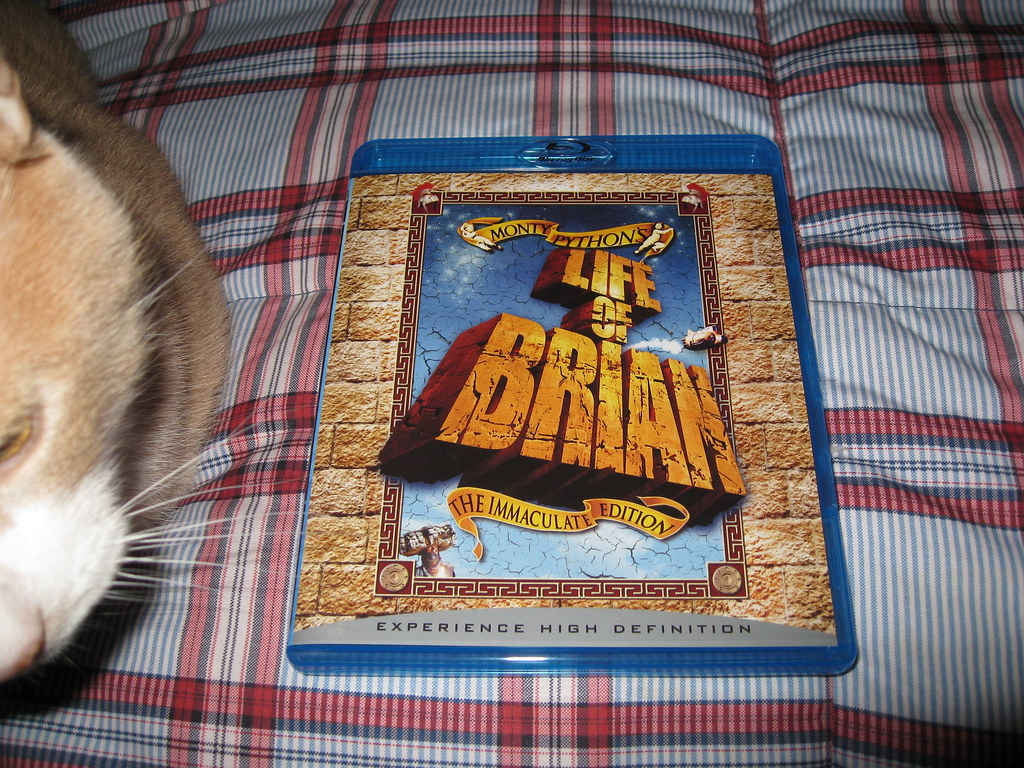
8. Life of Brian (1979)
Five years after their medieval romp, Monty Python once again ventured into controversial territory with *Life of Brian* in 1979, a religious satire that took aim at biblical epic films and broader societal fanaticism. This bold move showcased parody’s capacity to tackle sensitive subjects with both biting wit and a nuanced perspective, pushing the boundaries of what was considered acceptable comedic fodder.
*Life of Brian* centers on Brian Cohen, an ordinary man mistaken for the Messiah, allowing the film to humorously highlight the absurdities of blind faith, hero worship, and political extremism. The film’s critical reception, though often accompanied by controversy due to its subject matter, underscored its brilliance in delivering profound social commentary through the lens of outlandish comedy. It exemplified how satire, when embedded within parody, can be both “provocative and critical,” prompting audiences to reflect on real-world issues.
Despite the initial uproar, *Life of Brian* has endured as a masterpiece of satirical filmmaking, demonstrating that parody can be a powerful vehicle for artistic expression that goes beyond mere entertainment. It proved that a film could “make fun of the real world” using “specific parody elements” and become a lasting cultural touchstone, arguably offering more insightful critique on historical and religious narratives than many of the more earnest, dramatic portrayals of similar themes.
Read more about: Remember the 70s? Let’s See How Many of These Iconic Films From Hollywood’s Wildest Decade You Caught on the Big Screen!

9. Airplane! (1980)
The 1980s heralded a new era of rapid-fire, relentless parody, largely spearheaded by the creative team of David Zucker, Jim Abrahams, and Jerry Zucker (ZAZ). Their groundbreaking film, *Airplane!*, single-handedly redefined the disaster movie genre, transforming its dramatic tension and cliché-ridden narratives into an unforgettable comedic experience. It wasn’t just a spoof; it was a masterclass in comedic timing and structural deconstruction.
*Airplane!* brilliantly lampooned the conventions of well-established genres, particularly disaster and war movies, by taking their most serious elements and injecting them with an absurd, deadpan humor. The film’s approach involved delivering a constant barrage of gags, visual puns, and non-sequiturs, creating a comedic density that made repeated viewings not just enjoyable, but almost necessary to catch every joke. This innovative style quickly became a benchmark for future parody films.
The movie’s success was not just in its humor, but in its ability to embed that humor within a recognizable, albeit exaggerated, narrative framework. It resonated with audiences who were intimately familiar with the melodramatic tropes it targeted, making the subversion all the more effective. In many ways, *Airplane!* became more famous and beloved than many of the serious disaster films it mocked, demonstrating how a parody can achieve “an enduring critical edge and cultural impact” that few non-parodic films could match within its genre.
Read more about: Rewriting History? Examining the Classic Comedies So ‘Offensive’ They Could Never Get Made Today

10. Spaceballs (1987)
Mel Brooks, never one to rest on his laurels, turned his parodic gaze to the burgeoning science fiction genre with *Spaceballs* in 1987, a direct spoof of the immensely popular *Star Wars* saga. This film cemented Brooks’ reputation as one of the most famous film parodists, proving his ability to adapt his comedic brilliance across diverse cinematic landscapes, from historical epics to fantastical space operas.
*Spaceballs* meticulously recreated the visual and narrative cues of its source material, from character archetypes and iconic starships to memorable dialogue, only to twist them into hilarious new forms. The film’s humor stemmed from its clever recognition of the unique stylistic elements of science fiction, allowing Brooks to exaggerate these for comedic effect while still paying homage to the genre he was lampooning. It utilized a “fan-centric approach” by speaking directly to the enthusiasts of the genre.
While undoubtedly a loving tribute, *Spaceballs* also functioned as a sharp commentary on the commercialism and sometimes formulaic nature of blockbuster sci-fi. Its enduring popularity, particularly among fans of the genre it targeted, signifies its success in becoming more than just a fleeting joke. It achieved a rare feat where the “reputation of a parody outlasts the reputation of what is being parodied,” solidifying its place as a quintessential science fiction comedy that rivals the affection held for its inspirations.
Read more about: Hollywood’s Timeless Talents: 12 Iconic Actors Still Rocking the Big Screen (and Beyond!)
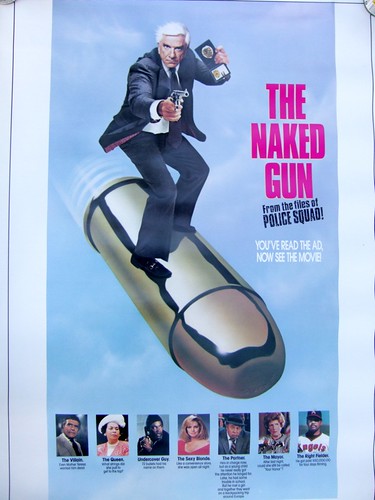
11. The Naked Gun: From the Files of Police Squad! (1988)
The ZAZ team returned to mainstream success in 1988 with *The Naked Gun: From the Files of Police Squad!*, elevating their distinctive brand of absurd, deadpan comedy into a feature film franchise that targeted police movies. Building on their television series *Police Squad!*, the film successfully transitioned its rapid-fire gag style and anachronistic humor to the big screen, proving that such a niche comedic approach could captivate a wide audience.
This film, along with its sequels, systematically exaggerated every cliché of the police procedural genre, from dramatic stakeouts and convoluted plots to the stoic, yet often clueless, hero. Leslie Nielsen’s iconic portrayal of Lieutenant Frank Drebin became synonymous with the film’s comedic brilliance, as his unwavering seriousness in the face of utter absurdity created a consistent and highly effective comedic engine. This ability to deliver strong opinions and takes, supported by comedic reasoning, is characteristic of the ScreenRant style.
*The Naked Gun* series not only entertained audiences but also showcased the power of sophisticated comedic techniques to dissect and comment on an entire film genre. Its legacy is arguably more significant than many of the serious police dramas or action films it satirized, demonstrating that the best parodies don’t just mimic; they elevate, offering a unique blend of humor, insight, and enduring entertainment that truly makes them “better than the genre it was mocking.”
Read more about: These 8 Classic Screen Detectives Would Be Fired for Bad Practices in 2024—Easily
From the silent era’s initial playful jabs to the modern masterpieces of Mel Brooks and Monty Python, and the relentless comedic barrages of ZAZ, parody films have continually proven their worth. They are not merely imitations but sophisticated acts of artistic commentary, cultural critique, and pure entertainment. These 12 films stand as towering achievements, testaments to the genre’s power to transcend, transform, and often outshine the very narratives they set out to playfully, or powerfully, subvert. They remind us that sometimes, the most profound insights and the biggest laughs come from looking at the familiar through a delightfully distorted lens, leaving us with cinematic treasures that continue to amuse and instruct for generations.