In the vast pantheon of cinematic legends, few names loom as large, or resonate as profoundly, as Steven Spielberg. A titan of the New Hollywood era and the undisputed pioneer of the modern blockbuster, Spielberg’s filmography reads like a cultural touchstone, a kaleidoscopic journey through our collective dreams, fears, and triumphs. From the primal terror of ‘Jaws’ to the profound humanity of ‘Schindler’s List,’ his work consistently transcends mere entertainment, often striking at the very core of what it means to be human. But behind the dazzling spectacle and the poignant narratives, what is the secret sauce? What is the unspoken, singular rule that underpins his unparalleled success and allows him to coax such unforgettable performances from his actors?
This isn’t about a literal, on-set decree like ‘always be on time’ or ‘know your lines.’ Instead, it’s about a foundational philosophy, an artistic imperative that Spielberg has cultivated and refined over decades. It’s a guiding star that illuminates his approach to storytelling, character, and the very craft of filmmaking itself. To truly understand this principle, we must delve beyond surface-level reporting, dissecting his career with the analytical rigor and narrative flair befitting a master of the medium, tracing the evolution of his methods from childhood experiments to cinematic masterpieces.
Our journey will reveal that Steven Spielberg’s singular, unwavering rule for his actors – and indeed, for his entire creative process – is the relentless pursuit of **authentic emotional resonance and immersive truth**. Whether it’s through groundbreaking technical approaches, deeply personal connections to his material, or an uncanny ability to foster a truly lived experience for those in front of his camera, Spielberg consistently strives to make the artificial feel genuinely real, and the fantastic profoundly felt. This commitment to truth, whether psychological or historical, is the bedrock upon which his cinematic empire stands, and it’s the key to unlocking the power of his actors’ performances.
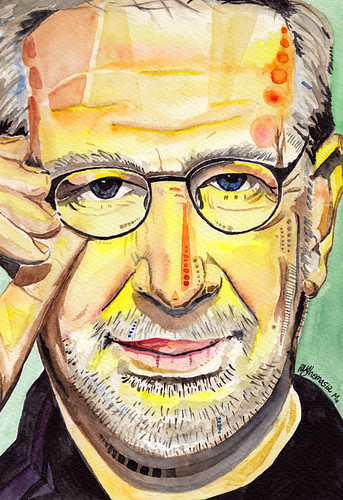
1. **The Genesis of Storytelling: A Childhood Forged in Imagination and Trauma**Steven Spielberg’s remarkable ability to tap into universal emotions didn’t spring forth fully formed; it was meticulously forged in the crucible of his early life. Born in Cincinnati, Ohio, in 1946, and growing up in Phoenix, Arizona, his immediate family were Reform Jewish/Orthodox Jewish, with a concert pianist mother and an electrical engineer father involved in computer development. This backdrop, however, was also shadowed by the pervasive memory of the Holocaust, with his parents “talked about it all the time” and his father having lost “between sixteen and twenty relatives.” Such profound historical weight, experienced through family narrative, undoubtedly sowed seeds of empathy and a desire to understand profound human experiences within the young Spielberg.
His earliest forays into filmmaking were a direct response to both fascination and fear. At age 12, after being “terrified” by the train crash in Cecil B. DeMille’s ‘The Greatest Show on Earth,’ he recreated the disaster with his Lionel trains, filming it with his eight-millimeter camera. He recalled, “That was hard on the trains, but then I could cut the film lots of different ways and look at it over and over again.” This wasn’t just play; it was his first home movie, a primal act of mastering fear through recreation, of turning intense experience into repeatable, analyzable narrative. This nascent understanding of impact and repetition would become a hallmark of his career.
The profound impact of his parents’ divorce when he was “15 or 16 years old” further fueled his imaginative world-building, directly influencing one of his most beloved works. He explained, “I needed a special friend, and had to use my imagination to take me to places that felt good – that helped me move beyond the problems my parents were having, and that ended our family as a whole. And thinking about that time, I thought, an extraterrestrial character would be the perfect springboard to purge the pain of your parents’ splitting up.” This profound statement reveals the deeply personal wellspring from which much of his emotional storytelling flows, illustrating how his own vulnerabilities informed his search for authentic, relatable character arcs.
Indeed, his mother, described as having “a huge adventurous personality” and seeing herself as “Peter Pan, the kid who never wanted to grow up,” likely instilled in him a vital sense of wonder and the enduring power of childlike perspective. These formative experiences—from familial trauma to the creative catharsis of amateur filmmaking—laid the groundwork for a director who would consistently prioritize the emotional core and internal truth of his characters, no matter how fantastical the external circumstances, establishing a bedrock for authentic storytelling that would guide his entire career.
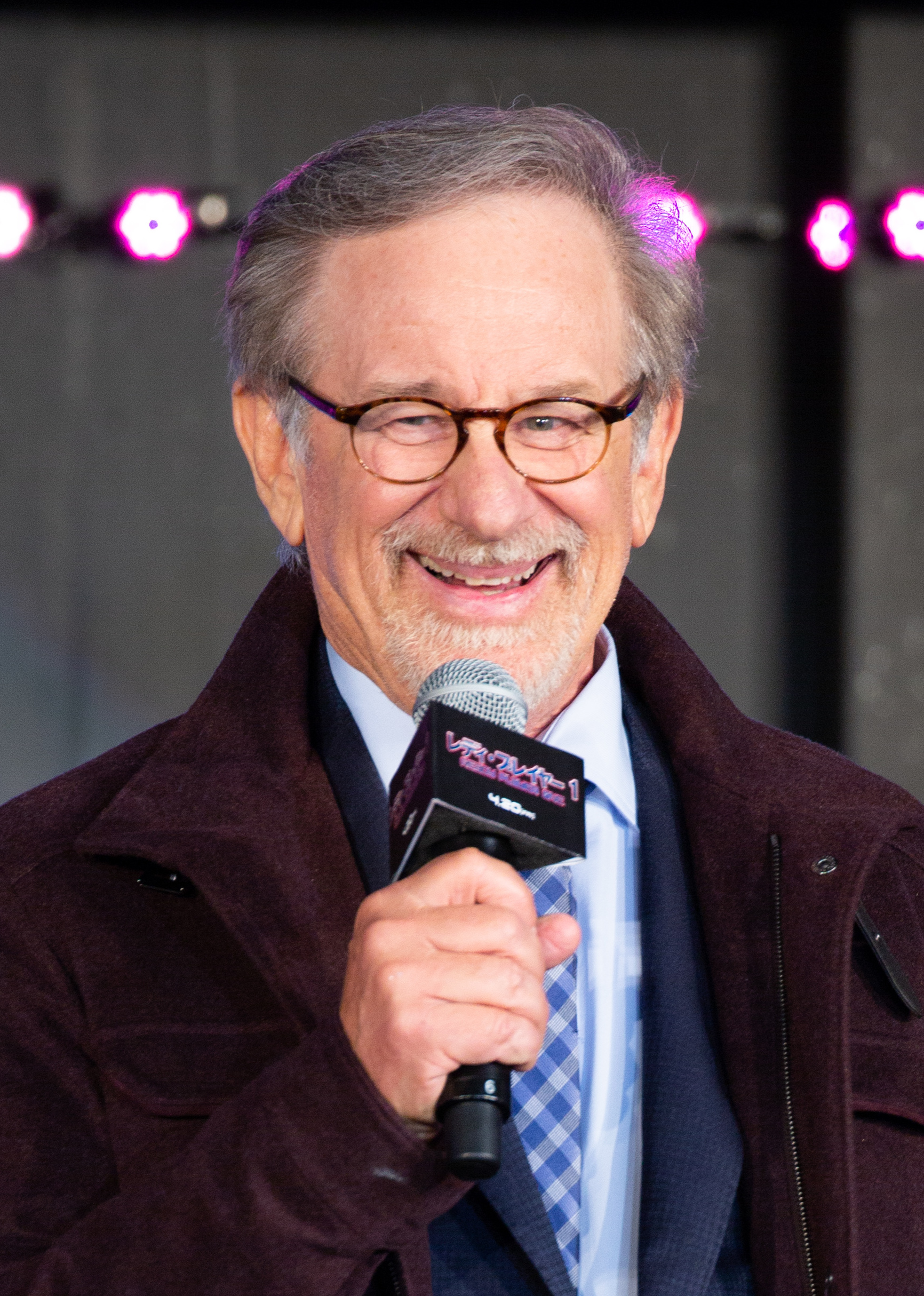
2. **Learning the Visual Language: Formative Influences and the Art of the Horizon**Before he could direct actors to find their authentic core, Spielberg first had to master the language of the moving image itself, a journey steeped in obsessive consumption and an innate understanding of visual impact. His weekly visits to the local theater in Phoenix were his informal film school, exposing him to a diverse palette of masters. He absorbed the emotional grandeur of Victor Fleming’s ‘Captains Courageous,’ the animated artistry of Walt Disney’s ‘Pinocchio’ and ‘Fantasia,’ and the profound narrative structures of Akira Kurosawa’s ‘Rashomon’ and ‘The Seven Samurai.’ These weren’t just movies; they were lessons in pacing, character, and the sheer power of storytelling.
Further expanding his visual lexicon, Spielberg’s formative cinematic diet included Ishirō Honda’s iconic ‘Godzilla, King of the Monsters!’ and the sweeping epics of David Lean, particularly ‘Bridge on the River Kwai’ and ‘Lawrence of Arabia,’ which he famously called “the film that set me on my journey.” The psychological tension of Alfred Hitchcock’s ‘The Birds’ and the cerebral grandeur of Stanley Kubrick’s ‘Dr. Strangelove’ and ‘2001: A Space Odyssey’ (‘I’m still living off the adrenalin that… I experienced watching that film for the first time’) further broadened his understanding of how to manipulate audience emotion and intellectual engagement through pure cinematic craft. This deep appreciation for diverse filmic approaches underscored his commitment to using every tool available to create a convincing and impactful world.
Perhaps the most telling anecdote about his early artistic development comes from a formative encounter with one of his favorite filmmakers, John Ford. When Spielberg expressed his desire to be a “picture maker,” Ford pointed to paintings and quizzed him on the placement of the horizon. “When you’re able to distinguish the art of the horizon at the bottom of a frame or at the top of the frame, but not going right through the center of the frame, when you can appreciate why it’s at the top and why it’s at the bottom, you might make a pretty good picture maker,” Ford advised. This seemingly simple lesson profoundly shaped Spielberg’s visual grammar, teaching him the subtle yet powerful art of composition to evoke specific emotions and guide the viewer’s eye, a crucial element in creating immersive and believable cinematic experiences.
After initially being turned down by USC’s film school due to “mediocre grades,” Spielberg eventually created ‘Firelight,’ a 140-minute science fiction film, funded by his father, which grossed $501 against its $500 budget. This early, ambitious project, later the basis for ‘Close Encounters of the Third Kind,’ along with his audacious move to become an “unofficial apprentice” at Universal Studios by simply walking past security guards, demonstrates a relentless drive and an intuitive grasp of the filmmaking process, showcasing a profound understanding that the director’s vision is paramount, a prerequisite to extracting authentic performances.
3. **From TV Shorts to Theatrical Debut: Forging Suspense and Subtlety**Spielberg’s professional directorial journey began in television, a fertile ground for experimentation that would hone his innate sense of suspense and character-driven narrative. His debut, ‘Eyes,’ a segment for ‘Night Gallery’ in 1969, starring Joan Crawford, was met with initial skepticism from executives due to his inexperience. However, Crawford herself, reflecting on their collaboration, “recognized his potential, noting his unique intuitive inspiration,” even communicating her approval to Rod Serling. This early endorsement from a Hollywood icon was a powerful affirmation of his burgeoning talent, highlighting his ability to connect with actors and inspire trust despite his youth.
Throughout the early 1970s, despite unsuccessfully trying to secure financing for his own low-budget films, Spielberg continued to direct teleplays for popular shows like ‘Marcus Welby, M.D.,’ ‘The Name of the Game,’ and ‘Columbo’—including the show’s inaugural non-pilot episode, ‘Murder by the Book.’ Although he expressed dissatisfaction with some of this work, he shrewdly used these opportunities to “experiment with his techniques and learn about filmmaking,” laying a crucial foundation for his unique style. He earned positive reviews and impressed producers, demonstrating a rapid growth in technical proficiency and narrative control.
This period culminated in Universal signing Spielberg to a four-television film deal, the first of which was the seminal ‘Duel’ (1971). Adapted from Richard Matheson’s short story, this suspenseful thriller about a salesman pursued by a menacing tanker truck quickly garnered positive reviews. Its exceptional quality led executives to promote it beyond television, commissioning additional scenes for an international theatrical release. This marked Spielberg’s true debut as a film director, signaling his arrival as a force to be reckoned with.
Critic David Thomson lauded ‘Duel’ as one of the “medium’s most compelling spirals of suspense,” emphasizing its “narrative assurance that never needs to remind us of the element of fable.” The film’s brilliance lay in its ability to transform an ordinary scenario into a monstrous, malignant confrontation, achieving visceral authenticity through meticulously crafted tension rather than overt exposition. This early triumph demonstrated Spielberg’s capacity to immerse both actors and audience in a heightened reality, a crucial step in developing his “rule” of authentic emotional resonance, paving the way for his next, far grander, cinematic endeavor.
4. **The Accidental Genius of *Jaws*: Turning Malfunction into Cinematic Mastery**Steven Spielberg’s ascent to household name status arrived with ‘Jaws’ (1975), a blockbuster thriller that redefined summer cinema and showcased his burgeoning mastery of suspense. Producers Richard D. Zanuck and David Brown took a significant gamble on the young director, trusting him with Peter Benchley’s bestselling novel about a great white shark terrorizing a summer resort. The premise alone promised thrills, but the execution would prove to be a trial by fire, one that unexpectedly solidified Spielberg’s commitment to finding authentic ways to convey fear and vulnerability.
The production of ‘Jaws’ was notoriously difficult, plagued by unforeseen challenges. As the “first movie shot on open ocean,” filming proved immensely complicated, exasperated by the persistent malfunction of the mechanical shark, affectionately nicknamed ‘Bruce.’ The shooting schedule spiraled, overrunning by a staggering hundred days, pushing Universal to the brink of canceling production entirely. These relentless obstacles would have broken a lesser director, but for Spielberg, they became a paradoxical catalyst for creative problem-solving and an unexpected path to heightened authenticity.
It was precisely these technical failures that forced Spielberg to lean into an ingenious, and ultimately more effective, approach. He later acknowledged that “the malfunctioning of the mechanical shark resulted in a better movie, as he had to find other ways to suggest the shark’s presence.” Instead of relying on a visible, often clunky, animatronic beast, he cultivated terror through implication—the bobbing yellow barrels, John Williams’s iconic score, the chilling reactions of the actors, and the unseen menace lurking beneath the surface. This constraint compelled him to direct his actors to convey genuine fear and urgency, making their performances the primary vehicle for the shark’s terrifying reality, thus demanding a more authentic emotional response.
The result was a cinematic masterpiece that earned Spielberg widespread acclaim. Even the legendary Alfred Hitchcock praised the “unconventional camera techniques,” commending “young Spielberg” for “thinking outside the visual dynamics of the theater” and appreciating his ability to create suspense without explicit visual cues. Critic David Thompson further highlighted how Spielberg “asserted his own role and deftly organized the elements into a roller coaster entertainment without sacrificing inner meanings,” noting the “meticulous technique and good humor about its own surgical cutting.” This experience undeniably cemented his understanding that true cinematic power often lies not in what is explicitly shown, but in the authentic human reactions it provokes, demanding a deeper, more truthful engagement from his cast.
5. **Close Encounters with Authenticity: Crafting Cinematic Wonder Through Immersion**After the monumental success of ‘Jaws,’ Spielberg could have easily succumbed to the pressure of making a sequel, but his creative compass was already pointing him toward new horizons of wonder and authenticity. Declining ‘Jaws 2,’ he reunited with actor Richard Dreyfuss for ‘Close Encounters of the Third Kind’ (1977), a project that delved into the profound mystery of UFOs and humanity’s yearning for connection. This film represented a significant leap in his technical ambition and his quest to create an utterly immersive and believable cinematic experience, designed to elicit genuine awe from his audience.
Spielberg’s commitment to visual and sonic authenticity was uncompromising. He famously utilized 65mm film, a rare and expensive format, to achieve the “best picture quality,” ensuring that every frame conveyed a sense of grand scale and intricate detail. Furthermore, he employed a novel live-action recording system, a technological innovation that allowed for more nuanced sound design, further pulling audiences into the film’s unfolding spectacle. These technical choices weren’t about gratuitous flash; they were deliberate decisions aimed at constructing a believable world, allowing the fantastical elements to feel grounded and real.
Adding another layer of intellectual and artistic weight to the project, Spielberg cast one of his own cinematic heroes, the acclaimed French director François Truffaut, as the scientist Claude Lacombe. This bold decision not only lent gravitas to the film’s exploration of extraterrestrial communication but also underscored Spielberg’s desire to infuse his blockbuster with a profound sense of cultural and artistic legitimacy. ‘Close Encounters’ was also one of the rare instances where Spielberg was both the writer and director, giving him a singular vision to guide every aspect of its authentic emotional tapestry.
The film’s impact on audiences was immediate and profound. It was “very popular with filmgoers” and garnered multiple Academy Awards. Critic Stanley Kauffmann eloquently captured the film’s immersive power, observing that at its first New York showing, “most of the audience stayed on and on to watch the credits crawl lengthily at the end… they just didn’t want to leave this picture. For still another, they seemed to understand the importance of those many names to what they had just seen.” Pauline Kael, another influential critic, simply called Spielberg “a magician in the age of movies.” This unwavering ability to transport, to create a world so compelling that audiences resist leaving, speaks volumes about Spielberg’s rule: to craft experiences so authentically realized that they transcend the screen and become deeply felt personal encounters.
6. **The *E.T.* Phenomenon: Unscripted Emotion and the Power of Sequential Storytelling**Following the epic scale of ‘Close Encounters,’ Spielberg returned to science fiction with a story that would touch the hearts of millions: ‘E.T. the Extra-Terrestrial’ (1982). This deeply personal tale of Elliot, a young boy who befriends an alien accidentally left behind, perfectly encapsulated Spielberg’s mastery of evoking authentic, raw emotion. It was here that he employed a directorial technique that most overtly showcased his “rule” of fostering genuine performances through immersive experience, rather than rigid adherence to a script or storyboard.
In a radical departure from conventional filmmaking, Spielberg “eschewed storyboards so that his direction would be more spontaneous,” allowing the organic flow of the narrative to dictate the visual approach. More critically for his actors, he made the daring choice to “shot roughly in sequence so that the actors’ performances would be authentic as they bonded with and said goodbye to E.T.” This meant the child actors, particularly Henry Thomas as Elliot, experienced the emotional arc of the story in real-time, allowing their developing relationship with the E.T. puppet to mirror the fictional bond. This deliberate choice to prioritize lived experience over pre-planned blocking was a masterstroke in cultivating unscripted emotional truth.
The impact of this approach was undeniable. Richard Corliss, describing the film’s Cannes Film Festival screening, recounted, “One heard the audience’s childlike applause; one felt their spirits lift. This was rapture made audible, palpable…” He highlighted how Spielberg “orchestrated the movements of the camera and the puppet spaceman with the feelings of—it has to be called love—expressed in young Henry Thomas’ yearning face.” Even President Ronald Reagan and First Lady Nancy Reagan were reportedly “emotional by the end” of a special screening, a testament to the film’s universal emotional resonance.
Critics similarly lauded the film’s profound emotional depth. Pauline Kael articulated the film’s magic: “His voice is ancient and otherworldly but friendly, humorous. And this scaly, wrinkled little man with huge, wide-apart, soulful eyes and a jack-in-the-box neck has been so fully created that he’s a friend to us, too; when he speaks of his longing to go home the audience becomes as mournful as Elliot.” This profound connection, where the audience mourns with a puppet, is the ultimate vindication of Spielberg’s “rule”—a testament to his unparalleled ability to craft narratives and guide performances that transcend the artificial, creating an authentically felt experience for everyone involved, both on and off the screen.
7. **The Color Purple (1985): Spielberg’s Bold Pivot to Profound Drama**After enchanting audiences with tales of extraterrestrial wonder and swashbuckling archaeologists, Steven Spielberg embarked on a dramatically different cinematic journey with ‘The Color Purple’ in 1985. This adaptation of Alice Walker’s Pulitzer Prize-winning novel marked a significant and brave pivot for the director, diving headfirst into a raw, poignant exploration of empowered African-American women in the depression-era South. It was a conscious step away from the spectacle-driven blockbusters that had defined his early career, signaling his ambition to explore deeper, more complex human narratives.
Spielberg himself harbored reservations about tackling such a sensitive and character-driven project, admitting, “It’s the risk of being judged—and accused of not having the sensibility to do character studies.” This sentiment underscores the profound challenge and personal growth inherent in this film. Yet, despite his initial hesitations, he assembled a remarkable cast, including powerhouse performances from Whoopi Goldberg and Oprah Winfrey, bringing a palpable authenticity to the struggles and triumphs of their characters. The film became a box-office hit, silencing doubters and proving Spielberg’s versatility and emotional range.
Indeed, ‘The Color Purple’ resonated deeply with both critics and audiences, earning widespread acclaim. Influential film critic Roger Ebert named it the best film of the year, a powerful testament to its artistic merit and emotional impact. The film’s eleven Academy Award nominations, coupled with Spielberg winning Best Director from the Directors Guild of America, solidified his status not merely as a master of entertainment, but as a serious artist capable of profound character studies. This marked a crucial turning point, unequivocally demonstrating his unwavering commitment to extracting authentic emotional resonance, even when venturing into entirely new dramatic territory.
8. **Empire of the Sun (1987): A Personal Lens on Historical Epic**Continuing his exploration of dramatic narratives, Spielberg next tackled ‘Empire of the Sun’ in 1987, a sprawling historical epic that further showcased his evolving artistic sensibilities. This was no ordinary production; it marked the first American film shot in Shanghai since the 1930s, imbuing the project with a unique historical significance and a palpable sense of place. Adapted from J. G. Ballard’s autobiographical novel, the film chronicles the harrowing journey of Jamie Graham, a young British boy who experiences the brutality of World War II from a Japanese internment camp, forcing both the character and the audience to confront profound themes of survival and loss.
Originally, the legendary David Lean was slated to direct, with Spielberg producing, a clear indication of the film’s serious artistic intentions. However, Spielberg ultimately took the directorial reins, imbuing the narrative with his distinctive blend of epic scope and intimate human drama. The film, penned by acclaimed playwright Tom Stoppard and co-starring John Malkovich, presented Spielberg with another opportunity to delve into a period of history with deep personal resonance, mirroring the themes of family fragmentation and resilience that had informed his earlier work.
While critical reaction at the time of release was mixed, with some finding fault with an “overwrought” plot or perceived downplaying of “disease and starvation,” the film’s profound artistic merit was not lost on all. Andrew Sarris notably named it the best film of the year and later included it among the best of the decade, recognizing its ambitious storytelling and visual grandeur. Spielberg himself recalled it as one of his “most enjoyable films to make,” a sentiment echoed by critic David Thomson, who lauded it as “a great work through and through” and “the first clear sign that Spielberg the showman was an artist, too.” This epic solidified his artistic credibility, demonstrating his capacity to fuse grand historical narrative with deeply felt personal truth.

9. **Jurassic Park (1993): The Ultimate Illusion of Life and Immersion**While ‘Outline_Section2’ emphasizes Spielberg’s dramatic turns, his simultaneous work on ‘Jurassic Park’ in 1993 serves as a powerful testament to his unwavering commitment to immersive truth, albeit through a different lens. This science fiction adventure, based on Michael Crichton’s bestseller, pushed the boundaries of cinematic realism in a way previously unimaginable. It wasn’t just about creating dinosaurs; it was about making them feel undeniably, terrifyingly, and majestically *real* to audiences, a direct extension of his rule to make the artificial genuinely felt.
In a departure from his usual meticulous planning, Spielberg collaborated with designers to storyboard certain sequences from the novel early on, a practical approach dictated by the film’s groundbreaking visual effects. The revolutionary computer-generated imagery (CGI) provided by Industrial Light & Magic allowed for unparalleled detail and fluidity, convincing viewers that living, breathing dinosaurs walked the Earth once more. This wasn’t merely technological wizardry; it was a carefully orchestrated effort to immerse the audience fully in the thrilling, dangerous world of the park, creating a visceral experience that transcended the screen.
The film’s success was monumental, becoming the highest-grossing film at the time and garnering three Academy Awards, primarily for its technical achievements. Yet, beyond the box office numbers and accolades, ‘Jurassic Park’ demonstrated Spielberg’s ability to orchestrate every element of a film—from script to performance to cutting-edge visual effects—to achieve a singular, powerful effect: the overwhelming sensation of being there. The raw, authentic reactions of the actors to creatures that weren’t physically present became the conduit for the audience’s own awe and terror, proving that even in the realm of fantastical adventure, Spielberg’s rule of authentic emotional resonance remained paramount.
10. **Schindler’s List (1993): Confronting History with Unflinching Truth**In a year that saw him redefine blockbuster cinema, Steven Spielberg simultaneously delivered what many consider his magnum opus: ‘Schindler’s List’ (1993). This epic historical drama, based on ‘Schindler’s Ark,’ plunged into the horrific realities of the Holocaust, telling the true story of Oskar Schindler, a businessman who saved 1,100 Jews. This project wasn’t just another film; it was a deeply personal undertaking, a profound engagement with his own Jewish heritage and a response to the familial narratives of loss and survival he had carried since childhood.
Spielberg deliberately waited ten years to make the film, feeling he wasn’t “mature” enough to do justice to the subject matter. The birth of his son, Max, served as a catalyst, igniting a “spirit” within him and leading him to declare, “I became a Jewish dad.” This personal connection fueled an uncompromising commitment to historical accuracy and emotional truth, driving him to film in Poland while still editing ‘Jurassic Park’ in the evenings. His choice to bring his wife and children to Poland, despite the harrowing subject, underscored his need for familial support during such an emotionally taxing production.
The film, shot in stark black and white, deliberately eschewed cinematic flourishes, opting instead for a raw, almost documentary-like realism. Critic Roger Ebert captured this essence perfectly, stating, “Spielberg is not visible in this film. But his restraint and passion are present in every shot.” The film depicts the evil of the Holocaust without sensationalism, relying on unflinching depiction and the powerful, understated performances of its cast to convey the gravity of its themes. This approach garnered seven Academy Awards, including Best Picture and Spielberg’s first for Best Director, and led to the establishment of the Shoah Foundation to archive testimonies of Holocaust survivors.
‘Schindler’s List’ is widely regarded as one of the greatest films ever made, a testament to Spielberg’s ability to confront the darkest chapters of history with unparalleled sensitivity and truth. Its impact was not merely critical or commercial; it was a profound act of remembrance and education, demonstrating that Spielberg’s “rule” of authentic emotional resonance could elevate filmmaking to the realm of vital historical testimony. As critic David Thomson remarked, it is “the most moving film I have ever seen,” a legacy of pure, unadulterated truth.
11. **Amistad (1997): Continuing the Pursuit of Historical Justice**Following the monumental achievement of ‘Schindler’s List,’ Spielberg continued his deep dive into historical dramas with ‘Amistad’ in 1997, his first film released under the newly established DreamWorks. This project, based on the true story of a slave ship mutiny in 1839, once again showcased his commitment to shining a light on pivotal moments of human struggle and injustice, further cementing his dedication to narratives that demand profound emotional and intellectual engagement.
Initially hesitant to take on the film, fearing it might inevitably be compared to ‘Schindler’s List,’ Spielberg ultimately followed his intuition, stating, “I’ve never planned my career […] In the end I do what I think I gotta do.” This decision reflected a growing conviction that certain stories needed to be told, and he was the one to tell them. Producer Debbie Allen, who had championed the project for years, recognized Spielberg’s unique ability to handle such sensitive and complex material, providing him with ten years’ worth of research to ensure the most accurate and emotionally resonant reenactments possible.
Starring Morgan Freeman, Anthony Hopkins, Djimon Hounsou, and Matthew McConaughey, ‘Amistad’ was a powerful, if challenging, viewing experience. While it struggled to find a wide audience and underperformed at the box office, with Spielberg himself admitting it “became too much of a history lesson” for some, its unflinching portrayal of the transatlantic slave trade and the pursuit of justice was undeniable. The film further demonstrated Spielberg’s broadening range as a director, unafraid to tackle difficult historical subjects and to push his actors to deliver performances rooted in profound human experience, even when the stories were uncomfortable.
12. **Saving Private Ryan (1998): Redefining War with Visceral Realism**Just a year after ‘Amistad,’ Steven Spielberg delivered another historical epic that would fundamentally alter the landscape of cinematic war depictions: ‘Saving Private Ryan’ (1998). This World War II masterpiece, starring Tom Hanks as Captain Miller, immersed audiences in the brutal, chaotic realities of combat, particularly through its harrowing D-Day landing sequence. It was a film born from a deeply personal place, a tribute to the generation that fought in the war, including his own father.
Spielberg’s pursuit of unparalleled realism was evident in every aspect of the production. Filming in England, he enlisted US Marine Dale Dye to train the actors, ensuring they remained in character during the intense combat scenes. This immersive training regime was designed to cultivate genuine, lived experiences, mirroring the physical and psychological toll of war. Halfway through filming, Spielberg reminded the cast of the film’s greater purpose, declaring they were making a tribute to “your grandparents and my dad, who fought in [the war].” This emotional connection ensured that the performances were not merely acting, but deeply felt expressions of gratitude and historical memory.
Upon its release, critics universally lauded the film’s direction and its groundbreaking, realistic portrayal of war. David Thomson rightly observed that “Ryan changed war films: combat, shock, wounds, and fear had never been so graphically presented.” Beyond its visceral impact, the film also captured “a true sense of what duties and ideas had felt like in 1944.” ‘Saving Private Ryan’ grossed a remarkable $481 million worldwide and earned Spielberg his second Academy Award for Best Director, a testament to its artistic and historical significance. The Department of Defense even recognized Spielberg and Hanks with the Distinguished Public Service Medal, highlighting the film’s profound societal impact.
Ebert’s observation that “Spielberg knows how to make audiences weep better than any director since Chaplin in City Lights” perfectly encapsulates the film’s emotional power. But more than tears, ‘Saving Private Ryan’ demanded an authentic, often uncomfortable, engagement with history. It was a stark, powerful realization of Spielberg’s core rule: to create cinematic experiences so true, so viscerally authentic, that they transcend mere entertainment and become unforgettable, deeply felt encounters with the human condition. His later works, from the sophisticated sci-fi of ‘Minority Report’ to the deeply personal ‘The Fabelmans,’ continue to explore the nuances of truth, memory, and the human spirit, solidifying his legacy as a filmmaker who consistently seeks the authentic heart of every story he tells. In every frame, every performance, and every narrative choice, Steven Spielberg’s unwavering pursuit of emotional resonance remains the guiding star, illuminating the path to cinematic greatness and ensuring his films endure as powerful reflections of our shared humanity.