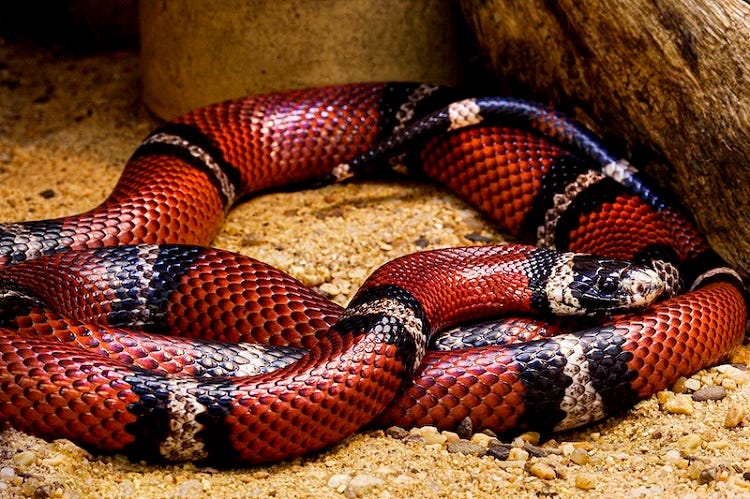
Snakes have captivated and terrified humanity for millennia, embodying a primal fear woven into our collective consciousness. From ancient myths to modern science, these reptiles, with their silent movements and potent venoms, command respect and caution.
While over 3,700 species of snakes slither across our planet, a mere 600 are venomous, and only about 200 of these possess venom capable of inflicting serious injury or death upon a human. The term “venom” itself is distinct from “poison”; venom is actively injected through a bite or sting, whereas poison enters the body via inhalation, swallowing, or skin absorption. This critical distinction is the first step in understanding the true nature of these formidable creatures.
Our journey delves into the fascinating, albeit frightening, world of the deadliest snakes on Earth. It’s a common misconception that the most venomous snakes are automatically the deadliest. While venom potency, often quantified by its LD50 (median lethal dose), is a crucial factor, it’s not the sole determinant of a snake’s danger to humans. Other elements, such as temperament, habitat overlap with human populations, strike readiness, and even the effectiveness of local healthcare systems, play significant roles. We will explore the characteristics that elevate certain species to the top of the deadliest list, beginning with a fascinating look at the first five.

1. **Death Adder**The Death Adder, known scientifically as *Acanthophis antarcticus*, immediately conjures images of peril, and its reputation is well-earned. Interestingly, its name is believed to have originated from “deaf adders” due to a historical misconception that these snakes couldn’t hear. This belief arose because, unlike many other snakes that flee upon human approach, the Death Adder remains steadfast. This behavior is a direct consequence of their ambush hunting strategy; they lie in wait for prey, making them less inclined to move away from perceived threats, including humans.
These are exceptionally dangerous snakes. Their venom is among the most powerful on Earth, packed with neurotoxins designed to cause paralysis of the respiratory system, ultimately leading to death. Beyond the lethal venom, the Death Adder is also renowned for possessing one of the fastest strikes of any snake, a terrifying combination that makes encounters particularly hazardous. This rapid strike, coupled with their potent venom, makes them incredibly efficient predators.
Death Adders are found throughout much of Australia, where they are generally considered less dangerous than the notorious brown snakes due to regional factors and awareness. However, their presence in Papua New Guinea and western Indonesia paints a grimmer picture, where they regrettably live up to their name by causing a significant number of annual fatalities. This geographical variation in impact highlights how local conditions and interactions can influence a snake’s ‘deadliness’ despite consistent venom potency.
Their ambush predatory nature means they rely heavily on camouflage, often remaining perfectly still even as humans approach. This passive defense mechanism can inadvertently lead to tragic encounters, as people may step too close or directly onto the snake without realizing it. Understanding their behavior is key to appreciating why these seemingly less active snakes pose such a significant threat in certain environments.
Read more about: Totally Rad Rewind: Can You Still Recognize These 14 Legendary 80s Icons Who Ruled the Decade?
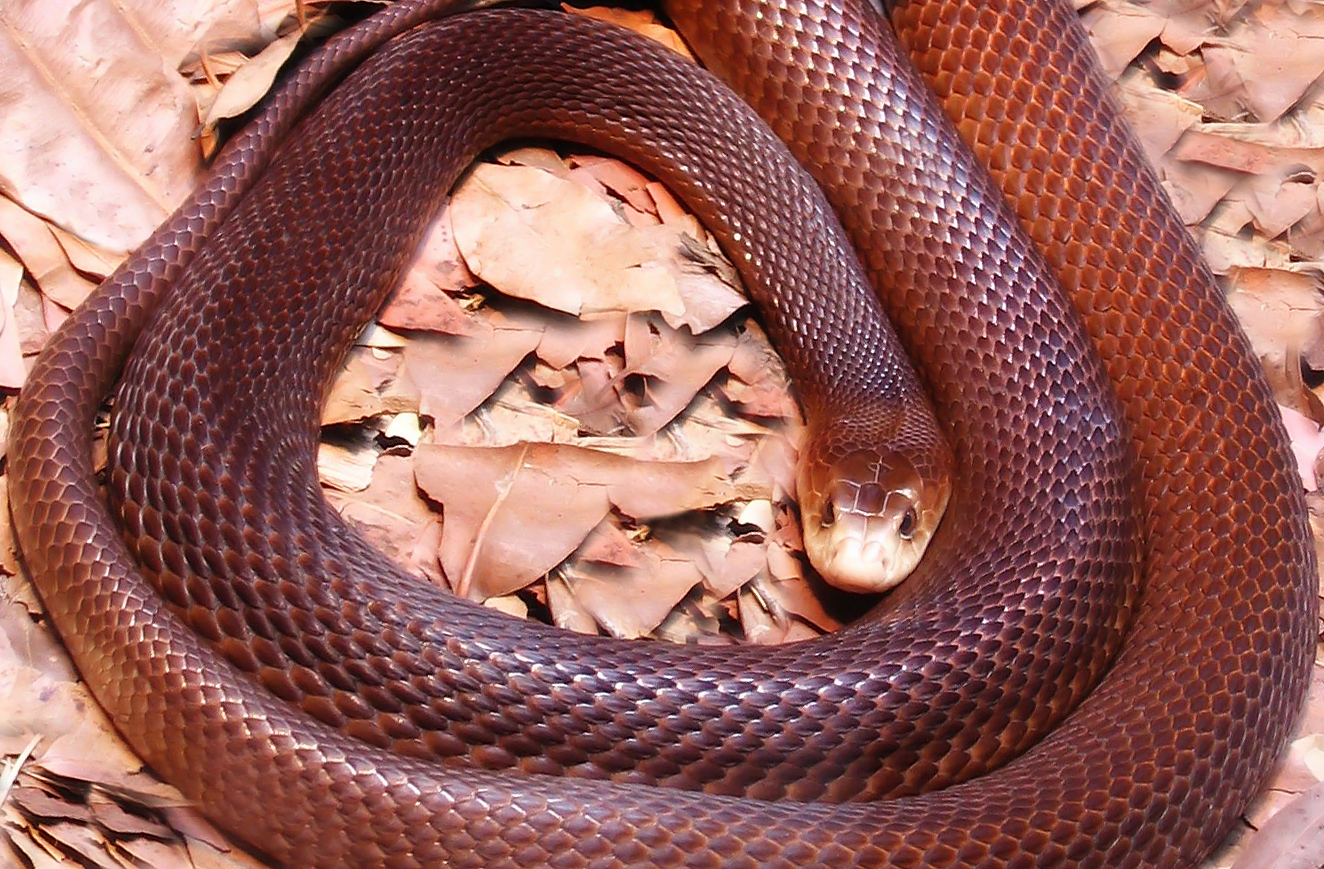
2. **Coastal Taipan**It might seem counterintuitive that the Coastal Taipan (*Oxyuranus scutellatus*), a less venomous cousin, made this list while the Inland Taipan, the most venomous snake on Earth, did not. While the Coastal Taipan’s venom is the third most toxic of any land snake—still astonishingly potent, capable of killing over 200,000 mice with a single bite—its inclusion here is due to two critical factors. Firstly, it inhabits less remote regions than the reclusive Inland Taipan, increasing its chances of human interaction. Secondly, the Coastal Taipan has a notorious reputation for aggression, a trait that significantly escalates its danger level.
When a Coastal Taipan feels threatened and decides to defend itself, it enters a full attack mode without hesitation. Unlike some snakes that might deliver “dry bites” (bites without venom injection), in over 80% of Coastal Taipan cases, a substantial dose of venom is delivered, often in repeated, rapid strikes. Each of these swift successive bites is capable of injecting a similar, devastating amount of venom. Equipped with the longest fangs among Australia’s venomous snakes, the taipan can inject its powerful neurotoxin deep into a victim’s tissues, ensuring maximum effect.
Another chilling aspect of the Coastal Taipan’s reputation is its tendency to actively chase people when on the attack, and it is capable of moving at a considerable speed. This aggressive pursuit, combined with its venomous capabilities, makes it an especially terrifying encounter. The sheer lethality of its bite is what truly cements its place on this list. While other snakes may appear dangerous on paper, few can match the near 100% fatality rate of an untreated Coastal Taipan bite.
Prior to the introduction of an antivenom in 1956 by the Commonwealth Serum Laboratories, a bite from a Coastal Taipan was almost invariably fatal. Even with modern treatment, the venom acts remarkably fast; some victims have tragically succumbed within as little as half an hour. The venom primarily affects the nervous system, leading to complete paralysis, including the vital muscles that control breathing, which is swiftly fatal. Additionally, the venom prevents blood clotting, causing internal bleeding, and contains components that break down muscle tissue, further exacerbating the damage.

3. **Common Lancehead**The Lanceheads, members of the *Bothrops* genus of pit-vipers, are found throughout Central and South America. Collectively, they are responsible for the vast majority of snakebite deaths in the region. These snakes frequently inhabit populated areas, and when encountered, they are characterized as fast, excitable, and unpredictable, making them incredibly dangerous. Among this group, the common lancehead (*B. atrox*), terciopelo (*B. asper*), and jararaca (*B. jararaca*) are particularly notable.
These are large snakes, typically reaching lengths of around 2 meters (6.5 feet), and they possess powerful hemotoxic venom. Unlike the neurotoxic venom of the Death Adder and Coastal Taipan, the lancehead’s venom is hemotoxic. While no bite from any snake on this list is desirable, hemotoxic venoms present a particularly gruesome challenge. Hematoxins function by destroying blood cells and breaking down the body’s tissues and organs, a process that is intensely painful and often results in irreversible damage.
Bites from lanceheads frequently necessitate limb amputations, even when prompt medical treatment is administered, highlighting the destructive nature of their venom. A bite from a lancehead initially causes significant local swelling and pain, often followed by blistering and bruising at the site. Systemic symptoms typically involve severe internal hemorrhaging, with bleeding potentially occurring from the gums, eyes, and other orifices. While this widespread internal bleeding can lead to fatal shock, death may also result from acute kidney failure, underscoring the venom’s systemic assault on the body.
Their tendency to inhabit areas near human settlements, combined with their aggressive nature and potent hemotoxic venom, makes the Common Lancehead a significant public health threat across its range. The severity of tissue damage means that even survivors often face long-term disability, further illustrating why these snakes are considered among the world’s deadliest.
Read more about: Journey into the Abyss: Uncovering 15 of Earth’s Most Perilous Tourist Destinations for the Adventurous Traveler

4. **Puff Adder**The Puff Adder (*Bitis arietans*) may not be the longest snake, but it compensates with its substantial girth and robust build, making it a powerful and formidable hunter. Equipped with exceptionally long fangs, this snake is truly a force to be reckoned with. Despite its often slow and lethargic demeanor, earning it descriptions like ‘lazy,’ the Puff Adder is capable of one of the fastest strikes among all snakes. Its strike is so powerful that it has been known to kill rodent prey purely from the force of the impact and the depth of its large fangs, aside from the venom. It carries enough venom in a single bite to be lethal to several humans.
The name “Puff Adder” originates from the snake’s distinctive warning behavior: when threatened, it will inflate its body to appear larger and emit an intimidating hiss. Heeding this warning is paramount, as the Puff Adder holds the grim distinction of being statistically Africa’s most dangerous snake, causing more fatalities than any other reptile on the continent. This high mortality rate is a stark indicator of its lethality and the frequency of its dangerous encounters with humans.
A significant factor contributing to the Puff Adder’s deadly record is its habit of basking on footpaths, soaking up the morning and late afternoon sun. This behavior places it in direct contact with humans, a situation further compounded by its reluctance to slither away when it detects approaching footsteps. Instead, Puff Adders rely on their highly effective camouflage to remain undetected, a tactic that, unfortunately, can lead to situations where the snake feels the need to defend itself by striking.
Being bitten by a Puff Adder is an unforgettable and agonizing experience, as its cytotoxic venom is one of the most powerful among all vipers. Without proper and timely medical treatment, the bite can lead to death in over half of envenomation cases. The initial bite causes considerable pain, but this is merely the precursor to a cascade of very nasty symptoms. Alongside severe swelling and internal bleeding, the Puff Adder’s venom is notorious for causing extensive tissue necrosis, with severe cases leading to damage right down to the bone. In the absence of effective medical intervention, complications such as gangrene are not uncommon, and victims often require limb amputations, highlighting the devastating impact of this snake’s bite.
Read more about: Unveiling the Edge: An In-Depth Look at History’s Most Dangerous Movie Stunts and Their Enduring Legacy
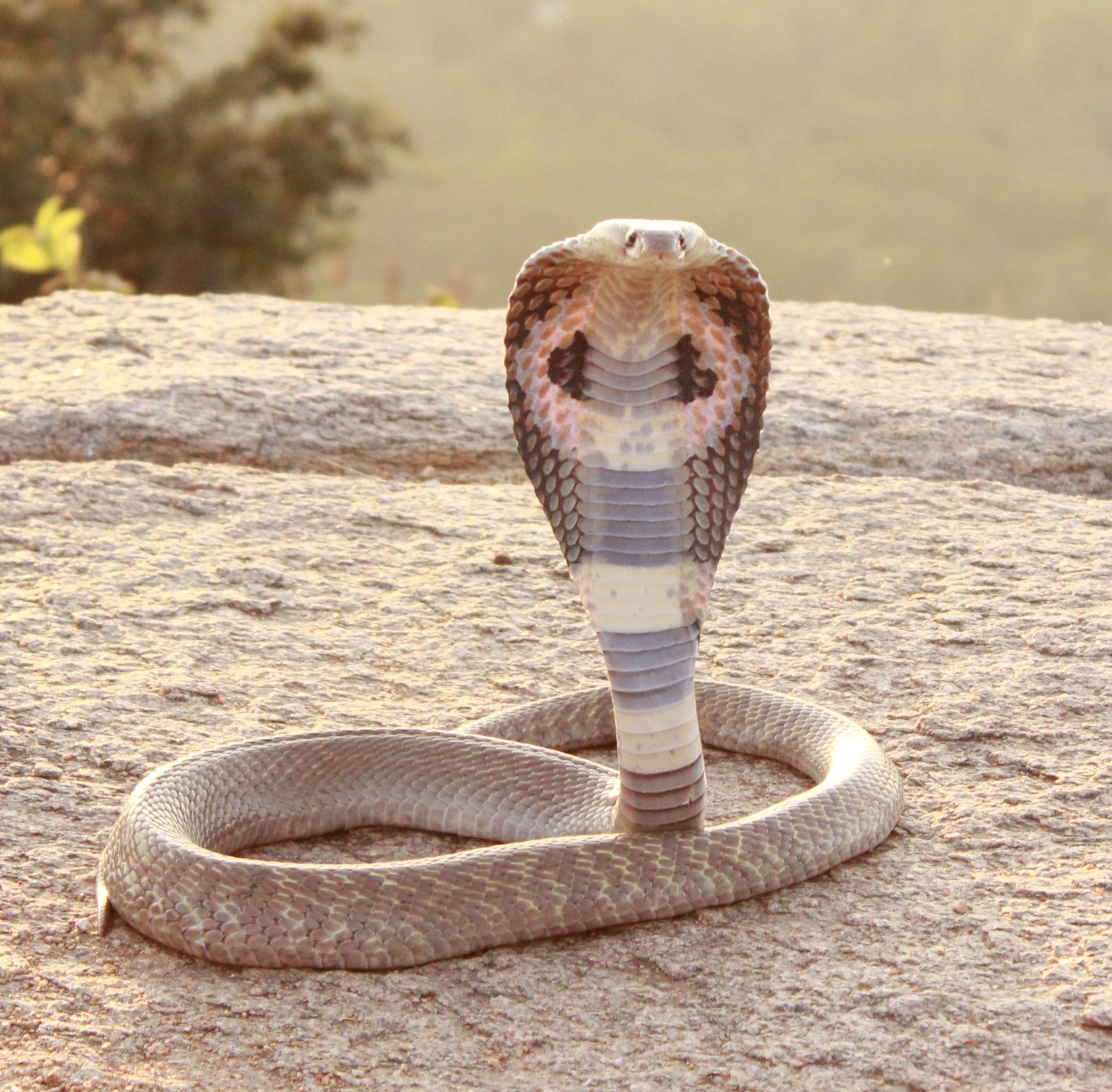
5. **Indian Cobra**The infamous Indian Cobra (*Naja naja*) stands as our first member of the “Big Four”—a group of snakes responsible for the majority of human fatalities in India, and consequently, a significant portion worldwide. While often described as only moderately venomous when compared to some of the planet’s neurotoxic heavyweights, its impact stems from sheer prevalence and the volume of bites it inflicts. Estimates suggest it delivers somewhere between 100,000 and 150,000 bites annually, making it a pervasive threat across its range.
Accurate statistics for deaths specifically caused by the Indian Cobra are challenging to pin down, but based on mortality rates ranging between 6.5% and 30%, it is clear that many thousands of deaths are attributed to this snake each year. This makes the Indian Cobra an undeniable force in the grim tally of global snakebite fatalities, demonstrating that “moderately venomous” can still translate to profoundly deadly when human encounters are frequent.
While the Indian Cobra’s venom might not match the raw potency of some others on this list, it is still an extremely dangerous cocktail. Its venom is a complex mixture of neurotoxins, cardiotoxins, and hemotoxins. This multi-pronged attack makes a cobra bite excruciatingly painful and capable of rapid fatality. The hemotoxins work to break down local tissue, facilitating the spread of the venom, while the neurotoxins induce paralysis. This paralysis can quickly lead to respiratory failure, with death potentially occurring in as little as half an hour, underscoring the critical need for prompt antivenom treatment.
The availability of a polyvalent serum for treating bites from the Indian Cobra and other ‘Big Four’ species is a crucial aspect of managing its impact. However, the speed of venom action means that timely administration is paramount. The cobra’s wide distribution across India, Pakistan, Bangladesh, Sri Lanka, Nepal, and Bhutan, inhabiting open plains, forests, farmlands, and even urban areas near villages, ensures frequent human interaction. This ecological adaptability, combined with its defensive striking behavior, keeps it a top contributor to snakebite mortality.
Having explored the foundational five, from the ambush tactics of the Death Adder to the pervasive threat of the Indian Cobra, our journey now continues to confront the remaining apex predators on our list. These five species represent some of the most significant contributors to global snakebite fatalities, particularly through their direct and often tragic interactions with human populations. We’ll delve into the specific medical consequences of their venom, analyze their interaction patterns with people, and understand their statistical impact on public health, especially in high-risk regions where healthcare access can be challenging.
Read more about: 14 Collectible Cars You Should Think Twice About Restoring: A Consumer’s Guide

6. **Indian Krait**The Indian Krait, also known as the common krait or blue krait (*Bungarus caeruleus*), is a formidable member of India’s notorious “Big Four” snake species. This relatively small snake, despite its size, is responsible for an estimated 10,000 deaths annually in India alone, firmly establishing its place among the world’s deadliest. Its impact on human populations is profoundly significant, especially in rural communities where encounters are more frequent.
The krait’s primary weapon is its incredibly potent neurotoxic venom, placing it among the top five most venomous land snakes, only slightly less potent than the coastal taipan. This powerful venom contains both post-synaptic and pre-synaptic neurotoxins, which specifically target the connections between the brain and nerves, leading to muscle paralysis. To ensure a substantial dose is delivered, the krait typically clings to its victim for an extended period after a bite.
A critical challenge in treating Indian Krait bites lies in the nature of its venom. While antivenom exists, its effectiveness can be compromised if not administered immediately, as the pre-synaptic neurotoxins can impede its action. In such severe cases, the only viable option to sustain the victim’s life is mechanical ventilation, a resource often scarce in the affected regions, until the body can metabolize the toxins.
The mortality rate for an untreated Indian Krait bite can be as high as 80%, with death often occurring within four to six hours due to general respiratory failure. Adding to the danger, krait bites are often described as largely painless, meaning victims may not immediately realize they have been envenomated or may not take the bite seriously. This, coupled with a significant delay before severe symptoms like facial paralysis and stomach cramps manifest, can tragically delay crucial medical attention.
As nocturnal hunters, kraits frequently encounter humans during their sleep. There are many documented instances where people have been bitten during the night, sometimes without ever waking up. The Indian Krait inhabits a wide range of environments, from open grasslands to more urban village areas in regions like Sindh, West Bengal, South India, and Sri Lanka. Fortunately, they are generally reluctant to bite when encountered during daylight hours, but their nocturnal activity makes them an insidious threat.
Read more about: Beyond the Basics: Dangerous Survival Myths and Other Misconceptions Experts Wish You’d Stop Believing
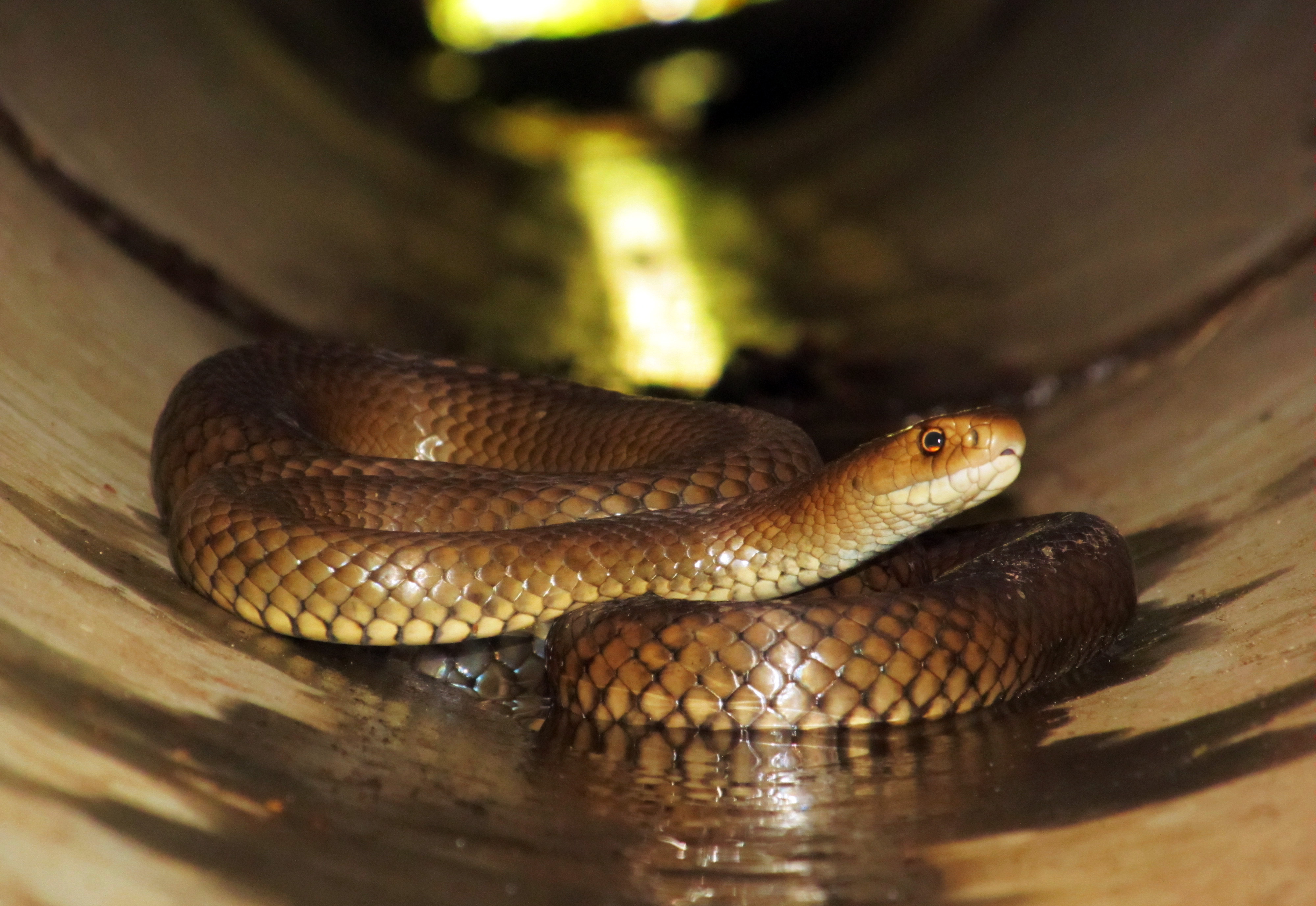
7. **Eastern Brown Snake**Australia, a continent renowned for its highly venomous creatures, is home to the Eastern Brown Snake (*Pseudonaja textilis*), a species that undeniably heads the list of threats to human life in the region. While the inland taipan boasts the most potent venom, the Eastern Brown Snake presents a far greater menace due to its widespread presence, aggressive temperament, and the frequency of its encounters with people.
The Eastern Brown Snake is commonly found in populated areas, unlike its more reclusive cousin, the inland taipan. These fast and aggressive snakes feed predominantly on small mammals, which naturally draws them to environments rich in mice or rats, including urban and agricultural zones. This habitat overlap significantly increases the chances of human interaction and, consequently, snakebite incidents.
Its venom, specifically designed to rapidly immobilize and kill small mammals, is equally devastating to humans. While the numbers of fatalities, averaging around two per year in Australia, might seem low, this is largely thanks to the advent of effective antivenom. Historically, prior to antivenom, approximately 80% of envenomations would have resulted in death, often occurring as quickly as within an hour, highlighting the extreme lethality of its bite.
The Eastern Brown Snake is responsible for the majority of snakebite deaths in Australia. Its venom can cause convulsions, renal failure, paralysis, and cardiac arrest. If someone is suspected of being bitten, remaining as still as possible is strongly recommended to limit the spread of the venom, a testament to the rapid and systemic effects of its toxins.
The true danger of the Eastern Brown Snake is not just its potent venom but its combination of speed, aggression, and commonality in human-inhabited areas. Its readiness to defend itself, coupled with its highly effective venom, makes it one of the most dangerous snakes, despite its geographical limitation to Australia.
Read more about: Backyard Guardians: A National Geographic Guide to 15 Non-Venomous Snakes You Might Encounter

8. **Saw-Scaled Viper**The Saw-Scaled Viper (*Echis carinatus*) is another critical member of India’s “Big Four” snakes and is responsible for countless thousands of deaths across southern Asia. Despite its small stature, usually less than 30 inches (80 cm) in length, this snake’s impact is magnified by its sheer abundance, making it one of the most common snakes throughout India and Sri Lanka and a constant threat to agricultural workers.
This snake is exceptionally dangerous due to a combination of factors: its powerful venom, incredibly fast strike, and notoriously bad temper. These traits collectively contribute to the Saw-Scaled Viper being responsible for an estimated 5,000 fatalities annually in India alone. When extrapolated across its vast range, which extends throughout the Indian subcontinent, the Middle East, and parts of Africa, it emerges as one of the planet’s most prolific human killers.
A close relative, the ocellated carpet viper (*Echis ocellatus*), also known as the African saw-scaled viper, is often cited as Africa’s deadliest snake, potentially causing up to 20,000 deaths each year. This highlights the widespread danger posed by the *Echis* genus across different continents.
Being bitten by a Saw-Scaled Viper is an experience to be avoided at all costs, even for those lucky enough to survive. These snakes rarely deliver ‘dry bites,’ meaning a significant amount of venom is usually injected. The venom, a powerful hemotoxin, is known to cause excruciating pain and a cascade of unpleasant symptoms, starting with swelling that can spread far up the affected limb, accompanied by blistering at the bite site.
The more severe, systemic effects of the venom typically manifest a few hours later, including internal hemorrhaging, with blood potentially emerging from every orifice. This widespread bleeding can lead directly to fatal shock or indirectly through acute kidney failure, underscoring the venom’s devastating assault on the body’s systems. Antivenoms are essential for survival, yet the mortality rate is still thought to be around 20%, emphasizing the venom’s potency and the critical need for rapid treatment.

9. **Black Mamba**The Black Mamba (*Dendroaspis polylepis*) stands as one of Africa’s most fearsome snakes, a reputation earned through a potent combination of its immense size, remarkable speed, and highly aggressive nature. Growing up to 4 meters (13 feet) long and capable of moving at speeds of 11 kph (6.8 mph), this serpent is a truly formidable predator. When it decides to attack, the mamba can strike with incredible speed and over a considerable distance, frequently delivering multiple bites. These characteristics collectively make the Black Mamba arguably the deadliest snake in the world within its habitat.
The only reason the Black Mamba does not top the global list of deadliest snakes is its more restricted geographical distribution compared to species found in more densely populated regions of the developing world. However, in every country where it is indigenous, the Black Mamba commands the highest mortality rate among all snakes. For instance, in South Africa, it accounts for less than 1% of all snakebites but tragically causes the most fatalities.
These stark statistics are a testament to the sheer potency of the Black Mamba’s venom. With an LD50 of approximately 0.28 mg/kg, a fully envenoming bite from this snake could theoretically claim the lives of up to ten people. The venom itself is a fast-acting neurotoxin, capable of immobilizing a mouse in under five minutes and a human in as little as 45 minutes, with death typically following within 7 to 15 hours due to respiratory failure.
Intriguingly, a bite from a Black Mamba can be deceptively painless. One tragic account tells of a 28-year-old British student in South Africa who, after handling a mamba, did not even realize he had been bitten. Yet, an hour later, he was dead. While rare instances of individuals surviving Black Mamba bites without antivenom exist, these are considered fortunate exceptions. Without prompt medical treatment, the chances of survival after a bite are extremely slim.
The Black Mamba inhabits rocky savanna environments, often found on the ground and seemingly favoring termite mounds. Ranging in color from gray to dark brown, its name is derived from the blackened interior of its mouth, a chilling sight when the snake feels threatened. Despite its aggressive reputation, definitive proof of unprovoked attacks on humans remains elusive, yet its sheer potency and defensive behavior contribute significantly to the fear it instills.
Read more about: The Haunting Echoes: Unveiling the Final Written Words of Beloved Celebrities

10. **Russell’s Viper**Crowning our list as the world’s most dangerous snake is the Russell’s Viper (*Daboia russelii*). This formidable member of India’s “Big 4” claims more human lives than any other animal (excluding humans themselves), with a staggering 25,000 fatalities annually in India alone. When considering its widespread presence across the Indian subcontinent and various subspecies, the global figure becomes even more alarming, solidifying its position as a paramount public health threat.
While the Russell’s Viper’s venom is incredibly powerful, it is slightly less potent than some others on this list in terms of sheer toxicity. However, it compensates for any perceived lack of potency with the sheer volume of venom it delivers; an adult snake carries enough to kill approximately 20 people. Beyond its lethal potential, the bite of a Russell’s Viper is described as excruciatingly painful, an immediate and clear signal of a dangerous encounter. Unlike the super-fast acting neurotoxins of snakes like the Black Mamba, the Russell’s Viper’s venom is a hemotoxin, meticulously destroying the body’s tissues.
A bite typically begins with intense pain and swelling at the site, leaving no doubt about the envenomation. Within half an hour, victims may experience bleeding from the gums, in the urine, or when coughing. Soon after, the local tissue around the bite can be affected by blistering and necrosis of nearby muscles. Swelling and discoloration spread rapidly up the affected limb, and in severe cases, can reach the trunk within a couple of hours, showcasing the venom’s destructive progression.
Over the subsequent one to fourteen days, complications arising from the venom’s destructive effects on the body’s organs frequently prove fatal. Common causes of death include acute kidney failure, brain hemorrhage, severe blood poisoning, or cardiovascular failure. Although an effective antivenom exists, it must be administered swiftly to mitigate complications and halt the venom’s destructive course. Even with timely treatment, survivors often endure severe pain for up to a month and can develop long-term problems such as hypopituitarism, where hormone production is affected, highlighting the profound and lasting impact of this snake’s bite.
What truly elevates the Russell’s Viper to the top of our deadliest list, beyond its potent venom, are its habitat and temperament. With a diet primarily consisting of rodents like rats and mice, this viper is frequently drawn to towns and cities, placing it in dangerously close contact with human populations. It is also notoriously bad-tempered and aggressive; typically slow and sluggish when undisturbed, a confronted Russell’s Viper transforms into an anything-but-calm adversary. Its hiss, reputedly louder than any other snake, signals its readiness to coil into a series of S-shapes, poised for a lightning-fast strike with enough power to lift itself completely off the ground. Given the horrific record of the Russell’s Viper, its relatively understated presence in popular culture, compared to creatures like the great white shark, only underscores the devastating impact it has in the rural backwaters of southern Asia.
As our exploration concludes, it’s clear that the world of snakes, particularly its deadliest inhabitants, is far more complex than simple venom potency. It’s a challenging dance of biology, environment, and human interaction. Understanding these factors, from a snake’s hunting strategy to the accessibility of medical care, is paramount in truly grasping why certain species are responsible for such widespread devastation. This knowledge is not just about identifying danger; it’s about appreciating the intricate balance of nature and the urgent need for global health initiatives to combat the silent, yet staggering, toll of snakebite envenoming. Our vigilance and respect for these creatures, coupled with scientific advancement, remain our best defenses against these formidable and often misunderstood inhabitants of our planet.