The world of automotive design is a fascinating place, a canvas where engineers and artists alike strive to blend functionality with breathtaking aesthetics. We see sleek lines, powerful stances, and innovations that make us dream of the open road. But, let’s be real, for every gorgeous supercar or elegant sedan, there’s at least one creation that makes you scratch your head and wonder, “What were they thinking?” Beauty, they say, is in the eye of the beholder, but when it comes to certain cars, that beholder often needs an eye exam.
Enter the internet, a place where opinions are as plentiful as memes, and collective judgment can be swift and merciless. When it comes to cars that missed the mark – and we mean *really* missed it – the online community has a wonderfully brutal way of crowning its champions of questionable design. These aren’t just cars that are “a bit bland”; these are the ones that provoke genuine gasps, bewildered stares, and a unanimous “Yikes!” from car enthusiasts and casual observers alike.
So, buckle up, buttercups! We’re about to take a deep dive into the internet’s most controversial automotive creations. We’ve scoured the depths of online forums, comment sections, and social media debates to bring you the definitive list of the Top 15 Ugliest Cars of All Time. Prepare for a journey filled with bizarre proportions, questionable styling cues, and designs so outlandish they might just make you appreciate your own ride a little bit more. Let’s get this show on the road – or, perhaps, off it.
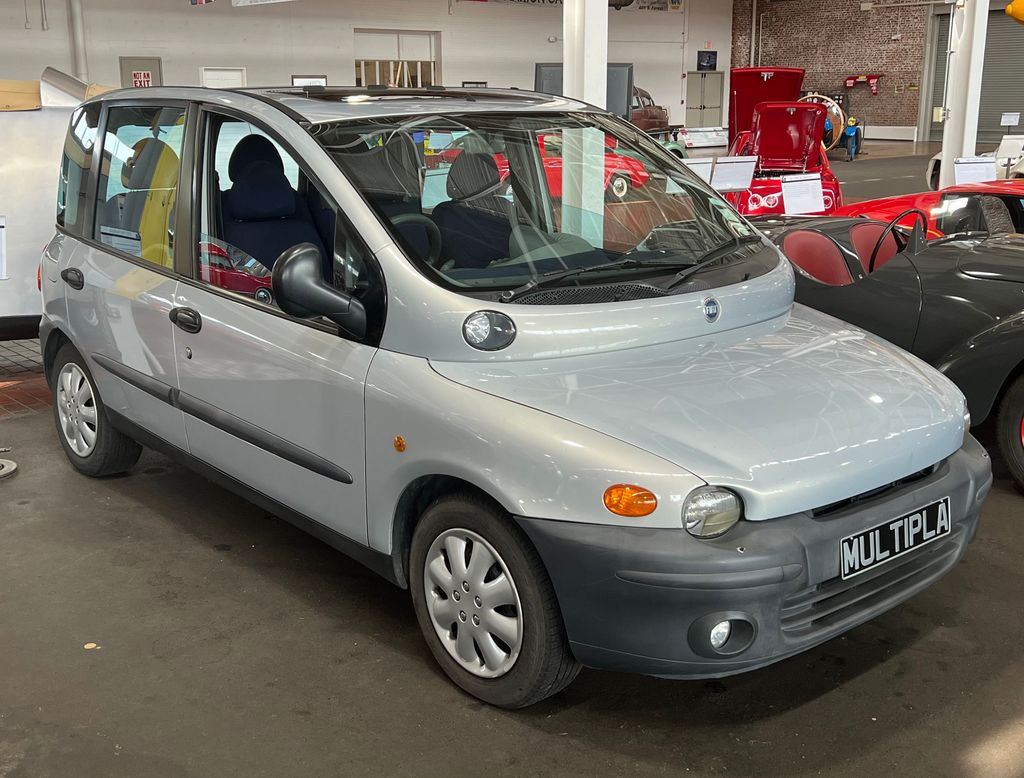
1. **1998 Fiat Multipla**Oh, the Fiat Multipla. Where do we even begin with this one? This vehicle appears to have been designed during a fever dream after consuming expired Italian cheese, and honestly, that description feels almost too kind. It’s a car that doesn’t just push the boundaries of design; it obliterates them with a gleeful disregard for conventional aesthetics, leaving a trail of confused glances in its wake.
The Multipla’s most striking feature, and arguably its most infamous, is its bizarre double-stacked front end. It genuinely looks like a car that grew a second, tumor-like growth emerging from its hood, a design choice that baffled nearly everyone upon its release. This optical illusion creates an incredibly awkward profile, making it challenging to tell where one design element ends and another, equally strange, begins. It’s a visual puzzle that very few have ever managed to solve with a compliment.
Then there’s the bulbous windshield, which seems to inflate aggressively outward, paired with a bug-eyed headlight arrangement that gives the Multipla the appearance of a mutant frog that escaped from a nuclear power plant. It’s as if Fiat’s designers were challenged to create something that would make small children cry, and against all odds, they succeeded beyond their wildest expectations, cementing its place in the pantheon of automotive “oops” moments.
Read more about: The 14 Most Embarrassing Automotive Design Flops That Taught the Industry Hard Lessons
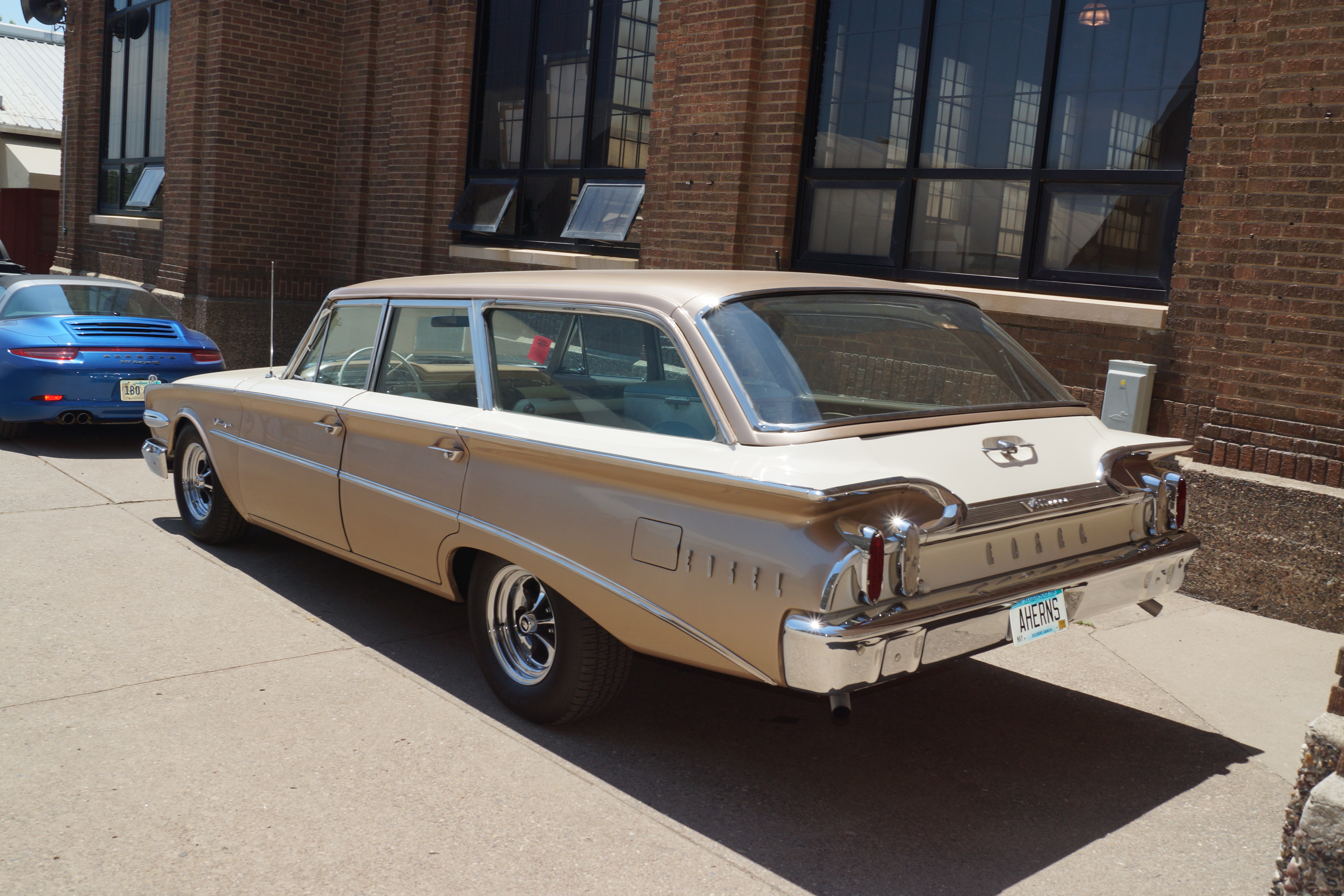
2. **1960 Edsel Villager**Ah, the Edsel Villager. The 1960 model represents Detroit’s last desperate gasp to salvage the Edsel disaster, and in a twist only achievable by true automotive missteps, they somehow made it even worse. The Edsel brand itself was already a legendary flop, a cautionary tale in marketing gone awry, but this wagon was its grand, ignominious finale, a final, bewildered bow from the stage of automotive history.
While Ford did attempt to tone down the infamous “horse collar” grille that had plagued earlier Edsels, they seemingly compensated by turning the rear end into a chrome-drenched modern art installation gone wrong. It’s a chaotic symphony of metallic accents that doesn’t quite harmonize. Those rocket-inspired taillights, in particular, look like they were stolen directly from a carnival ride, adding a layer of whimsical tackiness that clashes violently with the car’s otherwise sober demeanor.
And let’s not forget the side trim. It appears to be trying desperately to escape the vehicle entirely, as if the Edsel’s aesthetic gravity was too much for it to bear. Even with a more subdued front end than its predecessors, this final-year wagon still manages to embody everything that made Americans collectively say “thanks, but no thanks” to Ford’s ambitious folly. It’s like watching the last episode of a TV show that got canceled for good reason, leaving you with more questions than answers.
Read more about: Design Disaster: The 9 Most Hideous Ford Sedans That Should Have Never Left the Drawing Board
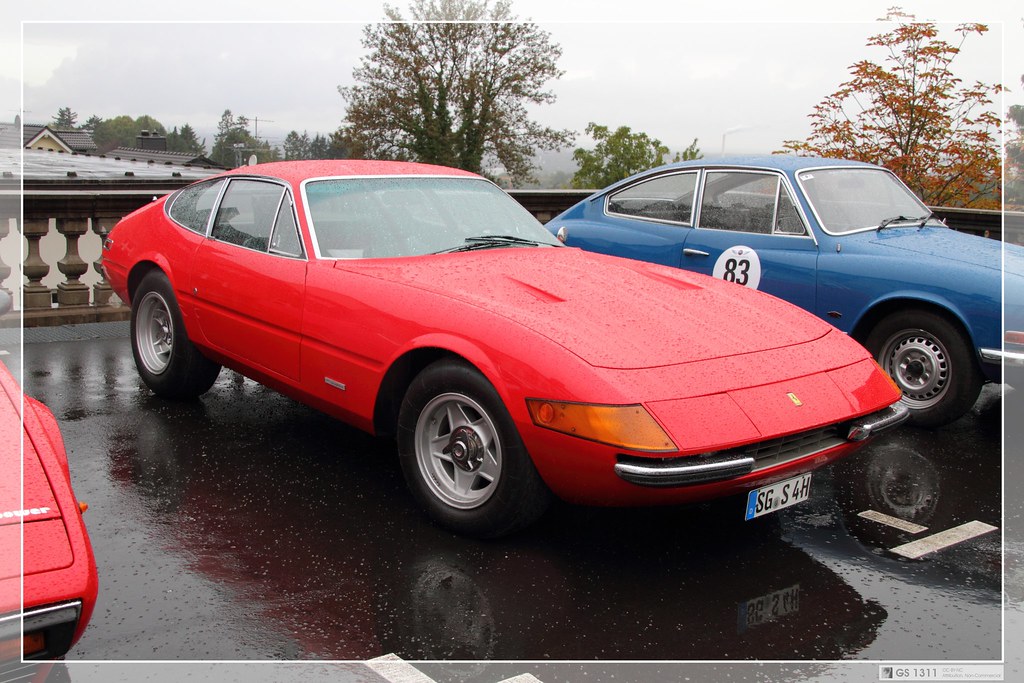
3. **1969 Ferrari 365 GTB/4 Daytona Shooting Brake**Now, this one is truly special, a masterpiece of Italian automotive elegance subjected to a particularly perplexing transformation. Feast your eyes upon the automotive equivalent of giving Michelangelo’s David a mullet. Seriously, someone took one of Ferrari’s most elegant designs, the iconic 365 GTB/4 Daytona, and decided what it *really* needed was a greenhouse extension. The result? A shooting brake that looks like it was designed during a heated argument between a passionate Italian sports car designer and a pragmatic, perhaps slightly unhinged, British station wagon enthusiast.
The audacity of it is almost admirable, yet the execution is undeniably jarring. The addition of that elongated rear glass installation has all the subtlety of a crystal palace bolted onto a missile, completely disrupting the Daytona’s fluid lines and inherent grace. It’s a stark, almost brutal, reminder that even Italian design mastery, a benchmark for beauty and speed, has its limits when someone decides to push the envelope in the wrong direction.
One can only imagine Enzo Ferrari’s reaction upon seeing this particular interpretation of his beloved creation. It was probably the closest the automotive world has ever come to witnessing an Italian giving up on hand gestures entirely, perhaps simply collapsing in a heap of bewildered silence. It remains a testament to the fact that sometimes, even the most legendary cars can fall victim to design choices that leave everyone collectively scratching their heads and reaching for a strong espresso.
Car Model Information: 2024 Audi Q5 45 S line Premium
Name: Ferrari 365 GTB/4,and GTS/4 “Daytona”
Caption: 1973 Ferrari 365 GTB/4
Manufacturer: Ferrari
Production: GTB/4: 1968–1973 (1,284 produced),GTS/4: 1971–1973 (122 produced)
Assembly: Maranello
Designer: Leonardo Fioravanti (engineer)
Class: Grand tourer
BodyStyle: berlinetta,Roadster (automobile)
Layout: Front-engine, rear-wheel-drive layout
Engine: Ferrari Colombo engine,V12 engine
Transmission: Manual transmission
Wheelbase: 2400 mm
Abbr: on (GTB/4, dry)
Length: 4425 mm
Width: 1760 mm
Height: 1245 mm
Weight: 1200 kg
Predecessor: Ferrari 275#275 GTB/4,Ferrari 365#365 GTC/GTS
Successor: Ferrari Berlinetta Boxer,Ferrari 550 Maranello
Sp: uk
Categories: 1970s cars, All articles with unsourced statements, Articles with hAudio microformats, Articles with short description, Articles with unsourced statements from April 2021
Summary: The Ferrari Daytona is a two-seat grand tourer produced by Ferrari from 1968 to 1973. It was introduced at the Paris Auto Salon in 1968 to replace the 275 GTB/4, and featured the 275’s Colombo V12 with a larger cylinder bore for 4,390 cc (4.4 L; 267.9 cu in). It was offered in berlinetta and spyder forms. The car came in two variants: the 365 GTB/4 coupe, and the 365 GTS/4 convertible.
The Daytona was succeeded by the mid-engined 365 GT4 Berlinetta Boxer in 1973.
Get more information about: Ferrari Daytona
Buying a high-performing used car >>>
Brand: Ferrari Model: 365 GTB/4 Daytona
Price: $37,990 Mileage: 15,088 mi.
Read more about: Golfer Ian Poulter’s Legendary $25 Million Car Collection: A Deep Dive into His Elite Ferraris and High-Performance Machines

4. **1989 Citroën BX**The Citroën BX is a car that makes a very specific kind of statement, and that statement often sounds like a ruler-obsessed geometry teacher designed it during an existential crisis. If you appreciate angles, flat surfaces, and a general lack of anything organic or flowing, then perhaps the BX is your automotive soulmate. For the rest of us, it’s a curious case of design where rigid precision seems to have overshadowed all other considerations, resulting in a shape that is both unique and unsettling.
Its collection of harsh angles and flat surfaces makes it appear as though someone attempted to origami-fold a car out of a single sheet of metal but unfortunately gave up halfway through the process. The lines don’t quite blend; they meet with an abruptness that’s almost confrontational. It’s an aesthetic that sacrifices warmth and visual harmony for a stark, almost architectural, presence that often feels more utilitarian than artistic, even for a family car.
The interior, perhaps unsurprisingly, follows the exact same design philosophy, featuring a dashboard that looks like it was directly inspired by a broken calculator. Even by Citroën’s famously eccentric standards—a company renowned for its willingness to embrace weird and wonderful designs—the BX manages to look like it’s trying a bit too hard to be different. It often achieves all the visual charm of a mail sorting facility, a place built for function, not for delight, which unfortunately translates to its exterior.
Read more about: Unearthing Hidden Gems: 13 Forgotten Hot Hatches from the ’70s, ’80s, and ’90s That Still Go Like Hell

5. **1947 Crosley CC**Behold the 1947 Crosley CC, a pint-sized paradox that serves as undeniable proof that good things do not always come in small packages. This miniature monstrosity looks uncannily like a nervous child’s very first attempt at drawing a car, complete with proportions that seem to defy the laws of physics. It somehow manages to appear both awkwardly too tall and bewilderingly too narrow at the very same time, creating a silhouette that is utterly unique and, unfortunately, quite ungainly.
In post-war America, where the prevailing sentiment was decidedly “bigger is better” and automotive giants were rolling out increasingly substantial vehicles, the Crosley CC had all the presence of a mail-order toy that arrived slightly dented. It struggled to command attention, often looking out of place alongside its more imposing contemporaries, a tiny, almost apologetic presence on the bustling American roads of the era. Its diminutive size, while intended for economy, simply highlighted its aesthetic shortcomings.
It’s as if someone attempted to describe the entire concept of a “car” to a designer who had only ever seen vehicles through a keyhole, then, to add insult to injury, told them to make it even smaller. The end result is less “economy car” and much more an “economy of style,” where every design choice seems to have been made not for visual appeal, but purely to minimize material and maximize confusion. The Crosley CC stands as a charming, if aesthetically challenged, relic of a bygone era.
Read more about: America’s Automotive Lowlights: A Deep Dive into the Absolute Worst Cars Ever to Roll Off the Production Line
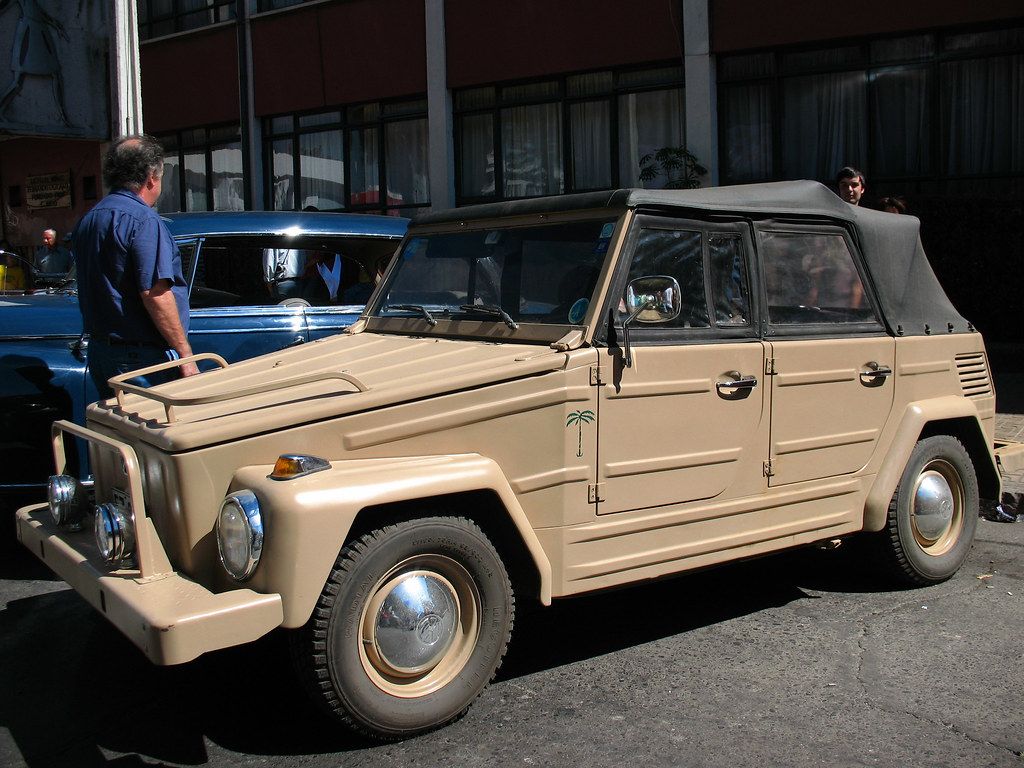
6. **1973 Volkswagen Thing**Ah, the Volkswagen Thing. This is a car that serves as irrefutable proof that Germans can, occasionally, possess a truly terrible sense of humor, or at the very least, a wildly unconventional approach to automotive design. Much like the humble building block, it looks like the result of a child’s first attempt at drawing a car using nothing but a ruler and a steadfast refusal to incorporate any curves. This automotive brick somehow manages to make even a cardboard box seem aerodynamic by comparison, a feat of anti-aerodynamics if ever there was one.
With its perfectly vertical windshield and pancake-flat body panels, the Thing appears to have been designed by someone who firmly believed that “military surplus meets beach buggy” was not just a viable concept, but a winning combination. The aesthetic is relentlessly utilitarian, stripped down to an almost aggressive minimalism that leaves very little to the imagination or, indeed, to visual pleasure. It’s a vehicle that shouts “function over form” so loudly, it actually hurts the eyes.
Perhaps the most telling aspect of its design philosophy is its name. Volkswagen literally named it “Thing,” because, one can only assume, even *they* couldn’t quite figure out what this geometric disaster was truly supposed to be. It’s a testament to the fact that sometimes, in the pursuit of quirky functionality, a car can transcend mere “unattractive” and enter the hallowed halls of “so bad, it’s iconic,” though perhaps not in the way its creators intended.
Car Model Information: 1974 Volkswagen Thing Shorty Custom
Caption: Civil version with military shrub removers and custom seats
Name: Volkswagen Type 181/182
Manufacturer: Volkswagen
Aka: Volkswagen Type 181 (LHD) Volkswagen Type 182 (RHD),Sold as:,Volkswagen Thing (United States),Volkswagen Camat (Indonesia),Volkswagen Safari (Mexico),Volkswagen Trekker (UK),Volkswagen Pescaccia (Italy)
Production: cite book
Assembly: Wolfsburg
Predecessor: Volkswagen Kübelwagen
Successor: Volkswagen Iltis
Class: Military vehicle
BodyStyle: Cabriolet (automobile)
Layout: Rear-engine, rear-wheel drive layout
Engine: Flat-four engine
Transmission: Manual transmission
Wheelbase: 2400 mm
Abbr: on
Length: 3780 mm
Width: 1640 mm
Height: 1620 mm
Weight: 910 kg
Categories: All articles needing additional references, All articles that may contain original research, Articles needing additional references from August 2019, Articles that may contain original research from April 2017, Articles with short description
Summary: The Volkswagen Type 181 is a two-wheel drive, four-door convertible, manufactured and marketed by Volkswagen from 1968 until 1983. Originally developed for the West German Army, the Type 181 also entered the civilian market as the Kurierwagen (“courier car”) in West Germany, the Trekker (RHD Type 182) in the United Kingdom, the Thing in the United States and Canada (1973–74), the Safari in Mexico and South America, and Pescaccia in Italy. Civilian sales ended after model year 1980.
Manufactured in Wolfsburg, West Germany (1968–1974), Hannover, West Germany (1974–1975), Emden, West Germany (1975–1978), Puebla, Mexico (1970–1980), and Jakarta, Indonesia (1972–1980), the Type 181 shared its mechanicals with Volkswagen’s Type 1 (Beetle) and the pre-1968 Volkswagen Microbus, its floor pan with the Type 1 Karmann Ghia, and its concept with the company’s Kübelwagen, which had been used by the German military during World War II.
The overall configuration loosely recalls the chic, open beach cars of the 1960s, including the BMC Mini Moke, Fiat Ghia Jolly, Renault Rodeo, Citroën Méhari and Meyers Manx. All four doors were removable and interchangeable, the windshield folded flat, and the convertible roof could be removed for al fresco driving. The spartan interior featured vinyl covered bucket seats, painted sheet metal, drain holes and perforated rubber mats. A fiberglass hardtop and trunk-mounted auxiliary heater were optional.
Get more information about: Volkswagen Type 181
Buying a high-performing used car >>>
Brand: Volkswagen Model: Thing
Price: $12,991 Mileage: 45,132 mi.
Read more about: The Restoration Trap: 10 Classic Collector Models That Could Cost You More Than Their Worth
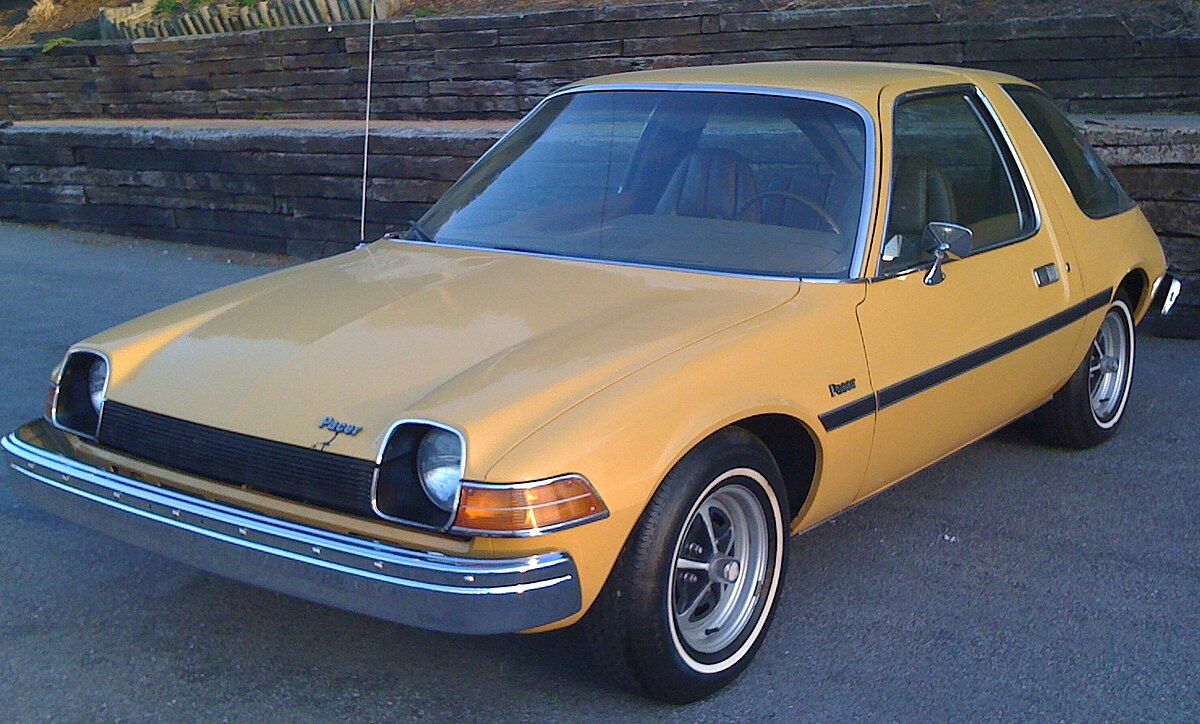
7. **1975 AMC Pacer**Ah, the AMC Pacer… the car that serves as a peculiar historical artifact, proving quite conclusively that even the famously experimental 1970s drug culture had its discernible limits when it came to automotive design. Marketed with the ambitious tagline “the first wide small car,” it looks far more like what happens when you accidentally microwave a regular car for a few minutes too long, resulting in a bloated, distended, and frankly bizarre silhouette that immediately catches the eye for all the wrong reasons.
With its iconic fishbowl windows and genuinely bloated proportions, the Pacer appears to be suffering from some form of severe automotive water retention, looking perpetually swollen and slightly uncomfortable in its own skin. The sheer amount of glass creates a rather unsettling effect, as if the car is desperately trying to show you *everything* inside, whether you asked for it or not, leading to an odd lack of privacy for occupants.
AMC’s designers championed its asymmetrical doors as a groundbreaking innovation – the passenger door being longer than the driver’s door for easier rear access – but to many observers, it simply made the car look like it was permanently having a stroke, an unsettling asymmetry that further cemented its oddball status.
The interior, already known for being extremely glass-heavy, meant that driving one in summer was akin to being trapped in a greenhouse during a solar flare, a searing experience for both the eyes and the skin. While the ’70s gifted us with plenty of questionable designs, the Pacer undeniably stands out as a special, unforgettably awful kind of automotive tragedy.
Alright, car fanatics and design disbelievers, if you thought the first seven picks were rough, hold onto your hubcaps, because our cringe-worthy journey through automotive design’s deepest valleys is far from over! We’re continuing our mission to celebrate the glorious failures and unforgettable aesthetic blunders that the internet has collectively deemed the absolute worst. From insect-inspired oddities to vehicles that look like they’ve been through a washing machine on the wrong setting, these next eight contenders are ready to challenge everything you thought you knew about ‘bad’ car design. Prepare for more bewildered stares and head-scratching moments as we roll out the rest of the list.
Read more about: From Flop to Coveted Classic: The Unlikely Rise of 12 Automotive Underdogs
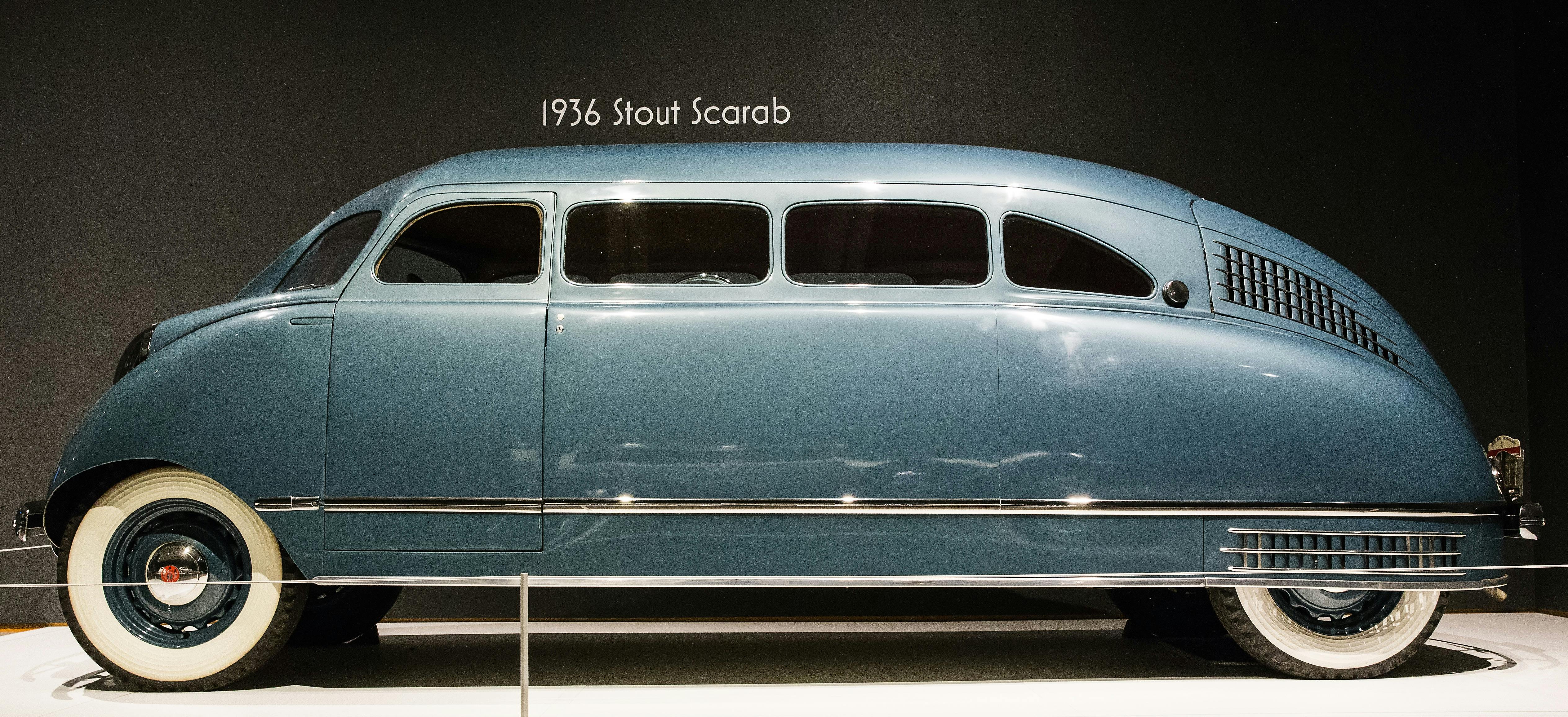
8. **1937 Stout Scarab**The 1937 Stout Scarab rolls onto our list looking like it emerged from a very specific, very strange dream where a cockroach somehow fell in love with a Victorian parlor room. This art deco nightmare on wheels genuinely managed to marry the sleek (or, well, *less angular*) shape of an insect with the interior sensibilities that scream “your great-grandmother’s sitting room.” It’s an unlikely fusion that, shall we say, definitely left a lasting impression, though perhaps not the one William Bushnell Stout was aiming for.
With its prominent bug-eyed headlights and that undeniably rounded, beetle-like shell, the Scarab often seems unsure whether its true calling is to scurry mysteriously under your furniture or to elegantly serve high tea to bewildered passengers. This identity crisis on wheels, featuring a rear engine and innovative interior packaging, was way ahead of its time functionally. However, it did so with all the aesthetic grace of a particularly flamboyant dung beetle attempting to navigate a black-tie gala.
It’s almost a cruel twist of fate that the Scarab pioneered the basic shape of the modern minivan, a design revolution that eventually led to far more palatable family haulers. But even in the gloriously streamlined 1930s, an era known for pushing design envelopes, the Scarab’s face was one that only its very proud, very avant-garde designer could truly love. It was a bold statement, but perhaps one best kept in the abstract.
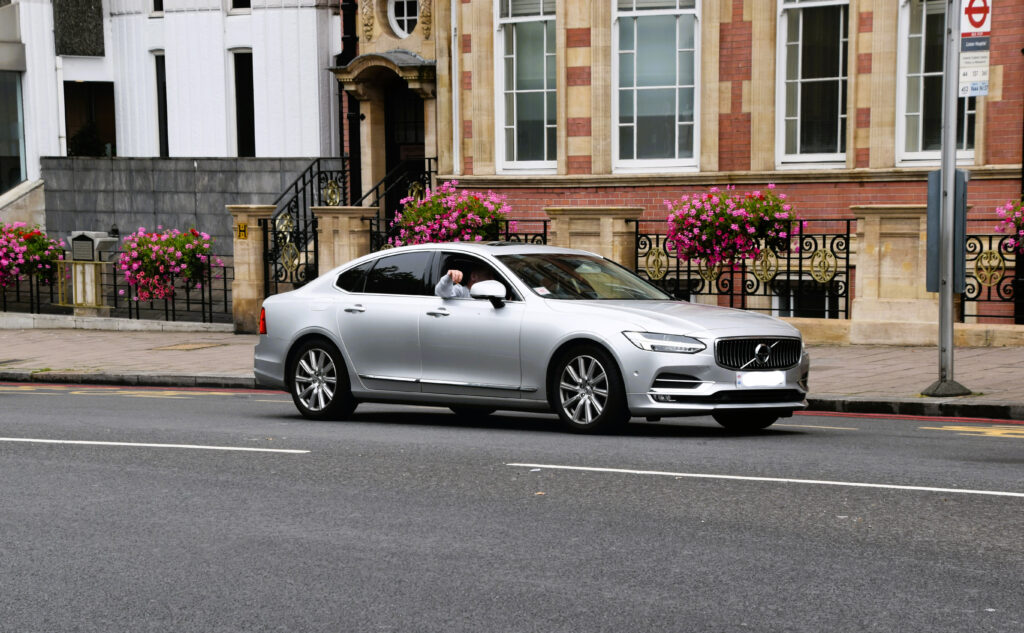
9. **1998 Mitsuoka Ryoga**Oh, the Mitsuoka Ryoga. This car isn’t just an automotive oddity; it’s a full-blown identity crisis on wheels, a glorious mashup that looks like a Jaguar Mark 2 and a Nissan Sunny had an illicit, slightly awkward affair in a dimly lit back-alley chop shop. It’s the vehicular embodiment of the phrase “business in the back, party in the front,” if by ‘party’ you mean a deeply melancholic attempt at British aristocracy desperately clinging to its last shreds of dignity.
Just look at that chrome grille, isn’t it trying just a *little* too hard to scream “royal heritage” while simultaneously being painfully aware that its actual roots lie firmly in a humble, perfectly respectable Japanese economy car? It’s like wearing a crown with sweatpants; the effort is there, but the execution is just… confusing. This Ryoga is a masterclass in trying to be something it’s emphatically not, and failing spectacularly in the most endearing way possible.
The transition from that proudly ‘classic’ front end to the utterly mundane, utterly 1990s sedan rear is about as smooth as a teenager’s very first attempt at mixing cocktails – jarring, a little chunky, and leaving everyone involved with a puzzled expression. It stands as a powerful reminder that while some things are better left unsaid, some design concepts are definitely better left on the drawing board, or at least in a separate garage.
10. **1972 Reliant Regal Supervan**Prepare yourselves for the automotive equivalent of a garden shed deciding to sprout wheels and boldly identify as a delivery vehicle: the 1972 Reliant Regal Supervan, famously known to many as the Reliant Robin. This particular three-wheeled catastrophe appears to have been meticulously designed by someone who firmly believed that ‘stability’ was just a fancy, utterly unnecessary word, perhaps only suitable for those boring four-wheeled peasants.
With its notoriously narrow front end and a body that seems perpetually top-heavy, the Supervan looks as though it’s bracing itself to topple over at the mere *thought* of a corner, or perhaps a strong gust of wind. It’s the automotive equivalent of trying to delicately balance an egg on a toothpick, then attempting to race it down a bumpy road. Every journey in this vehicle feels less like a commute and more like an extreme sport, an accidental tightrope walk on tarmac.
You have to hand it to the British for creating a vehicle so uniquely perilous that even driving it in a perfectly straight line somehow manages to feel like an utterly thrilling adventure. The Reliant Regal Supervan has undeniably earned its place in the halls of automotive infamy, proving that sometimes, less *is* less, especially when it comes to the number of wheels firmly planted on the ground.
Car Model Information: 2024 Honda Civic LX
Name: Reliant Regal
Caption: 1956 Reliant Regal (Mk III)
Manufacturer: Reliant Motors
Production: 1952–1973
Assembly: Tamworth, Staffordshire
Class: City car
Layout: Front-engine, rear-wheel-drive layout
Wheelbase: 1931 mm
Abbr: on
Length: 3429 mm
Width: 1486 mm
Height: 1448 mm
Weight: 445 kg
Predecessor: Reliant Regent
Successor: Reliant Robin
Sp: uk
Categories: All Wikipedia articles written in British English, All articles needing additional references, Articles needing additional references from March 2021, Articles with short description, CS1 maint: location missing publisher
Summary: The Reliant Regal is a small three-wheeled car and van that was manufactured from 1952 to 1973 by the Reliant Motor Company in Tamworth, England, replacing the earlier Reliant Regent three-wheeled cyclecar van which had its origins in a design bought by Reliant from the Raleigh Bicycle Company. As a three-wheeled vehicle having a lightweight (under 7 cwt, 355.6 kg) construction, under UK law it is considered a “tricycle” and can be driven on a full (class A) motorcycle licence. In 1962, with the release of the Reliant Regal 3/25, van and estate versions with a side-hinged rear door were marketed as the Reliant Supervan.
Get more information about: Reliant Regal
Buying a high-performing used car >>>
Brand: Reliant Model: Regal Supervan
Price: $25,547 Mileage: 18,825 mi.

11. **2001 Pontiac Aztek**Ah, the 2001 Pontiac Aztek. If there’s one car that has consistently topped “ugliest cars” lists for the entire 21st century, it’s this glorious, unmitigated disaster. It looks less like a cohesive design and more like it was conceived during a particularly chaotic committee meeting, where a group of blindfolded executives threw random car parts at a whiteboard, and then someone said, “Yeah, let’s build *that*.”
Its proportions are not just ‘off’; they’re a full-on affront to visual harmony, a grotesque collection of bizarre plastic cladding and mismatched angles. The Aztek genuinely appears as if two entirely different cars, perhaps a minivan and a pickup truck, had a rather unfortunate head-on collision and then somehow fused together into one singularly ungainly, utterly bewildered mess. It’s a Frankenstein’s monster of automotive design, and it’s not afraid to show it.
Even the legendary Walter White, in his iconic role on *Breaking Bad*, couldn’t manage to make this vehicular tragedy look cool, despite his best efforts to make it fit his initial desperate suburban dad persona. If anything, the Aztek perfectly underscored his character’s early struggles, becoming an almost perfect metallic metaphor for a life spiraling out of control. It’s a rare car that’s so bad, it actually enhances the narrative around it.
The Aztek didn’t just break the established rules of automotive design; it performed a theatrical, dramatic smashing of them. It then meticulously swept up all the shattered pieces, and with a puzzling dedication to chaos, painstakingly reassembled them in the most aggressively wrong configuration imaginable. A truly unforgettable entry, for all the wrong, beautiful reasons.
Car Model Information: 2003 Pontiac Aztek Base Fwd 4dr SUV
Name: Pontiac Aztek
Manufacturer: General Motors
Production: July 2000 – December 2004
Assembly: Ramos Arizpe
Designer: Tom Peters (chief designer: 1997)
Class: Mid-size crossover SUV
BodyStyle: SUV
Platform: GM U platform
Related: Buick Rendezvous
Layout: Front-engine, front-wheel-drive layout
Engine: General Motors 60° V6 engine#LA1,V6
Transmission: GM 4T65-E transmission,Automatic transmission
Wheelbase: 108.3 in (2,751 mm)
Length: 182.1 in (4,625 mm)
Width: 73.7 in (1,872 mm)
Height: 66.7 in (1,694 mm)
Weight: 3,779–4,043 lb (1,714–1,834 kg)
Predecessor: Pontiac Sunrunner
Successor: Pontiac Torrent
ModelYears: 2001–2005
Categories: All-wheel-drive vehicles, All articles needing additional references, All articles with unsourced statements, Articles needing additional references from October 2013, Articles with short description
Summary: The Pontiac Aztek is a mid-size crossover SUV marketed by General Motors introduced in 2000 for the model years 2001 through 2005. As a four-door crossover with front-wheel drive and optional all-wheel drive, the Aztek featured a four-speed automatic transmission with a V6 engine. Marketed by Pontiac as a “sport recreational vehicle,” the Aztek used a shortened platform shared with GM’s minivans (e.g., the Pontiac Montana) featuring 94 cubic feet of cargo room with its rear seats removed. The design employed conventional rear outswing doors rather than sliding doors, and a split rear tailgate, the lower section formed with seat indentations and cupholders. Other features included a front center console that doubled as a removable cooler, optional rear stereo controls in the cargo area, optional sliding cargo floor with grocery compartments, and optional camping package with an attachable tent and air mattress.
Get more information about: Pontiac Aztek
Buying a high-performing used car >>>
Brand: Pontiac Model: Aztek
Price: $1,499 Mileage: 157,677 mi.
Read more about: From Flop to Coveted Classic: The Unlikely Rise of 12 Automotive Underdogs

12. **1961 Citroën Ami**The 1961 Citroën Ami is a car that makes you wonder if its designers had only ever seen other vehicles through a heavily distorted funhouse mirror. There’s an undeniable charm to Citroën’s eccentricities, but the Ami pushes those boundaries into truly peculiar territory, creating a car that seems to exist in its own unique dimension of oddness. It’s fascinating, sure, but in a way that often makes you just want to politely look away.
Its most instantly recognizable, and frankly unsettling, features are that dramatically reverse-slanted rear window and those bizarrely canted, almost dead-eyed headlights. Together, they conspire to give the Ami the perpetual expression of a perpetually confused pug trying, with earnest futility, to read incredibly fine print in a dimly lit room. It’s less “friendly car” and more “car that’s just been woken up from a very bad dream and is deeply disoriented.”
The name “Ami” literally means “friend” in French, which is a lovely sentiment, but with those unblinking headlamps and that distinctively awkward, hunched stance, it feels less like the pal you invite over and more like the acquaintance who shows up uninvited, immediately makes things weird, and then steadfastly refuses to leave for several hours. The overall effect is definitely less ‘avant-garde design triumph’ and much more ‘someone accidentally sat on the clay model before production began, and everyone involved was too polite (or too French) to dare fix it.’
Read more about: Warning: 11 Collector Cars and Common Restoration Pitfalls That Demand $50K in Immediate Repairs

13. **1957 Aurora Safety Car**Friends, feast your eyes on what might just be the most optimistically hideous attempt at safety-focused design ever brought forth from the depths of a truly unique vision: the 1957 Aurora Safety Car. This metallic-bodied monstrosity doesn’t just push the boundaries of aesthetics; it takes them on a bizarre road trip, arriving at a destination that looks suspiciously like a manatee that inadvertently swallowed a greenhouse whole, then tried to wear it as a hat.
The front end of the Aurora is a particular highlight, or lowlight, depending on your perspective. It’s a face that truly only its designer could love – and even that’s a stretch. With its aggressively bulbous nose, a gaping, maw-like grille that seems ready to devour small children, and those utterly bizarre, raised ‘eyebrows’ hovering over the headlights, the car appears perpetually shocked by its own reflection, constantly surprised by its own peculiar existence.
Adding another layer to this automotive enigma, the Aurora was famously created by a Catholic priest who claimed he received divine inspiration for its design. This fascinating backstory, while adding a certain mystique, also proves that sometimes, even divine intervention might benefit from a good, earthly design consultant, perhaps one with a keen eye for proportion and a less aggressive approach to front-end styling. Holy smokes, indeed!
Car Model Information: 2024 Honda Civic LX
Categories: All articles needing additional references, All articles with unsourced statements, Articles needing additional references from April 2016, Articles with short description, Articles with unsourced statements from April 2016
Summary: Automotive safety is the study and practice of automotive design, construction, equipment and regulation to minimize the occurrence and consequences of traffic collisions involving motor vehicles. Road traffic safety more broadly includes roadway design.
One of the first formal academic studies into improving motor vehicle safety was by Cornell Aeronautical Laboratory of Buffalo, New York. The main conclusion of their extensive report is the crucial importance of seat belts and padded dashboards. However, the primary vector of traffic-related deaths and injuries is the disproportionate mass and velocity of an automobile compared to that of the predominant victim, the pedestrian.
According to the World Health Organization (WHO), 80% of cars sold in the world are not compliant with main safety standards. Only 40 countries have adopted the full set of the seven most important regulations for car safety.
In the United States, a pedestrian is injured by a motor vehicle every 8 minutes, and are 1.5 times more likely than a vehicle’s occupants to be killed in a motor vehicle crash per outing.
Improvements in roadway and motor vehicle designs have steadily reduced injury and death rates in all first world countries. Nevertheless, auto collisions are the leading cause of injury-related deaths, an estimated total of 1.2 million in 2004, or 25% of the total from all causes. Of those killed by autos, nearly two-thirds are pedestrians. Risk compensation theory has been used in arguments against safety devices, regulations and modifications of vehicles despite the efficacy of saving lives.
Coalitions to promote road and automotive safety, such as Together for Safer Roads (TSR), brings together global private sector companies, across industries, to collaborate on improving road safety. TSR brings together members’ knowledge, data, technology, and global networks to focus on five road safety areas that will make an impact globally and within local communities.
The rising trend of autonomous things is largely driven by the move towards the autonomous car, that both addresses the main existing safety issues and creates new issues. The autonomous car is expected to be safer than existing vehicles, by eliminating the single most dangerous element – the driver. The Center for Internet and Society at Stanford Law School claims that “Some ninety percent of motor vehicle crashes are caused at least in part by human error”. But while safety standards like the ISO 26262 specify the required safety, it is still a burden on the industry to demonstrate acceptable safety.
Get more information about: Automotive safety
Buying a high-performing used car >>>
Brand: Aurora Model: Safety Car
Price: $25,547 Mileage: 18,825 mi.
Read more about: The Zenith of Chrome and Power: 15 Legendary Cars That Defined the 1950s Automotive Golden Era

14. **1998 Daihatsu Move**The 1998 Daihatsu Move rolls onto our list looking suspiciously like the unfortunate outcome of someone attempting to photocopy a perfectly regular car at a 75% scale, only to accidentally hit the ‘squish vertically’ button a few times too many. The result is a vehicle with proportions so comically disproportionate, it makes you do a double-take just to make sure your eyes aren’t playing tricks on you.
With its almost impossibly tiny wheels paired with a surprisingly towering, box-like body, the Move presents itself as the automotive equivalent of a determined loaf of bread attempting to stand upright on four very small, very inadequate button mushrooms. It’s a visual paradox, a car that defies conventional beauty and embraces a kind of charming, but undeniably awkward, cuteness.
The front end of the Daihatsu Move often sports an expression of permanent bewilderment, as if the car itself is just as confused about its existence and peculiar styling as we, the onlookers, are. Its proportions are so cartoonishly wrong, so perfectly peculiar, that it seems far more suited to starring in a whimsical children’s anime about talking cars than actually navigating the mundane realities of real roads. It’s the automotive equivalent of wearing platform shoes with a top hat – a brave, if slightly bewildering, fashion choice.
Read more about: Beyond the Usual Suspects: 14 Forgotten Automotive Icons That Were Cooler Than You Think

15. **1949 Nash Airflyte**And finally, our last contender for the internet’s most aesthetically challenged automobiles is the 1949 Nash Airflyte, a car that perfectly embodies what happens when designers take the affectionate (or not-so-affectionate) term “bathtub on wheels” far, far too literally. With its intensely bulbous, distinctly upside-down-bathtub silhouette and those deeply skirted wheels, this rolling soap bubble looks like it’s perpetually holding its breath, perhaps in embarrassment, perhaps just to keep its dignity afloat.
The front end of the Airflyte appears to be caught in a perpetual grimace, as if it’s deeply mortified by its own existence, while its generously rounded posterior affectionately suggests a vehicle that has, perhaps, indulged in one too many extra meals at the local diner. It’s a look that screams comfort, certainly, but also a certain unapologetic girth that commands attention, for better or for worse.
Nash famously championed this distinct, almost submarine-like design as “aerodynamic,” a claim that, honestly, probably generated more snickers and baffled expressions than actual aerodynamic benefits. As this wheeled whale wobbled down the boulevard, the only thing truly floating through the air would have been the collective chuckles of other motorists. The 1949 Nash Airflyte proves that sometimes, going against the grain makes you unforgettable, even if it’s for a reason your designers might not have initially intended.
Well, there you have it, folks! The internet has spoken, and these 15 automotive marvels (or perhaps, *anti*-marvels) have earned their rightful, if slightly embarrassing, place in history. From bulbous behemoths to angular abominations, each one reminds us that design is a wild, unpredictable beast, and sometimes, it delivers a punchline instead of perfection. We hope this hilarious deep dive into the world of truly unforgettable car designs made you appreciate your own ride a little bit more. Now go forth and share your own “ugly car” picks with your friends – because let’s be real, the internet never runs out of opinions, especially when it comes to things that make us all say, “Whoa, what *is* that?”