The digital age, while connecting us in unprecedented ways, has also introduced new perils to our daily lives, particularly when we get behind the wheel. Distracted driving, fueled by the ubiquitous presence of cell phones, has become a pressing safety concern, prompting states across the nation to implement stringent laws. California, ever at the forefront of traffic safety, has continuously evolved its Vehicle Code to combat this dangerous habit, making it one of the most proactive states in addressing phone use while driving, even when a vehicle is simply idling.
For many drivers, the allure of a quick text, a glance at directions, or even a brief call can seem harmless, especially when stopped at a red light or stuck in heavy traffic. However, California’s legal framework considers ‘operating’ a phone while driving, regardless of vehicle motion, as a significant risk to public safety. The consequences of these violations extend far beyond a simple base fine, escalating rapidly with fees, assessments, and the potential for much more severe legal and financial repercussions, especially for commercial drivers who could face civil penalties reaching thousands of dollars.
This in-depth article will navigate California’s intricate laws on cell phone use behind the wheel. We’ll break down the specific regulations, highlight the real costs of a ticket, uncover the few allowable exceptions, and explain how modern technology interacts with these critical safety statutes. Understanding these rules is not just about avoiding fines; it’s about safeguarding lives on our increasingly busy roadways.

1. **California’s Strict Hands-Free Driving Laws (VC 23123)**California Vehicle Code 23123 VC establishes the foundational rule against using a handheld wireless telephone while driving. The statute clearly states: “A person shall not drive a motor vehicle while using a wireless telephone unless that telephone is specifically designed and configured to allow hands-free listening and talking, and is used in that manner while driving.” This means that for personal vehicles, engaging in a phone call requires a hands-free setup, such as an earpiece or speakerphone functionality.
This particular driving law is specifically applicable to adults operating a motor vehicle. It is important to note that it does not extend to passengers within the vehicle, who are permitted to use handheld cell phones while traveling. Furthermore, California law makes a specific distinction for younger drivers, with Vehicle Code 23124 establishing even stricter prohibitions against cell phone or handheld device use for minors, regardless of hands-free capabilities.
The essence of VC 23123 is to ensure that a driver’s hands remain on the wheel and their full attention on the road. This principle applies universally whenever the vehicle is ‘driving,’ a term that in California’s context includes periods of temporary cessation, such as being stopped at a red light or caught in gridlock. Therefore, even when a car is idling, holding and operating a phone for a call is prohibited, emphasizing continuous driver attentiveness.
California’s approach to distracted driving has seen continuous evolution. Initially, before 2016, the primary focus was on outlawing holding a phone to one’s ear. However, the state tightened these rules in 2016 to further discourage any form of distracted driving. More recently, a June 2025 ruling reinforced the “no touch” policy, clarifying that simply holding a phone for any reason, including passive use, is against the law, reflecting a commitment to minimizing driver distraction.
2. **Understanding the Penalties for Handheld Phone Use**A violation of California Vehicle Code 23123 carries specific financial penalties. For a first offense, the base fine is set at twenty dollars ($20). Should a driver commit a subsequent offense, the base fine increases to fifty dollars ($50). These amounts, while seemingly modest at first glance, represent only a fraction of the total cost a driver will incur when cited for such a violation.
It is crucial for drivers to understand that these stated dollar amounts are merely the base fines. The actual financial impact of a cell phone ticket will be significantly greater due to the addition of various court costs, administrative fees, and state assessments. For instance, a first-time cell phone ticket in California, with a base fine of $20, can quickly escalate to a total assessment of $150 or higher, pushing the overall cost to $170 or more.
For repeat offenders, the financial burden becomes even more substantial. A second offense, which carries a base fine of $50, can accumulate assessment fees of $250 or more. This means that a subsequent distracted driving violation can easily result in a total payment exceeding $300. The accumulation of these charges underscores the state’s serious stance against phone use while driving.
Beyond these standard penalties for non-commercial drivers, the context also highlights that individuals operating commercial vehicles face much steeper fines. A first-time offense for a commercial driver, found in violation of distracted driving laws, could indeed result in a civil penalty of thousands of dollars. This significant increase in potential fines for commercial operators reflects the heightened responsibility and potential for widespread harm associated with distracted driving in such vehicles, directly addressing the possibility of a “$2000 fine” as stated in the article’s topic.
Read more about: The 10 Worst Driving Habits That Can Get You In Trouble – And How to Avoid Them

3. **Key Exceptions to California’s Handheld Phone Ban**While California’s laws against handheld cell phone use are stringent, Vehicle Code 23123 does provide for specific, limited exceptions under which a driver may lawfully use a wireless telephone in a manner that would otherwise be prohibited. These exceptions are primarily designed to ensure public safety and accommodate essential professional duties, allowing for necessary communication in critical situations.
One of the most important exceptions applies to individuals using a wireless telephone for genuine emergency purposes. This includes, but is not limited to, making an emergency call to a law enforcement agency, a health care provider, the fire department, or any other emergency services agency or entity. This provision prioritizes immediate safety and the ability to summon help when needed most, ensuring that drivers are not deterred from calling for assistance in urgent circumstances.
Another specific exception is granted to emergency services professionals. These individuals are permitted to use a wireless telephone while operating an authorized emergency vehicle, as defined in Section 165 of the Vehicle Code. This allowance is strictly limited to situations where the phone use occurs in the course and scope of their official duties, recognizing the critical role communication plays in emergency response and operations.
The law also exempts certain professional drivers from the hands-free requirement. Specifically, it does not apply to a person driving a school bus or a transit vehicle that is subject to Section 23125 of the Vehicle Code. This exception acknowledges the unique operational requirements and communication protocols often associated with public transportation and school transport services, where specific onboard systems may be utilized.
Finally, Vehicle Code 23123 does not apply to a person while driving a motor vehicle on private property. This distinction acknowledges that public roadways are the primary concern for distracted driving laws, and the regulations do not extend to privately owned land. It is also important to reiterate that all drivers, including those under 18, retain the ability to use their phones in handheld mode when making calls to emergency services, reinforcing safety as a paramount concern across all driver categories.

4. **Texting While Driving: What’s Illegal and Why (VC 23123.5)**California Vehicle Code 23123.5 CVC specifically addresses the prohibition against texting while driving, extending the state’s commitment to eliminating distracted driving. This section mandates: “A person shall not drive a motor vehicle while holding and operating a handheld wireless telephone or an electronic wireless communications device unless the wireless telephone or electronic wireless communications device is specifically designed and configured to allow voice-operated and hands-free operation, and it is used in that manner while driving.”
To ensure broad coverage, the law provides a comprehensive definition of what constitutes an “electronic wireless communications device.” This category is not limited to just cell phones but also includes, for example, a broadband personal communication device, a handheld device or laptop computer with mobile data access, and even a pager. This expansive definition ensures that the spirit of the law, which is to prevent drivers from being distracted by electronic devices, is upheld across various forms of technology.
The rationale behind VC 23123.5 extends beyond merely preventing text messages. As clarified by judicial rulings, “the distracted driving law was not necessarily about sending text messages or scrolling through social media, but about the importance of drivers keeping their eyes on the road.” This fundamental concern for driver focus underscores the state’s intent to prohibit any handheld function that diverts attention away from the driving task, regardless of the specific application being used.
The evolution of this law highlights its increasing strictness. Previous versions of California’s cell phone law primarily prohibited only “text-based” communication. However, the newest version, updated in 2020, significantly broadens this ban to encompass “all wireless device functions” when used in a handheld mode. This means that activities such as setting up a GPS navigation system or browsing the web on a handheld device while driving are now explicitly forbidden, unless performed entirely hands-free.
5. **Fines and Fees for Distracted Driving Offenses**The penalties for violating California Vehicle Code 23123.5, which prohibits texting while driving and other handheld electronic device use, mirror those for handheld phone calls under VC 23123. A first offense for texting while driving results in a base fine of $20, while each subsequent offense within a specified period carries a base fine of $50. These figures are the starting point for understanding the financial consequences.
Just as with handheld calling violations, it is imperative to recognize that these base fines do not represent the total amount a driver will be required to pay. The actual cost of a distracted driving ticket will be substantially higher due to the accumulation of various state and local fees and assessments. These additional charges can significantly inflate the initial base fine, making the overall payment much more considerable than many drivers anticipate.
For a first offense, the $20 base fine, when coupled with the typical assessment fees, which can easily exceed $150, means a driver can expect to pay a total of $170 or more. For subsequent offenses, the $50 base fine, combined with assessment fees that often surpass $250, can result in a total cost exceeding $300. The specific amount of these additional fees can vary depending on the city and county where the traffic ticket was issued, adding another layer of complexity to the total cost.
It is important to clarify the legal nature of these violations: a cell phone ticket in California is classified as an infraction. This means that, unlike a misdemeanor or felony, a driver generally “won’t be charged with a crime or face any punishment beyond fines” in the immediate aftermath. However, this holds true only if the ticket is addressed properly and not ignored, as failing to appear or pay can lead to more severe legal consequences, which we will explore further in this article.
Read more about: Unmasking the Hidden Dangers: 7 Common Driving Habits That Secretly Sabotage Your Safety and Wallet
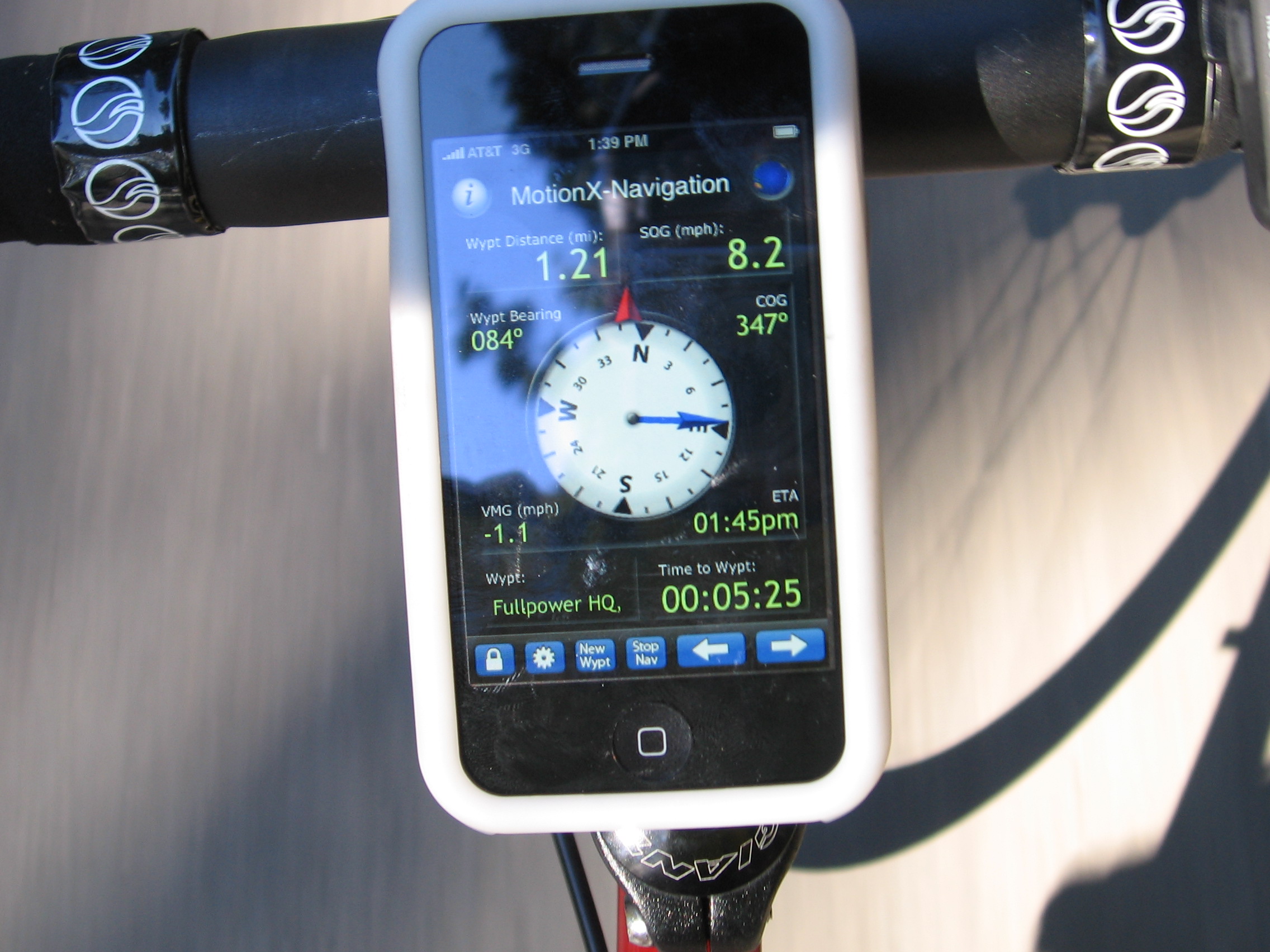
6. **Navigating with Your Phone: GPS and Device Mounting Rules**One of the most common questions regarding California’s distracted driving laws concerns the use of GPS navigation on smartphones. The good news for drivers is that operating a mounted GPS device while driving is permissible under California law, provided that the driver can interact with it safely and minimally. Specifically, the device must be operable “with the motion of a single swipe or tap of the driver’s finger,” ensuring that attention is not unduly diverted from the road.
For a handheld wireless telephone or any electronic wireless communications device to be legally used for navigation, it must be properly mounted within the vehicle. The law specifies that the device should be “mounted on a vehicle’s windshield in the same manner a portable Global Positioning System (GPS) is mounted pursuant to paragraph (12) of subdivision (b) of Section 26708 or is mounted on or affixed to a vehicle’s dashboard or center console in a manner that does not hinder the driver’s view of the road.” This ensures that the device is stable, accessible, and does not obstruct the driver’s line of sight.
Crucially, even with a mounted device, the interaction must be limited to a single swipe or tap. This provision reinforces California’s broader “no touch” rule, which aims to minimize the time a driver’s hand is off the steering wheel and their eyes are away from the road. Setting up complex routes, scrolling through menus, or typing in destinations while the vehicle is in motion remains strictly prohibited, emphasizing safety over convenience.
The importance of this clarification was underscored by the case of Nathaniel Maranwe, who was fined for holding his phone for maps. His initial successful challenge in a lower court, which argued that navigation wasn’t “manipulation,” was subsequently overturned by the Santa Clara County Superior Court and upheld by the 6th District Court of Appeal. These rulings firmly established “the Legislature intended to prohibit all handheld functions of wireless telephones while driving,” and the June 2025 clarification further reinforced that “simply holding a phone – even passively – is also against the law,” solidifying the comprehensive nature of California’s distracted driving regulations. This legal precedent means that drivers must utilize phone navigation in the safest, hands-free way.
7. **Legal Defenses if Accused of Violating VC 23123 and VC 23123.5**Facing a cell phone or handheld device ticket in California can be a daunting experience, but drivers are not without recourse. There are legitimate legal defenses that can be employed when accused of violating Vehicle Code 23123 (hands-free calls) or VC 23123.5 (texting and handheld device use). Understanding these potential defenses is the first step toward effectively challenging a citation.
Three common defenses frequently emerge in these cases. Firstly, a driver might legitimately fit into one of the law’s specific exceptions, such as making an emergency call to law enforcement or a healthcare provider. Secondly, the police officer issuing the citation might have been mistaken about the driver’s actions, perhaps misinterpreting a gesture or an object in hand as a cell phone. Lastly, the defense could argue that the vehicle was not in motion, though it’s crucial to remember that California’s laws extend to vehicles that are merely idling, making this defense more nuanced.
While representing oneself in traffic court is an option, consulting with an experienced attorney is highly recommended. Legal professionals possess a deep understanding of traffic laws and court procedures, often knowing how to navigate the system to achieve charge reductions or even dismissals. Prosecutors frequently offer better plea deals when a defendant has legal representation, and an attorney can often appear in court on the client’s behalf, saving the driver time and hassle.
For many cell phone tickets in California, if the fine is paid online and on time, an in-person court appearance might not be required. However, choosing to fight a ticket will necessitate engaging with the court system, either through a trial or by requesting a trial by written declaration. These options underscore the importance of understanding all legal avenues available to you.
8. **Does a Cell Phone Ticket Go on Your Driving Record in California?**One of the most pressing concerns for drivers receiving a cell phone ticket is its potential impact on their driving record and, subsequently, their auto insurance rates. Fortunately, a violation of either Vehicle Code 23123 or VC 23123.5 will not typically result in points being assessed on your California DMV driving record for a first offense. This is a crucial distinction, as points for traffic violations are a primary factor in insurance premium increases.
However, this favorable outcome for a first offense does not mean drivers are entirely free from long-term consequences. If a driver accumulates a certain number of points within a 1-, 2-, or 3-year period under the California point system, the DMV can declare them a “negligent operator.” This designation can lead to severe repercussions, including the suspension or even revocation of driving privileges, requiring a California DMV hearing to contest.
Moreover, while a first-time cell phone ticket might not add points, subsequent offenses carry a different weight. If you receive a second or third ticket for cell phone use while driving within 36 months, you will likely receive one point on your license. This point then signals a higher risk to auto insurers, who may remove “good driver” discounts and impose premium surcharges for several years, potentially costing hundreds of dollars more annually.
According to recent data, the average car insurance rate increase in California after a texting ticket can be as high as 45%. This substantial jump underscores that while the immediate point assessment might be minimal for a first offense, repeat violations can have a significant and lasting financial impact, making awareness of these laws and cautious driving paramount.

9. **Do I Have to Attend Traffic School for Cell Phone Violations?**Receiving a traffic ticket often raises the question of mandatory traffic school. For violations of California’s cell phone and handheld device laws (VC 23123 or VC 23123.5), drivers are generally not required to attend traffic school. This provides a degree of flexibility for those cited, allowing them to choose how to address their infraction.
However, drivers can voluntarily elect to attend traffic school. This option is often available if certain conditions are met: the driver must possess a valid driver’s license, the offense must have occurred while operating a noncommercial vehicle, and the ticket should be for an infraction that is considered a moving violation. These criteria ensure that traffic school remains a viable option for most standard cell phone tickets.
Attending traffic school, even if not mandated, offers a significant benefit: it can mask the point from appearing on your driving record. This is particularly valuable if you have received a second cell phone or distracted driving ticket within 36 months, as such an offense would typically add one point to your license. By preventing the point from appearing, traffic school helps maintain a clean driving record and, crucially, avoids potential increases in auto insurance rates.
It is important to remember that electing to go to traffic school does not exempt a driver from paying the associated traffic fine and court fees. Traffic school addresses the impact on the driving record and insurance premiums, but the financial penalty for the infraction still applies. Always verify eligibility and court approval before enrolling in a DMV-licensed traffic school to ensure the completion is properly processed.

10. **Can I Ignore a Ticket for Violating VC 23123 or VC 23123.5?**One of the most critical pieces of advice for any driver receiving a cell phone or handheld device ticket in California is: do not ignore it. Ignoring a traffic citation, while tempting, leads to far more severe consequences than simply addressing the initial infraction. This inaction can escalate a relatively minor ticket into a serious legal problem.
When a driver ignores a cell phone or handheld device ticket, two significant things typically occur. First, the driver violates a new, distinct law: California Vehicle Code 40508 VC, which pertains to the “failure to appear in court on a traffic citation.” This is a separate charge from the original cell phone violation and carries its own set of substantial penalties.
Vehicle Code 40508 VC defines “willfully failing to appear” as being willingly a no-show after signing a written promise to appear at a specified time and place, or failing to pay bail, pay bail in installments, pay a fine, or comply with any court condition. Crucially, it doesn’t matter if the driver intended to break the law or whether they are guilty or innocent of the underlying traffic citation; the act of failing to appear is a violation in itself.
The penalties for violating Vehicle Code 40508 VC are significantly more severe than those for the original cell phone ticket. A violation of VC 40508 is classified as a misdemeanor. This means that, unlike the original cell phone infraction, it can carry penalties of up to six months in county jail, and/or a fine of up to $1,000. These serious consequences underscore why ignoring a traffic ticket is never a viable option.

11. **Is It a Crime if I Talk on My Cell Phone or Text While Driving in California?**Understanding the legal classification of cell phone violations in California is key to grasping their true implications. For most drivers, violating Vehicle Code 23123 (hands-free calls) or VC 23123.5 (texting and handheld device use) is *not* considered a crime. These violations are classified as “infractions” under California law.
The distinction between an infraction and a crime (like a misdemeanor or felony) is significant. When a violation is an infraction, a driver generally “won’t be charged with a crime or face any punishment beyond fines” in the immediate aftermath. This means that, for the initial offense, drivers are not subject to incarceration or a criminal record, which are typical consequences of criminal charges.
While not a criminal offense, it is important not to dismiss the seriousness of these infractions. The financial penalties can be substantial, especially with added court costs and assessments. Furthermore, as discussed, ignoring an infraction can quickly lead to a misdemeanor charge for failure to appear (VC 40508 VC), which *is* a crime with potential jail time and much higher fines. Therefore, while the initial act of distracted driving is an infraction, its mishandling can indeed lead to criminal charges.
This legal nuance highlights California’s approach: to deter distracted driving through fines and educational measures for initial offenses, while escalating penalties for repeat offenders or those who fail to comply with court directives. The focus remains on promoting road safety without immediately imposing criminal charges for a primary cell phone infraction.

12. **What Is the Effect of a Cell Phone or Handheld Device Ticket on a Personal Injury Lawsuit?**Beyond fines, driving records, and potential criminal charges for ignoring tickets, perhaps the most profound consequence of violating California’s distracted driving laws surfaces if such a violation leads to an accident. If a driver is found to have violated either Vehicle Code 23123 or VC 23123.5 and thereby causes a personal injury accident, they may be found negligent in a subsequent civil lawsuit.
California law defines “negligence” as the failure to use reasonable care to prevent harm to oneself or to others. In the context of an auto accident, the negligent driver is deemed at fault and may be legally obligated to pay for any damages caused, which can include medical expenses, lost wages, pain and suffering, and property damage. This financial responsibility can be immense, far outweighing any traffic fine.
Proving negligence in a personal injury case can sometimes be complex, requiring extensive evidence and legal arguments. However, in California, the legal principle of “negligence per se” significantly streamlines this process. A driver is considered “negligent per se” if they violate a statute, such as VC 23123 or VC 23123.5. This means that negligence is presumed based upon the mere violation of the traffic law itself.
When a driver is found negligent per se for using a cell phone or handheld device while driving and causing an accident, the burden of proof regarding their fault is significantly reduced for the plaintiff in a personal injury lawsuit. This legal presumption makes it considerably easier for victims to establish liability and seek compensation for their injuries and losses.
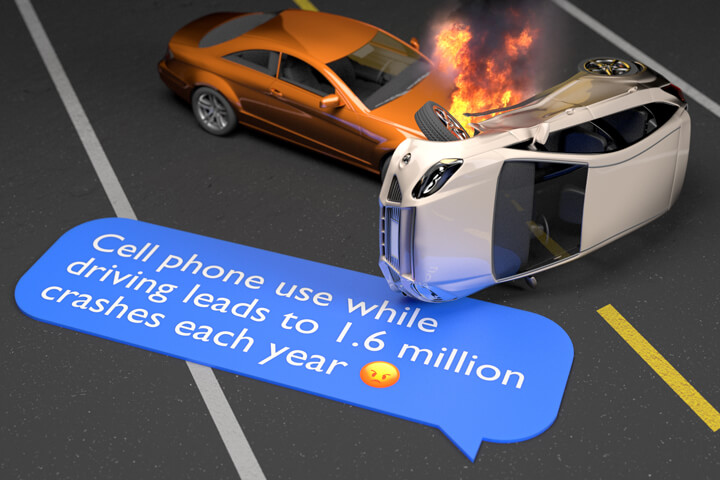
It is important to note, however, that even if a driver is found negligent per se, they may still be able to recover some damages if the other party also bears some fault. This is due to California’s comparative fault laws, which allow for damages to be awarded based on the percentage of fault assigned to each party. Nevertheless, causing an accident while distracted by a cell phone dramatically increases a driver’s legal exposure and potential financial liability, underscoring the severe real-world implications of these laws. The California Highway Patrol notes that cell phone use can increase collision risk by a staggering 400%, a chilling statistic that reinforces the life-or-death importance of undivided attention behind the wheel.
California’s unwavering commitment to road safety is evident in its comprehensive and continuously evolving laws against distracted driving. From the specific prohibitions on handheld device use, even while idling, to the escalating penalties and the far-reaching implications for driving records, insurance rates, and potential civil lawsuits, the message is clear: driver attention is paramount. Understanding these intricate regulations is not merely about avoiding fines; it is about embracing a culture of safety that protects not only oneself but every individual sharing the roadway. By prioritizing hands-free operation and eliminating distractions, drivers contribute to safer communities and help mitigate the tragic consequences that arise when focus shifts from the road to a screen.