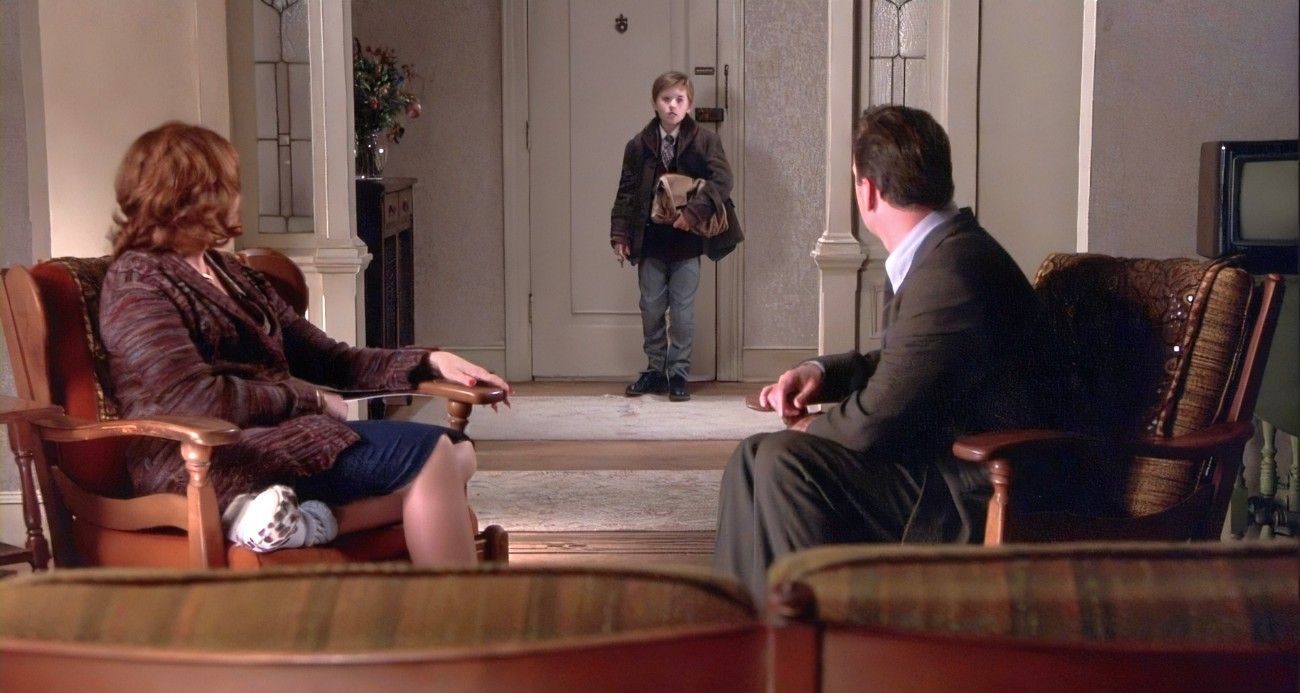
Sometimes a movie leaves us with a finale so head-scratching, we need to run out and talk about it. Great movies leave their audience thinking about what they saw long after the credits roll, typically by raising questions about the story and concluding without providing all the answers. This approach, while sometimes risking audience reception, has often led to films achieving cult status and becoming beloved precisely because their endings are so heavily debated. We thrive on picking these apart, assisted by creators’ insights and our own amateur detective skills.
The last decade of cinema has been particularly rich in these perplexing conclusions, offering up a fresh crop of films that challenge our perceptions and demand a second, third, or even fourth viewing to fully grasp their intricate narratives. From time-bending thrillers to psychological horrors and allegorical sci-fi, these films don’t just end; they invite viewers into a labyrinth of theories, predictions, and discussions that continue long after the credits fade. They push the boundaries of storytelling, leaving us with a lingering sense of awe and confusion.
In this deep dive, we’re taking on some of the most talked-about and truly baffling movie endings from the last ten years. We’ll break down the complex plots, character motivations, and thematic elements of these cinematic puzzles. Brace yourselves, as some of these finales are all-time stumpers, but we’re here to decipher them so you don’t have to, providing in-depth analysis and accessible explanations for a broad audience.

1. **Tenet**Christopher Nolan seems to relish baffling us with his endings, and *Tenet*’s wild time inversion ride is one of the best examples, as its ending is as twisty as its concept of time. The film follows John David Washington’s unnamed protagonist as he travels through time. He aims to stop Kenneth Branagh’s evil Russian scientist Sator from starting something “worse than World War III.” The science doesn’t always add up, prompting advice to “just go along with it and feel it.”
The highly contested denouement reveals a complex temporal loop where the Protagonist is not just acting within the present but is also orchestrating events from his future self. As Esquire noted, he “recruited himself, setting up the mission which he would recruit his past self into without knowing that the version of him the future is the one pulling all of the strings.” This means that for the Protagonist, the events of *Tenet* are just the beginning of a journey he has already initiated from the future.
For Neil (Robert Pattinson), however, this journey has been an inverted arc. It tragically leads to his death saving his new old friend in the movie’s killer opening sequence. The film’s final scene makes it clear that the Protagonist recruited Neil and gave him the necessary information to save the day. This ties their intertwined fates into a complete, yet confusing, circle that challenges any linear understanding of cause and effect.
Read more about: Powering the Ride: A Deep Dive into the World’s 15 Largest Motorcycle Brands and Their Global Impact
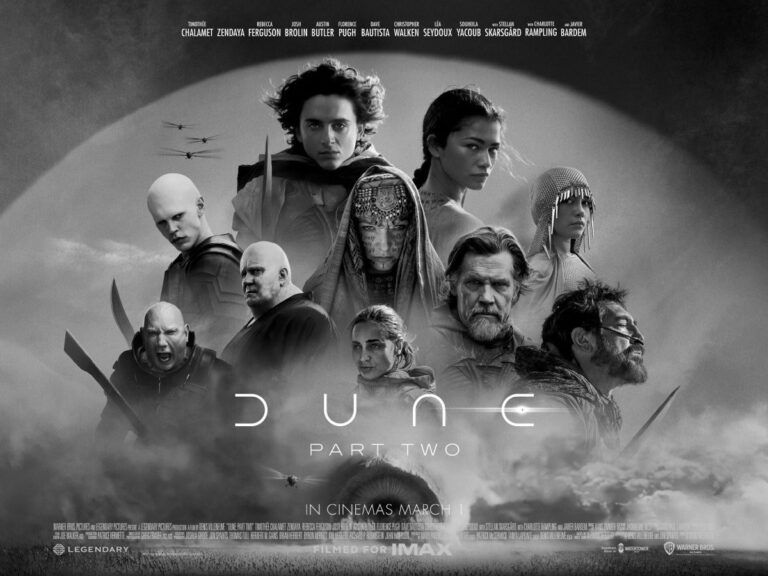
2. **Dune: Part Two**To be completely honest, there’s one simple yet baffling reason the ending to *Dune: Part Two* is on this list. It fundamentally challenges the audience’s perception of heroism. If you can walk away from Paul Atreides’ (Timothée Chalamet) journey and still think he’s a traditional hero, you’re missing the darker implications of his choices. The film forces a re-evaluation of everything we thought we knew about Paul’s destiny.
Paul’s transformation into the prophecy is not one of pure triumph, but of terrifying inevitability and manipulation. He embraces his role as the Lisan al Gaib, the messianic figure, not out of altruism but to secure power and exact revenge. He ruthlessly uses the Fremen’s fervor for his own ends. This turn of events sets him on a path to commit what the context describes as “space genocide,” euphemistically reframed as showing his “enemies to Paradise.”
This ending is particularly confusing because it subverts the traditional hero’s journey, leaving viewers to grapple with the disturbing implications of Paul’s newfound power and the violence it portends. His declaration of war and commitment to the “holy war” makes it clear that the noble goals he once seemed to embody have been twisted. The film concludes not with a clear-cut victory, but with a chilling glimpse into a future shaped by Paul’s morally compromised decisions.
Read more about: Beyond the Ticket: Unmasking the High-Profit Item That Keeps Movie Theaters Thriving with 1000% Markups.
3. **Us**Throughout Jordan Peele’s *Us*, we’re initially led to believe that Adelaide (Lupita Nyong’o) is being chased by her Untethered doppelganger, Red (also Nyong’o). This premise sets up a thrilling cat-and-mouse game, with the audience rooting for Adelaide and her family against these terrifying, scissor-wielding counterparts. The tension builds on the seemingly clear distinction between the “real” people on the surface and their monstrous counterparts from below.
In actuality, what seems to have happened is a shocking twist: on that fateful night in 1986, Red swapped places with Adelaide. This means the Adelaide we have been following throughout the movie is, in fact, the original Red, who escaped the underground and assimilated into the surface world. Meanwhile, the real Adelaide (now Red) was trapped below. This revelation fundamentally alters our understanding of every interaction and character motivation.
Over 30 years later, when “Adelaide” (the original Red) attempts to reclaim her life through an Untethered revolution, “Red” (the original Adelaide) kills her. This maintains her stolen life on the surface. This brutal act solidifies the switch and leaves a chilling question mark over the entire story. It’s a masterful use of an unreliable perspective, as the audience’s understanding of who the “hero” is turns out to be based on a decades-old deception.
Read more about: The Definitive Guide to Work Van Longevity: Identifying Models That Last 400,000 Miles and Those That Fall Short
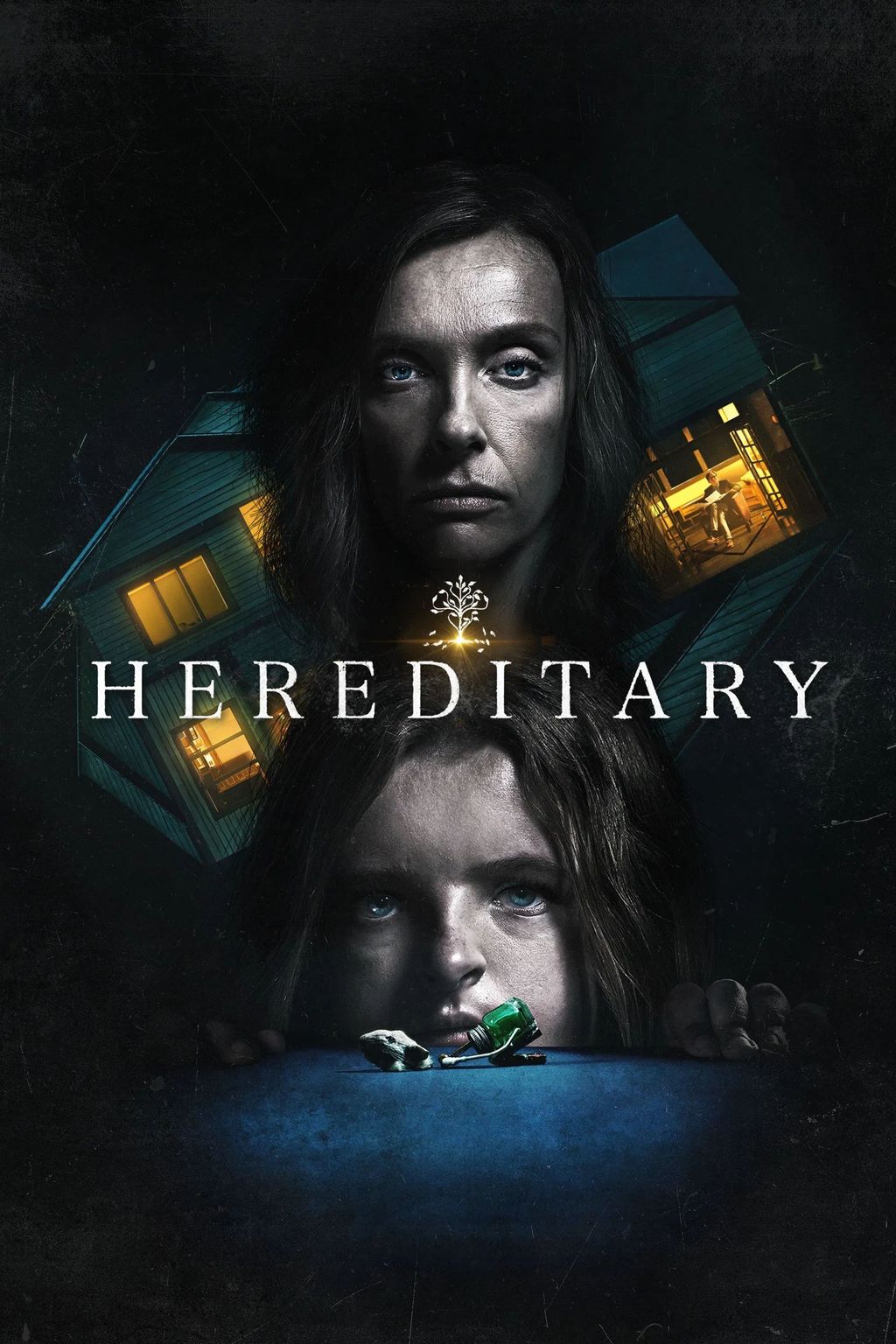
4. **Hereditary**Family shocker *Hereditary* was loaded with memorable moments, from Toni Collette crawling on the ceiling to the infamous beheading. The ending to Ari Aster’s attention-grabbing film debut is soul-destroying and bizarre in equal measure, making it one of the most unsettling finales in recent memory. It’s difficult to ascertain precisely where the ending begins because the escalation of horrors throughout the film is so exacting and slow.
Essentially, the climax sees Peter (Alex Wolff) stumble out of the family home to discover a cult praising the demon Paimon in their treehouse. This cult, which has been subtly influencing the family’s tragic events, reveals its true purpose. Inside the treehouse, Peter finds the headless bodies of his mother, grandmother, and sister kneeling in prayer, a grotesque culmination of the demonic possession and ritualistic sacrifice.
A crown is placed on his head as Peter is declared the new leader, except he’s referred to as “Charlie,” who died earlier in the movie. This signifies that Peter’s body is now under the control of both Charlie’s spirit and the demon Paimon. The cult’s plan is spelled out earlier on when Collette’s character stumbles upon her mother’s old journals, revealing the grandmother’s deep involvement in a Paimon-worshipping cult.
The ending makes it clear that Peter’s sister, Charlie, was groomed by their grandmother from a young age to be a host for Paimon. However, Peter was deliberately kept away from her. This led the cult to set Charlie up to host the demon until the time was right for Paimon to inhabit a male host, as the demon prefers. The three heads required by Paimon are those of the mother, grandmother, and granddaughter, completing a horrific ritual.
Read more about: The On-Screen Deaths That Still Keep Us Up at Night: 14 Traumatizing Movie Moments You Won’t Forget
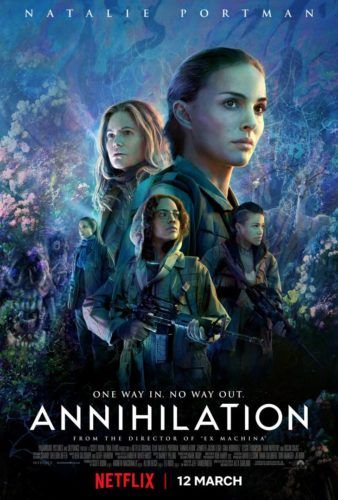
5. **Annihilation**In a world of doppelgangers and uncertainty, Alex Garland’s film version of *Annihilation* is a double helix of a twist ending. The movie explores a mysterious, expanding iridescent area known as “The Shimmer,” which alters DNA and physics within its boundaries. Lena (Natalie Portman) volunteers for an expedition into the Shimmer after her husband, Kane (Oscar Isaac), returns from a previous expedition gravely ill.
The climax of the film unfolds within the Shimmer’s epicenter, a lighthouse where the alien entity responsible for the phenomenon resides. Here, Lena confronts a replica of herself, and through a struggle, manages to destroy it. However, the context reveals a deeper, more unsettling truth: “Not only do we learn that Kane (Oscar Isaac) is actually an alien replica of his human self from the mysterious area known as ‘The Shimmer,’ but we see that the original Lena (Natalie Portman) has been possessed by some of that Shimmer herself.”
This means the Kane who returned home was not the original human, but an alien duplicate, subtly infiltrated by the Shimmer’s transformative power. This explains his altered demeanor and illness. The revelation about Lena is even more chilling, as she also returns from the Shimmer, seemingly intact, but with an underlying, insidious change. The final scene, where she embraces the replicated Kane, suggests that neither of them is entirely human anymore.
The film concludes with a profoundly ambiguous handshake between the replicated Kane and Lena, whose eyes subtly glow. This twist isn’t just about survival; it’s about integration and transformation on a cellular level. It leaves the audience to ponder the true nature of what returned from the Shimmer – a new form of life, an alien invasion, or a profound evolution? The unsettling implication is that the Shimmer doesn’t just destroy; it assimilates and replicates.
Navigating the labyrinthine narratives of recent cinema’s most perplexing finales is no small feat, yet the journey offers unparalleled insight into the art of storytelling. After deciphering the intricate paradoxes and unsettling revelations of the first five films, we now turn our attention to four more masterpieces that have etched their ambiguous conclusions into the collective memory of moviegoers. These films, ‘mother!,’ ‘Arrival,’ ‘Nocturnal Animals,’ and ‘The Lobster,’ each provide unique challenges and profound thematic depths, leaving audiences to grapple with questions of reality, fate, and human connection long after the credits roll.
Our expedition continues into the ambiguous and evocative conclusions of these cinematic gems, breaking down their layers of meaning, character motivations, and the lasting impact they’ve had on film discourse. From allegorical horrors to time-bending sci-fi and darkly comedic romances, prepare to have your perceptions challenged once more as we unravel the mysteries that lie beyond the final fade to black.
Read more about: Beyond a Single Scene: Unpacking the Monumental Investment and Unprecedented Impact of the MCU’s Avengers Saga

6. **mother!**Darren Aronofsky’s *mother!* is a film that demands multiple viewings and considerable thought, yet even then, its conclusion leaves many viewers in a state of bewildered awe. The film’s narrative, following Jennifer Lawrence’s titular matron and her lover, Him (Javier Bardem), spirals into a chaotic, allegorical nightmare that culminates in an ending described as a “literally Biblical finale.” This description perfectly encapsulates the grand, devastating scale of the events that unfold, challenging conventional narrative expectations.
As the film progresses, the relentless intrusion of strangers into their secluded home mirrors a larger-than-life allegory for humanity’s destructive impact on the Earth and God’s creation. The escalating violence and exploitation of ‘mother’ (Lawrence) by the ever-growing throng of ‘Him’s’ followers ultimately leads to her physical and emotional destruction, setting the stage for a truly apocalyptic ruin. The cycle of adoration, exploitation, and ultimate devastation plays out with brutal efficiency.
The film concludes with ‘mother’ unleashing this apocalyptic ruin against ‘Him,’ a harrowing visual that ties directly back to the movie’s opening shot. We witness a woman burning in what appears to be “some hellfire of her own,” a potent image of destruction. The chilling implication, reinforced by the film’s cyclical structure, is that the entire harrowing ordeal is destined to repeat itself endlessly, with ‘Him’ reviving his new companion in the same manner he roused ‘mother.’
This cyclical nature is perhaps the most confusing yet crucial element of *mother!*’s ending. It suggests that the themes of creation, destruction, and sacrifice are not singular events but an eternal, inescapable loop. The film’s final moments, where ‘Him’ holds a newly formed, beating crystal heart, indicate that the cycle of life, destruction, and rebirth, driven by his need for adoration and creation, will forever restart, leaving audiences to ponder the true cost of artistic creation and humanity’s relentless consumption. It’s a bold statement on the repetitive nature of human folly and divine consequence, where tragedy is not an end but a constant beginning.
Read more about: What Really Happened? The Enduring Mystery Surrounding Malcolm X’s Assassination in 1965

7. **Arrival**Denis Villeneuve’s *Arrival* is a masterclass in science fiction that blends profound emotional depth with intellectual complexity, leading to an ending that is both exquisitely bittersweet and thoroughly mind-bending. The narrative follows Dr. Louise Banks (Amy Adams) as she endeavors to communicate with extraterrestrial visitors, inadvertently unlocking a new perception of time. Her visions throughout the film, initially appearing as conventional flashbacks to a lost daughter, are revealed to be something far more extraordinary.
The core of *Arrival*’s enigmatic conclusion lies in this groundbreaking revelation: Louise’s visions are not memories of the past, but rather “flash-forwards” to her own future. This paradigm shift occurs as she learns the Heptapod language, a non-linear form of communication that fundamentally alters human consciousness, allowing the speaker to “basically remember the future.” This ability shatters the conventional, linear understanding of time, presenting it as a fluid entity where past, present, and future coexist.
This newfound perception places Louise in a profoundly tragic yet empowering position. She gains knowledge of her future, including the joy of having a daughter and the inevitable sorrow of losing her to a rare disease. This awareness makes her decision to embark on this future, knowing the heartbreak it entails, all the more poignant. Her fate, though seemingly tragic, is accepted with a quiet grace, transforming the ending into a bittersweet affirmation of life’s precious moments, regardless of their finite nature.
The ending of *Arrival* isn’t just a twist; it’s a philosophical statement on free will and destiny. Louise could have prevented the tragedy by choosing a different path, yet she embraces the future she foresees, making every moment with her daughter deeply meaningful. It redefines heroism, not as changing the inevitable, but as courageously living through it with full awareness and appreciation. This emotional and intellectual climax ensures that *Arrival* remains a deeply discussed film, celebrated for its ability to provoke thought on time, language, and the choices that define us.
Read more about: Unmasking the Glaring Gaps: 10 Major Marvel Movie Plot Holes Fans Can’t Ignore

8. **Nocturnal Animals**Tom Ford’s *Nocturnal Animals* crafts a visually stunning yet emotionally devastating narrative, utilizing a layered structure that culminates in an ending both abrupt and deeply symbolic. The film interweaves the present life of art gallery owner Susan Morrow (Amy Adams) with her reading of a manuscript written by her ex-husband, Edward Sheffield (Jake Gyllenhaal), a narrative that mirrors their past relationship and its brutal dissolution. The finale leaves Susan alone in a high-end restaurant, poised for a reunion that never materializes.
The actual ending sees Susan dressed immaculately, sitting in an elegant restaurant, eagerly anticipating a meeting with Edward, who has dedicated his new, intensely violent novel to her. Yet, he never arrives. This absence is not merely a snub but a carefully orchestrated act of emotional revenge, a brutal final chapter in their shared story. It’s a conclusion that forces Susan to confront the emptiness and superficiality of her current life, stripped bare of the illusions she has built around herself.
The context reveals that Edward’s novel, a brutal tale of a family’s victimization, was inspired by “Susan leaving Tony” and was filled with “the type of vicious, aggressive action she seemed to be encouraging him toward.” This suggests that the novel is not just a story, but a metaphor for the pain Edward endured at Susan’s hands, a fictionalized representation of his emotional emasculation and heartbreak. As Susan reads the novel, “the world around her begins to mirror the darkness on the page,” blurring the lines between fiction and her stark reality.
This deliberate act of abandonment by Edward serves to highlight the hypocrisy and shallowness of Susan’s affections. She is left waiting, abandoned just as she abandoned him, forced to reckon with the “fake her life really is and how fickle her supposed love for her new husband is,” given her apparent willingness to run back to Edward. Vulture’s analysis insightfully notes that “For Ford, Tony seems to represent integrity,” contrasting sharply with Susan, who is “superficiality personified.”
Ultimately, *Nocturnal Animals* ends with a potent statement on consequence and the lasting scars of past betrayals. Edward’s absence is his ultimate victory, a poignant act of retribution that he executes with an artistic and emotional precision. It forces Susan to face her own internal landscape, a desolate reflection of the external glamour she projects. This ending functions as a harsh critique of the superficial worlds we sometimes inhabit, possibly even a reflection of director Tom Ford’s own experiences within the fashion industry, exposing the emotional void beneath the polished exterior.
Read more about: Backyard Guardians: A National Geographic Guide to 15 Non-Venomous Snakes You Might Encounter

9. **The Lobster**Yorgos Lanthimos’ *The Lobster* stands as one of the most uniquely bizarre romantic comedies ever conceived, setting a darkly humorous and profoundly unsettling premise for its characters. The film envisions a dystopian society where single individuals are legally mandated to find a romantic partner within 45 days. Failure to do so results in a transformation into an animal of their choosing, a fate that lends the film its peculiar title, directly referring to protagonist David’s (Colin Farrell) choice of a lobster.
David’s journey through this bizarre societal construct leads him to covertly fall in love with a woman (Rachel Weisz) who is also short-sighted, a common trait they share. She belongs to the Loners, a rebel group that vehemently rejects romantic pairings and enforces strict rules against coupling. This clandestine relationship blossoms against the backdrop of an oppressive, absurd world where genuine connection is either forced or forbidden, pushing the boundaries of what ‘love’ truly means.
The precarious nature of their forbidden love is brutally exposed when their relationship is discovered by the Loners. As a harsh punishment for their transgression, David’s beloved is tragically blinded in retaliation. This cruel act forces David into a harrowing dilemma, challenging the very foundation of their connection. His attempts to forge common ground with her, a key aspect of their forced society, become intensely literal as the film approaches its climax.
In the film’s final, notoriously ambiguous scene, David and the blind woman sit together in a diner. David contemplates blinding himself, presumably to share her experience and truly have “something in common” with her, embodying the film’s critique of superficial compatibility. However, *The Lobster* “cuts to black before we find out whether he does it,” leaving the audience to wrestle with his ultimate choice, and the very nature of sacrifice in the name of love.
Colin Farrell, the actor behind David, has offered his own interpretations, sharing that “he reckons David did blind himself, though he played it deliberately obtuse.” Yet, he also mused on other possibilities: David might have “legged it while his companion wasn’t paying attention,” or even “lied and pretended he’d done it.” This multitude of possibilities highlights the film’s commitment to ambiguity, making the viewer’s interpretation central to its meaning. As Farrell concluded, the ending’s meaning “all depends on your outlook; romantics will assume David went through with it, cynics will figure the opposite, and both positions are valid,” a perfect encapsulation of the film’s challenging and thought-provoking nature.
Read more about: The Unseen Profit Drivers: An Economic Analysis of High-Margin Concessions in Modern Movie Theatres
And there you have it – a journey through some of the last decade’s most perplexing and thought-provoking cinematic conclusions. From intricate temporal loops to allegorical cycles of creation and destruction, these films remind us that the most memorable stories aren’t always those with neatly tied bows. Instead, they are the ones that dare to leave us questioning, debating, and ultimately, engaging with the art form on a deeper, more personal level. These challenging finales aren’t just tricks; they’re invitations to become part of the narrative, to speculate, theorize, and find our own meanings in the lingering shadows of the screen. So, the next time a film leaves your head spinning, embrace the confusion – it’s often where the real magic of cinema truly begins.