In an era saturated with information, the ability to communicate complex ideas clearly, objectively, and comprehensively stands as an invaluable skill. Whether you’re a student presenting research, a professional sharing insights, or simply aiming to enlighten your peers, the principles of effective informative speaking are paramount. As seasoned editors committed to empowering consumers with verifiable facts and actionable advice, we recognize that the foundational elements of a well-constructed informative message are universal, transcending specific subjects from technological breakthroughs to significant industrial failures.
This guide, drawing upon expert insights into speech preparation and communication best practices, aims to equip you with the tools necessary to develop compelling and credible informative presentations. Our objective, much like a thorough Consumer Reports analysis, is to break down the essential components, offering practical advice to ensure your message is not only understood but also resonates with your audience, fostering genuine understanding rather than mere exposure to facts. We believe in providing in-depth analysis and thorough coverage, ensuring you can navigate any topic with authoritative clarity.
From the initial conceptualization of your core arguments to the nuanced art of delivery, every step in crafting an informative speech demands precision and strategic thought. We will explore the critical design elements that lay the groundwork for a successful presentation, focusing on how to organize your thoughts effectively, ensure factual integrity, and engage your listeners. Let’s delve into the first five pivotal principles that will transform your informative communication, enabling you to present information with the credibility and impact characteristic of a trusted source.

1. Uniting Your Main Points: Ensuring Coherence and Purpose in Your Message
The cornerstone of any effective informative presentation is the cohesive alignment of its main points. Once you’ve generated a possible list of core ideas, the critical question to ask yourself is, “When you look at your main points, do they fit together?” This isn’t merely about having a list of interesting facts, but about ensuring that each point actively contributes to your specific purpose, guiding your audience toward a deeper understanding of your chosen topic. Without this unity, your message risks becoming fragmented and confusing.
Consider a scenario where you aim to inform your audience about complex subjects, such as the intricacies of supply chain disruptions or the ripple effects of a major product recall. Each main point, whether discussing a design flaw, a logistical breakdown, or a market response, must clearly support the overarching narrative. If you were to introduce an extraneous point—perhaps a personal anecdote unrelated to the core topic, despite your passion for it—you would be diluting your specific purpose and confusing your listeners, much like adding an irrelevant data point to a scientific study.
As a speaker, your role is to act as a teacher, breaking down complex subjects into digestible chunks. This pedagogical approach necessitates that every piece of information, every argument, and every example serves the central educational goal. Therefore, rigorously evaluating each main point against your specific purpose is essential. If a point doesn’t directly help your audience understand the subject, it’s extraneous and, as advised by public speaking best practices, “you’d need to toss it out,” maintaining the integrity and focus of your presentation.
This unifying principle ensures that your audience perceives your presentation not as a collection of disparate facts, but as a well-integrated journey towards a specific insight. It’s about crafting a narrative where each element builds upon the last, culminating in a comprehensive understanding. This meticulous selection and alignment of main points are fundamental to achieving the objective, unbiased, and detailed coverage that defines authoritative informative communication.

2. **Keeping Your Main Points Separate: Maintaining Distinctness for Clarity and Avoiding Redundancy**
Beyond unity, the clarity of your informative presentation hinges on the distinctness of your main points. The next question to meticulously ask yourself is “whether they overlap too much.” While a degree of natural overlap might be inherent in certain topics due to their singular nature, it is imperative that the information covered within each main point is “clearly distinct from the other main points.” This separation prevents confusion and ensures that your audience can follow your structured argument without feeling that you are repeating yourself.
Imagine you are presenting on a topic like the multifaceted challenges in a particular industry, perhaps exploring the health and safety implications of certain manufacturing processes. If one main point discusses the general importance of product safety, and subsequent points delve into specific examples of safety regulations or recalls, the potential for overlap is significant. As the guidance suggests, if you had main points like “that eating fruits is healthy,” “that eating apples is healthy,” and “that eating oranges is healthy,” the first point would overlap too much with the more specific ones. In such a case, you would likely “decide to eliminate the first point and focus on the second and third,” or reconstruct your approach entirely.
The objective is to provide new, valuable information with each progression, building knowledge systematically. Overlapping points can undermine the perception of depth and thoroughness, which are crucial for maintaining an authoritative tone. Your audience expects detailed analysis, and redundant information can lead to disengagement, eroding the trust you’ve painstakingly built through factual accuracy and an unbiased approach. Each segment of your presentation should offer a fresh perspective or introduce a new dimension to the subject.
By ensuring clear boundaries between your main points, you create a logical flow that is easy for your audience to follow and absorb. This deliberate separation allows for in-depth analysis of specific facets of your topic without the audience getting lost in repetition. It demonstrates a sophisticated understanding of your material and a commitment to clarity, which are hallmarks of effective and consumer-focused informative communication.

3. Balancing Main Points: Allocating Appropriate Depth and Time to Each Core Idea
One of the most frequent missteps in informative speaking is the uneven distribution of attention across main points. As the expert advice cautions, “one of the biggest mistakes some speakers make is to spend most of their time talking about one of their main points, completely neglecting their other main points.” To uphold the standard of comprehensive coverage, it is crucial to “organize your speech so as to spend roughly the same amount of time on each main point.” This ensures a balanced presentation, allowing your audience to gain a well-rounded understanding of the entire topic.
Consider a detailed analysis of a significant product failure, where you might have main points addressing the root cause, the regulatory response, and the long-term market impact. If you dedicate the majority of your time to the root cause, leaving only a few minutes for the profound consequences and regulatory actions, your audience will leave with an incomplete picture. The depth of coverage for each aspect must be commensurate with its importance to the overall narrative, adhering to the principle of thoroughness that empowers consumers.
If you find that one of your main points is simply too large to be adequately covered within this balanced framework, you may need to reconsider its scope. The guidance suggests you “divide that main point into two main points and consolidate your other main points into a single main point,” if necessary. This adaptive approach ensures that all critical information receives the attention it deserves, allowing for in-depth analysis without sacrificing other essential components of your message. It’s about effective time management and content segmentation.
Ultimately, balancing your main points reflects a commitment to providing a complete and proportionate understanding of your subject matter. It demonstrates respect for your audience’s time and their desire for detailed, objective information. An unbalanced presentation, much like a skewed dataset, can distort the overall perception of the topic, hindering true comprehension. By maintaining equilibrium, you reinforce your authority and the credibility of your educational purpose.

4. **Creating Parallel Structure for Main Points: Enhancing Memorability and Audience Retention Through Consistent Phrasing**
Beyond the content and balance of your main points, their linguistic structure significantly impacts audience comprehension and retention. A major question to ask yourself is “whether or not they have a parallel structure.” Parallel structure means that you should “structure your main points so that they all sound similar.” This consistency in phrasing is not merely an aesthetic choice; it’s a powerful mnemonic device, making it “simply easier for your audiences to remember your main points and retain them for later.”
Imagine presenting a series of complex technical details, such as the various factors contributing to product reliability or the stages of a regulatory recall process. If your main points are phrased inconsistently – some as statements, others as questions, and still others as incomplete phrases – the cognitive load on your audience increases. The example provided illustrates this: “school districts use software in their operations; what is open-source software; name some specific open-source software packages that may be appropriate for these school administrators to consider.” This lack of parallelism, with a question amidst statements, can be jarring and less memorable.
To rectify this, you would either transform them all into questions, such as “what are some common school district software programs; what is open-source software; and what are some specific open-source software packages that may be appropriate for these school administrators to consider,” or, perhaps more suitably for an informative speech, convert them all into statements. For instance: “school districts use software in their operations; define and describe open-source software; name some specific open-source software packages that may be appropriate for these school administrators to consider.” Either of these changes will ensure that “the grammatical structure of the main points parallel.”
This stylistic consistency contributes significantly to the authority and professionalism of your presentation. It reflects careful thought and organization, signalling to your audience that your content is meticulously crafted for clarity and impact. In the context of informing consumers, such structural elegance enhances the perceived reliability of your message, aiding in the effective transfer of knowledge and strengthening your credibility as a trusted source of information. It empowers listeners to grasp and recall the key takeaways with greater ease.

5. **An Educational and Informational Purpose: Establishing the Core Objective of Your Communication**
At the very heart of effective informative communication lies its fundamental objective: “The primary purpose of an informative speech is to educate the audience about a selected topic.” This explicit commitment to education distinguishes an informative speech from other forms of public address, such as persuasive or demonstrative presentations. As a speaker, you embrace “the role of a teacher,” with a clear mandate to enlighten and inform, not to sway opinions or instruct on a process.
This educational mandate requires a specific approach to content and delivery. Your task is to “operate with formal definitions, facts, explanations, and evidence to break down complex subjects and help listeners understand them.” Whether you are detailing the intricacies of a new technology, exploring the historical context of a significant event, or analyzing the implications of industry trends, every element of your speech must contribute to this singular purpose. The goal is to build understanding, providing the audience with new knowledge they can use.
An informative speech is characterized by its dedication to providing objective, verifiable information. It’s about presenting a topic comprehensively, ensuring that the audience gains a deeper insight into its nuances. This is not the platform for personal opinions or emotional appeals; instead, it’s a space for data-driven discourse, where the strength of your message derives from the verifiable facts and clear explanations you provide. This foundation of factual integrity is what establishes trust with an audience, mirroring the objective nature of consumer reporting.
Ultimately, embracing an educational and informational purpose means prioritizing the audience’s learning above all else. It involves careful research, meticulous organization, and a clear, unbiased presentation of facts. By committing to this core objective, you ensure that your communication serves to genuinely empower your listeners with knowledge, allowing them to make informed judgments and understand the world around them more completely.
Beyond the foundational design of your main points and the overarching educational purpose, truly impactful informative speeches are distinguished by how they uphold impartiality, ground their content in verifiable evidence, structure their presentation, adapt to their audience, and leverage engaging materials. These subsequent principles are not merely supplementary; they are indispensable characteristics that cultivate trust, deepen understanding, and ensure your message achieves lasting resonance. They transform a collection of facts into a compelling narrative, reflecting the thoroughness and objectivity that audiences have come to expect from a trusted source.

6. Unbiased Approach: Upholding Impartiality and Neutrality in Presentation
The integrity of an informative speech hinges profoundly on its unbiased approach. Much like the rigorous, impartial evaluations conducted by leading consumer organizations, your role as an informative speaker is to present facts and explanations without personal prejudice, emotional appeals, or the subtle inclination towards a particular viewpoint. This commitment to neutrality is paramount, as it forms the bedrock of audience trust and ensures that the information conveyed is perceived as credible and objective. It moves beyond merely avoiding overt advocacy, demanding a disciplined presentation where all relevant facets of a topic are explored fairly.
Embracing an unbiased approach means consciously stepping back from injecting your personal opinions or preferences into the narrative. When discussing complex or controversial subjects, this requires a meticulous presentation of various perspectives, allowing the weight of the evidence and the strength of the facts to guide the audience’s understanding, rather than your own interpretations. The goal is to illuminate, not to persuade, providing a comprehensive overview that respects the audience’s capacity to draw their own conclusions based on the presented information. This ethical stance empowers listeners to engage with the material critically, fostering genuine comprehension.
A failure to maintain impartiality can swiftly erode a speaker’s authority and diminish the perceived reliability of the information. If an audience detects a hidden agenda or a slanted presentation, the educational purpose of the speech is compromised, leading to skepticism rather than enlightenment. Therefore, an unwavering dedication to presenting information in a neutral and balanced manner is essential. This principle ensures that the audience receives a complete and undistorted picture, enabling them to make informed judgments—a core tenet of effective, consumer-focused communication.

7. Strong Focus on Data and Facts: Emphasizing Evidence-Based Content for Credibility
The very essence of an informative speech, designed to educate and enlighten, relies fundamentally on a strong focus on data and facts. In a world awash with conjecture and opinion, verifiable evidence serves as the anchor of truth, providing a solid foundation for understanding. This principle dictates that every claim, explanation, or definition within your speech must be supported by robust, verifiable data, detailed research, and established facts, much like a comprehensive product report provides exhaustive test results to back its findings.
Building an argument or explanation on mere speculation not only undermines your credibility but also fails to achieve the educational objective of the speech. Instead, an authoritative informative speech draws heavily from statistics, scientific findings, historical records, expert testimonies, and other credible sources. Presenting this evidence clearly and attributing it appropriately reinforces the speaker’s trustworthiness, signaling to the audience that the information is well-researched and grounded in reality. This diligent approach distinguishes substantive content from superficial narratives.
The emphasis on data and facts empowers the audience by providing them with the concrete details necessary for deep comprehension. It allows them to assess the information independently and integrate it into their existing knowledge base with confidence. Without this rigorous commitment to evidence, an informative speech risks becoming anecdotal or merely impressionistic, failing to deliver the in-depth analysis and verifiable insights that are the hallmarks of truly impactful and consumer-focused communication.
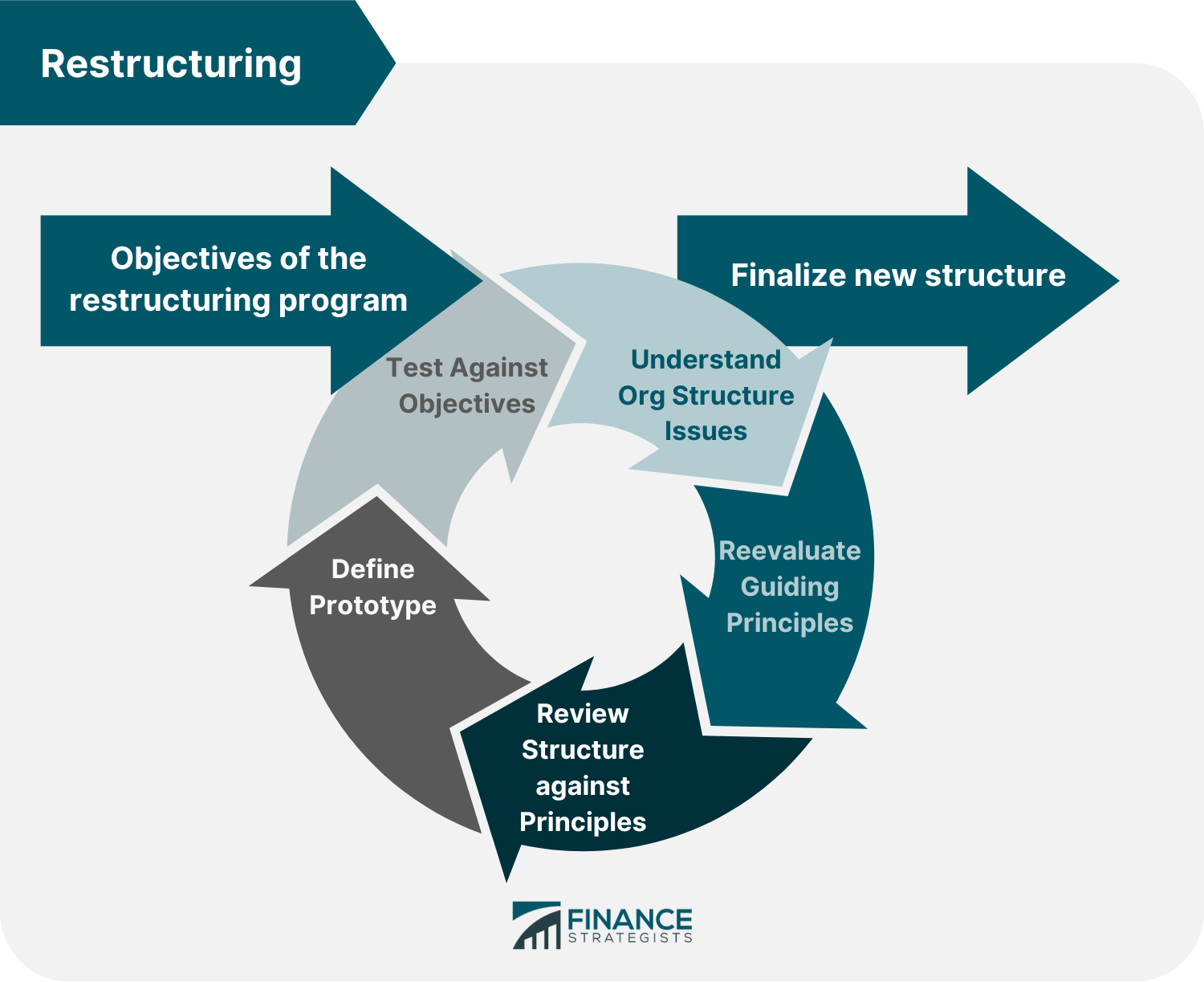
8. Logical and Clear Organization: Structuring Information for Optimal Understanding
While Section 1 outlined the importance of organizing individual main points, the principle of logical and clear organization extends to the entire structure of your informative speech. This overarching clarity ensures that the audience can effortlessly follow your progression of ideas from beginning to end, building understanding systematically. An expertly organized speech acts as a well-guided tour through a complex subject, with each segment naturally leading to the next, preventing confusion and enhancing retention.
This principle encompasses a coherent introduction that sets the stage and clearly states the specific purpose, transitions that smoothly bridge one main point to another, and a concluding section that synthesizes the key takeaways. Transitions, in particular, are vital signposts that prevent cognitive dissonance, acting as verbal bridges that connect discrete pieces of information into a cohesive whole. They help the audience perceive the relationships between ideas, reinforcing the unity and flow of the presentation.
A logically structured presentation, whether employing chronological order, topical arrangement, cause-and-effect, or problem-solution patterns, ensures that information is delivered in a manner that aligns with how humans process and store knowledge. This thoughtful arrangement facilitates absorption, allowing complex subjects to be broken down into digestible chunks that cumulatively build toward a comprehensive understanding. An absence of clear organization, conversely, can leave an audience feeling overwhelmed or lost, hindering their ability to grasp the core message and the nuances of the topic.

9. **Information Presentation and Language Tailored to the Audience’s Level of Knowledge: Adapting Delivery for Maximum Accessibility**
For an informative speech to be truly effective, its presentation and language must be meticulously tailored to the audience’s existing level of knowledge. This crucial characteristic ensures maximum accessibility and comprehension, transforming complex information into understandable insights. A speaker acting as a teacher understands that the goal is not to demonstrate their own expertise through obscure terminology, but to transfer knowledge effectively to those listening.
This means consciously avoiding jargon, highly technical terms, or overly academic language that might alienate or confuse a general audience. If technical terms are unavoidable, they must be clearly defined and explained in simple, relatable terms. The speaker should strive for clarity and conciseness, using straightforward sentence structures and familiar vocabulary. The objective is to demystify, not to complicate, ensuring that the audience feels engaged and capable of grasping the material, rather than feeling intellectually excluded.
Adapting your language also involves considering the audience’s background, interests, and prior exposure to the topic. For a novice audience, more foundational explanations and simpler analogies might be necessary. For an expert audience, the language can be more sophisticated, focusing on nuanced details or advanced concepts. This deliberate choice of words and presentation style demonstrates respect for the listeners, making the information relevant and digestible, which is paramount for achieving genuine understanding and empowering consumers with knowledge they can actually use.

10. Use of Visual Materials and Real-World Examples: Enhancing Engagement and Comprehension
The final characteristic crucial for an impactful informative speech is the strategic use of visual materials and compelling real-world examples. These elements serve as powerful tools to enhance engagement, clarify complex information, and solidify audience comprehension, bringing abstract concepts to life in a tangible way. Just as detailed illustrations accompany a technical manual, well-chosen visuals and examples can make your informative message resonate more deeply.
Visual materials, such as charts, graphs, images, infographics, or short videos, can simplify intricate data, illustrate processes, or provide vivid representations of concepts that might be difficult to convey solely through words. They cater to diverse learning styles, making information more accessible and memorable. A carefully designed chart can convey trends or comparisons far more efficiently and effectively than a lengthy verbal description, allowing the audience to grasp key relationships at a glance.
Real-world examples, on the other hand, provide immediate context and relevance, helping the audience connect theoretical knowledge to practical applications. By illustrating how a concept manifests in everyday life or a specific scenario, examples transform abstract ideas into relatable experiences. Whether discussing the impact of an economic policy or the mechanics of a scientific phenomenon, a concrete example anchors the information, making it more digestible and demonstrating its practical implications.
However, it’s vital that these aids are integrated seamlessly and purposefully, serving to support and clarify the main points rather than distracting from them. Each visual and example should be carefully selected to advance the educational objective, ensuring it enhances, not detracts from, the overall message. This thoughtful incorporation not only boosts engagement but also significantly improves the audience’s ability to retain the information, making the informative speech a truly impactful and memorable experience.
Mastering the art of informative communication is a journey that extends far beyond merely compiling facts. It involves a meticulous dedication to unity, clarity, balance, and structure, complemented by an unwavering commitment to objectivity, data-driven content, audience adaptation, and dynamic presentation. By embracing these ten essential principles, speakers can transcend simple information delivery, becoming authoritative guides who empower their audiences with deep understanding and verifiable insights, fostering a more informed and capable public. This systematic approach ensures that every message, regardless of its subject matter, stands as a testament to clarity, credibility, and lasting impact.