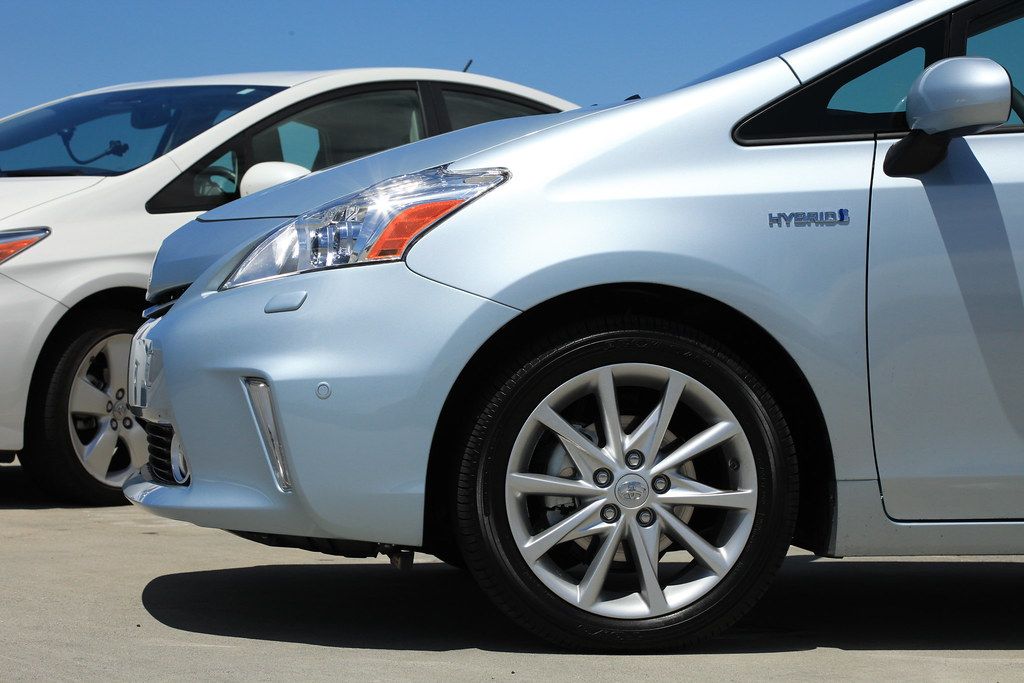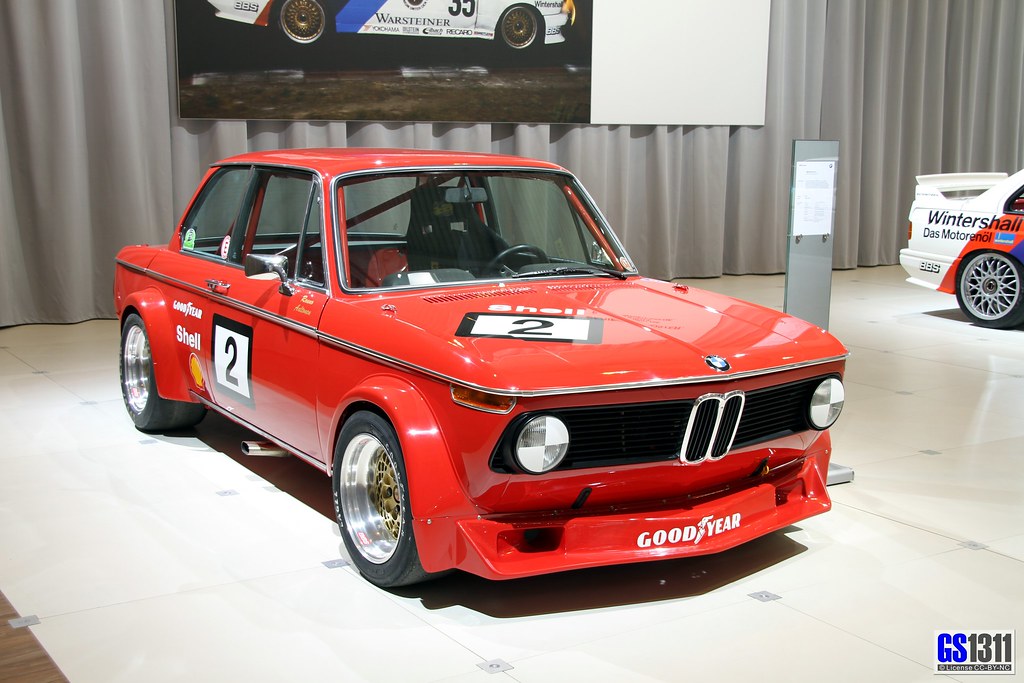
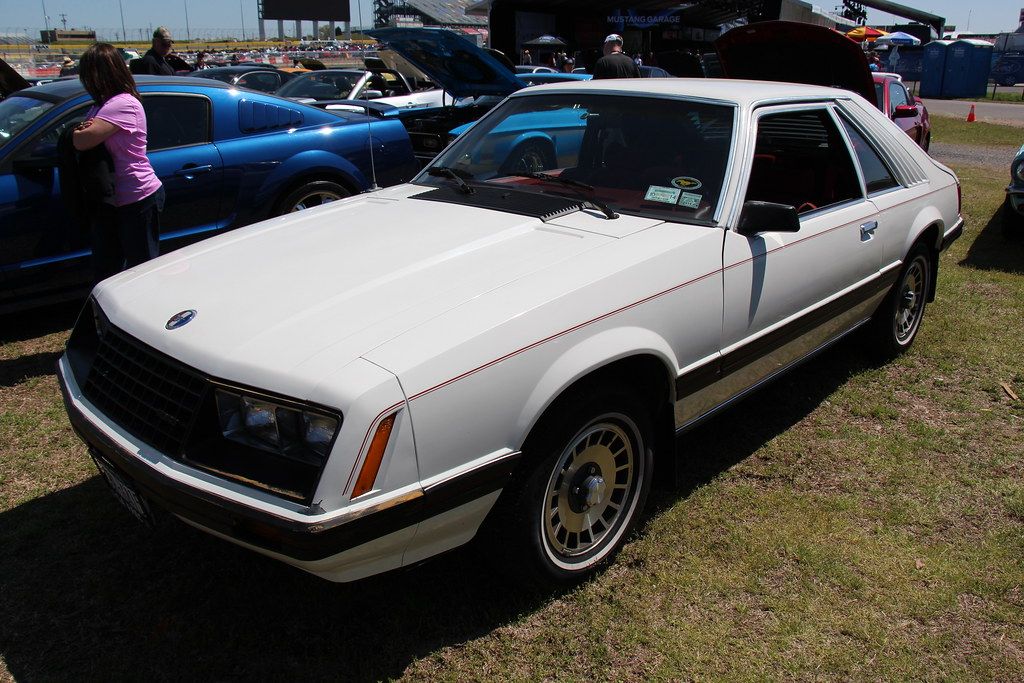
Ever hopped into your beloved vintage hatchback, turned the key, and felt that surge of excitement as you hit the open road? You might think it’s just you, the car, and the wind in your hair. But what if we told you there’s a whole invisible symphony of physical laws, the very fabric of the universe, silently analyzing every turn, every acceleration, and every leisurely cruise? That’s right, we’re talking about Mechanics—not the person with the wrench (though they’re awesome too!), but the fundamental area of physics concerned with the relationships between force, matter, and motion among physical objects.
From the moment your tires kiss the asphalt to the gentle hum of your engine, the principles of mechanics are constantly at play, forming an intricate, unspoken commentary on your driving prowess and your car’s very existence. They’ve been around since Ancient Greece, pondered by minds like Aristotle and Archimedes, and refined by giants such as Galileo and Newton. These aren’t just abstract ideas; they are the bedrock upon which your driving experience is built, whether you’re aware of it or not.
So, buckle up, because we’re about to take a deep dive into what these fundamental forces and motions *really* ‘think’ about you and your vintage ride. Prepare to see your daily commute, or that weekend joyride, through a whole new, mind-bending lens. It’s time to get a peek behind the curtain of reality and understand the universe’s secret observations on your driving adventures!

1. **Classical Mechanics: The OG Observer of Your Ride**
Ah, Classical Mechanics! This is the granddaddy of them all, the original theory of motion and forces that has been around for nearly a quarter millennium. When you’re cruising down the highway, feeling every bump and glide, you’re living squarely within the realm of classical mechanics. It’s the dependable friend that explains why your vintage hatchback behaves exactly as you expect it to: the wheels turn, the car moves forward, and when you hit the brakes, it slows down (eventually!).
Developed by the legendary Isaac Newton in his “Philosophiæ Naturalis Principia Mathematica” way back in 1687, classical mechanics is all about macroscopic objects moving at speeds much slower than the speed of light. It’s the common-sense physics that allows engineers to design bridges, aircraft, and, yes, even your beautiful vintage car. The principles are so robust that even today, for everyday phenomena, Newton’s three laws of motion remain the cornerstone of dynamics, the study of what causes motion.
So, what does Classical Mechanics ‘think’ about your vintage hatchback? It sees a perfectly predictable system, a testament to its own enduring laws. It appreciates the tangible, observable reality of your car’s journey, from the turn of a wheel to the precise arc of a corner. It nods approvingly at the elegance of a system where forces lead to displacements, and mass interacts with acceleration, all according to its well-established rules. It’s a clear, confident voice, confirming that everything is proceeding exactly as it should be.
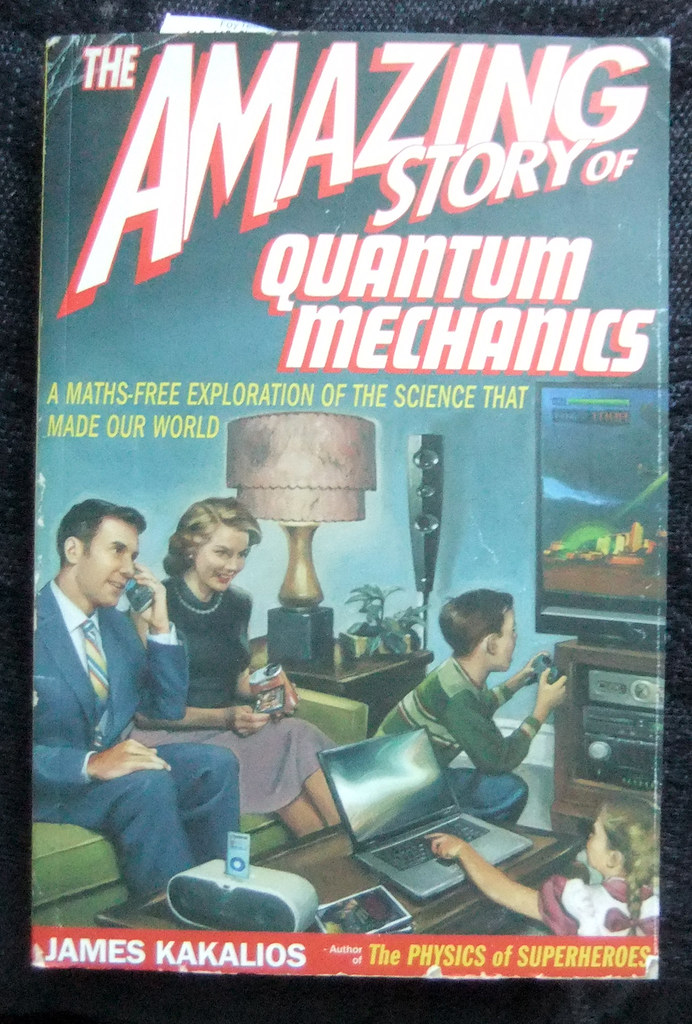
2. **Quantum Mechanics: The Tiny, Invisible Thoughts Under the Hood**
Now, let’s zoom out (or rather, *in*) to the mind-bending world of Quantum Mechanics. While your vintage hatchback is undeniably a macroscopic object governed by classical rules, delve deep enough into its materials—the metal chassis, the rubber tires, the fuel molecules—and you enter a realm where classical mechanics simply can’t explain what’s happening. This is the domain of quantum mechanics, describing the behavior of particles at the atomic and subatomic level.
Developed in the 20th century, quantum mechanics challenged the very concepts of classical mechanics. It’s indispensable for explaining and predicting processes at the molecular, atomic, and sub-atomic level. So, while you’re enjoying your drive, inside your engine, atoms are vibrating, electrons are zipping around, and quantum fields are doing their peculiar dance. Your car isn’t just a collection of parts; it’s a bustling universe of quantum activity.
What does Quantum Mechanics ‘think’ about your vintage ride? It finds your car utterly fascinating, but for reasons you’d never guess. It’s not focused on the classic lines or the roaring engine, but on the strange, unpredictable dance of particles within every component. It whispers about the wave functions of the metal in your chassis, the quantum states of the gasoline combusting, and the subtle, probabilistic nature of reality that underpins even the most solid parts of your car. It’s a reminder that there’s more to your ride than meets the eye, a whole universe of microscopic marvels that make your macroscopic journey possible.

3. **Relativistic Mechanics: When Your Hatchback Dreams of Hyperspace**
Alright, let’s be real. Your vintage hatchback isn’t going to be breaking the speed of light anytime soon, but the universe’s ‘thinking’ includes Relativistic Mechanics, just in case! This branch of mechanics, pioneered by Albert Einstein with his general and special theories of relativity, expands on Newton and Galileo’s formulations, especially when objects approach incredibly high velocities.
The differences between relativistic and Newtonian mechanics become significant, even dominant, as a body’s velocity approaches the speed of light. For example, the kinetic energy of a free particle changes from the familiar E = 1/2mv² in Newtonian mechanics to a much more complex E = (γ − 1)mc² in relativistic mechanics. While you’re enjoying a leisurely 50 mph, these relativistic considerations are practically non-existent for your car, but they are a constant, underlying truth of the cosmos.
So, what does Relativistic Mechanics ‘think’ about your vintage hatchback? It chuckles gently, acknowledging that while your speed is charmingly modest, its principles still hold true, even if their effects are imperceptible. It’s the part of the universe that’s always prepared for the extreme, holding a place for your car’s potential (albeit theoretical) journey to warp speed. It’s the silent observer of cosmic speed limits, always ready for the day *any* object, even a vintage hatchback, might push the boundaries of velocity.
4. **Force: The Unseen Hands Pushing and Pulling Your Wheels**
Every time you press the accelerator, turn the steering wheel, or hit the brakes, you’re engaging with Force. “Force is a vector quantity that causes an object to accelerate, change its velocity, or deform.” It’s the unseen hand that makes your vintage hatchback respond to your commands, determining everything from your roaring acceleration to your gentle deceleration. Without force, your car would just sit there, a beautiful but inert sculpture.
Common types of forces are constantly acting on your car: gravitational force pulling it towards the Earth, frictional force between the tires and the road, the applied force from your engine pushing it forward, and even air resistance trying to hold it back. The interplay of these forces is the principal theme of classical mechanics. They are the active agents in the story of your drive, dictating every single shift in motion.
What does Force ‘think’ about your vintage hatchback? It’s all about action and reaction! It sees your engine applying force, pushing the car forward, and the brakes applying an opposing force to slow it down. It marvels at the way your tires grip the road, creating the necessary friction to propel you. Force is a dynamic, energetic presence, constantly evaluating the pushes, pulls, and twists that define your driving experience, always ready to instigate a change in motion. It’s like the universe’s most dedicated personal trainer for your car.
Read more about: Beyond the Wrench: What ‘Mechanics’ (The Science!) Secretly Thinks About Every Movement You Make.
5. **Mass: Your Hatchback’s Stubborn Personality**
Ever tried to push a car that’s run out of gas? That resistance you feel? That’s Mass saying, “Nope, I’m staying right here unless you put in some serious effort!” Mass is “a measure of the amount of matter in an object.” It’s a scalar quantity, usually measured in kilograms, and it’s directly related to an object’s inertia – its inherent resistance to changes in its state of motion. The more mass your vintage hatchback has, the more reluctant it is to start moving, and once it’s moving, the more resistant it is to stopping.
Think of mass as your car’s inherent stubbornness. It’s not just about how heavy your car is; it’s about how much ‘stuff’ makes up your car, and how much effort it takes to get that ‘stuff’ to obey your commands. This concept is fundamental to understanding how much power your engine needs to provide, or how effective your brakes have to be, to achieve desired changes in motion. It’s a foundational quality that informs every dynamic interaction.
So, what does Mass ‘think’ about your vintage hatchback? It quietly judges every acceleration and deceleration. It’s the stoic, unyielding aspect of your vehicle, always asserting its presence. It ‘thinks’ of your car as a collection of matter, and it calculates the effort required to get that matter moving or to bring it to a halt. Mass is the universe’s silent scorekeeper of inertia, always making you (and your engine) work for every change in motion. It’s the ultimate measure of your car’s physical presence on the road.
6. **Acceleration: The Thrill (or Mild Experience) of Your Ride**
Acceleration! This is where the rubber truly meets the road, quite literally. “Acceleration is the rate of change of velocity with respect to time.” It’s a vector quantity, meaning it has both magnitude and direction. When you feel that exhilarating push back into your seat as your vintage hatchback picks up speed, that’s positive acceleration. When you brake, feeling yourself lurch forward, that’s negative acceleration, or deceleration.
Acceleration isn’t just about speeding up; it’s about *any* change in velocity, including changing direction. So, every turn you make in your classic ride, every time you merge onto a new lane, you’re experiencing acceleration. It can be caused by various forces, whether it’s the engine’s thrust overcoming friction or gravity pulling your car down a hill. It’s a dynamic concept, constantly in flux as your driving situation changes.
What does Acceleration ‘think’ about your vintage hatchback? It’s the universe’s thrill-seeker! It keenly observes every shift in your car’s speed and direction, noting the forces that bring them about. It revels in the spirited burst from a standstill, and critically assesses the smooth (or jerky!) braking before a stop sign. Acceleration is the dynamic commentator on your driving style, always checking how rapidly your car’s motion is transforming, and silently judging the efficiency and grace of those changes. It’s the ultimate speedometer of change.
7. **Velocity: Not Just How Fast, But Where You’re Going!**
While speed gets all the glory, Velocity is the real MVP of motion. “Velocity is the rate of change of displacement with respect to time.” It’s a vector quantity, meaning it includes both your speed (the magnitude) and the direction you’re headed. So, while your speedometer tells you your speed, velocity is the full story: 60 mph *north* on Main Street, or 30 mph *around that sharp bend to the left*.
In your vintage hatchback, velocity is what truly defines your journey. You might be cruising at a constant speed, but if you’re turning, your velocity is changing because your *direction* is changing. This concept is critical for navigation, for anticipating traffic, and for understanding the true path your vehicle is taking through the world. It’s a complete description of your motion in space.
What does Velocity ‘think’ about your vintage hatchback? It’s the universe’s meticulous cartographer and destination planner! It’s not just impressed by how fast you’re going, but *where* that speed is taking you. Velocity ‘thinks’ about your trajectory, the precise vector of your journey, and how efficiently you’re covering ground in a specific direction. It silently tracks your path, ensuring that every shift in your direction is accounted for, making sure you’re not just moving, but moving with purpose. It’s the profound observer of your car’s dance across the landscape.

8. **Newton’s First Law of Motion: The ‘Stay Still (or Keep Going)’ Vibe**
Ever parked your vintage beauty, walked away, and expected it to, well, stay put? Or, perhaps, you’ve been cruising along a perfectly straight highway, taken your foot off the gas, and felt your car keep gliding for a bit? That, my friends, is Newton’s First Law of Motion whispering sweet nothings in your ear. Also known as the law of inertia, it states that “an object will remain at rest or in uniform motion in a straight line unless acted upon by an external force.” Basically, your car is perfectly content doing whatever it’s already doing, thank you very much, until something comes along to change its mind.
So, what does this law ‘think’ about your vintage hatchback? It sees a creature of habit, truly. If your car is parked, it expects it to stay put indefinitely, defying gravity and the urge to roll, unless you, an external force, apply that engine power or push it. And once you’re moving, it ‘thinks’ your car has an inherent desire to keep going in that exact direction at that exact speed. It’s the universe’s way of saying, ‘Why change a good thing?’ Your car’s inertia is its steadfast personality, resisting any sudden shifts in its chill cruise or its peaceful slumber.
It’s a foundational truth for any driver. Imagine a frictionless, vacuum-sealed road (a dream for any vintage car enthusiast, no rust!). Once you got your hatchback moving, it would literally *never* stop or change direction without an outside push or pull. On Earth, we have pesky things like air resistance and road friction, which are always acting as external forces, trying to convince your car to slow down. But even with these, the law dictates that any change in your car’s state of motion is a direct consequence of a force acting upon it. It’s a beautifully simple, yet profoundly powerful, observation of how your car interacts with the world.
9. **Newton’s Second Law of Motion: The ‘Power-to-Performance’ Equation**
Alright, you’ve got your hatchback, you’re ready to roll, and you stomp on the accelerator. What happens? You feel that delightful surge as your car gains speed! That glorious feeling, that response to your command, is Newton’s Second Law of Motion in full effect. This law tells us that “the acceleration of an object is directly proportional to the net force acting on it and inversely proportional to its mass i.e. (F = ma).” In plain English, the harder you push (more force), the faster your car speeds up (more acceleration). But also, the heavier your car is (more mass), the more force you’ll need to get that same acceleration.
What does this law ‘think’ about your vintage ride and your driving? It’s the ultimate performance evaluator. It’s constantly calculating the precise relationship between the oomph your engine delivers (force), the heft of your classic machine (mass), and the resulting change in speed (acceleration). It ‘thinks’ about the efficiency of your engine, the grip of your tires, and how effectively all those forces are translating into forward motion. Every time you accelerate up a hill, or zip into an open lane, this law is silently assessing the physics of your hustle.
It’s a dynamic ballet of numbers. If you want more acceleration from your vintage charmer, you either need a bigger engine (more force) or you need to lighten the load (less mass). This is why race cars are often stripped down to their bare essentials, and why a fully loaded hatchback feels a bit sluggish on the climb. Newton’s Second Law is the universe’s internal mechanic, constantly crunching the numbers to understand exactly how much effort your car is expending to change its pace. It’s like the universe is giving your car a grade on its ability to respond to commands!

10. **Newton’s Third Law of Motion: The ‘Everything’s Connected’ Principle**
Ever wondered why your tires grip the road, or why your car moves forward at all? It’s not magic, it’s Newton’s Third Law of Motion, and it’s a total game-changer. This law famously states that “for every action, there is an equal and opposite reaction.” This means that forces never act alone; they always come in pairs. When your engine turns your wheels, and those wheels push backward on the road, the road *pushes forward* on your wheels with an equal and opposite force. That forward push is what propels your vintage hatchback down the street!
So, what does this law ‘think’ about your vintage ride? It’s the ultimate networker, seeing connections everywhere! It observes the intricate dance between your tires and the asphalt, the air pushed aside by your car and the air pushing back, and even the force of your foot on the brake pedal creating an equal and opposite force slowing the wheels. It ‘thinks’ about the fundamental balance of the universe, where every push has a counter-push, ensuring that nothing happens in isolation. It’s a constant reassurance that for your car to do anything, the world has to react in kind.
This principle is at play in every single interaction your car has with its environment. When you turn the steering wheel, your tires exert a force on the road sideways, and the road exerts an equal and opposite force sideways on your tires, allowing you to corner. When you brake, your brake pads push against the rotors, and the rotors push back, creating the friction needed to slow down. Newton’s Third Law is the universe’s way of ensuring fairness and reciprocity in the world of forces. It’s the silent coordinator, making sure every move your vintage hatchback makes is met with an appropriate and necessary response from the world around it.
11. **Work: The ‘Getting Things Done’ Metric of Your Drive**
In physics, ‘work’ isn’t just about showing up; it’s about actually accomplishing something, mechanically speaking. For your vintage hatchback, “work is done when a force causes displacement in the direction of the force.” This isn’t just a philosophical idea; it’s a measurable quantity, calculated by the product of the force and the displacement in the direction of that force. So, if your engine applies a force, and your car moves forward, work is being done. If you push on a stalled car but it doesn’t budge, no work is done, no matter how much you sweat!
What does Work ‘think’ about your vintage ride? It’s the universe’s efficiency expert, meticulously tracking every ounce of effort that translates into actual movement. It ‘thinks’ about how much your engine is truly achieving in moving the car forward, or how much your brakes are achieving in bringing it to a stop. When you accelerate, work is being done to increase your kinetic energy. When you brake, work is being done against your motion. It’s not concerned with the ‘look’ of your car, but with the quantifiable output of its mechanical exertions.
Think about it: every time you climb a hill, your engine is doing work against gravity. Every time you push the car to start it, you are trying to do work. Even when your car is coasting, friction and air resistance are doing ‘negative’ work, trying to slow it down. The universe, through the lens of ‘Work,’ is always tallying up these mechanical achievements and resistances. It’s the scorekeeper of your car’s productivity, constantly asking, ‘Did that force actually move something?’ for every moment of your drive.
Read more about: Beware! The Escalating Digital Scams Ravaging the Auto Industry and How We’re Fighting Back
12. **Energy: Your Hatchback’s ‘Get-Up-And-Go’ Power Reserve**
If work is ‘getting things done,’ then Energy is the *ability* to get things done. It’s the fundamental currency of motion and change in the universe. For your vintage hatchback, “Energy is the ability to do work.” In mechanics, we mostly talk about two kinds: kinetic energy (the energy of motion) and potential energy (the energy of position or configuration). So, a car moving down the road has kinetic energy, and a car parked on top of a hill has potential energy, just waiting to convert to kinetic if the brakes give out (yikes!).
What does Energy ‘think’ about your vintage ride? It’s the universe’s enthusiastic cheerleader, always assessing your car’s capacity for action. It ‘thinks’ about the latent power in your fuel tank, the kinetic thrill of your speed, and the potential drama of parking on a steep incline. It’s impressed by your car’s stored vitality and its ability to transform from one form to another. It’s the lifeblood of your car’s existence, from the combustion in the engine to the warmth radiating from the exhaust.
The total mechanical energy of an object is the sum of its kinetic and potential energies. This means that as your vintage hatchback speeds up, its kinetic energy increases. If it drives up a hill, its potential energy increases. The universe constantly monitors this balance, observing the shifts between these energy forms. Energy is the underlying reason your car can do anything at all – it’s the ultimate source of all its mechanical capabilities, making every journey possible. It’s the essence of your car’s dynamism.
13. **Conservation of Energy: The ‘No Free Lunch’ Universal Truth**
Prepare for a profound revelation from the universe about your vintage hatchback: energy isn’t created or destroyed. It just changes outfits! The “Conservation of Energy” is one of physics’ most ironclad rules: “Energy cannot be created or destroyed; it can only change forms. The total energy of a closed system remains constant if no external forces are applied.” This means every bit of energy your car uses or possesses comes from somewhere and goes somewhere, even if it’s just turning into heat.
What does Conservation of Energy ‘think’ about your vintage ride? It’s the universe’s meticulous accountant, ensuring that the energy budget always balances. It ‘thinks’ about the chemical energy stored in your gasoline, meticulously tracking its transformation into the kinetic energy of your moving car, the heat generated by the engine, the sound from the exhaust, and the friction from the tires. It sees the continuous conversion, but never an addition or subtraction to the total cosmic energy pool. There’s no such thing as a ‘free ride’ in the universe’s books.
Even when you coast to a stop, the kinetic energy isn’t just *gone*. It’s transformed, primarily into heat energy due to friction in the tires and brakes, and air resistance. The universe is always doing its calculations, making sure that every joule of energy is accounted for. This law is a constant reminder that the power and motion of your vintage hatchback are part of a larger, immutable energy cycle. It’s the universe’s way of saying, ‘You can spend it, but you can’t print it!’, always ensuring the fundamental energy count remains perfectly balanced.
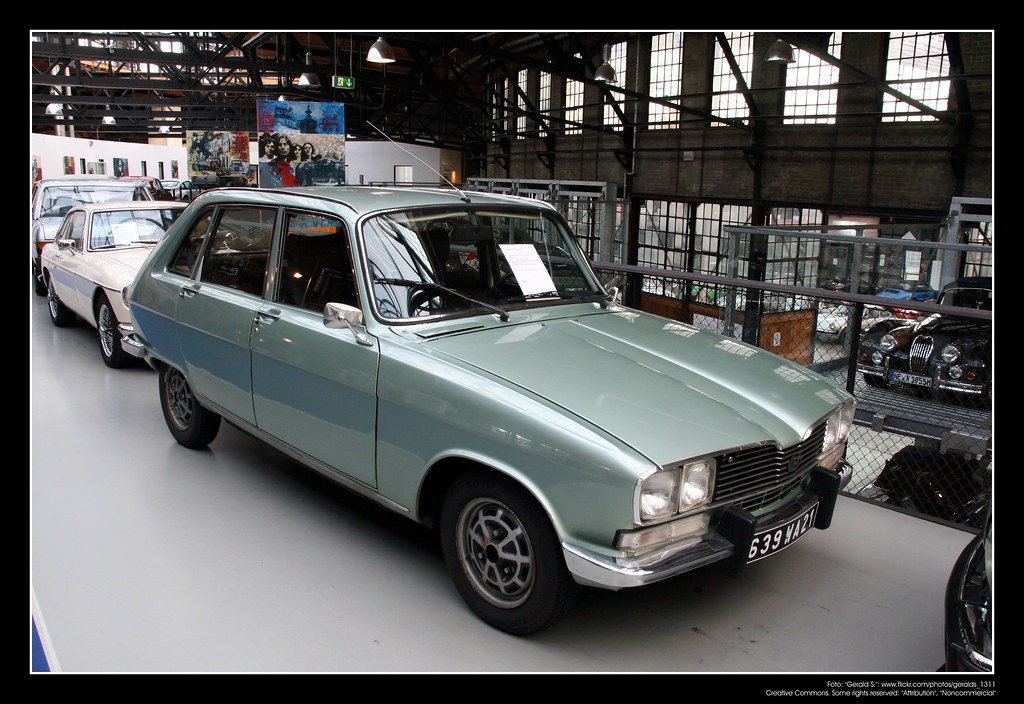
14. **Conservation of Momentum: The ‘Unstoppable Force’ Principle (Kind Of)**
Just like energy, momentum also likes to keep things consistent! The “Conservation of Momentum” states that “The total momentum of a closed system remains constant if no external forces act on it.” Momentum itself is just the product of mass and velocity (p = mv). So, a heavy vintage hatchback moving fast has a *lot* of momentum, and it’s quite stubborn about changing that momentum without a fight. Think about bumper cars – the total momentum before and after a collision stays the same, it just gets redistributed.
What does Conservation of Momentum ‘think’ about your vintage ride? It’s the universe’s strategist, constantly assessing the ‘oomph’ your car carries and how it interacts with other objects. It ‘thinks’ about the impressive momentum your heavy hatchback builds up on the highway, and how much force it would take to bring that to a halt. It also silently calculates the outcome of any fender bender, noting how momentum is transferred between vehicles. It’s a testament to the persistent nature of motion, a force that doesn’t just disappear.
This principle is incredibly important in understanding collisions, from minor bumps in the parking lot to more serious incidents. When your vintage car collides with something, the total momentum of both objects before the collision is equal to the total momentum after, assuming no external forces like friction are significant. This law helps engineers design safer cars and traffic systems. It’s the universe’s way of ensuring that motion, once established, has a profound and lasting impact, making every interaction a delicate ballet of transferred forces and velocities.
15. **Applications of Mechanics: The ‘Why Your Car Actually Works’ Grand Finale**
So, after all this talk about classical, quantum, and relativistic mechanics, forces, mass, acceleration, velocity, work, energy, and conservation laws, what does it all mean for your vintage hatchback? It means that every single aspect of your car’s existence and operation is a magnificent, intricate application of these very principles! Mechanics isn’t just an abstract concept; it’s the invisible blueprint that brings your beloved ride to life and keeps it moving.
Mechanics forms “the foundation of engineering disciplines such as civil, mechanical, aerospace, and structural engineering.” This isn’t just about bridges; it’s about the very design of your car’s chassis, the mechanics of its engine, the dynamics of its suspension, and the aerodynamics of its body. Engineers applied these physics principles to ensure your car’s “structural integrity,” its ability to accelerate, brake, and turn reliably. It’s why your car can withstand the rigors of the road and get you where you need to go safely.
Beyond the drawing board, mechanics is crucial in “transportation” and “manufacturing.” It plays a vital role “in automotive engineering for vehicle dynamics, aerodynamics, and engine design.” It’s integral to “manufacturing processes, including machining, forming, welding, and assembly,” ensuring that every part of your vintage hatchback was crafted and put together according to sound physical laws. From the smallest screw to the largest panel, mechanics ensures optimal production, quality, and safety.
So, the next time you fire up your vintage hatchback, remember: it’s not just a car. It’s a rolling testament to the incredible power of physics, a symphony of forces, motions, and energies constantly at play. The universe isn’t just ‘thinking’ about your car; it’s actively orchestrating every single turn of the wheel, every hum of the engine, and every mile of your journey. These fundamental laws aren’t secretly judging you; they’re celebrating the marvelous engineering and natural principles that make your cherished ride a reality. Now go, hit the road, and let physics continue its fascinating observations!