Alright, gearheads and casual observers alike, let’s talk Ford. The Blue Oval has graced our roads for over a century, blessing us with some absolute legends—cars that define generations, dominate sales charts, and stir the soul. We’re talking about icons like the Mustang, the mighty F-150, and the triumphant return of the Bronco. But, let’s be honest, even the greatest automotive titans aren’t immune to a few… let’s call them ‘design experiments’ that maybe should have stayed on the drawing board.
Every now and then, a vehicle rolls off the production line that makes you scratch your head, squint a little, and then just walk away wondering, “What were they thinking?” Sometimes it’s a bold attempt at innovation that backfires spectacularly. Other times, it’s a case of chasing trends with all the grace of a bull in a china shop. Regardless of the intent, the result is often a car that’s destined for the ‘ugly duckling’ file in automotive history.
So, buckle up, because we’re not pulling any punches here. We’re about to embark on a no-holds-barred journey through Ford’s hall of shame, specifically focusing on those models that made us question everything we thought we knew about car aesthetics. Forget performance or reliability for a moment—today, we’re all about the visual blunders, the confused lines, and the downright awful styling choices that turned some Fords into bona fide engineering eyesores. Let’s dive into the first seven, shall we?

1. 1958-’60 Ford Edsel
If there’s one car that perfectly embodies the idea of a marketing blitz meeting a design disaster, it’s the Ford Edsel. Touted with immense hype as the “car of the future,” this 1957 debut became a monumental $250 million misfire, and honestly, the styling played a starring role in its downfall. Ford had sunk about $400 million into building the brand from scratch, but clearly, nobody showed the public the actual car they were building.
Its most infamous feature, that bizarre horse-collar grille, was an instant head-scratcher. Described as a “tall snout sitting right smack dab in the middle of the front,” it made the car look less like a vision of tomorrow and more like something that was already dated the moment it arrived. One automotive critic even wondered, “Why does this car look like someone doing a bad goldfish impression?” That’s not exactly the vibe you’re aiming for with a new car launch.
The Edsel Pacer, specifically, often graces “worst cars ever” lists, and its distinctive, divisive front end undoubtedly sealed its fate. While it boasted an awesome 410 cubic inch V8 engine and the innovative Teletouch Drive automatic transmission, its bad looks certainly didn’t help it navigate a changing market or a looming recession. By 1960, the Edsel was gone, leaving behind a legacy as a cautionary tale in automotive design and corporate overconfidence.
Car Model Information: 1959 Edsel Ranger
BirthName: Edsel Bryant Ford
Caption: Ford in 1921
BirthDate: [object Object]
BirthPlace: Detroit, Michigan
DeathDate: [object Object]
DeathPlace: Grosse Pointe Shores, Michigan
Occupation: Automobile executive
Title: Ford Motor Company
Spouse: [object Object]
Parents: Henry Ford,Clara Bryant Ford
Relations: Edsel Ford II
Children: Henry Ford II,Benson Ford,Josephine Ford,William Clay Ford Sr.
Categories: 1893 births, 1943 deaths, 20th-century American businesspeople, All Wikipedia articles written in American English, All articles with dead external links
Summary: Edsel Bryant Ford (November 6, 1893 – May 26, 1943) was an American business executive and philanthropist, who was the only child of pioneering industrialist Henry Ford and his wife, Clara Jane Bryant Ford. He was the president of the Ford Motor Company from 1919 until his death in 1943.
He worked closely with his father, as sole heir to the business, but was keen to develop cars more exciting than the Model T (“Tin Lizzie”), in line with his personal tastes. Even as president, he had trouble persuading his father to allow any departure from this formula. Only a change in market conditions enabled him to develop the more fashionable Model A in 1927. Edsel also founded the Mercury division and was responsible for the Lincoln-Zephyr and Lincoln Continental. He introduced important features, such as hydraulic brakes, and greatly strengthened the company’s overseas production.
Ford was a major art benefactor in Detroit and also financed Admiral Richard Byrd’s polar explorations. He died of stomach cancer aged 49. Henry Ford temporarily reassumed the presidency of Ford Motor Company on Edsel’s death, then Edsel’s eldest son, Henry Ford II, succeeded Henry as president of the company in 1945.
He was also a member of the board of directors of American IG, the American subsidiary of the German chemical conglomerate IG Farben.
Get more information about: Edsel Ford
Buying a high-performing used car >>>
Brand: Ford Model: Edsel
Price: $19,000 Mileage: 21,529 mi.

2. 1958 Ford Thunderbird (2nd Gen)
Now, the first-generation Ford Thunderbird, from 1955-1957, is an undeniable classic—a sleek, two-seat piece of art that became a symbol of American car culture in the 1950s. It was effortlessly cool. Then came the second generation, unleashed in 1958, and oh boy, did it stray from the course. It’s a perfect example of how adding more of everything doesn’t necessarily make something better, especially when it comes to visual appeal.
Despite MotorTrend controversially giving it their 1958 Car of the Year Award, time has not been kind to its looks. That very same magazine, some 65 years later, would include it on its list of ugliest cars ever made. The biggest issue? It ballooned in size, becoming “larger just about everywhere—price, payload, and passenger capacity—except for performance.” But more critically, its sleek 1950s charm gave way to an “oversized body with a lot of chrome trim that dripped with excess.”
The most egregious offender was its front fascia. That “massive chrome grille that blended into the chrome bumper made it look like the car went to a cosmetic surgeon to give it a plump lip job.” It lost the original’s sporty elegance, replacing it with a heavy, almost bloated aesthetic. It was less “Hollywood Boulevard” cool and more “unfortunate overindulgence,” a stark visual contrast to the car it replaced and a clear signal that sometimes, bigger isn’t just not better, it’s downright ugly.
Car Model Information: 1966 Ford Thunderbird Base
Name: Ford Thunderbird
Caption: 1957 Thunderbird
Manufacturer: Ford Motor Company
Production: unbulleted list
ModelYears: unbulleted list
Class: unbulleted list
Layout: Front-engine, rear-wheel drive layout
Categories: 1960s cars, 1970s cars, 1980s cars, 1990s cars, 2000s cars
Summary: The Ford Thunderbird is a personal luxury car manufactured and marketed by Ford Motor Company for model years 1955 to 2005, with a hiatus from 1998 to 2001.
Ultimately gaining a broadly used colloquial nickname, the T-Bird, the model was introduced as a two-seat convertible, subsequently offered variously in a host of body styles including as a four-seat hardtop coupe, four-seat convertible, five-seat convertible and hardtop, four-door pillared hardtop sedan, six-passenger hardtop coupe, and five-passenger pillared coupe, before returning in its final generation, again as a two-seat convertible.
At its inception, Ford targeted the two-seat Thunderbird as an upscale model. The 1958 model year design introduced a rear seat and arguably marked the expansion of a market segment that came to be known as personal luxury cars, positioned to emphasize comfort and convenience over handling and high-speed performance.
Get more information about: Ford Thunderbird
Buying a high-performing used car >>>
Brand: Ford Model: Thunderbird
Price: $44,999 Mileage: 71,017 mi.
3.1971 Ford Pinto
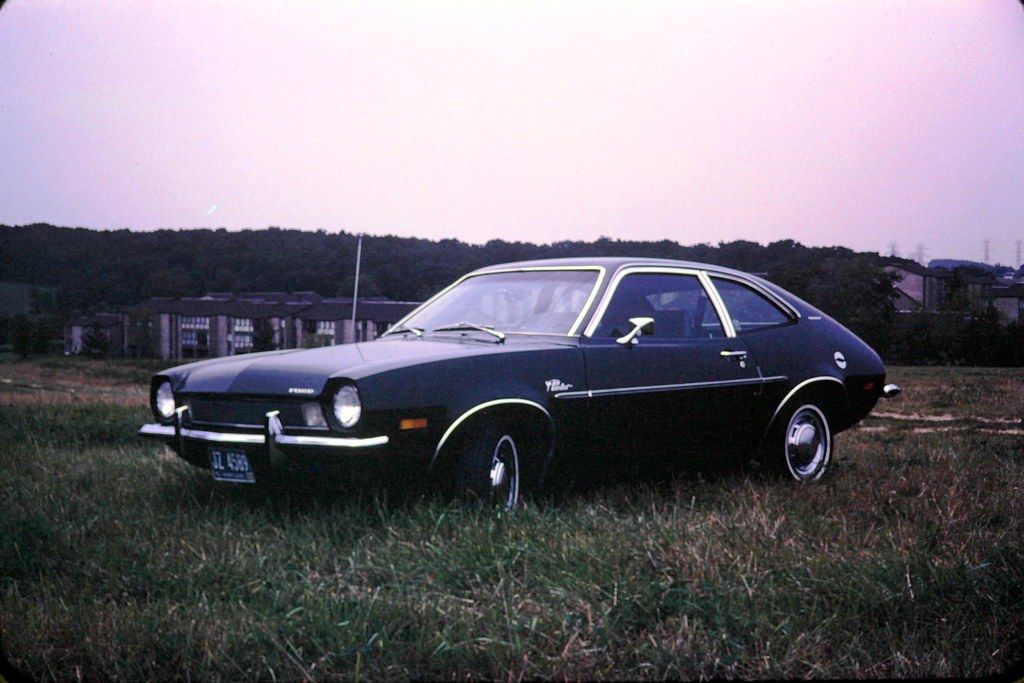
Ah, the Ford Pinto. Even its name conjures images of controversy, primarily due to its notorious propensity to literally ignite when rear-ended. But let’s set aside the explosive nature for a moment (as hard as that is) and talk about something else that made the Pinto truly memorable: its looks. Because even if it didn’t threaten to spontaneously combust, it certainly wasn’t winning any beauty contests.
Described bluntly as just “one bland car,” the 1971 Pinto’s aesthetic was a confused mix of proportions and a lack of any discernible charm. Its “bulbous looks were made worse by its mismatched proportions,” creating a visual awkwardness that was hard to ignore. It tried to fit into the cheap subcompact mold of the 70s, but it struggled even there, looking like a design that had been pieced together in haste.
The underlying reason for its peculiar shape lies in an engineering shortcut: “Ford engineers simply removed the latter half of the car to save weight and development costs, so the Pinto is technically a larger car with its rear shaved off.” This budgetary decision not only compromised its safety but also left it with a stumpy, unbalanced profile. While its cheap price and fuel efficiency made it popular during the 1973 oil crisis, no amount of practicality could mask its visually challenged form.
Car Model Information: 1980 Ford Pinto WAGON
Name: Ford Pinto
Caption: Ford Pinto
Manufacturer: Ford Motor Company
Aka: Mercury Bobcat
Production: September 1970 – July 1980
ModelYears: 1971–1980 (Pinto),1974–1980 (Bobcat)
Assembly: Edison, New Jersey,Milpitas, California
Designer: Robert Eidschun (1968)
Class: Subcompact car
BodyStyle: Sedan (automobile),sedan delivery,station wagon,hatchback
Related: #Mercury Bobcat (1974–1980),Ford Mustang (second generation)
Layout: Front-engine, rear-wheel-drive layout
Chassis: Unibody
Engine: unbulleted list
Abbr: on
Disp: Ford Cologne engine
Transmission: unbulleted list
Wheelbase: 94.0 in
Length: 163 in
Width: 69.4 in
Height: 50 in
Weight: convert
Predecessor: Ford Cortina#Mark II (1966–1970)
Successor: Ford Escort (North America)
Categories: 1980s cars, Articles with short description, Cars discontinued in 1980, Cars introduced in 1970, Commons category link from Wikidata
Summary: The Ford Pinto is a subcompact car that was manufactured and marketed by Ford Motor Company in North America from 1970 until 1980. The Pinto was the first subcompact vehicle produced by Ford in North America.
The Pinto was marketed in three body styles throughout its production: a two-door fastback sedan with a trunk, a three-door hatchback, and a two-door station wagon. Mercury offered rebadged versions of the Pinto as the Mercury Bobcat from 1975 until 1980 (1974–1980 in Canada). Over three million Pintos were produced over its ten-year production run, outproducing the combined totals of its domestic rivals, the Chevrolet Vega and the AMC Gremlin. The Pinto and Mercury Bobcat were produced at Edison Assembly in Edison, New Jersey, St. Thomas Assembly in Southwold, Ontario, and San Jose Assembly in Milpitas, California.
Since the 1970s, the safety reputation of the Pinto has generated controversy. Its fuel-tank design attracted both media and government scrutiny after several deadly fires occurred when the tanks ruptured in rear-end collisions. A subsequent analysis of the overall safety of the Pinto suggested it was comparable to other 1970s subcompact cars. The safety issues surrounding the Pinto and the subsequent response by Ford have been cited widely as business ethics and tort reform case studies.
Get more information about: Ford Pinto
Buying a high-performing used car >>>
Brand: Ford Model: Pinto
Price: $5,951 Mileage: 107,000 mi.
Read more about: The Road Less Traveled: Unpacking 13 Automotive Technology Failures That Shaped History

4. 1994 Ford Scorpio Mk II
While Ford is primarily an American automaker, it’s also had its share of international market missteps, and the 1994 Ford Scorpio Mk II, a mid-size sedan sold mostly in Europe, is a prime example. The first-generation Scorpio had a relatively sleek, straight-lined look, but its successor? Well, that was a radical departure, and not in a good way. This was a car that automotive reporters were calling “ugly” even before it hit the market.
Ford’s attempt to introduce more rounded shapes and curved surfaces truly went awry here. The Mk II featured bizarre “oval headlights flanking the chrome grille,” and its “rear lights were lowered to the bumper line,” creating a jarring visual imbalance. It was a symphony of curves that simply didn’t harmonize, making the overall design incredibly difficult to appreciate.
Perhaps the most fitting (and unflattering) description comes from those who observed it: “If you look at the car from the front, it looks like a gelatinous blobfish that has been pulled from the depths, causing its form to collapse like a water balloon.” And if that wasn’t enough, its “large grille even resembles the giant nose-like feature that appears on the blobfish’s face.” When your car starts getting compared to deep-sea creatures known for their unusual appearance, you know you’ve made a serious design blunder.
Read more about: The 10 Exciting Classic Sports Cars You Can Own Without Breaking the Bank

5. 1996 Ford Ka
Staying across the pond, we encounter another European-market Ford that aimed for quirky but landed squarely on ‘weird’: the 1996 Ford Ka. Designed as a no-frills, cheap city car to get you from point A to point B, Ford decided to get “a bit creative with this little vehicle’s design, making it look like a small egg on wheels.” And honestly, that description is spot-on.
When it first launched, some found the Ka’s aesthetic “cute,” a departure from the angular designs of its era. However, that cuteness didn’t age gracefully. What was initially seen as novel quickly devolved into simply “weird.” The design was dominated by its “plastic bumpers merged with the wheel arches,” an effect that was particularly noticeable if they were unpainted, giving the car a somewhat unfinished, toy-like appearance.
Even when Ford tried to give it a dose of coolness with the 2003 StreetKa roadster version, the results were mixed. While it might have looked “kind of cool” with the top down, evoking shades of an old Volkswagen Beetle, the elegance vanished when the roof went up. Despite its polarizing looks, the Ka found relative success in its markets, proving that sometimes, even a ‘weird’ design can win over buyers, perhaps because it dared to be different, even if that difference wasn’t exactly conventionally attractive.
Read more about: The Enduring Appeal: Unpacking the Top Reasons Why Hollywood Is Rebooting Iconic ’90s Thrillers

6. 1996 Ford Taurus (3rd Gen)
The mid-90s were a fascinating, if sometimes bewildering, time for Ford’s design language. It seems “Ford seemed to love rounded shapes in the ’90s,” and the 1996 Taurus, the third generation of what had once been a revolutionary sedan, received a full dose of this curvaceous treatment. While perhaps “less jarring than the Scorpio’s,” it still wasn’t quite a good look, leaving many fans of the original’s aerodynamic sleekness utterly baffled.
Ford had tried to emulate the designs of luxury brands like Jaguar and Infiniti during that period, but the execution on the Taurus missed the mark spectacularly. The infamous “oval rear window” became a focal point of criticism, a design flourish that simply didn’t resonate with its target market. It felt forced, a stylistic quirk for quirk’s sake, rather than a cohesive design element.
And then there’s the front. The “four headlights on the ’96 Taurus make it look like Dr. Jumba Jookiba, the four-eyed alien from the Lilo & Stitch animated movie,” a comparison that’s both hilarious and incredibly accurate. Meanwhile, the design of its rear lights “made it look like a fat Mazda RX-7 FD.” This rounded, almost bloated body was a complete departure from, and a “complete disappointment” to, many who admired the sleekness of the first and second-generation Taurus models. The market reaction was so negative that Ford updated it within a year of its release, though it still managed to hold the best-selling car title in 1996, largely thanks to fleet sales. However, it was the last time it would claim that crown, losing to the Toyota Camry the following year.
Car Model Information: 2016 Ford Taurus Limited
Name: Ford Taurus
Caption: 2010 Ford Taurus Limited
Manufacturer: Ford Motor Company
Production: October 1985 – October 2006,May 2007 – March 2019
ModelYears: 1986–2019 (2007 sold only to fleets)
Class: Mid-size car
Layout: Transverse engine,front-engine, front-wheel drive,Transverse engine,front-engine, all-wheel drive
Predecessor: Ford LTD (North America)
Successor: Ford Taurus X
Categories: 1980s cars, 1990s cars, 2000s cars, 2010s cars, All-wheel-drive vehicles
Summary: The Ford Taurus is an automobile that was manufactured and marketed by the Ford Motor Company in the United States from 1985 to 2019. From 1985 to 2009, Ford marketed the Taurus alongside its rebadged variant, the Mercury Sable. Four generations of the high-performance version (named the Ford Taurus SHO) were also manufactured from 1988-1999 and 2009-2019.
The original Taurus was a milestone for Ford and the American automotive industry, as the first automobile at Ford designed and manufactured using the statistical process control ideas brought to Ford by W. Edwards Deming, a prominent statistician consulted by Ford to bring a “culture of quality” to the enterprise. The Taurus had an influential design that introduced new features and innovations.
In the late 1990s and early 2000s, sales of the Taurus declined as it lost market share to Japanese mid-size sedans and as Ford shifted resources towards developing SUVs. The Taurus was withdrawn after the 2007 model year, with production ending on October 27, 2006. As part of a model line revision, the Taurus and the larger Ford Crown Victoria were to be replaced with the full-size Five Hundred and mid-size Fusion sedans; the Taurus station wagon was replaced with the Ford Freestyle wagon, branded as a crossover SUV. During the 2007 Chicago Auto Show, the nameplates of the Taurus and Sable were revived, intended as 2008 mid-cycle revisions of the Five Hundred. The Freestyle was renamed the Ford Taurus X. For the 2010 model year, Ford introduced the sixth-generation Taurus, marking a more substantial model update, alongside the revival of the Taurus SHO; in 2013, the Ford Police Interceptor Sedan was introduced as a successor for its long-running Crown Victoria counterpart.
From 1985 to 2007, the Taurus was a mid-size car, offering front-wheel drive. Initially built on the DN5 platform (renamed the DN101 platform in 1995 and the D186 platform in 1999), the Taurus became a full-size car in 2007, adopting the Volvo-derived D3 platform, offering front- or all-wheel drive. The Taurus was produced as a four-door sedan through its entire production, with a five-door station wagon offered from 1986 to 2005.
All generations of the Taurus were assembled by Chicago Assembly on Chicago’s South Side. Prior to its 2006 closure, Atlanta Assembly also produced both the Taurus and Sable. From its 1985 launch to its initial withdrawal following the 2007 model year, Ford assembled 7,519,919 examples of the Taurus. The fifth best-selling Ford nameplate in North America, the Taurus has been surpassed only by the F-Series, Escort, Model T, and Mustang. Between 1992 and 1996, the Taurus was the best-selling car nameplate in the United States, overtaken by the current title holder in 1997, the Toyota Camry.
Get more information about: Ford Taurus
Buying a high-performing used car >>>
Brand: Ford Model: Taurus
Price: $13,950 Mileage: 41,489 mi.

7. 2002 Ford Thunderbird (11th Gen)
Ford had an opportunity to bring back a legend, a chance to revive one of its most cherished nameplates with the 2002 Thunderbird. After a five-year hiatus, the 11th-generation T-Bird roared back as part of the “retro craze of the early 2000s.” Unfortunately, and this is where opinions get strong, “Ford completely missed the mark with this model,” failing to capture the magic that made the original so iconic.
The original 1955 Thunderbird was a symbol of American cool, a personal luxury car that defined an era. The 2002 iteration, while clearly trying to evoke that nostalgia, ended up looking like a caricature rather than a respectful homage. It adopted classic T-bird cues, but somehow, they just didn’t coalesce into a genuinely appealing package. The proportions felt off, the styling wasn’t as elegant, and it lacked the effortless charm of its predecessor.
It’s telling that while Ford managed to have much greater success using a retro theme with the fifth-generation Mustang, which arrived in 2004, the 11th-generation T-bird didn’t last long. Production quietly ended in 2005, a short run for a car that carried such a revered name. It stands as a testament to the fact that merely bringing back a beloved nameplate and slapping on some retro styling isn’t enough; you’ve got to nail the execution, and the 2002 Thunderbird, sadly, just didn’t quite get there visually.
Car Model Information: 1966 Ford Thunderbird Base
Name: Ford Thunderbird
Caption: 1957 Thunderbird
Manufacturer: Ford Motor Company
Production: unbulleted list
ModelYears: unbulleted list
Class: unbulleted list
Layout: Front-engine, rear-wheel drive layout
Categories: 1960s cars, 1970s cars, 1980s cars, 1990s cars, 2000s cars
Summary: The Ford Thunderbird is a personal luxury car manufactured and marketed by Ford Motor Company for model years 1955 to 2005, with a hiatus from 1998 to 2001.
Ultimately gaining a broadly used colloquial nickname, the T-Bird, the model was introduced as a two-seat convertible, subsequently offered variously in a host of body styles including as a four-seat hardtop coupe, four-seat convertible, five-seat convertible and hardtop, four-door pillared hardtop sedan, six-passenger hardtop coupe, and five-passenger pillared coupe, before returning in its final generation, again as a two-seat convertible.
At its inception, Ford targeted the two-seat Thunderbird as an upscale model. The 1958 model year design introduced a rear seat and arguably marked the expansion of a market segment that came to be known as personal luxury cars, positioned to emphasize comfort and convenience over handling and high-speed performance.
Get more information about: Ford Thunderbird
Buying a high-performing used car >>>
Brand: Ford Model: Thunderbird
Price: $44,999 Mileage: 71,017 mi.
8. Ford Mustang II
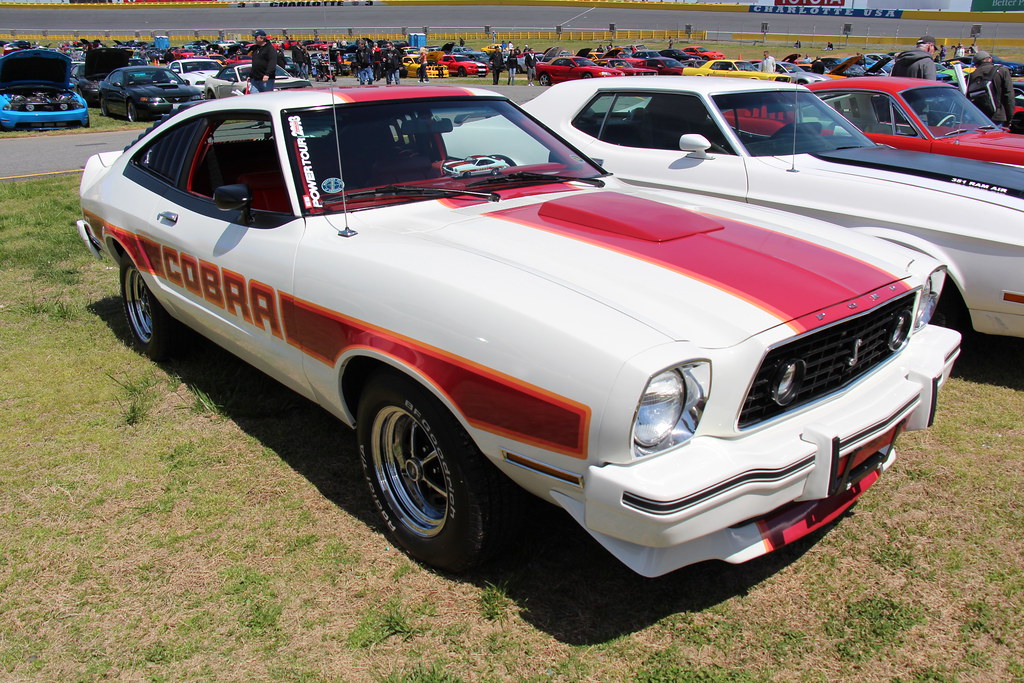
Oh, the Mustang II. Where do we even begin with this one? Introduced during the turbulent 1970s oil crisis, this car had the monumental task of replacing the original, iconic Mustang, and boy, did it stumble spectacularly. Ford’s grand idea was a smaller, lighter platform, which in theory, sounds like a recipe for an agile sports car. But then they went and based it on the infamous Pinto platform, and that, my friends, was the first, deeply unfortunate, nail in its aesthetic coffin.
It’s truly one of the most loathed automobiles of all time, proudly (or, more accurately, unproudly) holding a spot on literally every automotive hate list. It even earned the dubious distinction of being the first car featured in a book titled “Crap Cars.” The original Mustang was pure muscle, pure cool, a definitive statement of American automotive prowess. The Pinto? Not so much. So, what did Ford engineers think would happen when they tried to mash these two disparate entities together? A styling disaster, that’s what. It was less a spiritual successor and more a regrettable genetic experiment in automotive design.
Visually, the Mustang II suffered from its awkward proportions and lack of genuine sporting aggression. Its styling was often described as “tame,” failing to offer any of the raw excitement or visual punch that its predecessors embodied. It looked meek, almost apologetic, which is the absolute last thing you want from a car bearing the hallowed Mustang badge. This wasn’t just a design misstep; it was an insult to the legendary name it bore, a stark reminder that sometimes, less isn’t just less; it’s a whole lot less attractive.
Under the hood, the situation wasn’t helping its visual plight. Initially saddled with a frankly depressing 4-cylinder engine making under 90 hp, with an optional V6 barely cracking 100 hp, the car was painfully slow. Even when a V8 finally arrived, it only managed a whopping 140 hp. The chrome horse on its grille, an inanimate object, could probably outrun this thing. This lack of performance only accentuated its dull looks, cementing its fate as an automotive punchline rather than a powerful pony. Beyond its anemic power, the Mustang II carried over the Pinto’s infamous gas tank design, adding a layer of genuine peril to its aesthetic shortcomings. It was a re-bodied Pinto, plain and simple, and it looked every bit the part.
Car Model Information: 2025 Genesis GV80 2.5T
Name: Second generation
Caption: Ford Mustang II coupe
Aka: Ford Mustang II , Ford T5 (in Germany)
Class: Pony car,Subcompact car
Production: 1973–1978
ModelYears: 1974–1978
Predecessor: Ford Mustang (first generation)
Successor: Ford Mustang (third generation)
Assembly: Unbulleted list
Layout: Front-engine, rear-wheel-drive layout
BodyStyle: coupé,hatchback
Related: Ford Pinto,Ford Pinto
Manufacturer: Ford Motor Company
Engine: ubl
Transmission: ubl
Wheelbase: cvt
Length: cvt
Width: cvt
Height: cvt
Designer: Buck Mook, Dick Nesbitt
Categories: All articles with dead external links, All articles with unsourced statements, Articles with dead external links from April 2024, Articles with permanently dead external links, Articles with short description
Summary: The second-generation Ford Mustang, marketed as the Ford Mustang II, is a two- or three-door, four-passenger, front-engine/rear-drive pony car manufactured and marketed by Ford from 1973 until 1978. Introduced in September 1973 for the 1974 model year, the Mustang II arrived roughly coincident with the oil embargo of 1973 and subsequent fuel shortages. Developed under Lee Iacocca, it was an “entirely new kind of pony car.” Ford “decided to call it Mustang II, since it was a new type of pony car designed for an era of high gas prices and fuel shortages.”
The Mustang II was 490 lb (222 kg) lighter and almost 19 in (483 mm) shorter than the 1973 Mustang, and derived from the subcompact Pinto platform. While sharing a limited number of driveline components with the Pinto, the Mustang II employed an exclusive subframe, isolating its front suspension and engine mount subframe. The steering used a rack-and-pinion design.
Named Motor Trend’s 1974 Car of the Year and reaching over 1.1 million sales over four years of production, the Mustang II is noted simultaneously for both its marketing prescience and strong sales – while criticized as having abandoned essential aspects of the Mustang heritage and described, in a retrospective after 40 years since its introduction, as embodying the Malaise era.
Get more information about: Ford Mustang (second generation)
Buying a high-performing used car >>>
Brand: Ford Model: Mustang II
Price: $54,355 Mileage: 19,781 mi.
Read more about: The Road Less Traveled: Unpacking 13 Automotive Technology Failures That Shaped History

9.1993 Ford Aspire
Next up, we have the Ford Aspire, a car that, true to its name, aspired to be… well, something more than it was. What it achieved, however, was mostly forgettability wrapped in a truly uninspiring design. This little econobox was Ford’s attempt to compete in the cheap subcompact market, effectively replacing the Ford Festiva in North America. But it arrived with a look that buyers apparently disliked from the get-go, cementing its place as a visual non-starter.
It was built by Kia under license in South Korea, much like its predecessor, the Festiva. But by the time the Aspire made its debut, its design already felt dated, anonymous, and unappealing to the masses. There was simply “nothing aspirational about this car” – a blunt assessment that hits hard because it’s so undeniably true. It lacked any distinctive features or visual charm that might have helped it stand out in a brutally competitive segment. Its proportions were an exercise in blandness.
Its aesthetic struggles were often compounded by its performance woes: a measly 63-hp engine that strained just to keep pace with traffic, and crash test scores that, frankly, plunged below reasonable safety expectations. While we’re heavily focusing on looks today, it’s hard to ignore how a car’s overall lack of appeal, both visually and dynamically, contributes to its “eyesore” status. The Aspire just didn’t have a compelling visual story to tell, nor any engaging driving experience to distract from its form.
Ultimately, the Aspire was quickly “crushed by sleeker, more modern imports” like the Honda Civic and Toyota Tercel, which offered more cohesive designs and a better overall package. Its design was a prime example of function over form, but even the function was barely acceptable, making its bland exterior all the more glaring. It left no lasting impression beyond its status as a cheap, unloved commuter, a car that faded into obscurity because, frankly, it never really looked like it wanted to be seen in the first place, and certainly not remembered.
Car Model Information: 2017 Ford Transit-350 XL
Categories: All set index articles, Articles with short description, Ford vehicles, Set index articles on cars, Short description is different from Wikidata
Summary: The Ford Aspire nameplate has been used by the American automobile manufacturer Ford for the following cars, in the following markets:
Ford Festiva, in North America from 1993 to 1997
The sedan version of the Ford Figo, a rebadged third generation Ford Ka in India since 2015
Get more information about: Ford Aspire
Buying a high-performing used car >>>
Brand: Ford Model: Aspire
Price: $24,900 Mileage: 91,281 mi.
Read more about: Stop Dreaming, Start Driving: Unveiling 12 Classic and Modern Roadsters Offering Unbeatable Style and Value
10. Ford Festiva
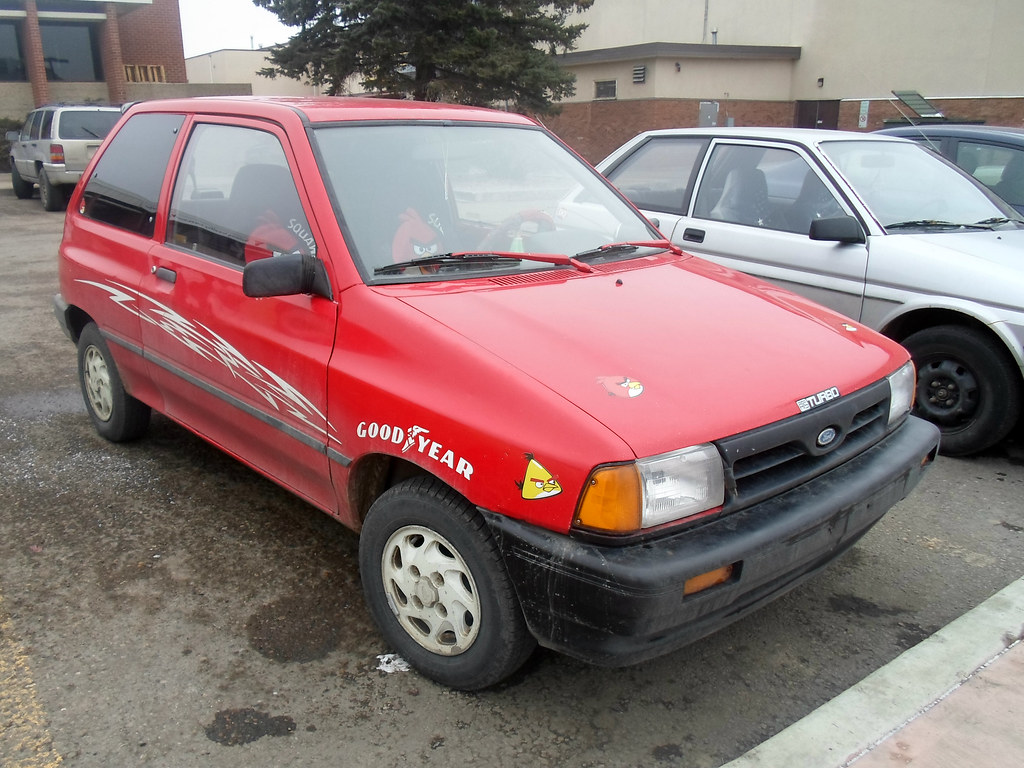
Speaking of the Aspire, let’s roll back slightly to its predecessor, the Ford Festiva. Also built by Kia and sold by Ford, this car was another entry into the compact, no-frills segment, but it too struggled mightily to make any kind of positive visual statement. If the Aspire was forgettable, the Festiva was its even more basic, less charismatic, and frankly, less visually inspiring sibling.
The Festiva’s design was undeniably utilitarian, born of an era where cheap and cheerful often meant cheap and, well, not-so-cheerful in the looks department. It was aptly described as a “basic commuter with little charm”—a characterization that politely sidesteps calling it outright ugly. Think of it as the automotive equivalent of a beige filing cabinet on wheels: it certainly got the job done, but it wasn’t going to win any design awards or turn any heads for good reasons. Its boxy, unadorned form spoke volumes about its budget aspirations.
With a paltry 58-hp engine and a “tin-can interior” that offered little in the way of comfort or refinement, the Festiva’s minimalist approach extended jarringly to its exterior. This left it without any semblance of contemporary style or forward-thinking design, looking rudimentary even for its time. It was a car whose form was dictated purely by cost-cutting and practicality, leaving precious little room for aesthetic flair. The result was a car that was eventually “outclassed and outpaced by better emerging models,” not least because of its visual anonymity and lack of engaging features.
While it found some sales success due to its bare-bones affordability, the Festiva’s design never transcended its budget origins. It lacked the quirky, endearing charm some small cars manage to cultivate, and instead settled for a bland, unmemorable appearance that left no visual legacy. It’s a testament to how sometimes, even a humble commuter car, designed simply to move people, can become an engineering eyesore if it completely fails to connect with buyers on an emotional—or even purely aesthetic—level, becoming just another forgettable blob.
Read more about: Hollywood’s Enduring Legends: 12 Veteran Actors From the 80s and 90s Still Dominating the Screen

11. Ford EXP
Now, prepare yourselves for the Ford EXP. This was Ford’s peculiar brainchild from the early 1980s, an attempt to transform the humble Escort into a sporty, two-seat coupe. On paper, it sounded like an interesting idea—a compact and nimble personal car, perhaps a new take on the two-seater roadster trend. In reality, it was a profound miscalculation in styling that resulted in a car which “looked tame” and offered absolutely no visual excitement, a design that seemed to shrink rather than enhance its presence.
The EXP was born from a stated desire to create a car that was “sleek and aerodynamic,” according to period marketing. However, the execution was anything but. Its bland, somewhat bulbous profile, combined with an uninspired, almost generic front fascia, made it look less like a youthful, exciting coupe and more like a stretched, slightly deflated jelly bean. It’s the kind of car you forget you’re looking at even as it passes you by, utterly failing to etch itself into anyone’s memory.
Under the hood, the situation certainly wasn’t helping its visual plight. With a mere 70-hp engine, the EXP was painfully slow, clocking a glacial 0–60 time of 14.5 seconds. This profound lack of performance only accentuated its dull looks. An exciting, dynamic design can sometimes compensate for middling performance, giving a car an aspirational feel. But when both are profoundly lacking, you’ve got a recipe for an eyesore that “never stood a chance against agile favorites.”
Its conservative, almost apologetic styling suggested a car unsure of its own identity. It tried to be sporty but was too tame; it tried to be distinctive but ended up anonymous. The EXP stands as a prime example of how even a simple, potentially appealing concept can be thoroughly botched when the design language fails to match the aspirations, leaving a car that simply couldn’t inspire a single passionate glance. It was, in essence, a visual placeholder.
Read more about: Guitar Queens: 12 Loudest Most Iconic Rock Anthems Ever Shredded by Female Artists

12. 1974 Ford Gran Torino Elite
Ford, in its eternal quest to capture a piece of the luxury market, sometimes made decisions that were less about genuine innovation and more about… well, sheer desperation. Enter the 1974 Ford Gran Torino Elite, a shining example of a “cynical rebranding at its very worst.” What they did was take Mercury’s Cougar coupe sheet metal, slap on a new badge, and then, for reasons known only to Ford’s design team at the time, bestow upon it a truly “dreadful nose.”
This wasn’t a subtle design misstep; this was a full-frontal assault on automotive aesthetics, a styling decision that seemed to actively repel potential buyers. The front end of the Gran Torino Elite was a confused mess, a jumble of lines, massive chrome, and disproportionate elements that simply refused to harmonize. It tried desperately to look upscale, to project an air of sophisticated luxury, but the result was a disjointed, heavy-handed appearance that left many scratching their heads, wondering what exactly Ford was trying to achieve, and more importantly, why.
The “dreadful nose” wasn’t just an unflattering detail; it unequivocally defined the car’s entire visual presence, dominating the front with an ungainly presence that seemed utterly disconnected from the rest of the body. It lacked the elegance or stately presence of the luxury cars it aspired to compete with, instead presenting a forced, almost cartoonish attempt at grandeur that screamed “parts-bin special” rather than “premium offering.” It was an automotive Frankenstein.
The Gran Torino Elite is a perfect illustration of how a manufacturer can ruin an otherwise acceptable (if uninspired) platform with a single, glaring design flaw, especially when that flaw is the literal face of the car. It’s a testament to the fact that you can’t just bolt on a new face and expect a silk purse, especially when that new face is as decidedly, unequivocally dreadful as this one. It left a legacy not of luxury, but of visual awkwardness, a profound sense of missed opportunity, and a reminder that good design requires more than just mixing and matching components.
Car Model Information: 2025 Genesis GV80 2.5T
Caption: 1976 Ford Elite 2-Door Hardtop
Name: Ford Gran Torino Elite , Ford Elite
Manufacturer: Ford Motor Company
Production: 1974–1976
ModelYears: 1974 (Gran Torino Elite) , 1975–1976 (Elite)
Assembly: Chicago, Illinois
Class: Personal luxury car
BodyStyle: coupe
Layout: FR layout
Engine: 351 cuin
Abbr: on
Transmission: Automatic transmission
Wheelbase: 114 in
Related: Ford Torino,Mercury Cougar#Third generation (1974–1976),Mercury Montego#Second generation (1972–1976)
Successor: Ford Thunderbird (seventh generation),Ford LTD II
Categories: Articles with short description, Cars introduced in 1974, Commons category link from Wikidata, Coupés, Ford vehicles
Summary: The Ford Elite is a personal luxury car produced by Ford and marketed in North America from February 1974 to 1976, using the name Gran Torino Elite for its first model year only then simplified to just Elite for the following two model years.
Get more information about: Ford Elite
Buying a high-performing used car >>>
Brand: Ford Model: Gran Torino Elite
Price: $54,355 Mileage: 19,781 mi.
Read more about: The Double Life: 15 Celebrities Who Hid Their Intense Military Service From the Public—Why the Secrecy?

13. Ford Five Hundred
In the mid-2000s, Ford was clearly aiming for sensible, spacious, and family-friendly with the Five Hundred. And sure, it delivered on the spacious part. But when it came to design, the Five Hundred was an absolute masterclass in creating a vehicle that was so utterly “bland” it left buyers “yawning” in its wake. This wasn’t just a car; it was a rolling beige wall, a triumphant display of automotive anonymity.
Its design was so nondescript, so completely devoid of any distinguishing features or character, that it struggled to leave any impression whatsoever. It had smooth lines, yes, but they were the kind of smooth lines you’d find on a bar of soap—perfectly functional, entirely inoffensive, but utterly unexciting. This was a car that blended into traffic so seamlessly, you’d probably forget you owned it even before you pulled into your driveway. It’s the automotive equivalent of elevator music.
Adding insult to this visual injury, the Five Hundred was also saddled with an underpowered 3.0L V6 engine and a clunky CVT, ensuring that the driving experience was every bit as uninspired as its exterior. So, not only did it look like it was designed by a committee determined to offend absolutely no one, it also drove with a similar, soul-crushing lack of enthusiasm. “Dishwater dull to look at” is a descriptor that perfectly captures its essence, or rather, its profound lack of it. It was the antithesis of automotive passion.
The car was eventually rebadged as the Taurus, in a clear attempt to salvage some features and, perhaps, inject a bit of history into its lifeless form. But the damage was already done. The Five Hundred stands as a stark reminder that even a competent, spacious car can become an engineering eyesore if its design is so utterly uninspiring that it drains all joy from the act of looking at it, let alone driving it. It was a vehicle that existed, but never truly lived in the hearts of drivers.
Car Model Information: 2025 Genesis GV80 2.5T
Name: Ford Five Hundred
Caption: 2005 Ford Five Hundred
Manufacturer: Ford Motor Company
Production: July 2004 – April 2007
ModelYears: 2005–2007
Assembly: Chicago, Illinois
Designer: George Bucher (2001),Jan Vulcan, Chief Engineer
Class: Full-size car
BodyStyle: Sedan (automobile)
Layout: Transverse engine,Front-engine, front-wheel-drive layout
Platform: Ford D3 platform
Related: Mercury Montego,Mercury Sable#(Fifth generation (2008–2009),Ford Taurus (fifth generation)
Engine: Ford Duratec V6 engine#RFF,V6 engine
Transmission: ZF Friedrichshafen,Batavia Transmission#Partnership
Wheelbase: 112.9 in
Abbr: on
Length: 200.7 in
Width: 74.5 in
Height: 61.5 in
Predecessor: Ford Taurus (fourth generation),Ford Crown Victoria
Successor: Ford Taurus (fifth generation)
Categories: All-wheel-drive vehicles, Articles with short description, Cars discontinued in 2007, Cars introduced in 2004, Commons category link from Wikidata
Summary: The Ford Five Hundred is a full-size four-door, five-passenger, front-engine front- or all-wheel drive, high-roof sedan manufactured in Chicago and marketed in North America and Mexico by Ford in a single generation for model years 2005–2007. It was a direct byproduct of Ford’s rapid acquisition of numerous brands (e.g., Volvo Cars in 1999); a critical need to leverage those investments; the company’s dwindling market share (18.3% in 2004, 17.4% in 2005) and its Way Forward efforts to restructure itself. Notably, with a strong market shift in automotive tastes away from sedans to minivans and SUV/CUVs, Ford made a concerted effort with the Five Hundred to rethink the traditional sedan/wagon formula.
Presented as a single concept drawing at the 2002 New York Auto Show, the Five Hundred was formally presented in production form at the 2004 North American International Auto Show along with its co-developed platform-mates, the Mercury Montego and the crossover Ford Freestyle — the so called Chicago D3’s, for the plant where they were manufactured (Chicago Assembly) and the platform they shared, the D3 platform, a revised variant of Volvo’s P2 platform.
Ford chose to continue its fourth generation Taurus, critical to the company’s fleet sales (to large corporations, small businesses, rental car firms, utility companies, and government agencies) and overlap that production with the Five Hundred, emphasizing the latter’s optional all-wheel drive, continuously variable transmission, extensive safety features, large interior volume and high H-point seating, the latter marketed as Command View seating.
Internally designated the D258 model, the Five Hundred was styled by George Bucher, Chief Designer, under the direction of Ford Vice President of Design, J Mays who gave the Five Hundred its name, recalling the “500” suffix Ford had used to designate a model’s top trim level, as with the Galaxie “500”.
The Five Hundred’s 203hp engine and conservative styling became points of criticism, and sales fell markedly short of company projections — requiring substantive discounts by its second model year. The Five Hundred was quickly but lightly facelifted and given a new nameplate for model years 2008–2009 — becoming the fifth generation Ford Taurus.
Having entered production on July 12, 2004 and gone on sale in September 2004, the Five Hundred reached 65% of its projected annual sales of 120,000 — or total domestic sales of 241,000 over three model years. The Five Hundred nameplate continued in use outside North America.
Get more information about: Ford Five Hundred
Buying a high-performing used car >>>
Brand: Ford Model: Five Hundred
Price: $54,355 Mileage: 19,781 mi.
Read more about: The Phenomenal Rise of Doctors on TikTok: How Three Physicians Became Social Media Superstars
14. Ford EcoSport
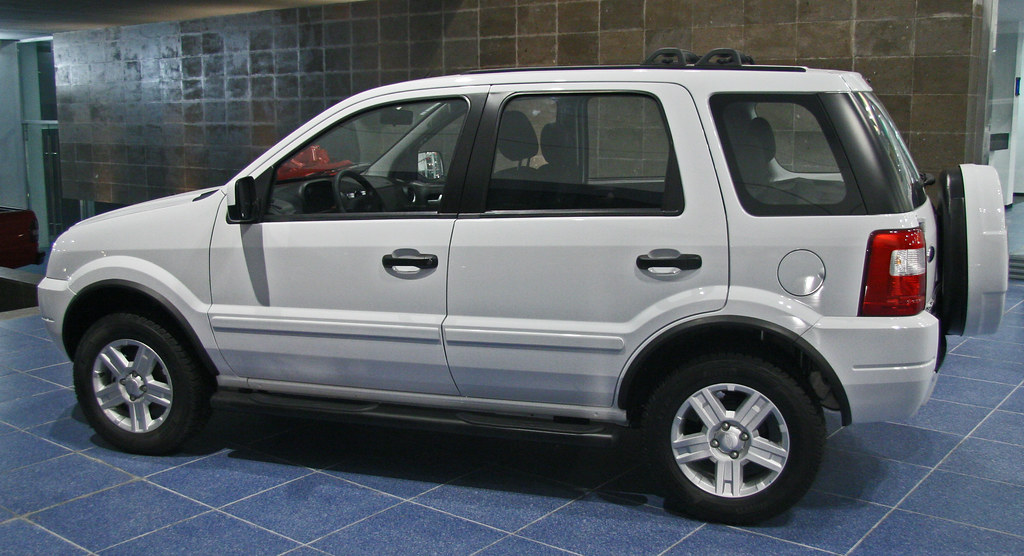
Finally, we arrive at the Ford EcoSport, a compact SUV that joined the market relatively recently. It promised city-friendly agility and, well, some ‘sport’ in its name, aiming for that ever-popular urban adventurer vibe. It certainly “looked ready for city life,” with its contemporary stance and compact dimensions, but this was a classic, painful case of “all style, no substance.” And even that ‘style’ had some truly head-scratching moments that cemented its place on this list of eyesores.
While trying to project a modern, adventurous image, the EcoSport suffered from several design quirks that puzzled absolutely everyone. The most infamous, and perhaps most frustrating, was its “rear tailgate’s awkward swing design,” which opened sideways rather than upwards. Imagine trying to load groceries or gear in a tight parking spot, or even just parallel parked on a busy street—it was a constant source of frustration for owners and a major practical flaw wrapped in an undeniable aesthetic oddity.
Beyond that singular annoyance, the overall design, while initially trendy, quickly revealed itself to be somewhat disjointed and ill-conceived. The proportions often felt off, struggling to balance its perceived ruggedness with its undeniable compact size, making it look a bit like a caricature of a proper SUV. It tried to be a small SUV for urban explorers, but the visual execution often felt like a series of compromises rather than a cohesive, compelling statement, both inside and out.
Coupled with a tiny 1.0L turbo engine that “wheezed under pressure” and notoriously cramped seating, the EcoSport’s visual missteps only compounded its overall lack of appeal. It was a vehicle that, despite its contemporary launch, “never stood a real fighting chance” in a brutally competitive market, largely because its design promised more than it delivered and often created more problems than it solved. It’s a reminder that even modern design, chasing trends, can go awry in spectacularly frustrating fashion.
Car Model Information: 2021 Ford EcoSport SES
Name: Ford EcoSport
Manufacturer: Ford Motor Company
Production: 2003–2022
ModelYears: 2014–2022 (Europe) ,2018–2022 (North America)
Class: Subcompact crossover SUV
BodyStyle: Sport utility vehicle
Layout: Front-engine, front-wheel-drive layout
Categories: 2010s cars, 2020s cars, All-wheel-drive vehicles, All articles with bare URLs for citations, All articles with unsourced statements
Summary: The Ford EcoSport ( EK-oh-sport) is a subcompact crossover SUV (B-segment) manufactured by Ford between 2003 and 2022.
The first-generation model was developed and built in Brazil by Ford Brazil since 2003, at the Camaçari plant. The second-generation model was launched in 2012, which was assembled in factories in India, Thailand, Russia and Romania. The vehicle entered the European market in 2014 and the North American market in 2018. It was sold in both until its discontinuation after the 2022 model year. Throughout its existence, the EcoSport shared its platform with the Fiesta.
Get more information about: Ford EcoSport
Buying a high-performing used car >>>
Brand: Ford Model: EcoSport
Price: $14,682 Mileage: 61,146 mi.
Read more about: The 14 Most Spectacular Automotive Failures: Brands That Collapsed After Decades of Dreams
Alright, gearheads, we’ve navigated the rocky roads of Ford’s most aesthetically challenged creations. From the horse-collar grimace of the Edsel to the bewildering blobfish impersonation of the Scorpio, and the downright sleepy blandness of the Five Hundred, it’s been a wild ride through the annals of automotive design gone wrong. We’ve seen how ambition, cost-cutting, or just plain questionable taste can lead even a giant like Ford down a path of visual blunders. But hey, it’s these glorious missteps that add flavor to automotive history, reminding us that even the best can have an off-day—or a few decades—when it comes to styling. So here’s to the eyesores, the head-scratchers, and the cars that made us wonder, “What were they thinking?” They might not have been pretty, but they certainly left a lasting impression!