Classic cars and classic movies share an undeniable, almost symbiotic relationship, much like the perfect pairing of gas stations and squeegees. These magnificent machines aren’t just props; they often become characters in their own right, driving the plot forward, embodying a hero’s spirit, or even terrifying audiences as a villainous force. Their sleek lines, powerful engines, and unmistakable presence etch themselves into our collective memory, making them as legendary as the stars who sit behind their wheels.
Indeed, who hasn’t lusted over a sleek car glimpsed on the silver screen? From high-octane chases to dramatic getaways, these automotive icons have played pivotal roles in captivating audiences for decades. Whether it’s the gadget-laden ride of a secret agent or the quirky transport of an unconventional family, these vehicles are catapulted to fame and fan-fixation, leading gearheads to shell out big bucks to bring them home, securing their place as timeless pop icons.
Join us on a thrilling journey as we rev our engines and dive into the world of Hollywood’s most beloved four-wheeled stars. We’re about to explore a selection of classic cars that have transcended their mechanical origins to become cinematic legends, from their groundbreaking features to their indelible mark on film history and popular culture. Prepare to have your heart go vroom!

1. **James Bond’s 1964 Aston Martin DB5 in Goldfinger**Let’s start with what is arguably the most iconic of all classic cars in film: the modified Aston Martin DB5 that James Bond, famously portrayed by Sean Connery, first drove in 1964’s *Goldfinger*. This isn’t just any famous film car; it’s the ultimate collector’s item, a high-performance and striking vehicle that single-handedly made Aston Martin a luxe brand among elite European car manufacturers.
The original DB5 didn’t exactly roll off the assembly line with a Browning .30 caliber machine gun in each fender, nor did it come with wheel-hub mounted tire-slashers. These ingenious modifications, alongside hydraulic over-rider rams on the bumpers, a raising rear bullet-proof screen, an in-dash radar tracking scope, oil, caltrop, and smoke screen dispensers, and even revolving license plates, transformed it into a super-spy’s dream machine. Oh, and who could forget the passenger-seat ejection system, always ready for an uninvited guest?
It’s fascinating to note that when a fully restored *Goldfinger* Aston Martin DB5 sold for $6.4 million in 2019, auction house RM Sotheby’s guaranteed that “all gadgets [were] in fully functioning order.” This commitment to authenticity speaks volumes about the enduring allure of this particular vehicle. It remains the most beloved movie car of all time, setting a standard for cinematic automotive coolness that few have matched.
Car Model Information: 2022 Dodge Challenger R/T
Name: Aston Martin DB5
Manufacturer: Aston Martin
Production: 1963–1965 (1,059 units),2020 (25 units)
Assembly: Newport Pagnell,England
Designer: Carrozzeria Touring Superleggera
Class: Grand tourer
BodyStyle: coupé
Layout: Front-engine, rear-wheel-drive layout
Engine: DOHC,Straight-6,3995 cc
Order: flip
Abbr: on
Powerout: convert
Transmission: ZF Friedrichshafen
Length: 4570 mm
Width: 1680 mm
Wheelbase: 98.0 in
Predecessor: Aston Martin DB4
Successor: Aston Martin DB6
Doors: 2
Weight: 3311 lb
Sp: uk
Categories: All Wikipedia articles written in British English, Articles with short description, Aston Martin vehicles, CS1: unfit URL, Cars discontinued in 1965
Summary: The Aston Martin DB5 is a British grand tourer (GT) produced by Aston Martin and designed by Italian coachbuilder Carrozzeria Touring Superleggera. Originally produced from 1963 to 1965, the DB5 was an evolution of the final series of DB4. The “DB” designation is from the initials of David Brown who built up the company from 1947 onwards.
The DB5 is best-known for its role in the James Bond films. It was first driven by the fictional spy in the film Goldfinger (1964). In 2013, the car featured on a “British Auto Legends” postage stamp issued by the Royal Mail.
Get more information about: Aston Martin DB5
Buying a high-performing used car >>>
Brand: Aston Martin Model: DB5
Price: $24,497 Mileage: 65,414 mi.
Read more about: Strategic Investments: The Classic Cars Skyrocketing in Value That Savvy Collectors Are Watching
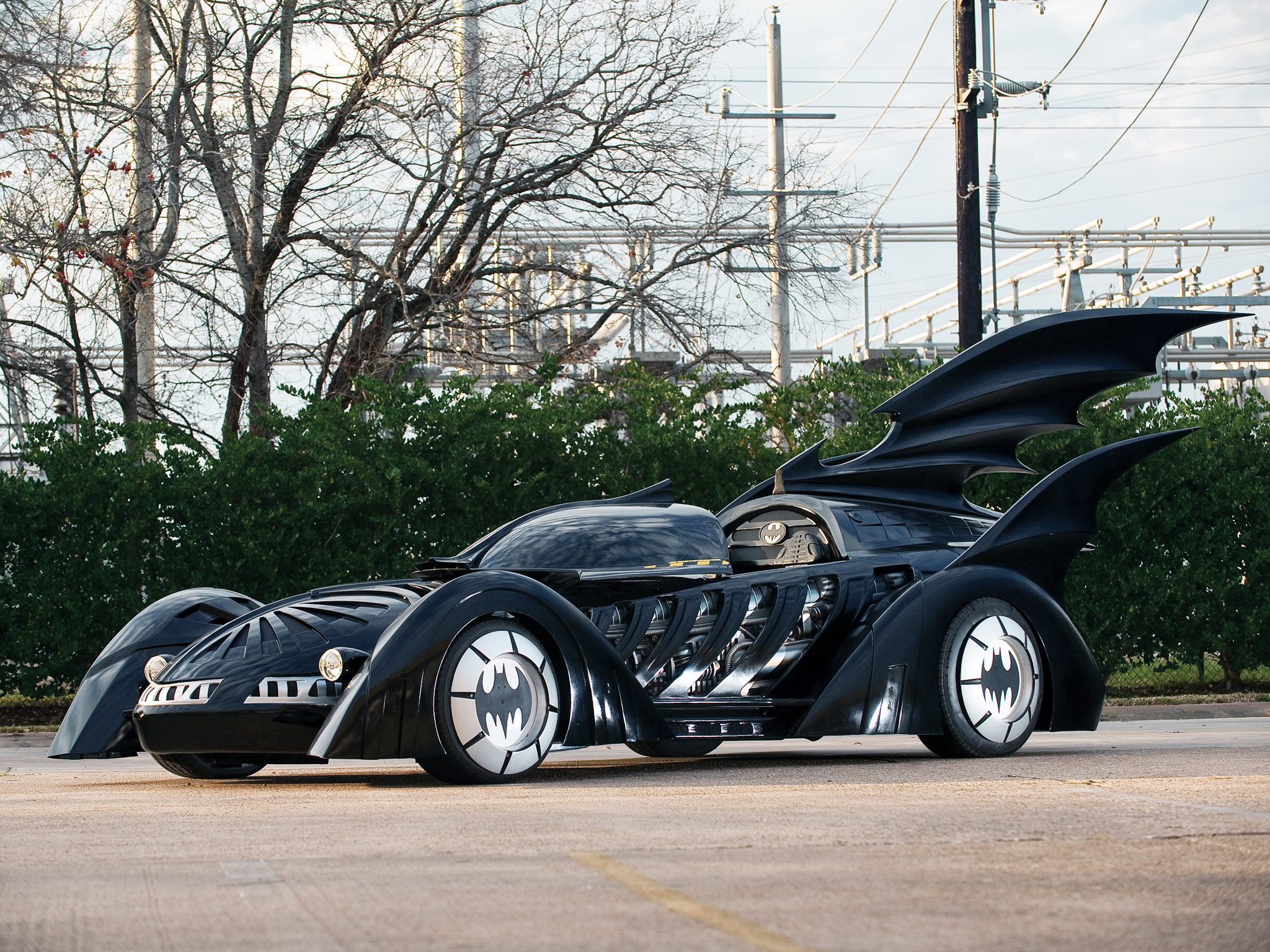
2. **The Batmobile/The Tumbler in Batman Begins**Moving from secret agents to superheroes, there’s no vehicle quite as marvel-inducing as Batman’s Tumbler, a true dream ride for any caped crusader. Featured prominently in *Batman Begins* and *The Dark Knight*, this isn’t merely a car; it’s the ultimate halfway house between a tank and a high-performance vehicle, built to navigate the darkest streets of Gotham with formidable power and style.
This beast of a machine is equipped with an array of weaponry and ammunition, making it a formidable force against crime. It’s robust enough to boost into a rampless jump, showcasing its incredible engineering and sheer strength. While technically a movie prop, its armor is supposedly strong enough to break through concrete barriers without sustaining significant damage, a testament to its imposing design and the genius behind its conception by Christopher Nolan and Nathan Crowley.
With a 5.7 L V8 engine churning out 500 horsepower, the Tumbler could go from 0-100 kph in a blistering 5.8 seconds, reaching a top speed of 257 km/h (160 mph). Its raw power and intimidating presence made it an unforgettable symbol of Batman’s relentless pursuit of justice, leaving an indelible mark on superhero cinema and automotive design.
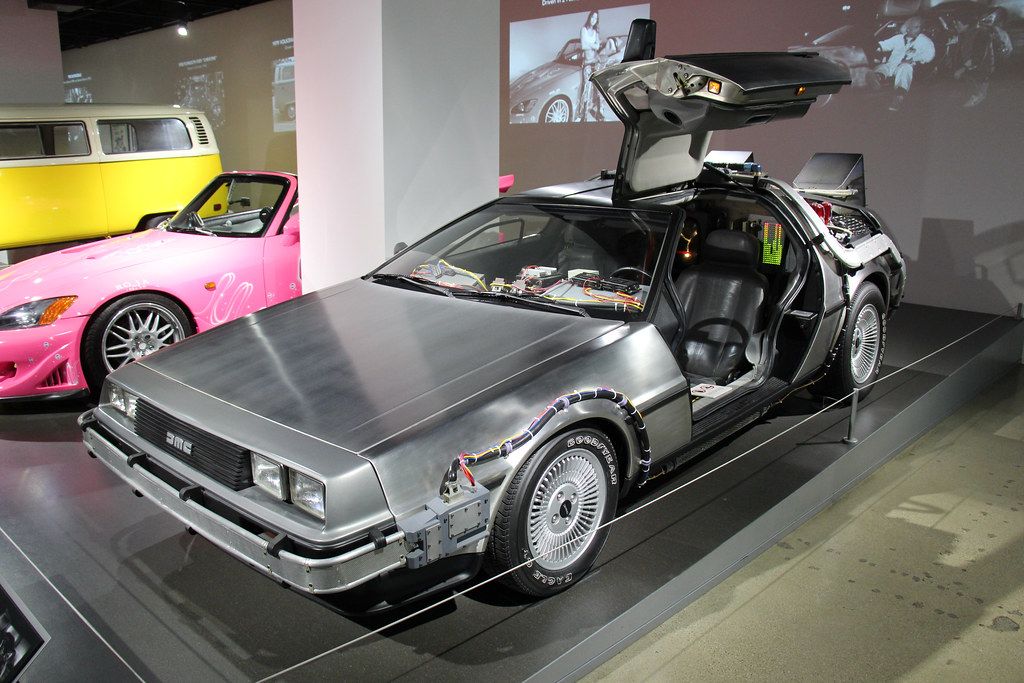
3. **DeLorean DMC-12 Time Machine in Back to the Future**Who could ever forget Doc Brown’s legendary time machine, the DeLorean DMC-12, from the iconic *Back to the Future* franchise? This vehicle was the brainchild of former General Motors executive John Z. DeLorean, who dared to start his own car company after a successful career at GM. His vision was truly revolutionary, and the car’s distinctive design captured the imagination of a generation.
While the DeLorean initially swept away the world with its revolutionary gull-wing doors and rebellious, stainless steel design, it ultimately proved to be a financial flop in the automotive market. However, destiny had other plans for this unique automobile. The *Back to the Future* franchise swooped in to revive the DeLorean from an ill fate, immortalizing it as the plutonium-powered time machine that changed cinematic history.
For the film, three distinct DeLoreans were built: the “hero” car (Car A), which was the most used and detailed; the stunt car (Car B), primarily used for dynamic action sequences and famously struck by a train; and Car C, utilized for internal shots and even cut into sections for specific scenes. These DeLoreans have since become enduring symbols of science fiction, time travel, and innovative design, forever etched into pop culture consciousness.
Car Model Information: 1982 Delorean DMC-12
Name: DMC DeLorean
Alt: 1983 DeLorean
Caption: 1983 DeLorean
Manufacturer: DeLorean Motor Company
Production: January 21, 1981 – December 1982
ModelYears: 1981–1983
Assembly: Dunmurry
Designer: Giorgetto Giugiaro
Class: Sports car
BodyStyle: coupé
Layout: Rear-engine, rear-wheel-drive layout
Doors: Gull-wing doors
Engine: 2.85 L
Abbr: on
Powerout: 130 hp
Transmission: 5-speed manual ,3-speed automatic
Wheelbase: 2413 mm
Length: 4267 mm
Width: 1988 mm
Height: 1140 mm
Weight: 1233 kg
Sp: us
Categories: 1980s cars, All Wikipedia articles written in American English, Articles with short description, Automobiles with backbone chassis, Automobiles with gull-wing doors
Summary: The DMC DeLorean is a rear-engine, two-seat sports car manufactured and marketed by John DeLorean’s DeLorean Motor Company (DMC) for the American market from 1981 until 1983—ultimately the only car brought to market by the fledgling company. The DeLorean is sometimes referred to by its internal DMC pre-production designation, DMC-12, although this was not used in sales or marketing materials for the production model.
Designed by Giorgetto Giugiaro, the DeLorean is noted for its gull-wing doors and brushed stainless-steel outer body panels, as well as its lack of power and performance. Though its production was short-lived, the DeLorean became widely known after it was featured as the time machine in the Back to the Future films.
With the first production car completed on January 21, 1981, the design incorporated numerous minor revisions to the hood, wheels and interior before production ended in late December 1982, shortly after DMC filed for bankruptcy and after total production reached an estimated 9,000 units.
Despite the car having a reputation for poor build quality and an unsatisfactory driving experience, the DeLorean continues to have a strong following, driven in part by the popularity of Back to the Future. 6,500 DeLoreans were estimated to still be on the road as of 2015.
Get more information about: DMC DeLorean
Buying a high-performing used car >>>
Brand: DeLorean Model: DMC-12
Price: $129,950 Mileage: 3,145 mi.
Read more about: Automotive Icons Unraveled: The Definitive Account of 15 Star Brands and Models That Fell From Grace
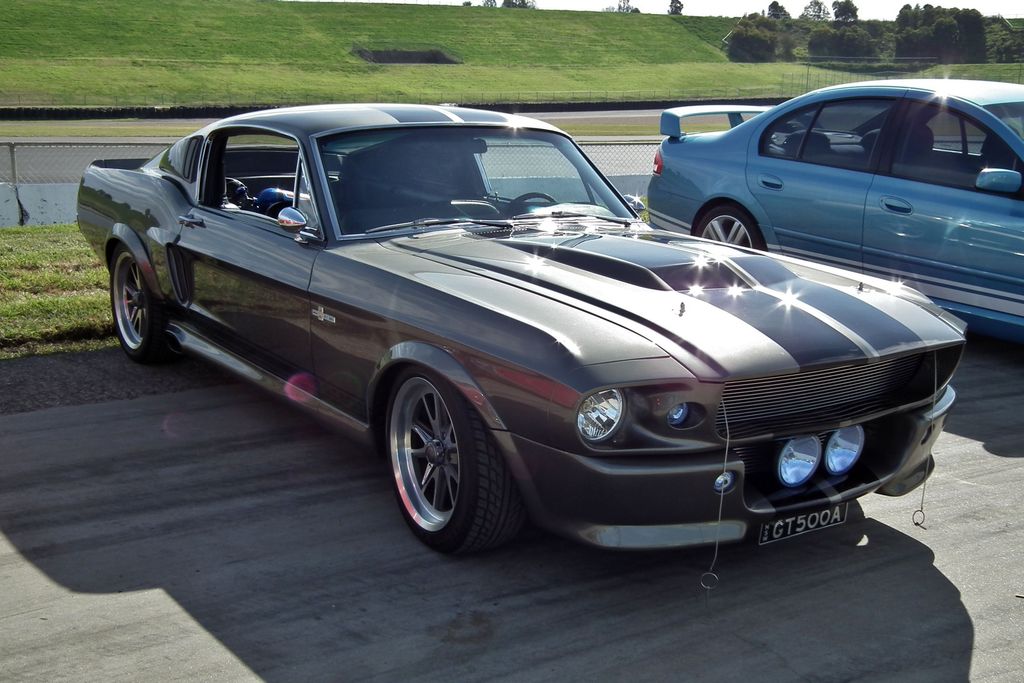
4. **1968 Ford Mustang Fastback in Bullitt**No list of classic cars in movies would be complete without paying homage to the 1968 Ford Mustang Fastback, which achieved iconic status thanks to the brooding green machine driven very fast and very well by Steve McQueen in *Bullitt*. Mustangs have long been a motif in both classic and contemporary films, but it was *Bullitt* that truly catapulted this particular model into the stratosphere of automotive celebrity, giving it an undeniable popularity boost.
The film features one of the most legendary car chases in cinema history, a dizzying pursuit through the hilly streets of San Francisco where McQueen’s souped-up 1968 Mustang GT 2+2 Fastback relentlessly chased a black Dodge Charger. This sequence set a new benchmark for on-screen automotive action, cementing the Mustang’s image as a powerhouse of speed and cool.
The allure of this specific car is so strong that one of the two cars used in the film, after spending years in a Mexican junkyard and passing through several owners, was recently sold to a mystery buyer for a staggering $3.74 million in 2020. This monumental sale underscores its status as arguably the most iconic car in film, second only perhaps to James Bond’s Aston Martin, proving its enduring legend and appeal.
Car Model Information: 2022 Dodge Challenger R/T
Name: Mustang (first generation)
Caption: 1965 Ford Mustang
Aka: Ford T5 (Germany)
Manufacturer: Ford Motor Company
Assembly: Unbulleted list
Production: March 1964 – June 1973
ModelYears: 1965–1973
Class: Unbulleted list
BodyStyle: Unbulleted list
Layout: Front-engine, rear-wheel drive layout
Designer: Gale Halderman
Related: Unbulleted list
Successor: Ford Mustang (second generation)
Categories: 1970s cars, All Wikipedia articles written in American English, All articles with unsourced statements, Articles with short description, Articles with unsourced statements from January 2020
Summary: The first-generation Ford Mustang was manufactured by Ford from March 1964 until 1973. The introduction of the Mustang created a new class of automobiles known as pony cars. The Mustang’s styling, with its long hood and short deck, proved wildly popular and inspired a host of competition.
It was introduced on April 17, 1964, as a hardtop and convertible, with the fastback version following in August 1964. Upon introduction, the Mustang, sharing its platform with the Falcon, was slotted into the compact car segment.
The first-generation Mustangs grew in overall dimensions and engine power with each revision. The 1971 model featured a drastic redesign. After an initial surge, sales steadily declined, and Ford began working on a new generation Mustang. With the onset of the 1973 oil crisis, Ford was prepared, having already designed the smaller Mustang II for the 1974 model year. This new car shared no components with preceding models.
Get more information about: Ford Mustang (first generation)
Buying a high-performing used car >>>
Brand: Ford Model: Mustang Fastback
Price: $24,497 Mileage: 65,414 mi.
Read more about: The Ultimate Transmission Tease: Scoring 10 Iconic Cars from Satisfying Throws to Grind City
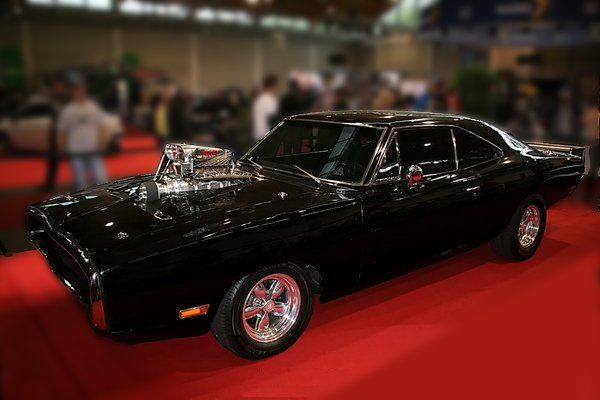
5. **1970 Dodge Charger in The Fast and the Furious**The *Fast and the Furious* franchise has, without a doubt, forever redefined the culture of street racing and, interestingly, given rise to a generation of criminals on cinematic car heists. At the heart of this adrenaline-fueled universe stands the formidable 1970 Dodge Charger, a vehicle that perfectly embodies power, aggression, and raw automotive appeal.
The Charger 500 model, an almost spitting image of its predecessor, was purpose-built to help Dodge be more competitive on the big tracks of NASCAR. Although it eventually morphed from a dedicated NASCAR entry to a mid-tier trim level, its cinematic destiny was far from ordinary. Its flying buttress roof design, immense horsepower, and inherent rarity are precisely what secured its role as a central “baddie” in the first *Fast and the Furious* movie, making it one of the most memorable vehicles in film history.
This Charger, with its 7.2 L V8 engine boasting 425 horsepower, could blast from 0-100 kph in a mere 5.5 seconds, reaching a top speed of 220 km/h (137 mph). Its sheer mechanical might, combined with its imposing screen presence, ensured it became a legendary part of Dominic Toretto’s story, cementing its place as a symbol of street power and an unforgettable star in a franchise built around iconic cars.
Car Model Information: 2022 Dodge Charger SRT Hellcat Redeye Widebody Jailbre
Name: Dodge Charger
Caption: 1969 Dodge Charger
Manufacturer: Dodge
Production: 1966–1978,1981–1987,2005–present
ModelYears: 1966–1978,1982–1987,2006–present
Categories: 1960s cars, 1970s cars, 1980s cars, 2000s cars, 2010s cars
Summary: The Dodge Charger is a model of automobile marketed by Dodge in various forms over eight generations since 1966.
The first Charger was a show car in 1964. A 1965 Charger II concept car resembled the 1966 production version.
In the United States, the Charger nameplate has been used on mid-size cars, personal luxury coupes, subcompact hatchbacks, and full-size sedans.
Get more information about: Dodge Charger
Buying a high-performing used car >>>
Brand: Dodge Model: Charger
Price: $88,138 Mileage: 7,100 mi.
Read more about: High-Performance Thrills, Sensible Spends: 15 Cars That Rival the Porsche 911 Without the Hefty Price Tag
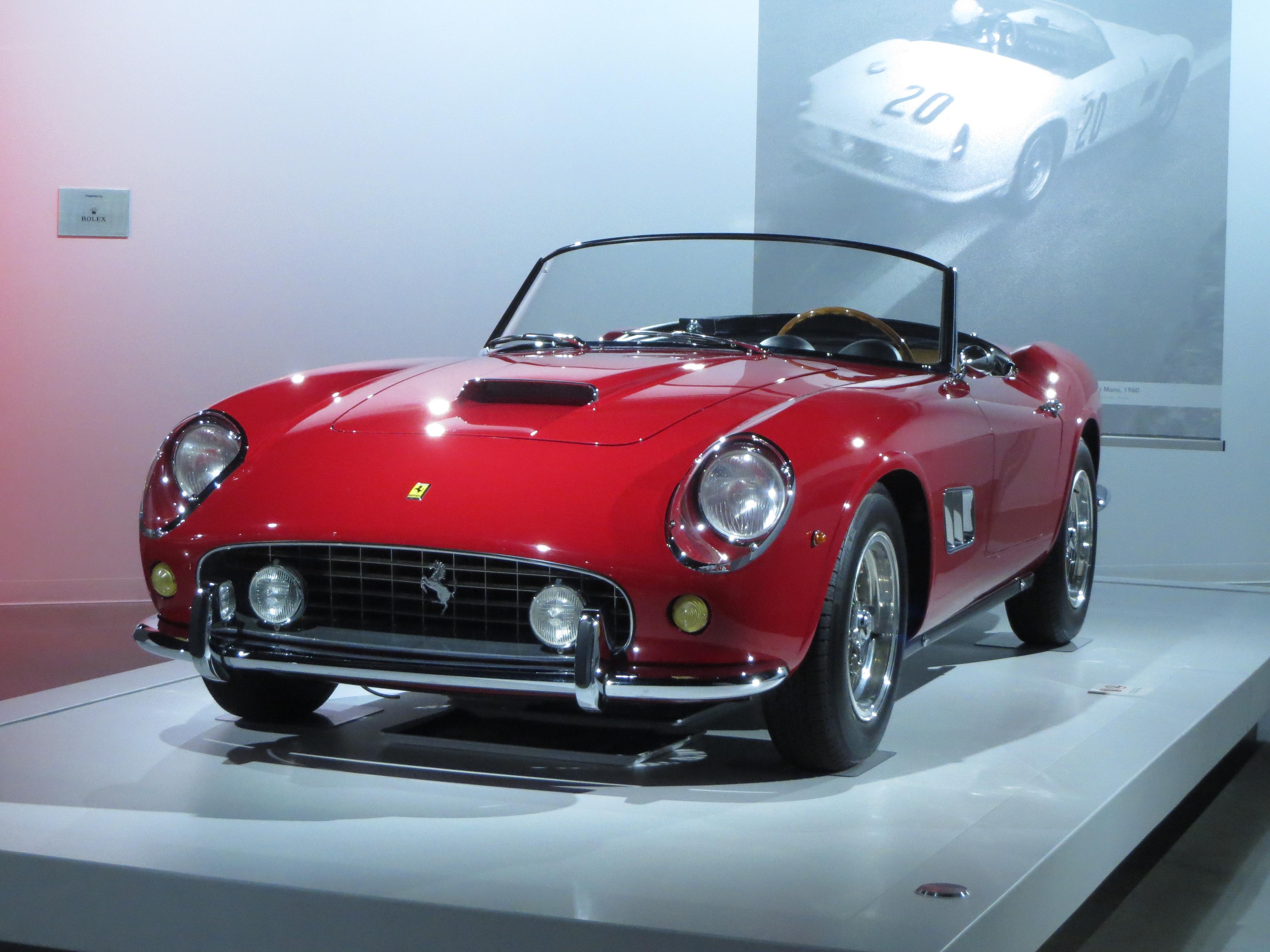
6. **1961 Ferrari 250 GT SWB California Spyder in Ferris Bueller’s Day Off**The 1961 Ferrari 250 GT SWB California Spyder is famed for being featured in the beloved teen comedy flick *Ferris Bueller’s Day Off*, and it remains one of the more prized Ferrari models to date. This wasn’t just any sports car; it was a symbol of unattainable luxury and youthful rebellion, adding an undeniable layer of charm and aspiration to the film’s narrative.
Its exclusivity is astounding: only 56 of these magnificent machines were ever made, with just 37 of them boasting the highly desirable covered headlights. This extreme rarity has led legions of collectors to fork out millions for its possession, recognizing it as a true masterpiece of automotive engineering and design. The demand for this beauty is so intense that in 2016, when one was offered for sale to the public for the first time in its 55-year history, it fetched a staggering USD$17.16 million at a Florida auction.
Interestingly, the movie itself didn’t use a real Ferrari for the joyride and destruction scenes. Instead, three 1985 Modena GT Spyders, built by Modena Design and Development in California, were employed. Destroying one of the genuine 1961 Ferrari 250 GT California Spyders, with models selling for over USD$18 million, would have been an absurdly expensive, and indeed, a criminal act against classic cars, making the decision to use replicas a sensible and respectful one.
Car Model Information: 2022 Dodge Challenger R/T
Name: Ferrari 250 GT , California Spyder
Caption: Ferrari 250 GT California Spyder SWB at the Goodwood Revival 2009.
Manufacturer: Ferrari
Production: 1957–1963,(106 produced)
Assembly: Modena
Designer: Sergio Scaglietti
Class: Sports car
BodyStyle: Roadster (automobile)
Layout: Longitudinal engine,Front-engine, rear-wheel-drive layout#Front mid-engine, rear-wheel-drive layout
Engine: Ferrari Colombo engine
Related: Ferrari 250 GT Berlinetta
Transmission: Manual transmission
Wheelbase: 2600 mm
Abbr: on (dry)
Weight: 1100 kg
Successor: Ferrari Daytona
Categories: 1950s cars, 1960s cars, Articles with short description, CS1 maint: others, Cars introduced in 1957
Summary: The Ferrari 250 GT California Spyder is a sports car developed by the Italian automotive company Ferrari. It is presented by the brand as Ferrari 250 Gran Turismo Spyder California or simply Ferrari 250 California. It was designed by Sergio Scaglietti, who adapted the styling of the 250 GT Pininfarina, and was produced by Carrozzeria Scaglietti. The model gained considerable recognition following its appearance in the 1986 film Ferris Bueller’s Day Off.
The 250 GT California Spyder is a convertible version of the contemporary Berlinetta. It is powered by the traditional Ferrari V12 engine and was produced in approximately 100 units, nearly equally split between long wheel-bases (LWB) versions from 1957 to 1960 and short wheelbase (SWB) versions from 1960 to 1963.
At auction French actor Alain Delon sold for nearly EUR 16.3 million in February 2015 Christies sold a rare variant for USD 25 million at 2025 Monterey Car Week.
Get more information about: Ferrari 250 GT California Spyder
Buying a high-performing used car >>>
Brand: Ferrari Model: 250 GT SWB California Spyder
Price: $24,497 Mileage: 65,414 mi.
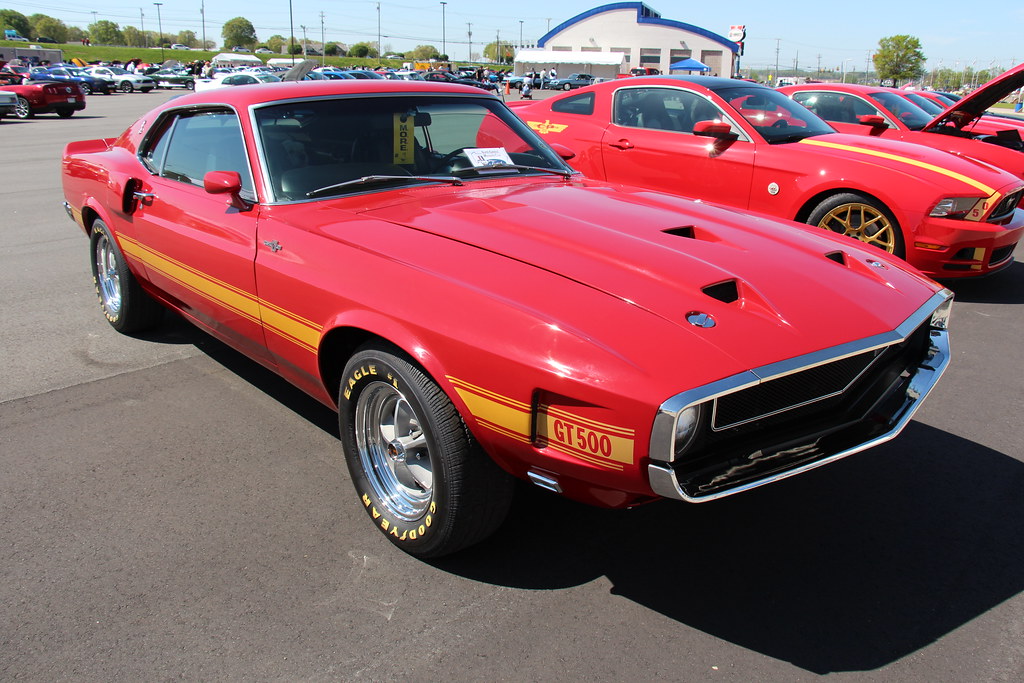
7. **1969 Mustang Boss 429 in John Wick**Speaking of killer cars, the 1969 Ford Mustang Boss 429 that John Wick, portrayed by Keanu Reeves, so fiercely protects is recognized as being among the rarest and most highly valued muscle cars to date. This powerful machine is more than just a vehicle for Wick; it’s a tangible link to his past, a symbol of his identity, and a catalyst for the explosive events that unfold in the *John Wick* franchise.
During its brief two-year production run, only a total of 1,359 original Boss 429s were manufactured, underscoring its extreme rarity and desirability. Compared to other Mustangs from the era, the 429 boasted a much wider and fully functional hood scoop, a distinctive feature that hinted at the formidable engine lurking beneath and solidified its aggressive, high-performance aesthetic.
While the car used in the *John Wick* film isn’t actually a genuine Boss 429 – it was, in fact, a Mach 1 cleverly disguised to embody the legendary Boss – its cinematic portrayal has still catapulted it into the canons of the best movie cars. This subtle detail secures its reputation as one of the most beautiful and menacing classic cars to ever grace the silver screen, proving that even a meticulously crafted replica can achieve iconic status when driven by the right hero.
Car Model Information: 2022 Dodge Challenger R/T
Caption: 1969 Boss 429
Layout: Longitudinal engine
Manufacturer: Ford Motor Company
Production: 1969–1970
Name: Mustang Boss 429
Class: Muscle car
BodyStyle: coupé
Assembly: Dearborn, Michigan
Height: 50.4 in
Abbr: on
Length: 187.4 in
Width: 71.7 in
Engine: 429 cuin
Transmission: manual transmission
Weight: 3870 lb
Categories: All Wikipedia articles needing clarification, All articles needing additional references, All articles with unsourced statements, Articles needing additional references from August 2008, Articles with short description
Summary: The Boss 429 Mustang is a high-performance Ford Mustang variant that was offered by Ford in 1969 and 1970. It featured a race-designed 429 cu in (7.0 L) semi-hemispherical head version of the big block 429 V8, offered in the car both to homologate the engine for NASCAR racing and to offer a bigger, more-powerful version of the popular small block 5 L Boss 302 Mustang.
The price of all the performance and modifications was steep: at nearly $5,000 a Boss 429 was roughly twice the price of the base model inline-6 Mustang. A total of 1,359 Boss 429s were produced.
Get more information about: Boss 429 Mustang
Buying a high-performing used car >>>
Brand: Ford Model: Mustang Boss 429
Price: $24,497 Mileage: 65,414 mi.
Read more about: The Ultimate Air Intake: 11 Classic Cars That Flaunted the Hood Scoop Look

8. **1976 Lotus Esprit Series I, The Spy Who Loved Me**James Bond’s garage is famously stacked with incredible vehicles, but few are as legendary or dramatically amphibious as the 1976 Lotus Esprit Series I. This sleek beauty, featured prominently in the 1977 film *The Spy Who Loved Me*, didn’t just drive on land; it effortlessly transformed into a fully functioning submarine after a thrilling road chase. This breathtaking transition left audiences absolutely speechless, solidifying its place as a true Bond icon and arguably one of the most innovative cinematic vehicles ever conceived.
The Esprit’s on-screen codename, “Wet Nellie,” perfectly captured its unique aquatic capabilities. Beyond its incredible gadgetry, this car was a game-changer for Lotus, marking their grand and stylish entrance into the modern supercar market. Its daring design, a masterpiece from the legendary Giorgetto Giugiaro, was nothing short of revolutionary for its era, boasting “sharp angles and a wedge shape, crisp edges and modern looking” that was far ahead of its time.
This sophisticated and aggressive aesthetic ensured the Esprit maintained an extended and successful production run from its debut in 1976 all the way to 2004, a clear testament to the enduring appeal of its distinctive design. While the deep-sea diving capabilities were pure movie magic, the Esprit’s terrestrial performance was backed by solid real-world engineering. Under its angular hood, this stunner packed a spirited 2.0 L 4-cylinder engine, reliably delivering 160 horsepower.
It was no slouch on the asphalt, capable of sprinting from 0-100 kph in a respectable 8.1 seconds and achieving a top speed of 214 km/h (133 mph), establishing it as a genuinely high-performance vehicle on land. Adding another fascinating layer to its cool factor, the very “Wet Nellie” used for the film’s iconic underwater scenes was famously purchased by none other than visionary entrepreneur Elon Musk in September 2013. This classic Lotus remains a shining example of how cinematic vision can dramatically elevate an already impressive automobile into a pop culture legend.
Car Model Information: 2022 Dodge Challenger R/T
Name: Lotus Esprit
Caption: 1999 Lotus Esprit V8
Manufacturer: Lotus Cars
Production: 1976–2004,10,675 produced
Assembly: Hethel,Norfolk,England
Class: Sports car
BodyStyle: coupé
Layout: Longitudinal engine,Rear mid-engine, rear-wheel-drive layout
Sp: uk
Predecessor: Lotus Europa
Successor: Lotus Europa S
Categories: 1980s cars, 1990s cars, 2000s cars, 24 Hours of Le Mans race cars, All Wikipedia articles written in British English
Summary: The Lotus Esprit is a sports car built by Lotus Cars from 1976 to 2004 at their Hethel, England factory. It has a rear mid-engine, rear-wheel-drive layout. Together with the Lotus Elise / Exige, it is one of Lotus’ most long-lived models.
The Esprit was among the first of the (near) straight-lined, hard-edge creased, and sometimes wedge-shaped, polygonal “folded paper” designs of the prolific, and highly successful Italian industrial and automotive designer Giorgetto Giugiaro. The Esprit’s backbone chassis was later adapted to carry the body of the DeLorean car, another low-bodied, Giugiaro-drawn, sharp-creased, wedge-shaped sportscar design. In 1978, the first updates led to the series 2 and 2.2 L (134 cu in) engined Esprit S2.2, made until the 1982–1988 Series 3 and Turbo Esprit models, that used a 1980 Giugiaro designed aerodynamic and aesthetic restyling package.
The Lotus Esprit however, lived on through the 1990s, and into the 2000s. It received its first significant restyling by designer Peter Stevens, who also did styling on the McLaren F1. Stevens gave the Esprit overall softer lines and shapes, but the car did not get a new series number – it is instead often just called the ‘Stevens Esprit’, or by its project number, the X180, made from 1988 to 1994.
In 1994, an official Series 4 Esprit, drawn by designer Julian Thomson, had a further rounded shape, especially the bumper sections and lower body of the car. Styling-wise, this became the most long-lived Esprit (1994–2004), only receiving its last changes, by Russell Carr in 2002.
Over the years, the performance of the Esprit’s 4-cylinder engine was increased from around 150 PS (148 hp; 110 kW) and just under 200 N⋅m (148 lb⋅ft) of torque, to double those power figures, mainly through greater inlet and exhaust flow, and strong turbo-charging. And from 1996, a new 3.5 L (214 cu in) V8 twin-turbo engine was added, offering 355 PS (350 hp; 261 kW). Contrary to a long list of low-volume British (sports) cars, with the 3.5 l Rover V8 engine, the Esprit received a Lotus in-house designed V8. Top speed rose from some 214 km/h (133 mph) in 1976, to over 280 km/h (174 mph) for the V8, twenty years later.
After a 28-year production run, the Esprit was one of the last cars made with pop-up headlights, together with the 5th generation Chevrolet Corvette.
Get more information about: Lotus Esprit
Buying a high-performing used car >>>
Brand: Lotus Model: Esprit Series I
Price: $24,497 Mileage: 65,414 mi.
Read more about: Remember These? 14 Iconic Mall Stores That Sadly Said Goodbye, Taking Our Nostalgia With Them!

9. **1966 Ford Thunderbird, Thelma & Louise**When you conjure an image of the quintessential road trip car, one that embodies untamed freedom and exhilarating rebellion, the sight of a classic convertible speeding down a sun-drenched desert highway undoubtedly springs to mind. For countless film enthusiasts, that indelible vision is the magnificent 1966 Ford Thunderbird, the four-wheeled star of the groundbreaking 1991 film *Thelma & Louise*. This car wasn’t merely a mode of transport; it evolved into a pivotal character, perfectly encapsulating the audacious spirit of two women on an unforgettable journey.
*Thelma & Louise* masterfully transcended traditional genre boundaries, crafting a powerful narrative that was part “chick flick, part outlaw movie, part road movie.” This unique blend resonated deeply, earning the film Oscar recognition. The strategic choice of the elegant Thunderbird convertible was a stroke of absolute genius, not just for its inherent aesthetic appeal but also for its practical advantages in cinematic storytelling. Its open top allowed for unobstructed camera angles, ensuring the raw emotions and compelling performances of the lead actresses were always front and center.
The Thunderbird’s inherent “classic cruising aura” made it the ideal companion for the duo’s transformative and increasingly desperate adventure. This was a symbol of their breaking free. Under the hood, this stylish convertible packed a robust 7.0 L V8 engine, confidently churning out 345 horsepower. This substantial power plant ensured the car possessed the necessary muscle to match the film’s high-stakes and relentless narrative, proving its capability beyond leisurely drives.
Indeed, this Thunderbird was no slouch on the road, capable of propelling its occupants from 0-100 kph in a respectable 9.3 seconds and reaching a top speed of 216 km/h (134 mph). Its performance capabilities were as formidable as its fashionable exterior. Frank Hershey’s timeless design captured the era’s automotive elegance and power, making this Thunderbird an enduring emblem of escape, sisterhood, and ultimately, a tragic form of empowerment. Its final scene etched the car into the collective consciousness, redefining cinematic road trips for generations to come.
Car Model Information: 1966 Ford Thunderbird Base
Name: Ford Thunderbird
Caption: 1957 Thunderbird
Manufacturer: Ford Motor Company
Production: unbulleted list
ModelYears: unbulleted list
Class: unbulleted list
Layout: Front-engine, rear-wheel drive layout
Categories: 1960s cars, 1970s cars, 1980s cars, 1990s cars, 2000s cars
Summary: The Ford Thunderbird is a personal luxury car manufactured and marketed by Ford Motor Company for model years 1955 to 2005, with a hiatus from 1998 to 2001.
Ultimately gaining a broadly used colloquial nickname, the T-Bird, the model was introduced as a two-seat convertible, subsequently offered variously in a host of body styles including as a four-seat hardtop coupe, four-seat convertible, five-seat convertible and hardtop, four-door pillared hardtop sedan, six-passenger hardtop coupe, and five-passenger pillared coupe, before returning in its final generation, again as a two-seat convertible.
At its inception, Ford targeted the two-seat Thunderbird as an upscale model. The 1958 model year design introduced a rear seat and arguably marked the expansion of a market segment that came to be known as personal luxury cars, positioned to emphasize comfort and convenience over handling and high-speed performance.
Get more information about: Ford Thunderbird
Buying a high-performing used car >>>
Brand: Ford Model: Thunderbird
Price: $44,999 Mileage: 71,017 mi.
Read more about: 14 Convertibles from the ’60s and ’70s That Made You Feel Like a Movie Star
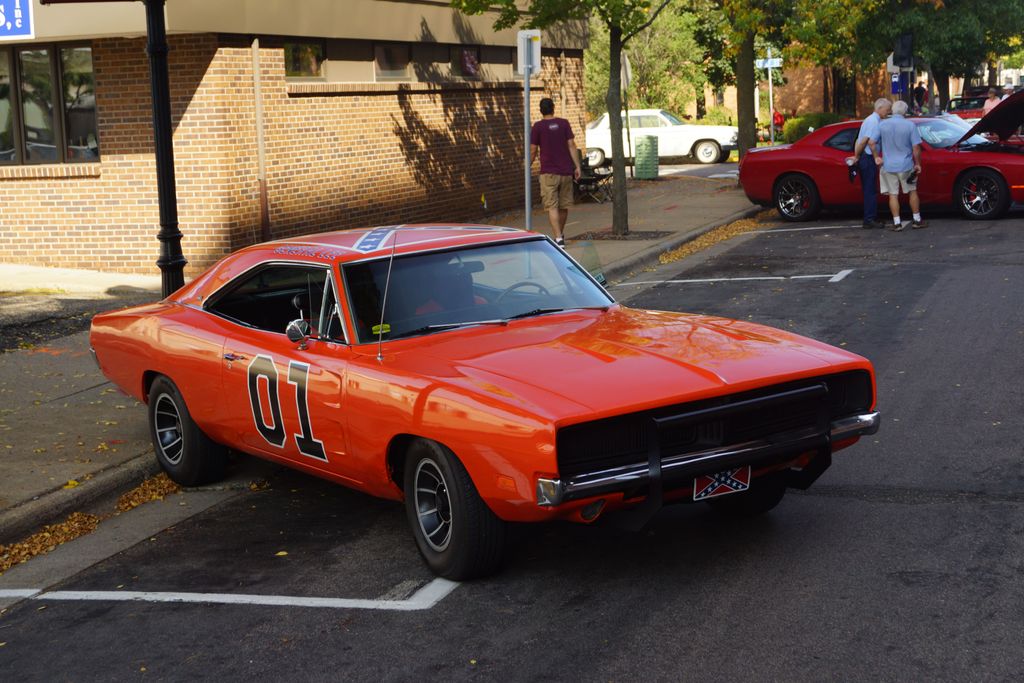
10. **1969 Dodge Charger, General Lee, The Dukes of Hazzard**The world of classic cars in film and television wouldn’t be complete without a nod to the legendary, albeit controversial, 1969 Dodge Charger, famously known as the General Lee. This eye-catching orange muscle machine, which first roared into popular culture as the star of *The Dukes of Hazzard* (initially a television series, and later a 2005 film adaptation, though the context also lists a 1977 film), became an instant icon, literally jumping its way into pop culture history with its relentless daring stunts and unmistakable presence.
The General Lee was far from a stock factory model; it was a meticulously “souped-up” vehicle, expertly engineered and customized for high-octane action. Its distinctive bright orange paintwork, complete with bold graphics, was complemented by a performance-enhancing racing carburetor, robust heavy-duty suspension parts, bespoke custom wheels, and specialized tires. All these modifications were precisely designed to enable the car to effortlessly handle the relentless high-speed chases and gravity-defying jumps that were an absolute staple of every episode and scene.
Perhaps one of the most defining characteristics of the General Lee, beyond its visual flair, was its auditory signature. Who could ever forget its “signature roar,” a deep, guttural sound amplified by that aggressive glass-pack muffler? This unmistakable engine note preceded its arrival, becoming as iconic as the car’s appearance itself. Behind the scenes, the immense demands of filming such high-impact action sequences meant that “approximately 24 Chargers, spanning 1968 to 1970 models,” were pressed into continuous service, with many “extensively modified or destroyed for stunt purposes.”
Despite this constant churn of vehicles, the General Lee’s unwavering “daring stunts and rebellious persona” firmly cemented the 1969 Dodge Charger’s status as one of the most recognized muscle cars in both cinematic and television history. This powerful beast housed a colossal 7.2 L V8 engine under its hood, confidently delivering an impressive 375 horsepower. Such raw power allowed it to rocket from 0-100 kph in a blistering 6.5 seconds and achieve a thrilling top speed of 224 km/h (139 mph), ensuring its place as a legendary character.
Car Model Information: 2022 Dodge Charger R/T
Name: Dodge Charger
Caption: 1969 Dodge Charger
Manufacturer: Dodge
Production: 1966–1978,1981–1987,2005–present
ModelYears: 1966–1978,1982–1987,2006–present
Categories: 1960s cars, 1970s cars, 1980s cars, 2000s cars, 2010s cars
Summary: The Dodge Charger is a model of automobile marketed by Dodge in various forms over eight generations since 1966.
The first Charger was a show car in 1964. A 1965 Charger II concept car resembled the 1966 production version.
In the United States, the Charger nameplate has been used on mid-size cars, personal luxury coupes, subcompact hatchbacks, and full-size sedans.
Get more information about: Dodge Charger
Buying a high-performing used car >>>
Brand: Dodge Model: Charger
Price: $27,990 Mileage: 55,664 mi.
Read more about: Everyone Wants These 14 Classic Cars In Their Garage: A Deep Dive for Enthusiasts

11. **Ectomobile, 1959 Cadillac Miller-Meteor, Ghostbusters 1 and 2**When unexpected paranormal activity throws society into chaos, there’s only one legendary vehicle that springs to mind, ready to tackle any spectral emergency: the Ectomobile, affectionately known as Ecto-1. This “quaint vehicle,” a truly “magical” and “hell of a conception,” began its life in a far more somber role as a 1959 Cadillac Miller-Meteor hearse. It was then gloriously resurrected and repurposed by an “almost bankrupt Ghostbusters” team, transforming from a vehicle of final goodbyes into the most famous ghost-hunting machine ever to grace the silver screen.
The metamorphosis from a dignified funeral coach to a high-tech paranormal response unit was nothing short of iconic and ingenious. The original 1959 Cadillac Miller-Meteor itself was already a rare and distinguished sight, with “only 25 of these Cadillac-based hearses” ever produced, making its selection even more unique. For the films, “two were transformed into the Ecto-1,” becoming instantly recognizable with their iconic flashing lights, blaring sirens, and an impressive array of specialized ghost-catching equipment conspicuously perched on the roof.
Despite its intimidating, oversized appearance and a robust V8 engine that “churned out 325 hp,” the Ectomobile was, curiously, a paradox of performance. Its considerable “floaty suspension and curb-weight design crippled its performance,” leading to what the context describes as a “double-edged sword” appeal among discerning car enthusiasts. It might not have been a contender for drag racing records, accelerating from 0-100 kph in a rather leisurely 10.9 seconds with a top speed of 201 km/h (125 mph), but its unique charm and purpose undeniably transcended raw speed.
Designed by the creative minds of Dan Aykroyd, Harold Ramis, and the legendary customizer George Barris, the Ecto-1 was an embodiment of imaginative problem-solving and eccentric style. Its distinctive siren, the massive Ghostbusters logo, and the sheer audacity of its modification perfectly captured the spirit of the film. The Ecto-1’s enduring legacy is absolutely undeniable; Sony Pictures still proudly owns one of the original Ecto-1 cars, which underwent a meticulous restoration and now stands as a cherished exhibit in California, reminding us all that even a converted hearse can achieve legendary status.
Read more about: From Zero to Hero (on Screen): The Iconic Cars That Were Only Cool Because of the Movies They Were In

12. **1973 Ford Falcon XB GT Pursuit Special, Mad Max**In the desolate, fuel-starved future envisioned by *Mad Max*, where lawlessness reigns supreme and every road is a battleground, only a truly formidable and visually striking machine could hope to command respect and survive. Enter the 1973 Ford Falcon XB GT Pursuit Special, an absolute beast of a car, famously known to fans as the “Last of the V8 Interceptors.” This car isn’t just a vehicle in the film; it’s a visceral, unforgettable character that profoundly epitomizes the raw, gritty aesthetic of the *Mad Max* saga and justly stands as “one of the most coveted pieces of movie history.”
Originally an Australian-built 1973 Ford Falcon XB GT Hardtop, this potent muscle car underwent a radical and extensive transformation at the hands of designers Peter Arcadipane, Ray Beckerley, John Evans, and Rod Smythe. Every modification was meticulously crafted to perfectly suit the film’s stark, post-apocalyptic landscape, giving it a menacing, supercharged appearance complete with its distinctive, aggressive front-end modifications and powerful supercharger poking out of the hood. It wasn’t merely a prop; it was a defiant statement, a symbol of brute force, and the ultimate tool for survival in a world completely gone mad.
The car’s iconic black livery and custom bodywork were more than just stylistic choices; they were an extension of Max Rockatansky’s persona—dark, relentless, and unyielding. The Pursuit Special’s imposing presence on screen perfectly conveyed the desperation and danger of its world, becoming an immediate and lasting icon of dystopian cinema, influencing countless other post-apocalyptic designs. Beneath its intimidating exterior, the Pursuit Special housed a truly powerful 5.8 L V8 engine, generating a formidable 300 horsepower.
This raw, unadulterated power allowed it to achieve 0-100 kph in a rapid 7.9 seconds and reach a top speed of 203 km/h (126 mph). These impressive specifications weren’t just numbers; they represented the crucial speed, agility, and brute force desperately needed for Max to navigate the treacherous, lawless highways and pursue a twisted form of justice in an utterly unforgiving world, making every high-octane scene a heart-pounding spectacle. For those “seriously into movie memorabilia,” this Ford Falcon is a powerful, tangible piece of cinematic legend.
Car Model Information: 2022 Dodge Challenger R/T
Caption: Ford Falcon 500 (XB) sedan with GS Rally Pack
Name: Ford Falcon (XB) , Ford Futura (XB) , Ford Fairmont (XB)
Manufacturer: Ford Australia
Production: September 1973 – July 1976
Predecessor: Ford Falcon (XA)
Successor: Ford Falcon (XC)
Class: Full-size car
BodyStyle: Sedan (car)
Engine: 200ci 6-cyl (3.3L),250ci 6-cyl (4.1L),302ci V8 (4.9L),351ci V8 (5.8L)
Transmission: 3spd manual (column),4spd manual (floor),3spd auto (column & floor)
Wheelbase: 2819 mm
Abbr: on
Length: 4808 mm
Width: 1900 mm
Height: 1369 mm
Weight: 1394 kg
Designer: Wayne Draper
Categories: 1970s cars, Articles with short description, Cars discontinued in 1976, Cars introduced in 1973, Cars of Australia
Summary: The Ford Falcon (XB) is a full-size car that was produced by Ford Australia from 1973 to 1976. It was the second iteration of the third generation of the Falcon and also included the Ford Fairmont (XB), the luxury-oriented version.
Get more information about: Ford Falcon (XB)
Buying a high-performing used car >>>
Brand: Ford Model: Falcon XB GT Pursuit Special
Price: $24,497 Mileage: 65,414 mi.
Read more about: Rev Your Engines! The Reality Check on 13 Beloved Movie Cars That Just Can’t Exist as They Do On Screen
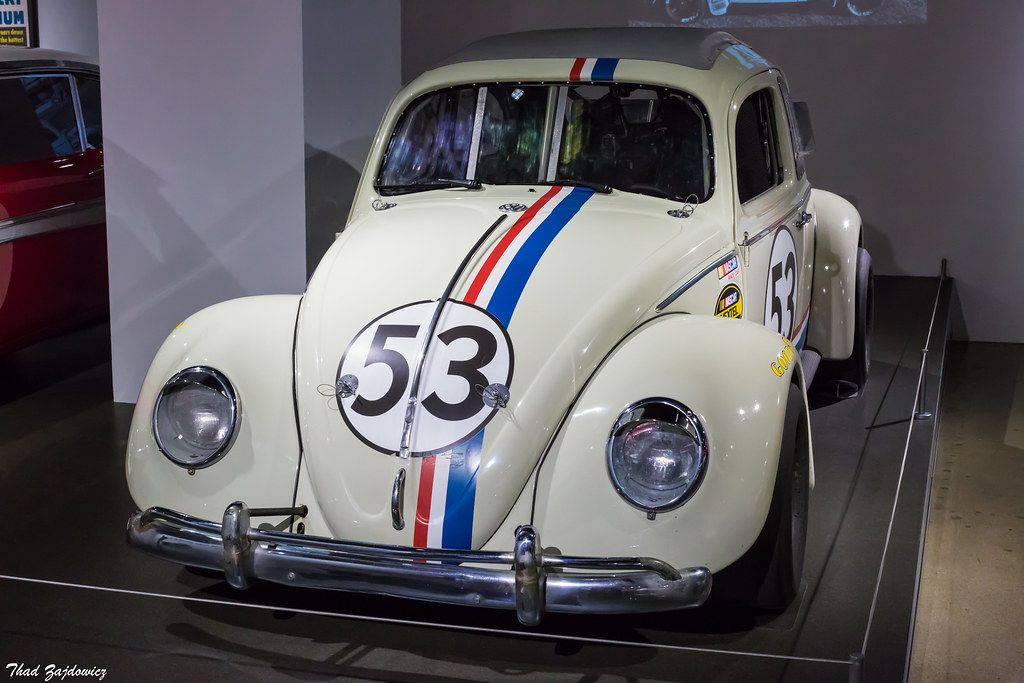
13. **1963 Volkswagen Beetle, Herbie**Who would’ve ever thought that a humble, unassuming, and some might even dare to call it an “eyesore,” 1963 Volkswagen Beetle would manage to zoom its way into cinematic immortality and capture the hearts of millions? But that’s precisely what Herbie, the universally beloved star of *The Love Bug* (1968) and its subsequent delightful films, miraculously achieved. Originally introduced to the world in 1938 as a “small people’s vehicle,” the Beetle’s popularity experienced an astronomical surge after World War II, serendipitously laying the perfect groundwork for its whimsical silver screen debut as a true automotive personality.
What made Herbie so incredibly special and utterly captivating wasn’t its blistering speed, its sleek, aerodynamic lines, or its luxurious appointments. Instead, it was its undeniably unique and charming personality. This plucky, often mischievous Beetle quite literally “has a mind of its own,” enchanting audiences of all ages with its “scamp-like and go-getting character.” Herbie’s extraordinary ability to drive itself, to race competitively against seemingly superior machines, and to express a surprising range of emotions “strangely” endeared it to generations, making it one of the most unique and universally cherished characters in the entire history of film, proving beyond a doubt that even cars can possess genuine souls.
By the dawn of the 1960s, the Volkswagen Beetle’s design had undergone “immensely” significant improvements, evolving into the familiar, charming, and instantly recognizable rounded shape we proudly associate with the iconic Herbie. This particular cinematic portrayal, brimming with warmth and adventurous spirit, didn’t just entertain; it significantly boosted interest in “the beetles of the early ’60s” among enthusiastic collectors. Their inherently “flamboyant and lovable design,” coupled with Herbie’s heartwarming and often comical on-screen adventures, successfully transformed a simple, mass-produced economy car into a highly sought-after classic.
Though Herbie might not have been a powerhouse in terms of raw statistics, its performance specifications were an integral part of its underdog charm and unique identity. Powered by a modest 1.2 L 4-cylinder engine, generating a humble 41 horsepower, it recorded a 0-100 kph time of 15.4 seconds and could achieve a top speed of 100 km/h (62 mph). Yet, these seemingly modest figures never once limited Herbie’s heroic feats on the racetrack or its remarkable ability to consistently win races and, more importantly, win the hearts of everyone who watched. Herbie proves that personality and heart can easily trump horsepower and luxury, securing its place as a truly iconic legend.
Car Model Information: 2012 Volkswagen Beetle 2.5L
Sp: uk
Name: Volkswagen Type 1,”Beetle”
Caption: 1965–1966 Volkswagen Käfer
Manufacturer: Volkswagen
Alt: A front-three quarters view of a pale-yellow Volkswagen Käfer. It features 165/80R15 tires, which shod 15×4. 5″ silver, circular wheels. The Käfer features a beetle-like body, and its window is open. The picture is taken with much greenery in the background, and the photo was edited to give it a more warmer tone.
Aka: List of names for the Volkswagen Type 1
Assembly: #Markets and assembly
Designer: Ferdinand Porsche
Class: Small family car
BodyStyle: Sedan (automobile),convertible
Production: 1938–2003,21,529,464 produced
Successor: Volkswagen Golf Mk1,Volkswagen Gol#First generation (Typ30, 1980),Volkswagen New Beetle
Layout: Rear-engine, rear-wheel-drive layout
Engine: Petrol,Volkswagen air-cooled engine,1192 cc H4,1285 cc H4,1493 cc H4,1584 cc H4
Transmission: manual transmission,Saxomat,Autostick
Wheelbase: convert
Length: convert
Width: convert
Height: 1500 mm
Abbr: on
Weight: convert
Categories: 1940s cars, 1950s cars, 1960s cars, 1970s cars, 1980s cars
Summary: The Volkswagen Beetle, officially the Volkswagen Type 1, is a small family car produced by the German company Volkswagen from 1938 to 2003. A global cultural icon known for its bug-like design, the Beetle is widely regarded as one of the most influential cars of the 20th century. Its production period of 65 years is the longest for any single generation of automobile, and its total production of 21.5 million units makes it the most produced car of a single platform in history and the second-highest of all nameplates manufactured in the 20th century.
The Beetle was conceived in the early 1930s. The leader of Nazi Germany, Adolf Hitler, decided there was a need for a people’s car—an inexpensive, simple, mass-produced car—to serve Germany’s new road network, the Reichsautobahn. The German engineer Ferdinand Porsche and his design team began developing and designing the car in the early 1930s, but the fundamental design concept can be attributed to Béla Barényi in 1925, predating Porsche’s claims by almost ten years. The result was the Volkswagen Type 1 and the introduction of the Volkswagen brand. Volkswagen initially slated production for the late 1930s, but the outbreak of war in 1939 meant that production was delayed until the war had ended. The car was originally called the Volkswagen Type 1 and marketed simply as the Volkswagen. It was not until 1968 that it was officially named the “Beetle”.
Volkswagen implemented designations for the Beetle in the 1960s, including 1200, 1300, 1500, 1600, 1302, and 1303. Volkswagen introduced a series of large luxury models throughout the 1960s and 1970s—comprising the Type 3, Type 4 and K70—to supplement the Beetle, but none of these models achieved the level of success that it did. In 1972, it became the best-selling car of all time, a position it retained for nearly three decades. Rapidly changing consumer preferences toward front-wheel drive compact hatchbacks in Europe prompted Volkswagen’s gradual shift away from rear-wheel drive, starting with the Golf in 1974. In the late 1970s and ’80s, Japanese automakers dominated some markets around the world, which contributed to the Beetle’s declining popularity.
The Beetle remains one of the best-selling cars of all time and is the first to sell over 20 million units. Over its lifespan, its design remained consistent, yet Volkswagen implemented over 78,000 incremental updates. These modifications were often subtle, involving minor alterations to its exterior, interior, colours, and lighting. Some more noteworthy changes included the introduction of new engines, models and systems, such as improved technology or comfort. The Beetle maintains a substantial cultural influence and is regarded as one of the most iconic vehicles in automotive history; its success largely influenced the way automobiles are designed and marketed, and propelled Volkswagen’s introduction of a Golf-based series of vehicles.
Get more information about: Volkswagen Beetle
Buying a high-performing used car >>>
Brand: Volkswagen Model: Beetle
Price: $13,985 Mileage: 27,389 mi.
Read more about: Rev Your Engines! The Reality Check on 13 Beloved Movie Cars That Just Can’t Exist as They Do On Screen
From the high-tech, amphibious wizardry of James Bond’s Lotus Esprit to the charming, utterly sentient Volkswagen Beetle known as Herbie, these classic cars have undeniably driven their way straight into our hearts and indelibly etched themselves into the annals of film history. They transcend mere transportation, evolving into unforgettable characters, powerful symbols of rebellion, groundbreaking innovation, and pure cinematic magic. Whether they’re tearing up the streets in a pulse-pounding chase, traversing dimensions, or simply offering a ride into the exhilarating unknown, these four-wheeled legends continue to captivate, making us all dream of hitting the open road with a little bit of Hollywood flair. Here’s to the incredible machines that not only consistently stole the show but left deep, unforgettable tire tracks on our collective souls, forever changing how we look at cars and movies!